A Trio of Villas Become a City Home for a Creative Family
Shanghai’s Y&J Design combined three existing villas into an expansive, art-filled family home, balancing spatial and perceptual relationships in a space that is grand yet intimate
When Liu Hong, founder and design director of Y&J Design, looks back at a brief to combine three villas into one six-storey family home, he describes it as a ‘test of creativity and endurance’, and compares it to personalising a hotel, with the challenges of change across time and function. But the five-year project has resulted in a space that is initially stunning in scope and then reveals its thoughtfulness through the programming and detail.
‘The owners are a couple,’ he says. ‘The wife enjoys reading, wine tasting, music and art, while the husband also loves music and art — he’s an art collector with his own concert hall. The children are students and need a large space for studying and reading.’
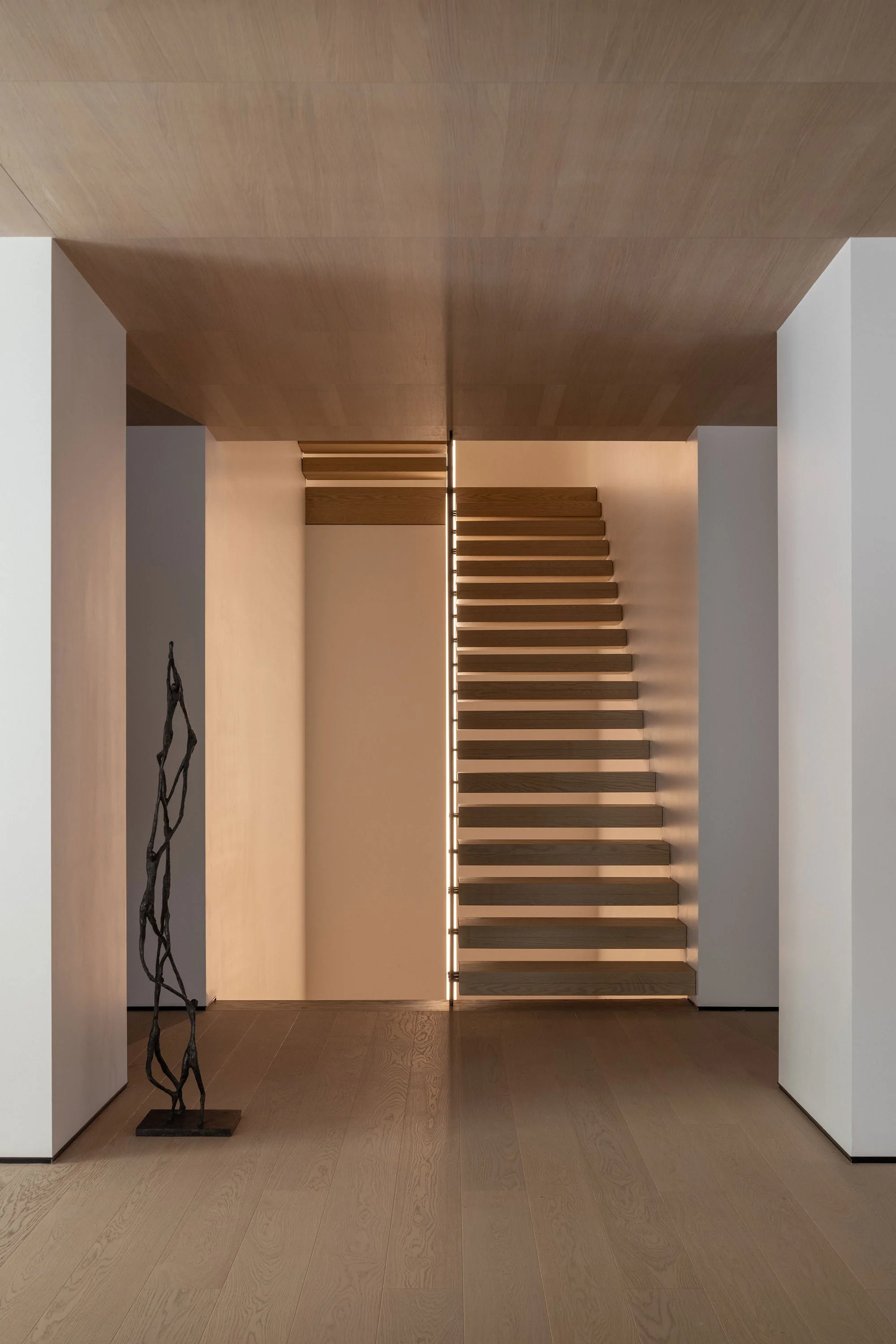
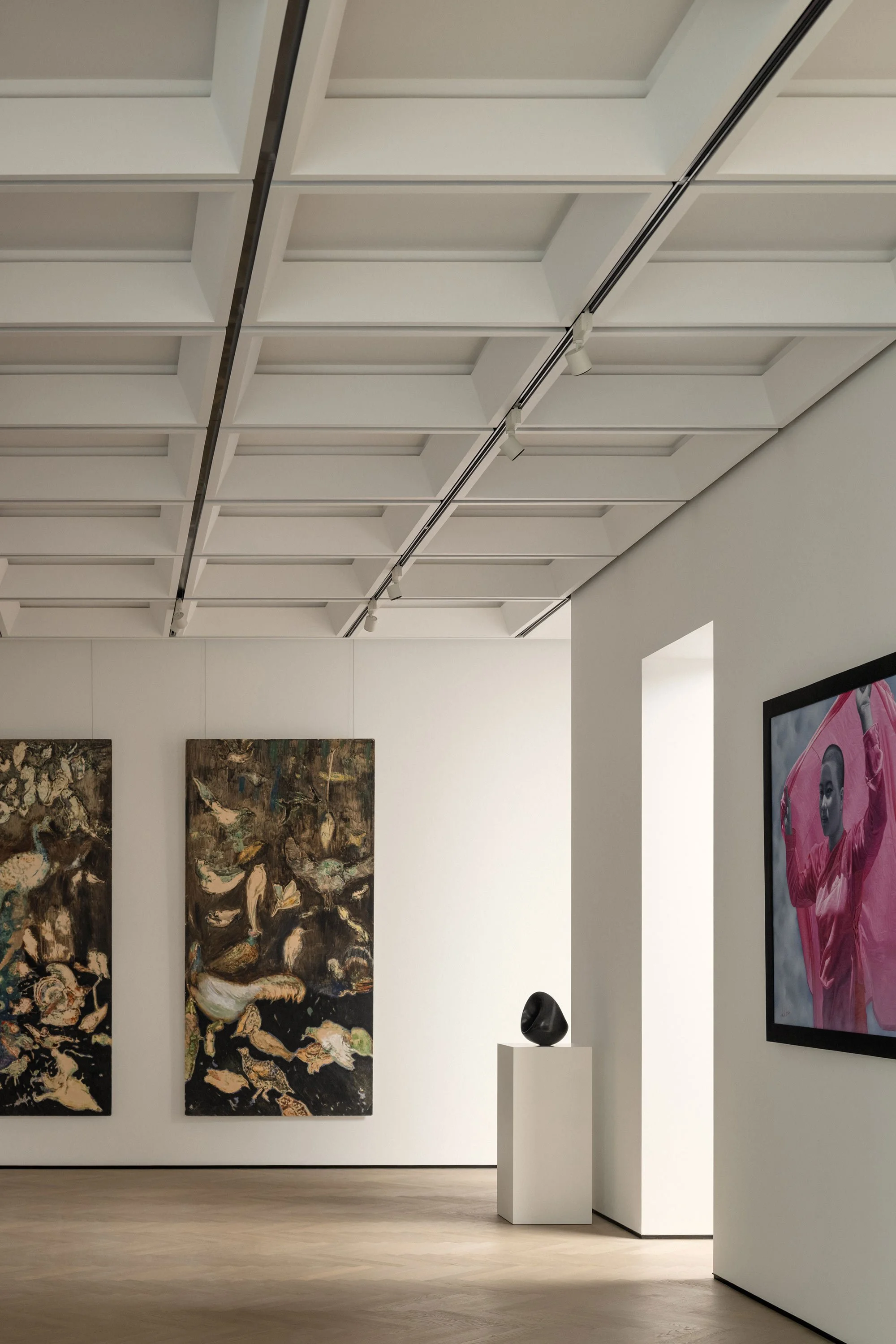
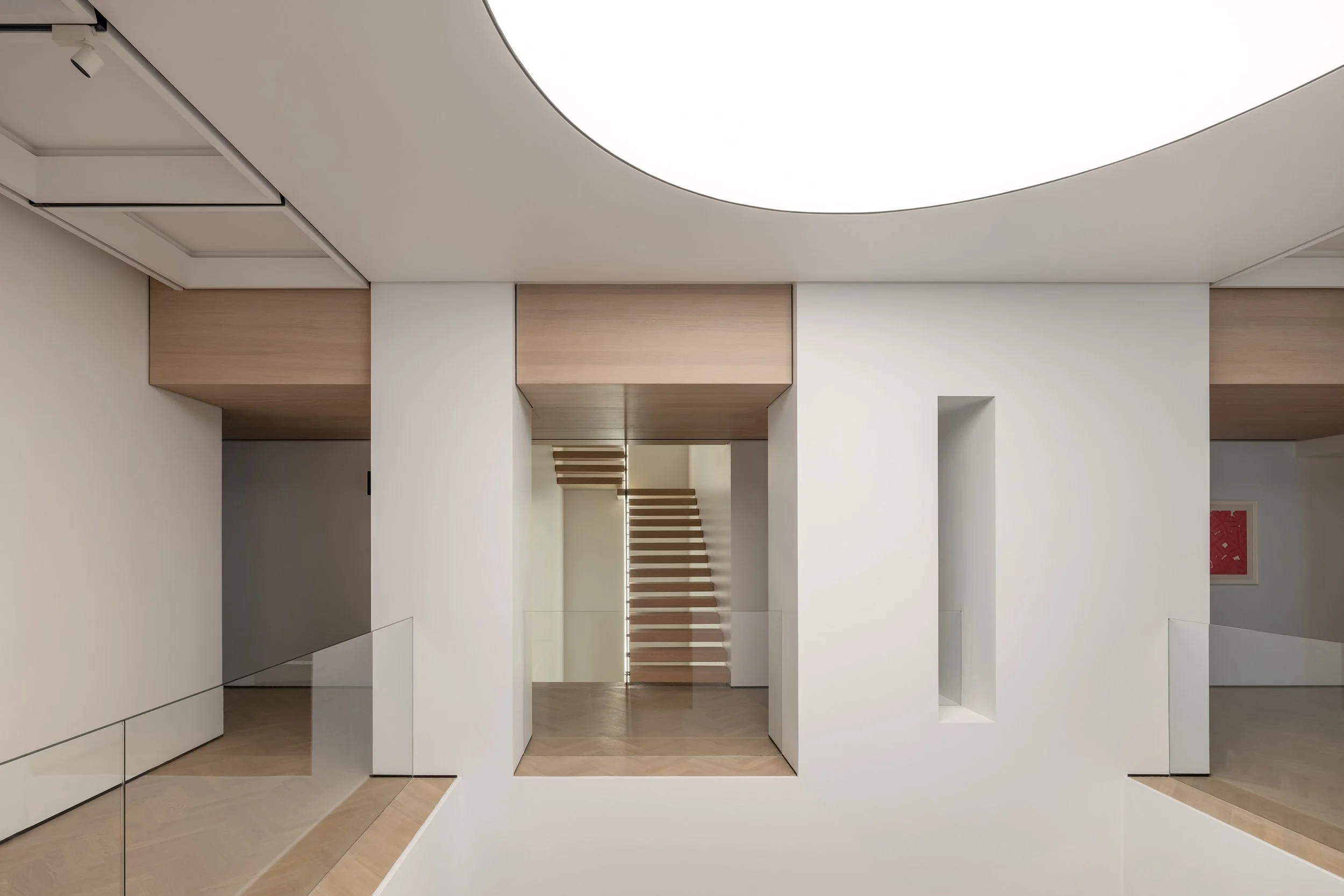
Despite the scope, the objective was relatively straightforward, says Hong. ‘We wanted to solve all the functions with the fewest and simplest materials, leaving a large white area as a canvas for art and light and shadow.’ The final design is based on circulation as well as static and dynamic zoning, and is vertically layered to balance multiple relationships: spatially, to promote the integration of the architecture and interiors, and perceptually, to connect the visual and auditory arts with inner thoughts. ‘Here, spirituality is as important as physical life,’ says Hong.
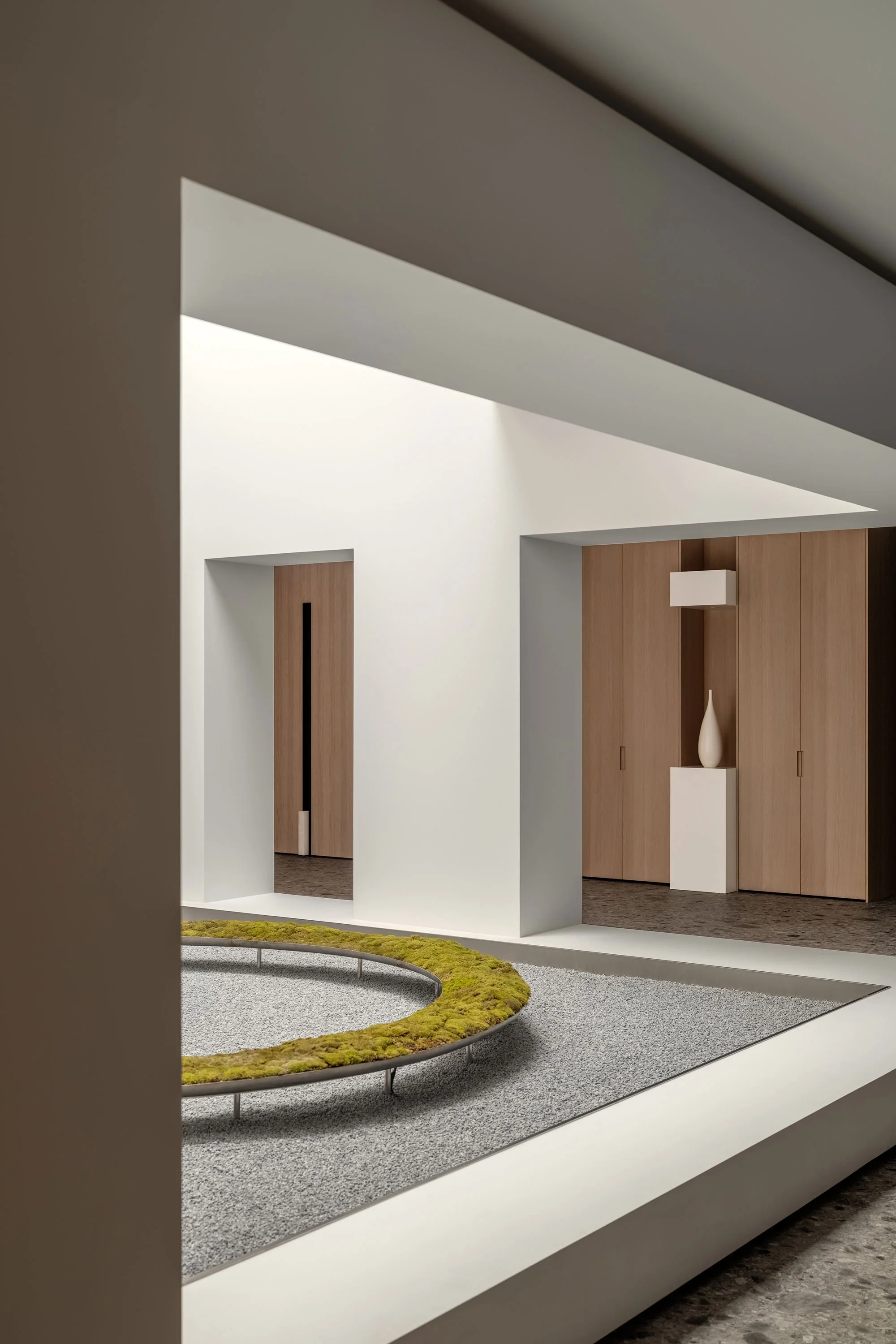
The journey starts with the two basement floors, which are home to entertaining and social areas as well as service facilities. Here, the residents and visitors can use golf and basketball practice areas, a gym, a children’s playground, an audiovisual room, rock climbing facilities, a multifunctional banquet hall, a wine cellar and more.
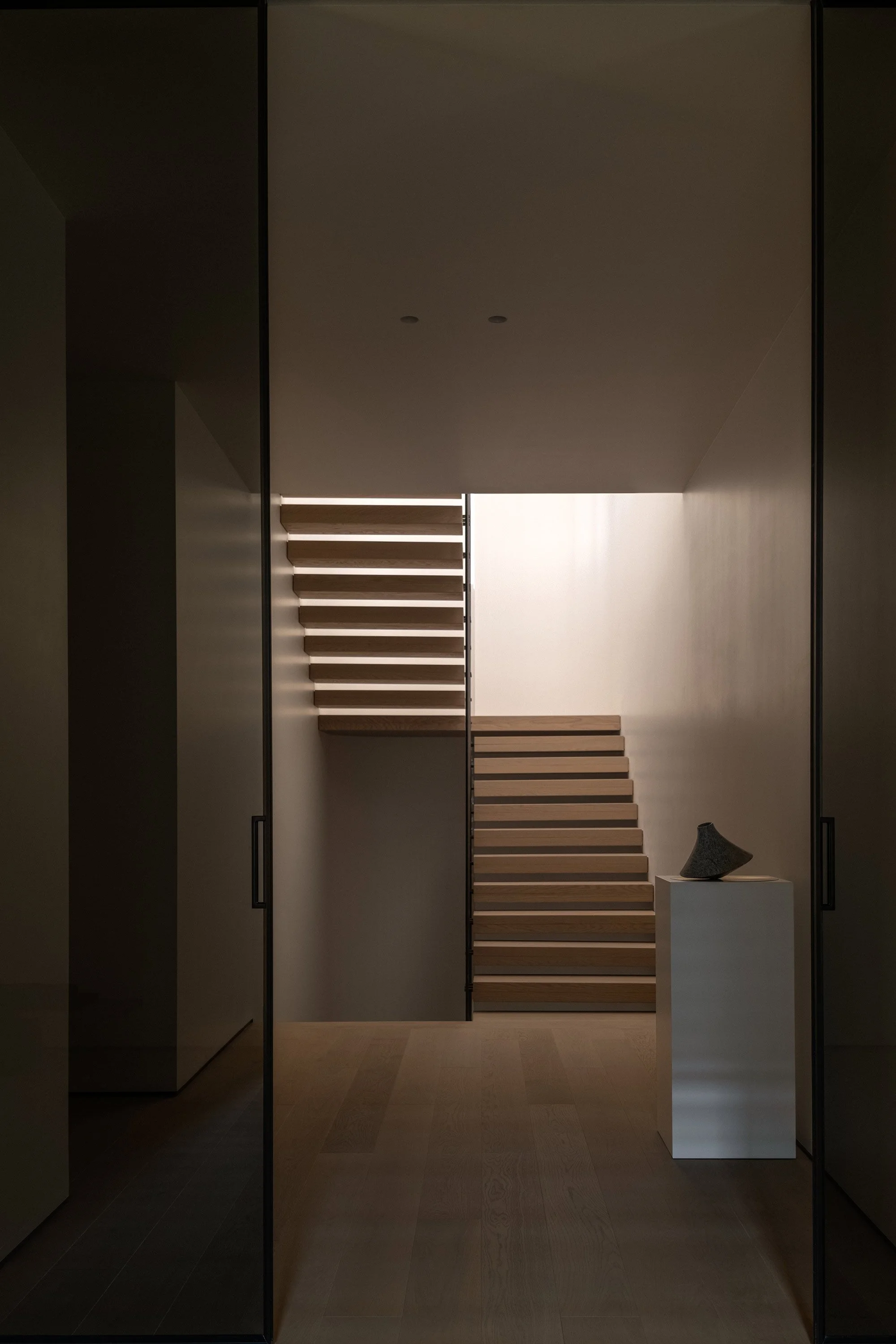
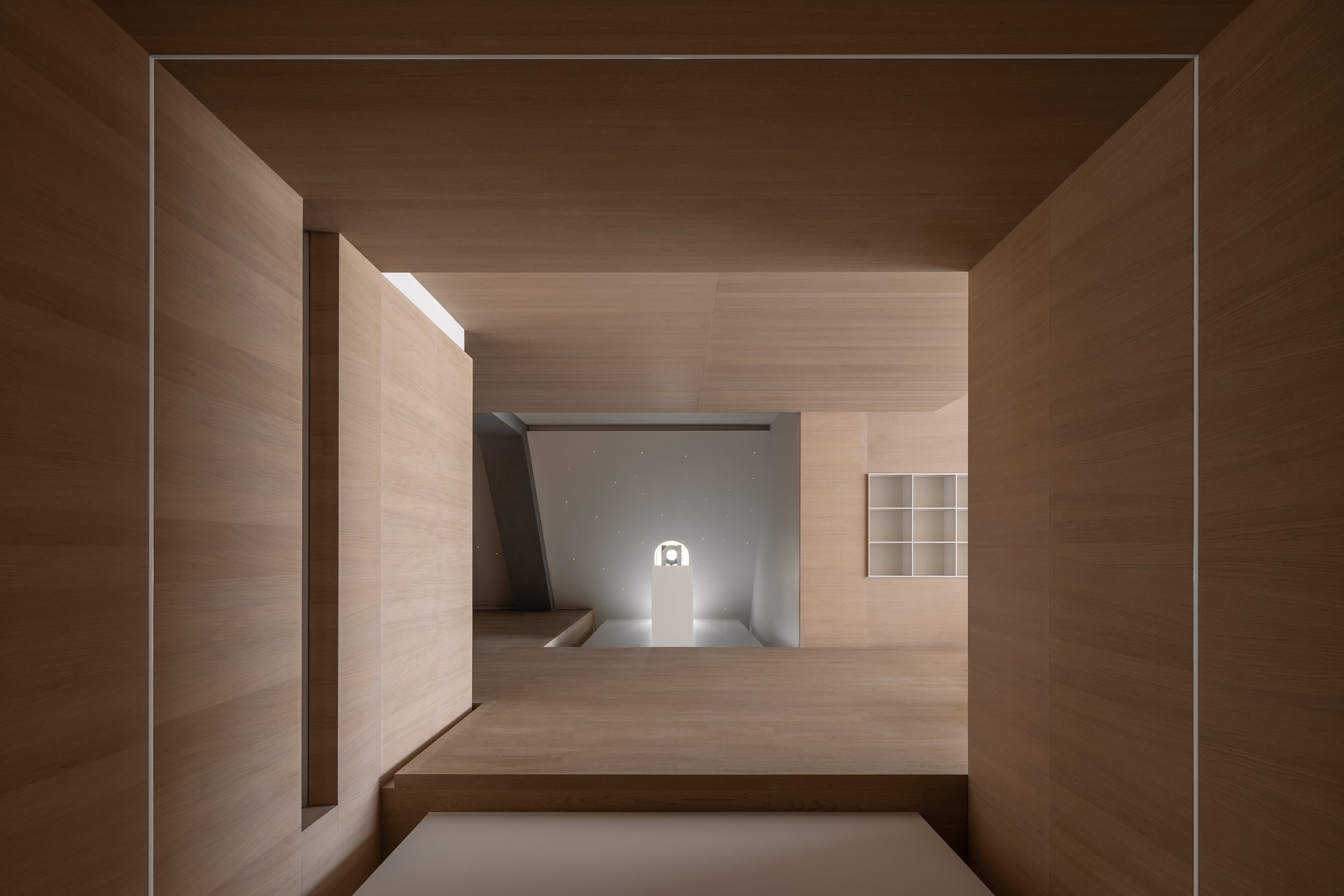
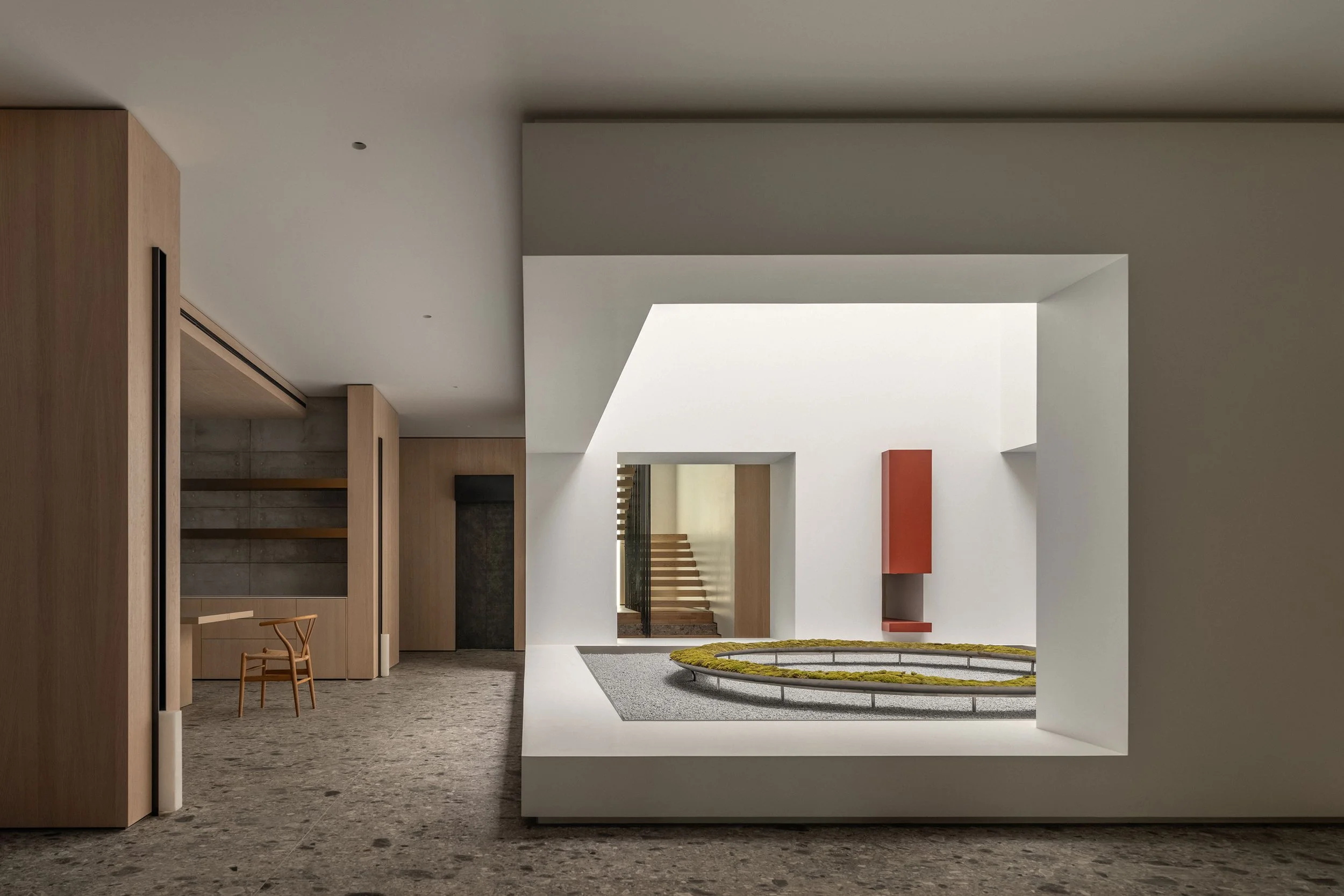
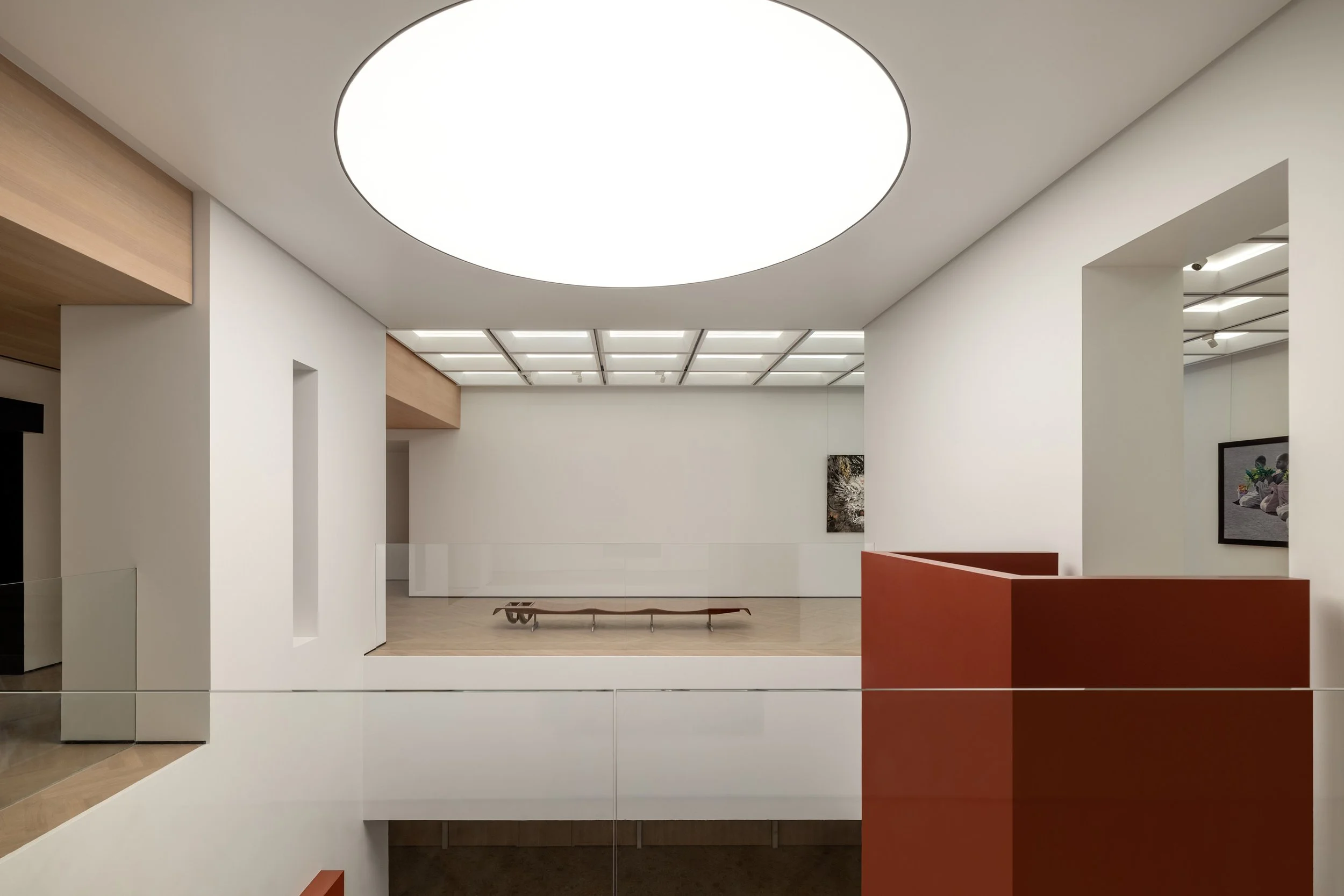
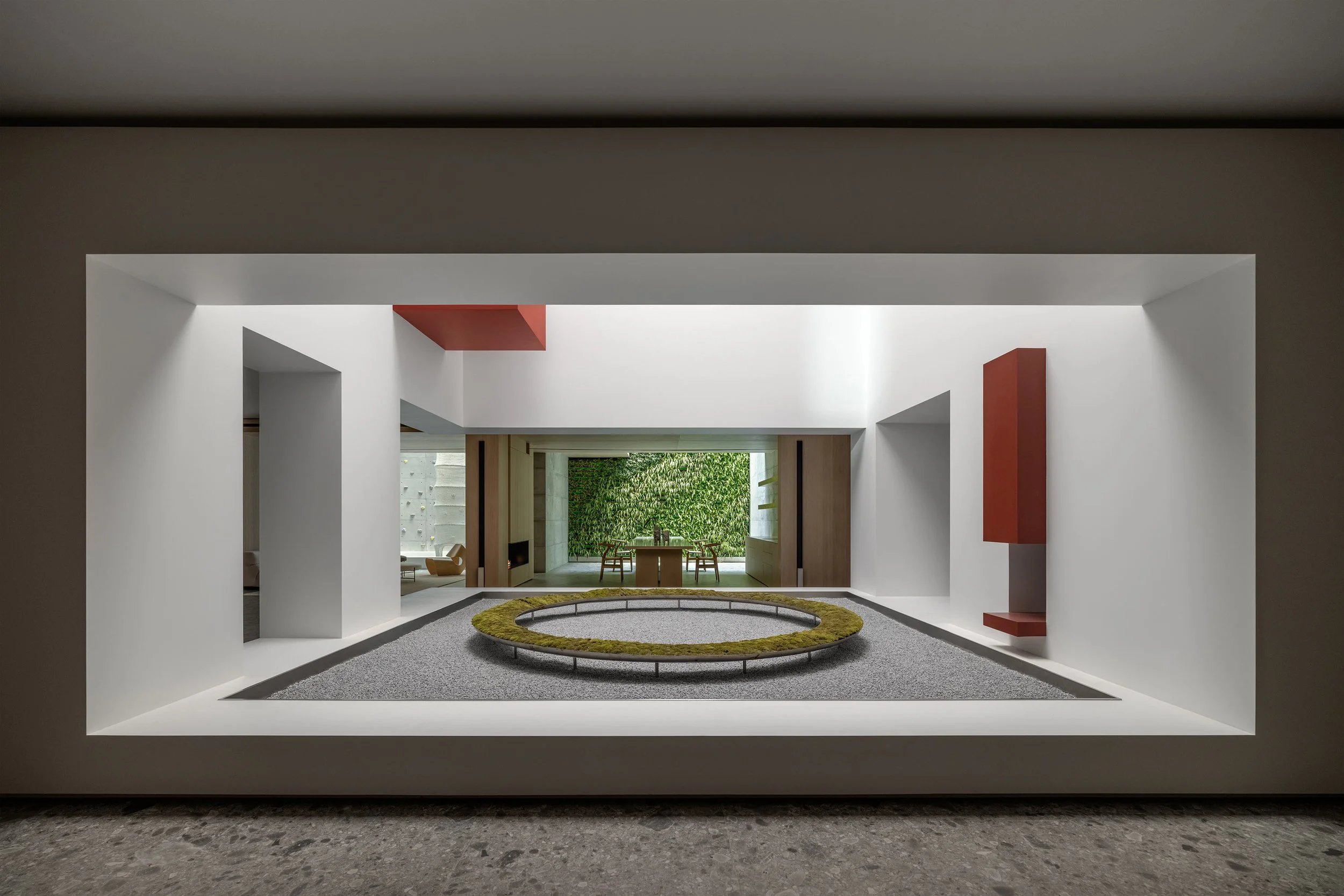
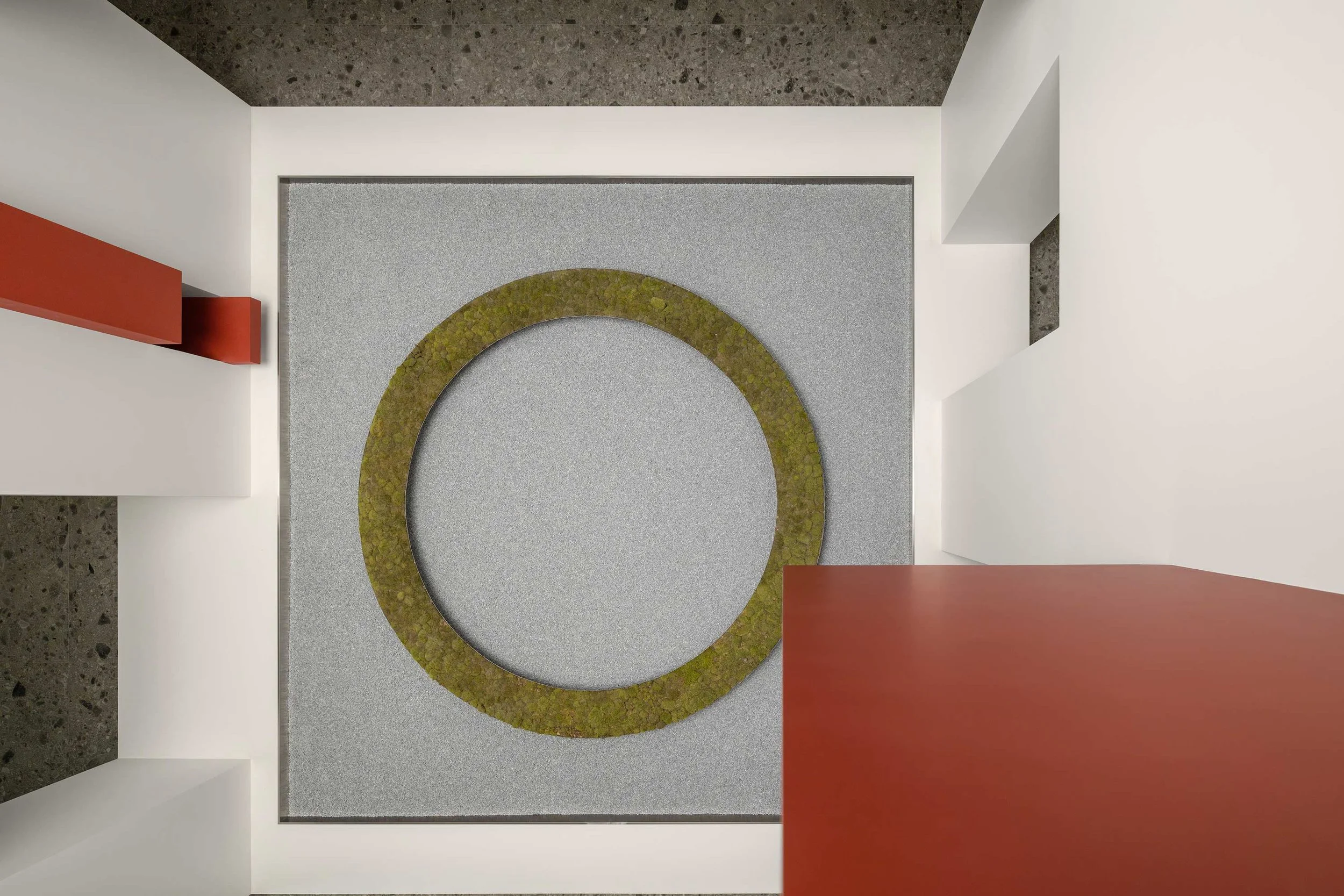
Hong connected the units through a seven-metre-high atrium, creating a rhythmic change of scenery vertically. Through two floors, the atrium shows the transparency of a sunken courtyard and forms its own view-filled corridor with the gallery on the basement’s first floor.

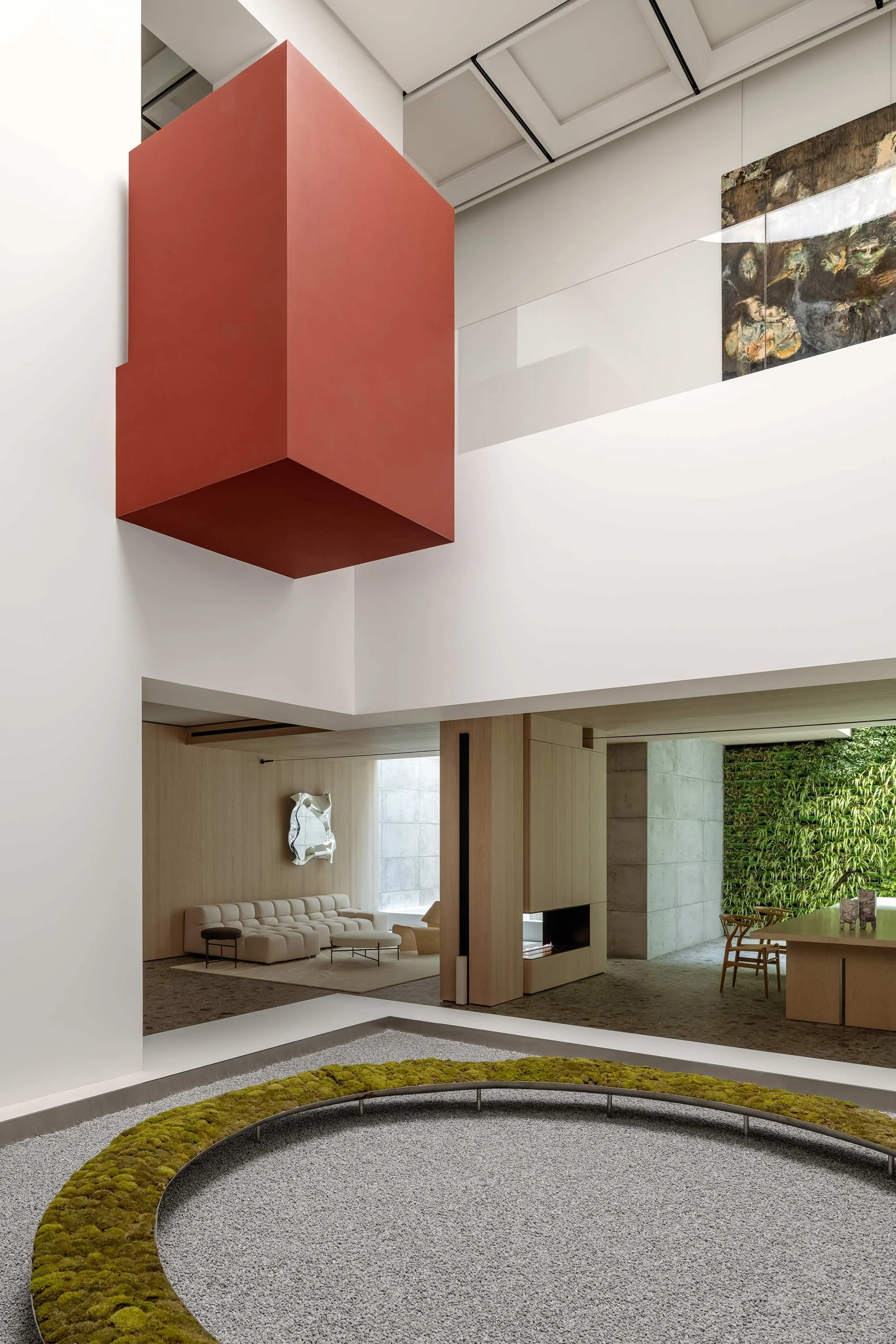
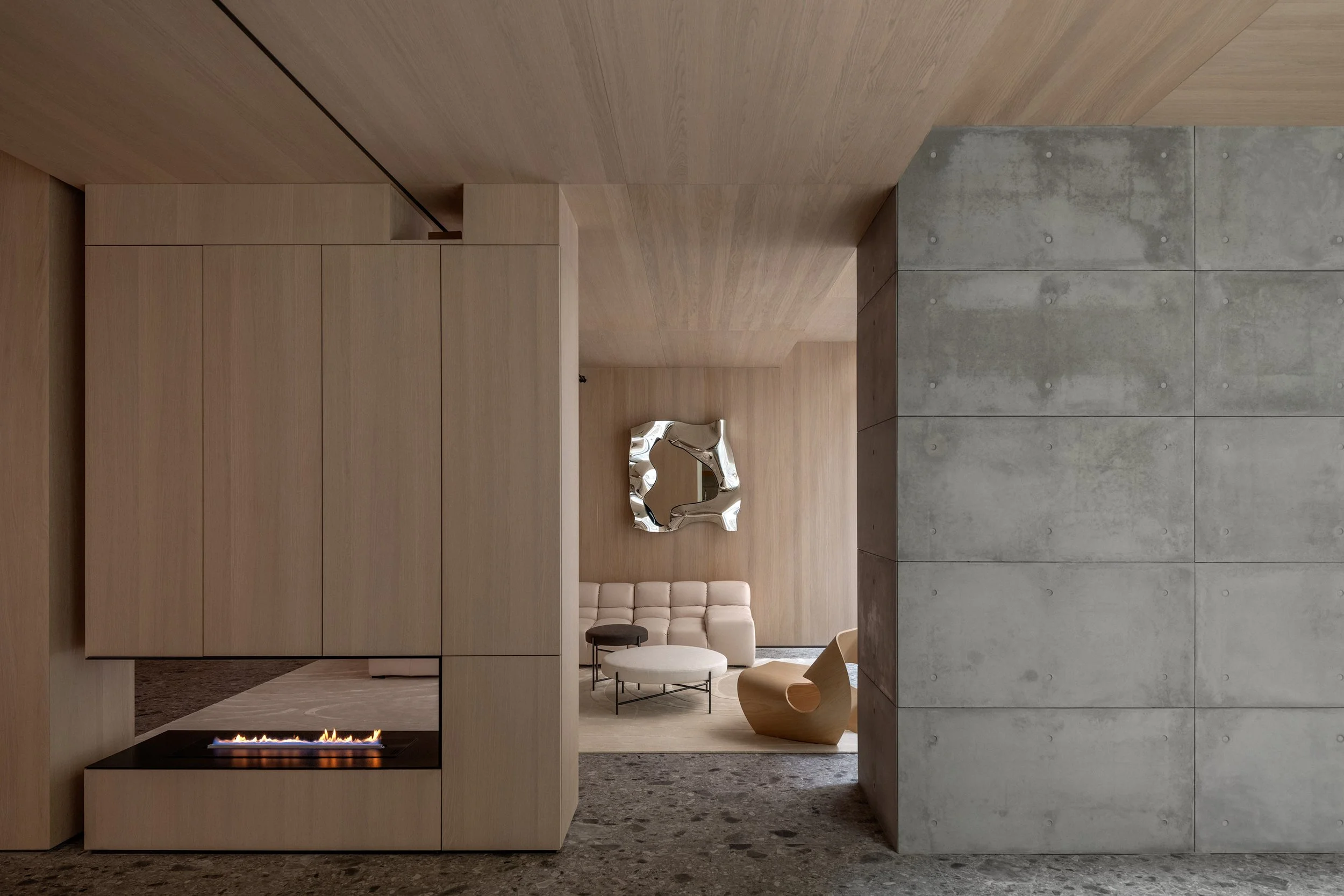
The atrium forms the core of the banquet hall, wine cellar and concert hall, which are arranged around the space. Here, original wood, terrazzo and fair-faced concrete enhance the texture of the space, while a large red element warms the space and complements the installation art.
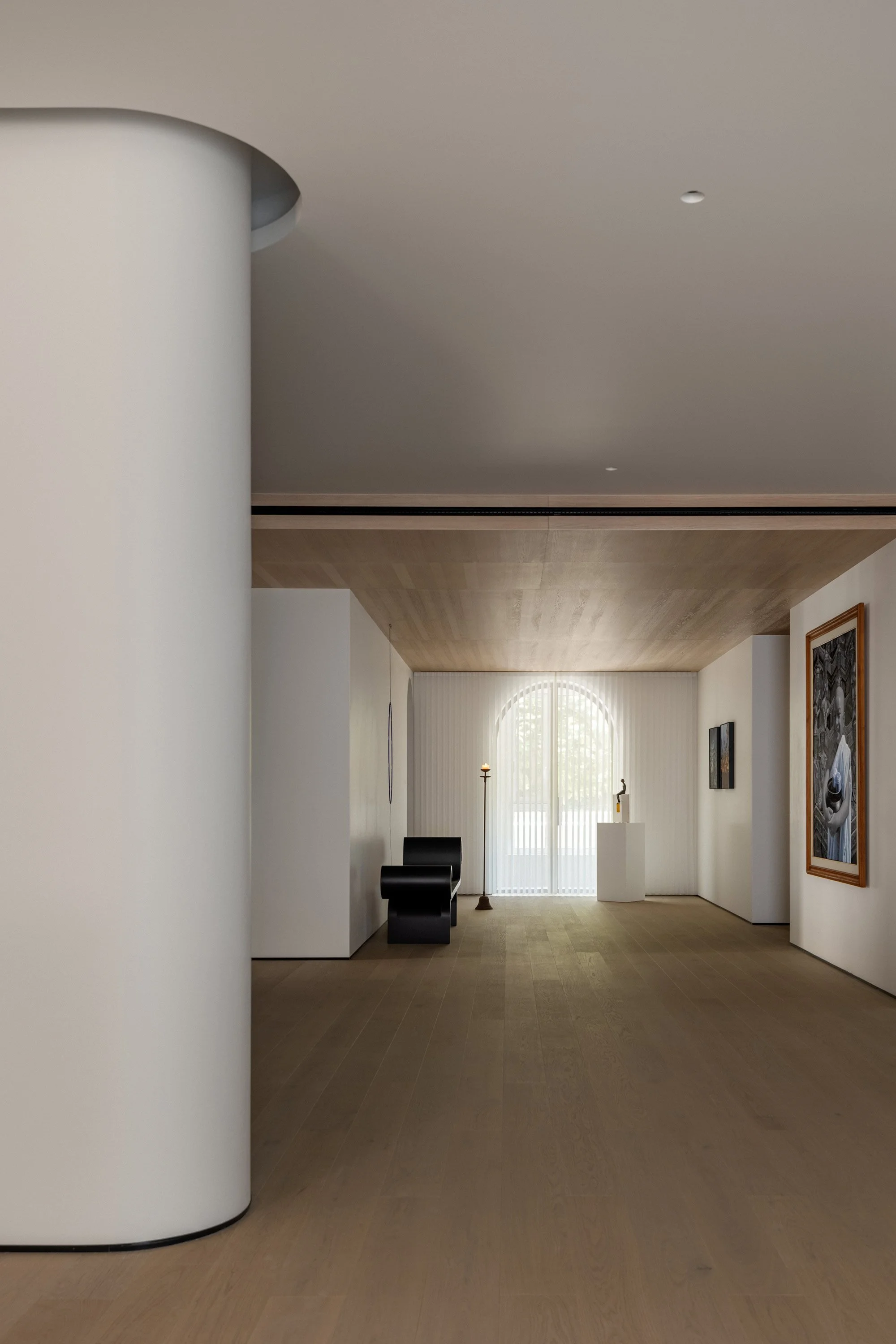
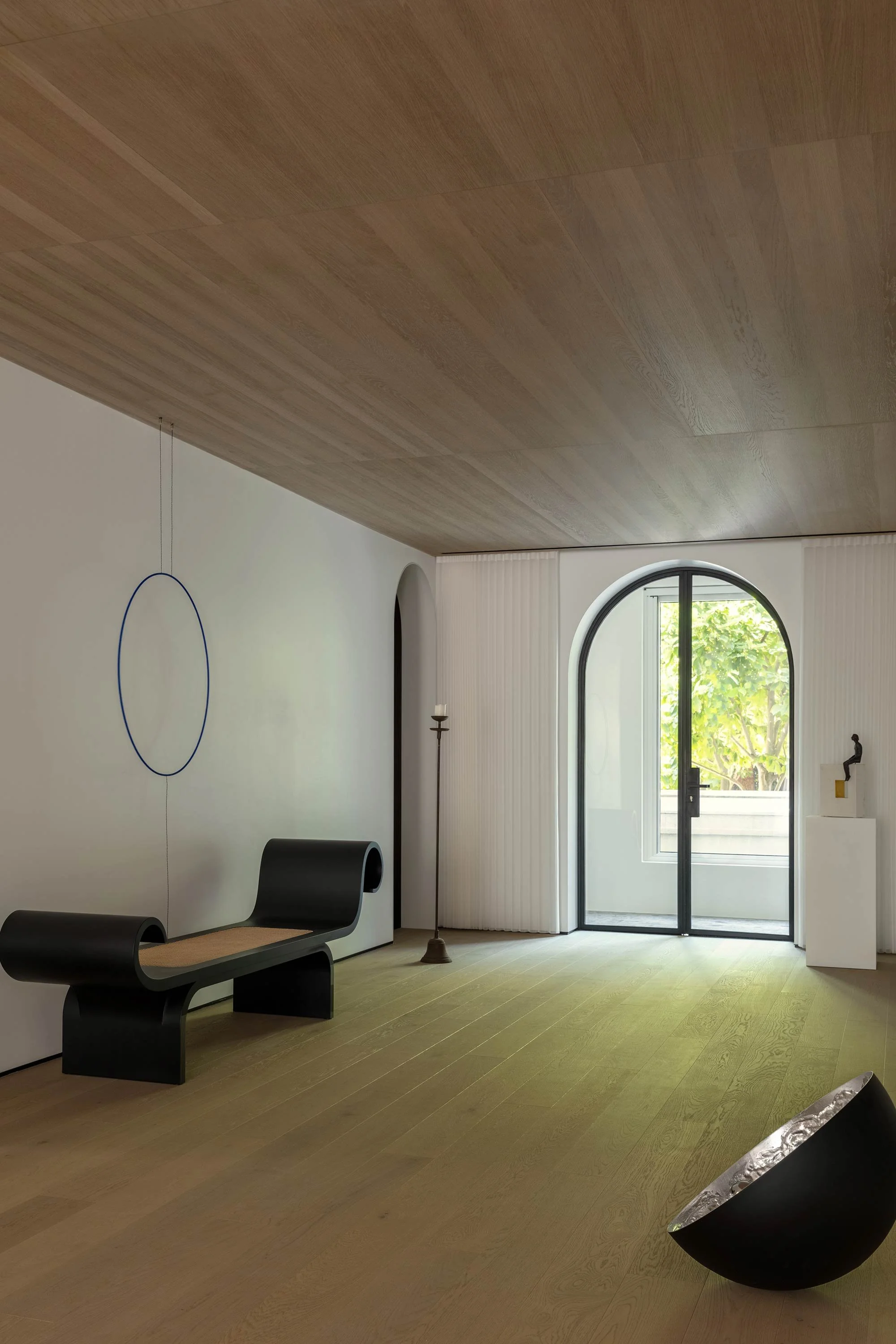
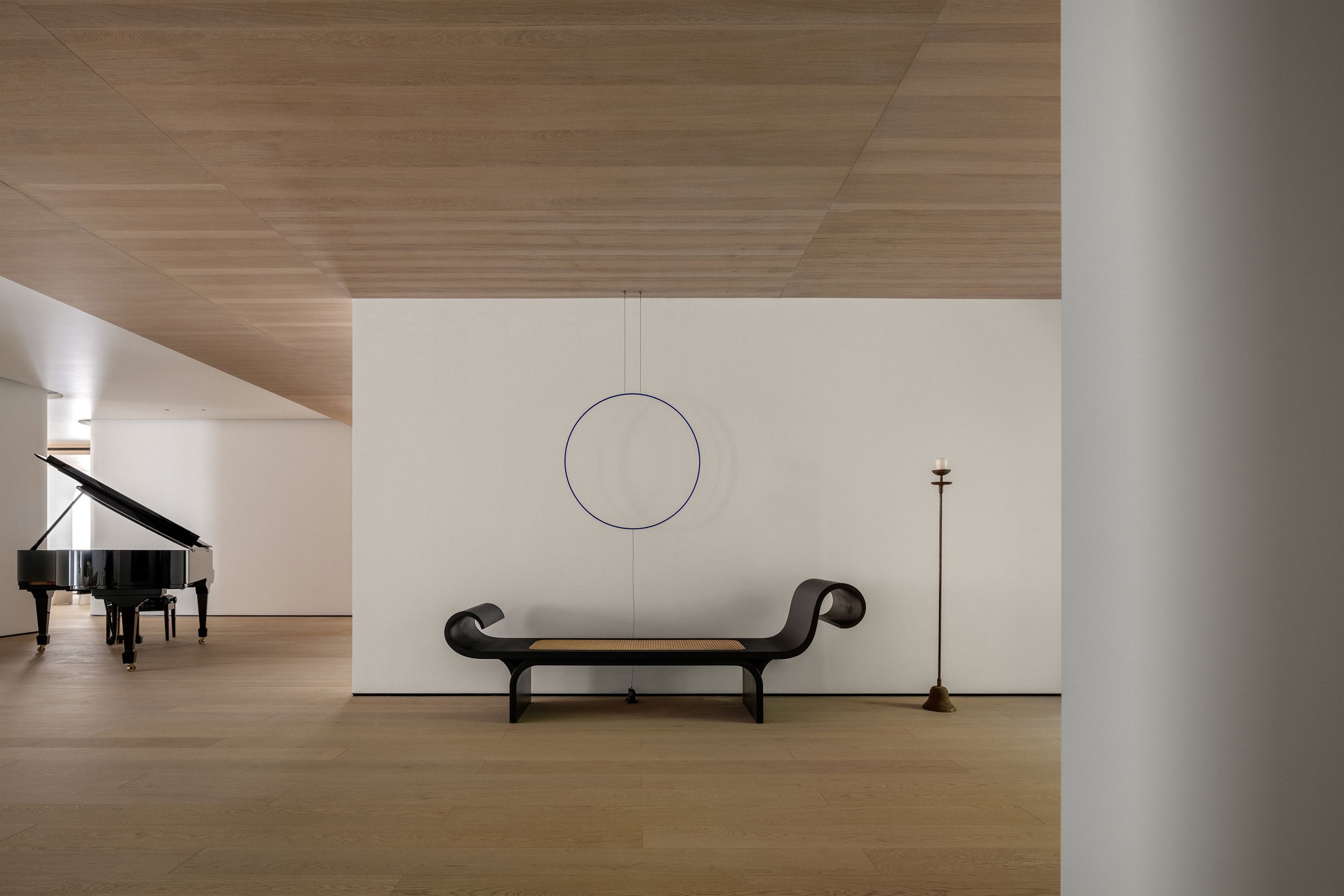
The over-ground space is reserved for family time. Here, Hong created an open layout with minimal decoration to highlight the natural light. The front room, which connects to the garden, is furnished with classic Marquesa benches by Oscar and Anna Maria Niemeyer.
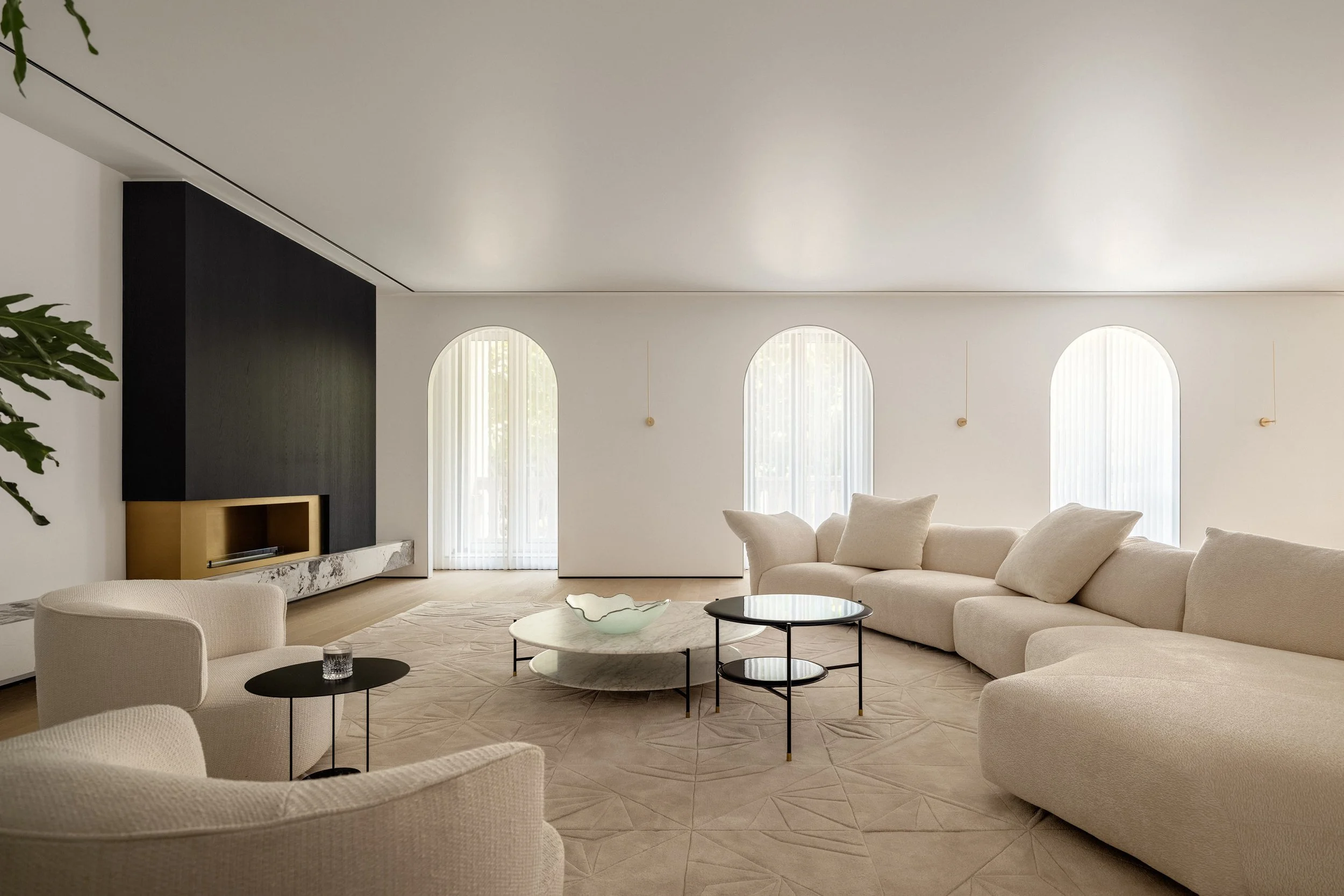
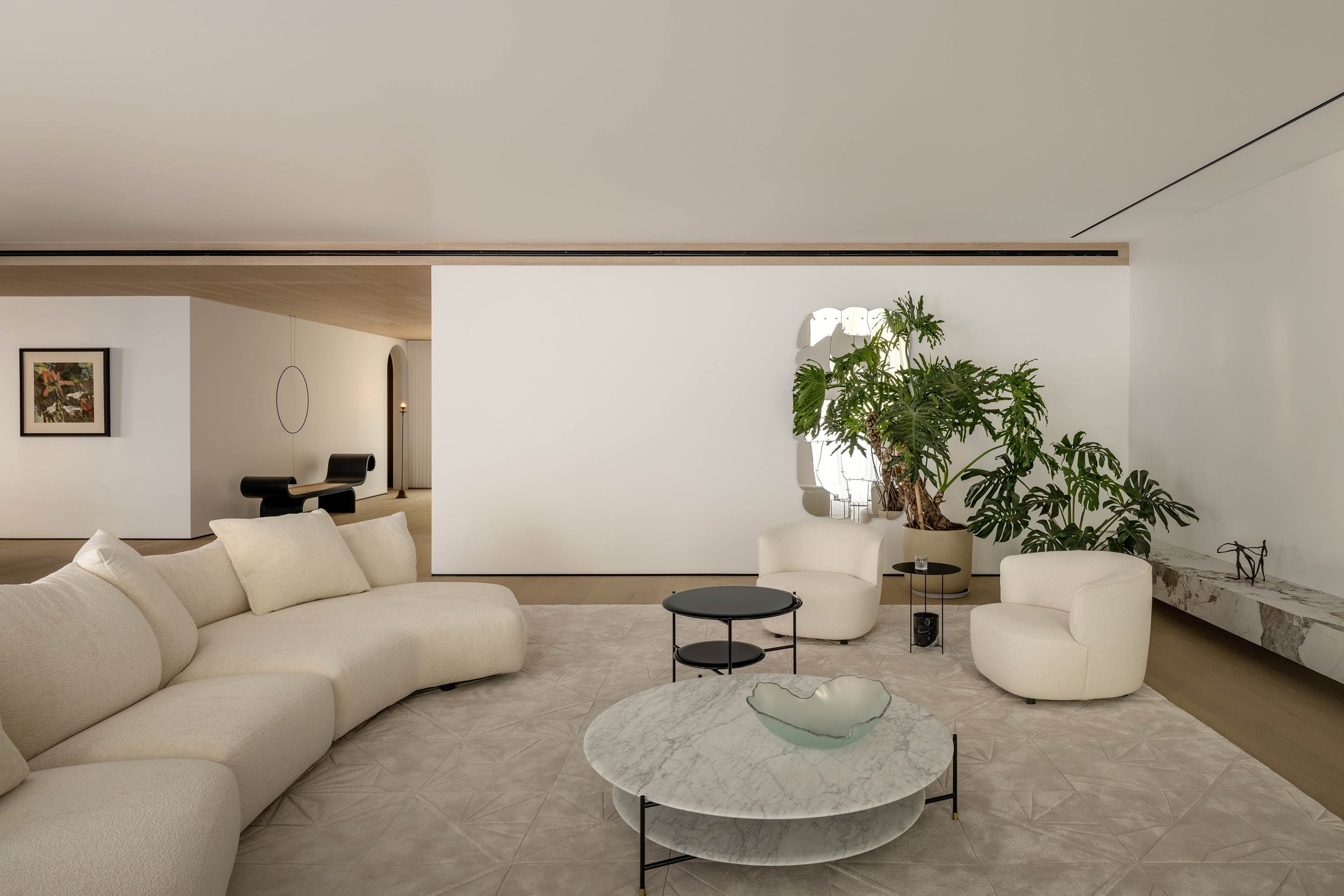
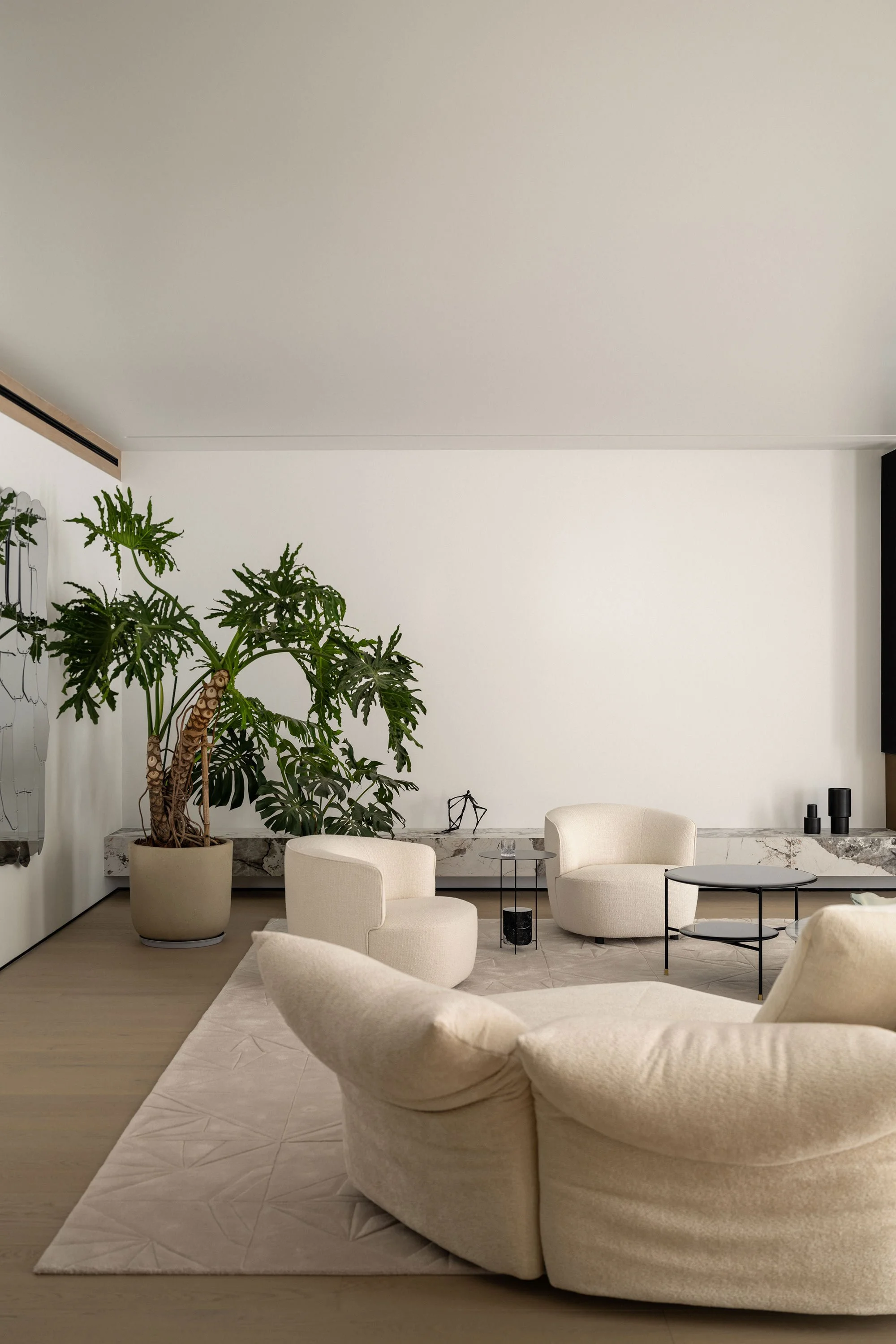
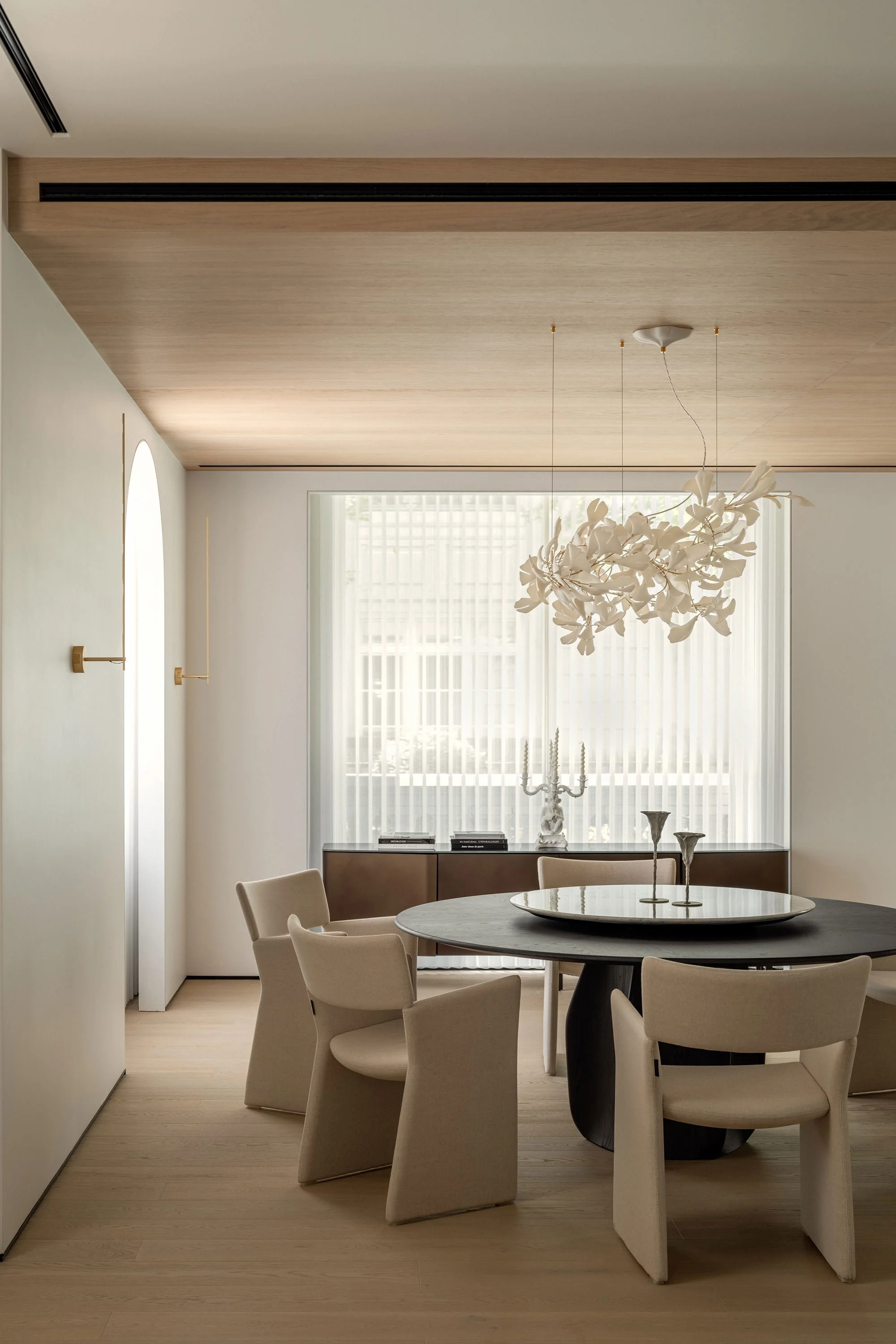
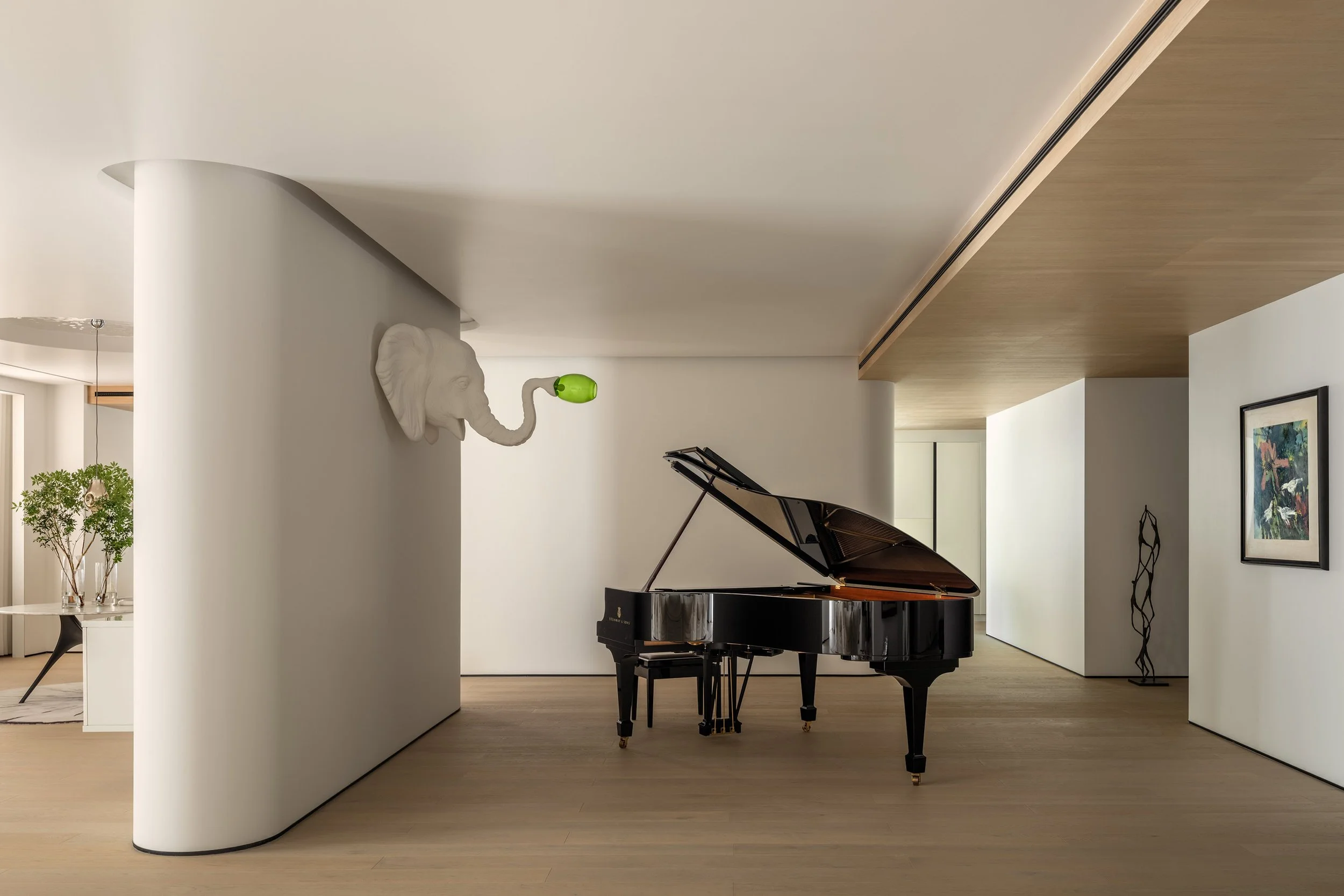
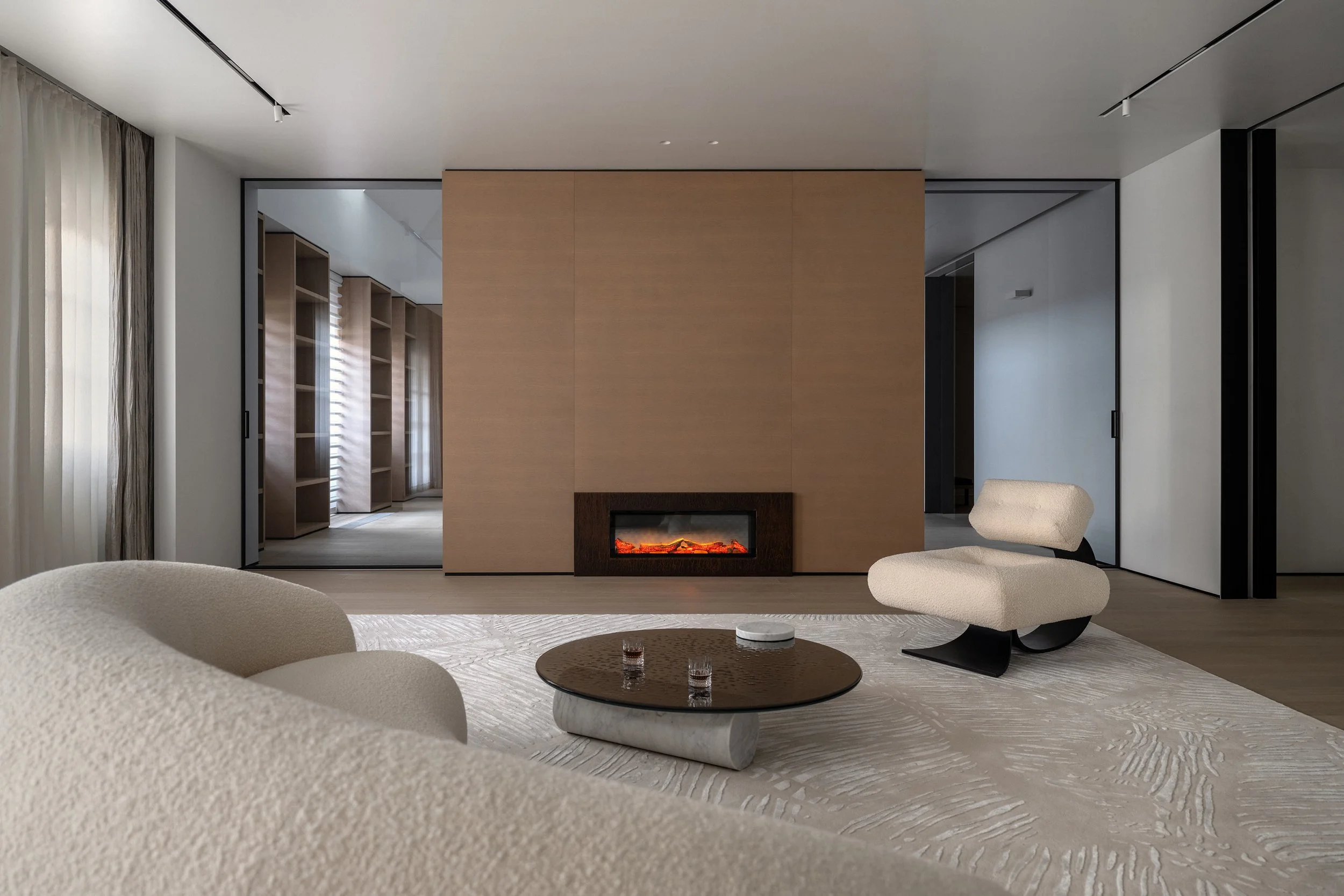
The concert hall, centred on a Steinway grand piano, has a curved side wall that extends to the ceiling interior. The bright, spacious living room welcomes with warm beige and an accent fireplace in black and gold, and adjacent to this room, Chinese and Western kitchen and dining spaces are elegant and convivial.
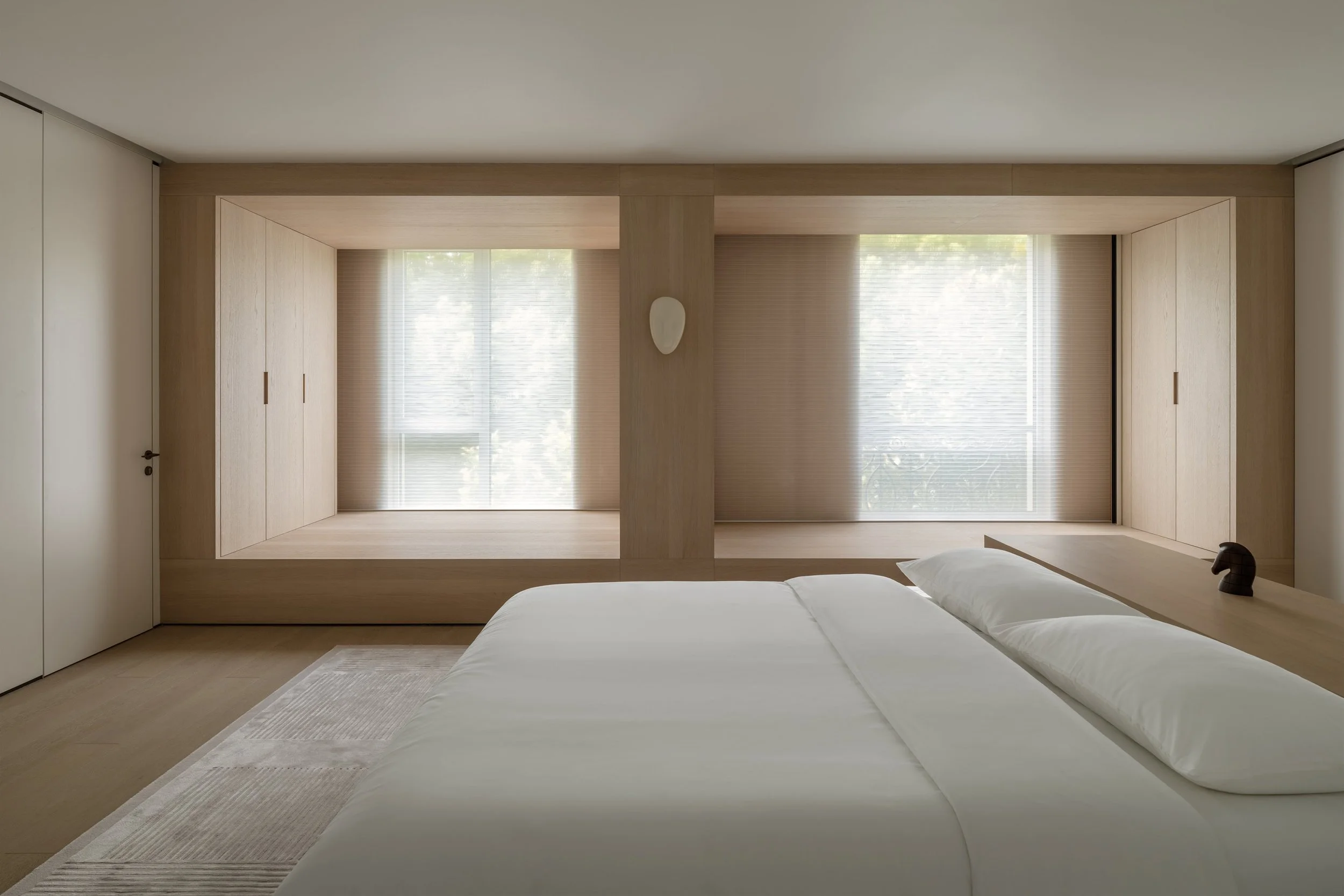
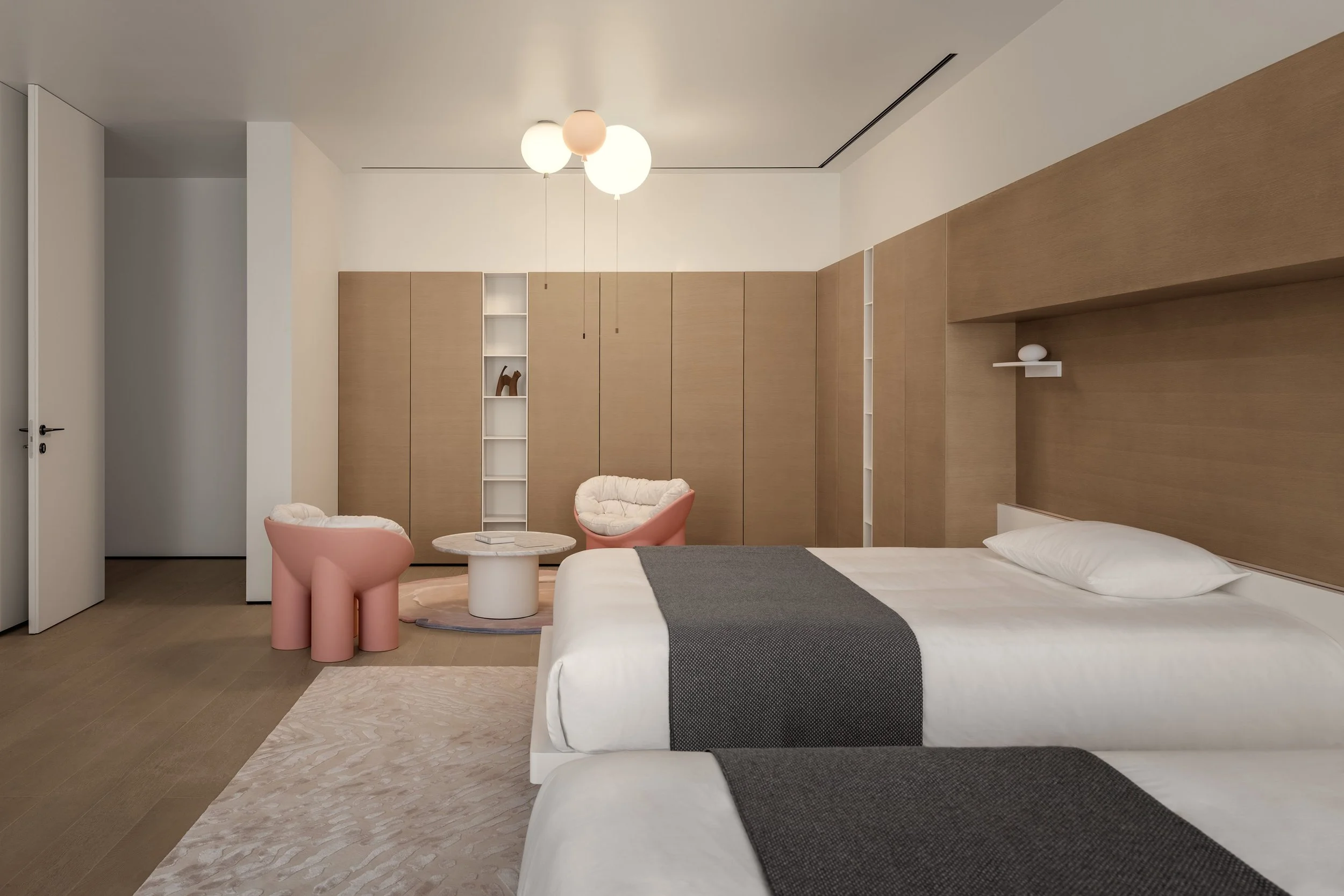
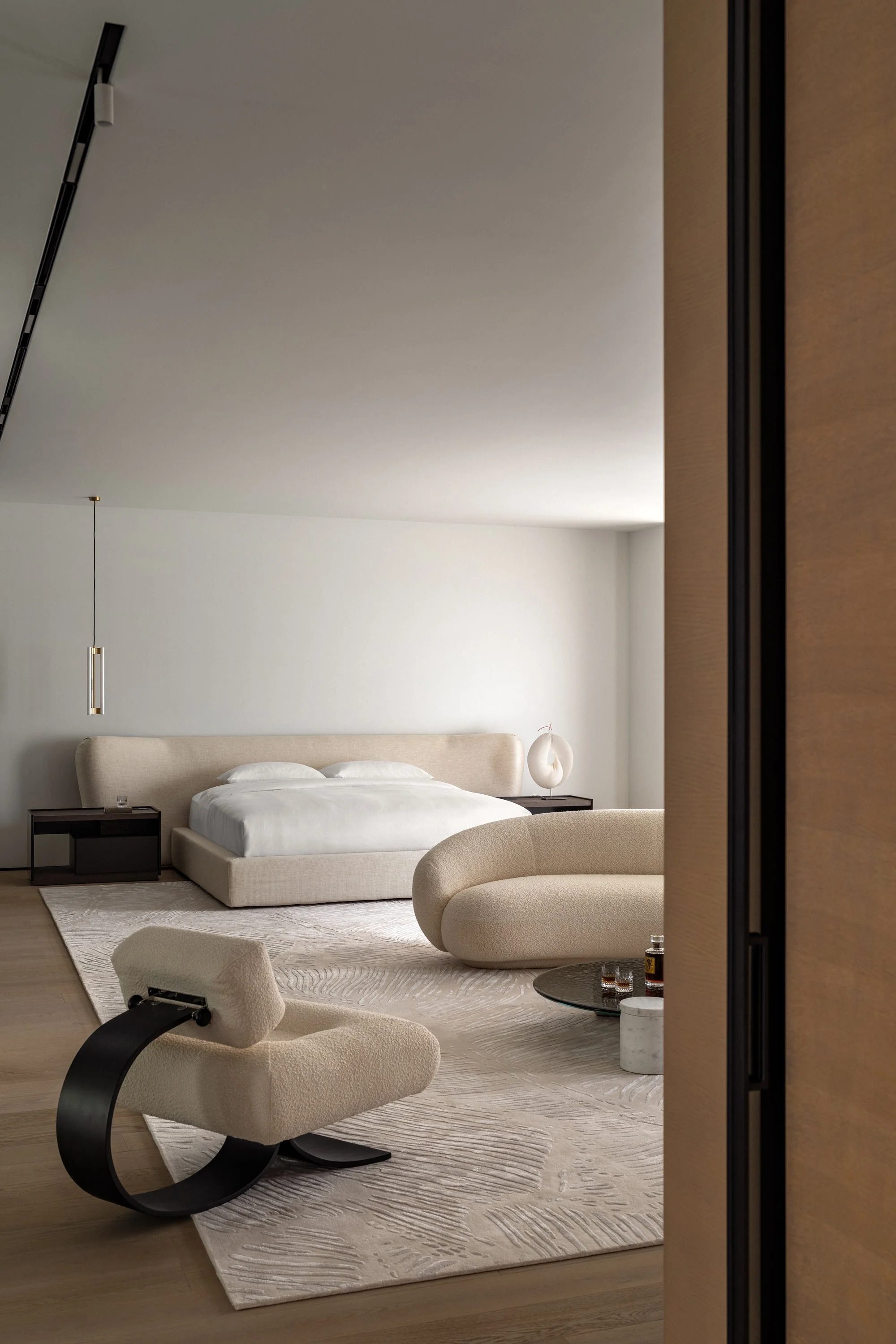
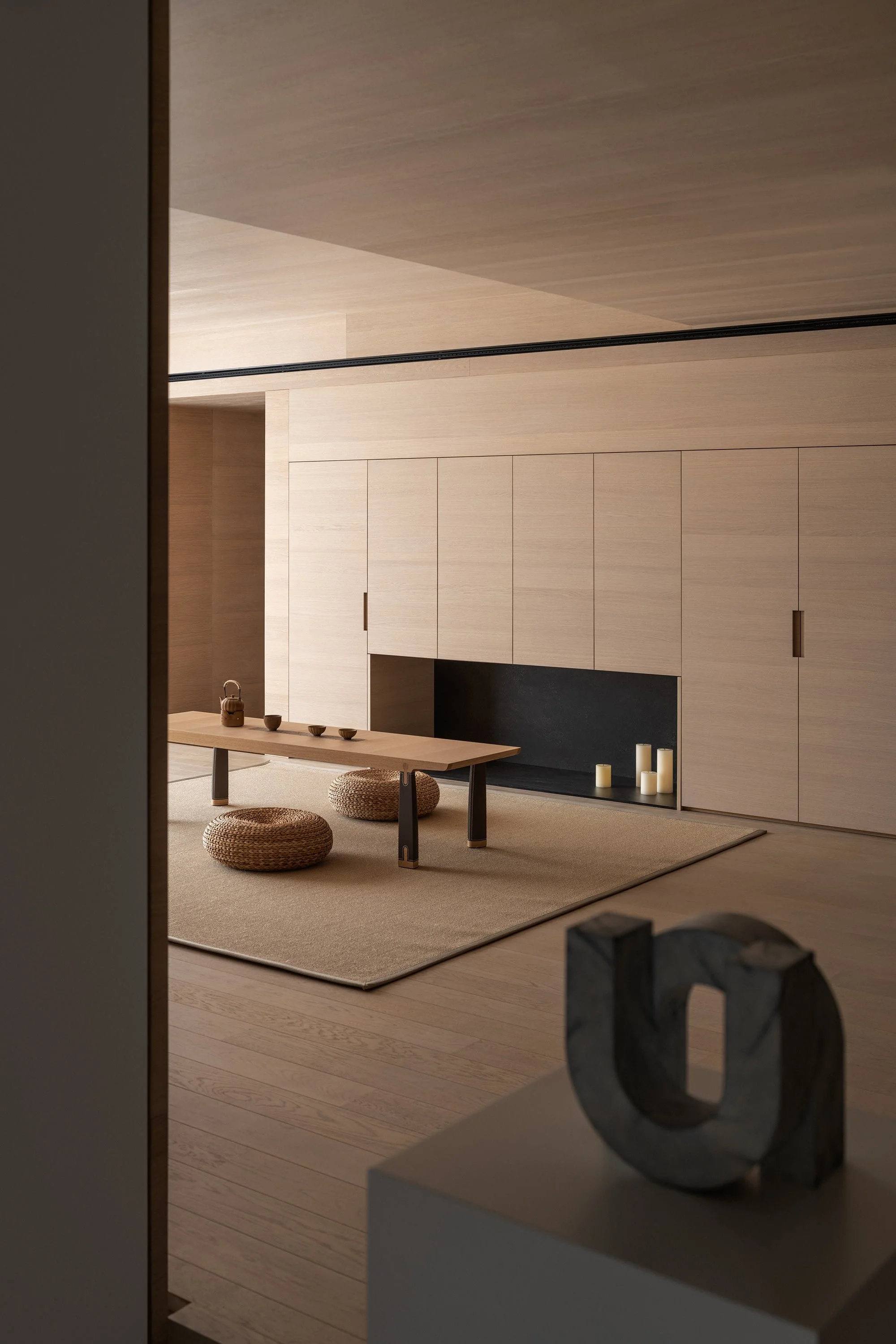
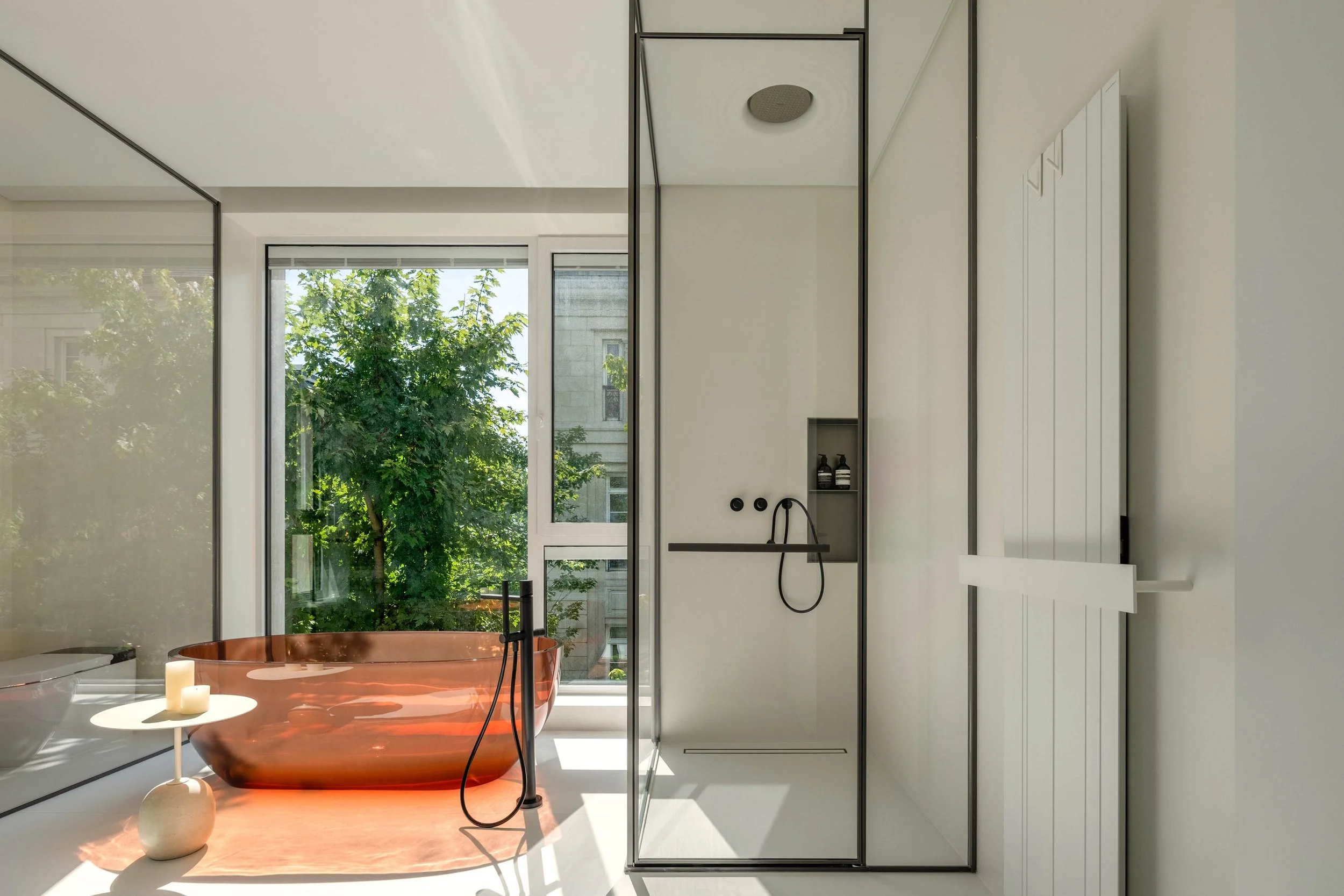
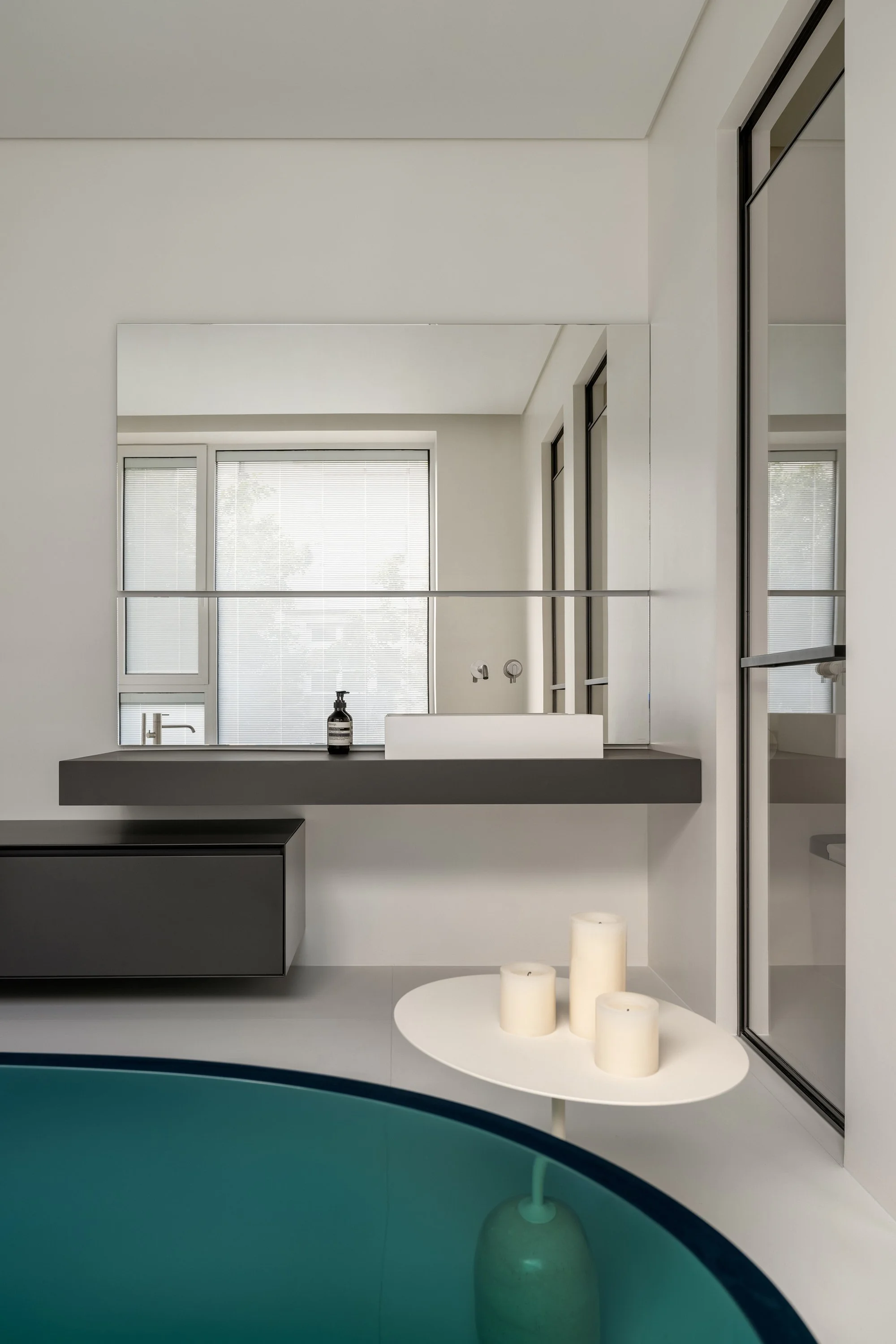
Above are more intimate spaces. The children’s rooms are minimalist, with soothing palettes and accent pieces such as a Reversível chair by Martin Eisler and Faye Toogood’s Roly Poly chairs in pink, while the couple’s personal spaces are located above the children’s rooms and include a bedroom suite, study and tearoom.
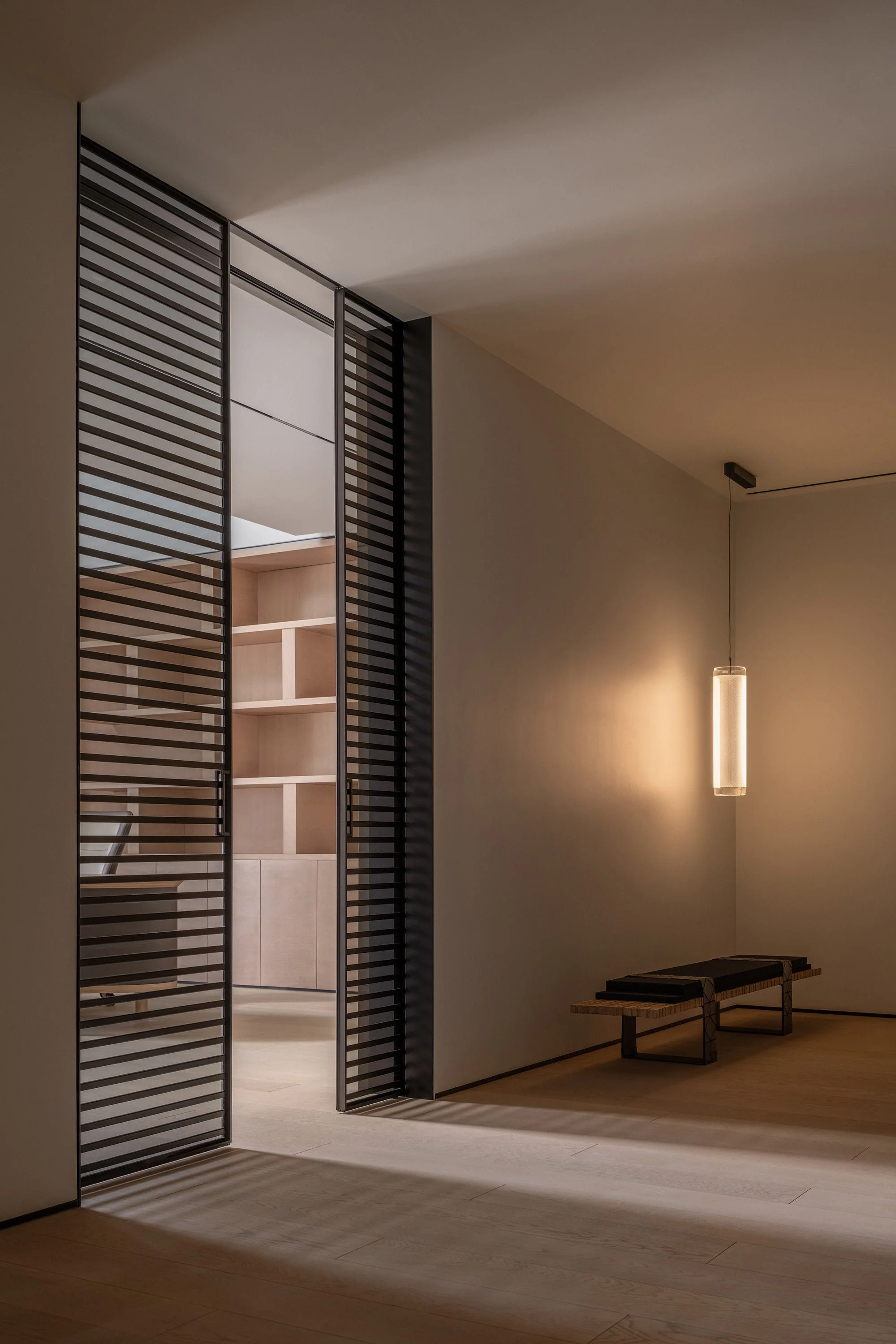
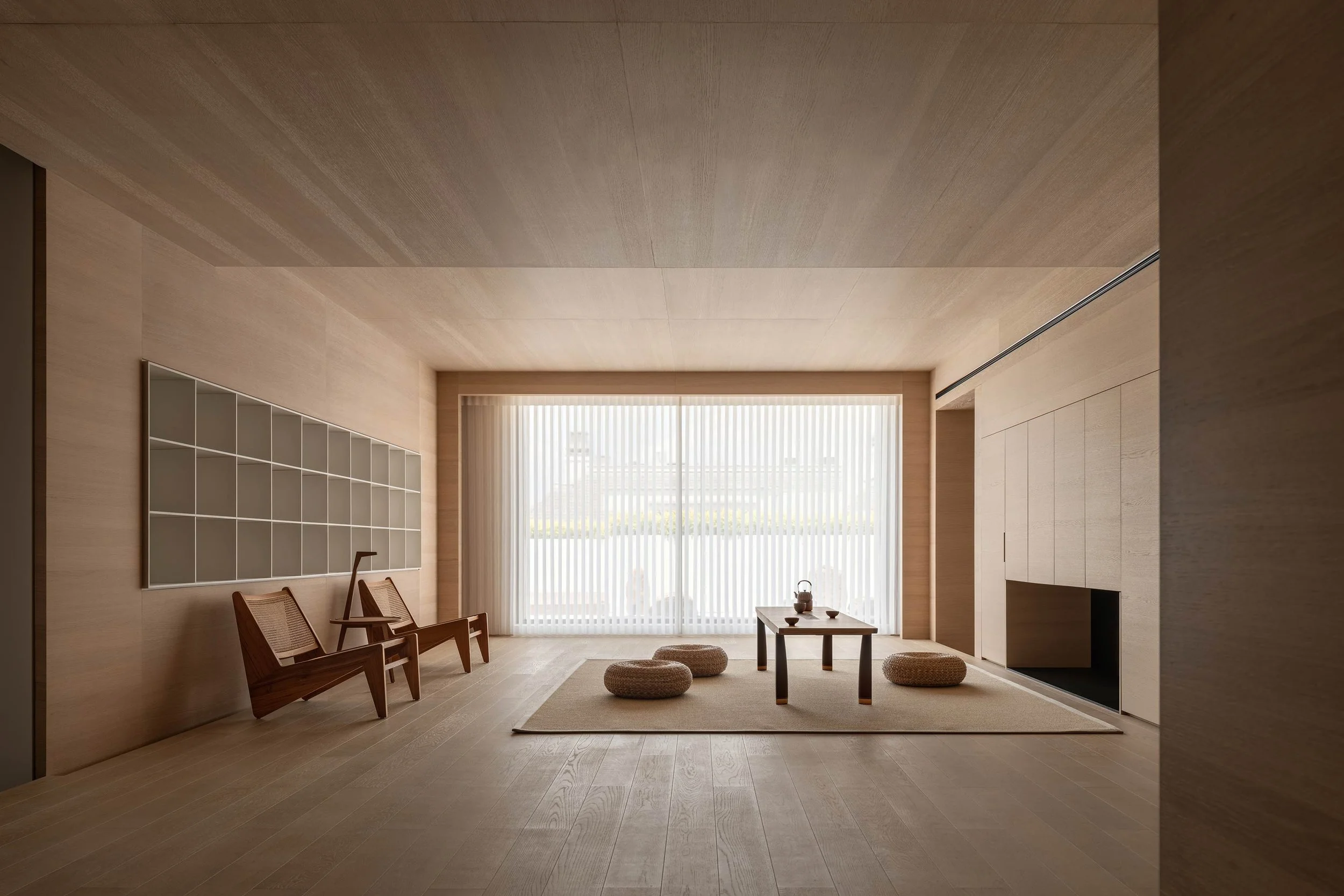
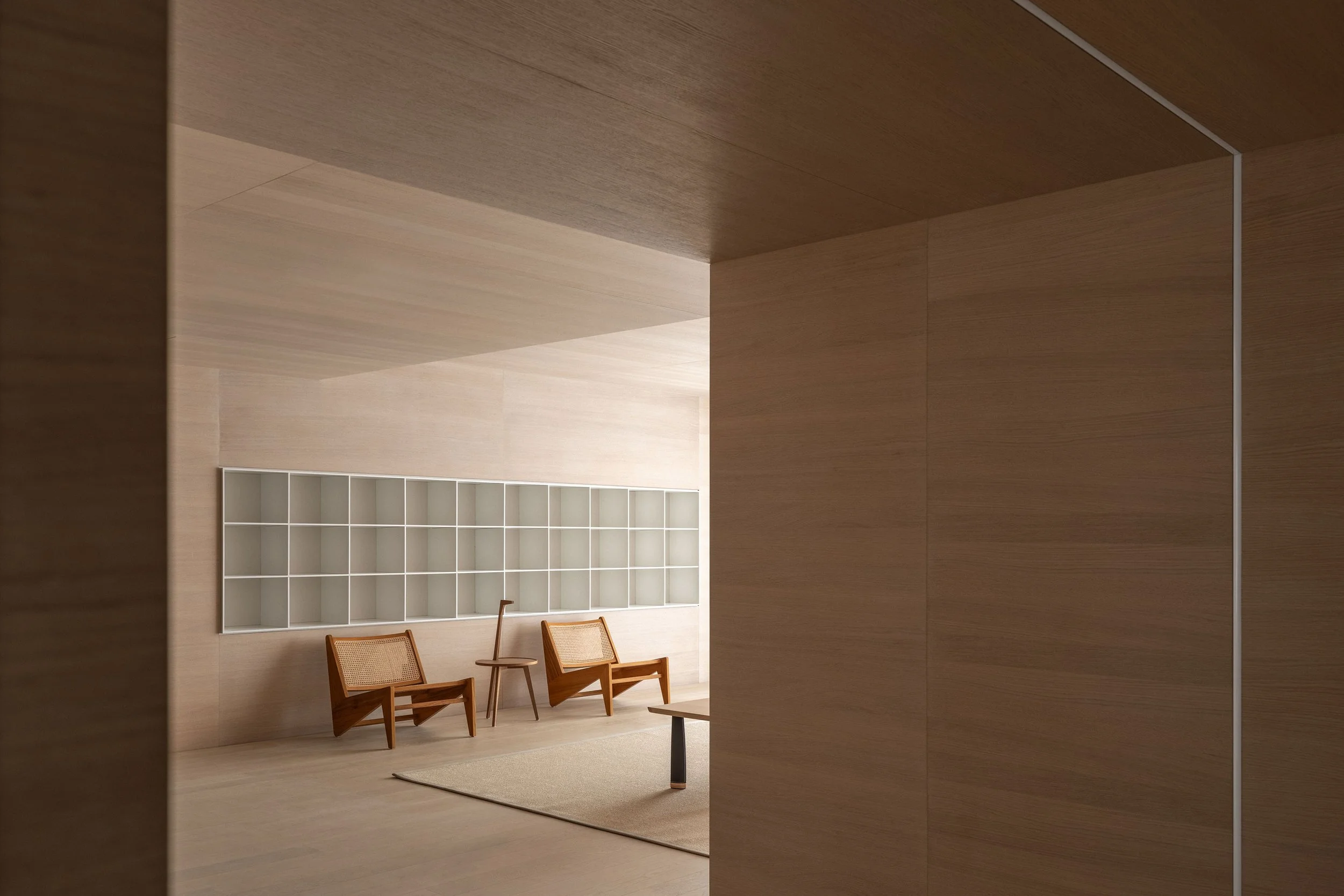
At the top of the home is the attic, which Hong describes as a ‘spiritual place’ for the whole family. A library forms the main body, swathed in warm and elegant wood materials, providing a place for meditation and relaxation. This is another space flooded with calming natural light. ‘I like pure and simple architecture, which allows light to enter the room as needed,’ says Hong.
Text by Philip Annetta
Images by Sui Sicong