On Bali’s Tranquil South-eastern Coast, A Home Built on an Ancient Grid System
For Cave Urban co-founder Jed Long, whose practice explores bamboo and adaptive reuse, designing his Bali home became an opportunity to test many of the ideas that have shaped the studio's work over the past decade
Although this home was designed by an architect for his own family, surprisingly little had been decided before construction began. Situated on Bali's quieter south-eastern coast in Ketewel, the residence gave Cave Urban co-founder Jed Long an opportunity to further experiment with ideas that have shaped the practice for more than a decade — vernacular construction, adaptive reuse and site-specific architecture that responds to local materials — without a client brief or timeline dictating the outcome.
There were drawings — close to 30 of them — but the final result was ‘completely different from when we started the project’, Long says. He likens the process to creating one of his large-scale sculptures. ‘You kind of start with an idea, but that making process actually informs what you create,’ he adds. ‘We put these posts up, and then we started to connect it all together. And the design keeps evolving through that process, as you’re responding to the ways everyone is working.’
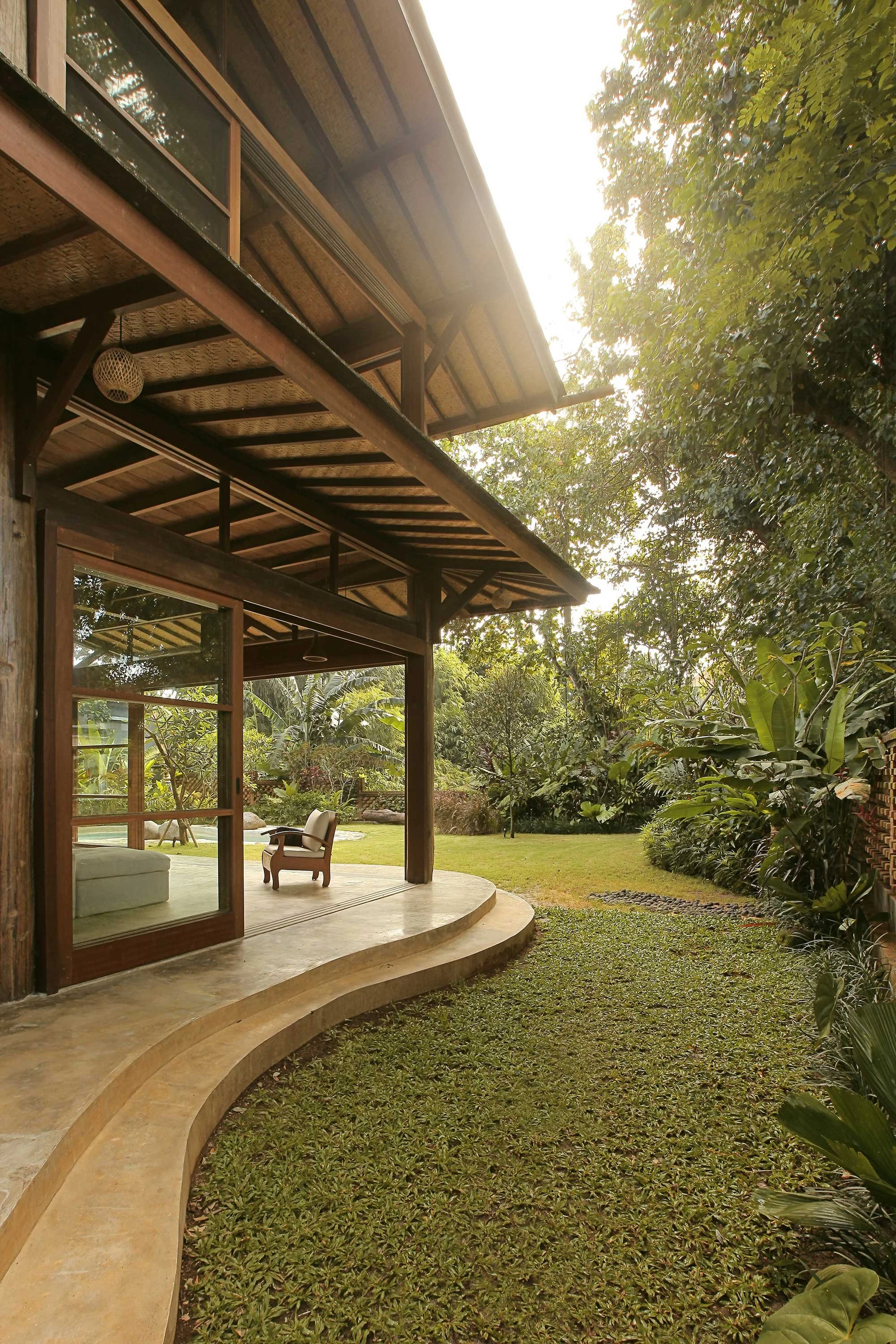
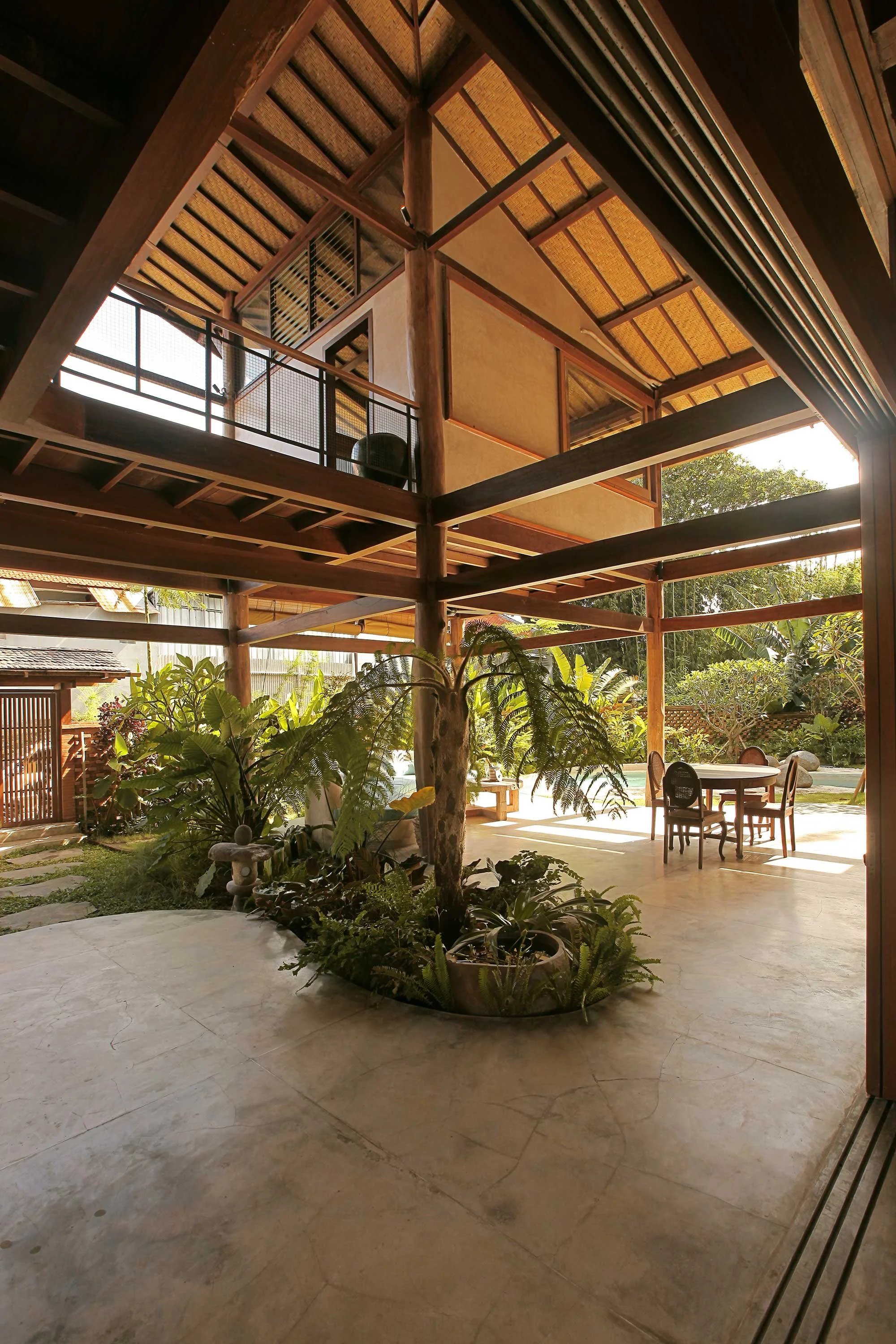
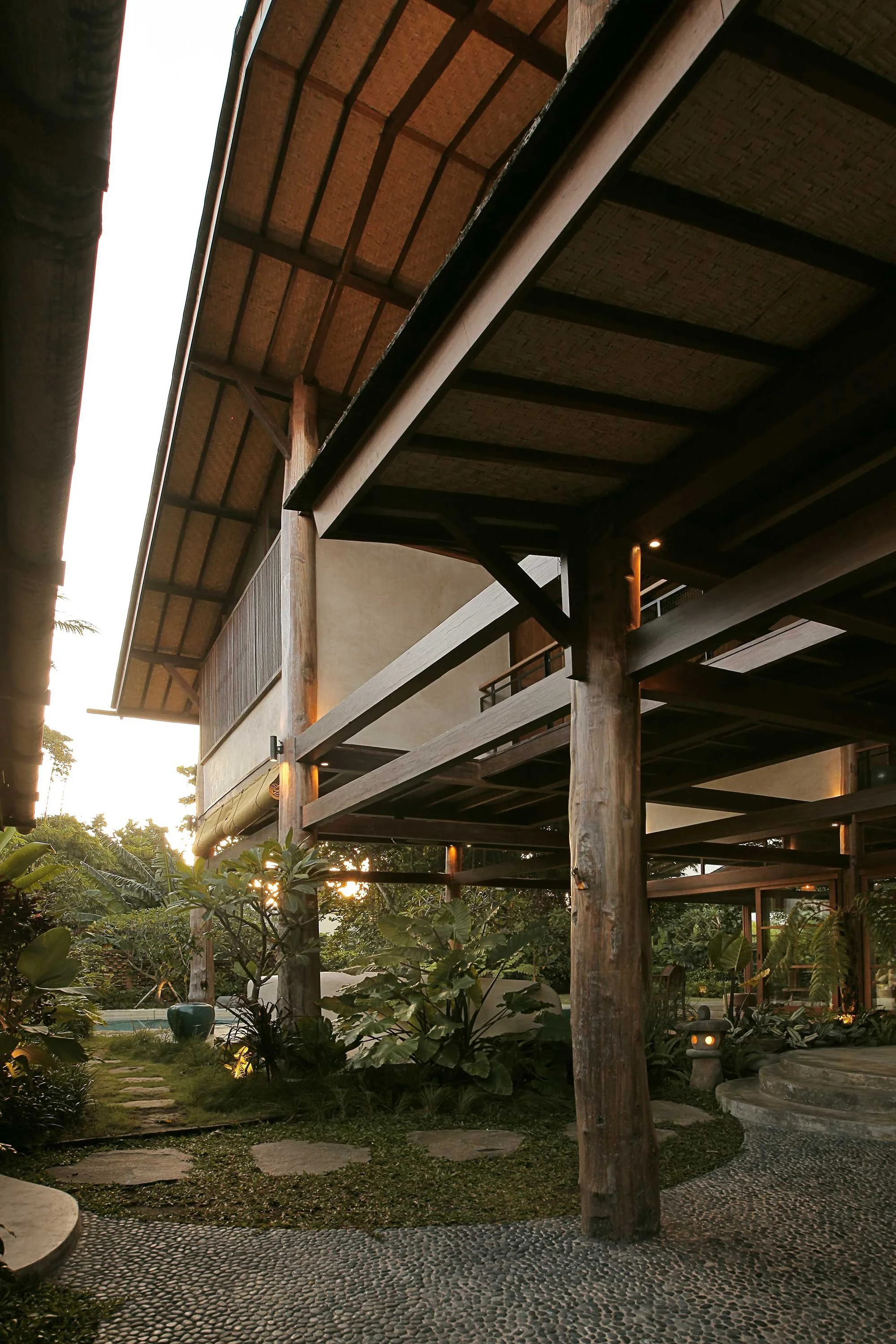
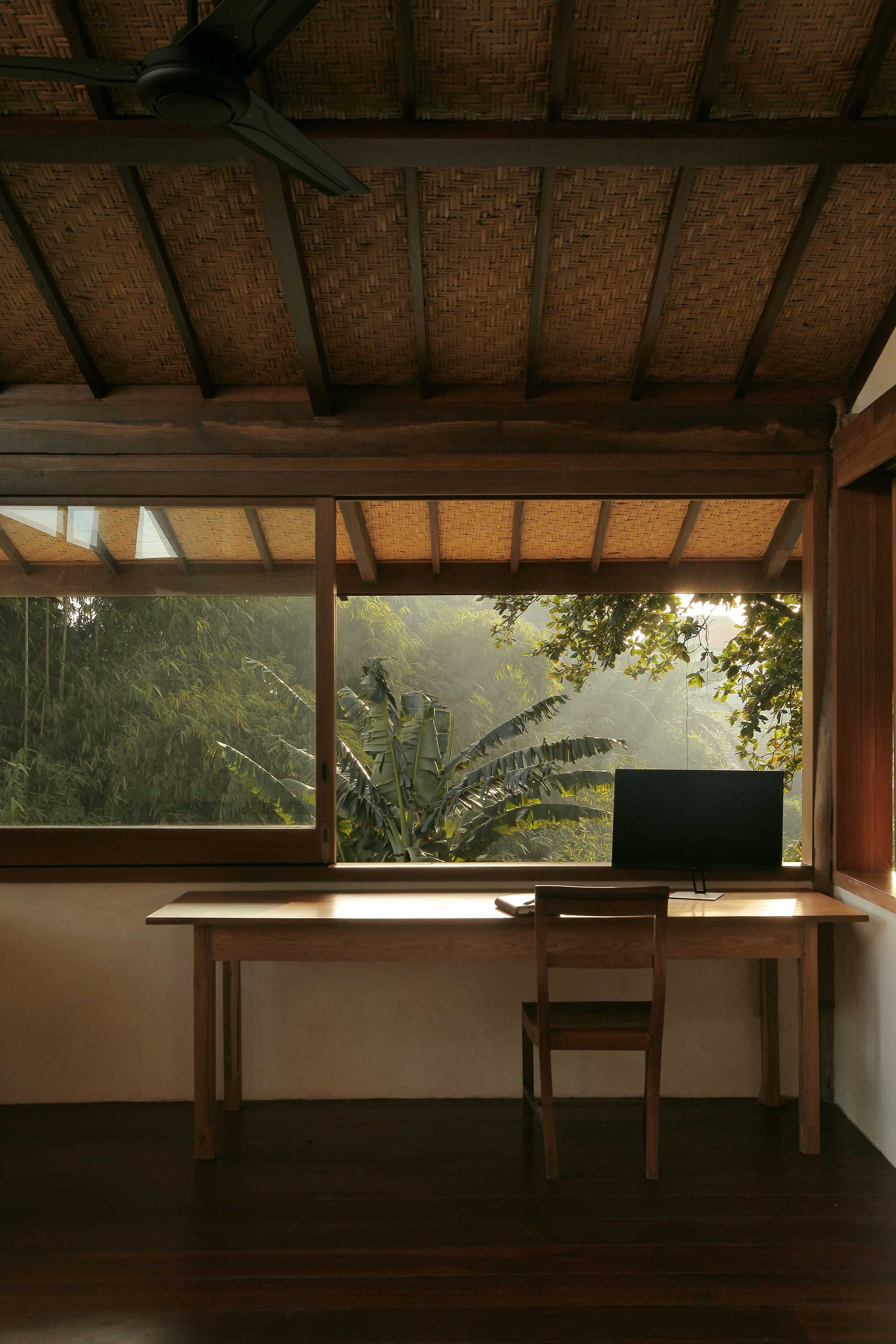
The house was originally intended to be built entirely from bamboo. That changed when Long’s supplier came across a supply of reclaimed ulin ironwood, native to Indonesia and known for its resistance to termites and the elements. Seeing the builders expertly carve traditional timber joints by hand convinced Long to embrace the ironwood instead.
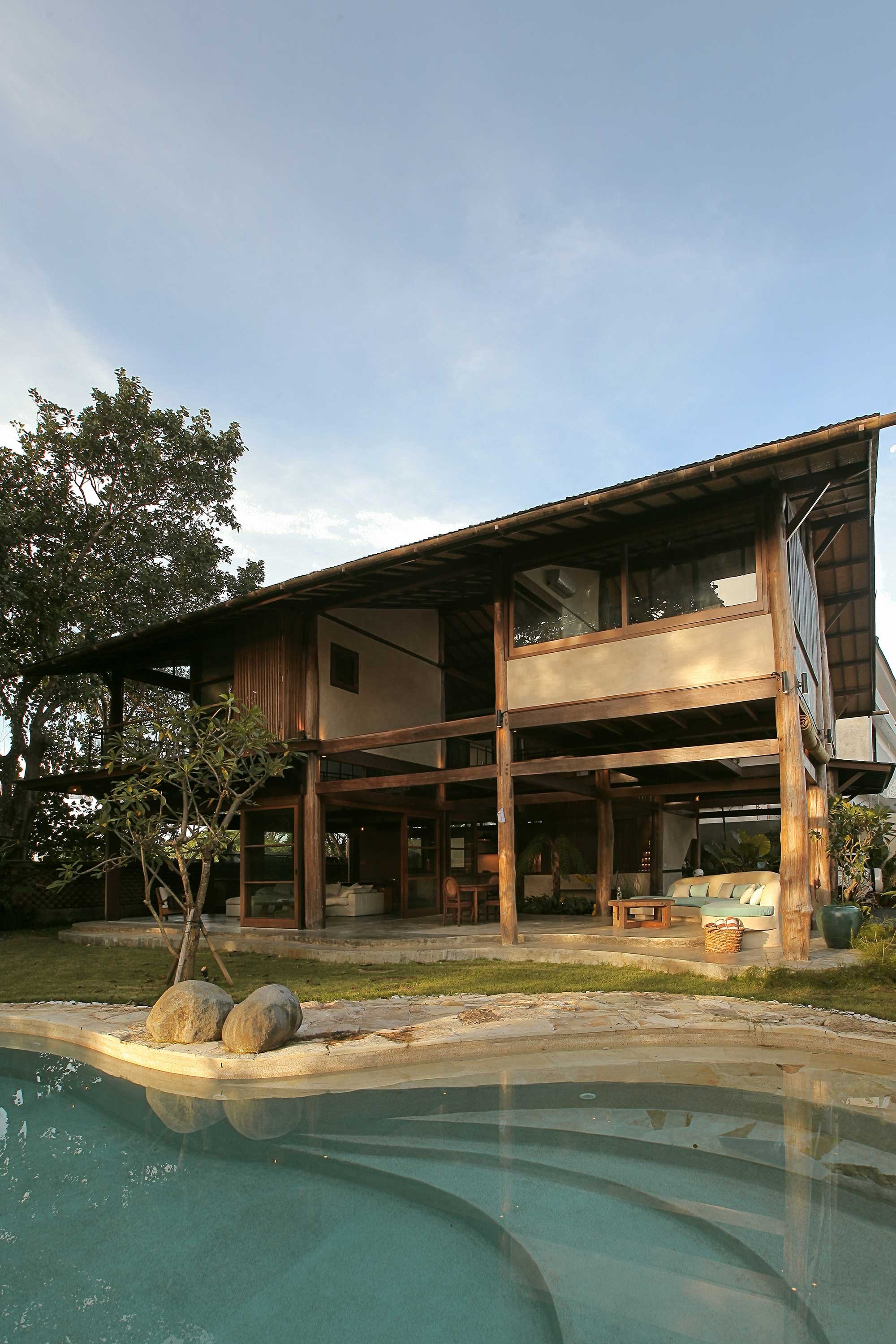
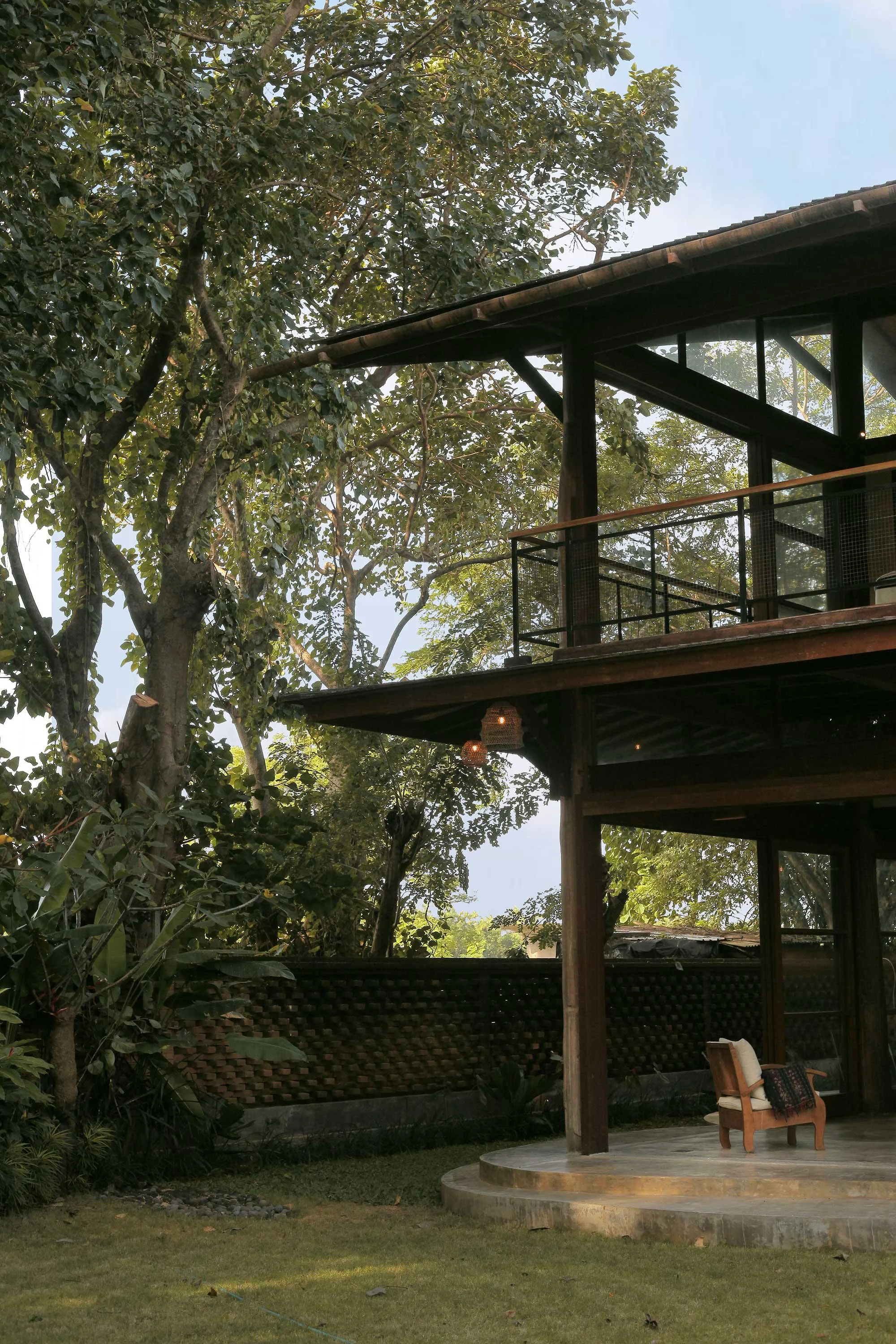
Long draws on Asta Kosala Kosali — the centuries-old Balinese system that organises domestic compounds around a grid for harmonious, sacred placement — and reinterprets it as a two-storey house spanning a nine-square grid beneath a single roof. The grid lends the home an underlying order, while generous voids and walkways between rooms keep the substantial timber structure from feeling closed off.
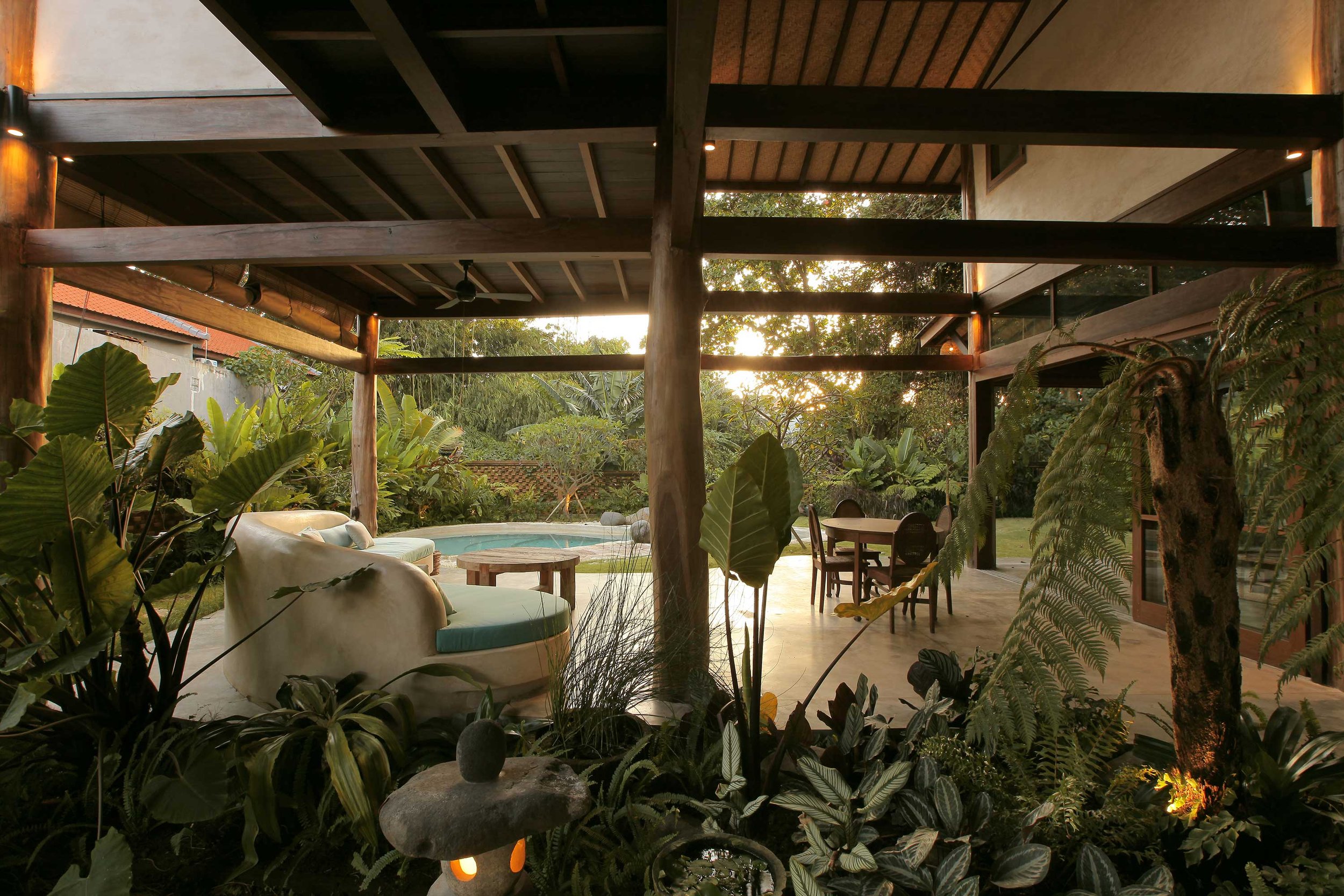
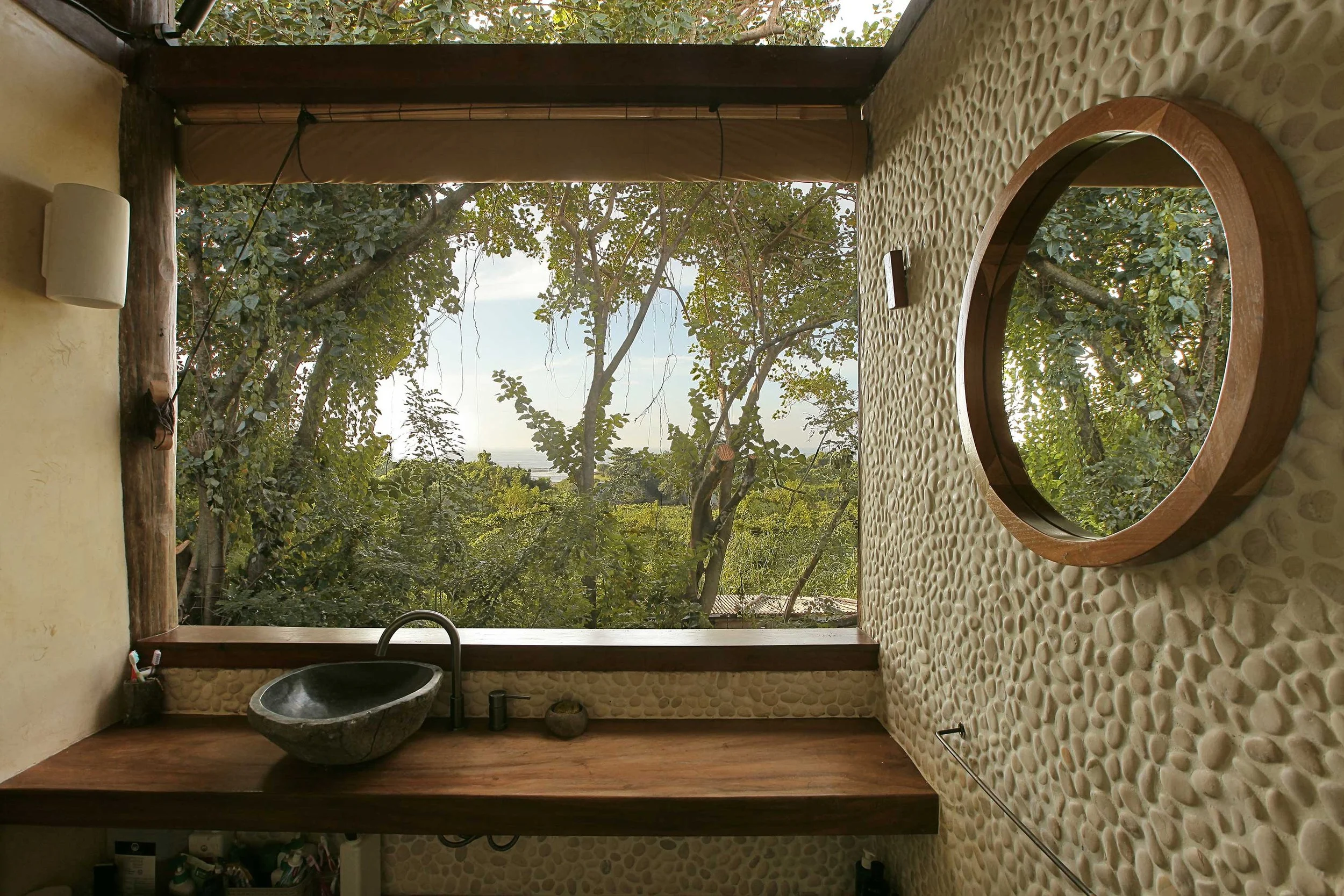
To the east, a small river marks the edge of the neighbouring banjar, or village; to the south, views extend towards Lembongan and the islands beyond. Those sightlines became organising devices, with openings carefully positioned to frame the landscape while doubling as breezeways. The structure is aligned with prevailing winds to encourage natural cross-ventilation, further encouraged by an open room on the roof. ‘I think the thing I'm most proud of in this house is that we haven't used air conditioning since we moved in,’ he says. In Bali’s climate, that's no small feat.
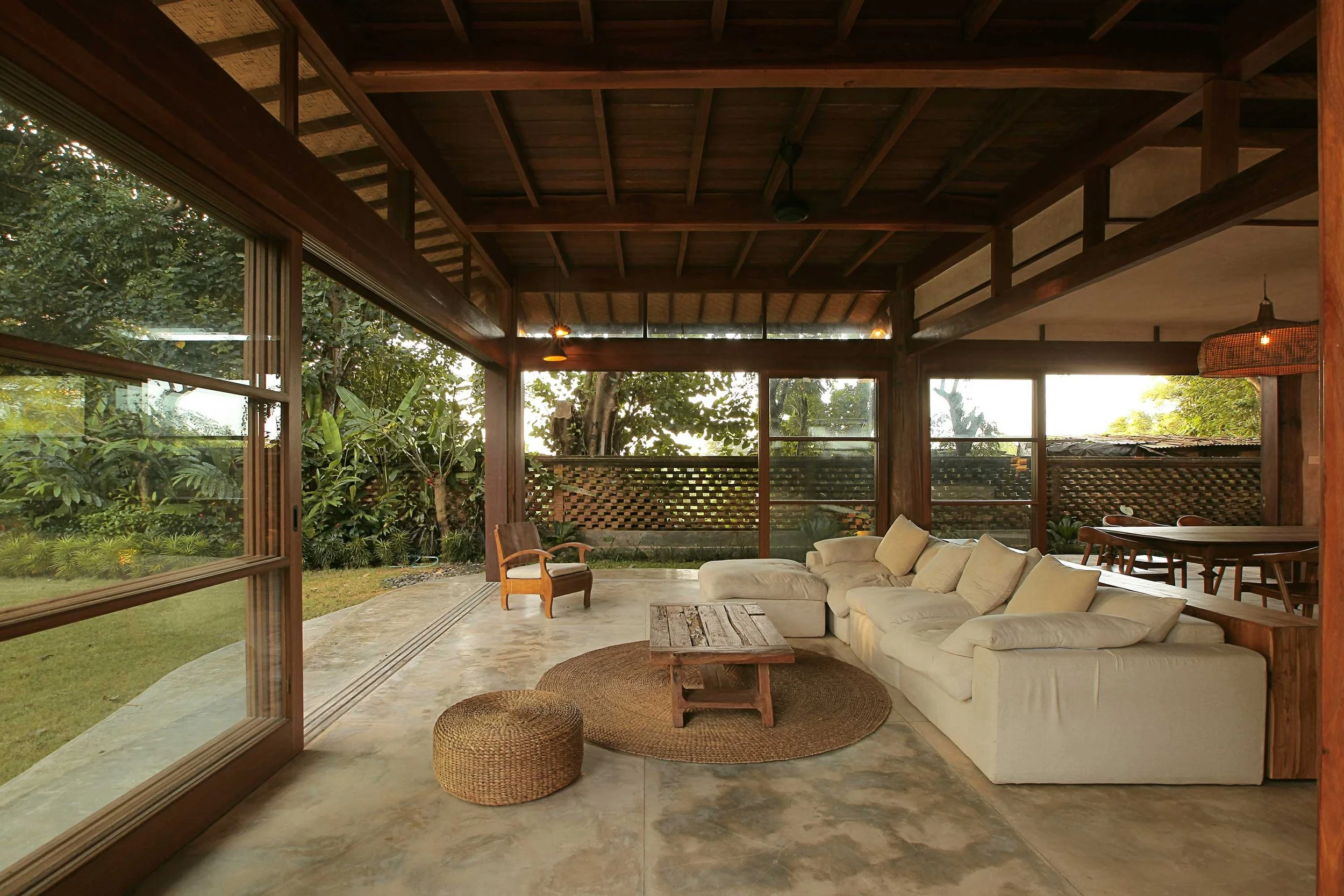
Nature isn't confined to the views beyond the house. Curved concrete terraces temper the home's geometric grid, pulling the landscape into its living spaces with the aid of planted pockets that gently separate one area from the next. Even the brick boundary walls are intentionally permeable, stacked with narrow openings that admit cooling breezes and offer glimpses of the greenery beyond.
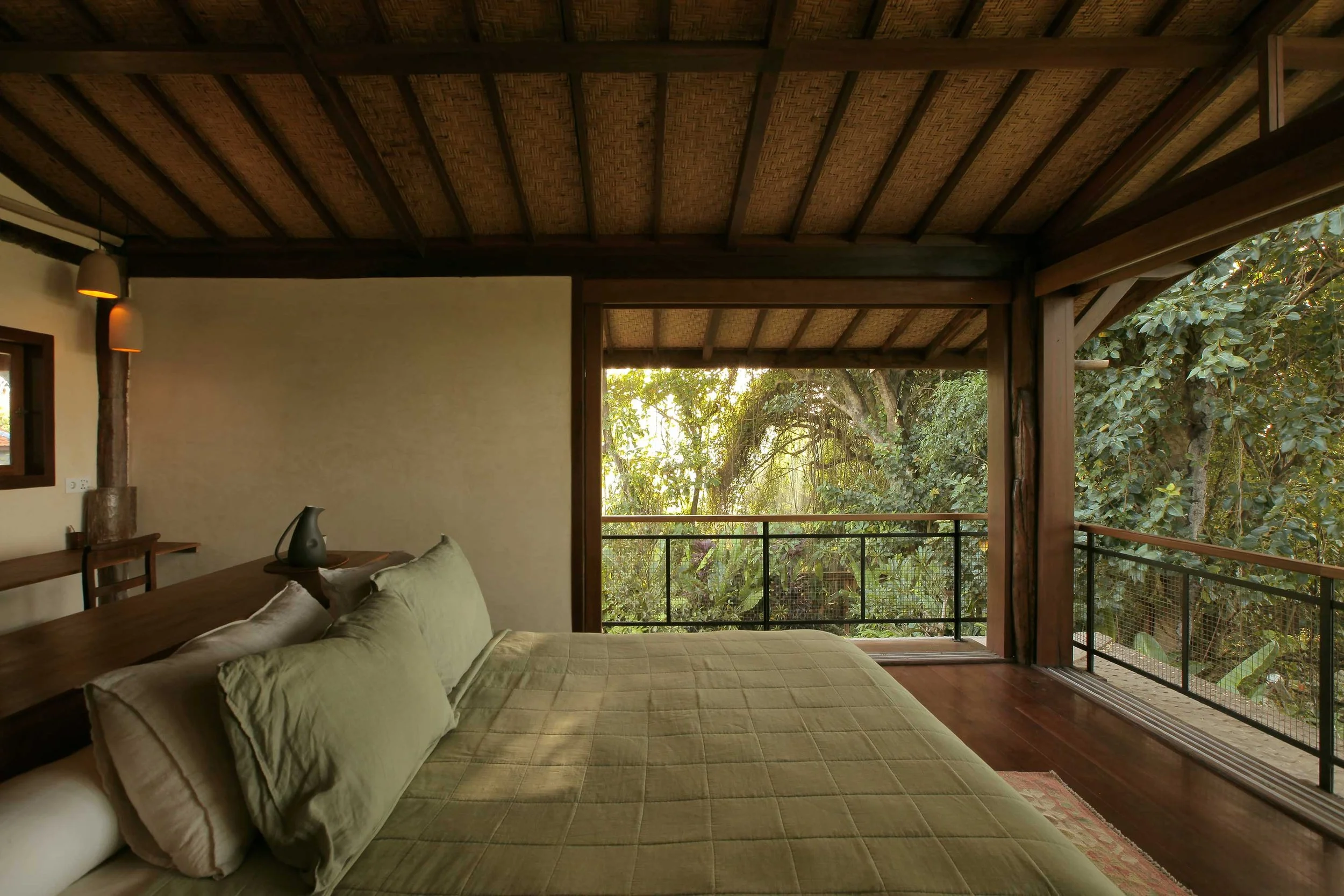
Long is also father to two young children, and the house reflects a refreshing lack of preciousness. It was deliberately designed to be able to embrace mess, and at times, chaos. Concrete floors survive pool water being tracked in, and generous open spaces are often home to half-finished building block constructions. ‘It has to be able to take life,’ says Long.
Text by Raina Alonge
Images by Iwan Sastrawan