
The World’s Oldest Fine Leather Goods House Brings Heritage and Wit to Hong Kong
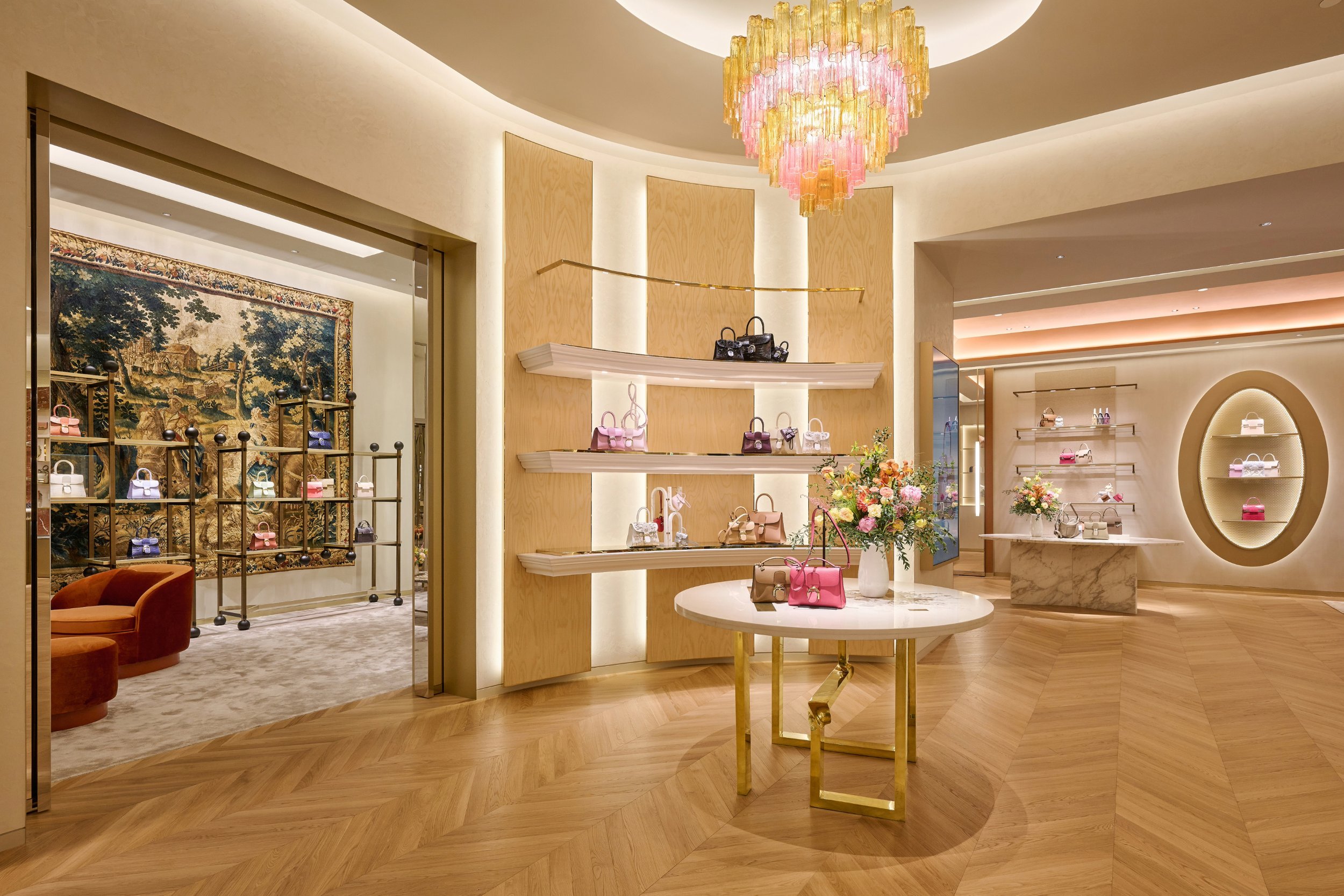
Delvaux’s newest flagship in Hong Kong’s K11 Musea
With a legacy dating back to 1829, Delvaux brings its historic savoirs and savoir faire to Hong Kong’s K11 Musea, combining them with local references that carry a hint of Belgian wit
In the plush VIC salon of Delvaux’s newest flagship store in Hong Kong, almost an entire wall is devoted to variations of the Brillant handbag, one of the maison’s most iconic creations. First introduced in 1958 to coincide with the Brussels World’s Fair, the first major fair after the Second World War, the design draws from modernist master Le Corbusier’s Philips Pavilion; here, its sharp structure and fluid roof lines are reinterpreted in the Brillant’s sharp-angled gussets. Subsequent editions over the years have kept the bag relevant, echoing Delvaux CEO Jean-Marc Loubier’s sentiments on heritage and modernity.
‘The timing of the launch of the Brillant is apt as it symbolised hope and confidence in the future, and continues to do so,’ says Loubier, who also oversees Delvaux’s interior design globally. At the recent ‘Brillant’ soirée for the flagship in Victoria Dockside, he describes the mixed-use complex as aligned with his ambitions for the brand. ‘K11 Musea is the next phase of luxury retail in Hong Kong,’ he says. ‘It allows connection to the skyline and rediscovery of shopping.’
Loubier continues to enthusiastically advocate for the brand’s dual nature of honouring traditions while looking to the future. To that end, every boutique is a creative bridge between its host and home cities. At the Hong Kong flagship, the bifurcated Art Deco facade’s geometric lines flow seamlessly into the interiors, where a selection of artworks and design elements interplay, evoking the layered elegance of a grand European estate. Sited near the Salisbury Road entrance, these two openings frame a distinct point of entry, inviting passers-by to experience the maison through a Hong Kong lens. One opens onto a deliberately meandering path through the boutique; the other offers a view of the bar, a recurring element across Delvaux interiors, each time reinterpreted in response to its setting.
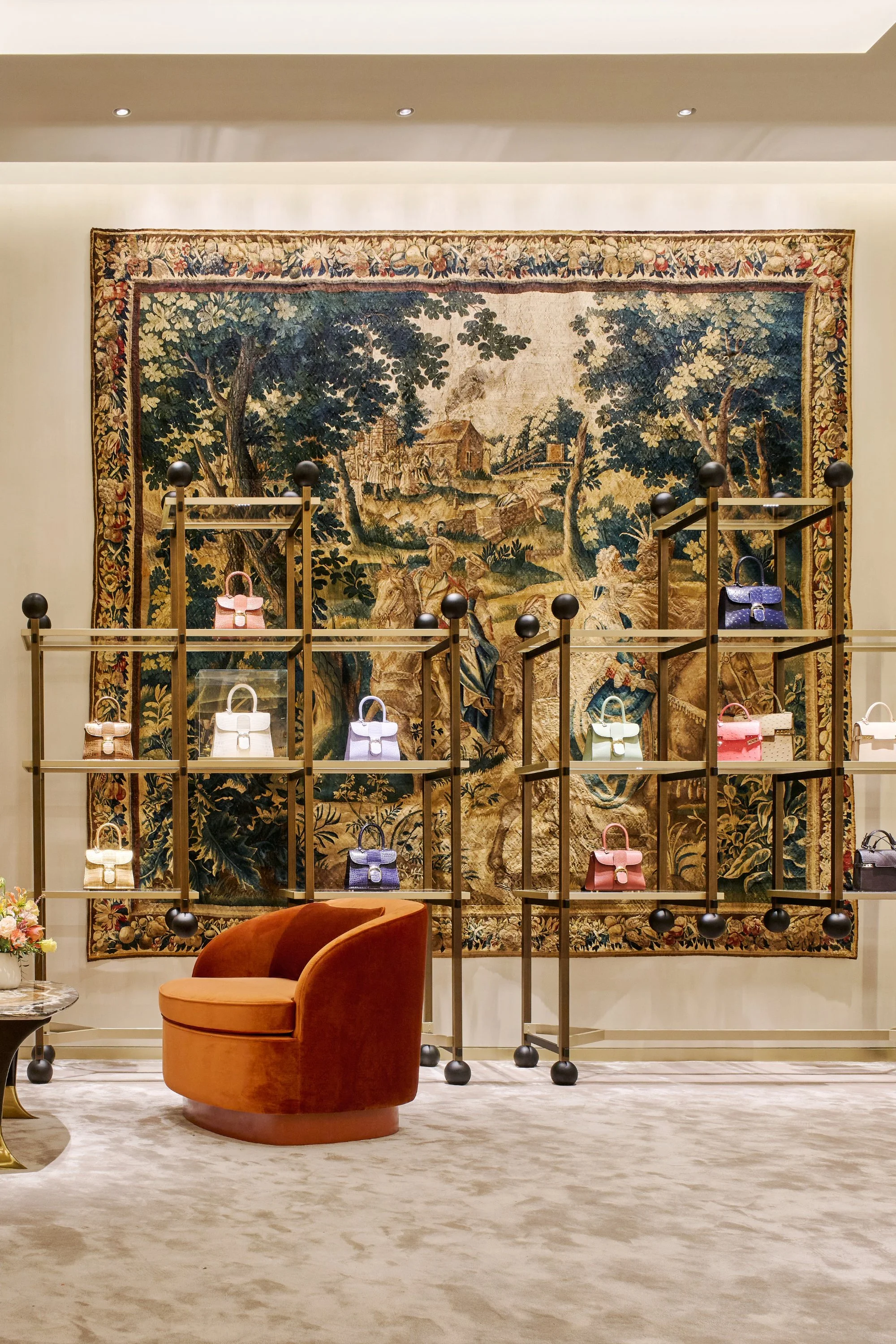
Inside the VIC salon hangs The Bridal Procession on Horseback, a late 17th-century wool and silk tapestry from Antwerp
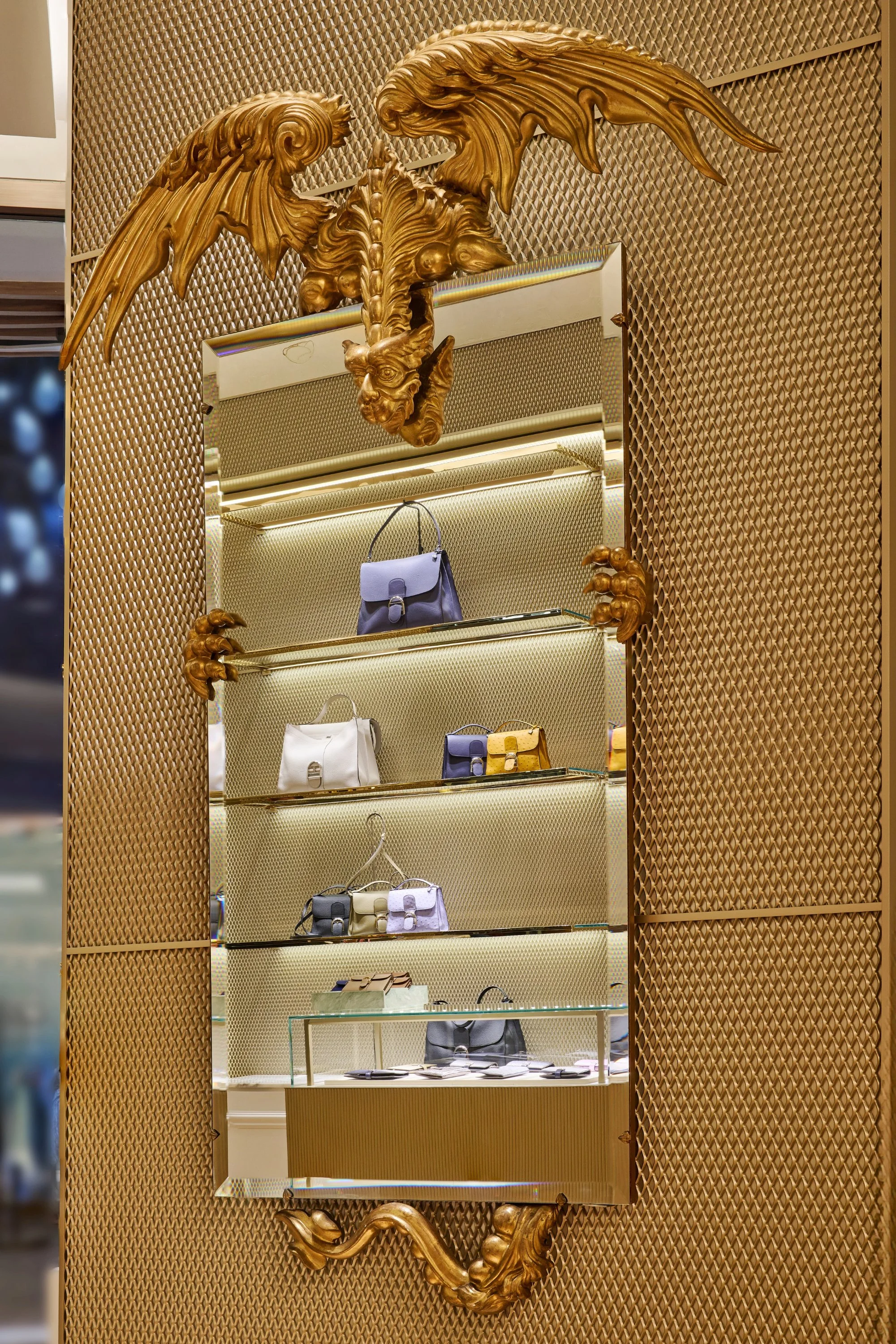
A giltwood mirror by French master Gabriel Viardot reflects the dialogue between Europe and Asia
Leading to the bar is a giltwood mirror clutched by a golden dragon by French master Gabriel Viardot. Loubier hand-picked the late 19th-century antique to underscore the connection between Europe and Asia, with Hong Kong standing at the crossroads of two cultures. ‘The dragon is important to Chinese culture,’ Loubier notes, with the mirror also significant for its heritage. ‘It was created during the cradle of luxury in the second half of the 19th century — a time when Delvaux flourished.’ The work reflects the maison’s enduring approach to decorative arts, where craft and utility are considered in equal measure.
Another standout example appears in the VIC salon, where a late 17th-century wool and silk tapestry, The Bridal Procession on Horseback, spans the wall behind the latest collection. Its rich details and naturalistic colours are echoed by the intricate craft of the iconic Brillant bags juxtaposed against it. ‘The tapestry is a marriage celebration and part of everyday life that Hong Kong people can relate to,’ says Loubier. ‘It’s also a window to the world.’
Drawing on Belgium’s modernist heritage, Loubier also embraces elements of surprise and wit to reflect values of family, playfulness and our inner lives. ‘Think of Surrealism and the art of René Magritte,’ he says. ‘Part of Belgian culture is the twist — the surprise, the double meaning. The idea of combining the beautiful and the useful is a reaction against industrialisation. We hope that these pieces will start dialogues; that exclusivity becomes inclusivity.’
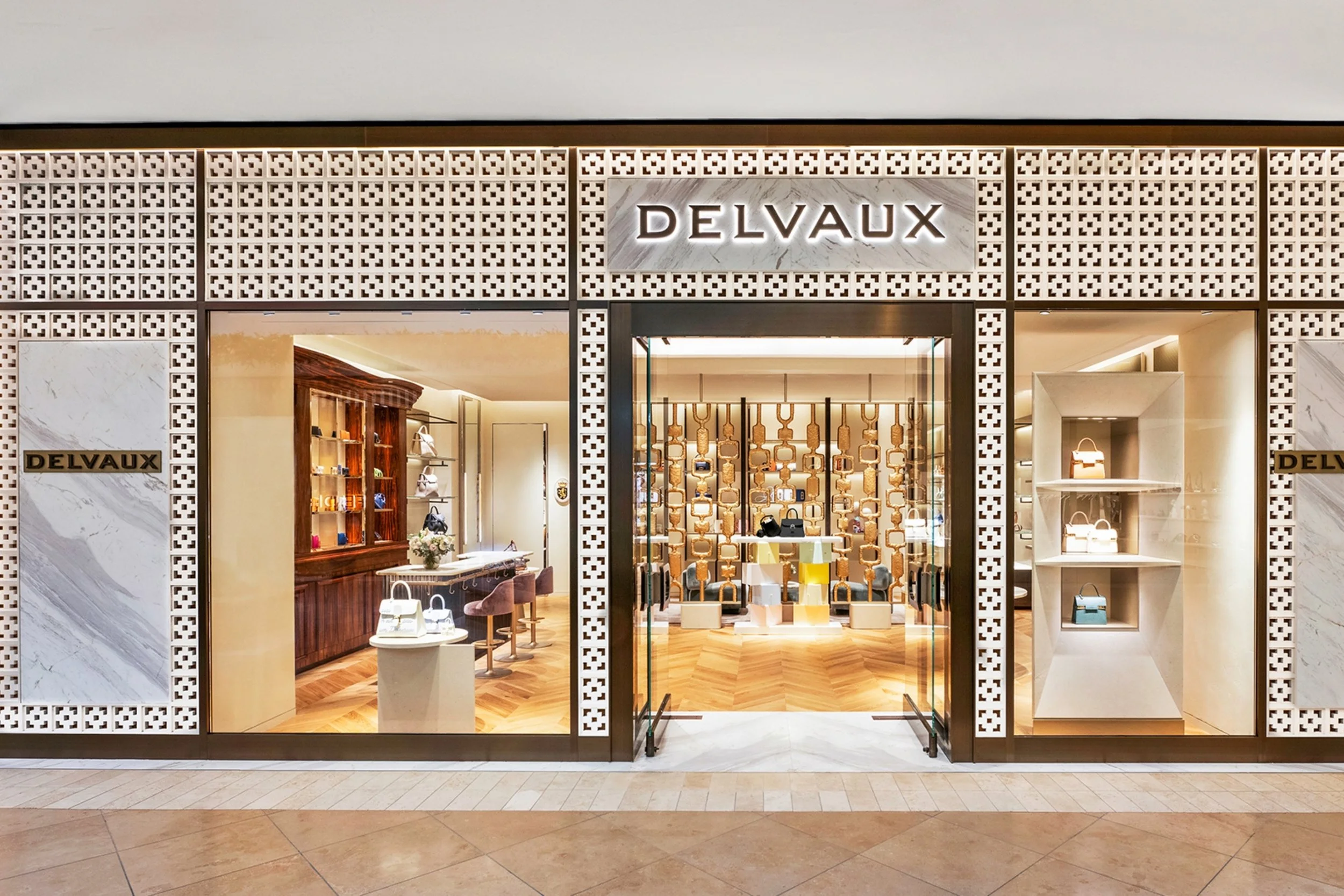
Delvaux in Costa Mesa’s South Coast Plaza
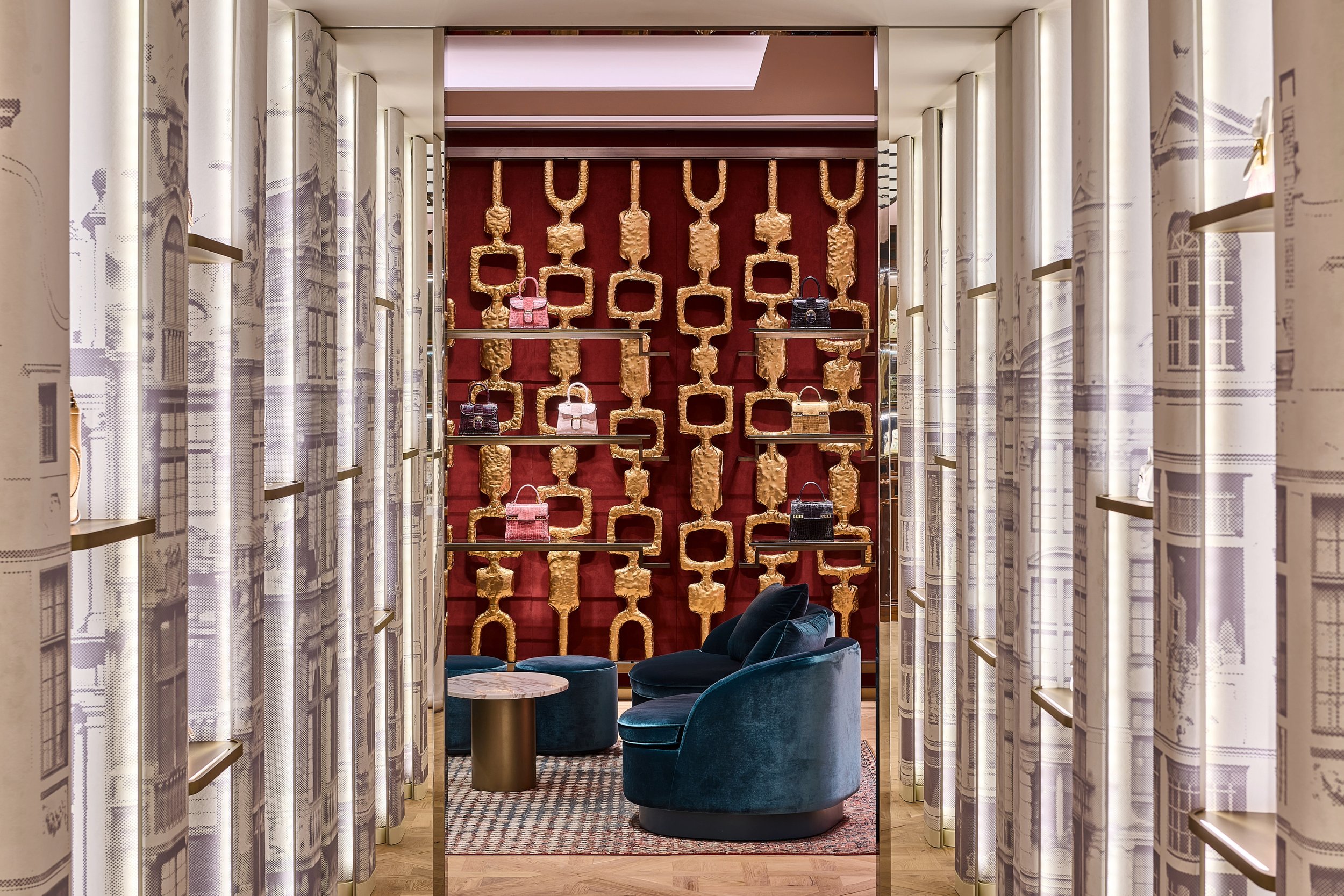
Delvaux in Beijing’s Wangfu Central
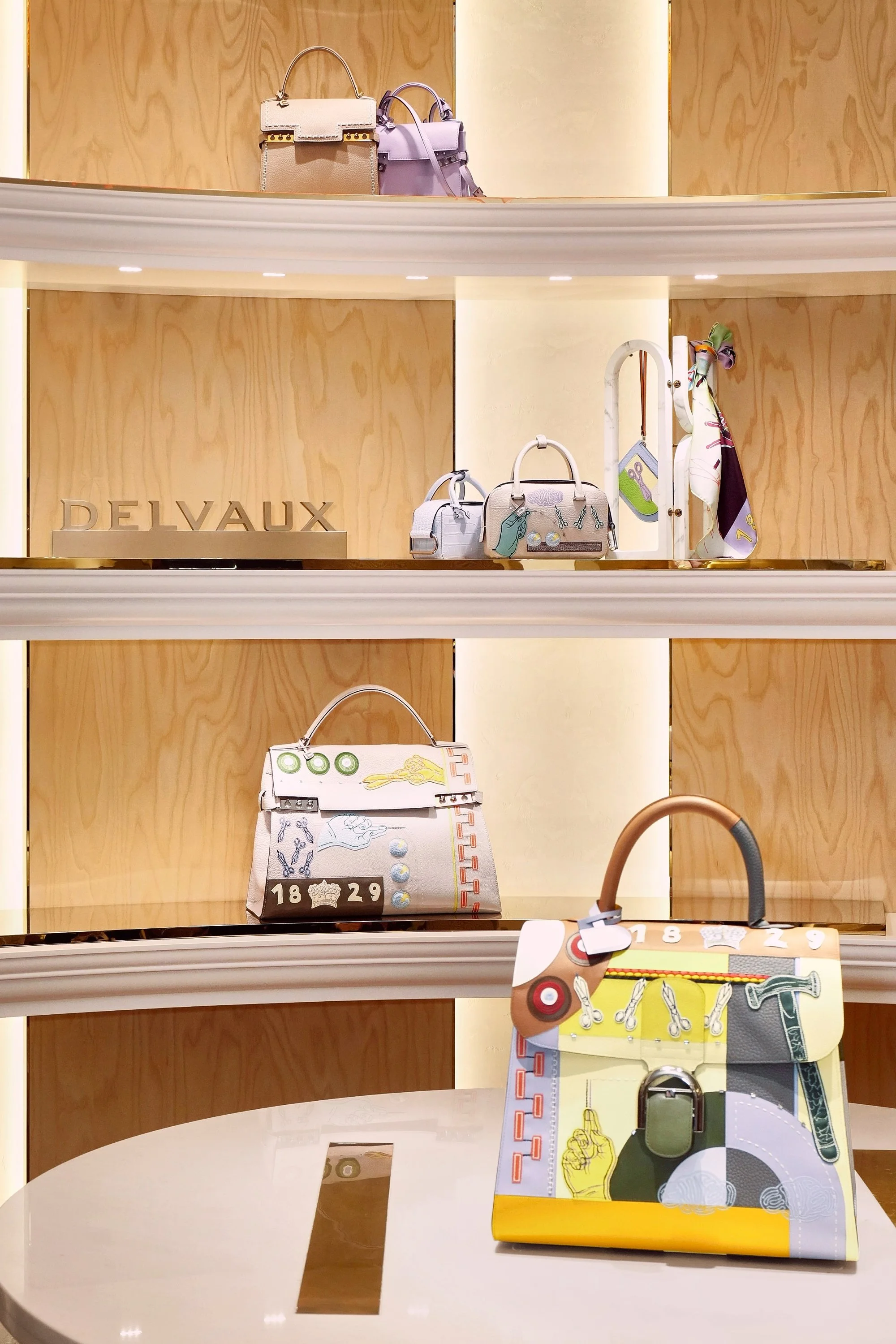
The limited-edition Emblem Tales collection
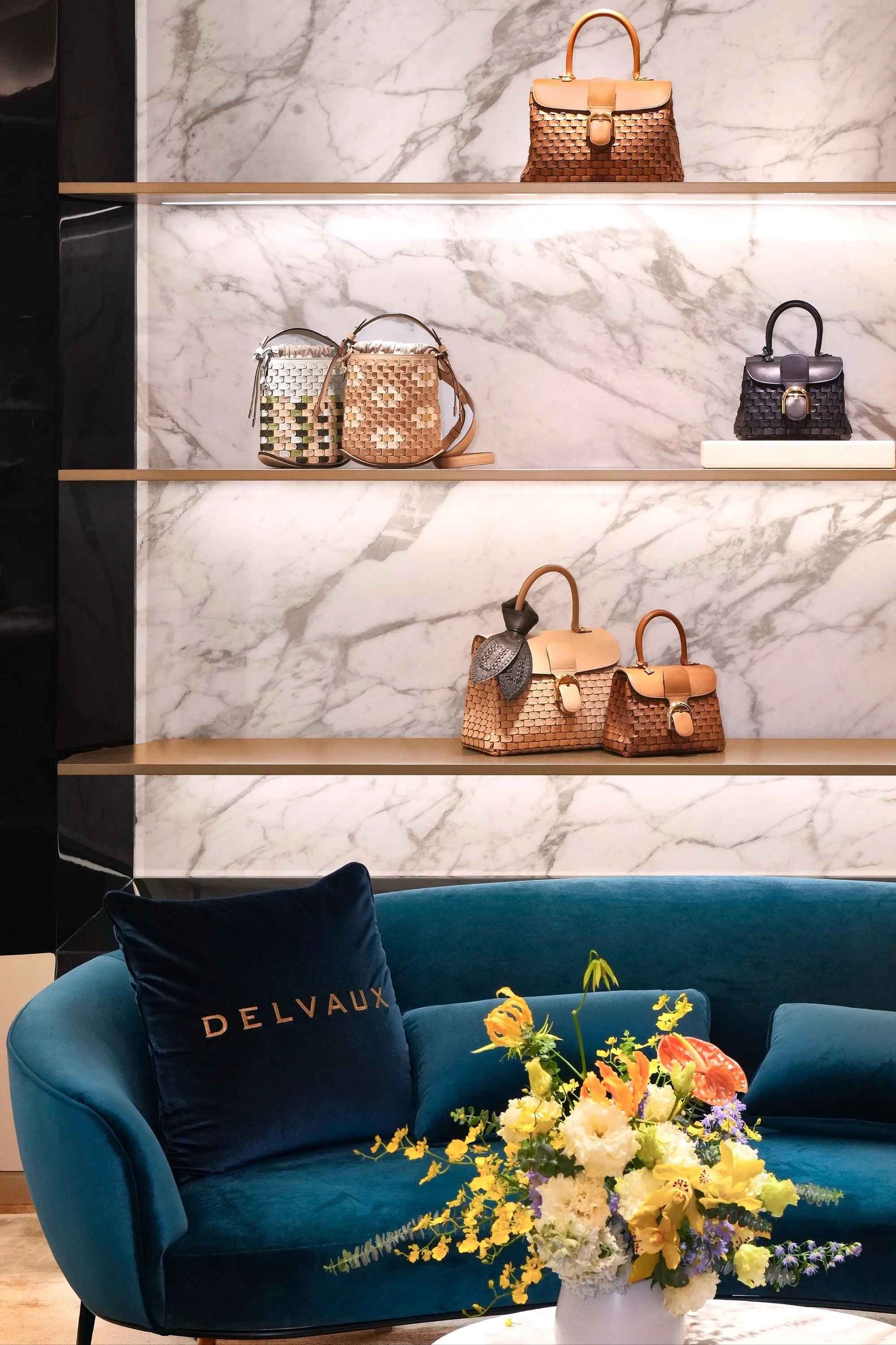
Handbags from the Arsenal collection showcase the maison’s exceptional proprietary leatherwork
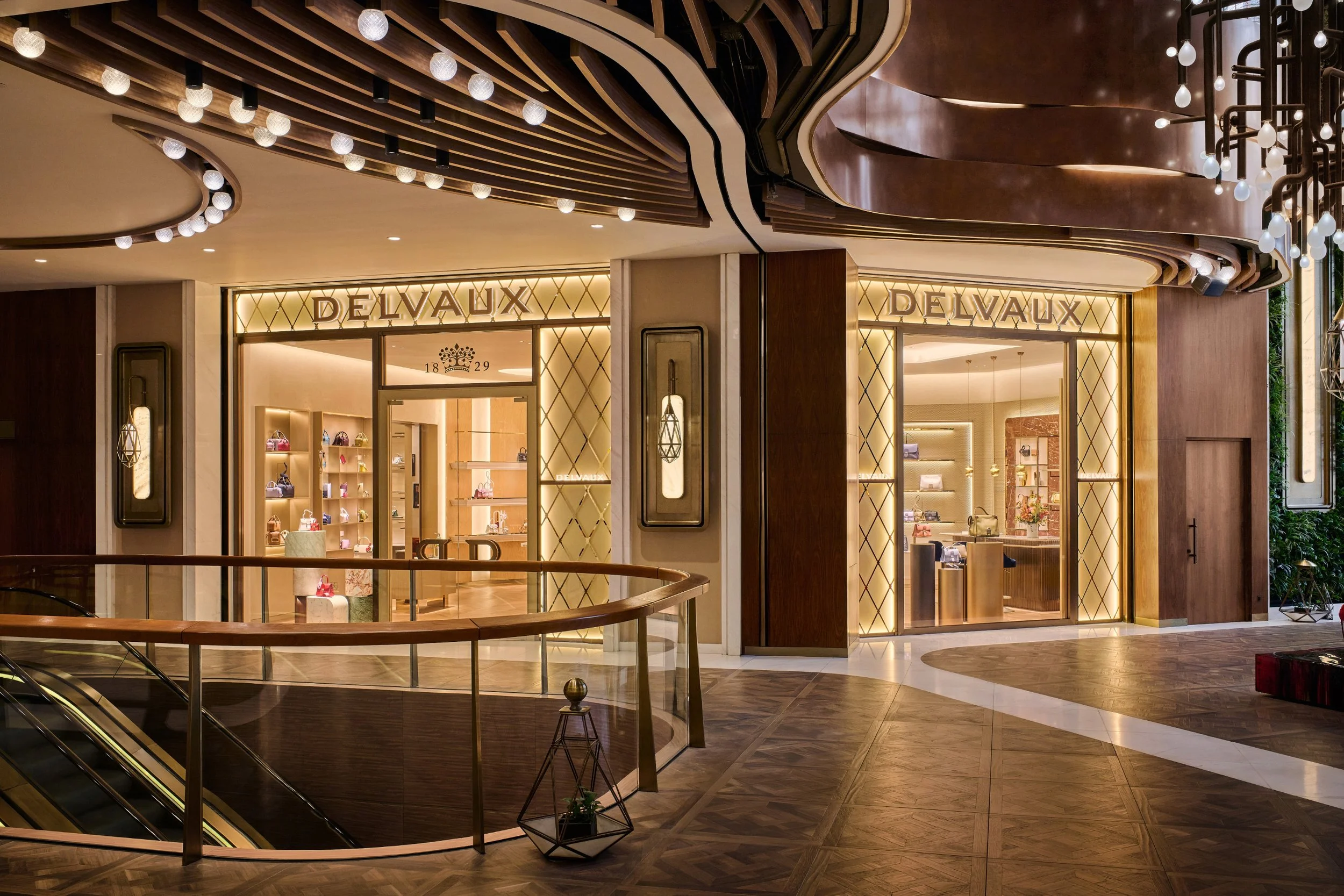
The Art Deco facade of Delvaux’s K11 Musea flagship