Riverside Retreat
A riverside holiday home by Bada Studio feels like part of the landscape
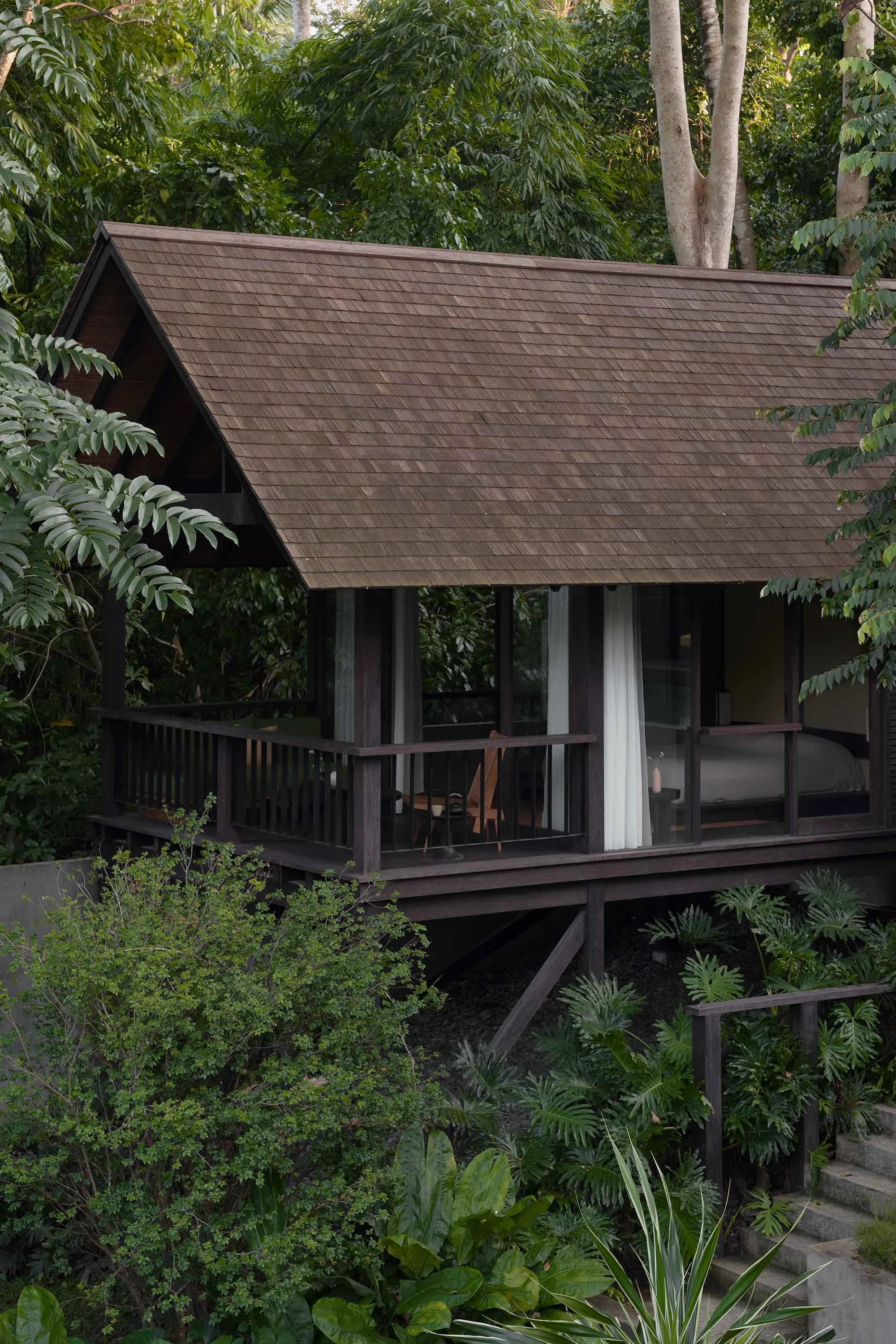
Indonesian figs, coconut palms and mango trees are just a few of the tree species that grow in and around Rumah Lituhayu, a four-bedroom riverside retreat in Tabanan, southwestern Bali. From the outset, preserving these mature trees was a guiding principle for Maurizio Moeis of Bada Studio, the architecture firm behind the design. The sense of tranquillity here is palpable: birdsong, insect hum and misty morning light come together to create an ethereal atmosphere that backdrops the property’s dark sirap ulin (ironwood roof shingles) and burnt wood facade.
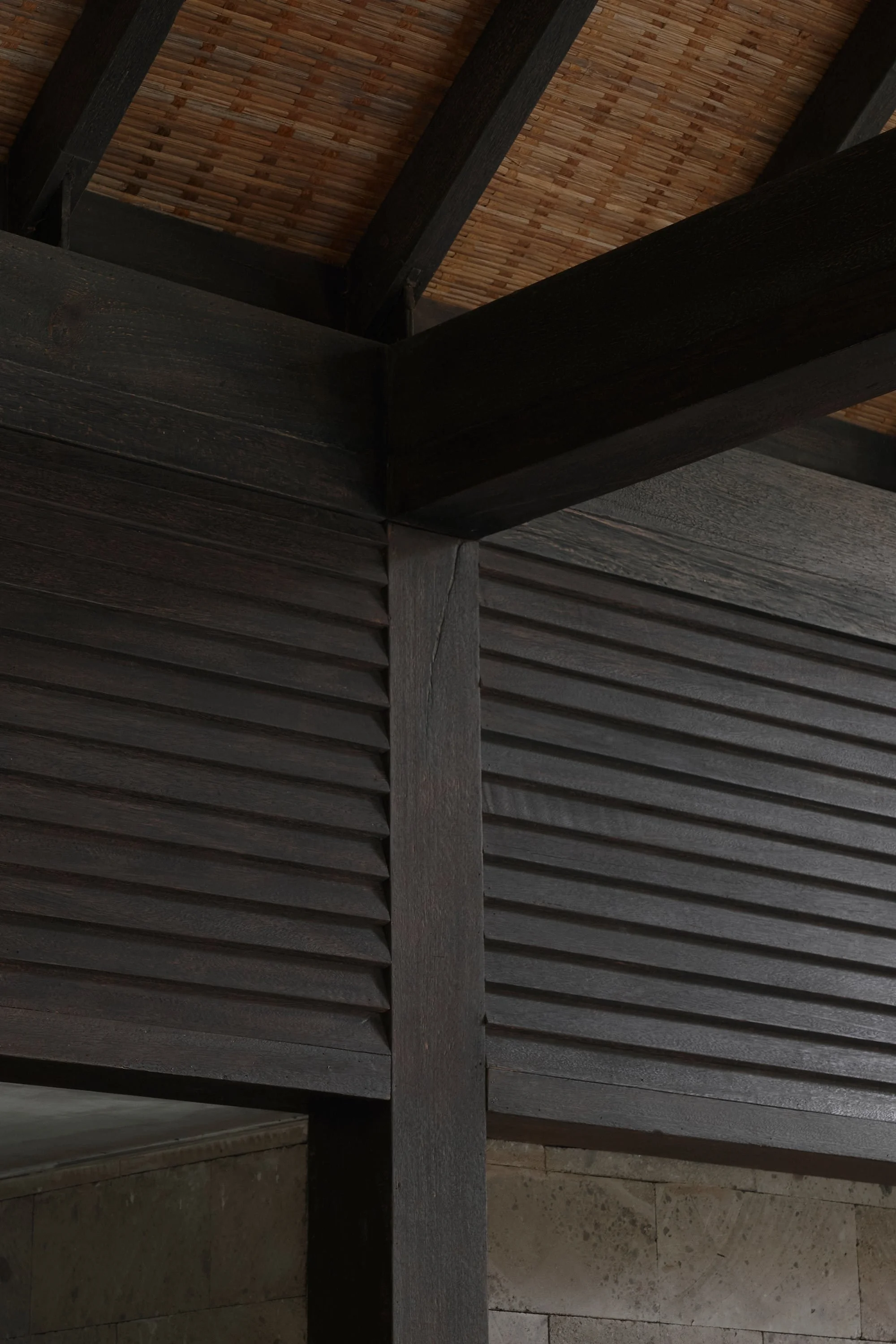
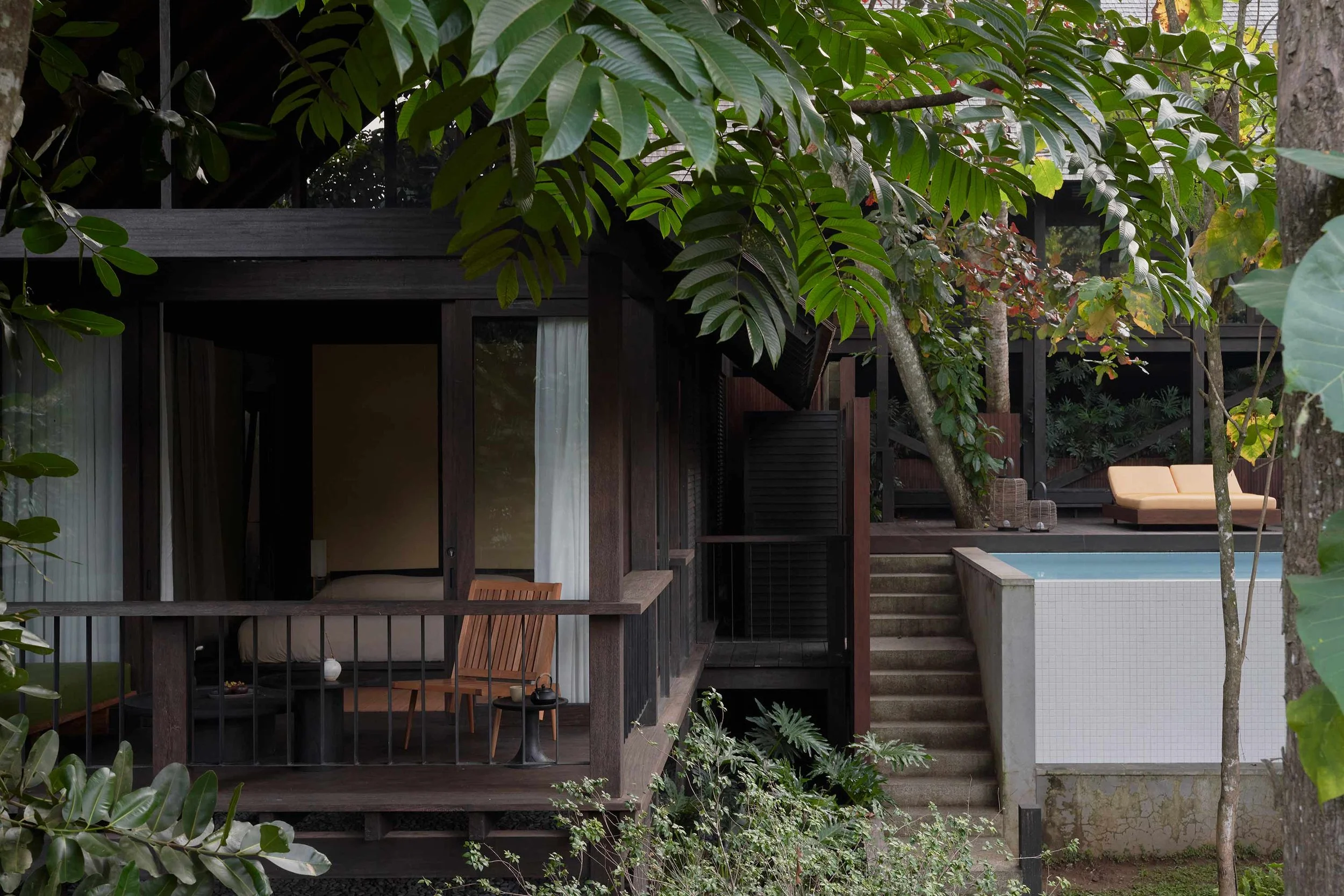
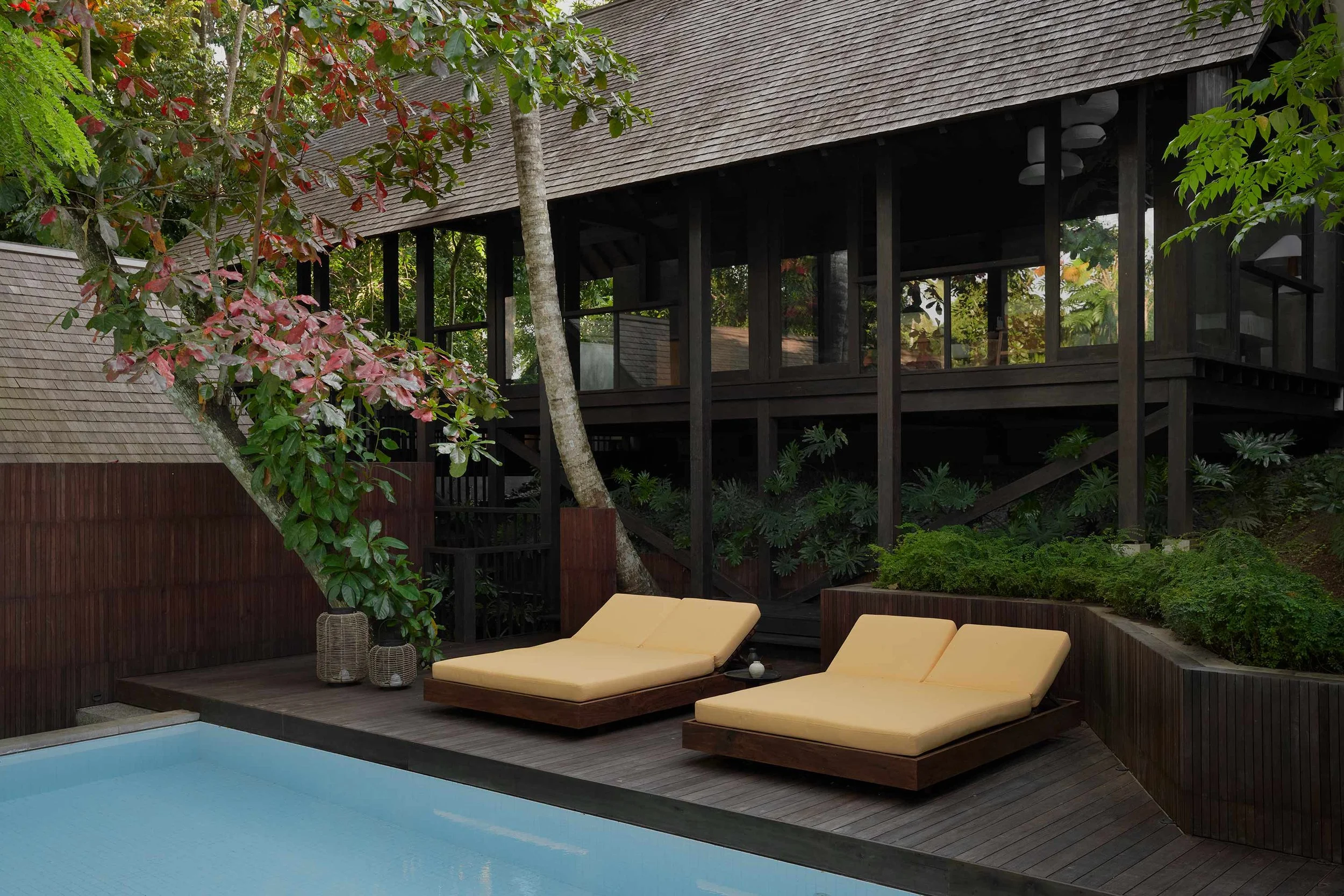
Blowtorched on-site using the Japanese shou sugi ban technique, the charred timber is a standout feature of the home, which occupies a sloping triangular plot overlooking the Jeh Poh river. Completed in the middle of 2024, the property is comprised of five independent pavilions tiered and stilted to maximise views of the jungle and river. It’s the latest in a string of properties that Moeis and his team have worked on for Bandung-based entrepreneur Benny R Gautama, and this Tabanan property is now a holiday home for Gautama’s family. Just a ten-minute scooter ride from the volcanic sands and surf breaks of Nyanyi Beach, this serene pocket feels worlds away from frenetic Canggu.
Taking inspiration from the layout of a traditional Balinese compound, the central structure houses the communal spaces, with individual bedroom pavilions positioned at varying angles around it. Directly below the living and dining area, an infinity pool is surrounded by teak and fruit trees that grow directly through its bangkirai timber deck.
Observed from the pool area, the architecture reveals itself: the structures appear to hover above the ground, perched on stilts like ‘floating treehouses’, Moeis says. It’s a subtle nod to the stilt homes of Sulawesi’s seafaring Bajau communities, another example of Bada Studio reimagining local architectural expressions. The decision to build on stilts was multifaceted: stilts minimise the building’s overall footprint, help preserve the natural topography and existing trees, and allow for dual perspectives, capturing ground-level views of glossy ferns and forest undergrowth while simultaneously elevating the structures to magnify the expansive forest outlooks. This sensitive, adaptive approach enabled the design to work with the land, rather than over it.
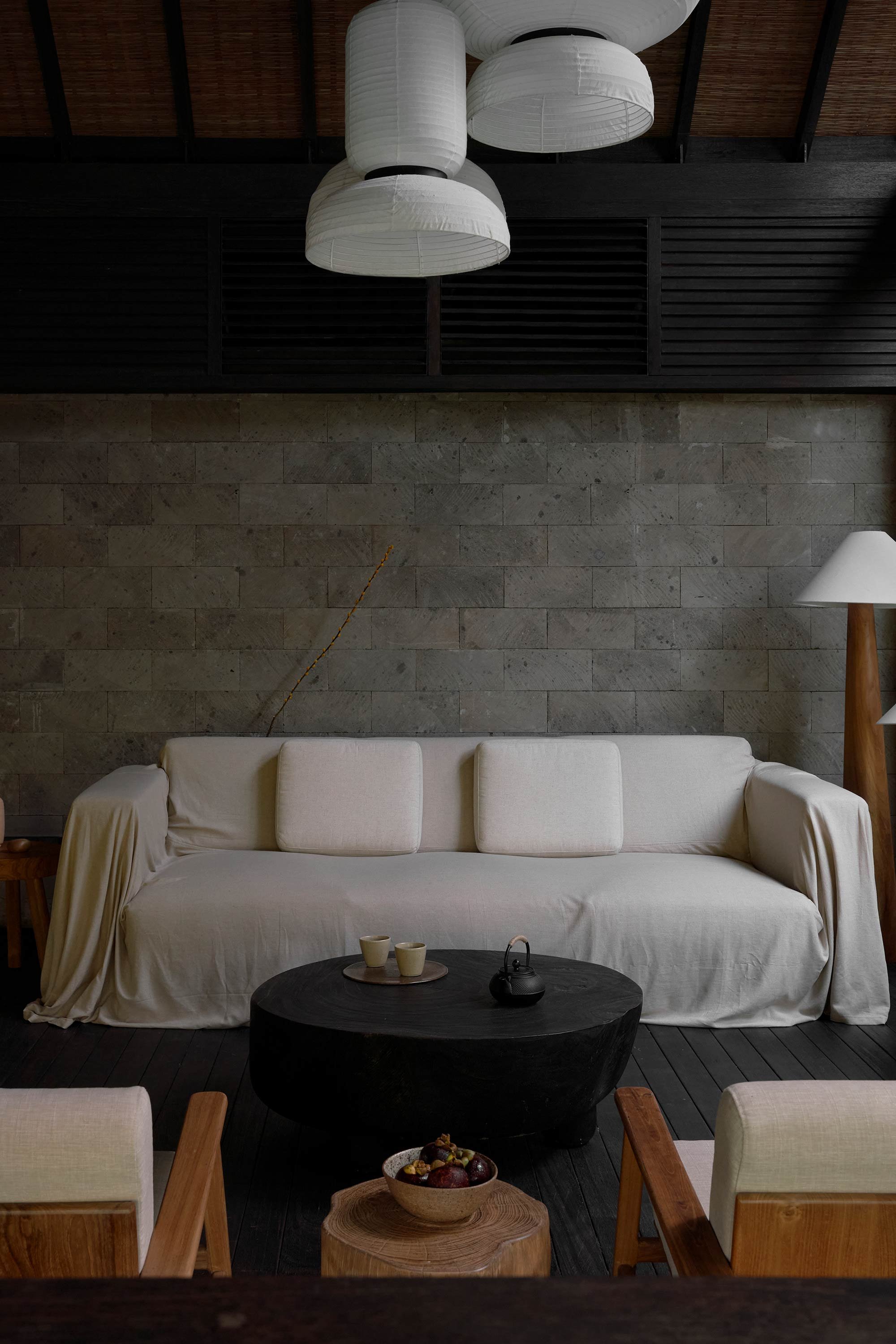
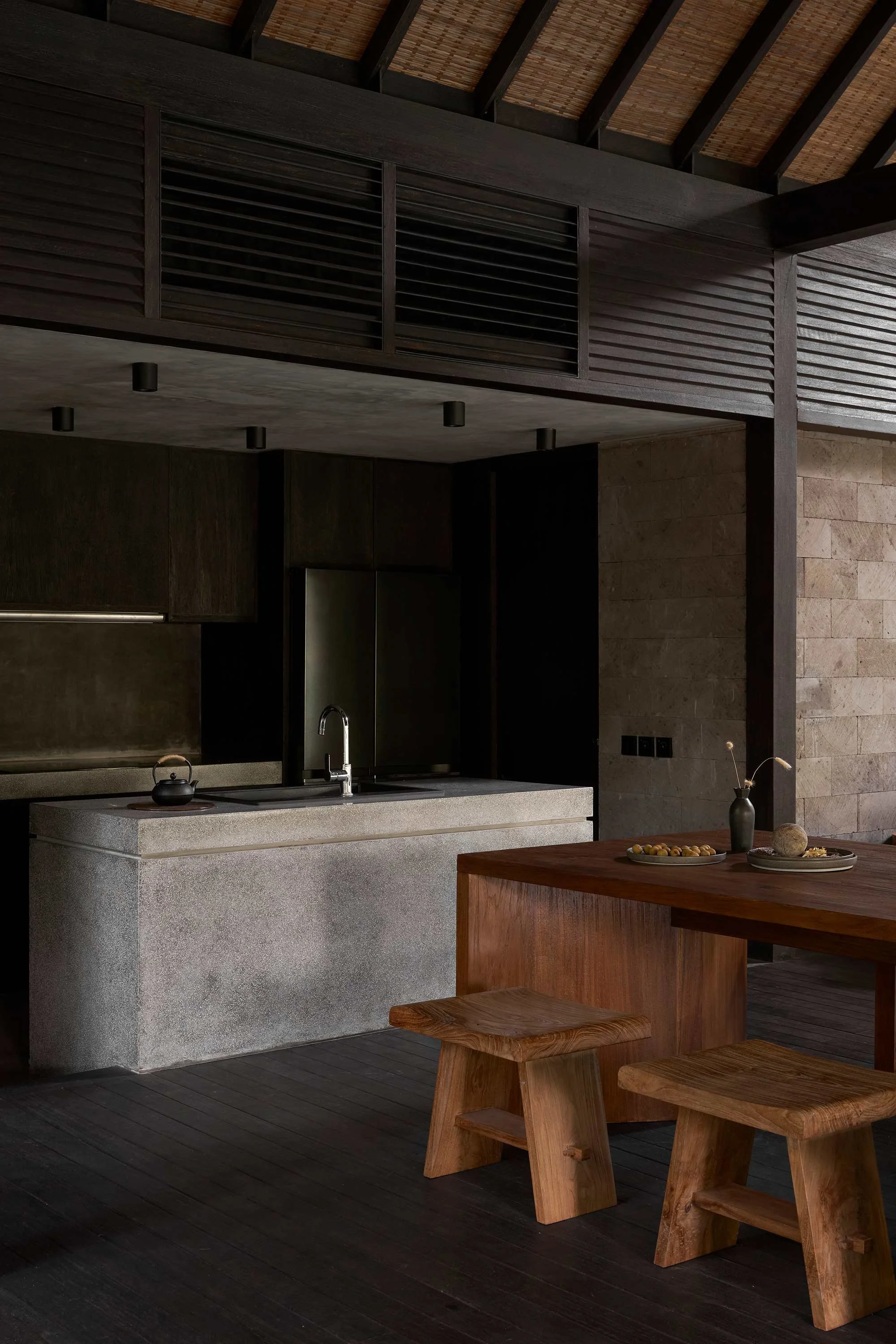
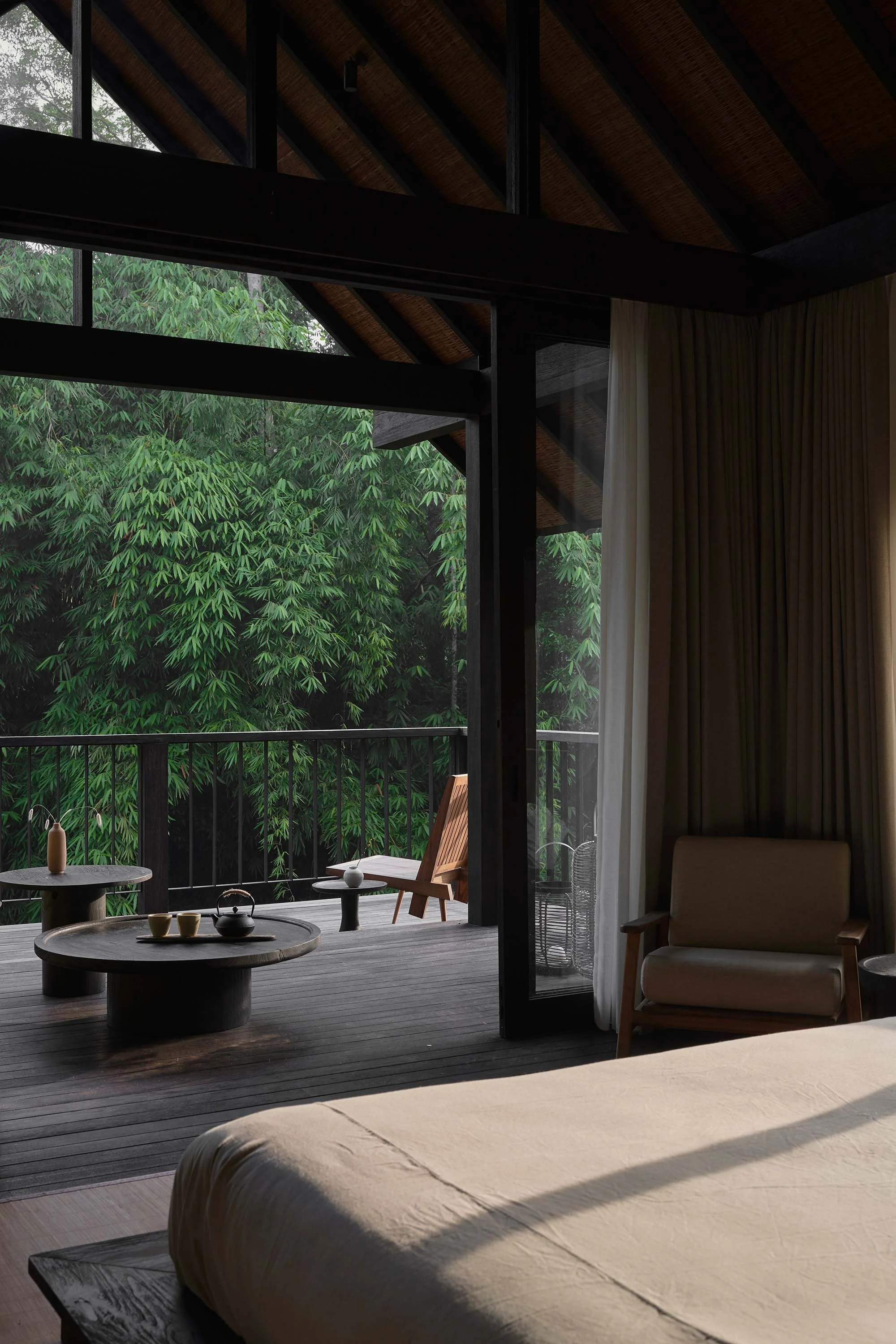
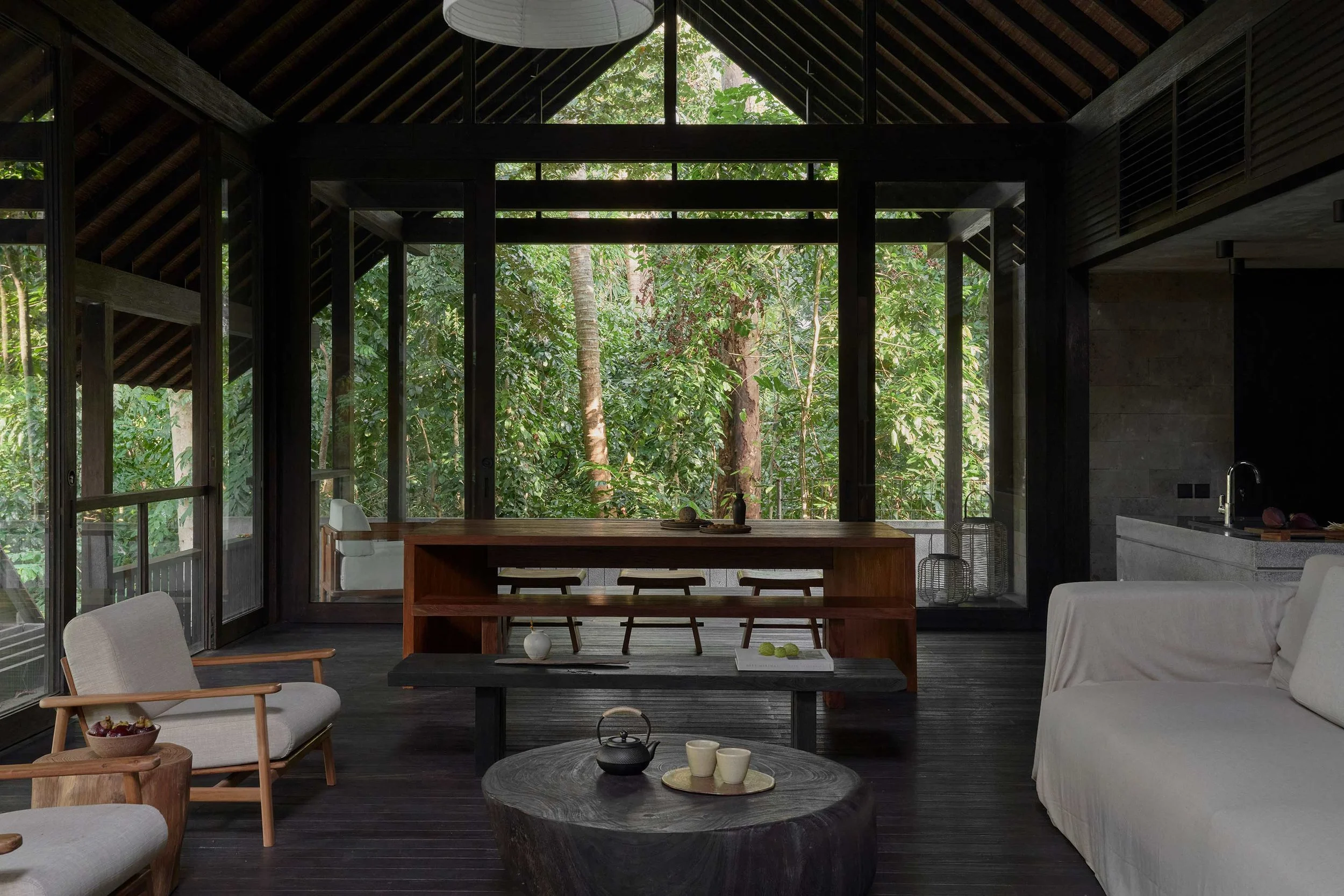
Inside, the main pavilion feels cool and airy thanks to lofty gabled roofs and fully retractable glass walls. The wall-less design integrates the garden and interior, merging lush greenery with the pared-back elegance of the open-plan living, dining and kitchen areas. Low-slung furniture, including a stout coffee table sculpted from a trembesi tree stump, keeps sightlines uninterrupted so the views take centre stage. The dining table and bench, crafted from richly grained teak and brushed to bring out its texture, were made at Gautama’s personal timber workshop in Pererenan.
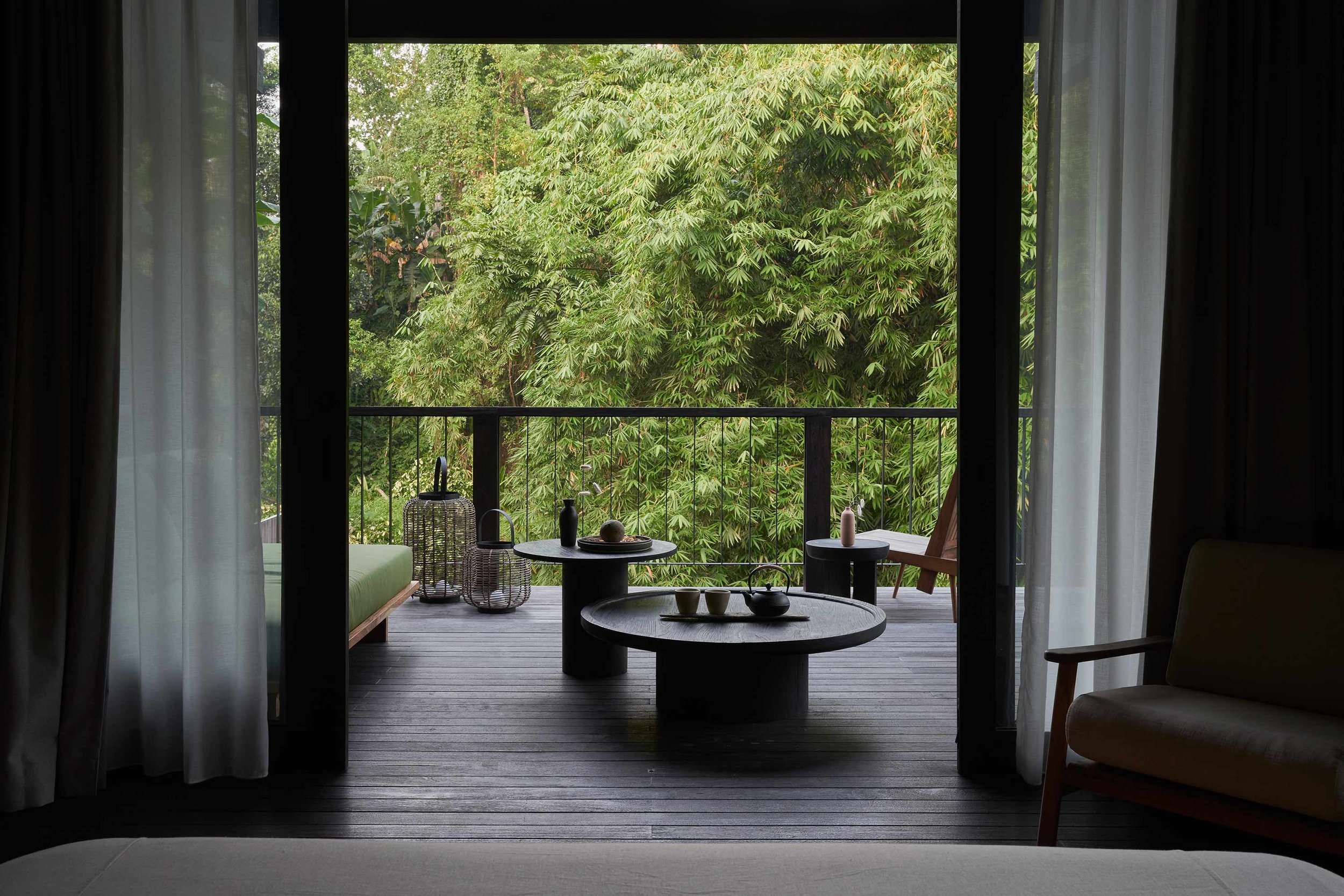
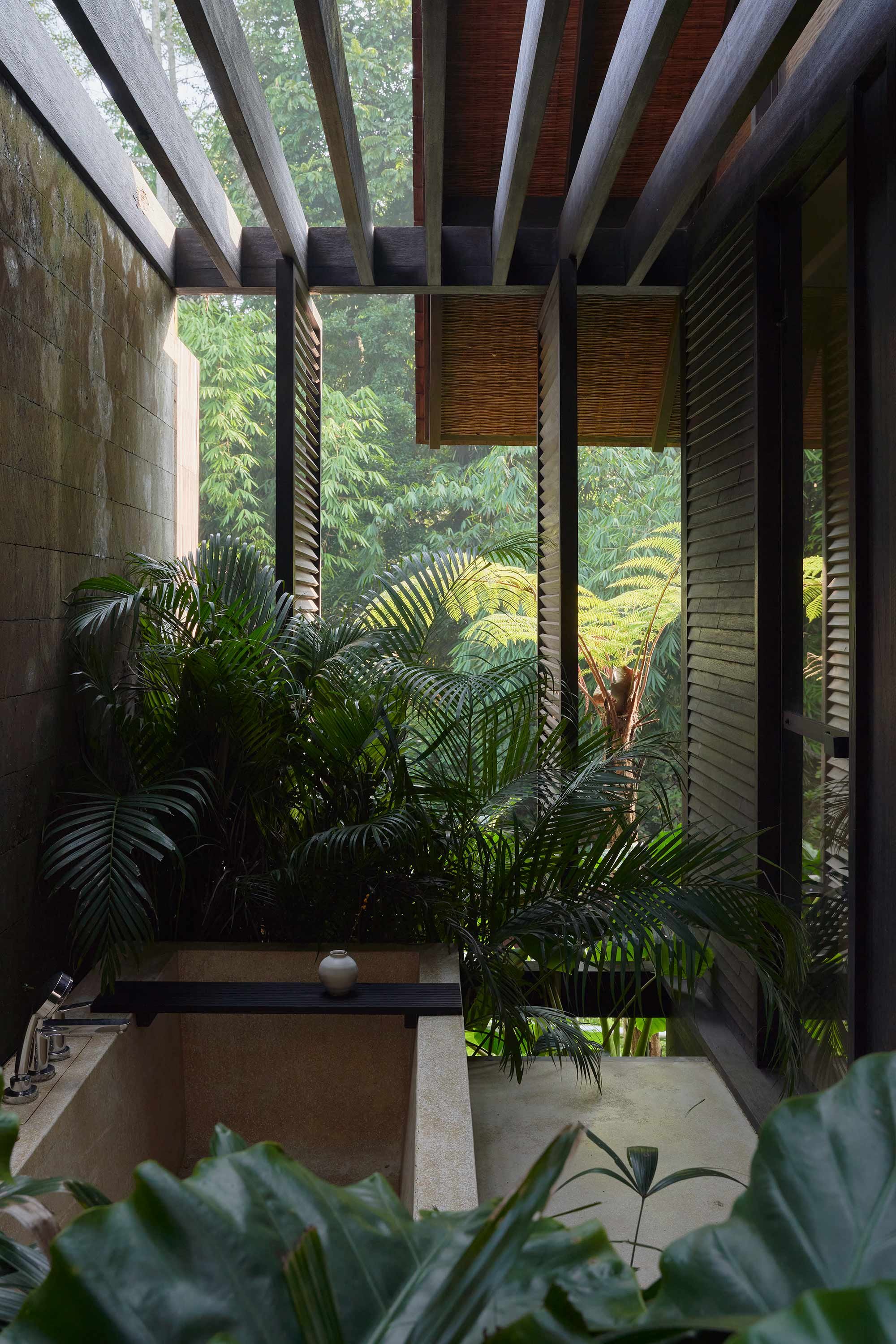
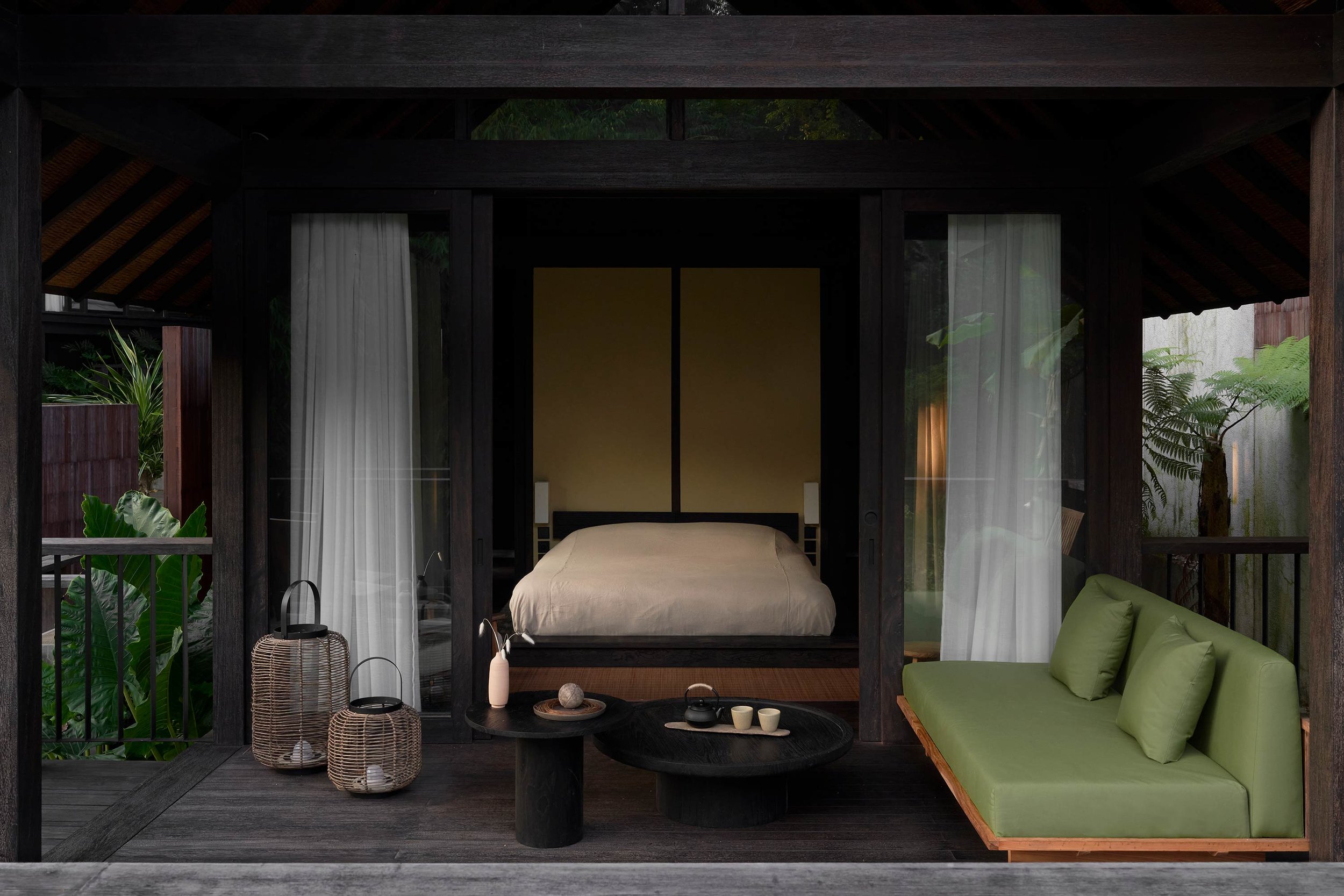
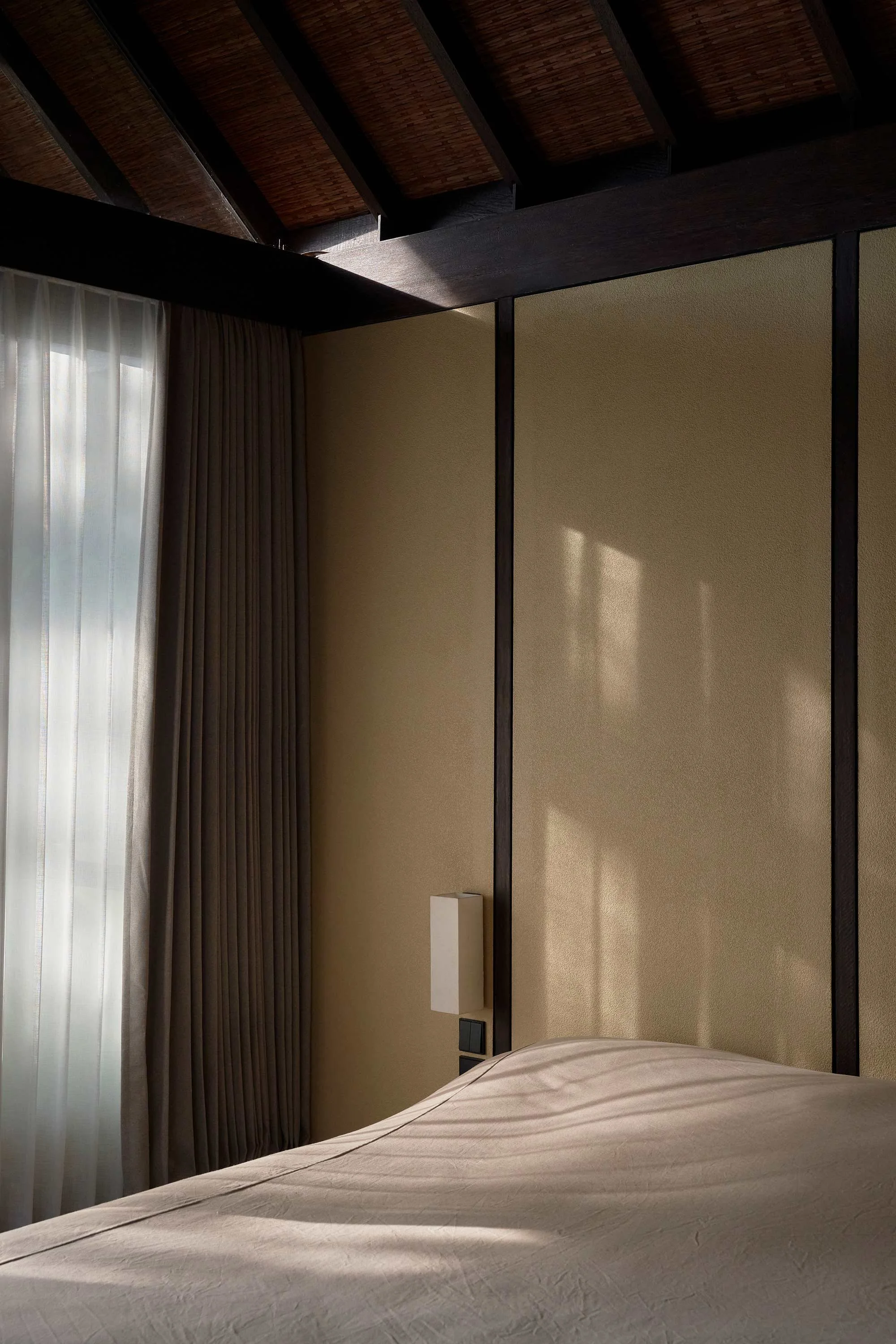
That restrained sensibility continues in the sleeping quarters. Soundtracked by the sound of flowing water and rainforest birds, the riverside lodgings are firm favourites. Futon-style beds in burnt wood and expansive glass doors maximise space and bring the bamboo thickets closer, and each room features an open-air bathroom. Framed by tropical ferns, wooden shutters open to the elements, welcoming in light and breezes.
In front of these riverside pavilions, a generous veranda furnished with custom pieces — all designed by Bada Studio and produced in Gautama’s workshop — offers a tranquil spot for morning coffee. In fact, morning is the most enchanting time of day here. The dark wood takes on a particularly alluring quality in the early hours, a feature inspired by the natural radiance and mood of the site that Moeis noticed on his first visit in 2021. ‘When we arrived, there was this dark radiance,’ he recalls. ‘It felt shaded, covered and protected by the natural elements, the mature trees, sloping contours and stone-filled river. This inspired us to use these darker materials throughout.’ The result is a home that doesn’t just sit in its natural environment, but shifts with it, catching the light and settling into its surroundings as though it’s always been there.
Text by Alison Pace
Images by Iker Zuniga