
The Weave of Time
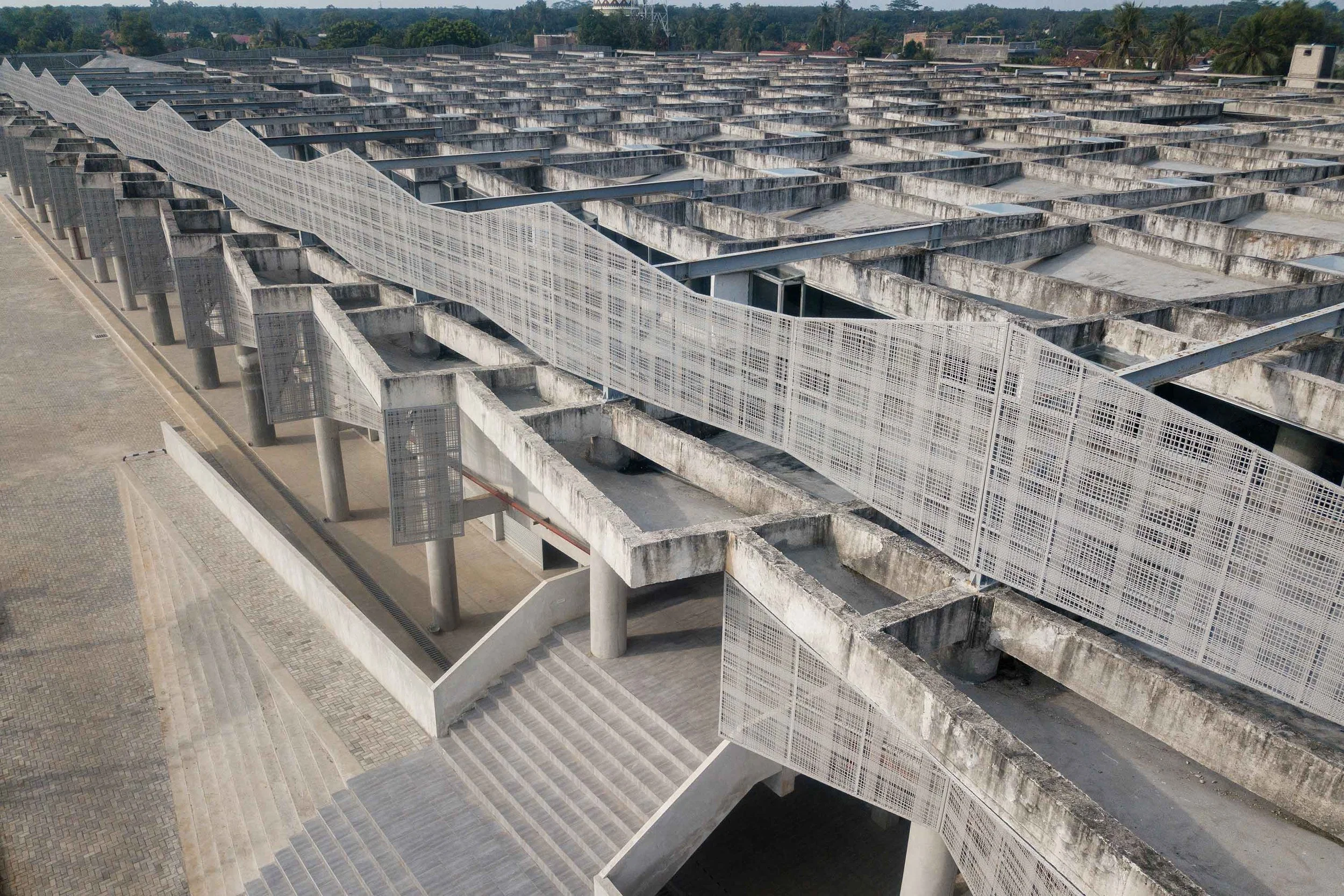
Image by Mario Wibowo
Indonesian weaving atelier BYO Living works at the intersection of design, craft and engineering to bring the heritage craft to contemporary projects.
The history of weaving in Indonesia dates to the country’s ancient kingdoms, with communities across the archipelago harvesting natural material to make ikat fabric or drawing on the country's vast resources of rattan — Indonesia is home to 80 per cent of the global supply — to create goods for themselves and for export via the region’s trade networks.
BYO Living was established with this heritage in mind. Founded in 2008 by Lim Masulin, the firm has brought the craft firmly into the present through its collective of designers, architects, weavers and engineers, all passionate about innovating the craft with an emphasis on energy efficiency and sustainability.
Alongside and complementing BYO Living, Lim also launched non-profit collaboration platform Wonders of Weaving (WoW) in 2015. The initiative brings BYO Living’s capacity and expertise to cultural, educational and community-led projects, supporting BYO Living’s commitment to communities across Indonesia.
BYO Living and WoW have become known for their striking interventions, which adapt the ancient practice to contemporary materials — perhaps most famously at Bali’s Potato Head Studios, where the team reworked around 1.5 tonnes of recycled PET plastic to create the woven ceilings throughout the Desa complex.
But two more recent projects showcase the atelier’s approach just as strongly. In Tubaba in South Sumatra stands Pasar Pulung Kencana, designed by eminent Indonesian architect Andra Matin, whose reimagination of the traditional wet market is a sprawling two-storey structure that harmonises with the architect’s Islamic Center in the same town. Here, the woven architectural facade is designed as a passive cooling system at a large scale, reducing the building’s reliance on mechanical air conditioning. It shades the structure on all sides from the region’s harsh direct sunlight while facilitating natural ventilation, and acts as a natural rain barrier, protecting the building’s interior and its buyers and vendors. Even so, most immediate is the breathtaking visual effect.
The studio’s Rumah Keranjang and RL House projects demonstrate the use of weaving as a second skin. Here, the ‘skins’ again contribute to passive cooling, while the incorporation of bespoke weaving patterns within the weave introduces a distinctive, visually engaging element to the building exteriors. While the skins utilise varying materials, colours and patterns, they’re united by thoughtful use of materiality that fosters a sense of connectedness within each one, establishing a cohesive design language that enhances the overall aesthetic appeal.
A closer look at the projects, as with all of BYO Living’s work, reveals much: the intricacy of the structural design, with precisely angled battens; the attention to material; the care taken to integrate the design imperatives into an appealing aesthetic; and perhaps most of all, the reimagining and stewardship of an ancient craft.