A Bangkok Gallery Reimagines the Shophouse and Makes the City Part of the Show
Designed by Skarn Chaiyawat Architects, Bangkok’s influential gallery Nova Contemporary has moved into a renovated shophouse in the city’s Sam Yan neighbourhood, its weathered surroundings subtly shaping the viewing experience
When the need came for Nova Contemporary to find a new home to expand into, founder Sutima Sucharitakul looked for an architect who could draw out the character of both the neighbourhood and its shophouse, one of Southeast Asia's most recognisable urban forms. ‘We’re an international gallery, but I still wanted the Bangkok setting to register in a way you can’t achieve in a white cube,’ she says. Her confidence in Skarn Chaiyawat Architects grew from the value the owner and namesake places on Thai heritage, something she noted in his first solo project — monks’ living quarters and library for a Buddhist temple in the rural north-east of Thailand — and in the unforced way his buildings relate to their surroundings.
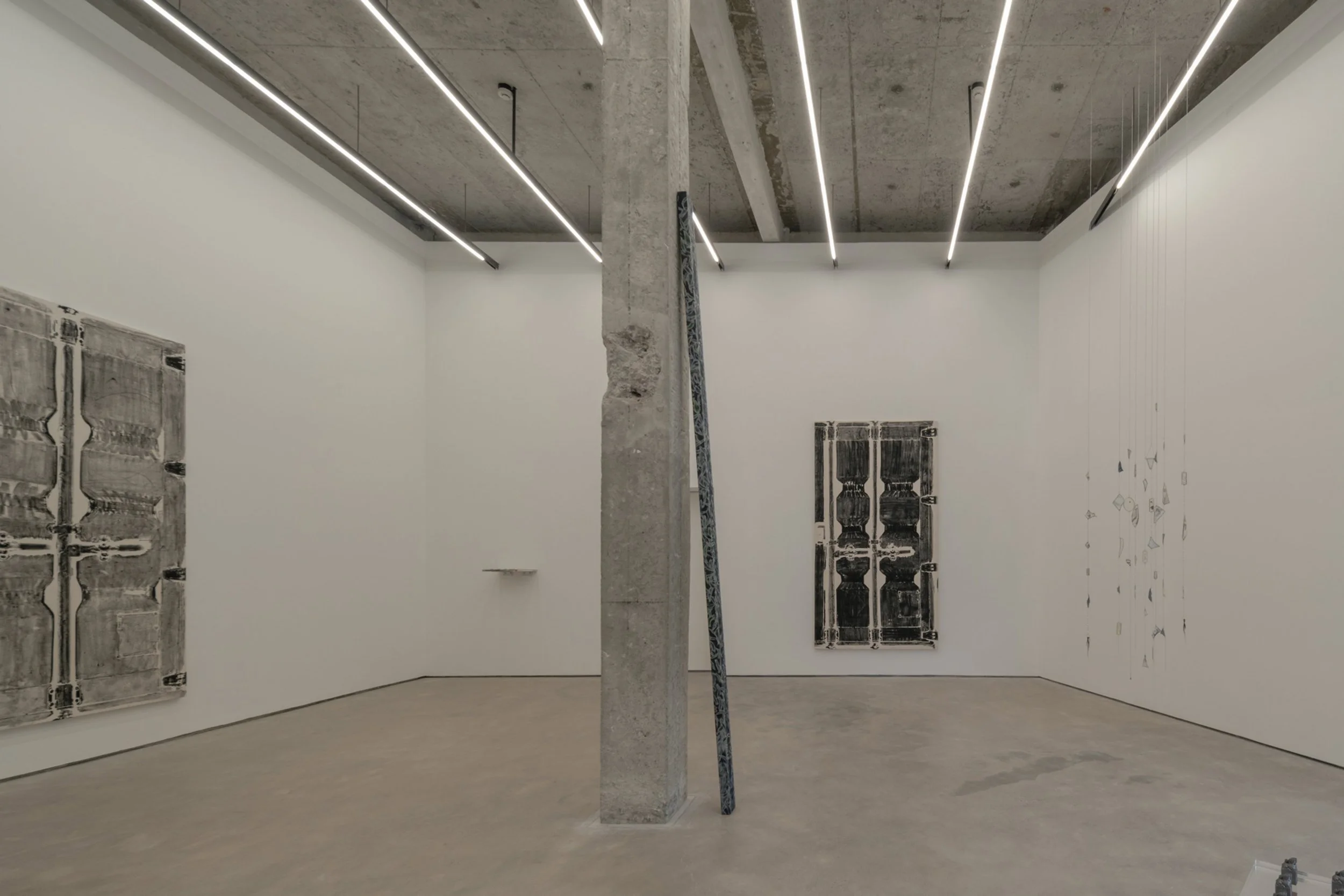
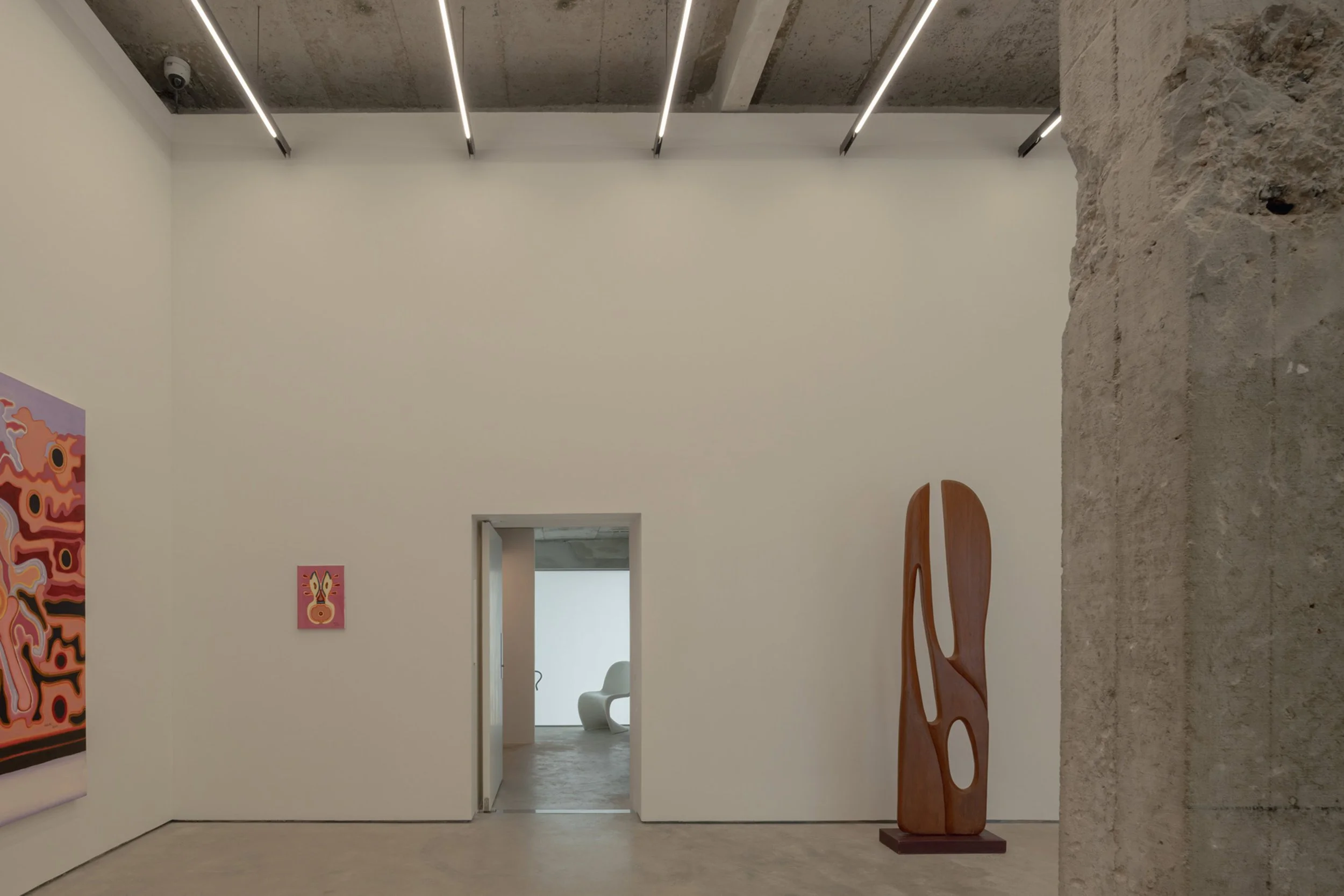
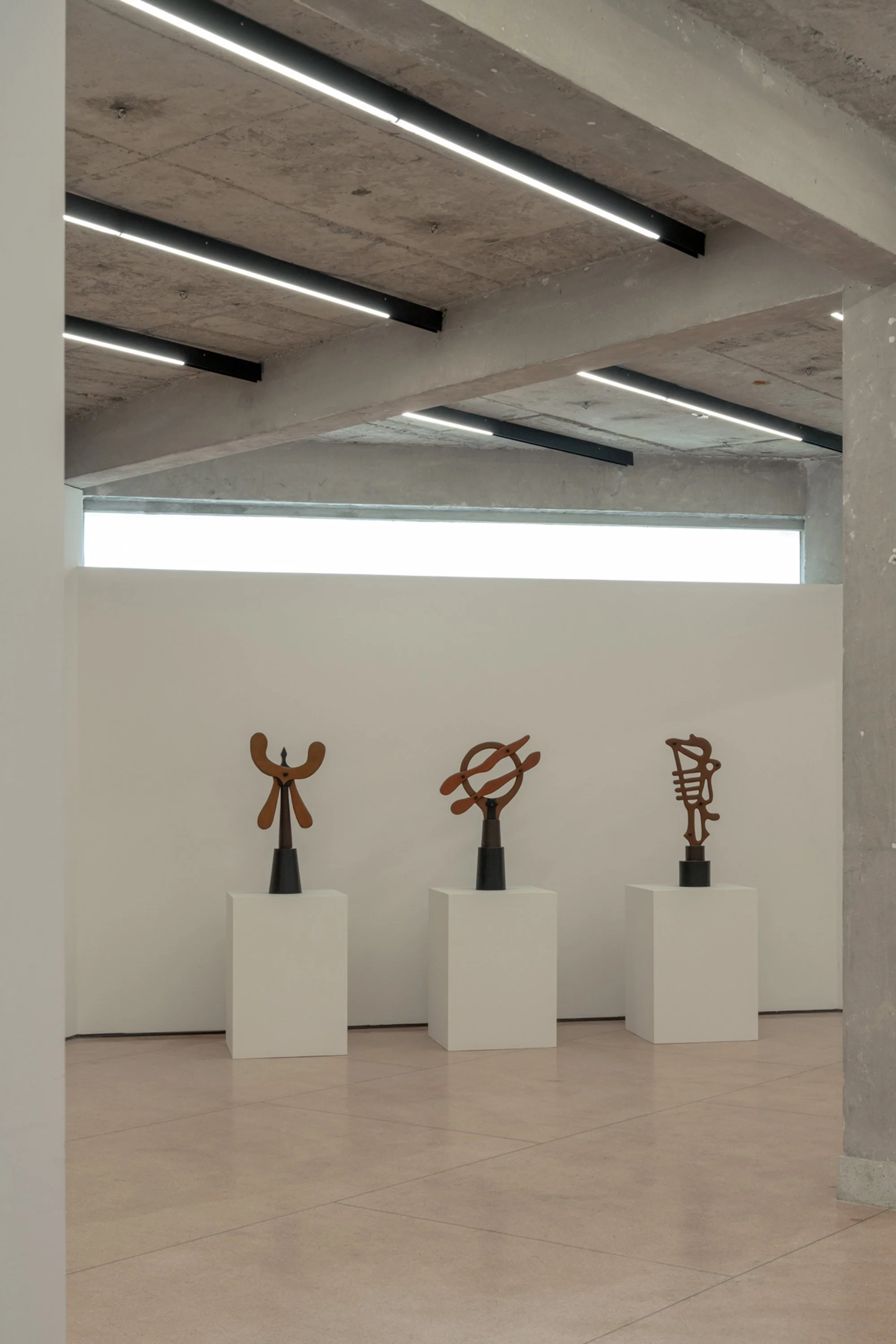
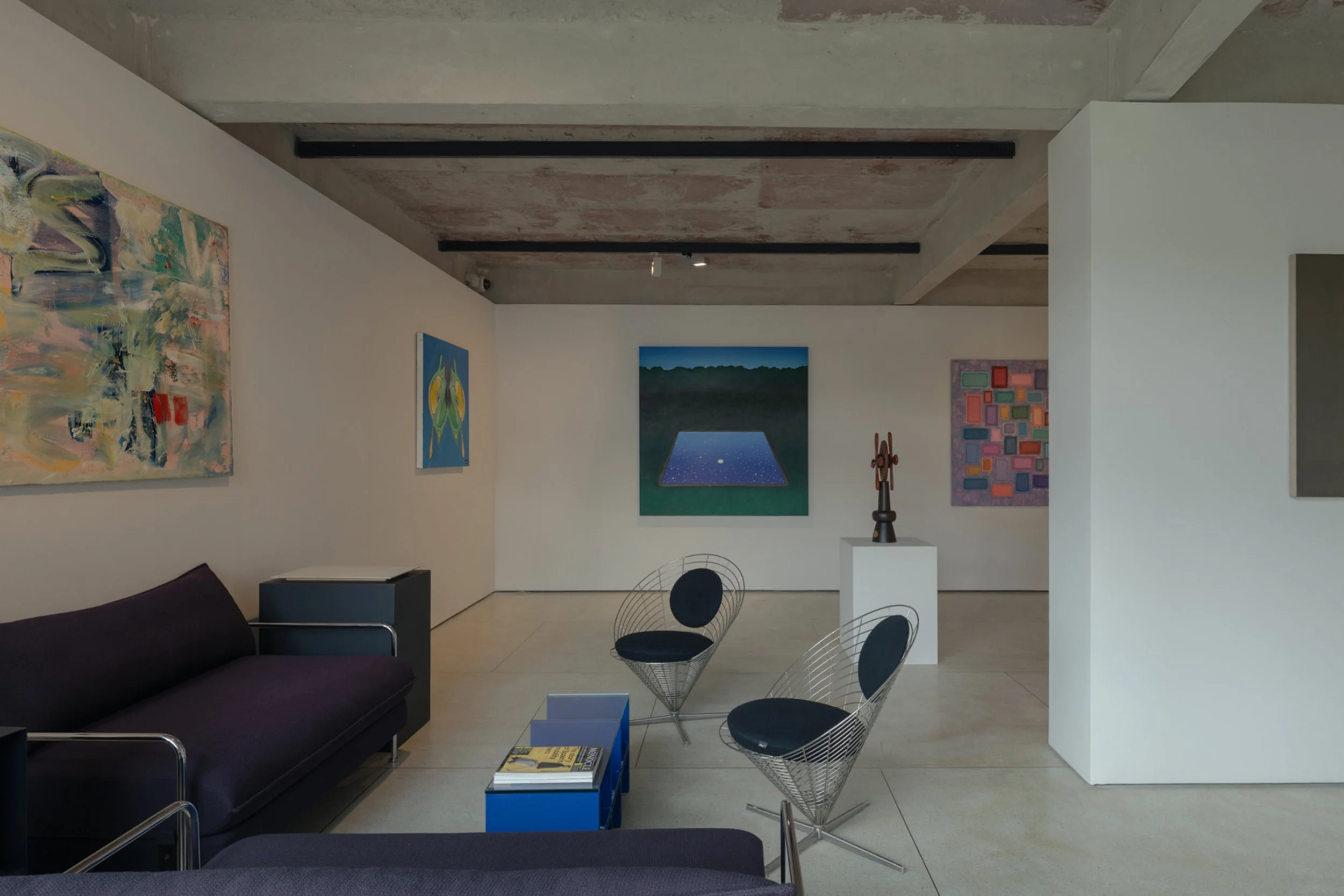
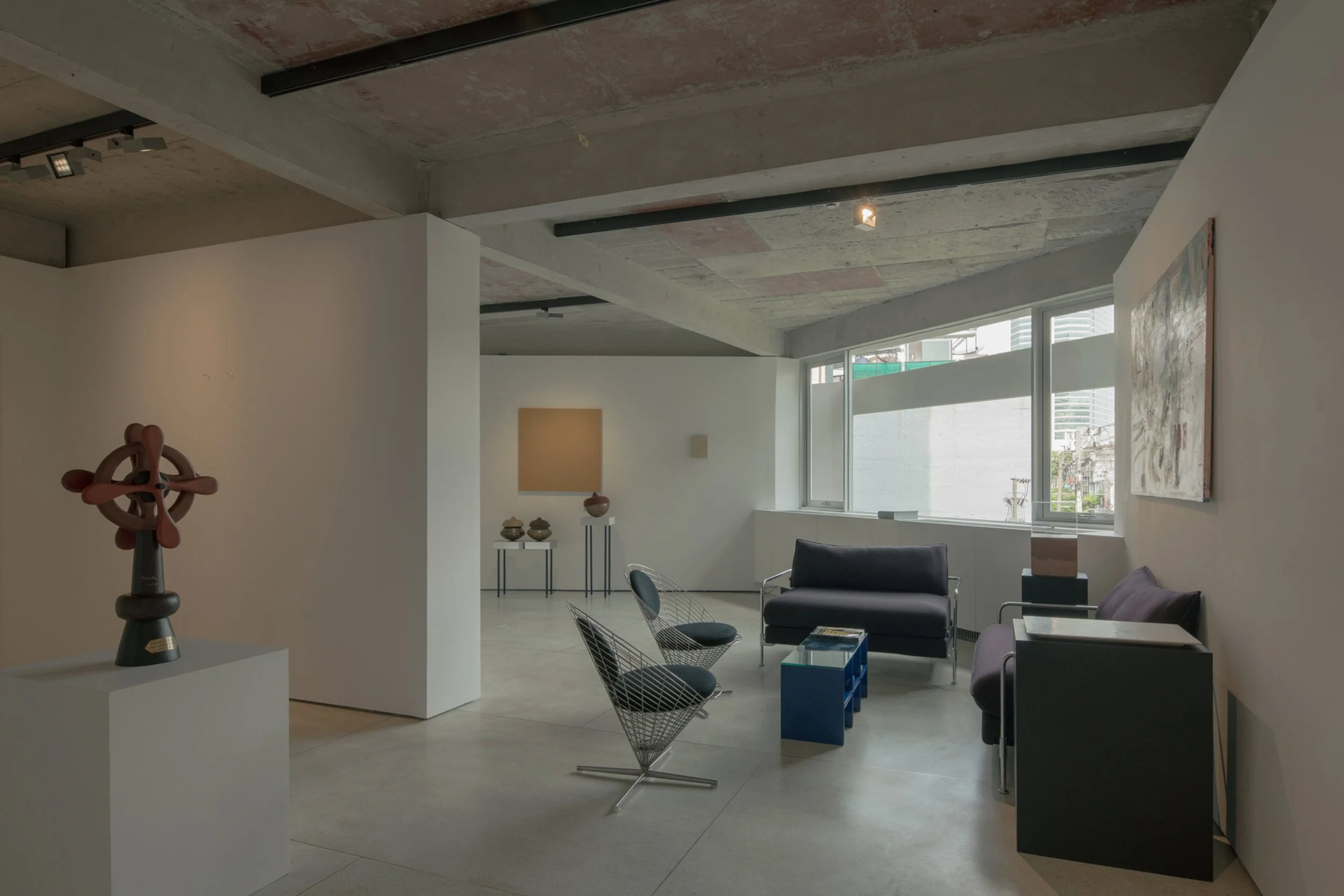
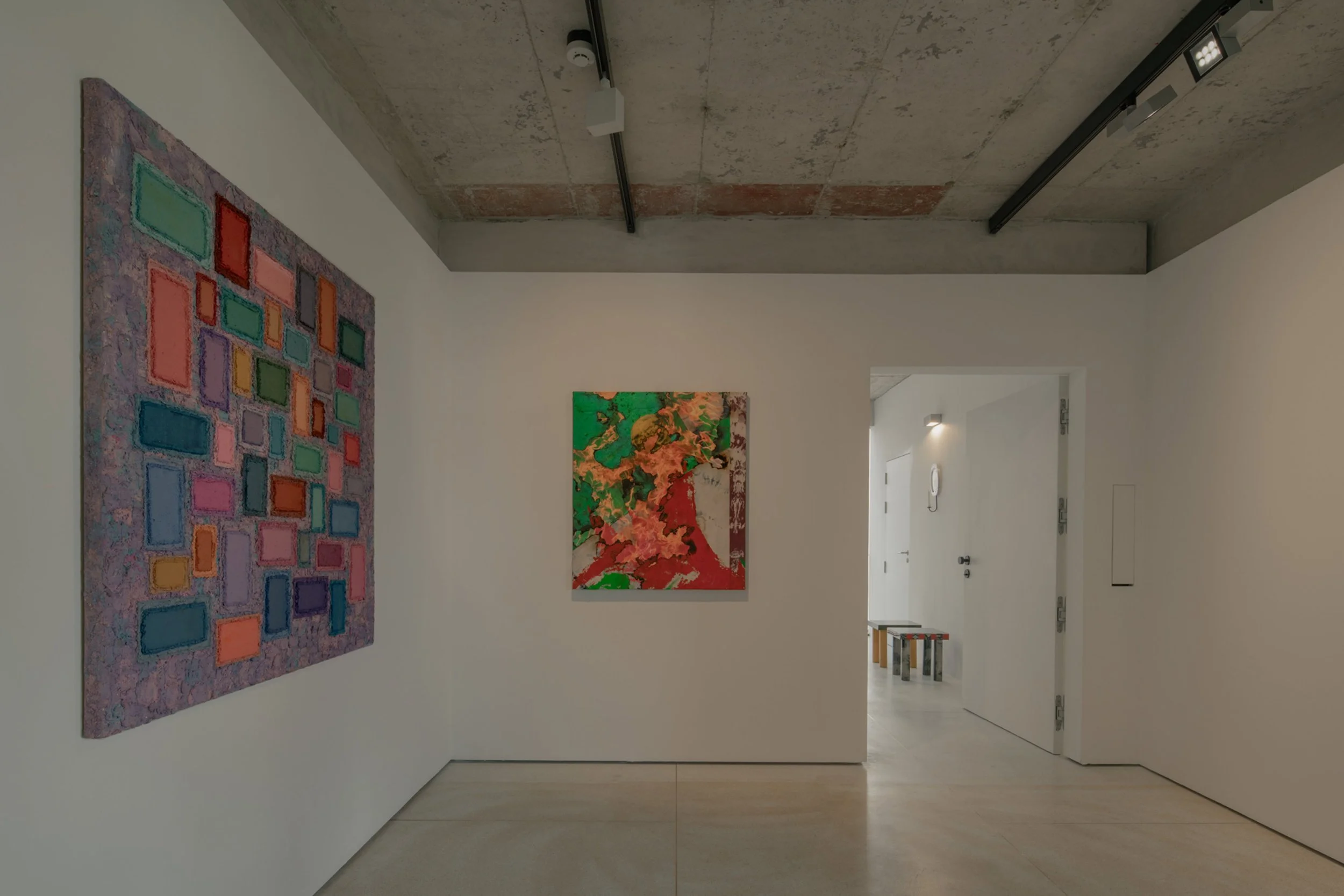
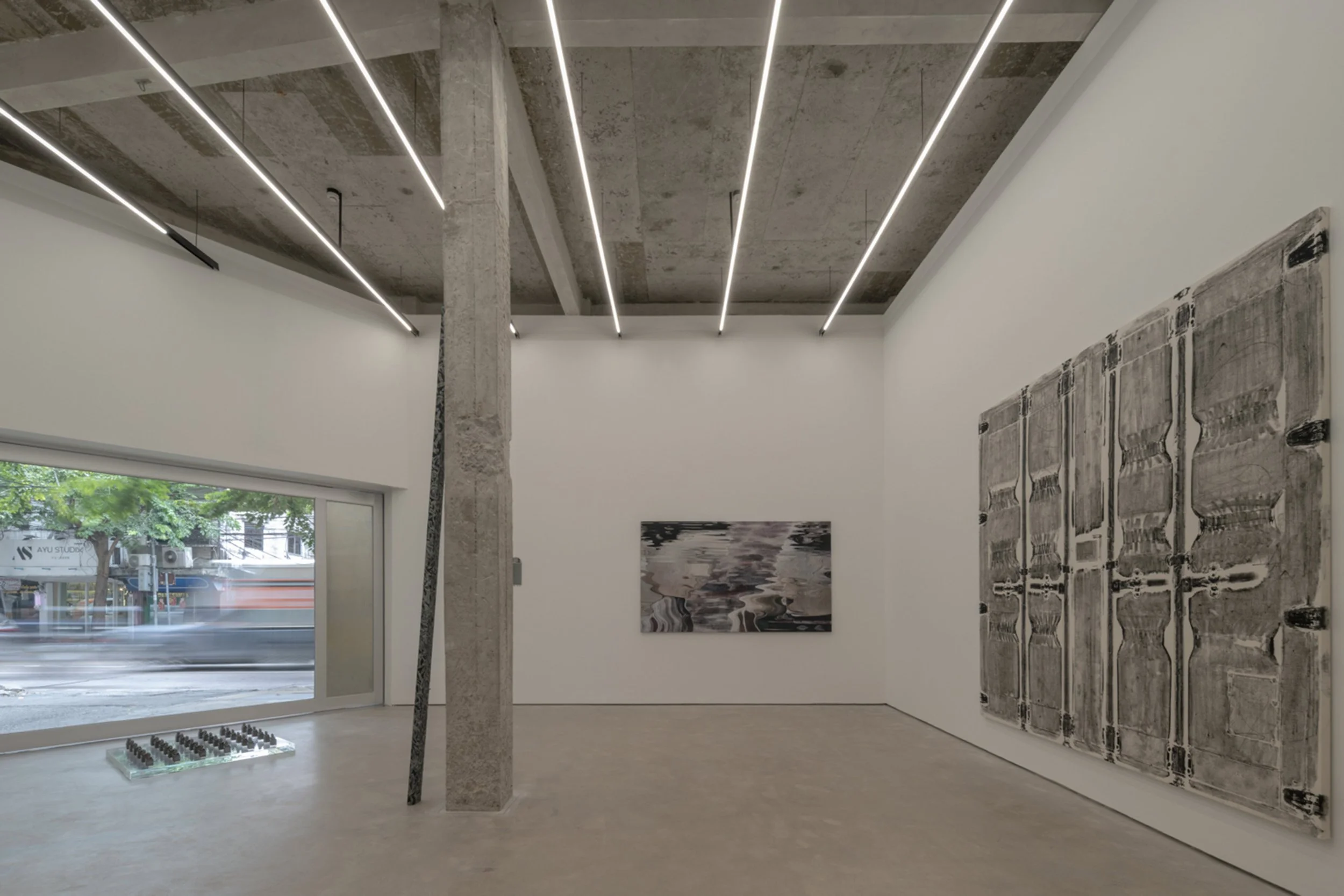
The five-storey gallery’s defining feature is a pivot glass door set into the chamfered corner of the building’s front. With the main entrance through a back alley, the pivot door mostly lets in large-format works but, above all, acts as a wide window, opening the interior to near-complete visibility from the street. ‘It was an opportunity to connect people outside with the art,’ Chaiyawat says. ‘If you walk past, you’ll almost certainly look in.’ From the main gallery, the door frames Bangkok’s bustle — including colourful traffic and street hawkers — as if it were a permanent installation. Chaiyawat integrated two floors to lift the ceiling height in this room, and aside from the window and the exposed rough concrete beam at the centre, everything else is white walls. ‘Across my projects, I try to design what people cannot see,’ says the architect, who also hid every air-conditioning unit, wire, duct and service panel through openings masked within wall systems. ‘It’s like what I did in the monks’ living quarters — everything has to be as subtle as possible so it doesn’t interfere with their life, and here, the art.’
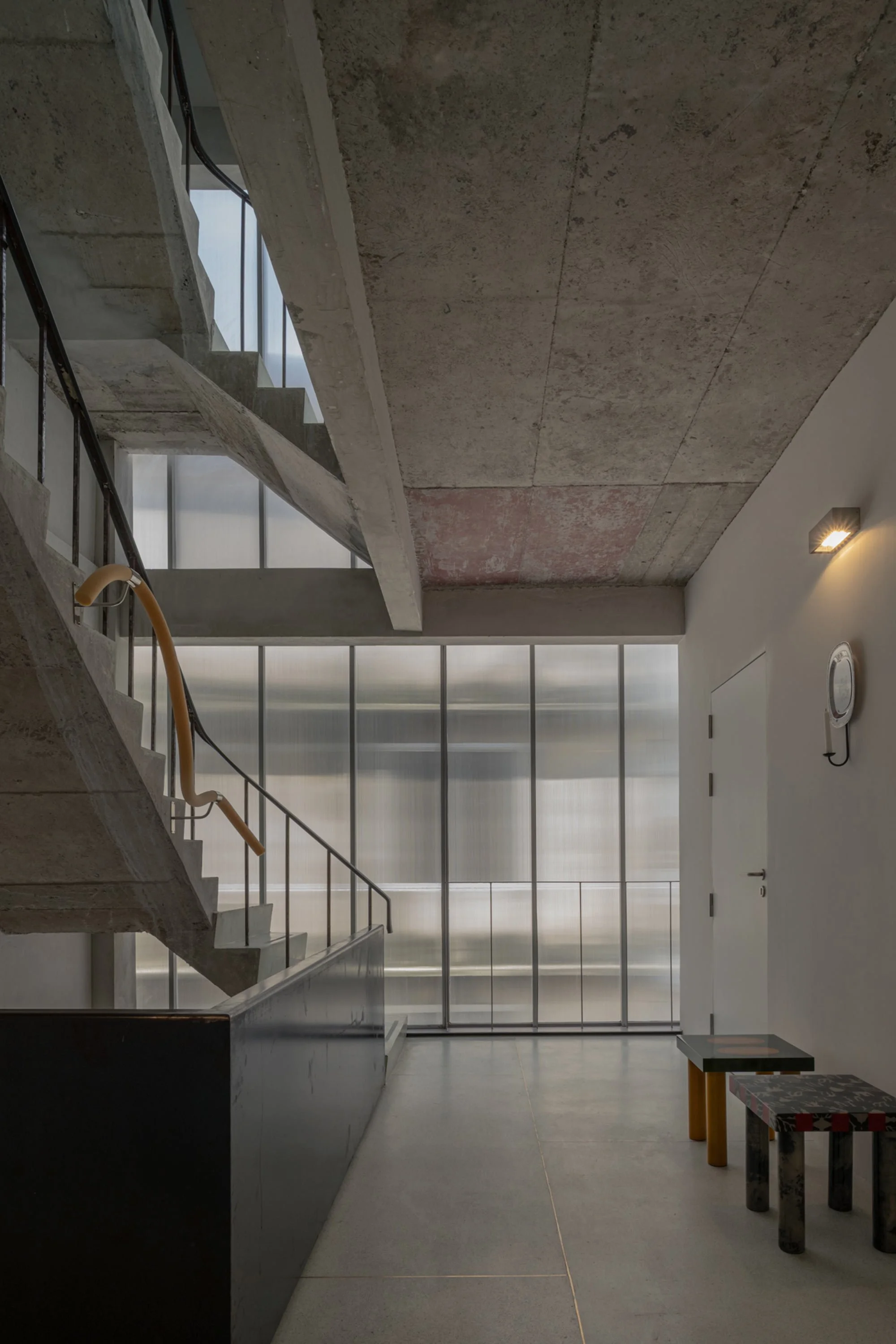
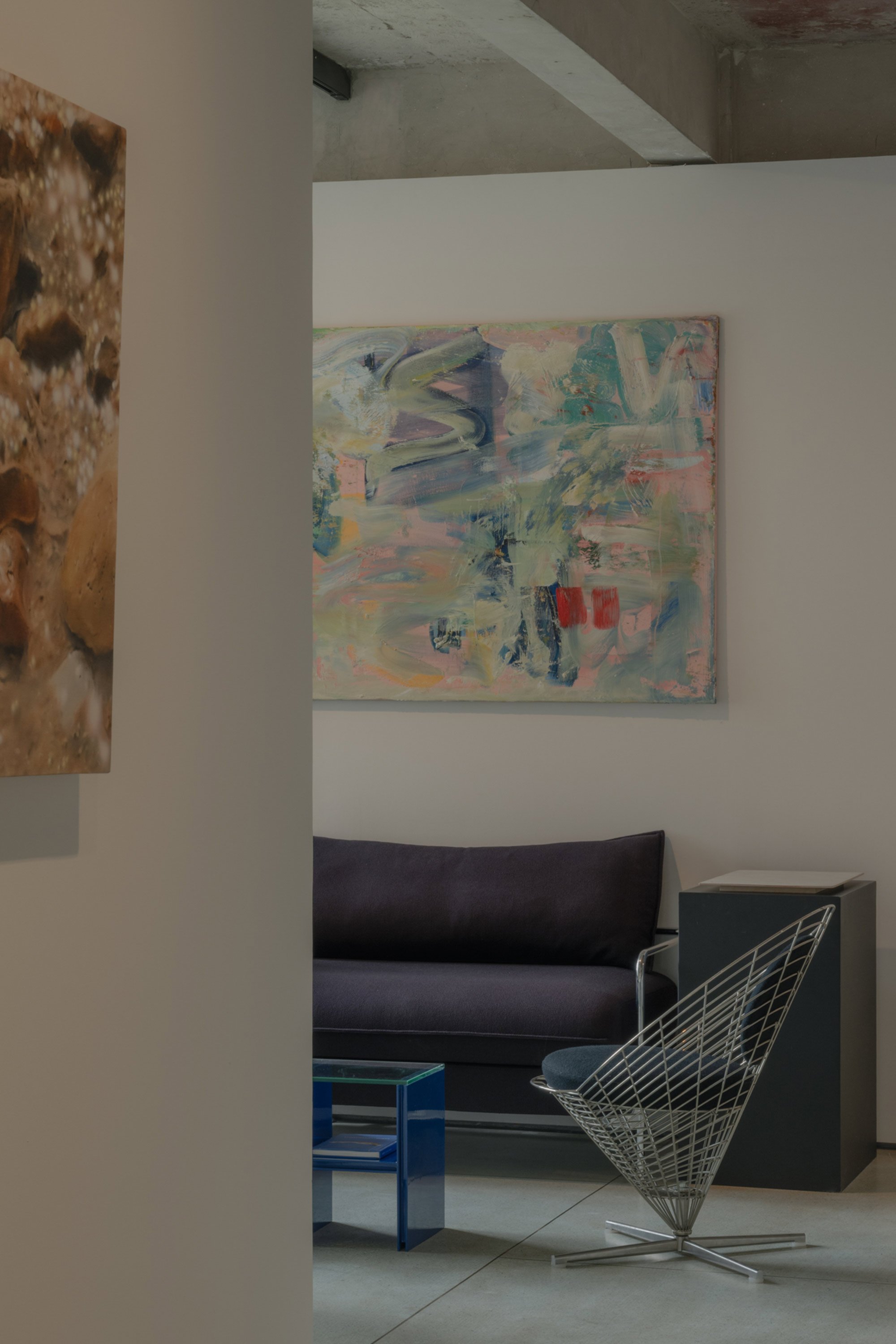
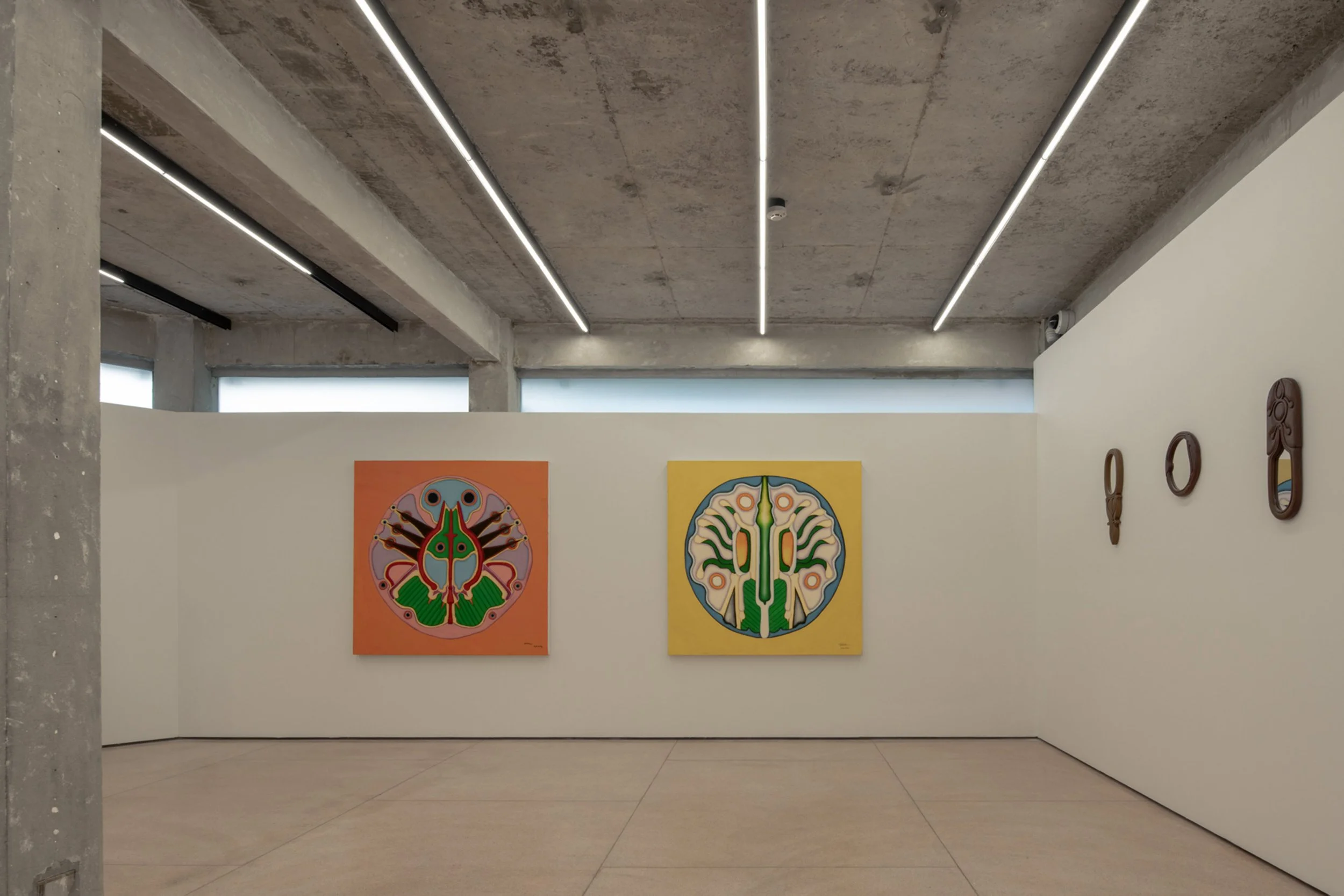
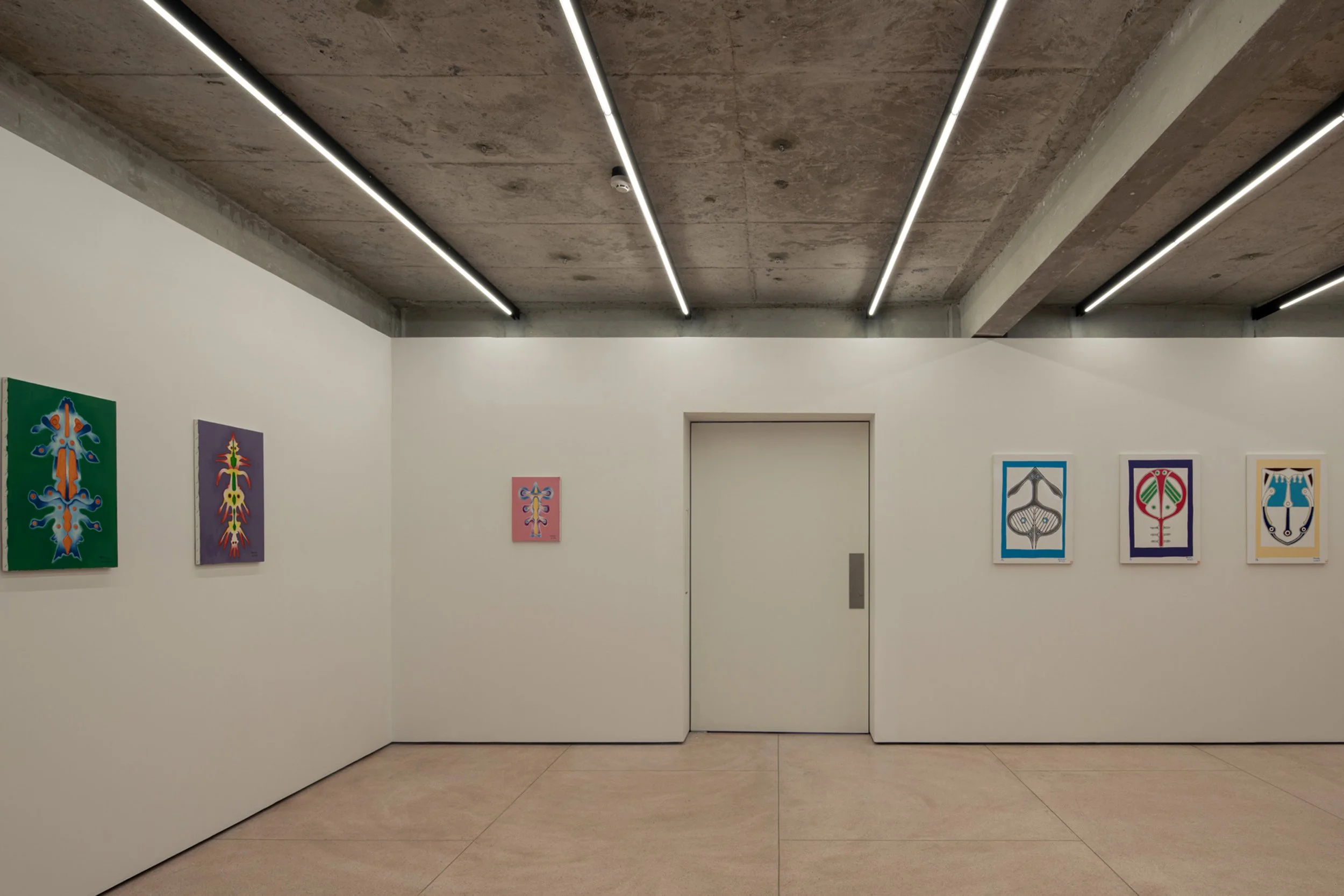
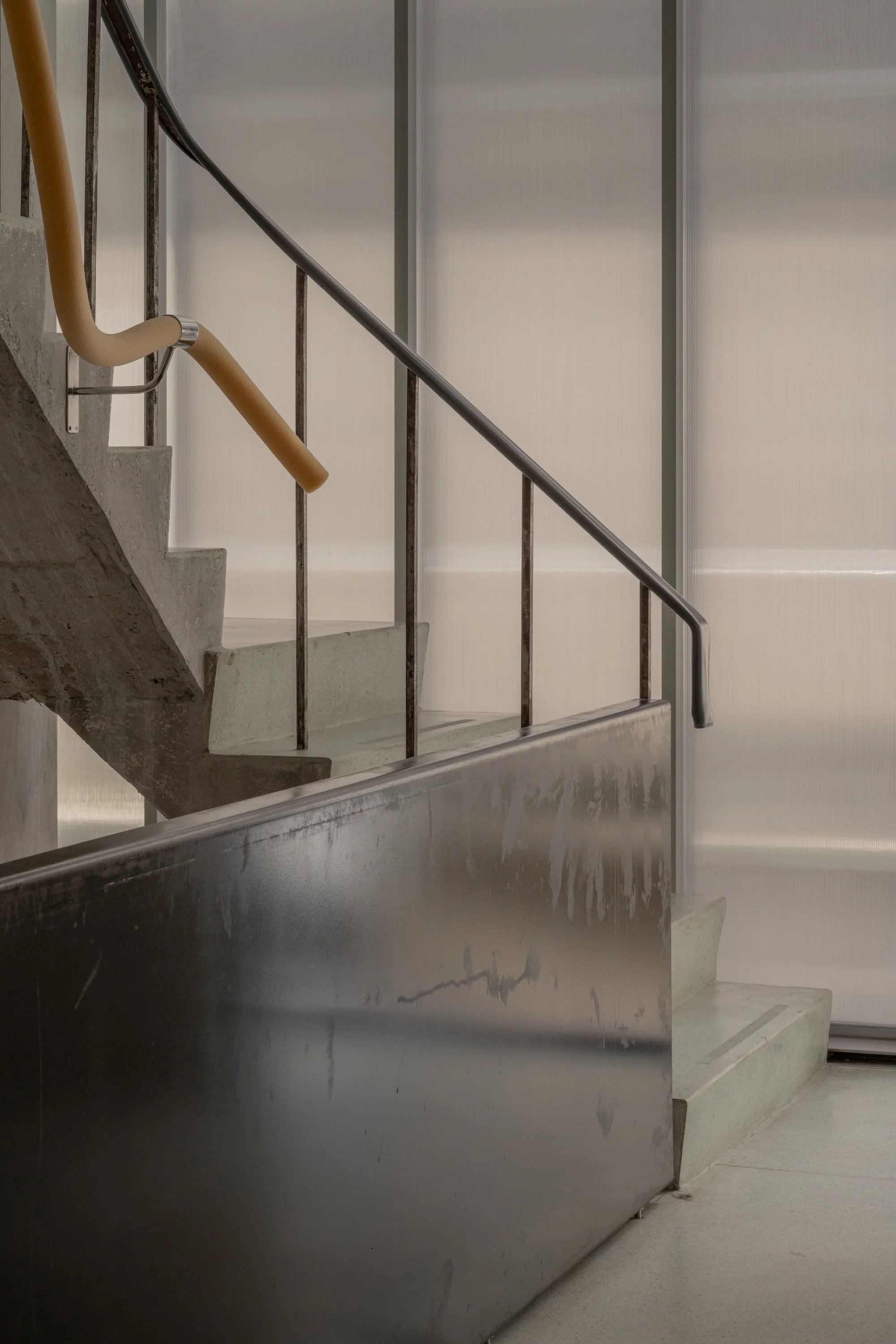
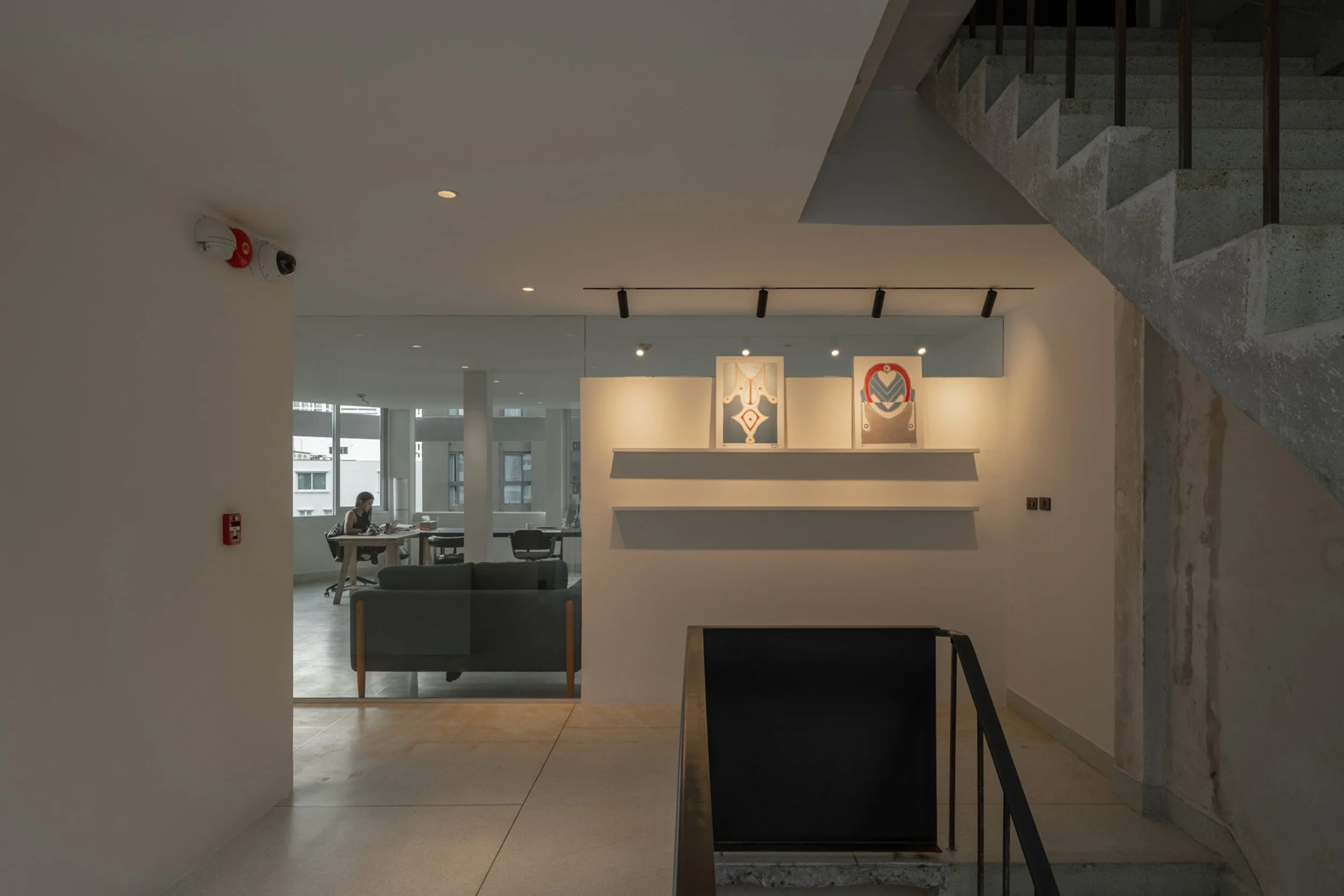
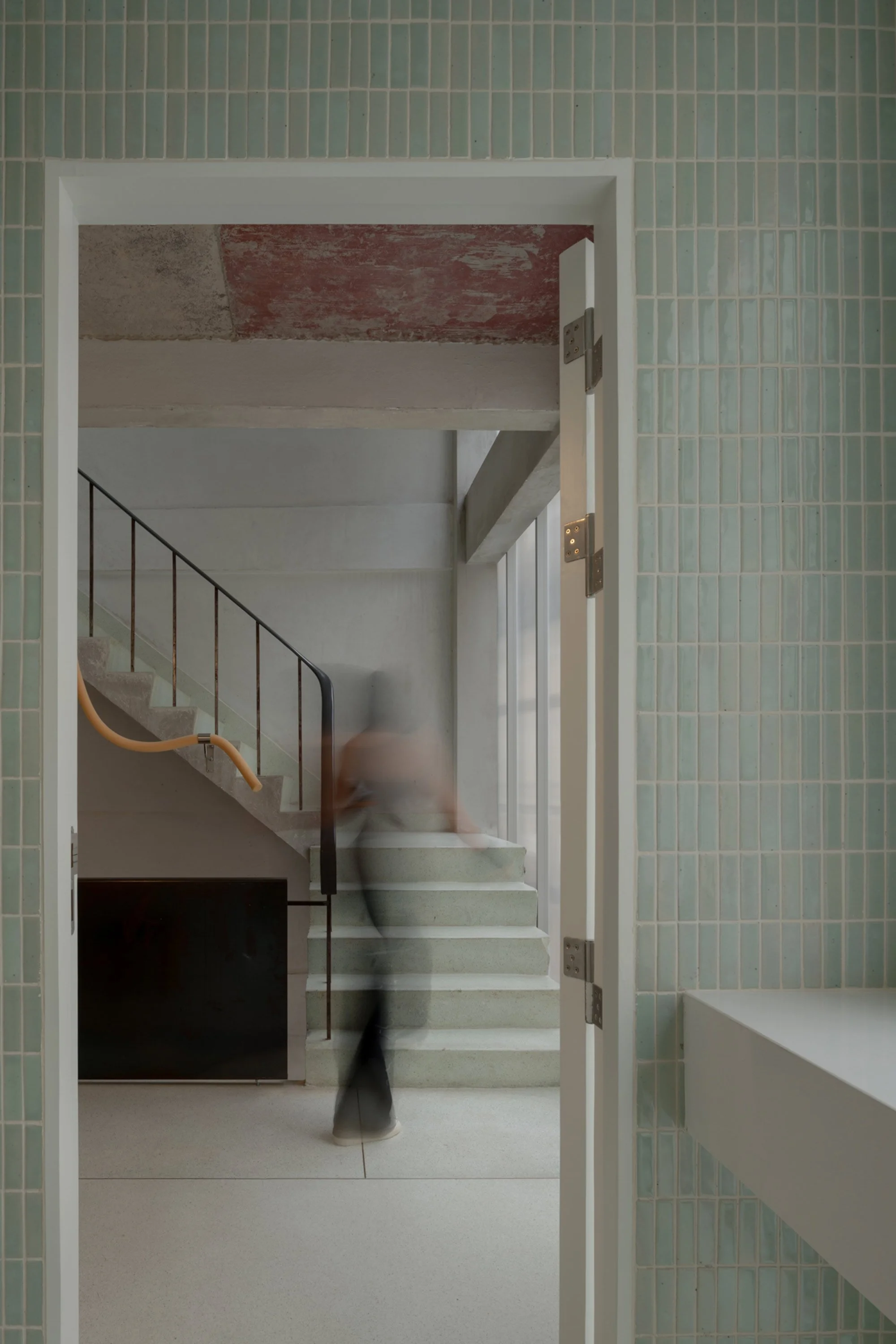
Natural light varies across floors: it washes over the main gallery and pours through the large windows of the top-floor office. In the private viewing room, arranged for slower conversations, smaller openings soften the light to a more domestic scale. Chaiyawat left one level intentionally muted, filtered by frosted glazing for works that benefit from a lower-lit environment. While the ground level rests on a new matt concrete flooring, the upper floors alternate original pastel green and pink terrazzo, in conversation with exposed concrete ceilings and a cast-in-place staircase. ‘During renovations, we defined three levels of roughness. Level three is the cut floor,’ he says, pointing out the stairwell he opened at the building’s service and circulation core to enhance vertical permeability. The railings are a mix of restored originals and newly formed bent-iron sheets, detailed to feel both robust and comfortable for visitors to lean on while conversing.
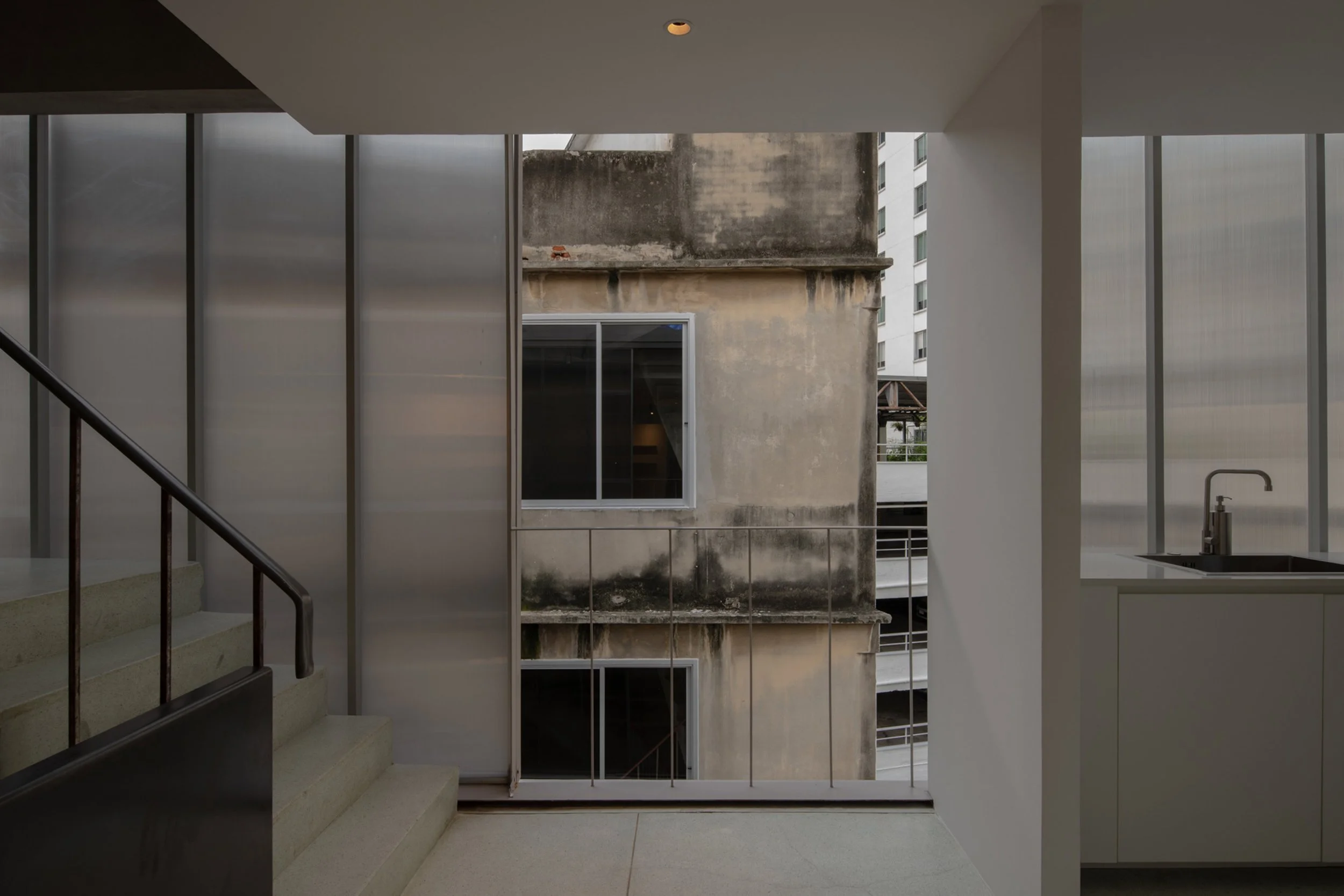
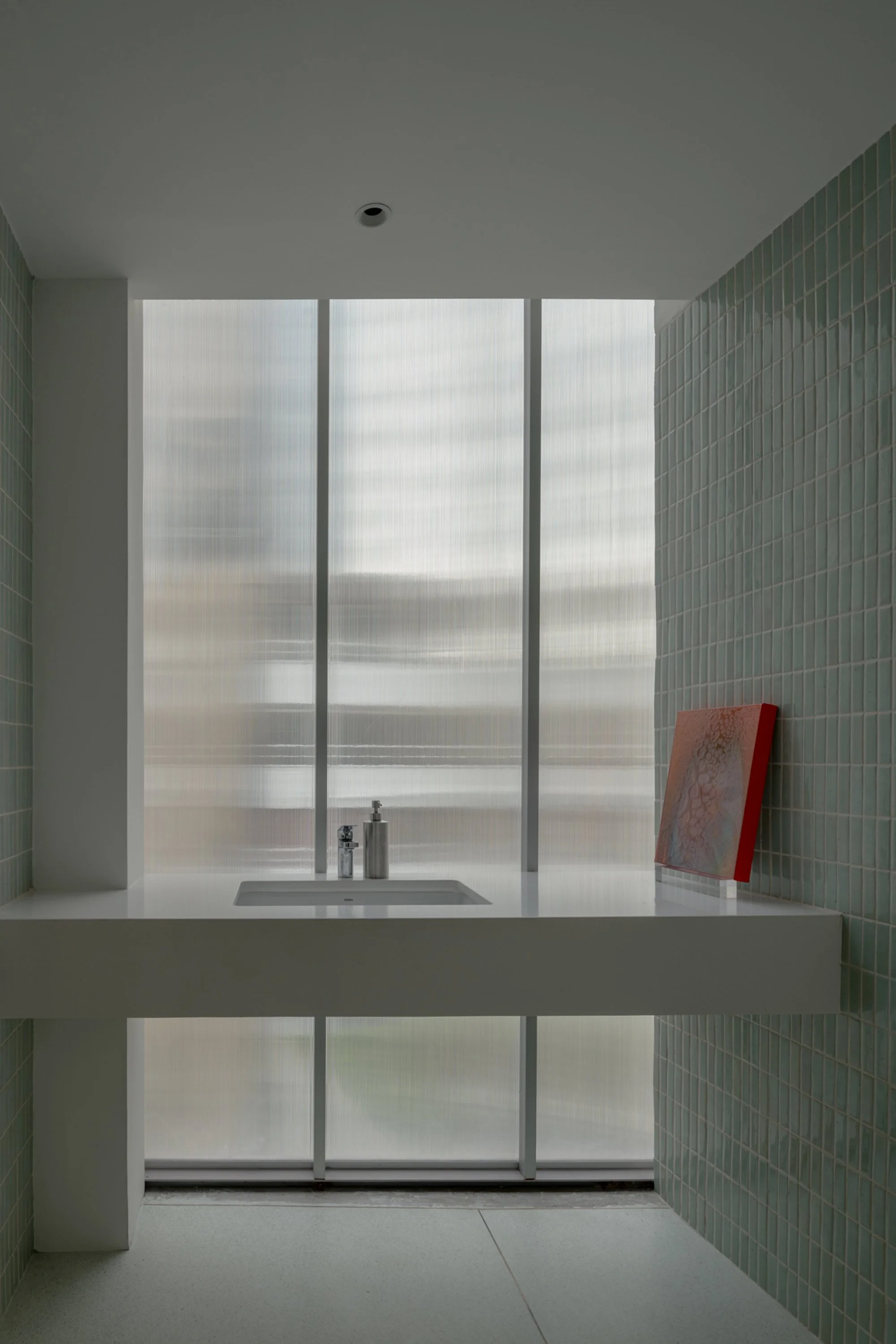
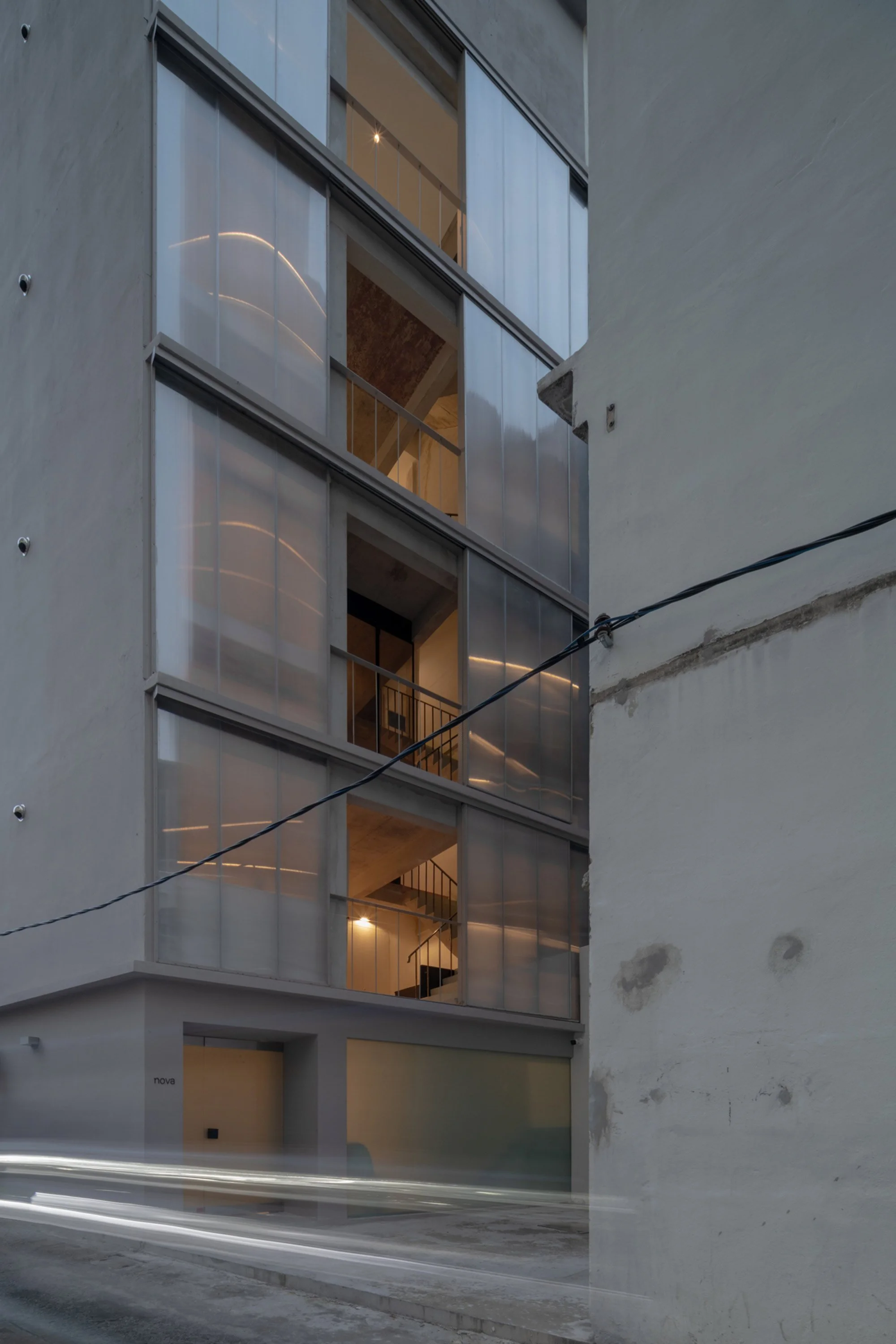
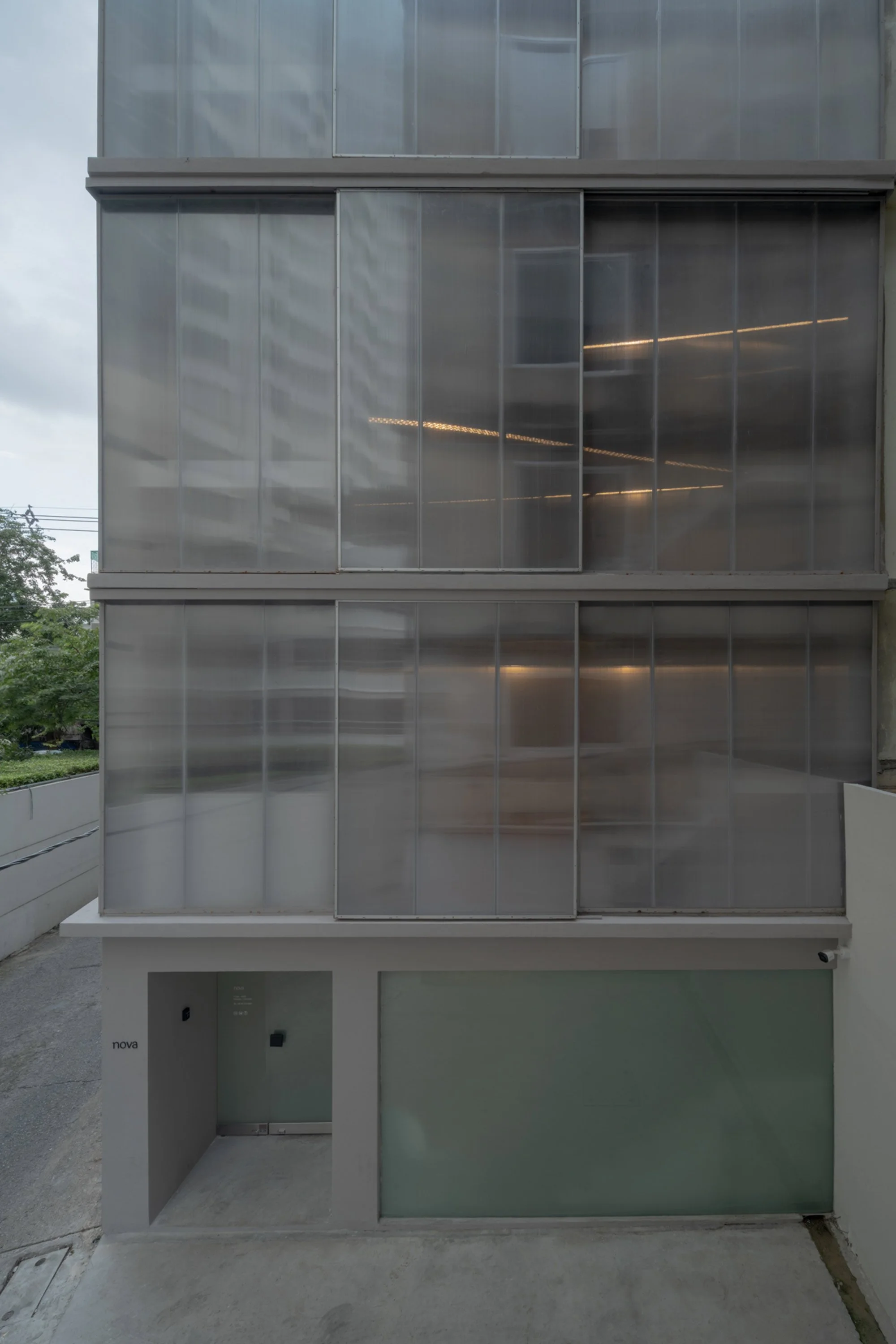
Throughout, new additions are clearly legible as detached interventions, keeping the historical integrity of the space. White panels conceal two pantries and two restrooms, each of the latter tiled in a palette tuned to its floor’s terrazzo. Chaiyawat also opened the entire rear facade and covered it with polycarbonate to allow a constant sense of context, even when the panels are closed. They’re often left open, though, framing the weathered warehouse across the patio and lending the interior a balcony-like sociability that folds naturally into the alley. ‘At the opening, people talked to each other from different levels and looked outside while having a drink,’ he says. ‘It was a small but welcome surprise.’
Text by Tomás Pinheiro
Images by DOF Skyground and Lalina Kittipoomvong