An Inspired Melbourne Renovation that Blends Contemporary and Heritage

A renovation of a Federation-style Melbourne home by Pohio Adams has realised the clients’ vision for a courtyard-style home that presents discreetly to the street and unfolds spectacularly at the rear
When Sydney architecture practice Pohio Adams was engaged by a former architect to oversee the renovation and extension of their Federation-style home in the inner Melbourne suburb of St Kilda, the husband-and-wife team of Bianca Pohio and Christopher Adams found working with a client who had experience in the field to be an unusual proposition. Ultimately, though, it brought a rigour to the design process, the depth of which is evident in the result.
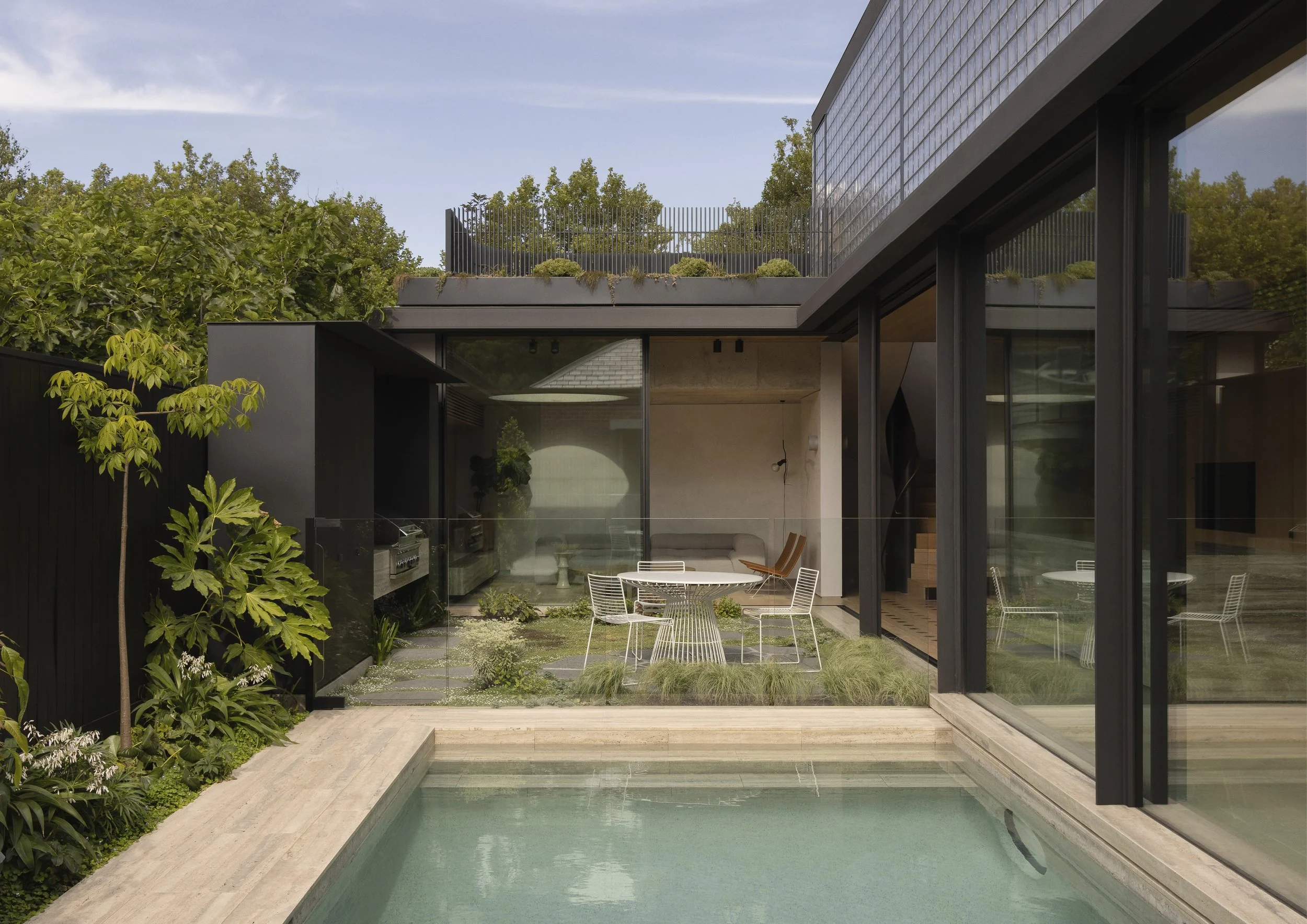
The clients had a clear vision for a courtyard-style house that presented discreetly to the street and unfolded spectacularly at the rear. Counting Pierre Chareau’s Maison de Verre and Ludwig Mies van der Rohe’s Barcelona Pavilion as key references, the ambitious concept was further complicated by the site’s compact size, heritage-protected facade and narrow rear laneway.
The resulting home, dubbed Chaucer Residence, belies these constraints, placing emphasis on contrast while celebrating old and new equally. Fluctuations in light and volume help to generate a lively experience, particularly when traversing the home from front to back. ‘Light and space are always key considerations for us, and to make those qualities sing, you need to set up juxtapositions,’ says Adams.
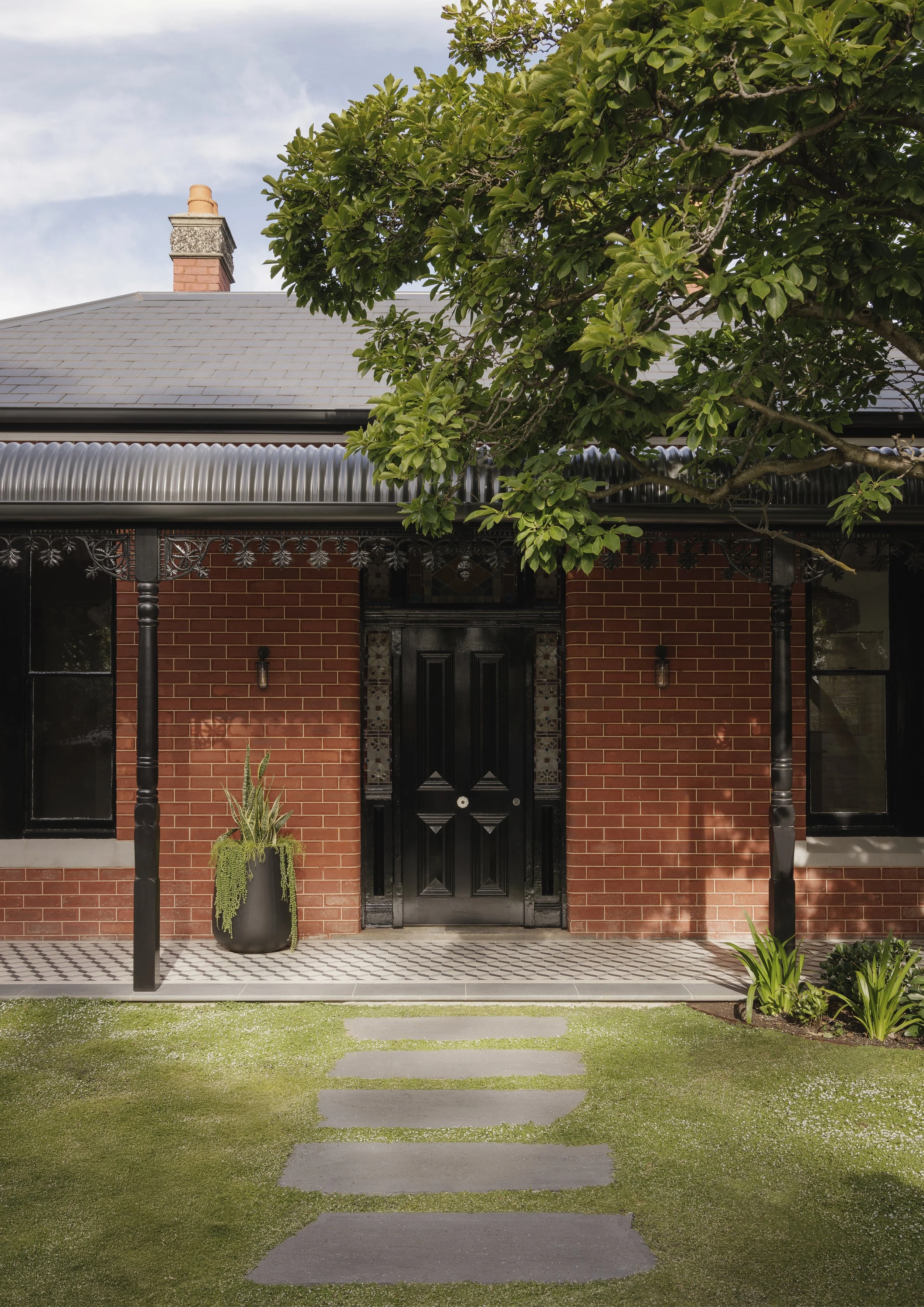
Restored to its former grandeur, the facade features fresh tuckpointing and newly laid tessellated tiles. The contemporary extension is intentionally hidden from view, allowing the handsome original structure to sit humbly yet proudly amid the streetscape.
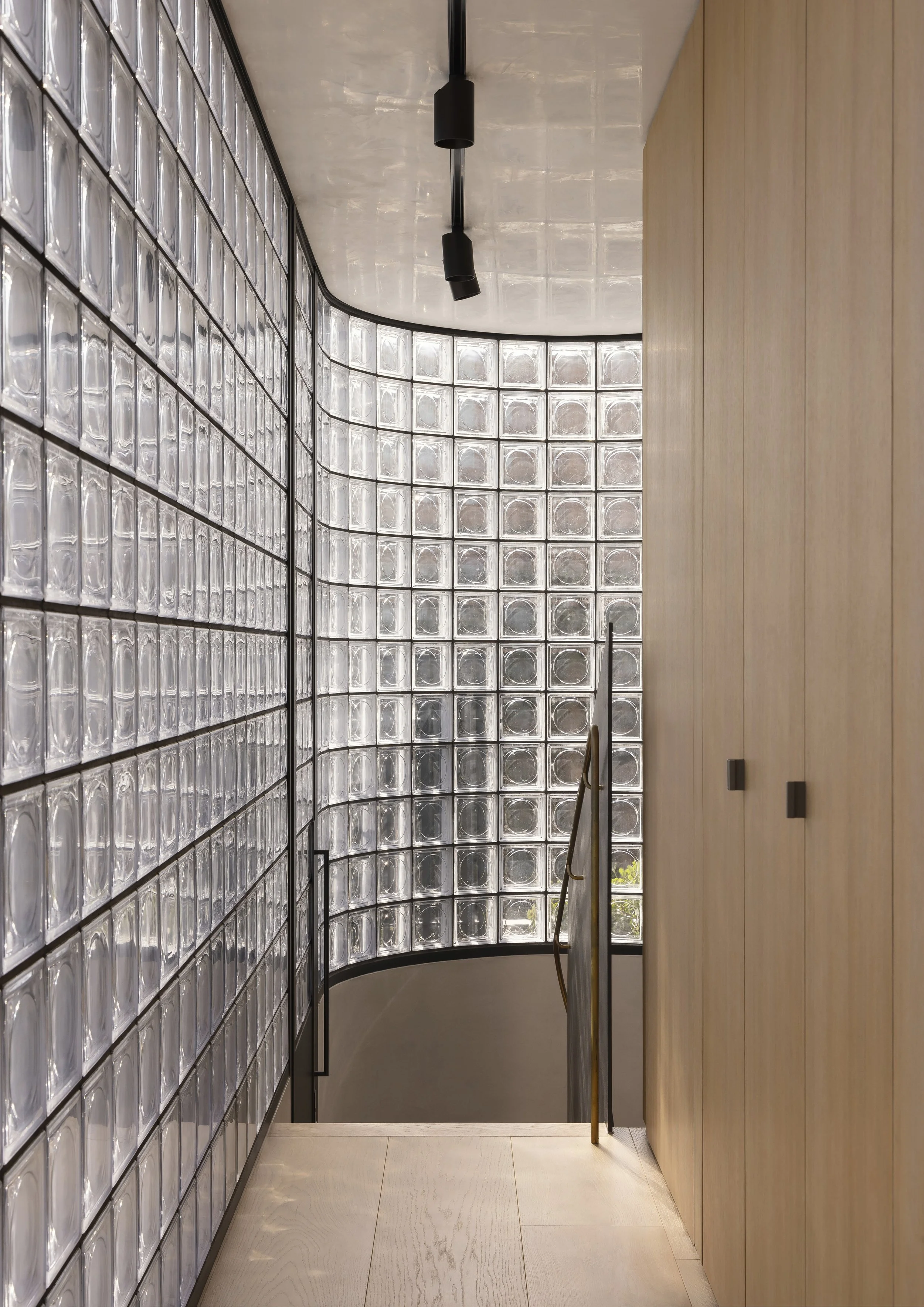
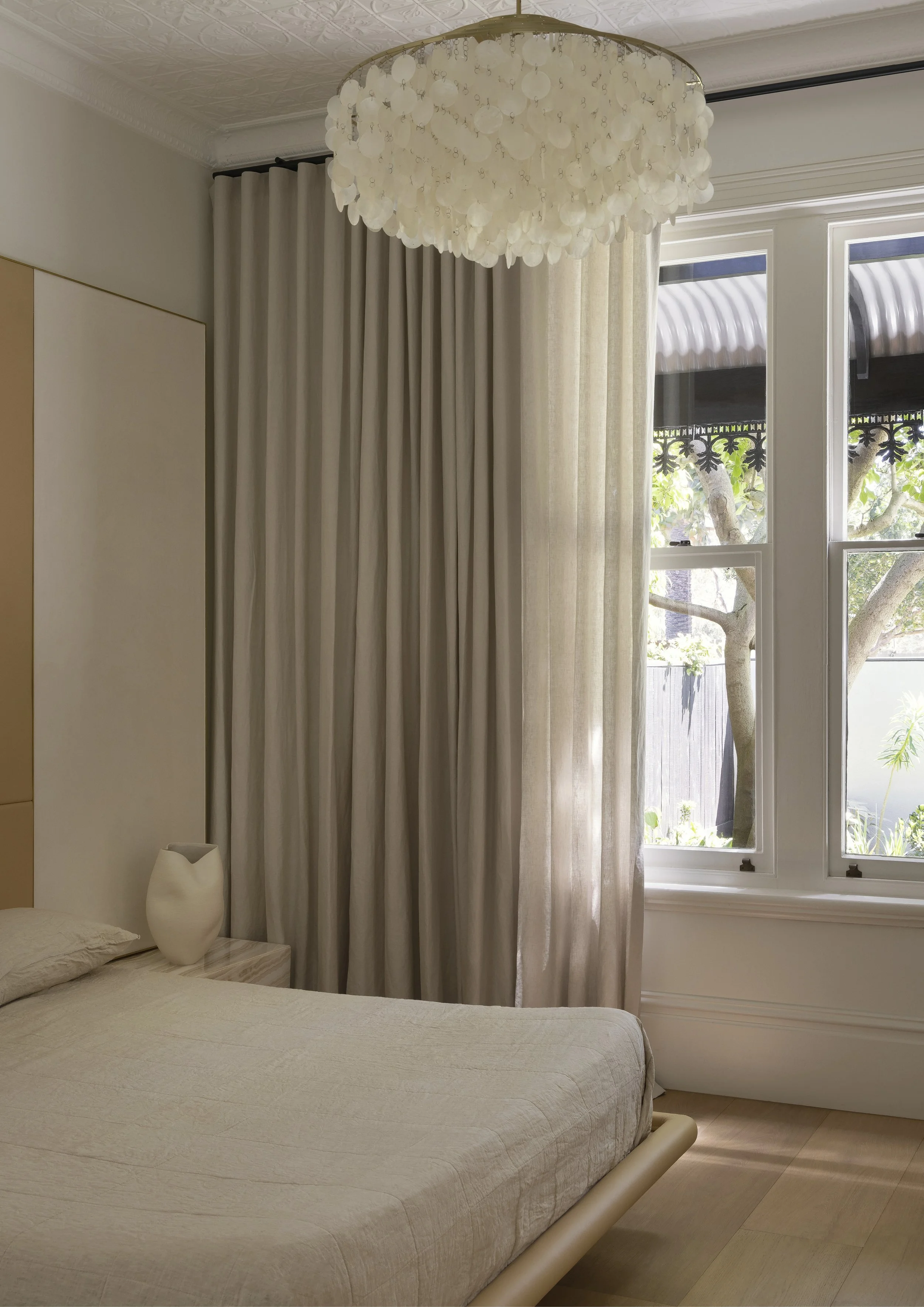
Inside, the front rooms retain their formal arrangement and detailing, with pressed-metal ceilings and restored trims, while new pale oak floorboards and Venetian plaster offer a contemporary edge. In a small but significant move, Pohio Adams raised the heights of the door frames, introducing increased fluidity without disrupting the original framework. The living space is flooded with light, which streams in through large expanses of glass blocks on the northern and southern sides.
The threshold between old and new is an important juncture, and is accentuated by a shift in scale and hue. ‘You pop out into the living space, which is washed with light and has six-metre ceilings,’ says Pohio. It’s a contrast from the cooler, dimmer rooms at the front.
The entire north elevation is glazed; on the ground floor, Vitrocsa sliding panels open onto a courtyard and a travertine-lined pool, and the glass blocks wrapping the northern and southern sides providing a watery, dappled light. Reflected light from the pool also dances across the ceiling, animating this vast space and placing the landscape and its changing conditions at the centre of the internal experience.
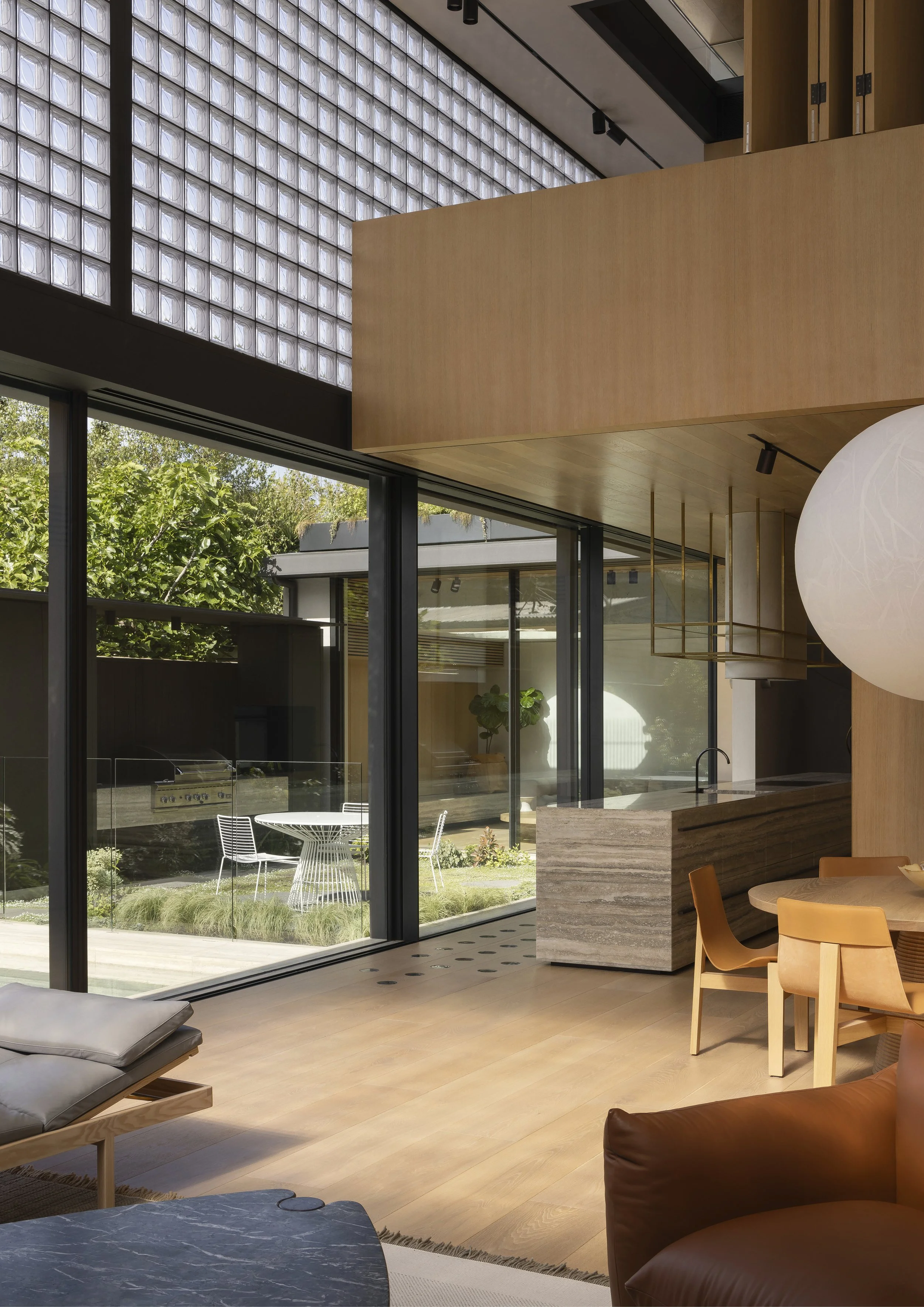
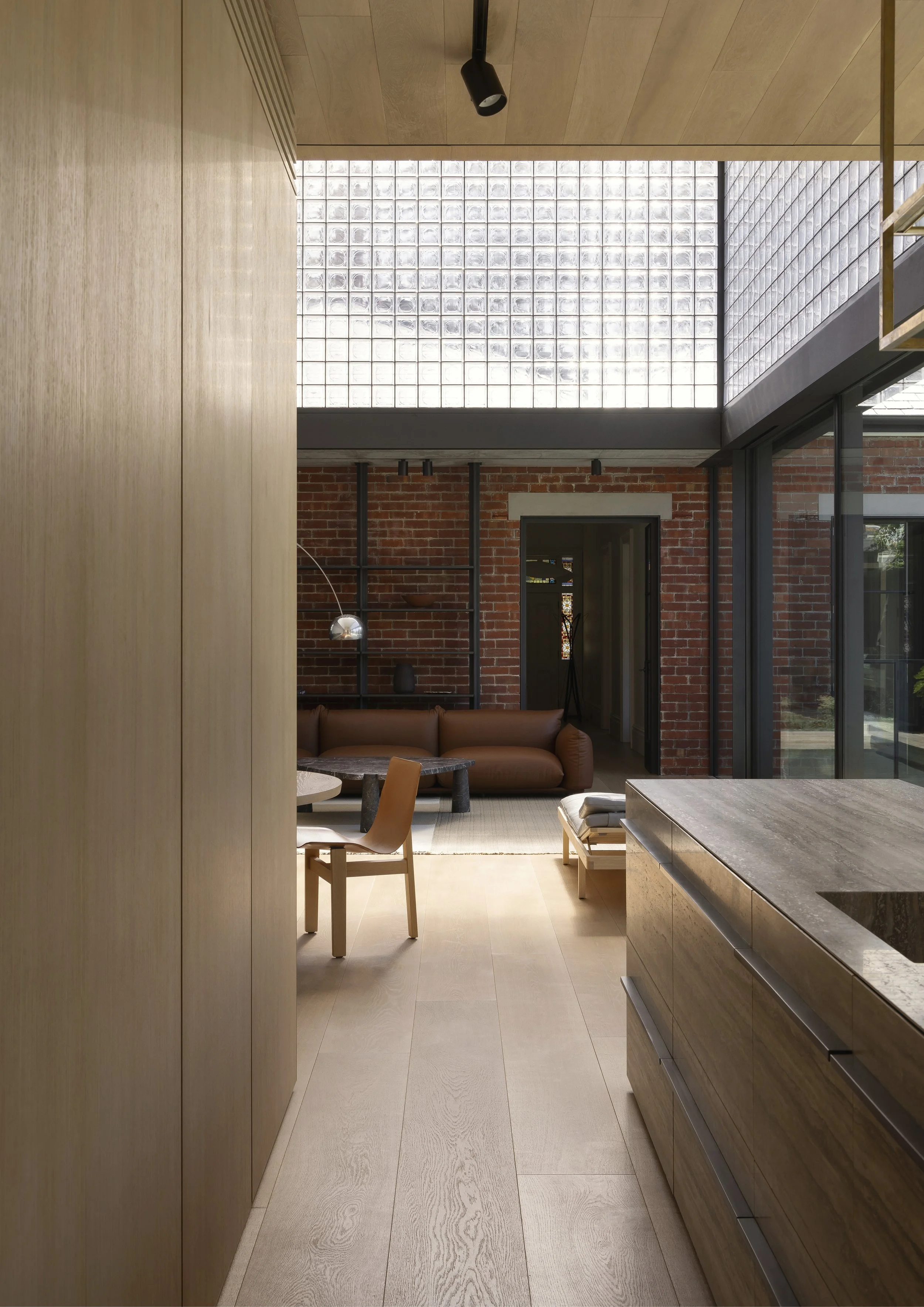
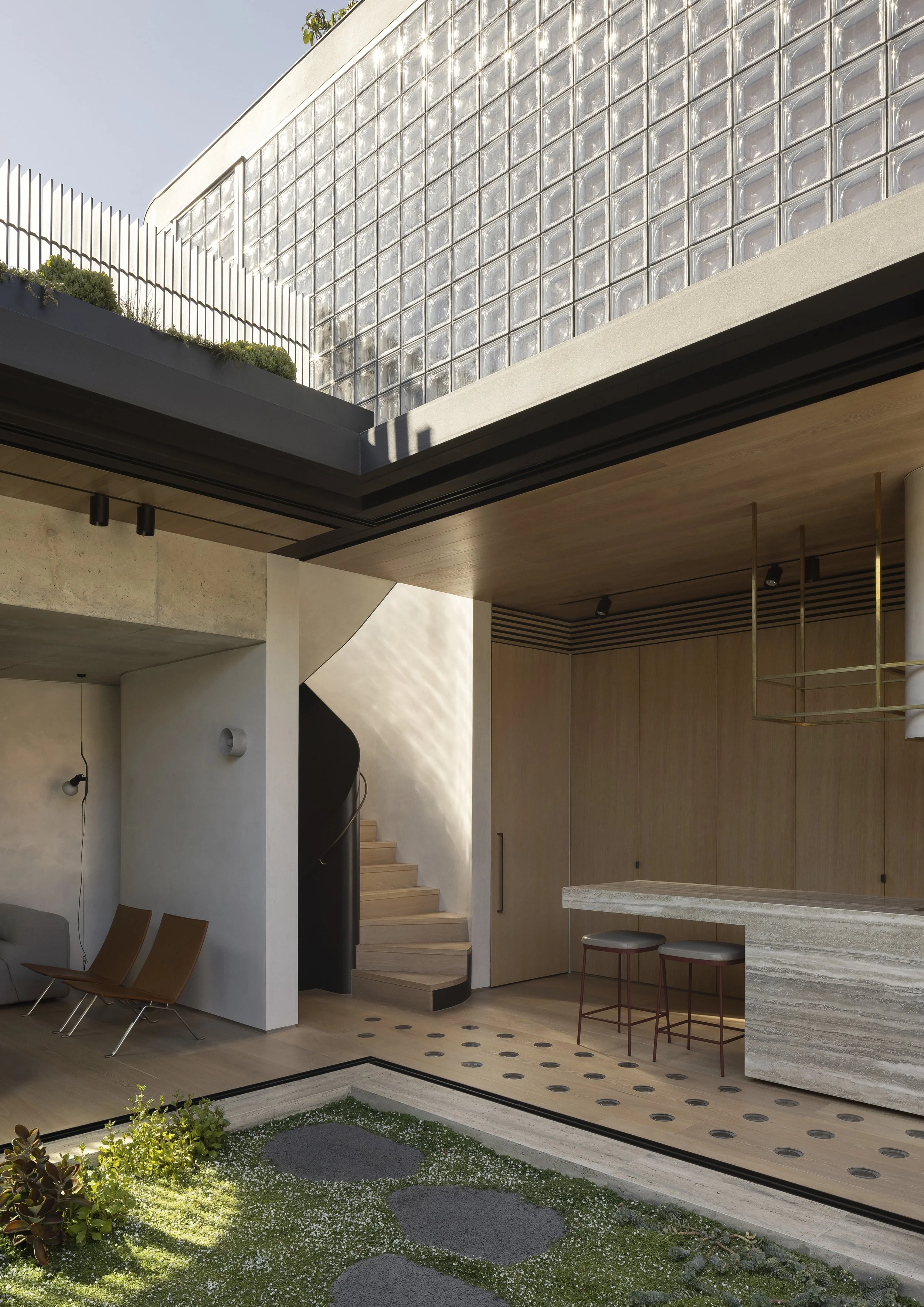
Deeper into the plan, the narrow galley kitchen sits below a mezzanine level. Sharing the footprint with a large scullery, it is condensed in height and width yet prominent in plan and experience. ‘It’s in a pivotal position as it’s part of a circulation space, and it’s centrally located so you’ve got this direct visual and physical connection with the pool, living space and kids’ rumpus room at the end,’ says Pohio.
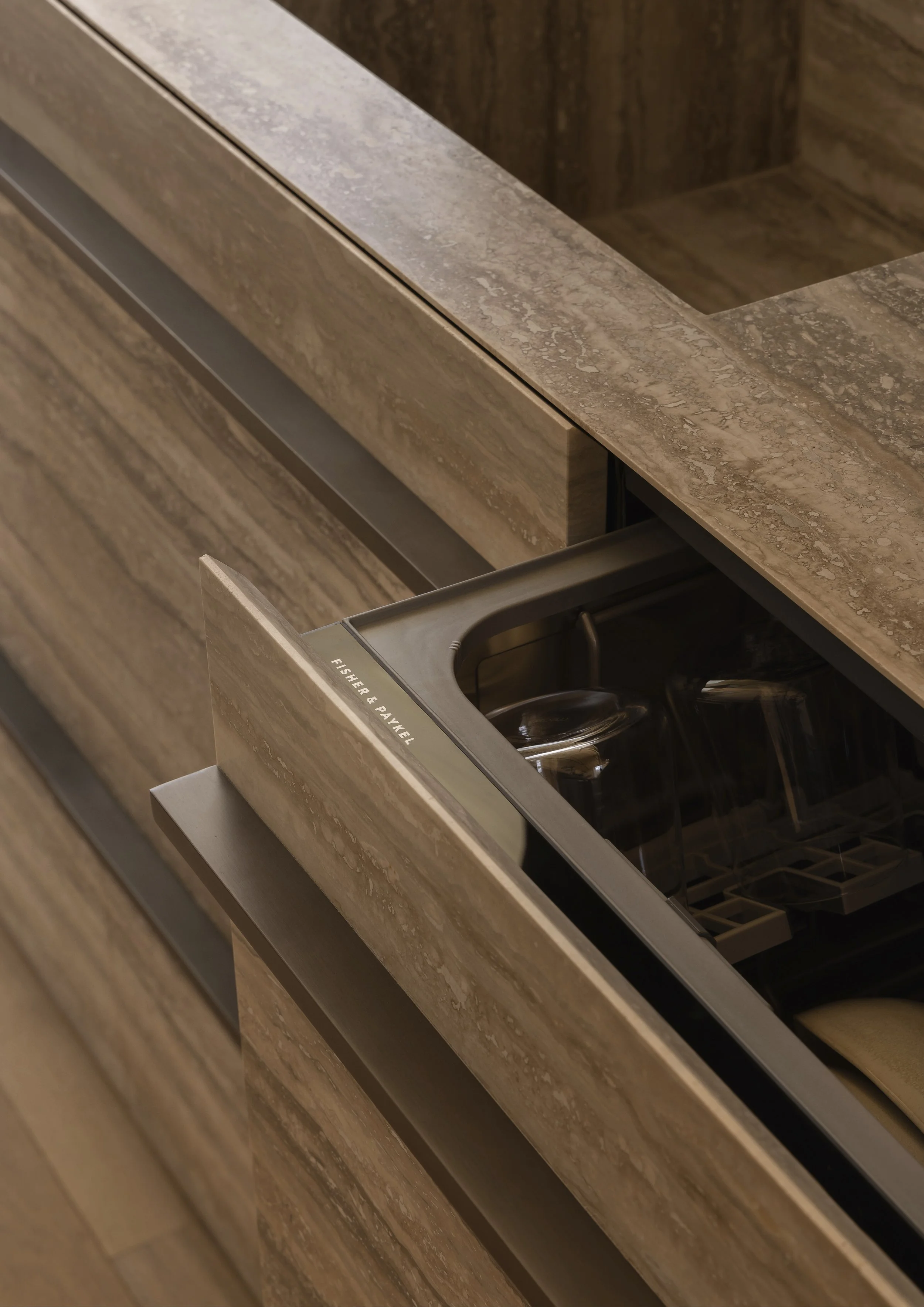
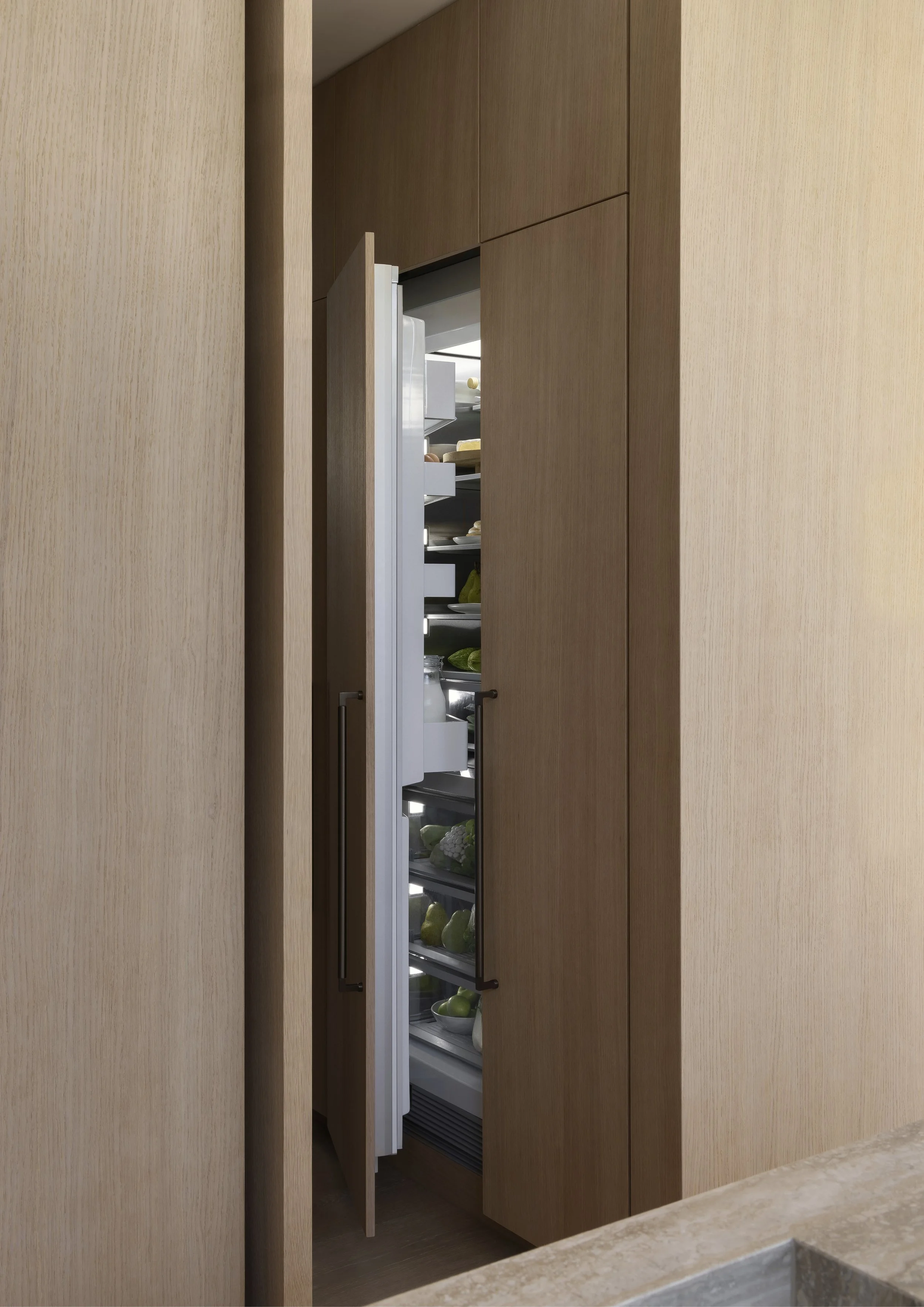
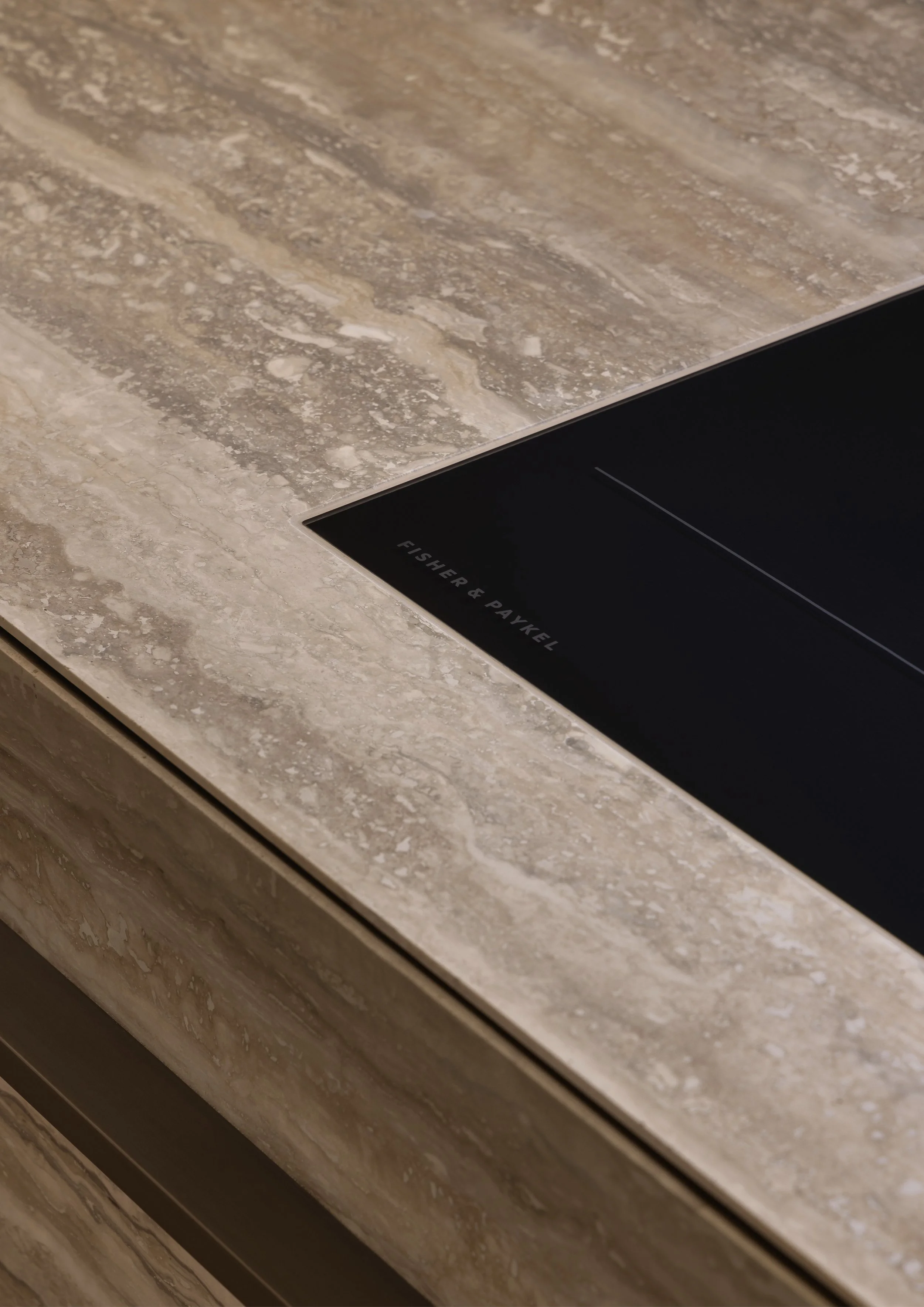
Encased in timber, the kitchen seems to be carved from the forms that surround it. A six-metre travertine island bench and sleek Fisher & Paykel appliances denote its inherent function as a place of gathering, eating and cooking. However, it is decidedly sculptural and almost abstract in appearance.
As a space to traverse and pause, it demanded a deeply nuanced response regarding aesthetics and utility, and unifying these qualities was the architects’ defining challenge. ‘It’s a very functional kitchen, but it has a calm and restrained approach to how that works. The induction cooktop is a simple black surface that sits perfectly flush with the travertine. The ovens do the same on the back wall — they’re all black with a low-key display and the mirrored surface gives you a subtlety. Compositionally, it’s beautiful,’ says Adams.
The layout revolves around the monolithic travertine island. Housing several appliances, it is both a workhorse and striking architectural element, with long, linear pulls that keep it functional while aesthetically calm. Stools at one end invite interaction and, in lieu of a back bench and overhead cupboards, an opening in the rear timber-clad wall leads to a generous scullery replete with its own skylight.
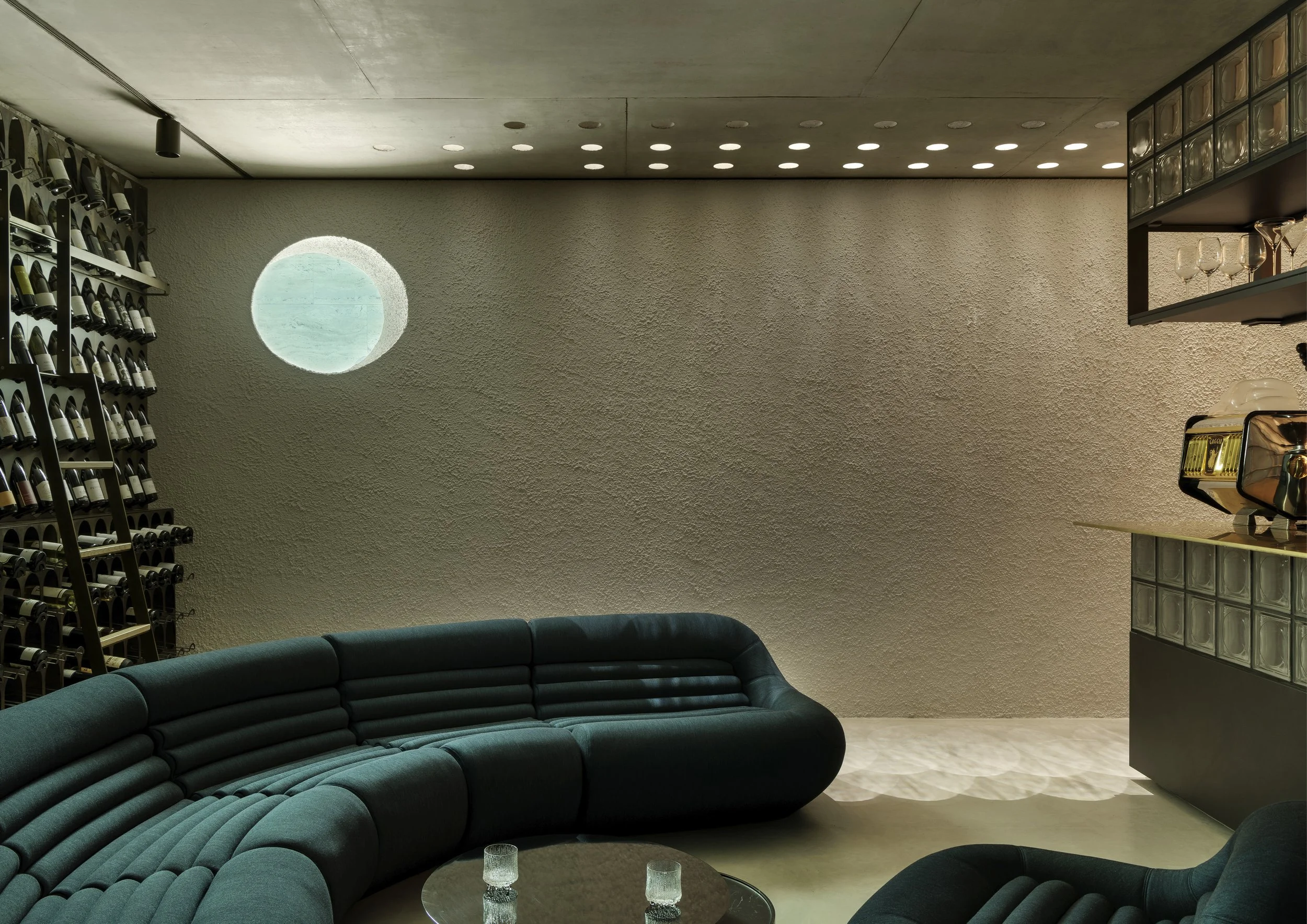
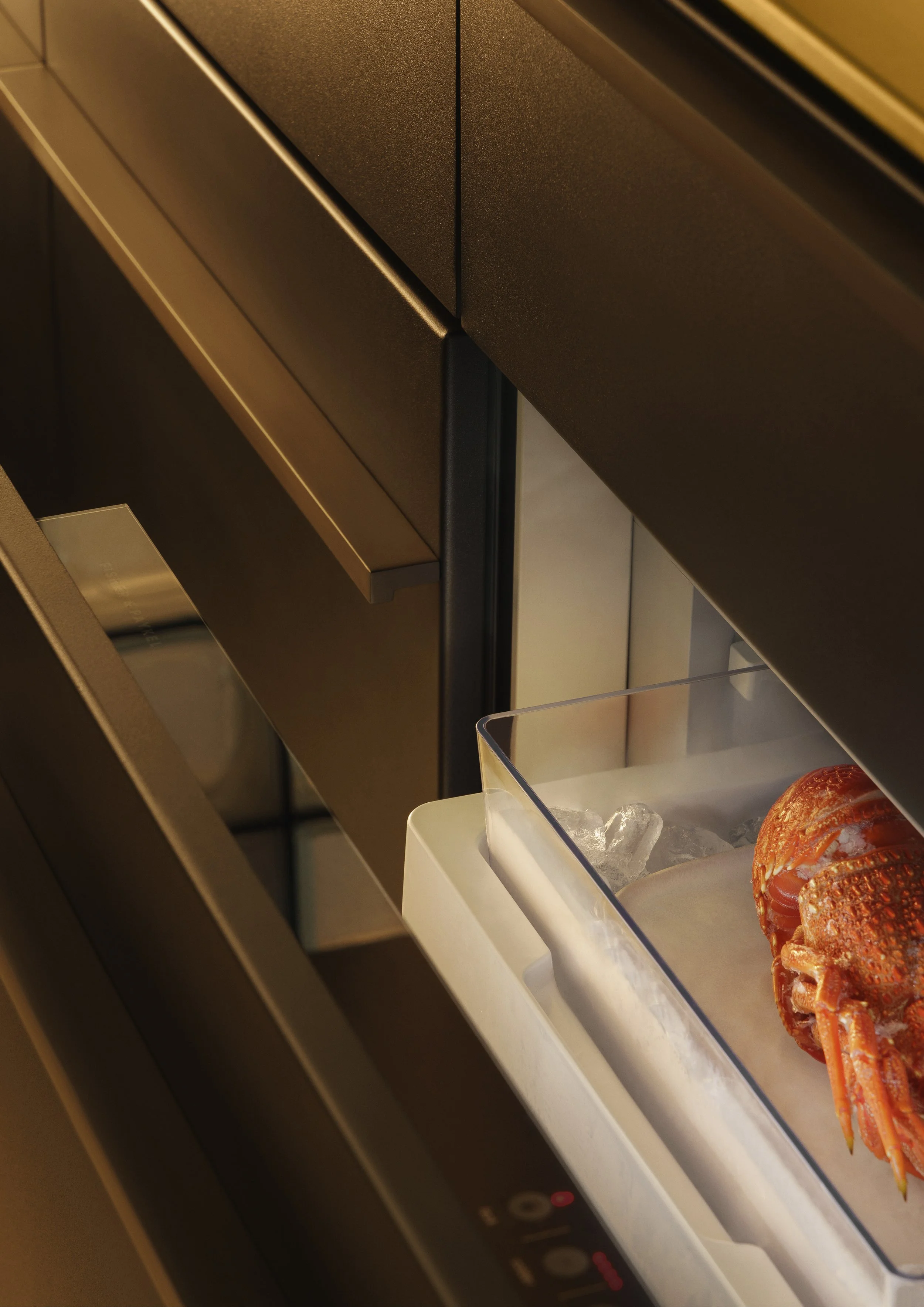
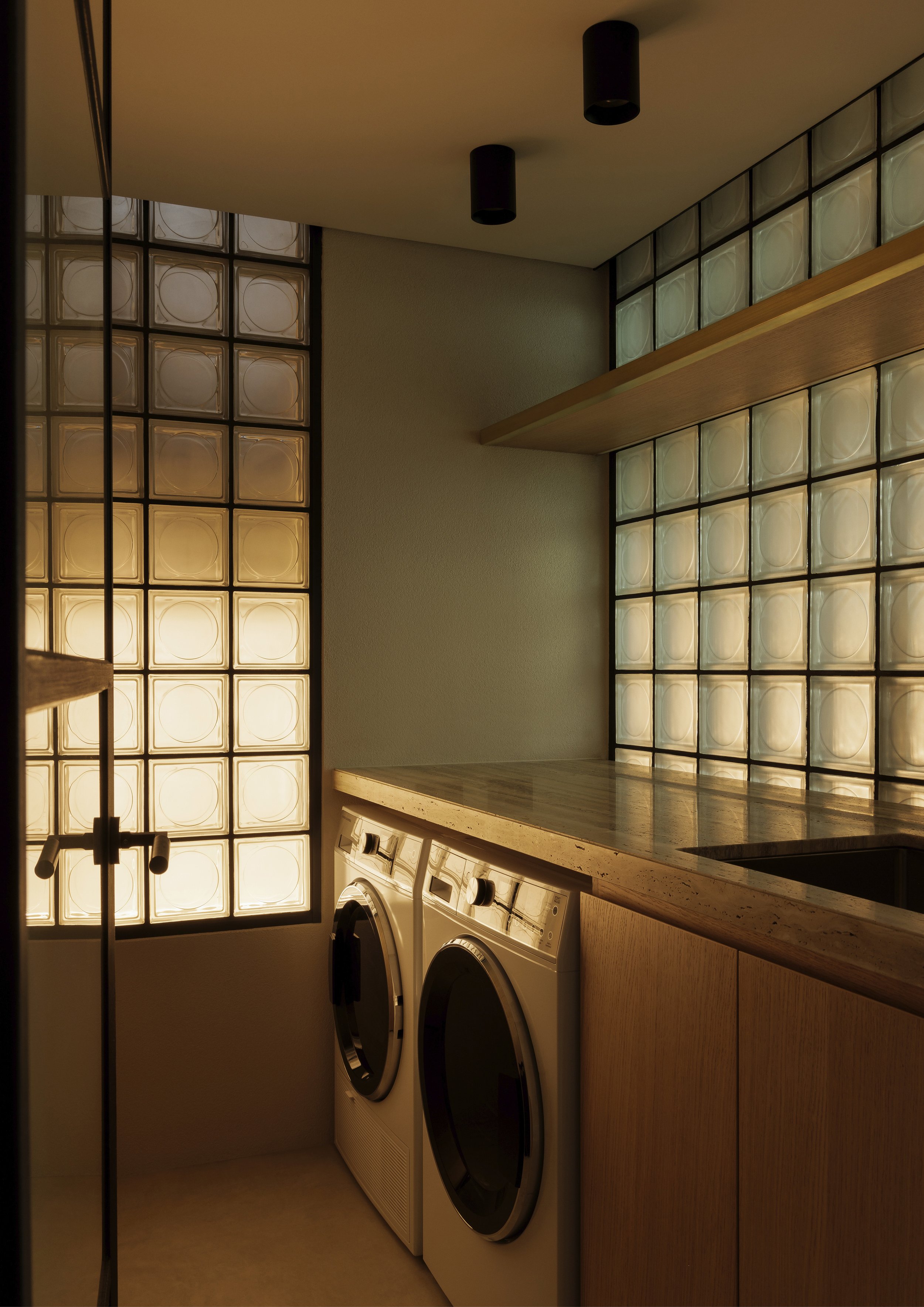
Beyond the kitchen, Chaucer Residence continues to unfold with the same intent, and a significant portion of the programme is contained at the rear. There’s a study on the mezzanine, as well as a guest bedroom, bathroom and private roof terraces. The basement contains a powder room, laundry and a second living area. In the latter, a wet bar replete with a CoolDrawer, a wall-to-wall wine rack and a polished chrome and brass Gaggia coffee machine transform the underground room into a clandestine entertaining space.
And it’s anything but gloomy; natural light filters through circular glass blocks set flush in the kitchen floor above, and a playful porthole window provides views into the pool. There is a staggering diversity of spaces within the home, a discovery made even more surprising considering the modernist-inspired extension isn’t seen from the street. This is no superfluous piece of architecture, but of an aspirational brief realised with conviction.
Images by Timothy Kaye
Styling by Karin Bochnik