This Bangkok Residence Is Just Four Metres Wide
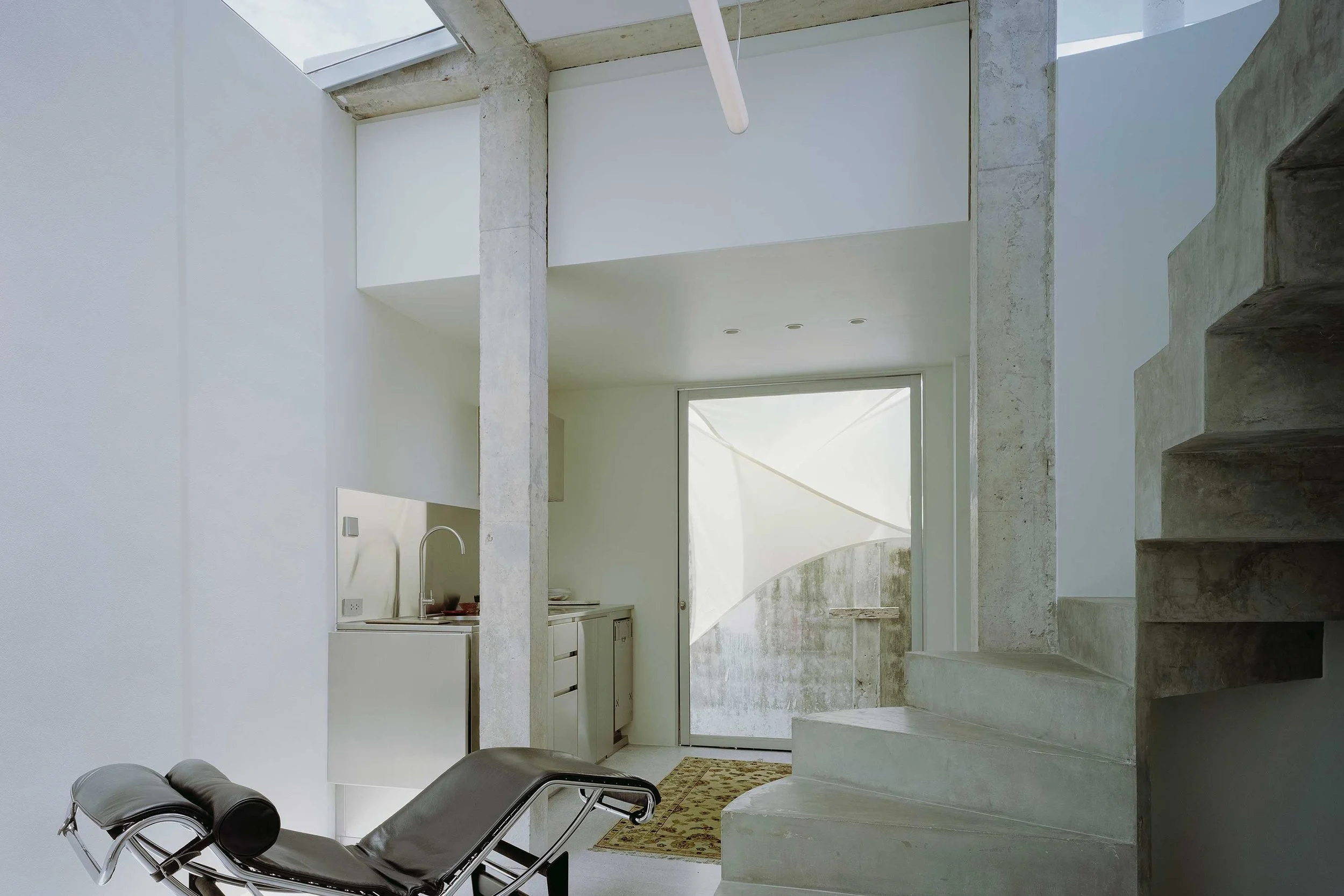
Against the constraints of a narrow Bangkok plot, AA House became a vertical sculpture. Designed by PHTAA Living Design for a photographer friend and his wife, the home uses split levels, raw concrete and dramatic light to serve as a private gallery for their eclectic collection
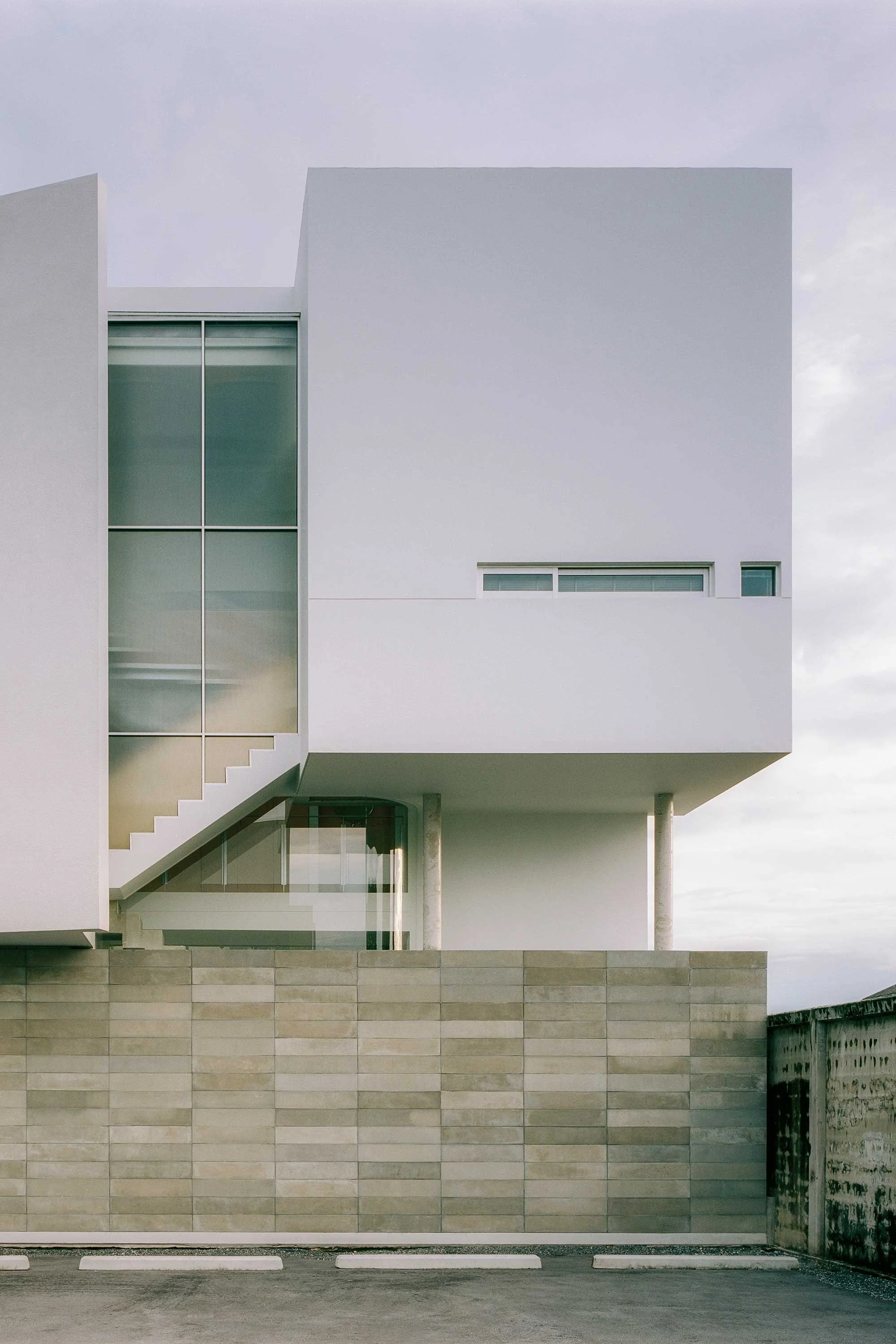
Situated on a slender urban plot in Bangkok, AA House represents a deeply personal collaboration between architect and owner. The project was born from a friendship stretching back to Silpakorn University, where lead interior designer Thanawat Patchimasiri of PHTAA Living Design and the client — now a professional photographer — studied together. Located directly adjacent to the owner’s workplace, Sans Studio, the site presented a significant challenge: a frontage of only four metres and a depth of 14 metres.
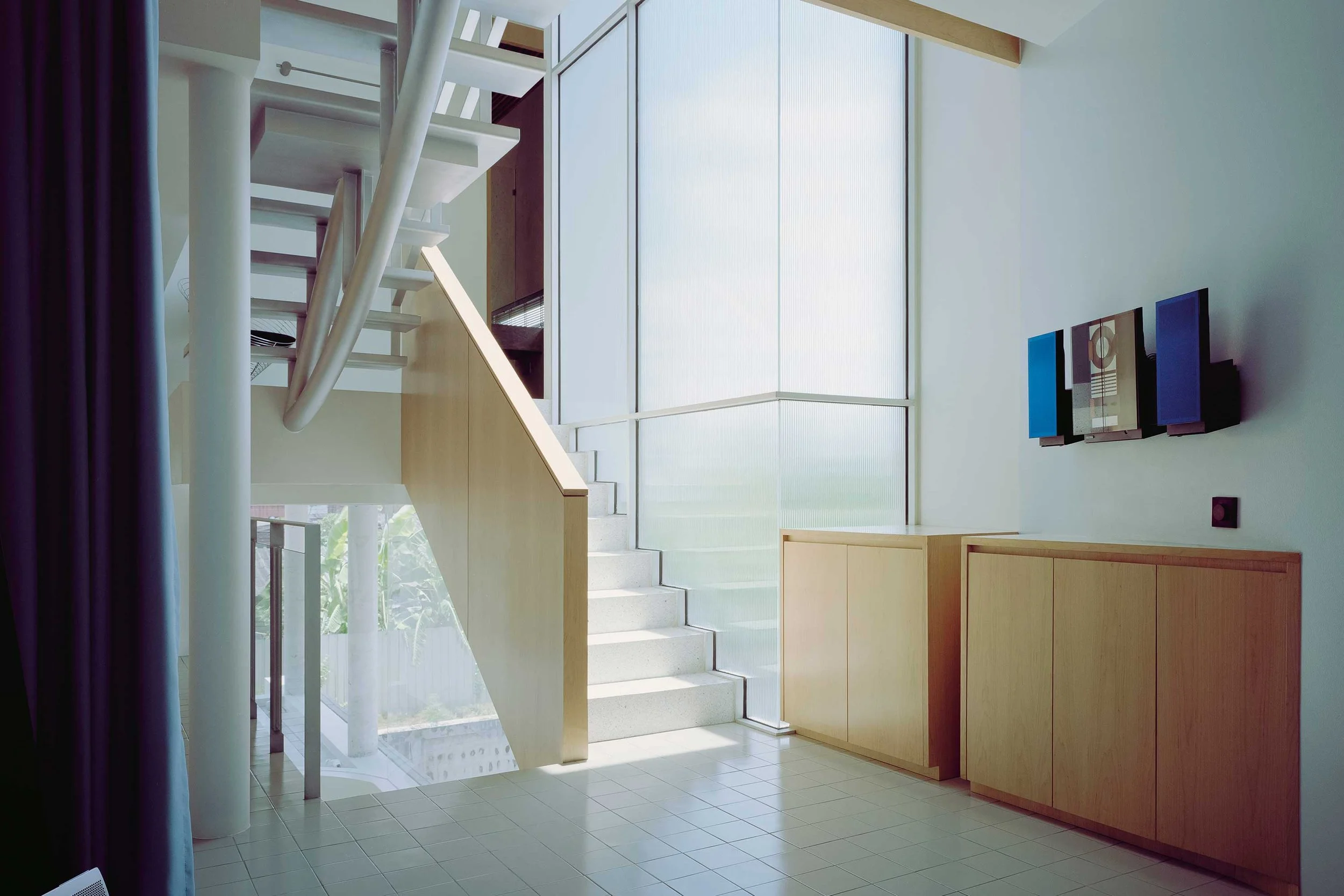
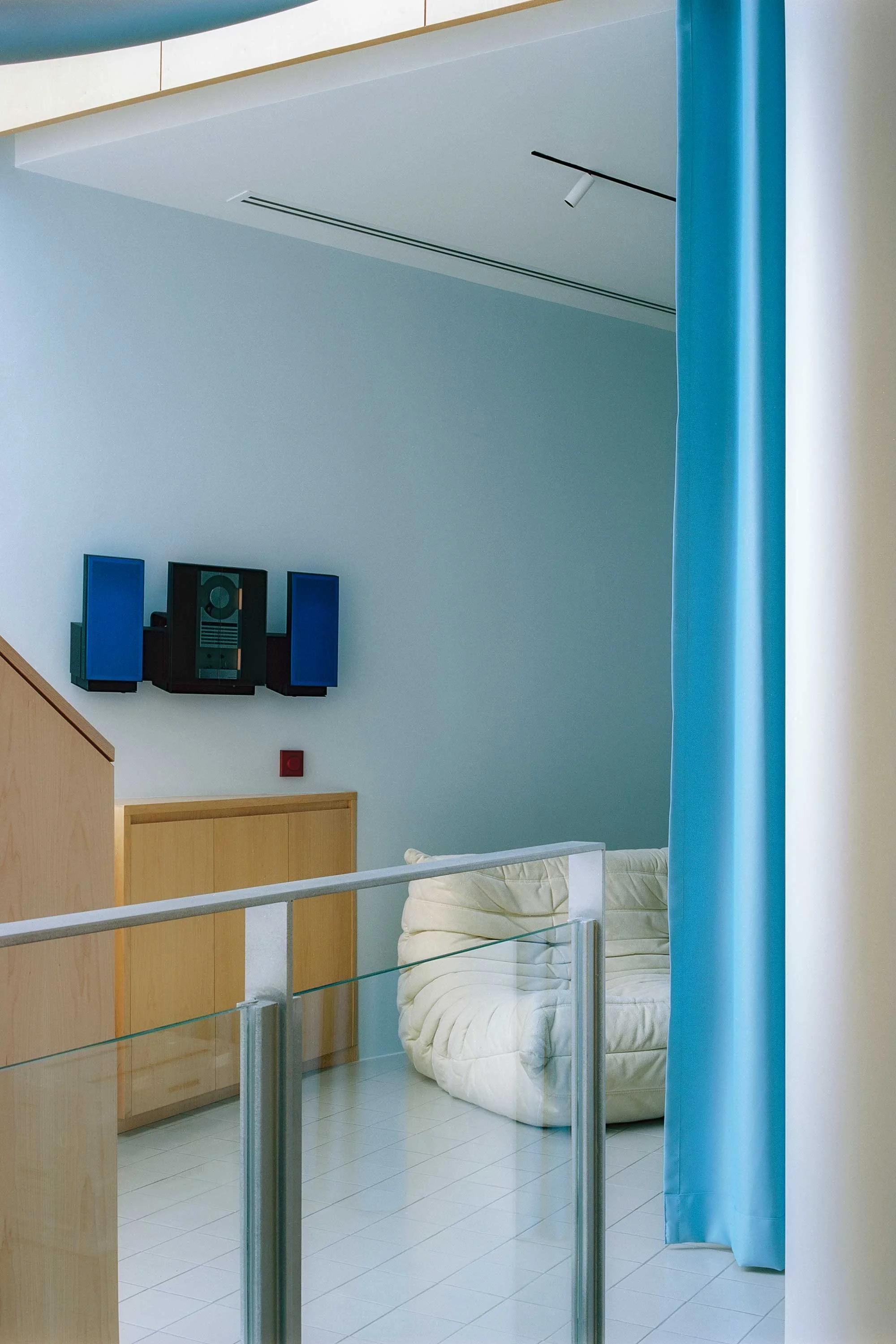
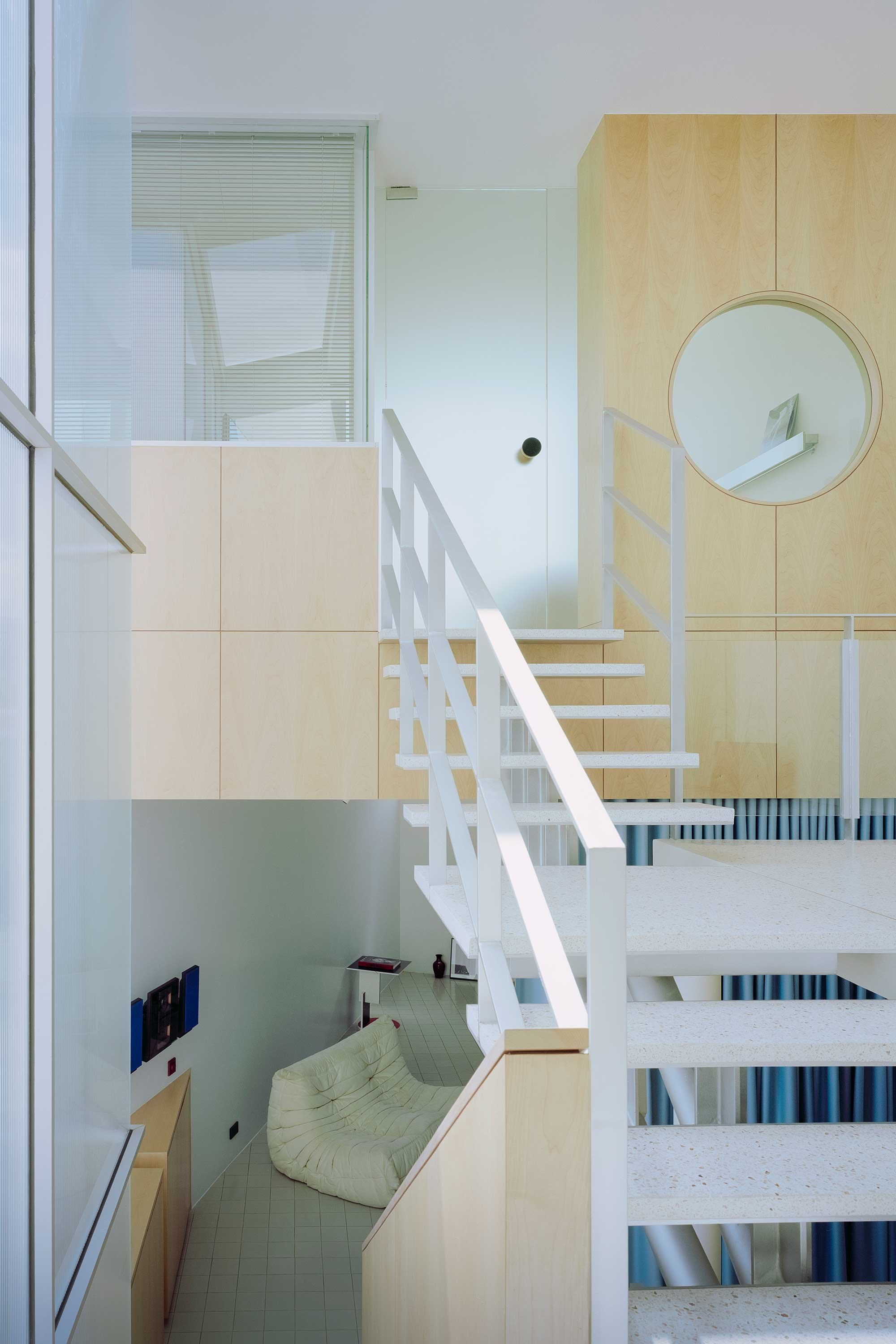
To navigate this narrow footprint without creating isolated silos, PHTAA rejected a traditional multi-storey approach. Instead, Patchimasiri and lead architect Ponwit Rattanatanatevilai conceived of the home as a vertical sequence of split levels. ‘We tried to split the floors, because if you design just three storeys I think sometimes the visual connection between the floors is lost,’ says Rattanatanatevilai. This stepped design allows for a fluid transition of spaces, beginning with a ground-floor parking area that frequently doubles as a social space for parties, flowing upward into the dining and kitchen zones. Higher up, a lightweight curtain, rather than a heavy wall, defines the living area boundaries, keeping the narrow space feeling airy.
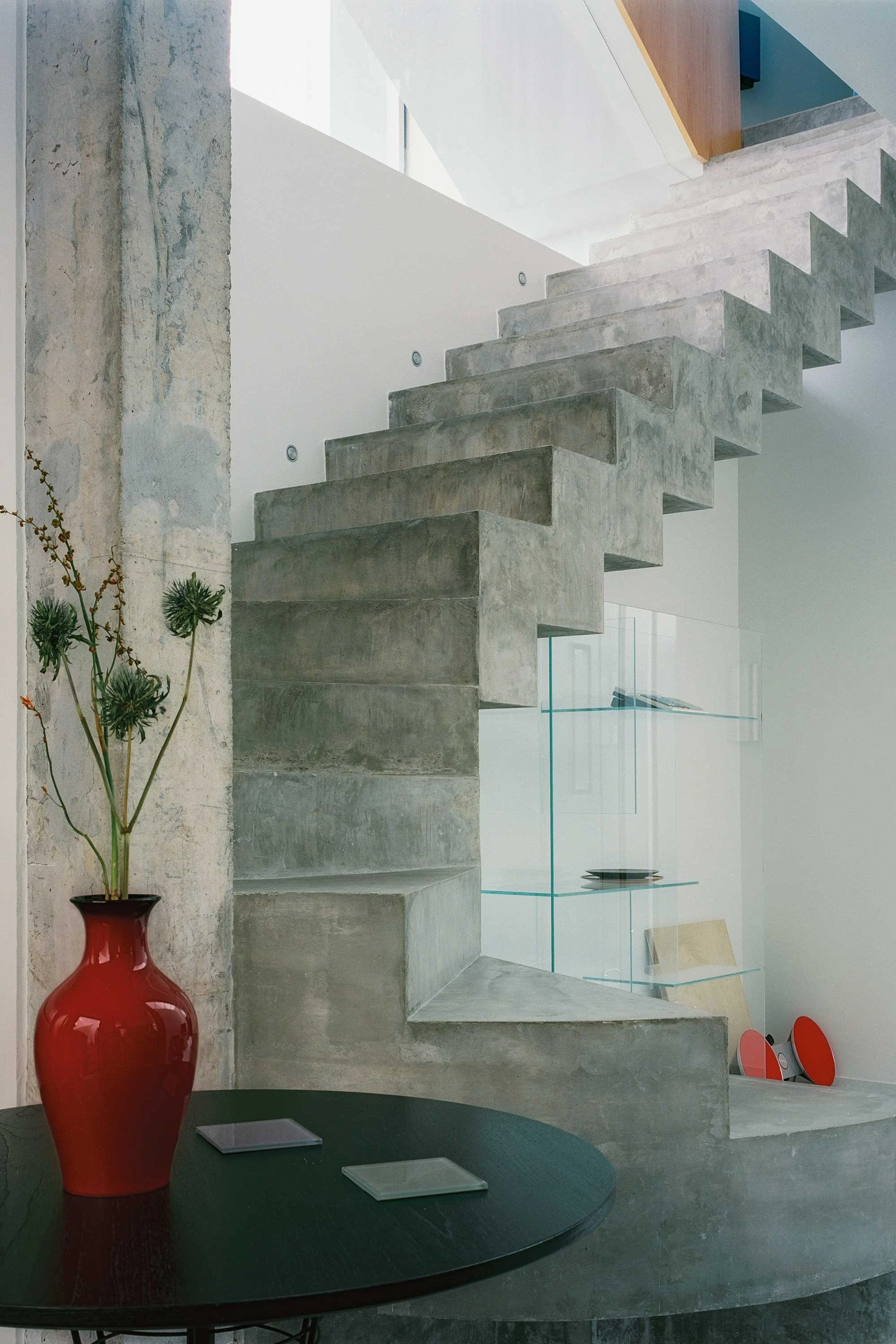
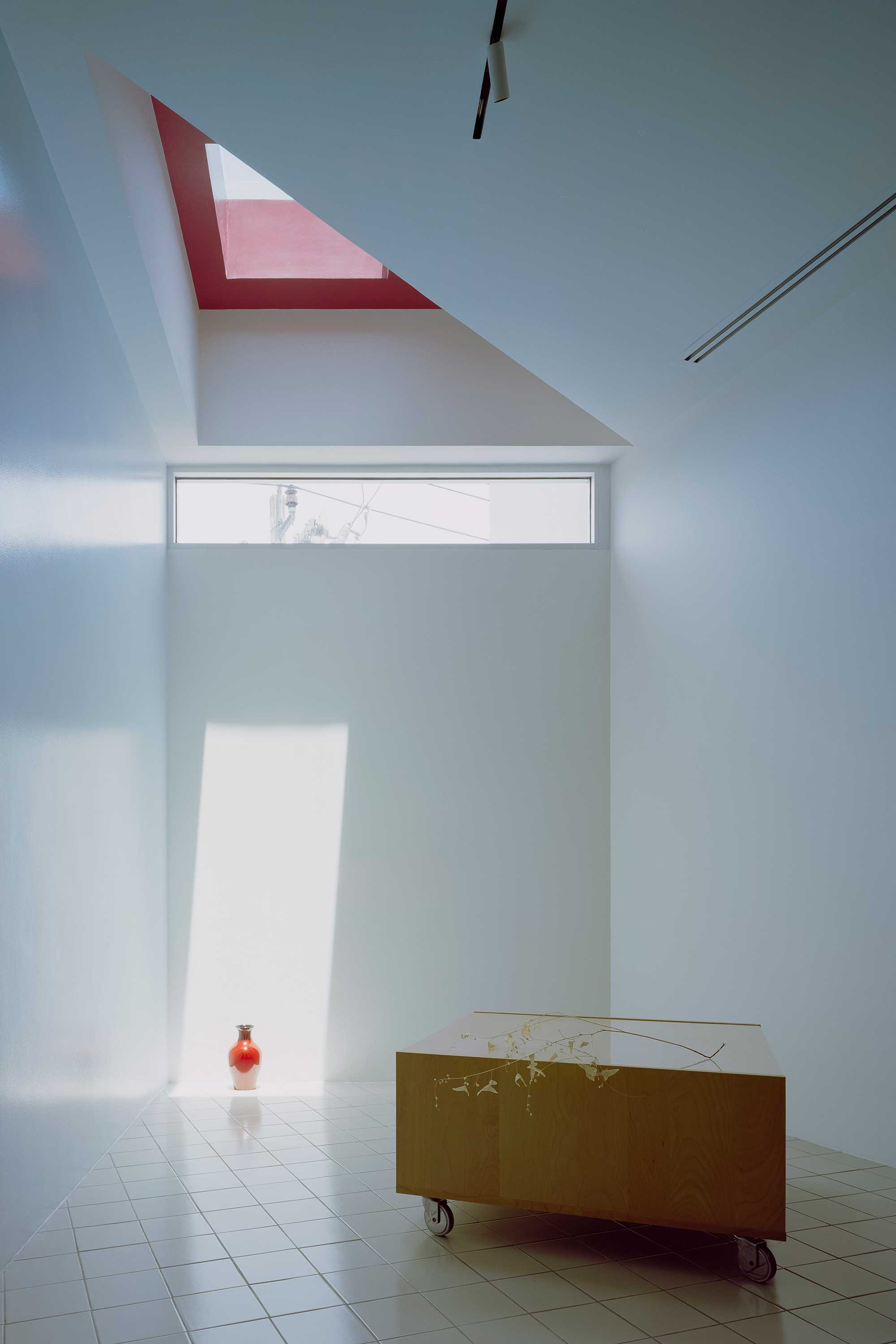
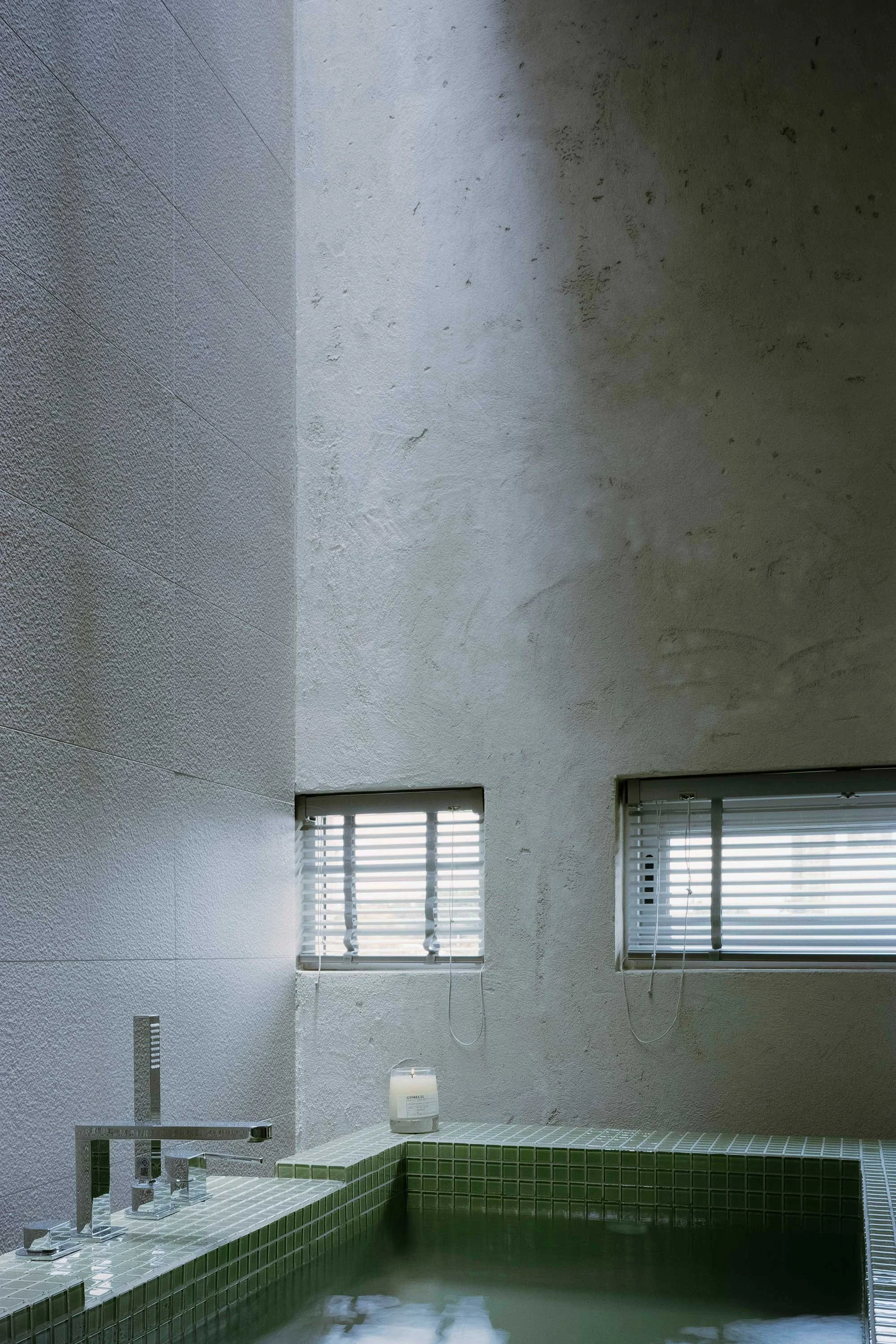
The property is located in downtown Bangkok, where construction restrictions limit the height of buildings. ‘It’s like a boundary area between a green part of Thailand and a more residential neighbourhood,’ says Rattanatanatevilai. ‘Bangkok has a mixed culture and a mixed typology of building, which blur together so you can see the old space, the new buildings and the mix.’ Similarly, the home’s aesthetic is a curated fusion of the owner’s eclectic interests, merging Brutalism, Bauhaus and Japanese minimalism — the client had envisioned the house as a gallery for his collection of rare furniture and art, requiring a neutral backdrop. ‘We wanted to design a space for the owner’s archive, to create a blended ambience,’ says Patchimasiri. The material palette is similarly restrained, utilising raw concrete and white paint to allow the colourful objects to take centre stage.
Given the owner’s profession, light serves as a primary architectural element. The design team incorporated cutouts and skylights to manipulate natural light, allowing the sun to change the home’s ambience throughout the day and creating something of a live studio environment for the owner to photograph his collection. The centrepiece of this Brutalist vision is the concrete staircase. At the owners’ request, it was left without railings to function as a raw structural feature. ‘At first we tried to design the rail for them,’ says Patchimasiri. ‘But when we saw the construction site, the owner and I said just get rid of the rail and use the rough material so it can be like a sculpture.’ Both Patchimasiri and Rattanatanatevilai declare it their favourite part of the home’s design.
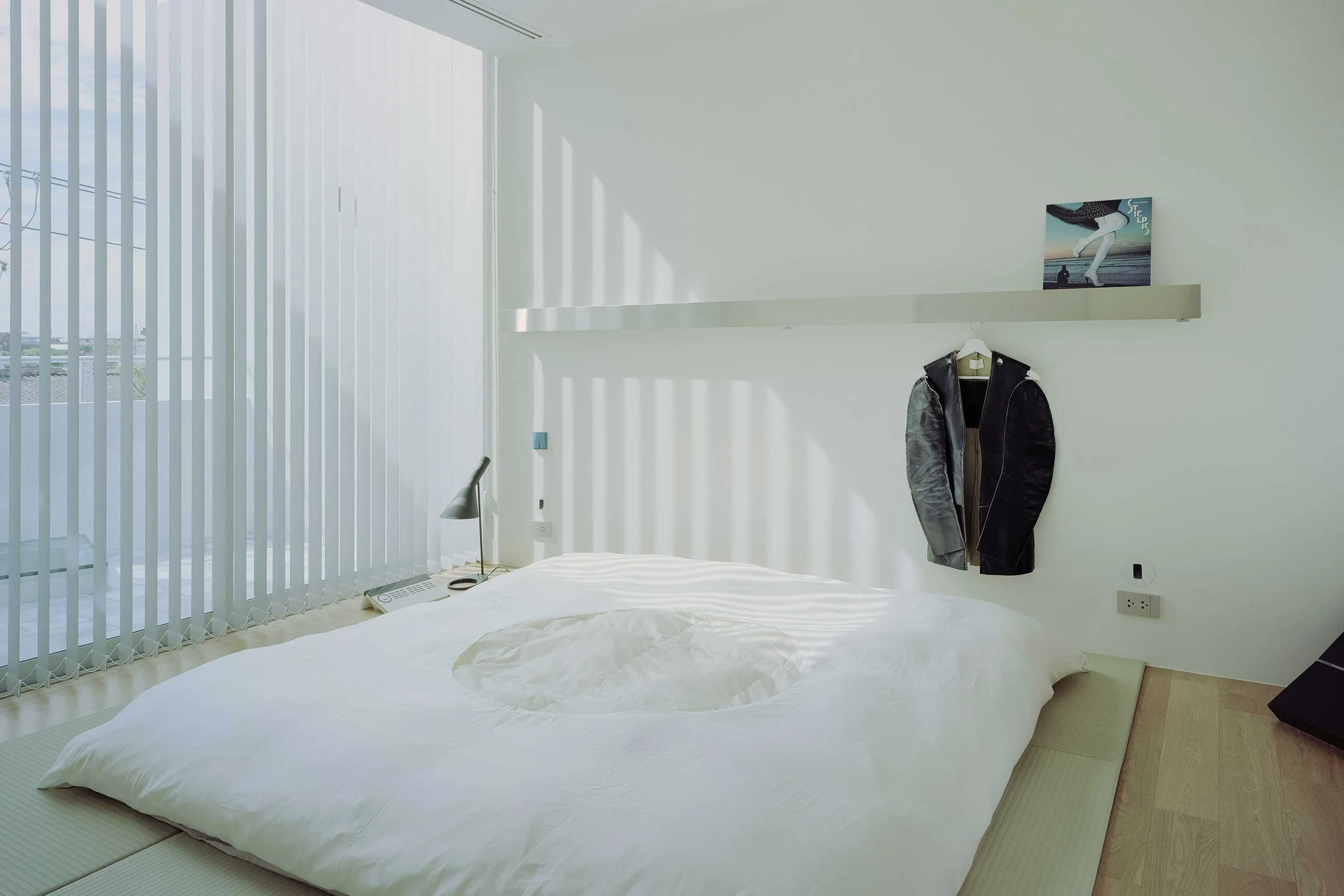
Other specific details cater to the client and his partner’s lifestyle, such as a Japanese-style tatami floor for sleeping and a custom stainless steel rail for hanging clothes. While the interior is open and light-filled, the exterior facade facing the studio remains solid and private, using a screen to blur the boundary between the bustling work environment and this quiet, light-filled retreat.
Text by Katherine Ring
Images by Santana Petchsuk