The National University of Singapore’s Yusof Ishak House Has Been Transformed Into A Sustainable Landmark

Yusof Ishak House has been reimagined by design architect Erik L’Heureux as a net zero-energy building, while paying homage to the iconic commons hub’s historic identity
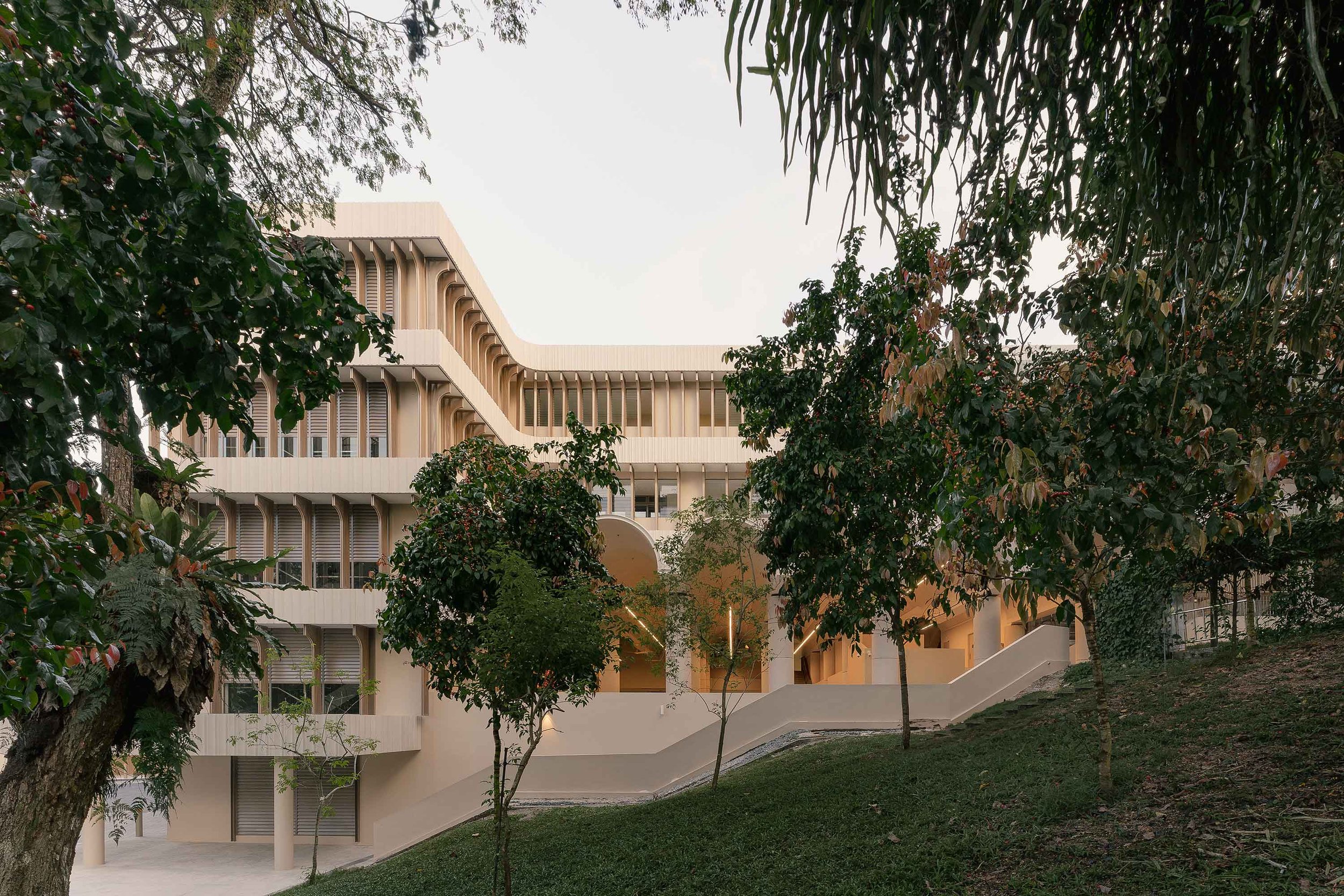
Yusof Ishak House, the National University of Singapore’s student commons, has just undergone a five-year retrofit. The bones of the structure, originally built in 1977, have largely been preserved by design architect Erik L’Heureux — a former dean’s chair associate professor at the university — and team. Their meticulous adaptive reuse approach has transformed the building into a sustainable landmark: estimations suggest that the refurbishment reduced embodied carbon to less than a third of a new build, and enhancements were made to reimagine the complex as a net zero-energy building.
But this wasn’t an easy task, with fundamental structural issues to resolve from the outset. Perched on a slope amid lush greenery, the tiered framework suffered from confusing circulation and the lack of a clear anchor point. ‘It was a complicated building that had to serve different functions all at once,’ says L’Heureux. ‘Our goal was to thread the needle and tie everything into one coherent form.’
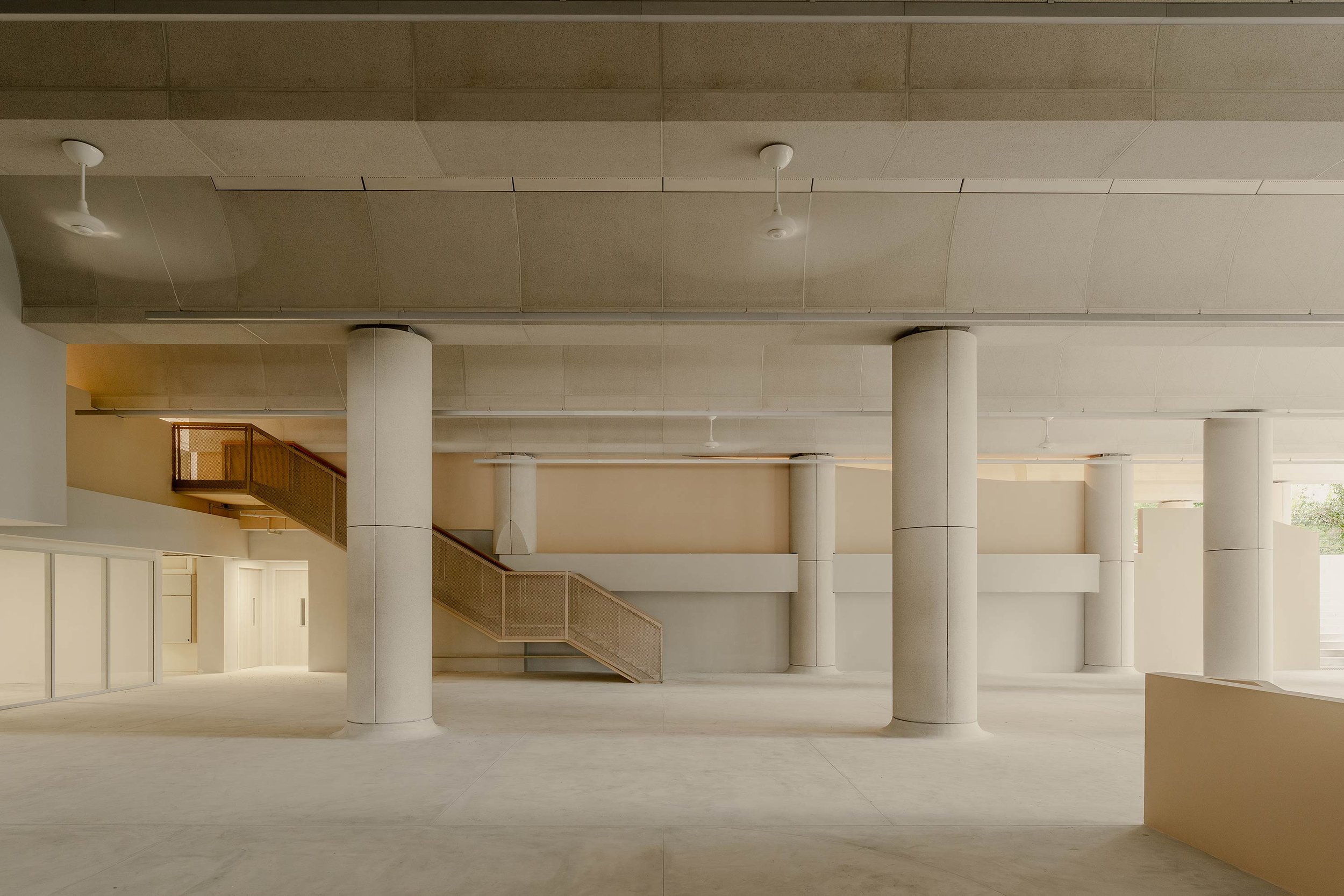
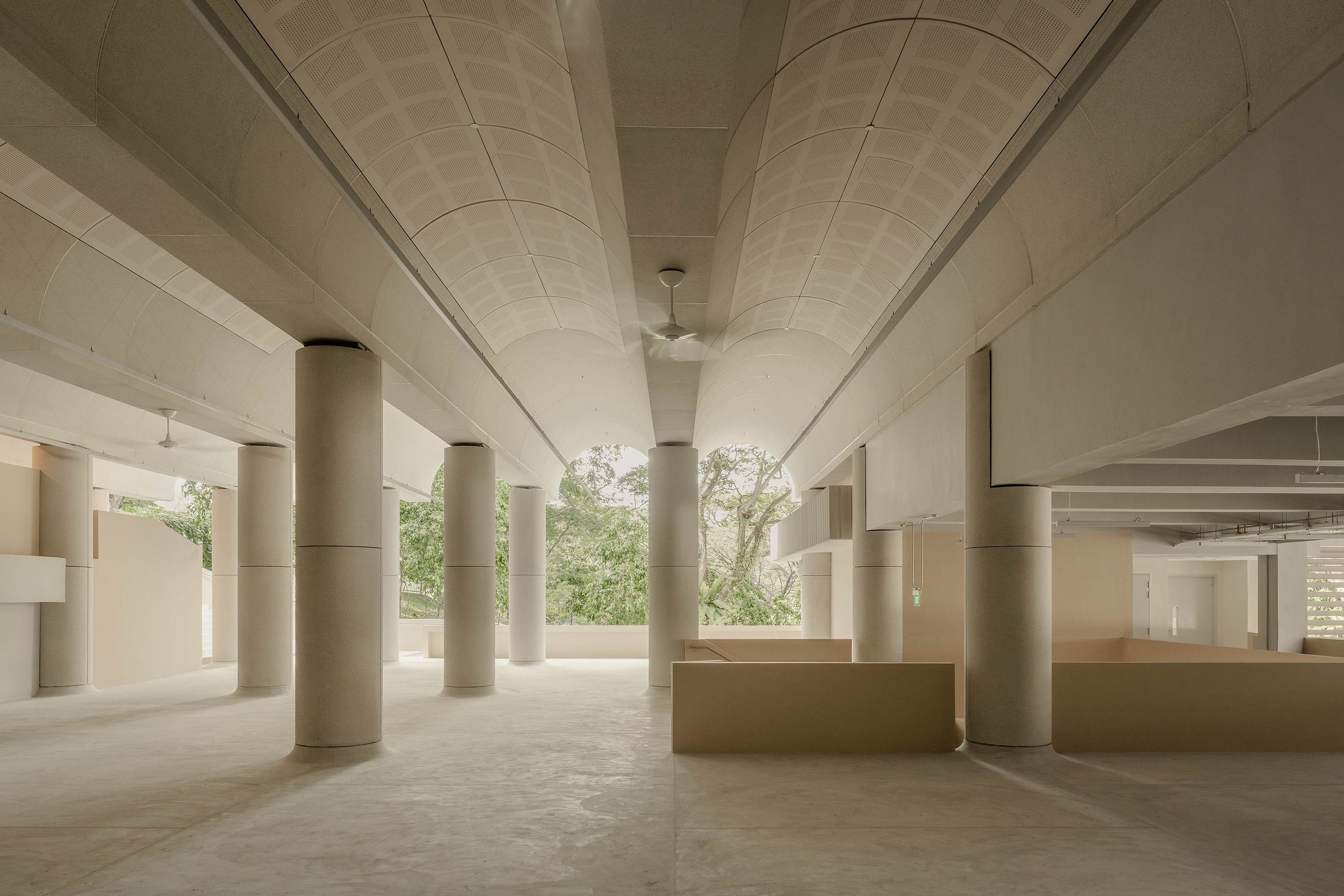
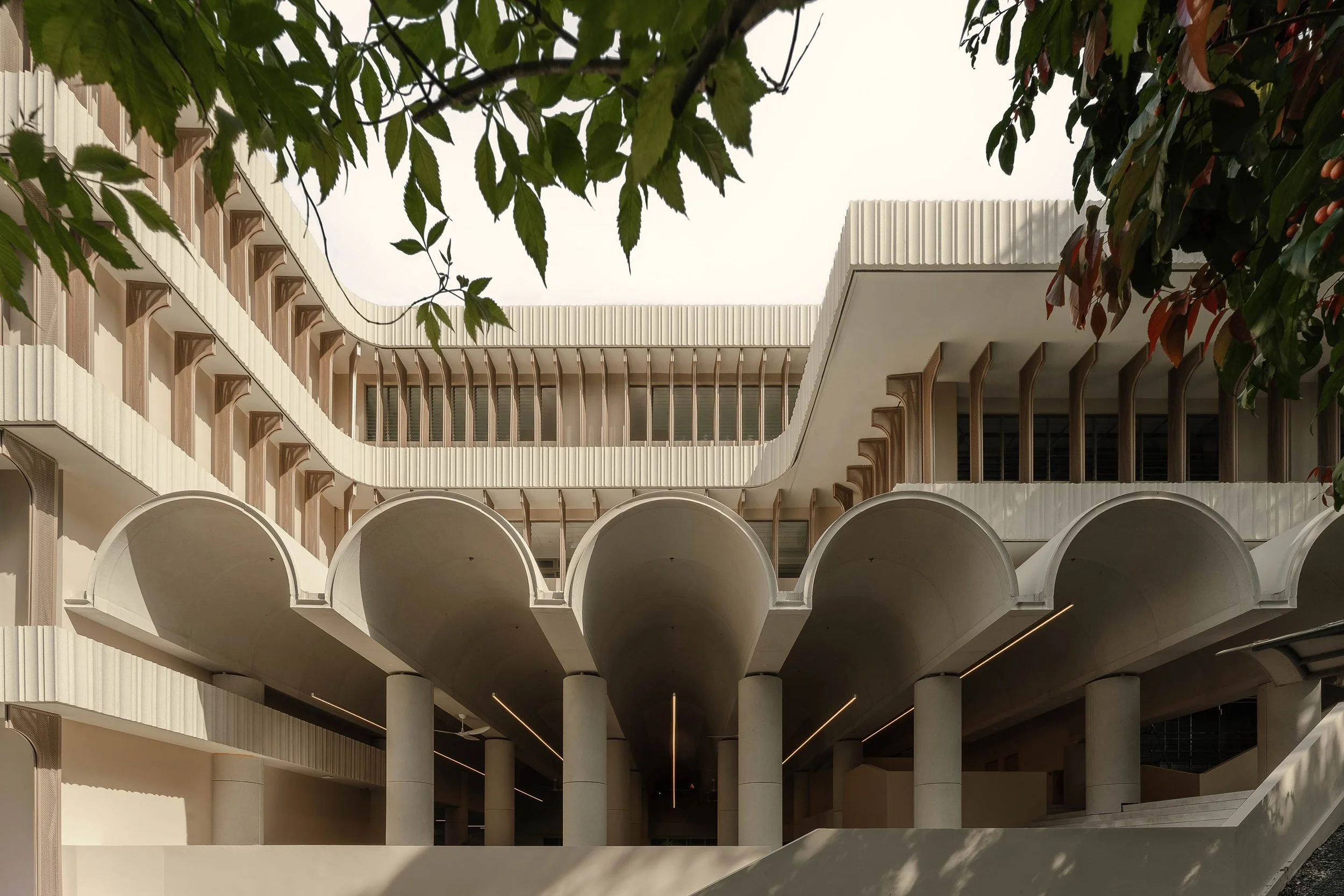
Known for his restrained, monolithic forms, L’Heureux began by identifying the building’s two defining elements: its stepped tiers and six vaults that stood in the centre of the development. Formerly decorative, these arches were extended to form a veranda that channels the wind, improving natural ventilation and reducing heat gain. ‘The previously enclosed and isolated “climatic straws” now bring in air that the adjacent vegetation has cooled,’ he explains. The vaults have been cast with a pebbled texture, which endows a delicacy that evokes the building’s previously mosaic-tiled surface.
Beneath these distinct vaults now lies the building’s new heart: an open yet sheltered atrium where undergraduates gather for yoga, markets, meetings and more. The concept of a communal space may seem obvious today but, during the 1970s, open spaces were deliberately avoided in the campus plan to prevent students from congregating and protesting. Campus activism rippled through the corridors back in the day, as student union leaders rallied their peers to oppose the government on issues such as bus fare hikes and worker retrenchments.
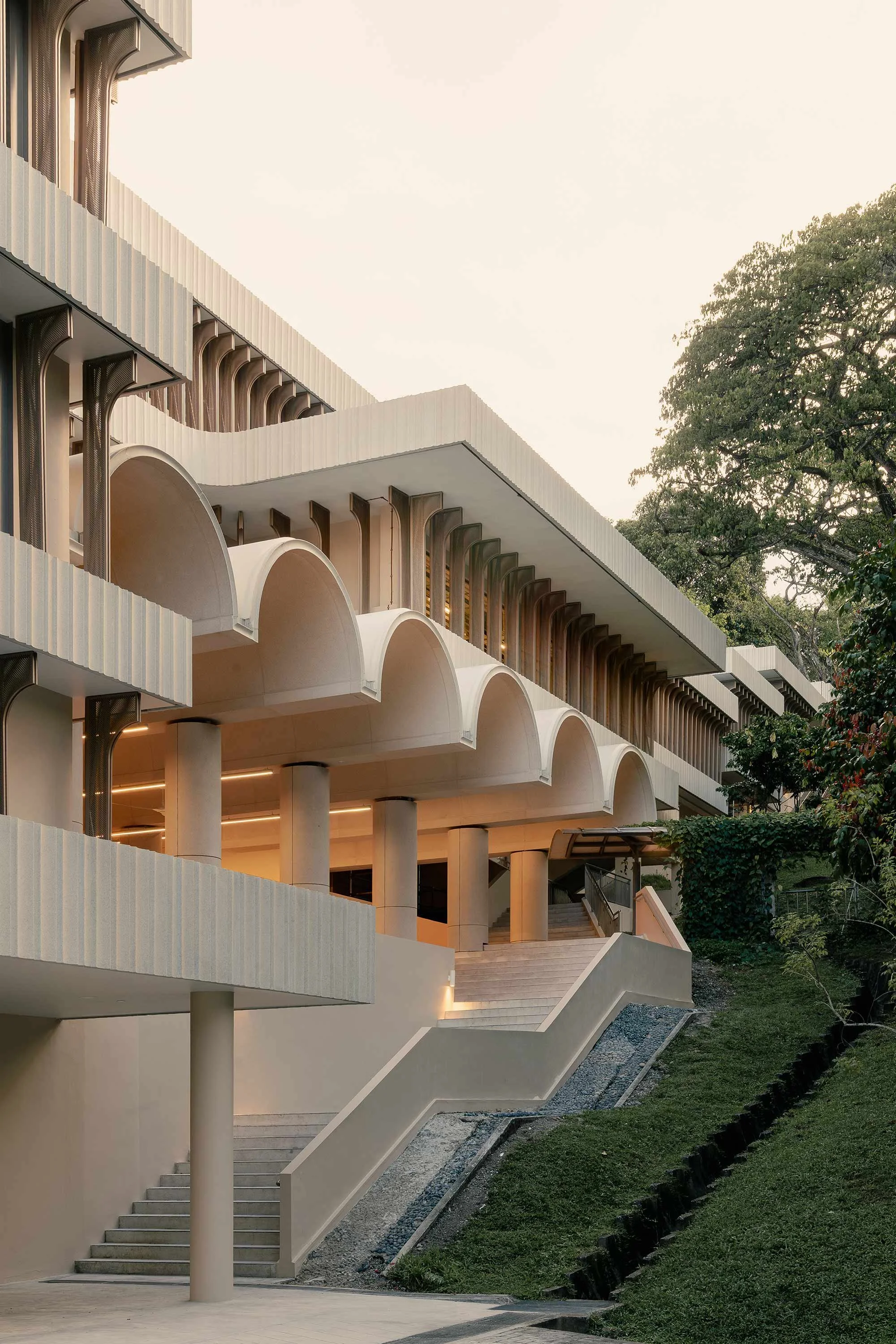
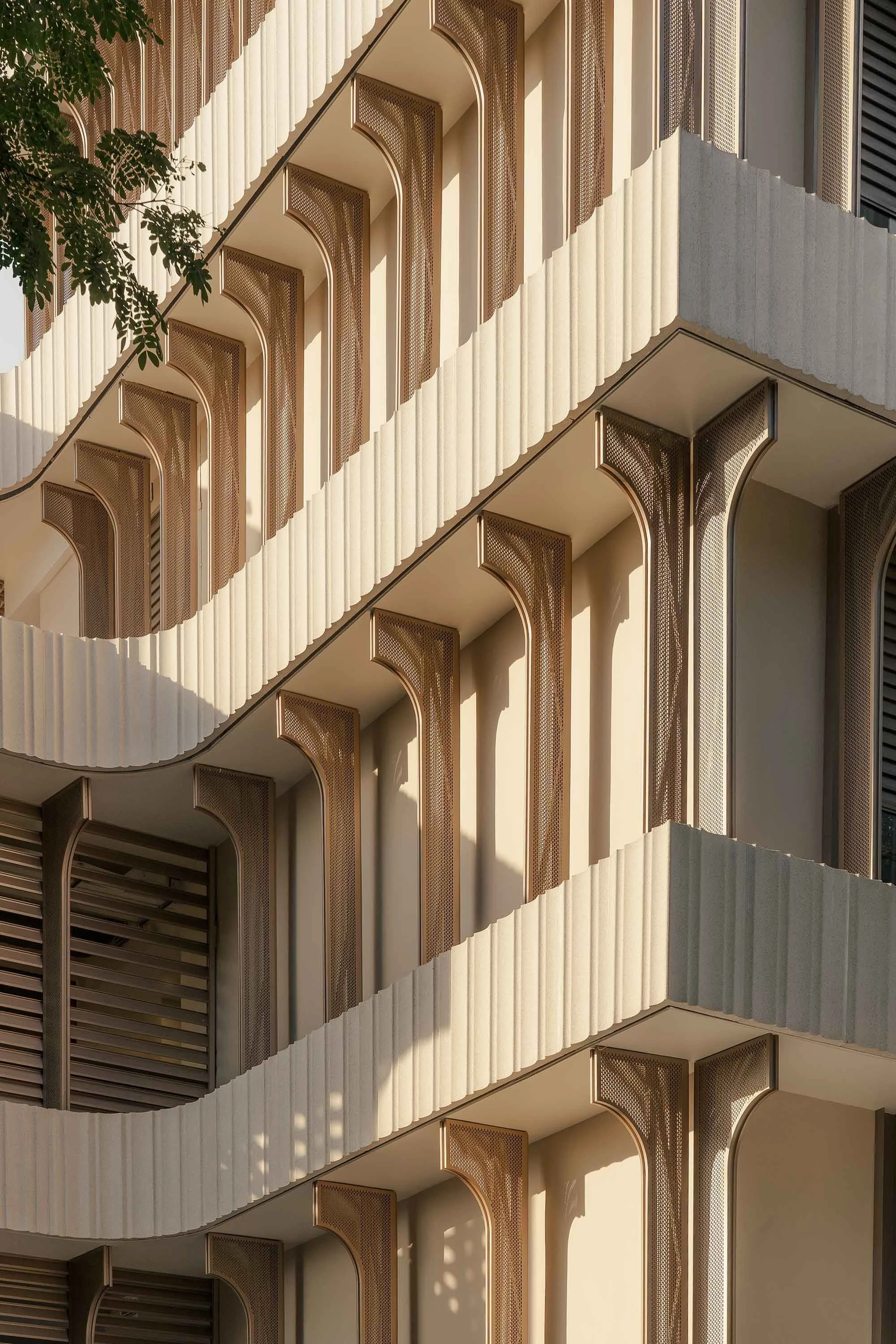
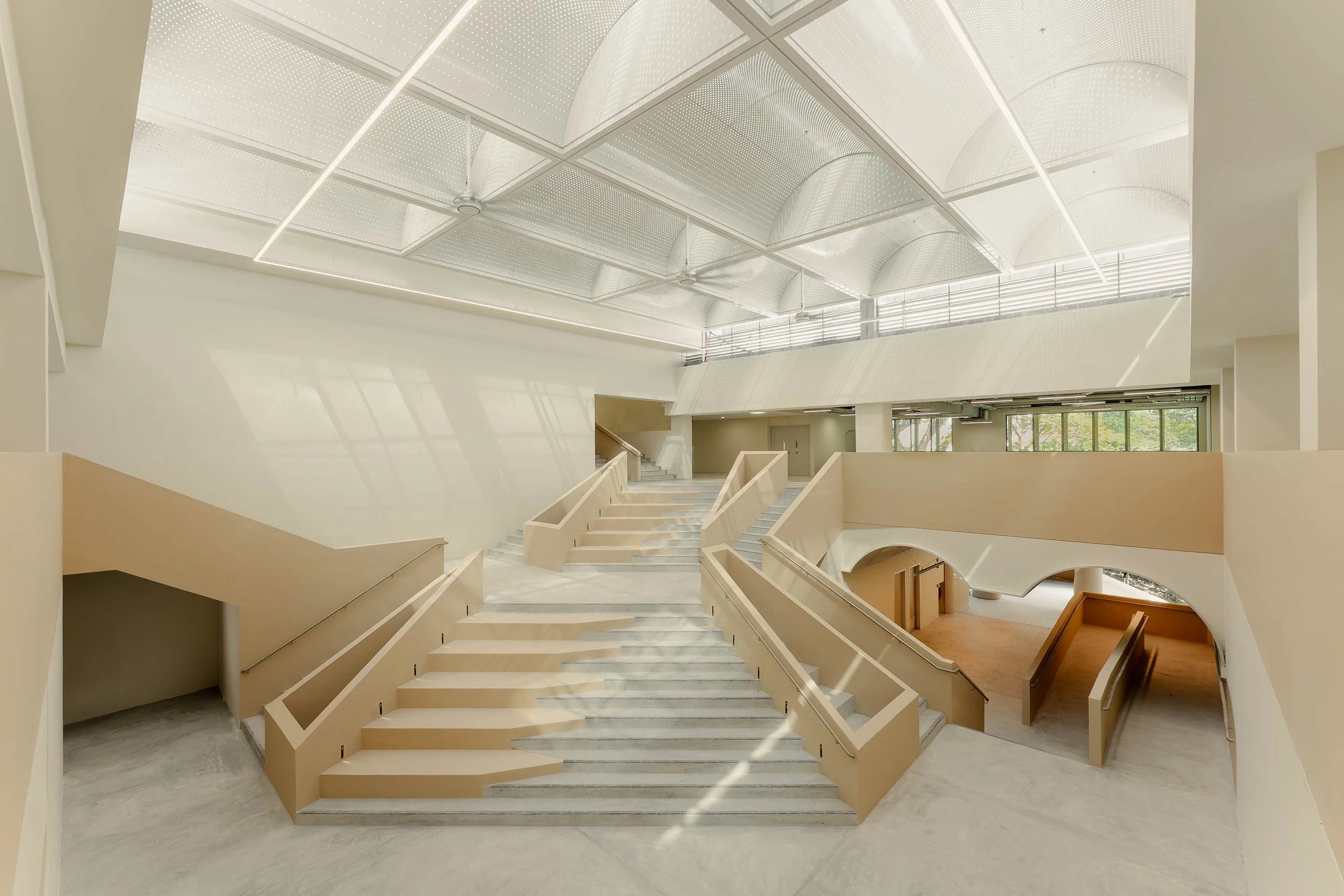
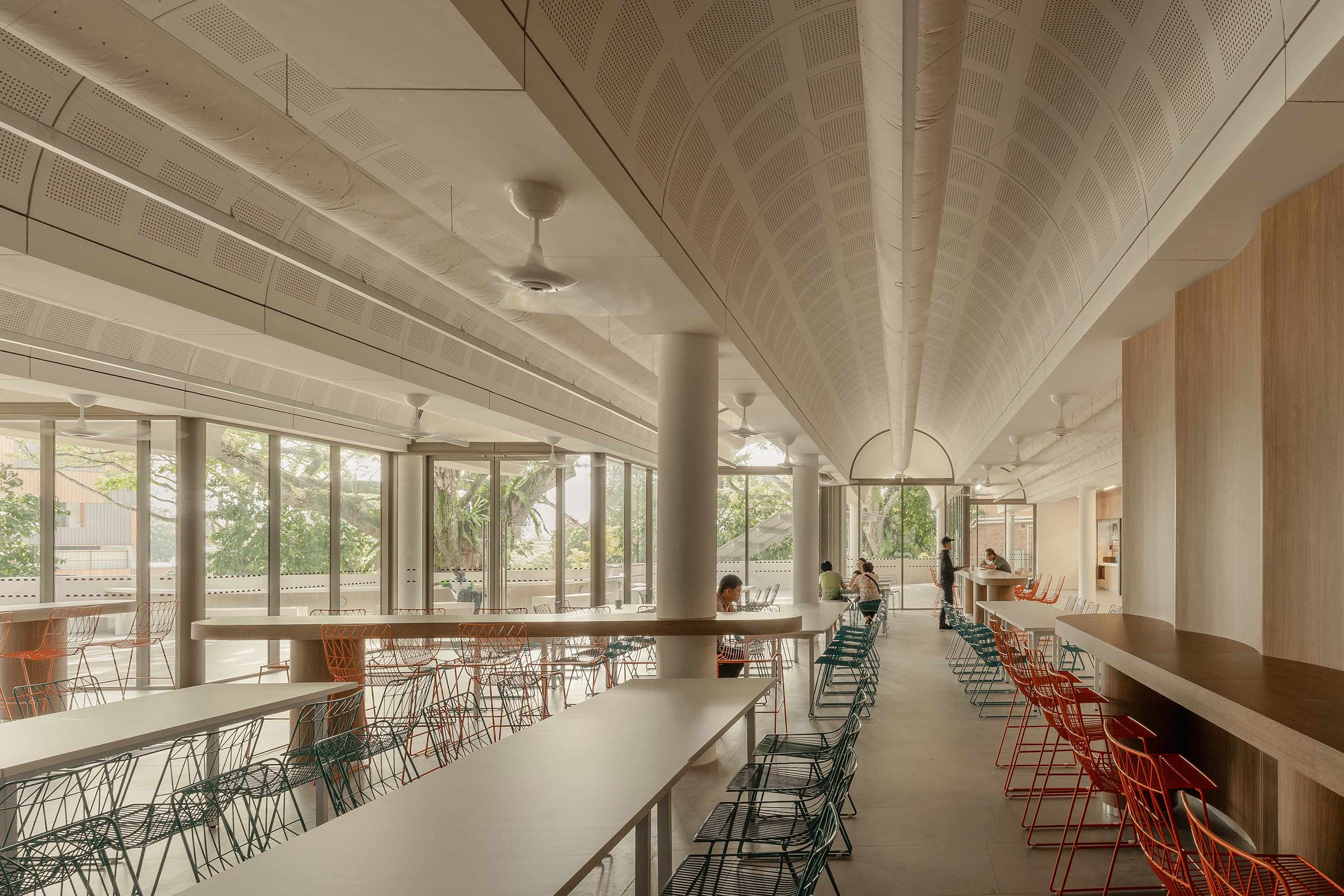
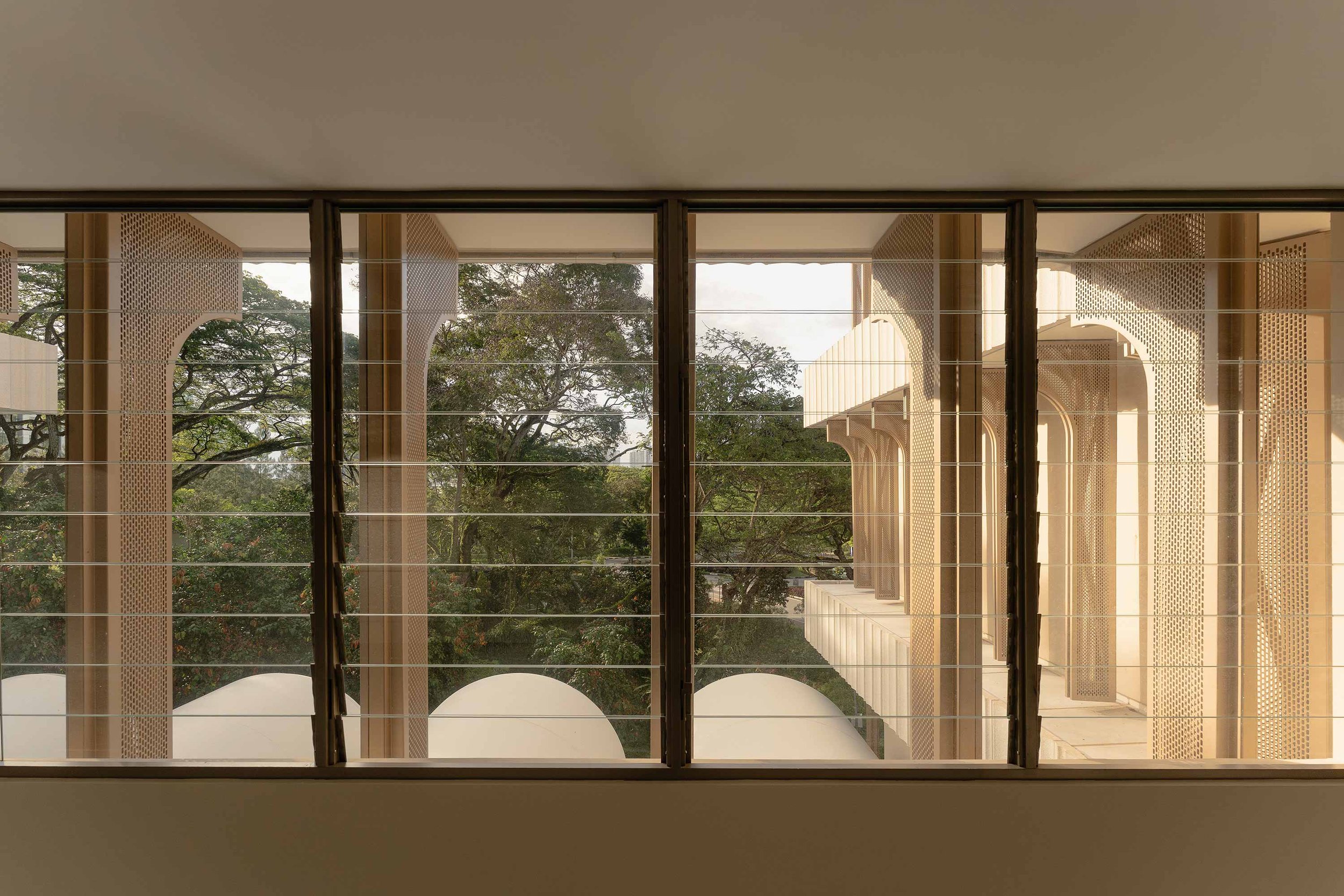
Five decades on, L’Heureux is able to open up the building more than before. A series of enclosed staircases have been turned into a tiered socialising area, complete with planters and ceiling fans. What used to be a somewhat hunched and dull space has been unfurled with a generous skylight. Perforated vaults provide relief from the tropical glare while invigorating the area with dappled light and shadow. Louvred casements at both ends promote cross-ventilation, and clerestory windows activate thermal buoyancy by allowing warm air to escape through the high openings.
Though the original concrete structure remains intact, the building’s facade has been completely rearticulated. ‘As it’s a well-known university building recognised by generations of alumni, we needed to give it a performative and dignified vision,’ says L’Heureux. ‘It cannot feel like an ad hoc shopping mall.’
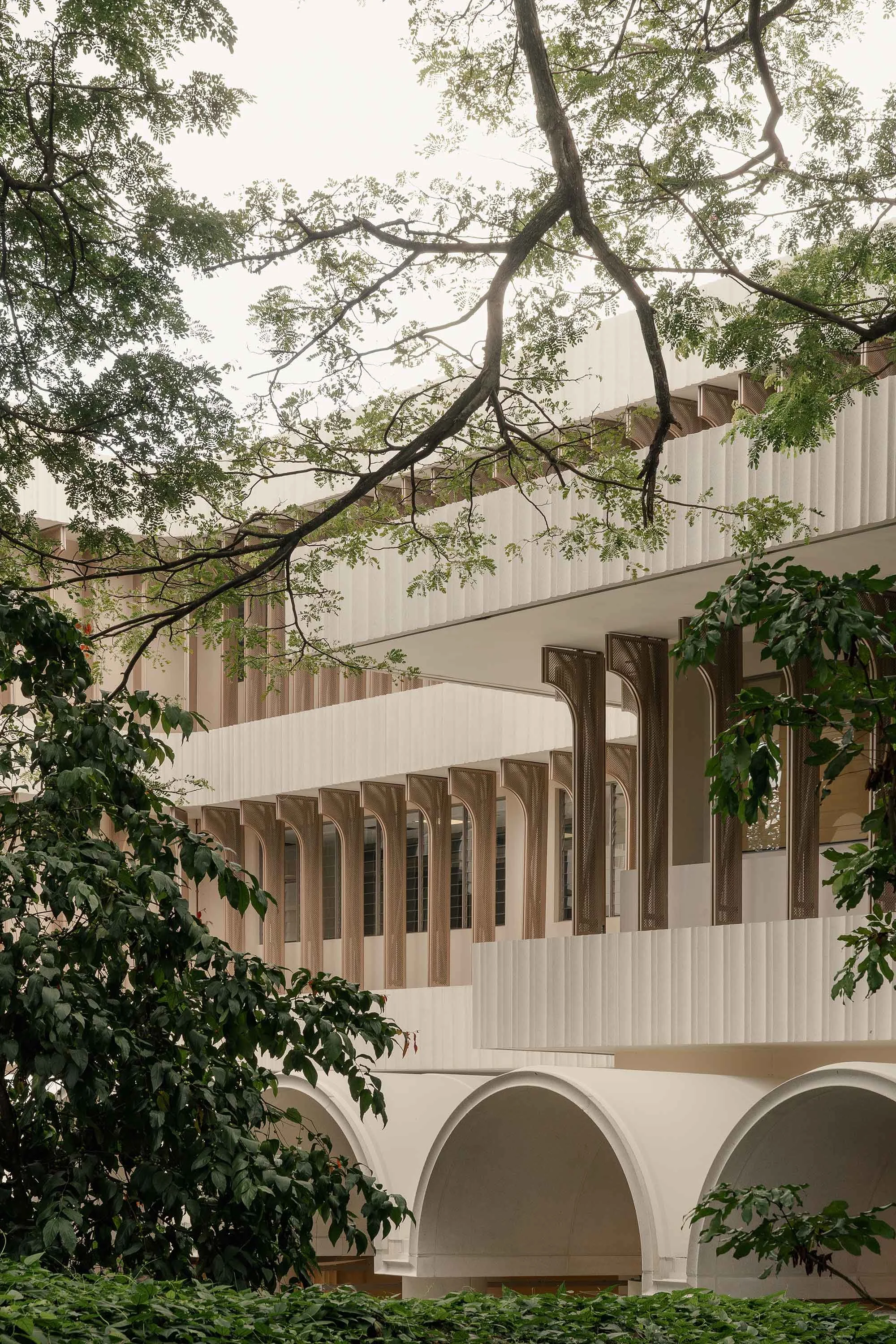
Taking cues from the institutional modernism of Josep Lluís Sert and Wallace Harrison, L’Heureux has bestowed a similar grandeur, rhythm and texture to Yusof Ishak House. Fluted precast panels band around the tiers with subtle curvatures, while perforated vertical fins — which double as sunshades — unify the overall architecture. The result is a harmonious exterior, something that was severely missing in the old, disjointed complex.
A neutral colour palette reinforces the building’s quiet stateliness, leaving space for students to ‘colour in’ the interiors with their own magic. Every detail, from the material choice to its climate consciousness, has been designed with care. Through this thoughtful transformation, L’Heureux and team have empowered Yusof Ishak House to fulfil its calling: to bring and bind students together, closer than ever.
Text by Joseph Koh
Images by Chan Hao Ong