All Around Practice Would Rather Talk About Everyone Else’s Work
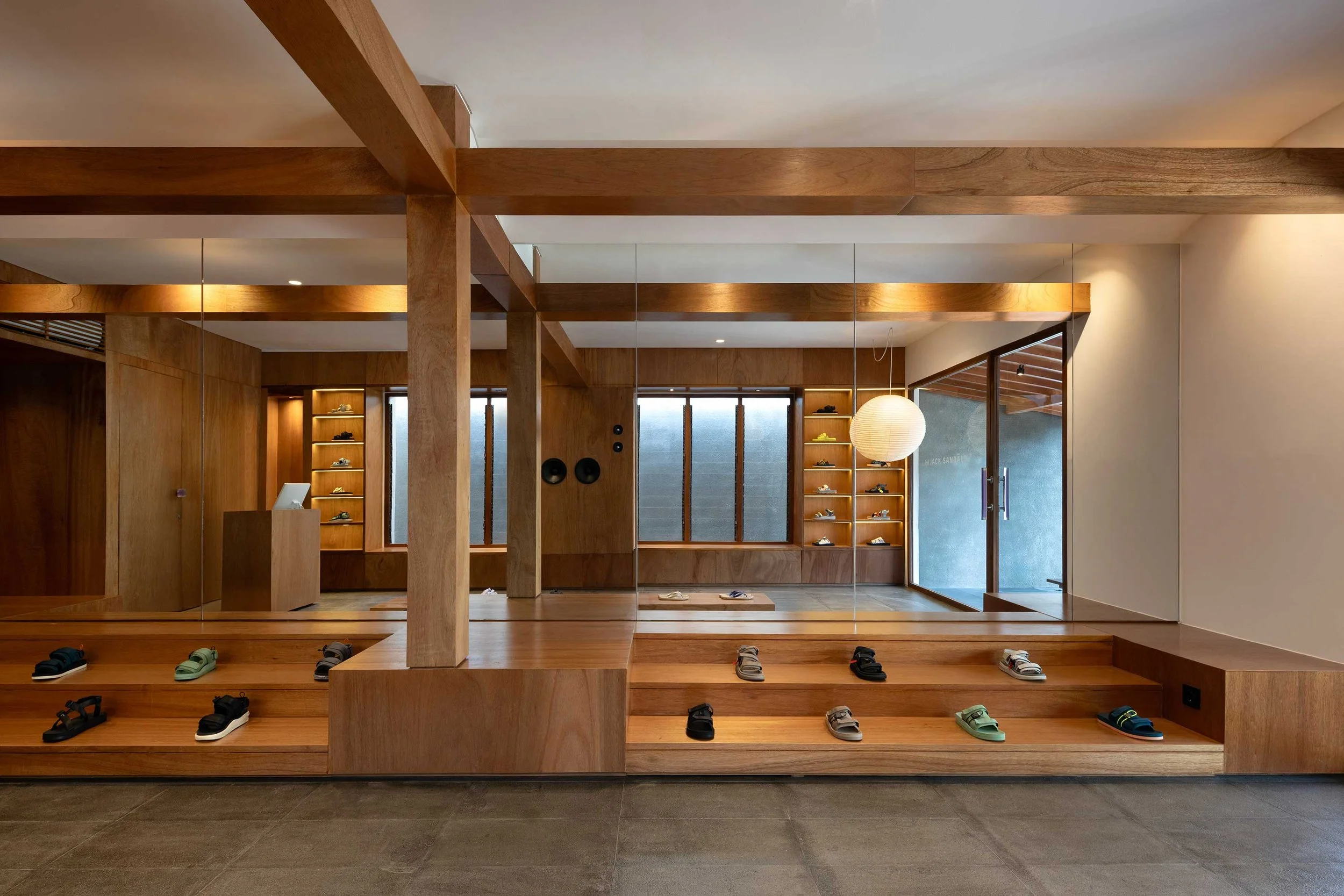
Image by Indra Wiras
All Around Practice combines carefully selected, low-cost materials with bespoke detailing to refine spatial design for emerging businesses across the archipelago
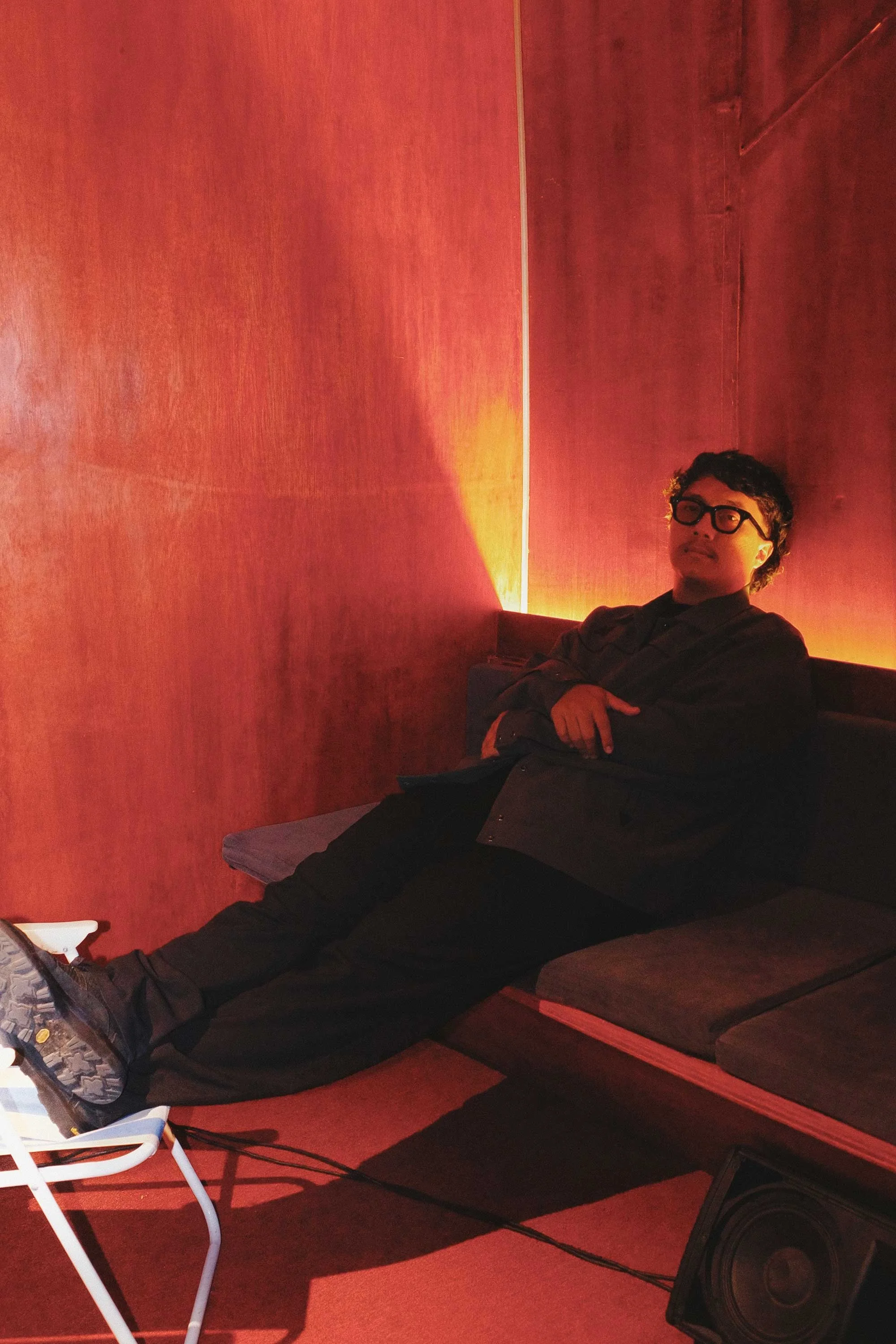
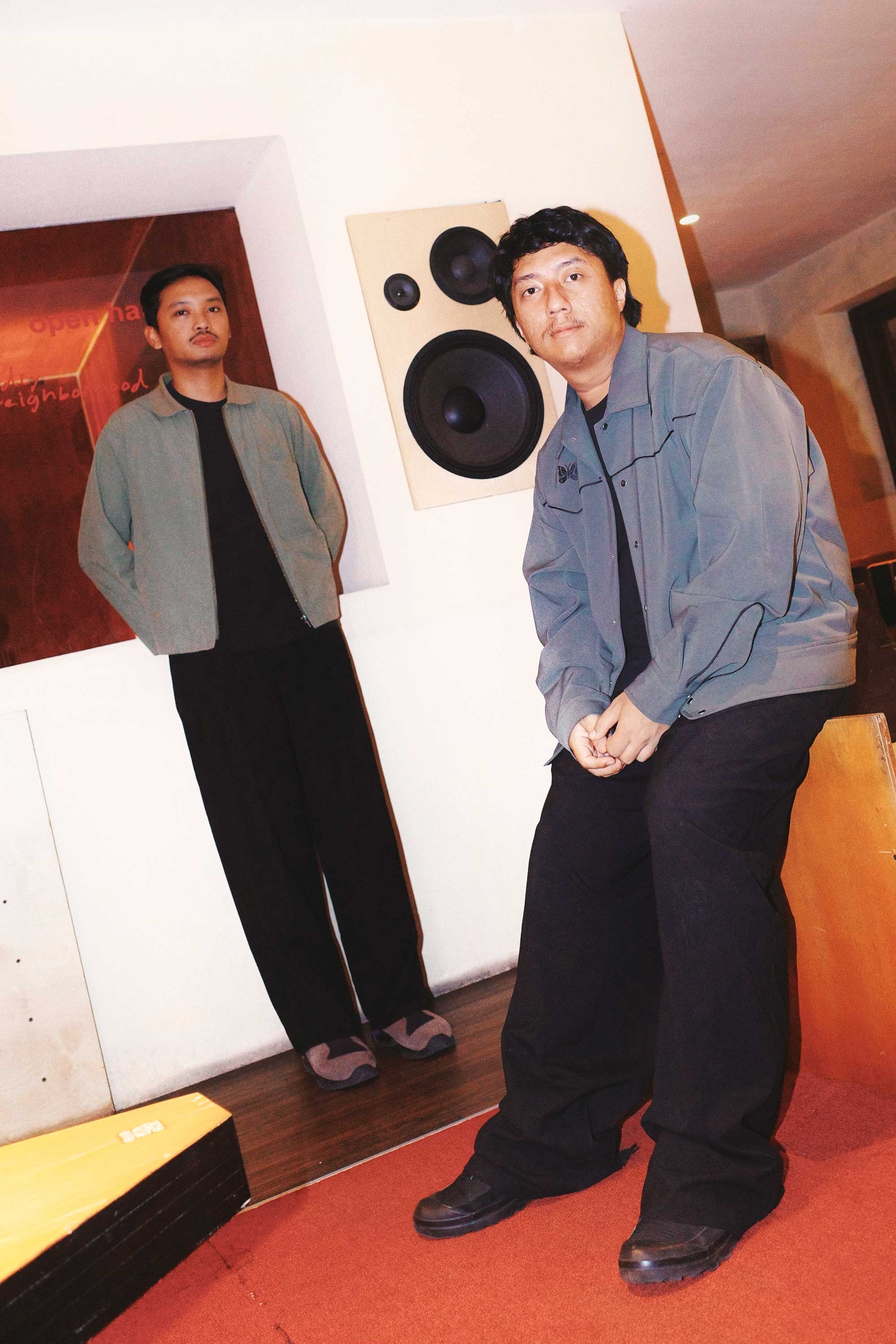
I met Ari Triawan in a leafy Bandung neighbourhood at Mankind Studios, a hybrid complex housing a restaurant, wine bar, fashion store and boutique hotel. Designed by Studio Kota, with contributions from several local designers, the space reads as a cross-section of the city’s creative scene. ‘It’s run by a friend of mine. I only designed two speakers,’ Triawan says as he guides me around. He seems just as keen to point out the work around him as he is to discuss his own — perhaps more so.
Together with Alif Hadien, he established All Around Practice in 2021, a multidisciplinary design firm emerging from Bandung’s youthful, collaborative spirit. Their partnership grew into shared freelance work and eventually their own studio, which remains anchored in its grassroots beginnings. ‘We’re always working with communities and young entrepreneurs starting new brands and F&B venues,’ Triawan says, adding that their preference is for public-facing venues with strong links to music, fashion and art — close-knit worlds in Indonesia. ‘People who frequent these establishments come from different backgrounds. I feel that a broader demographic makes the research process much more interesting.’
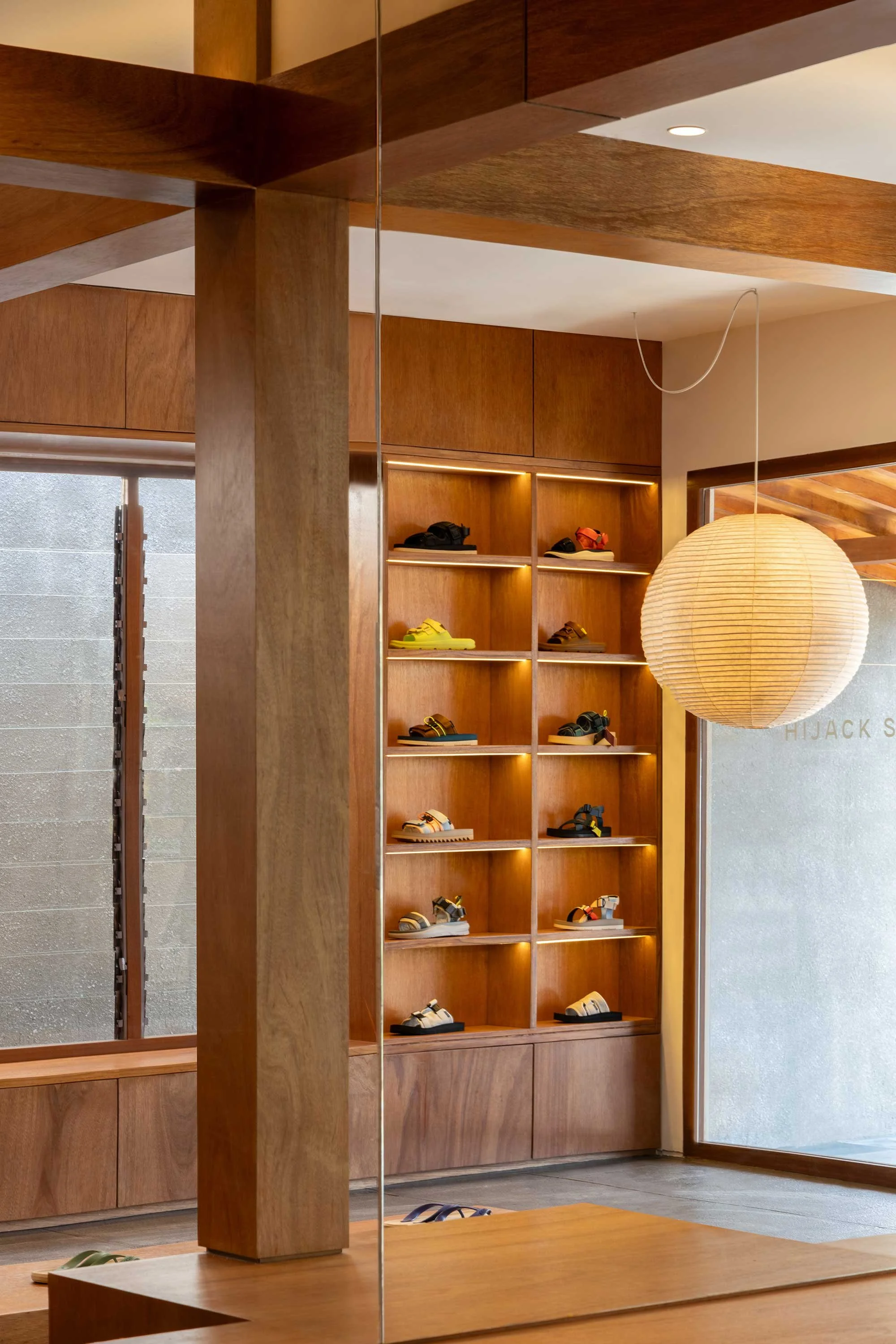
Image by Indra Wiras
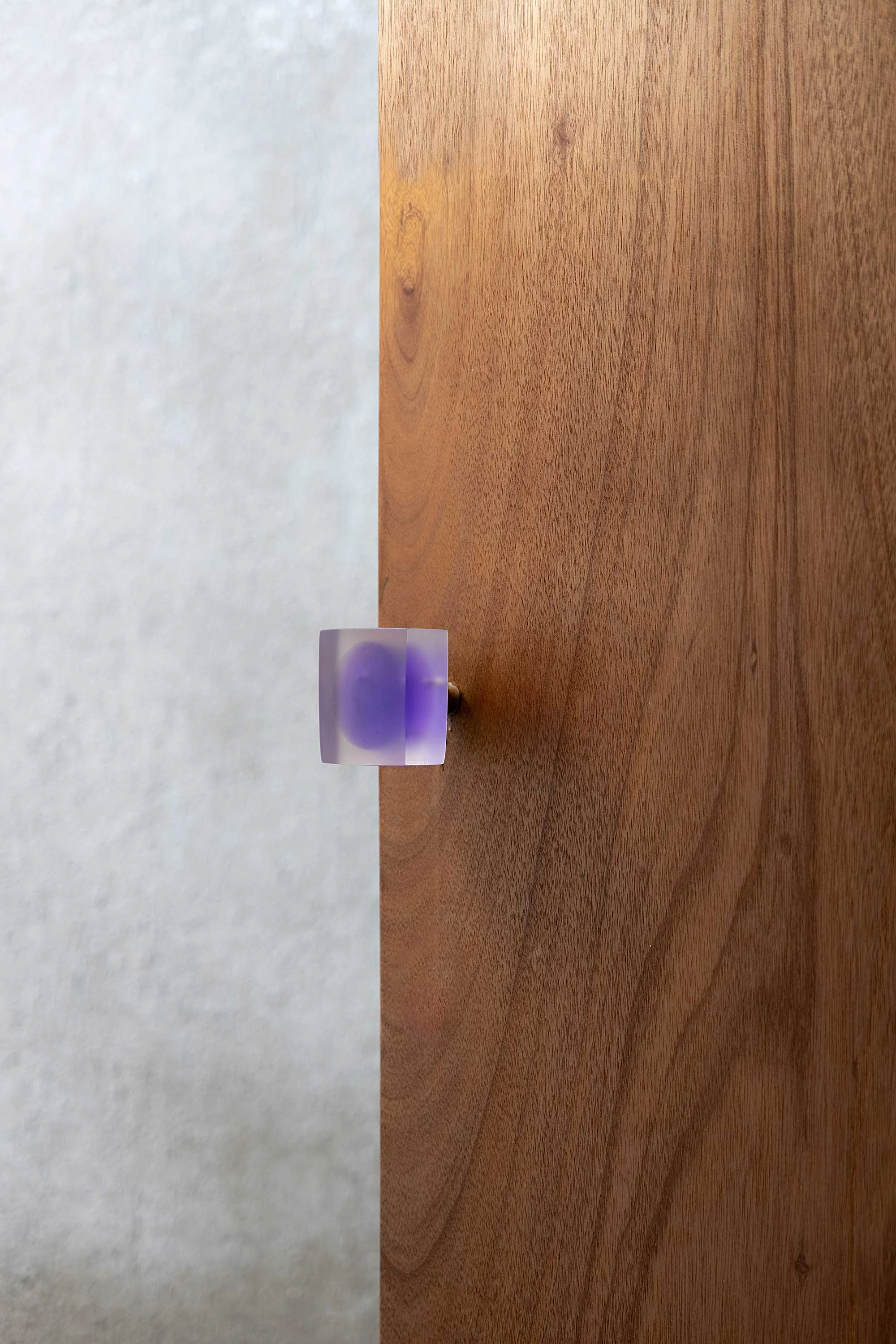
Image by Indra Wiras
Underlying their work is a pragmatic grasp of the needs and constraints of early-stage entrepreneurs, particularly in making limited budgets go further. ‘It’s not all about the architecture; we need to think holistically about what works for these new businesses. We also want to build long-term relationships,’ Triawan says. An example of this approach is their collaboration with fellow Bandung-born footwear label Hijack Sandals, for which All Around designed all retail spaces. In Bandung and at its Canggu location in Bali, the scheme adopts a minimal white-box concept that lets the colourful product take centre stage, with movable steel shelving allowing layouts to shift without further renovation costs.
Hijack Sandals’ Ubud store takes on a warmer tone, attuned to the local vernacular. A balcony with a built-in bench softens the retail frontage, with a sequence of alleys guiding visitors in. Triawan and Hadien clad the interior in wood — their preferred material, alongside stainless steel — using simple plywood as a cost-conscious choice. ‘Plywood is very affordable in Indonesia and offers good value. We choose the panels carefully, though, always looking for good grain and the right dimensions. This is key to setting the right mood,’ Triawan says. Local stone tiles cover the floor, while bespoke elements such as doorknobs, lighting fixtures and speakers add further character. The latter is a DIY pursuit inherited from his father, which he often incorporates into their projects.
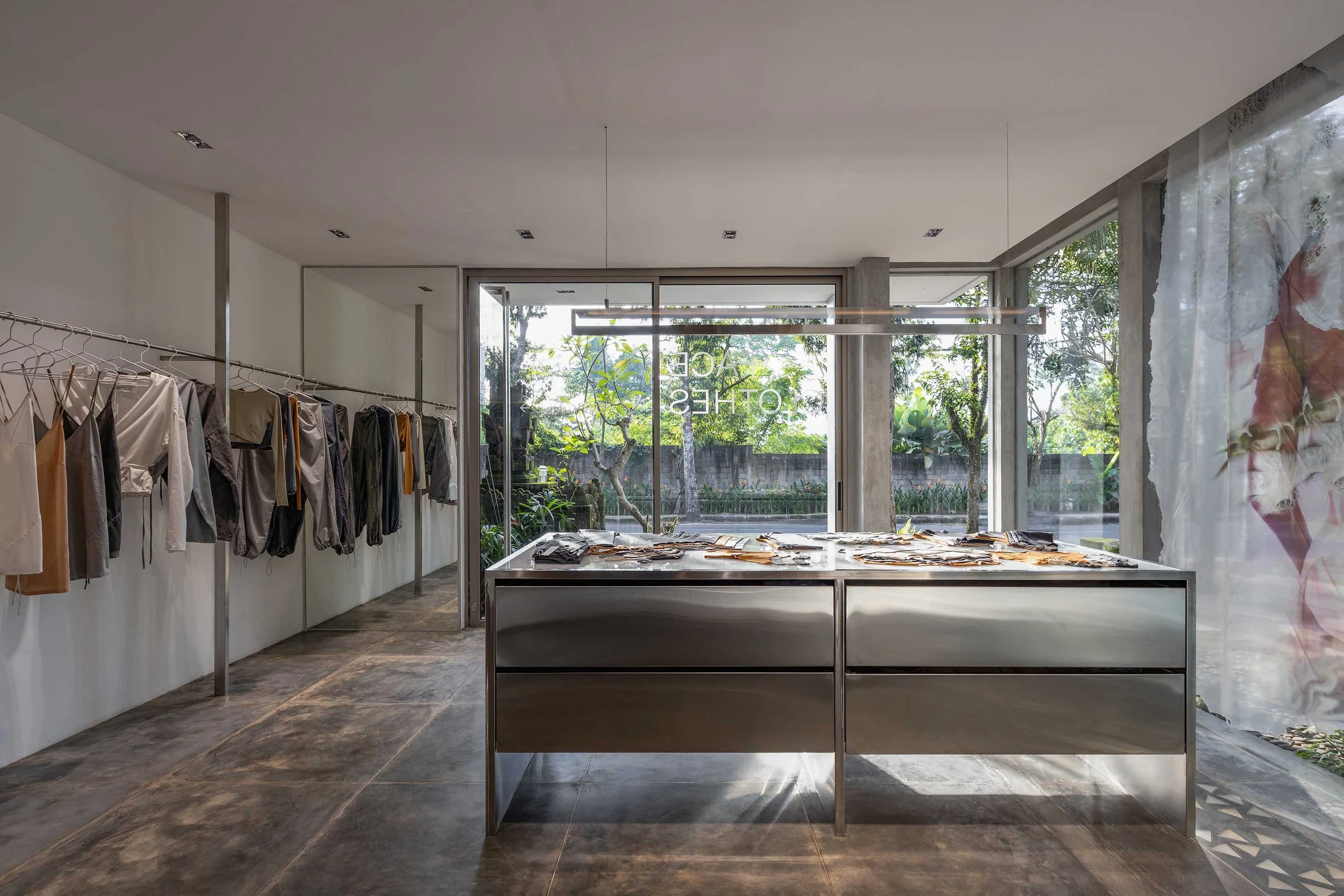
Image by Indra Wiras
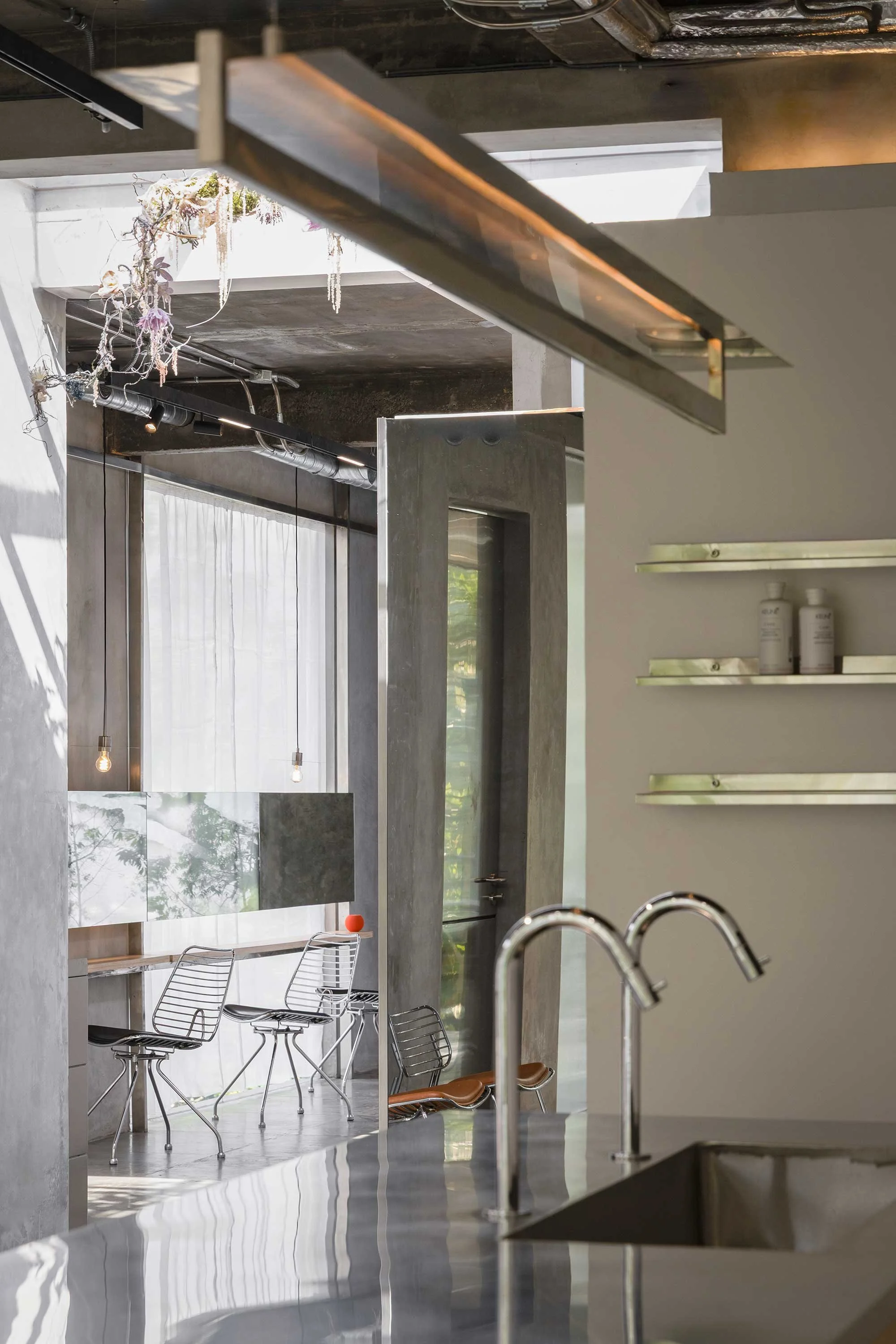
Image by Indra Wiras
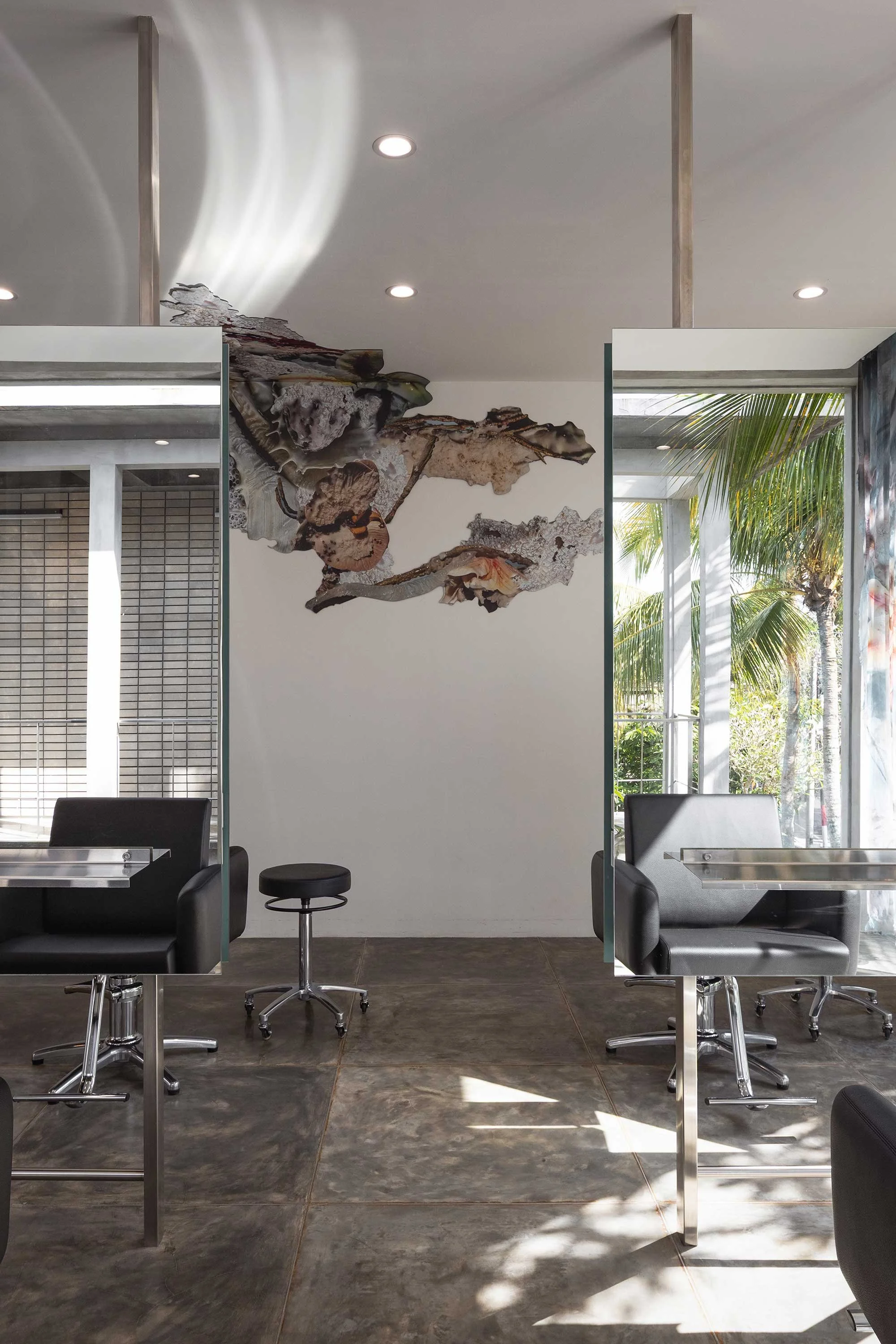
Image by Indra Wiras
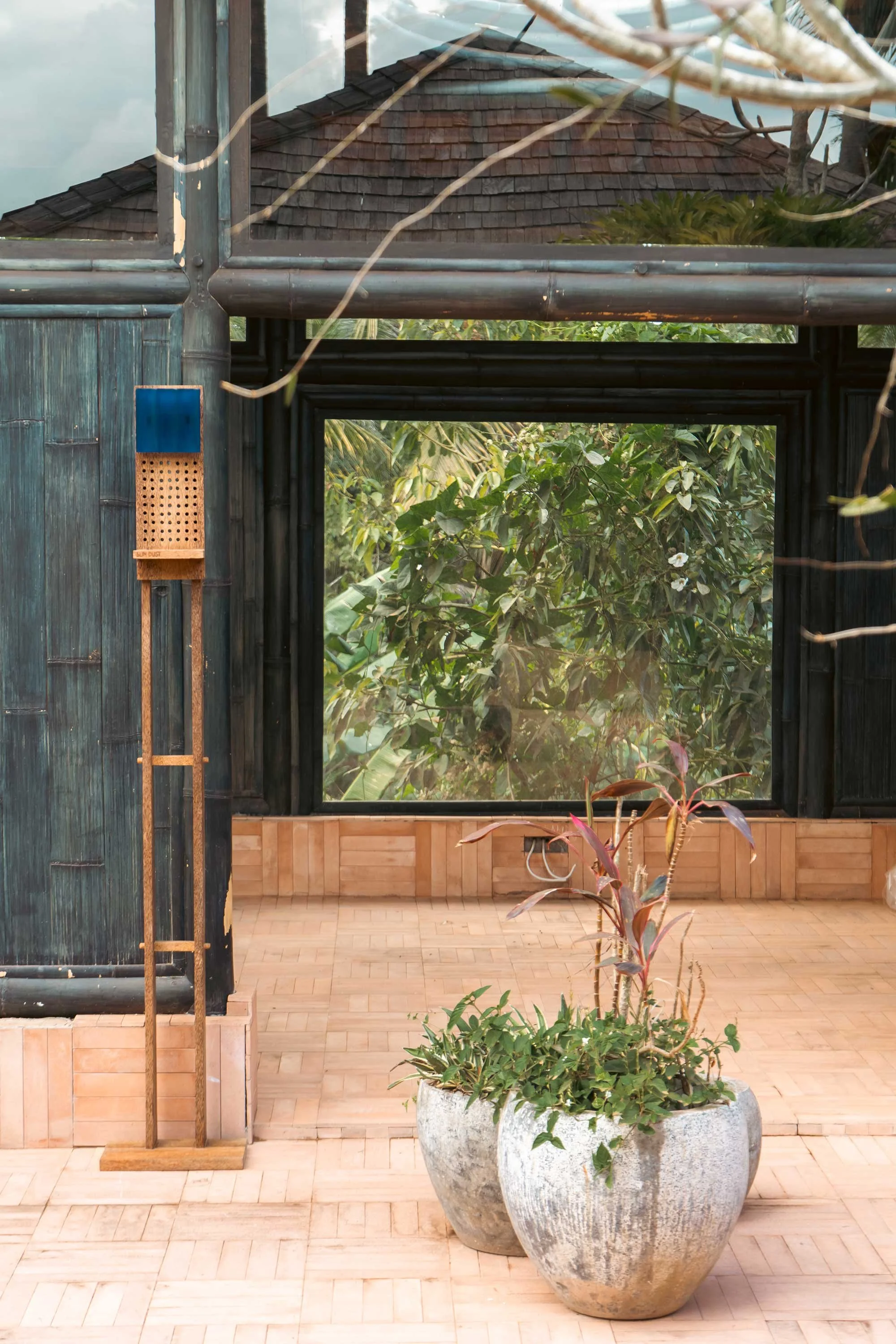
Also in Ubud, All Around transformed a compound-like site into a new space for Rasa Gaya, another hybrid concept that brings together a hair salon and a retail space focused on functional clothing in organic textiles. Defined by material contrast, the space mirrors the label’s minimal yet bold aesthetic, with an outer layer of stainless steel doors set against large glass openings, alongside cement tiles and cleaned concrete. Retained elements such as murals and a pelinggih — a Balinese shrine for daily offerings — ground the space in its local context. In the retail area, birch plywood, cleaner and smoother, is treated with natural oils to draw out the grain and set against minimal stainless steel counters and shelving. Upstairs, the salon pares back its working infrastructure and surfaces to the essentials for stylists.
Bespoke pendant lights accent both levels. ‘It’s part of a broader series of custom fixtures we develop within each project,’ says Triawan, noting that the concealed light source reflects off the metal to produce a soft glow. ‘It doesn’t feel harsh; it creates ambience.’ By day, transparent glass walls draw the landscape inwards and let in ample natural light, softened by the surrounding trees. The concrete flooring is laid on a grid and hand-finished for tonal variation; artworks by Russian-born, Bali-based artist Sofya Skidan, selected by Rasa Gaya’s owner, bring a graphic edge.
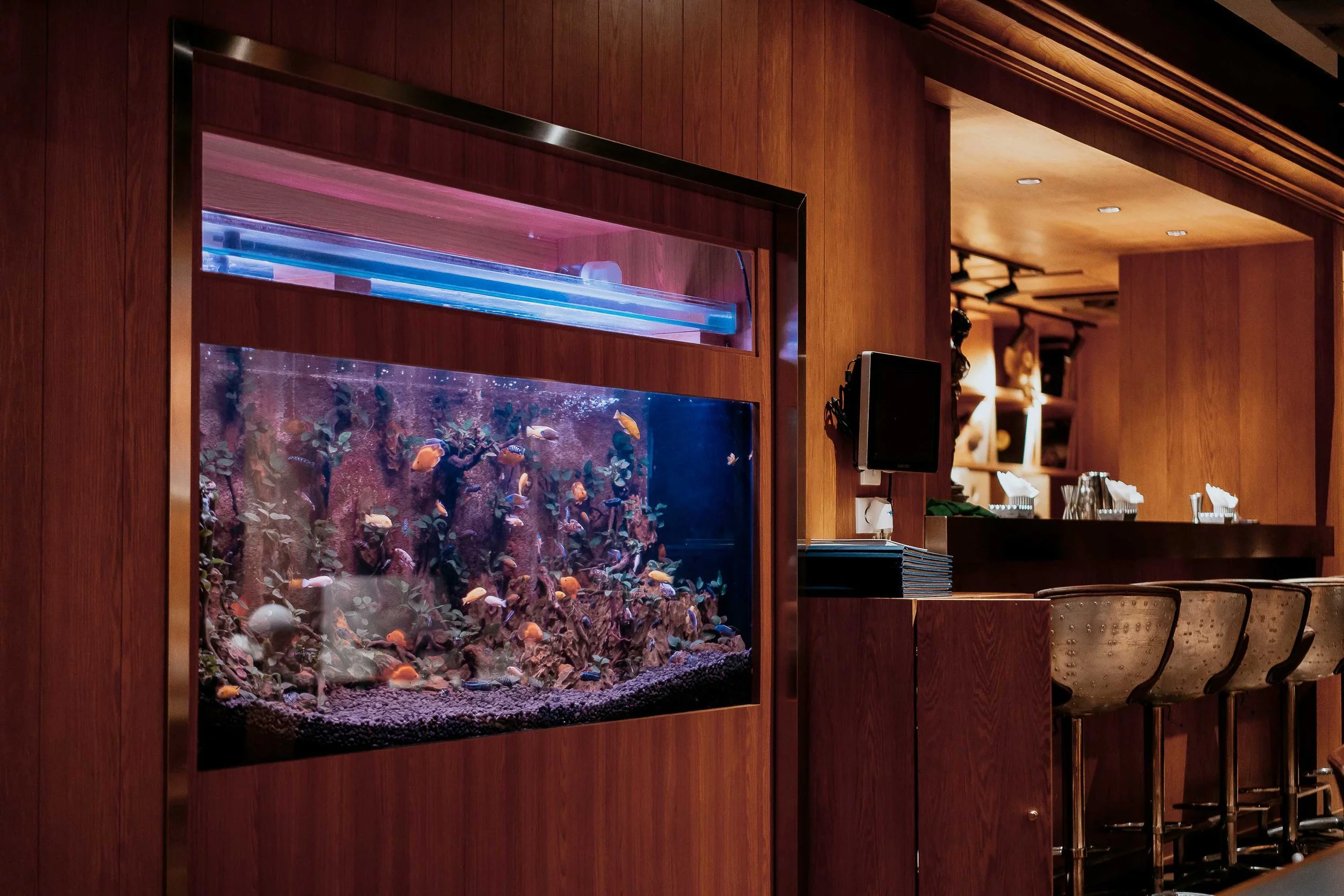
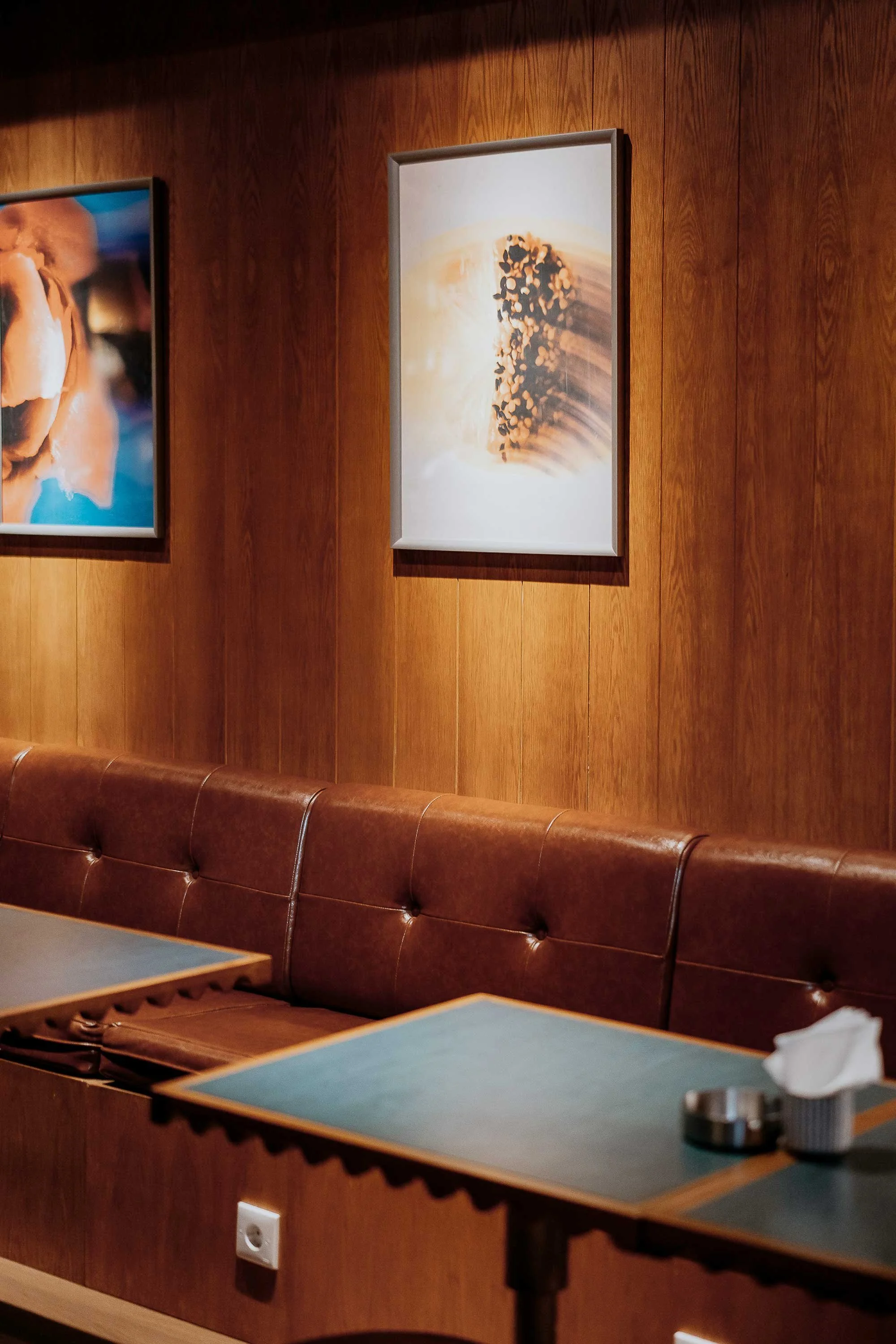
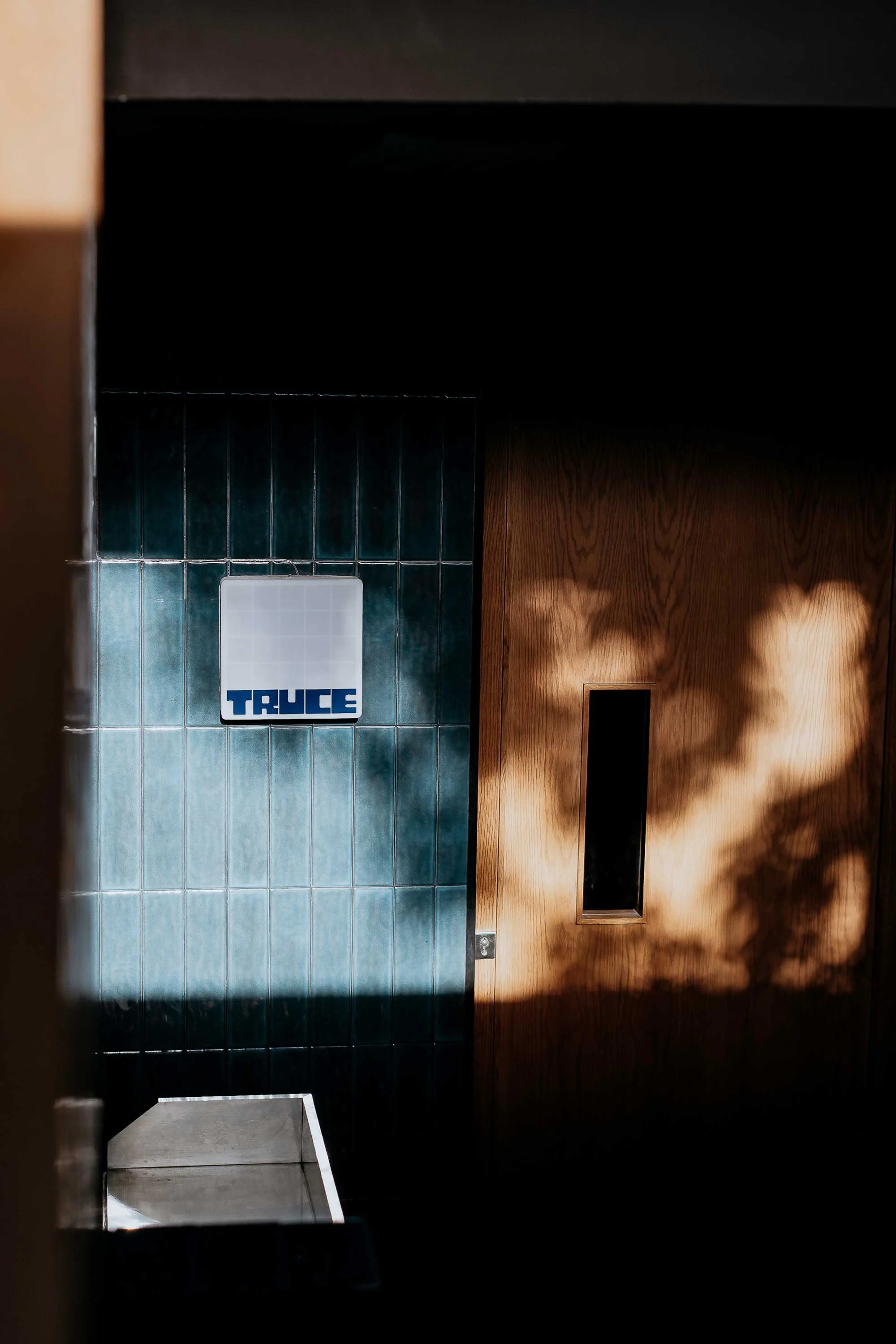
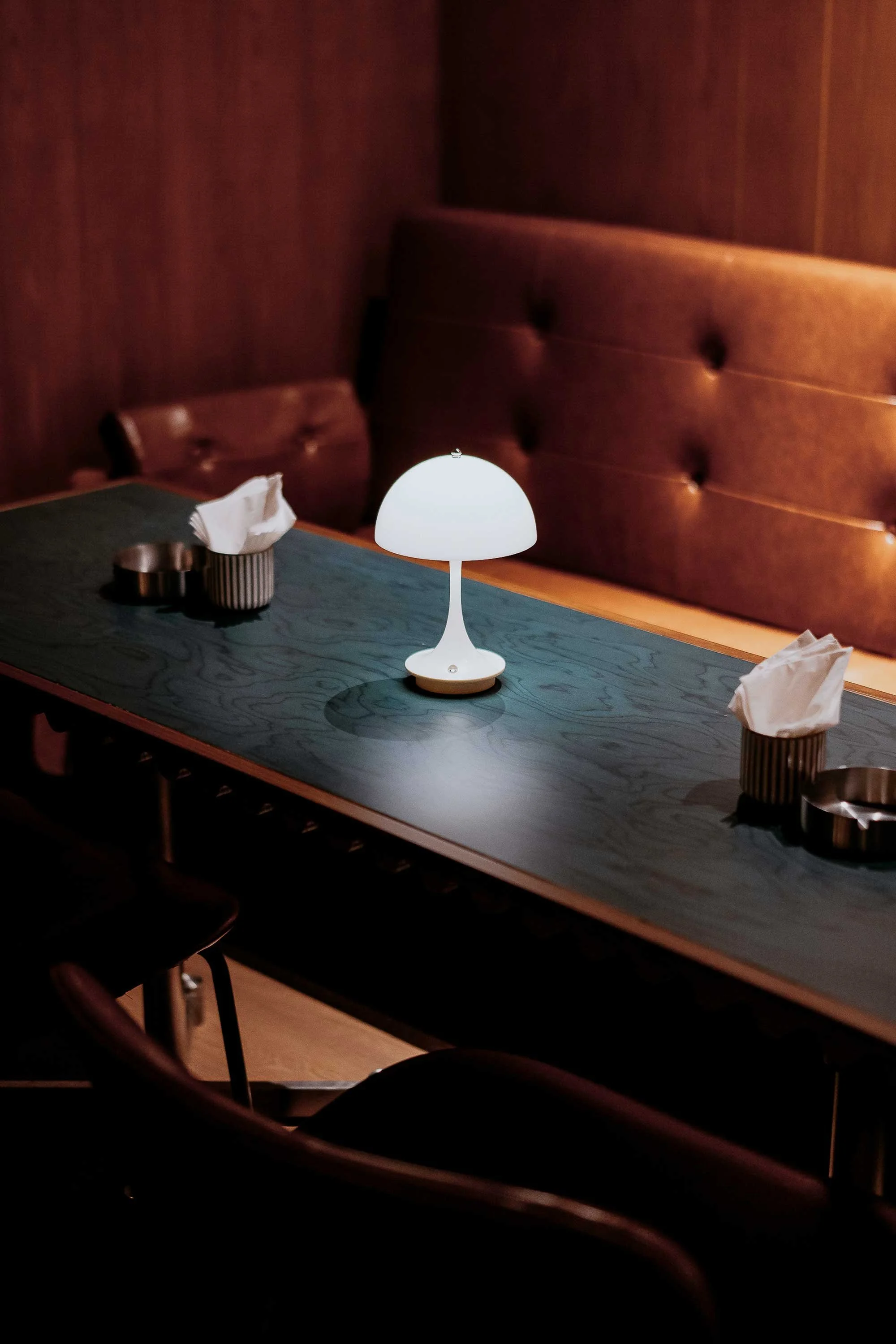
Part of All Around’s F&B portfolio in Jakarta, Truce stands out by drawing visitors down from street level. The project transforms a neglected basement in the city’s CBD into a Japanese-inspired speakeasy, accessed via a headhouse in a parking lot. A blue ceramic-tiled staircase leads into an intimate space defined by wood, leather and a built-in aquarium that glows in the dim light. Booth seating is divided by timber block screens and faces a bar lined with high stools.
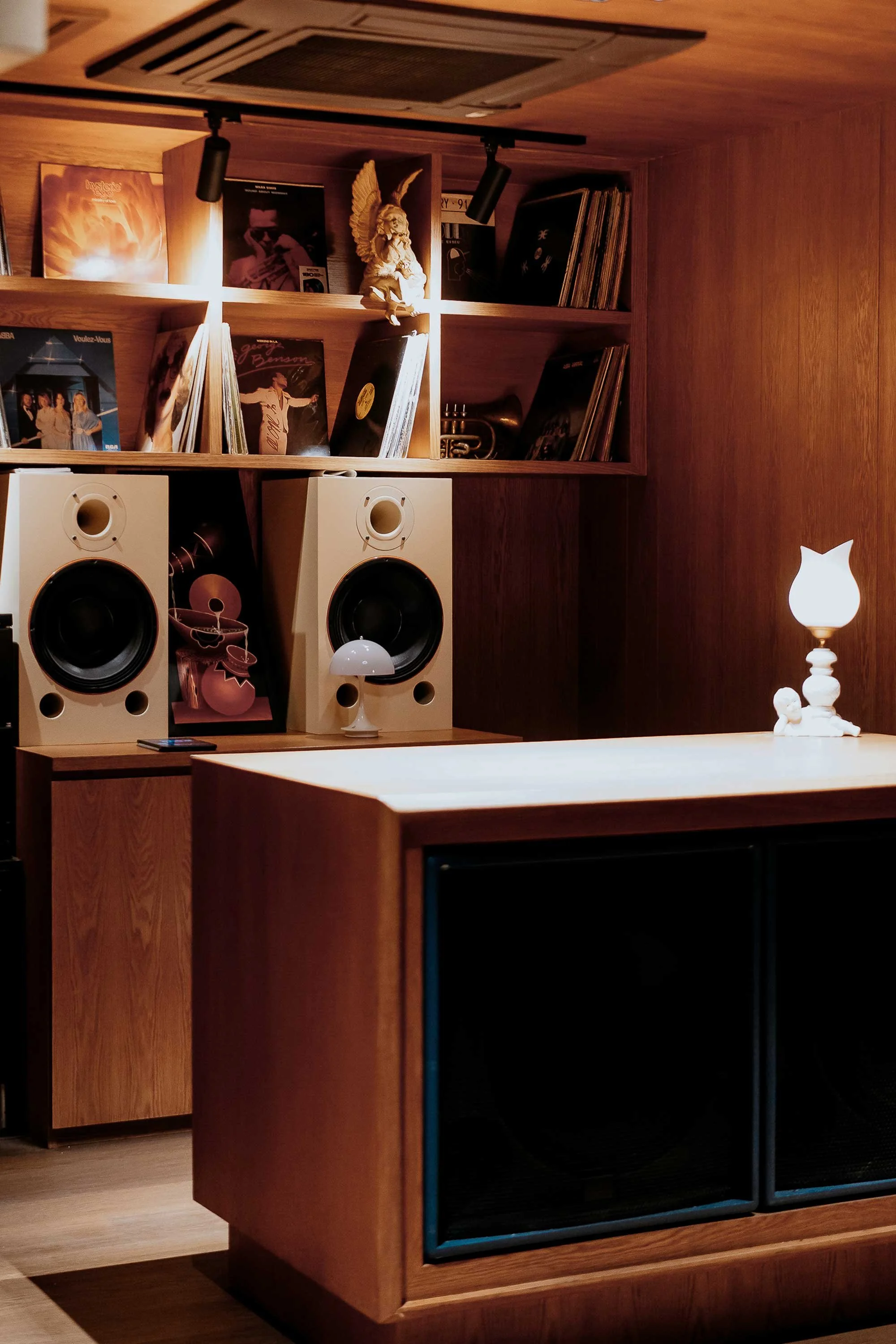
‘We wanted to evoke the feel of a Shibuya basement bar, with a design that’s somewhat common but sharpened through detail, so again we leaned heavily on wood,’ Triawan says. He points out touches throughout, including the green-tinted wooden tables and the pronounced grain of the hi-fi listening corner, built around his speakers and integrated subwoofer cabinets. A vinyl collection and figurines complete the scene. With craft cocktails and small plates, Truce attracts a steady after-work crowd from the surrounding glass towers, who slip below ground to ease into the evening as Jakarta’s rush hour thins above.
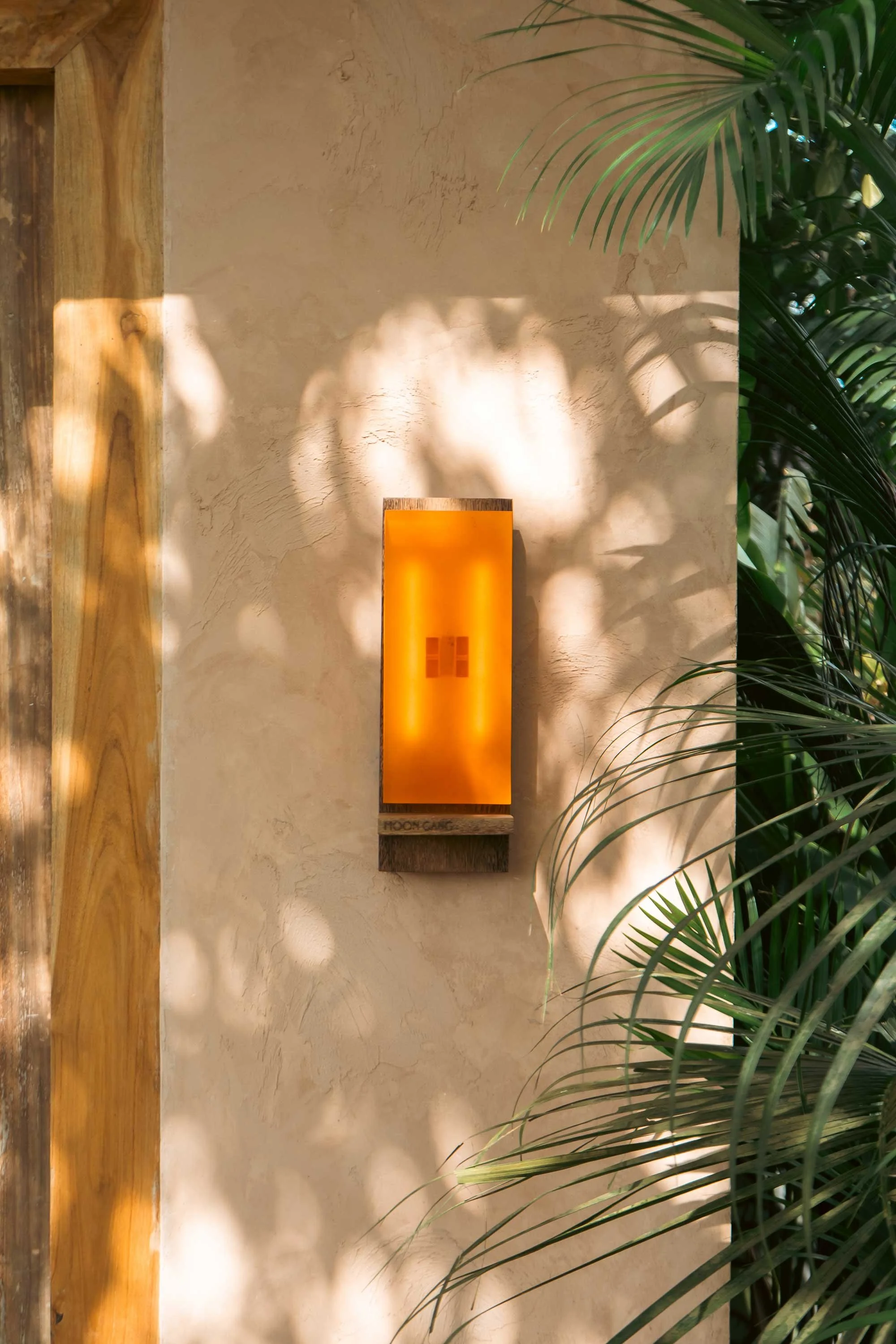
When we met, Triawan and Hadien had just completed lighting fixtures and doorknobs for Moon Gang, a small design-led hotel in Bali built around objects and contributions from local communities. They were also working on a new Hijack Sandals outpost in Makassar, South Sulawesi, alongside pop-ups and kiosk designs for brands such as Nike. Now in progress is an exhibition space for an orangutan information centre in Camp Leakey, Tanjung Puting National Park, Kalimantan, with occasional site visits that they clearly relish for how they broaden the scope of the duo’s research by involving local communities and — at times — orangutans.
Text by Tomás Pinheiro
Images courtesy of All Around Practice