An Urban Apartment that Mirrors the City
A compact apartment in Shanghai has been revitalised for contemporary urban living with a considered spatial intervention by Mountain Soil Interior Design
When the owner of this Shanghai apartment acquired it as a secondary residence, he turned to former classmate Tiantian Dong, founder and design director of Mountain Soil Interior Design, to reimagine it for his needs. ‘The space was originally arranged in a standardised urban layout of three bedrooms and one living room,’ says Dong. But, guided by the studio’s commitment to spatial efficiency, the design evolved through an on-site study into a series of interventions.
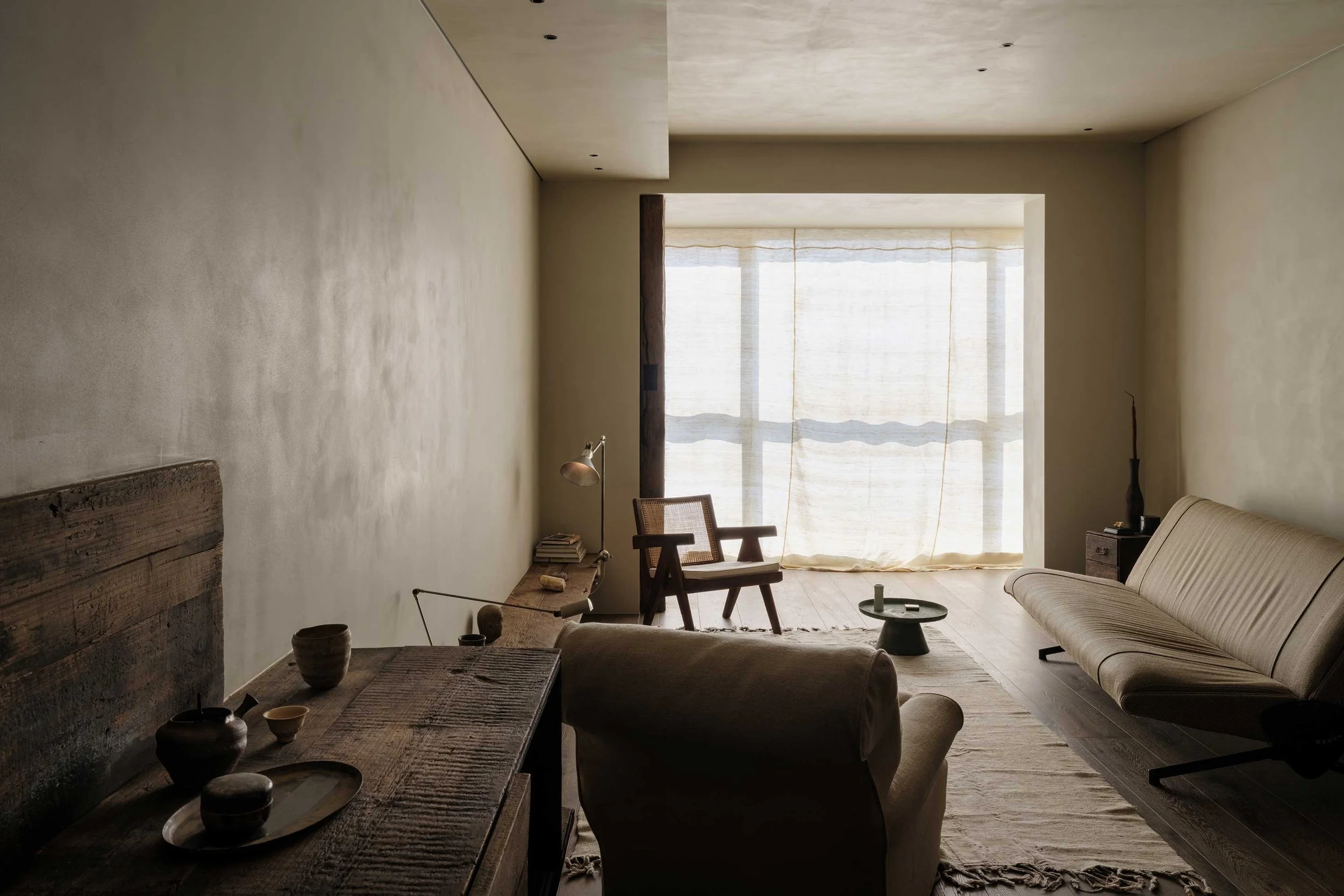
‘Typically, people anchor their lives around the home, radiating outward to the street and further connecting to workplaces and social activities, forming a tightly woven living grid,’ says Dong. ‘A comfortable living environment often emerges from ordinary, familiar acts — dining, sleeping, washing, connecting with others, or engaging in hands-on work. These everyday moments collectively shape a complex and discreet spatial structure.’ With this philosophy in mind, the reconfiguration transformed the scheme into two generously proportioned rooms, optimising functionality while expanding and integrating storage. The kitchen now unfolds fluidly into the dining and living areas, where what Dong terms a ‘subtractive design strategy’ removed superfluous partitions, unlocking spatial continuity. The designer considered the household appliances with equal care: the substantial refrigerator was recessed at the front of the hallway, its custom finishes blending with the surrounding surfaces to diminish visual mass.
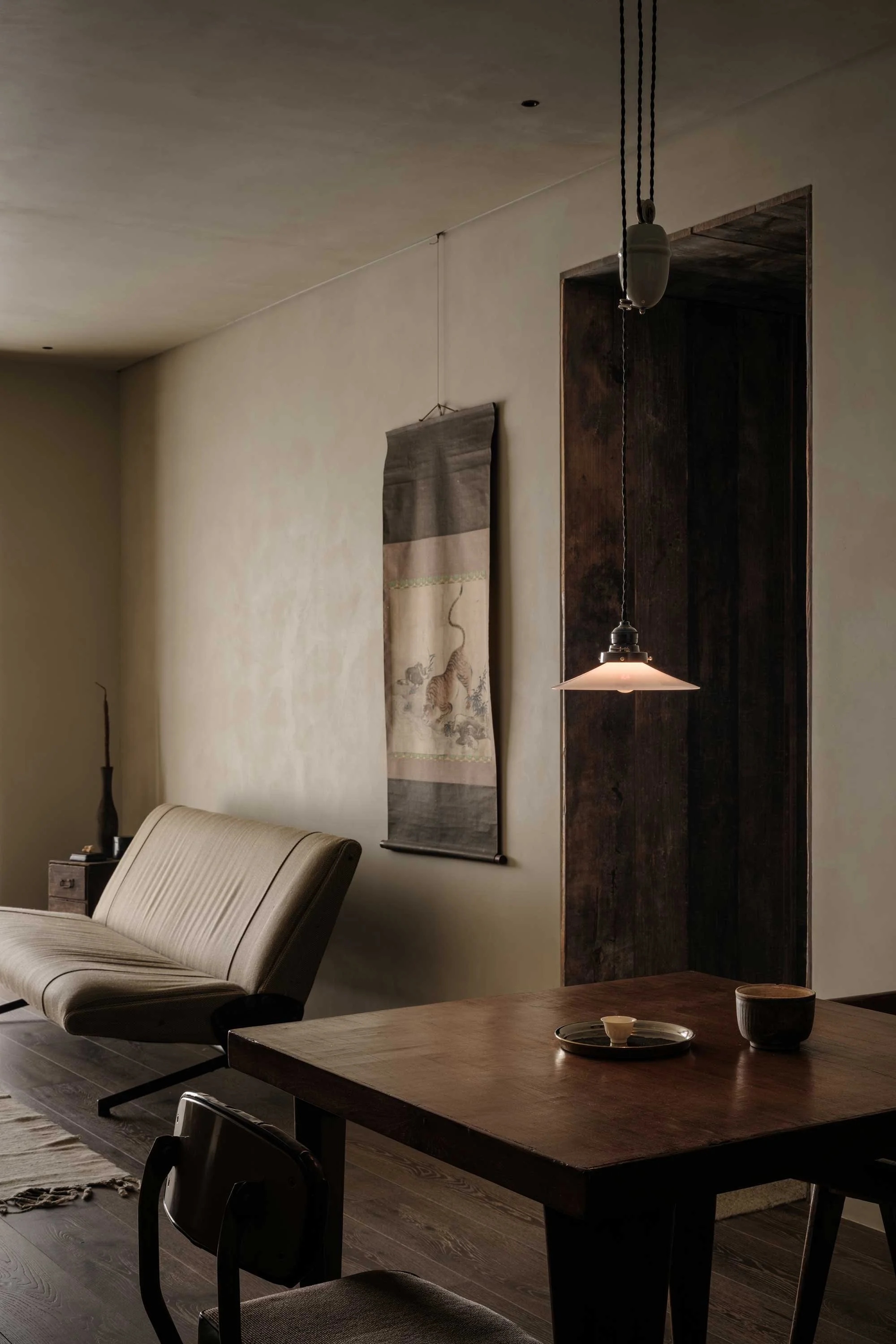
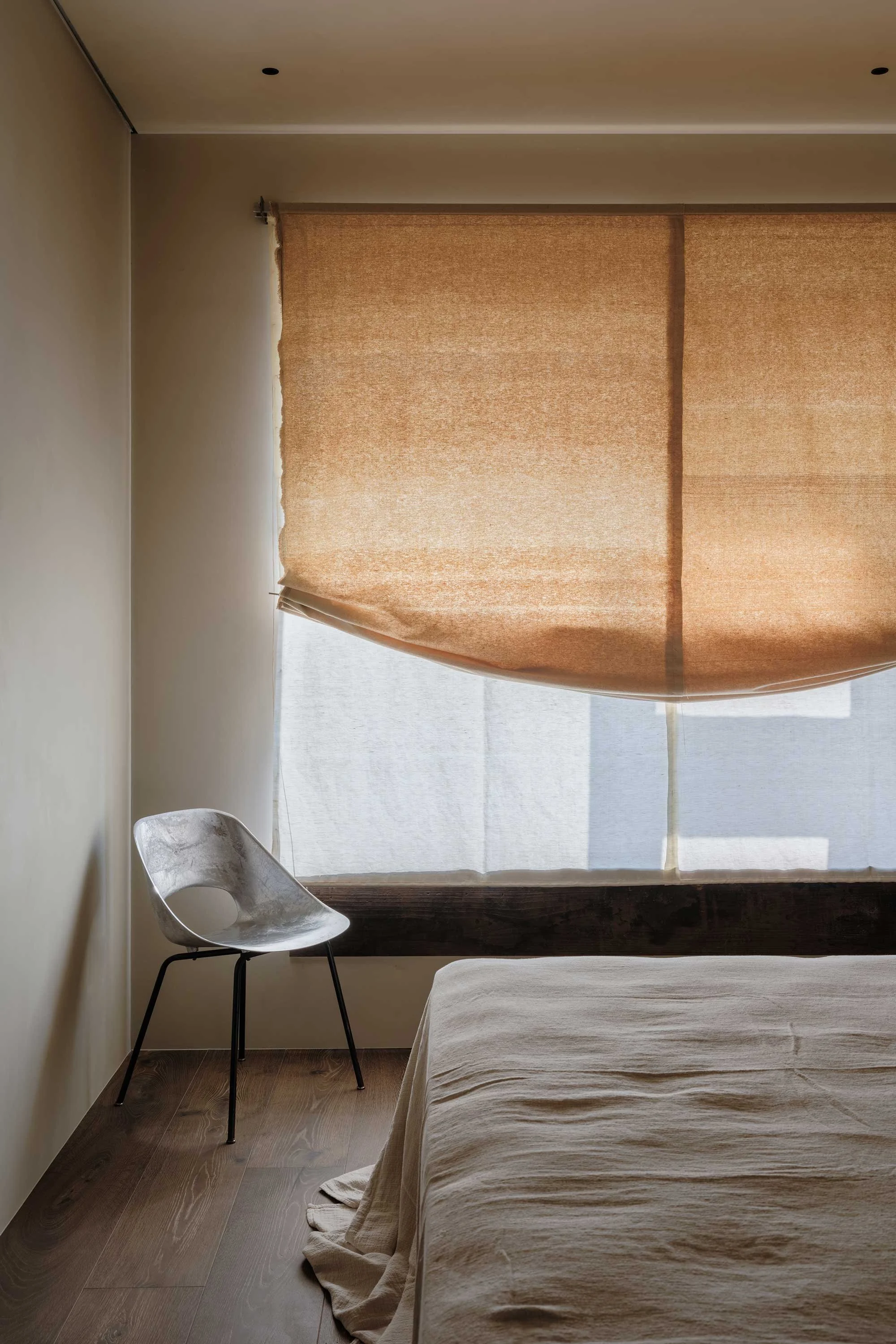
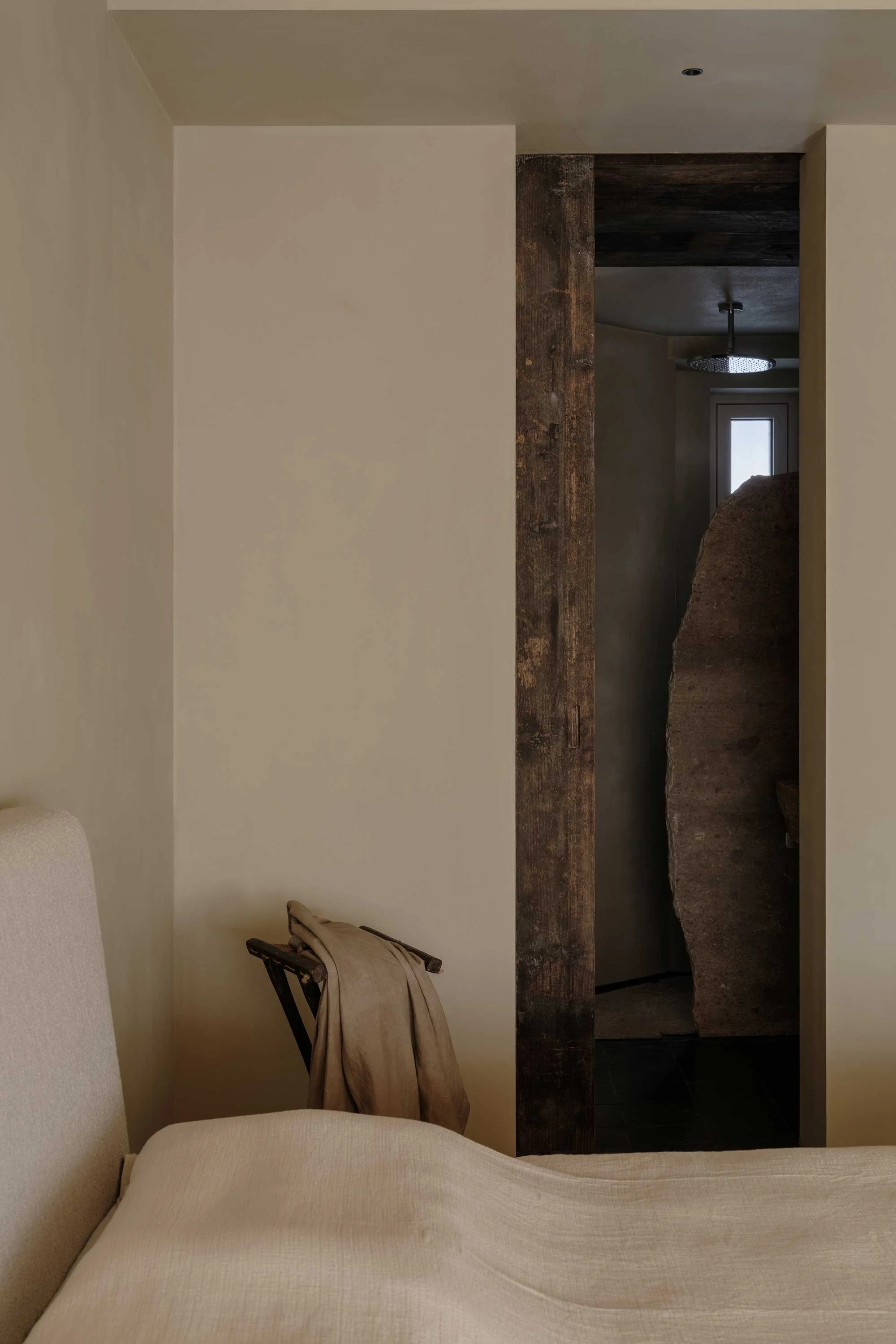
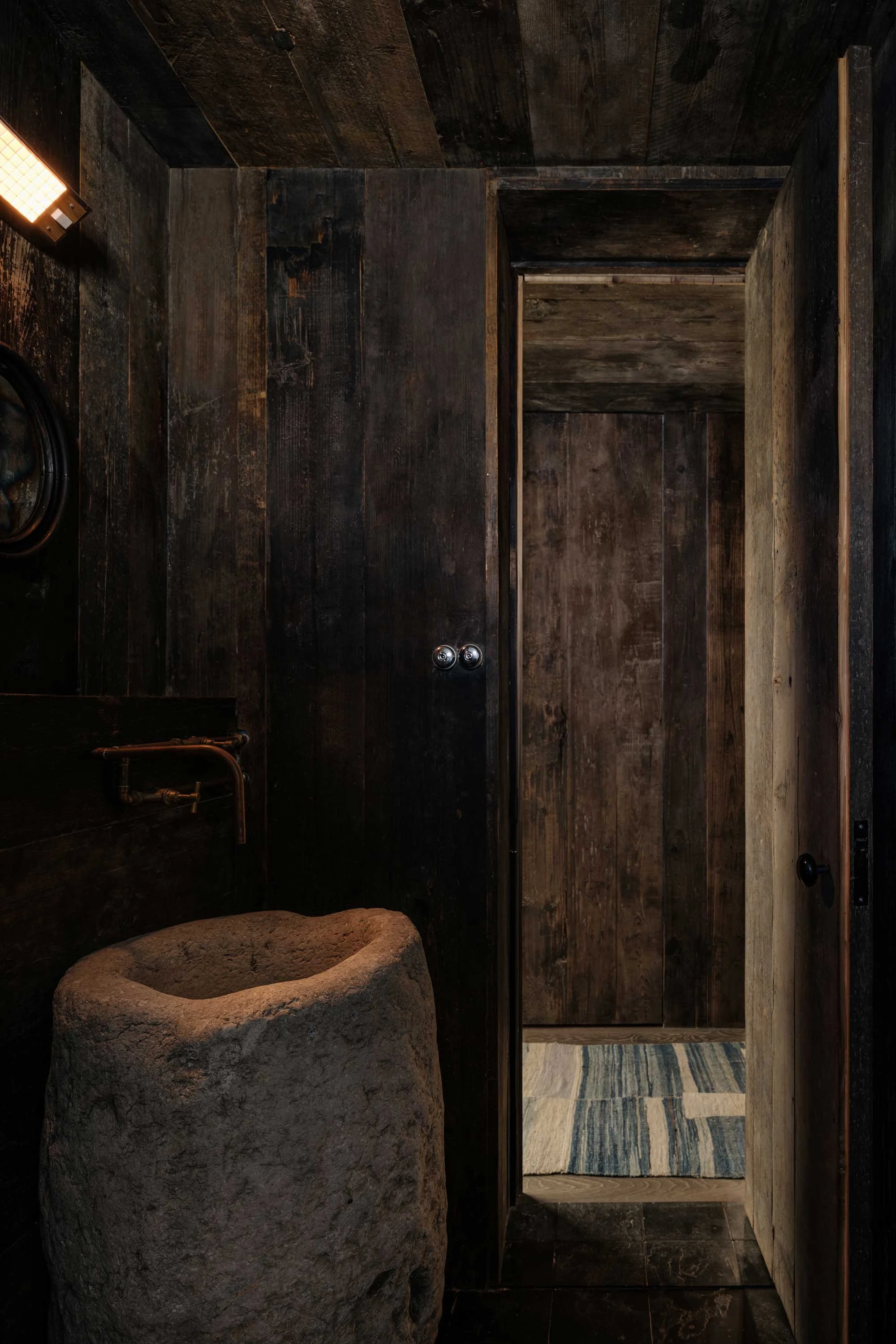
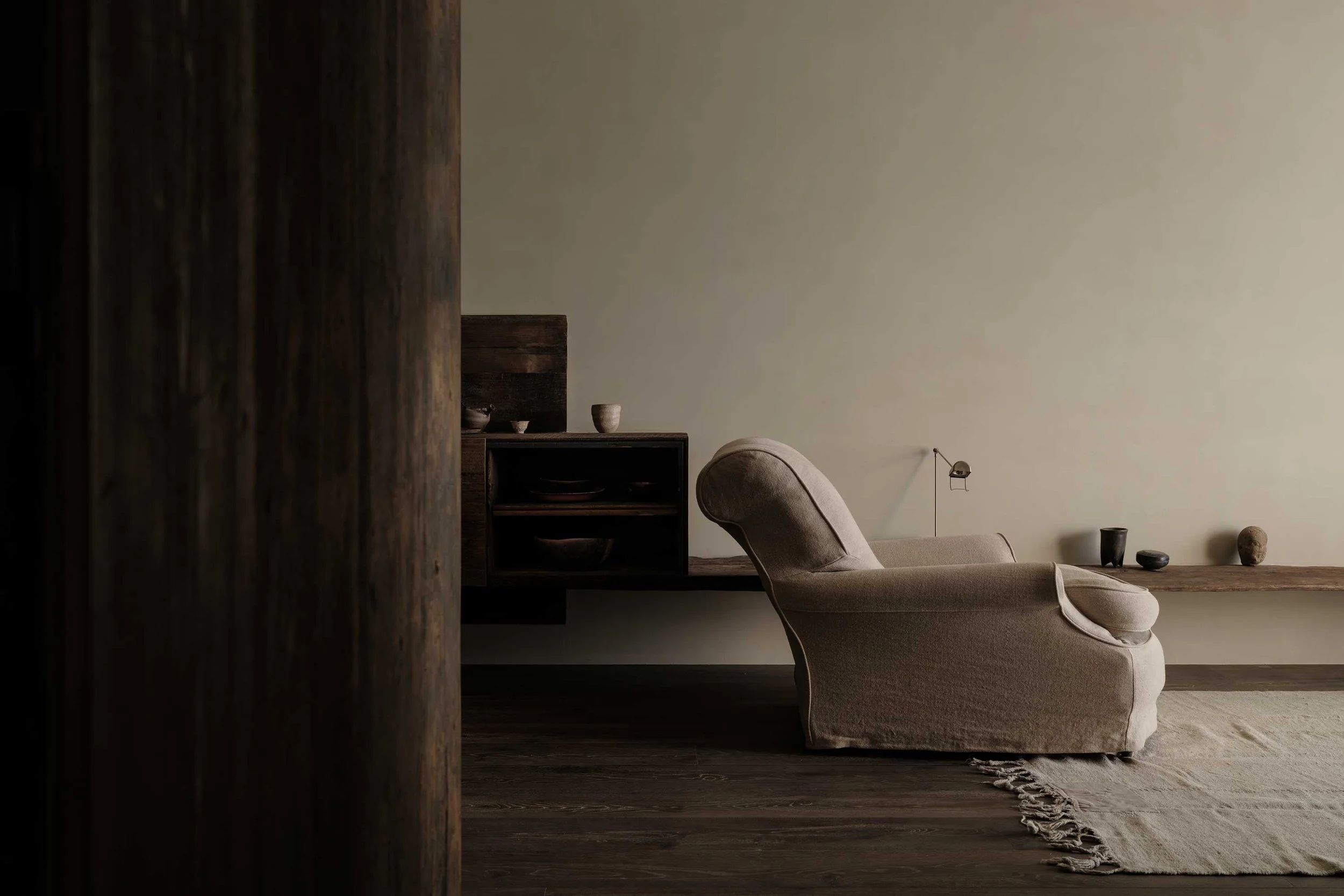
The space is marked by its material palette of reclaimed and recyclable materials. Reclaimed timber wall surfaces, a hand-hewn stone bathroom basin and monolithic natural-slab splash guards in the shower zone ‘all speak to a tactile, time-honoured craft,’ says Dong. ‘Their surfaces bear the tactile richness of time.’ Soft furnishings demonstrate a similar approach: the corridor runner is pieced together from traditional homespun cloth, while the curtains are adapted from the client’s collection of vintage Chinese hemp and reinterpreted with custom fittings.
‘Most of the furniture pieces are mid-century, serving both aesthetic intent and the preservation of local character and historical continuity,’ says Dong, noting that the approach enriches the design narrative while reducing resource consumption. Among the pieces are Pierre Jeanneret’s Chandigarh chair and desk, a D70 sofa by Osvaldo Borsani, a Pierre Guariche Tulip chair and a Lampe Gras no. 201 table lamp.
But it’s in the corridor where Dong’s philosophies around spatial efficiency are perhaps best exemplified. Similarly to the spatial multidimensionality of urban life, the corridor’s adjusted elevation and natural stone slabs see it play ‘a crucial connective role in the family space, with the stone slab at the entrance a significant transitional element’, she points out. In all, the considered intervention has created a home that merges functionality with spatial clarity, as Dong puts it, ‘translating everyday life into a refined architectural experience’.
Text by Philip Annetta
Images by Wen Studio