
A Pebbledash Building in Taipei Becomes an Unlikely Coffee Salon
In a former Japanese-era dormitory beside a Taipei granary, Bemo Salon reimagines specialty coffee through the rituals of the European salon — a setting designed by Ecru Studio for slow, deliberate tasting
On a quiet corner in central Taipei stands an unassuming historic building with a grey and white pebbledash facade, tucked beside a former Japanese-era granary. Once used as a dormitory for warehouse managers, the structure has been reimagined as Bemo Salon, the physical flagship of specialty coffee brand Bemo. The ground floor houses a coffee boutique and retail space, while the upper floor operates as a reservation-only salon designed for tasting and conversation.
Founder Ben Tseng describes Bemo Salon as a setting where visitors can slow down and spend more time with coffee. The search for such a setting led the team to this modest building, with a narrow layout and understated exterior that retain a sense of historical continuity. Its pebbledash construction, common to Japanese-era and mid-century Taiwanese architecture, carries no fixed stylistic identity — a neutrality the team saw as an asset rather than a limitation.
Rather than looking to restore the structure as a traditional Japanese-era house, Bemo Salon viewed the building as a vessel for European salon culture. The concept draws from the intimate atmosphere historically associated with French salons, places where people would gather to sit, converse and exchange ideas. Slowing the rhythm encourages visitors to linger, giving the subtleties of specialty coffee time to reveal themselves.
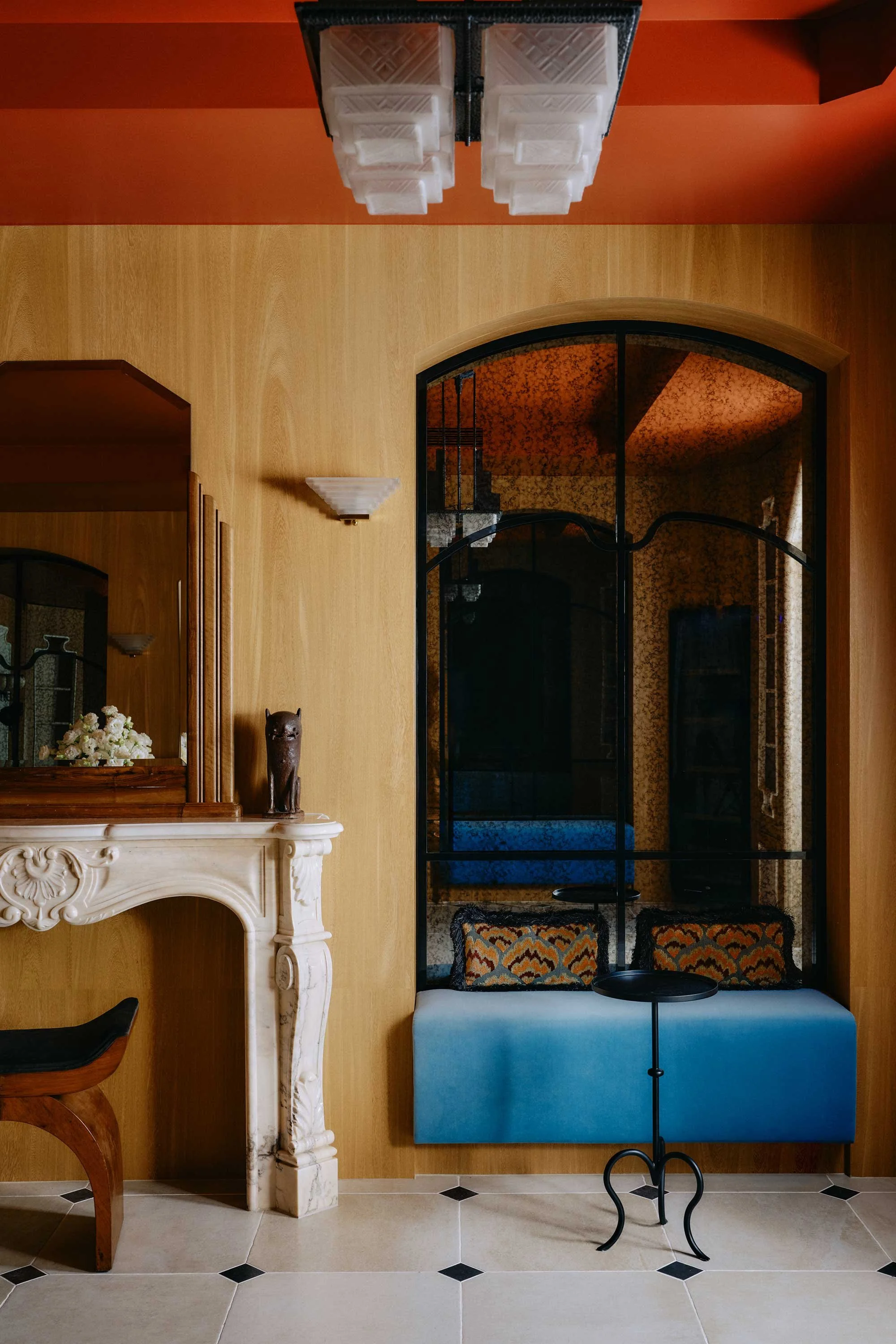
To realise this vision, Bemo Salon commissioned Ecru Studio, led by designer Jin Chen. ‘Design that follows trends quickly becomes dated. Instead, we sought a spatial language that feels layered and enduring,’ says Chen. The result is a space where references to Rococo, Art Nouveau and both Eastern and Western Art Deco are subtly combined.
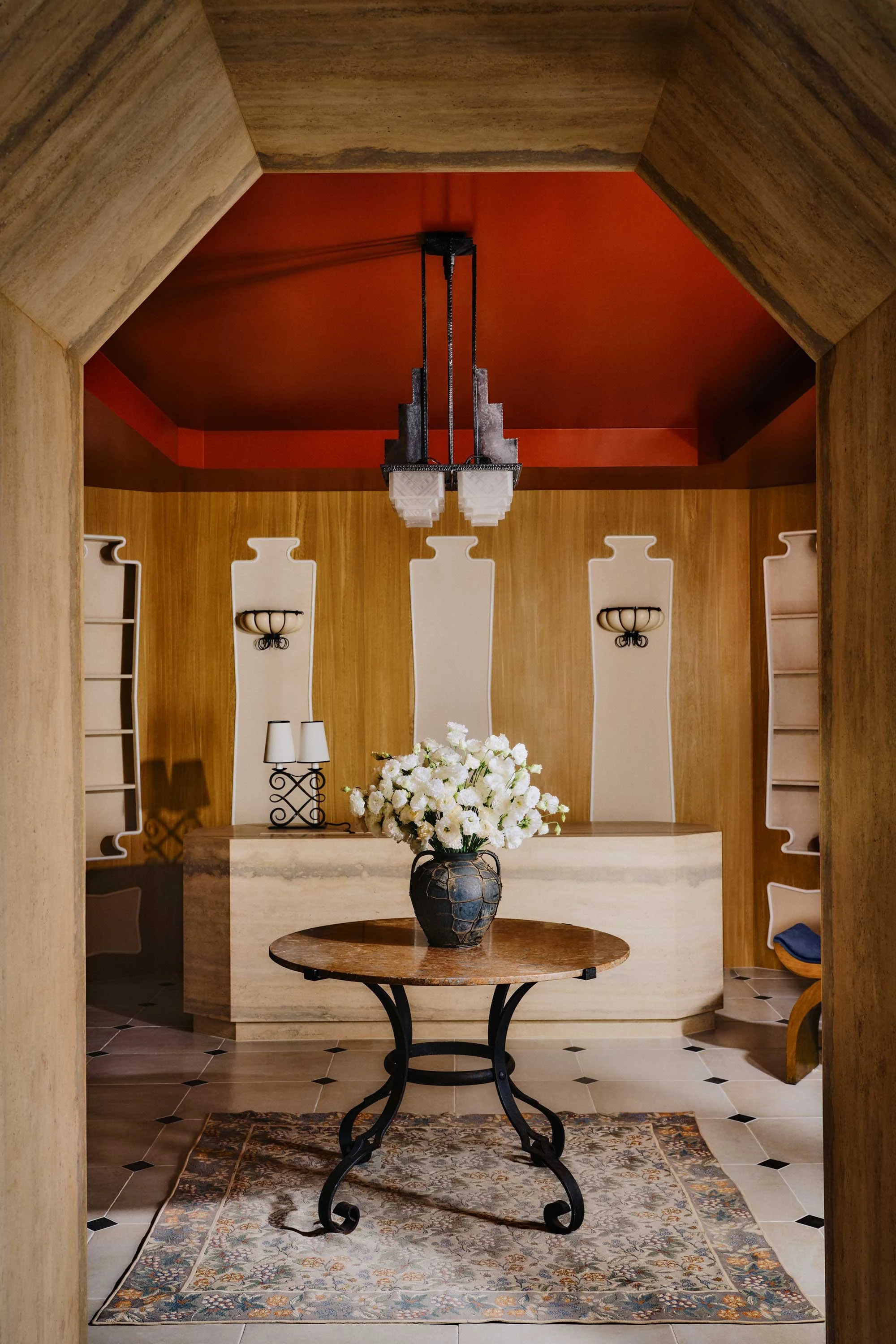
The spatial experience begins on the ground floor, where visitors enter a compact octagonal vestibule featuring a fragrance discovery area. Beyond this threshold, the space opens into a larger octagonal hall anchored by four banquettes and a central service bar.
Material choices reinforce the atmosphere. The floor is composed of abbey-style tiles, combining black stone and white limestone, inspired by historic European monasteries. Walls clad in yellow cypress veneer introduce warmth, while a burgundy lacquered ceiling provides a contemporary counterpoint.
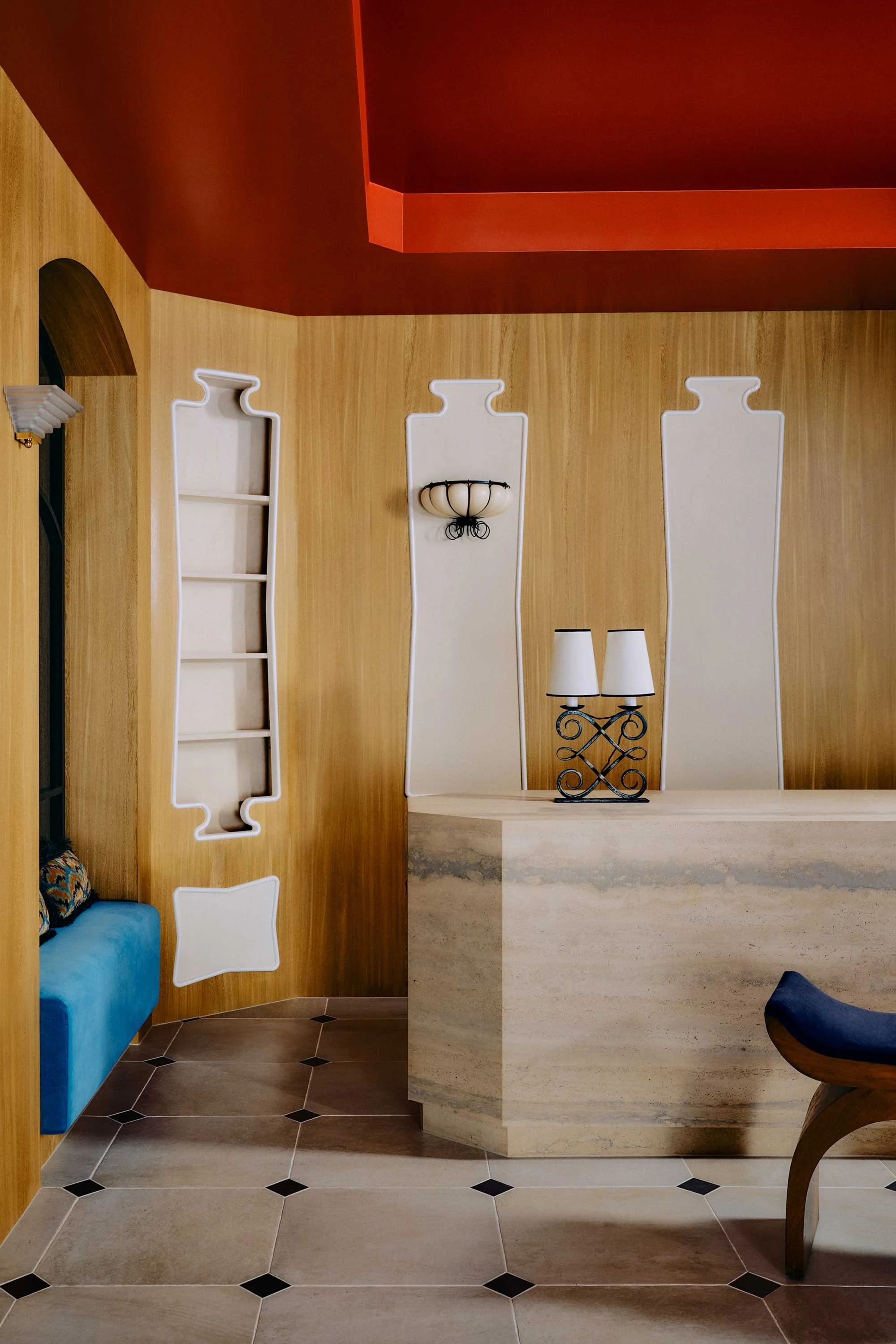
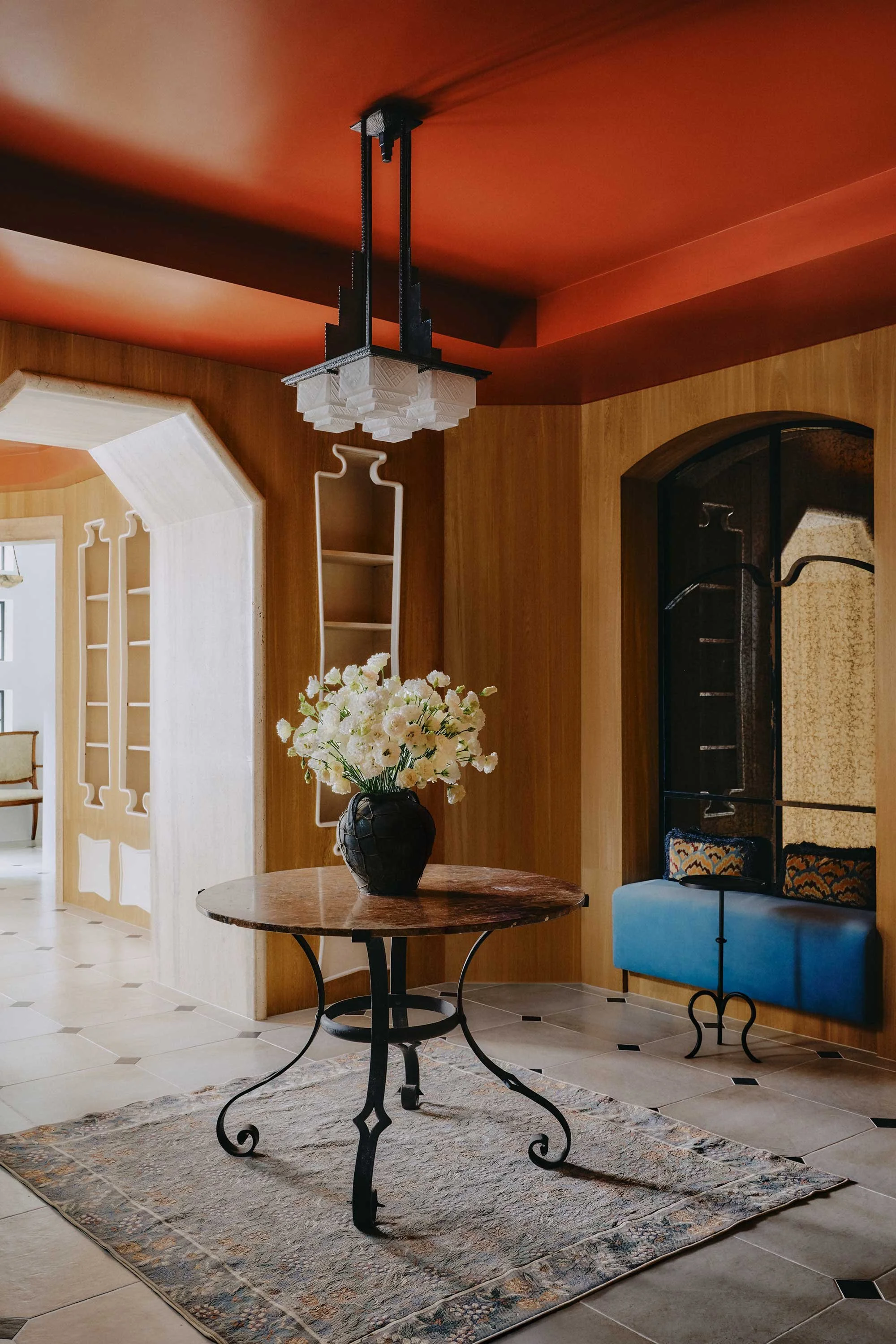
Custom mouldings designed specifically for Bemo Salon introduce a distinctive motif throughout the interior. Hand-drawn by Ecru Studio, these lines combine references to Eastern garden landscapes with the subtle curves of the human body. Chen describes the form as intentionally ambiguous, carrying an elegance that echoes the brand’s character. In several places, the mouldings are carved into display niches, presenting coffee beans almost like precious objects.
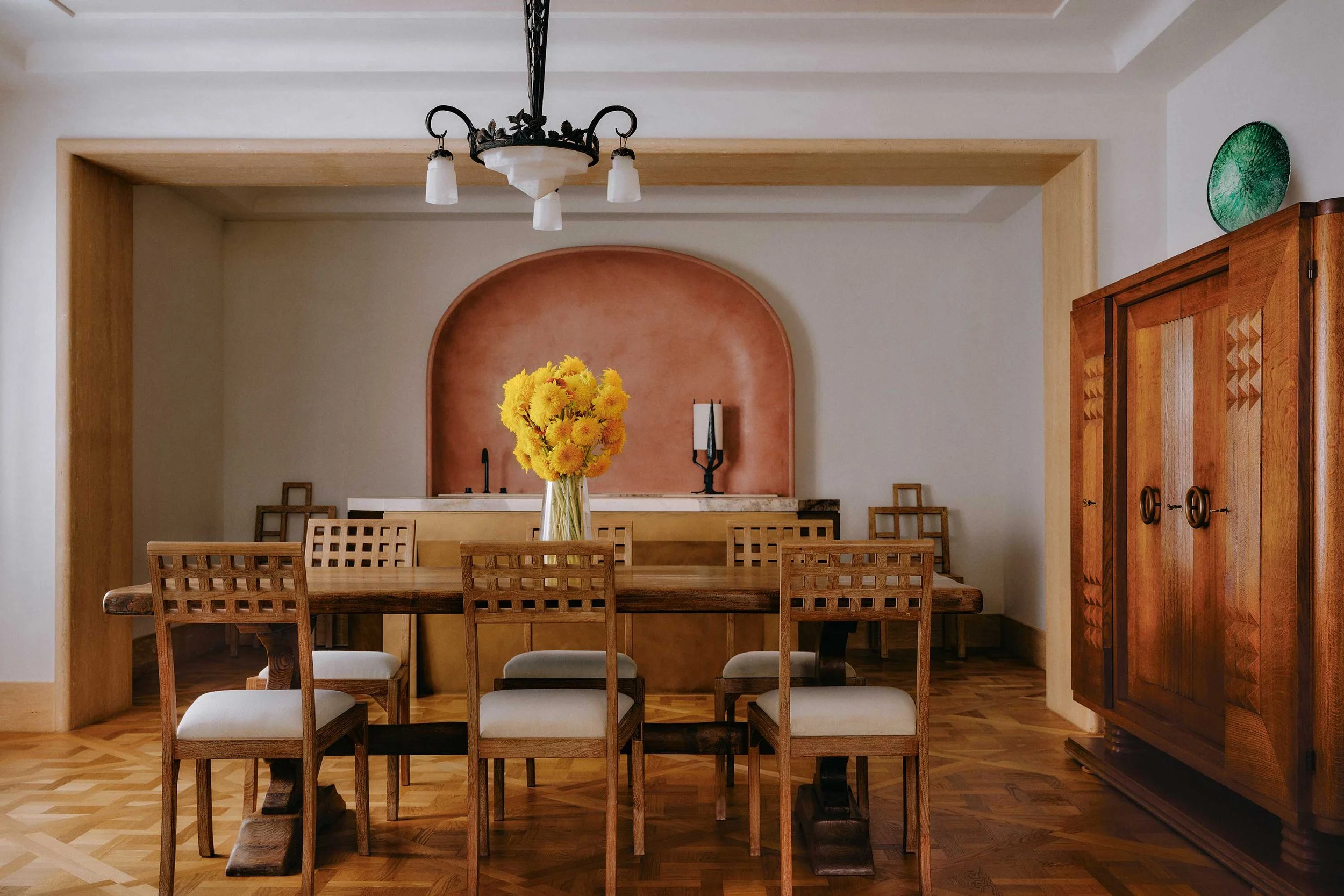
Ascending to the upper level, the atmosphere shifts. The space functions as a private salon organised into three areas: a coffee bar and service kitchen, a communal table and a lounge by the windows. Behind the bar, a shield-like backdrop finished in Marmorino plaster creates a subtle stage for baristas and pastry chefs. Here the flooring changes to Versailles parquet, reinforcing the salon-like character. A previously enclosed balcony has also been reopened, allowing natural light to enter and offering views of the surrounding streets.
Standing beside a granary once built for storage, Bemo Salon introduces another form of preservation — one concerned with flavours, conversations and the rituals that hold them together. The pebbledash walls, the reopened balcony, the salon space: each holds something the city might otherwise let pass.
Text by Michelle Kuo
Images courtesy of Bemo Salon and Ecru Studio