How Ekar Architects Turned a Flooded Mining Pit Into Phuket’s Most Unusual Restaurant
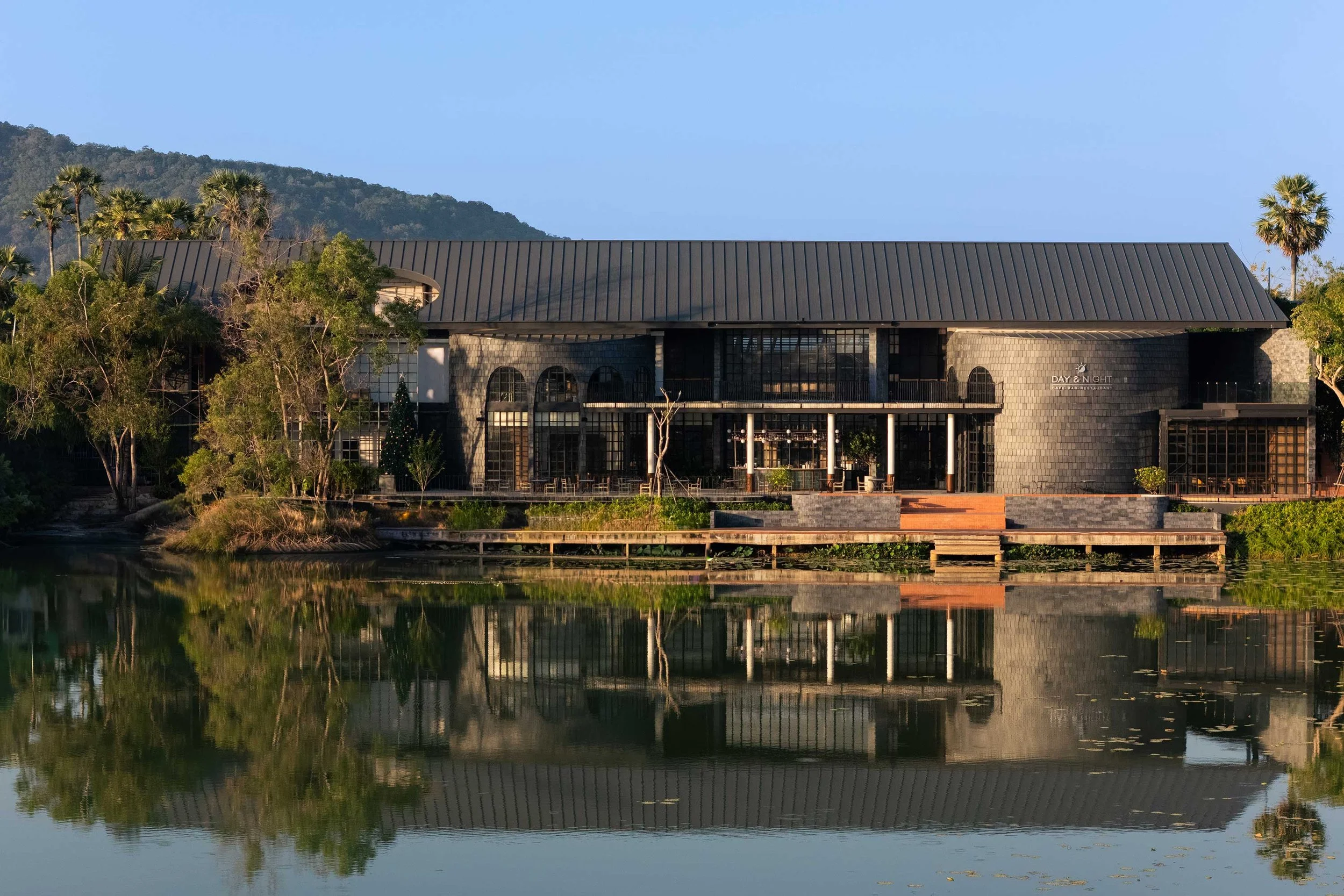
Bangkok studio Ekar Architects has completed Day & Night, a 1,200-square-metre restaurant on a former tin mining lake in Phuket, organising cafe, dining and bar around a descent into the pit on the water
The lake that Day & Night sits beside is not really a lake. It’s a flooded pit, one of countless excavations left from when tin mining drove Phuket’s economy through the 19th and early 20th centuries. Most visitors never learn this. Condominiums and hotels now market the water as scenery, ranked alongside sea and mountain views. Bangkok studio Ekar Architects set out to correct the record.
‘Eighty years ago, Phuket wasn’t a tourist city,’ says director Ekaphap Duangkaew. ‘It was a place where people came to dig mines, and the economy came from the mines. I wanted to make people realise what the root of this city was, before it became a travel destination for the world.’
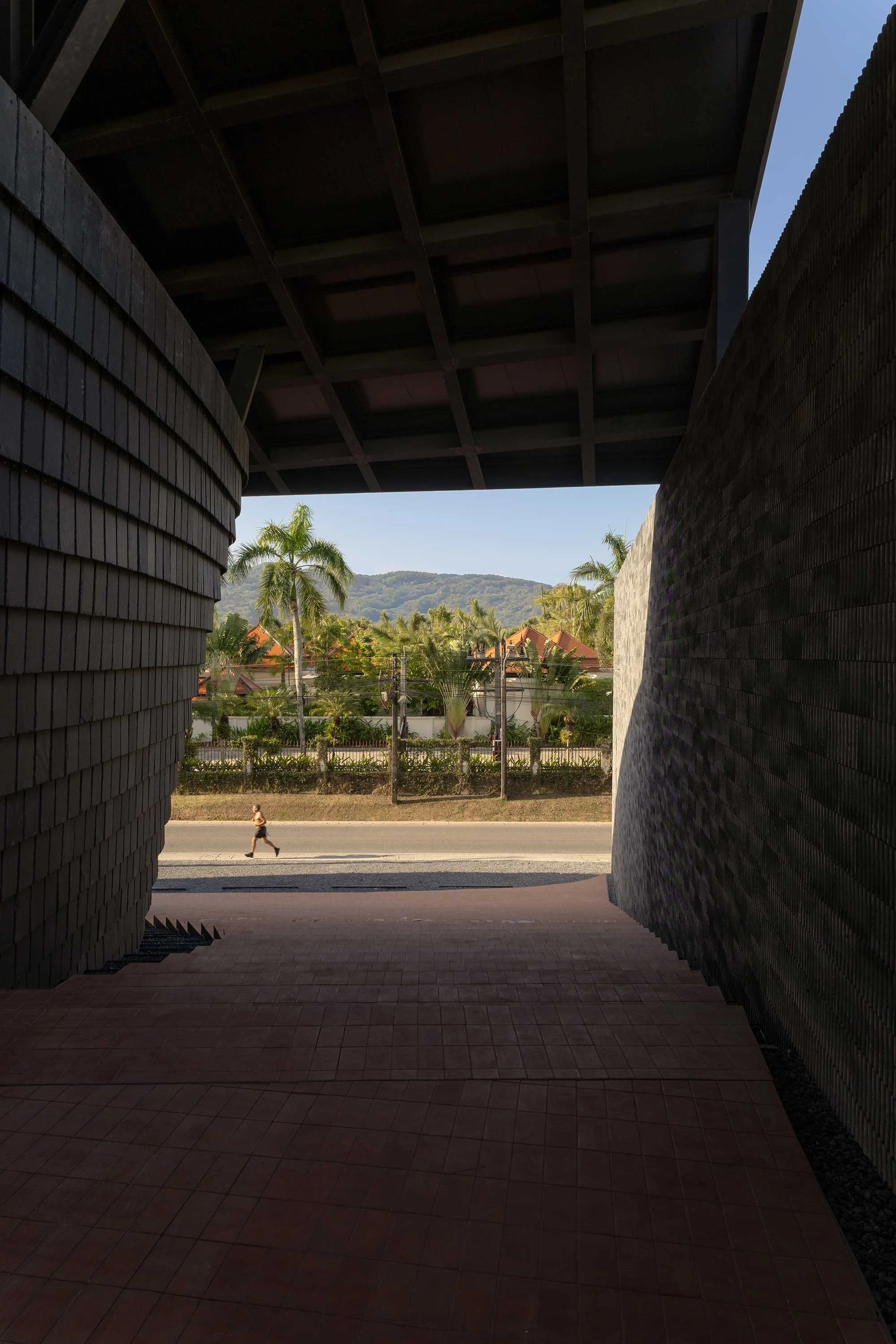
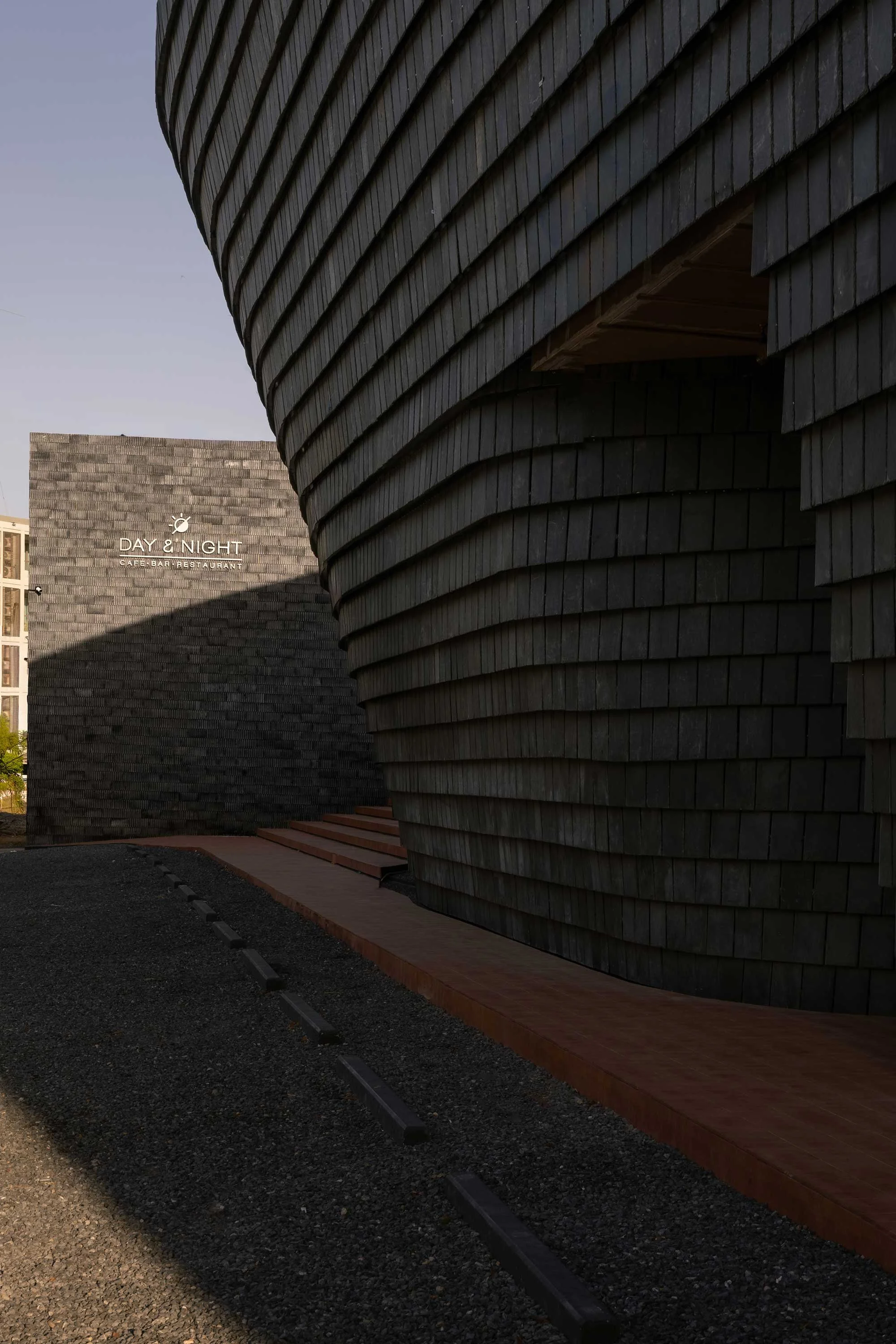
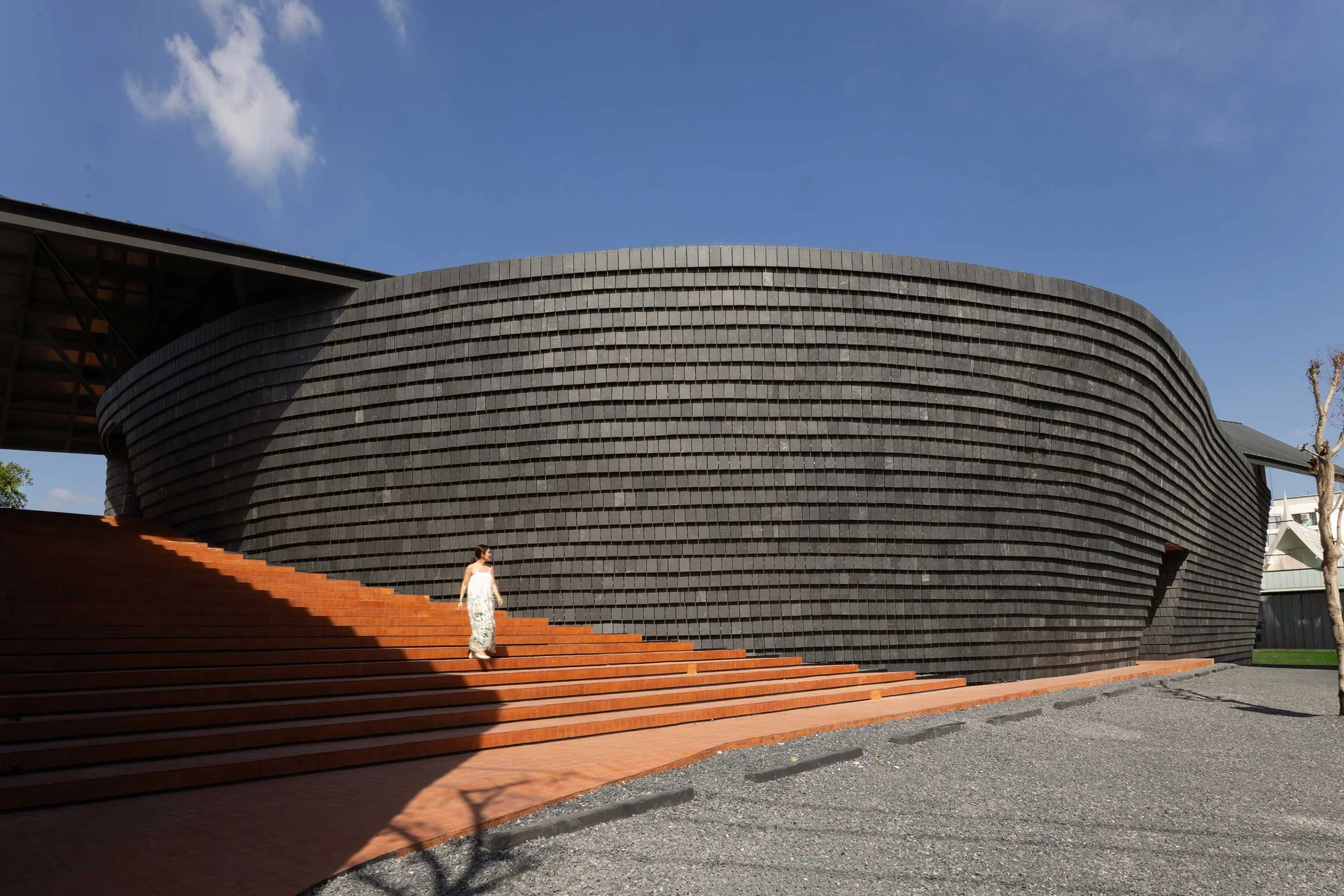
That question shaped the 1,200-square-metre complex, which holds a cafe, restaurant, bakery, bar and speakeasy for a client expanding from a first venue in town. Rather than open the building to the water, Duangkaew blocks the easy view. A narrow staircase, walls of black slate rising on either side, draws guests upward before the lake is revealed. ‘The feeling of walking up this staircase is like walking up a rock mountain,’ he says. ‘In Phuket, if you ride a bike, the city makes you go up and down. I started from this staircase.’
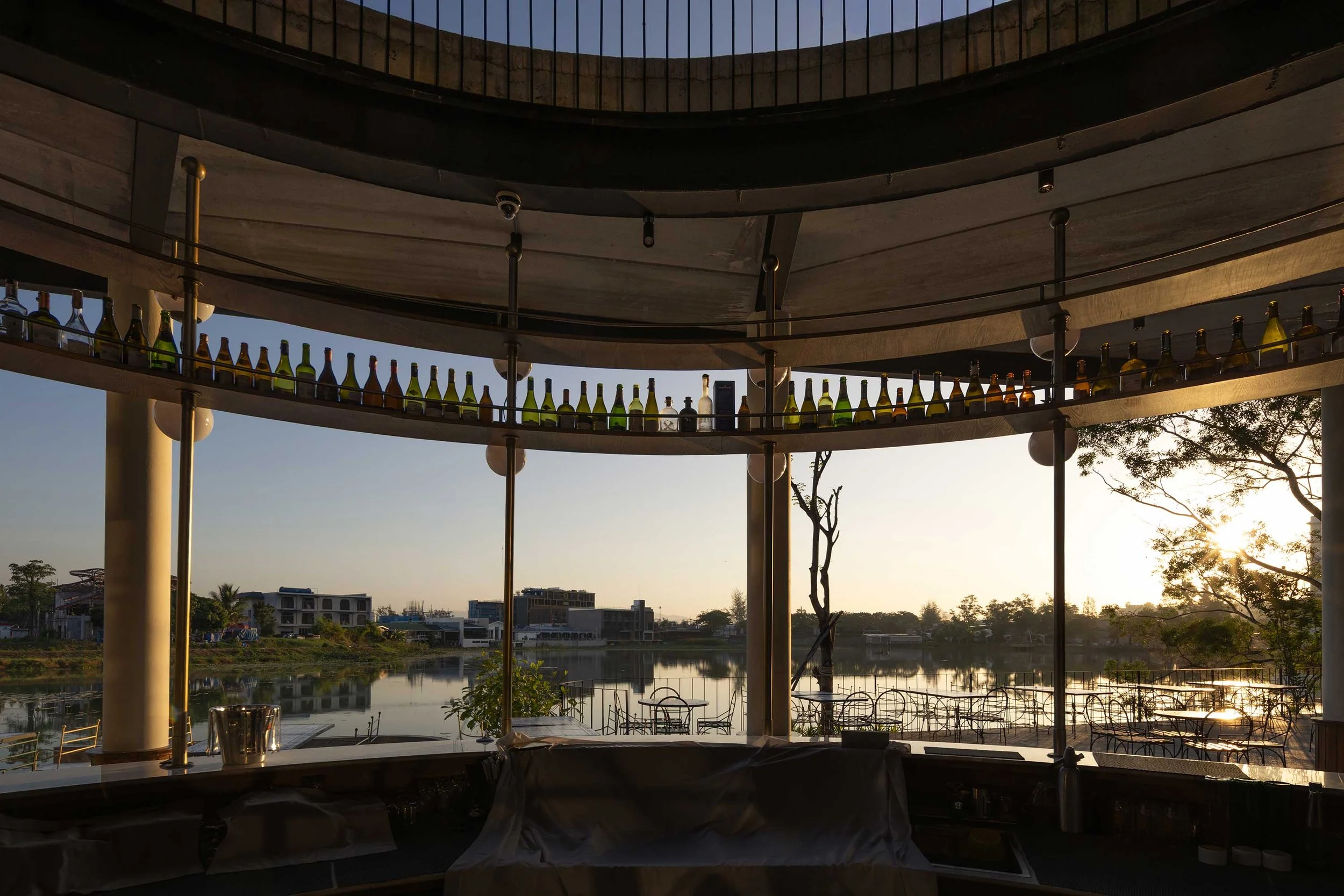
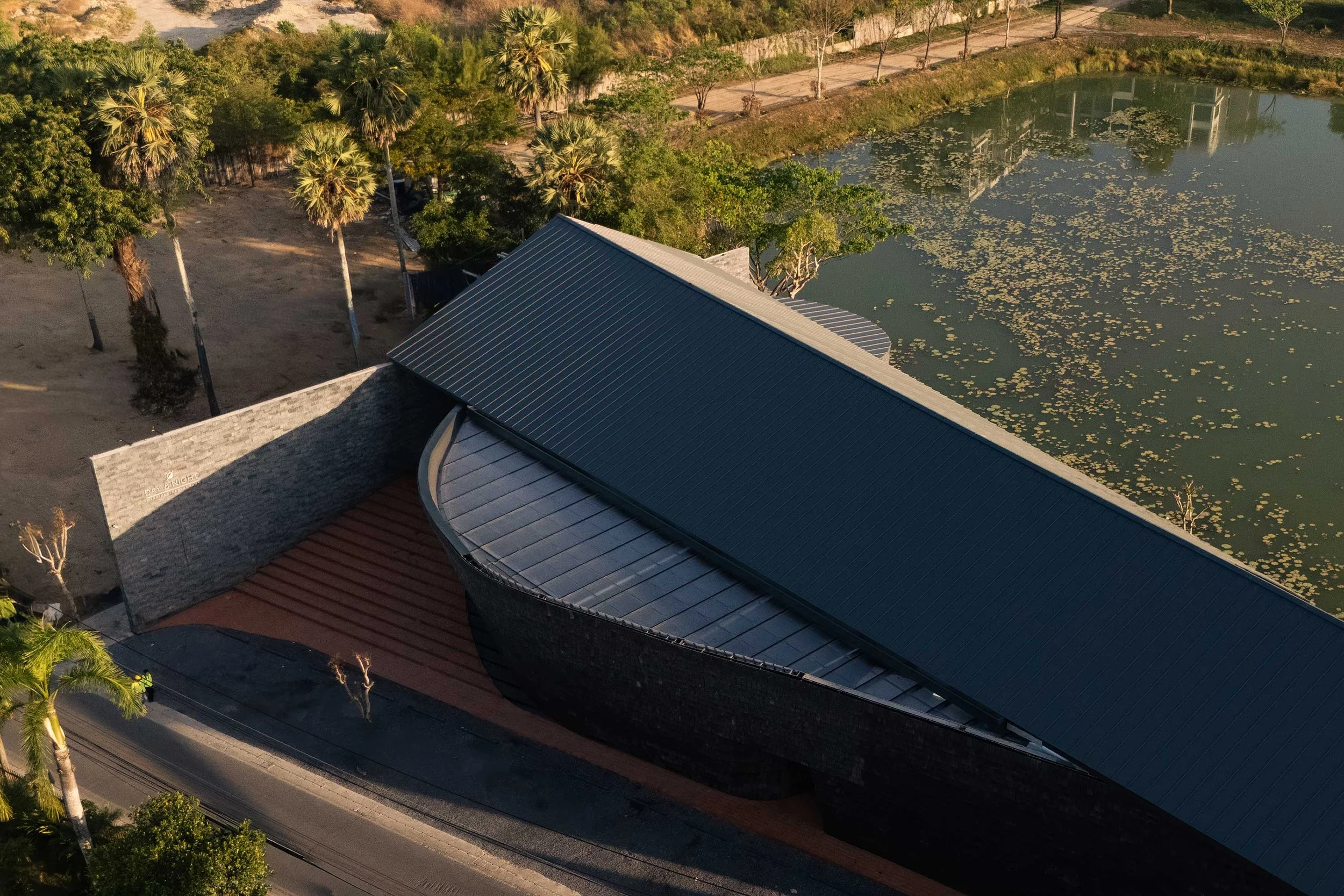
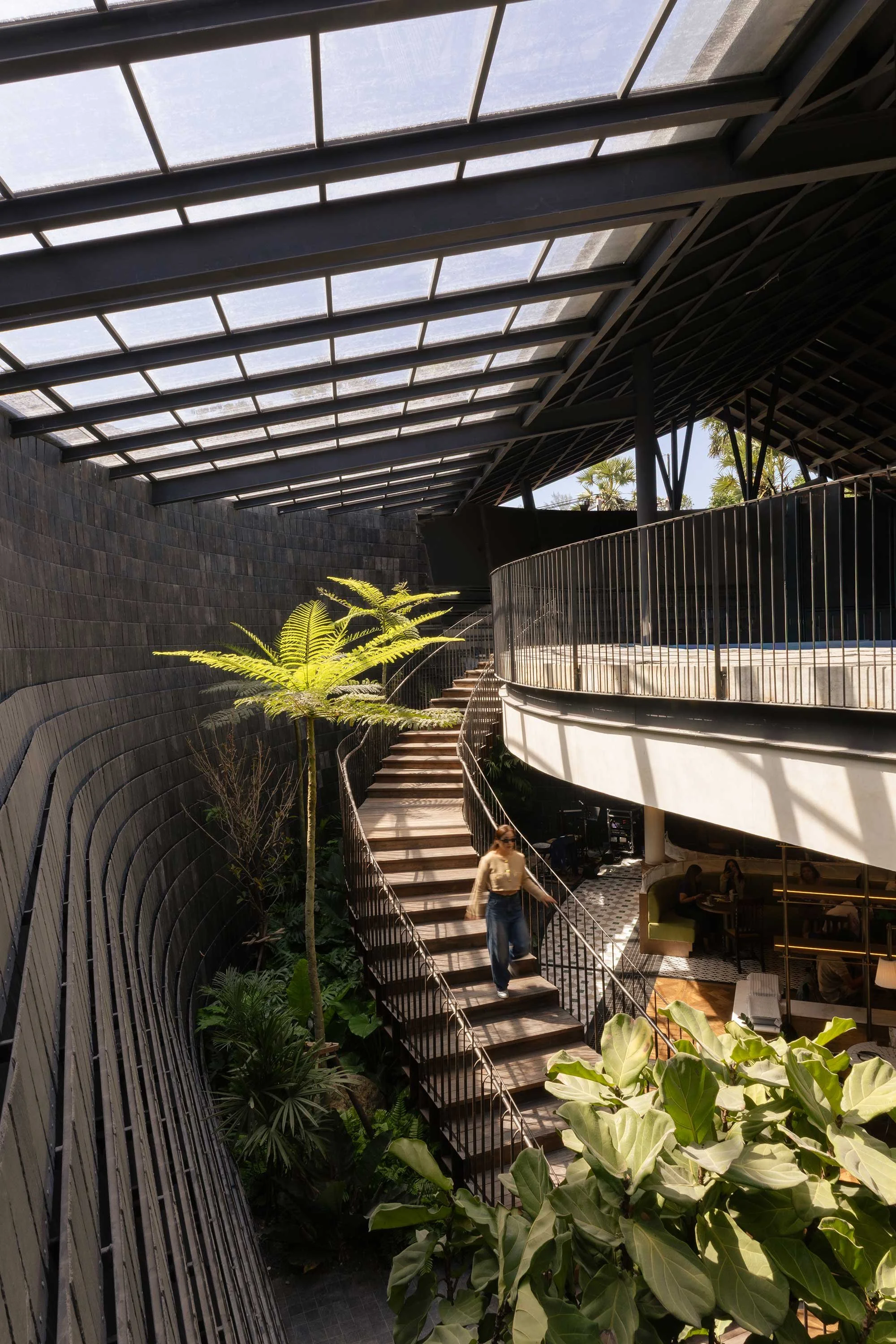
From the top, circulation turns and descends again, the interior darkening as it drops, so that arriving at the lower level feels like entering the pit itself. Curved reinforced concrete walls, layered like contour lines, carry a 58-metre gable roof. Where the curves meet the straight roofline, daylight falls through, filtering into the lowest spaces.
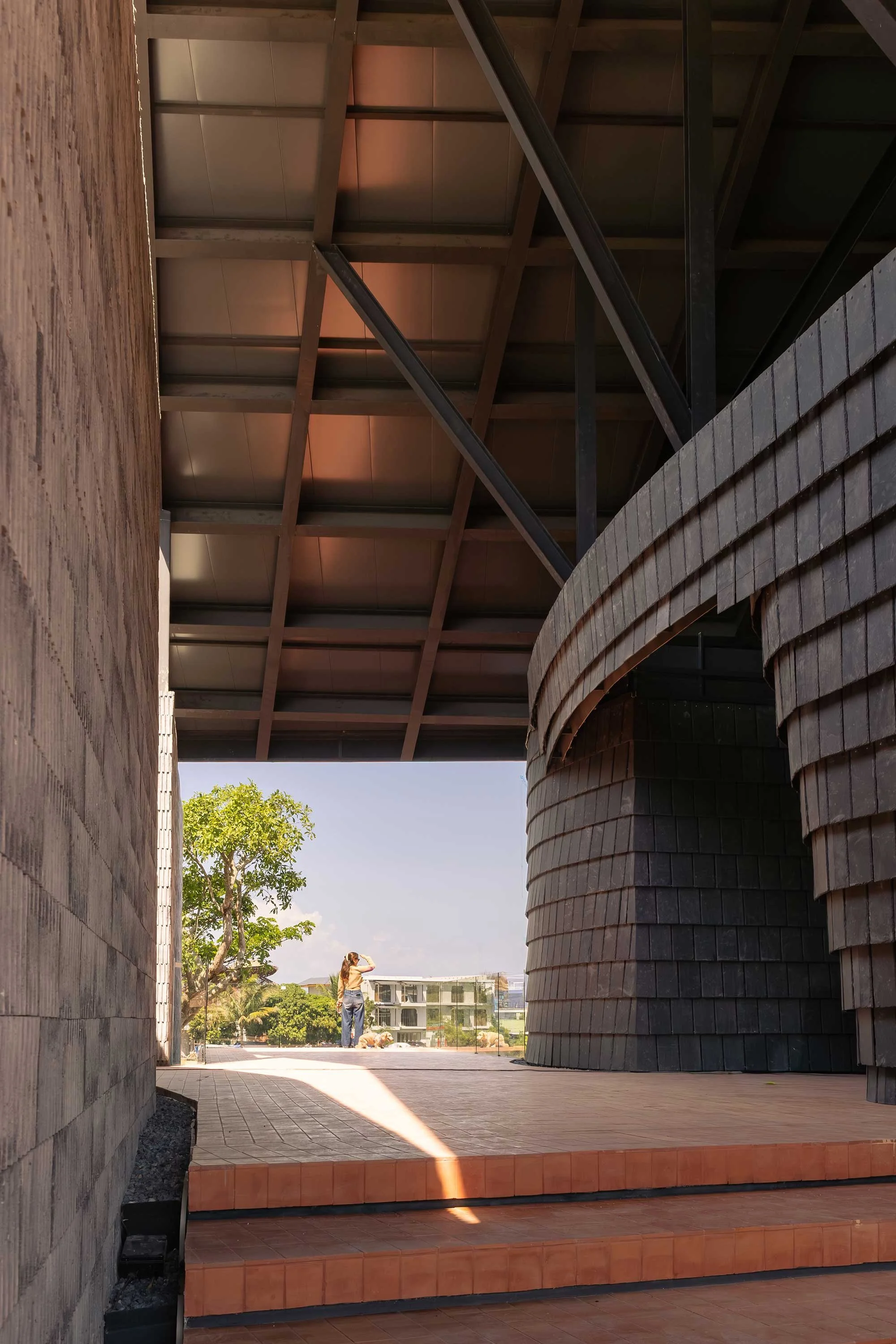
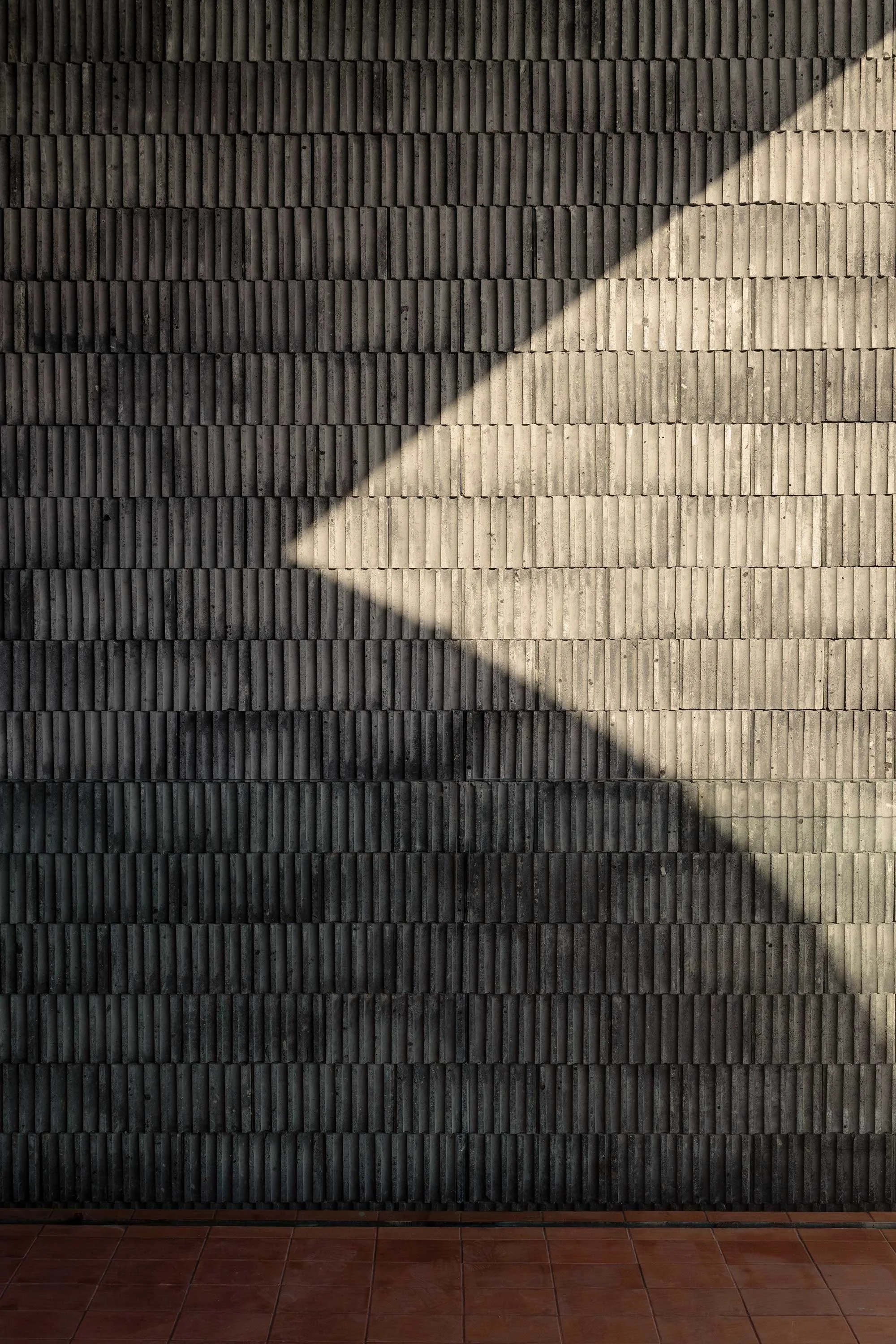
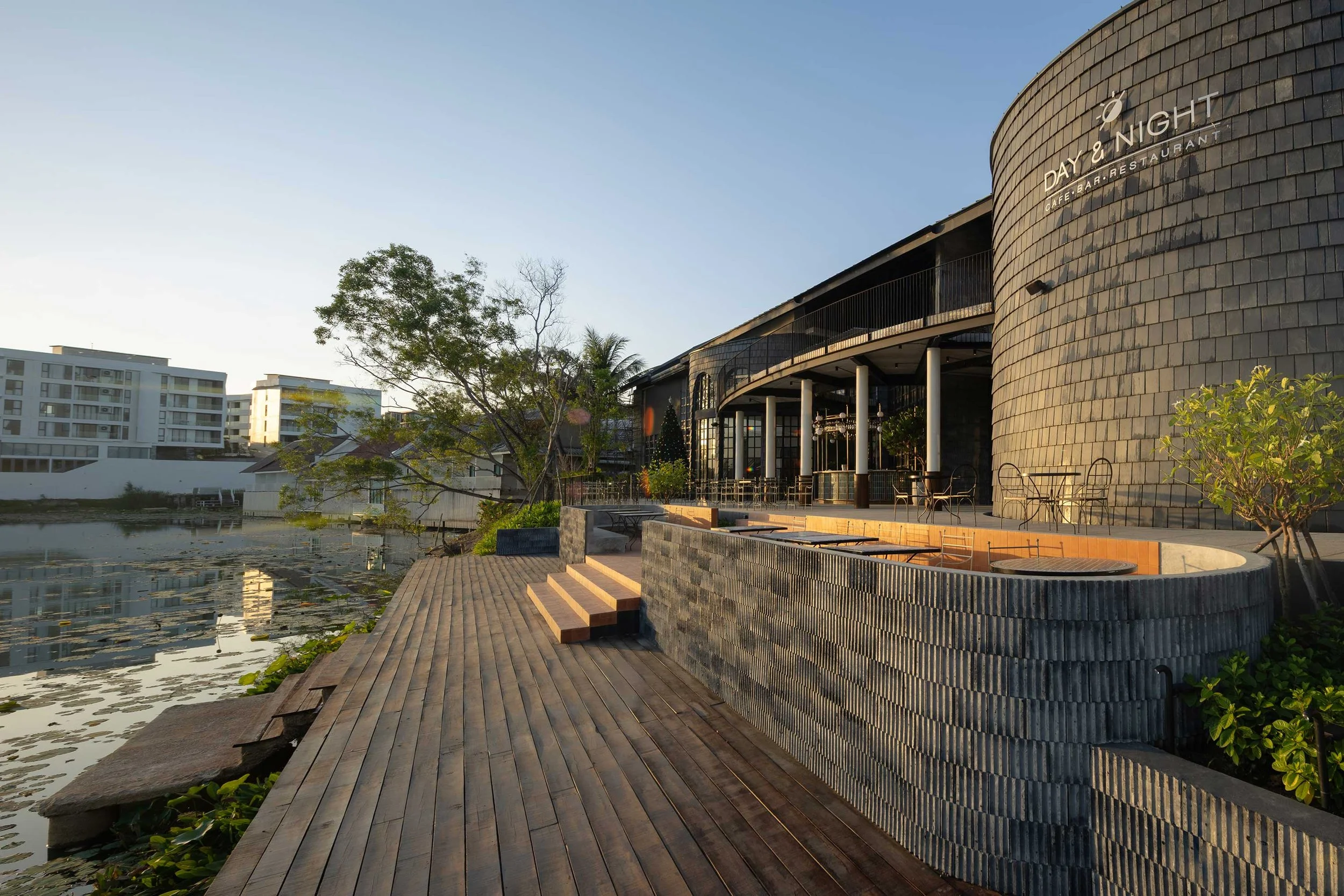
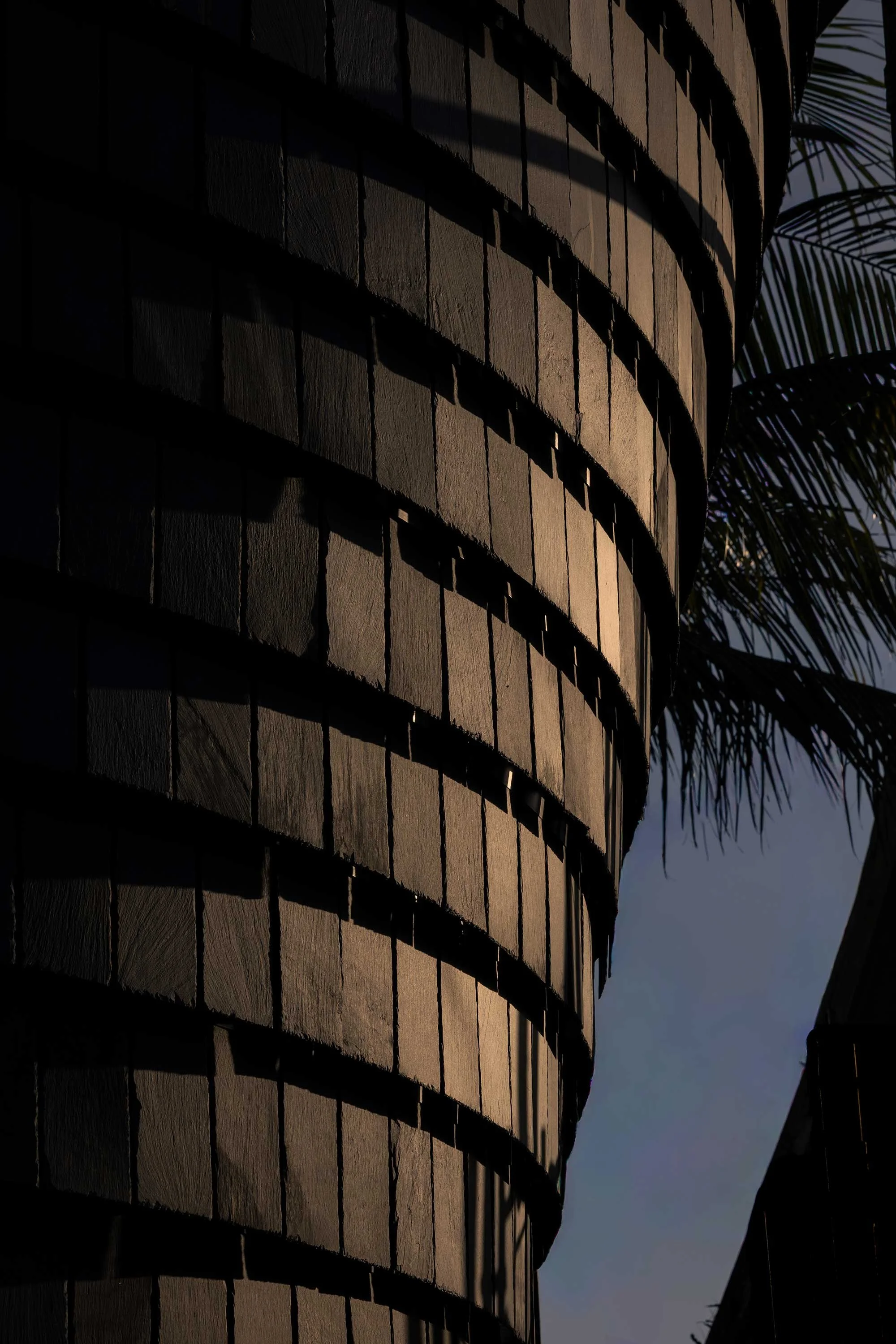
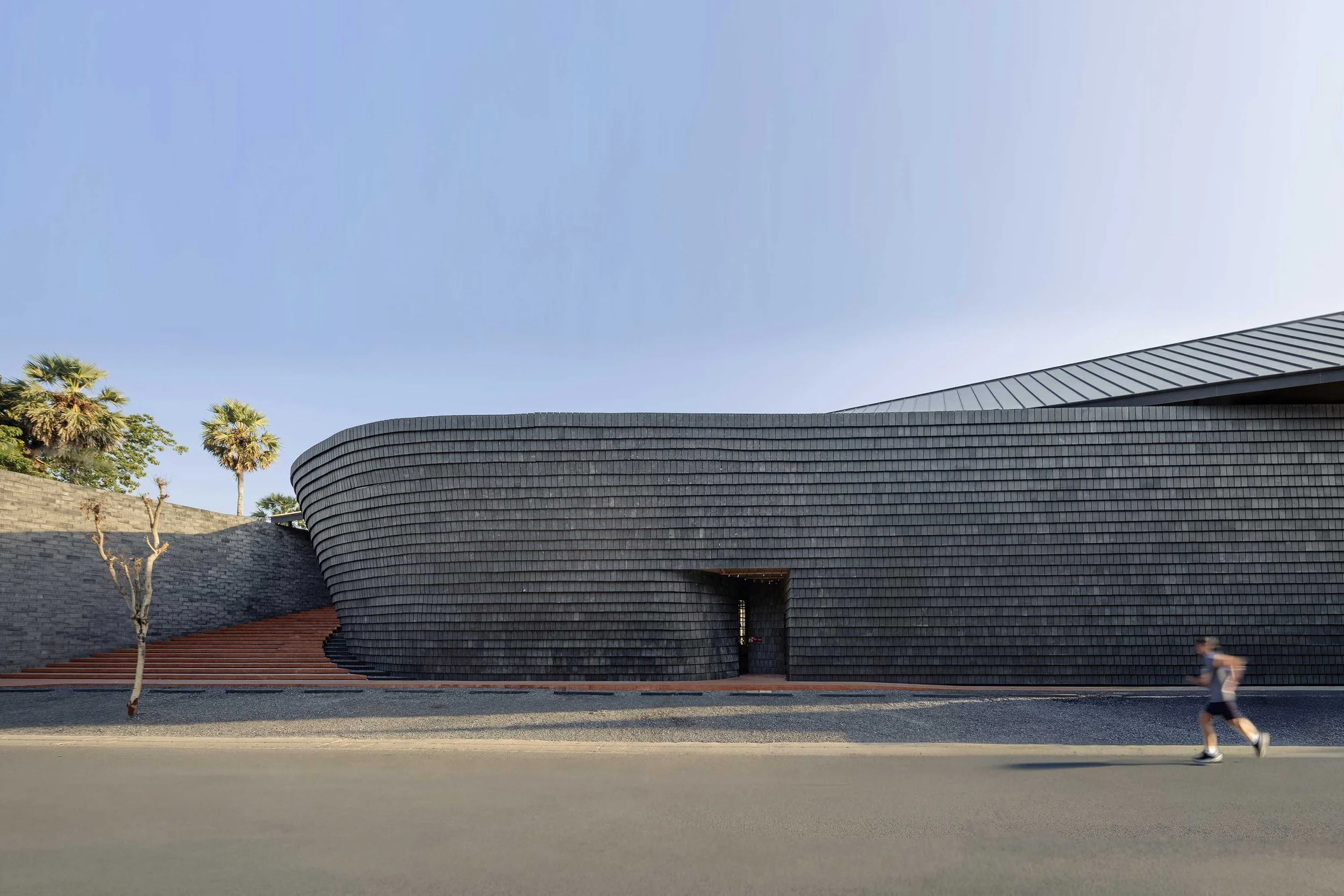
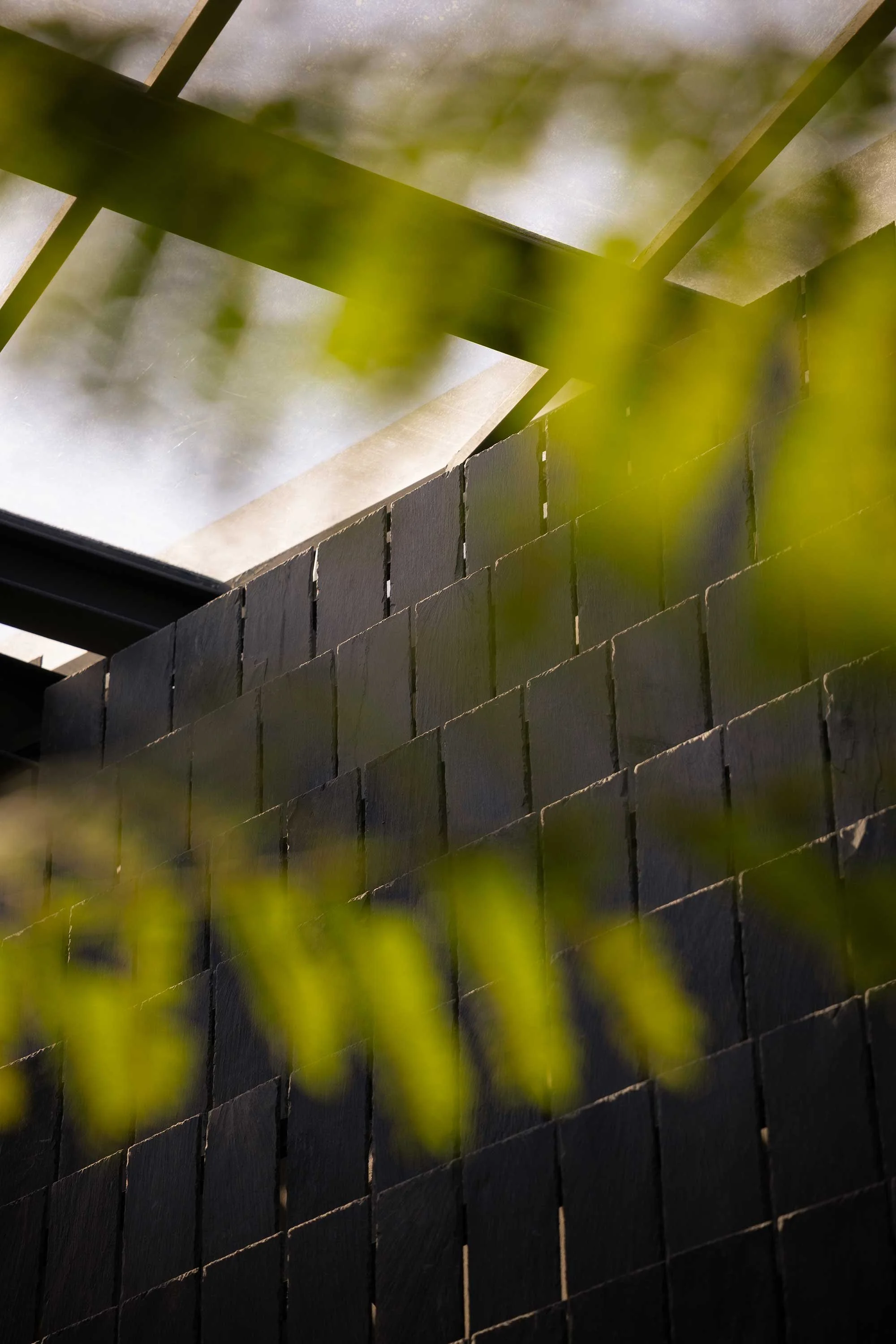
The stone facade reads as a single mass from a distance. Up close it dissolves: thin panels of locally collected slate, hung at varied angles. ‘If you see our architecture from far, you think it’s a giant stone,’ Duangkaew says. ‘But it’s very light, very thin, floating from different angles. I don’t want to copy the form of a mine. I want people to understand the system of breaking something into small parts.’
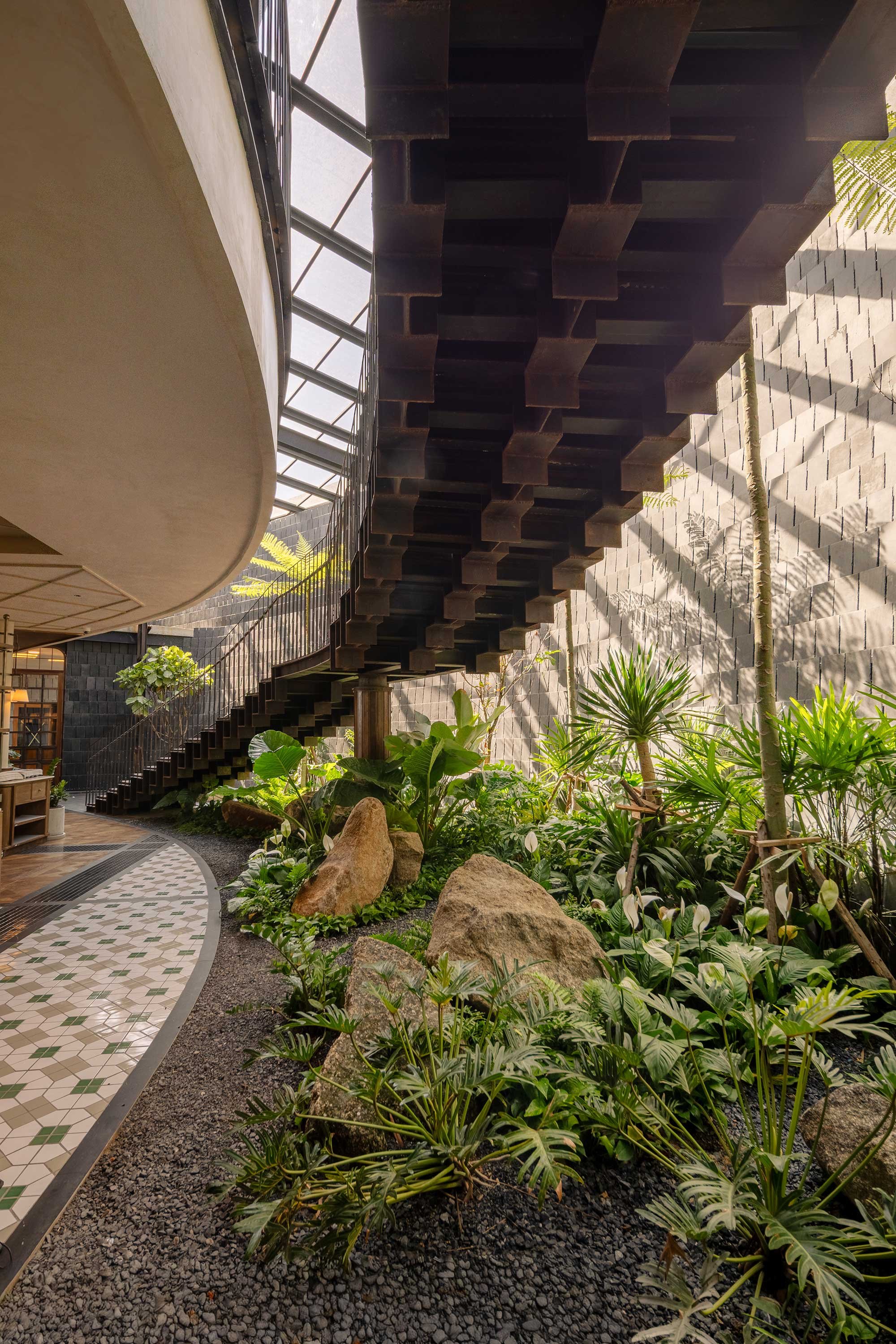
Material logic was as much about the island as the idea. Stone and timber are difficult and costly to ship by boat, with long lead times and rental fees on the construction barge, so Ekar sourced what it could nearby — slate from around Phuket and Surat Thani, timber from the owner’s family warehouse in southern Thailand. The same instinct to break heavy things into small ones produced the building’s most unusual detail: a 12-metre staircase beam, which would conventionally demand a single massive I-beam, split into 20-centimetre sections and flipped at alternating angles. ‘When you see it at the end, you don’t see a beam at all,’ he says. ‘You see thin steel, flipped in many angles, become one staircase.’
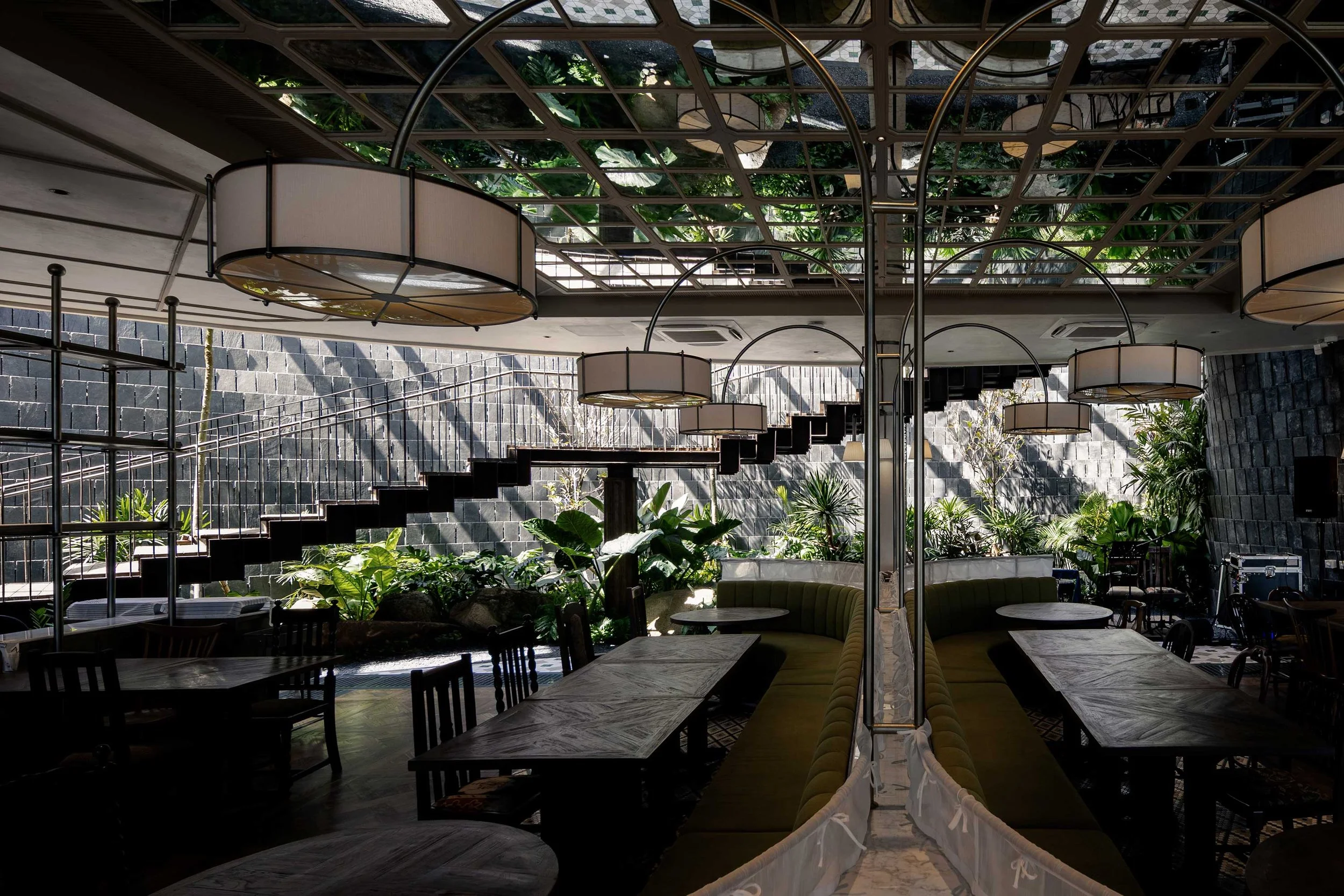
Open to the water on its lakeside edge, sheltered against the monsoon by deep overhangs, the building lets guests choose their weather — and, without saying so, choose between day and night. The roof, seen from the lake, is a half-circle. The restaurant’s logo is a sun and a moon.
Text by Katherine Ring
Images by Suwat Praikanarat