Tune Out the City at Adelaide’s New 1970s-Inspired Vinyl Listening Bar
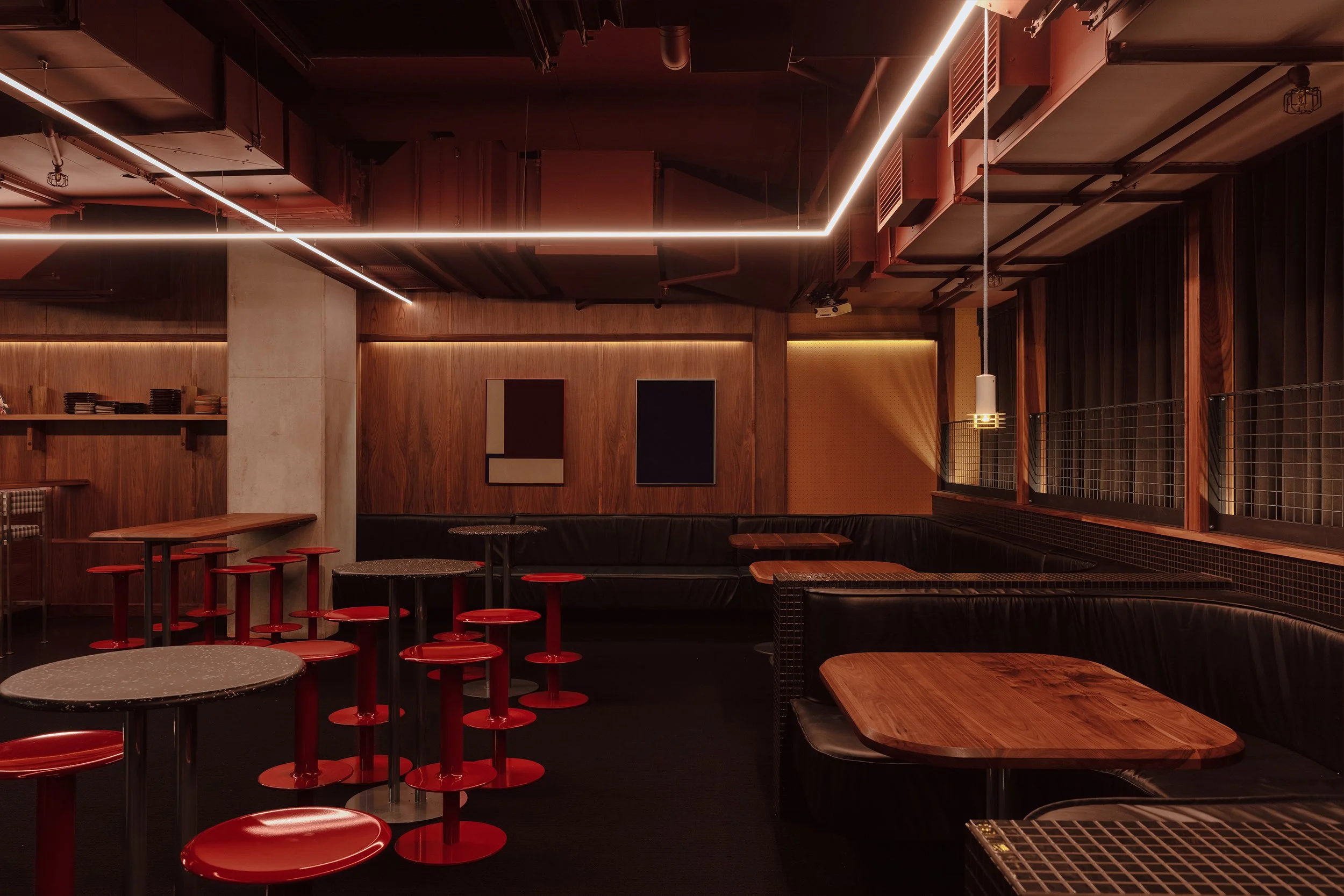
Step inside Honeydripper, a dual-level vinyl listening lounge in Adelaide. Designed by Claire Markwick-Smith, this 1970s Laurel Canyon-inspired space champions sustainable craft and flawless acoustics for an immersive, nostalgic retreat
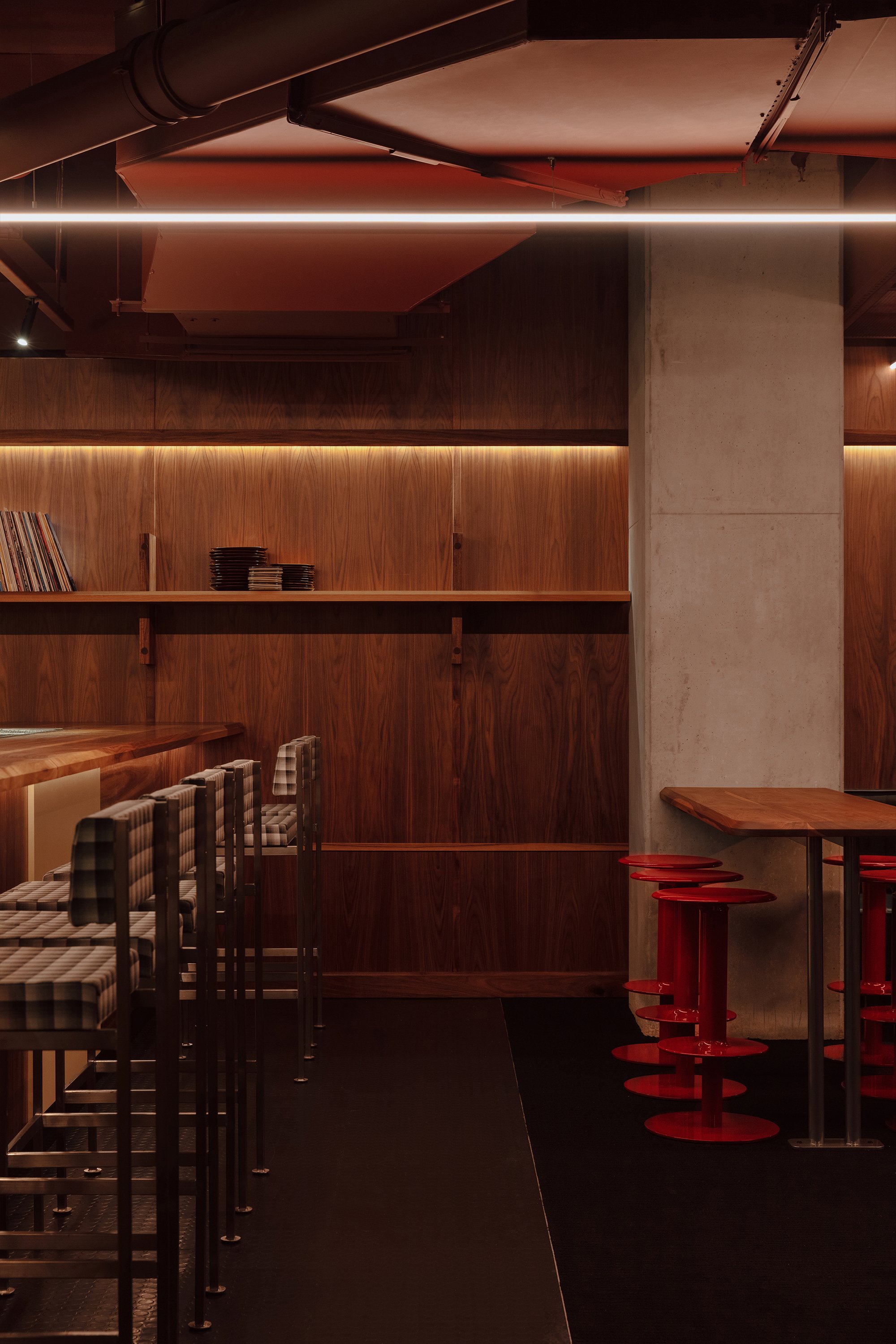
A deliberate shift in place from the building within which it sits, Honeydripper is low-lit, tactile and quietly immersive. The dual-level vinyl listening lounge by Claire Markwick-Smith resists the urgency of the city beyond its encasing doors, instead inviting patrons to settle in, listen and tune out. Shaped ultimately by atmosphere — one where sound, memory and material work together — the interior evokes a distinctly nostalgic and familiar feel.
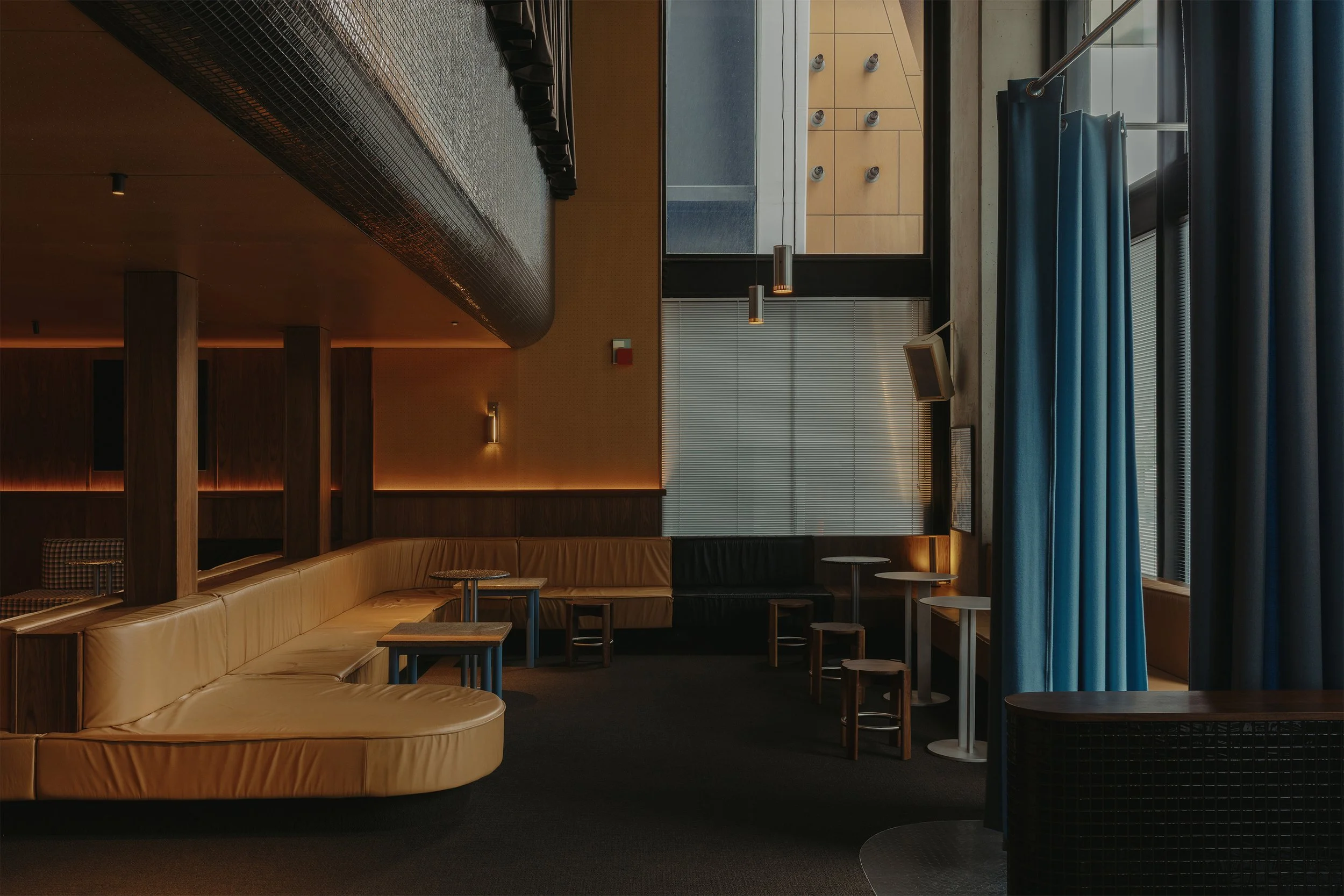
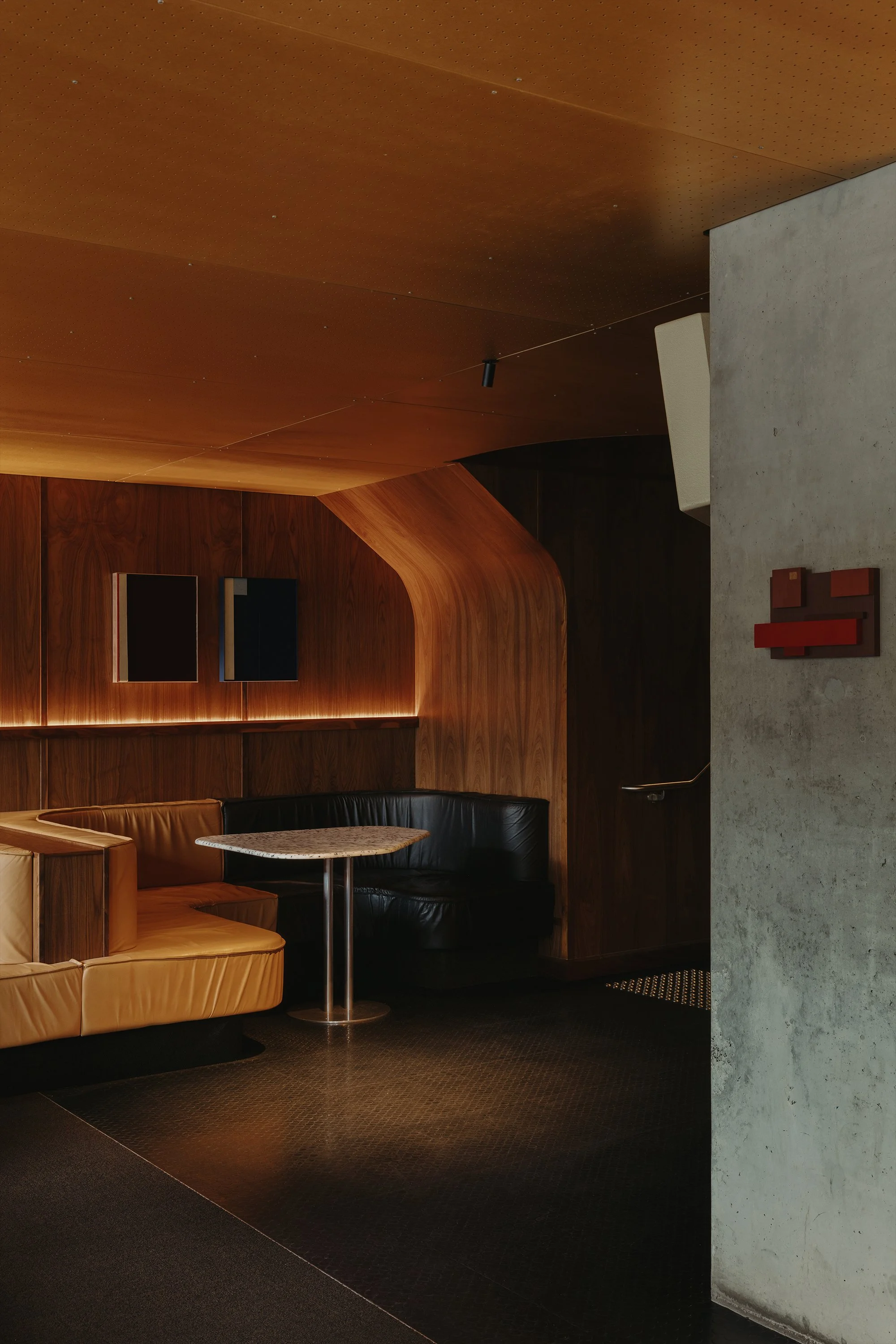
Located within central Adelaide, at the base of a newly opened hotel, the listening bar is spread generously across two levels and was conceived as a nostalgic immersion into 1970s lounging culture. Honeydripper draws from a time when music was shared, not streamed, and the soft crackle of vinyl filled a room. ‘The client brief was simply 1970s Laurel Canyon, walnut and leather,’ says Markwick-Smith, ‘with an interior that focused on brilliant acoustics.’
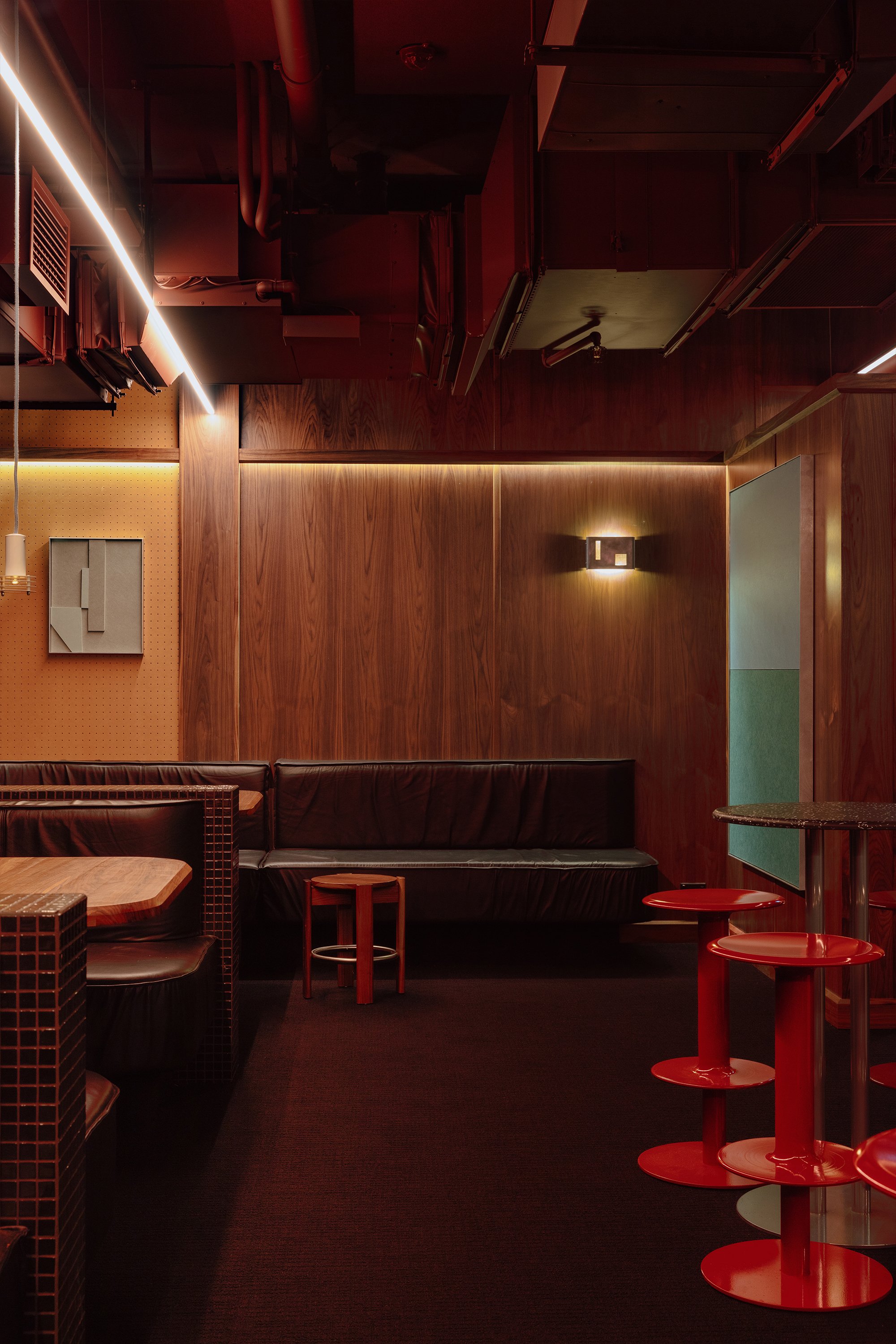
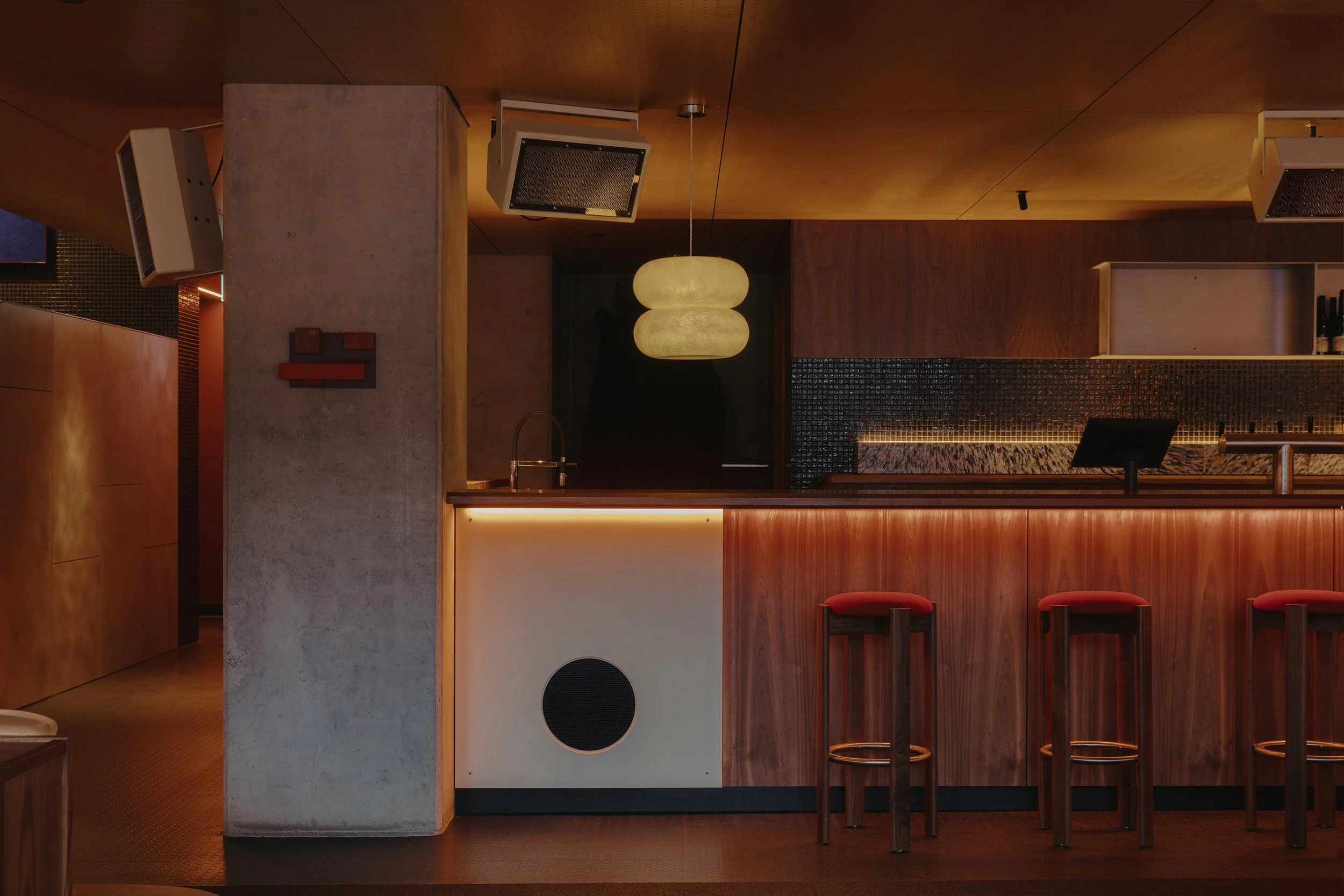
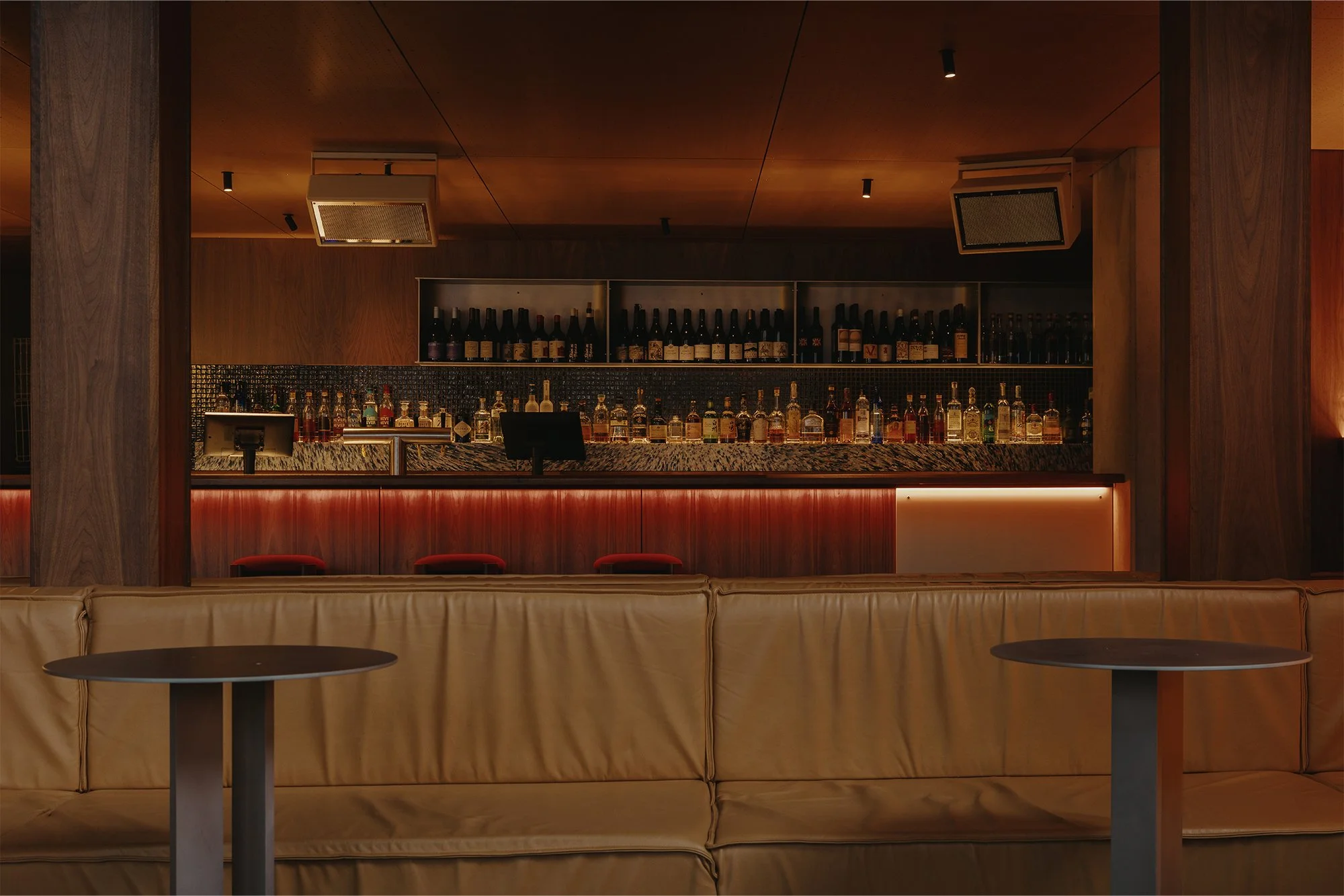
The site began as an empty shell of concrete and glazing, with a brief to ensure the space felt like it had always been there. ‘It was acoustically challenging,’ Markwick-Smith adds, ‘but a spatially generous base.’ In the double-height volume, a new mezzanine was introduced to create both separation and enhanced intimacy through scale. On the ground level below, a symmetrical, sprawling lounge anchors the entry sequence, encouraging lingering and shared listening. While the existing concrete columns inform the floor plan and help break up the overall space, the location of the bar and DJ booth also help to frame specific moments within the interior.
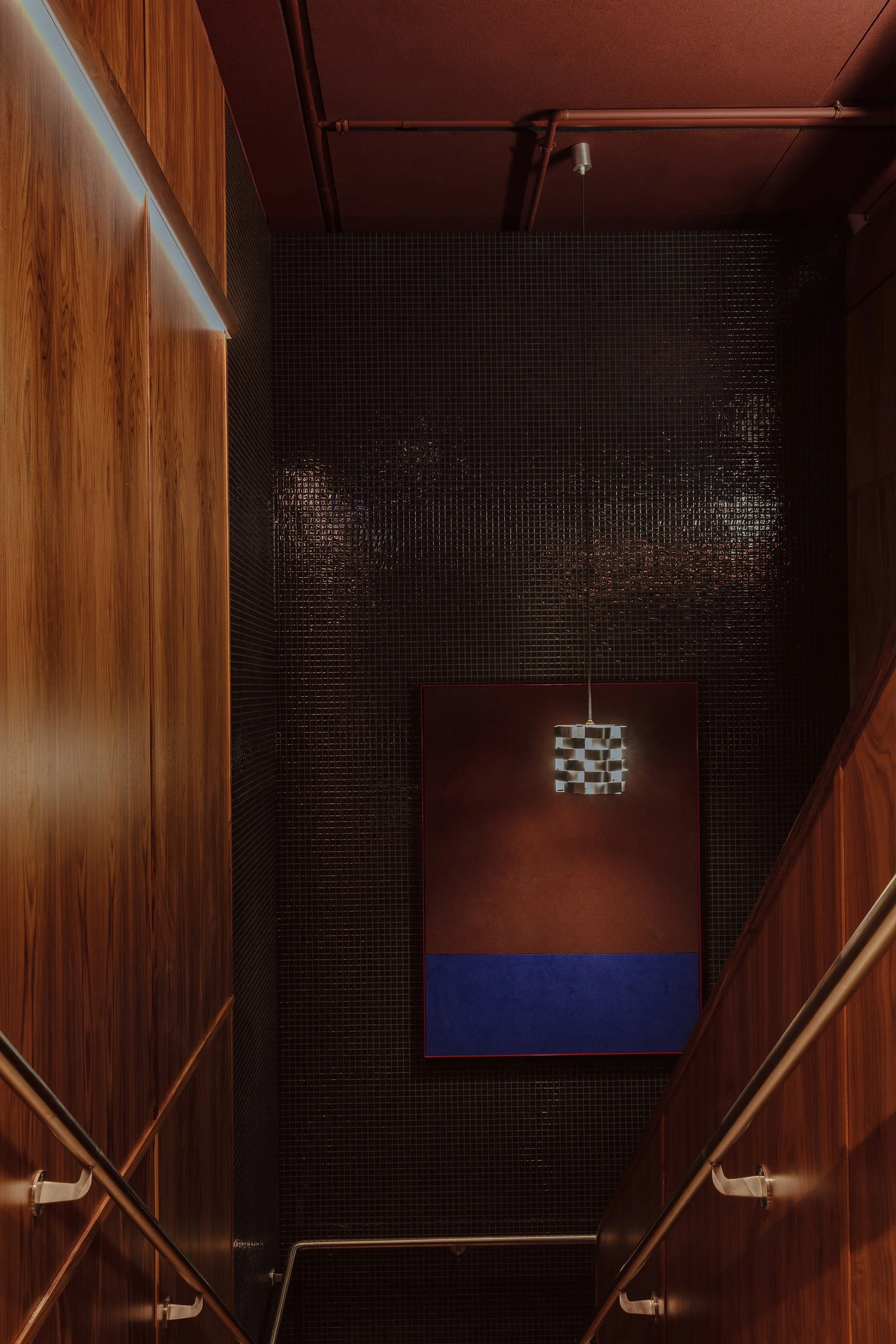
‘The custom furniture that wraps the space was designed to also encourage sharing in a spatial sense,’ Markwick-Smith says, ‘and then as you move upstairs, the atmosphere tightens into something more intimate and club-like.’
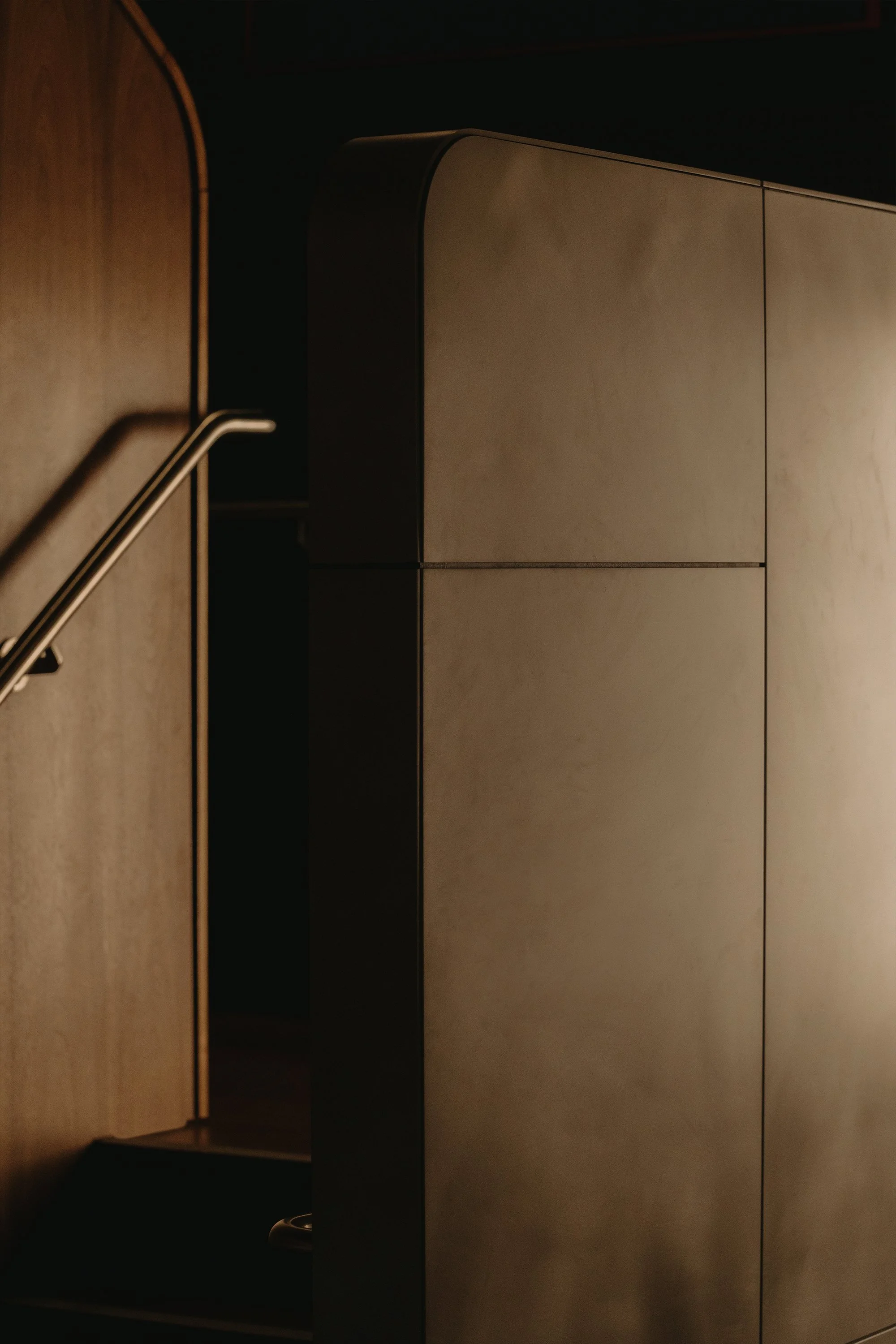
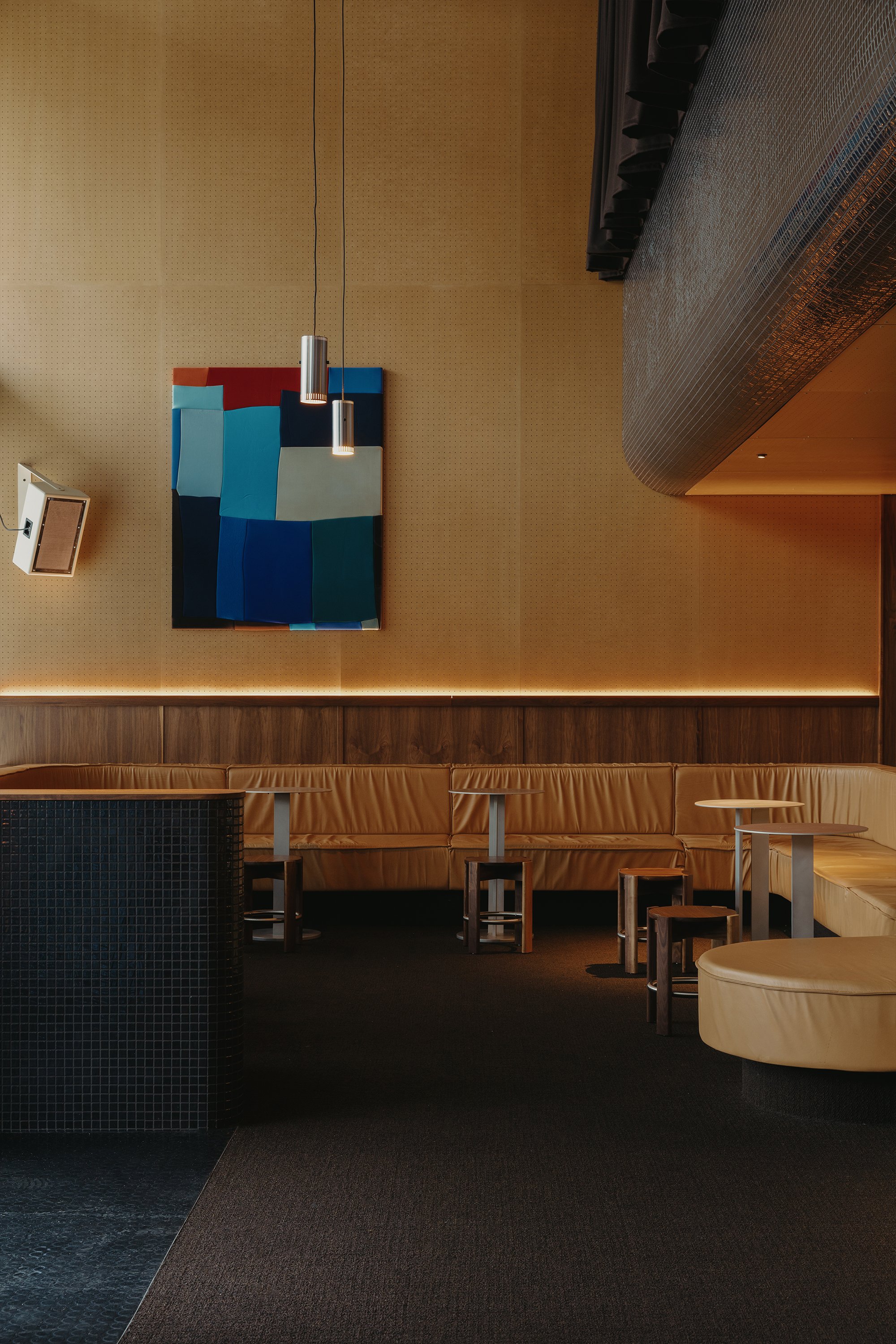
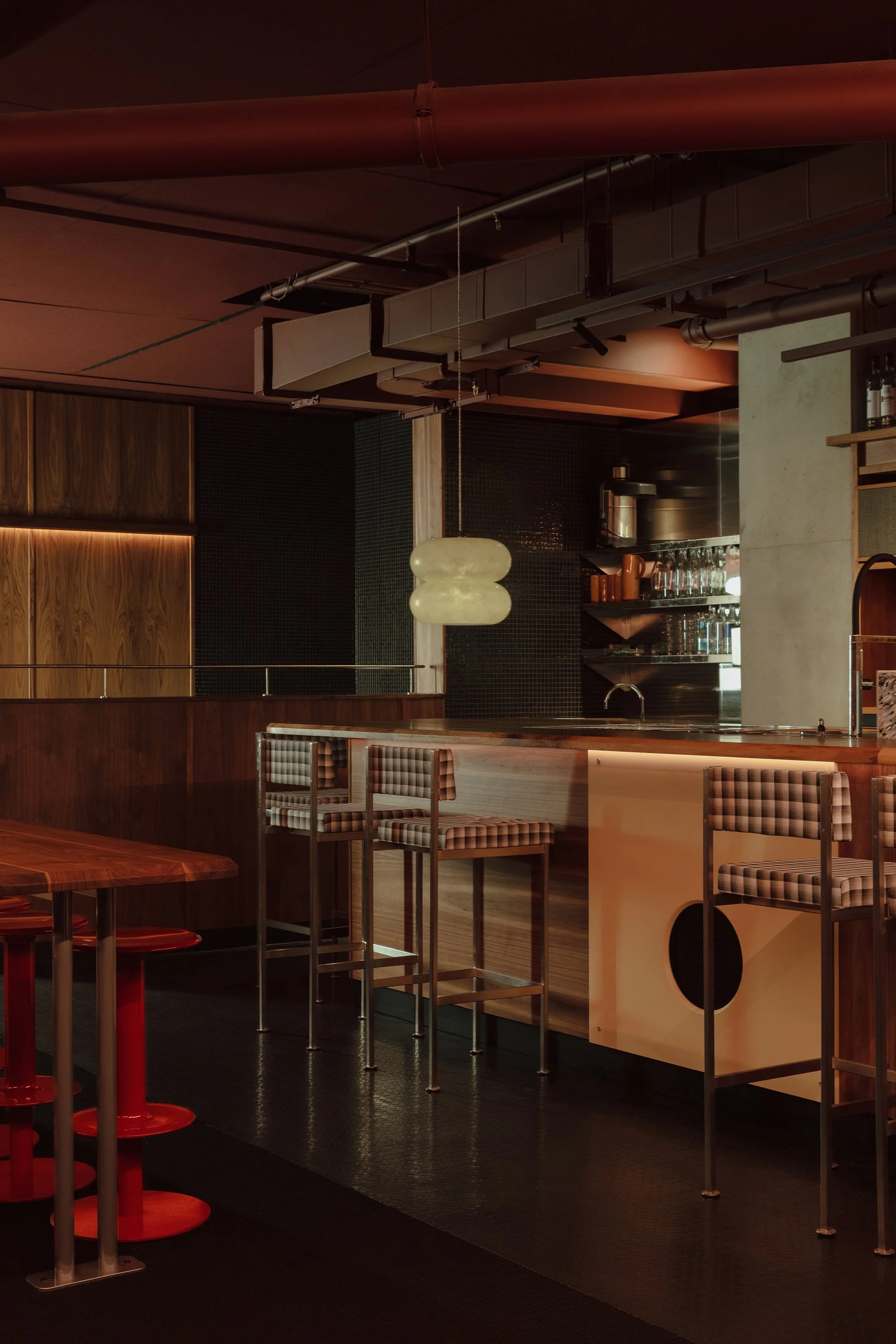
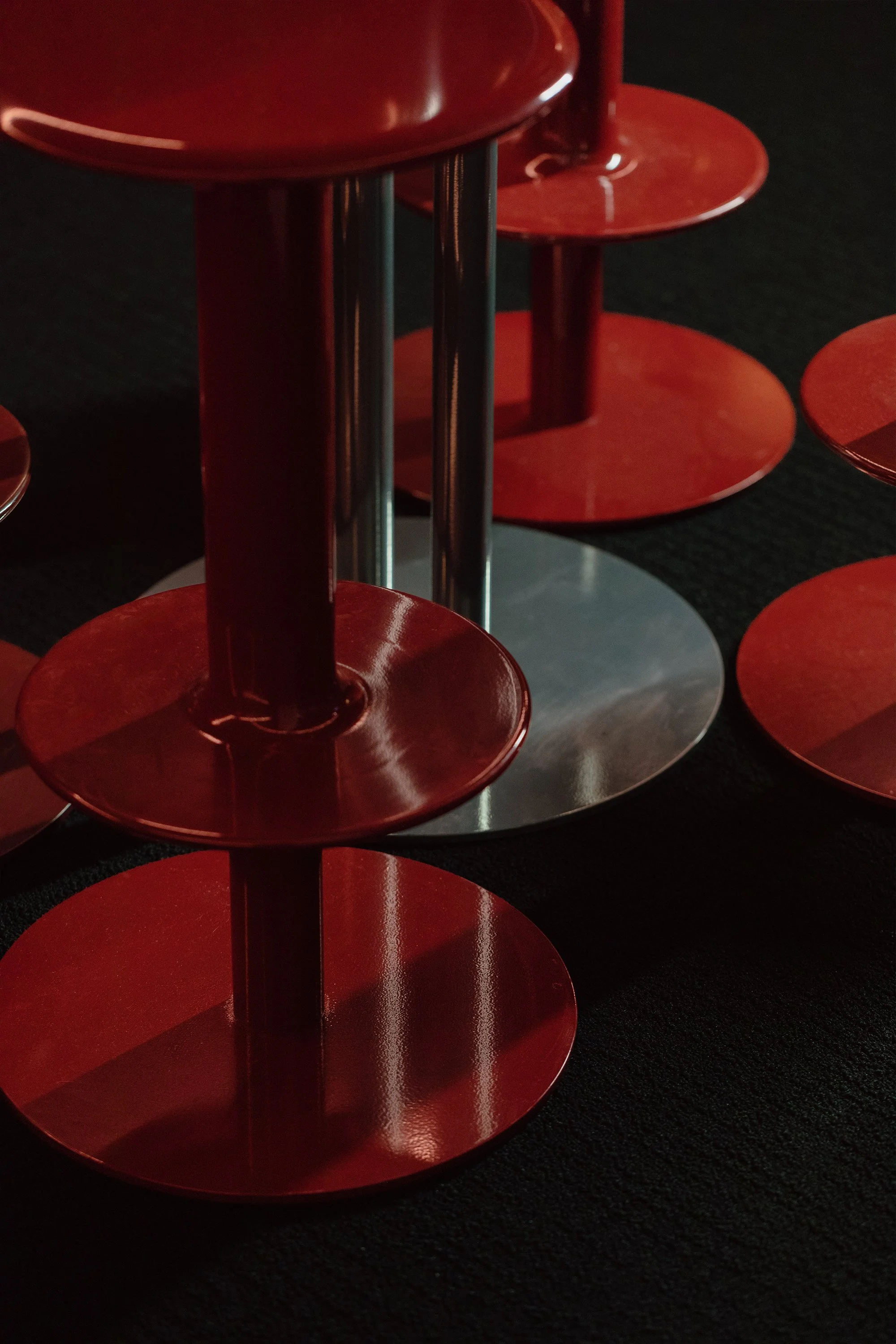
A theme of sustainability underpins the entire approach. Through both restraint and a desire to maximise the reuse of waste material, elements such as lighting fixtures were fabricated from scrap aluminium left over from custom tables. Together with other pieces that utilise recycled high-density polyethylene from Defy Design, vintage furniture is reused alongside locally made pieces, reducing the carbon footprint typically associated with furniture. ‘We were so careful in resolving details to reduce waste,’ Markwick-Smith reflects. ‘I worked closely with the builder, Sam Weckert, to ensure as many of the wastage panels as possible could be reused for future projects.’
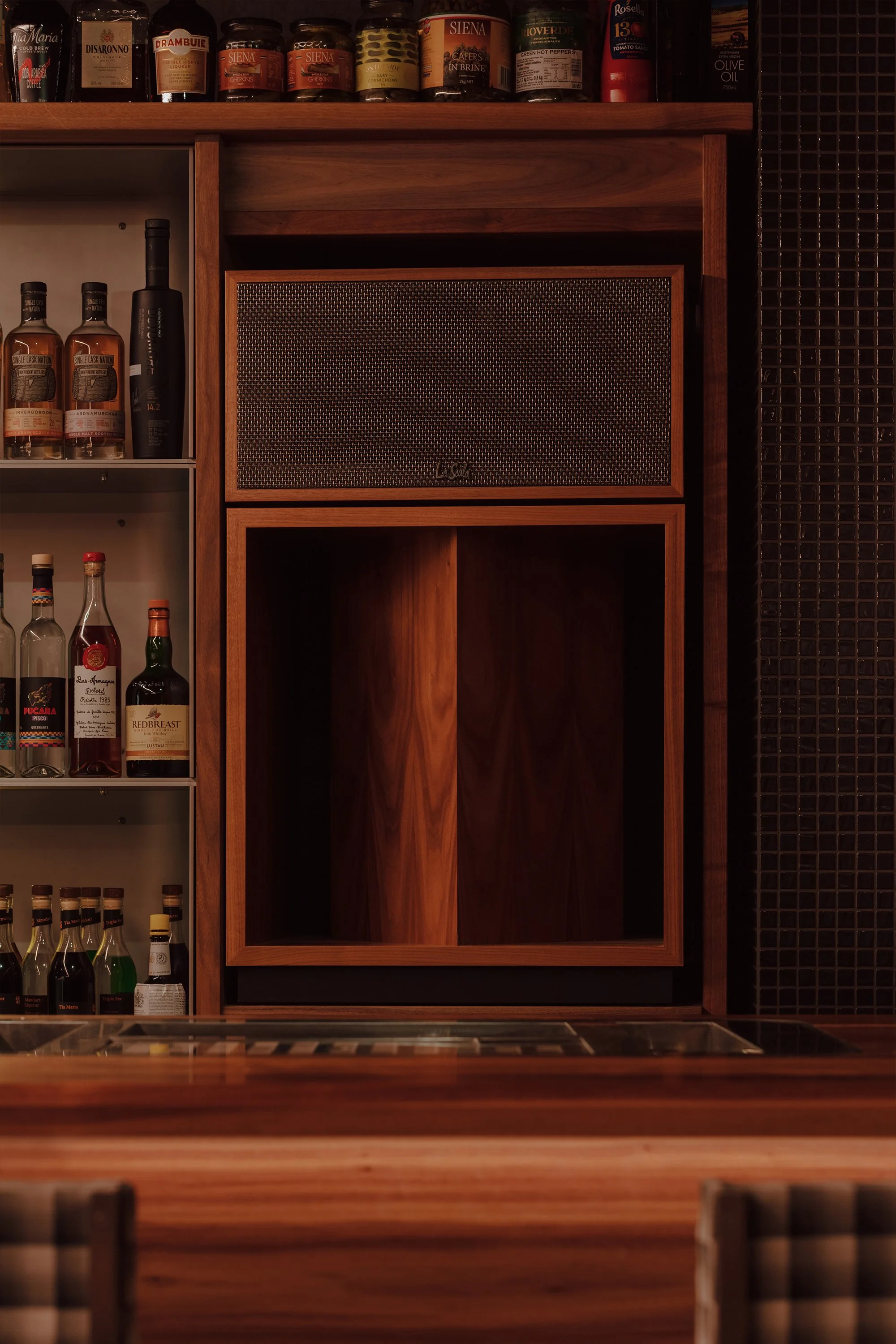
Advanced acoustic engineering was integral to how the space performed across both levels. Acoustic considerations were seamlessly integrated into the fabric of the interior, ensuring sound remained the project’s true protagonist. Every surface was considered for how it absorbs sound, retains it or allows it to travel. ‘Acoustic performance was treated as a core design input, not a layer applied at the end,’ says Markwick-Smith. As well as materials, spatial planning and furniture layouts were driven by how the space sounds and feels in use. Each element needed to balance seclusion with energy, working within a larger dialogue about how the space acts as an extension of the public streetscape beyond.
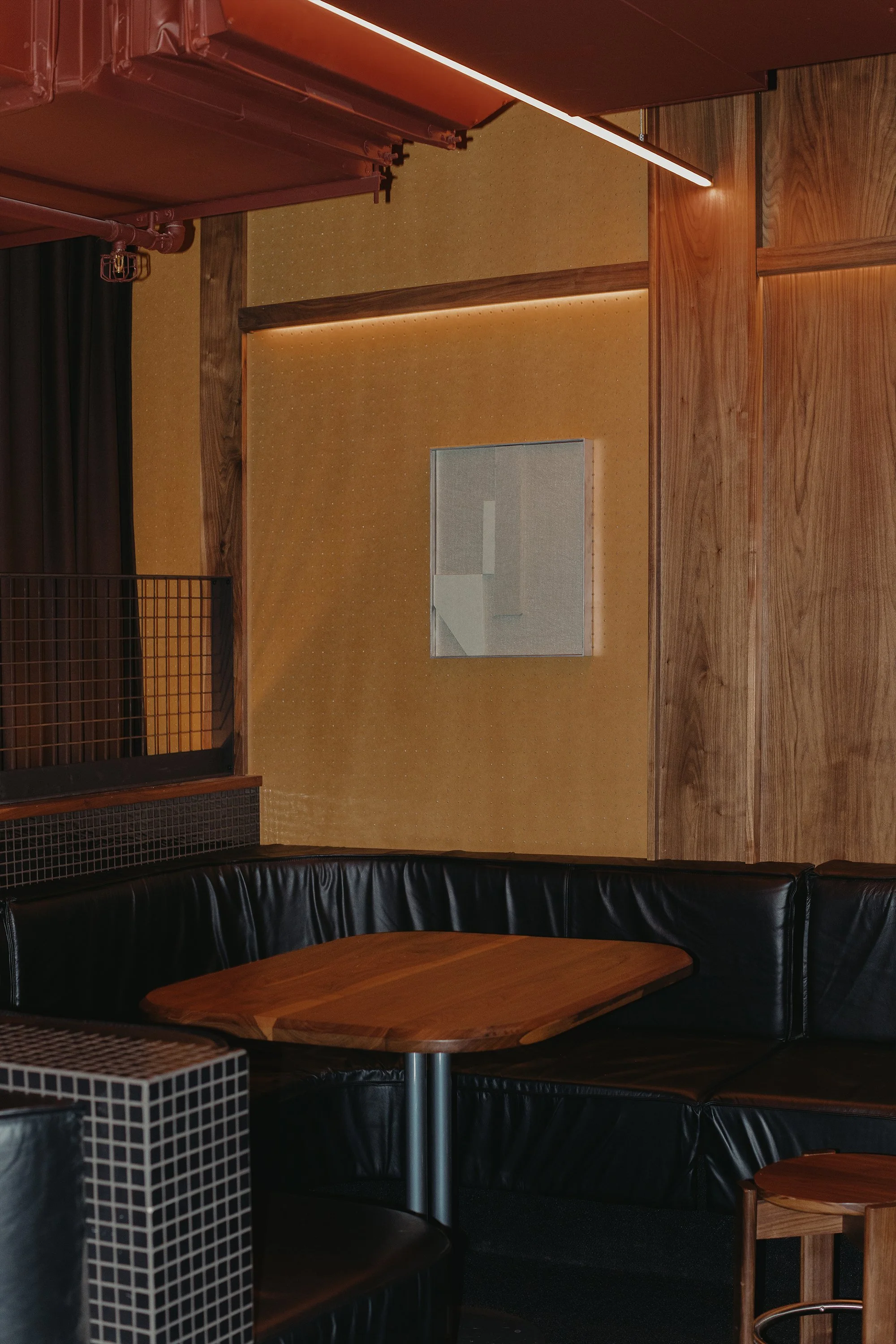
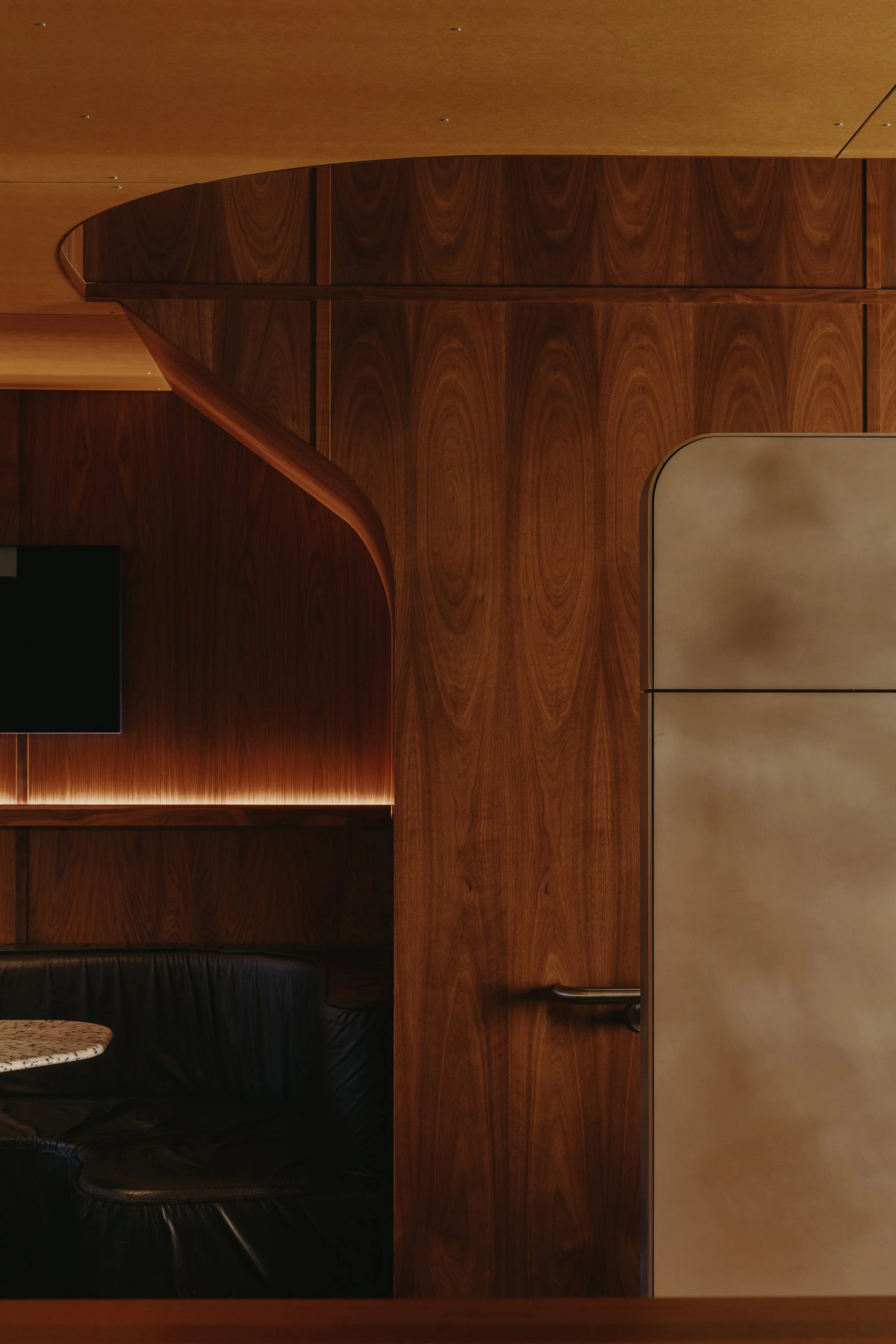
By day, Honeydripper offers a quiet reset — a place to watch passers-by through darkened Venetian blinds. By night, it becomes a destination to disconnect. As a venue, it reframes the listening bar as an everyday, relatable interior — immersive and warm — designed not just to be seen, but to be felt and cocooned within.
Text by Bronwyn Marshall
Images by Jonathan VDK