The Artist Who Enjoys Turning Paper Into Wood, Concrete and Metal
Images by Irfan Hendrian, courtesy of Ara Contemporary
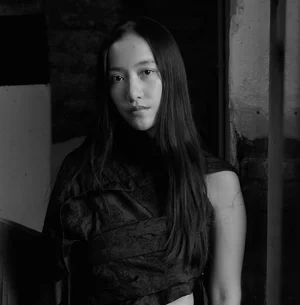
Bandung-based Irfan Hendrian pushes the humble medium of paper beyond its assumed fragility, shaping it into complex forms charged with Indonesia’s political anxieties
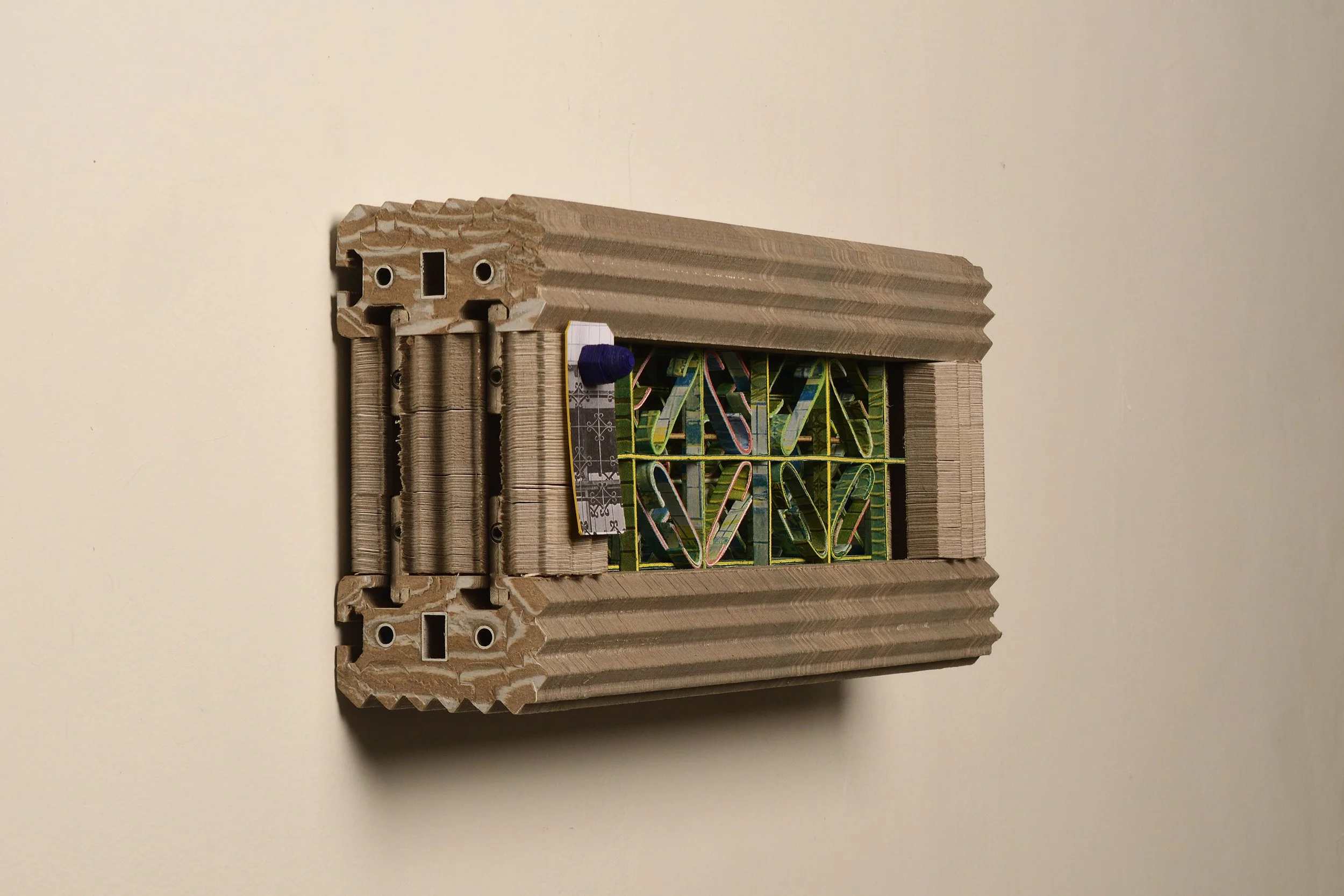
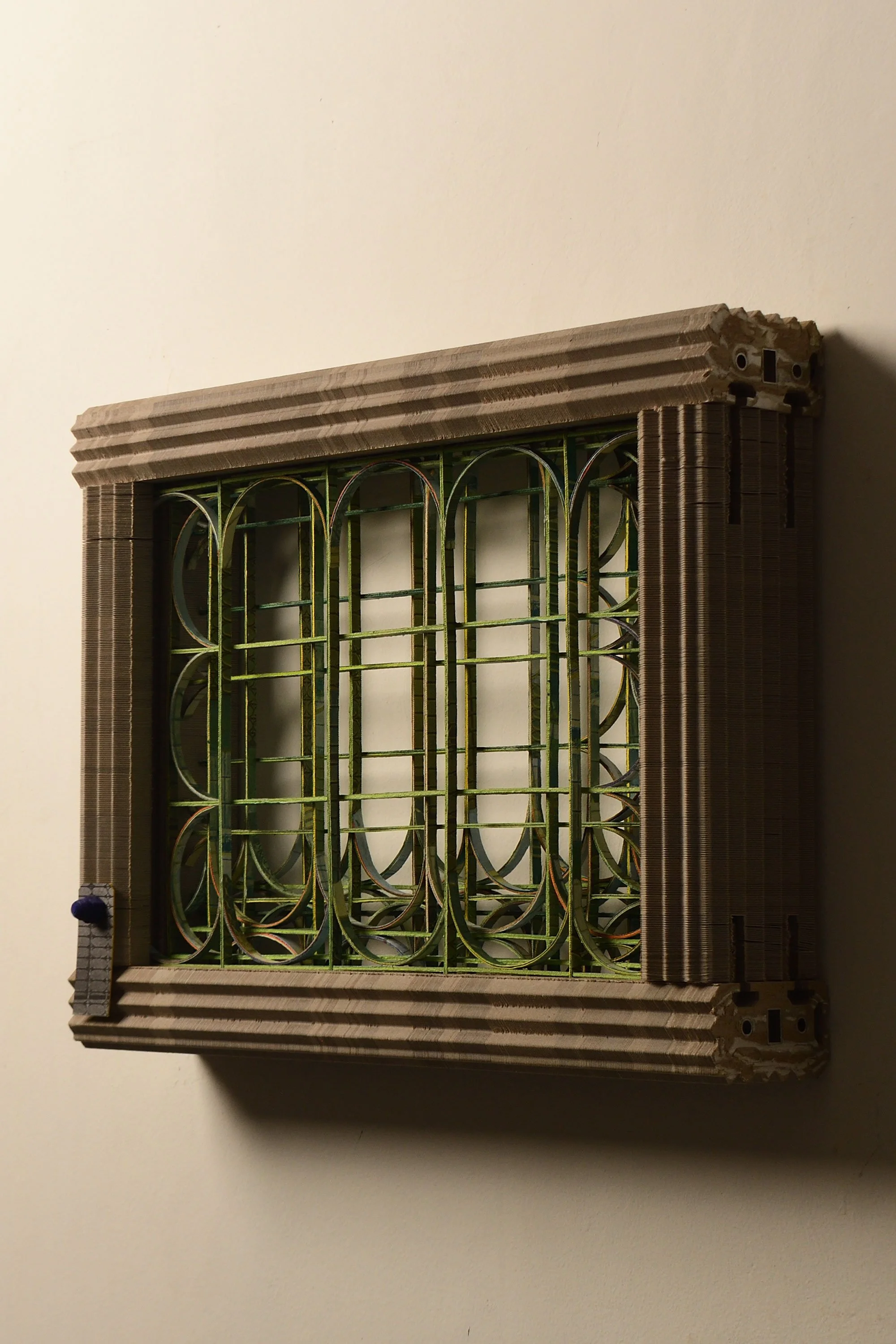
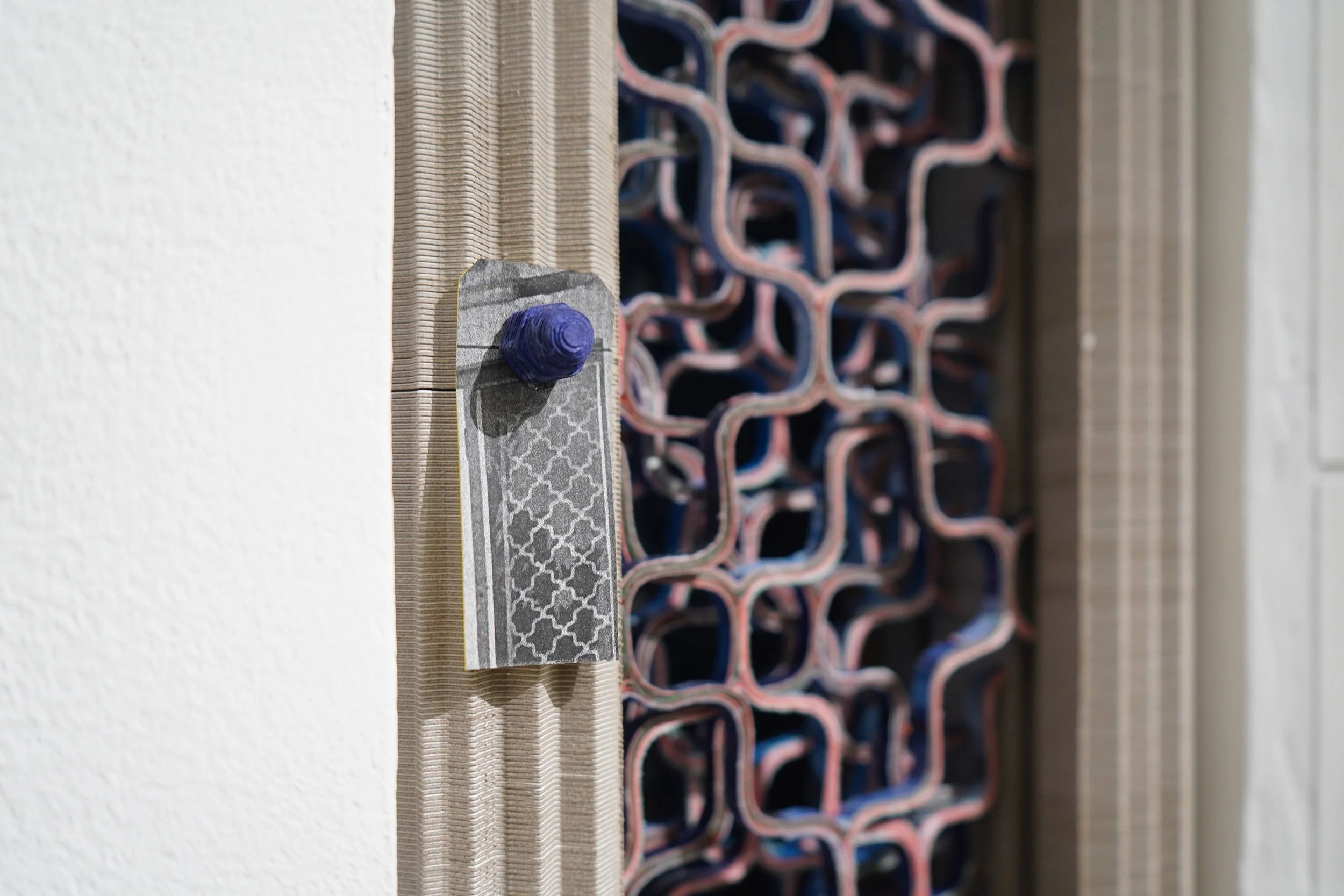
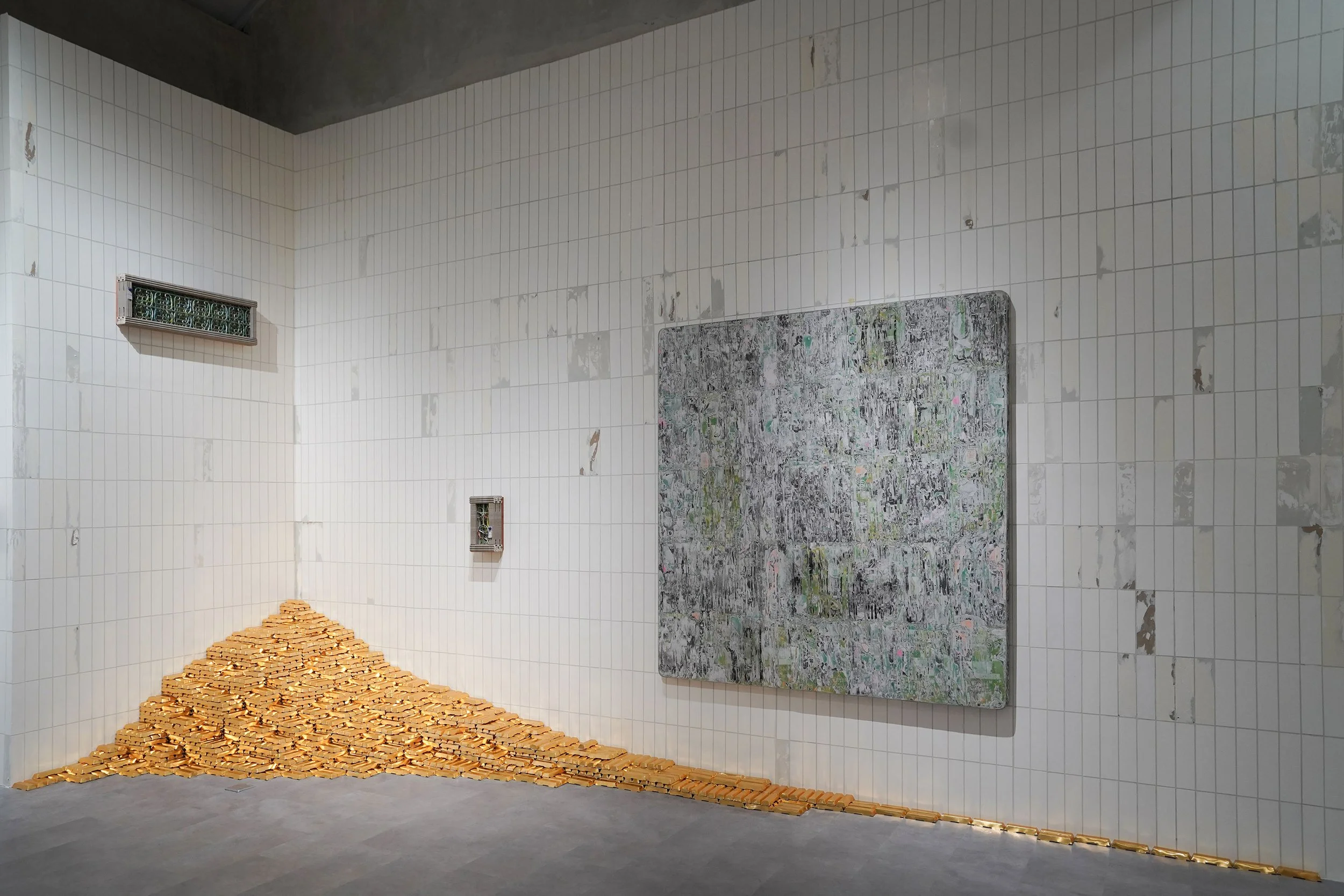
Three years ago, Irfan Hendrian began travelling through Chinatown districts across Indonesia. He started in his hometown Bandung before moving on to Cirebon, Tegal, Pekalongan and Semarang, photographing the patterned metal trellises that front many homes and shophouses in Chinese neighbourhoods. Both ornamental and protective, these grilles became a visual archive that would later form the basis of his recent solo exhibition, Closed, at Ara Contemporary.
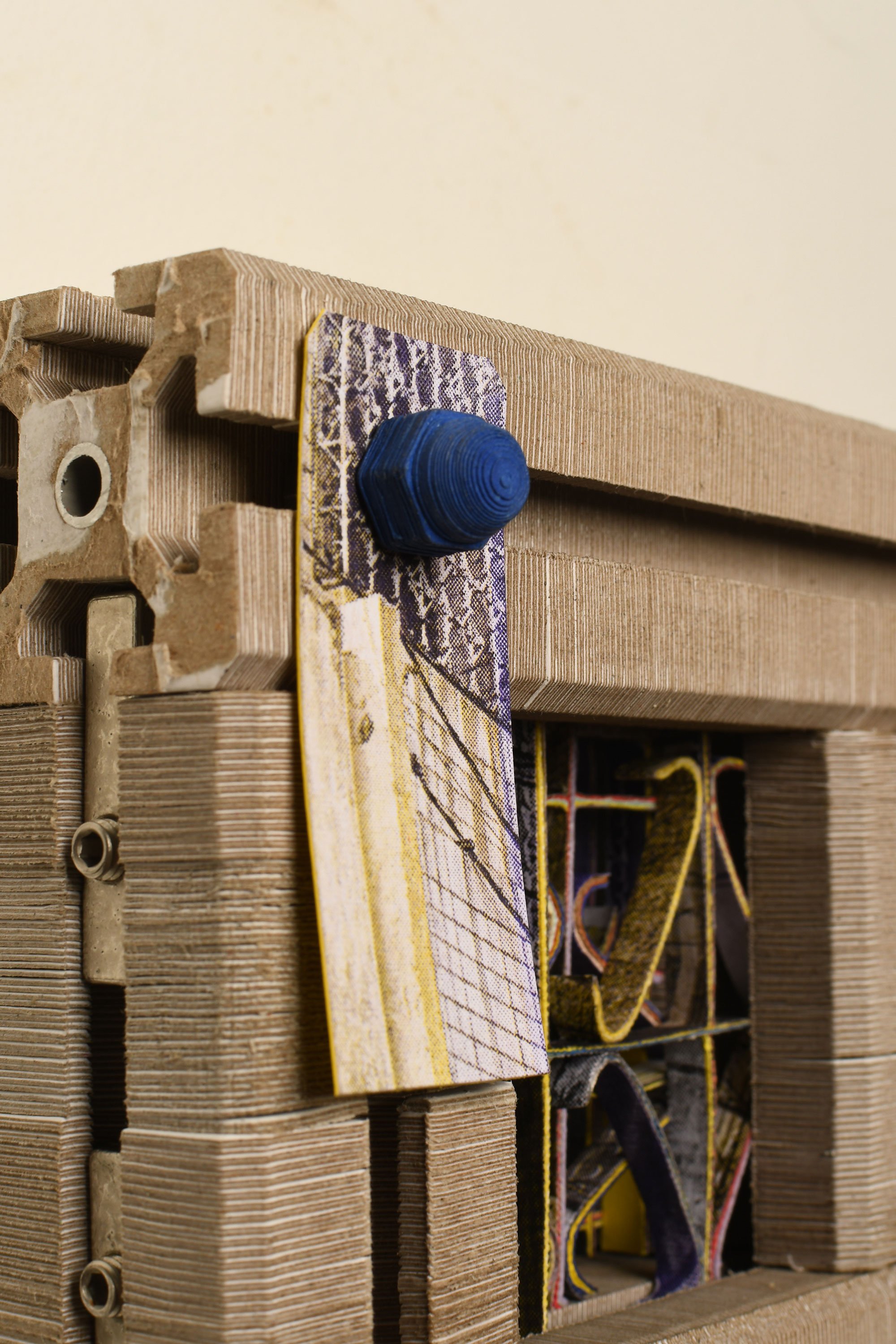
Back in his studio, Hendrian began translating those images into hundreds of prints, with the risographic process introducing small shifts and inconsistencies from one copy to the next. He then cut the printed photographs and reassembled them into each final piece by hand, echoing the logic of the original grilles. In pieces such as Chinatown Window Sample, this becomes a slow, accumulative process where one piece can be composed of as many as 400 pieces, each individually placed and glued, some requiring several weeks and multiple people to complete.
Images by Irfan Hendrian, courtesy of Ara Contemporary
Images by Irfan Hendrian, courtesy of Ara Contemporary
Flat surfaces begin to bend and coil into restless formations. Some tighten into hypnotic spirals and fold back into repeating geometries that echo motifs such as batik kawung, lotus flower and the circular patterns drawn from the original grilles. In the process, the photograph itself withdraws, leaving only traces of ink visible through the paper’s edge and marking Hendrian’s visual representation of history as something fundamentally ungraspable, almost like a memory that can no longer be fully retrieved.
Hendrain describes the works as an ‘architecture of fear’, a phrase drawn from personal experience and the wider realities of Chinese communities in Indonesia. His work often reflects on a collective sense of vulnerability — an inherited response forged by cycles of unrest, from the cultural restrictions of the New Order era, the violence and economic collapse of 1998 and more recent political tensions in Jakarta, all of which continue to raise an underlying question of safety.
Images by Irfan Hendrian, courtesy of Ara Contemporary
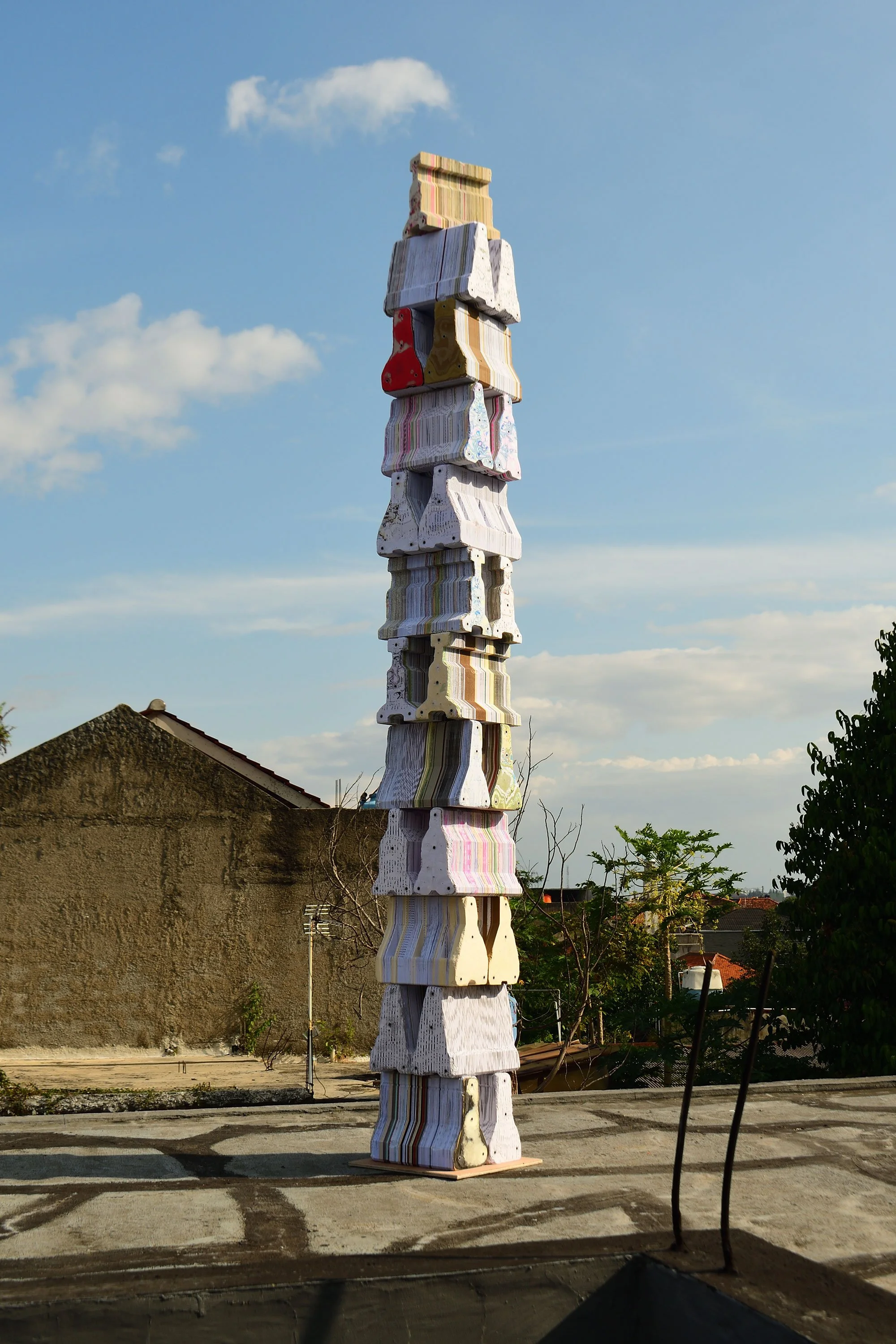
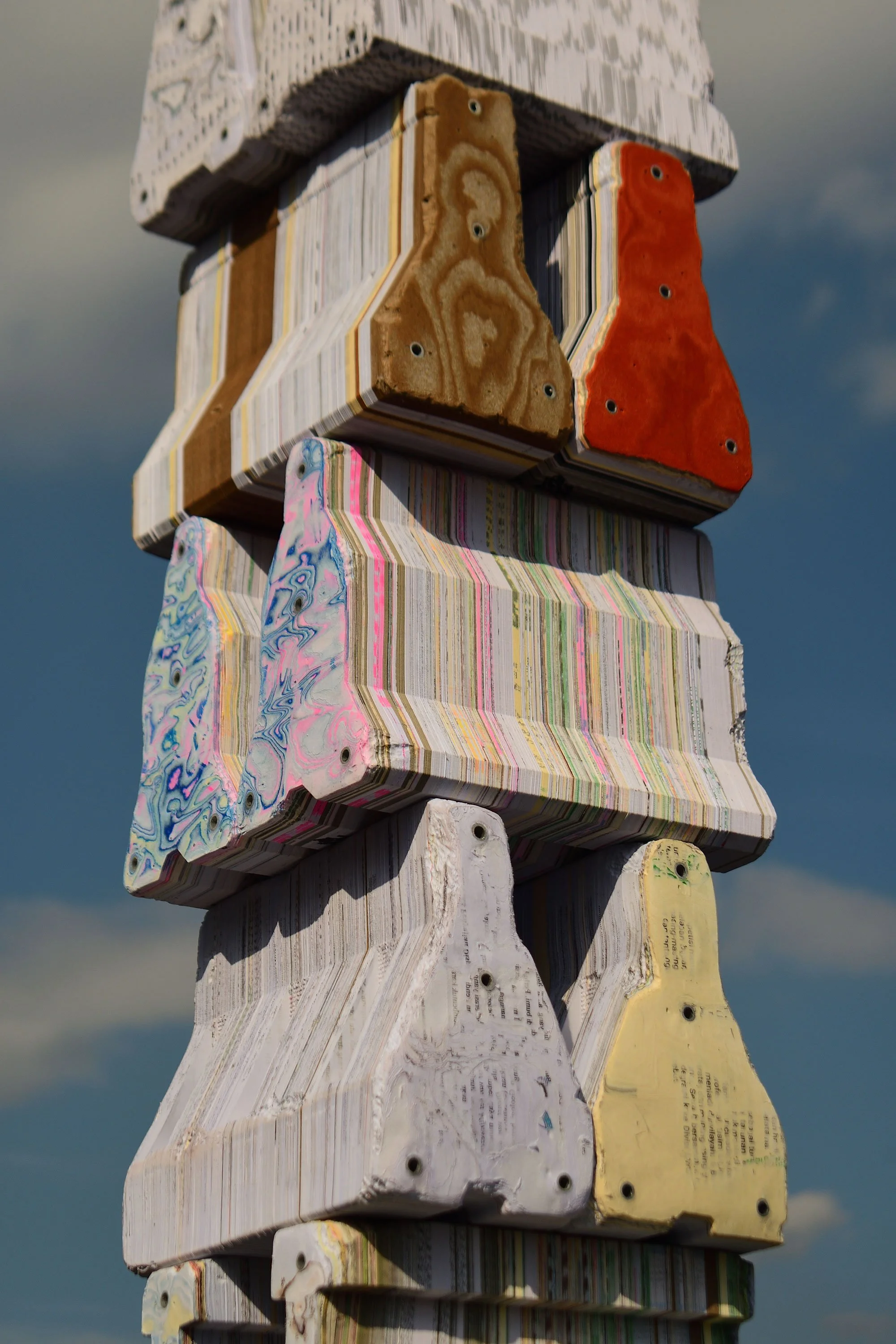
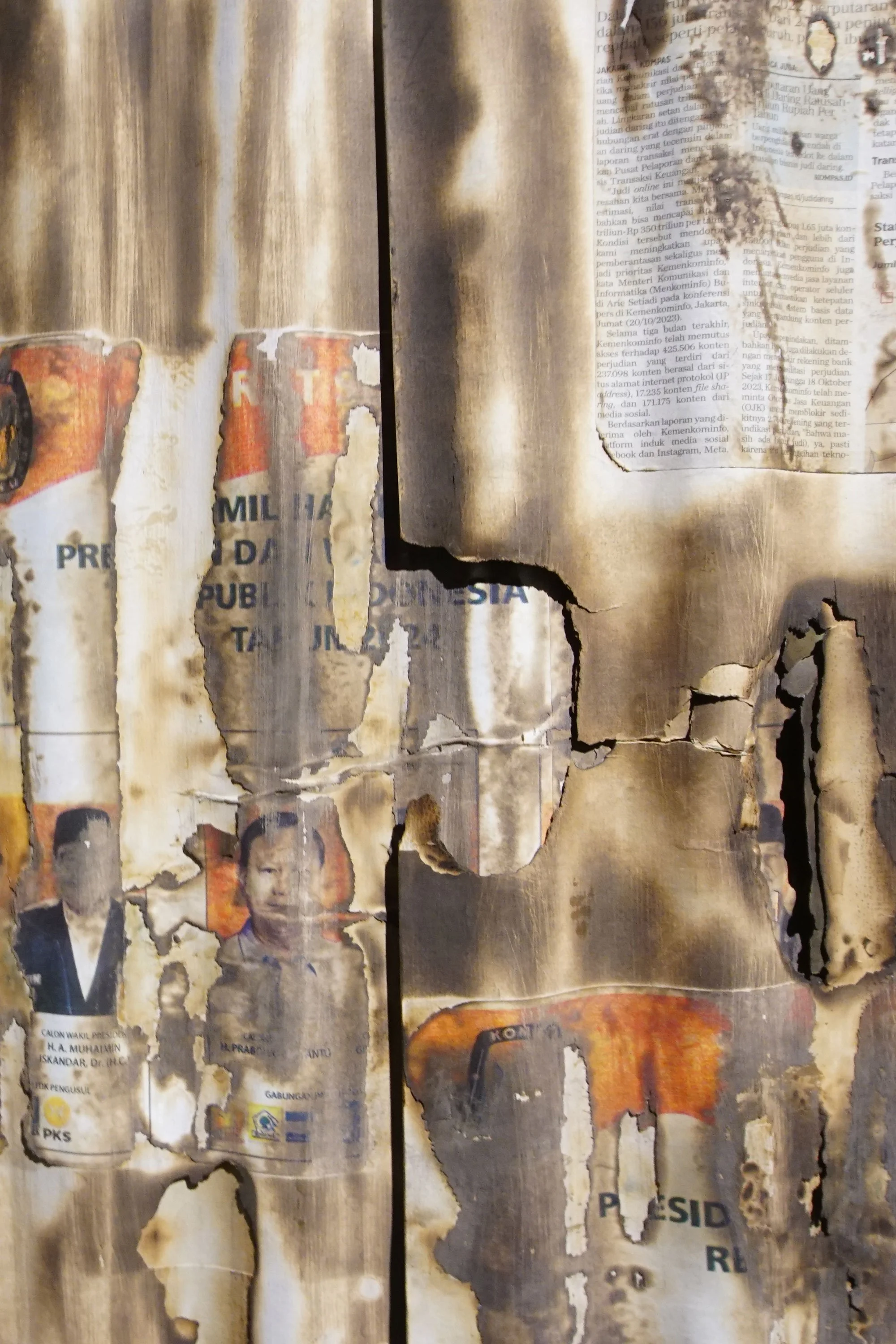
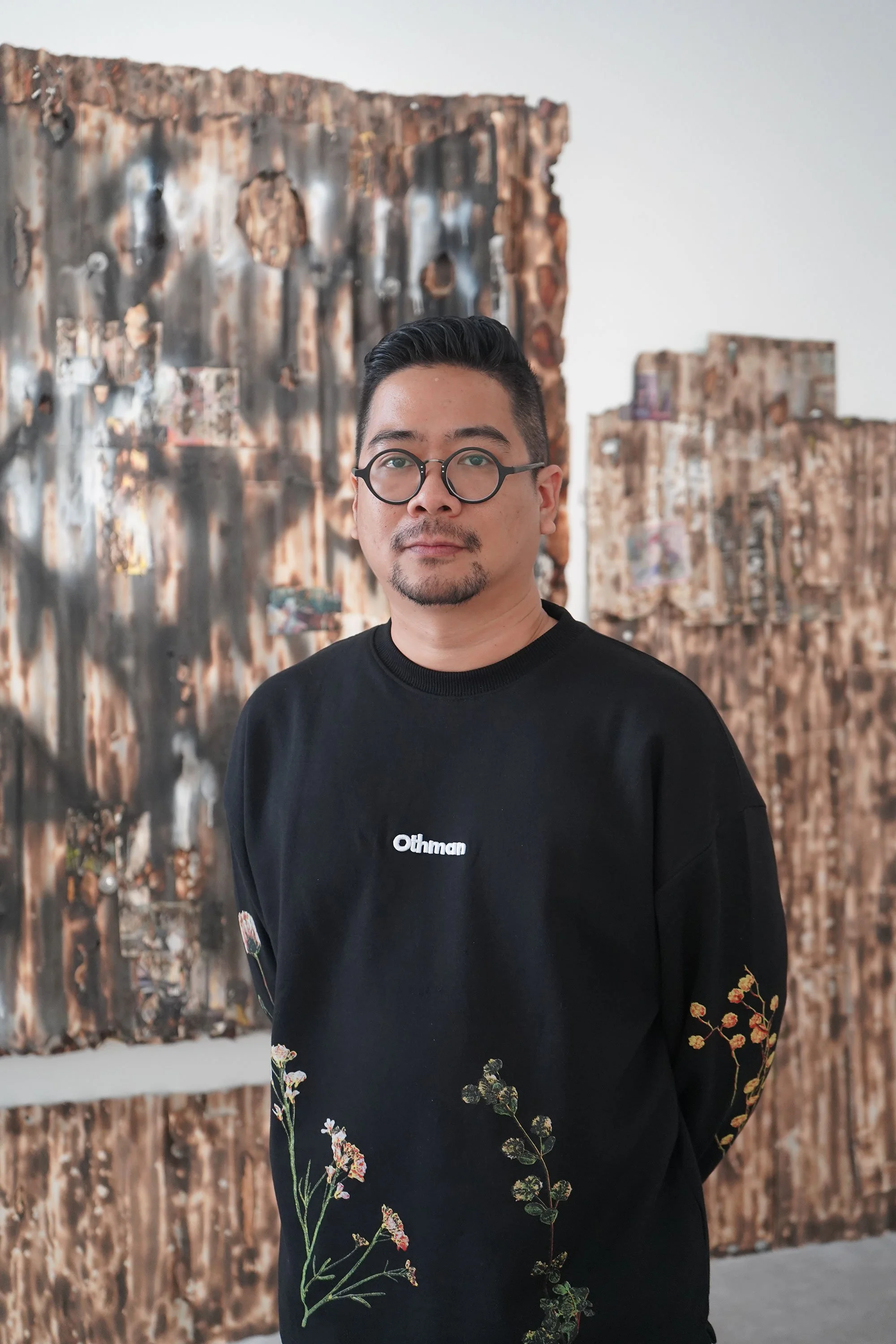
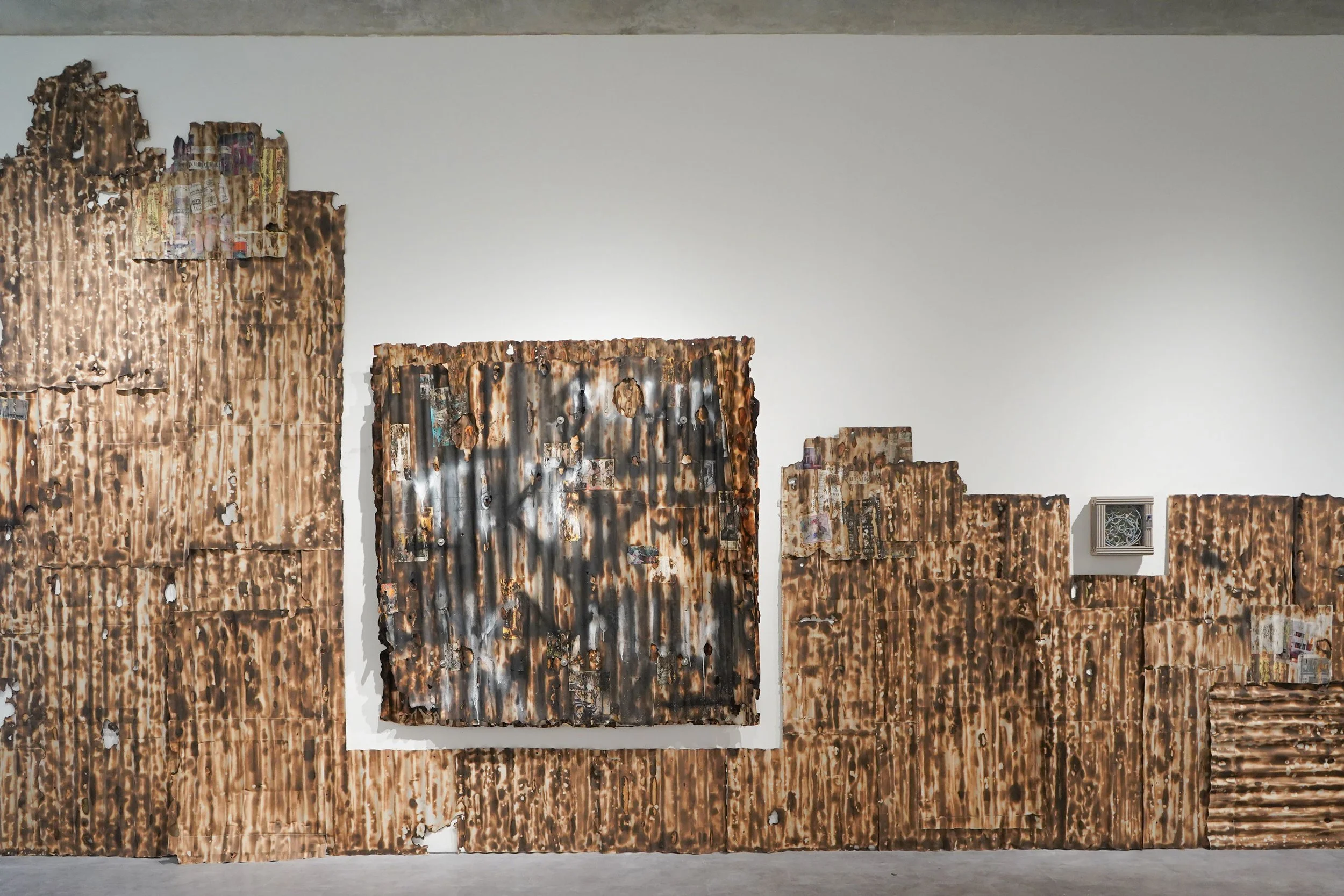
Trained early as a graphic designer, Hendrian brings a deep sensitivity to material and structure, honed through years working in publication design and packaging, which he further developed through his studio Werkbound. ‘I was working a lot with more engineered packaging materials to test and see how far paper could go structurally,’ he says. In his practice, the humble medium is gradually stripped of its assumed fragility. It's compressed into forms that mimic concrete, reworked to resemble the grain of wood, burned until it takes on the appearance of corrugated metal.
That material inquiry surfaces quite explicitly in works such as Pseudo Protection. ‘After the 1998 riots, many houses appeared to be “protected” or concealed from view using corrugated metal sheets, which, in reality, are very easy to dismantle or break through’, he explains. To create these surfaces, he layers and compresses painted paper alongside decorative interior imagery drawn from magazines widely used at the time as references that were pasted onto the sheets, including by his own mother. Here, the images allude to the intimate domestic worlds that lie just beyond the ostensibly protective barriers.
Images by Irfan Hendrian, courtesy of Sullivan + Strumpf
Images by Irfan Hendrian, courtesy of Sullivan + Strumpf
‘Paper has this illusion, when it’s twisted or bound, it can become upright and structural. A single sheet could be pressed, layered and reinforced in different ways,’ Hendrian reflects. In his work, what appears solid and protective reveals its true nature upon closer inspection, drawing out a dialectic tension between sets of ideas and realities.
‘Especially in this digital age, the role of paper purely as a carrier of news and information has slowly dissolved, so our perception of the material needs to change too,’ he says. ‘This ties into how our visual, informational and textual culture has shifted towards digital. The question then becomes, how do we continue using paper?’
Text by Raina Alonge
Images by Irfan Hendrian, courtesy of Ara Contemporary and Sullivan + Strumpf
Images by Irfan Hendrian, courtesy of Ara Contemporary
Images by Irfan Hendrian, courtesy of Ara Contemporary
Images by Irfan Hendrian, courtesy of Ara Contemporary
Images by Irfan Hendrian, courtesy of Ara Contemporary