Andra Matin’s Modernist Home Embraces the Elements
Architect Andra Matin decided to embrace the elements rather than isolate himself from them when creating his family home
If, as Mark Twain said, ‘Climate is what we expect. Weather is what we get,’ then architecture should be the antidote to these unmet expectations — something that can be relied upon in uncertain weather. We might not be able to ask nature to change, but we, as humans, can adapt.
Indonesian architect Andra Matin has pushed for the weather to be an integral part of the local living experience. The tropical climate means a fairly constant warm to hot temperature, though the rainfall and humidity are more variable. But it is not always easy for Matin to convince clients to agree with his concept when nature — especially in high-density urban areas — is most commonly regarded as a threat.
Preoccupied with the idea of spending more time outside in this tropical climate, Matin developed the functional programme of his own home, AM House. His design showcases his mission to prove that we can have a tropical living experience with modern form, material and tectonics; the house is a manifestation of Matin’s expectations of the weather, as well as his expression and experimentation.
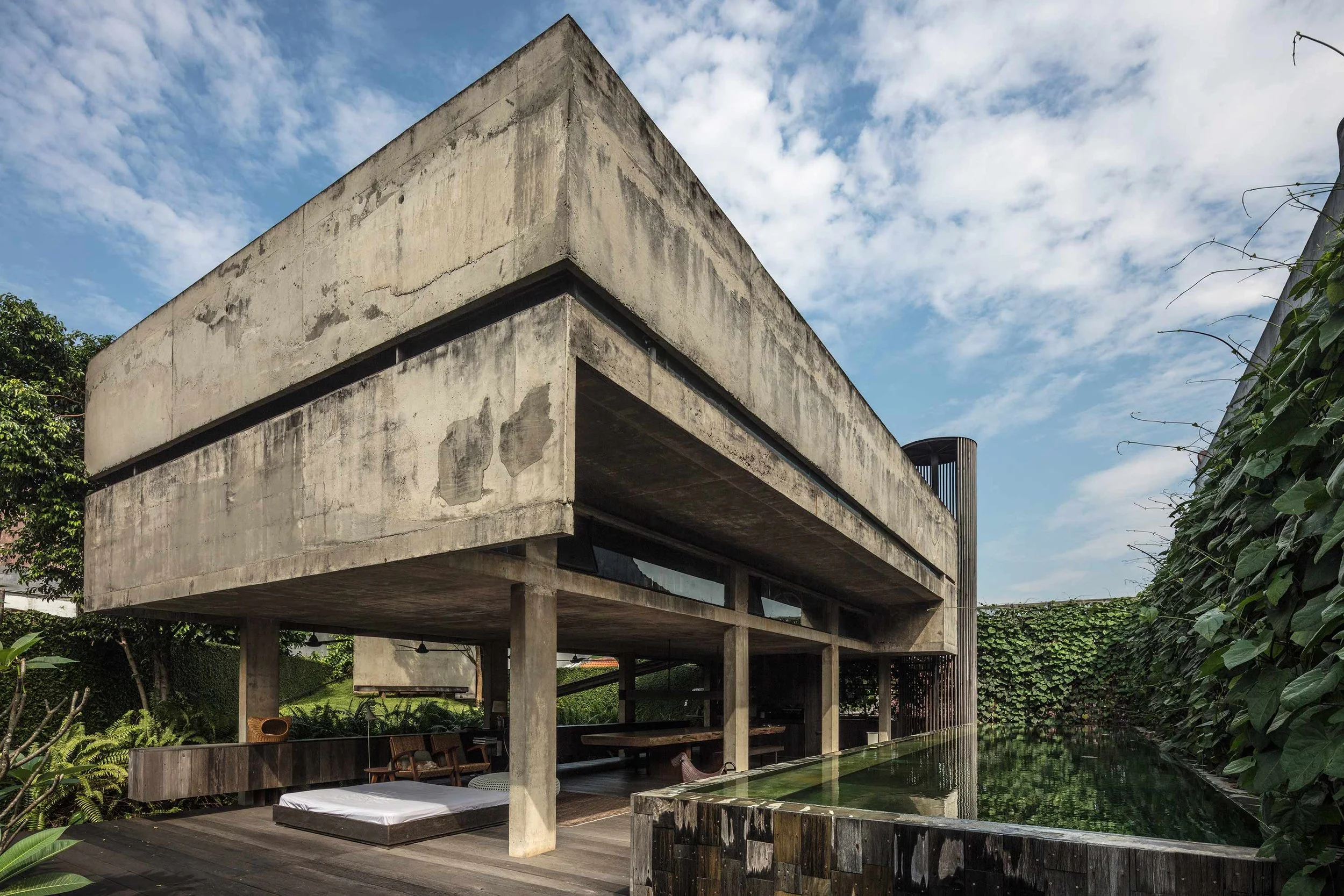
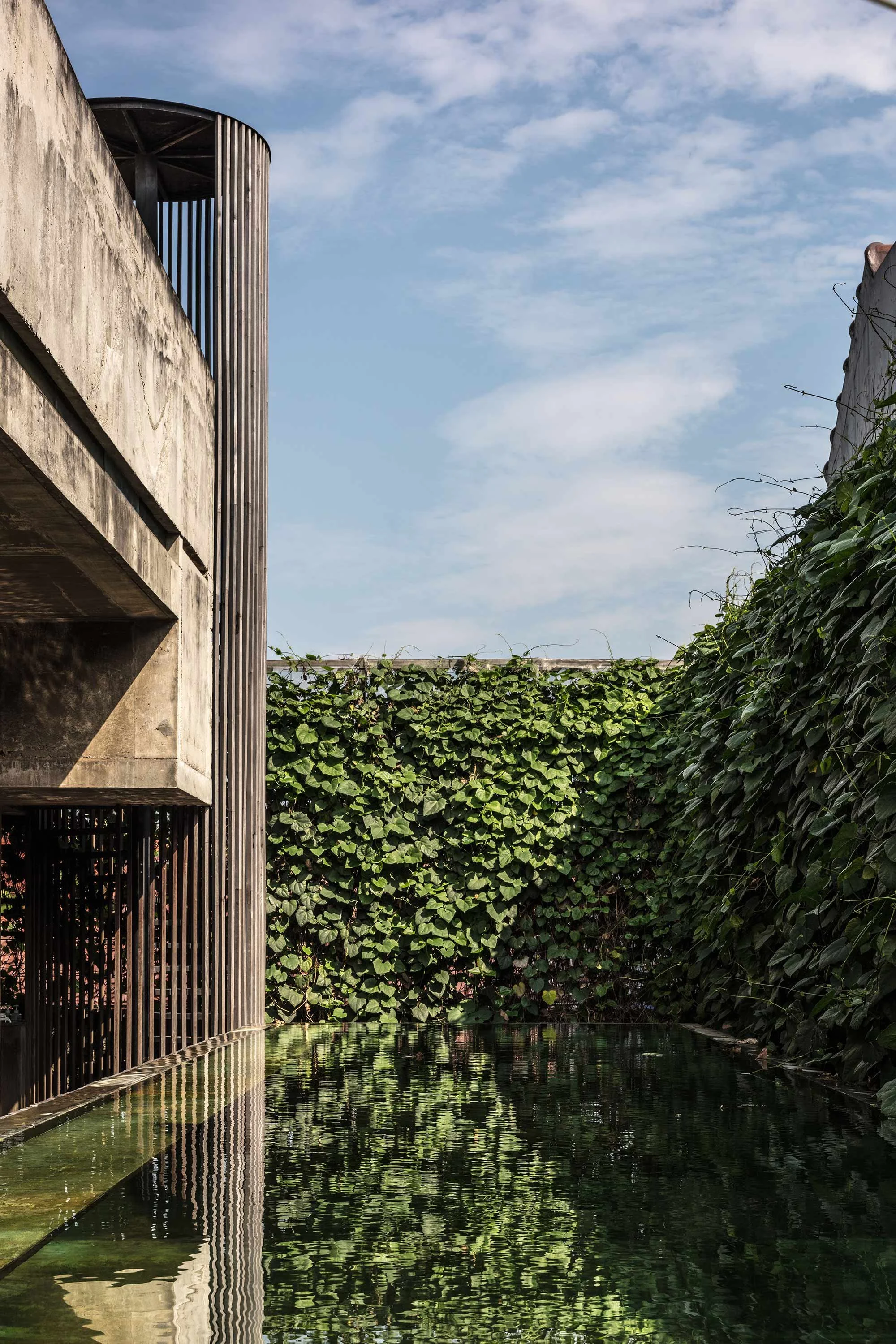
AM House is situated on a trapezoidal corner plot within a charming residential neighbourhood in Bintaro, South Jakarta. The 320-square-metre site faces a small community park to the north bordered by two-storey houses, but its idiosyncratic shape and narrow entrance presented a challenge when it came to connecting the house with its surrounds. Matin addressed this problem by devising an expansive, partially sheltered deck on the first floor rather than creating a front yard, covering almost half the plot with recycled ironwood planks.
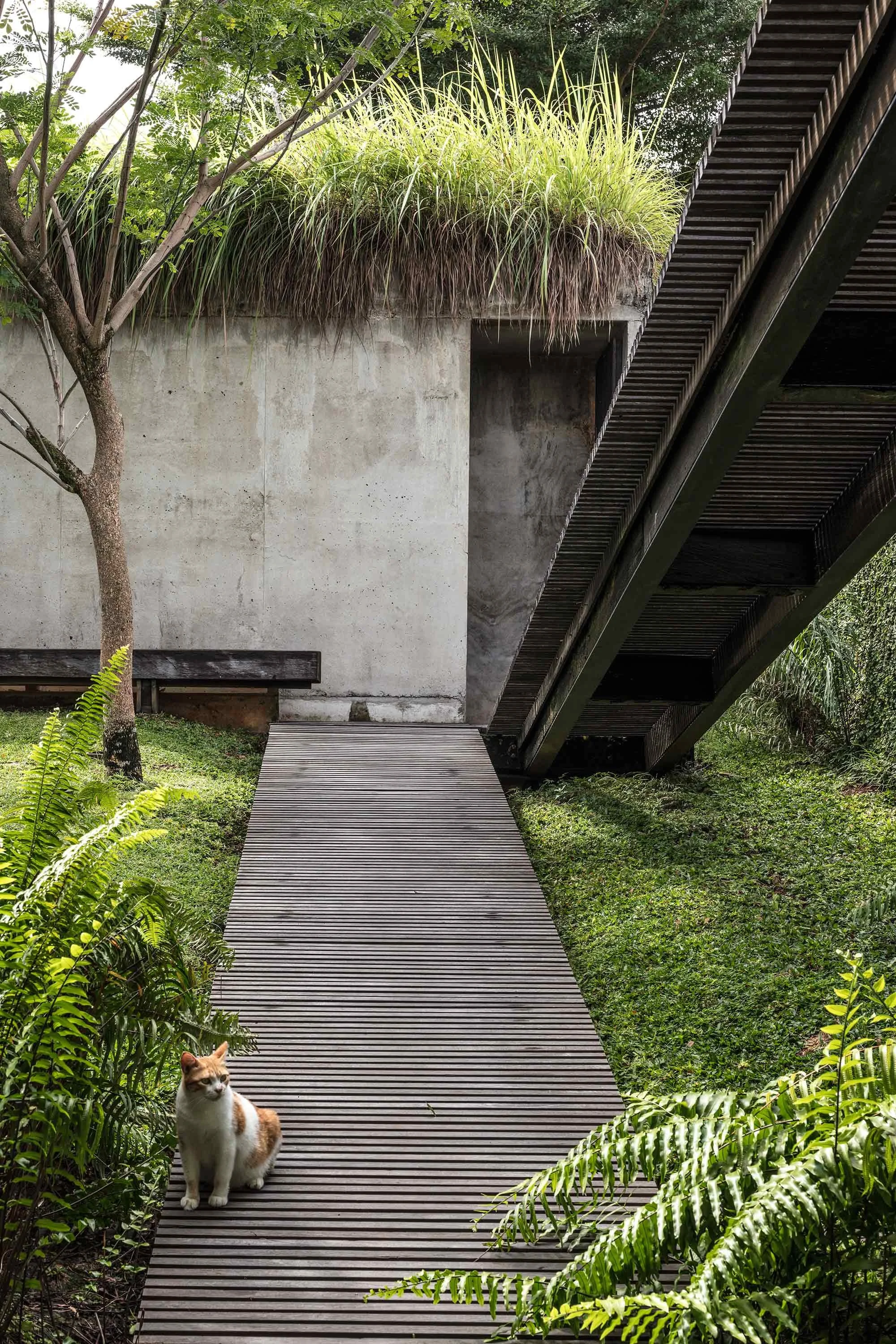
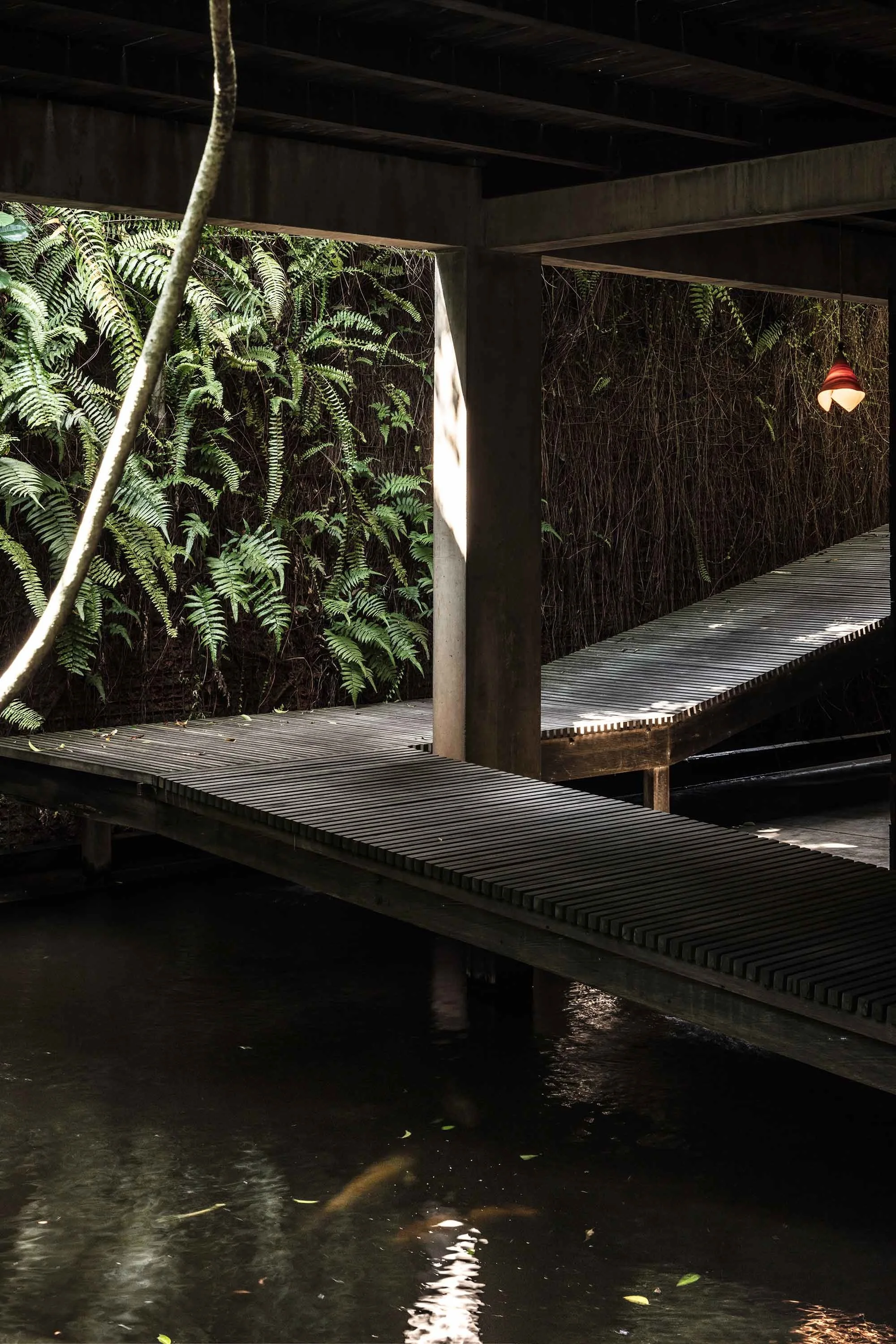
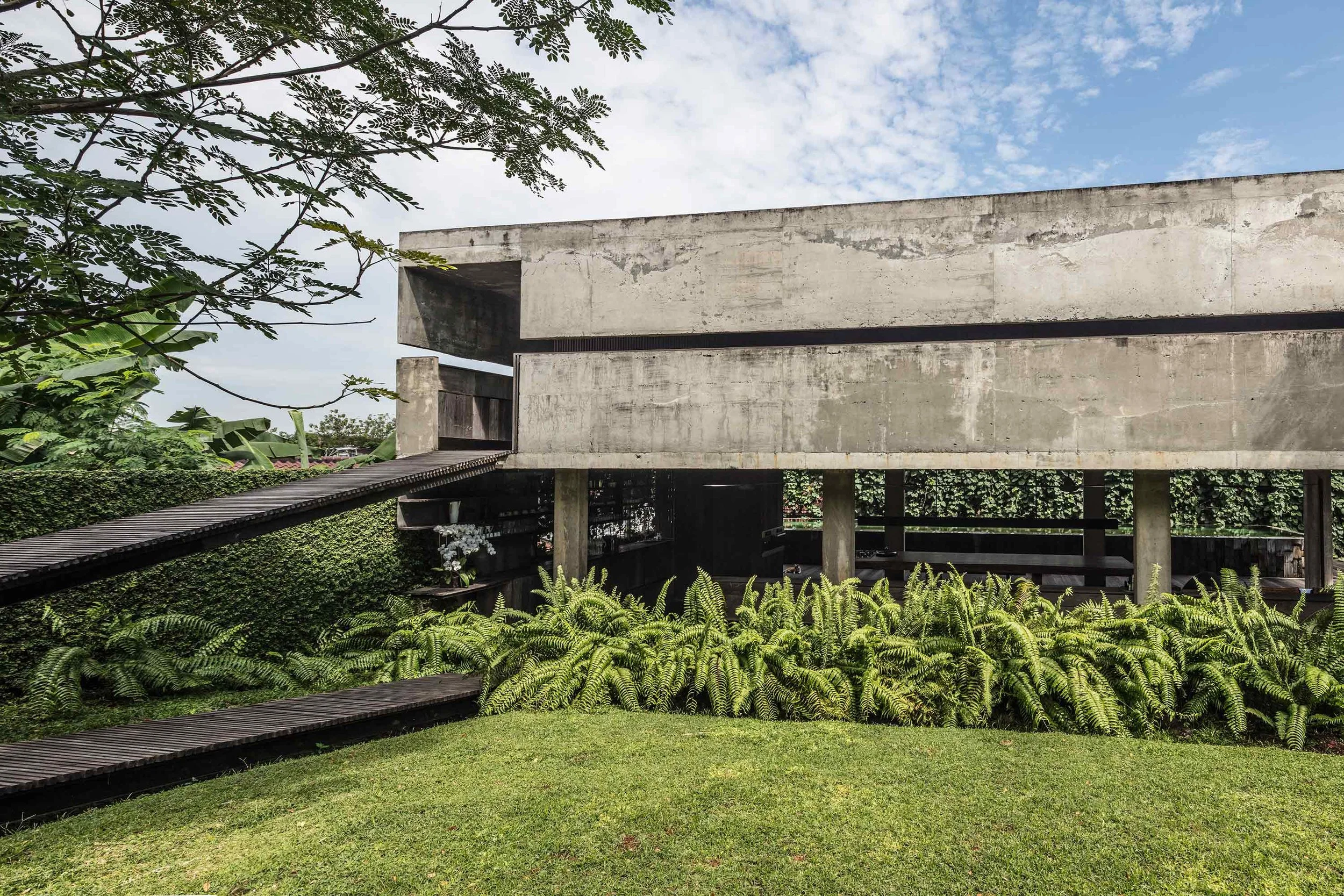
The ground floor is generally dark, consisting of a timber-clad box that houses the maid’s quarters, library, a garage and a ramp above a pond leading to the first floor. Family activities are accommodated on the first floor and private spaces are on the second floor. The roof, covered with grass, is accessible as a spacious sightseeing spot. All of these are linked; people move smoothly via ramps, passing planes and volumes in a cinematic journey.
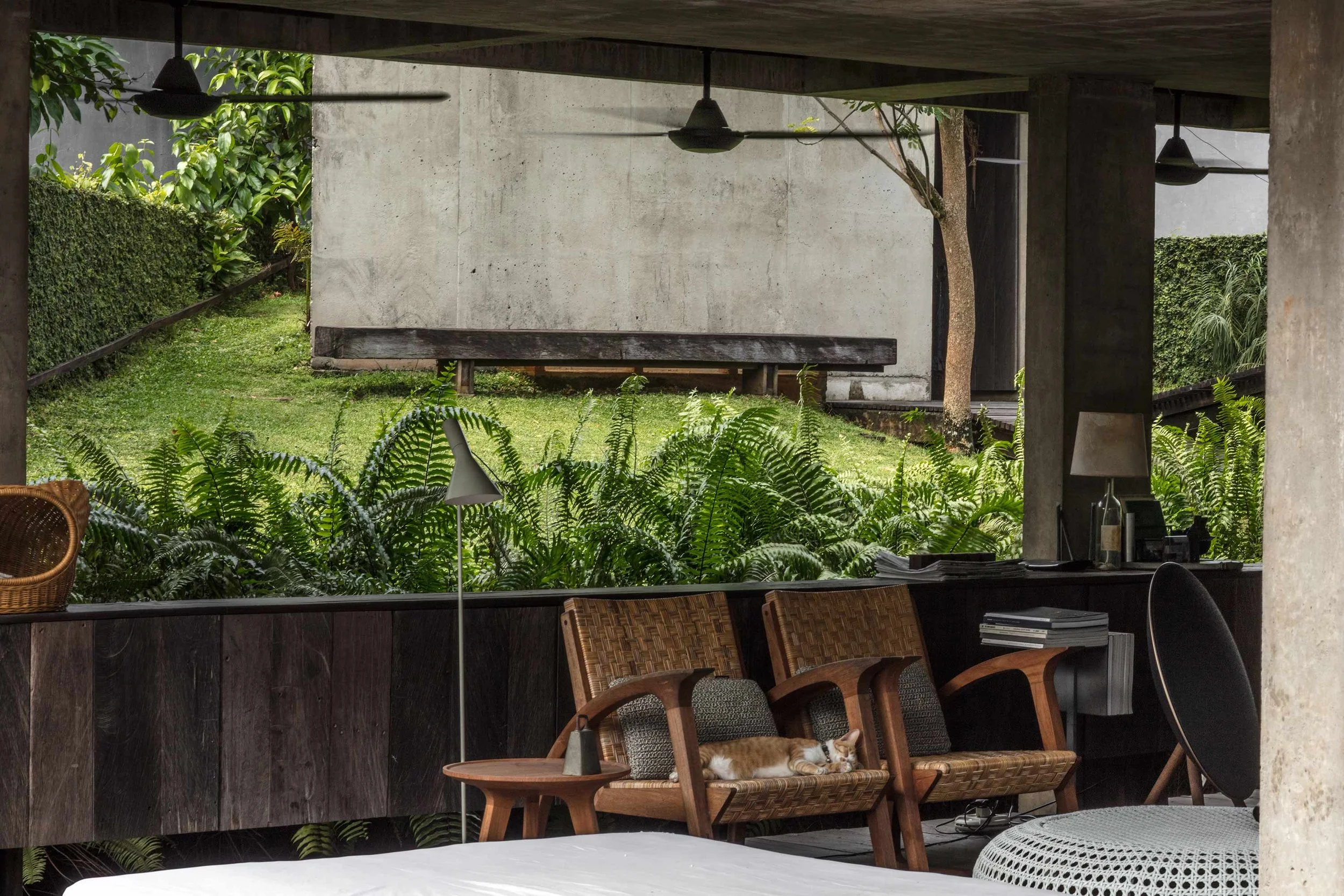
By placing the common activity space on the first-floor deck, Matin brought almost all activities to the outdoor spaces. The deck serves as the living and dining area, equipped with a kitchen as well as a swimming pool with an unobstructed view of the neighbourhood park across the street. This area is shaded by a thin concrete box, which contains a common area for the children, supported by eight thin reinforced concrete columns. Leading into this space is a corridor with a shared bathroom.
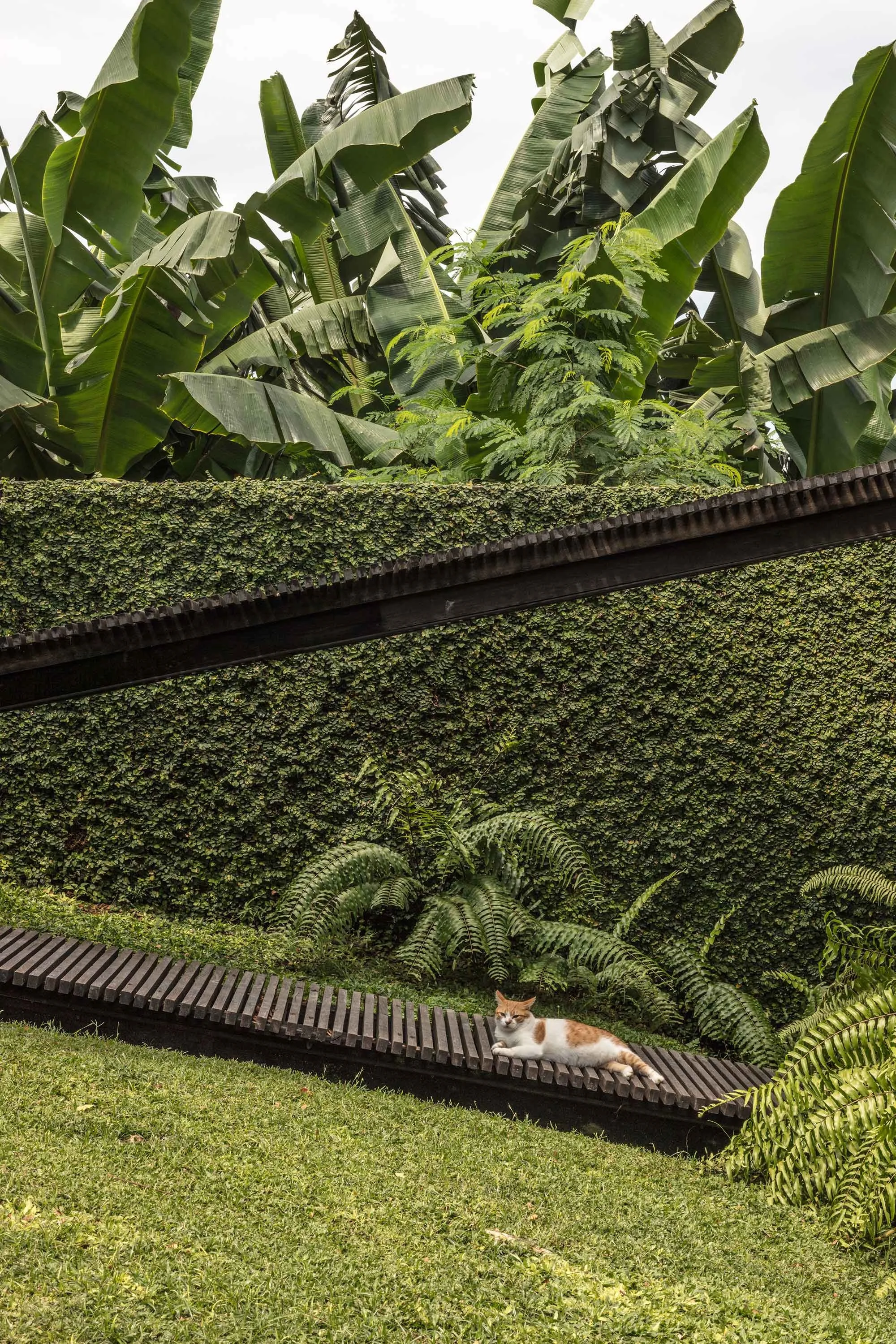
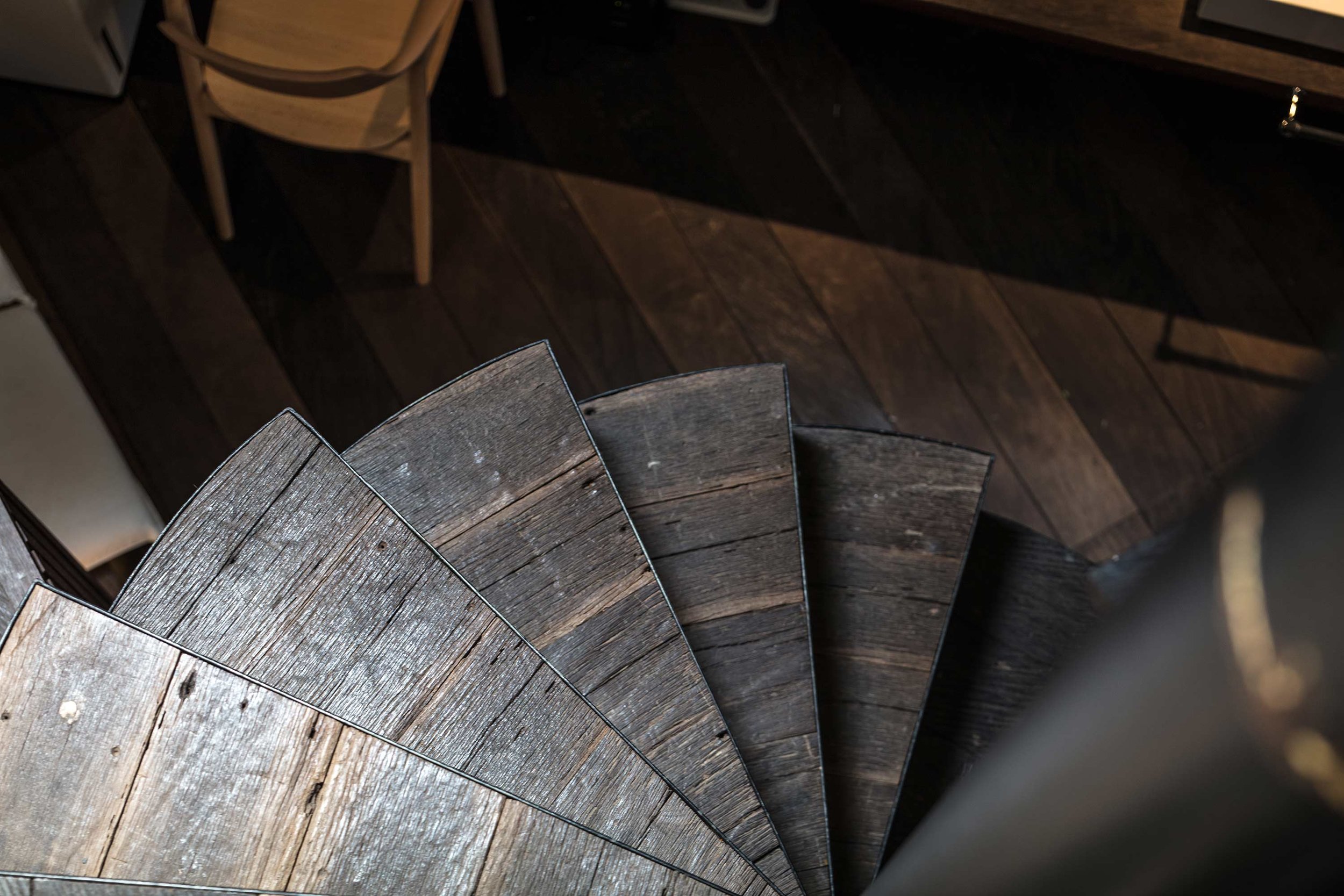
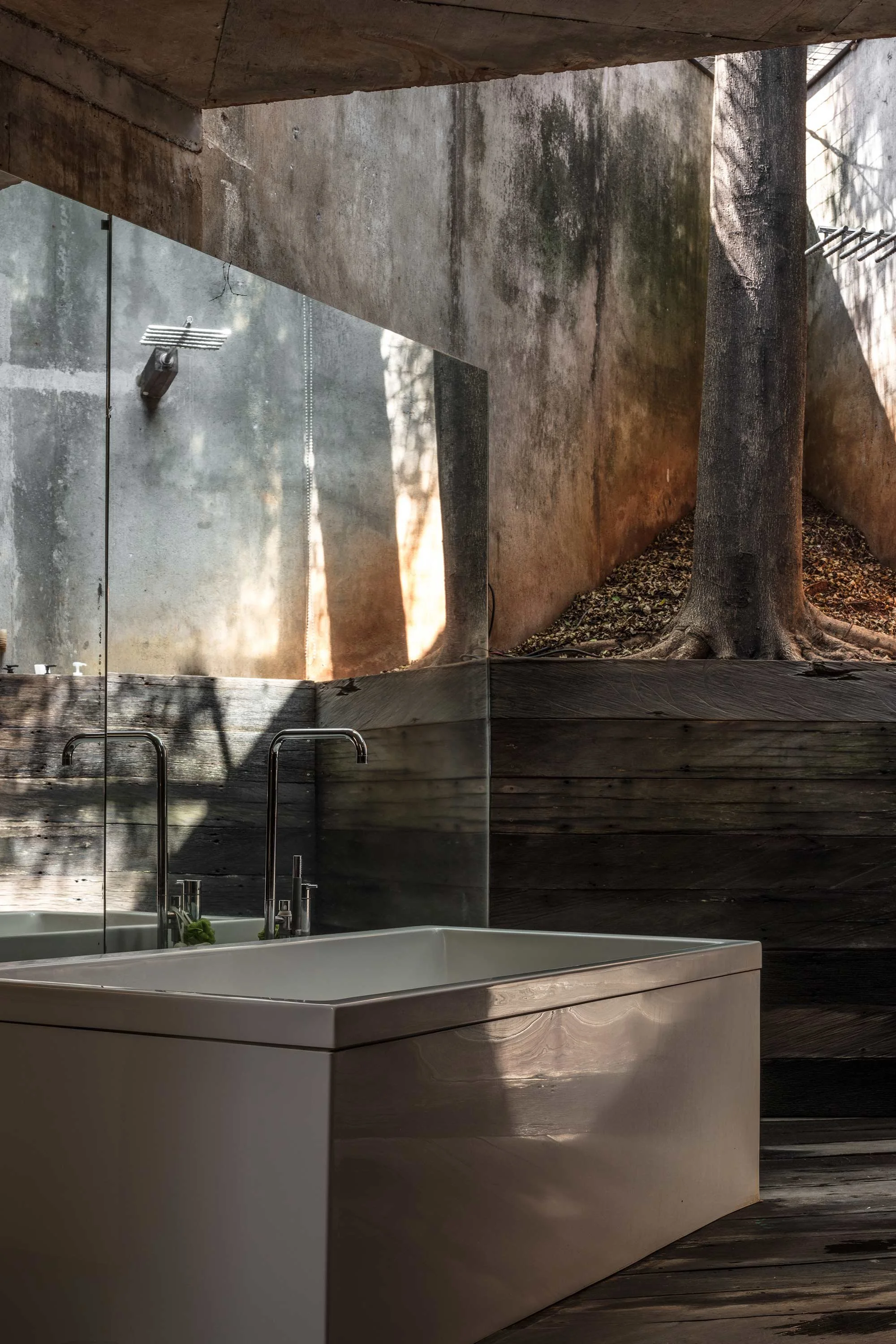
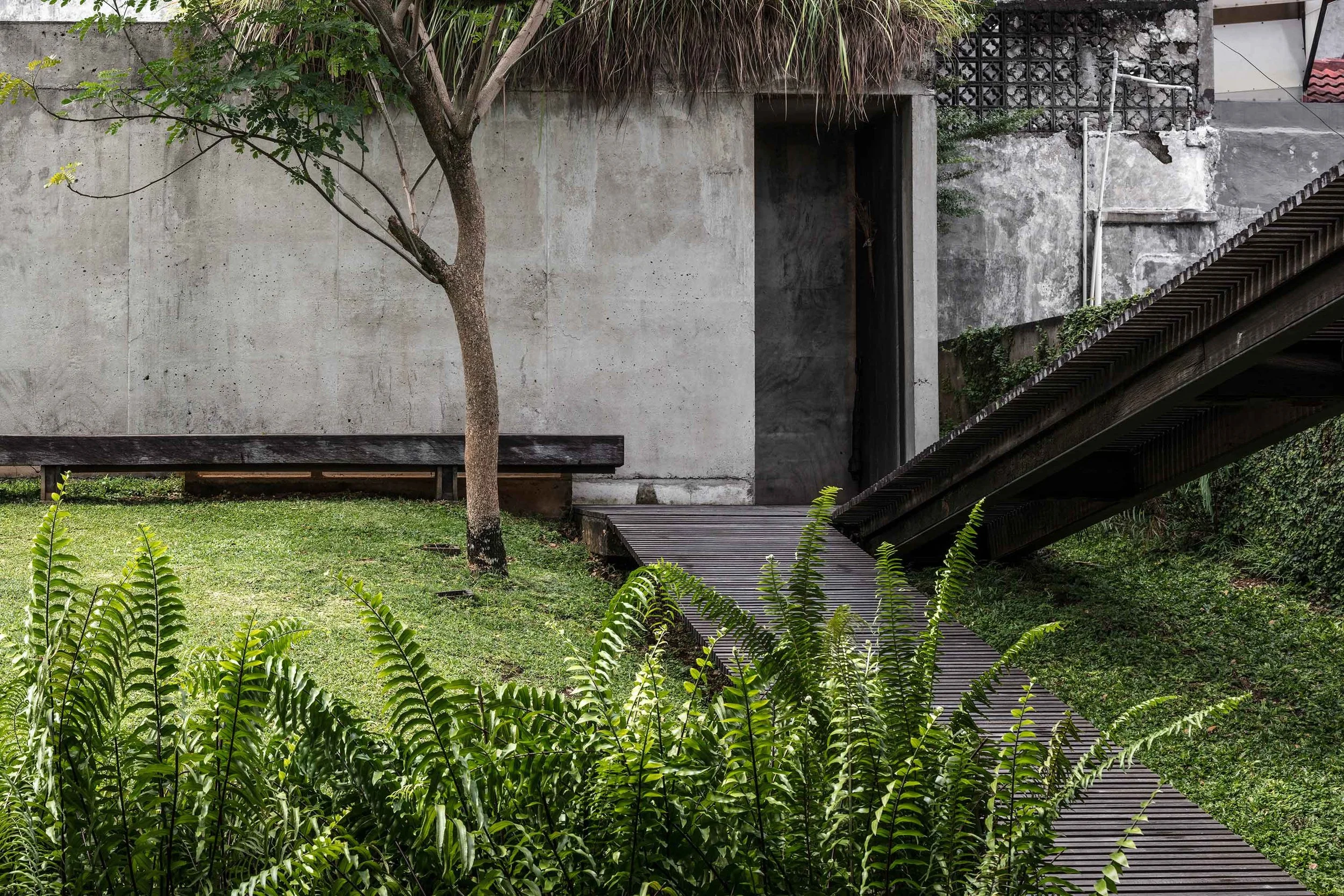
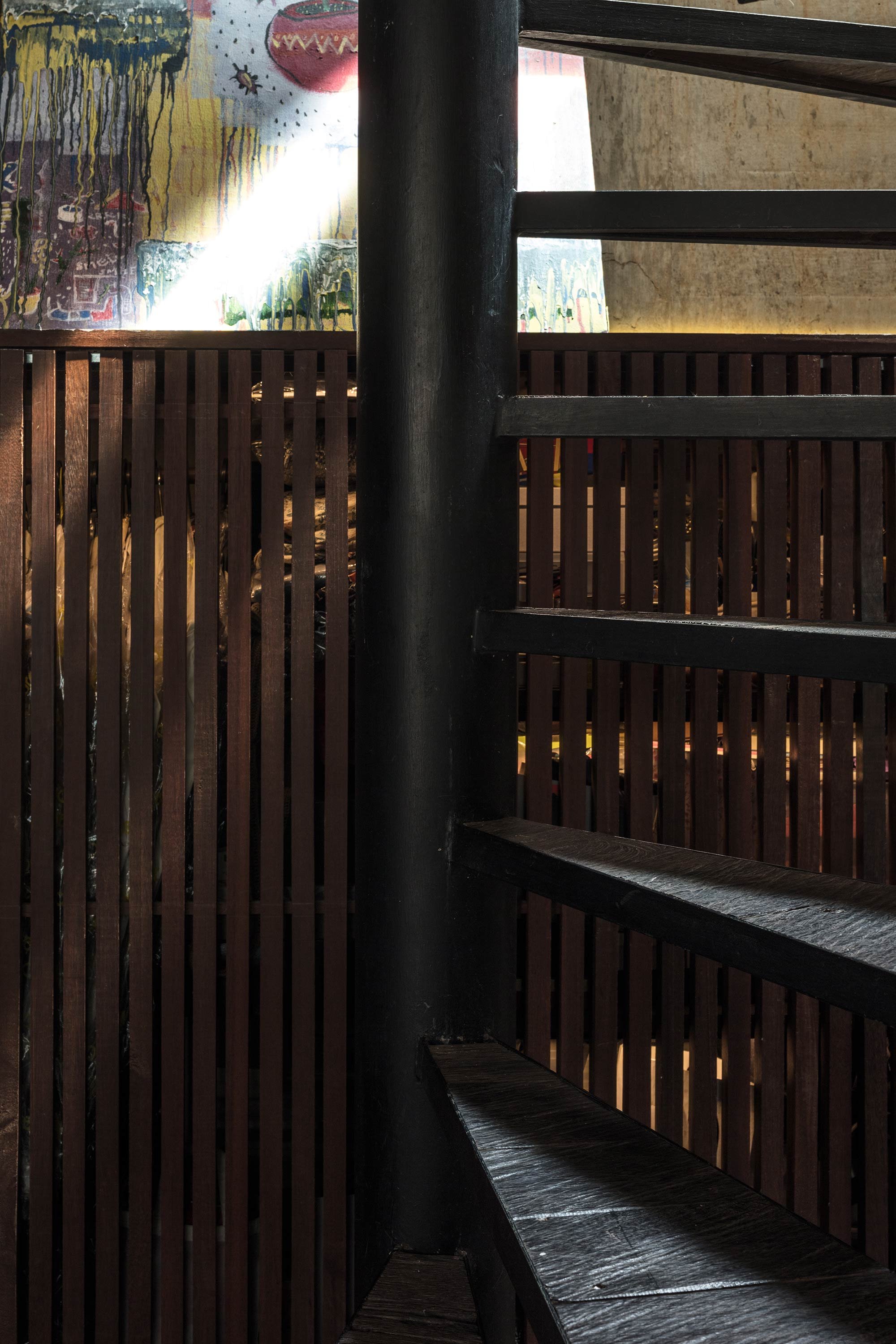
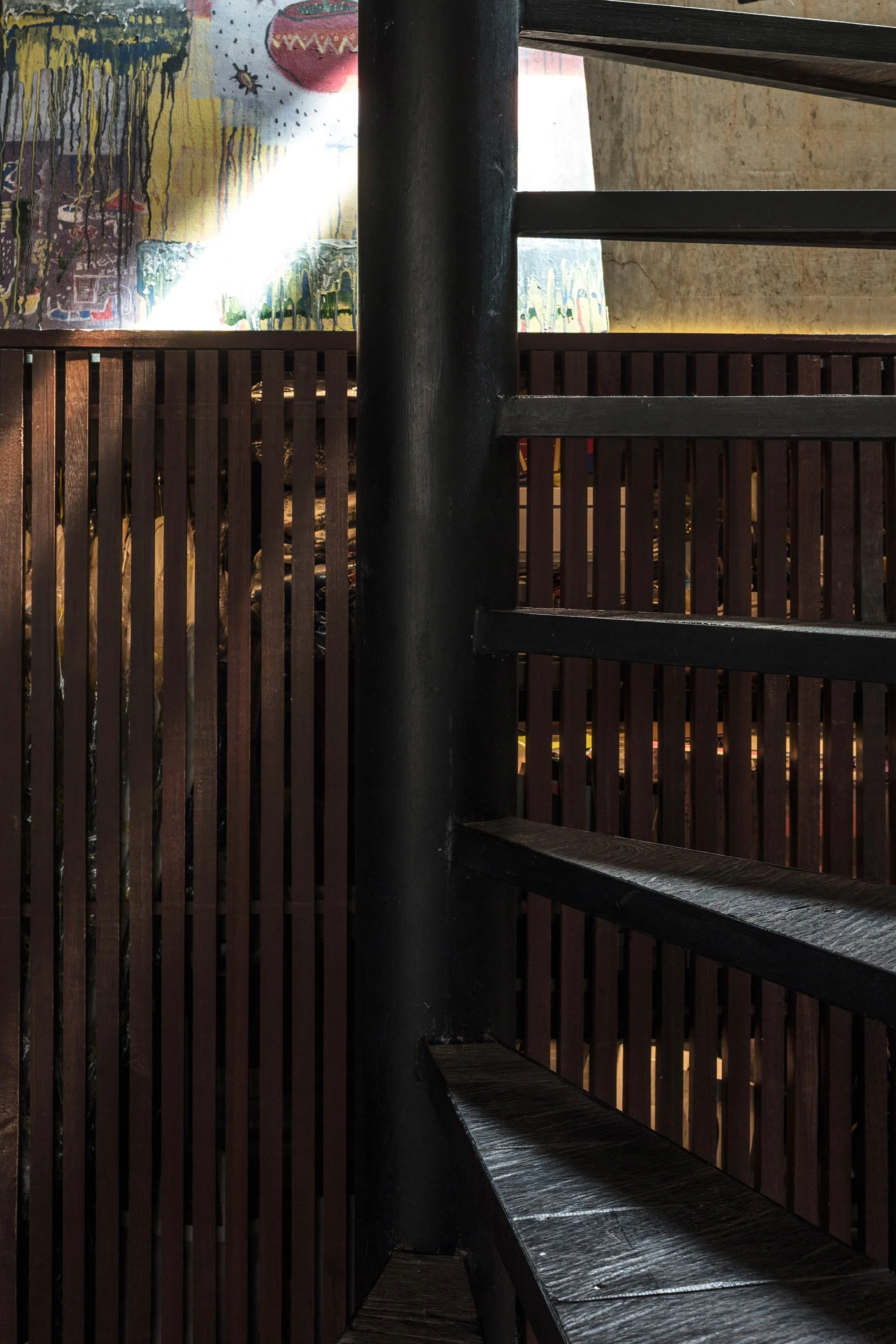
On the second floor, the children’s bedrooms are not unlike units in Japanese capsule hotels. A horizontal slit in the facade lets in fresh air, but otherwise the space is almost entirely isolated for climate control. The master bedroom is located in a cabin in one of the plot’s sharp corners — a relatively narrow area separated from the main building by a green space, with an uncovered ramp connecting the two structures. The room is a mezzanine containing no more than a mattress and access to a spiral staircase leading to the bathroom below. The bathroom, meanwhile, is half-subsumed into the landscape with a tree growing in its corner.
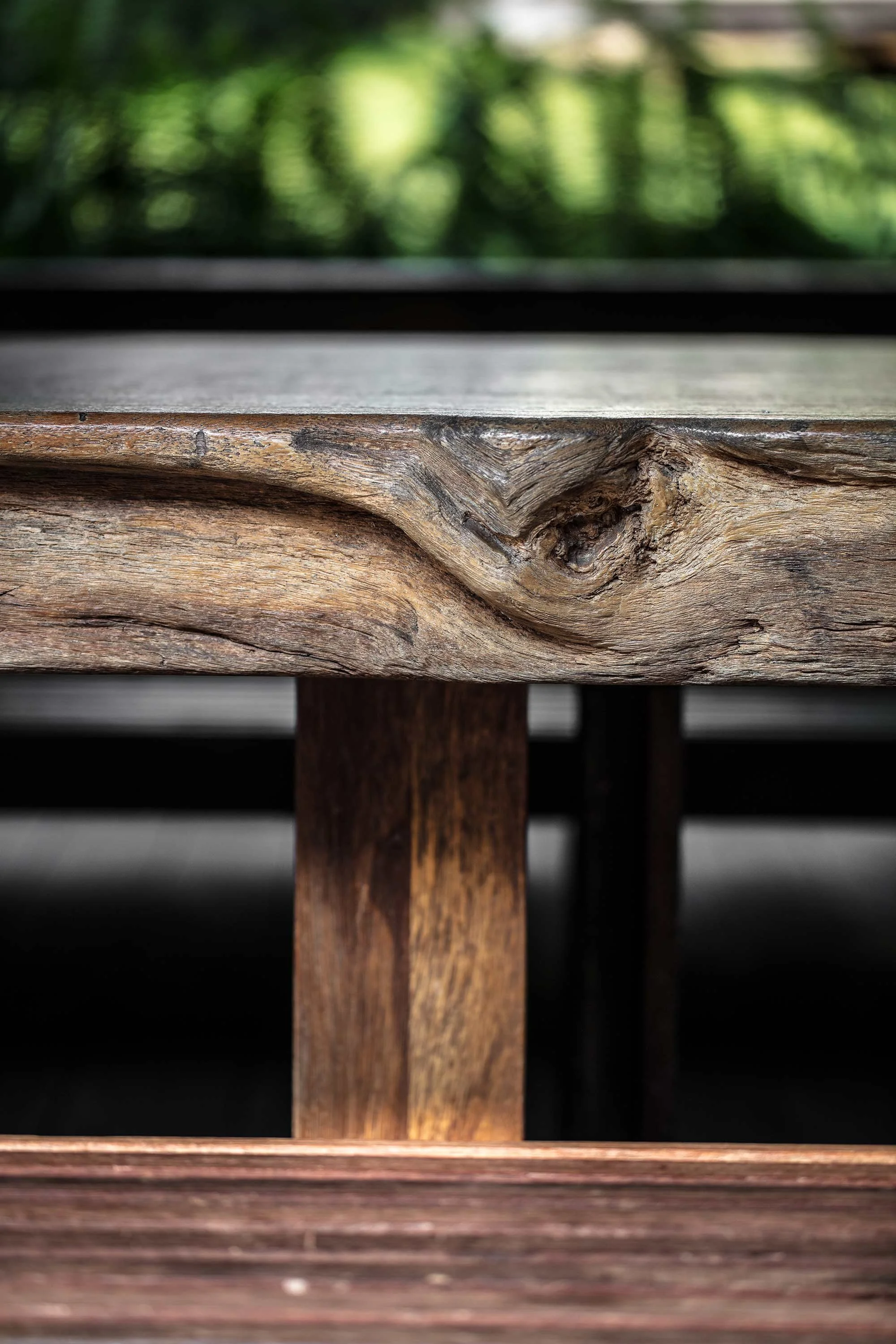
In contrast to the massive expression of rough concrete used as structural elements as well as whole walls, timber ramps and timber-paved platforms are fluidly interconnected without clear boundaries defining sheltered and unsheltered areas. The timber planks guide bare feet with their warm and textured surface, prompting one to relax and immerse oneself in the informal yet stylish atmosphere.
Matin’s family enjoys sitting in the living room, listening to the sound of leaves rustling in the wind, the gentle rippling of the swimming pool, or even the occasional light drizzle in wet season.
Text by Avianti Armand
Images by Edmon Leong
This story was originally published in Design Anthology issue 18, The Indonesia Issue