
Melbourne Studio Other Matter Pioneers Plant-Based Plastics

Image by Good Grief Productions, courtesy of Aesop
Experimental studio Other Matter is shifting the way we think about materials and design — and the environmental consequences of both — through a captivating, sensory new material.
In a Clifton Hill warehouse in Melbourne, Jessie French is busy cooking up plastic from microalgae as she talks. ‘At the heart of petrochemical plastics is fossil fuel, petroleum oil, which is so incredibly ancient,’ says the founder of sustainable material studio Other Matter. ‘The fossils you see in museums are like newborns compared to what’s inside oil.’ And herein lies a great paradox, as French explains. ‘We treat plastic as a cheap, throwaway material, even though it’s made from prehistoric ingredients and essentially powers the world.’
What began as a personal investigation into the pervasively toxic materials that wrap our world — signage film, vinyl and petroleum-based plastics — has grown into a design practice with global relevance. Other Matter is perhaps best known for its algae-based alternative to PVC: a translucent, tactile film that perfectly mimics vinyl in appearance, but is entirely plant-derived and biodegradable.
Working with a distinctly DIY sensibility that skews more towards home cook than lab technician, French began experimenting with algae polymers, pouring, adjusting and refining until one recipe consistently held up. The material was thin, flexible and printable. ‘I felt a real responsibility to do something with it,’ she says.
As a practising artist, French was accustomed to using vinyl for exhibition signage, until the toxicity of the material became impossible to ignore. ‘The PVC used in vinyl isn’t just petrochemical, it’s one of the most toxic forms of plastic currently out there,’ she says. ‘It’s harmful to people, both in the communities where it’s produced and in the spaces where it’s used.’ It’s so toxic, in fact, that museums don’t allow it near sensitive objects, and signage panels are usually placed far from the artworks.
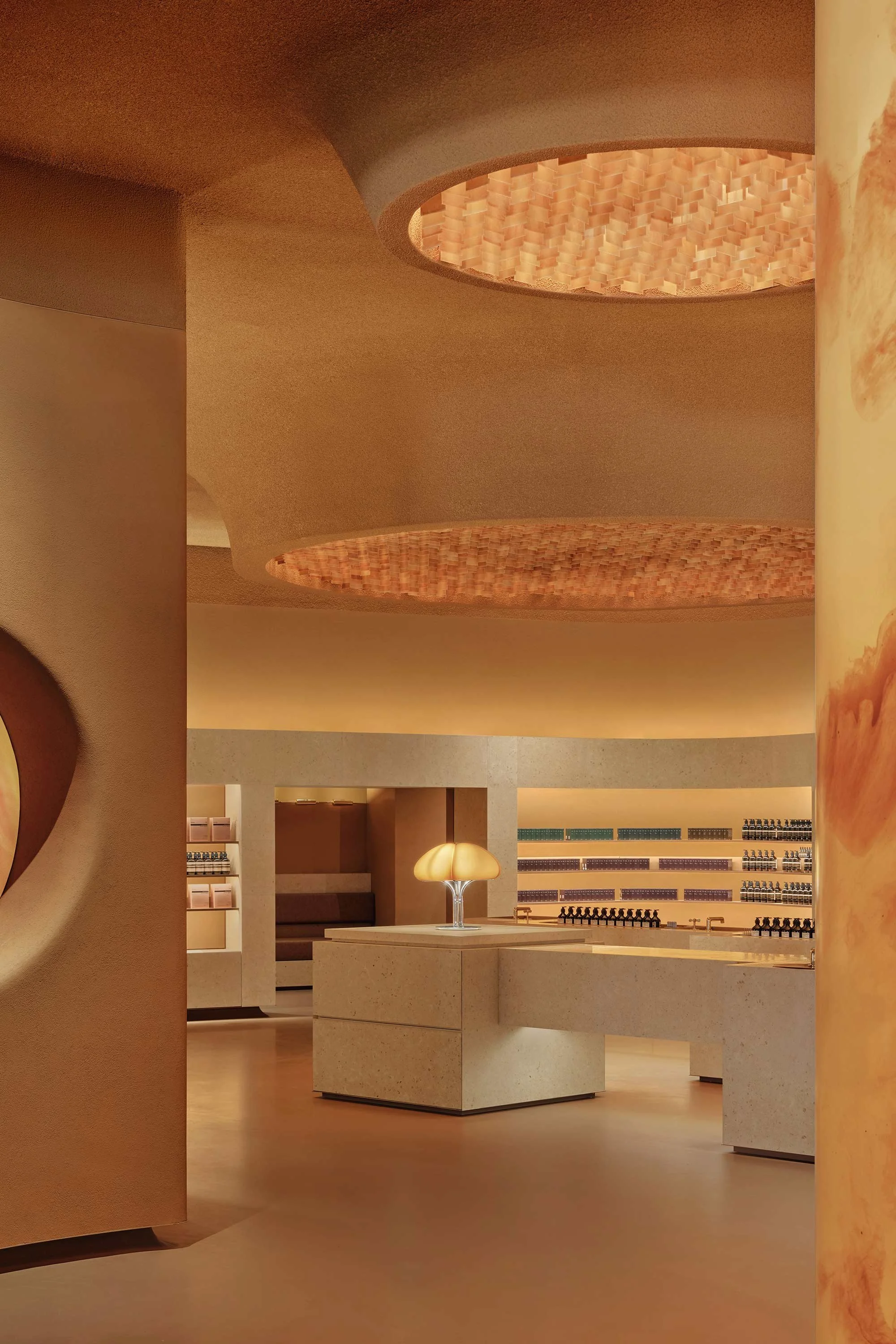
Image by Jonathan Leijonhufvud, courtesy of Aesop

Image by Jonathan Leijonhufvud, courtesy of Aesop
This revelation was a turning point for French. She approached a vinyl manufacturer with the prospect of helping develop her algae-based film and was met with keen enthusiasm. ‘They were happy to be part of the process — everyone in the industry knows how bad PVC is, but there’s no real alternative out there.’
Other Matter has since expanded its offering from gallery signage to large-scale installations and commercial interiors. Its first interior project, for an Aesop store in Hainan, China, involved wrapping large entry columns and hundreds of small glass panels with the polymer film that, in its glowing orange hue, was reminiscent of marble or sediment. The skincare brand, known for its progressive social and environmental awareness, has been a longstanding collaborator.
‘Aesop was our first industry partner, an innovation partner, really,’ French says. ‘They were one of the first brands I knew that moved away from vinyl, and they’ve been a wonderful advocate, pushing us to experiment and trial our work in their stores.’
As part of this year’s Melbourne Design Week, Aesop and Other Matter created a walking tour of four store installations, each showcasing the material’s diverse capabilities and applications: plinths, printed hangings, architectural skins, curtains and large-scale window texts, all made from the algae-based film. The final stop allowed visitors to peel off a piece of the material and take it home. Sculptural light fittings and art hangings by Other Matter also featured in an exhibition hosted by luxury lighting designer Christopher Boots.
‘Of all the outcomes so far, the signage has been the most satisfying,’ French says. ‘It has such flexibility and potential to create positive change.’ But more than a design material, Other Matter’s polymer is also a poetic, sensory storytelling device. ‘Because it’s hydrophilic, the material interacts with smell in such a dynamic way,’ French notes. ‘It disperses scent gently and evenly, not unlike skin. It’s porous and releases scent over time, what perfumers call “sillage”.’
This year, Other Matter begins an exciting new chapter: a research partnership with Australia’s national science agency, the Commonwealth Scientific and Industrial Research Organisation (CSIRO). From humble roots and its non-laboratory beginnings, the studio’s radical artisanal process has charted a new course in the world of sustainable materials, which this collaboration will help scale further.
French’s practice insists that new materials can do more than imitate: like art, this plant-based plastic provokes, enchants and endures. In a world wrapped in and fuelled by harmful chemicals, Other Matter shows what’s possible when we peel back the status quo.
Text by Sandra Tan
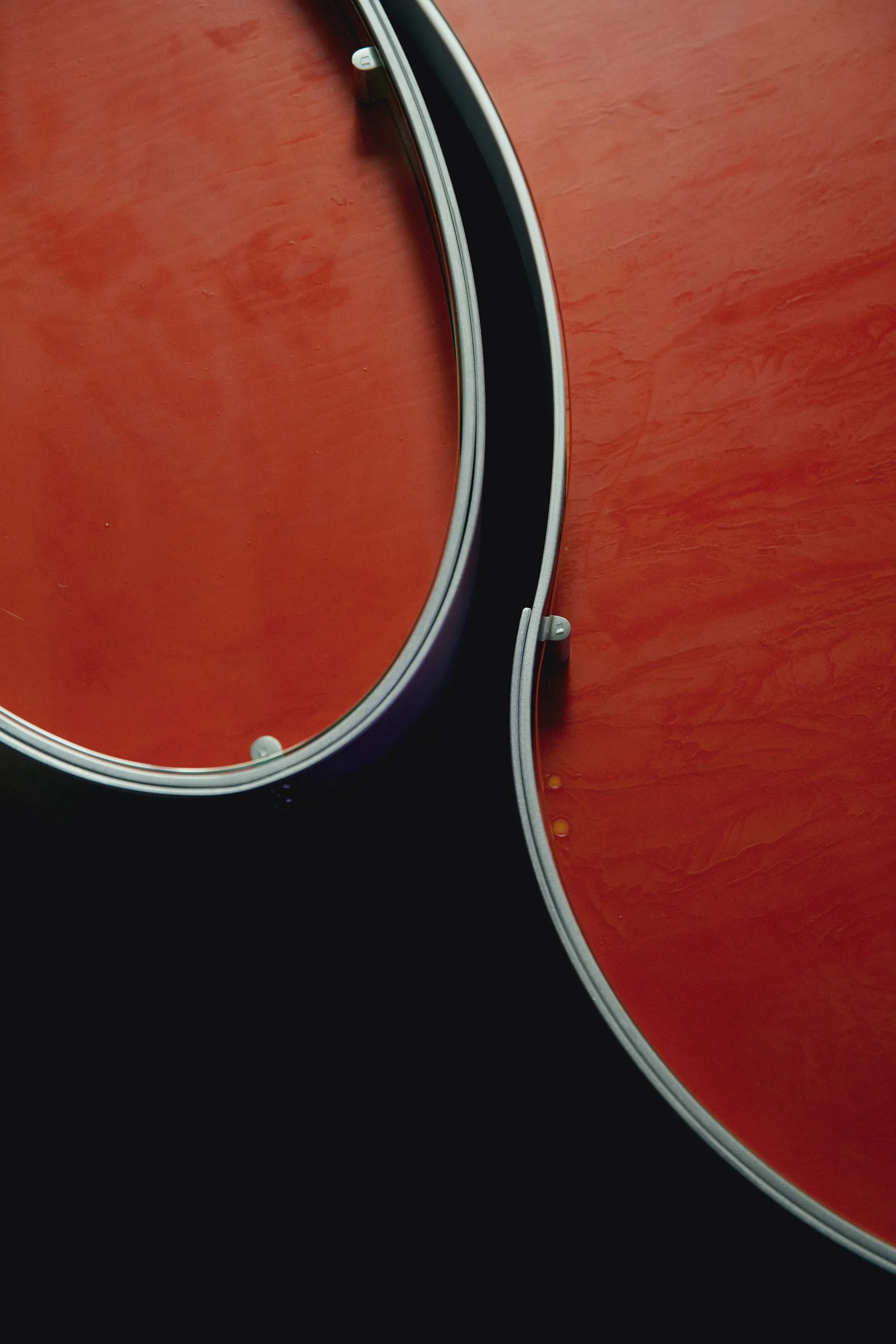
Image by Kelly Geddes, courtesy of Daniel Boddam Studio