Space-Hacking in the Shadows of Power: Rockbund Art Museum’s Shanghai Picnic Tackles Urban Scarcity
Under the guidance of Thai architect Rachaporn Choochuey, Shanghai Picnic, the Rockbund Art Museum’s biennial architecture festival, interrogated urban scarcity on a communal stage
Shanghai Picnic is the second edition of RAM Assembles, the biennial festival on architectural thinking at the Rockbund Art Museum (RAM) in Huangpu, Shanghai. Rachaporn Choochuey, founder of Bangkok-based architecture practice All(zone), led the firm’s artistic direction of this year’s edition. Her vision: go small in a city that’s monumental.
Once, while watching people eat lunch perched on a narrow building ledge in Shanghai, Choochuey considered the issue of urban scarcity: the lack of public space for eating, resting, talking. There is global relevance, she notes. ‘As cities grow, they face similar challenges worldwide.’
Taking place from 12 to 28 September, Shanghai Picnic used the ‘picnic’ metaphor to retool public space. Picnics are adaptive: people gather, swap food, share conversation — they make connections, then disperse. The Rockbund neighbourhood was briefly transformed, with architects reimagining the alleyways framing the cobblestone plaza outside RAM with the aim of resuscitating the plaza, which is often a dead zone in the daytime.
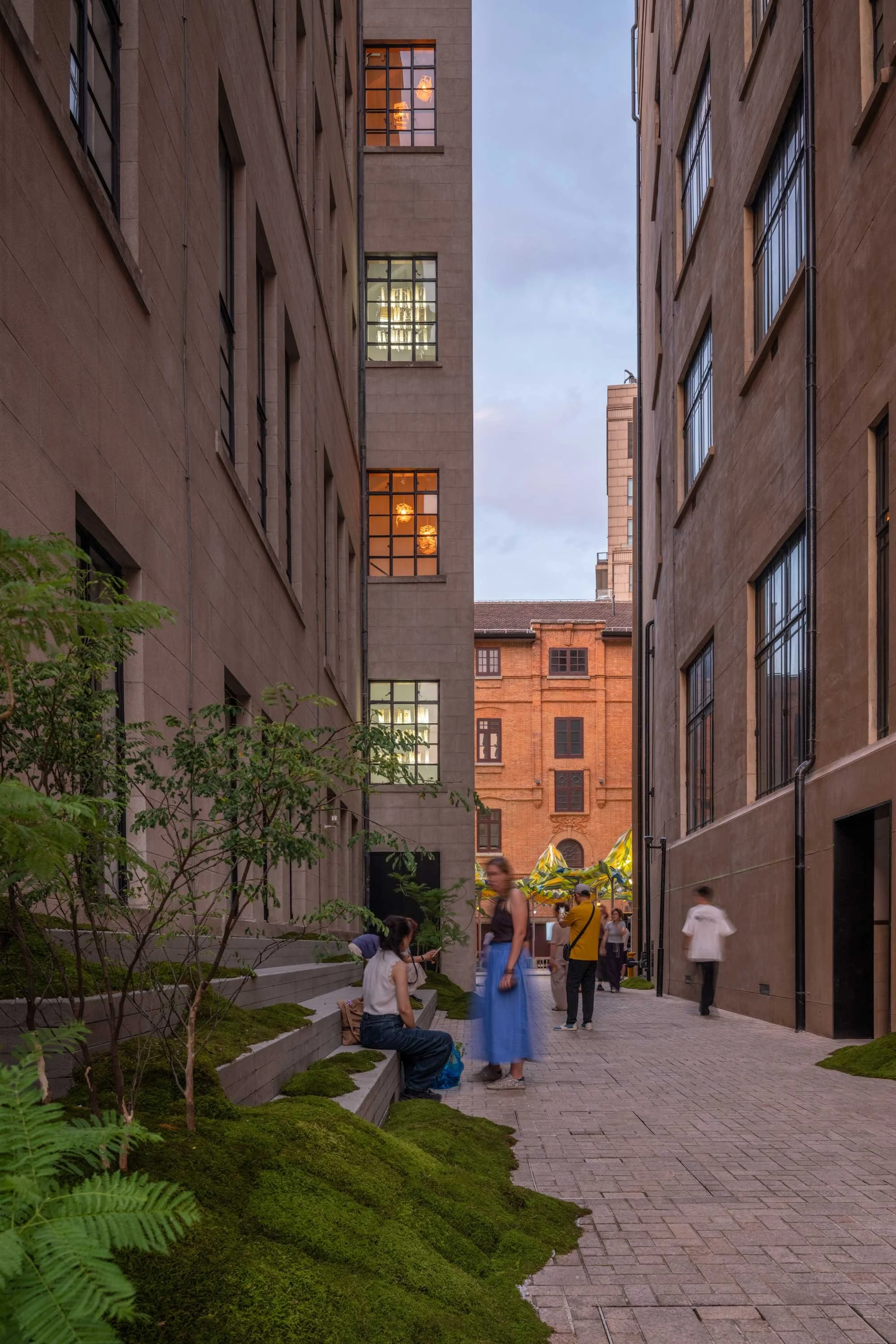
The interventions were colourful and friendly. Beijing-based Studio Vapore’s A Gentle Reclaim transformed RAM’s southern alley with moss planted in pavement cracks, between steps and on the plaza edge (pictured above). Shanghai lacks green space, so these little mounds, the architects hoped, might remind us what vanishes when cities expand.
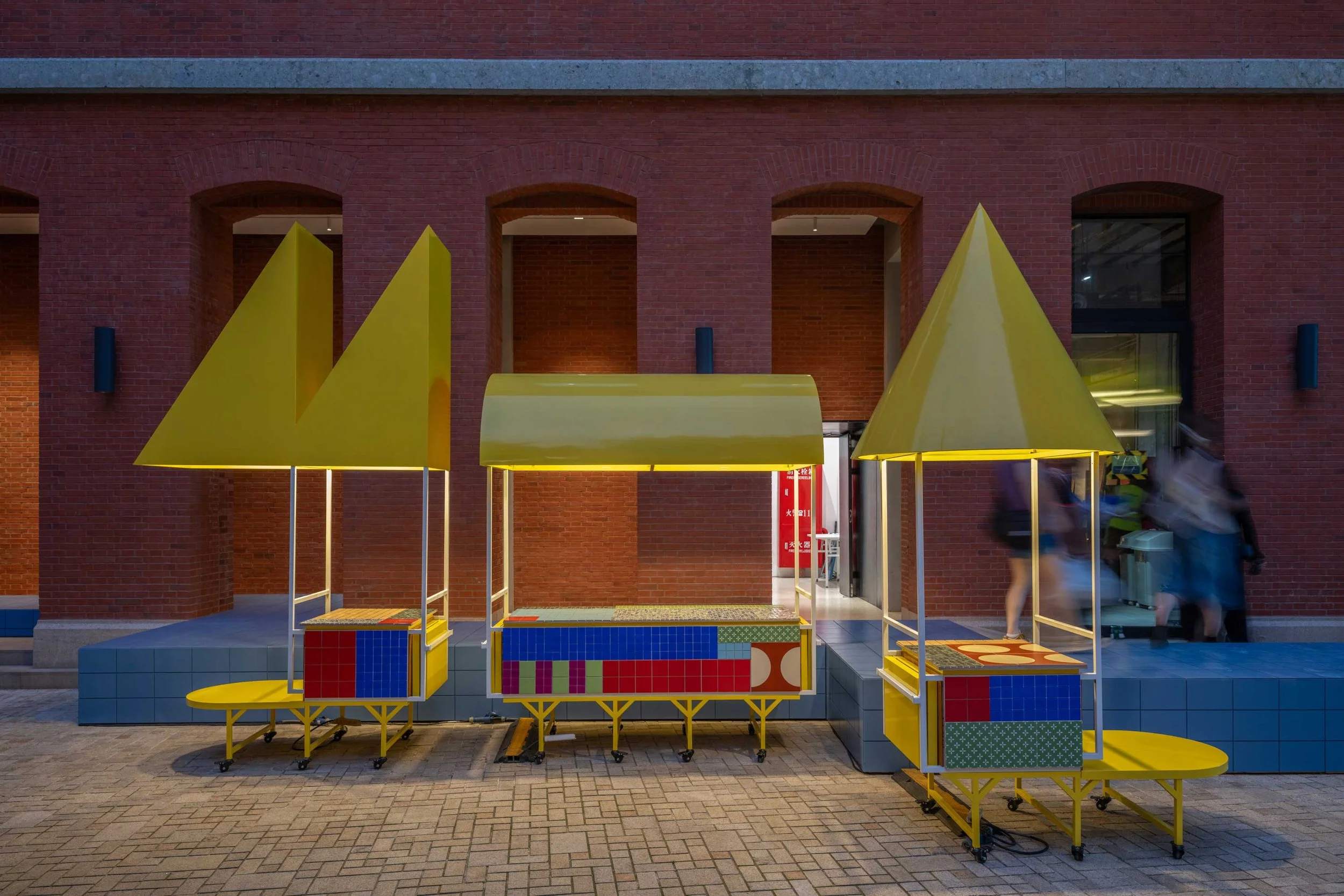
Ways to Roam by Bangkok’s Alkhemist Architects (pictured top) presented four hospitality carts in bold patterns, inspired by the cross-pollination of traditional Thai and Chinese cultures. They conjoined to form benches, seating and tables. The roofs, a vivid yellow mesh of cones, triangles and squares, formed unexpected unions depending on how the carts line up.
Wuhan studio Tangent Essays’ In Search of a Loggia tackled the ‘secondary face’ of the abutting Andrews & George building. The building’s slim loggia, truncated by planning diktats, hugs the plaza via Tangent Essay’s low, zigzagging platform. The expansion was both a walkway and a space to rest.
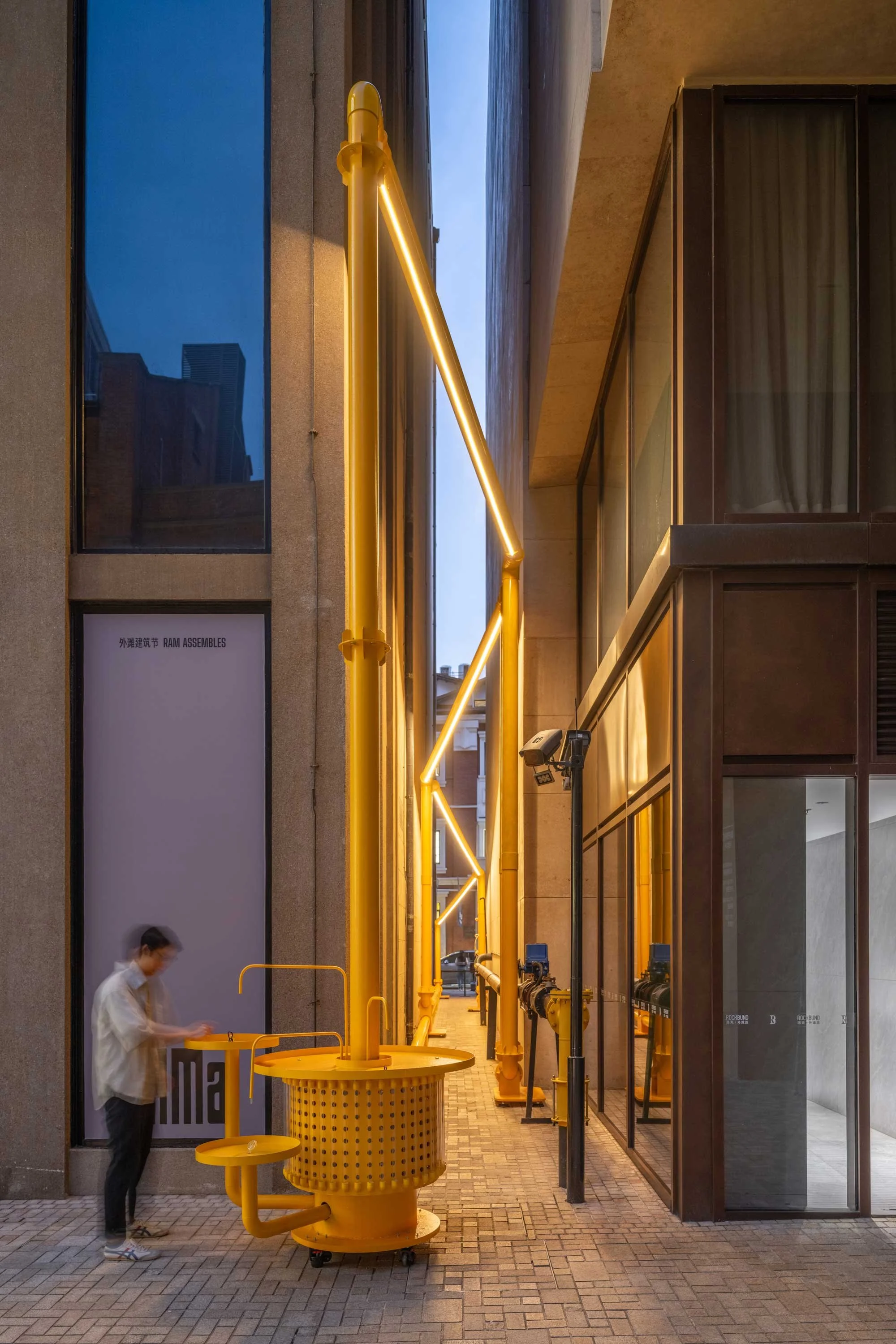
RAM’s northern alley hosted Pipe Up! (pictured above) by Shanghai’s Wwworks. Amid industrial service pipes, the architects inserted a bright yellow water fountain that filtered, dispensed and recycled water, and was lit up after dark.
The exploration of interstitial space has shaped architecture and urban design. French anthropologist Marc Augé’s concept of ‘non-places’, Catalan theorist and architect Ignasi de Solà-Morales’s ‘terrain vague’, and American author Hakim Bey’s theory of ‘temporary autonomous zones’ all exert enormous influence. Shanghai Picnic follows this impulse. David Chipperfield, who restored the Rockbund area’s 11 heritage buildings and was the event’s first artistic director in 2023, said at the first RAM Assembles that the plaza and other ‘liminal spaces provide room to be part of something, to share space and time’.
But what does it all mean? The term ‘liminal space’ is perhaps overused and underexplained, having colonised countless museum catalogues. A buzz phrase, it signifies everything and nothing. Shanghai Picnic tried to rise above. Wwworks’s water fountain did what all interstitial addicts promise: to shine a light on in-between space (literally, in this case). And it’s also an extremely practical intervention, recalling the city’s past when community water stations were provided in a ‘shared public care initiative’. Here, to brave the alley was to be rewarded with tangible effect.
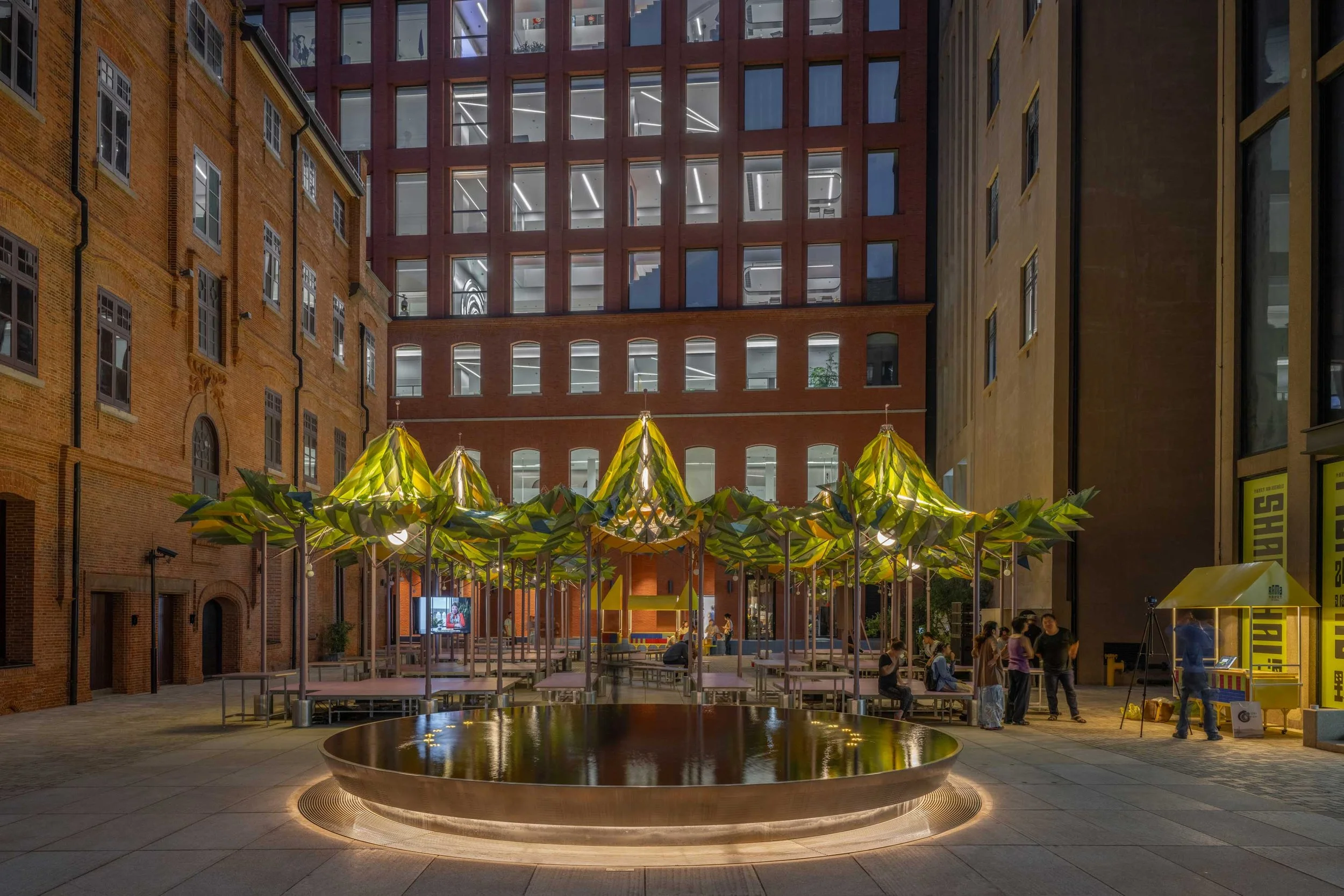
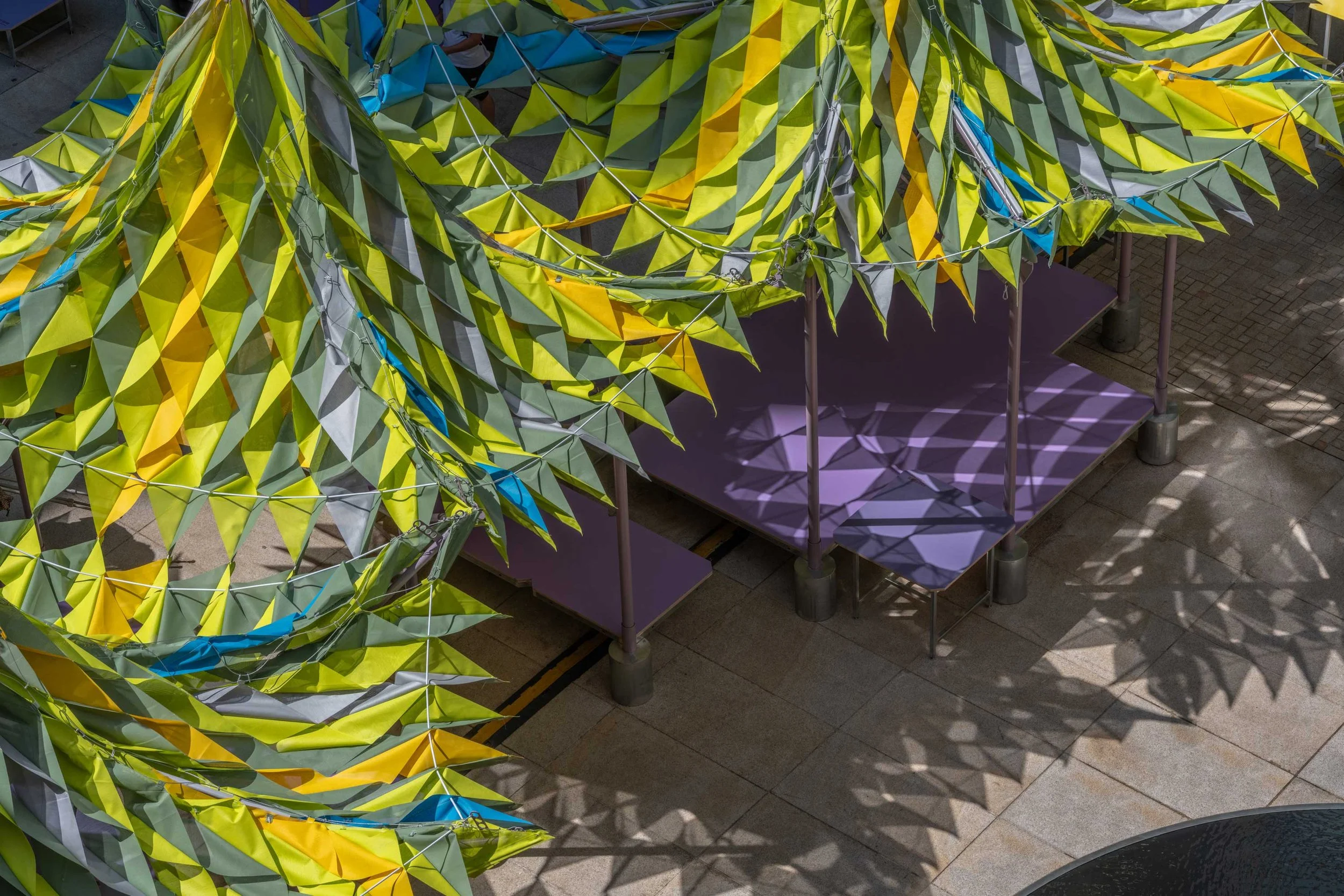
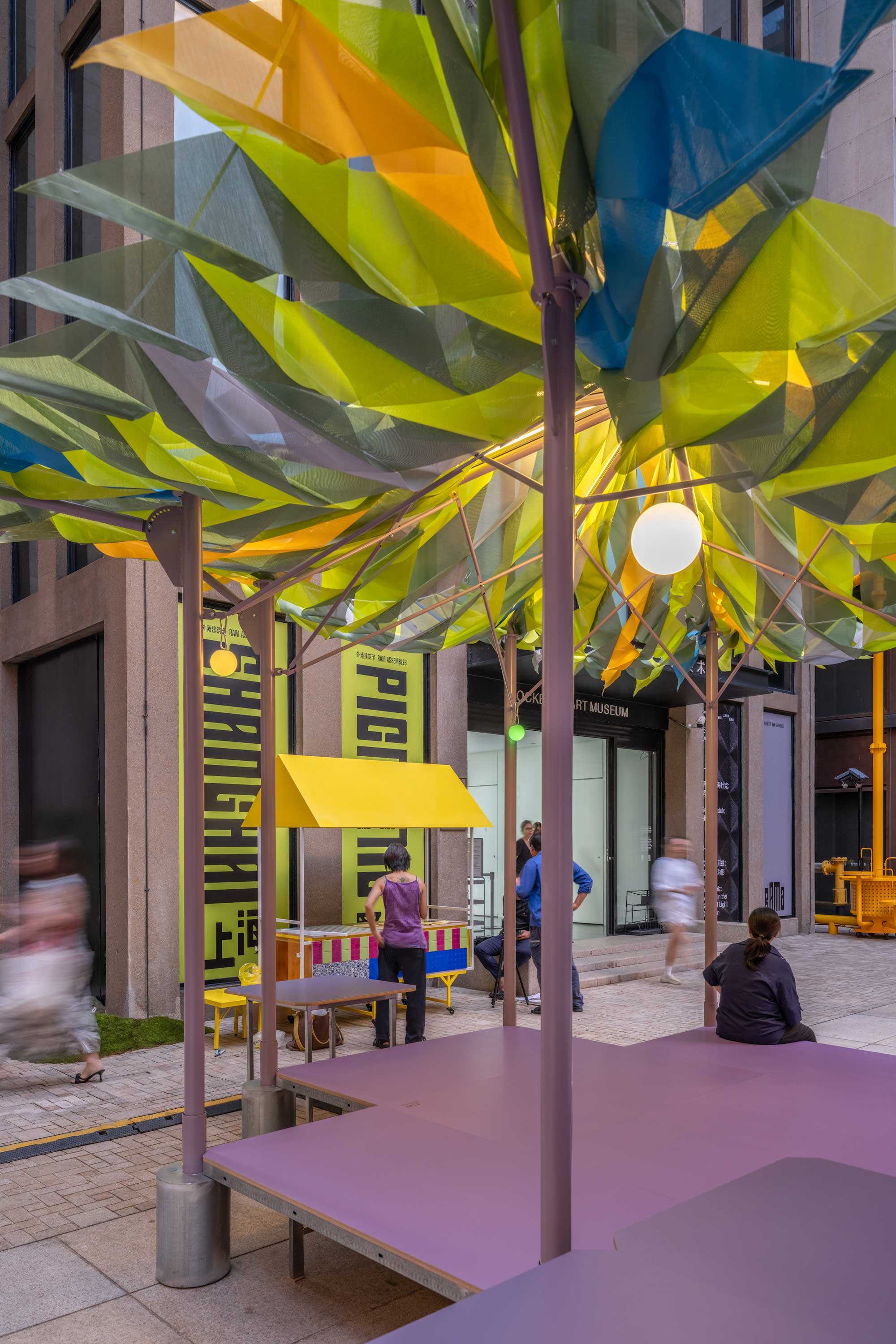
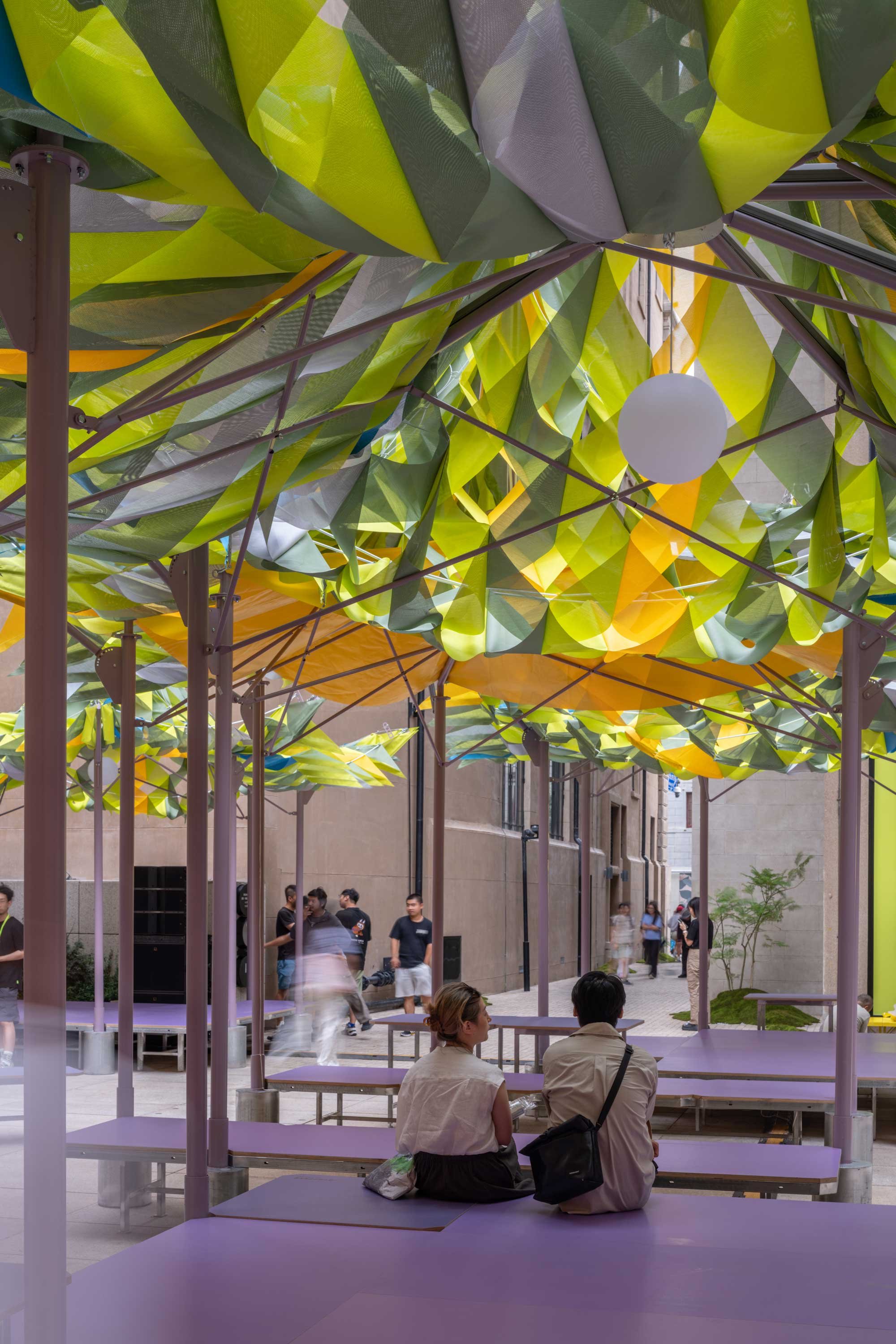
All(zone)’s own intervention, Under a Common Sky, Sheltered to Gather (pictured above and below), covered half the plaza. Vibrant, variegated canopies covered purple modular seating and tables stamped with motivational slogans: ‘Disrupt the grid’, ‘Static is not a virtue’. Both stage and backdrop, it hosted talks, performances and films. True to form, it was designed to bring us together before being packed up and installed elsewhere. Comfortable in the heat, it underscored another of Choochuey’s tenets: ‘Air conditioning kills architecture,’ she says, ‘because you don’t have to do anything. It kills architects’ ability to understand the climate.’ That’s a lesson from Bangkok to the world: ‘What can architecture from a tropical climate teach a warming world?’
Shanghai Picnic was commissioned by X Zhu-Nowell, RAM’s executive director. Shanghai seems to exemplify hyper-capitalism, its skyscraper skyline the index. For Zhu-Nowell, resistance powers RAM Assembles, a sort of anti-Venice: Asia-centric and celebrating small-scale practicality over mega-projects and starchitects.
The festival encourages us to see the city through new eyes and to appropriate ‘dominated space’. That’s difficult anywhere, let alone China. When reimagining public space, the architectures of control are strong and perhaps results can only be fleeting. Shanghai Picnic stimulates debate, but nagging questions linger. Those pursuing interstitiality must ask: are such outcomes ever enough?
Text by Simon Sellars
Images by Tian Fangfang