Is it a House, a Theatre or a Sub-Station? Inside Singapore’s Most Enigmatic Black Box
This singular home acts as a canvas for its owners’ artistic work and existential views
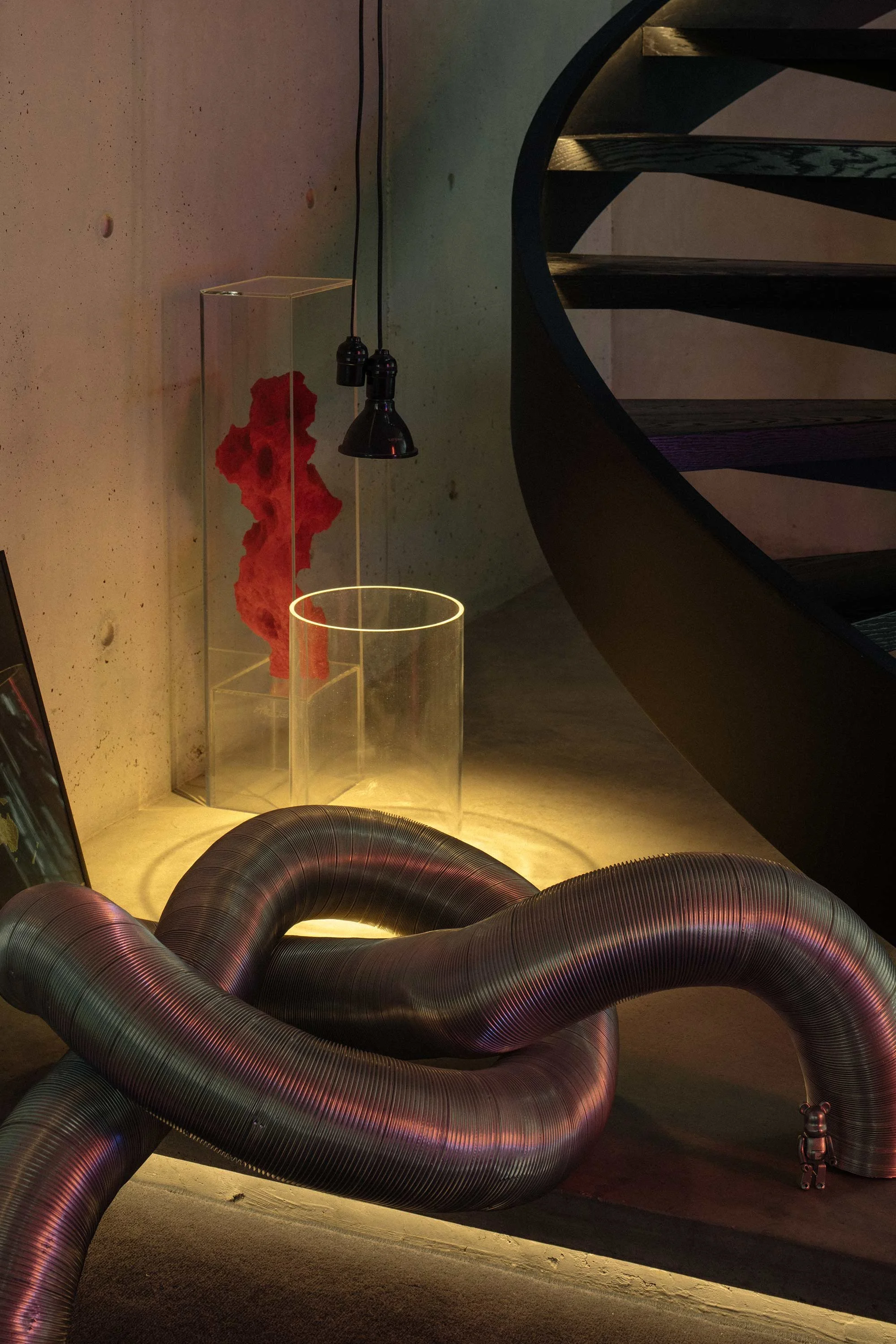
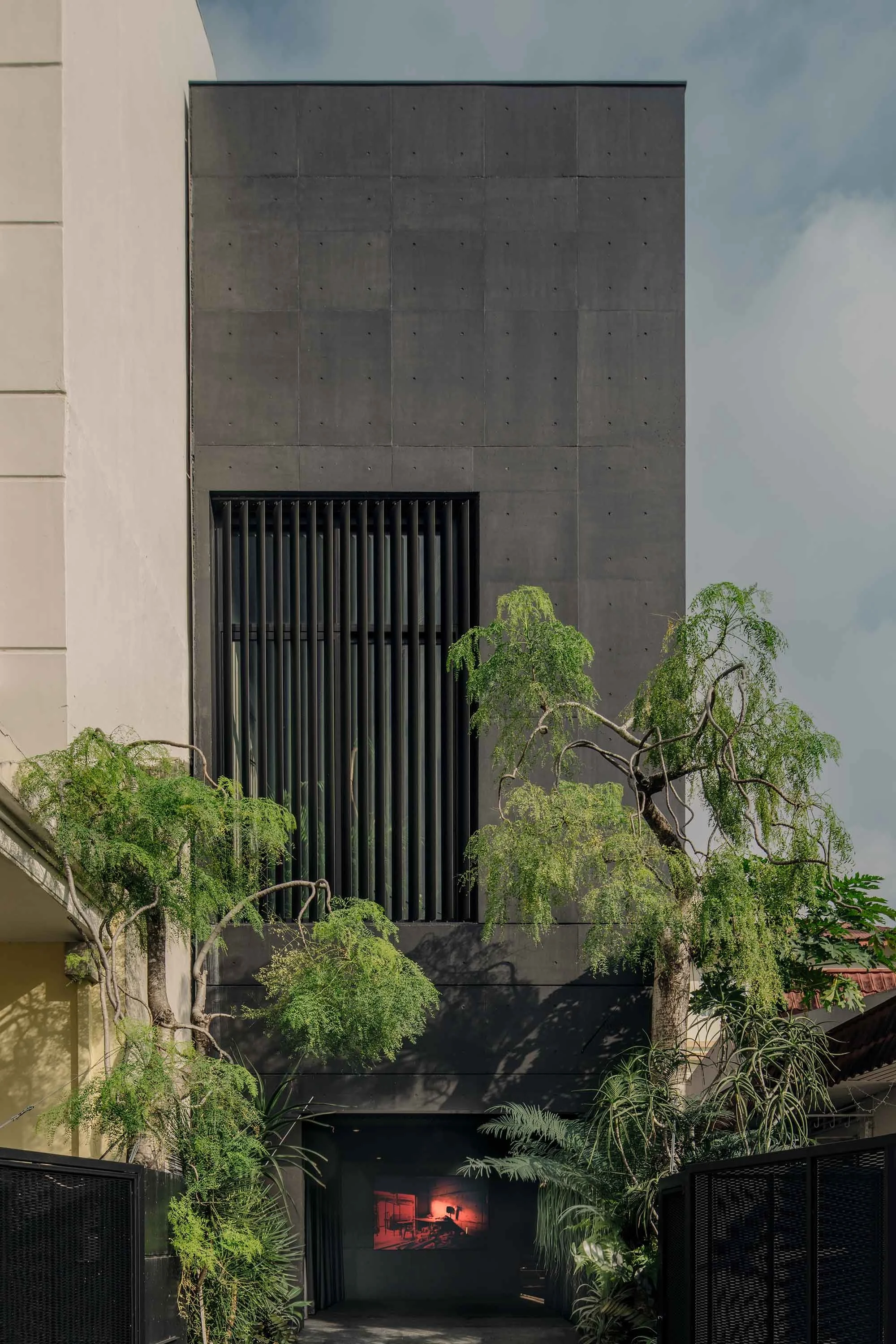
The first thing one notices on the black-stained concrete facade of this terrace house in Singapore’s Little India is the tangle of black industrial trunking. This gesture hints at the building’s function as a canvas for the homeowners’ many self-made art pieces. A couple in a creative field, the owners intended to elevate the house beyond functionality and called on local studio Ministry of Design (MOD) with the rather enigmatic brief to ‘let the home capture the spirit of the philosophy beyond life, as we know it’.
This philosophy refers to the Christian understanding of life on this earth as ephemeral and a mere ‘stepping-stone to the next life, however permanent it appears,’ explains MOD co-founder and design director Colin Seah. The architecture is designed with this idea in mind, but the multi-storey construct with only two slim windows — one in front and one behind — also considers the couple’s personalities. ‘The husband-and-wife owners are hyper-social on one level, but hyper-private on the other,’ notes MOD co-founder Joy Seah. Any demarcation of clear scale or domestic content is absent from the black-box structure. Is it even a house? Is it a theatre? A sub-station?
Colin explains that this idiosyncrasy gels with the streetscape, a hodgepodge of typologies that eschews the clear zoning typical of Singapore’s residential estates. The home’s unabashed strangeness is what melds it to the offbeat whole of the street; it is an enigma, augmented by an orchestrated trajectory or series of ‘acts’ like in a play. One enters the ground floor through a sort of proscenium between the garden and garage, flanked by black curtains that hide shoe storage, bicycles and other paraphernalia. Even the garden is a type of memento mori, animated as it is by sprawling Moringa, known as the ‘tree of life’ for its incredible durability, nutrient density and supposed protective properties.
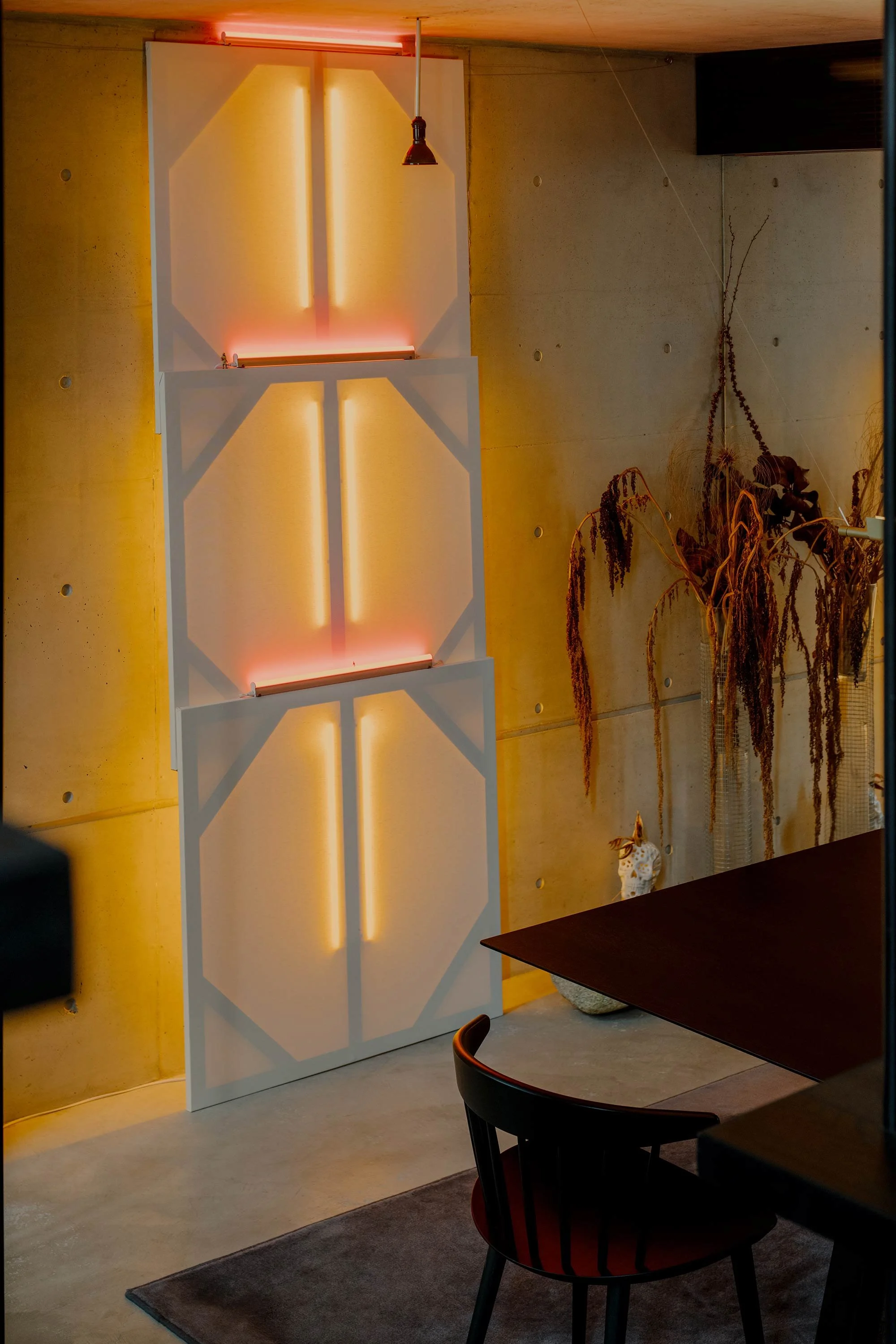
In the garage, a large photograph of the space taken during the construction stage glows cinematically on a red lightbox, a silent commentary on the dual sentiments of destruction and rebirth in the process of building the house. The notion is reiterated in a series of viewing portals on a raised metal platform before the main door, which offer a view into an installation of debris salvaged from the site’s former structure. The piece elevates the prosaic, creating art from dirt, and the result is not unlike looking into an archaeological dig at a museum.
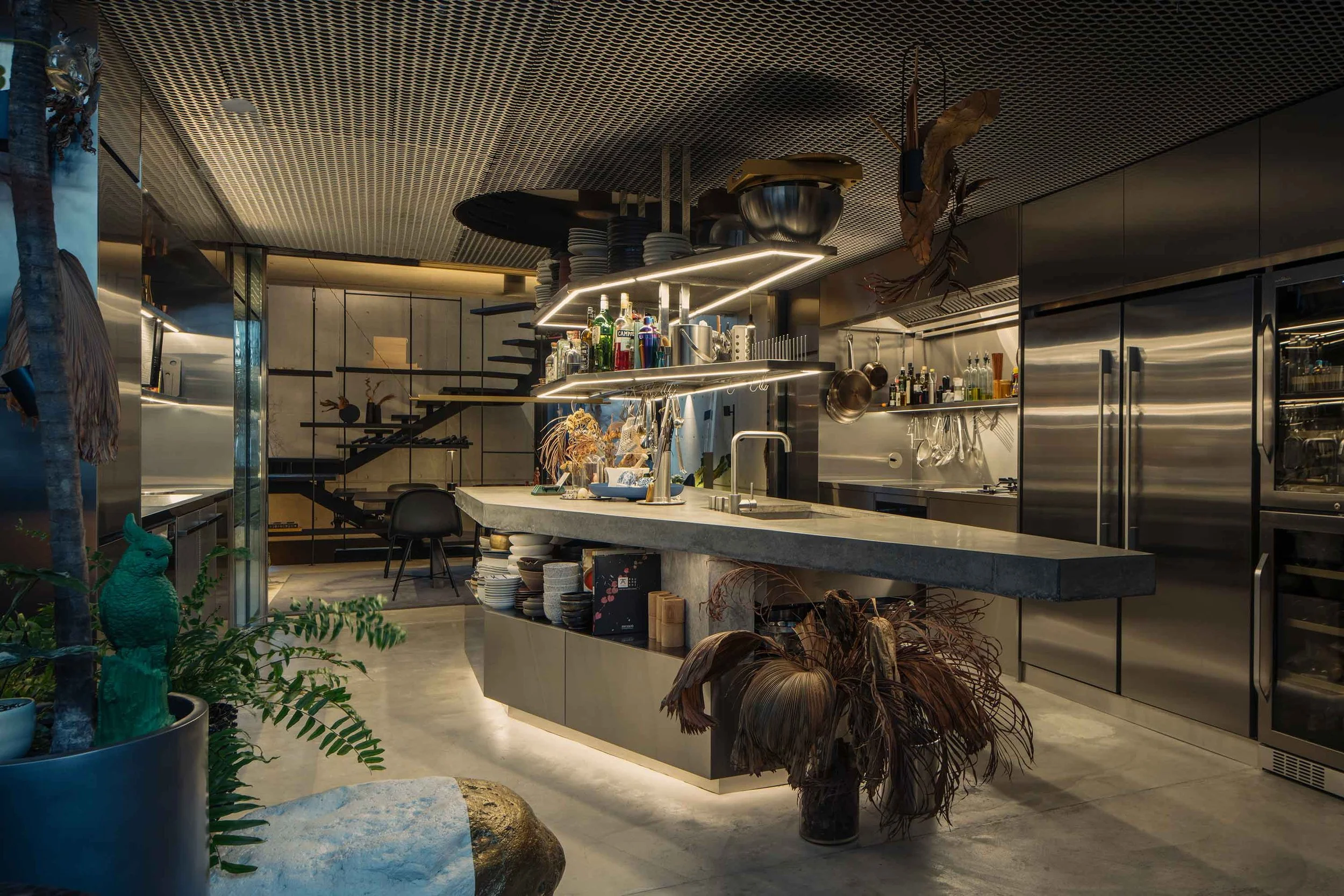
Even before entering the house proper, the scene is thick with mystery and a sense of discovery. A black panel conceals the guestroom door, placed along this entryway so that guests can have a self-sufficient silo without entering the main home. Through the door and up a darkened stairwell, one arrives at the second act: the black steps, defined like a dark cut-out in the floor, transition into screed concrete flooring and a stainless-steel kitchen.
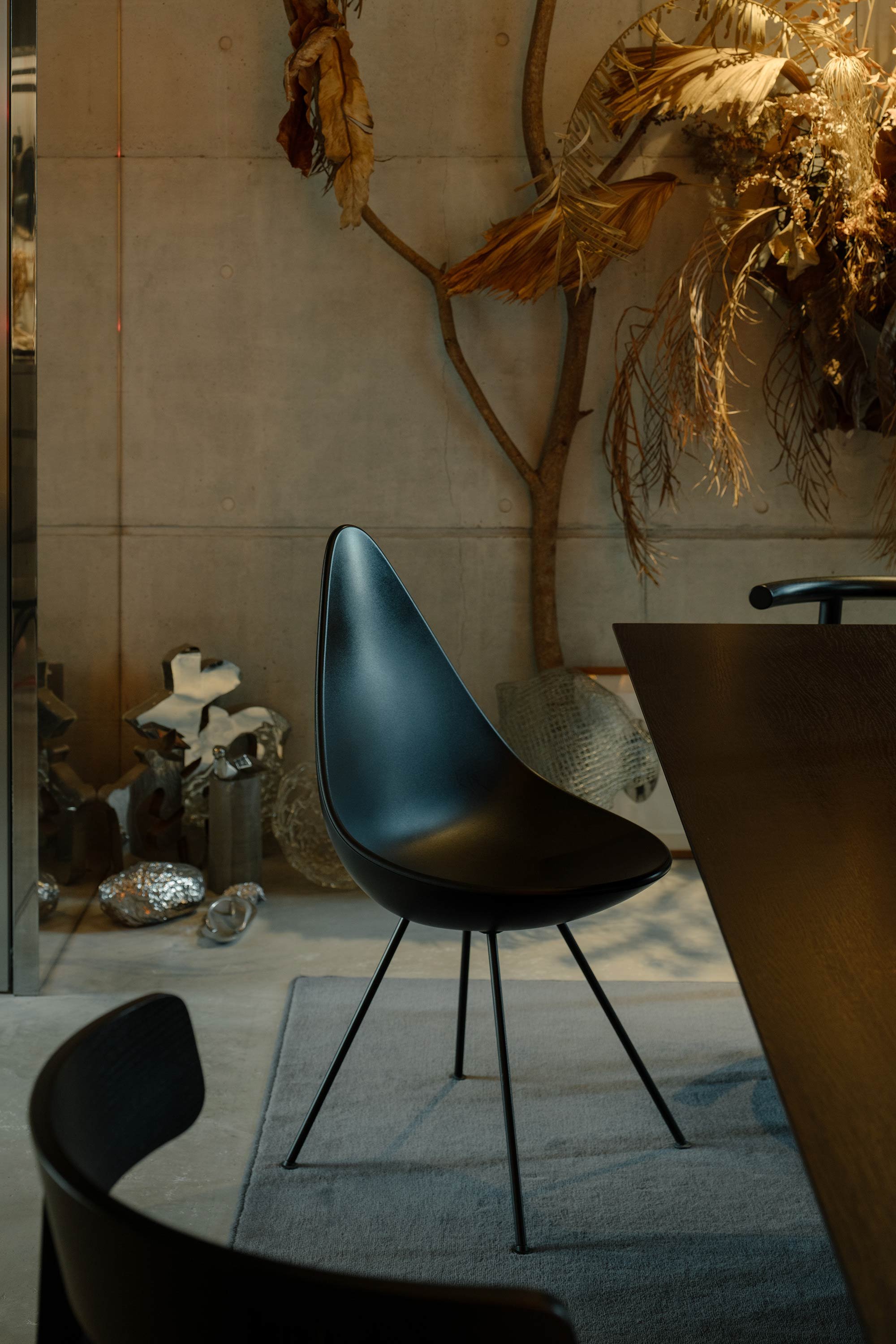
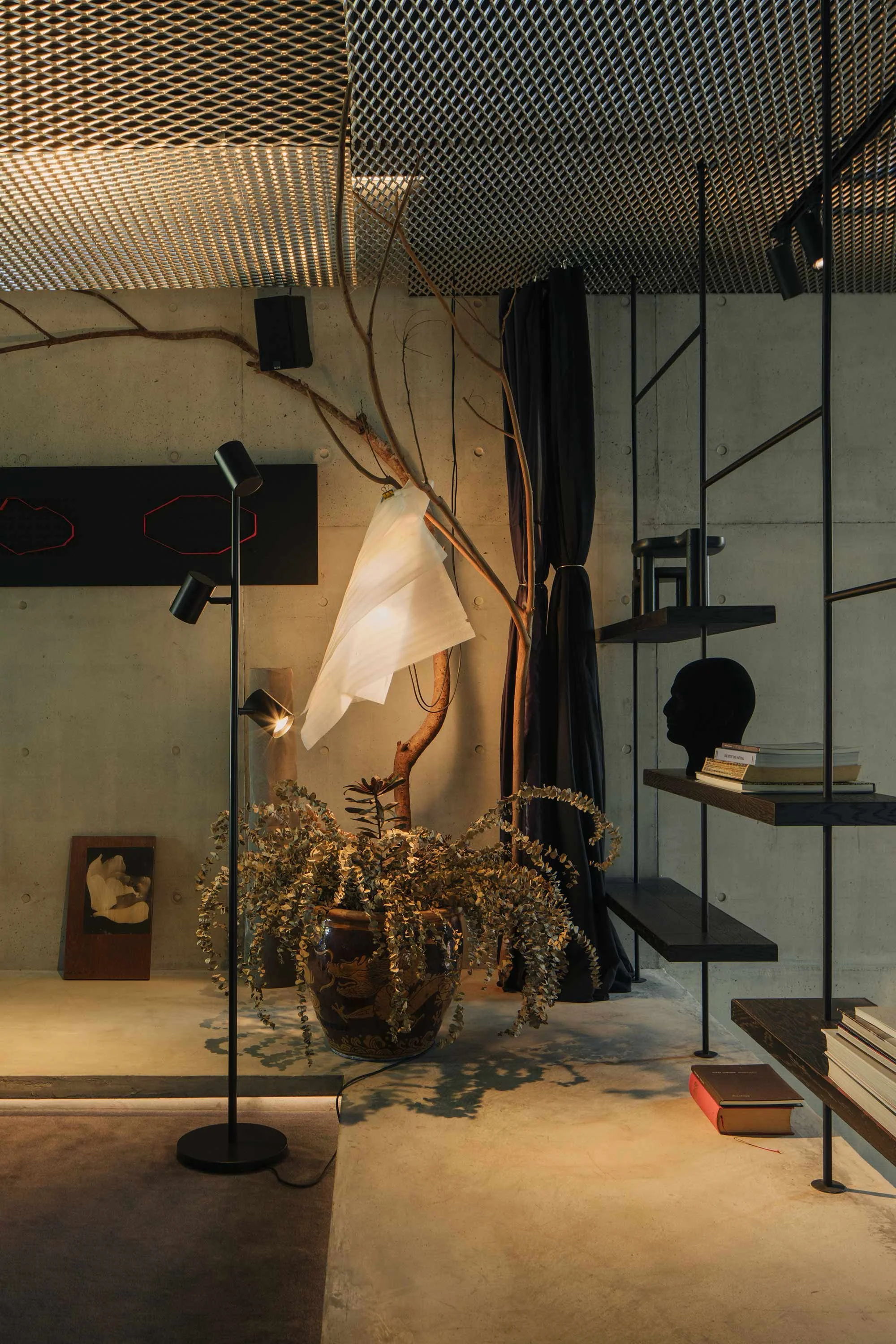
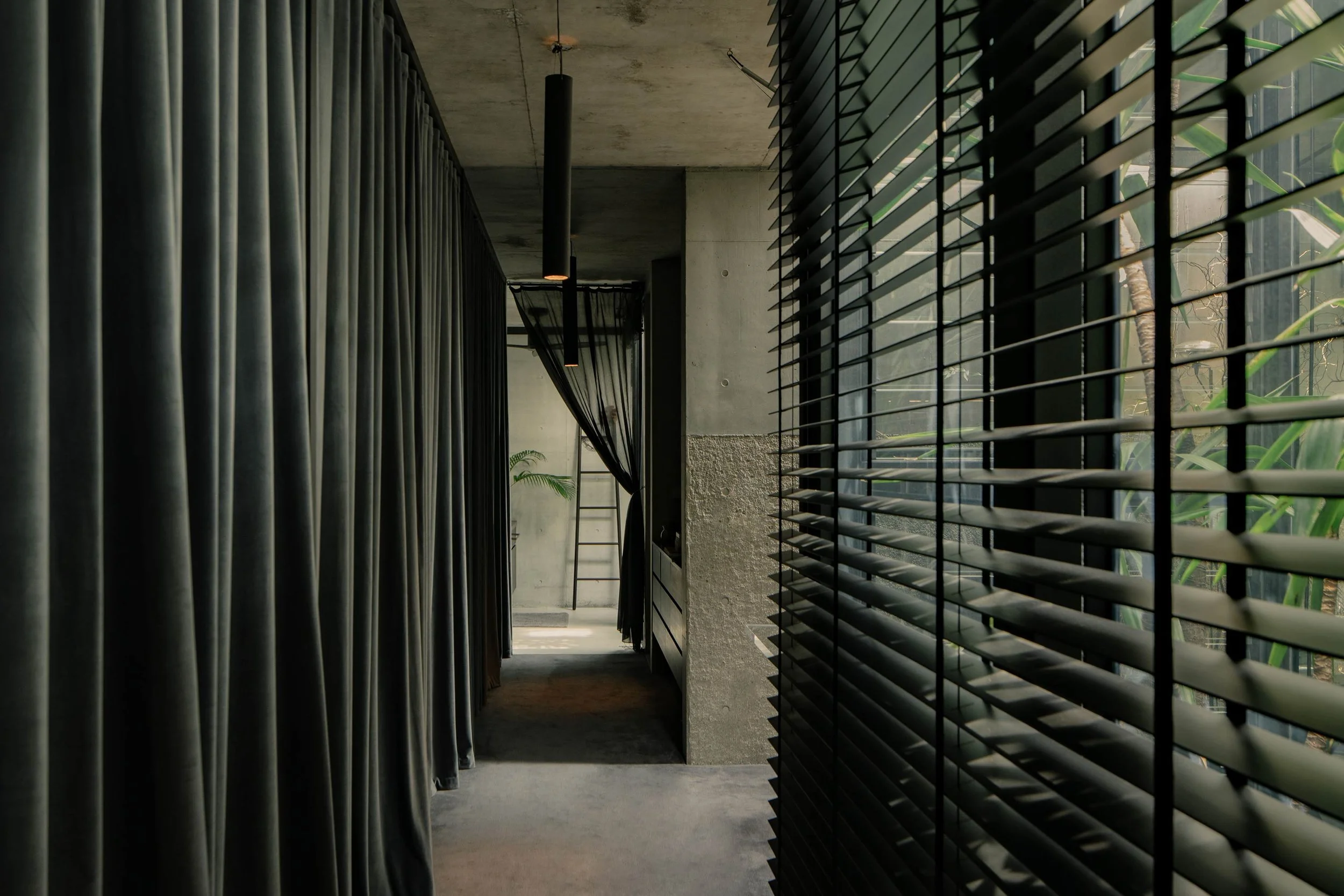
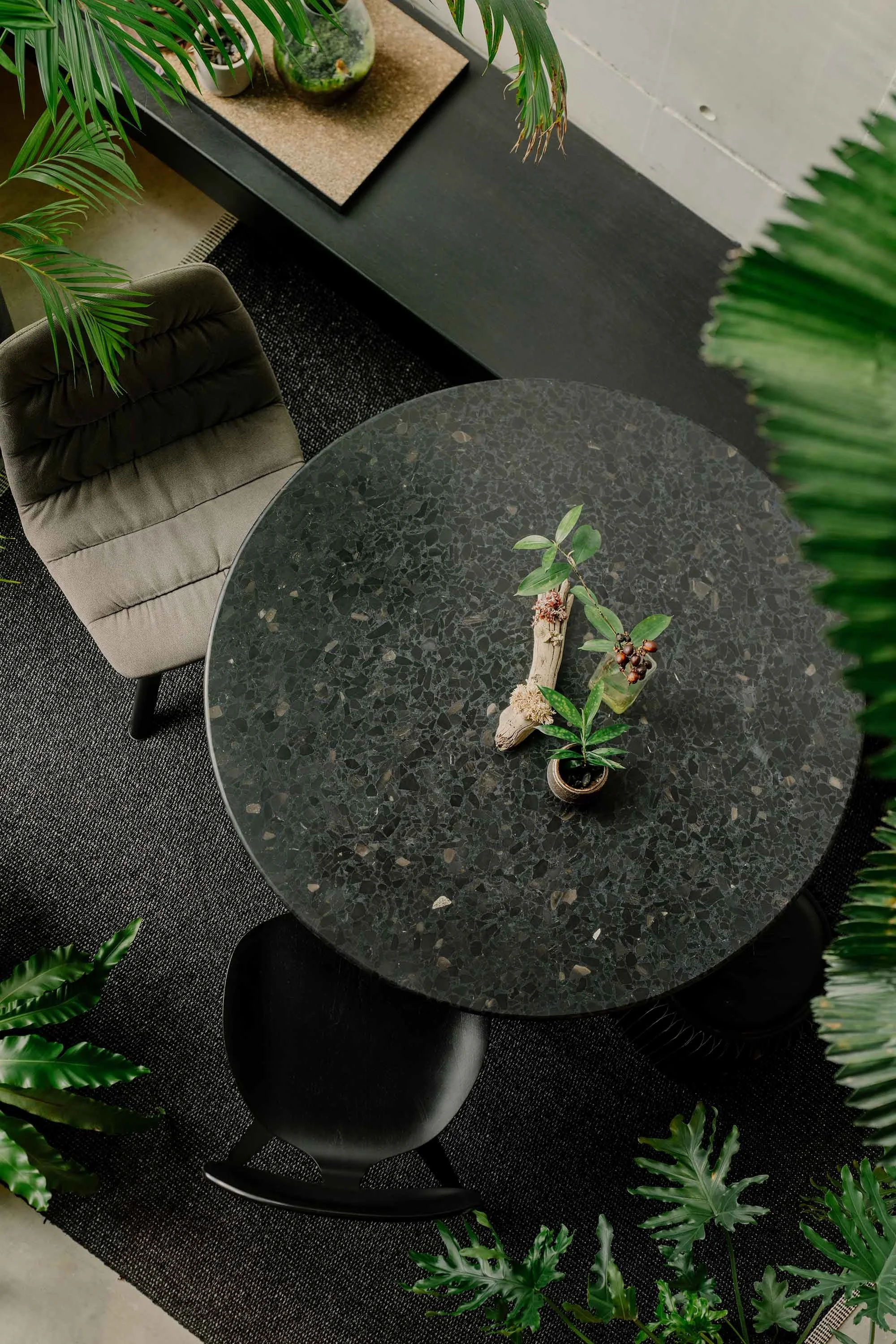
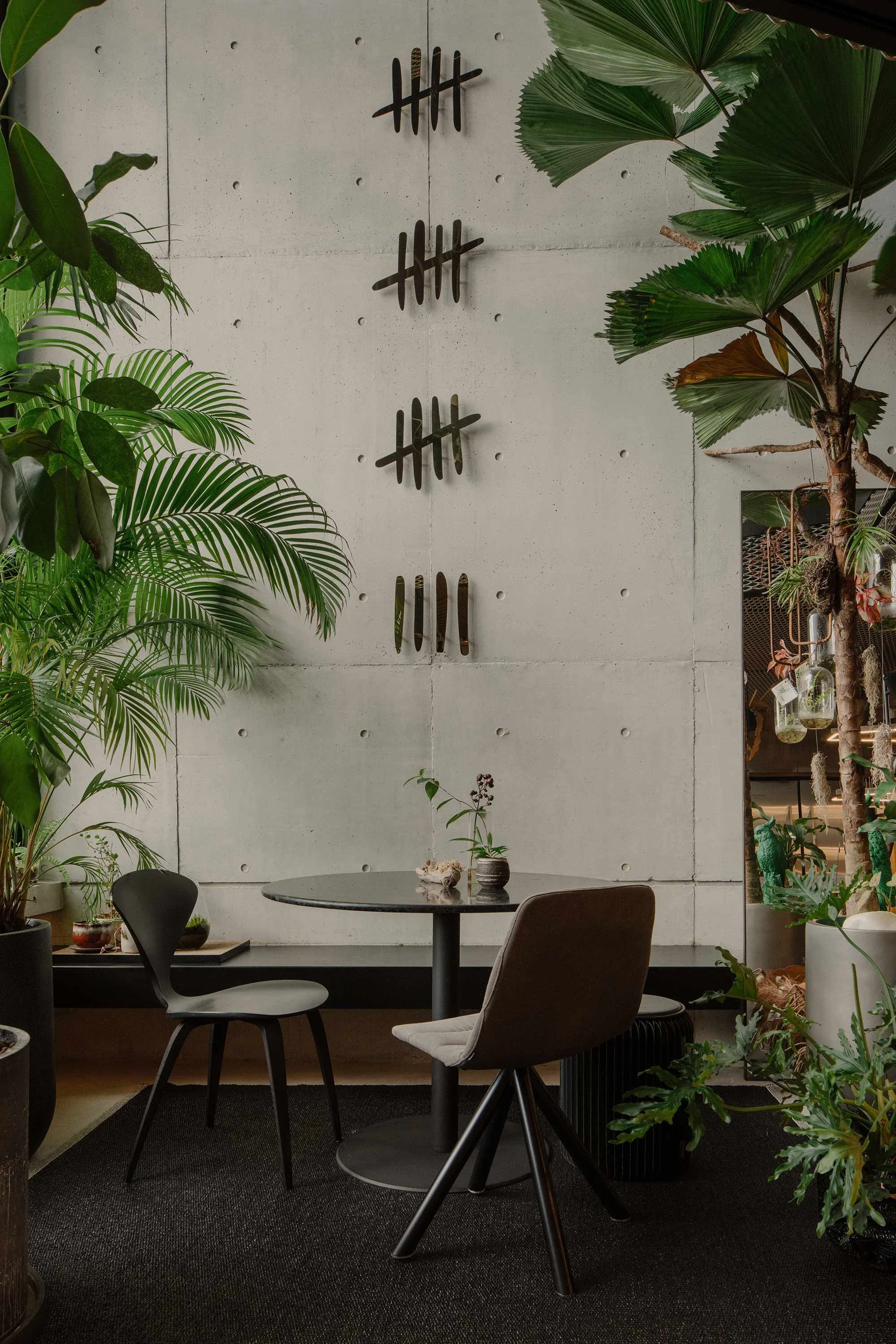
‘The idea is for guests to feel like they’re sort of “emerging into the light”, like coming out of water onto dry land,’ Colin muses. ‘There’s a datum line that you feel at a subconscious level. Entering this floor, you feel you’re in a different place altogether.’ Here, again, curtains create fluid boundaries, with one closing off the dining area from the staircase and another separating the kitchen from a cosy sitting corner that, adorned with plants and lit through the front window, feels like an outdoor terrace.
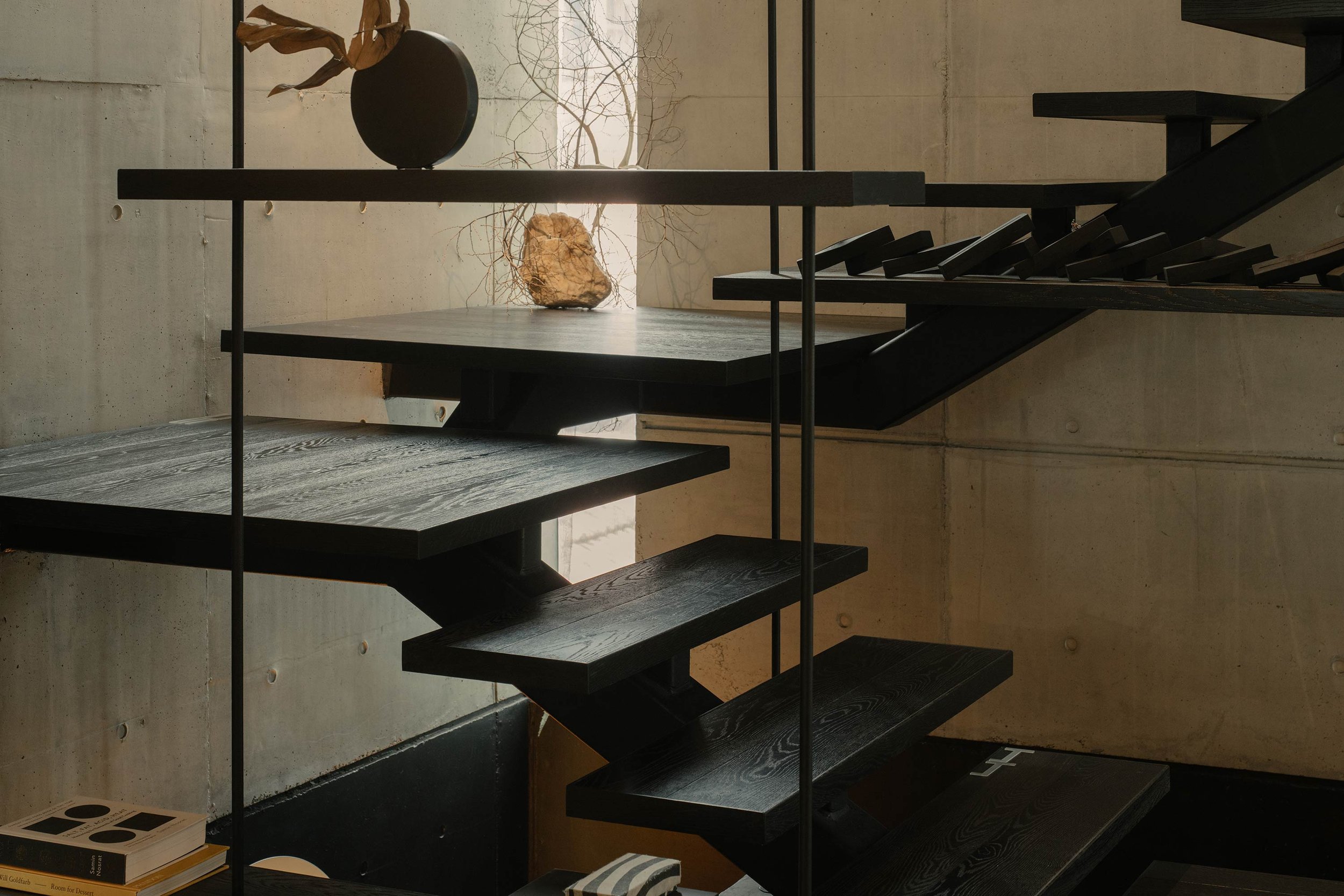
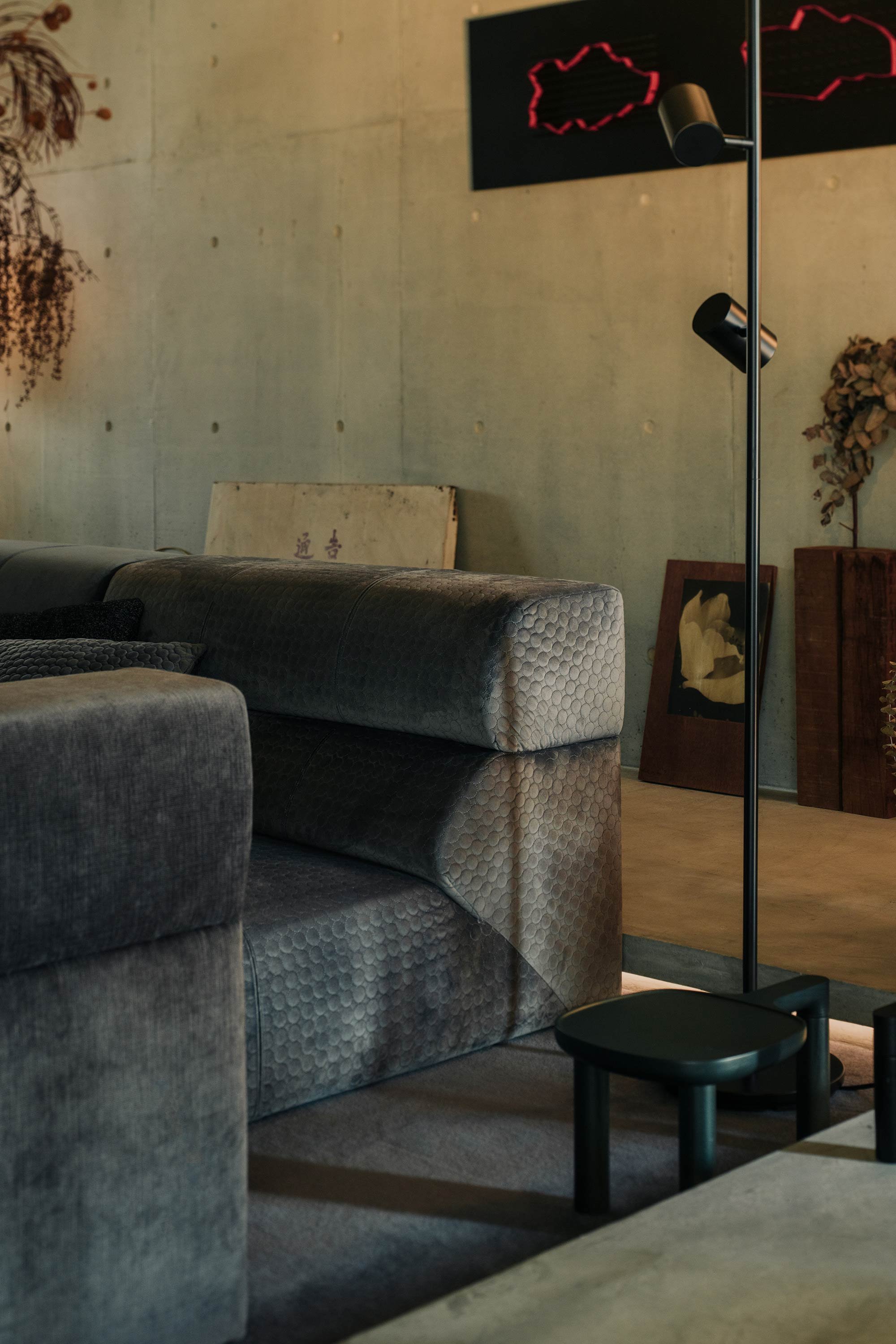
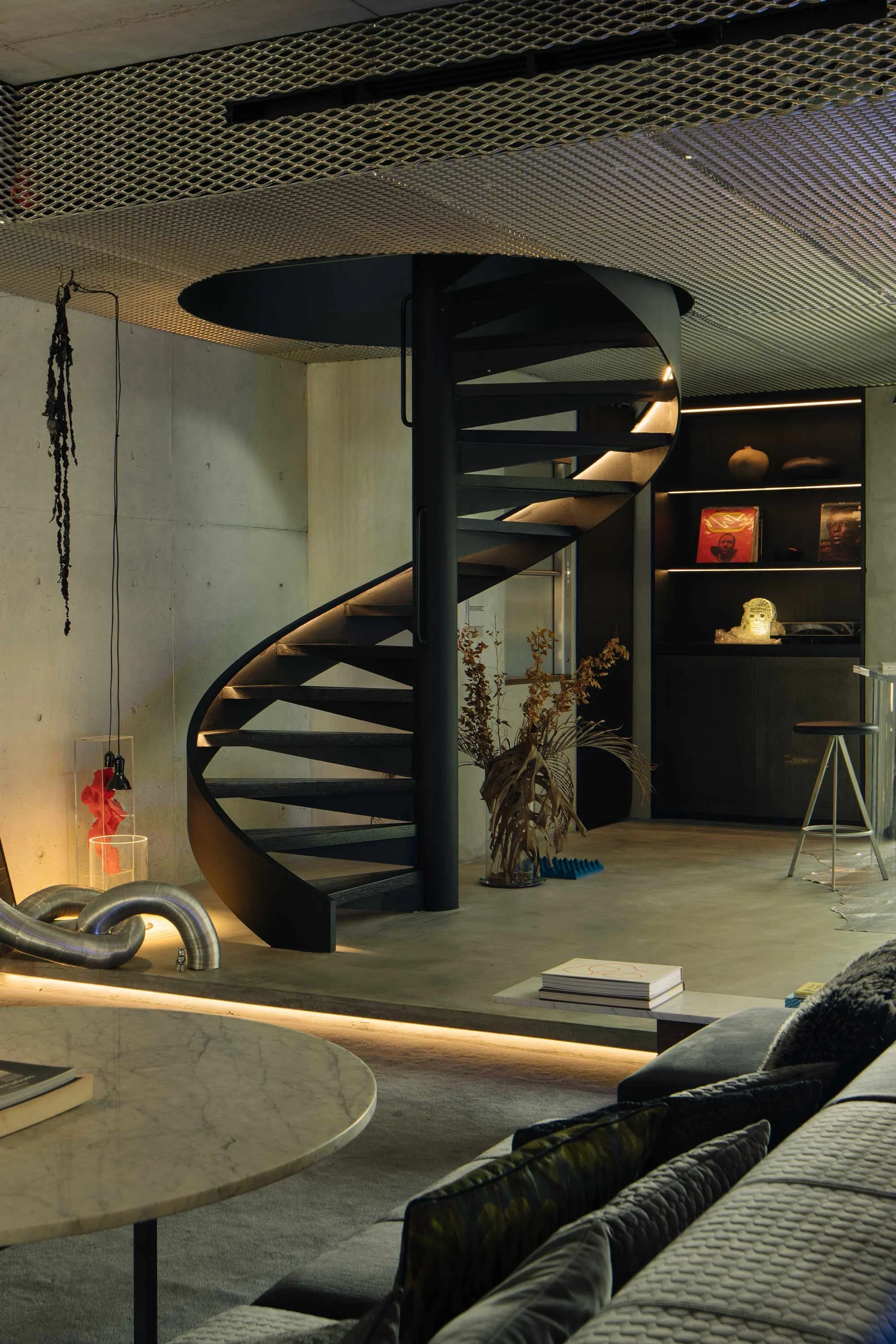
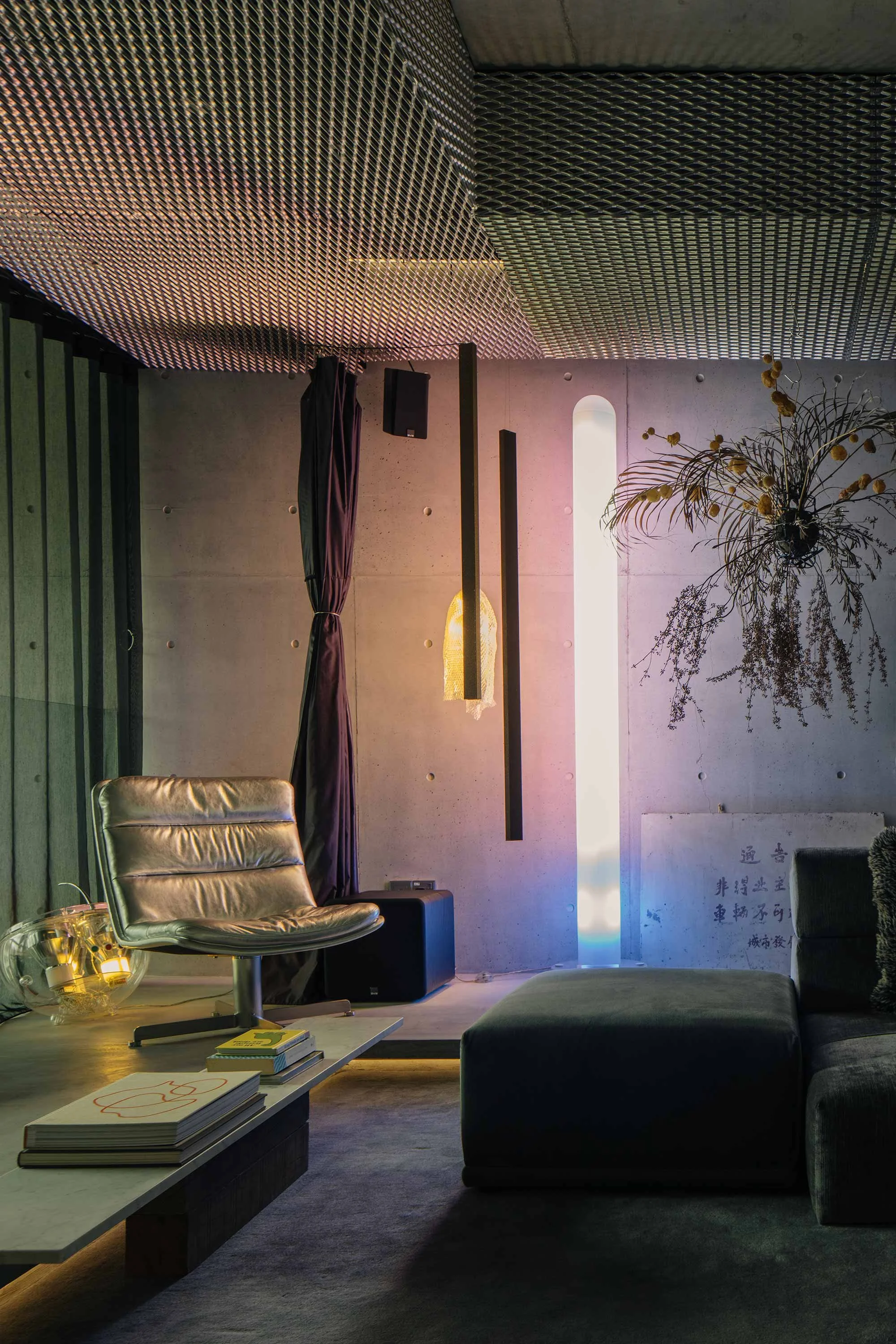
A lightweight vertebra-like staircase with black-stained timber treads links the first and second floors, integrated with shelving that invites moments of pause here and there between the home’s more social levels. In the second-floor living room, customised seating can be tucked into elevated corners for the creation of a central ‘pit’ to contain more people at gatherings, such as the couple’s regular book club.
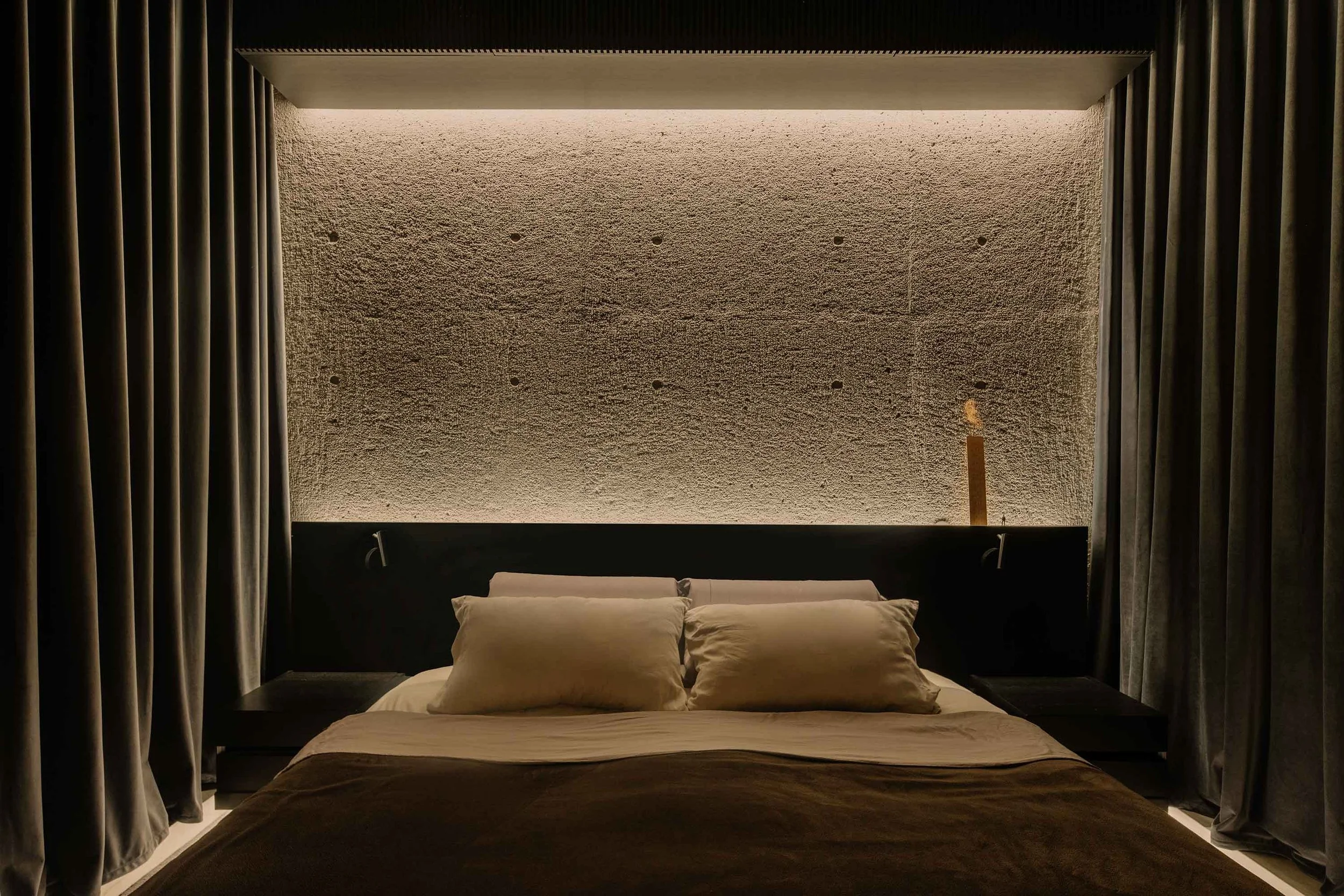
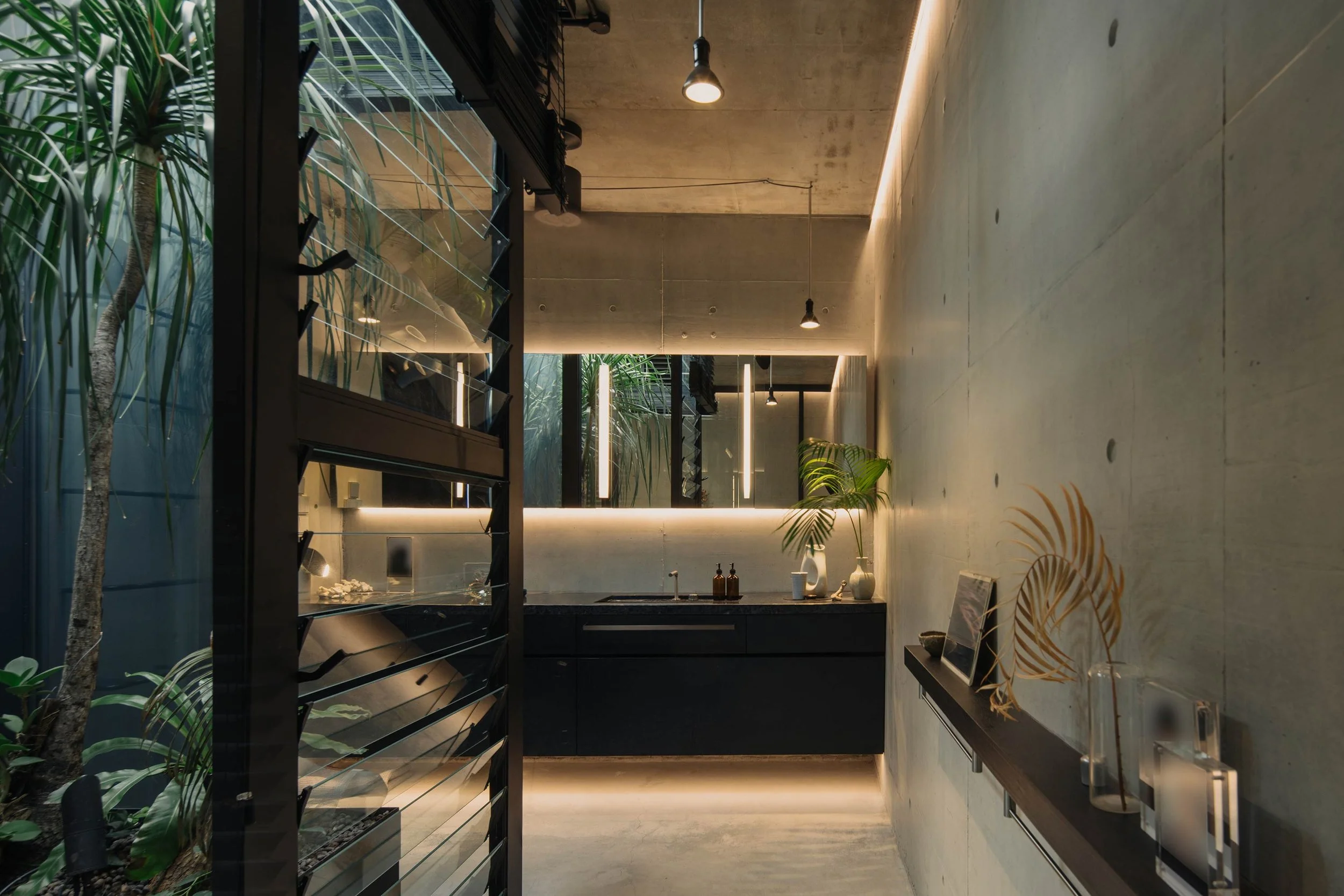
The final act is a secret space reserved only for the couple. On the third floor, a spiral staircase leads to the uppermost level containing the study, main bedroom and en-suite. There are no windows, but two courtyards and a skylight present their own show of daily beginnings and ends, of day and night, rain and shine, of sky and clouds, and even moonlight. Nature, this culmination point seems to say, is the truest reminder of the ticking clock of life.
Text by Luo Jingmei
Images by Khoogj