How Volcanoes and Coastlines Shaped Qantas’s New Lounge
Caon Design Office and Akin join forces for Qantas’ new Auckland International Airport lounge. Inspired by Aotearoa’s rugged terrain, the earthy design offers travellers a grounding sanctuary and a moment of calm amidst the chaos of modern transit
Getting from A to B seems simple enough on a map, but the path of modern travel is rarely linear and entails many complex moving parts. In a liminal space such as a transit lounge, successful design can fade this travel noise completely into the background, providing a moment of calm before the next leg of the journey.
For Qantas, that outcome has been achieved in its newest lounge, which opened at Auckland International Airport on 17 December. In their fourth collaboration for the airline, Caon Design Office, the boutique industrial design practice established by David Caon in 2009, and multidisciplinary design practice Akin Atelier, have created a grounding experience for travellers — a calming connection to place for those in transit or departing Aotearoa New Zealand.
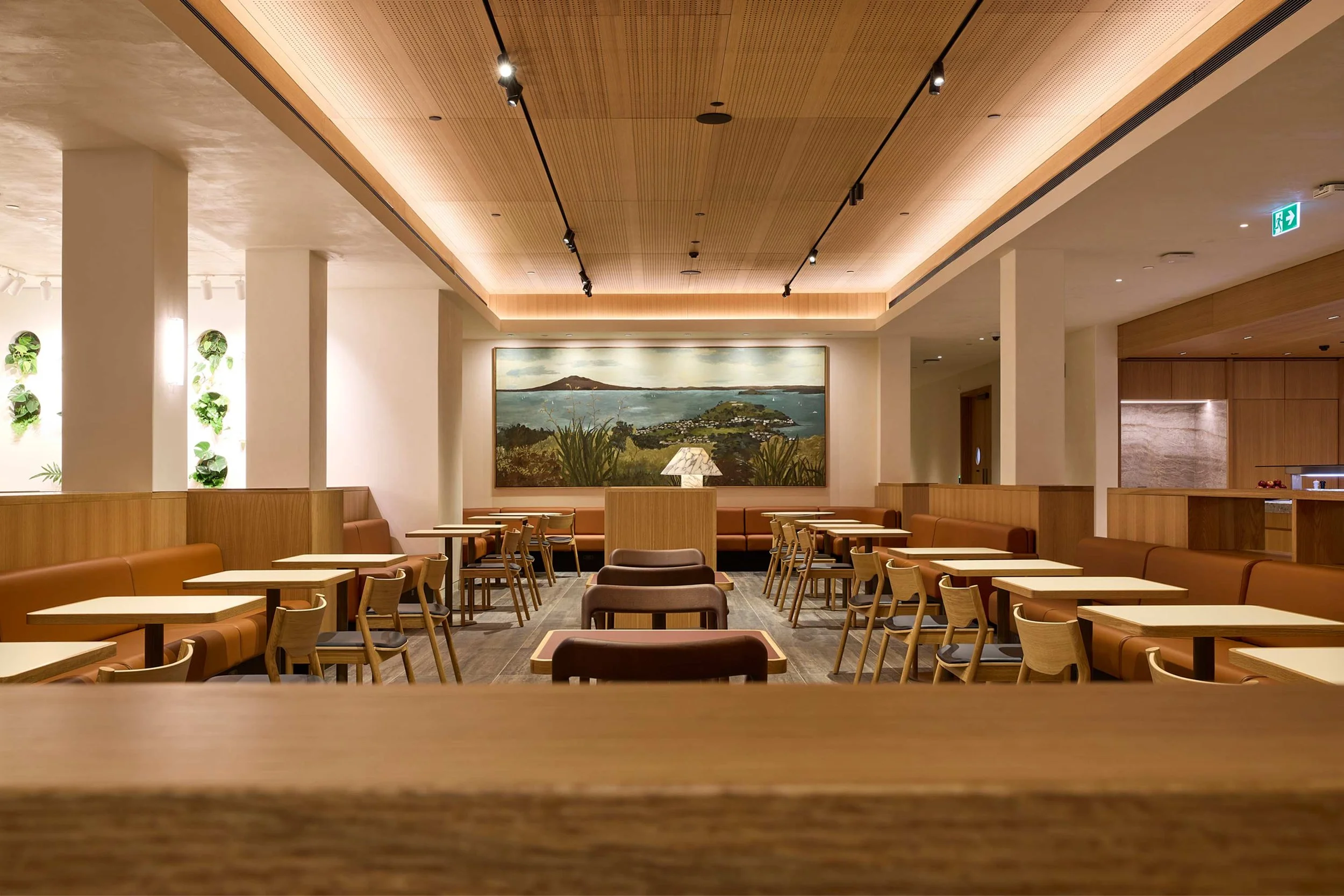
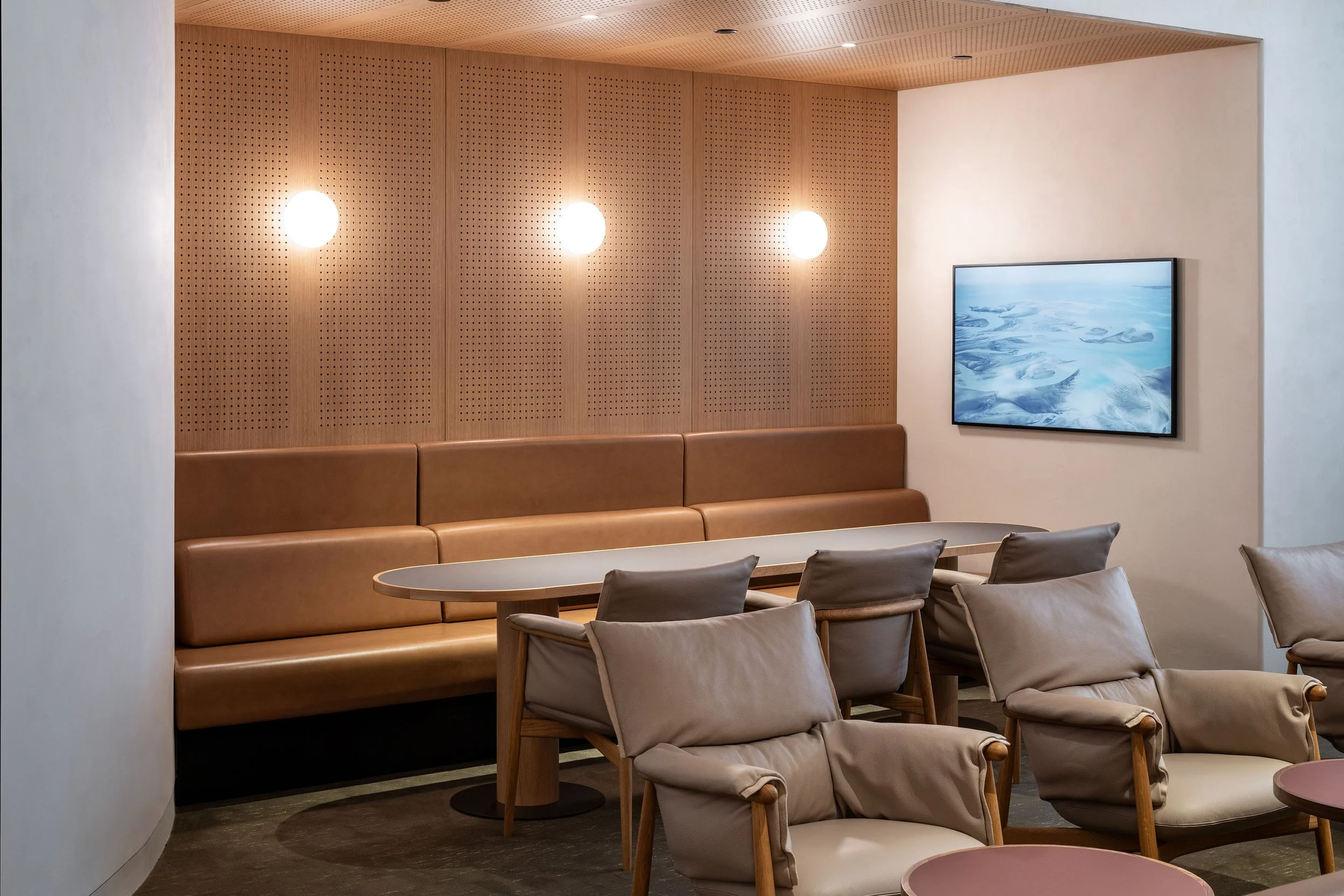
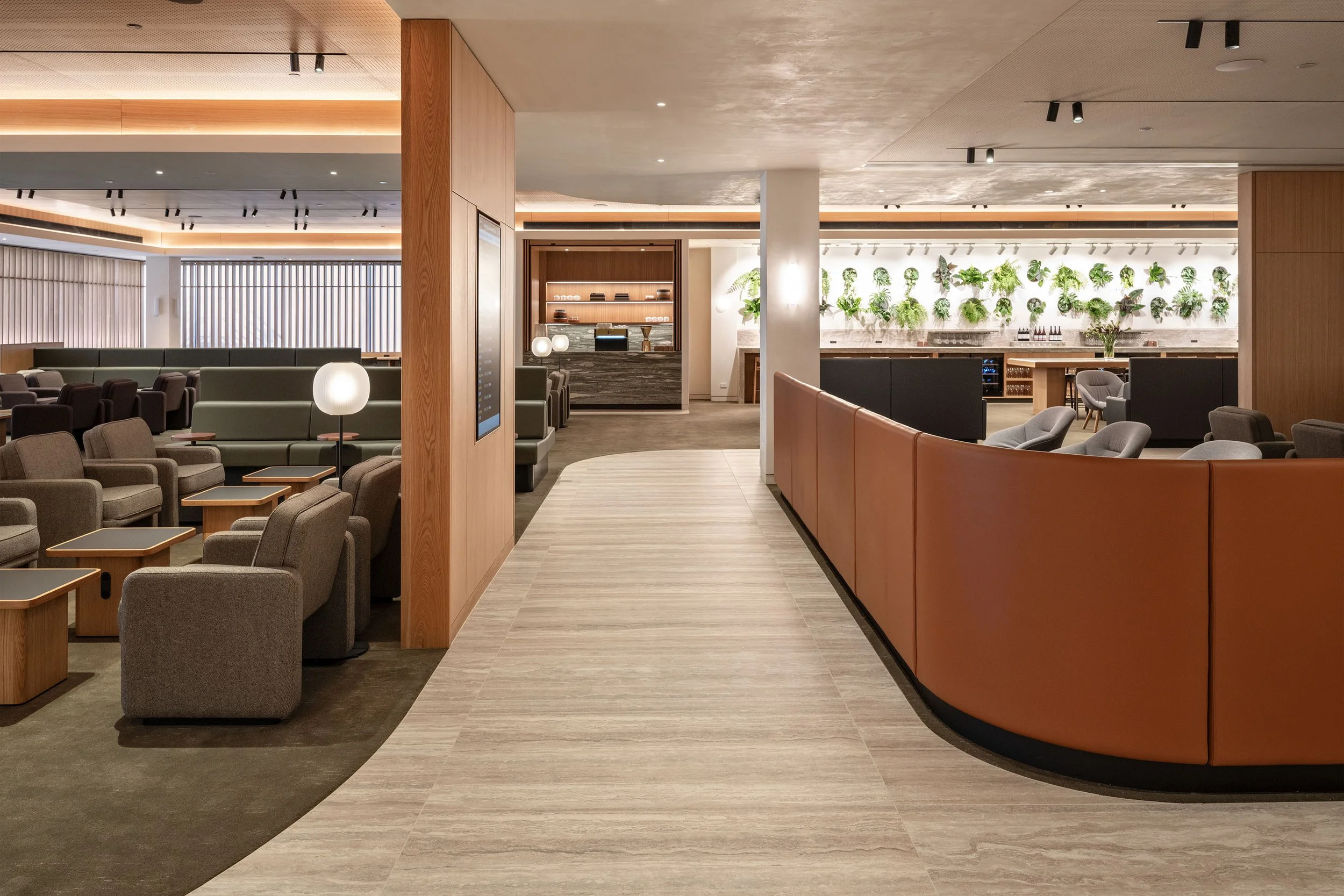
Each Qantas lounge is designed to achieve familiarity, yet strike out on its own with regional points of difference. While the Singapore lounge draws from the island nation’s shophouse heritage and the Hong Kong lounge references the city’s dynamism, the cues for Tāmaki Makaurau Auckland came from the drama of the natural landscape — the rugged coastline, native forests, lush volcanic terrain and even its inclement weather. Expressed through material textures and forms, all honouring a natural palette, even the dedicated kids’ area looks like a place you could stay awhile. Pity the parents who have to negotiate a departure.
‘The landscape is such a big part of how people think about the region,’ says Caon. ‘It’s tonally earthy and that works well because it's inherently peaceful. People’s moods are a big part of their experience, but over and above it was the region that inspired this palette.’
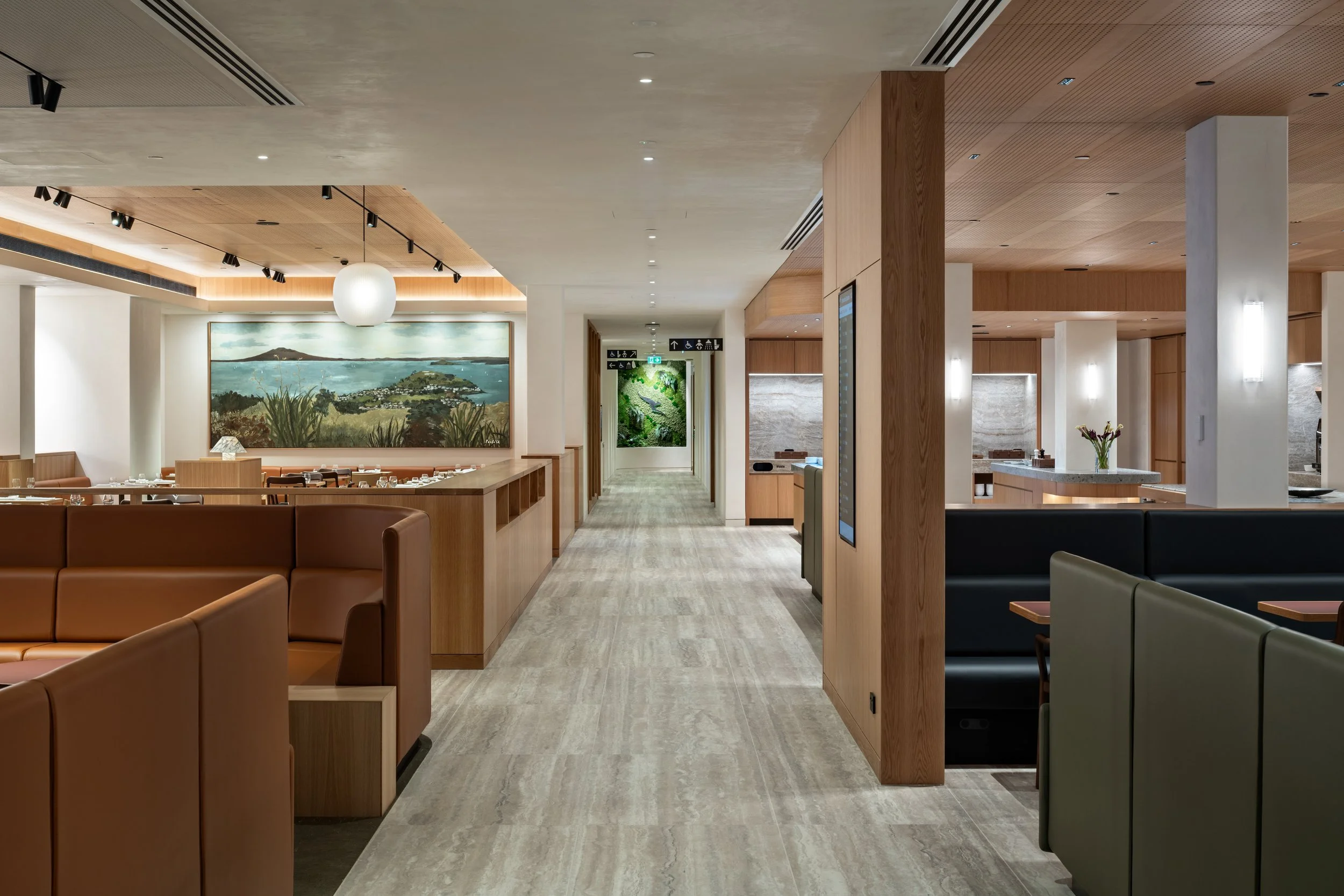
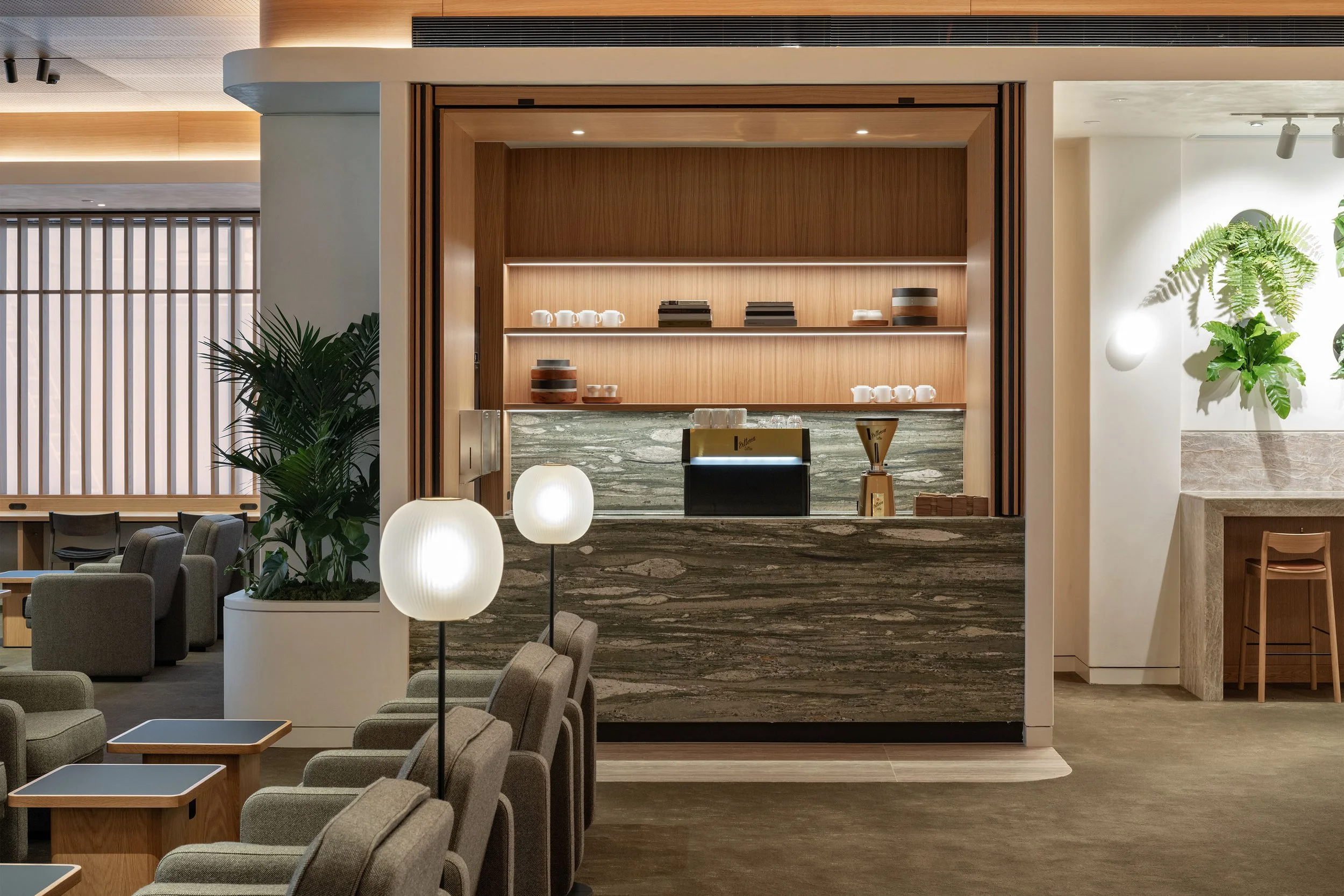
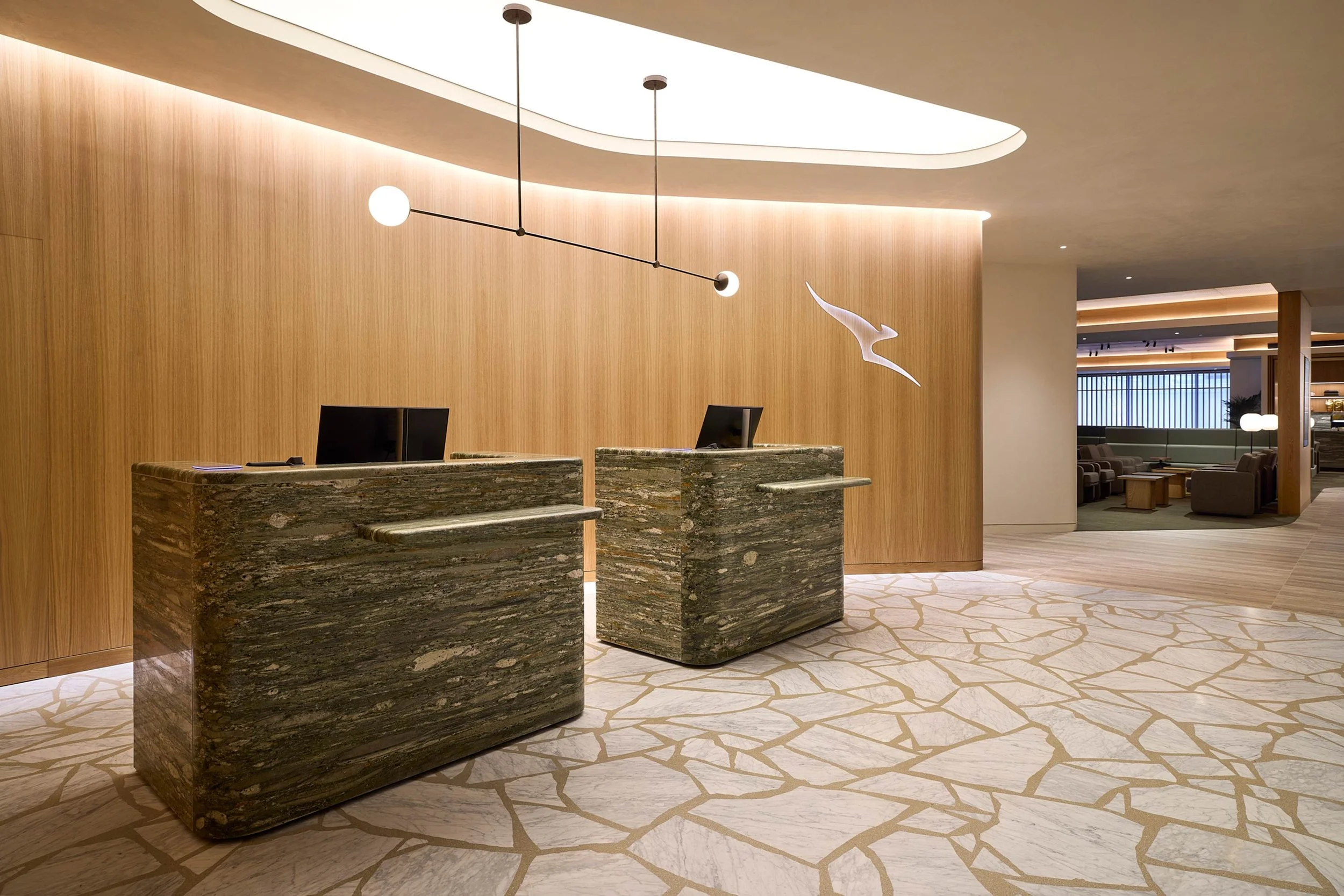
On arrival, soft greens in the Verde Bardini marble reception desks reflect those you might see in the rocks of an east coast beach. This generously proportioned area is wrapped in curved American oak walls, with Palladiana Carrara underfoot. In the light well above you might read a boomerang shape, but Caon insists its curves simply serve to ground the reception pods and offset the surrounding walls.
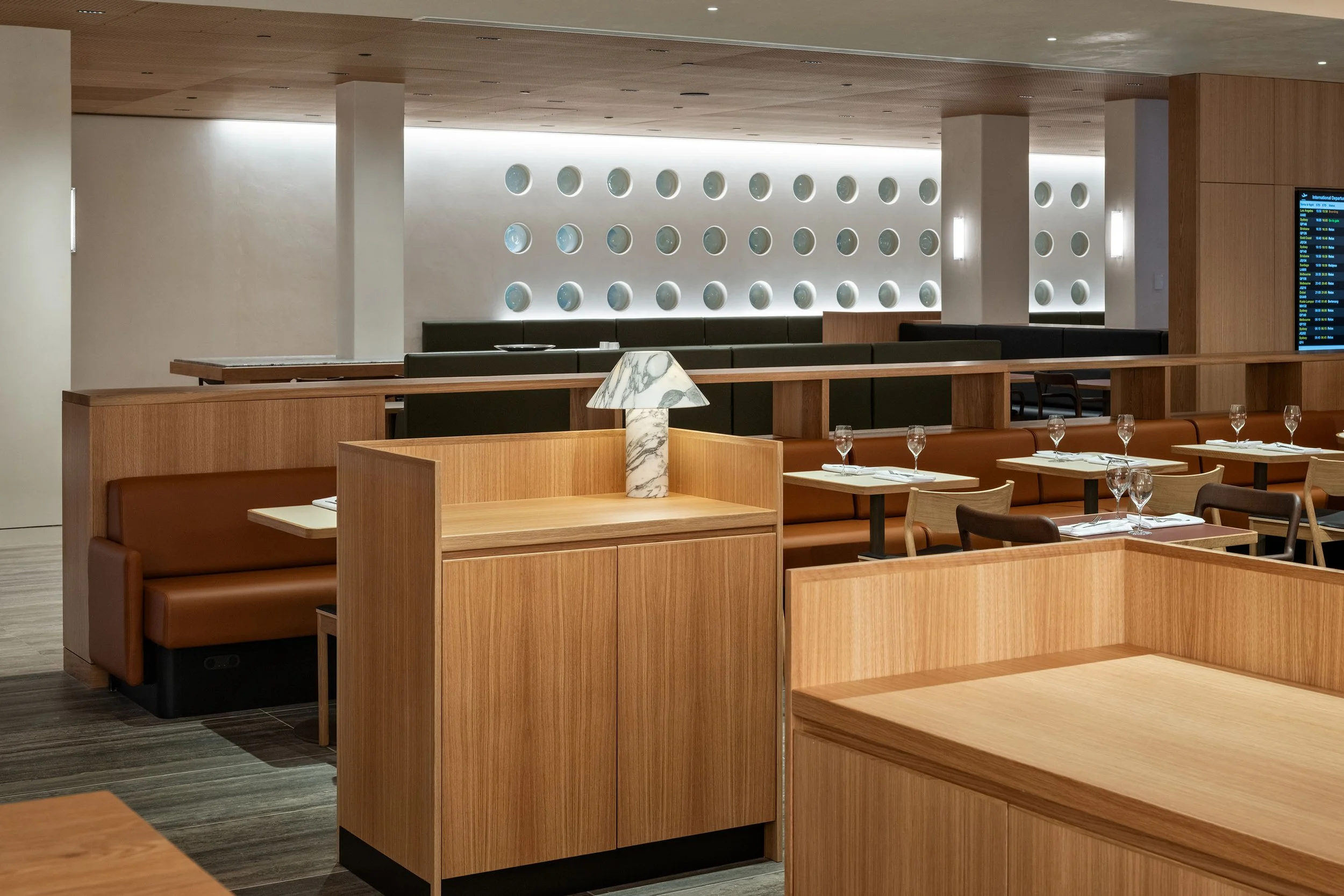
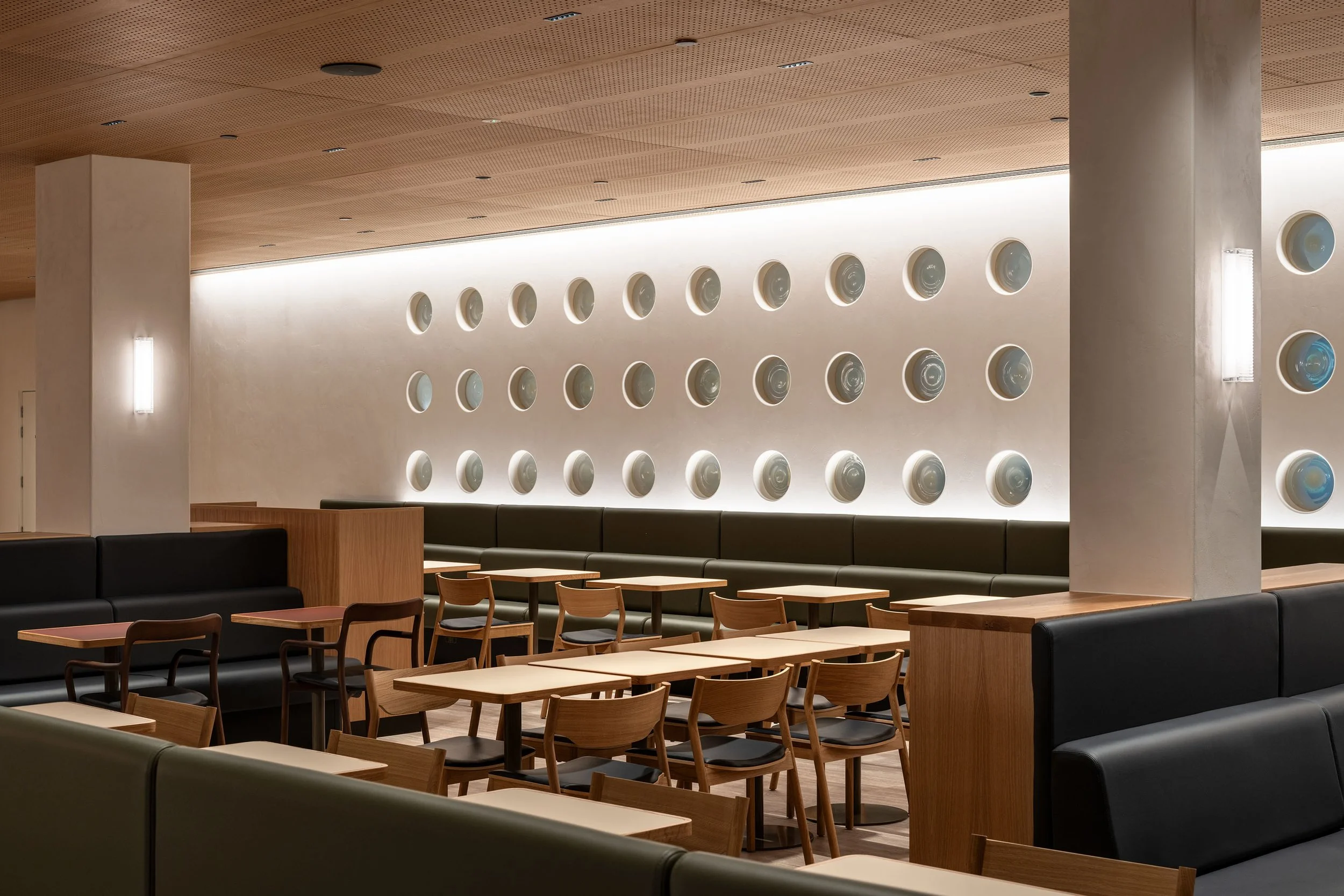
Glass porthole wall details, familiar from the Hong Kong lounge, create a connection between inside and out and loosely reference an aeroplane window. From the entrance, the portholes — hand-blown locally by Monmouth Glass Studio — extend through to the interior walls. Once inside the lounge, a four-metre artwork by Sydney-based Gabrielle Penfold serves as an anchor point. The contemporary artist has captured the iconic form of Rangitoto, the extinct volcano that rises from Auckland’s Hauraki Gulf. The richly detailed landscape provides a connection for those in transit and an evocative memory for those departing.
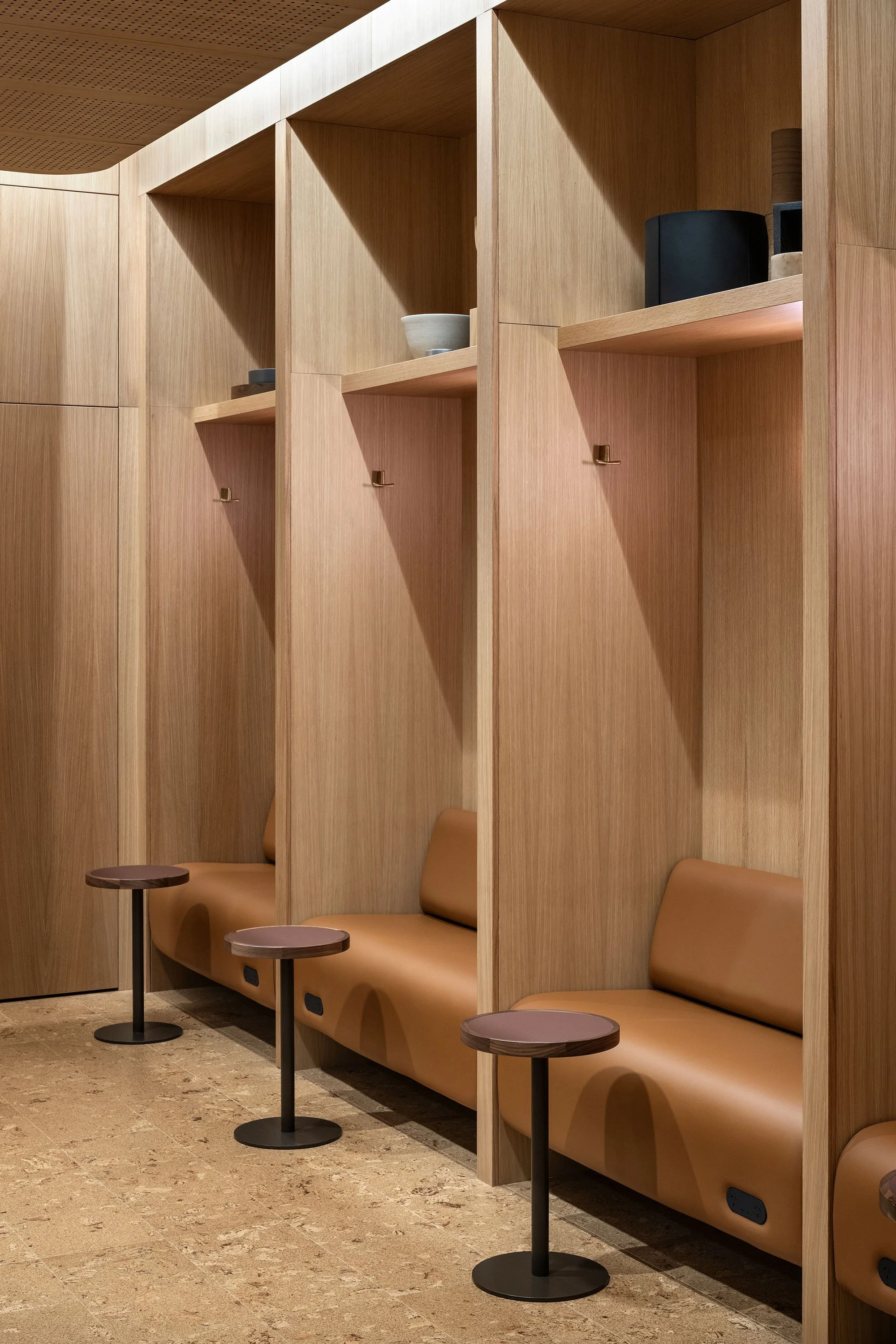
Design is embedded into place through collaborations with local practitioners, such as architect Céili Murphy from Architectus, as well as Simon James Design, which brought Caon’s custom furniture to life, while the work of Snelling Studio and Resident can be found in the lighting. Ceramics by Margi Nuttall and Courtney Petley’s handcrafted homewares sit alongside pieces by Sydney’s Henry Wilson. brought the ‘Australia and New Zealand have a natural interconnectedness, so it’s not surprising the design elements synchronise well,’ says Caon.
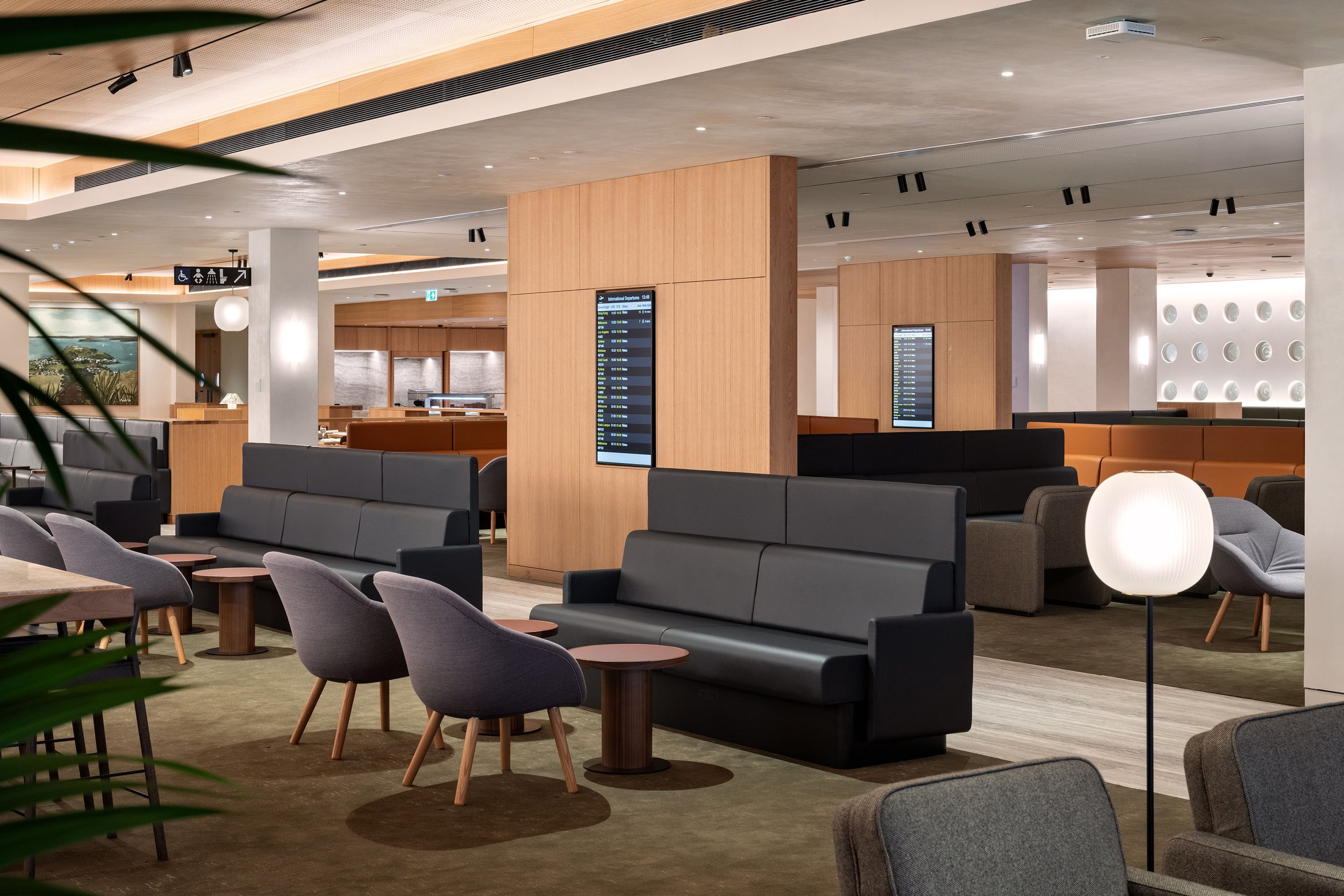
Including a lengthy production period, it’s been a long haul for the project that consolidates what was two lounges into one. Now spanning 1,750 square metres, the space achieves a subtle delineation between zones — including bar and dining, quiet and family zones, and a VIP area — through a change in flooring or joinery and furniture. And subtlety is the key — a considered touch that provides quiet luxury when you need to get from A to B.
Text by Jo Bates
Images by Simon Devitt