
This Kitchen Is Meant to Be Experienced Like a Walk in the Forest
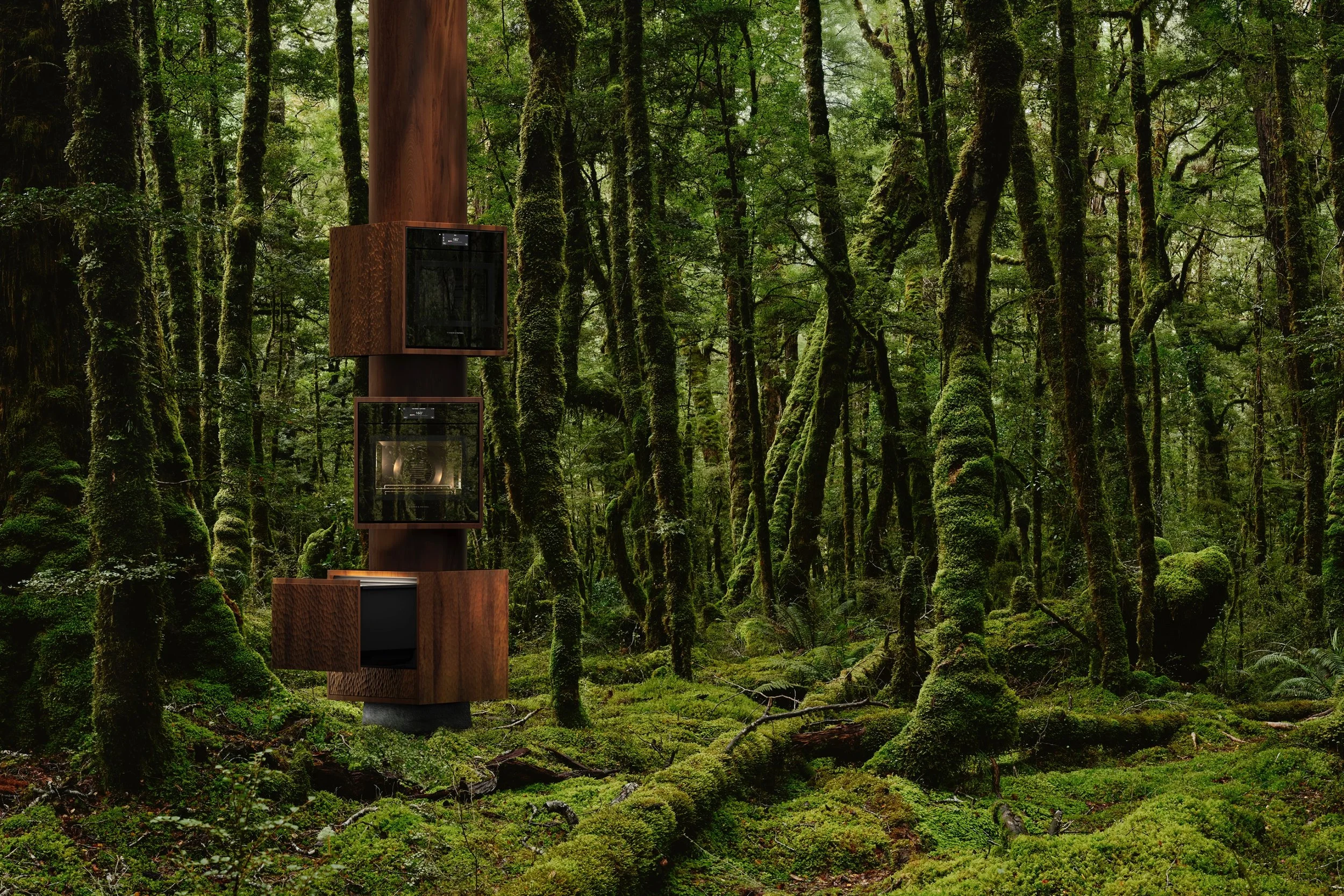
In a forest-cloaked setting, Fisher & Paykel’s Nature—Ritual exhibition at Milan Design Week 2026 draws on New Zealand’s landscape to frame the kitchen as a lived, everyday space shaped by routine
The kitchen is often where ease and familiarity take root, where movements shaped by habit feel instinctive. Tools respond to hands seamlessly, and routines gradually evolve into rituals. This understanding underpins Nature—Ritual, a large-scale exhibition by New Zealand’s Fisher & Paykel, set to be presented at EuroCucina 2026 during Milan Design Week this April.
The heritage brand’s participation at this edition of the world’s leading design week is conceived in collaboration with Alt Group creative director Dean Poole, who shaped the exhibition’s architectural and sculptural language, and Calvi Brambilla & Partners co-founder Fabio Calvi, who created the spatial composition and flow of the experience.
Installed within the halls of Fiera Milano Rho from 21−26 April, Nature—Ritual is envisioned as a serene Antipodean oasis. A forest-like installation, lush with native trees and foliage — a nod to New Zealand’s expansive landscapes — envelops the exhibition, leading visitors through a sequence of spatial, sensory and product encounters.
Within this interconnected space, Fisher & Paykel will unveil its latest product introductions. The State of the Art collection — a Red Dot Design Award-winning range of appliances spanning cooking, cooling, dishwashing, and wine and fabric care — features alongside the global launch of the refined, monochromatic Minimal Style line. The latter highlights the brand’s continued exploration of minimalist, integrated design, offering architects and designers greater liberty to create bespoke environments for cooking and fabric care.
Much like its concept-led Experience Centres in cities from North America to Asia Pacific, the exhibition’s aesthetic is firmly rooted in materiality drawn from New Zealand’s natural environment while evincing global influences. The use of basalt, a dark, fine-grained volcanic stone, references the island nation’s striking geological landscape. Carvings of tōtara wood — long valued for its durability and used in heritage craft — introduce warmth and tactility. Visitors can also find commissioned ceramic pieces by New Zealand artist Aaron Scythe, whose work reflects decades of studying and working in traditional Japanese pottery.
Beyond material expression, these elements come together to reflect a broader design philosophy that views nature not only as creative inspiration but as a framework for living. This perspective aligns with Fisher & Paykel’s long-standing focus on designing products that are durable, low-impact and intended to evolve alongside daily life.
Through Nature—Ritual, visitors are invited to immerse themselves in the experience, rather than merely observing it. By drawing a parallel between nature’s resilience and Fisher & Paykel’s human-centred design, the exhibition presents design not as spectacle, but as an ongoing dialogue between humans, objects and places.