What Happens When a Factory Starts to Think
In a Hsinchu glass factory that has run for nearly half a century, Spring Pool, PiliWu Design and Seed SpaceLab make the case for what a factory thinks about when it stops just making
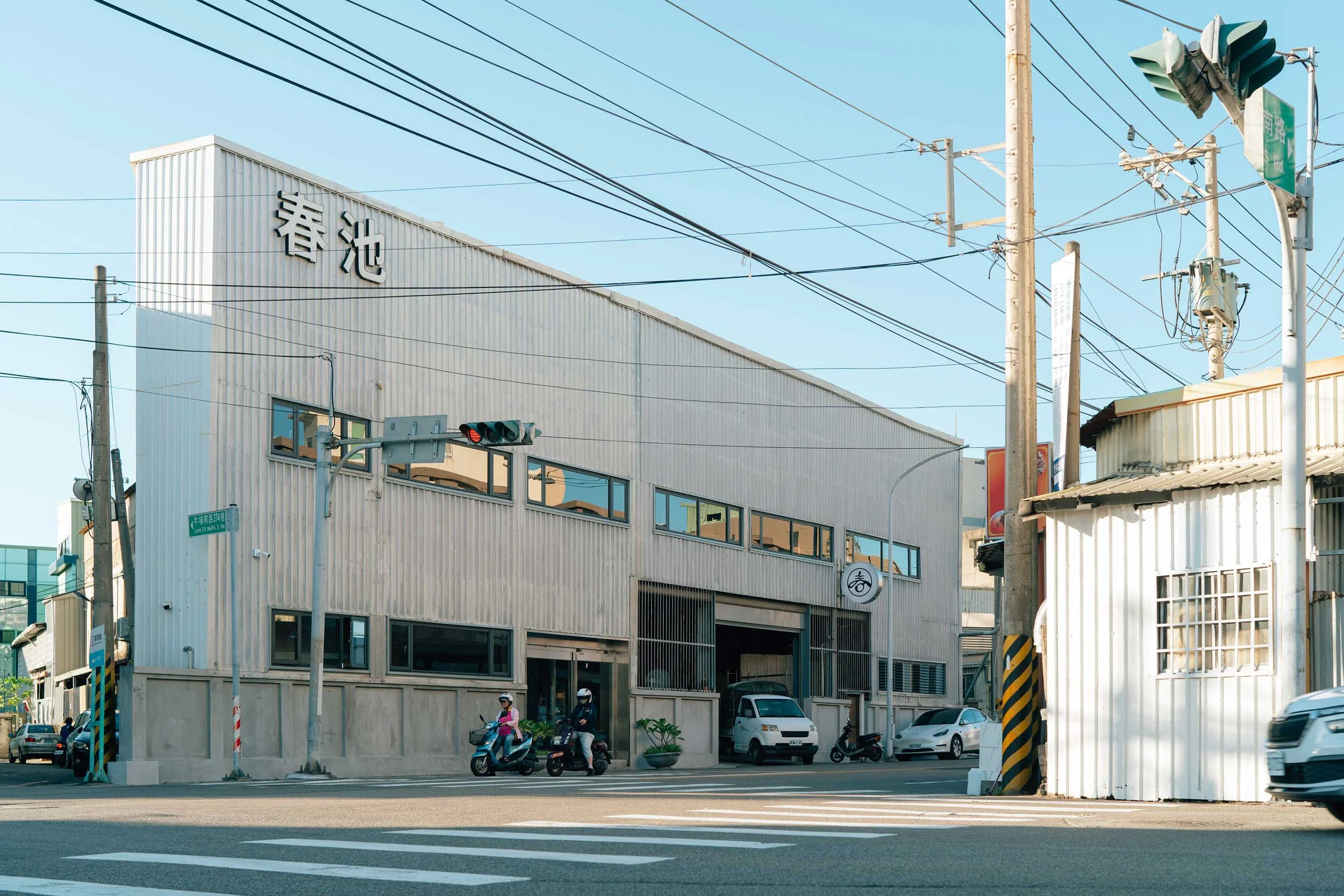
On an unremarkable street in Hsinchu City, Taiwan, a glass factory that has operated for nearly half a century is transforming into a site not just of production, but of thought. Long embedded in the industrial fabric of Taiwan, the ageing facility carries within it the rise and decline of the island’s glass manufacturing industry. But rather than fade with the offshoring of production, it has been reinterpreted by Spring Pool Glass, PiliWu Design, Seed SpaceLab and others as the SpringPool Original Factory, a hybrid space that’s equal parts working furnace and editorial project.
To understand the space, one must first situate Spring Pool Glass within Taiwan’s industrial landscape. As the country’s largest glass recycling and reprocessing company, its origins lie in discarded fragments. However, under the direction of second-generation leader T A Wu, the company has moved beyond the back end of recycling. Through its W Glass Project, launched in 2017, it collaborates with designers and artists to transform reclaimed glass into objects and architectural materials imbued with cultural value.
It’s within this broader shift that the decision to return to the company’s first factory took shape. More than its earliest production site, the building also holds Wu’s childhood memory. The challenge, then, was not simply how to redesign the space, but how to retain its temporal depth while allowing it to project forward. At the same time, Wu has observed a broader condition: Taiwan’s small and medium-sized manufacturers, long essential to global supply chains, have largely been perceived as executors rather than originators.
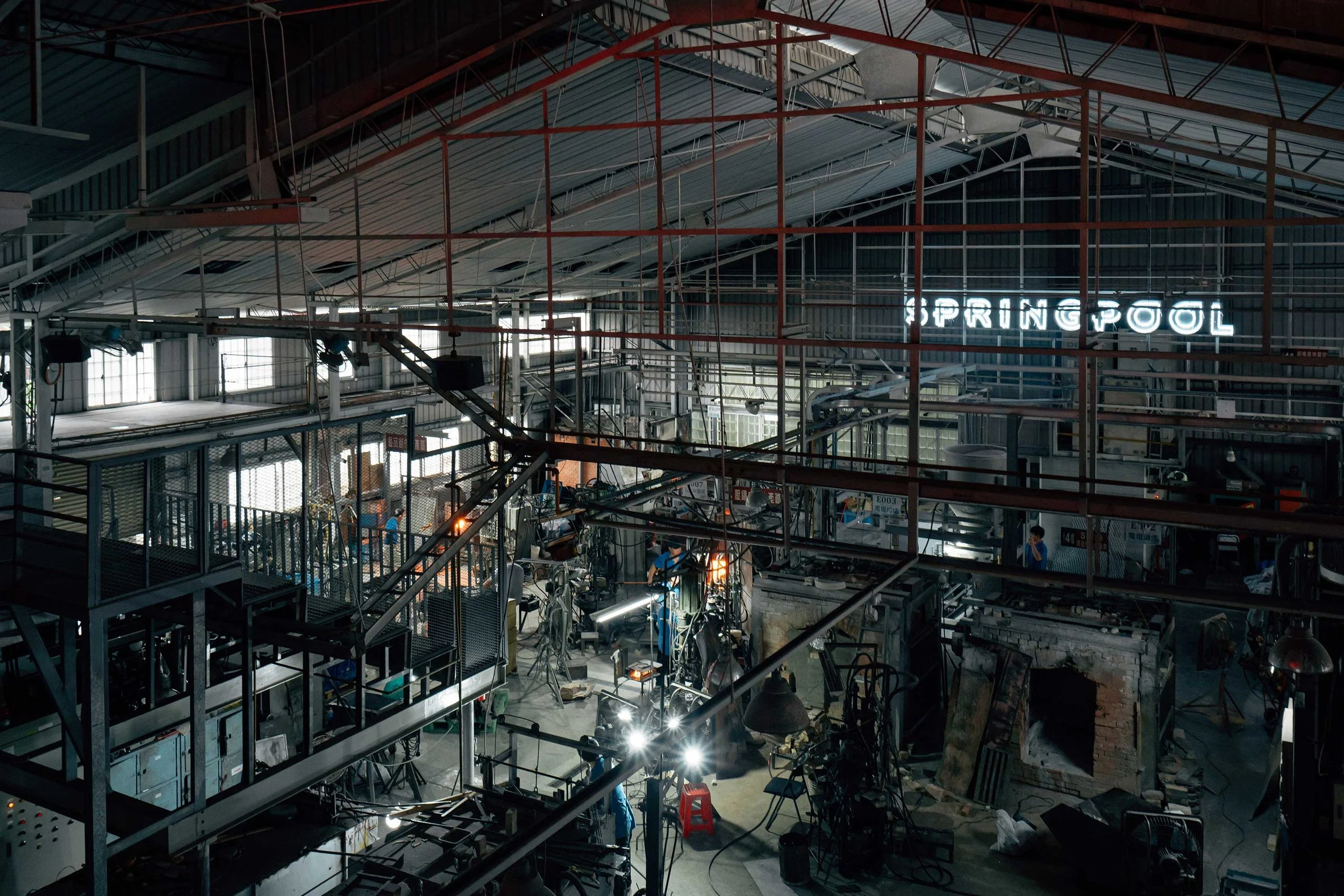
Against this backdrop, the SpringPool Original Factory is framed around a more fundamental proposition: ‘A factory might evolve beyond its hands and begin to develop a mind,’ says Wu. ‘Before glass becomes transparent, the shape of thought remains free.’ This idea anchors the entire design. In its molten, orange-red state, glass has yet to be defined. It exists in a moment suspended between formlessness and possibility. This condition becomes a metaphor for the mindset Spring Pool Glass seeks to cultivate, one that is open, indeterminate and generative.
In approaching the existing structure, design studio Seed SpaceLab resisted the impulse to overwrite. ‘We worked through a process of subtraction and retention. The design operates less as an addition and more as an act of editing, revealing what was already there,’ the team tells Design Anthology.
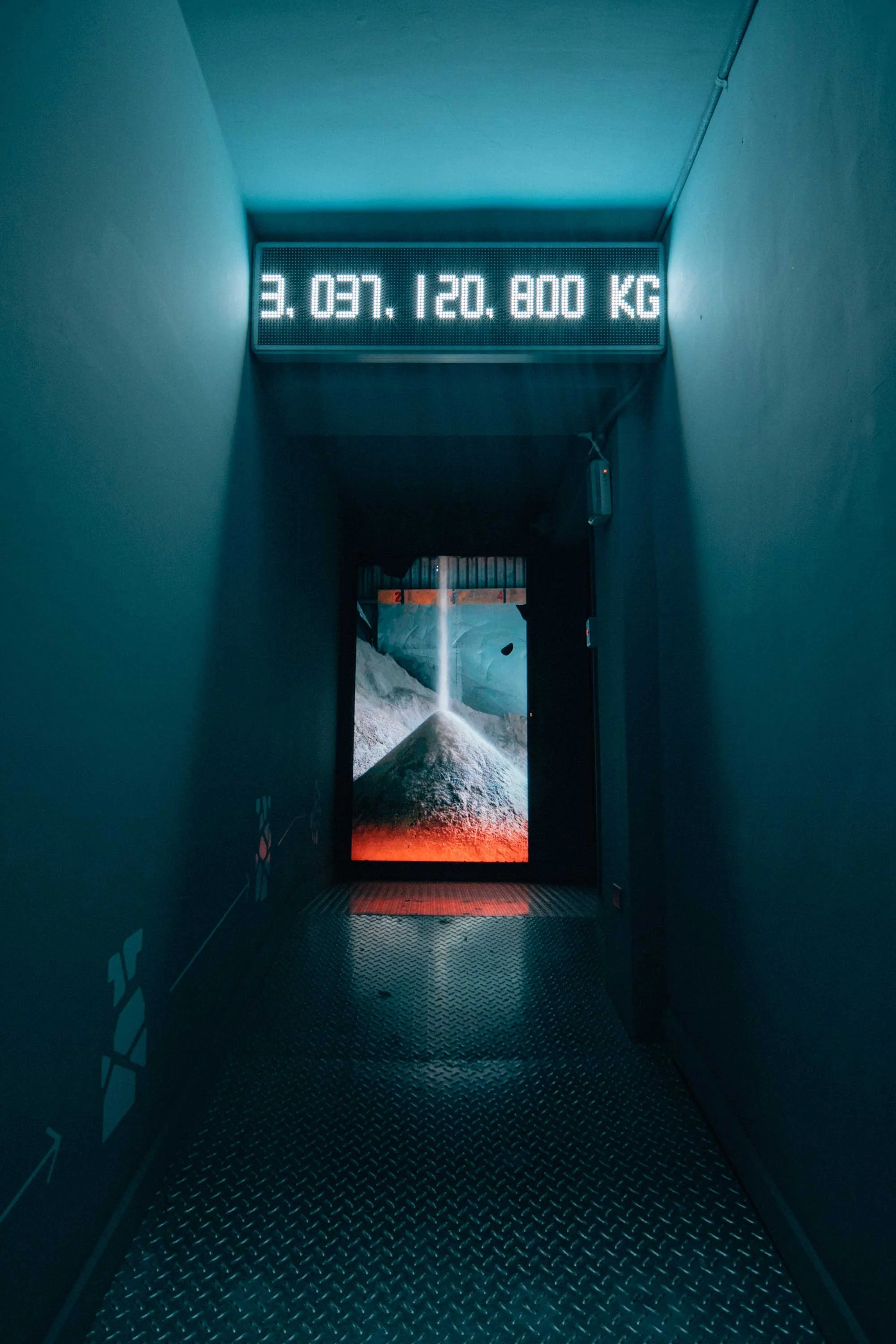
The factory is organised into zones, with lighting used as a primary narrative device. Colour temperature shifts from cool clarity to furnace-like warmth, before returning to a neutral state, mirroring the stages of glassmaking itself.
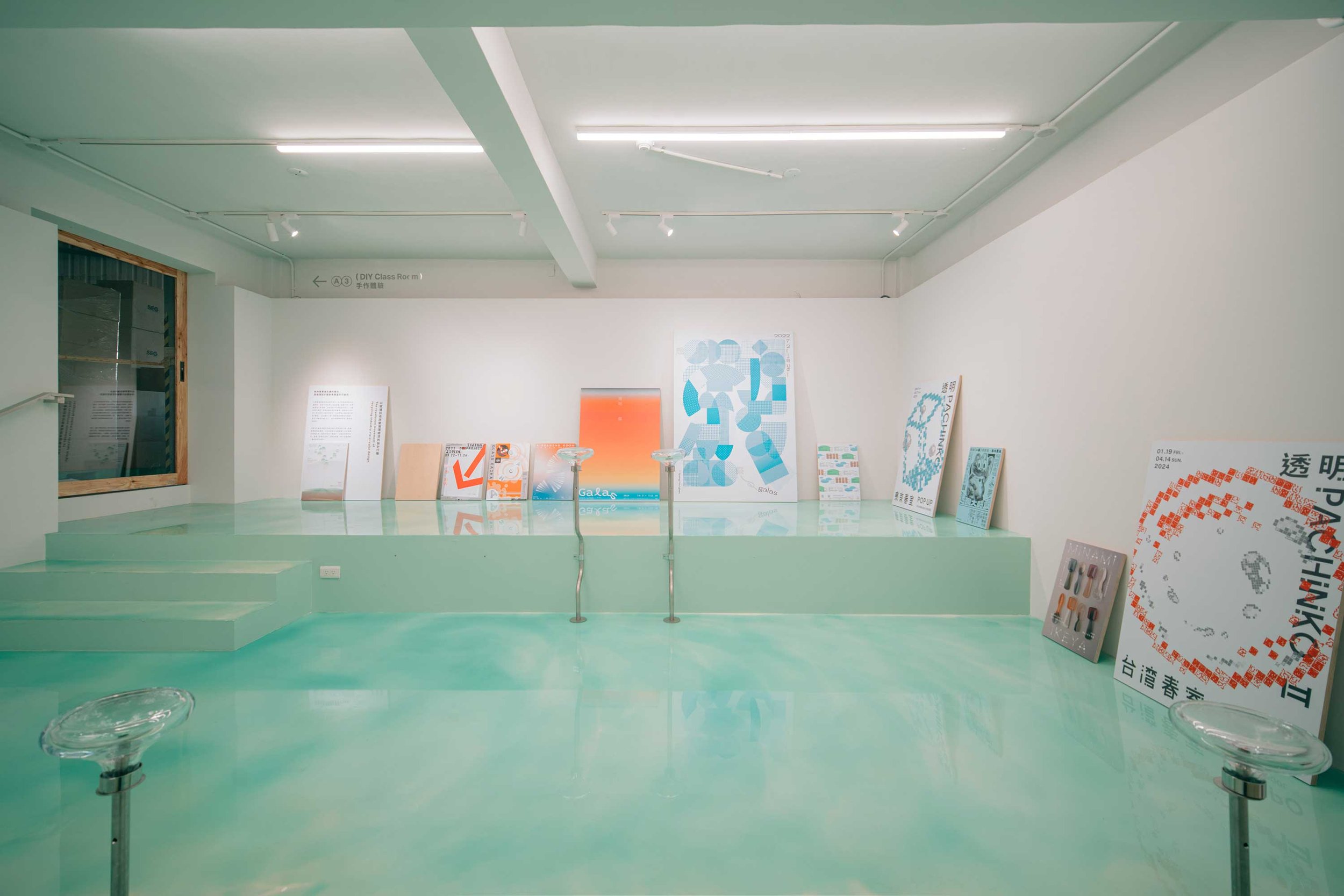
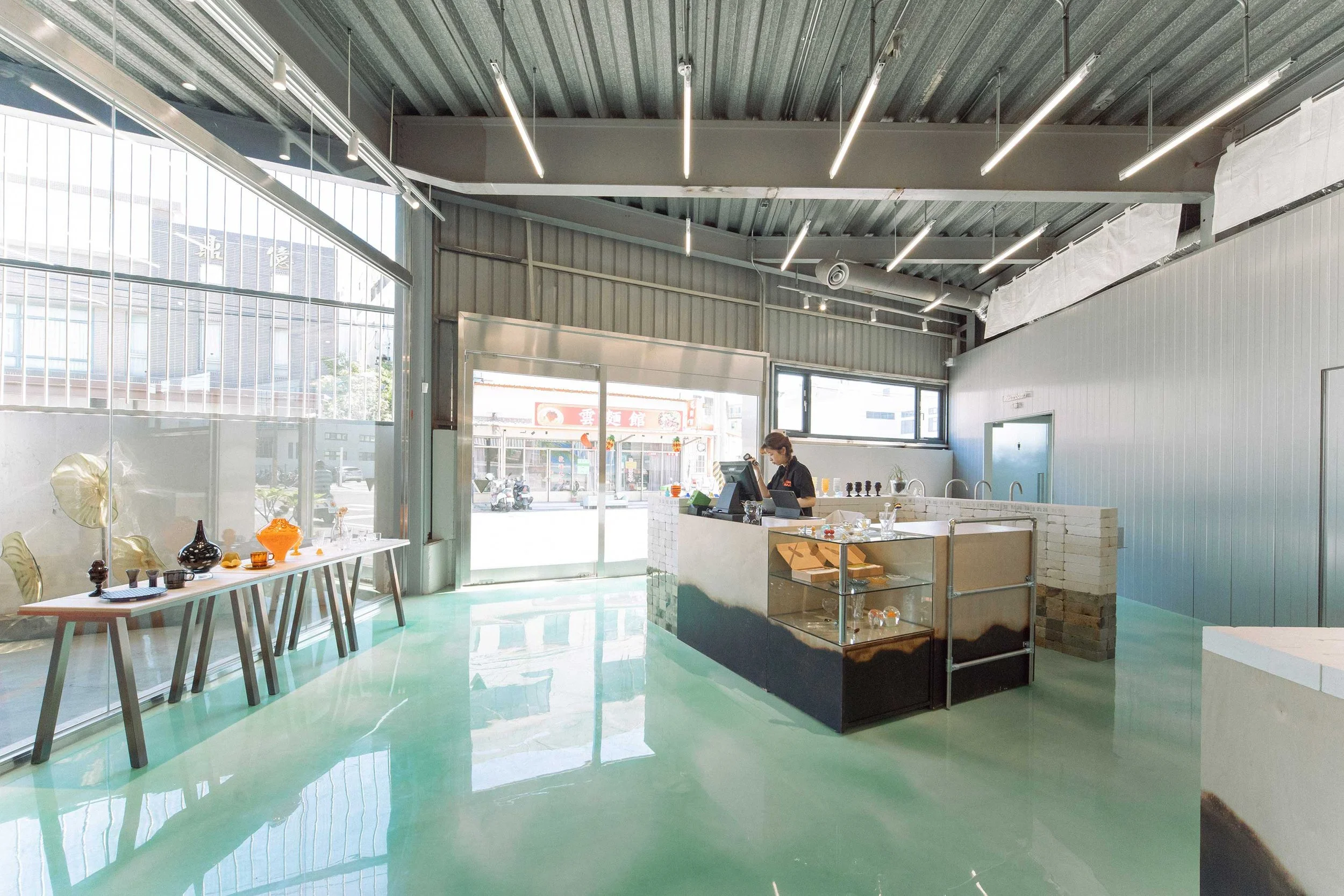
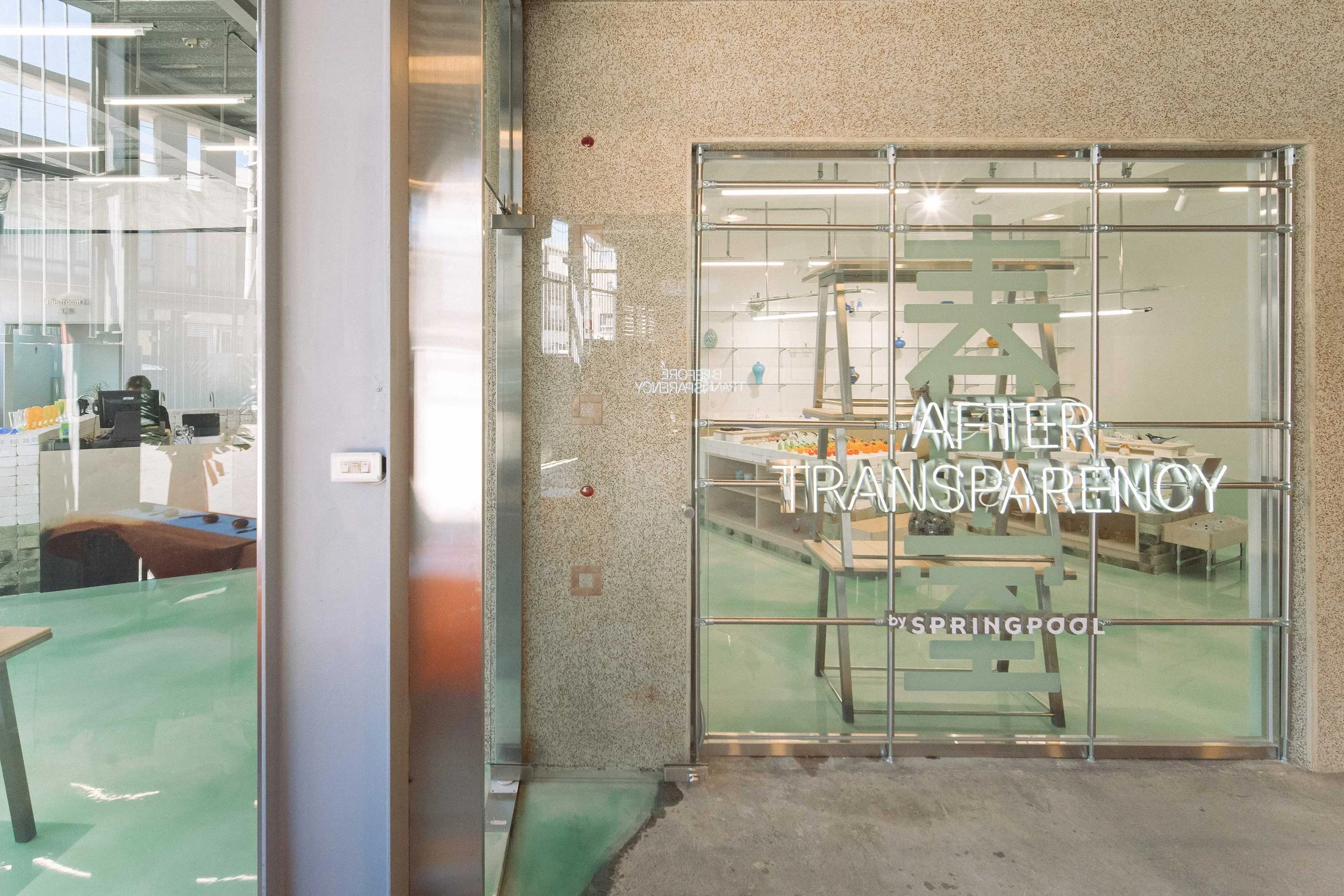
The journey begins at the Spring Pool Glass Studio, a retail-like entry that softens the threshold between public and industrial space. Here, a crisp 4,000K light defines the atmosphere, while a green-toned epoxy floor subtly evokes the reflective surface of water, a reference to the ‘pool’ in Spring Pool Glass.
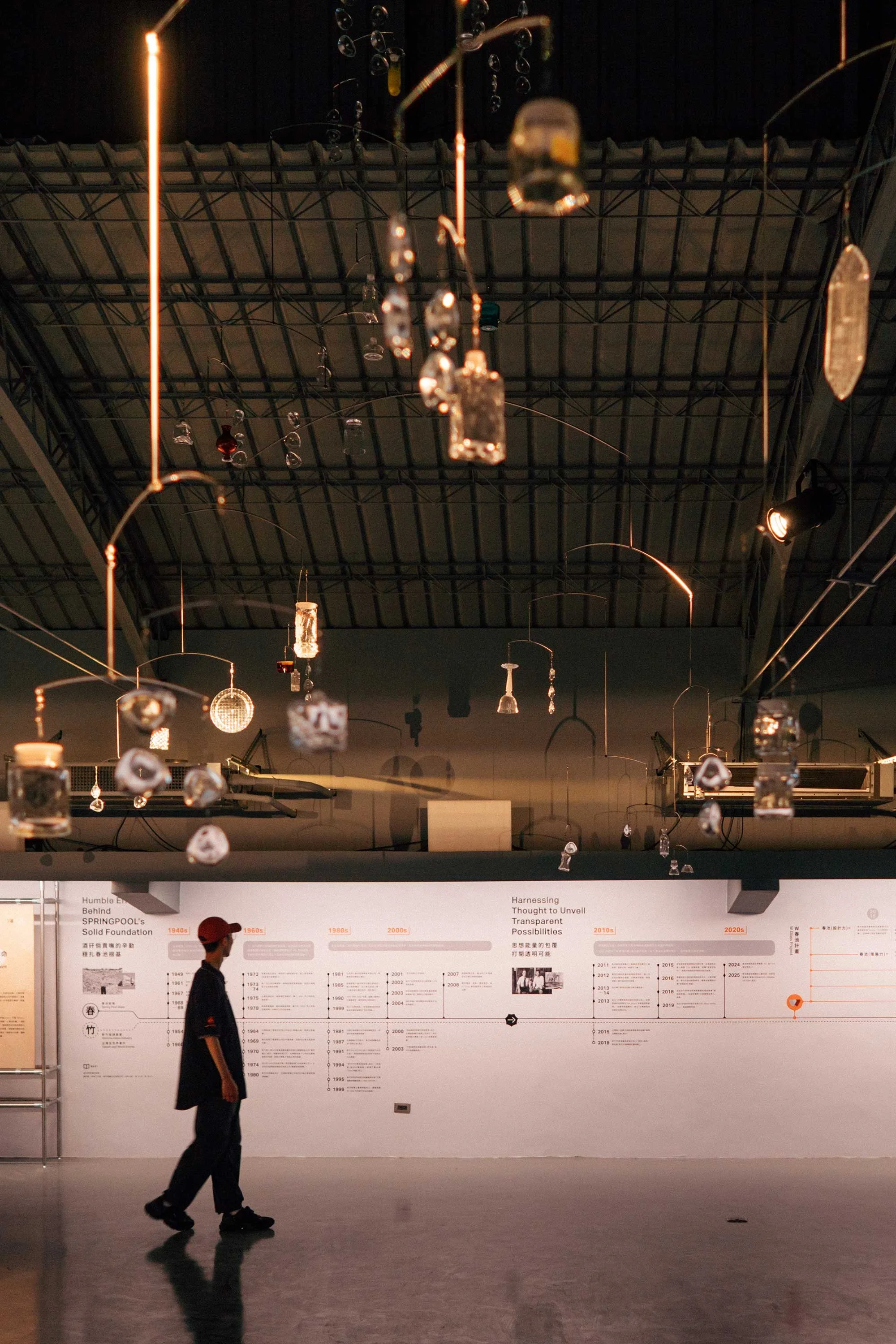
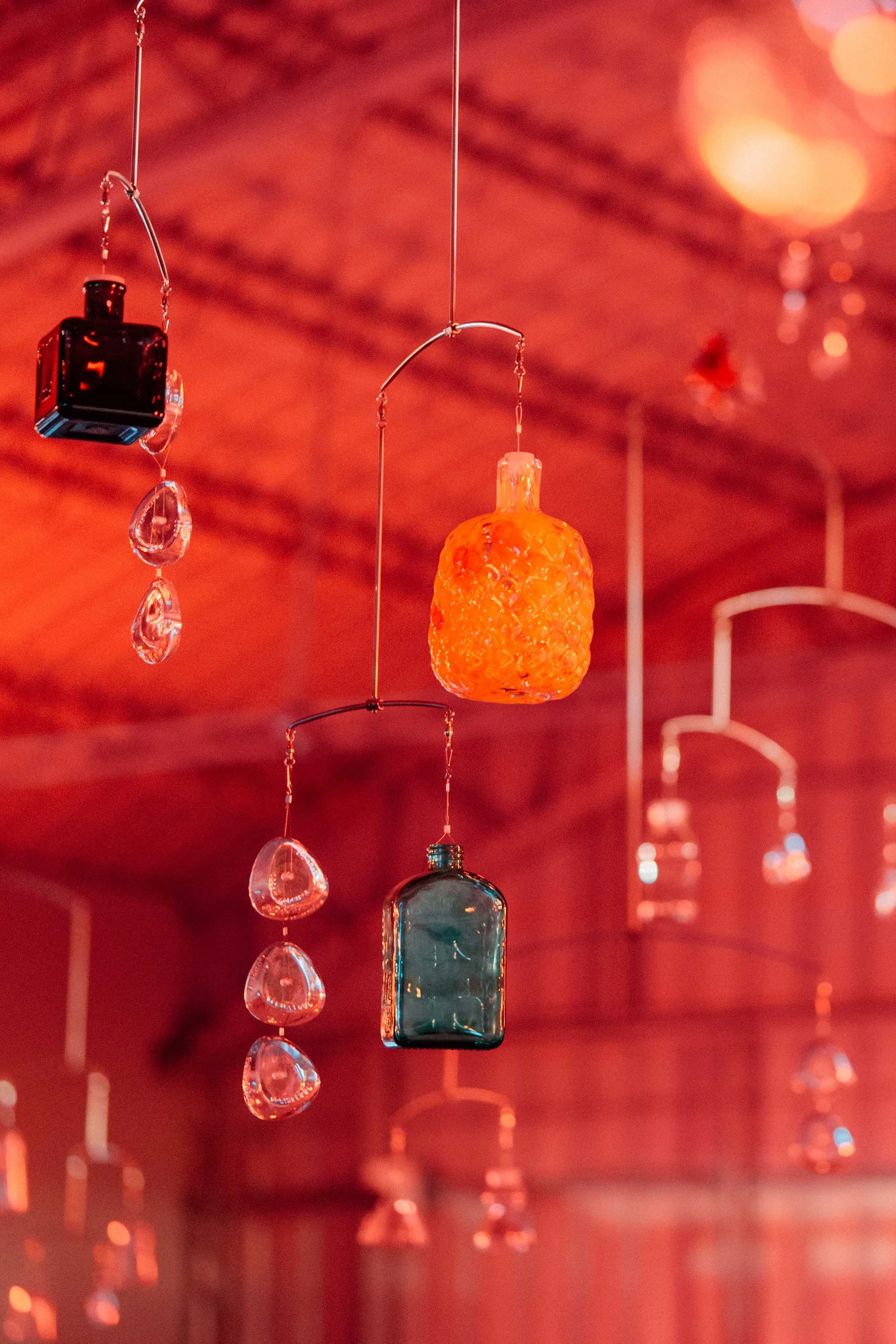
Deeper inside, the sample and mould areas adopt a more restrained tone. Decades of accumulated metal moulds and glass samples are arranged with precision, while lighting is deliberately subdued. Attention is directed towards the materiality and temporality embedded in the objects themselves.
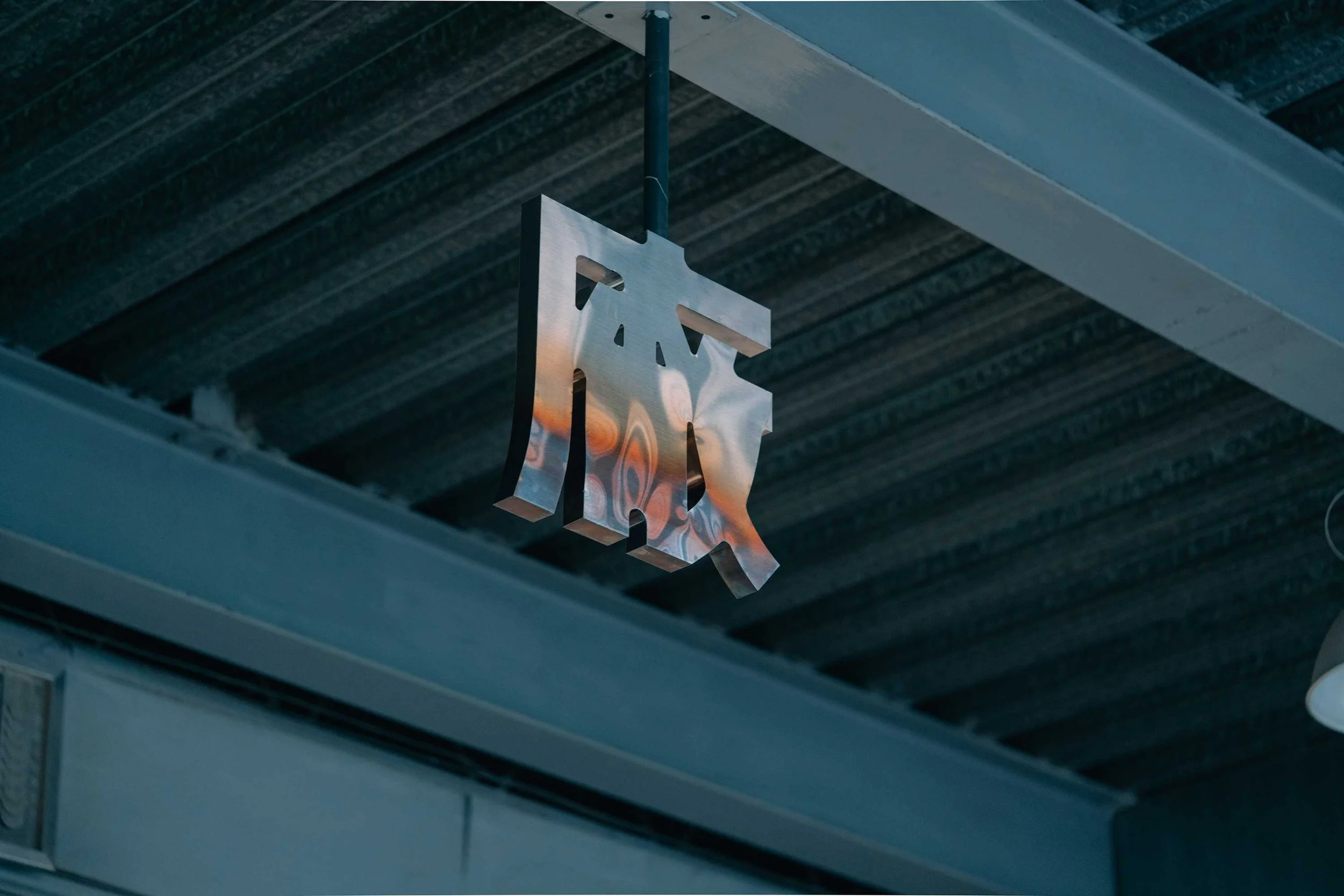
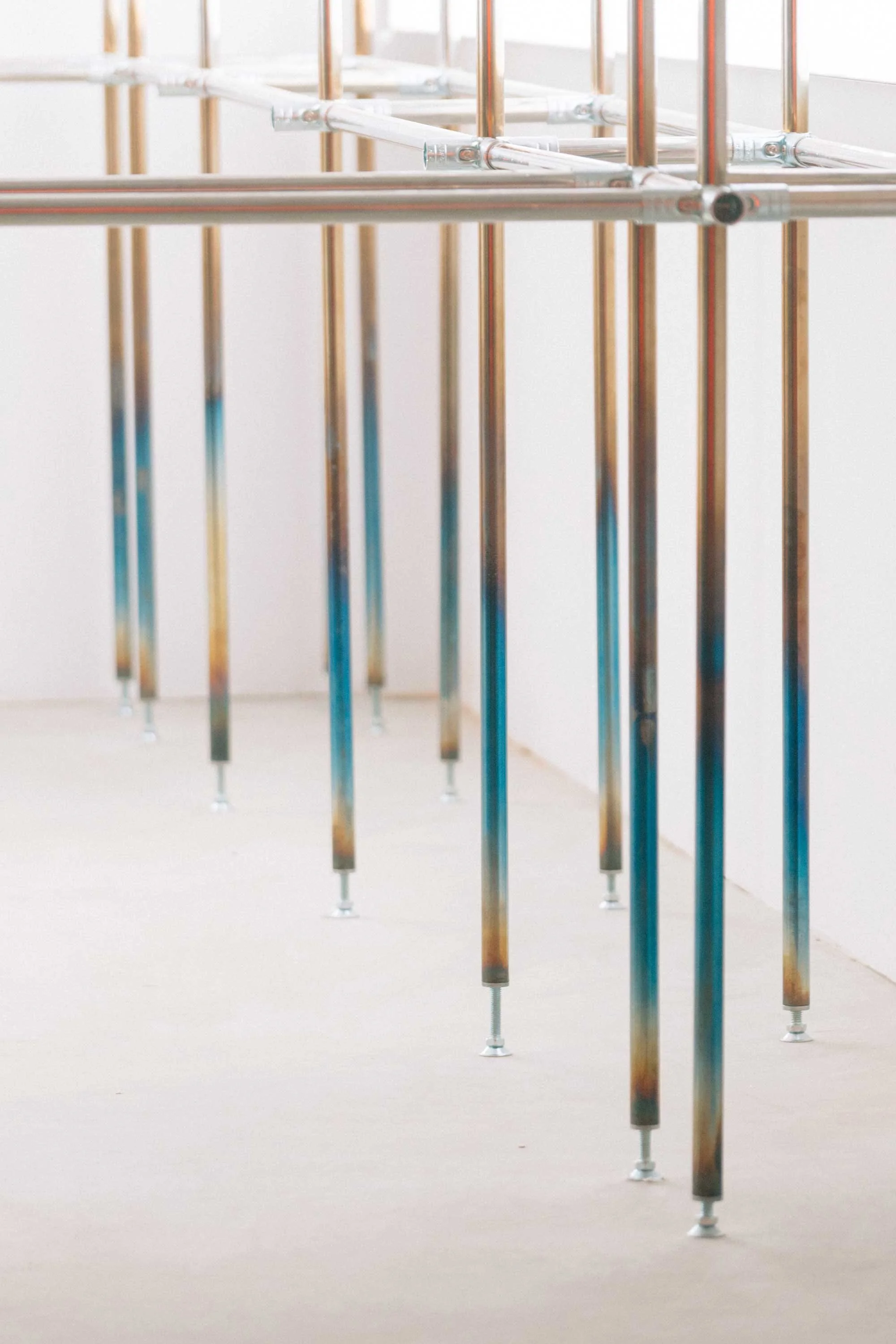
At a finer scale, elements of the production process are reinterpreted into spatial systems. The blowpipe, a fundamental tool in glassmaking, is translated into a modular display structure. Heat-treated metal surfaces reveal natural gradients of colour, forming a recurring visual language across the space. These adaptable frameworks function both as display and as infrastructure, anticipating future change.
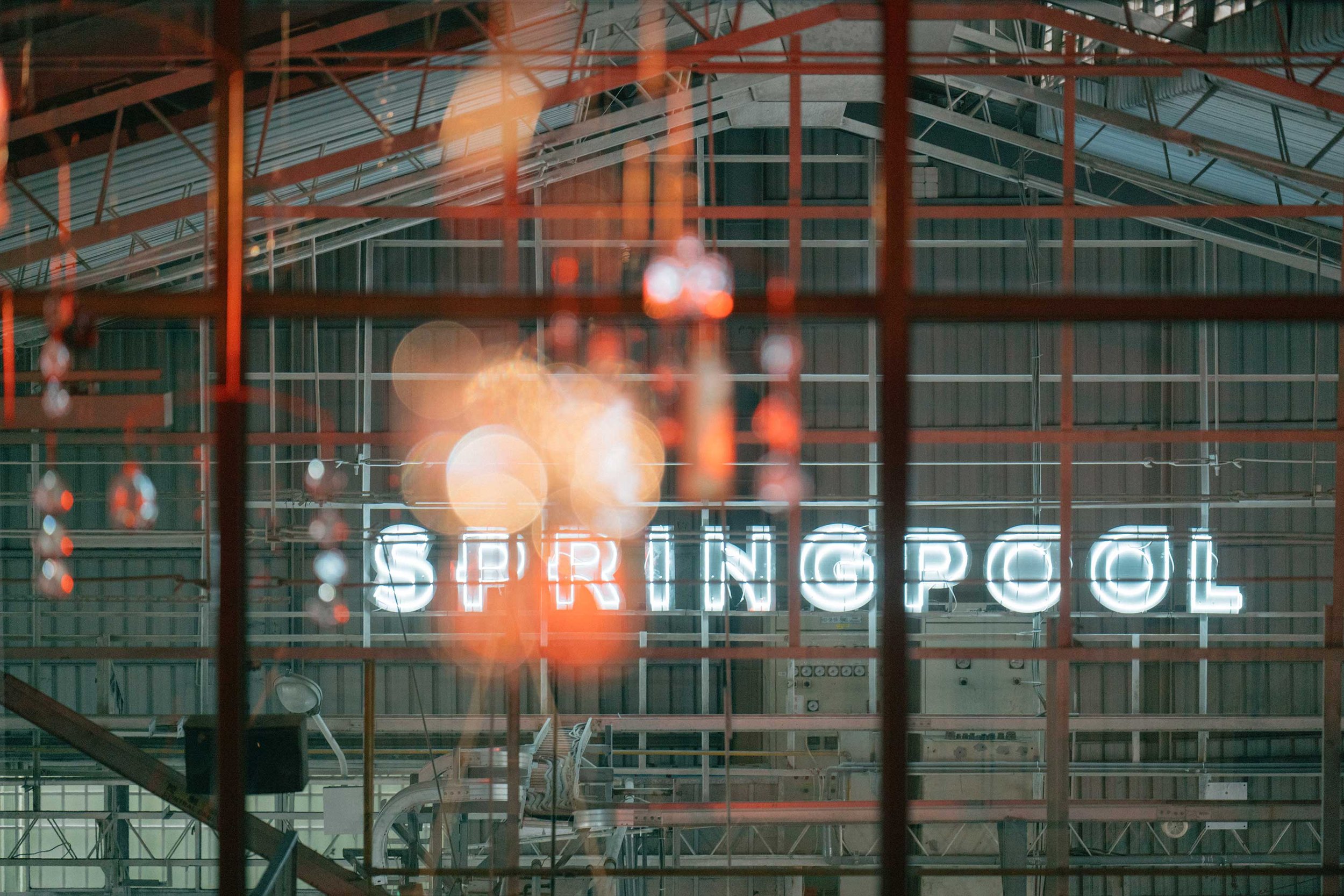
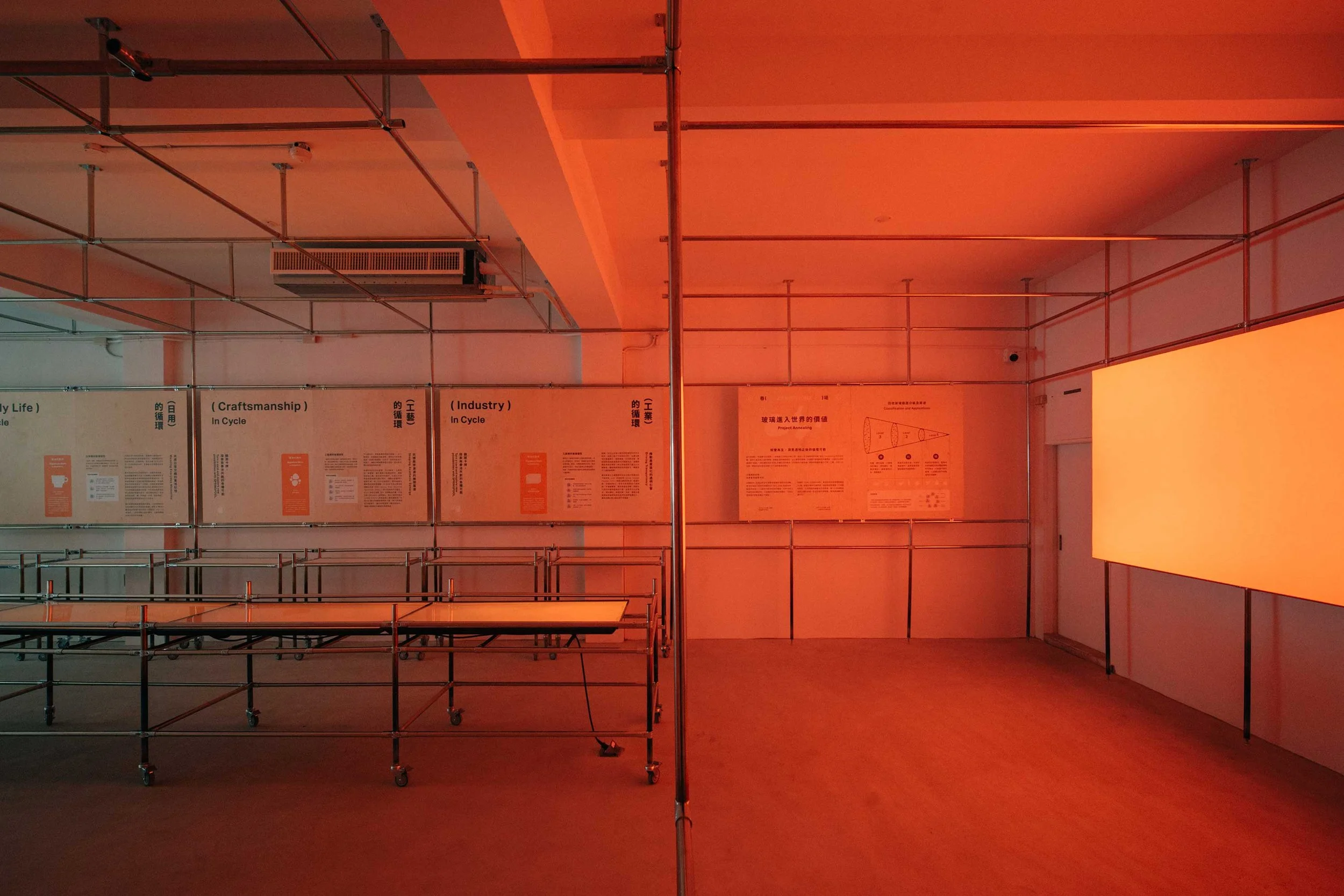
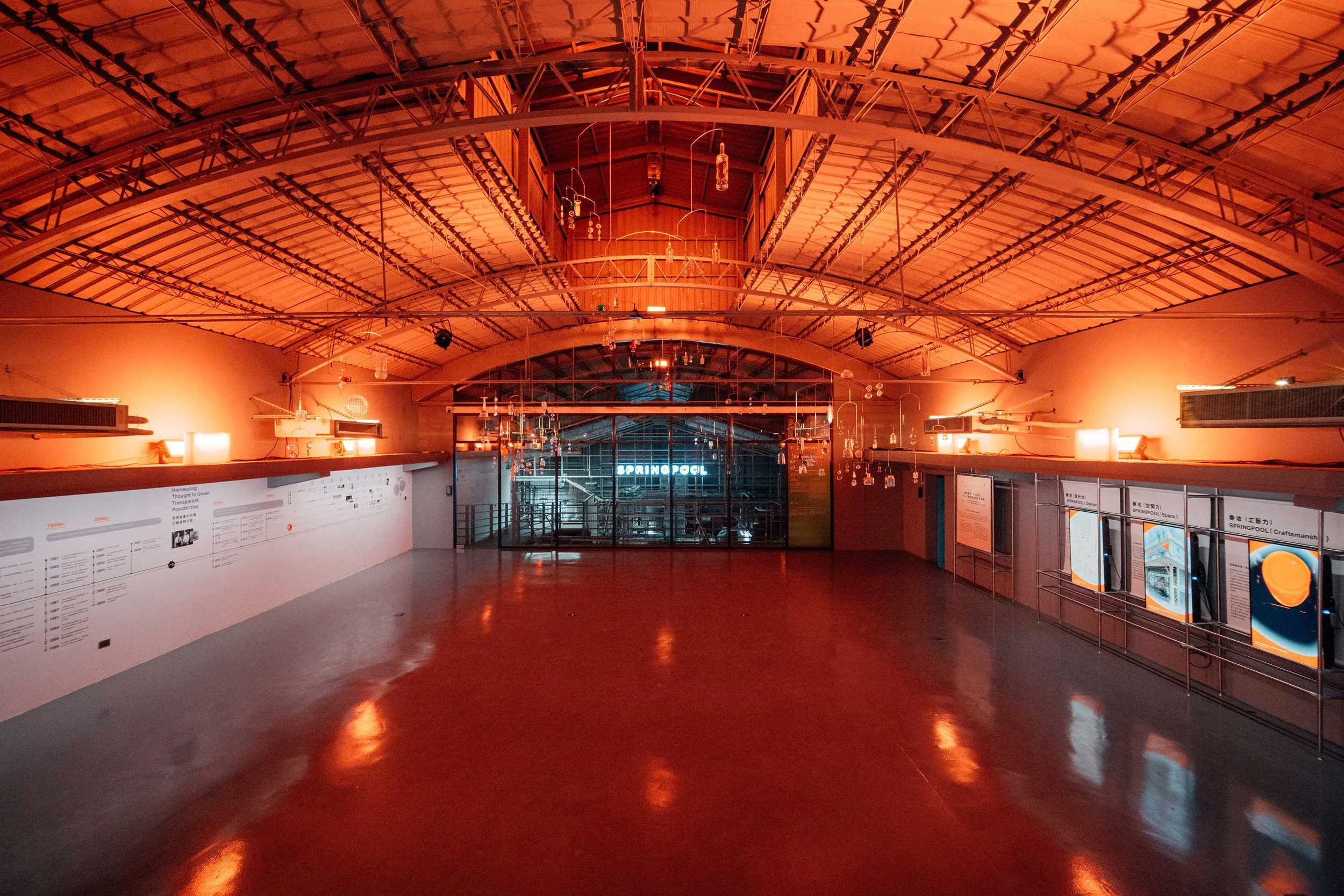
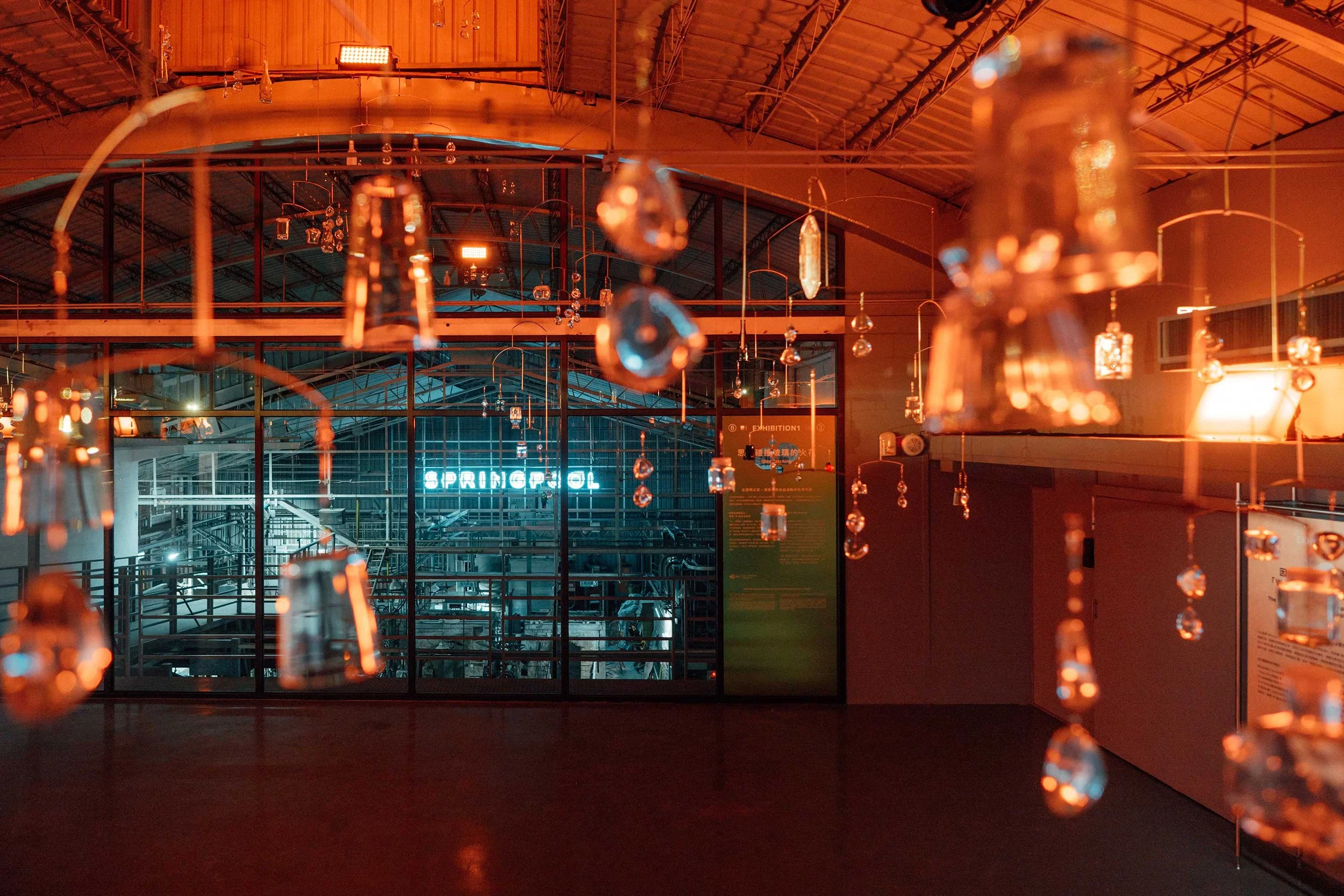
As the circulation ramps upwards, the spatial experience reaches its most charged moment. Lighting shifts into warm, amber tones, echoing the interior of a furnace. In the Idea Batching zone, suspended installations gather past collaborations with designers and brands, forming what reads as a physicalised ‘brain’, a site of accumulation, speculation and projection.
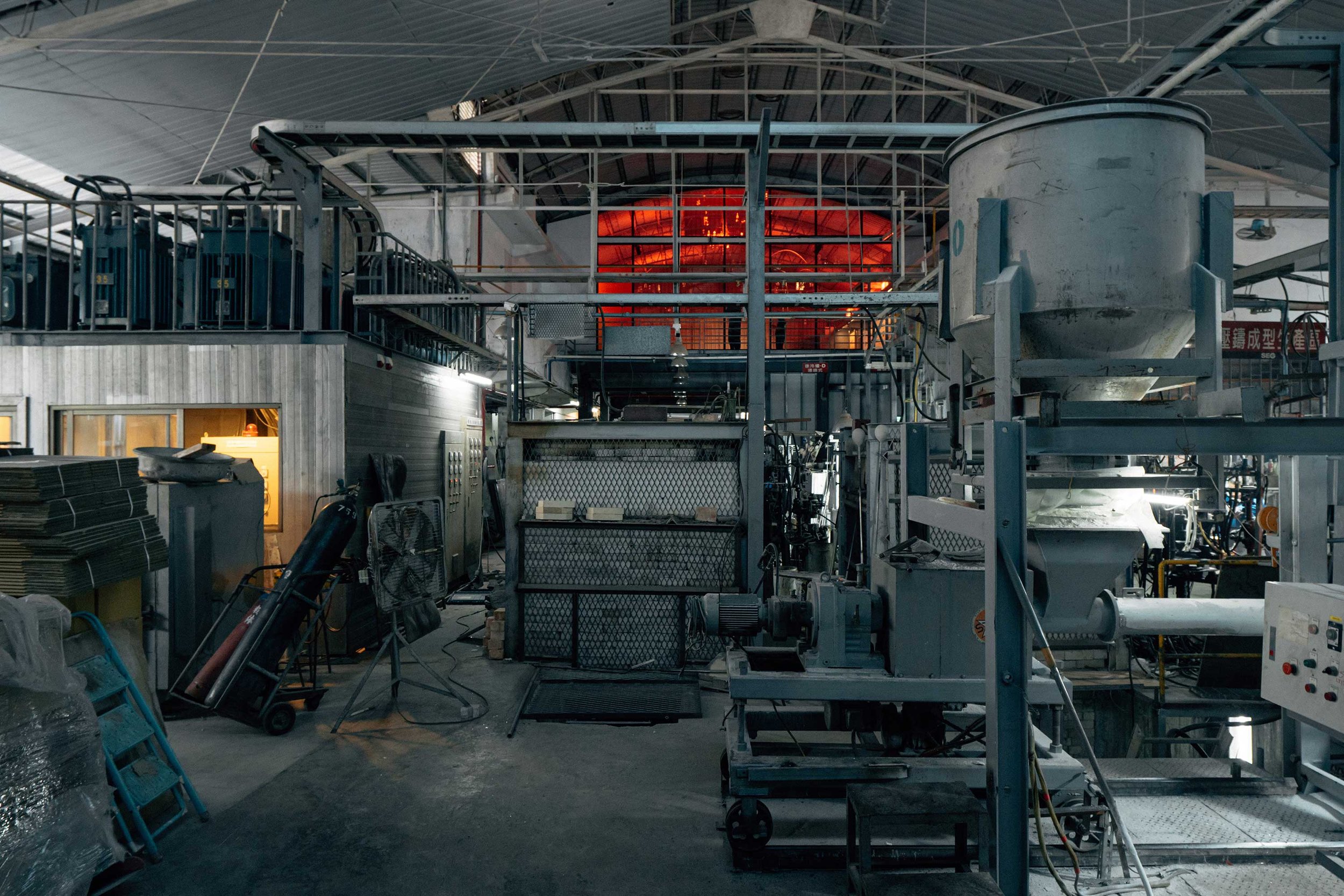
From above, visitors overlook the active production floor, where craftspeople manipulate molten glass with choreographed precision. Here, curated spatial experience and unfiltered labour coexist, collapsing the distance between making and meaning.
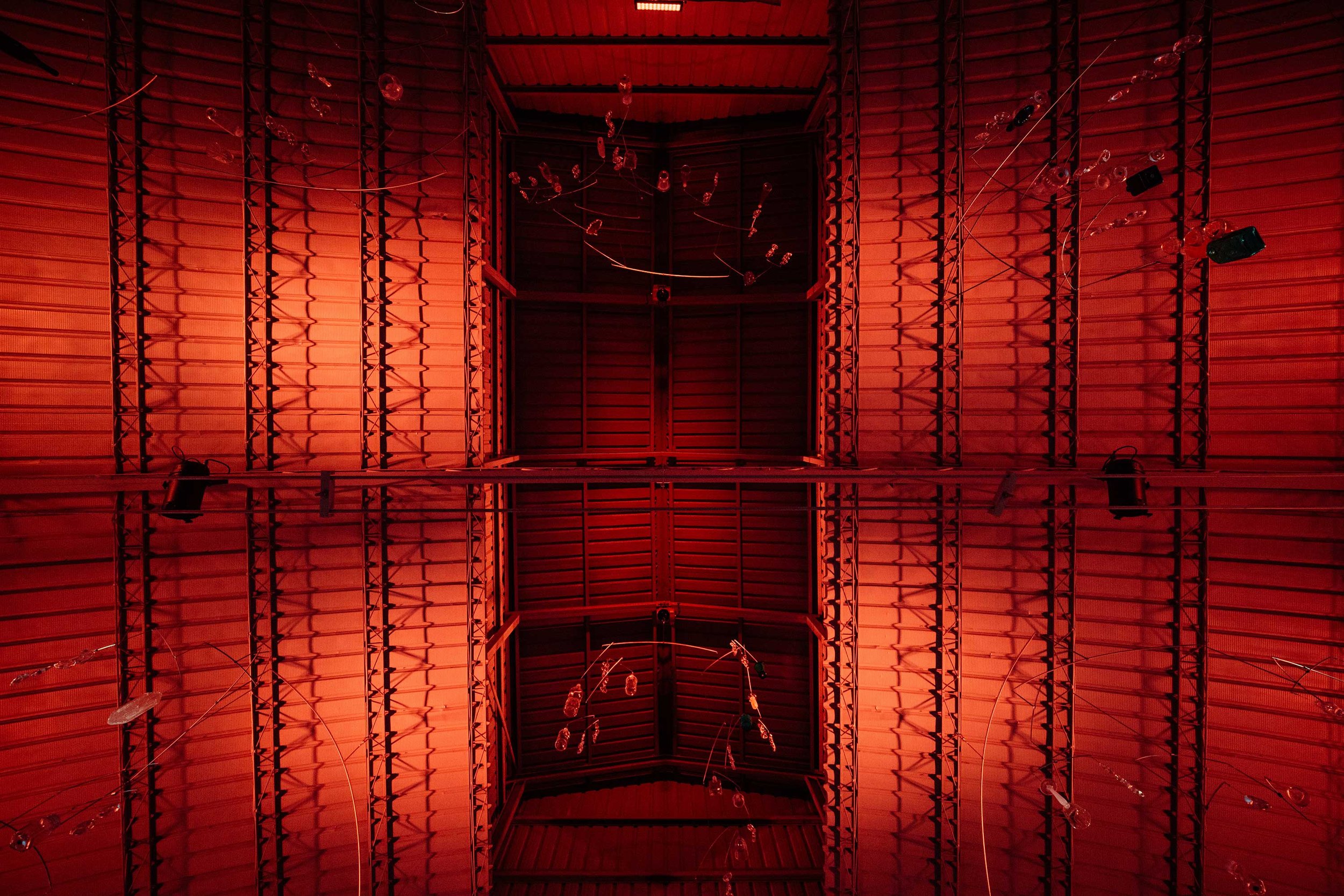
The sequence concludes in the Process of Manufacturing area. As the material enters the annealing phase, the lighting returns to a neutral and transparent state. What has passed through heat begins to stabilise. Ideas, likewise, settle into form. By the time visitors loop back to the beginning, their understanding of glass has subtly shifted. It is no longer a static material, but a process shaped by temperature, duration and human intervention.
Here, transparency is not a fixed outcome, but a process still unfolding.
Text by Michelle Kuo
Images by Youren Lin, courtesy of Spring Pool Glass