The Boundaries Between Art and Object Dissolved at Melbourne Art Fair
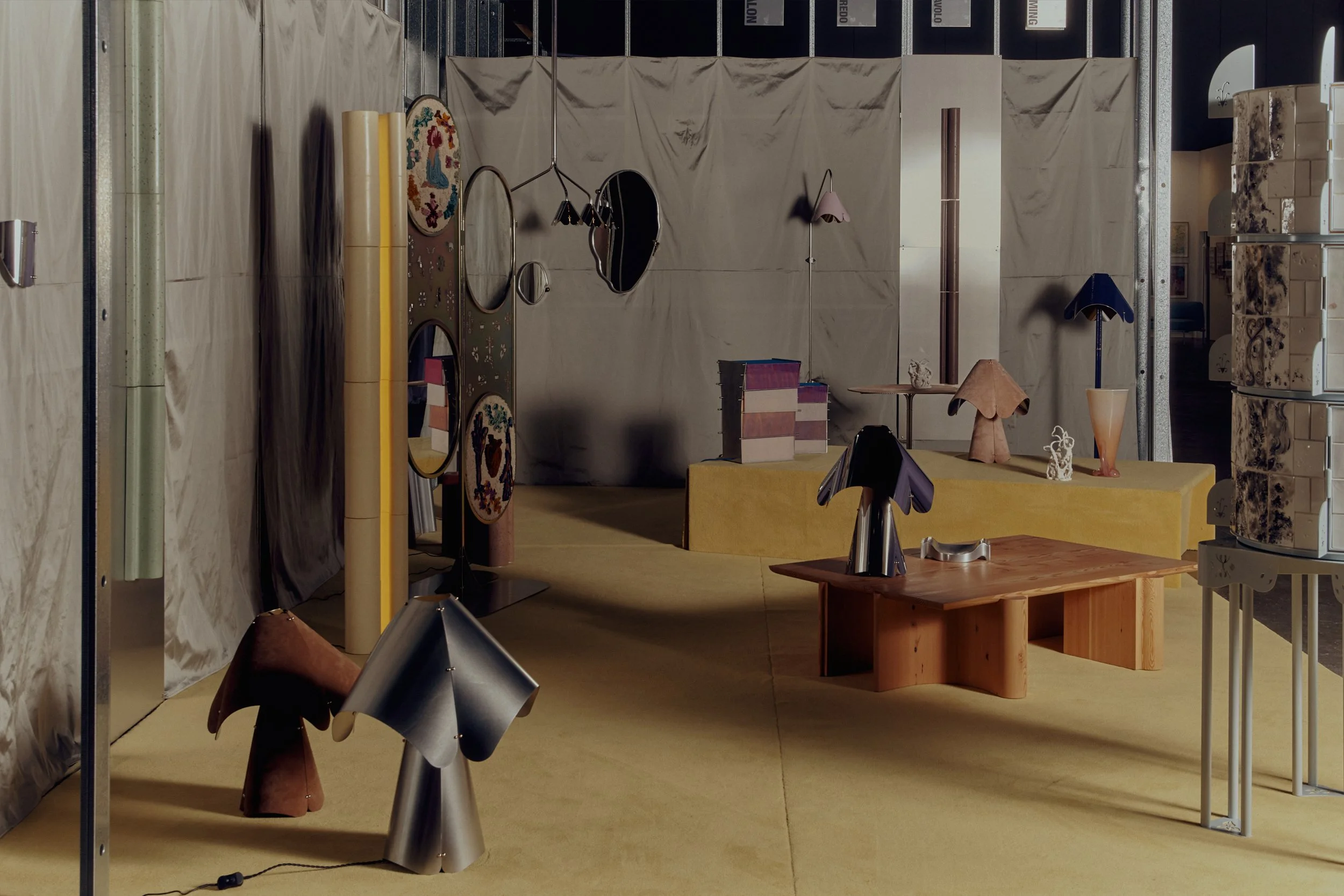
Image by Daniel Grima
As FutureObjekt debuted at the Melbourne Art Fair, the city’s leading designers challenged the status quo, blending high-end craft with conceptual rigour to redefine the future of Australian collectable design
At the entrance to FutureObjekt, I found myself reflecting on something Golnar Roshan had said to me earlier that day: that the difference between art and design depends on the user. For Roshan — whose work at Rive Roashan with her partner Ruben de la Rive Box moves fluidly between luminous glass installations and functional objects — the categorisation feels increasingly redundant. As creatives, she told me, they resist being pigeonholed. What matters is the experience: how a piece shifts perception and how it participates in our daily lives.
It was precisely this porous, cross-disciplinary approach that defined the inaugural edition of FutureObjekt, Melbourne’s first collectable design salon, presented within the annual Melbourne Art Fair. The premise was simple but ambitious: to platform design with the same curatorial rigour and conceptual framing typically reserved for contemporary art. In doing so, it signals a maturation of Australia’s design scene — and an eagerness to situate it within a global conversation.
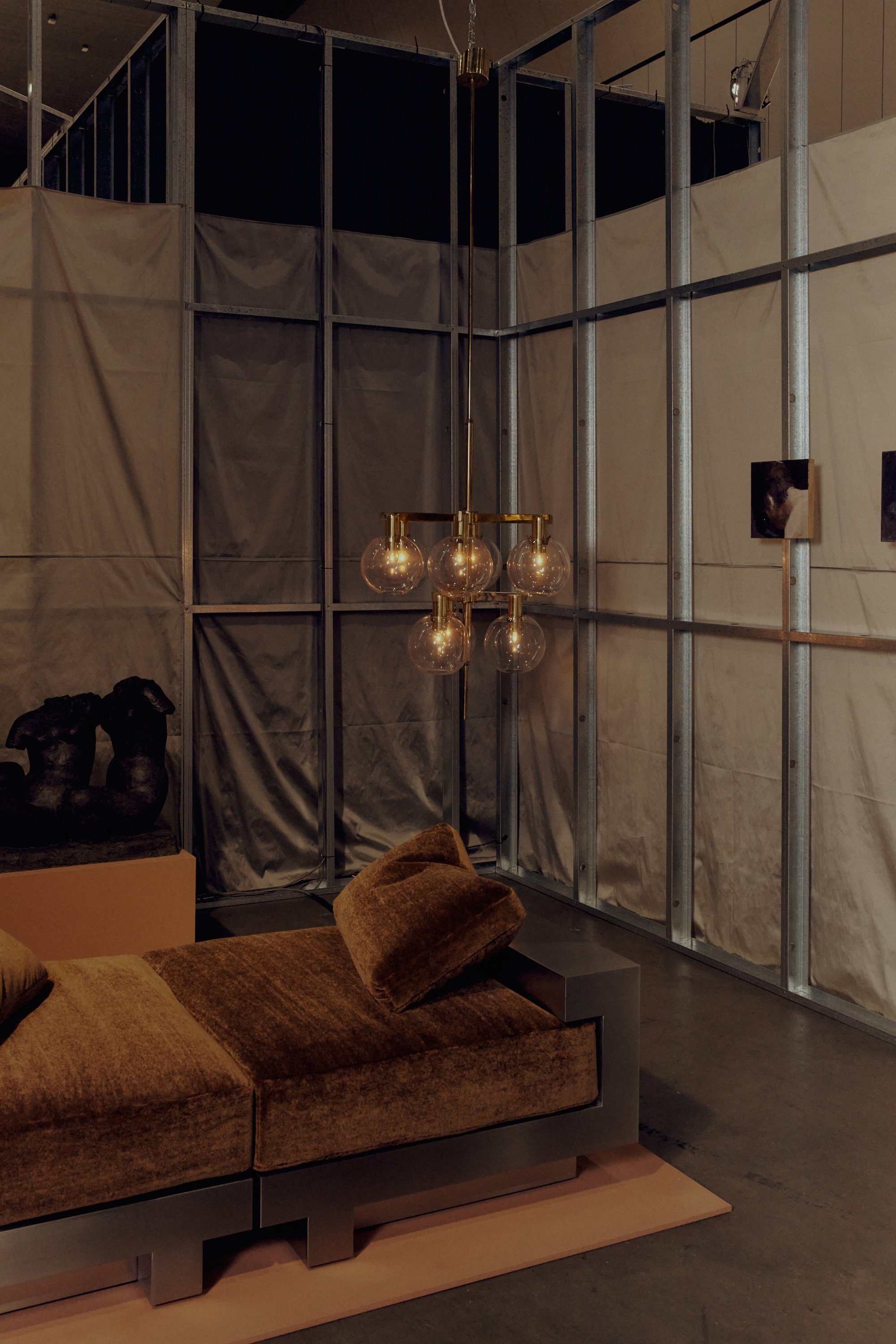
Image by Daniel Grima
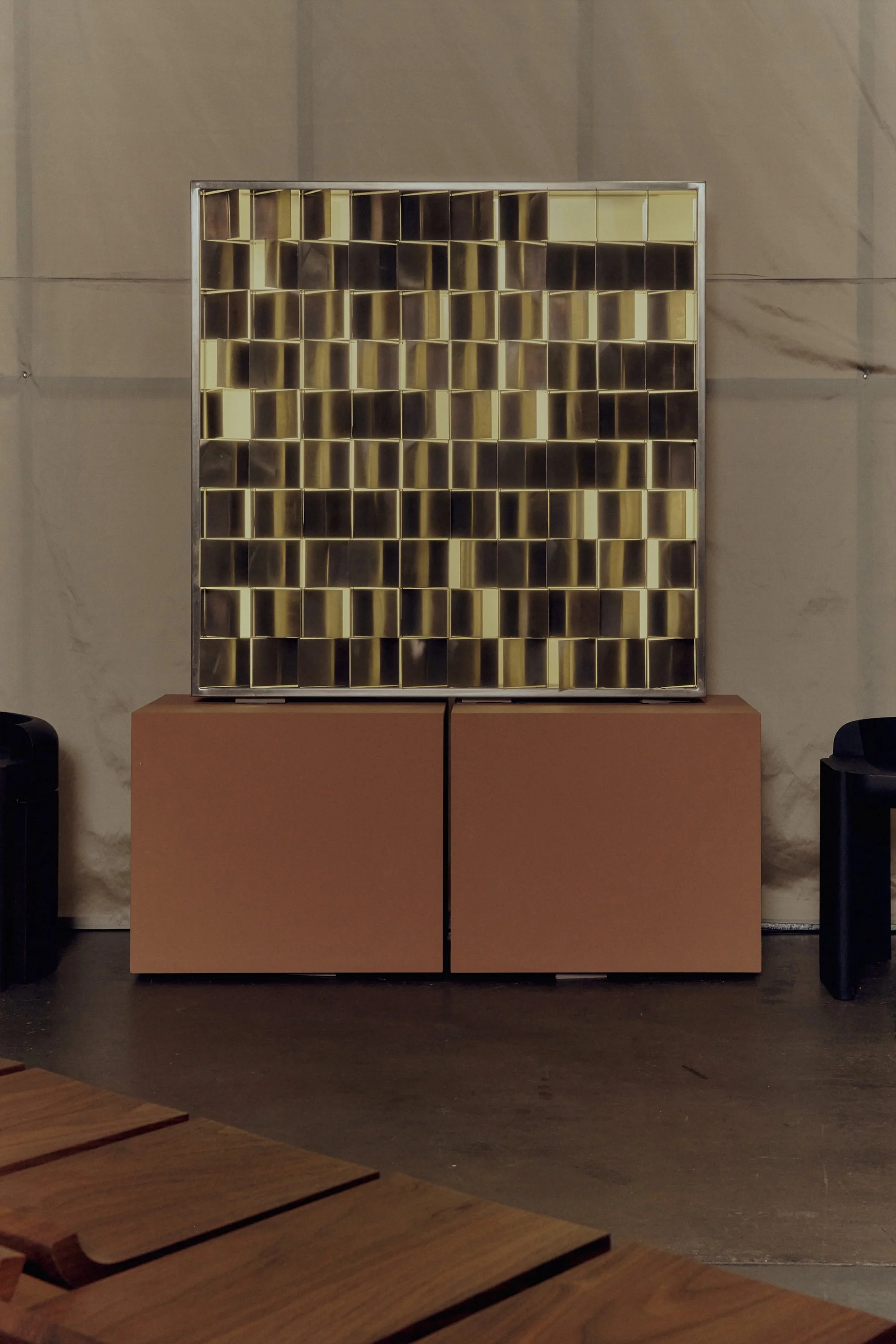
Image by Daniel Grima
As Andy Kelly, senior marketing & partnerships manager at Melbourne Art Foundation and director of Oigåll Projects, put it: ‘I think we punch really high above our weight and I wanted to platform that in this kind of environment.’ Australia may not have a Salone del Mobile, he noted, but that absence was precisely the impetus for building something locally that reflects the calibre of talent here.
Rive Roshan’s new work, presented by Gallery Sally Dan-Cuthbert, titled The Sky We Share, set a contemplative tone. A series of new works — lenticular glass wall panels, mesmeric vessels and radiant, horizon-like tables — capture fleeting moments of sky photographed from the duo’s Amsterdam studio window. The pieces shimmer and shift as you move, engineered with optical precision yet deeply poetic in intent. Beneath the beauty lies a quiet political statement: the sand-printed Voices Vessels, inspired by the Kurdish Woman, Life, Freedom slogan that became prominent in Iran, transform granular material into defiant, dancing forms. Roshan spoke of ‘soft power’ — of design’s ability to reconnect us to wonder.
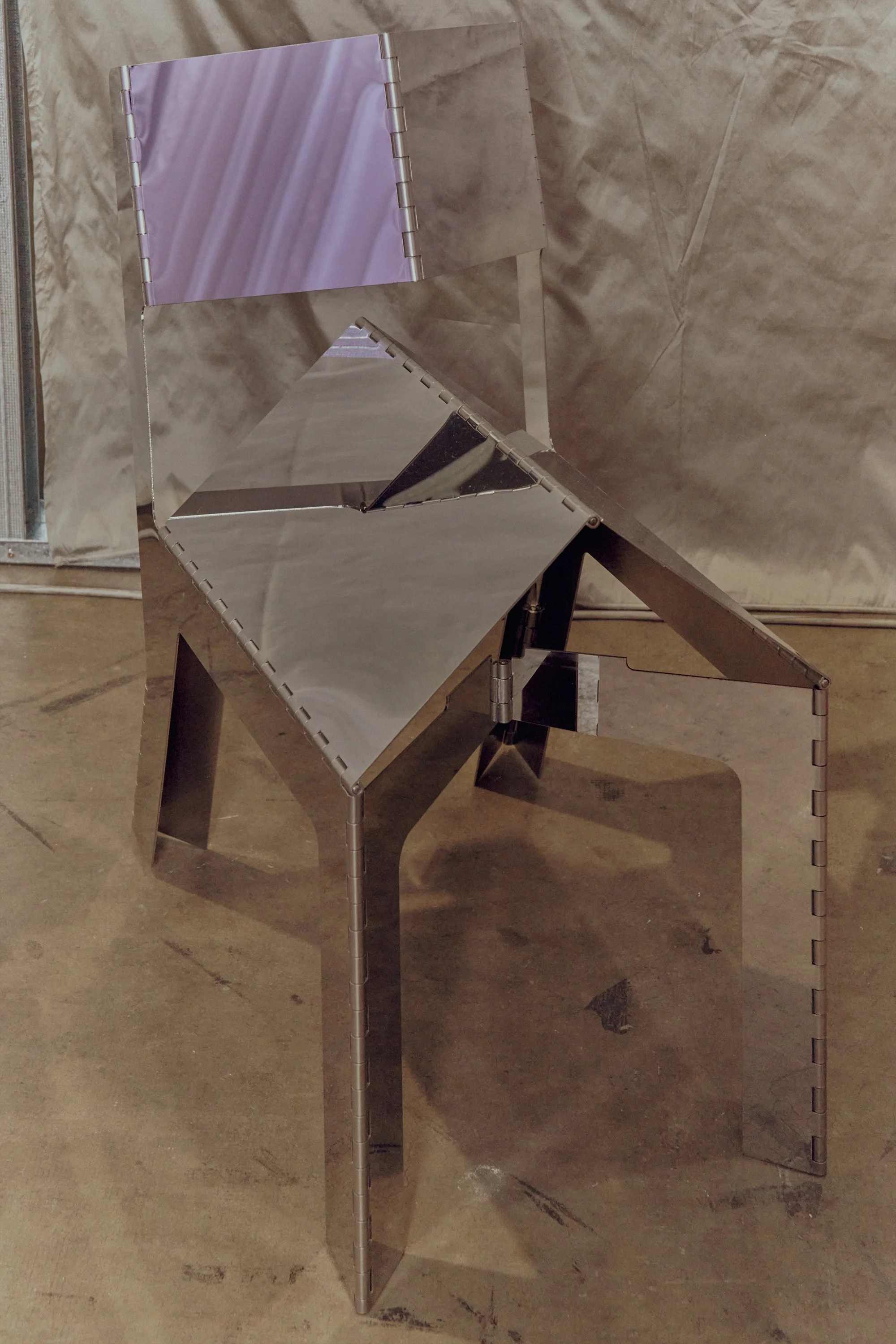
Image by Daniel Grima
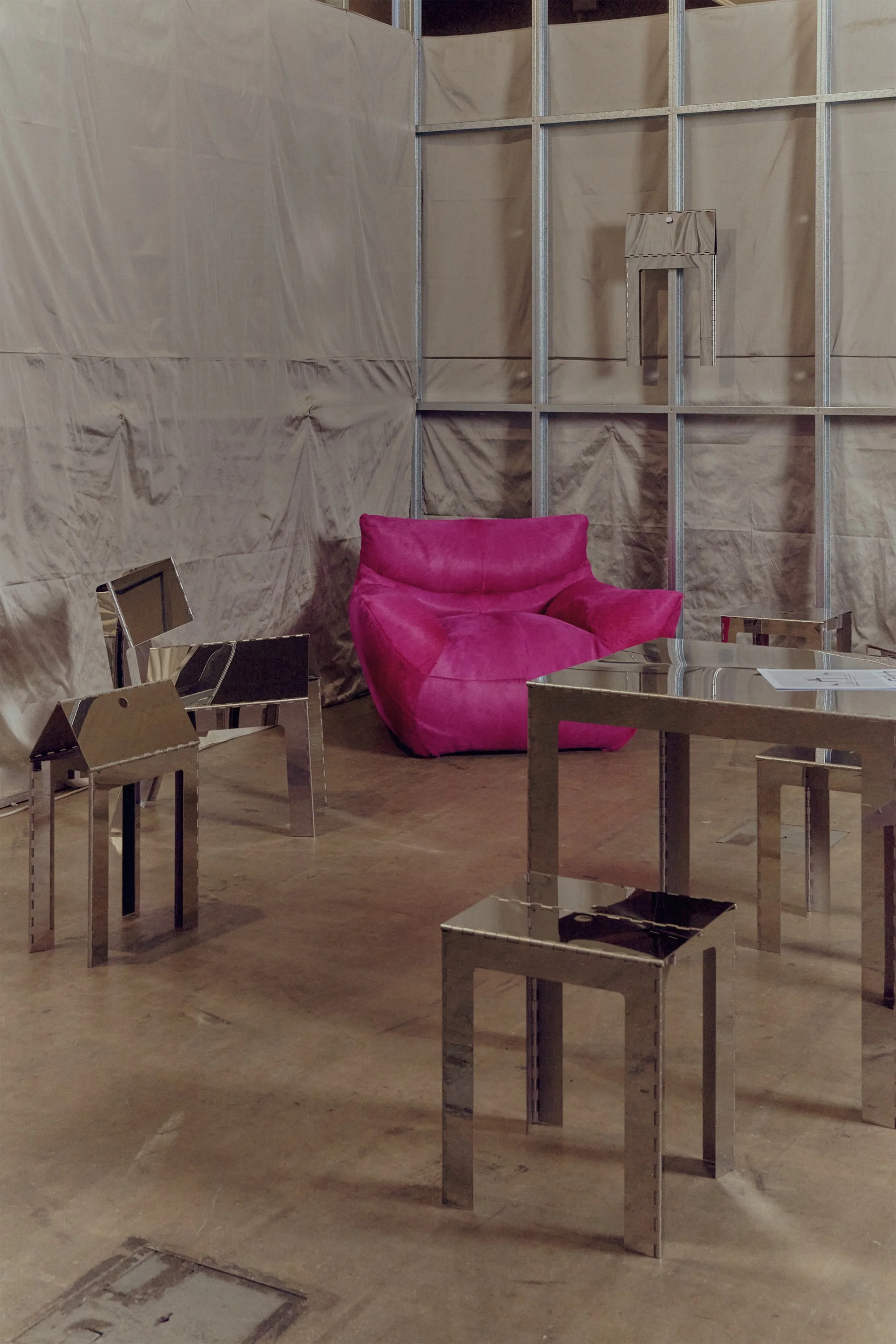
Image by Daniel Grima
While Rive Roshan’s pieces hover between art and object, Adam Goodrum’s self-produced folding chairs return us to his long-standing fascination with articulation. Revisiting a hinge detail first conceived 30 years ago — and never realised by Cappellini — Goodrum presented an edition of 20 mirror-polished stainless steel chairs with integrated hinges. This obsession with movement, with forms that transform from one state to another, is a thread that runs throughout his career — perhaps most recently exemplified by his work with Arthur Seigneur as Adam & Arthur. Here, though, freed from commercial constraints, it re-emerges as a sculptural enquiry: compact, reflective and resolved.
Adam Cornish, by contrast, leaned into exuberance. His OOO chair — part sculpture, part rocking seat — evolved from a stacking form study into a counterweighted, meticulously balanced object upholstered in reversible wool with 1960s-inspired stripes. The engineering, he admitted, took weeks of trial and error. Alongside it, titanium tile works — anodised at varying voltages to produce a spectrum of colour — reveal a near-obsessive material curiosity. Commercial relationships with local factories have, he explained, enabled this more experimental, collectable direction.
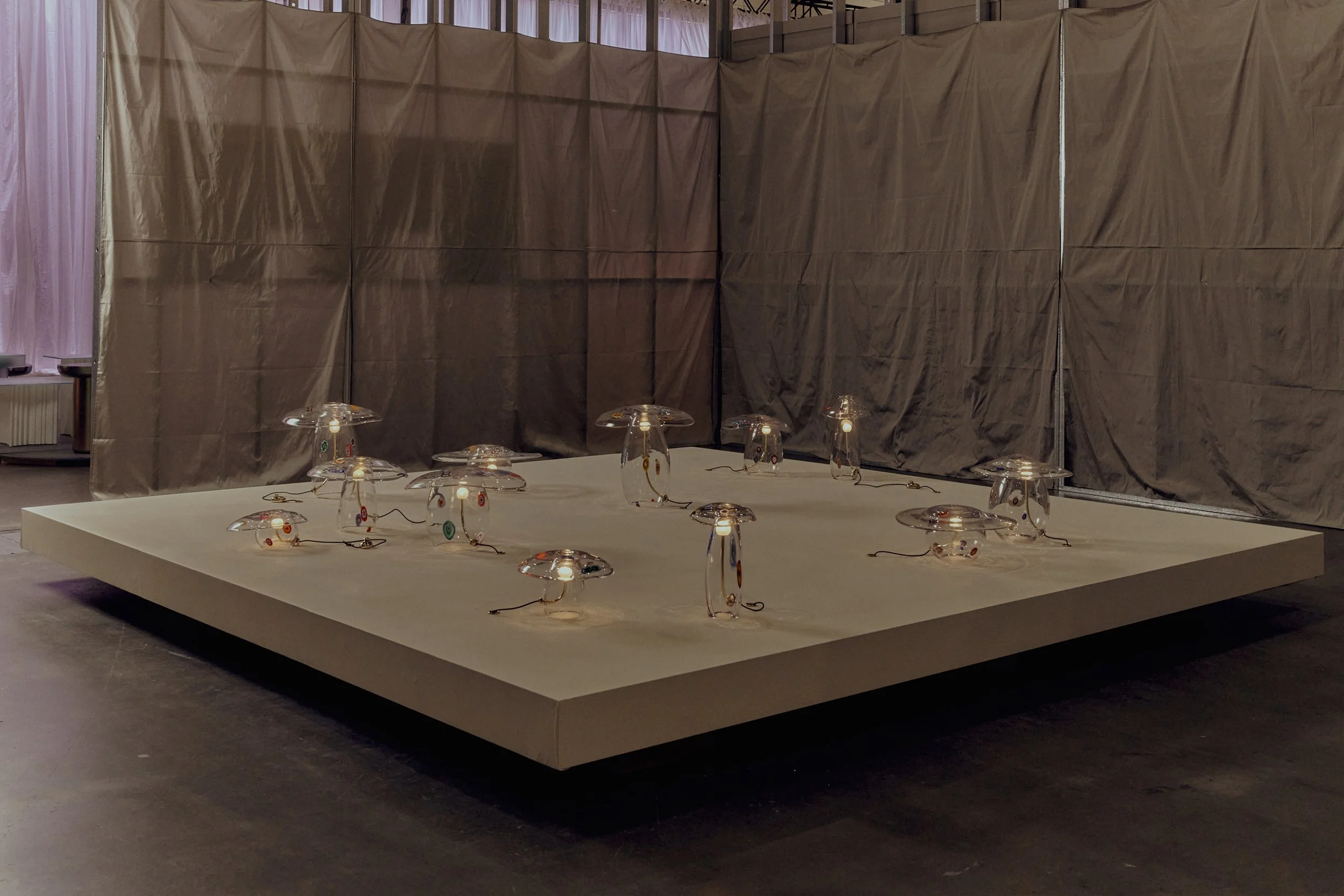
Image by Daniel Grima
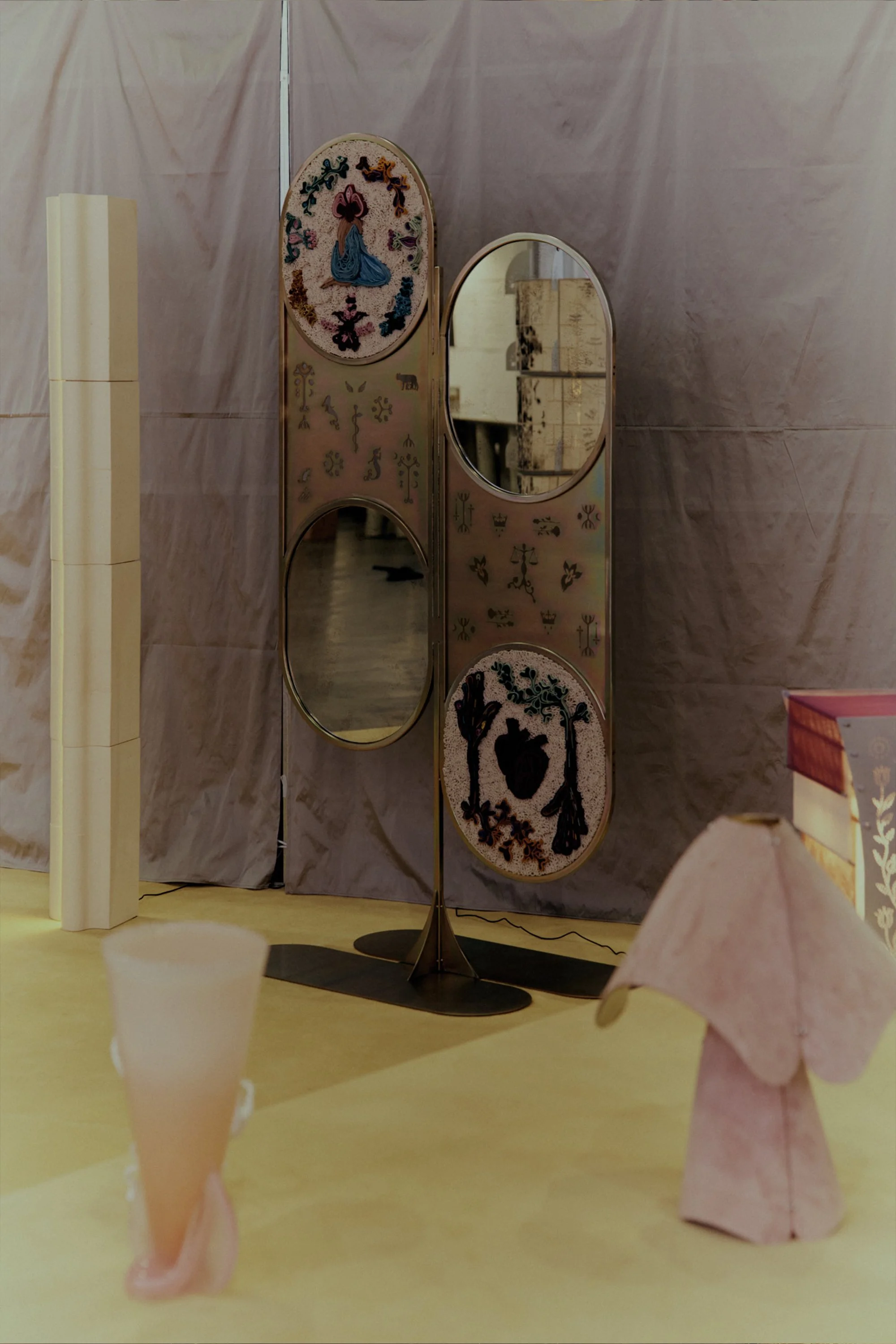
Image by Annika Kafcaloudis
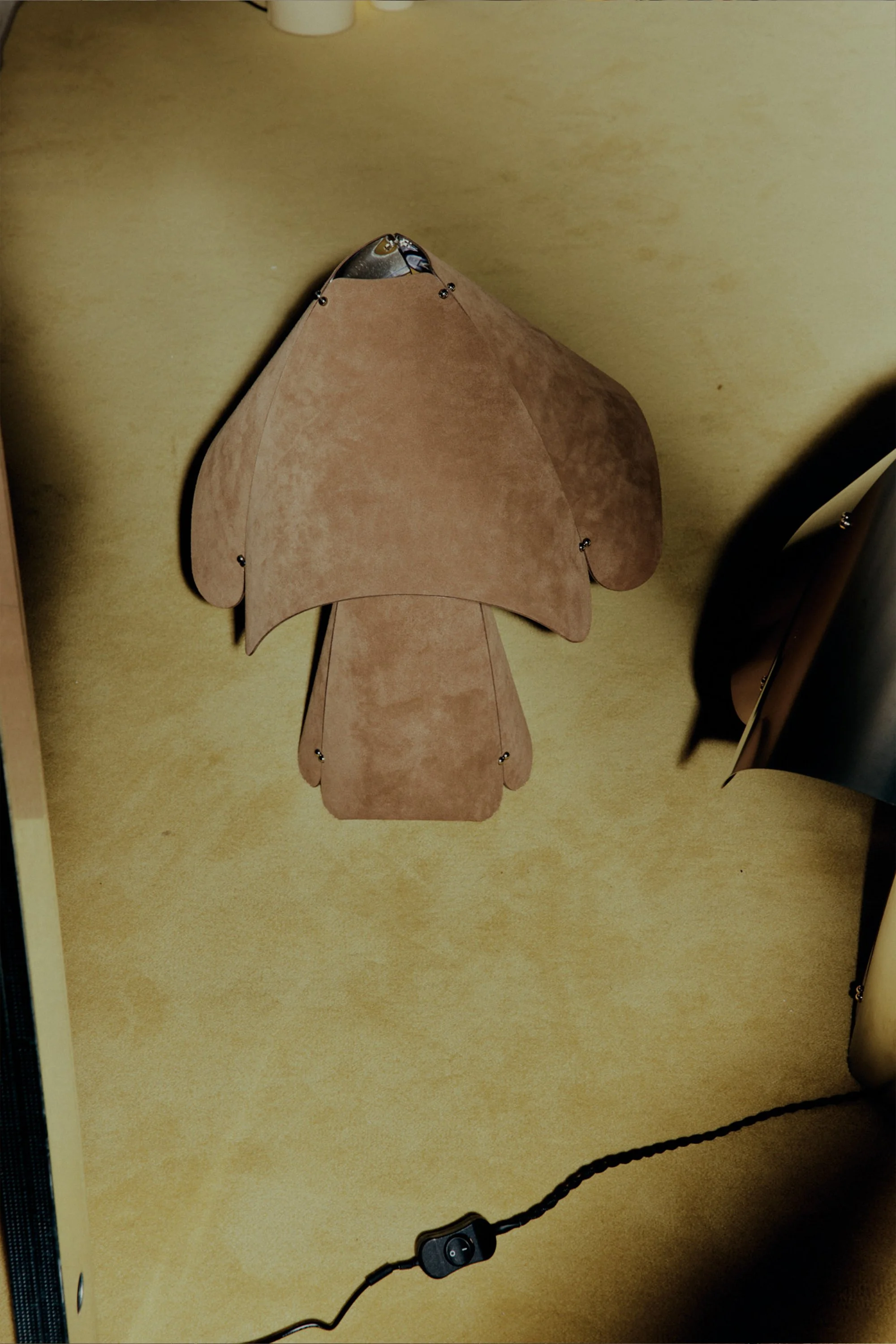
Image by Annika Kafcaloudis
Material experimentation was a recurring motif. At Volker Haug Studio, designer Abdé Nouamani introduced the Pilz collection: mushroom-like Murano glass lamps blown using 4,000-year-old glassmaking techniques, and both classic and contemporary murrine patterns. Developed through hands-on collaboration in Venice, the pieces depart from the studio’s more architectural metal language, embracing a softer, almost whimsical silhouette. It was a reminder for us all that innovation often lies in deepening, rather than abandoning, craft histories.
Ella Saddington of Cordon Salon similarly bridged past and present. Drawing on an applied research fellowship that took her through European armour archives, she translated the structural logic of plate armour into stainless steel lighting wrapped in leather and suede. The pieces carry a subtle fashion sensibility — unsurprising given her background in tailoring — yet feel resolutely architectural.
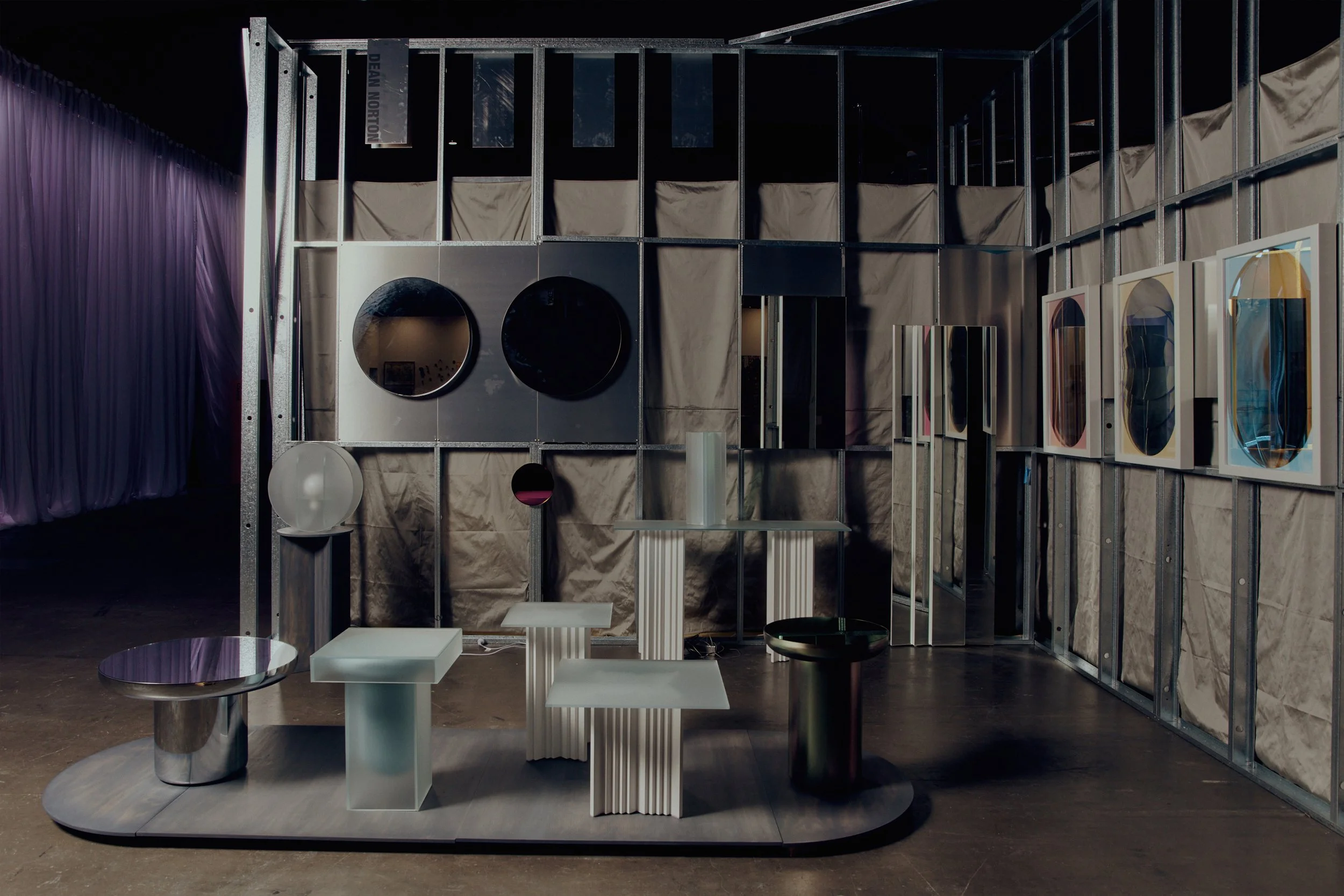
Image by Daniel Grima
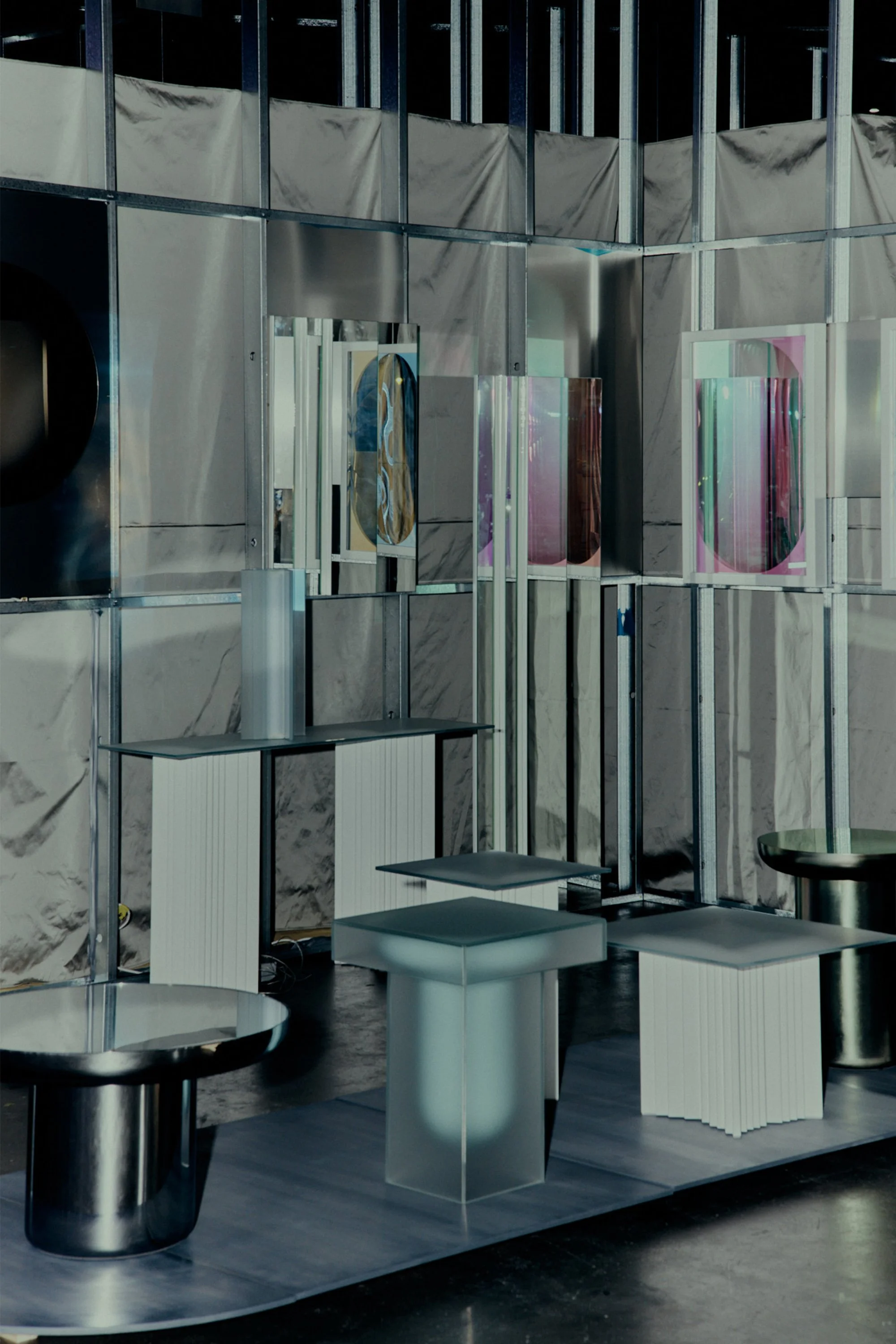
Image by Annika Kafcaloudis
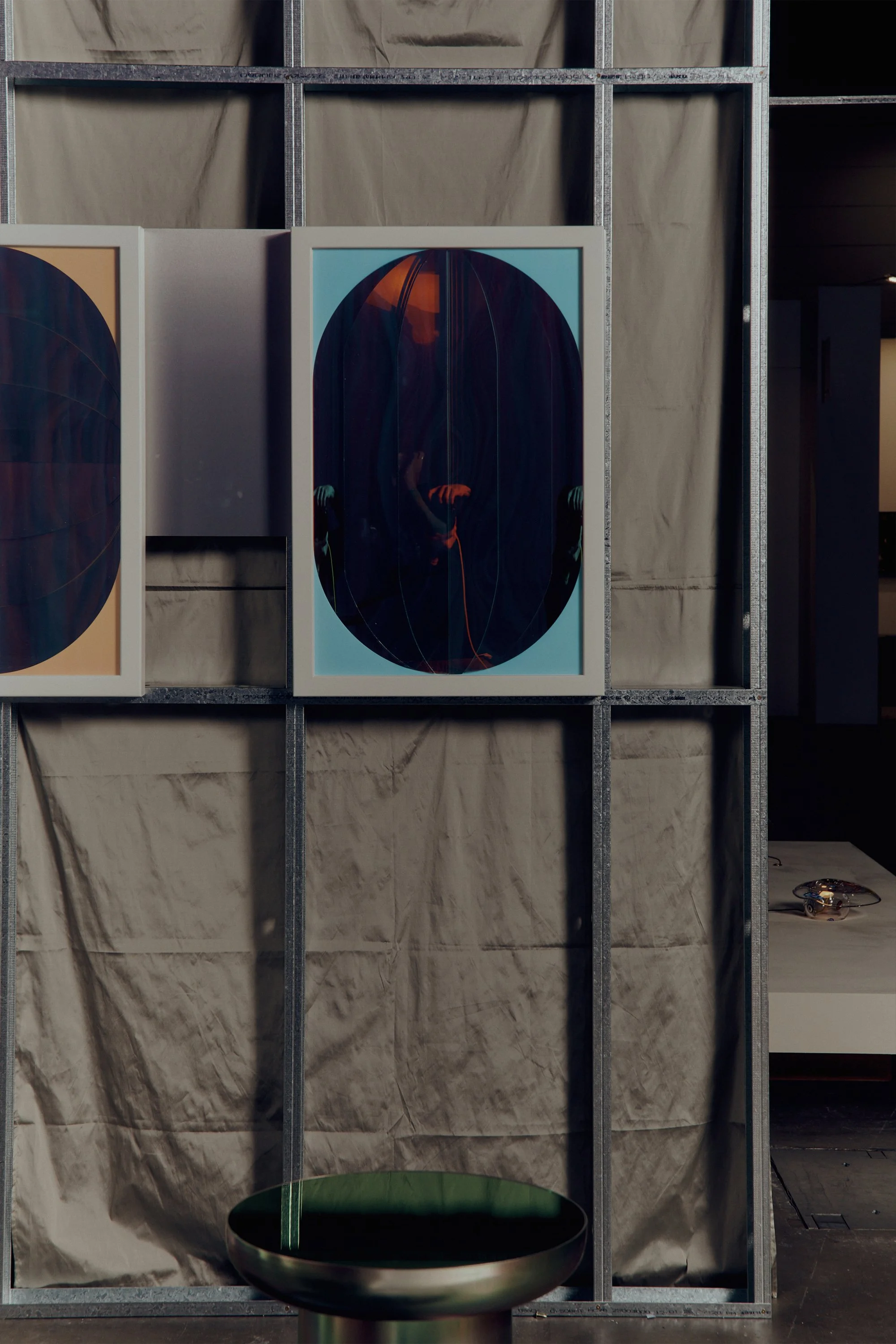
Image by Daniel Grima
Dean Norton’s booth functioned almost as a retrospective. Representing himself, he presented works spanning the practice he established in 2018, from the earlier Moodlum mirrors to the newly released Pillar collection in layered MDF, finished in white polyurethane. His Looking Glass works — layered with dichroic glass and silver mirror — create kaleidoscopic infinity effects, edging further into engineered art objects. The through ine is an evolving formal language rooted in reflection and perception.
Sozou Studio offered a quieter meditation. Kozo paper from Kyoto, aged brass and Australian blackwood converge in lighting that is symbolic of hybridity. Tokyo-born but now Melbourne-based designer Kohtaroh Colwell-Matsuura described the intention not as explicitly Japanese or Italian (his business partner Stefano’s heritage), but as distinctly Melbourne: multicultural, layered and respectful of tradition without being beholden to it.
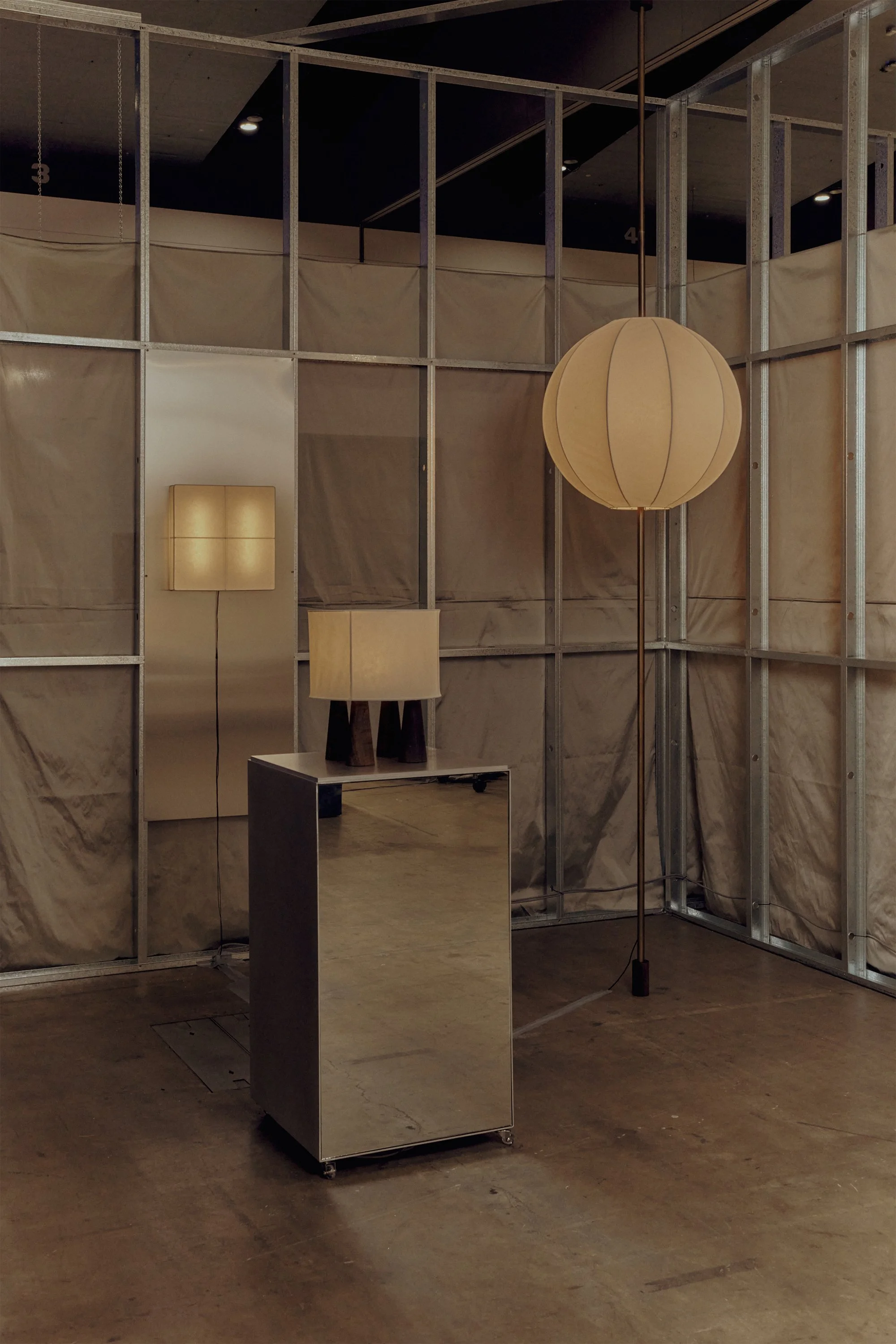
Image by Daniel Grima
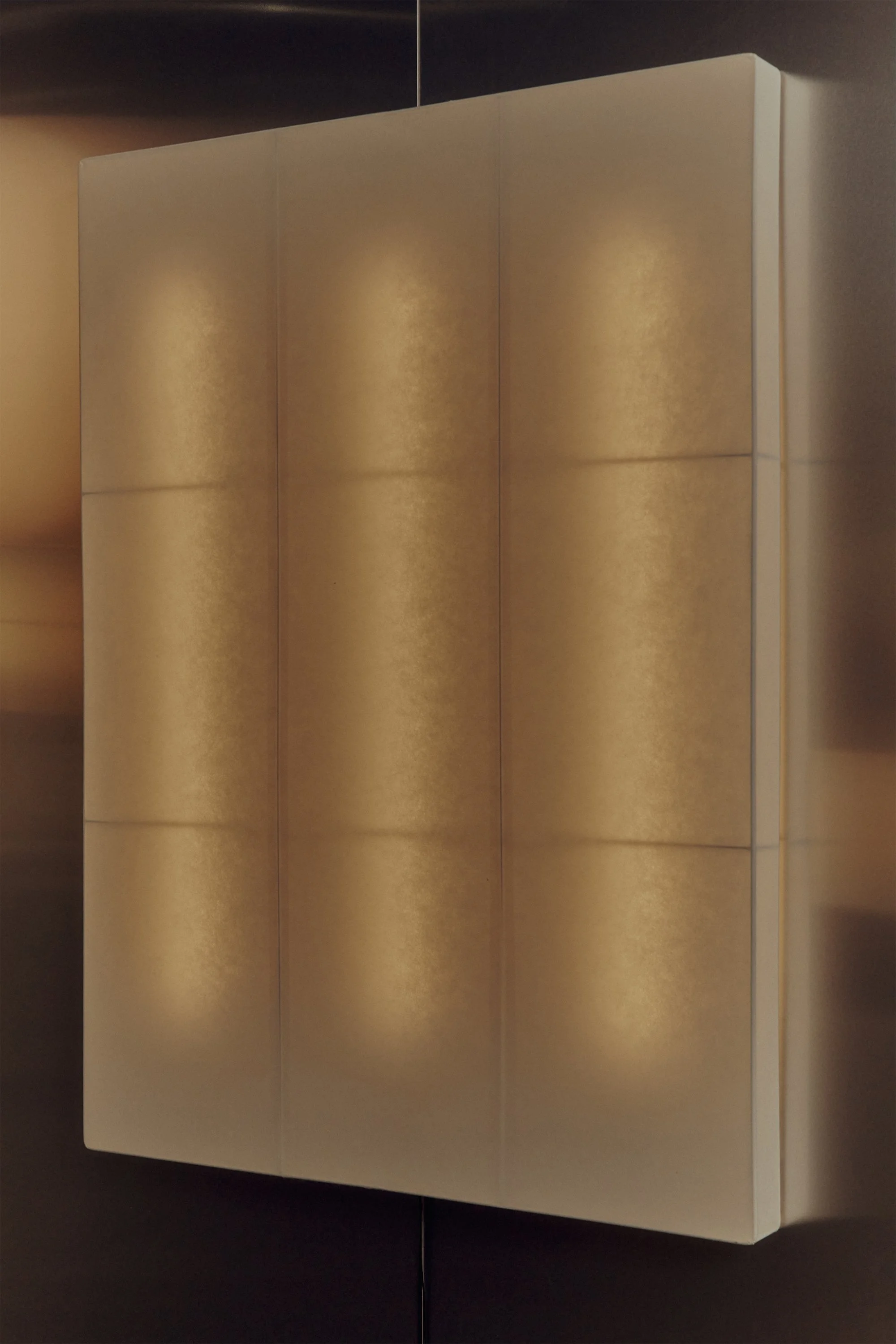
Image by Daniel Grima
Tom Fereday’s cast aluminium Cor light, meanwhile, celebrates permanence. Sand-cast in sections and welded to appear monolithic, each piece bears the pitting and variation of its process. Originally conceived in travertine, the new aluminium iteration extends its application indoors and out. Fereday spoke of working with — not against — makers, allowing technique to inform form, and showing respect to materials.
Around them, other exhibitors — from Studio Gardner’s layered, internationally inflected showroom, to Oigåll Project’s own tightly edited roster, Christopher Boots’s exploration of geology and illumination, and Don Cameron’s architecturally inspired works in metal — reinforced the salon’s broader ambition: to normalise the coexistence of art and design within a single collecting framework.
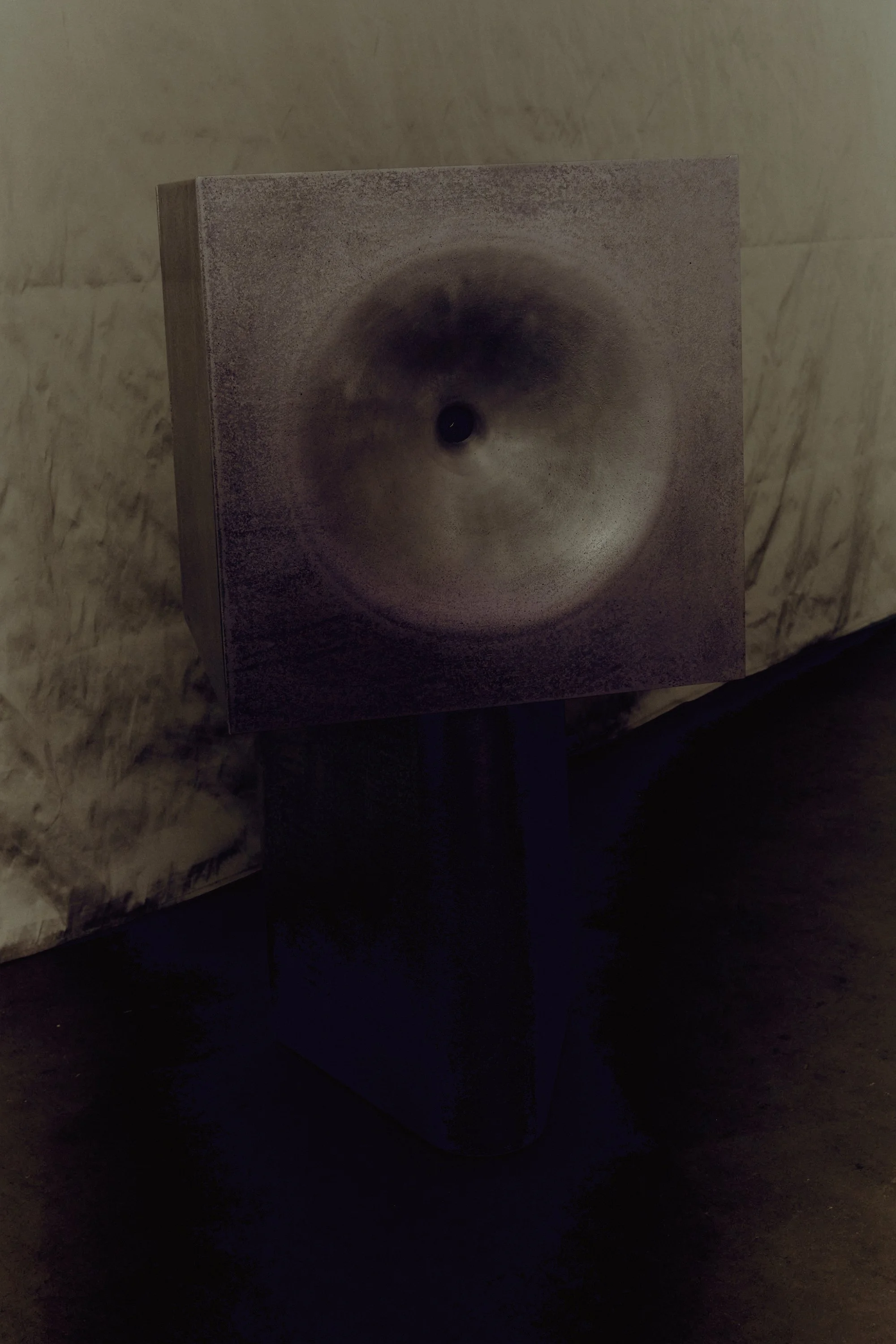
Image by Daniel Grima
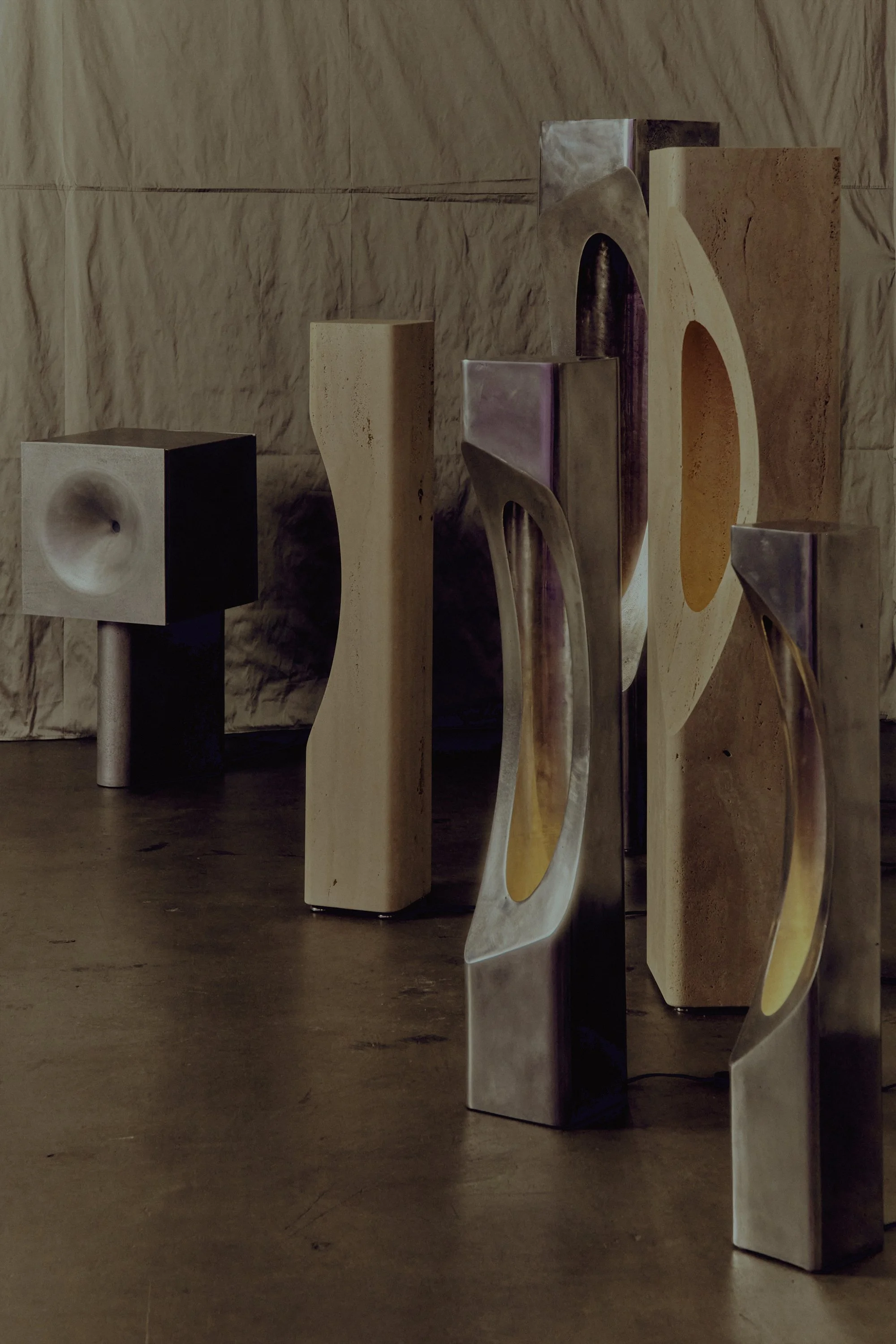
Image by Daniel Grima
What FutureObjekt ultimately proposed was not a new category but a new confidence: the idea that Melbourne can host a salon where design is discursive, experimental and collectable. It proves that Australian practitioners, as Kelly suggests, punch above their weight, and that perhaps the art-versus-design debate is less about hierarchy and more about use — about how we choose to live with the objects that shape our days.
If this first edition was any indication, the sky — shared or otherwise — is the limit.
Text by Suzy Annetta
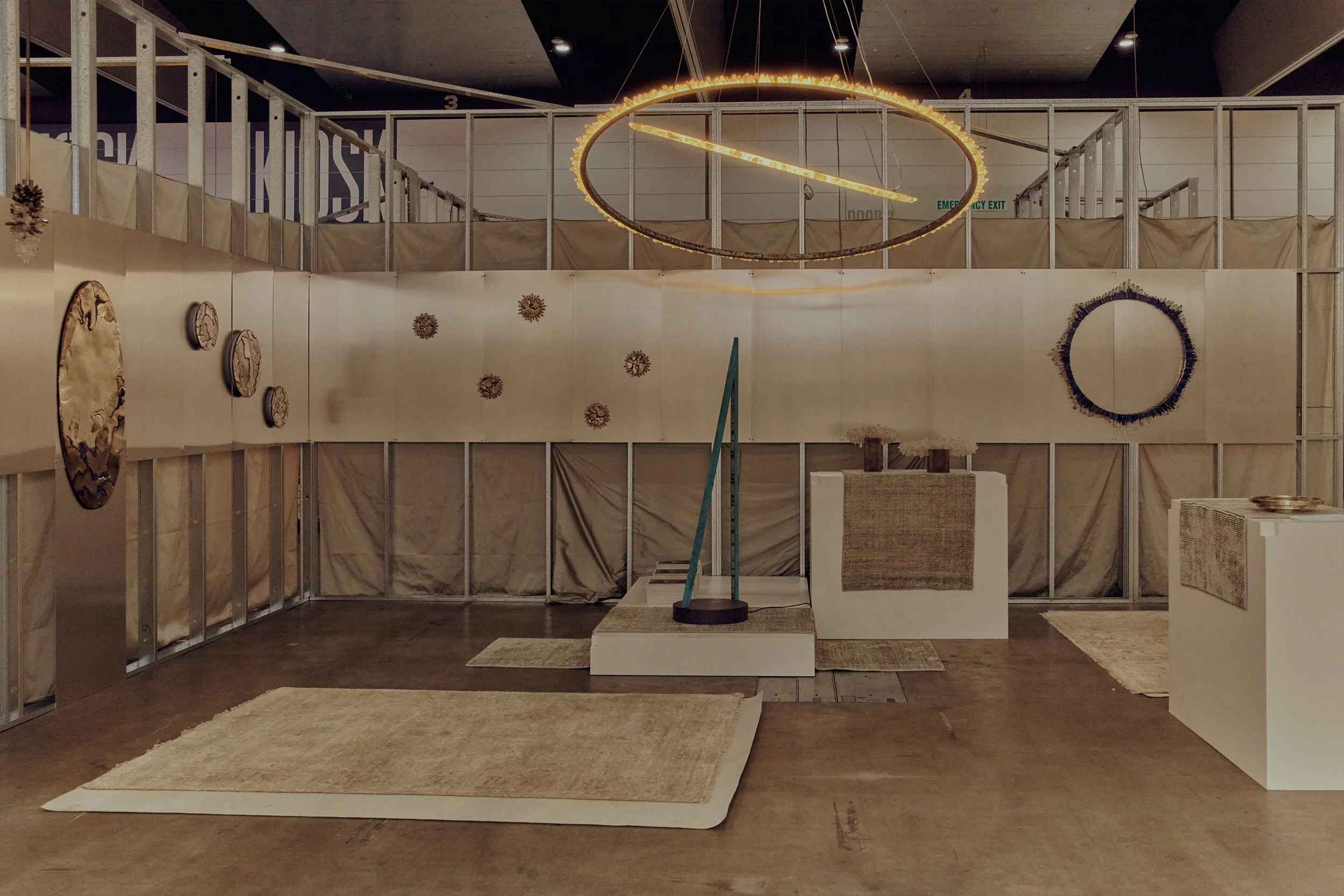
Image by Daniel Grima
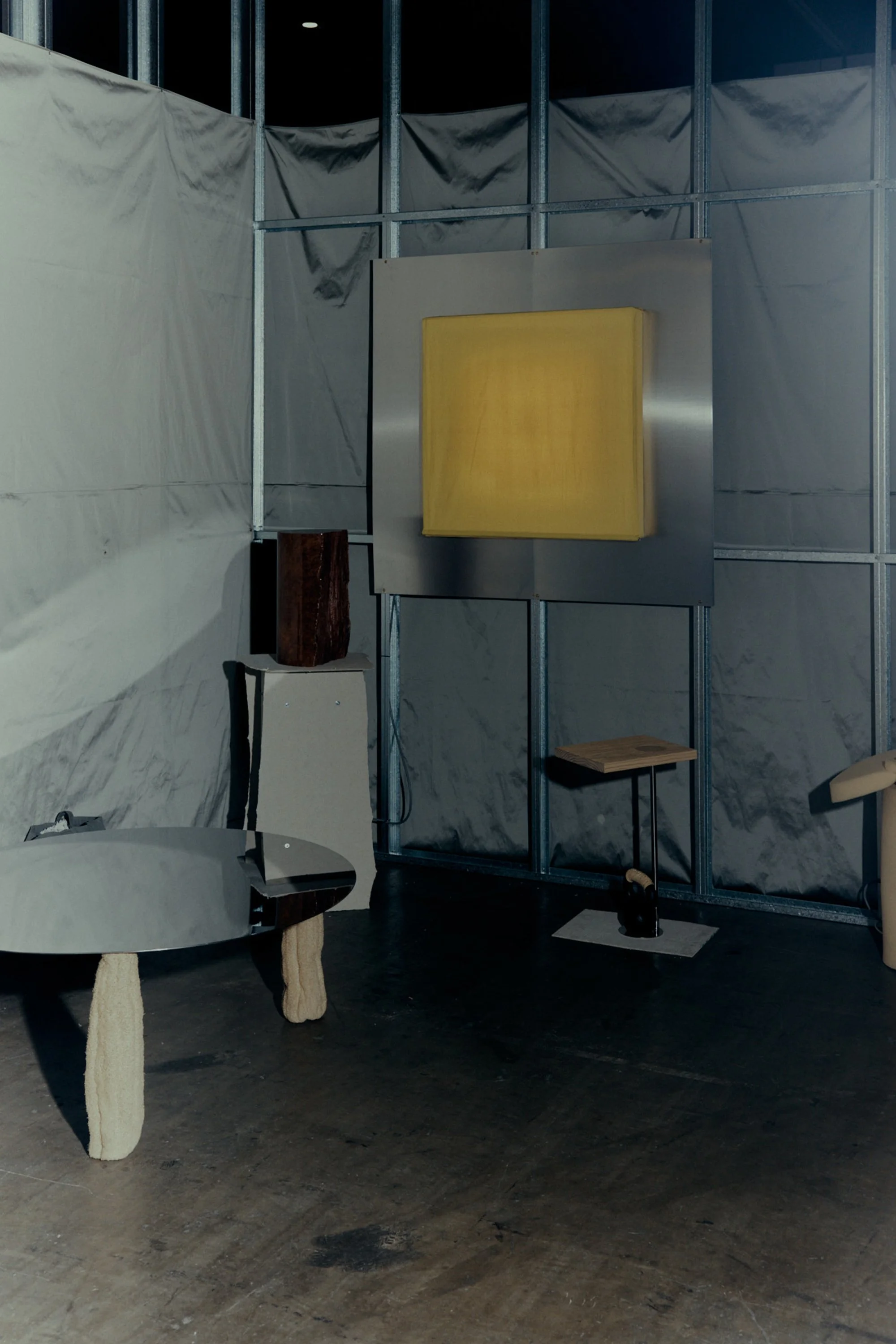
Image by Annika Kafcaloudis
Image by Daniel Grima
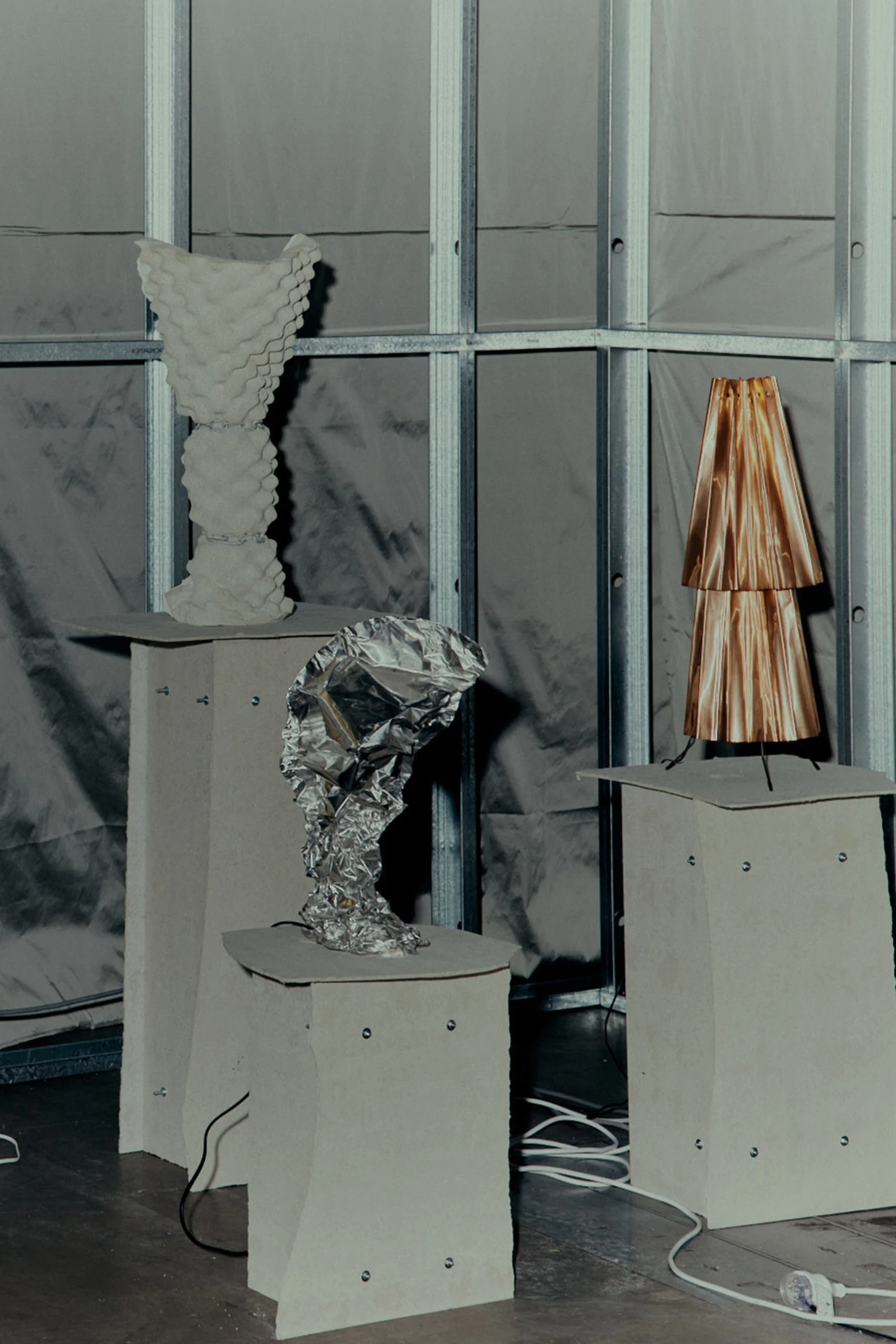
Image by Annika Kafcaloudis
Image by Daniel Grima
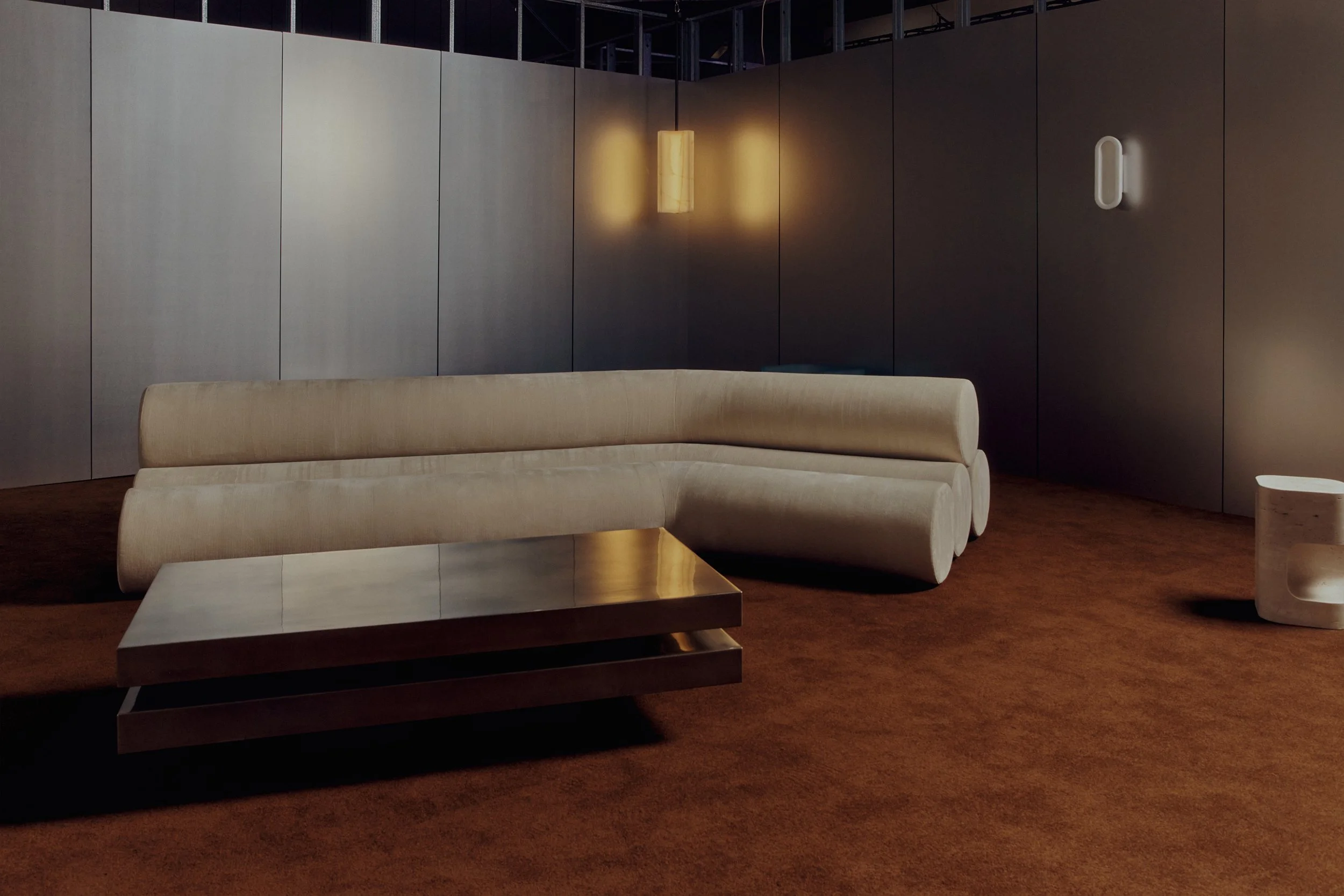
Image by Daniel Grima