Mirove Artisanal Kitchen Captures the Soul of Jaipur
Pantone Collective’s recent restaurant project in Jaipur draws inspiration from the colour and texture of the city surrounding it, creating a modern tribute to a historic setting
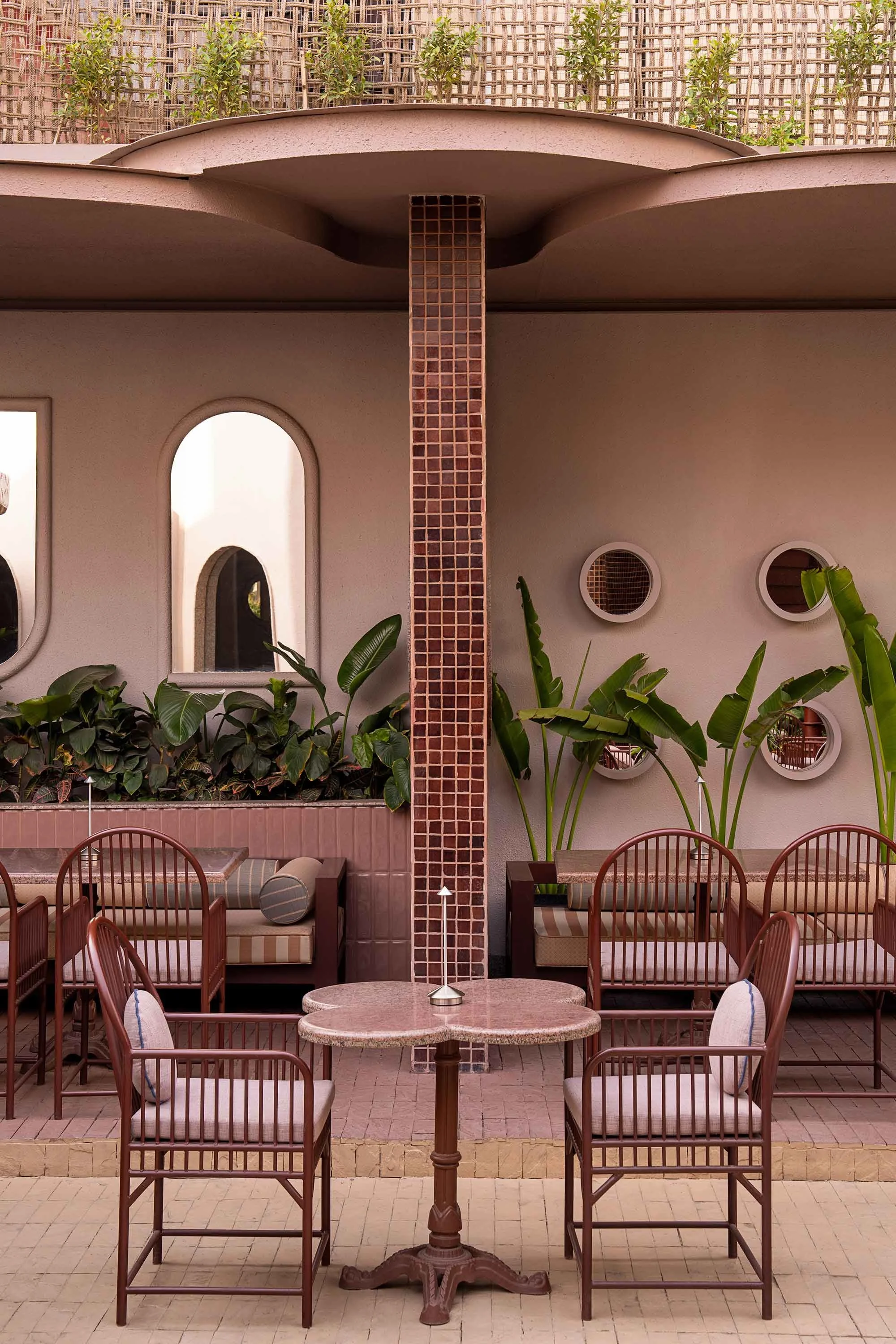
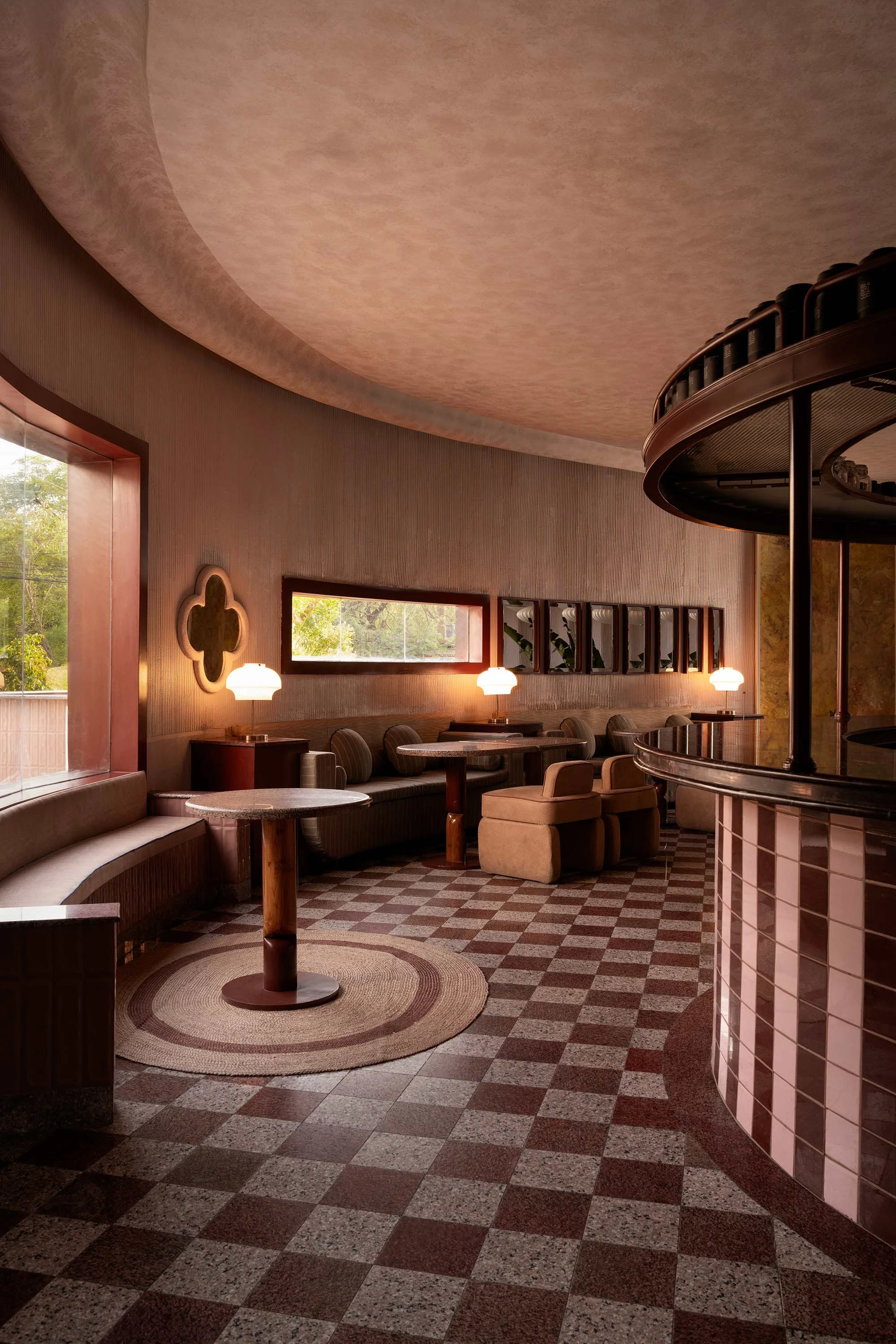
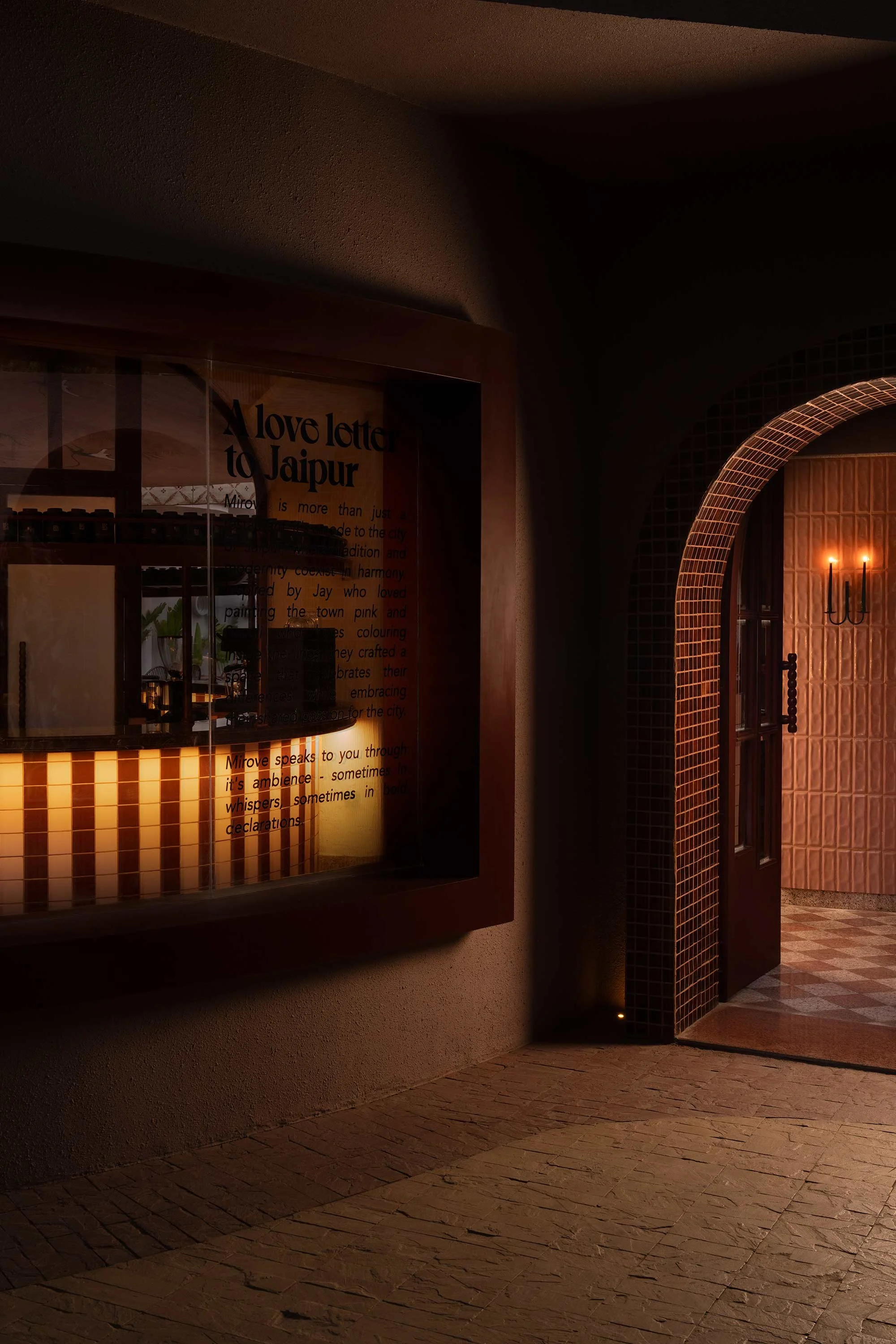
Nestled within C-Scheme, Jaipur’s affluent heart, Mirove Artisanal Kitchen stands as a restrained but elegant counterpoint to the ornamental splendour of the city surrounding it. Designed by New Delhi-based Pantone Collective, the 800-square-metre space is deeply inspired by the history and culture of Jaipur and yet expressed through strikingly modern, brutalist gestures.
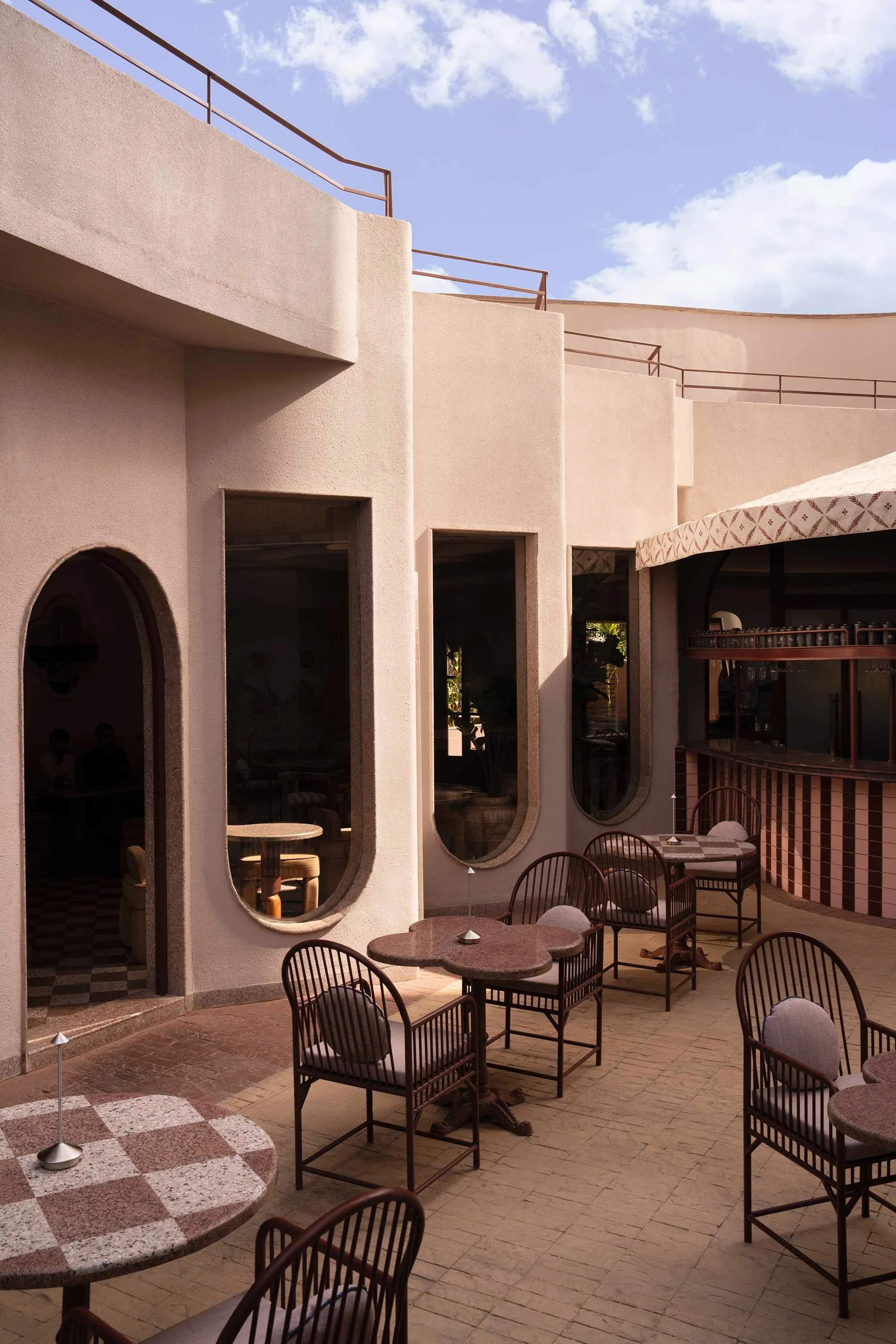
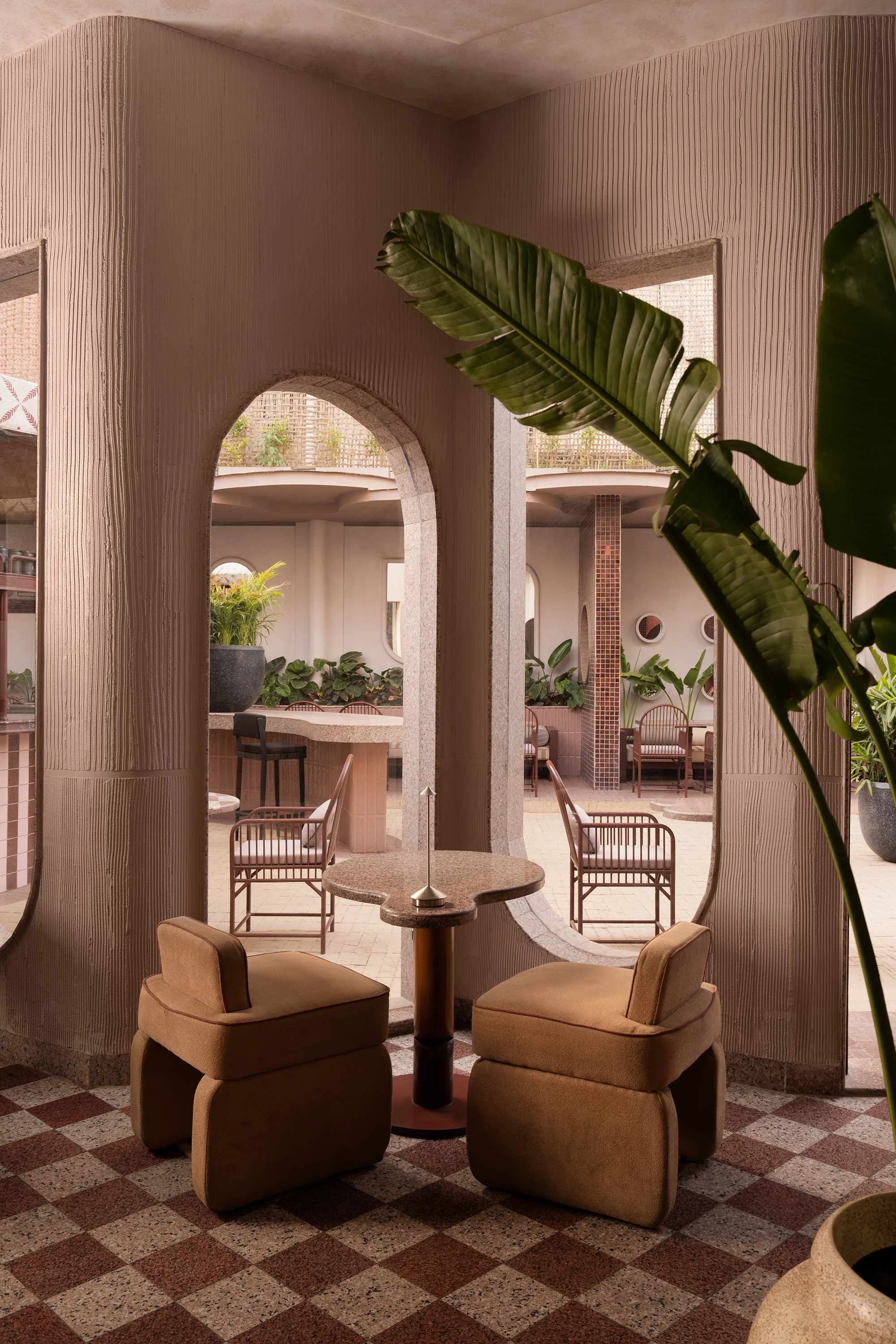
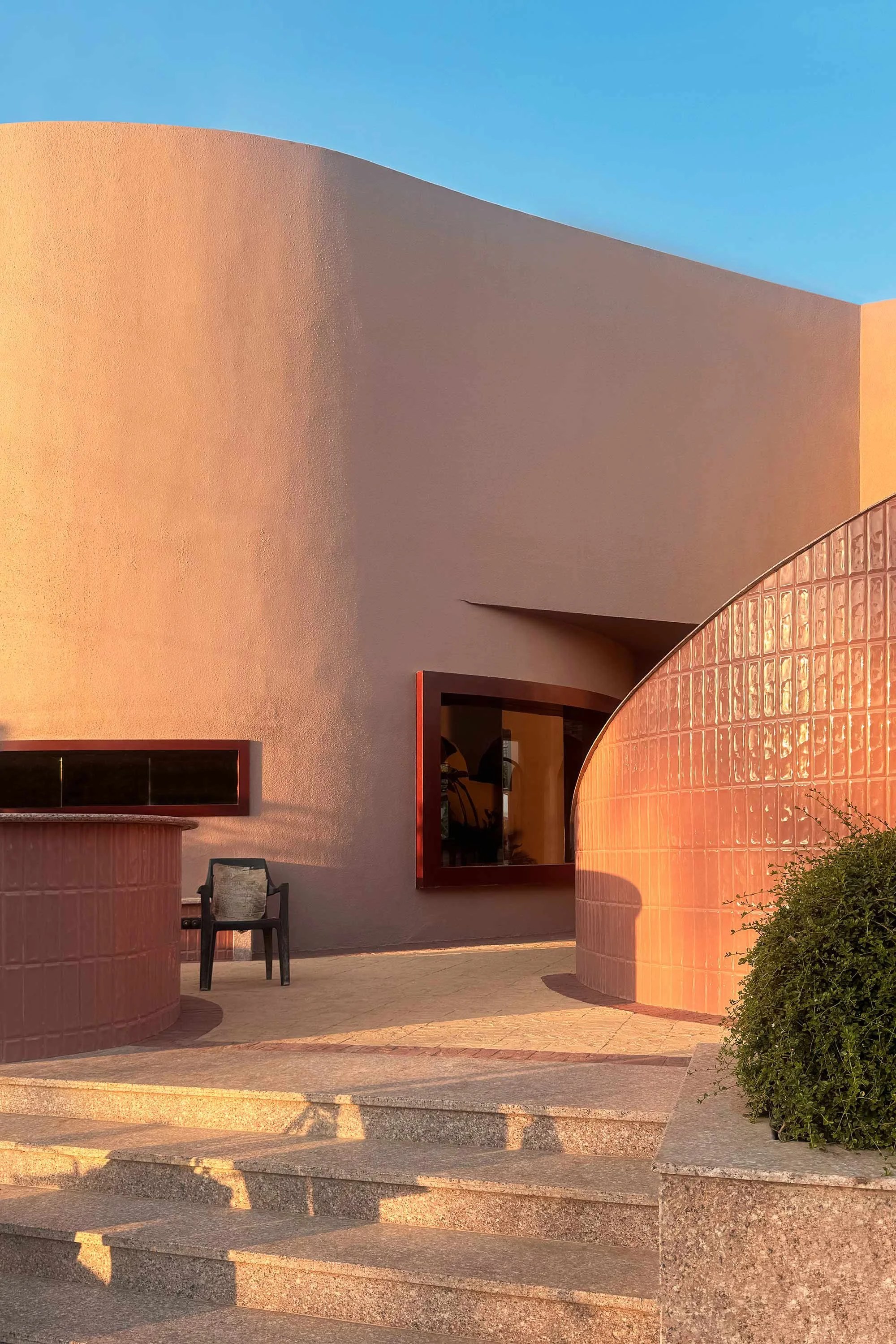
The design is in many ways a reflection of the Pink City. It draws heavily on Jaipur’s architectural DNA: the rhythmic repetition of traditional arches, the city’s iconic chromatic identity and the geometries of the monumental Jantar Mantar. Principal architect Tanya Chutani and her team deliberately chose the ancient observatory as a key reference, inspired by its monumental fins designed to track the sun and measure time through cast shadows. This inspiration manifests in Mirove's dramatic 20-metre curved facade, which encapsulates what Chutani describes as the project's thesis: ‘keep the identity of Jaipur intact, but make it more modern’.
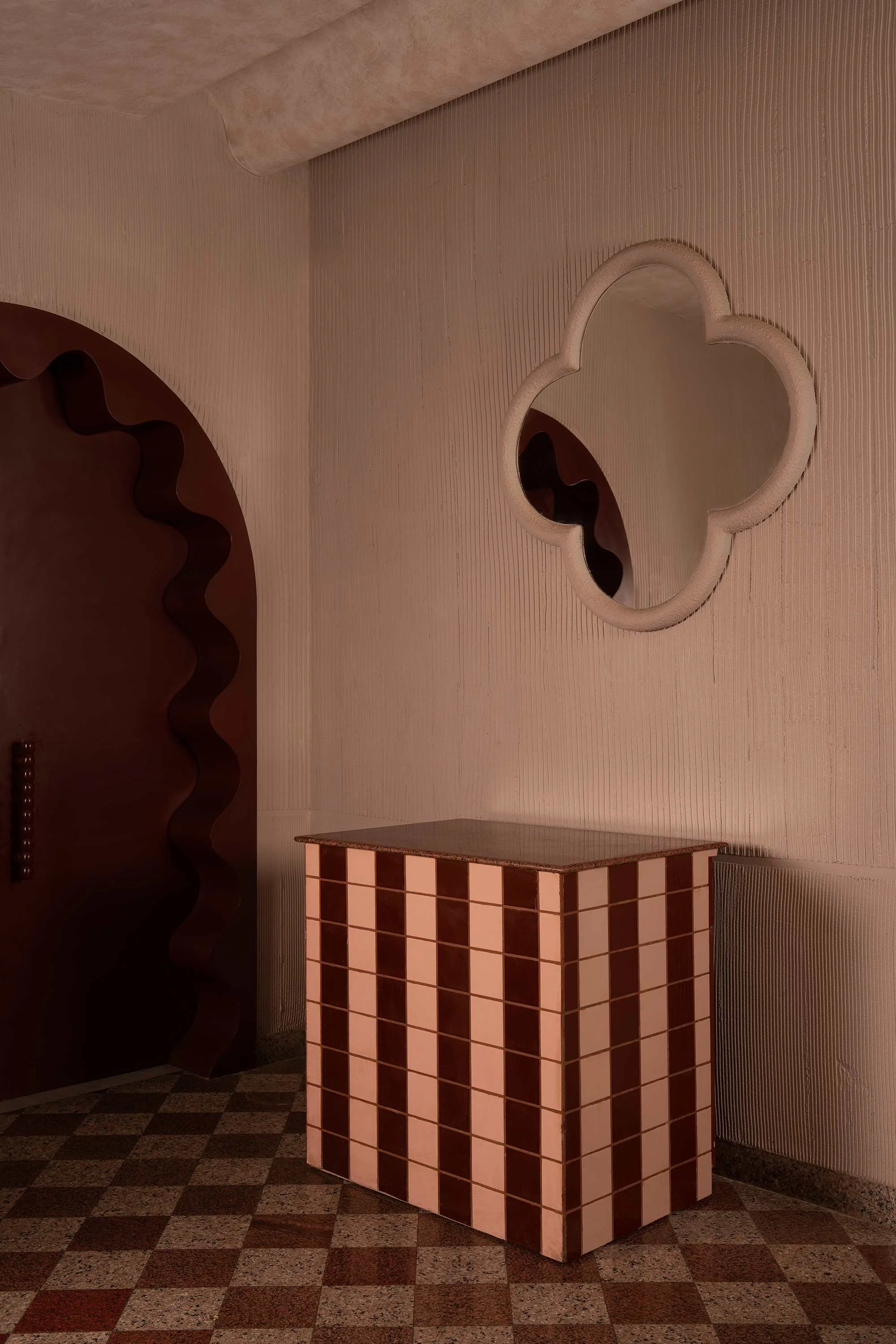
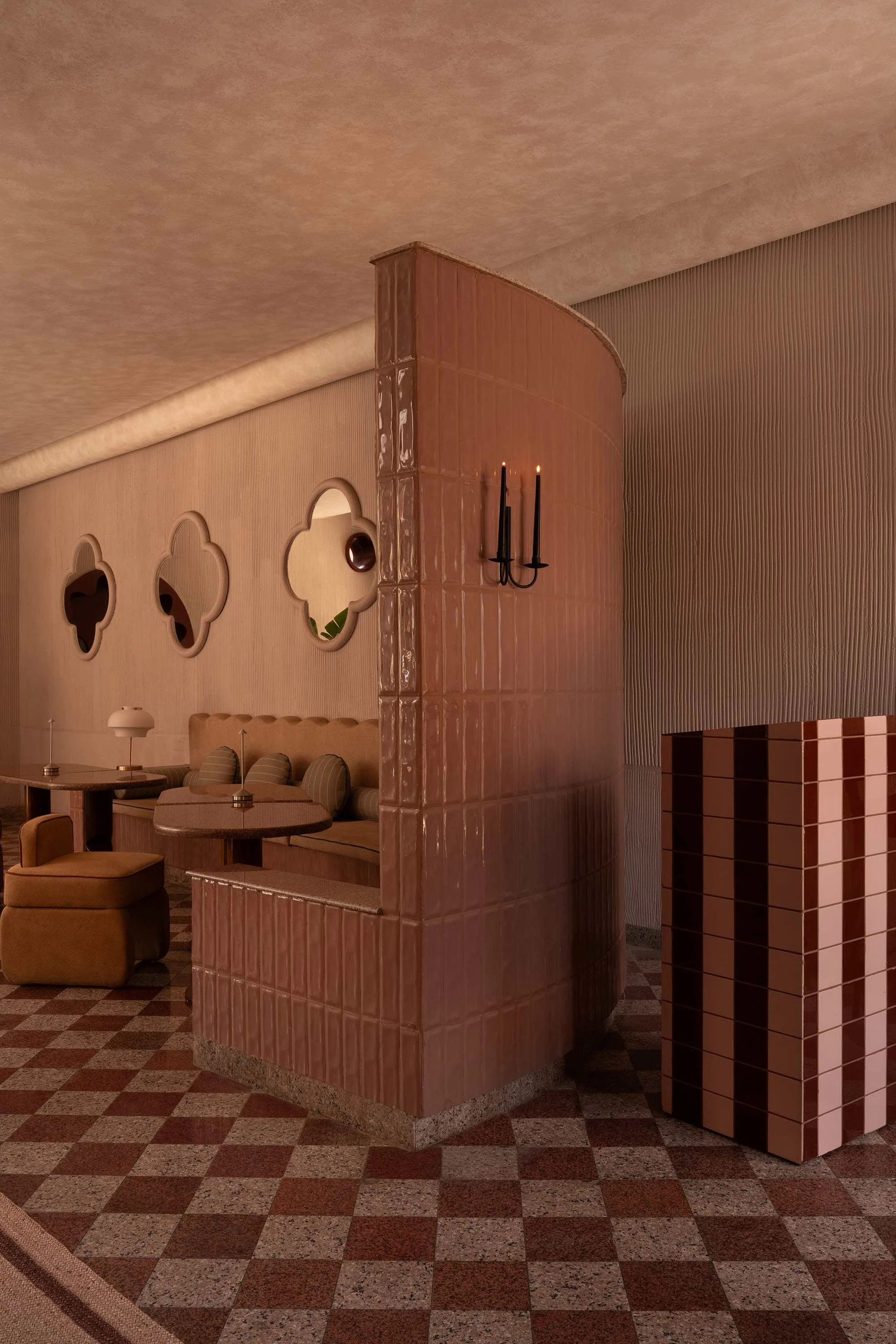
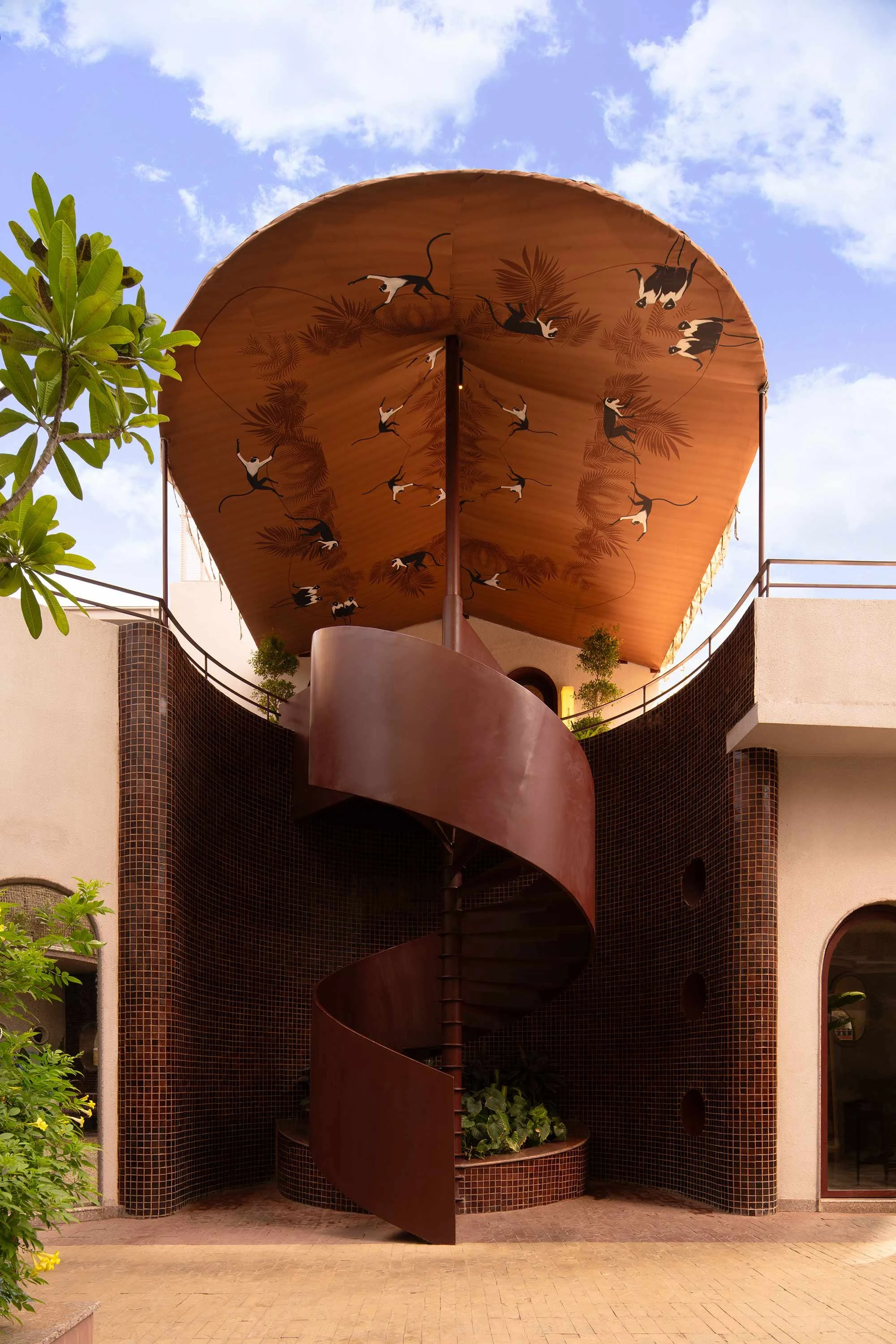
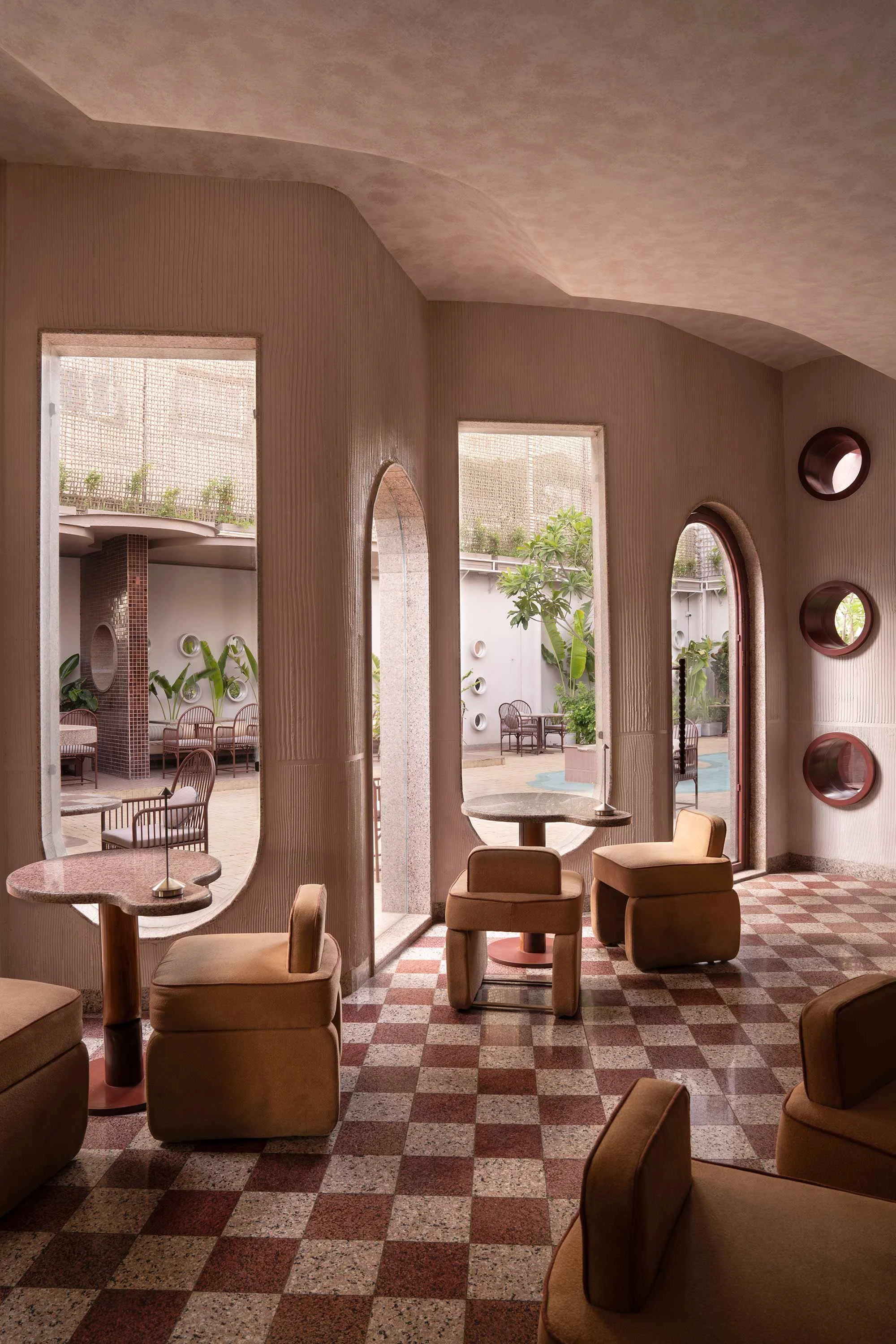
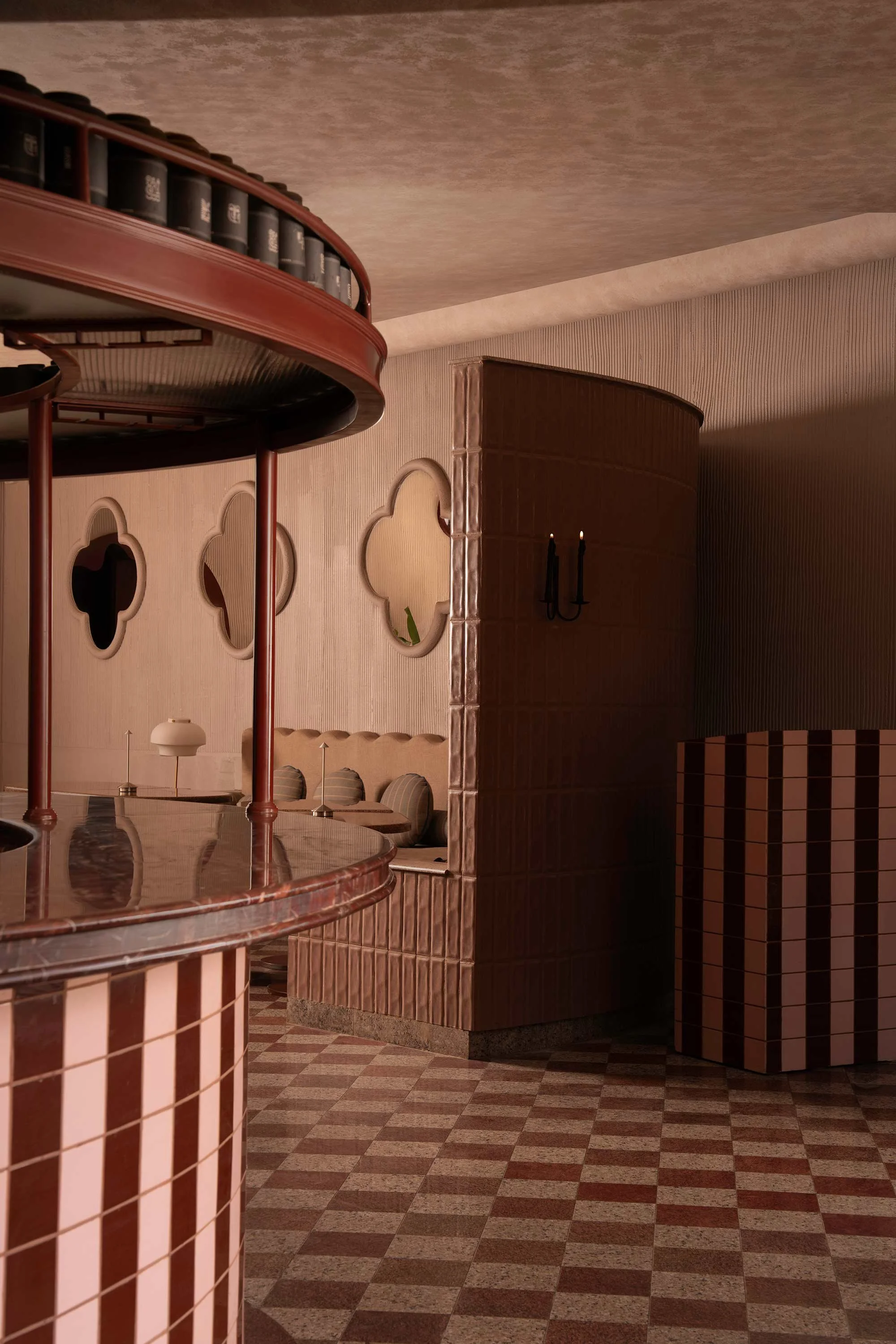
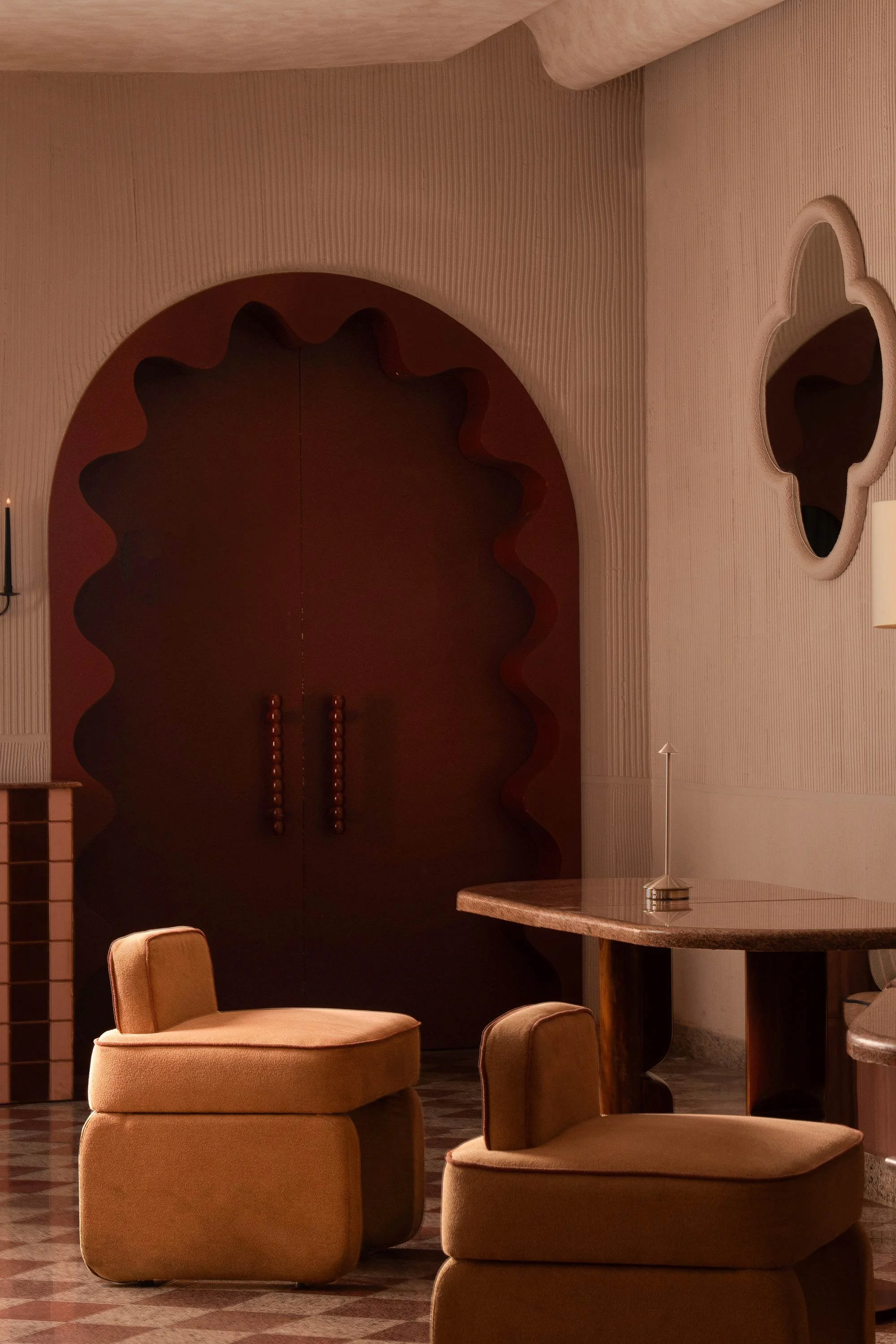
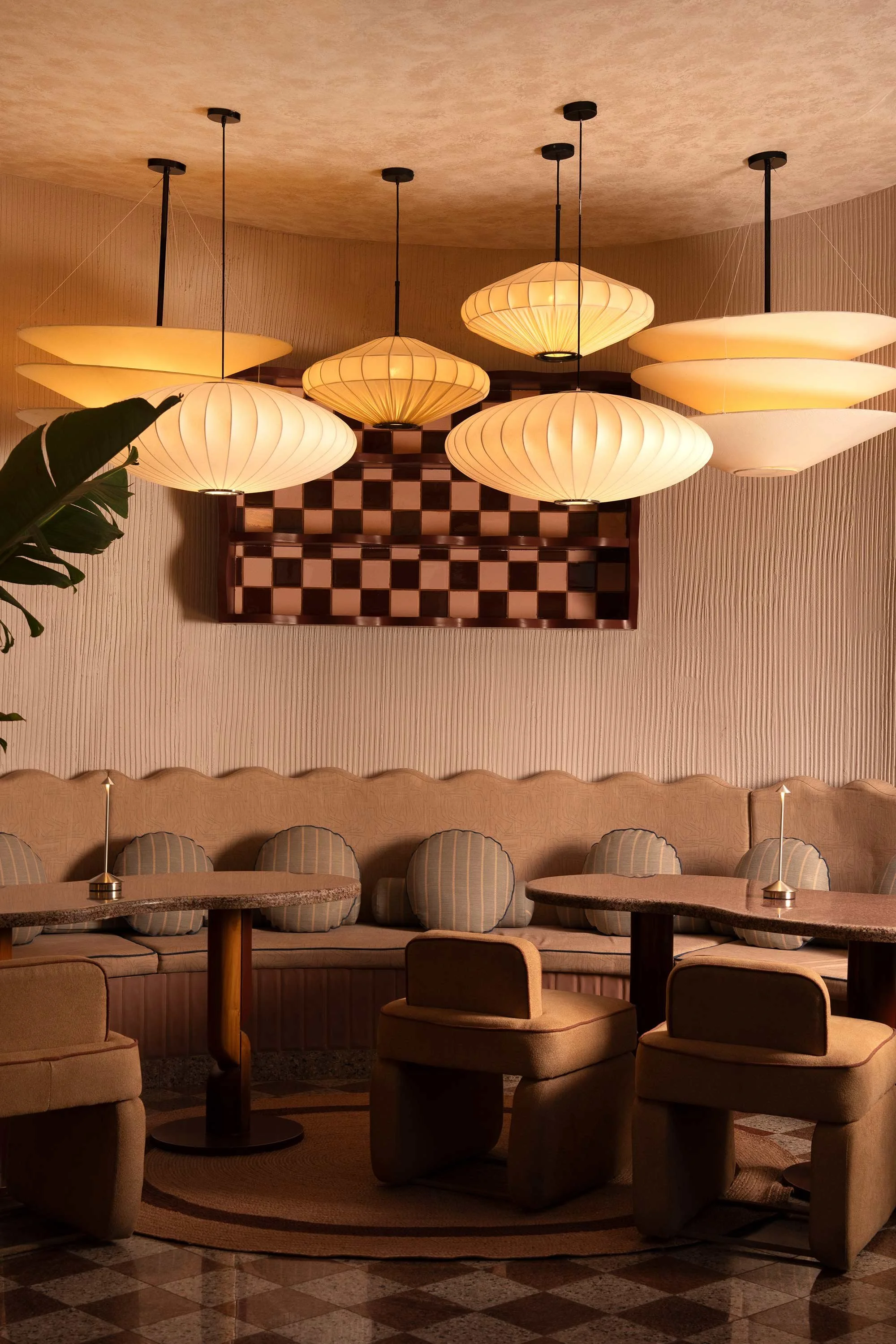
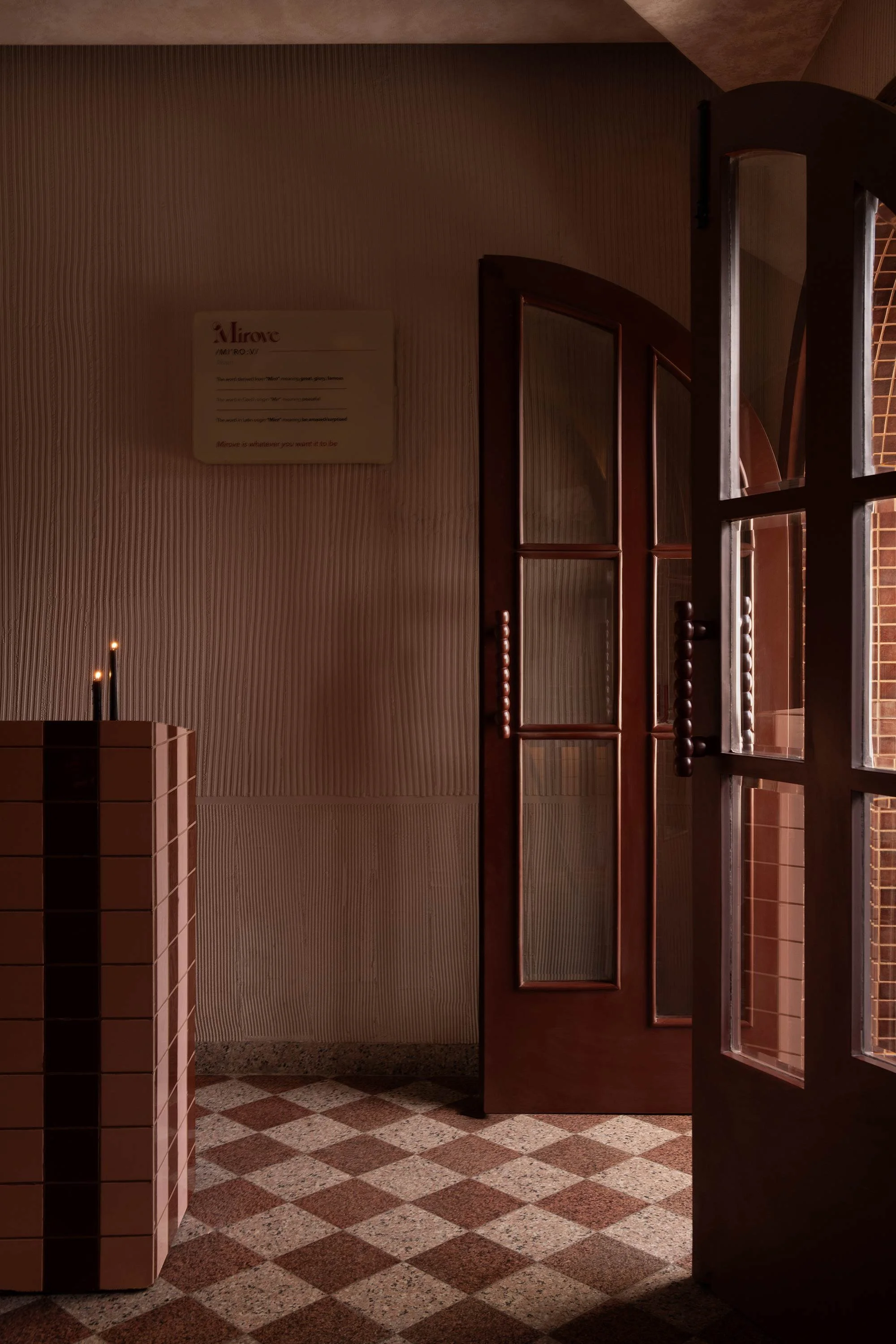
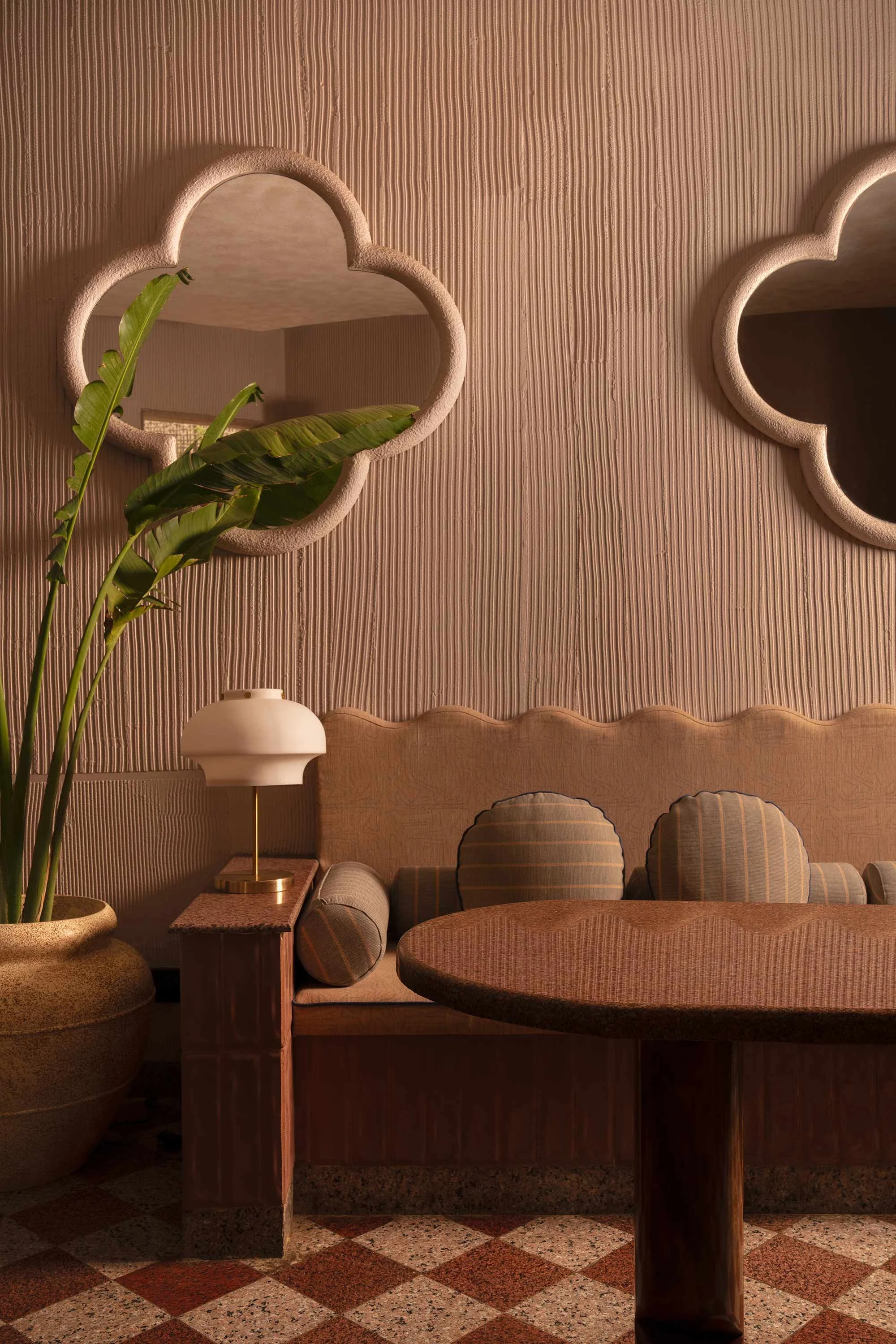
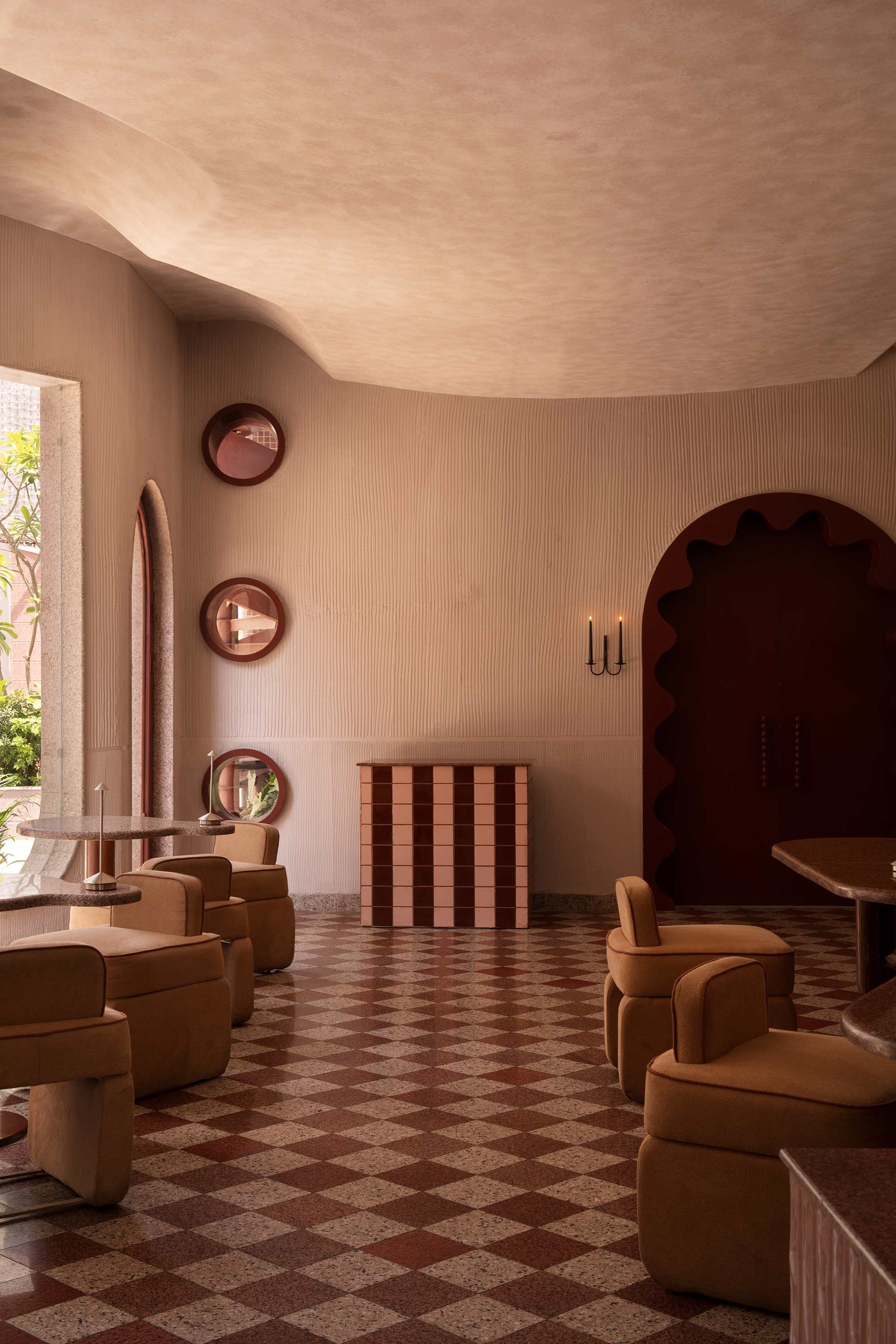
The sensory palette of the interior is an exercise in tactile balance, but also continues a theme of thoughtful nods to the city. The traditional pink of Jaipur has been reinterpreted as a muted rouge and mauve tone, a chromatic choice meant to resonate with a new generation while preserving heritage. The walls are clad in a sand-textured plaster — some surfaces smooth, others deliberately raw — mimicking the fine, shifting patterns of desert sand. The chequered flooring, typically seen in Jaipur with black and white marble, was achieved here with locally sourced pink-toned granite. Perhaps the most striking detail is the custom monkey-printed awning that hangs over the bar. ‘If you travel to Jaipur, you’ll find monkeys on every rooftop, even in the market,’ says Chutani. The 360-degree sculptural bar is a shimmering focal point, clad in custom-glazed glossy pink ceramic tiles, deliberately playing against the matt texture of the surrounding walls. Even the crockery and cutlery used by guests were custom designed for the restaurant by local craftspeople, an homage to Jaipur’s pottery culture.
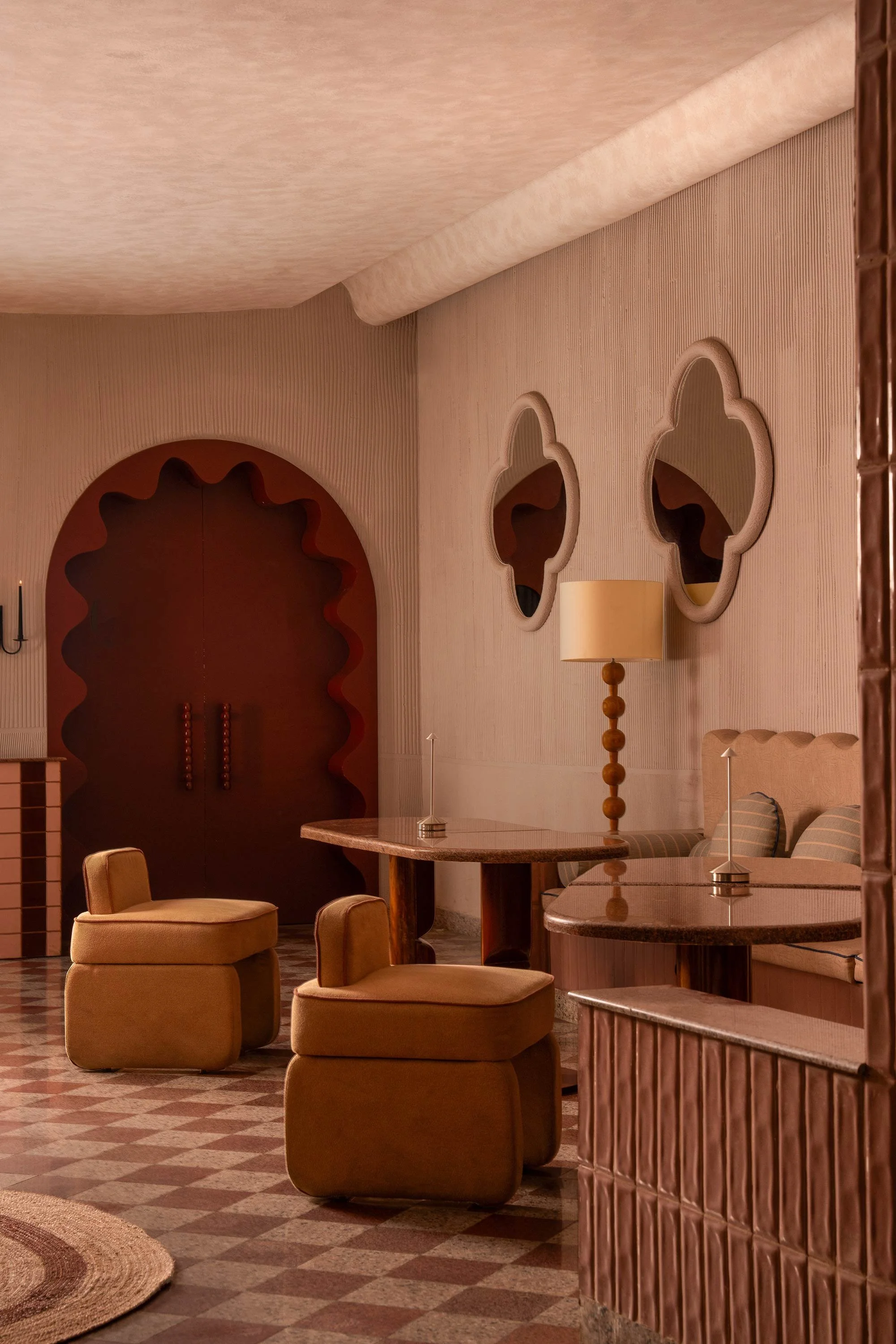

The structure truly comes alive at dusk. As the facade faces west, it captures spectacular golden hour shadows, transforming the space into a shifting canvas of light and form. This meditative play of geometry continues in an internal courtyard-like space, where ascending fin walls — a direct echo of the Jantar Mantar instruments — filter the light through their gaps, quite literally painting time onto the chequered floor. The tables have been placed in the space according to the pattern of the sun’s rays. ‘There's a beautiful shade and shadow during the afternoon and the evening as the sun changes,’ says Chutani. ‘It has been designed in a way that the light only falls on the tables but not on people's faces.’
In describing the cuisine served at Mirove, Chutani describes the physical space as well. ‘It keeps the local taste of Rajasthan,’ she says, ‘while having an international approach.’ Mirove thus emerges not merely as a modern kitchen, but as a monument to its city, where the past and future of Jaipur converse eloquently in stone, light and texture.
Text by Katherine Ring
Images by Avesh Gaur