The Fragrance Brand That Bottled Jakarta’s Oldest Barber Extends Its Craft to Hospitality
In Ubud, Oaken Lab extends its world of scent into a new hospitality concept, where fragrance-inspired drinks, seasonal ingredients and a space by Rantara Studio continue the brand’s interest in ritual and sensory experience
Almost a decade ago, a question sent Oaken Lab co-founder Christopher Kerrigan searching through the back streets of Jakarta: what does the city’s oldest barbershop smell like? The answer became Batavia Barber, one of the earliest signature fragrances from the brand he founded with his wife and creative partner, Cynthia Wirjono. Inspired by a second-generation barbershop tucked within the narrow alleys of the city’s old town, it layers bergamot, lavender, leather, musk and vetiver, evoking what the label describes as ‘32°C, rustling fan, worn leather, fresh towel’.
During that search, and after the long hours of studio experimentation that followed, Kerrigan came across a short film about the barbershop, Ko Tang. Drawn to the storytelling and craft, he contacted the filmmakers to create a promotional video for the scent, and only later learned that they were architects. The exchange marked the beginning of an ongoing collaboration with Jakarta-based Rantara Studio, founded by Andreas Halim and Octorino Tjandra, whose work has gradually shaped successive iterations of Oaken’s spatial identity, from temporary installations and pop-ups to its stores in Pererenan and, most recently, Ubud.
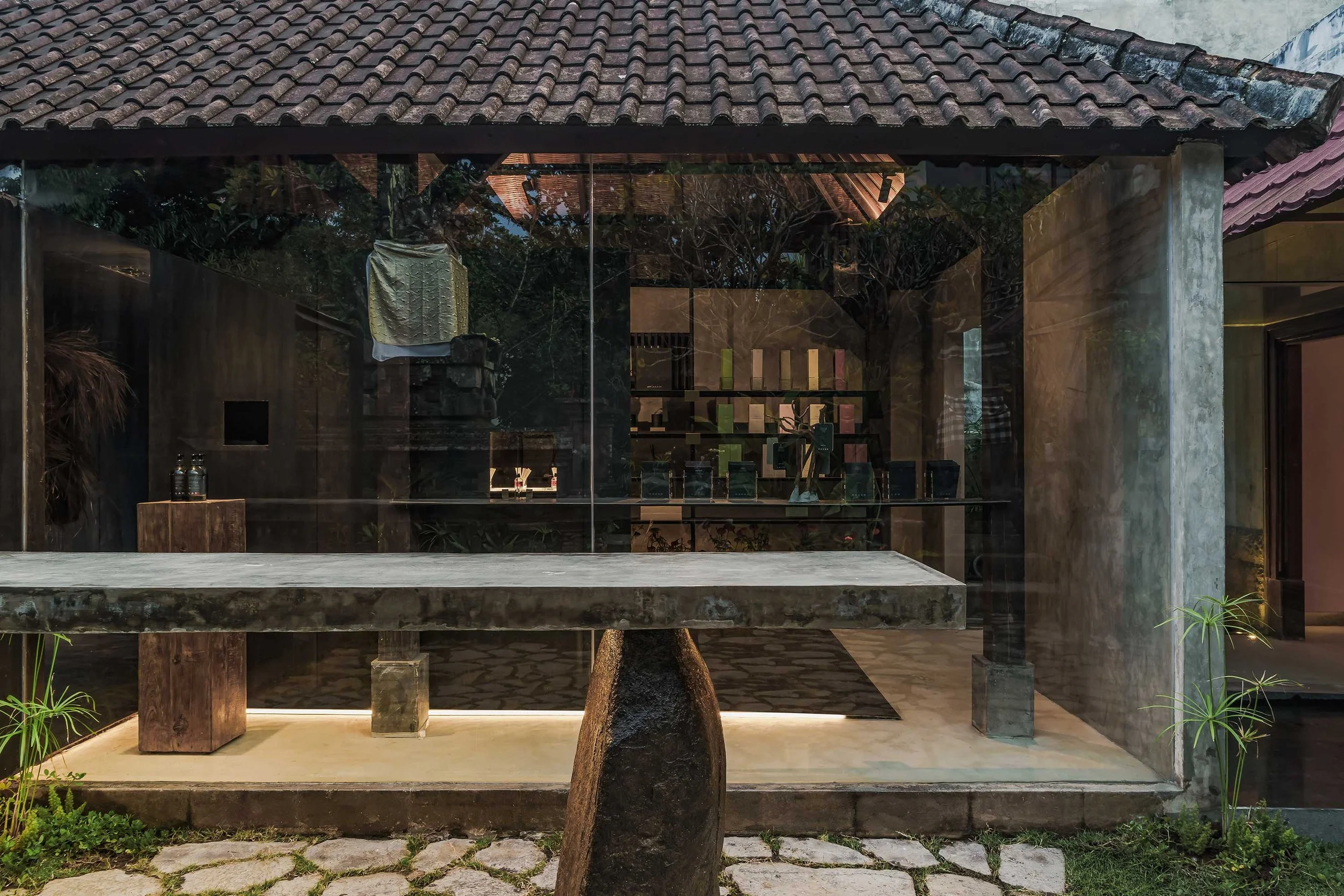
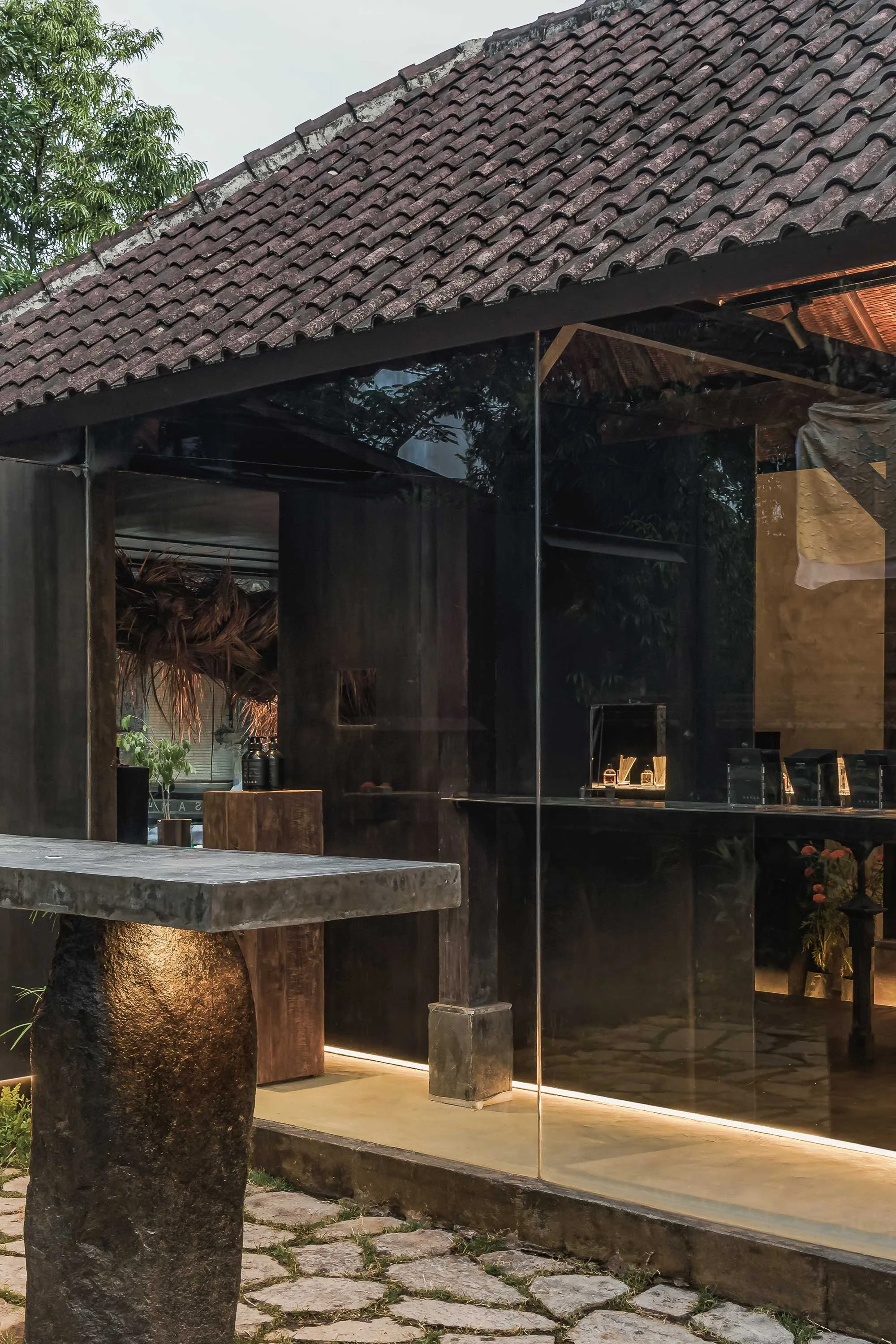
The latter occupies a former Japanese restaurant in one of Ubud’s established cultural corridors. The traditional tiled roof and original bones remain intact, while blackened steel and aluminium elements introduce a more modern disposition. ‘We try to keep as much of the old structure as possible and intervene with new materials,’ says Halim of the firm’s approach.
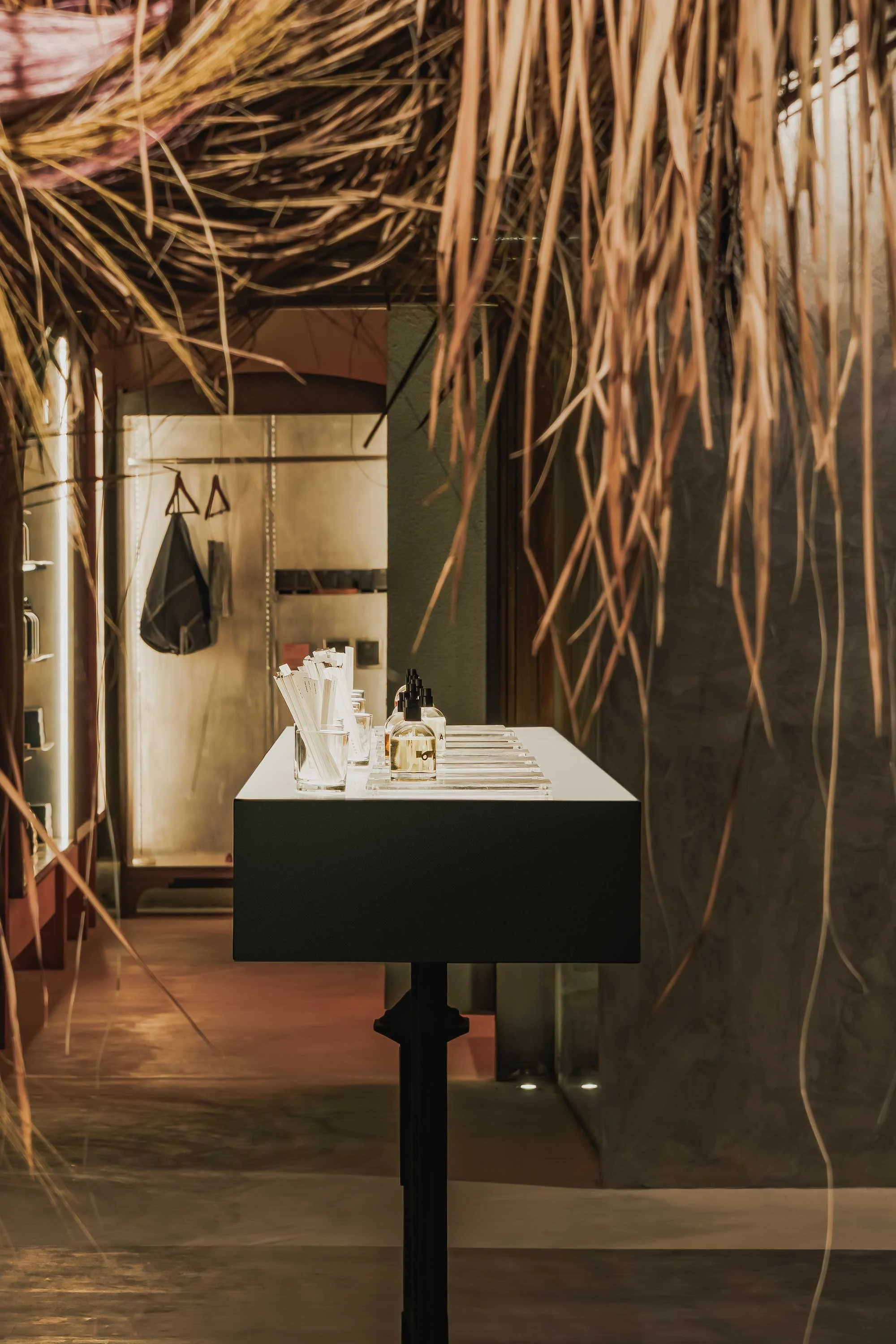
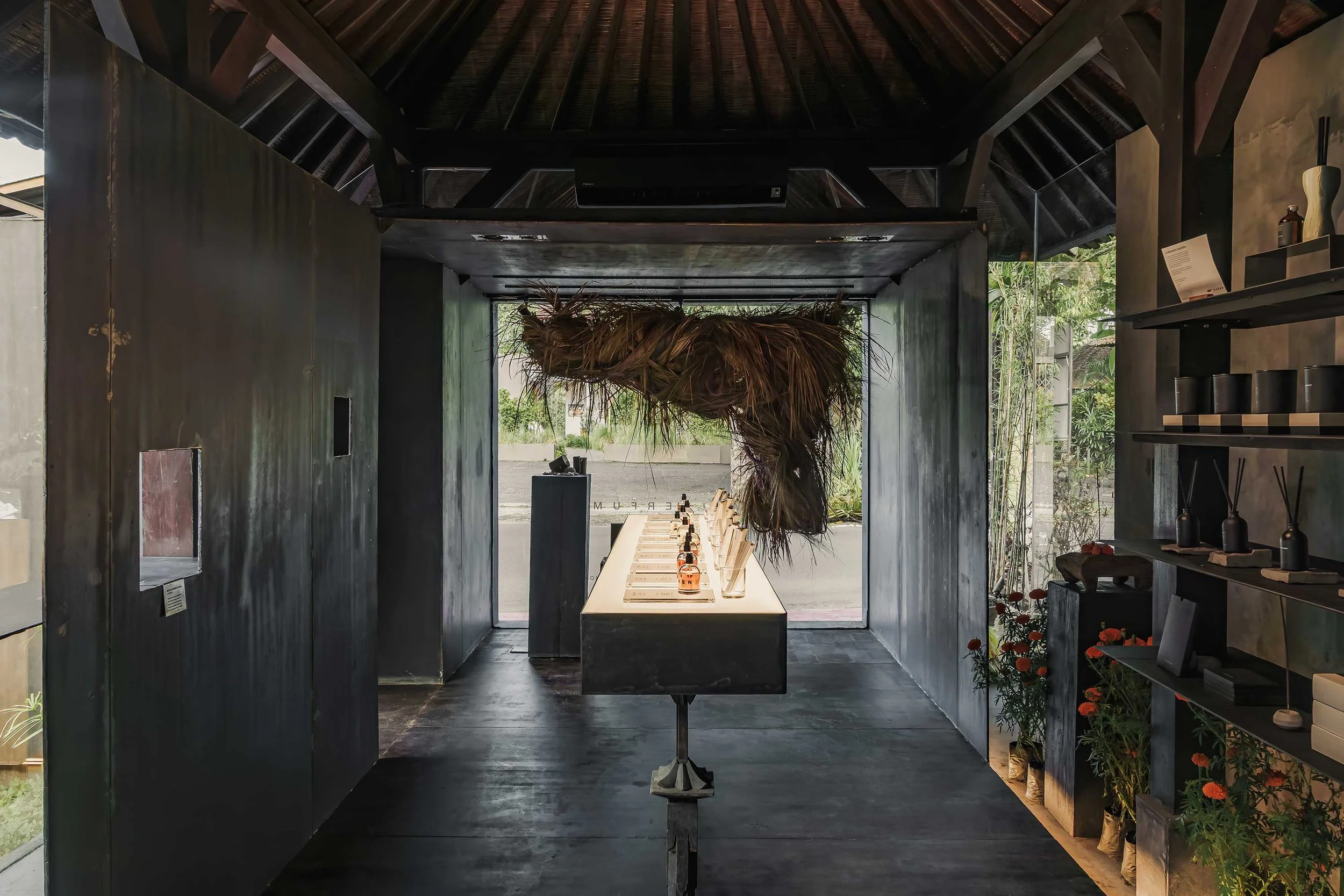
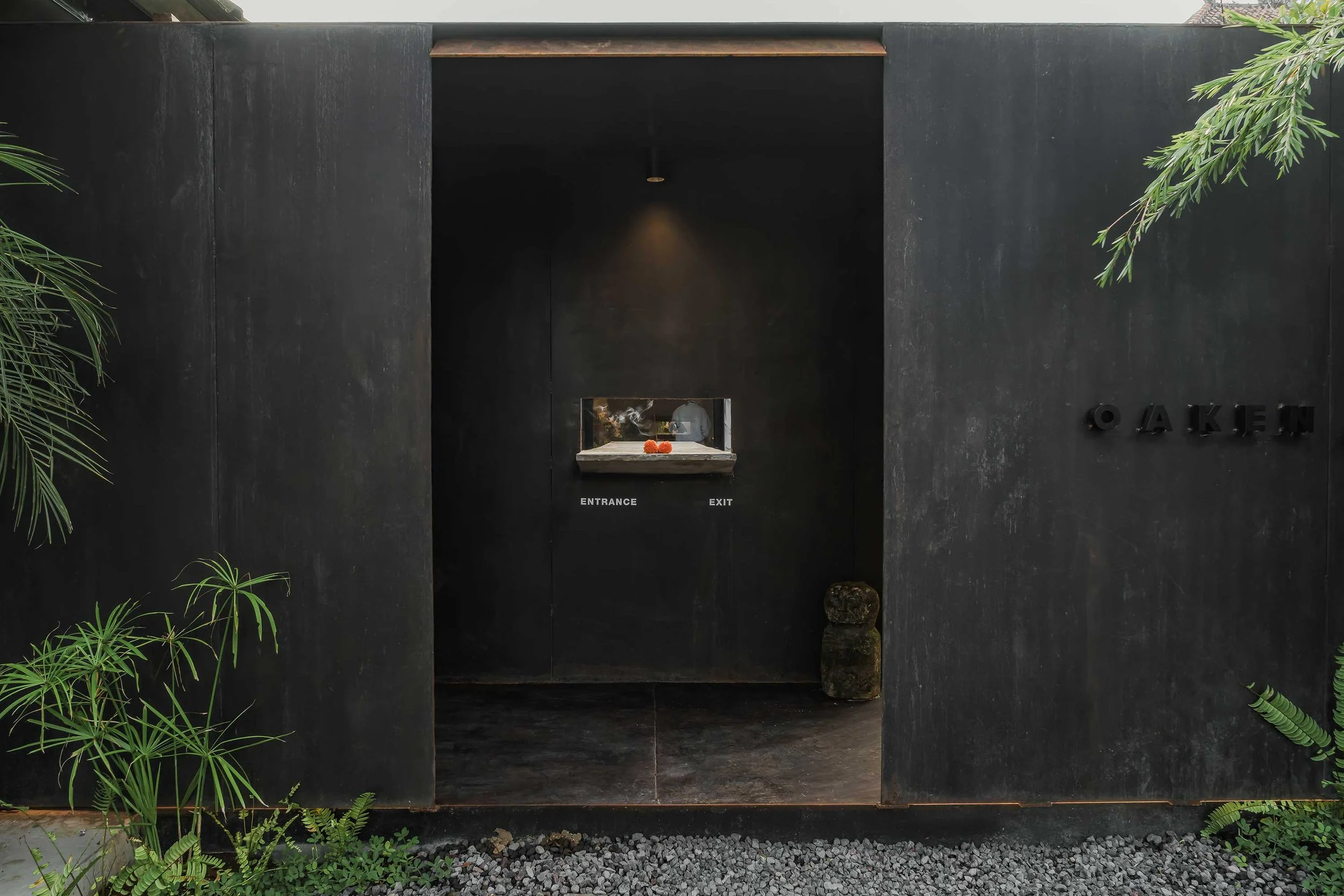
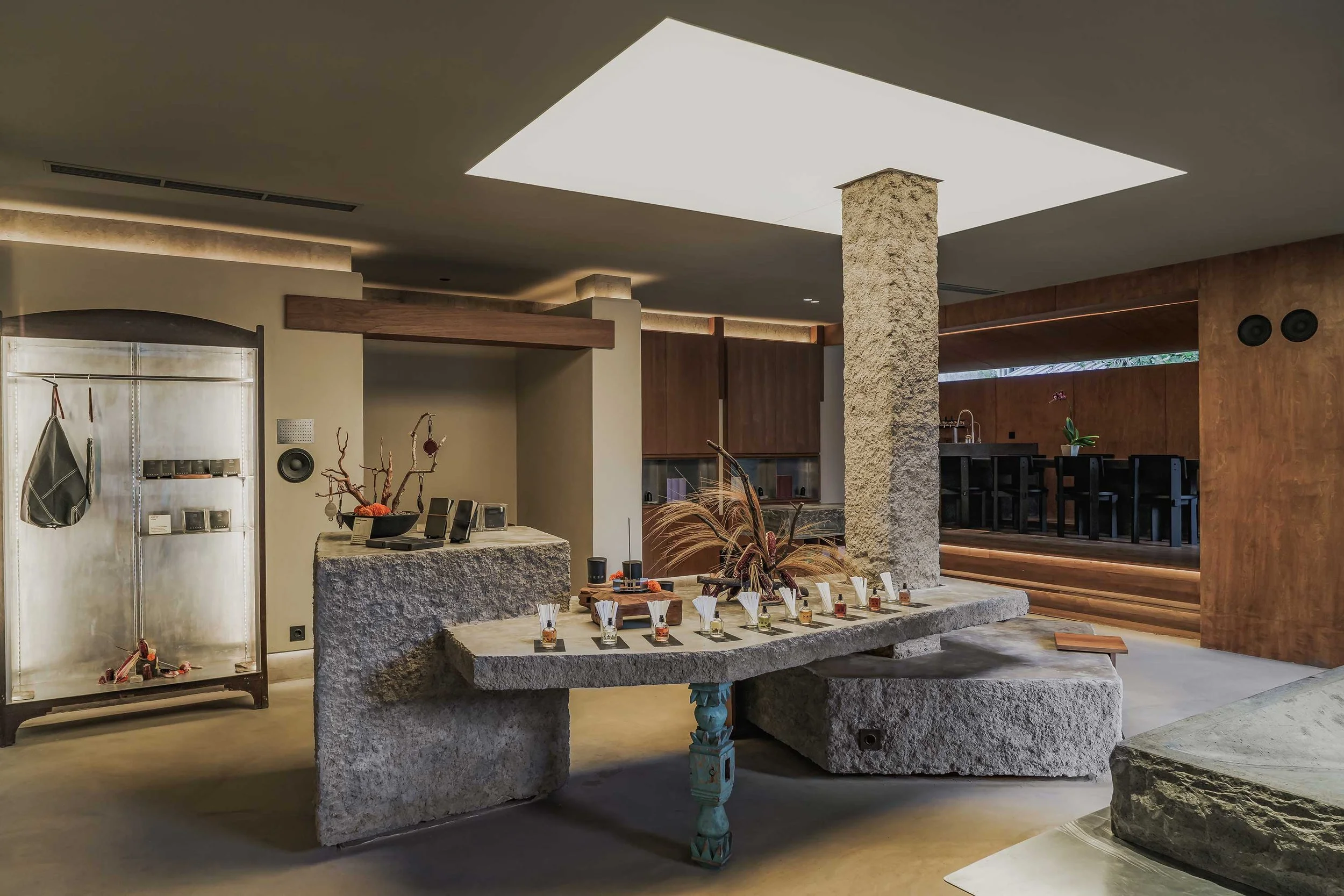
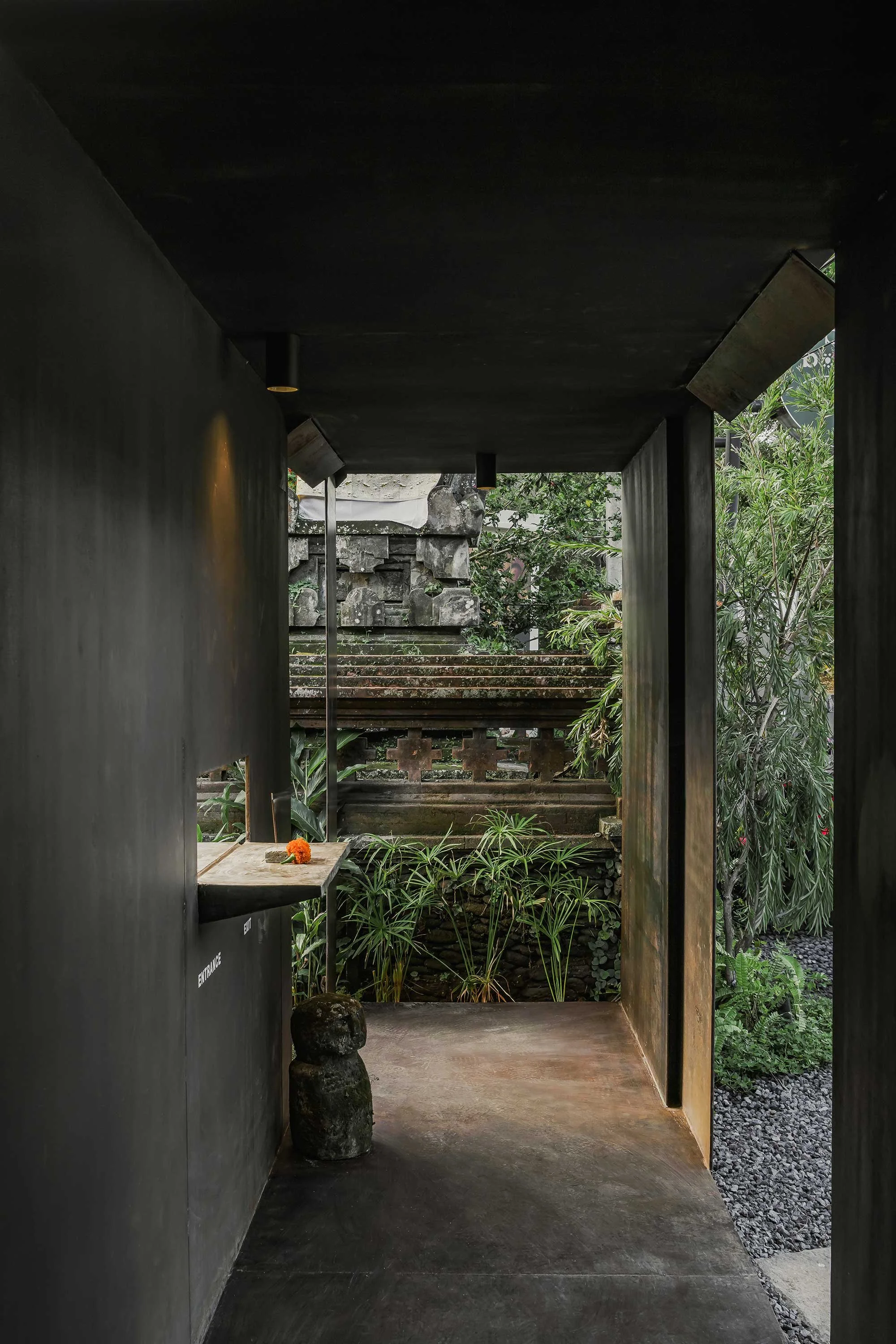
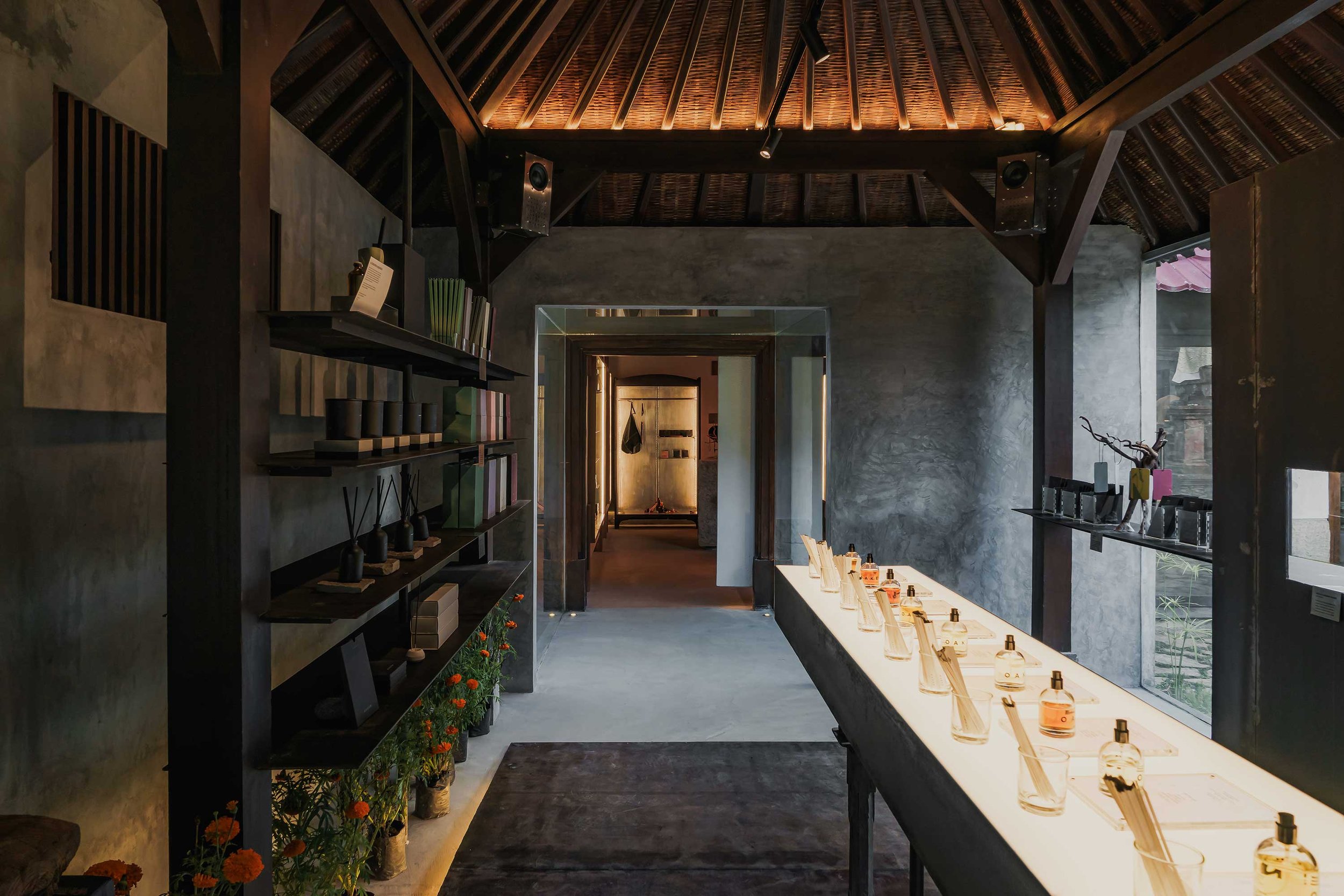
‘It looks like a black box at first,’ Tjandra says of the entrance. A dim, metal-lined room is the first entry point, concentrating the senses on the scent. A narrow glass passage then pulls daylight into the sequence before opening into a more tactile common room that displays Oaken’s range of perfumery, body care, candles and incense. The fragrances draw from Indonesian settings and materials, from the damp stone and moss of Balinese temple courtyards to Javanese tobacco and clove cigarettes, extending the brand’s interest in the sensory textures of the archipelago.
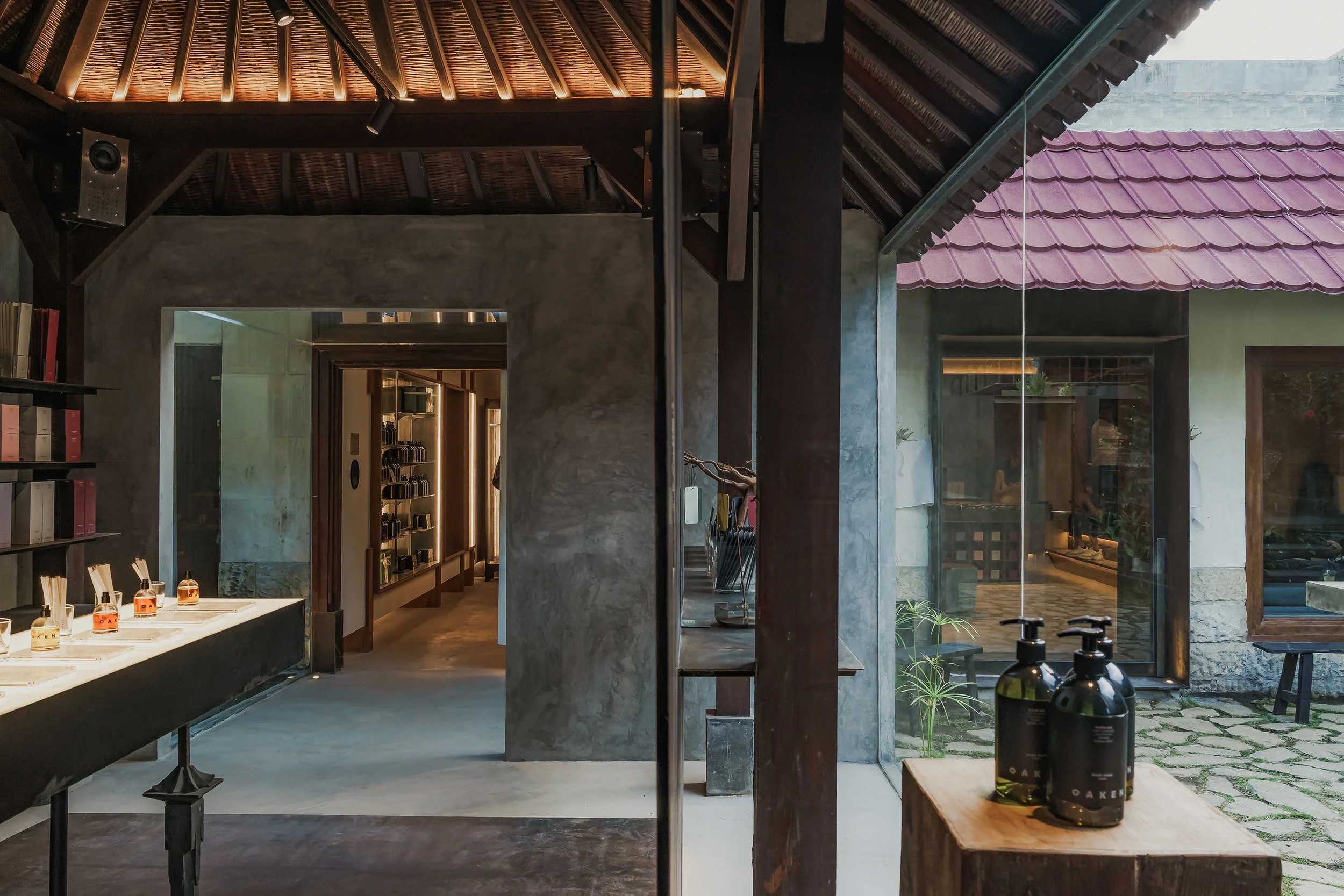
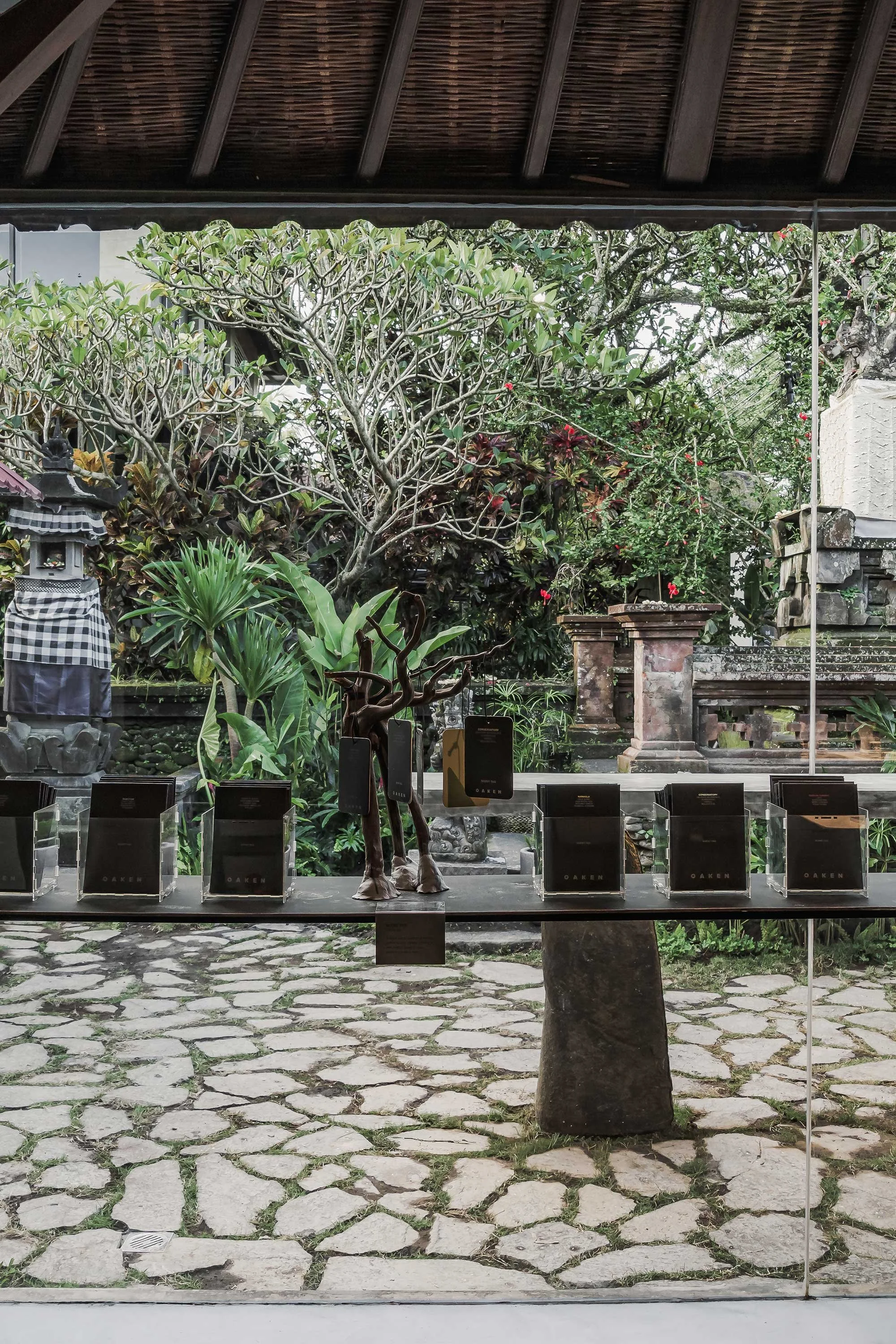
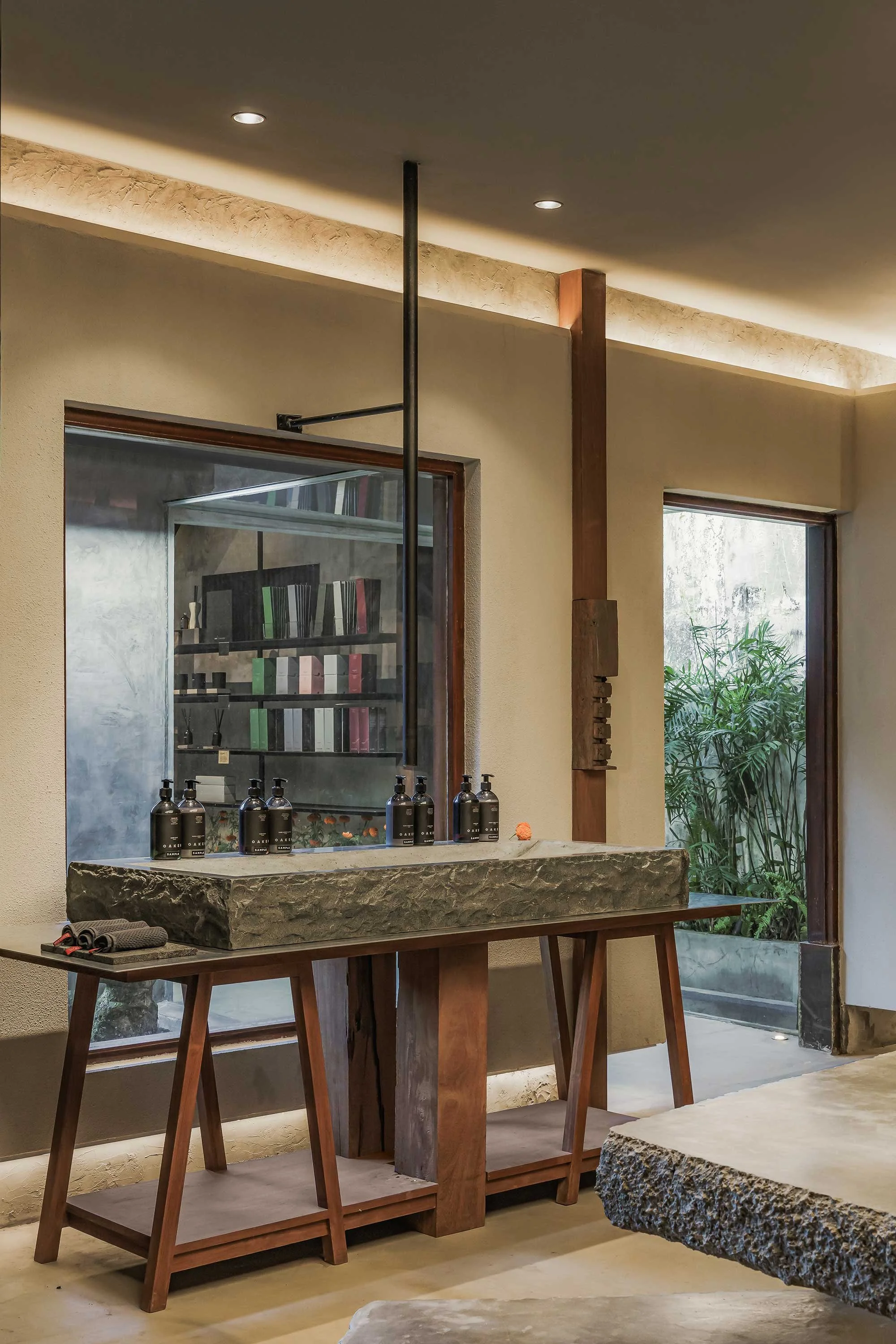
A stone table appears to hover, its mass appearing barely anchored by a turquoise-hued salvaged carved timber leg. Steel elements appear in the shelving, in playful combination with the timber and textured stone slabs. ‘When people enter the space, they instinctively know which parts are old and which are new,’ says Halim.
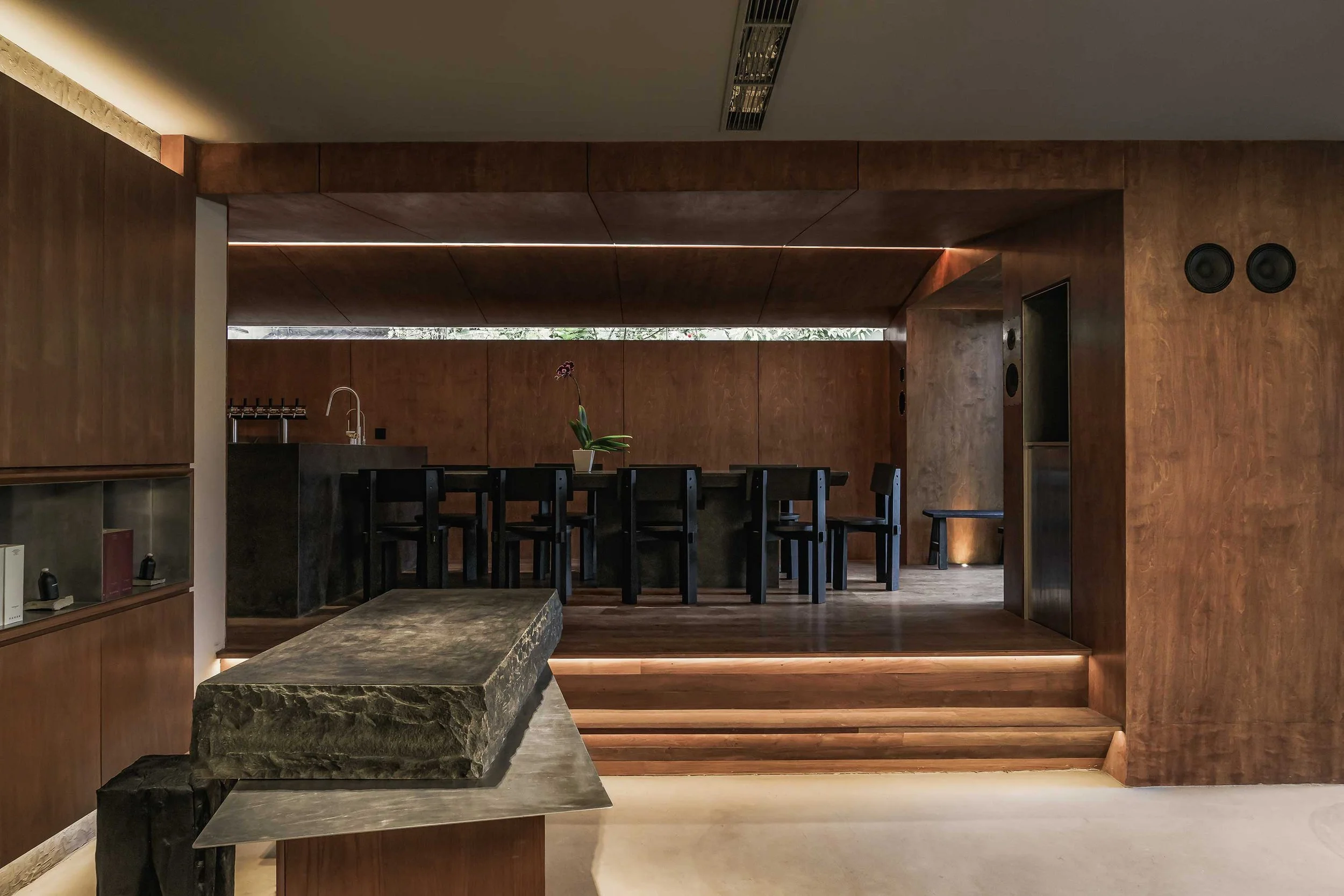
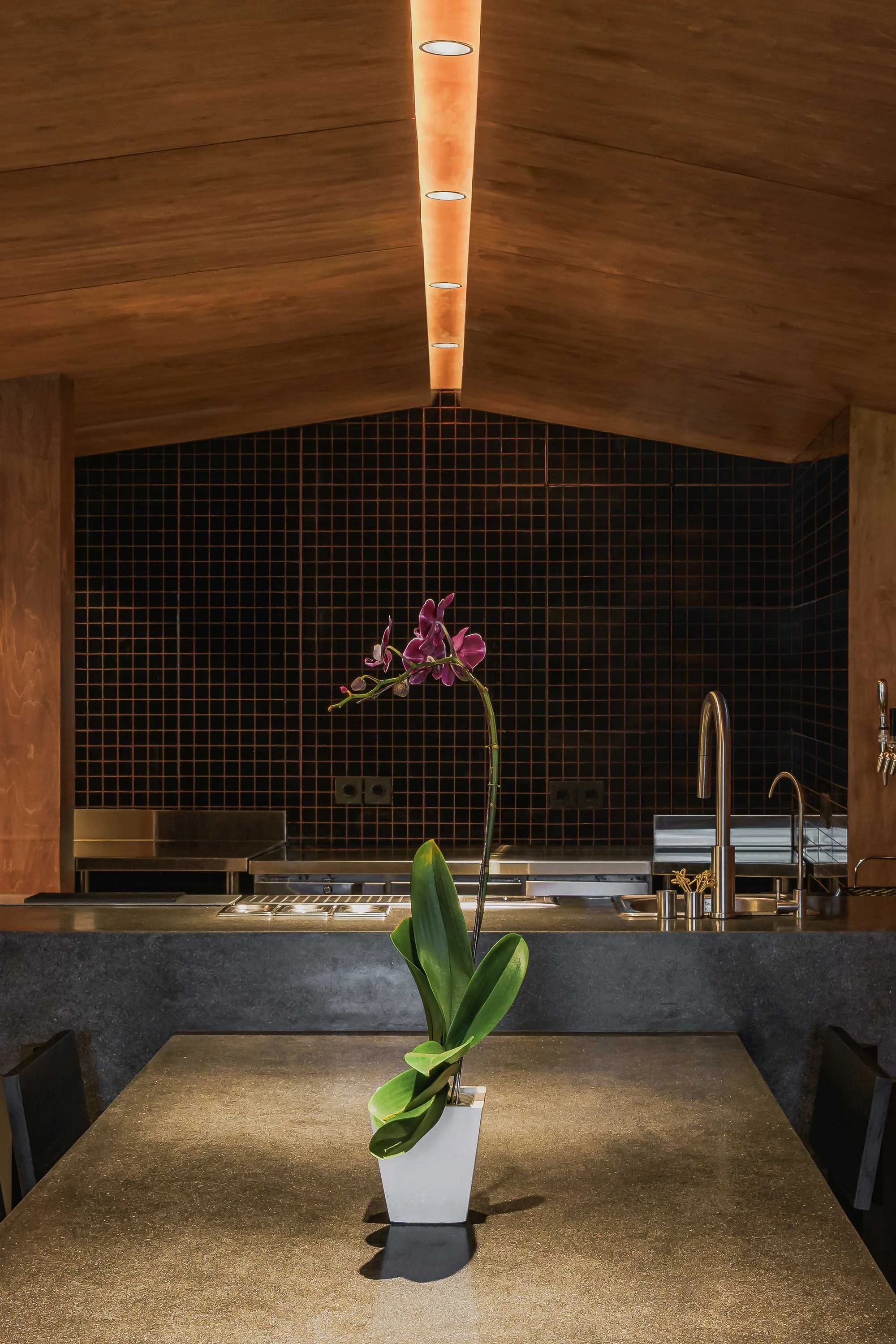
‘The whole concept of Oaken is about experience,’ reflects Oaken co-founder Wirjono. Here, that sensibility extends into F&B in the space beyond, Oaken Stillroom. Enveloped almost entirely in dark timber, the room is organised around a long, dark communal table set on a raised platform. A thin clerestory opening runs along the rear wall, framing a strip of garden and softening the otherwise moody interior. Collaborating with longtime friends and nomadic bar turned F&B consultancy Elemental, the menu encompasses light bites and scent-inspired drinks made using local and seasonal ingredients.
‘Aromatics is the main brief,’ explains Kerrigan, noting that the beverage team began by smelling the fragrances and raw materials in his studio before developing the drinks menu. Infusions, tinctures and botanical extractions are treated with the same level of experimentation and refinement as Oaken’s perfumes. ‘Everything is tinctured, infused and brewed in some way or another,’ he adds. ‘It’s a very alchemical approach to developing drinks, in the same way I develop fragrance.’
Just outside, the existing courtyard has been left largely intact, with uneven stone paving, dense planting and two Balinese shrines retained within the grounds, anchoring the brand’s Indonesian roots. It’s a compelling mix, and Rantara understands that there isn’t a single formula when designing for Oaken. ‘They never give us a brief. They just tell us the project status, the story and what they need,’ says Tjandra. The architects describe the brand as a meeting of the founders: Wirjono’s Javanese aesthetic meets Kerrigan’s clean mid-century California. Their task was not to reconcile the two but, as they put it, ‘to distil the essence’.
Text by Raina Alonge
Images by Pascalis Arya