Ten Years On, Singapore’s Most Celebrated Restaurant Enters a New Era
Nice Projects’ renovation of Odette is a sensorial commingling of theatre, tempo, nature and art
If the original Odette projected the lightness and playful spirit of spring, its refreshed iteration ten years on evokes a meditative autumn day. Located in Singapore’s National Gallery, chef-owner Julien Royer’s three-Michelin-starred, modern French institution has just completed a significant reimagining by designer Sacha Leong of Nice Projects with his co-founder Simone McEwan. The former had first designed the restaurant while working at Universal Design Studio.
Compared to the first design, when he needed to create a spatial identity from scratch, Leong had to be more strategic about changes. ‘People have come to love the interior, which forms a big part of the DNA of Odette,’ he says. ‘We had to make sure we kept those bits, but also created a warmer and even more considered space.’
Previously, there were pale pinks and sharp whites, accented by potted palms. Singaporean artist Dawn Ng’s mobile-like installation, A Theory of Everything (2015), floated in the void of the former Supreme Court’s quotidian registration room, abstracting the chef’s ingredients onto oak, polyfoam, brass and paper.
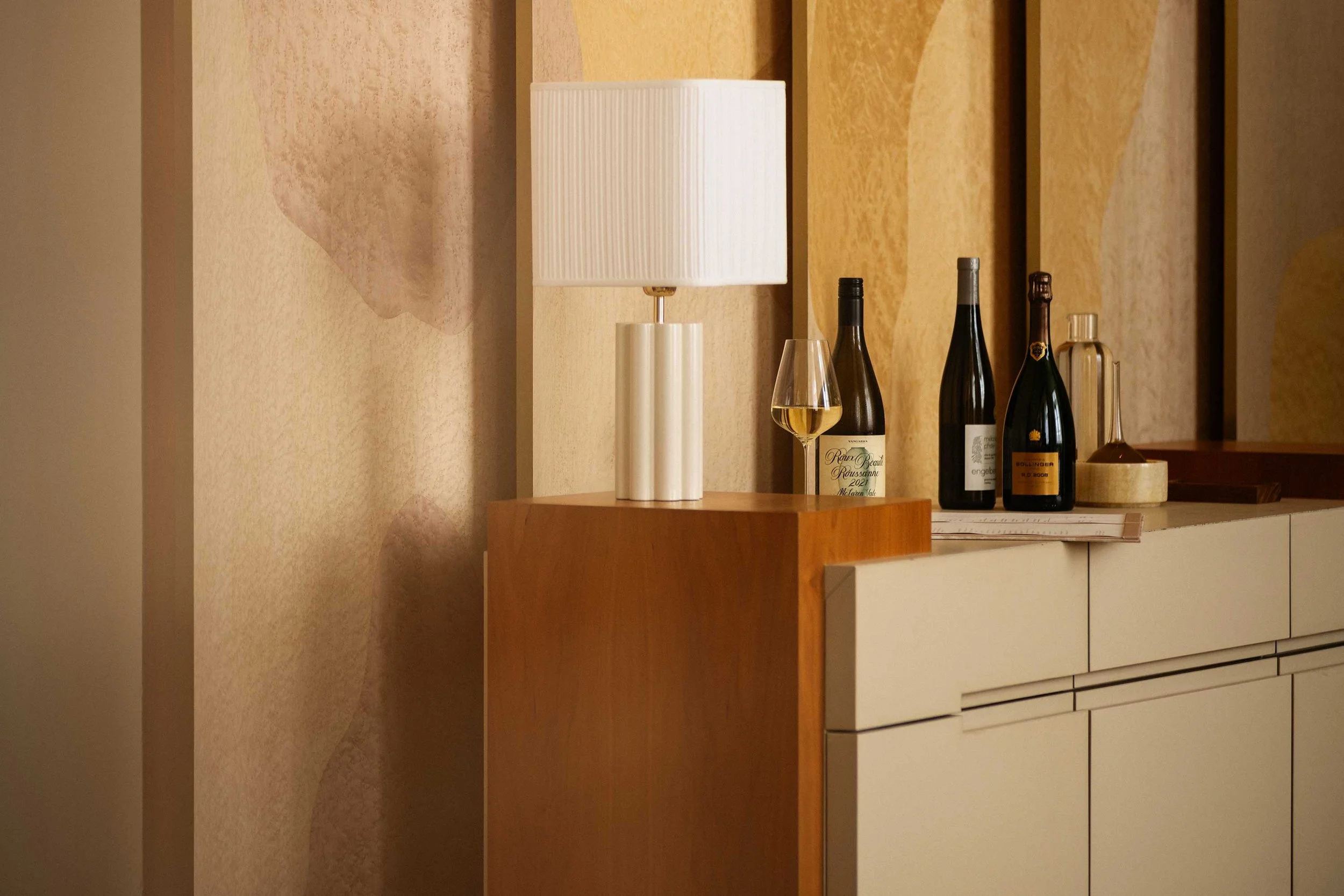
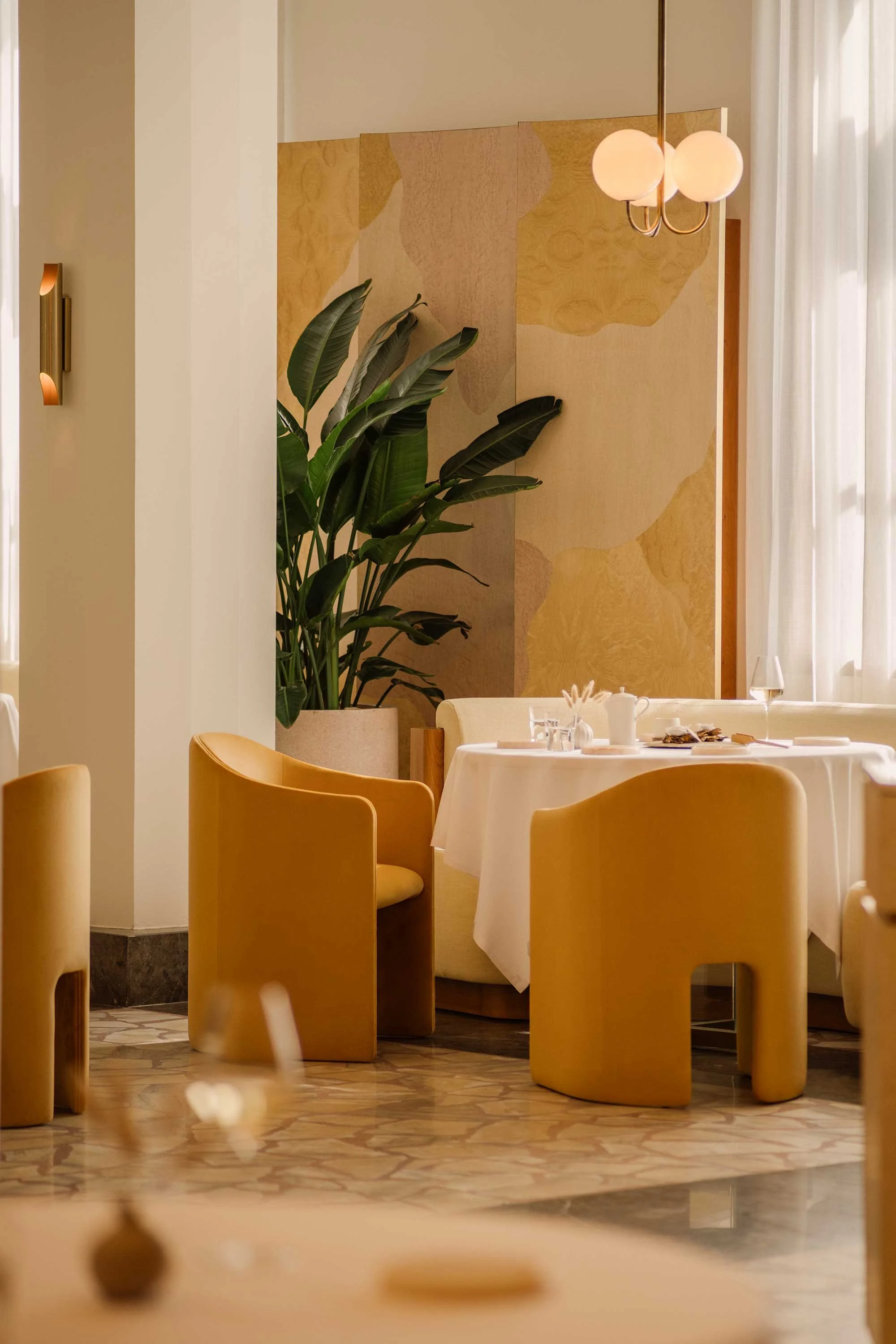
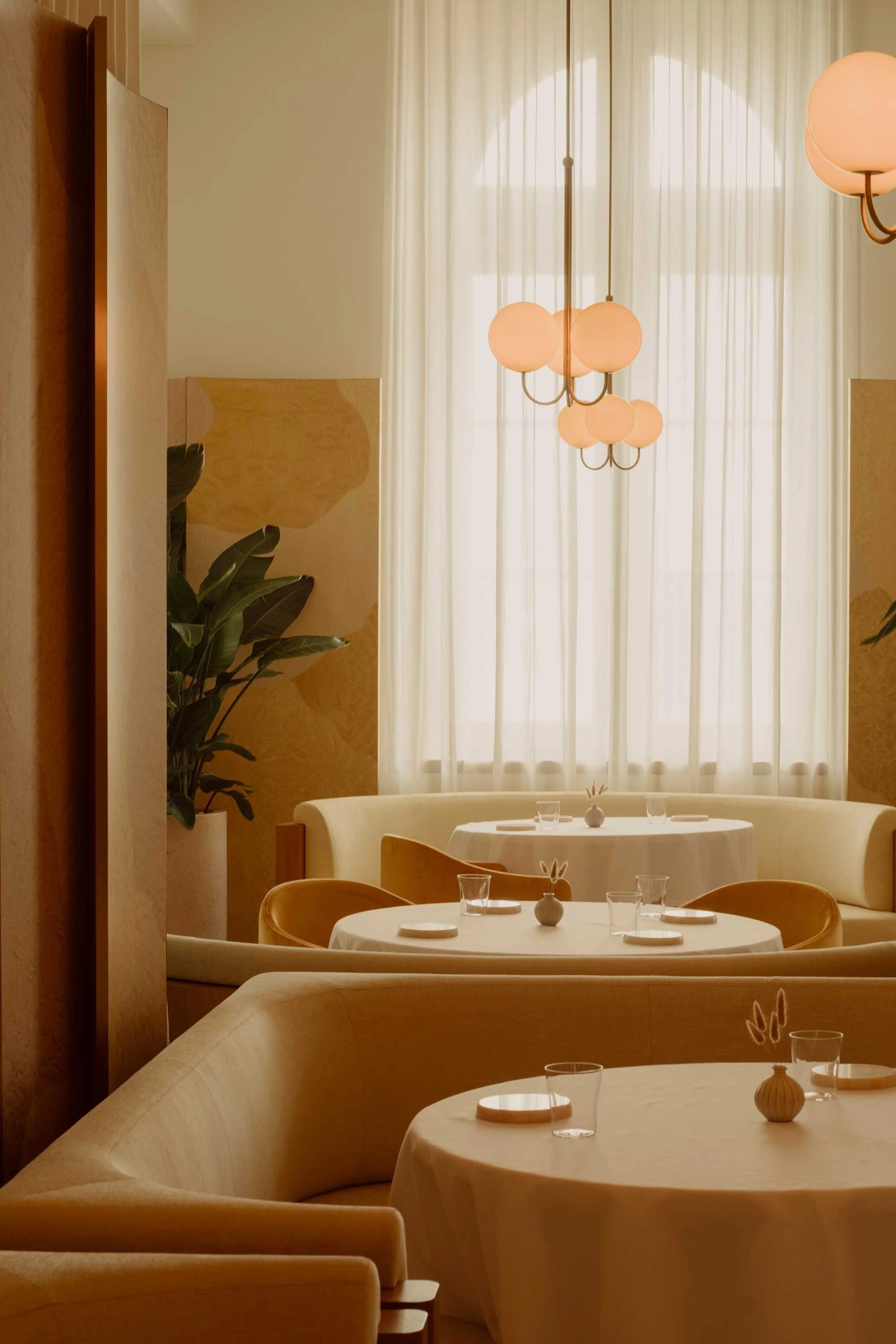
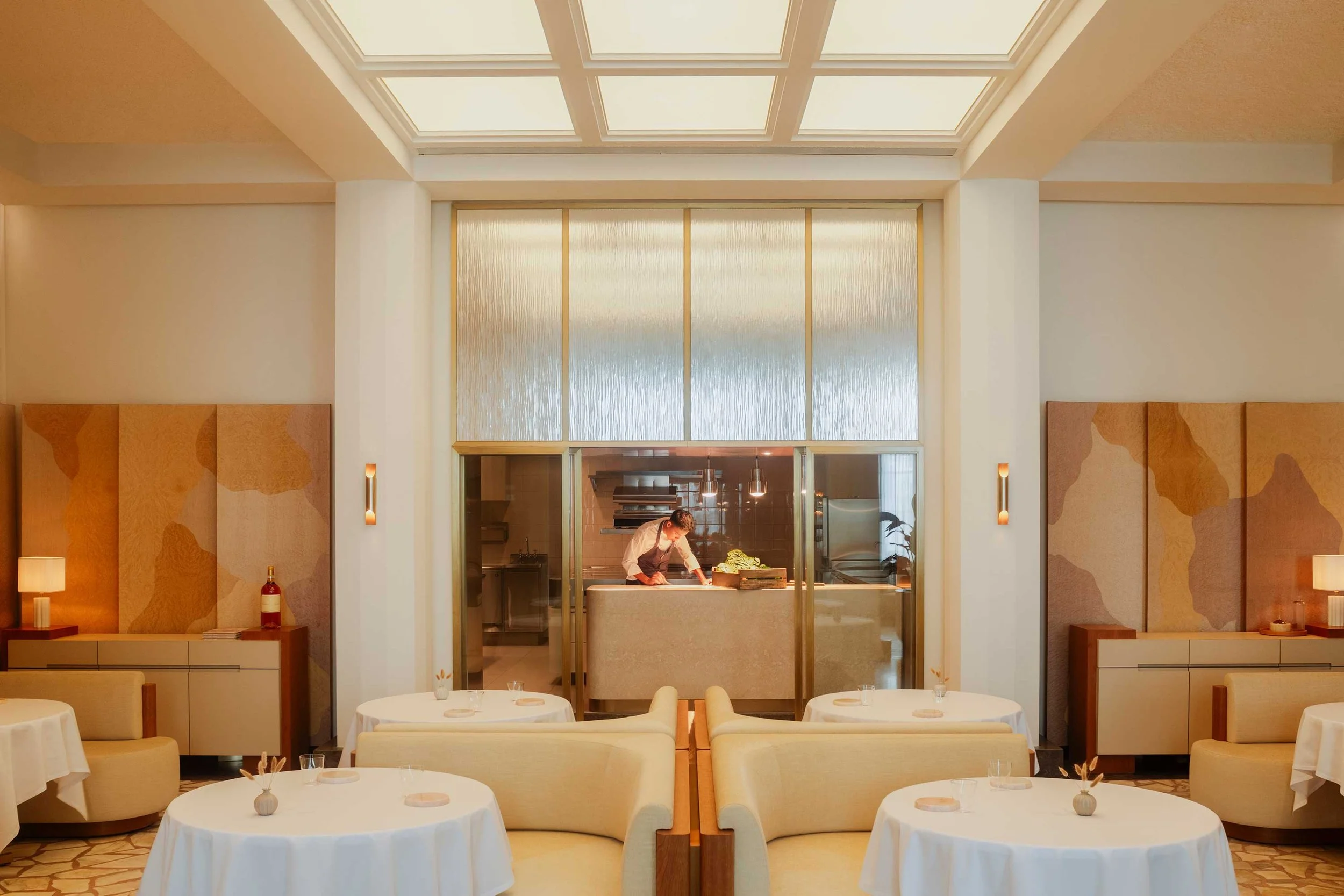
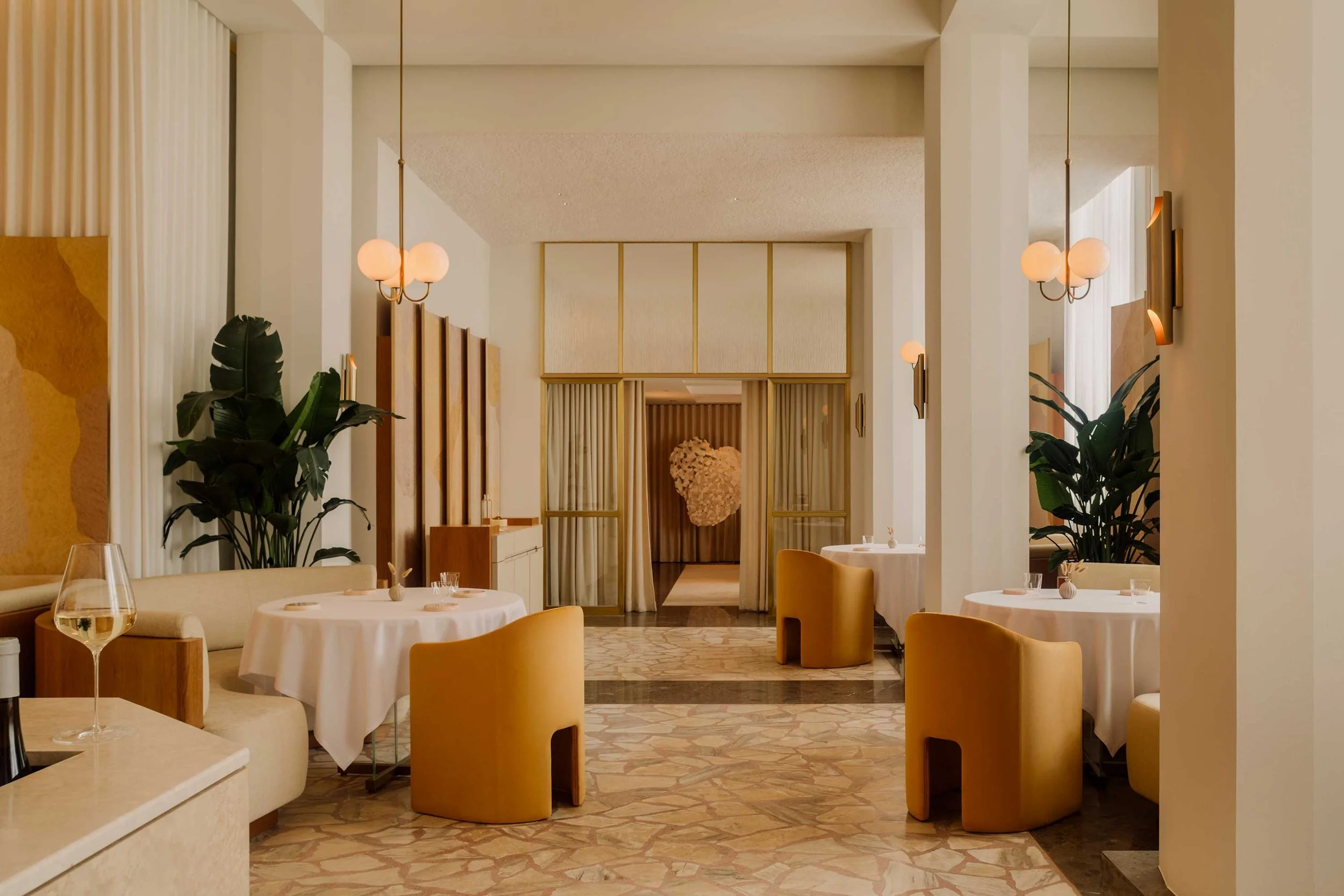
This visual narrative continues in Odette’s facelift, which has improved functionality and introduced a more subdued palette of apricot and vanilla. Rather than entirely erasing its past, Leong retained familiar elements to preserve intimacy in the tall space. Wall panels are no longer blush-coloured, but feature patterning from four veneer types evoking topography or painterly strokes, depending on how one perceives them.
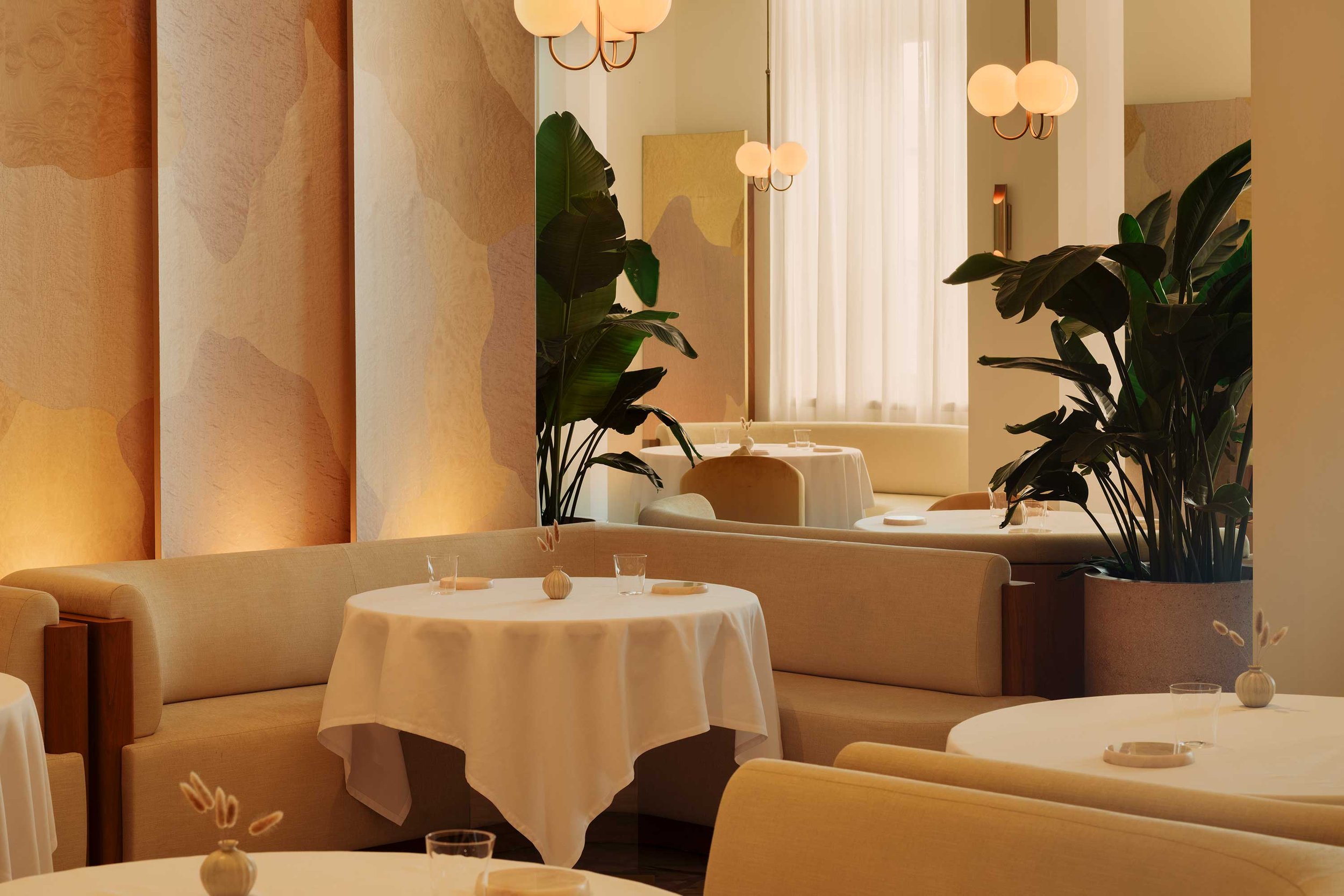
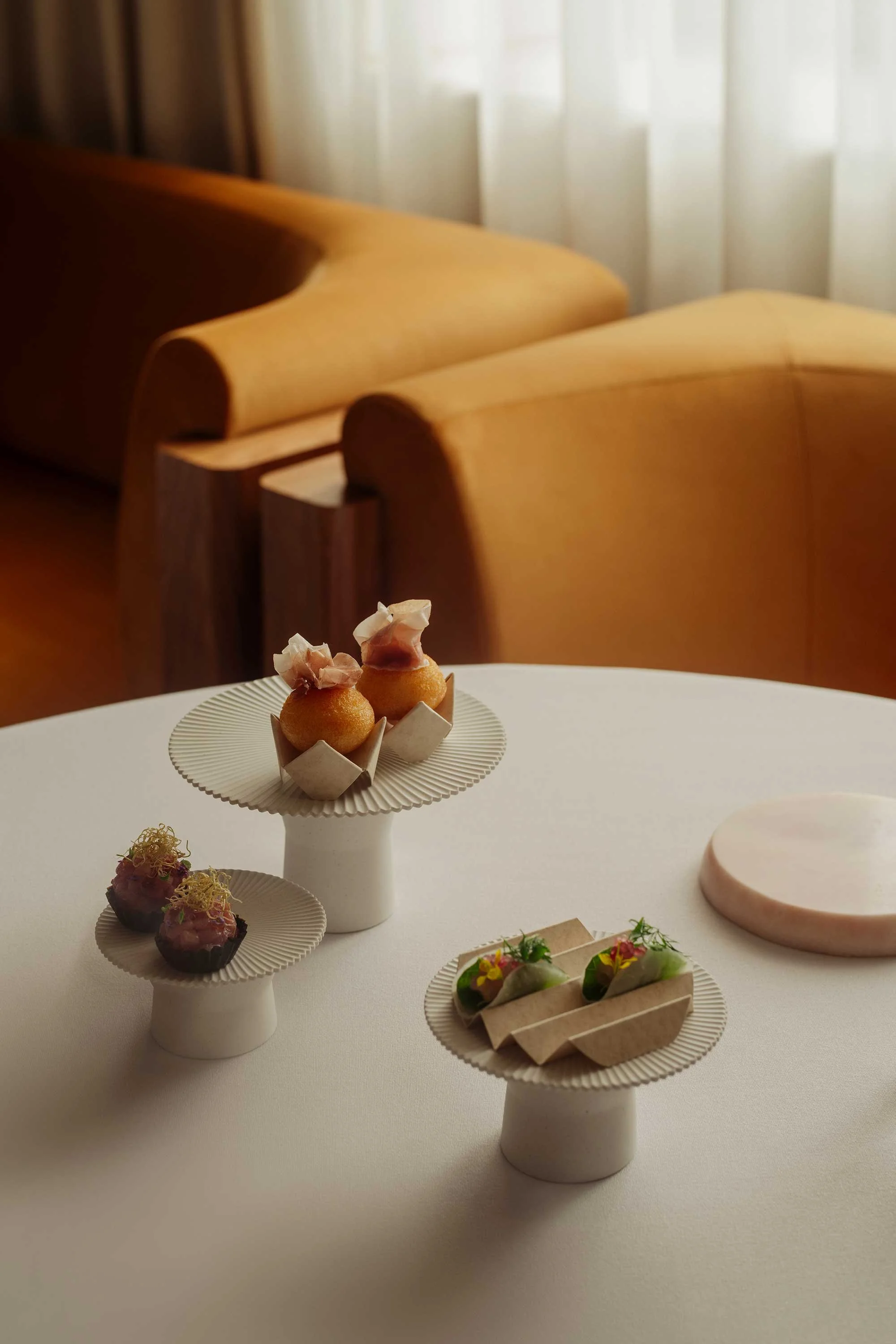
‘The veneers were carefully matched and laser-cut, and then pieced together across all the panels,’ Leong explains. So, while looking effortless, they were challenging to make, like Royer’s adroit manipulation of flavours and textures expressed as table art.
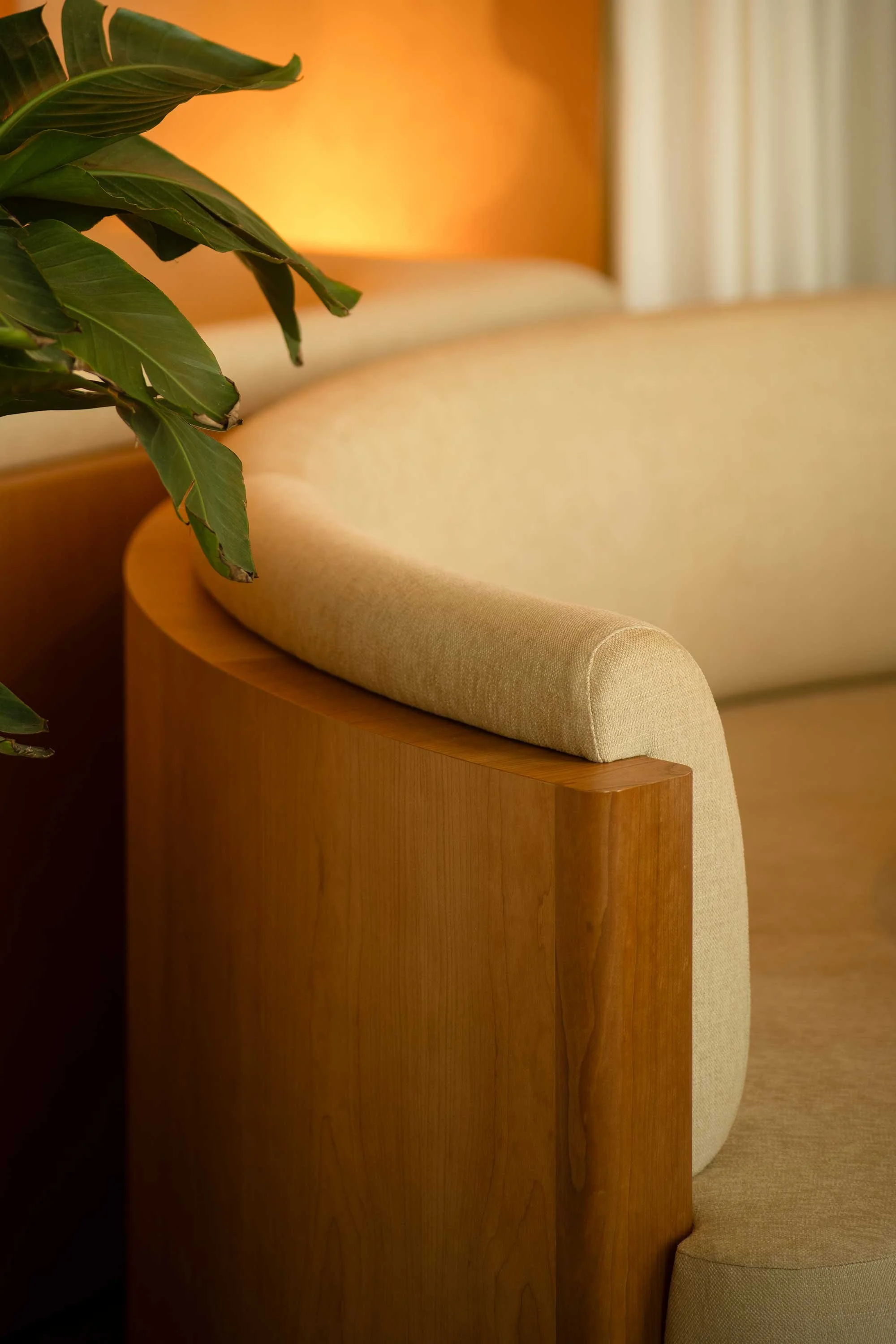
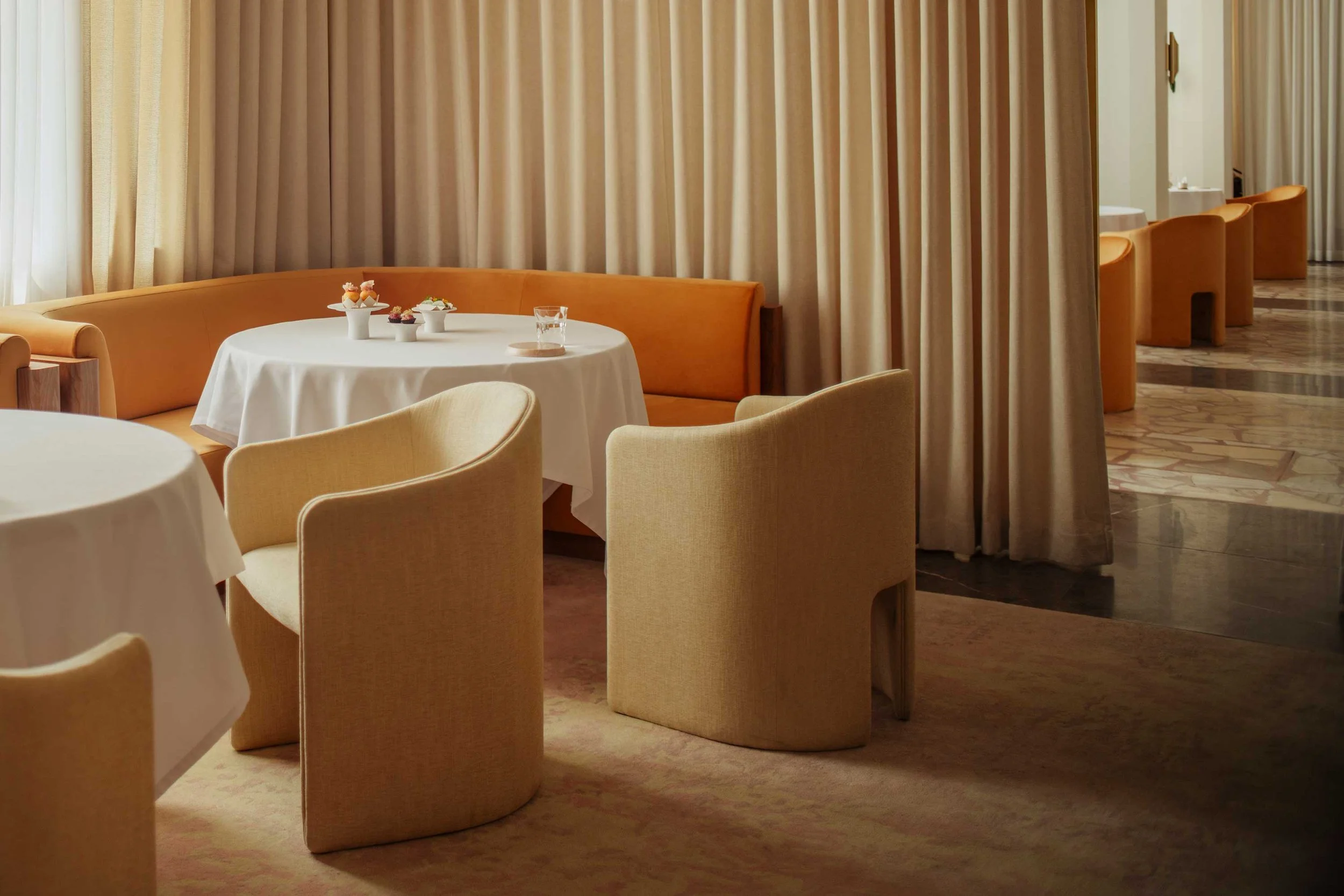
There were alterations to the layout too: each dining group now has its own personal, cosy banquette, and a dedicated private dining room was introduced. The kitchen has also now become a theatrical sideshow, framed by the building’s columns.
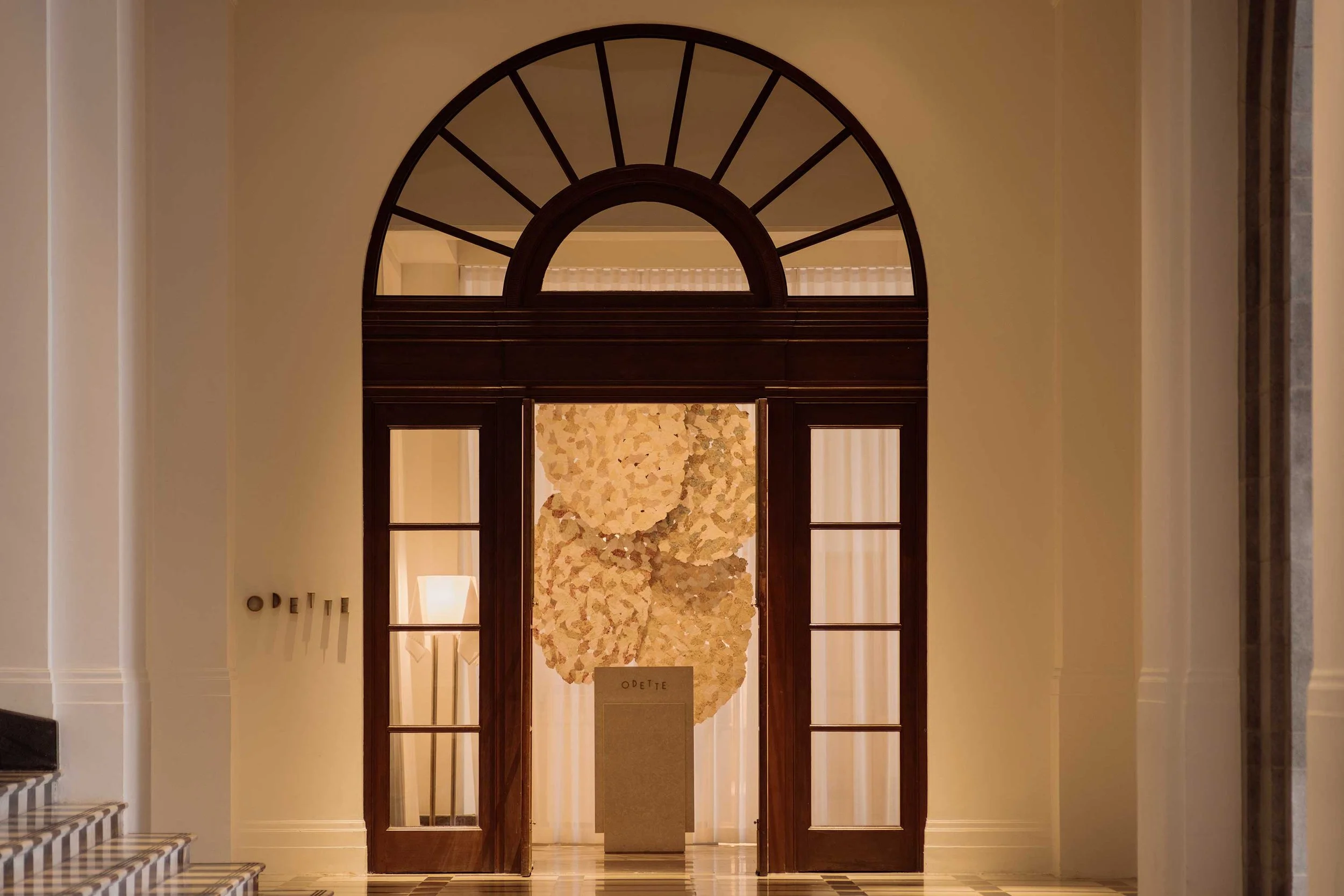
Likewise, the new entrance design celebrates spatial storytelling, procession and rhythm. ‘It was important to have the greeter facing you straight on, and centred between the historic front doors,’ avers Leong. ‘It also felt right for this warm, very direct welcome back by Dawn’s impressive new artwork. There’s a sense of discovery once the guests pass through the sheer curtains to the main dining area.’
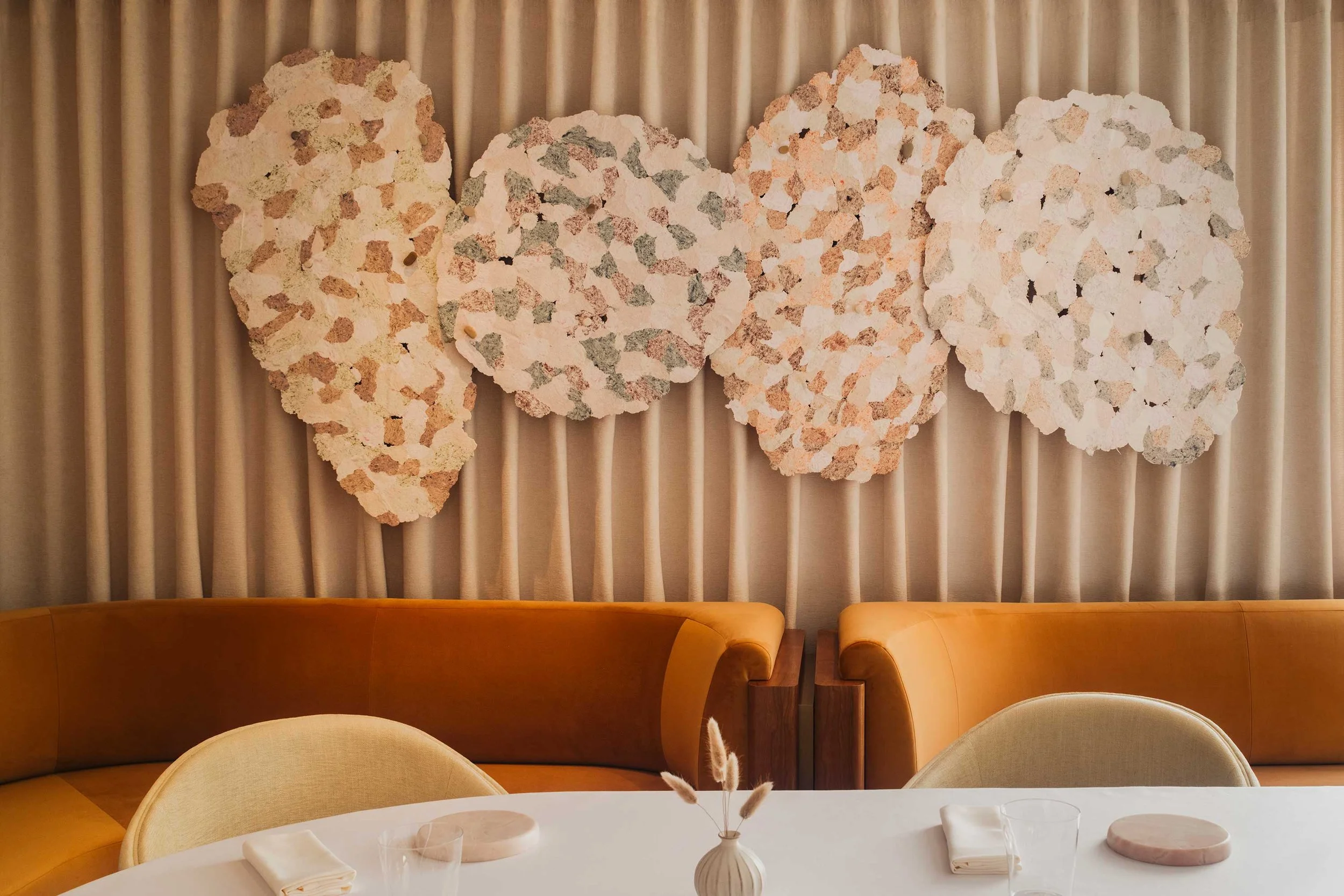
Ng’s art, positioned centrally between the arched doorways, is interwoven with the building’s interior architecture. Titled Winter, Spring, Summer or Fall (2025), it consists of four conjoined ‘platelets’ of pulverised paper, with colours drawn from a seasonal palette of botanical and culinary ingredients — petal, root, leaf and spice — providing a backdrop to the reception table, like a tableau within a proscenium.
Their colours and textures, gleaned from Royer’s seasonal palette of culinary ingredients echo the natural world. They are ‘maps of wind currents and vegetal textures that drift and coalesce in a tapestry of time,’ says Ng, and they serve as her poignant whisper to guests as they enter with anticipation, and leave, awoken and satiated.
Text by Luo Jingmei
Images by Khoo Guo Jie, courtesy of Nice Projects