Why a Hong Kong-Designed Chess Table Was the Most Interesting Thing at Milan Design Week
A Hong Kong studio’s Milan debut turns scrap bamboo and discarded tea leaves into a chess table — and into a case against the generic sustainability narratives that have come to dominate Fuorisalone
Post-Milan Design Week conversations this year, particularly around the Fuorisalone, have turned a little sour. Milano stalwarts, including myself, are feeling jaded, disillusioned and honestly saddened by the state of what used to be an annual favourite for many of us. While the quality is still there, it’s becoming more difficult and less rewarding to sift through the superficial and the vacuous. When Design Anthology editor-in-chief Jeremy Smart and I sat down together to decompress after two days of literally running between press previews, we decided enough was enough. To get through the remainder of the week it felt necessary to make some tough decisions. It was then that I decided to prioritise people over product — and I’m so glad I did.
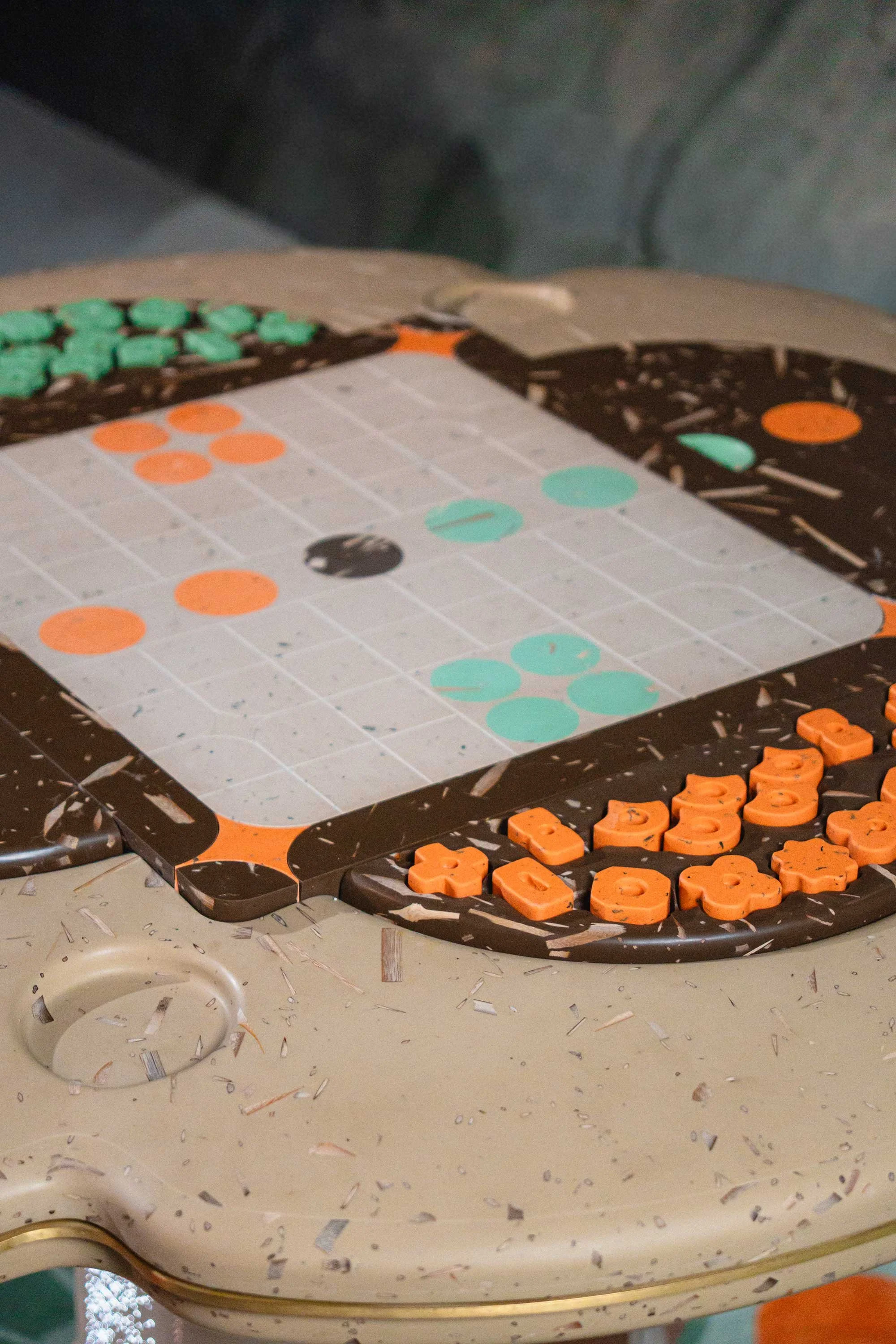
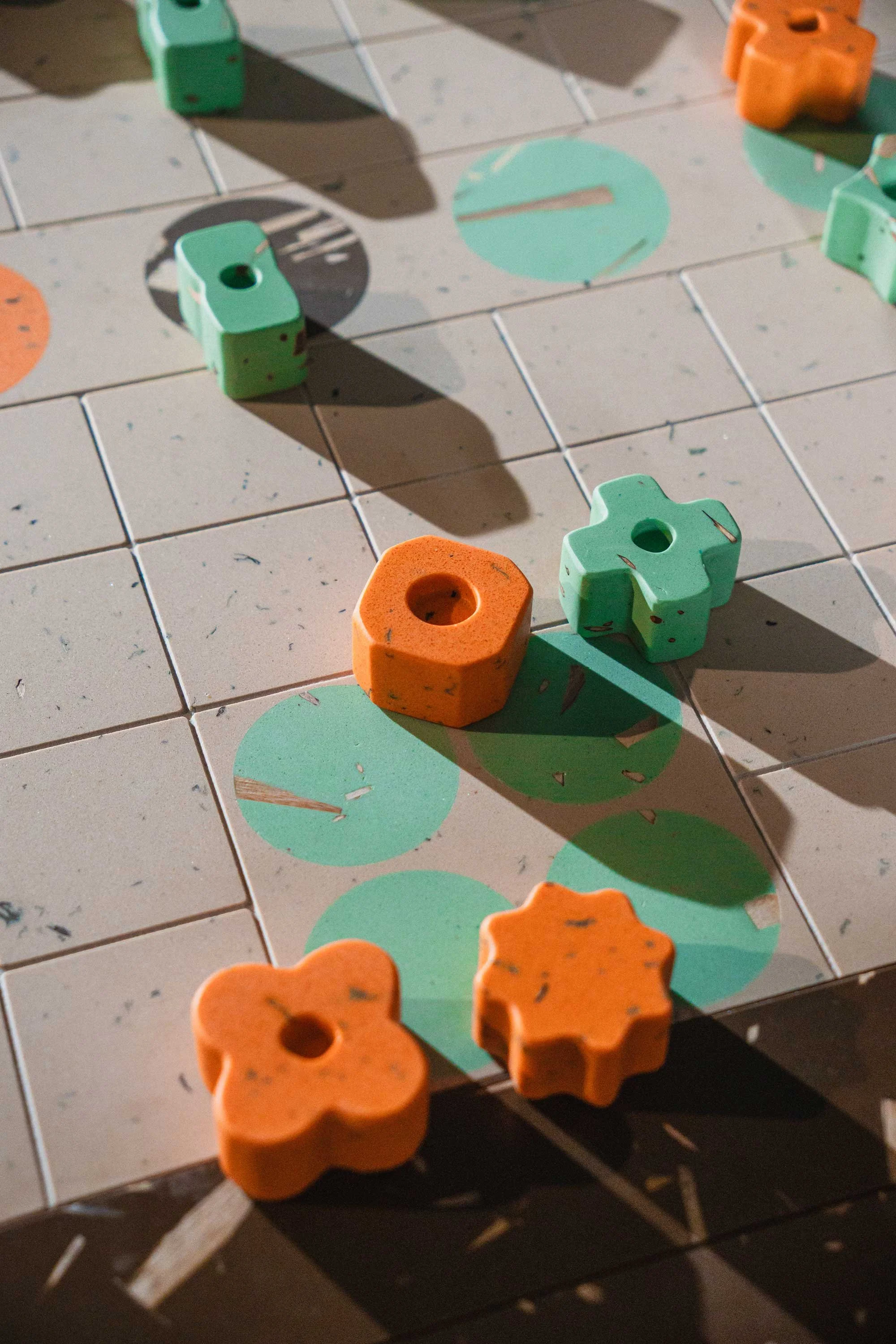
The best thing I saw all week was a new collection by Hong Kong-based studio ReEdit, the circular design arm of Editecture, which made its European debut as the only Hong Kong studio selected for the Isola Design District’s curated No Space for Waste exhibition. Of course, from my 15 years living in Hong Kong, I was very familiar with the studio and its founders Genevieve Chew and Jacqueline Chak. The duo, Chew a trained accountant and Chak a trained architect, have since pivoted from the multidisciplinary practice for which I knew to focus more on the R&D and application of their unique terrazzo-like material — and the results are extraordinary. While most traditional terrazzo incorporates an aggregate of natural stone, marble chips or offcuts, theirs makes use of bamboo chips and spent tea leaves.
Why, you may ask, is this interesting?
Both materials are tightly woven into Hong Kong’s cultural identity. Bamboo continues to be used as scaffolding on construction sites across the city, and anyone who has had the opportunity to witness this scaffolding being erected has marvelled at the speed and nimbleness of the sifu who make it their life’s work. The lengths of bamboo can only be used twice or three times for safety, and it’s these spent pieces that the studio reduces to chips before transforming them into a new surface material, rescuing them from landfill. And the tea leaves? Milk tea is absolutely central to Hong Kong cafe culture — a cornerstone of any cha chaan teng menu and one of the city’s most enduring daily rituals.
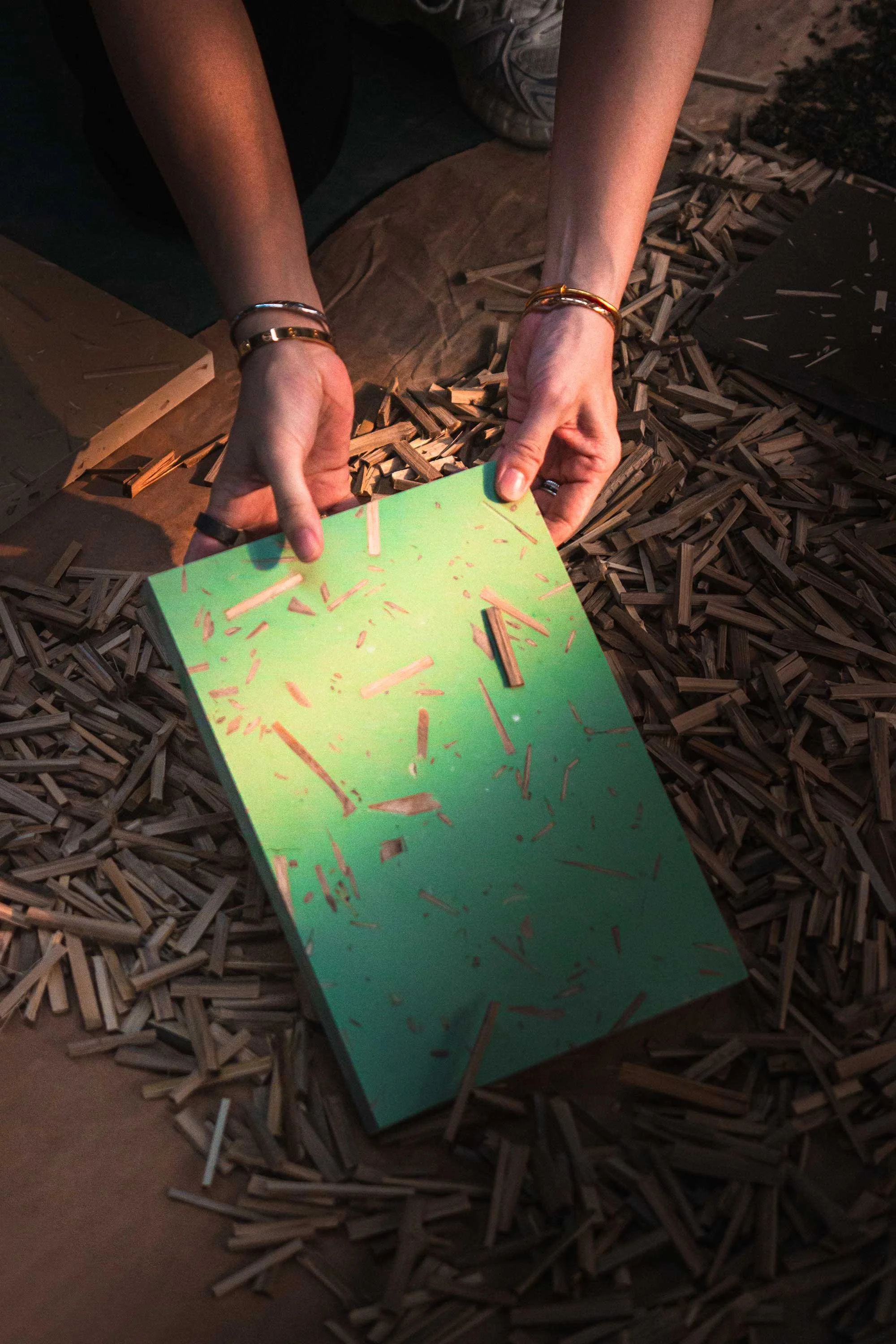
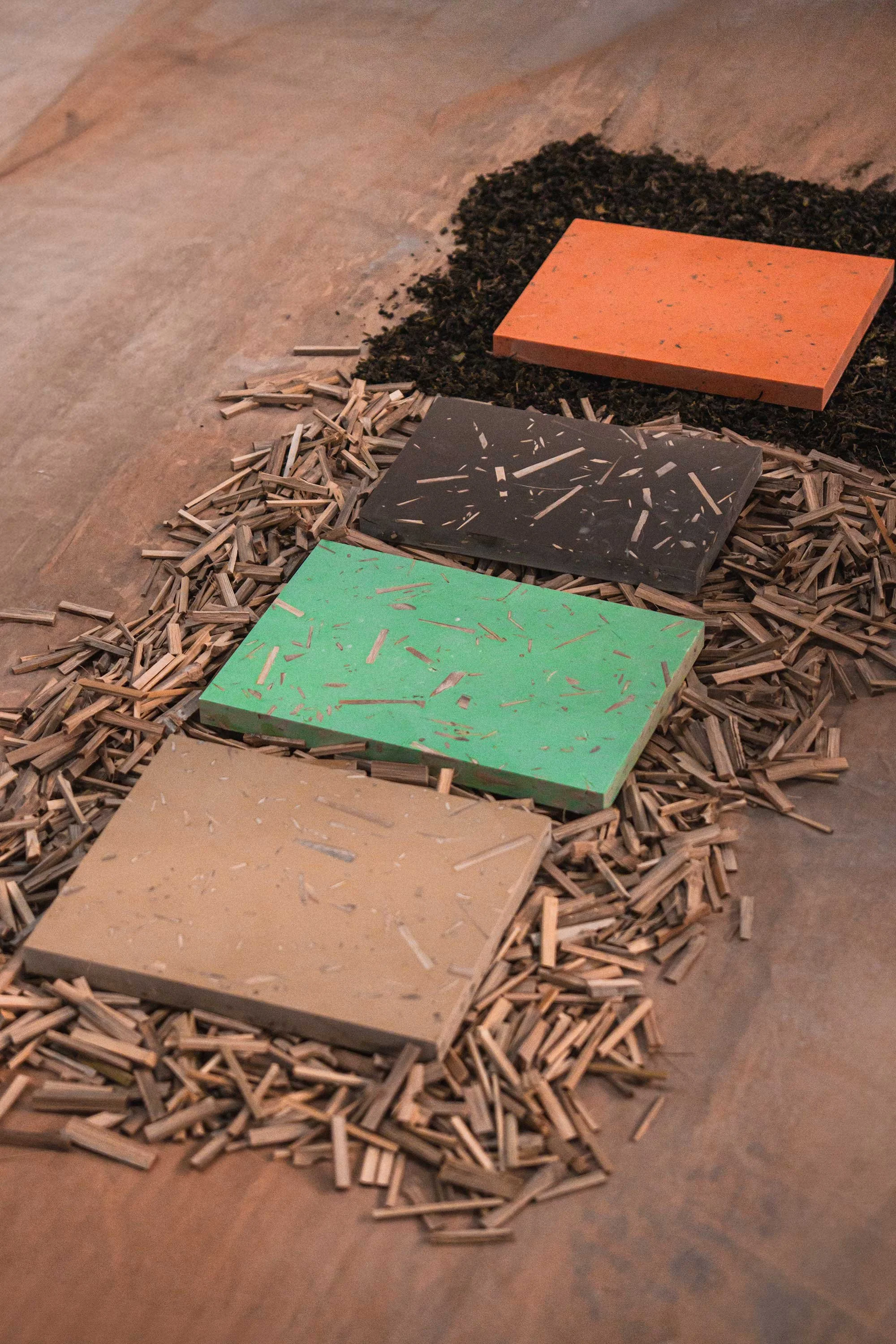
This is where storytelling in design becomes something more than a branding exercise. When the raw material itself carries cultural memory — when the aggregate in your surface is the same bamboo used to install a facade in Kowloon, or the same tea leaves strained through a silk stocking in a Sham Shui Po cafe — the object stops being merely decorative and becomes a kind of archive: identity, embedded in material. That specificity is what lifts this work above the sea of worthy-but-generic narratives that dominated so much of this year’s Fuorisalone.
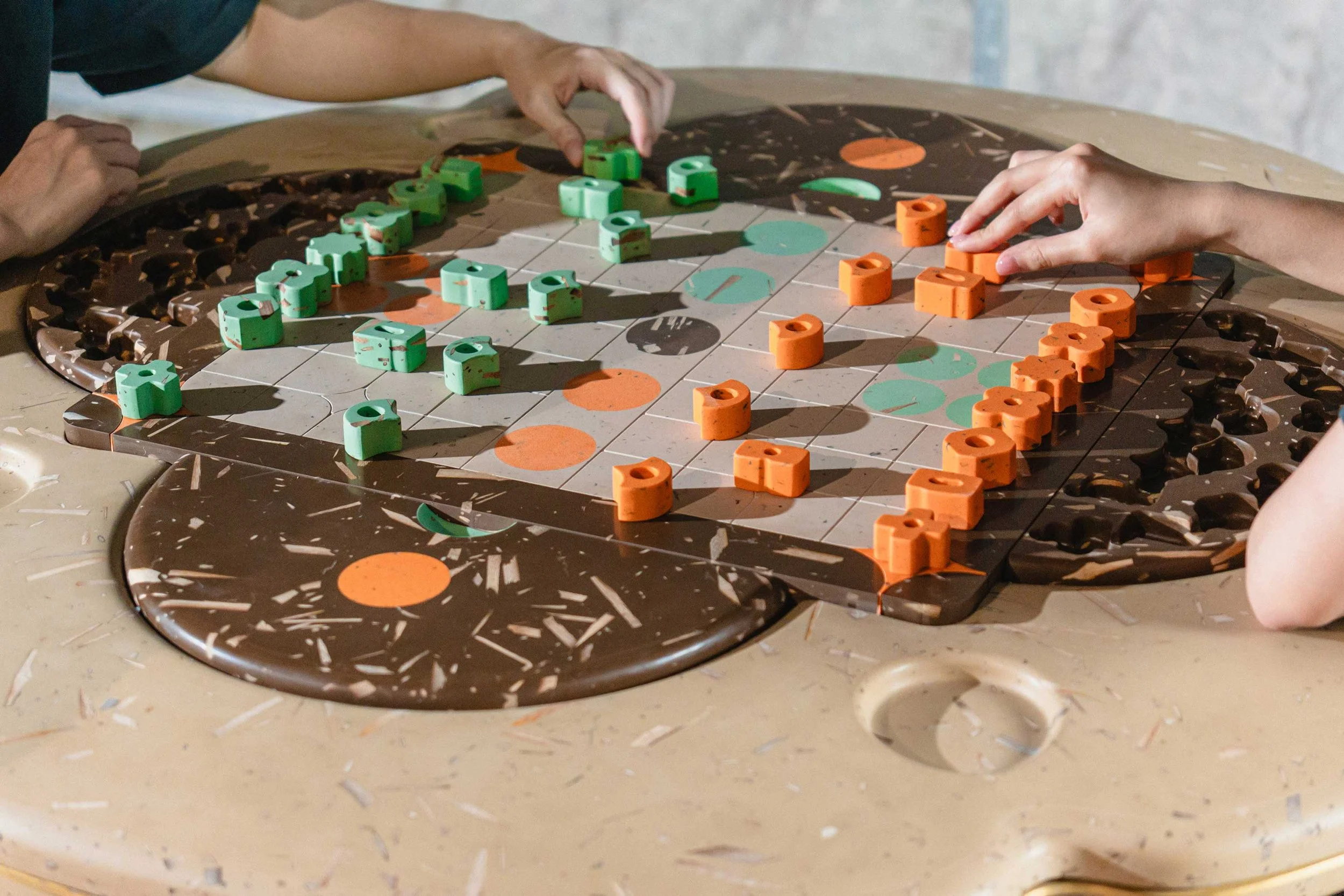
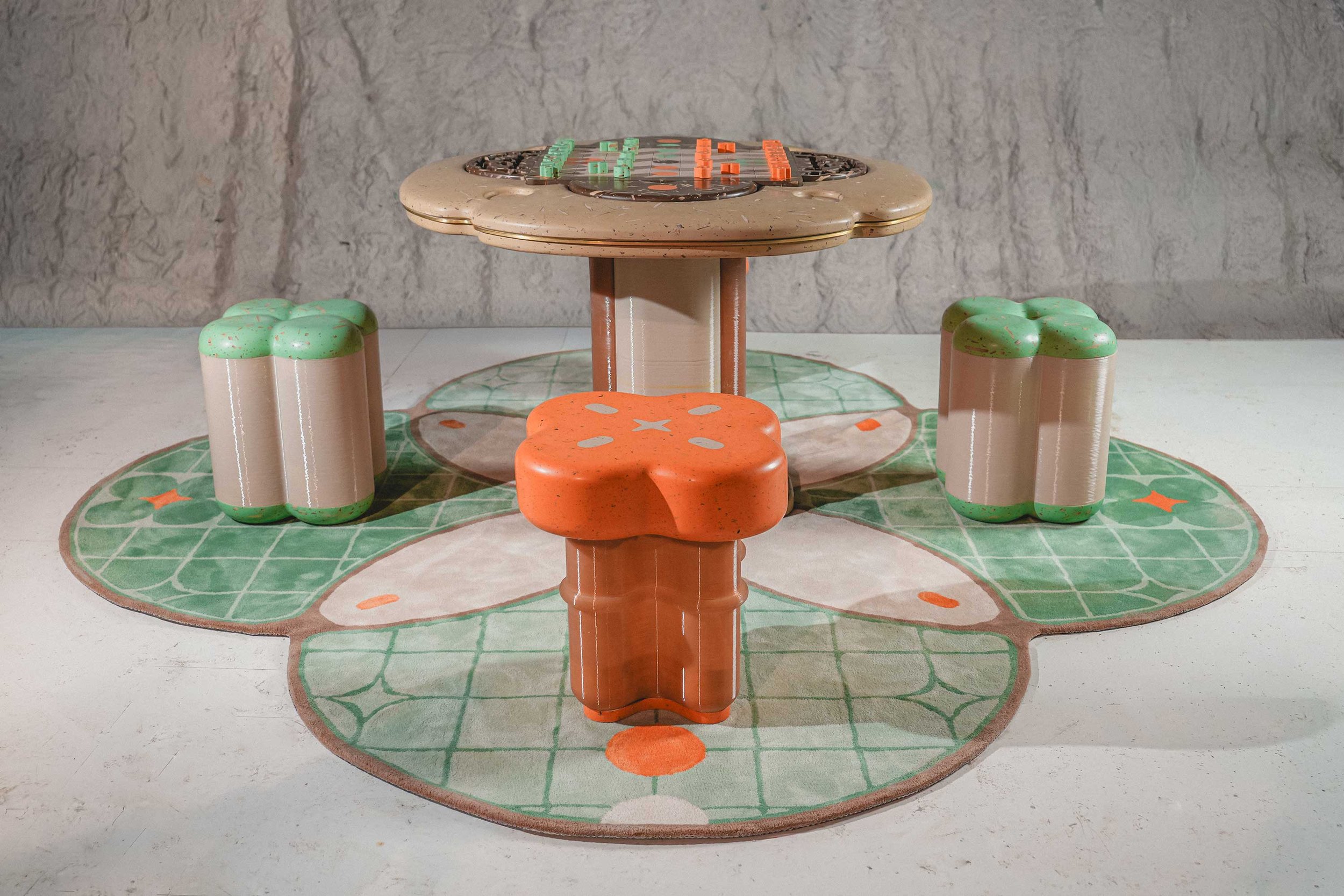
Understanding that confining the use of this material to only its own projects would defeat the purpose of producing it in the first place, the studio has made it available to the wider design community. The material is paired with 3D-printed recycled RPET plastic — the same material through which ReEdit has, to date, diverted more than sixz tonnes of plastic waste and saved more than two tonnes of carbon dioxide equivalent through collaborations with the likes of L’Occitane, Mercedes-Benz and Coca-Cola — to produce The Upcycled Gambit, an all-in-one table, chess board and stool set.
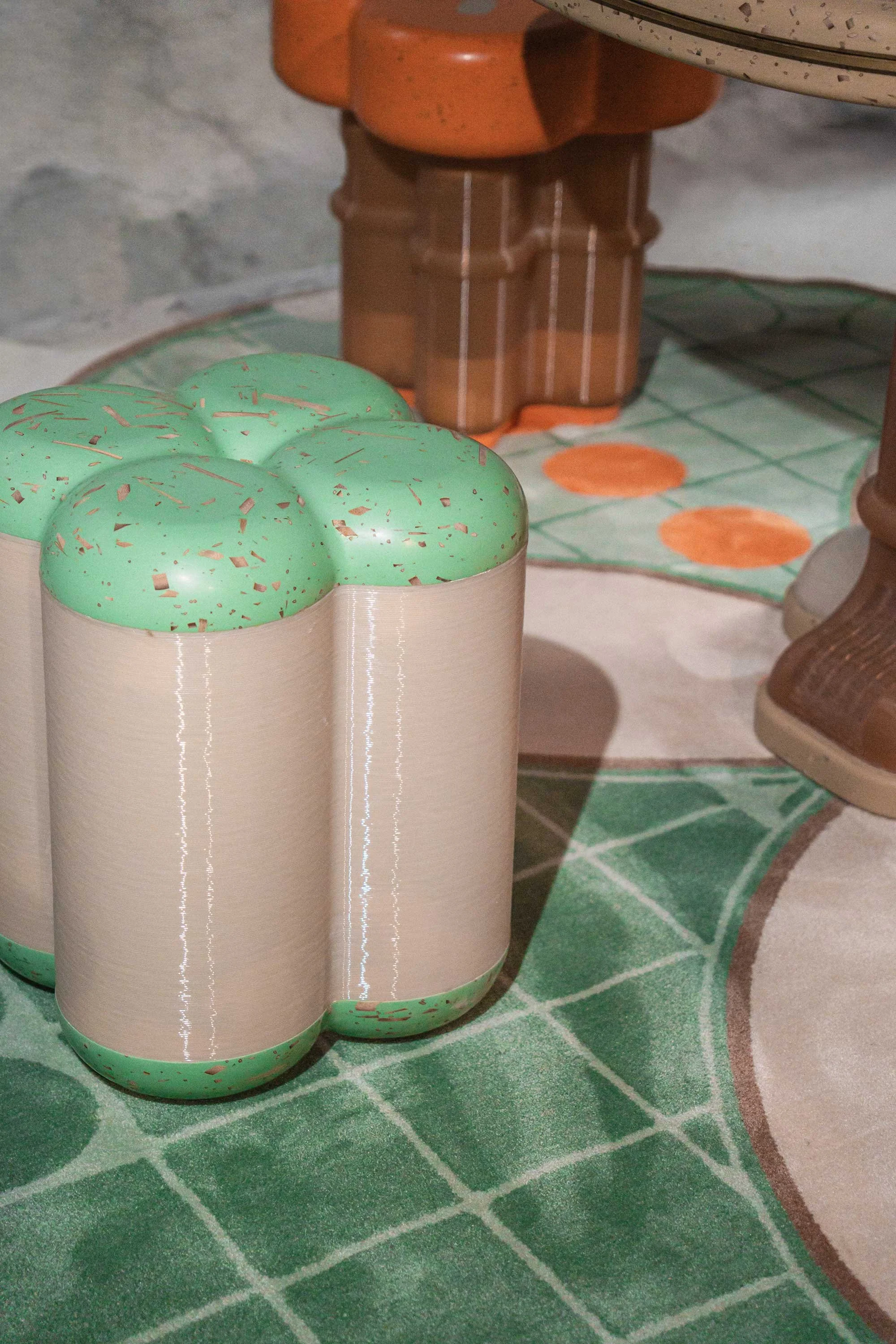
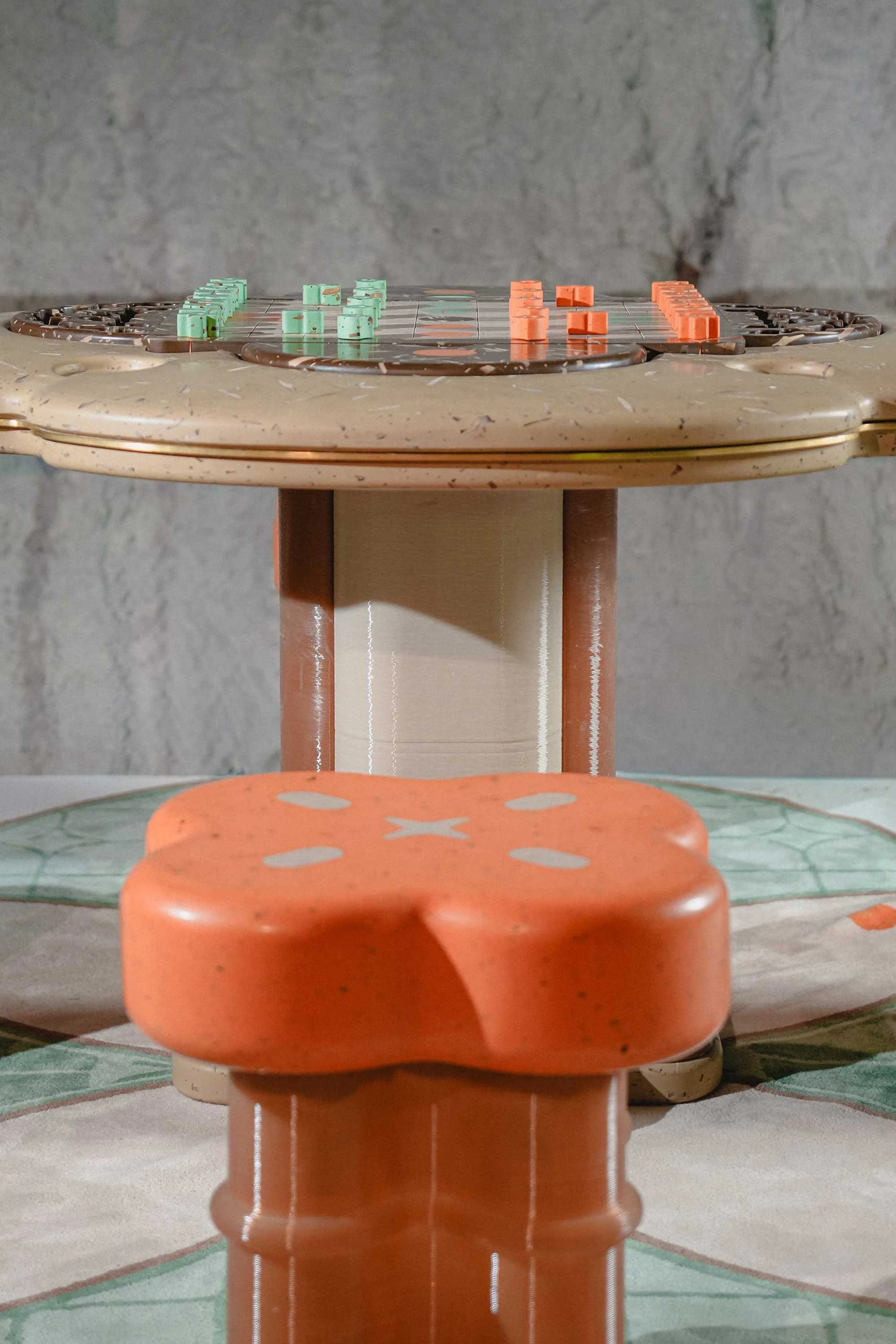
The colours and forms feel immediately familiar, recalling the multicoloured glazed tiles of the city’s beloved MTR network, the organic forms of traditional Chinese ruyi motifs, and the weathered stone chess tables found in Hong Kong public parks, where the game has long been a vehicle for neighbourhood connection, particularly among retirees. The piece reinterprets both xiàngqí (Chinese chess) and its Western counterpart in a single object, the chess pieces themselves designed on a form-follows-function principle to help make the game intuitive even to those encountering it for the first time.
The Upcycled Gambit is not simply a sustainability project dressed up in good design. It is an archive of what is quickly disappearing — street-side chess, bamboo scaffolding, the local cha chaan teng — and a sharp argument for why local material culture and vernacular typologies are not handicaps to be overcome, but the richest possible source of genuine design innovation. In a week that left many of us questioning what design weeks are even for anymore, this was a warm and welcome reminder.
Text by Suzy Annetta
Images courtesy of Editecture