Peer Behind the Curtain of a Shenzhen Restaurant That Treats Dining as Theatre
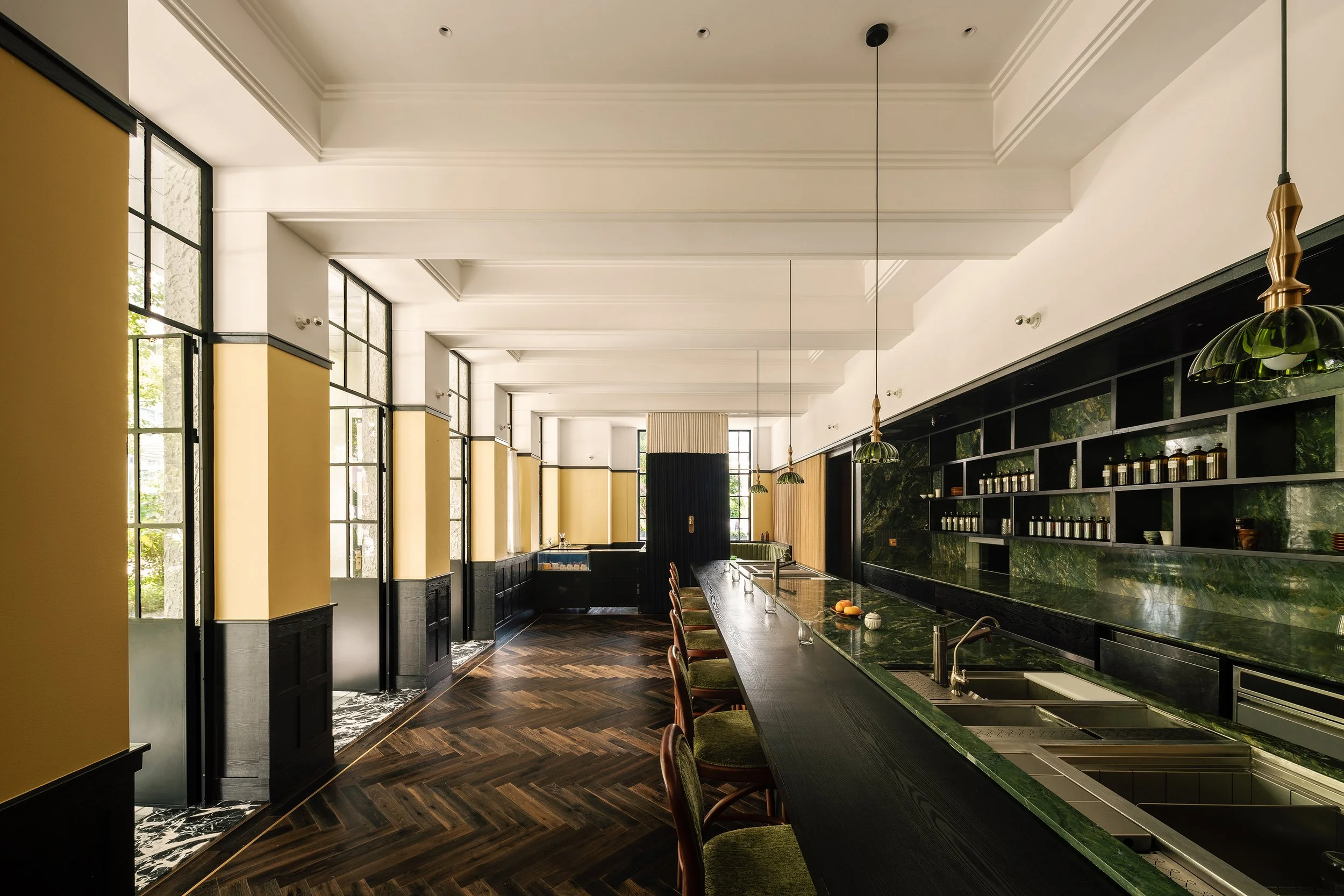
Drawing on the cinematic romance of the Republic of China era, Kasawoo and Yo.Q Design have created an immersive dining experience in Shenzhen. The new restaurant, Rener, blurs the lines between memory, theatre and reality through bespoke local craft
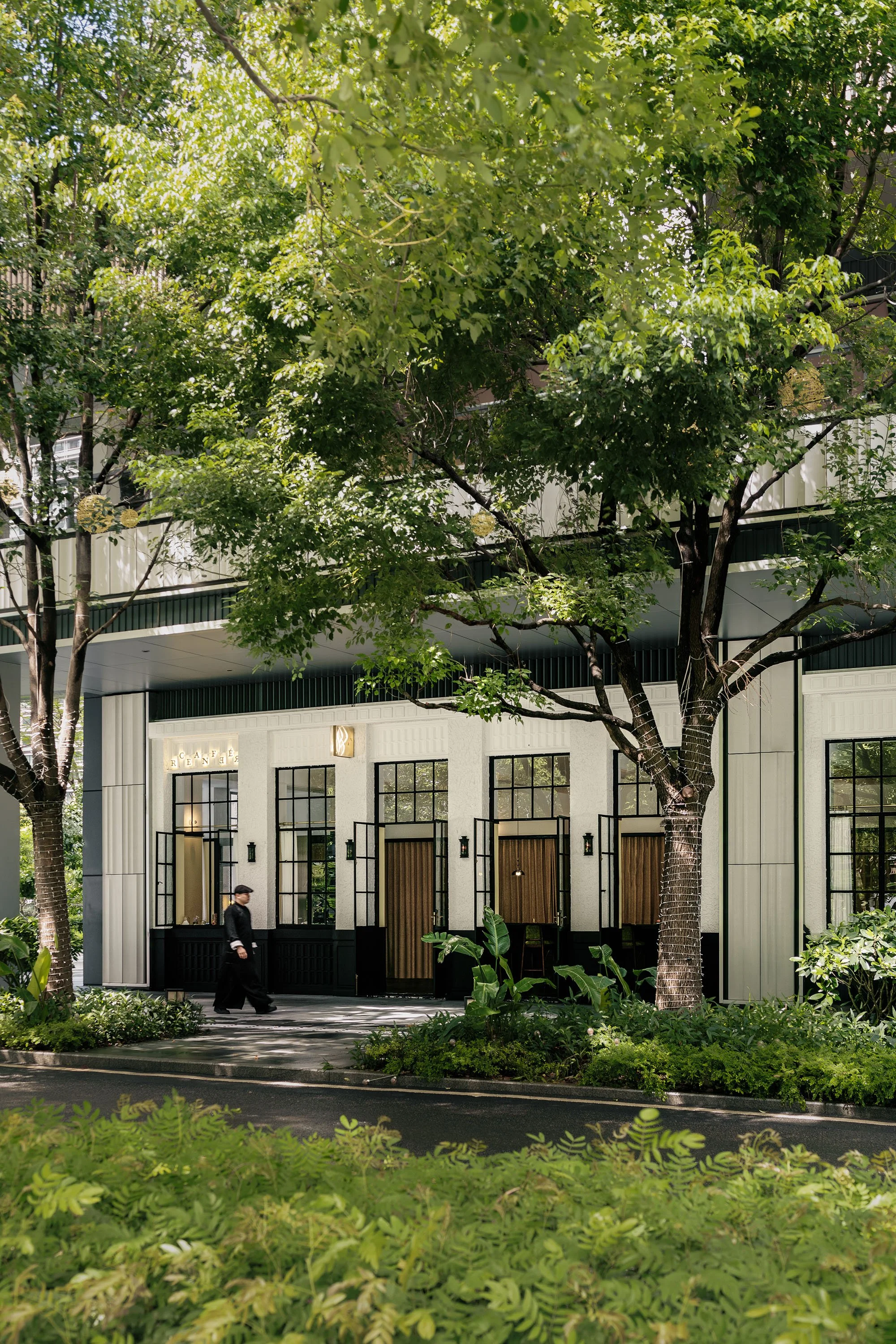
In the ultra-modern district of Qianhai in Shenzhen, where the skyline is dominated by high-rises housing global firms, a new restaurant offers a deliberate rupture in time. Rener is not just a place to eat; it is a set stage, conceived by a client with an acting background who wanted to transport his guests back to the 1920s Chinese Republican era.
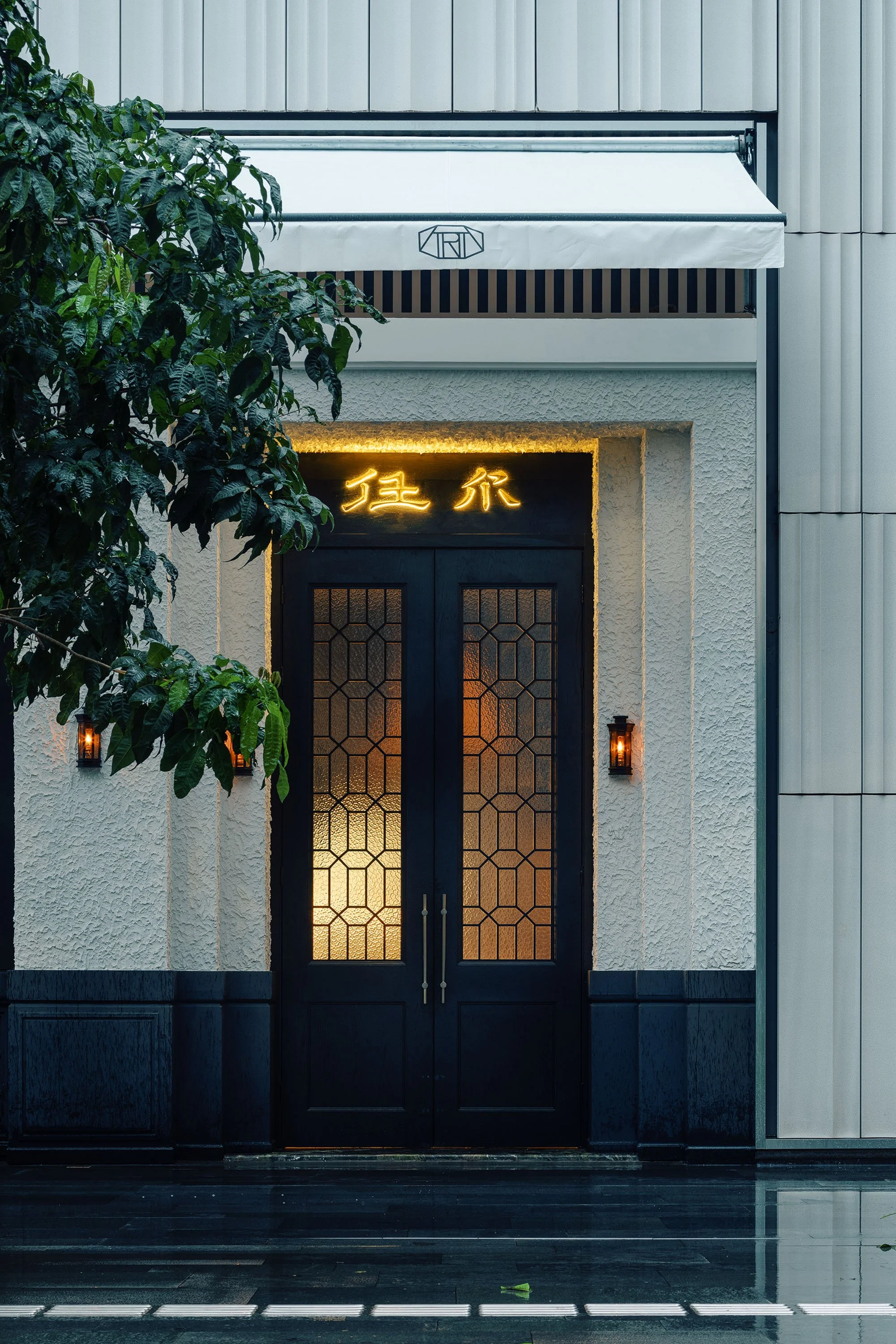
For London- and Hong Kong-based architecture studio Kasawoo, led by Darius Woo and Katie Kasabalis, the project was an exercise in cross-continental collaboration. Yolande Wang, the partner in charge of the project, worked closely with Chinese studio Yo.Q Design to interpret this historical brief without falling into the trap of creating a museum replica. Instead of simply copying the past, the team looked to cinema for inspiration, specifically the atmospheric moods of Wong Kar Wai and Wes Anderson, focusing on the emotions a space can evoke rather than simply historical accuracy.
‘We played with the idea of an immersive set from the very beginning,’ says Wang. ‘We wanted the restaurant to bring the customer into character while they’re dining there, but at the same time the set is supposed to be an illusion.’
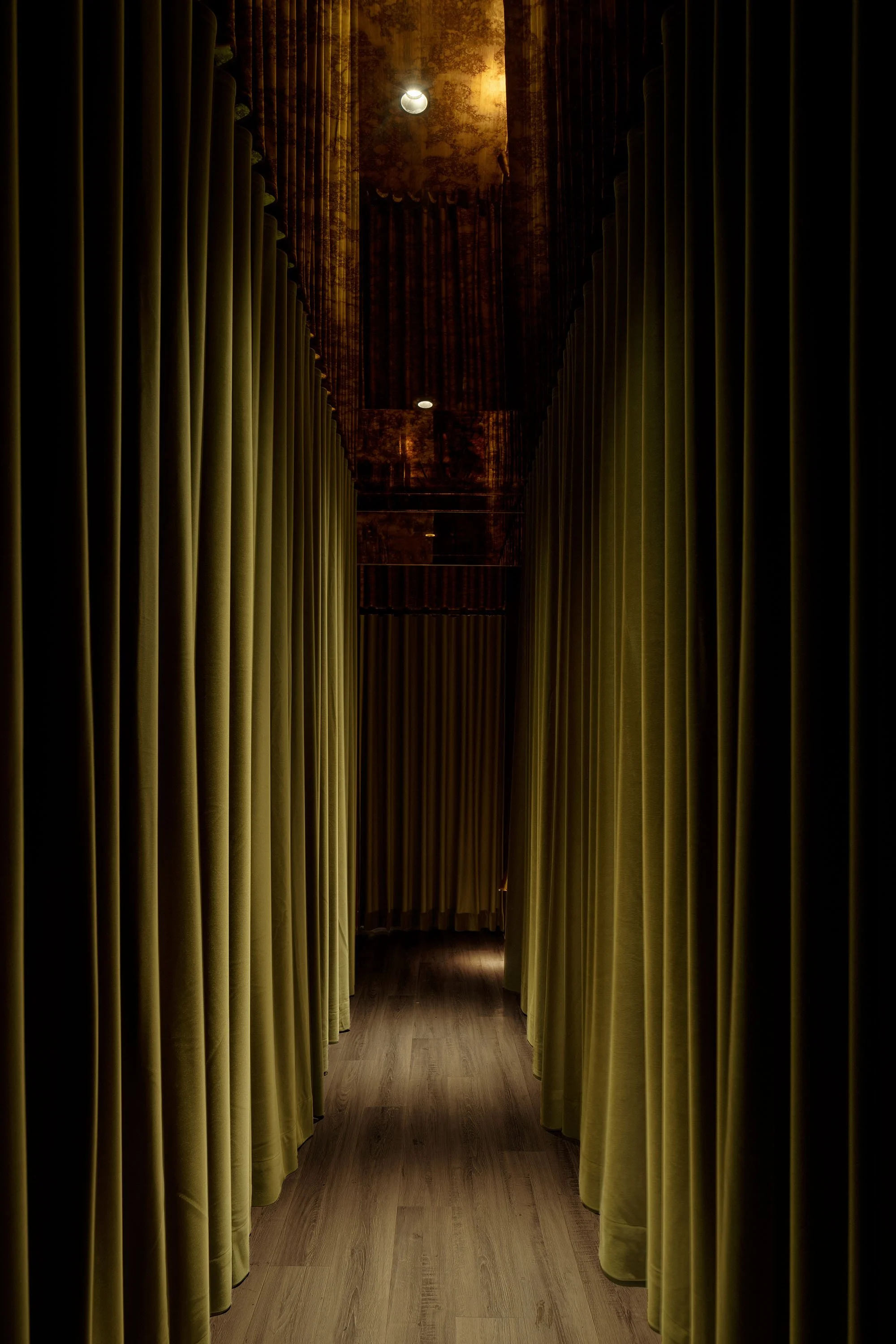
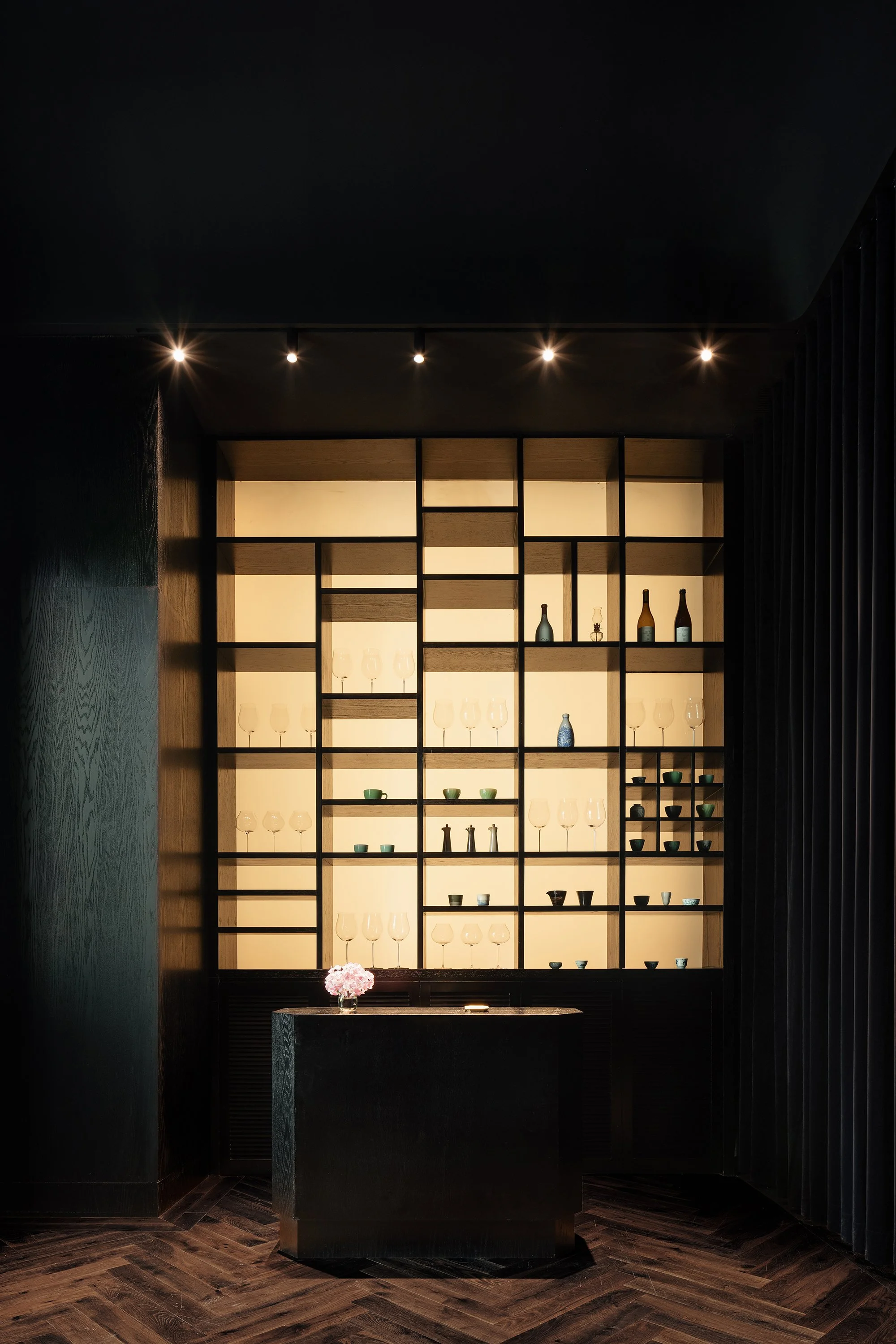
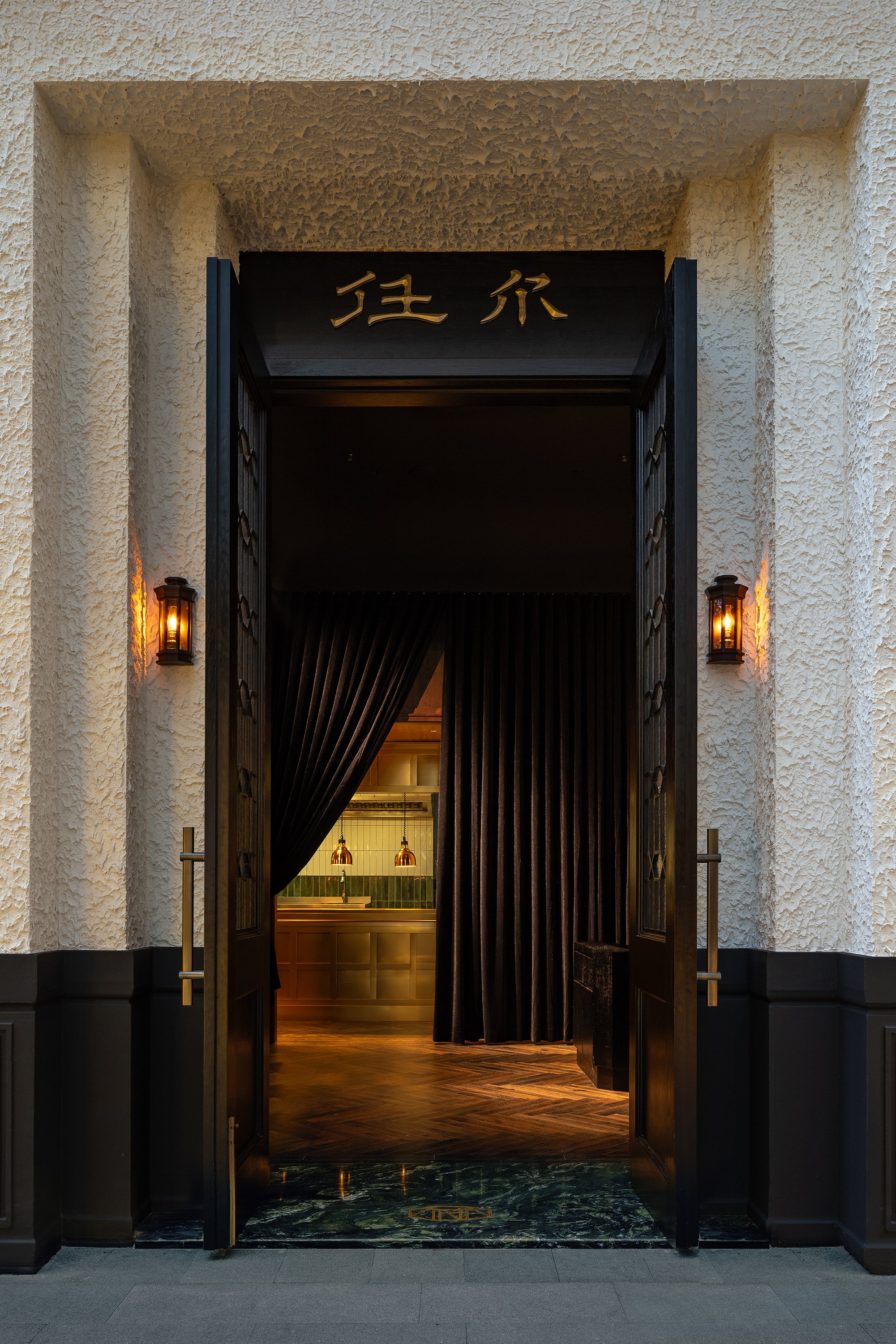
The guest experience is choreographed like a play. It begins in the foyer, which Wang describes as her favourite part of the design. This transitional space acts as a palate cleanser, allowing guests to shed the reality of the modern city outside and step into the narrative of the restaurant.
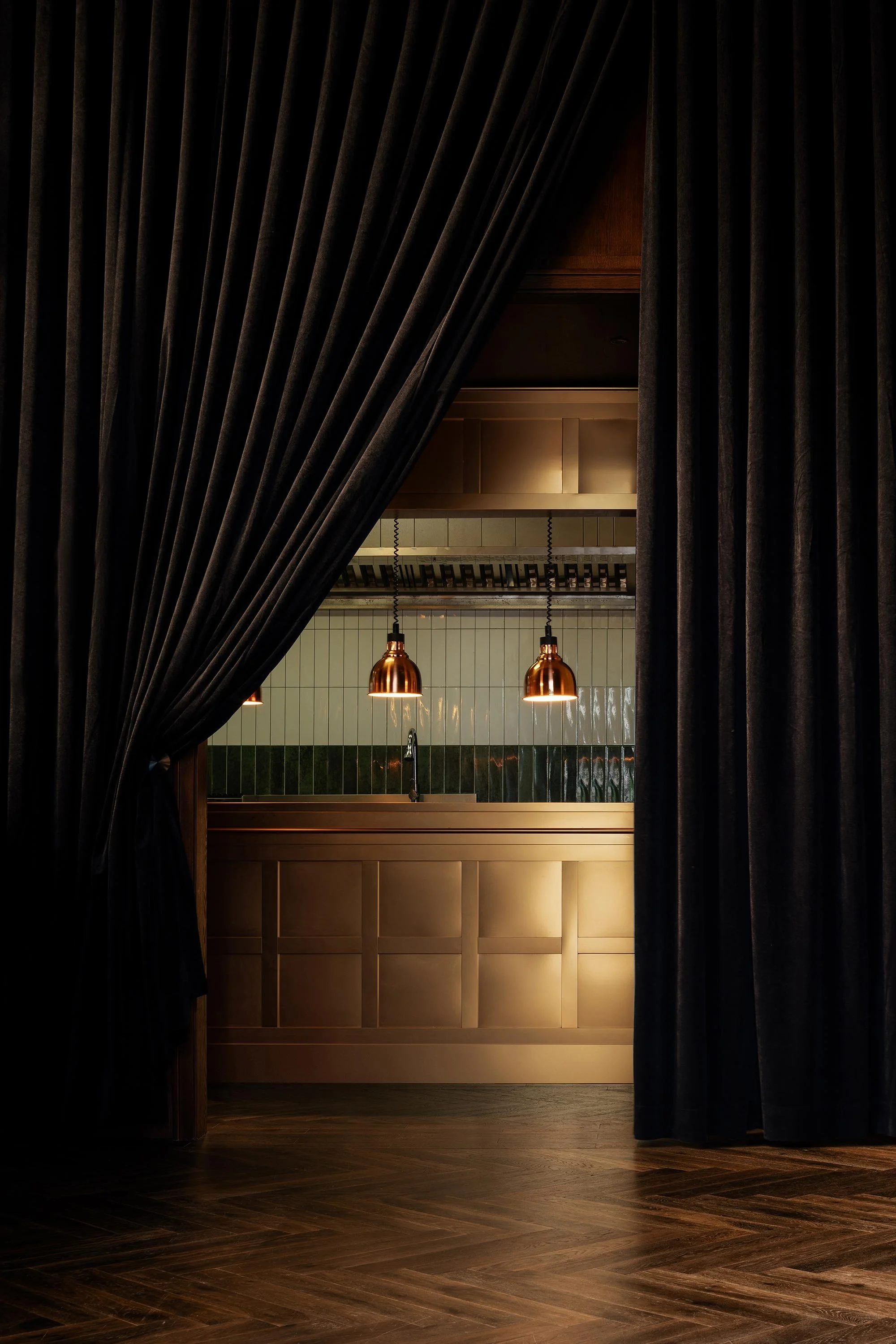
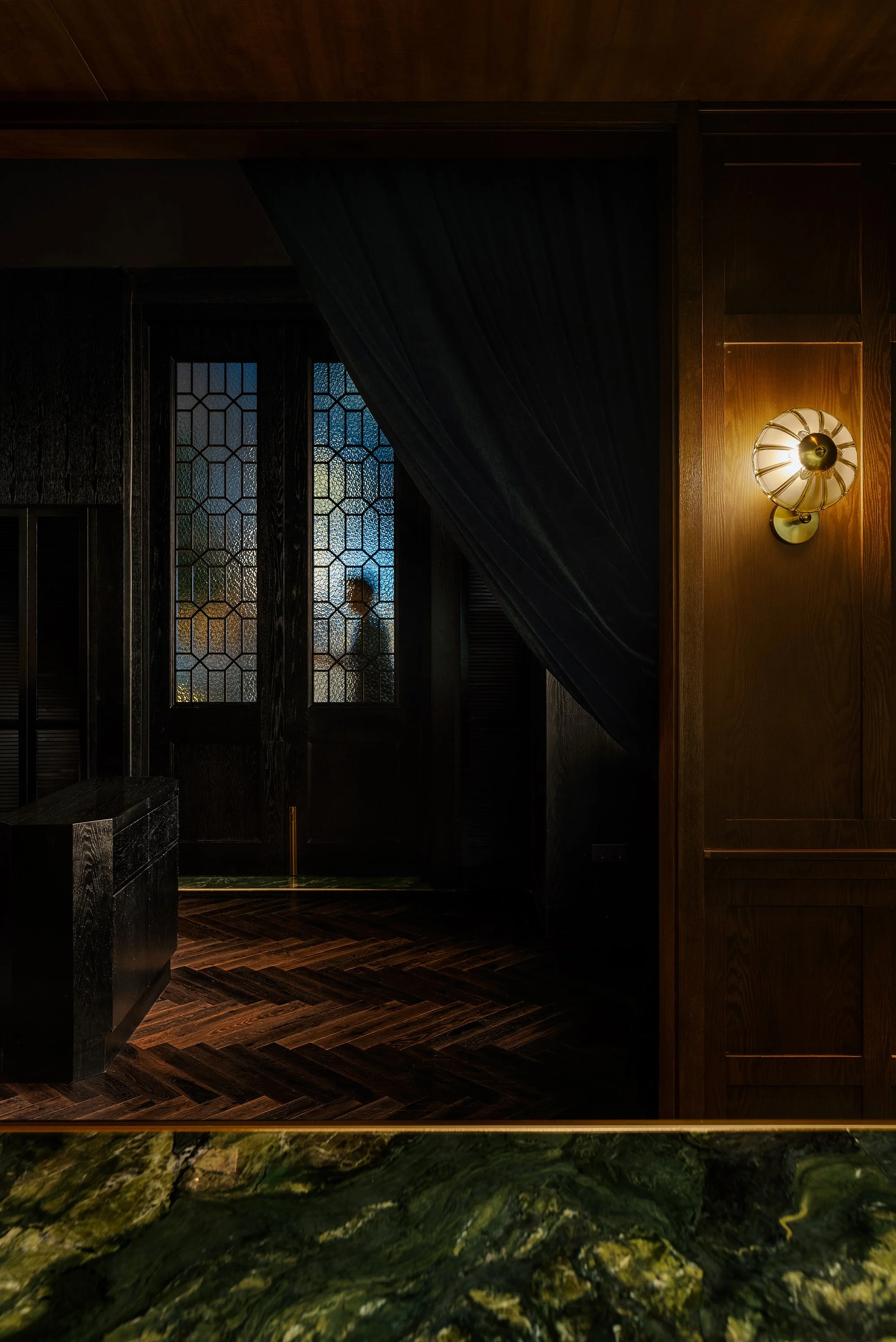
‘There’s this fabulous moment at the foyer where you can see a slit of the kitchen behind a heavy velvet curtain,’ Woo echoes. ‘I always loved that idea that you're entering a space that looks quite polished, soft and warm, but then you're seeing someone cooking in the back. I quite like those moments where the set is broken and it becomes a restaurant.’
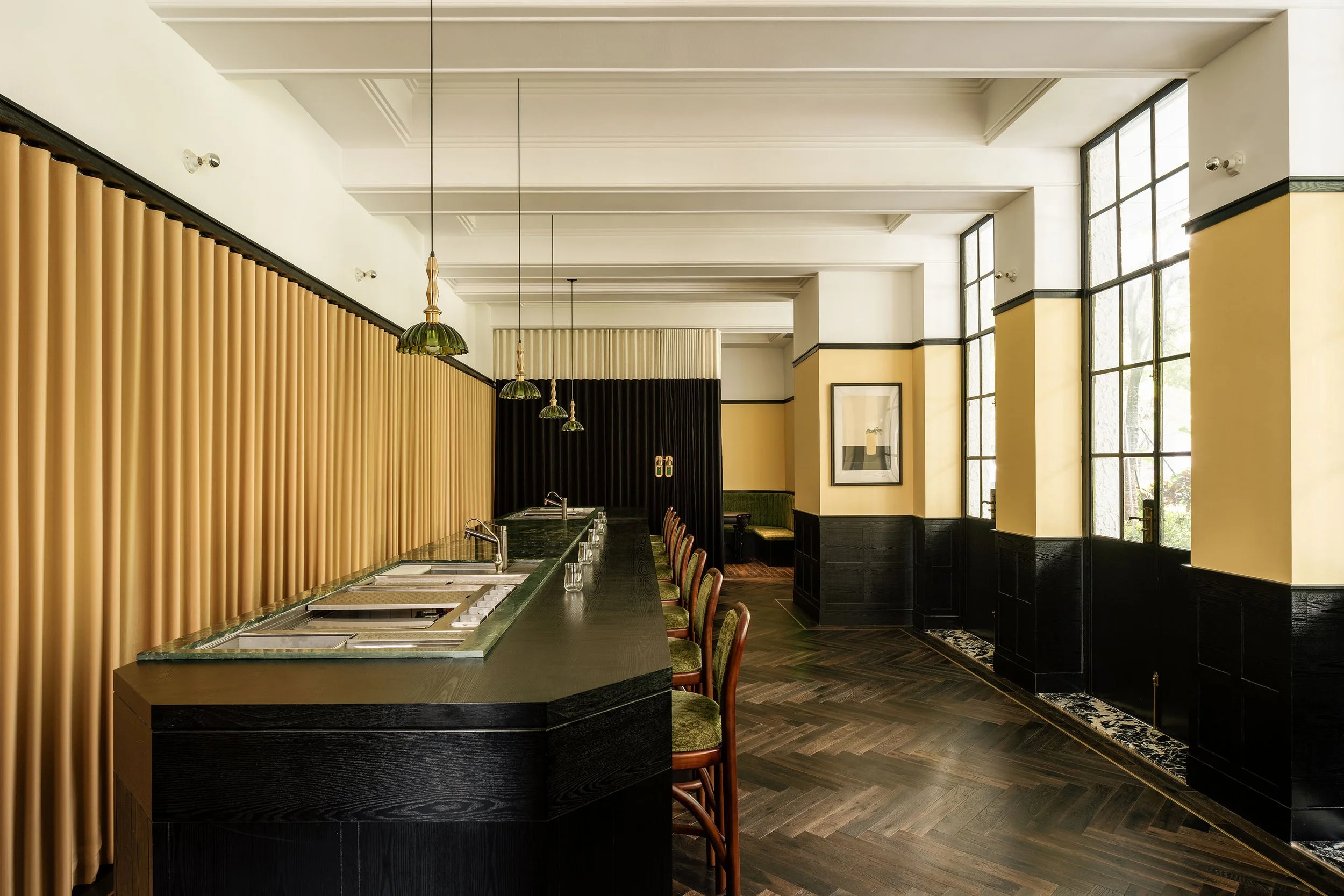
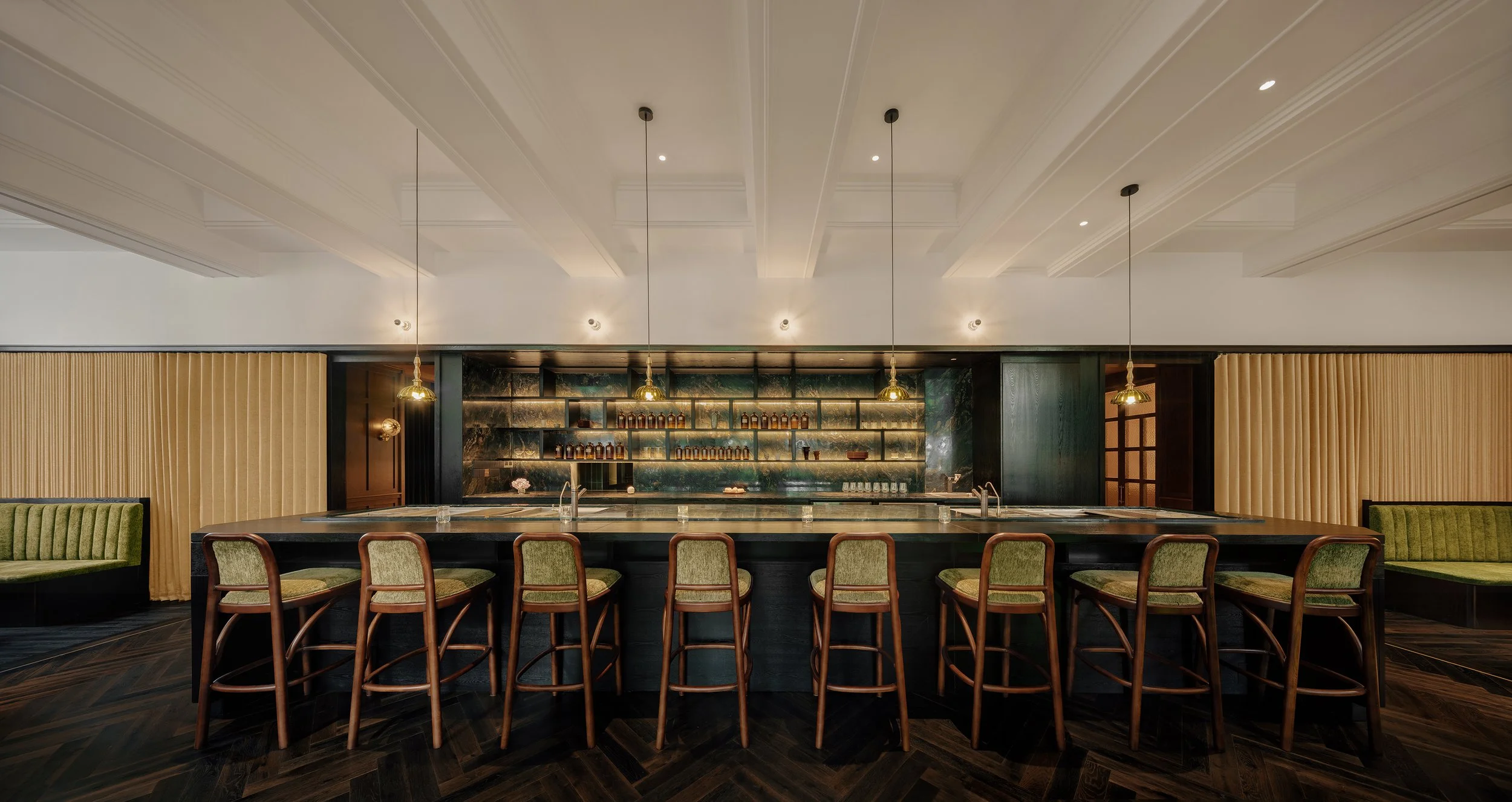
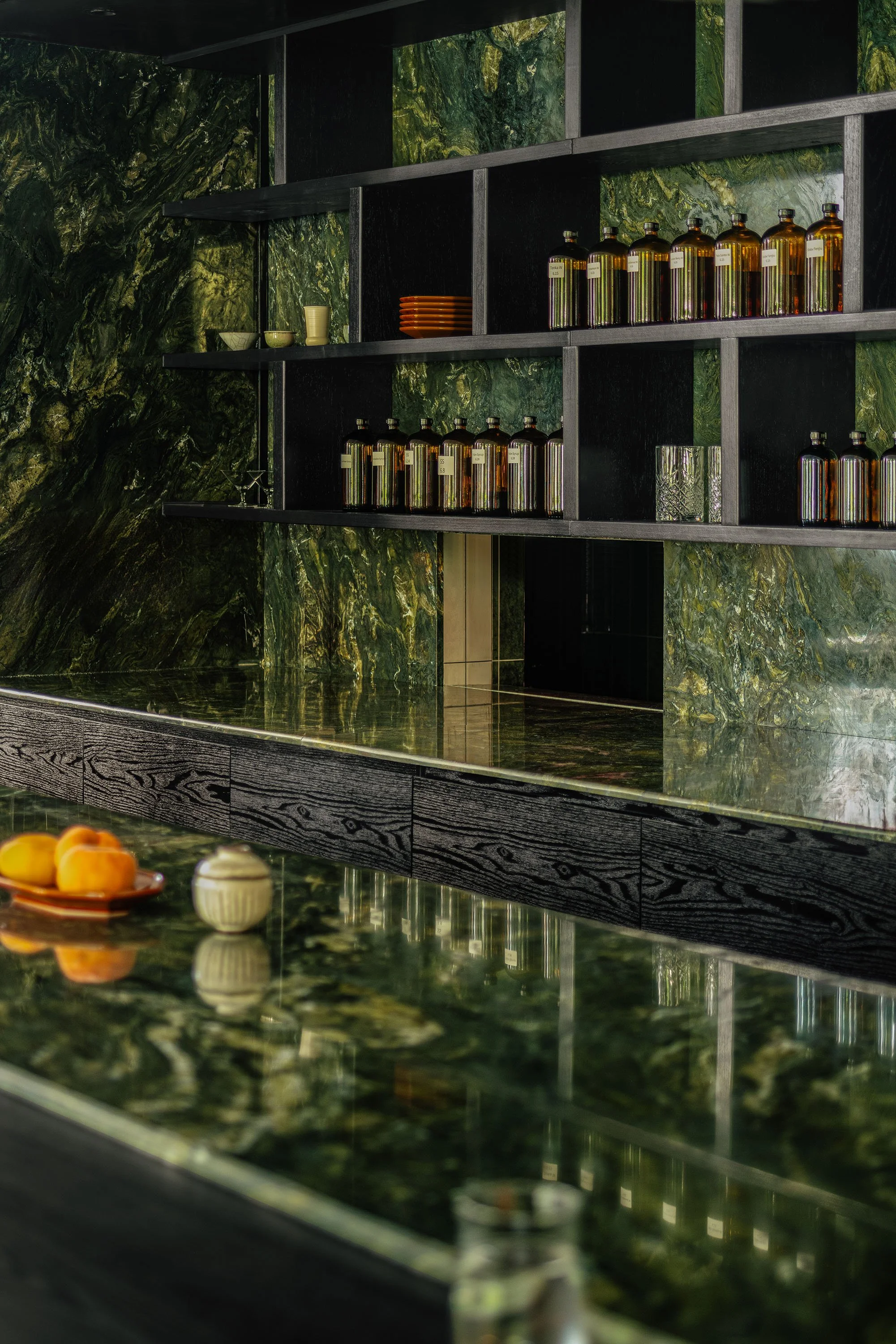
Similarly, a low-level slot at the bar allows patrons to glimpse the kitchen staff's hands at work, contrasting the polished, warm dining room with the raw reality of the service behind the scenes.
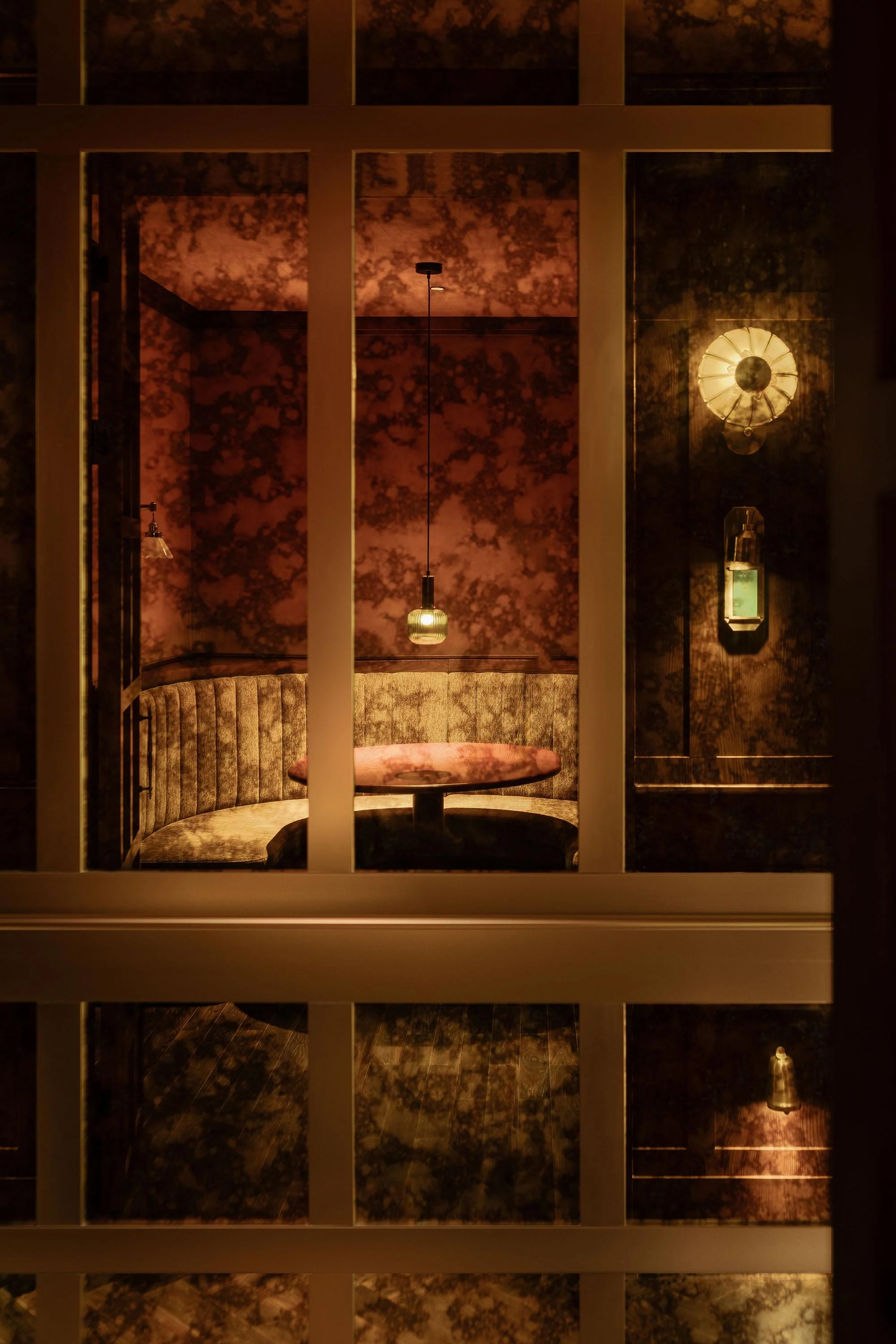
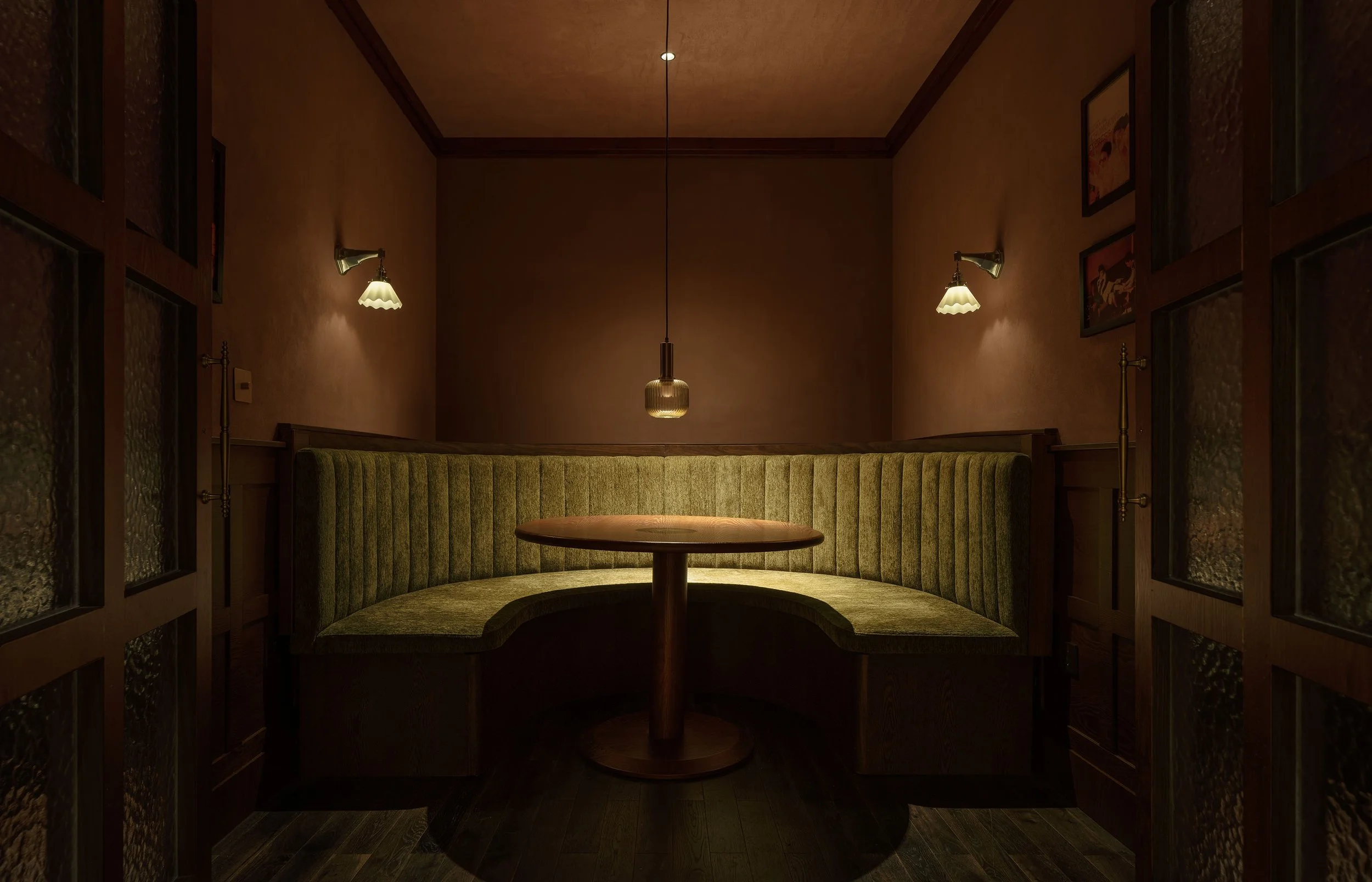
Inside, the design really plays with the tension between the visible and the invisible. The dining area features those same heavy velvet curtains, which allow guests to enclose their booths, offering privacy while cultivating a sense of mystery about who might be dining behind the fabric — a game of ‘to see and be seen’, says Woo. Wang notes that the designers used specific references, such as the colour palette from the Nanjing Presidential Palace, to ground the space in its intended era.
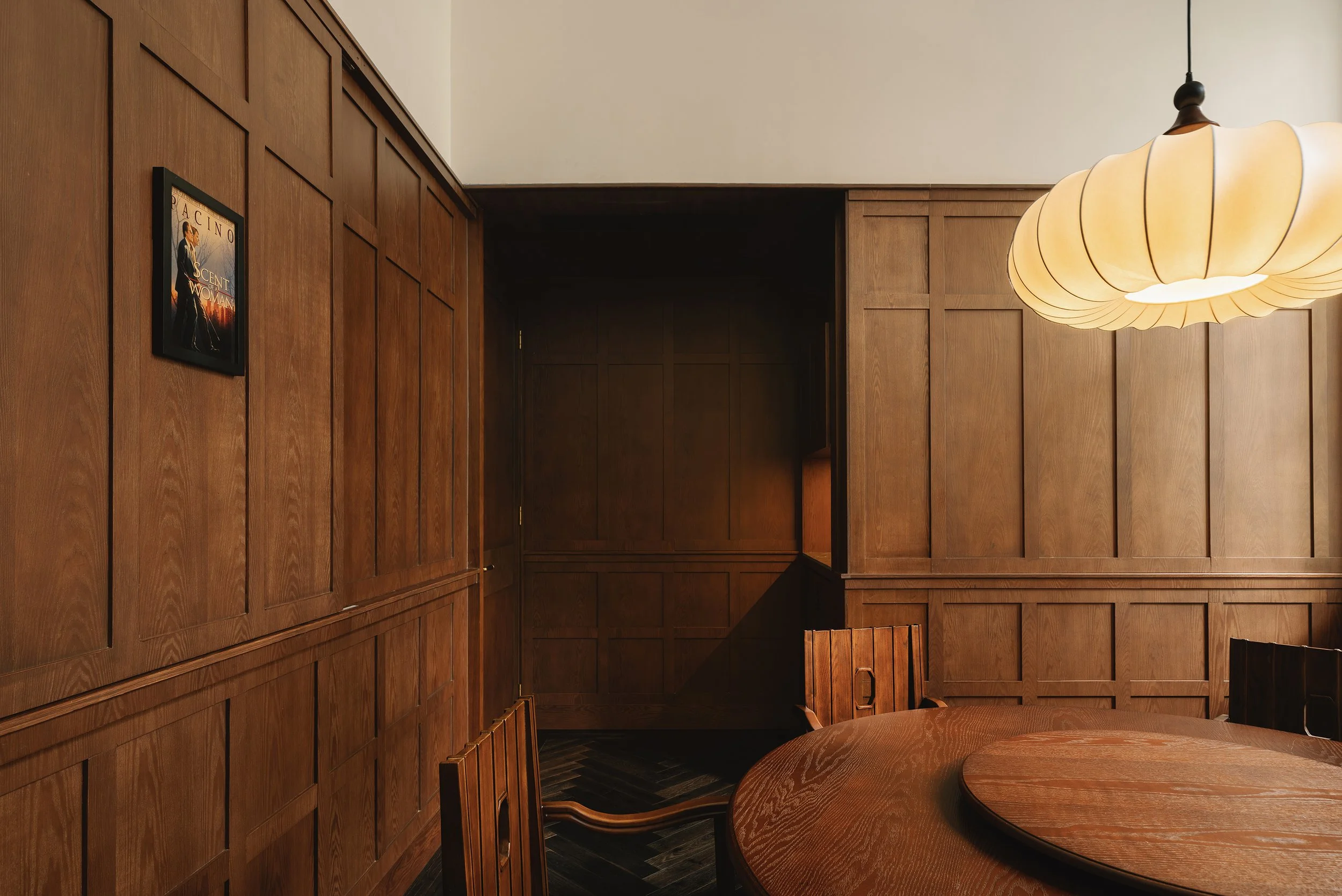
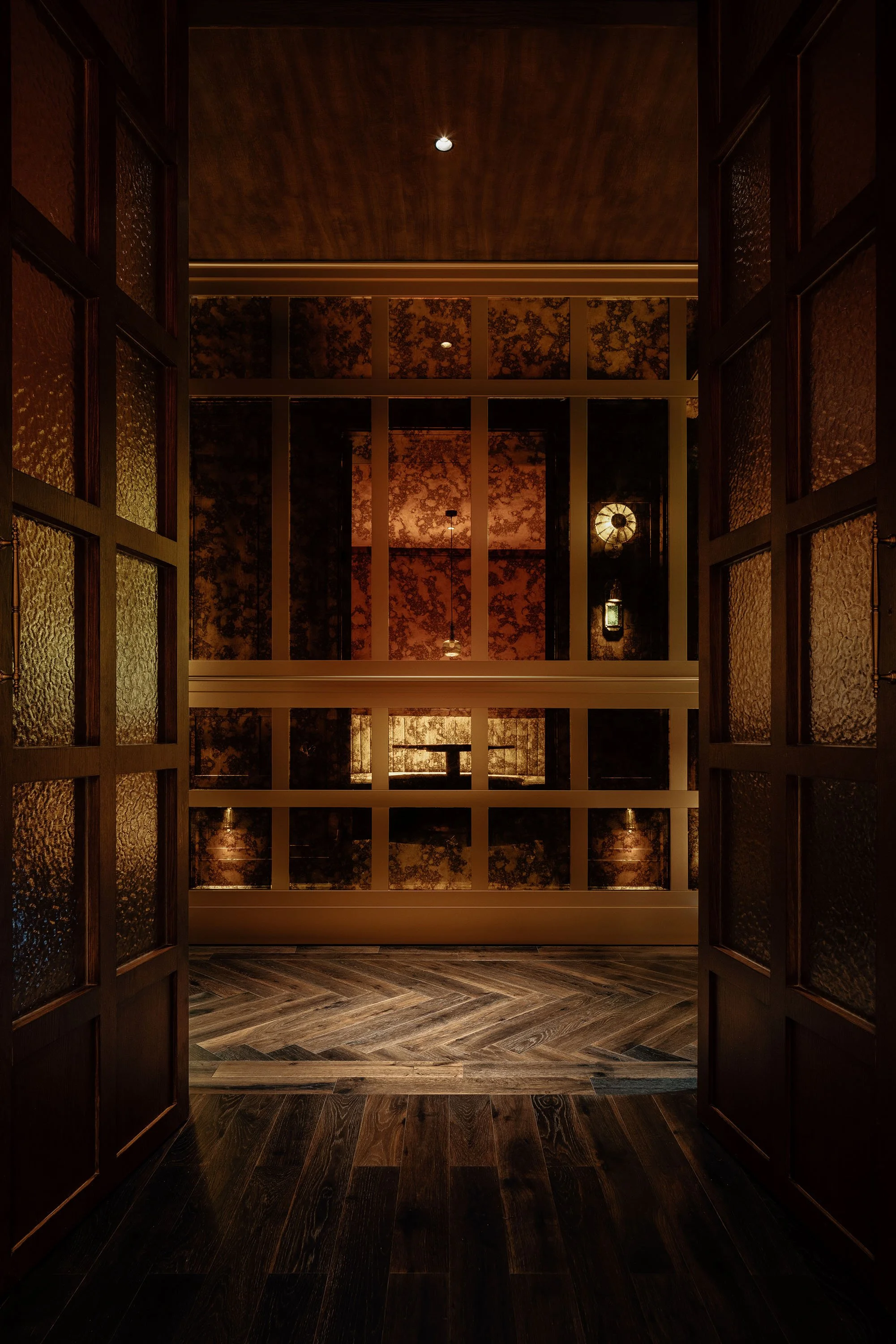
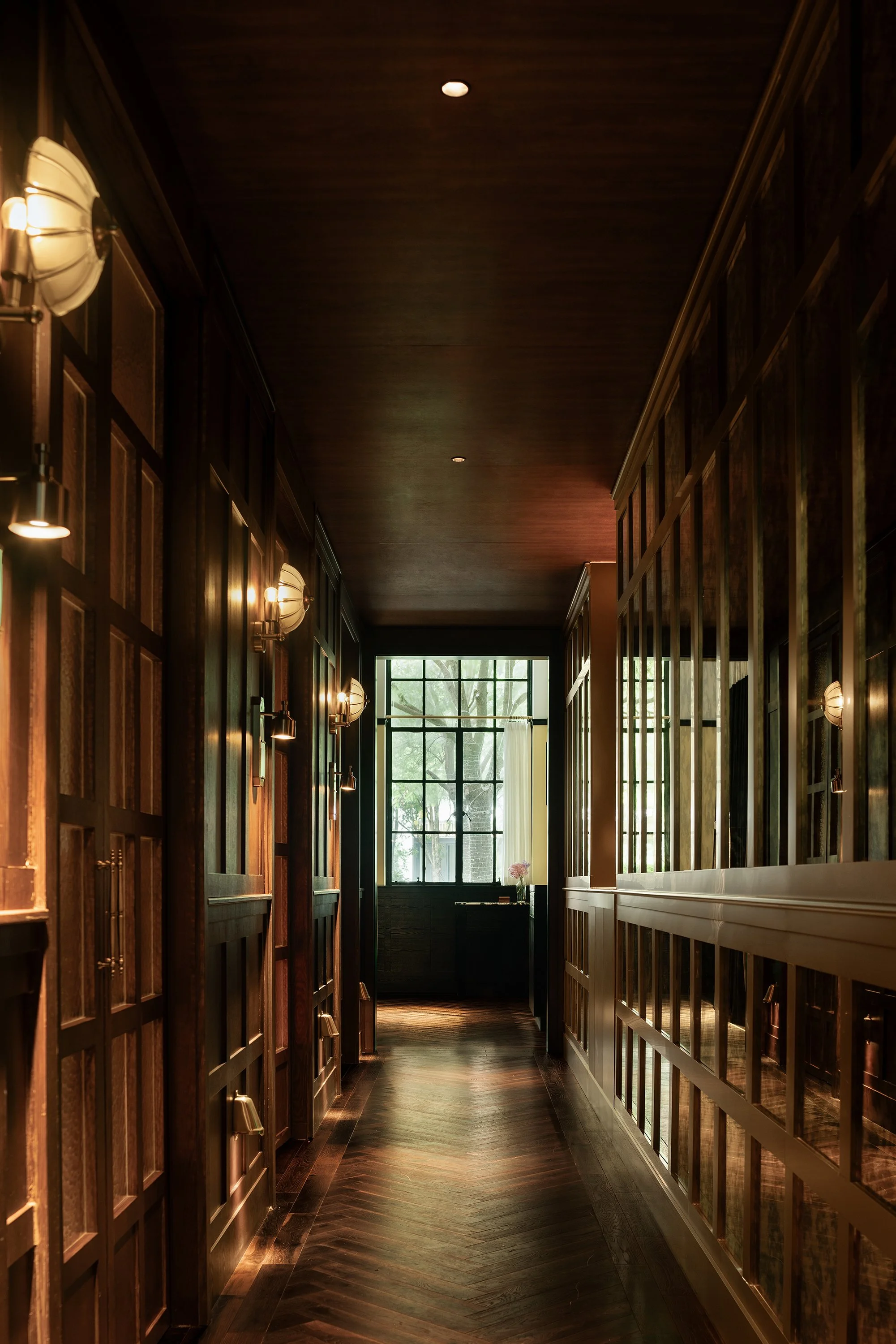
However, the design also intentionally breaks the fourth wall. In one corridor, warm wood panelling gives way to metallic, reflective surfaces. This mirror effect forces diners to confront their own reflections, momentarily snapping them out of the immersive character of the restaurant. ‘One of the key ideas was that each patron, each diner, would create their own narrative or story based on however the space feels to them,’ says Woo.
The execution of these details relied heavily on local craft. Wang and her team scoured local waste-yards and workshops, sourcing materials like green marble and timber. This proximity allowed the team to custom design nearly every element, from the furniture to the lighting, achieving a level of bespoke detail that Woo notes would be economically impossible in many parts of the world.
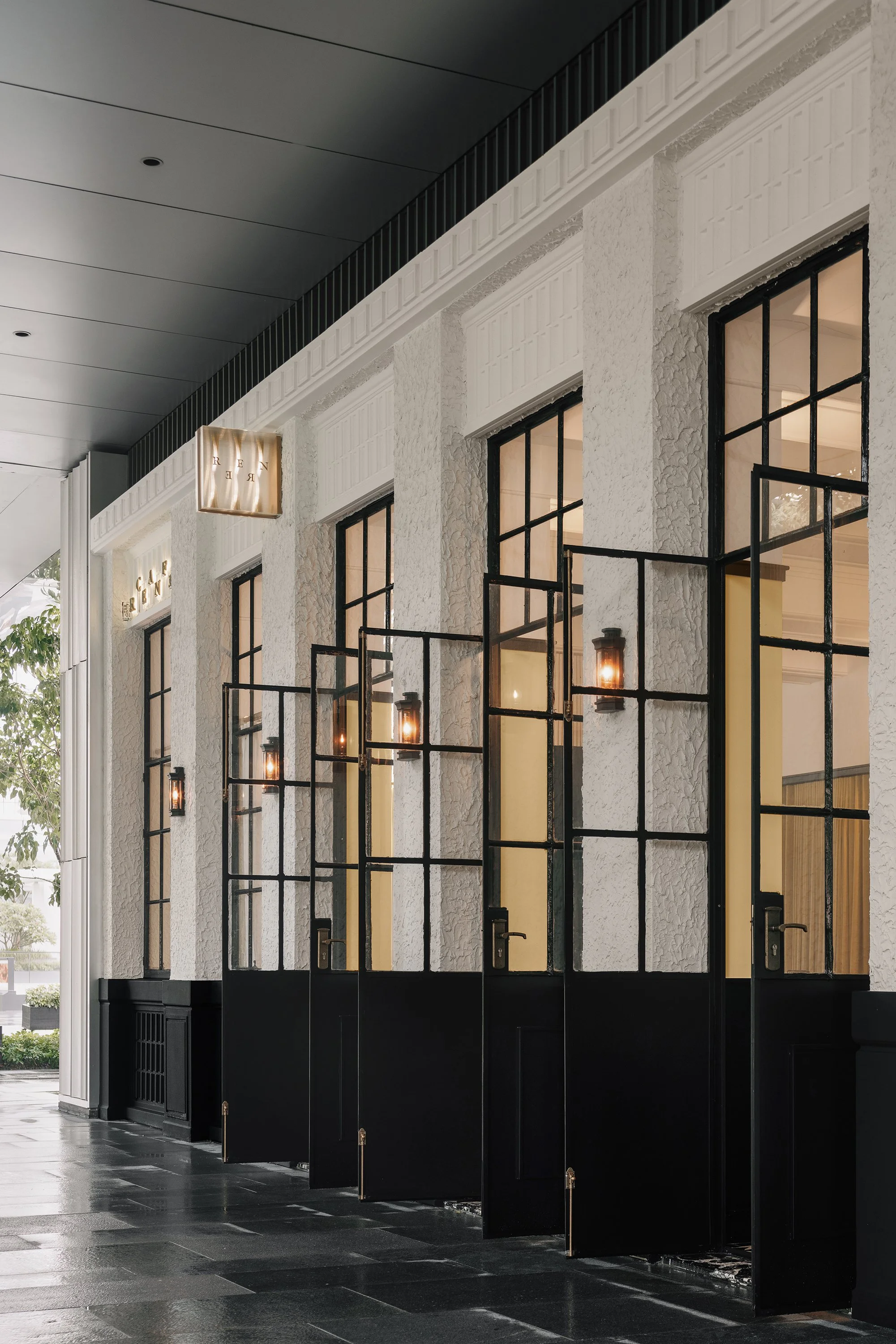
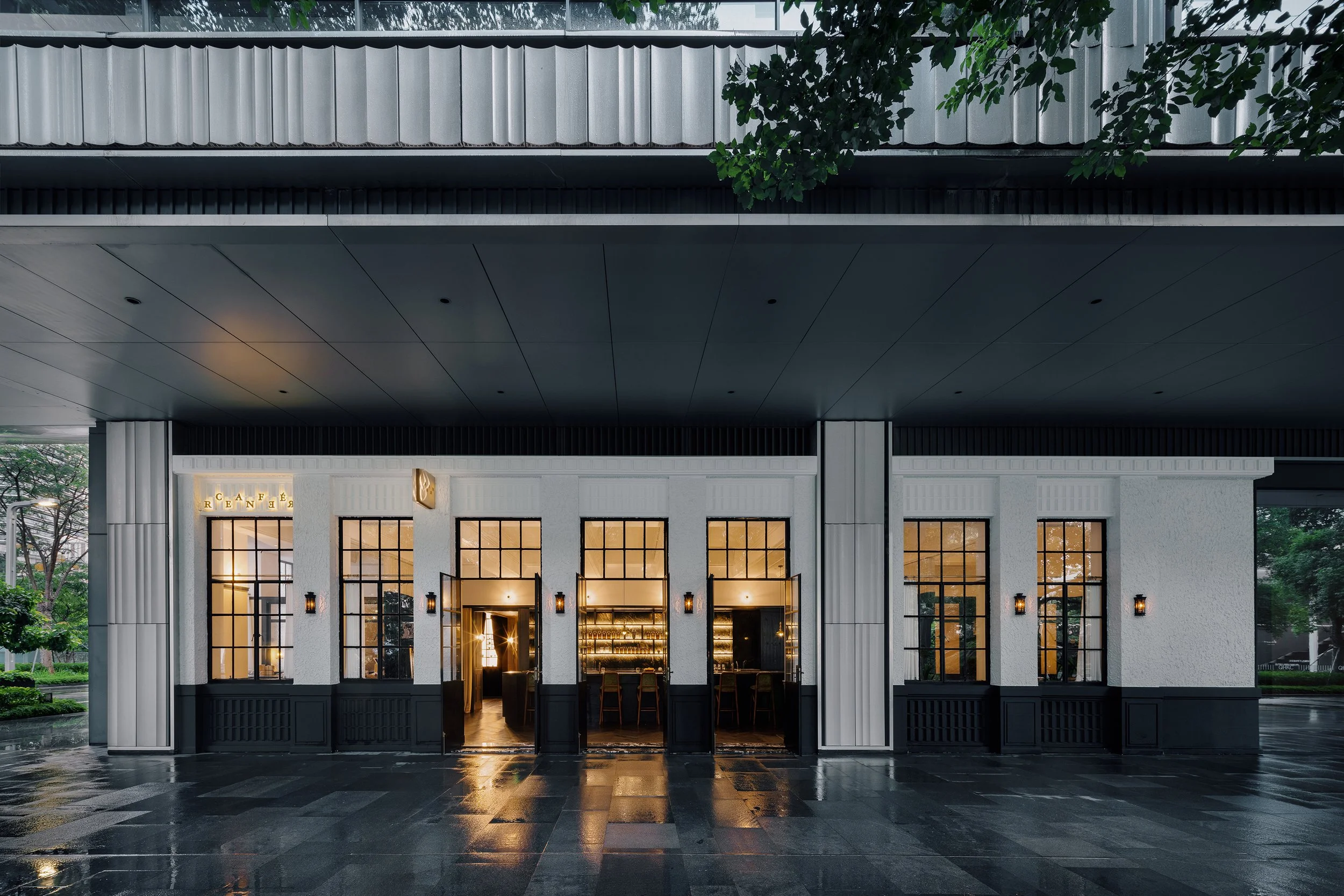
While Rener functions as a theatrical escape, it remains connected to its surroundings. Large doors in the main bar area open fully to the street, allowing what Woo terms the interior’s ‘esoteric condition’ to spill out into the neighbourhood. It is a project of contrasts — familiar yet strange — where memory serves as the primary building material.
Text by Katherine Ring
Images by Xian Studio