In Bali, This Architect Measures Building Height by Coconut Trees
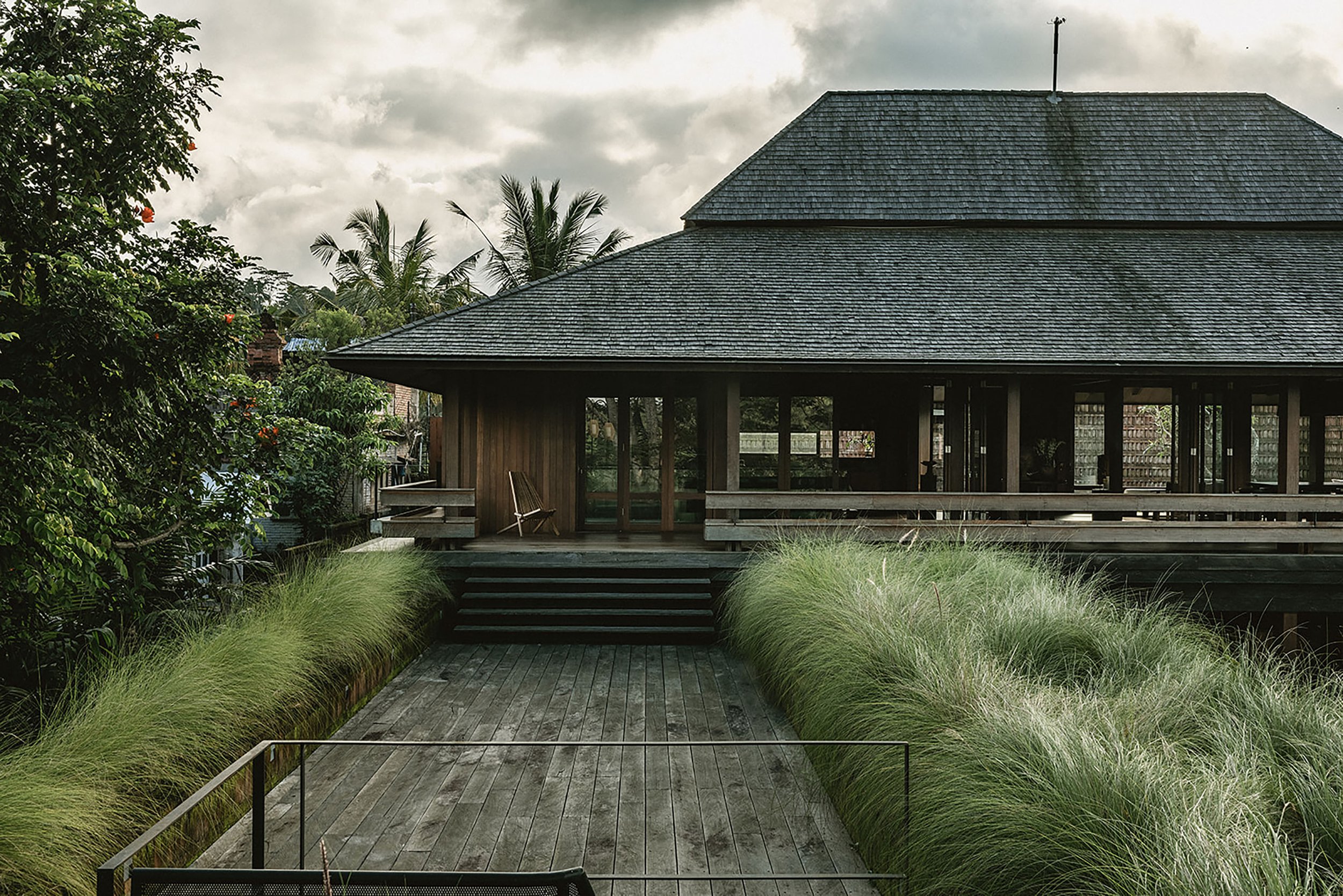
Architect Livina Cali crafts her holiday home with local materials, reworking the traditional wantilan
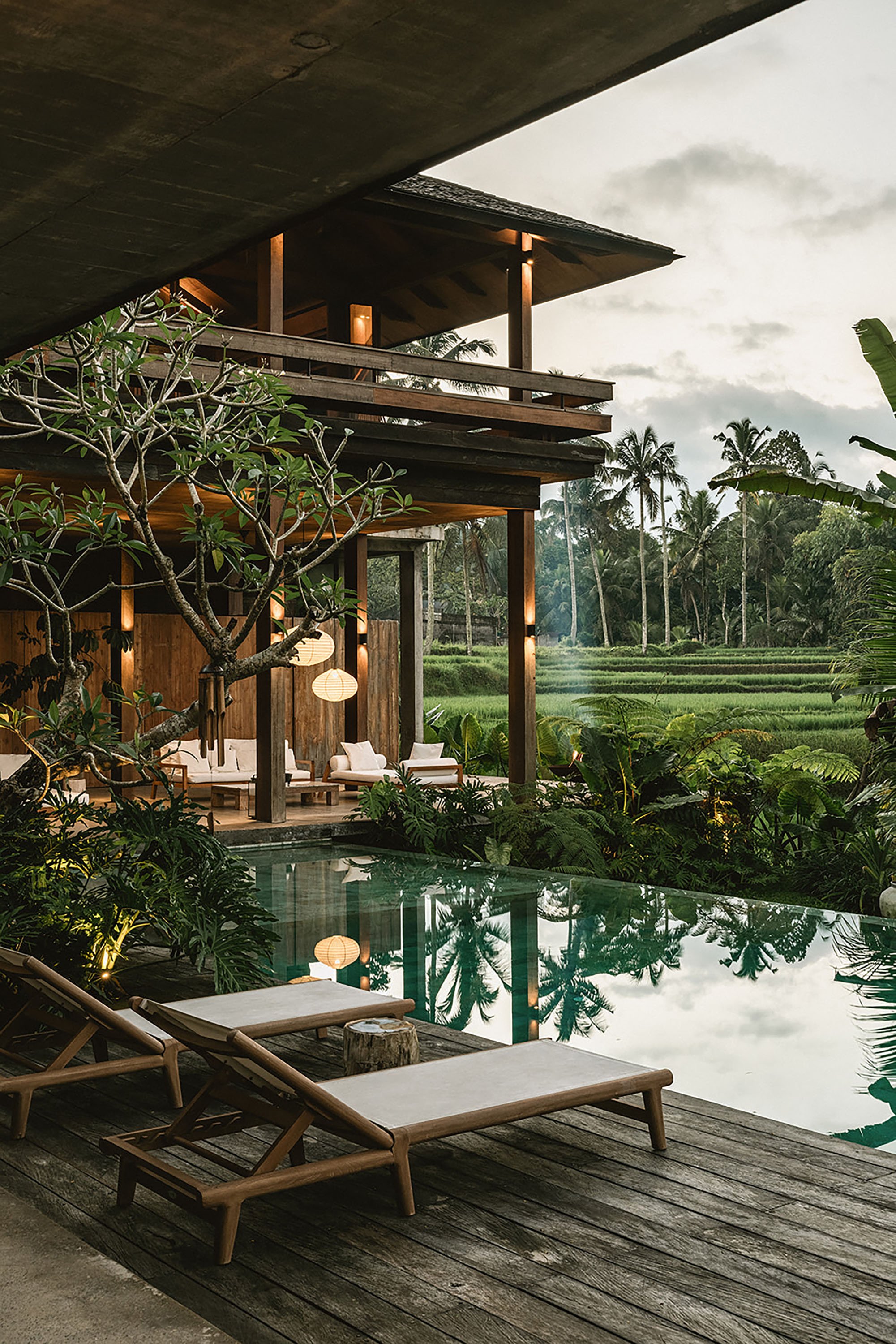
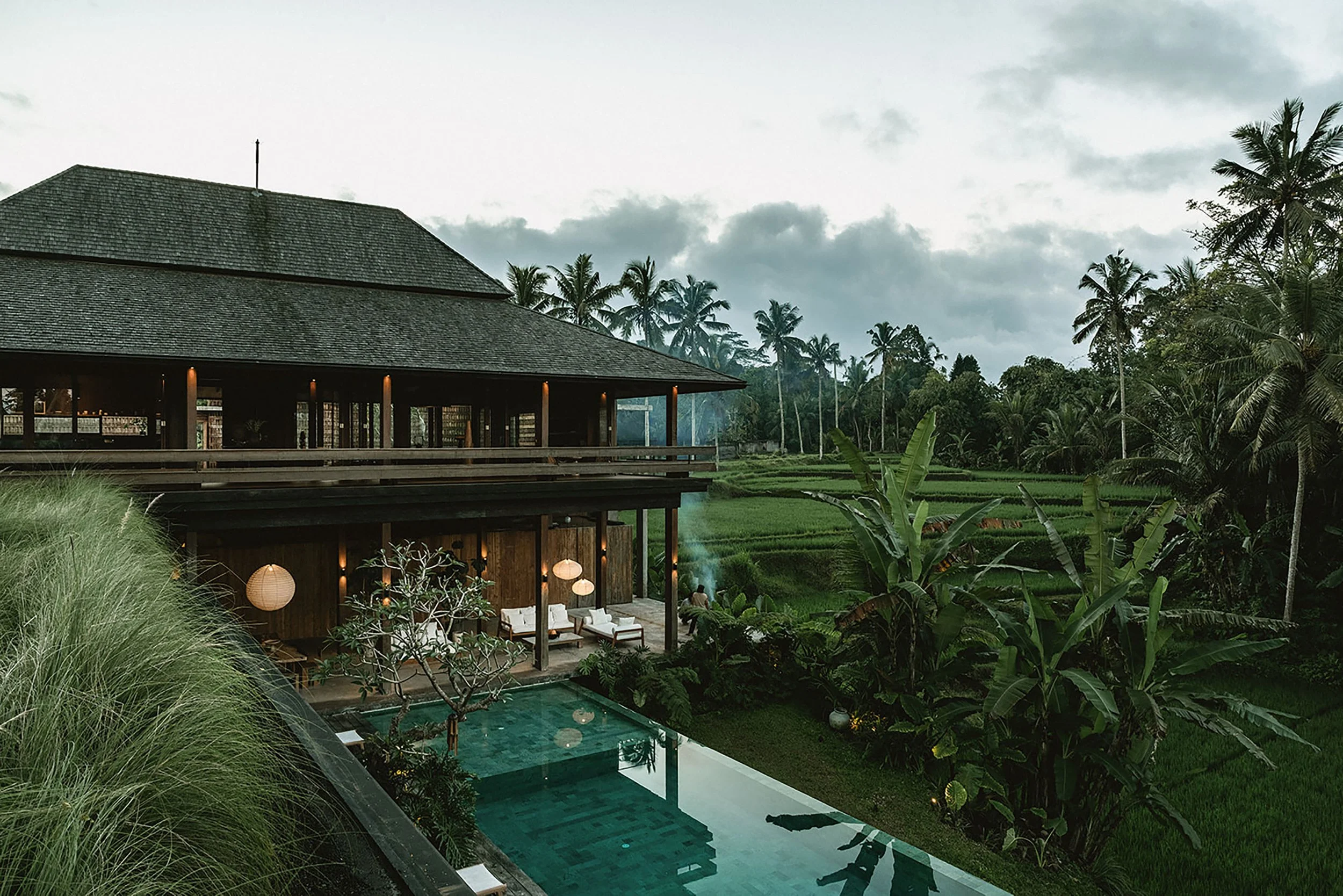
In Bali, the horizon belongs to the palms. ‘Houses should not be taller than a coconut tree,’ says architect Livina Cali. This philosophy guided the design of her holiday home in Tampaksiring — a region of the Indonesian island known for its ancient, sacred springs.
Cali and her husband Andre have been based in Singapore for 17 years, where Cali’s architectural sensibility was shaped by time spent at several reputed architecture studios such as Ernesto Bedmar Architects and Formwerkz Architects. ‘Living in Singapore where everything is fast-paced and urban, we longed for space and stillness. Returning to my homeland to create our own piece of heaven felt right,’ she says.
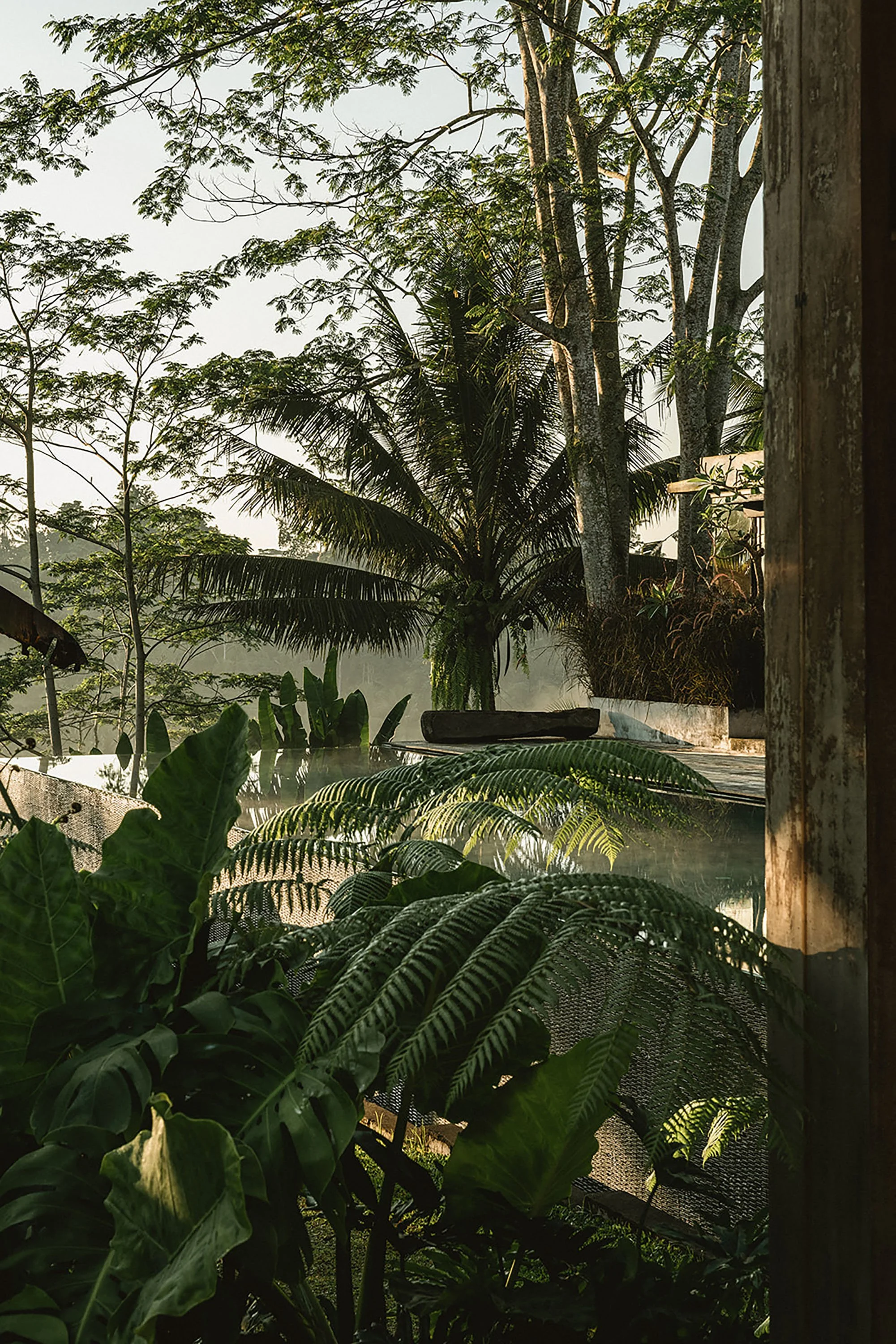
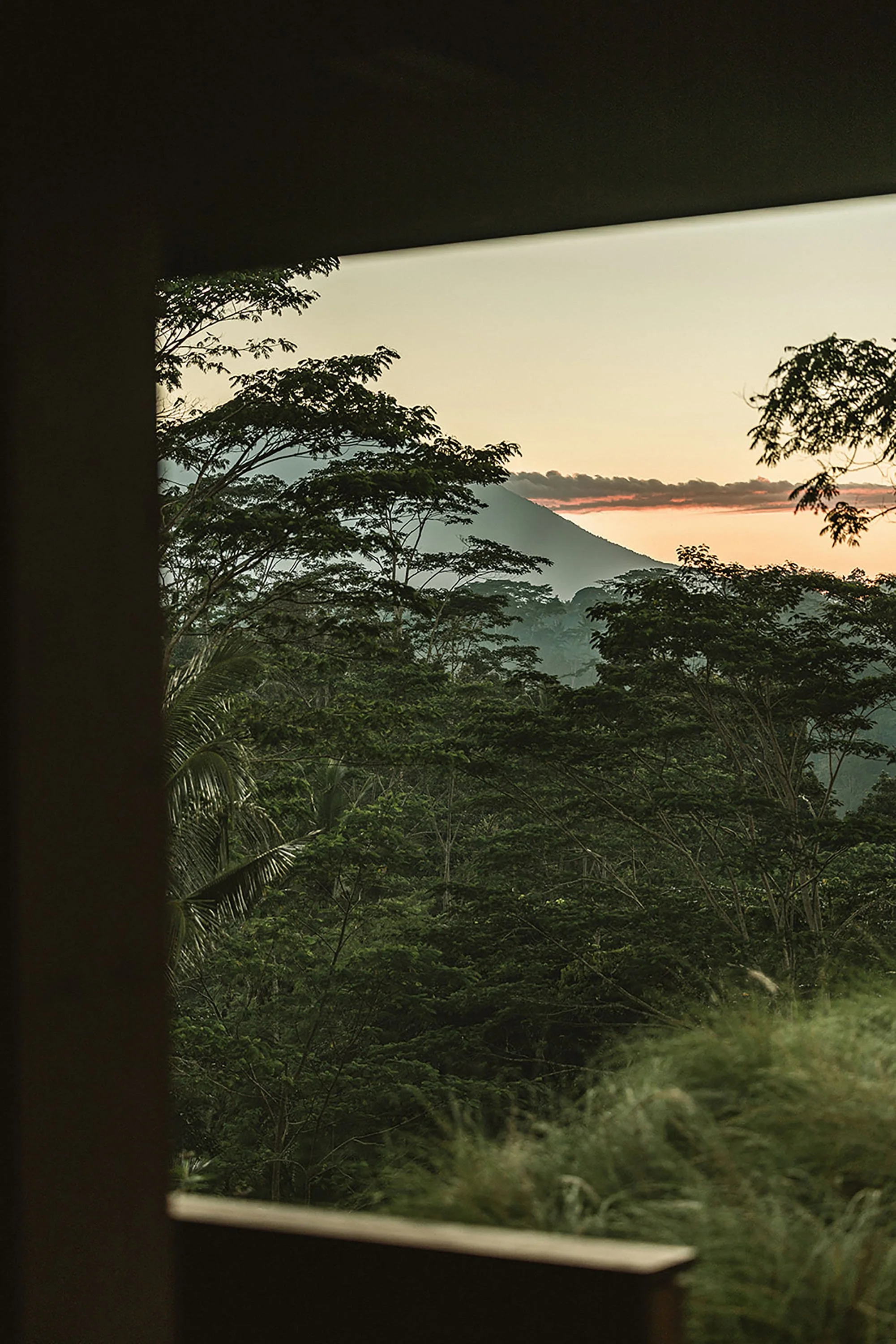
The site is located within the UNESCO-designated cultural landscape of subak — Bali’s traditional irrigation systems. The official plaque was actually discovered across from the house, inspiring its name: Rumah Subak (rumah meaning house in Indonesian). Nature abounds, with rice fields to the north and west, and a forest ravine at the rear. ‘We were drawn to the vastness of the landscape, far from the busiest part of town,’ says Cali.
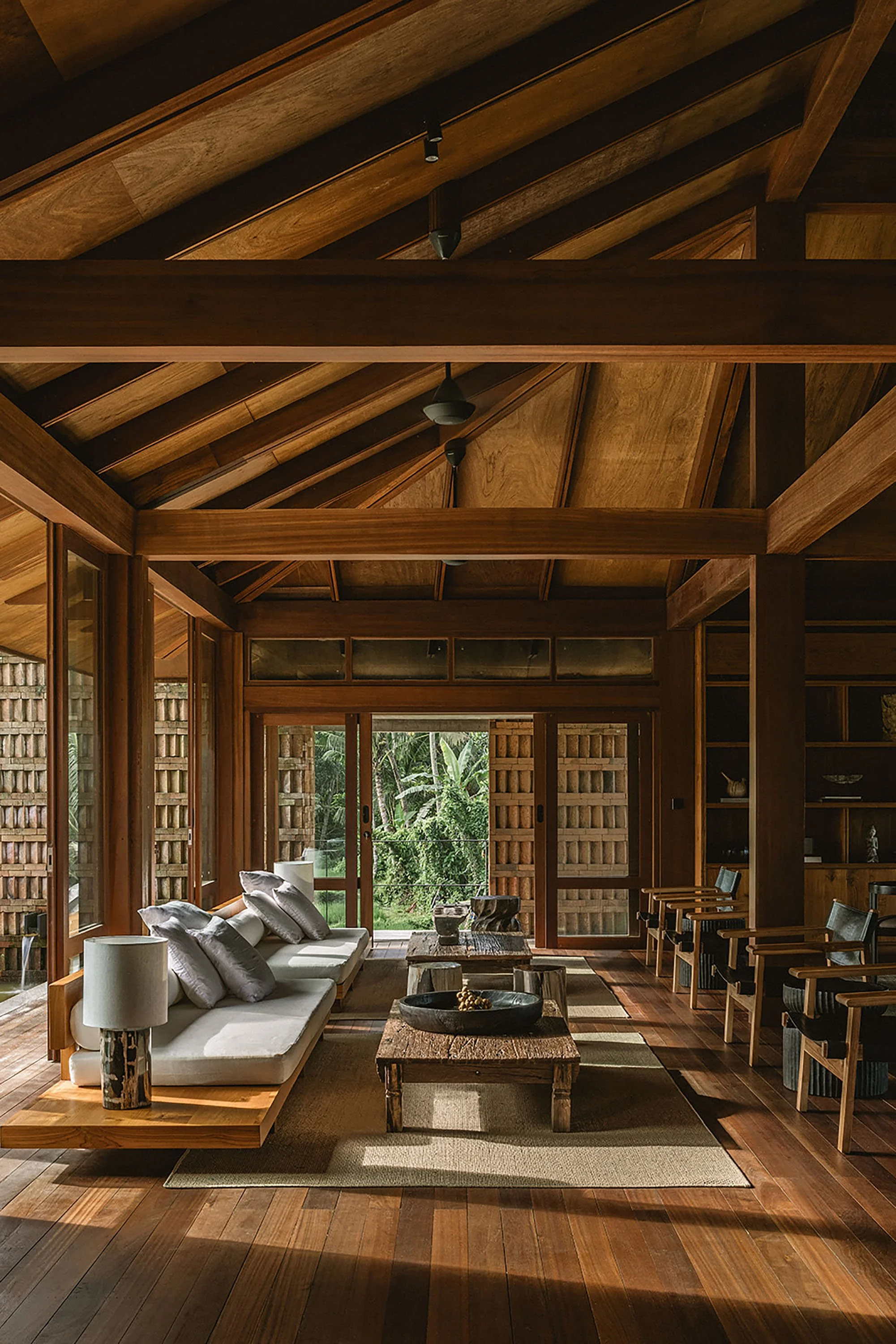
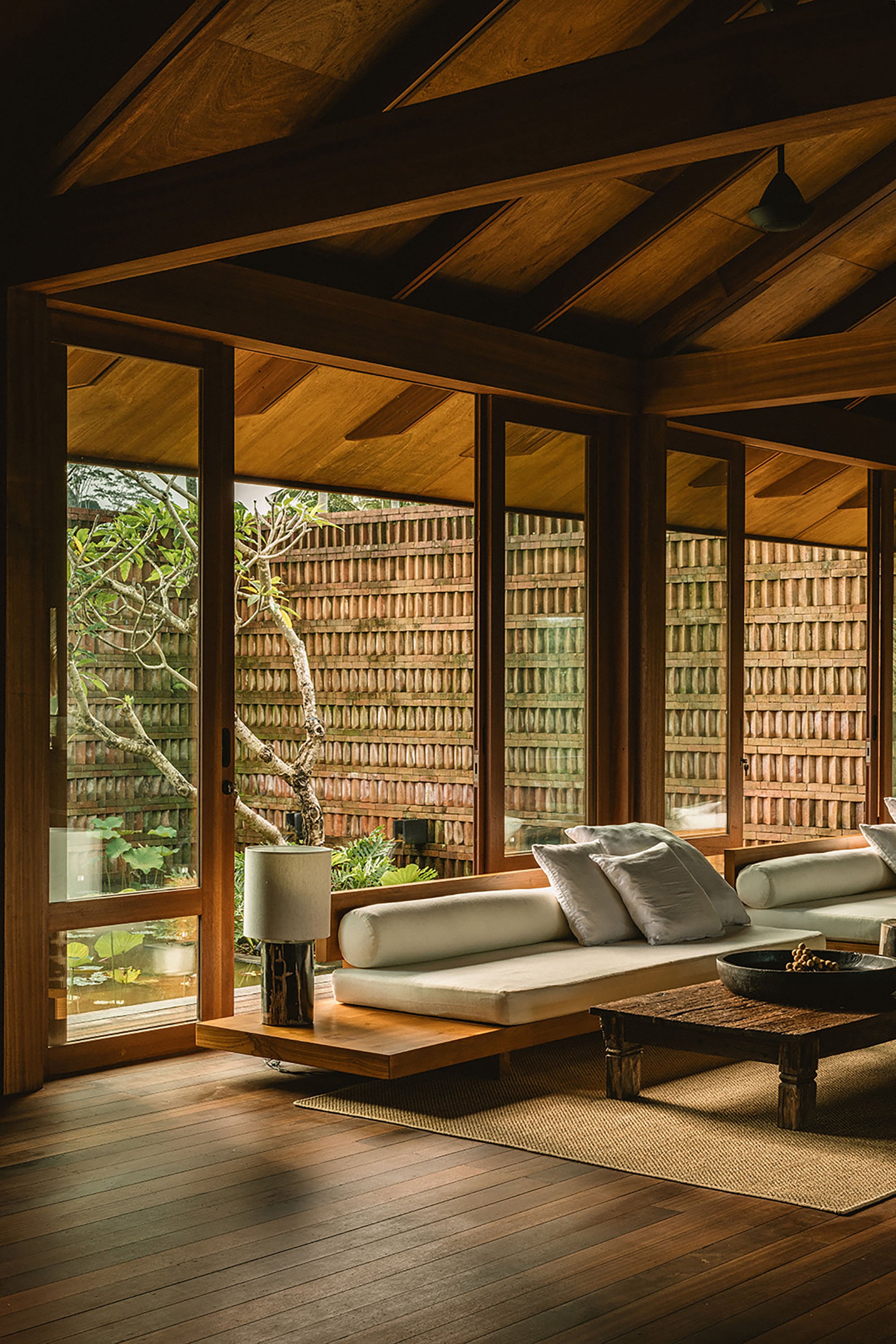
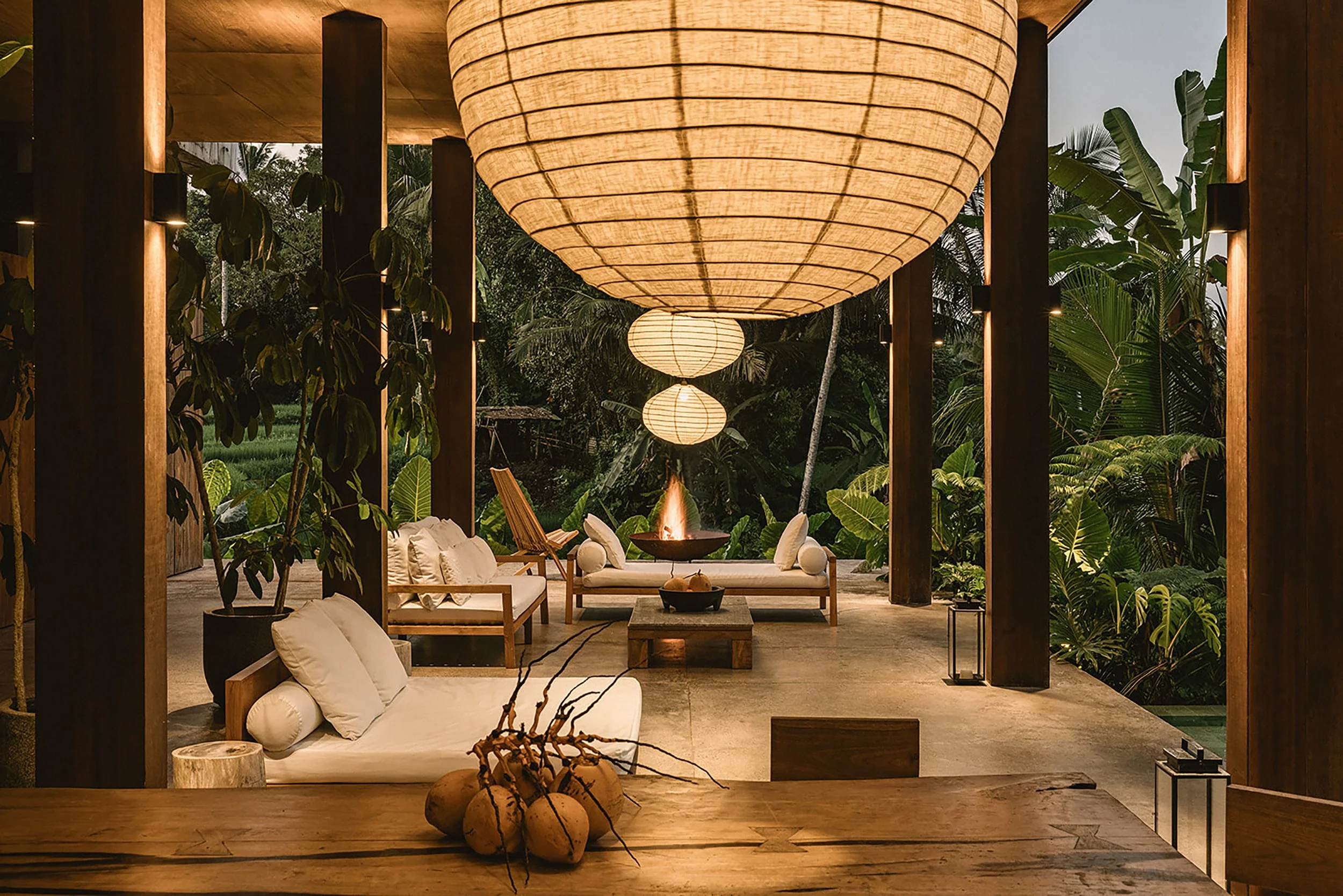
The architect wanted to create ‘a home that belongs to Bali, both culturally and climatically, yet offering comfort and ease; a place for family to gather, rest and reconnect with nature.’ The wantilan provided the perfect precedent — a traditional Balinese hut, historically used for communal gatherings. While Cali’s version swaps the rustic feel for more minimalist lines, both are open, support cross-ventilation and blend in with the surrounding environment.
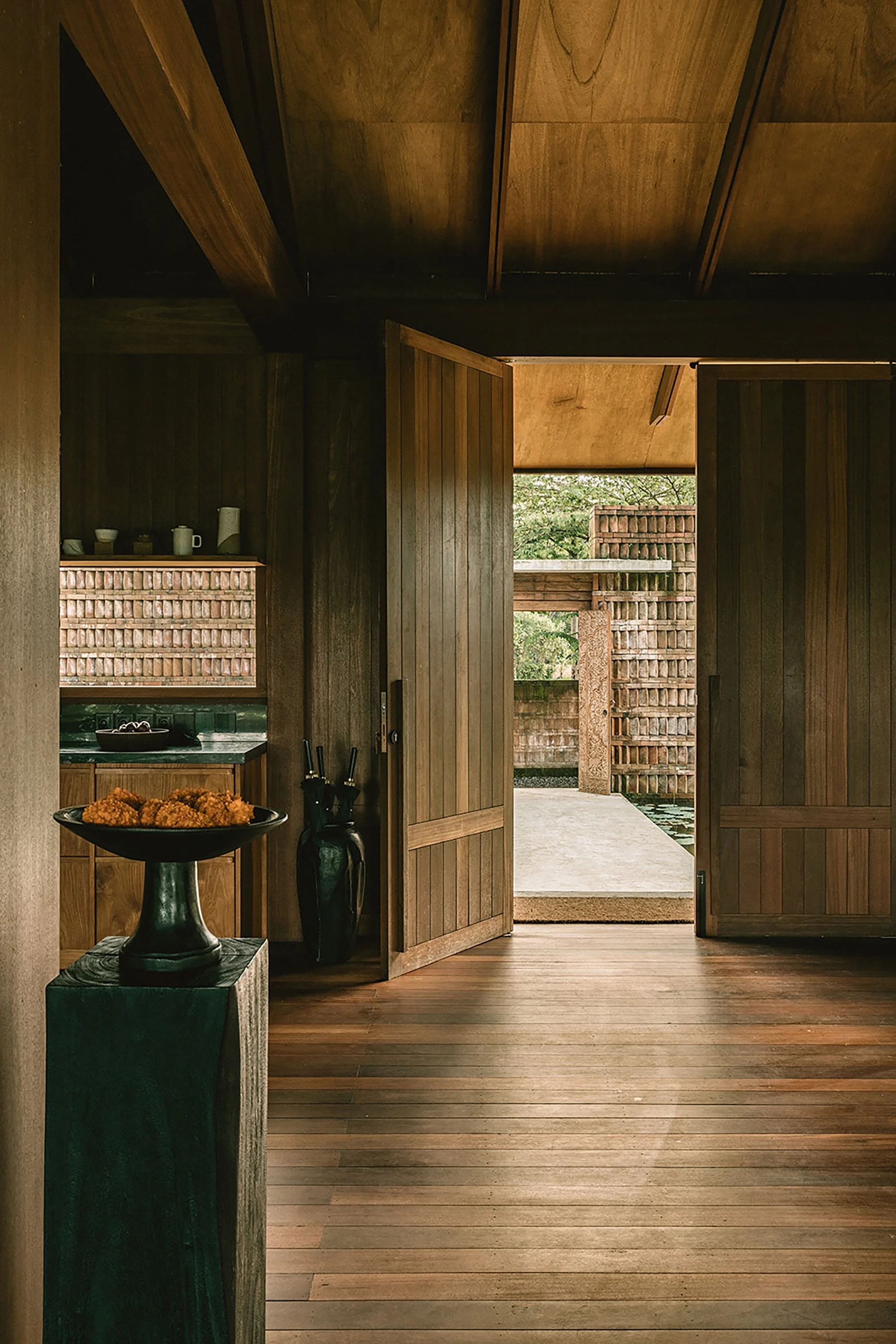
A sense of ritual starts at the threshold between terracotta brick walls. Passing through, one discovers a water court that instantly calms. ‘We considered procession and spatial transition, from the walled compound to the gradual unfolding of spaces within,’ says Cali.
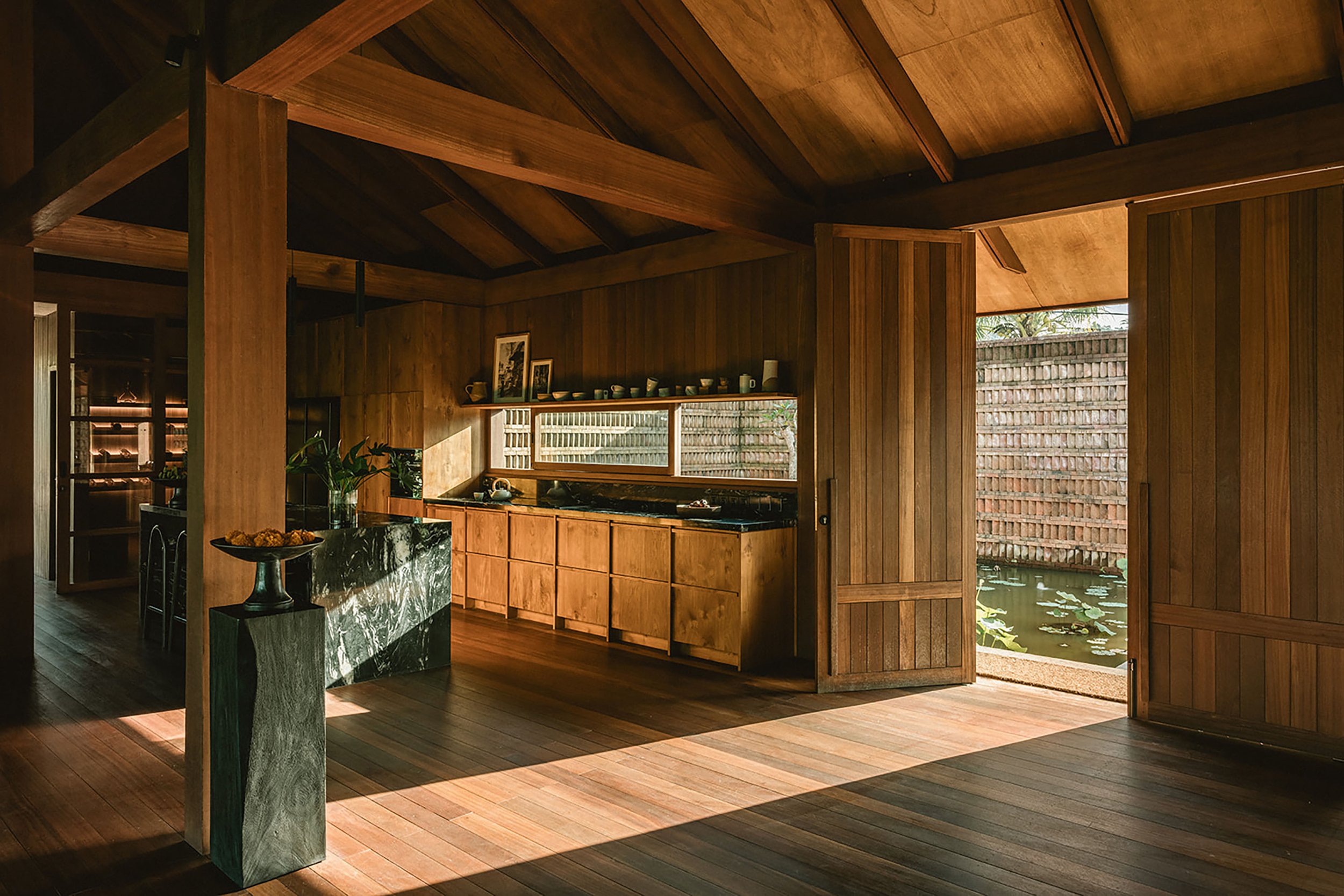
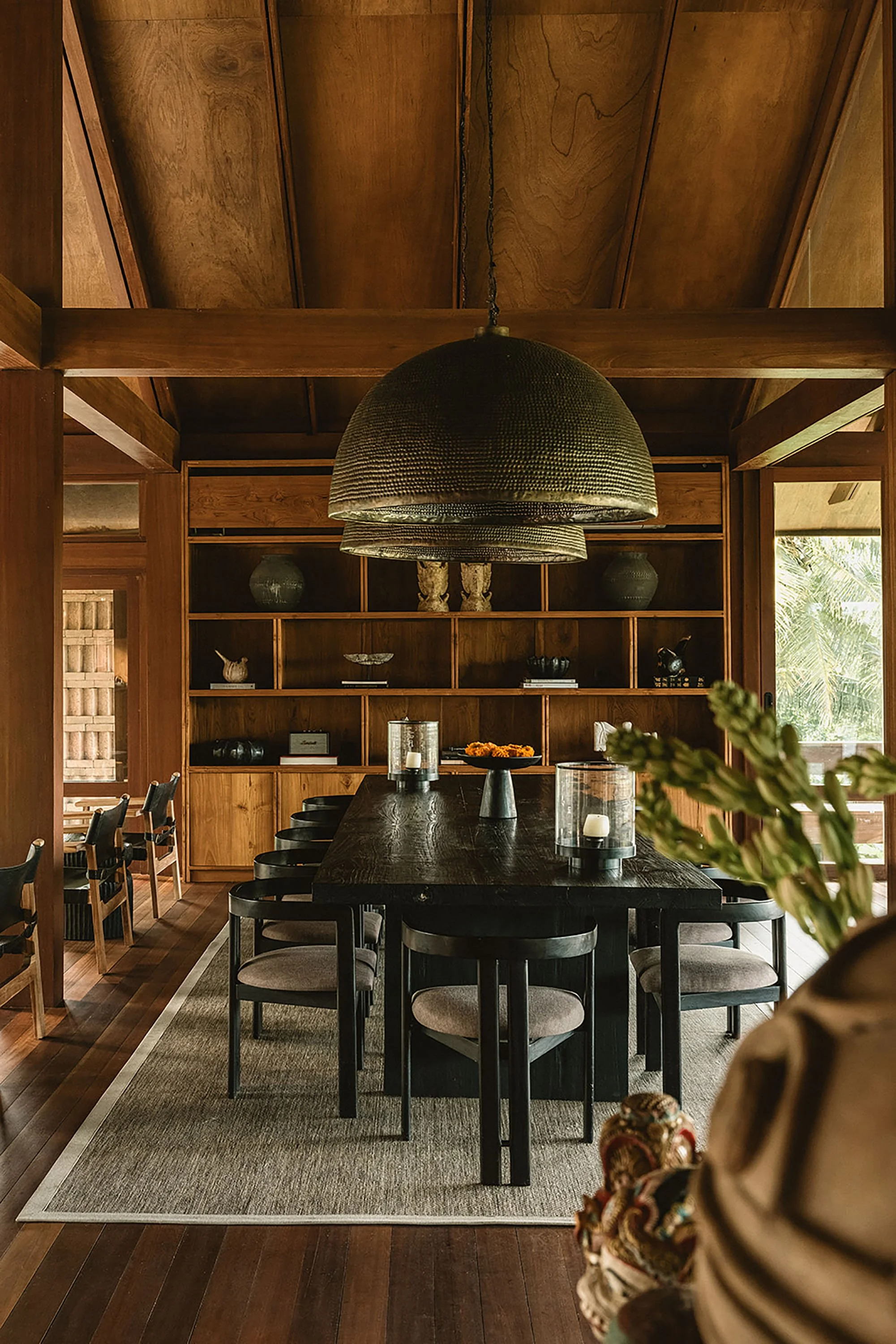
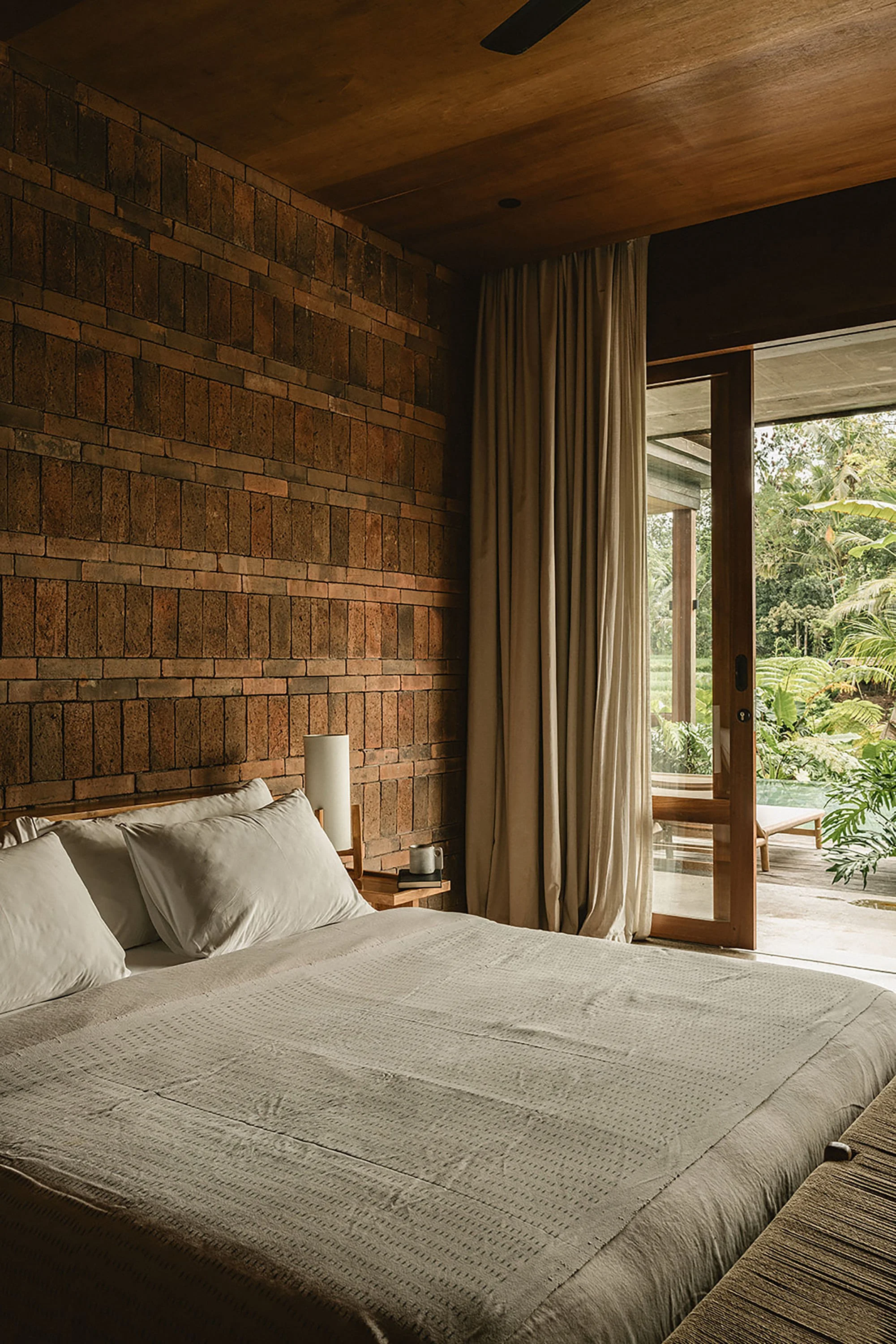
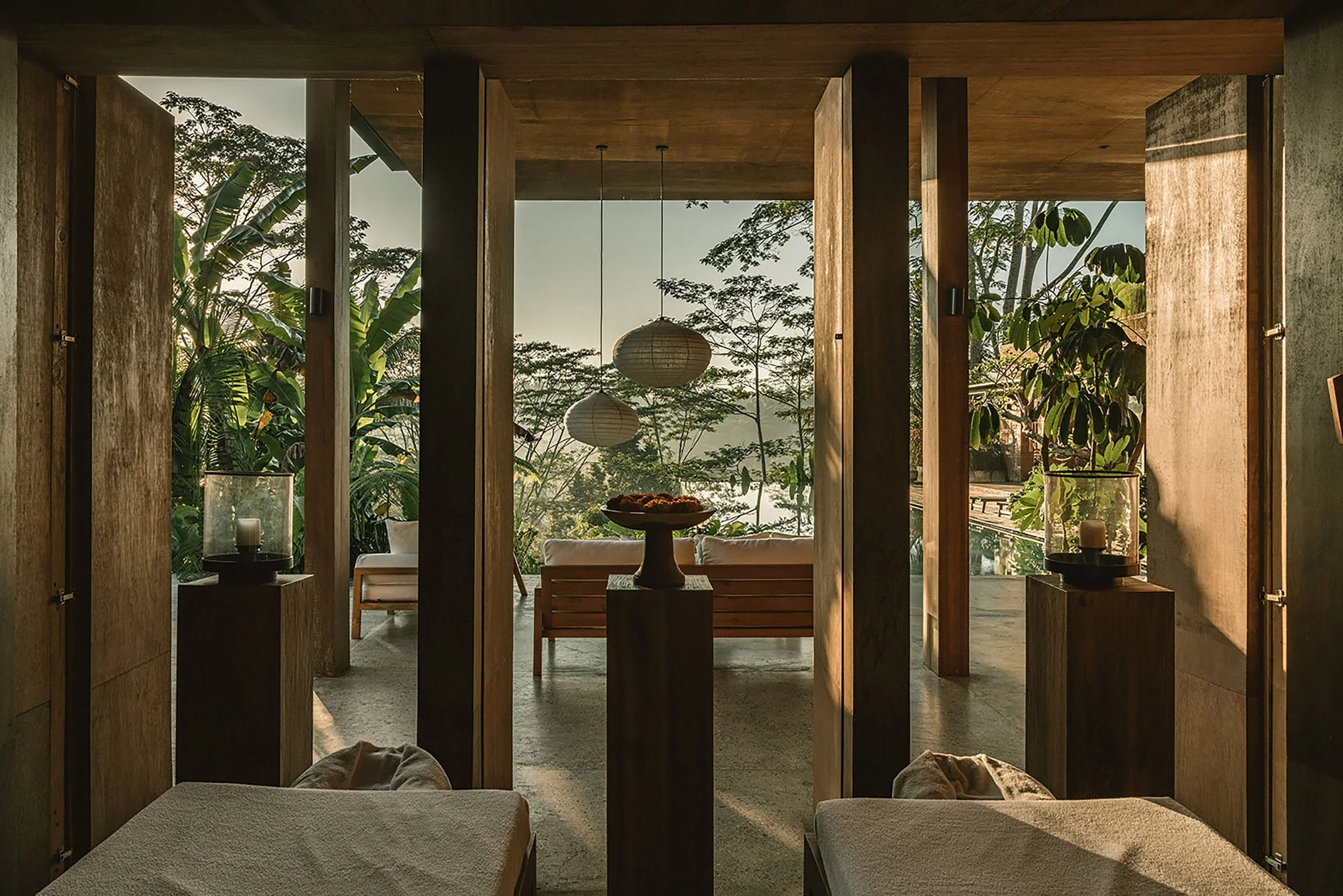
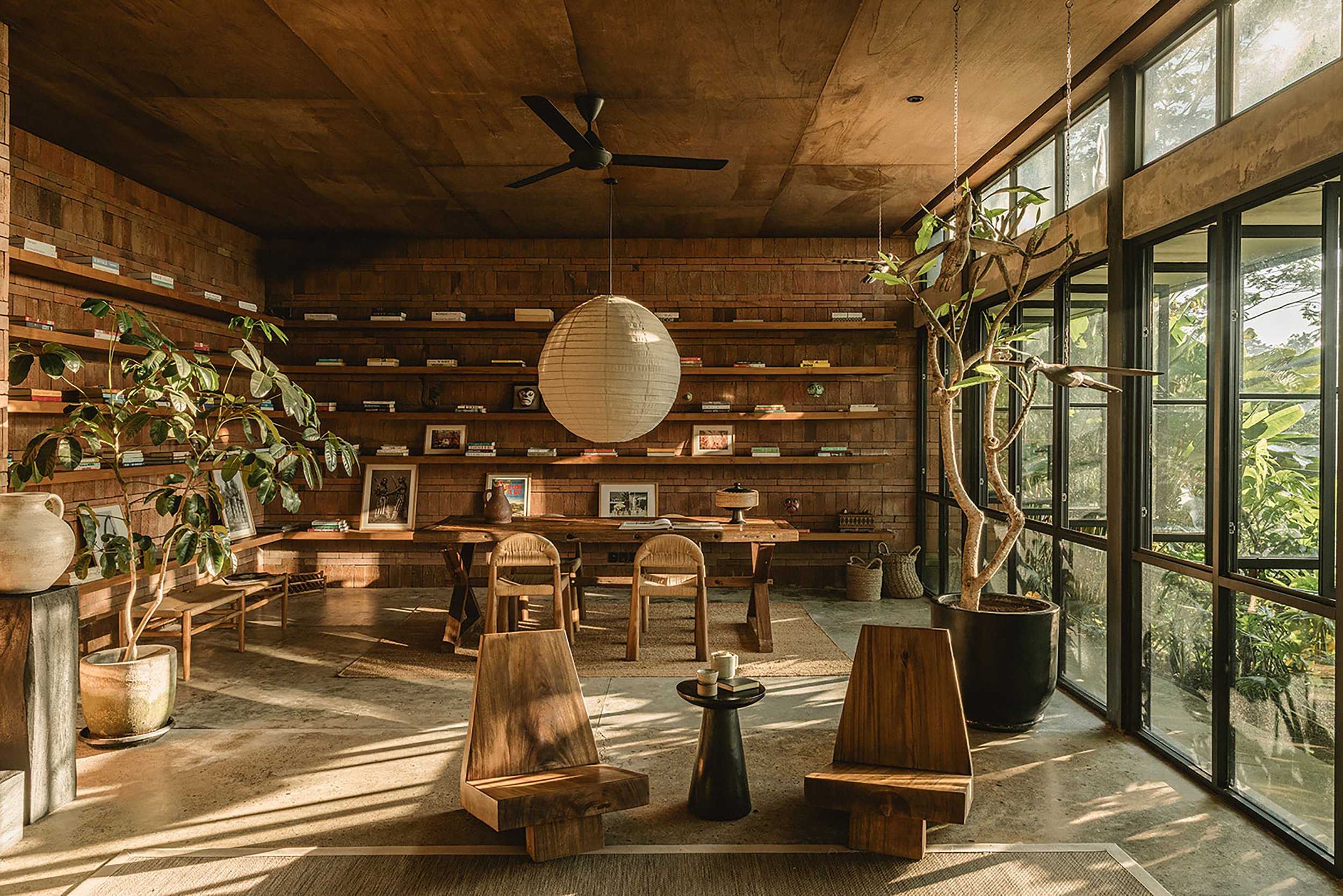
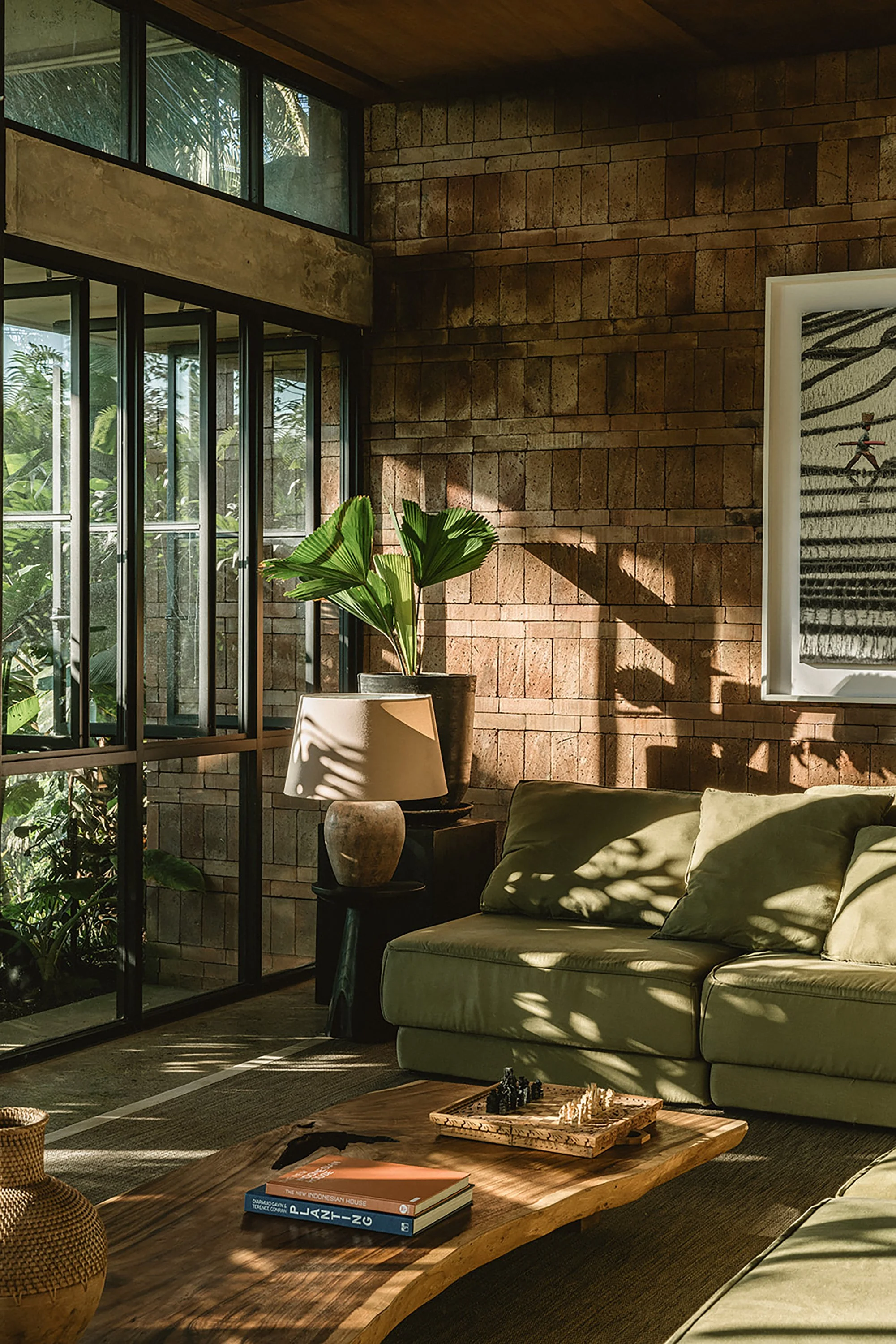
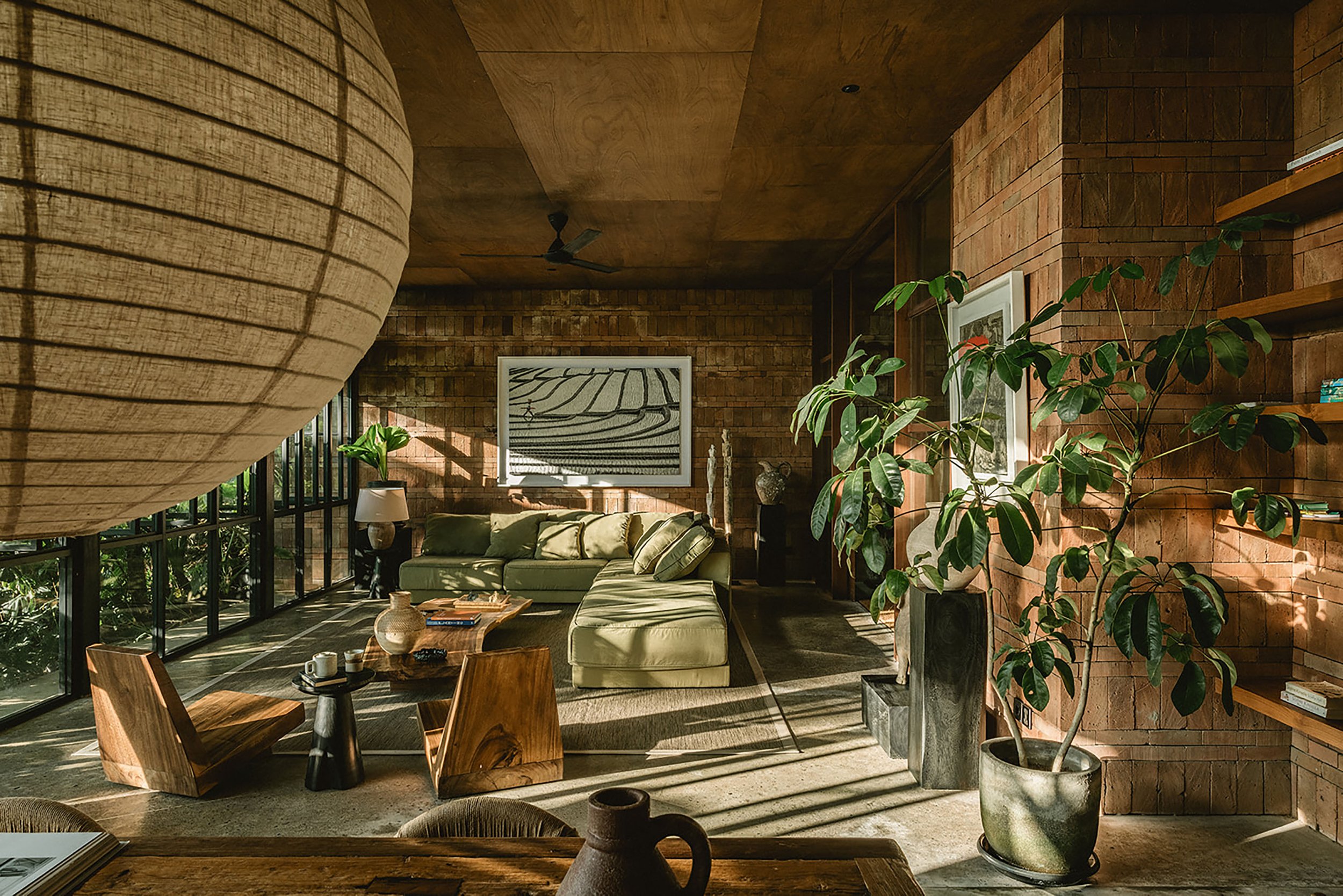
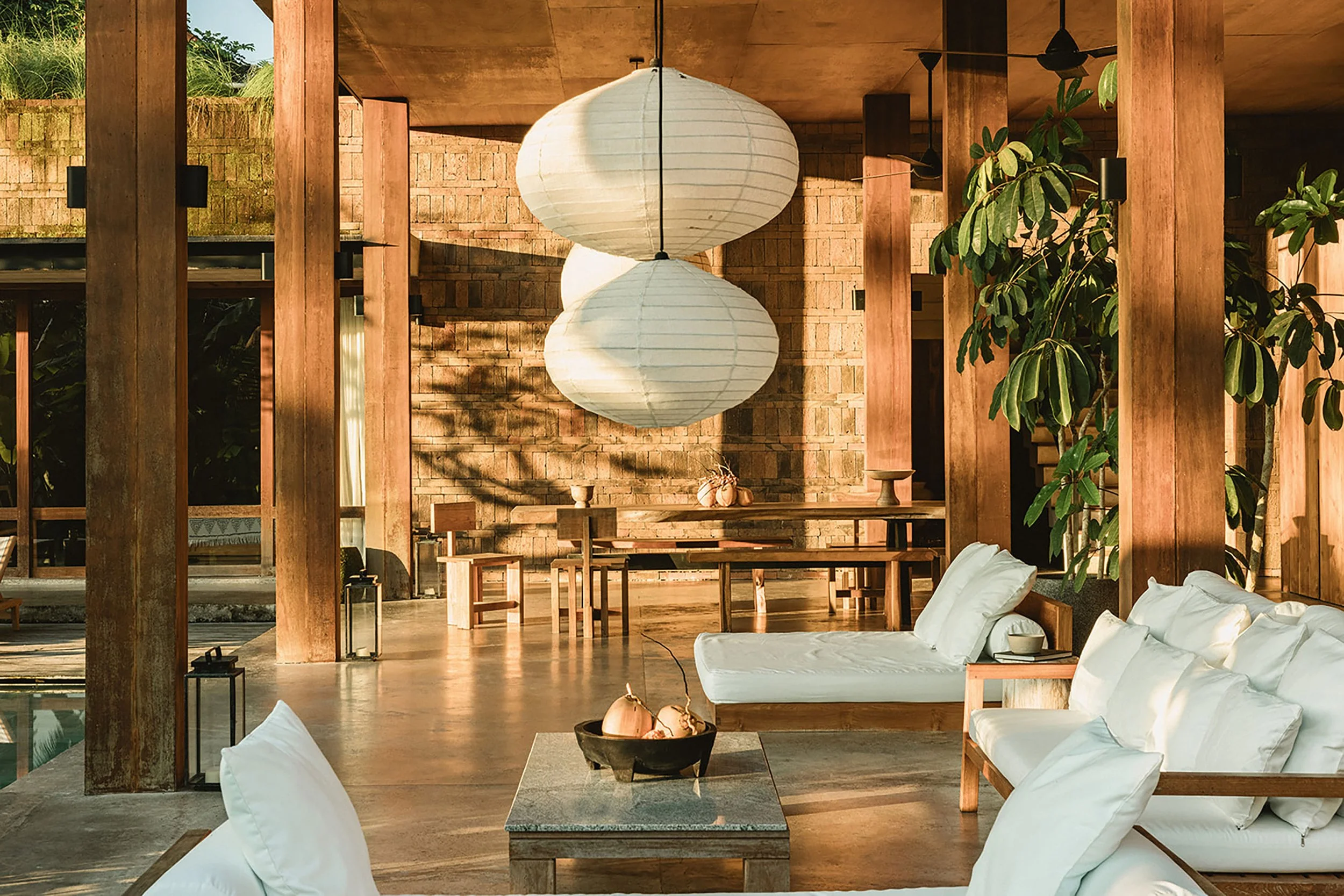
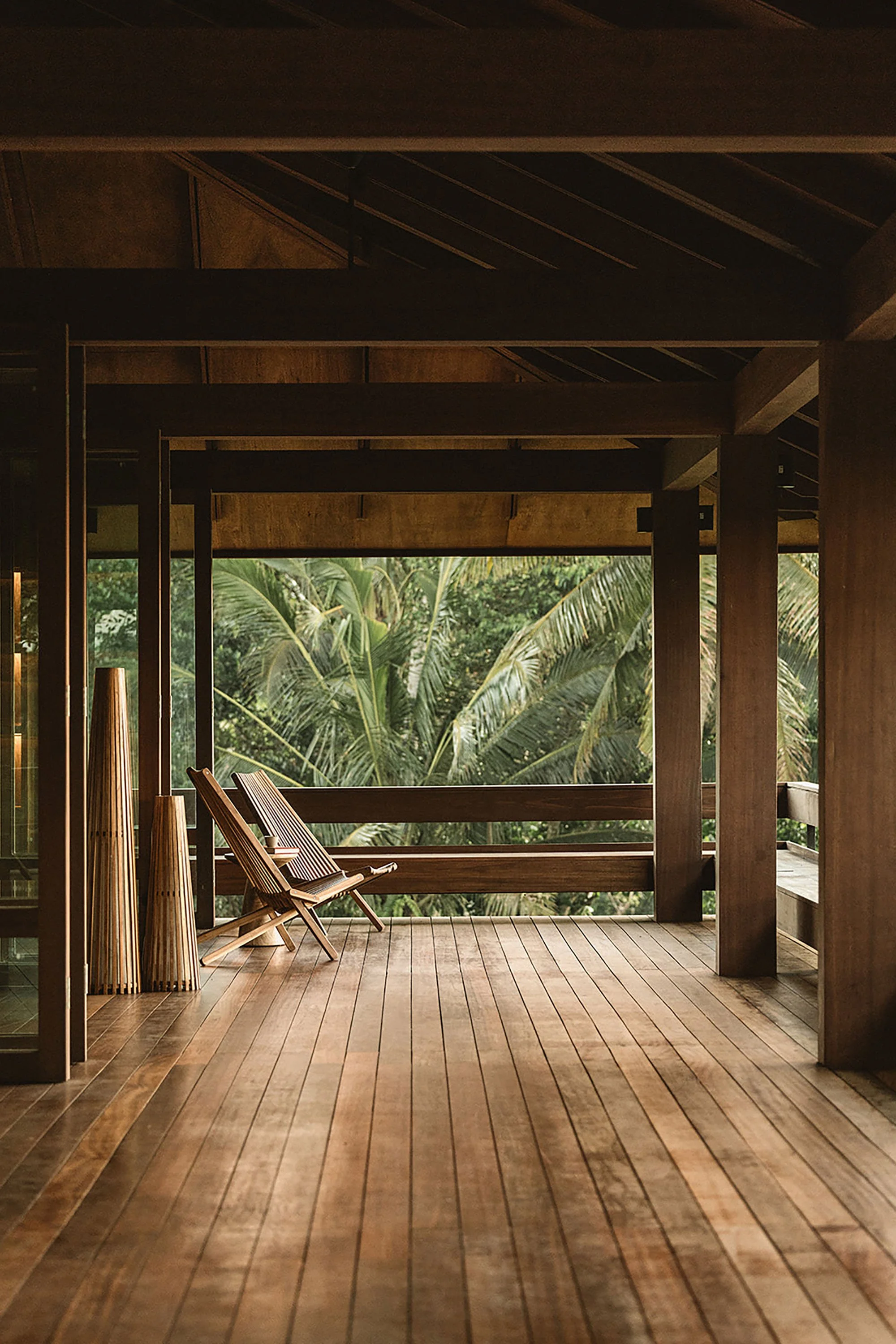
Through the main door, set within another opaque terracotta brick wall, are the living and dining areas that look out to picturesque scenery. A terrace extends outward, providing an alternative vantage point. Bedrooms are located one floor below together with the pool, joined to a kink in the L-shaped plan to house a spa, sauna and gym. Beneath this, a light-flushed library is contemplative and dramatic in equal measure.
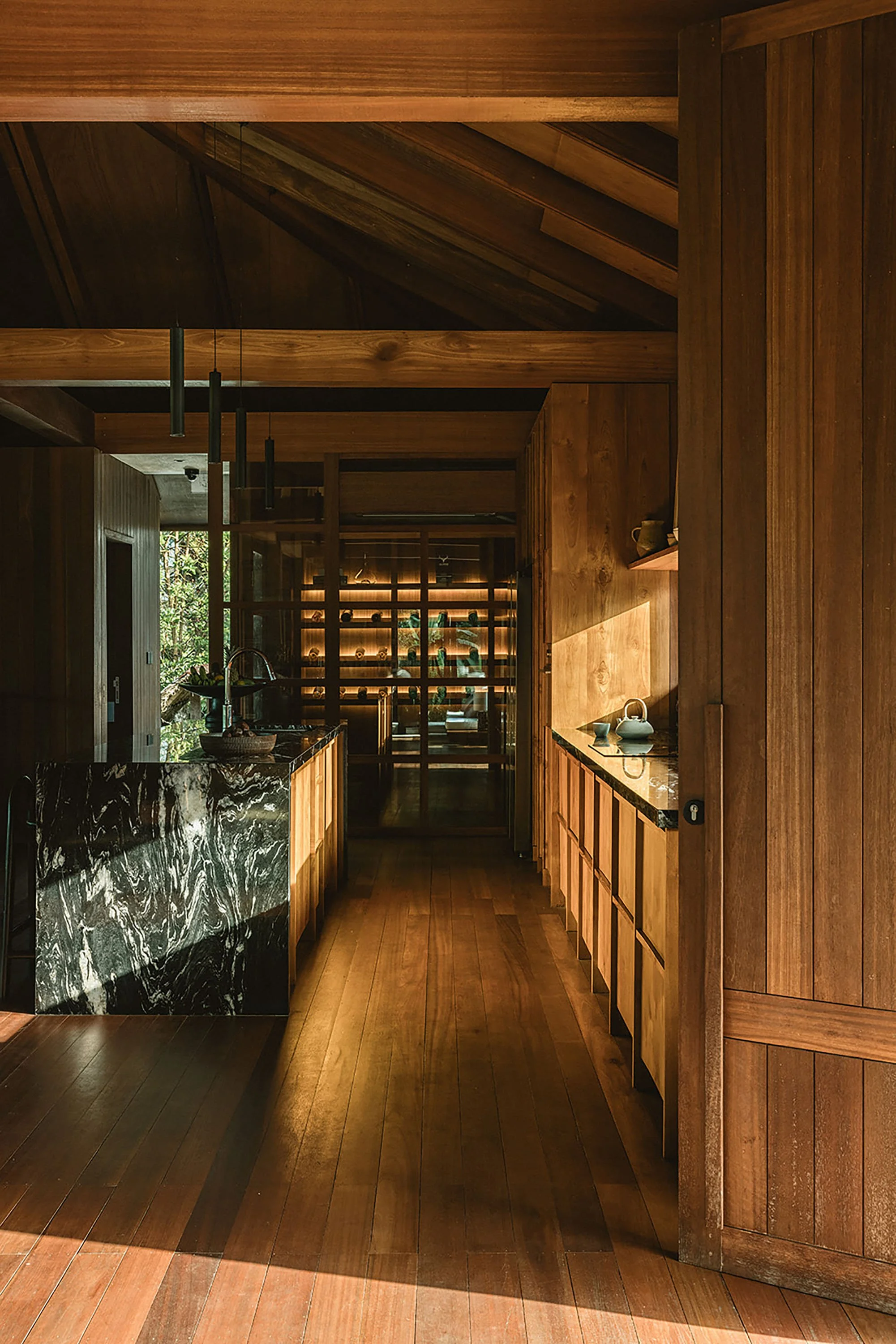
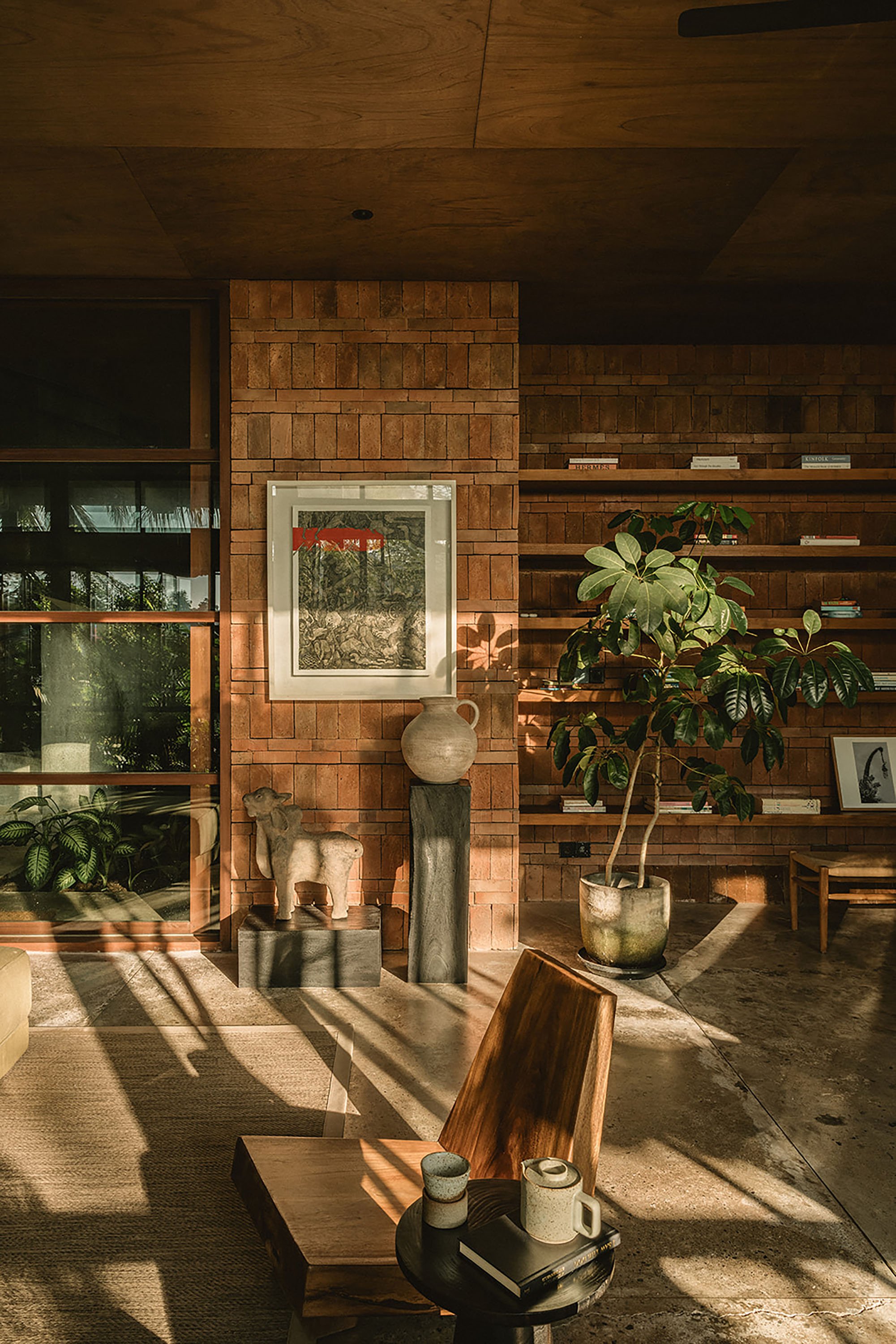
The property uses few, and rather humble, materials but these are elevated through dextrous expressions. ‘Natural materials like wood and terracotta bring warmth and authenticity. Terracotta brick, commonly used in Indonesia and traditionally seen in Balinese temples, was a natural choice,’ says Cali. They also suited the project’s modest budget and made it easy for local builders to construct.
Using the home feels freeing rather than rigid. ‘We move around the house a lot, from the open kitchen for breakfast to the upper terrace to soak in the morning light with coffee in hand or for some light exercise,’ says Cali.
Beyond enjoying the spaces, designing and making a house for her own family rather than for clients has produced many lessons, according to Cali. Failed experiments taught her to be creative and adaptable, while living in Bali deepened her understanding of designing for the climate, she says. ‘I learnt how air, light and landscape could come together to create comfort naturally.’
Text by Luo Jingmei
Images by Willem Keuppens