Slow Living
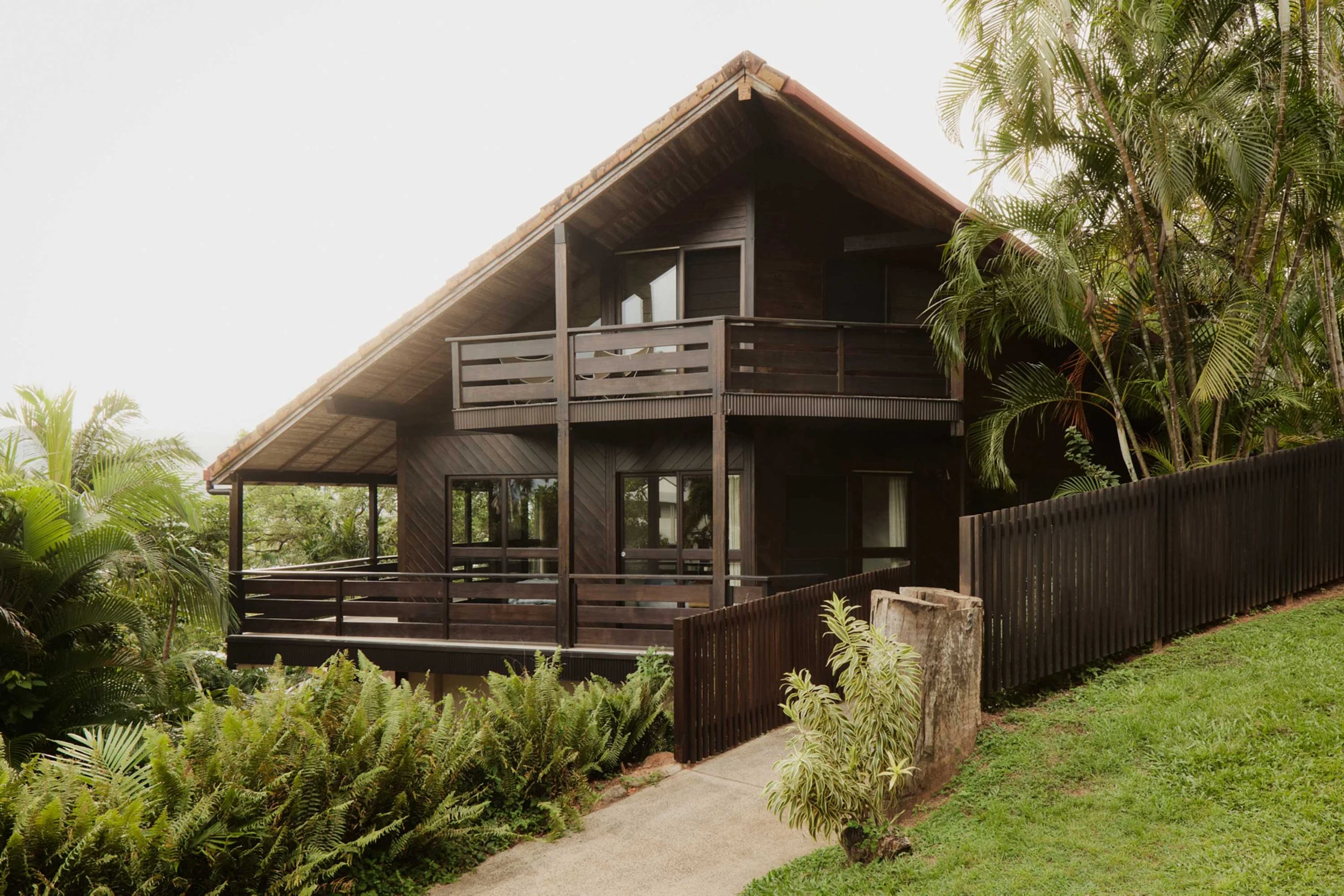
Sitting among the treetops, this home is shaped by memory and the slowing down of daily rituals. Originally built in the 1990s, the latest iteration of the home by Orr Made emphasises togetherness and rich, textured materiality tempered by moments of composure and retreat
Tari is the personal home of Orr Made directors Rhiannon and Matt Orr, a space they have defined as their own escape and transformed into their family hideaway. ‘The craftmanship of the original home had soul,’ Rhiannon says. ‘And although the “bones” were there, our role was always about retaining and honouring the honesty of the materials, while also gently shifting the way the home could function for our family.’
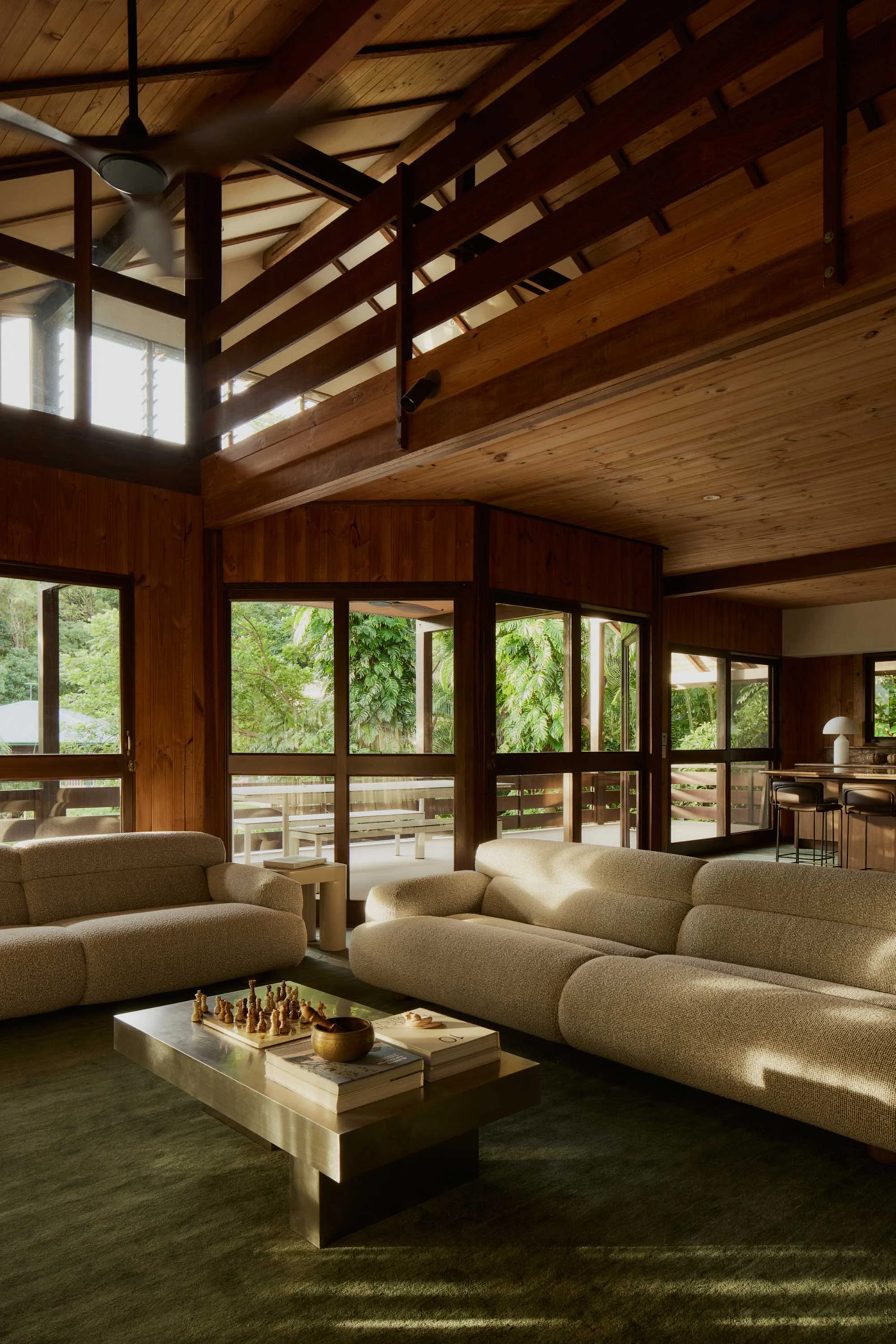
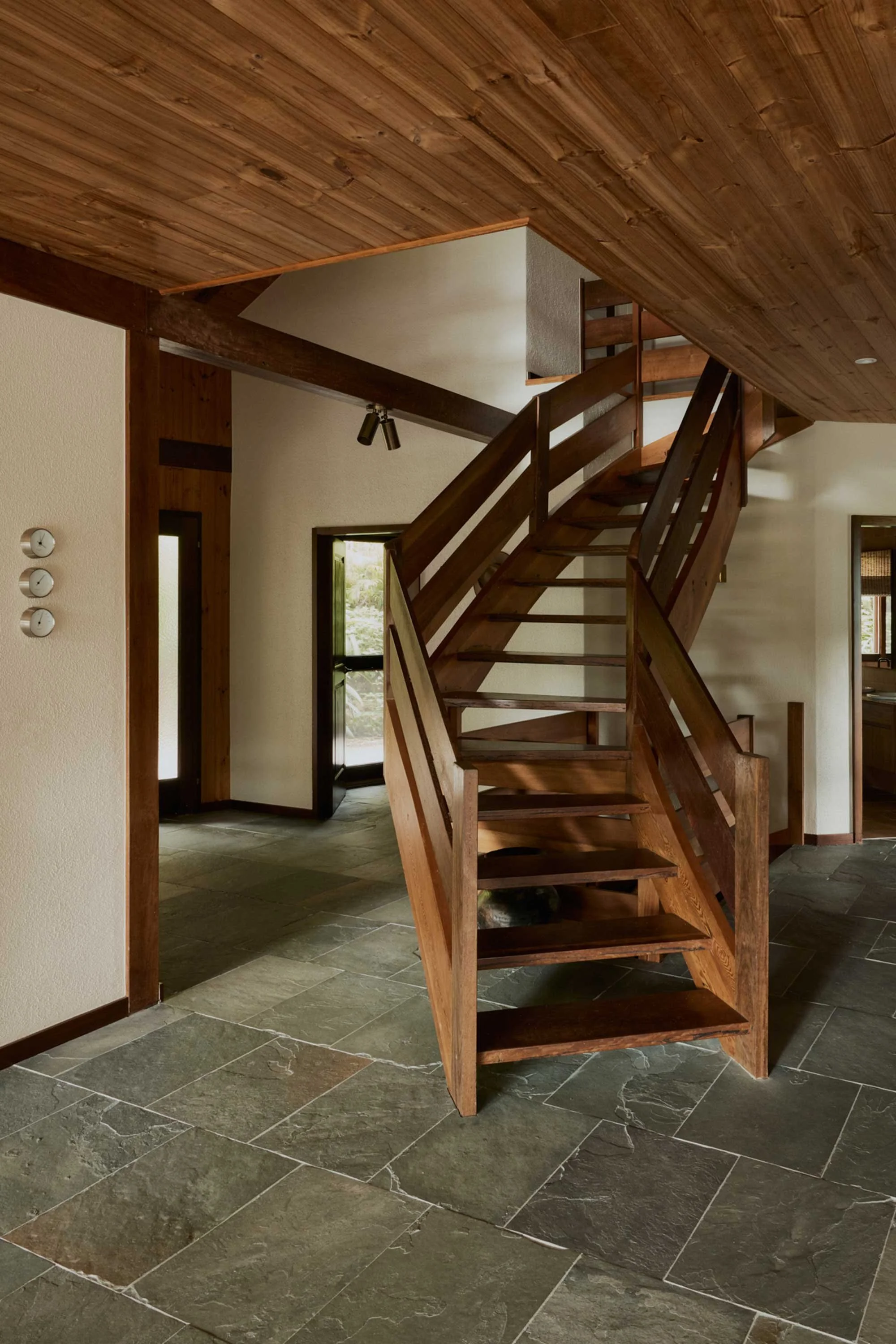
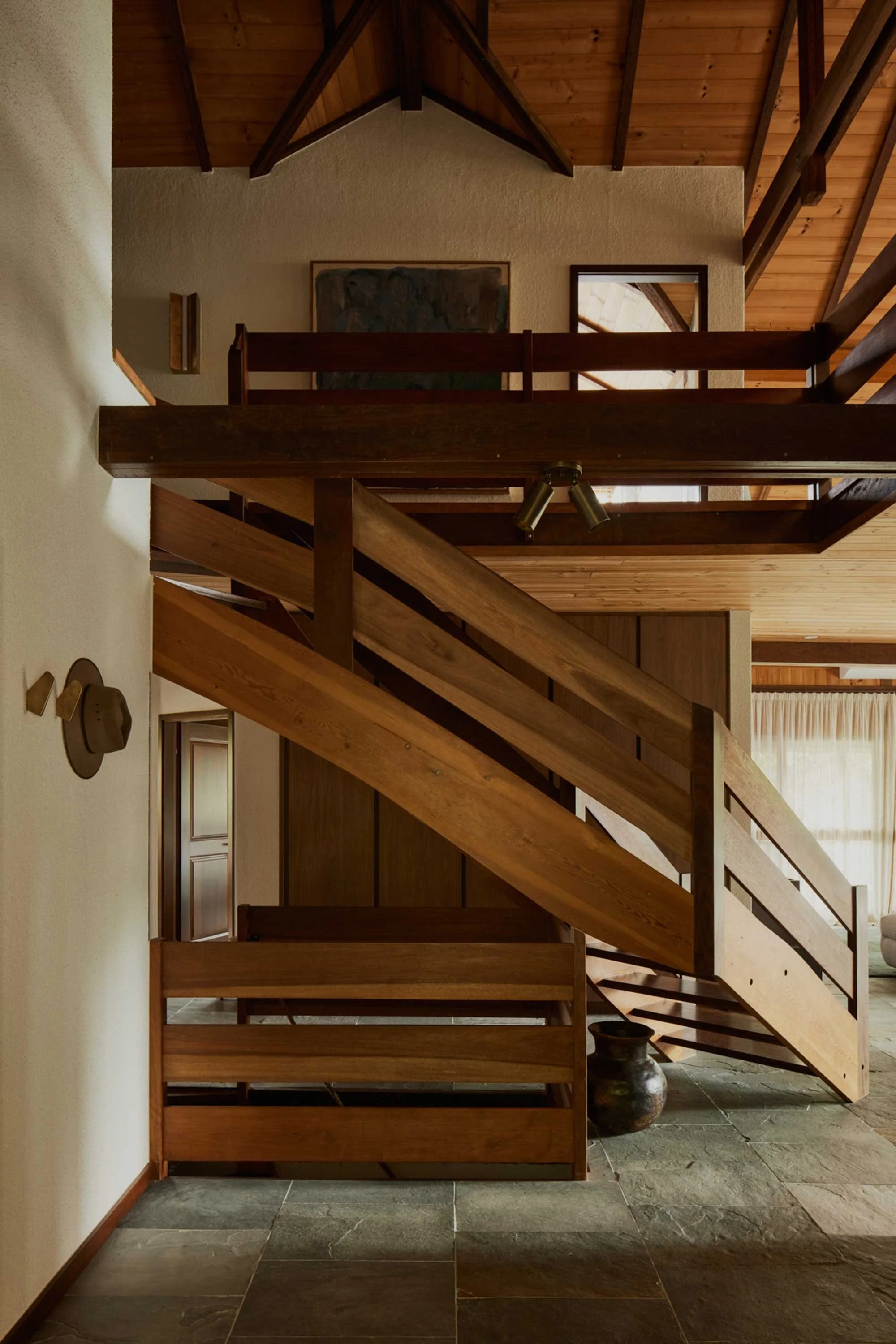
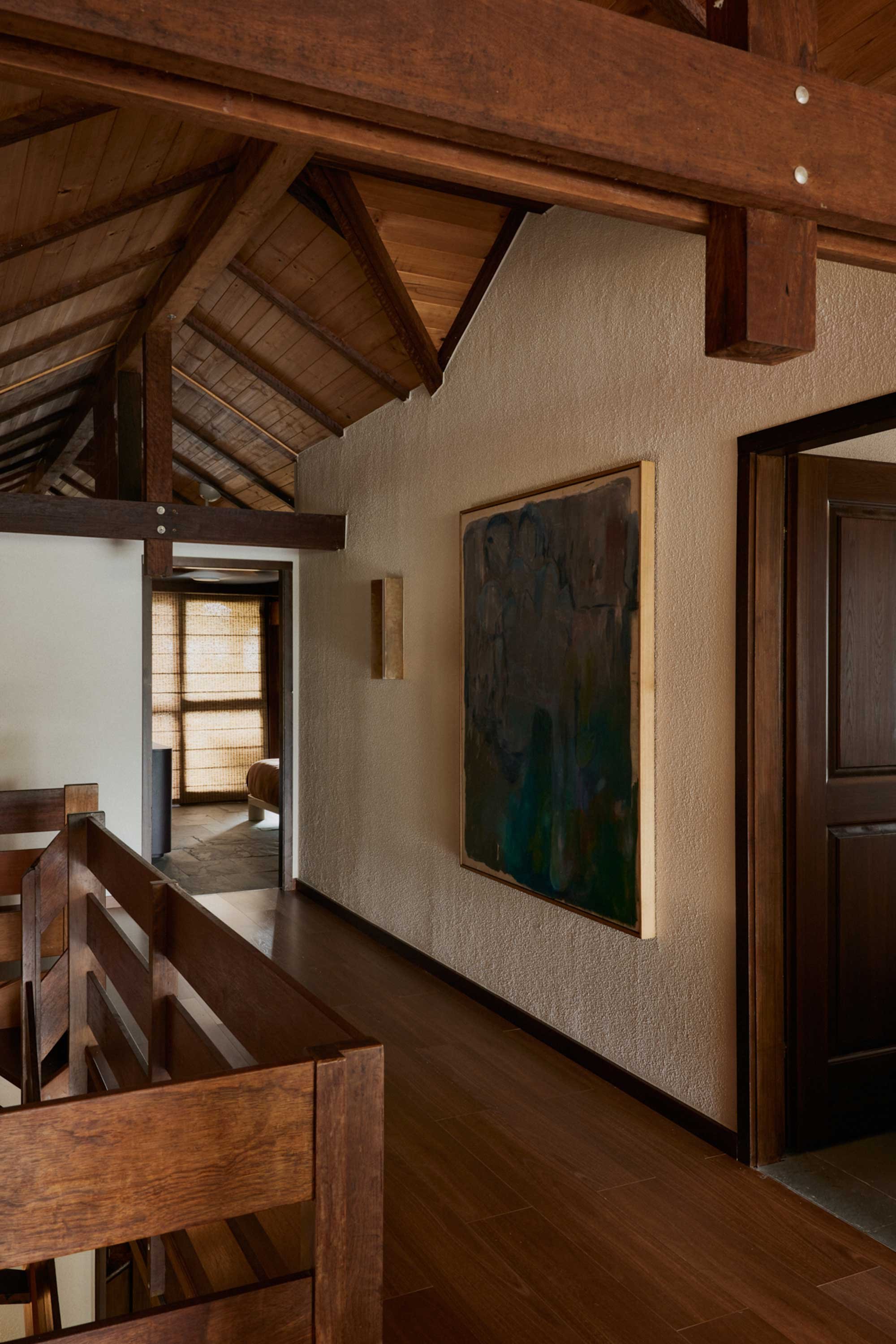
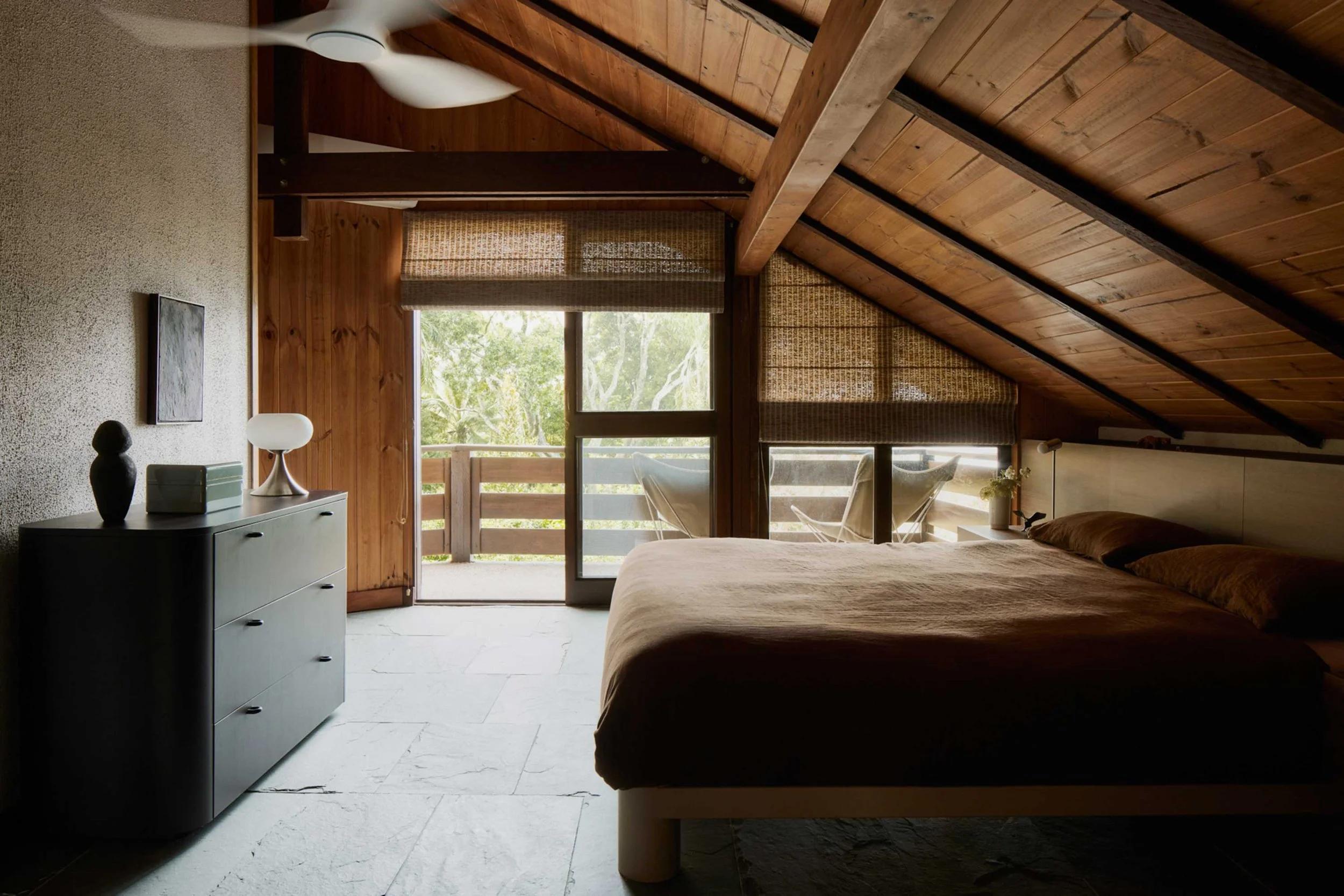
Originally designed and built by a Swiss builder, the home carries the marks of its maker: steep asymmetrical rooflines, exposed timber linings in rafters and a hand-built sensibility throughout. The Orrs’ renovation, then, was not a gesture of transformation, but instead one of return to the heart of the original through a light-handed approach and generosity of space. Working almost exclusively with the original timbers that already defined the home (walls, ceilings, stairs and balustrades), the Orrs sought to clarify these core features as a warm statement that can be felt throughout.
Living in the house also offered its own form of design rigour and experimentation, with the ability to test every opportunity in situ while also engaging with the natural surrounds. From decisions around the placement and flow of joinery and openings, to the intersections of light and material, the design process was a visceral one. ‘I’m naturally drawn to finishes that bring a sense of calm,’ Rhiannon says. ‘Life is full for us, with three children, a dog and a business. I needed the house to slow things down, to offer warmth and clarity without noise.’
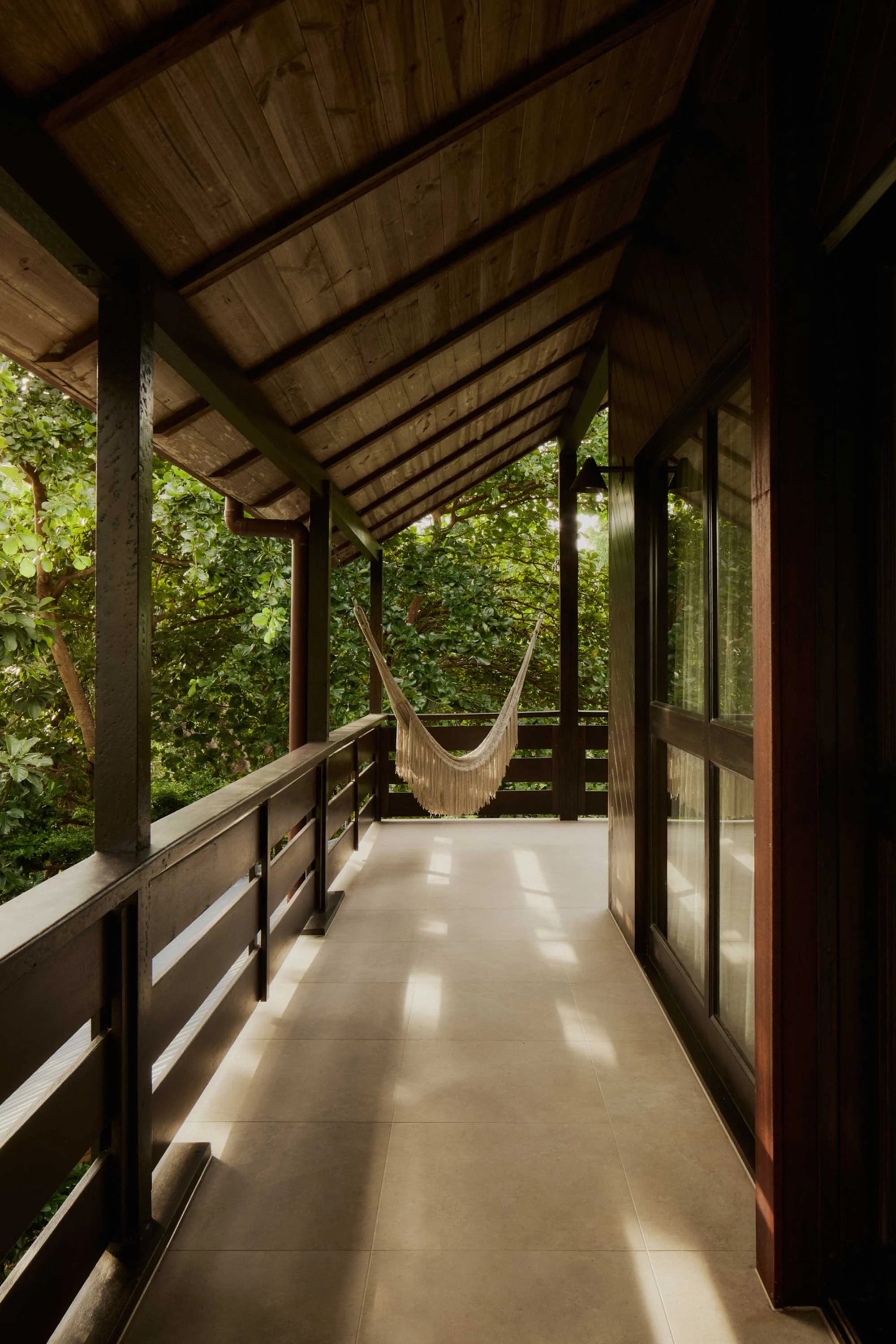

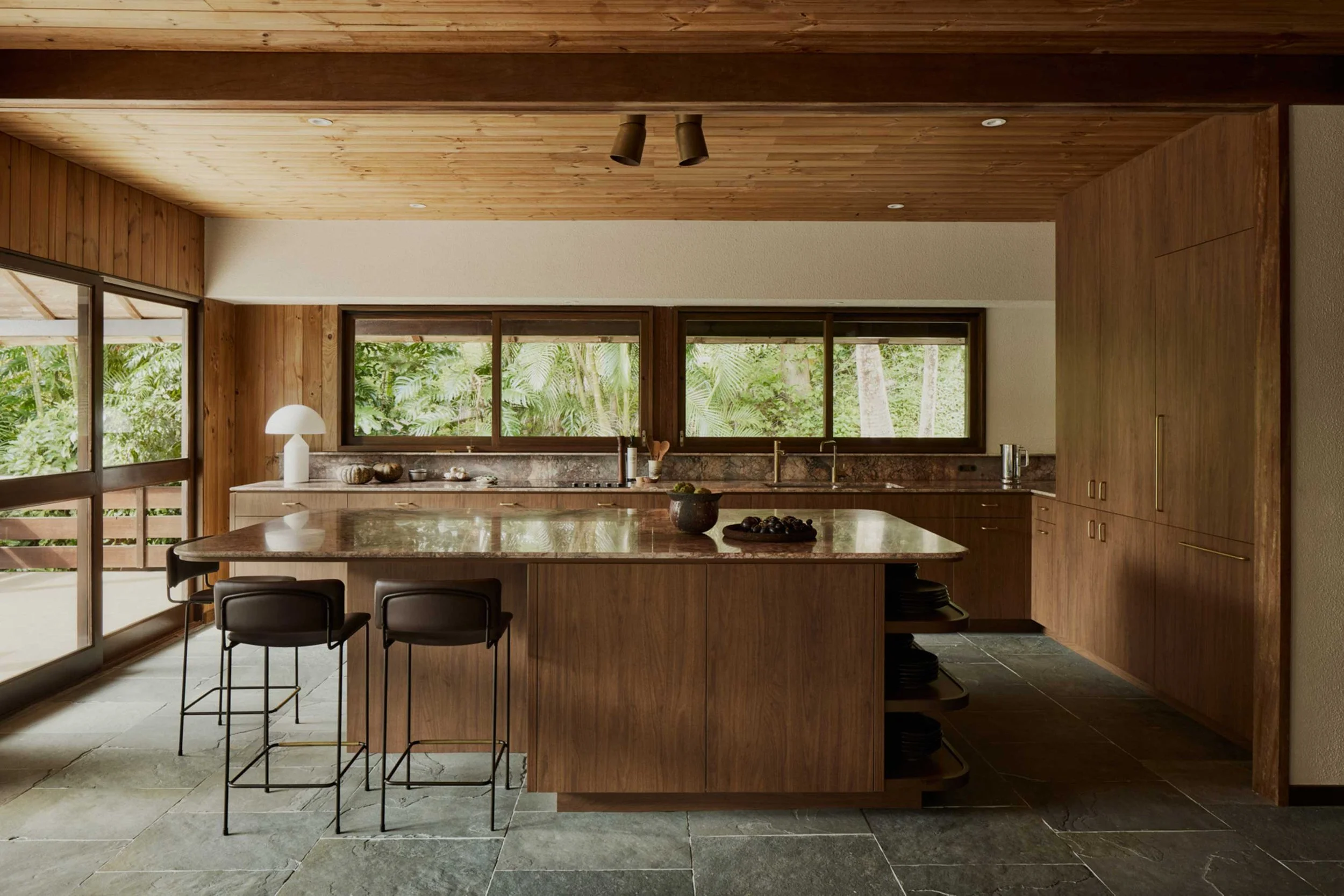
Timber remains central to the overall palette. Florentine walnut was selected as a tone that would neither contrast nor disappear among the inherited existing textures. ‘The timber selection couldn’t be too red or too yellow, or too cool. We lived with samples for a long time to get it right,’ Rhiannon says. Where new windows or doors were required, they were detailed to echo the original vernacular, ensuring a continuity of tone and tactility.
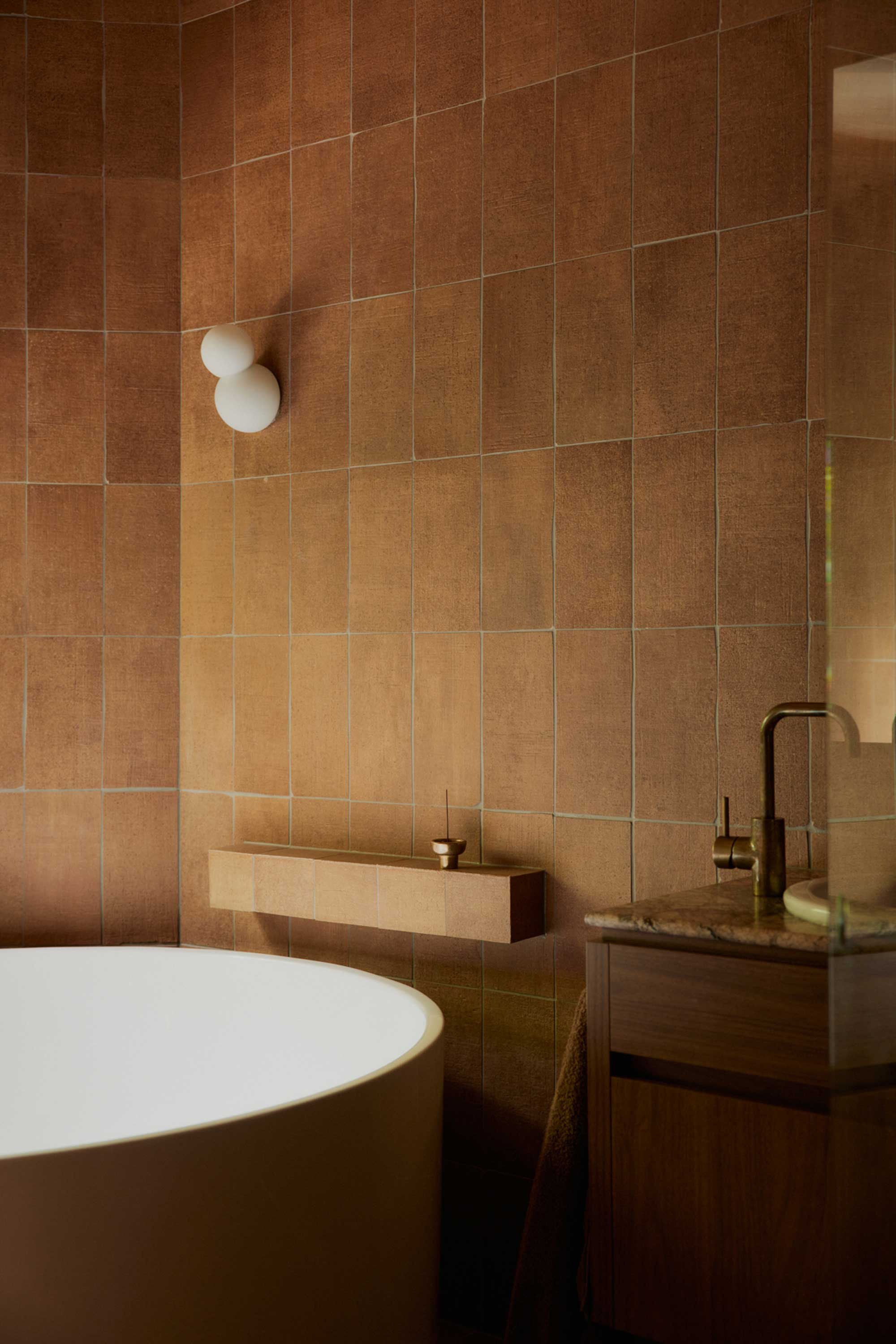
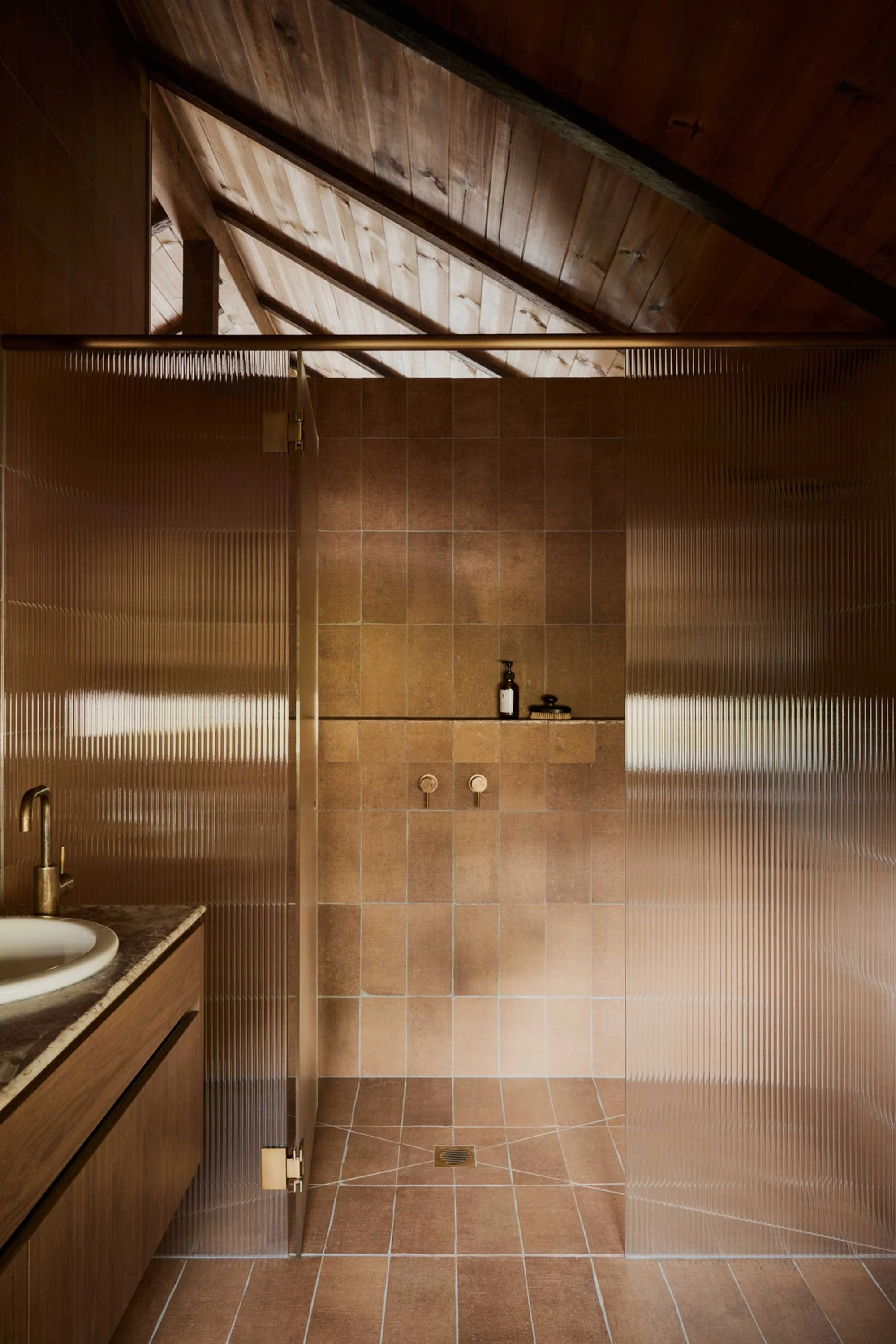
In terms of planning, the kitchen was rescaled and reoriented to suit a more contemporary way of living; bathrooms were reworked for proportion, flow and light, and a new sense of spatial legibility was introduced throughout. A gently curved, open-ended shelf softens the linear nature of the kitchen. Aged brass tapware and handmade brass pulls all welcome a patina over time, allowing the family to leave their mark on the updated home.
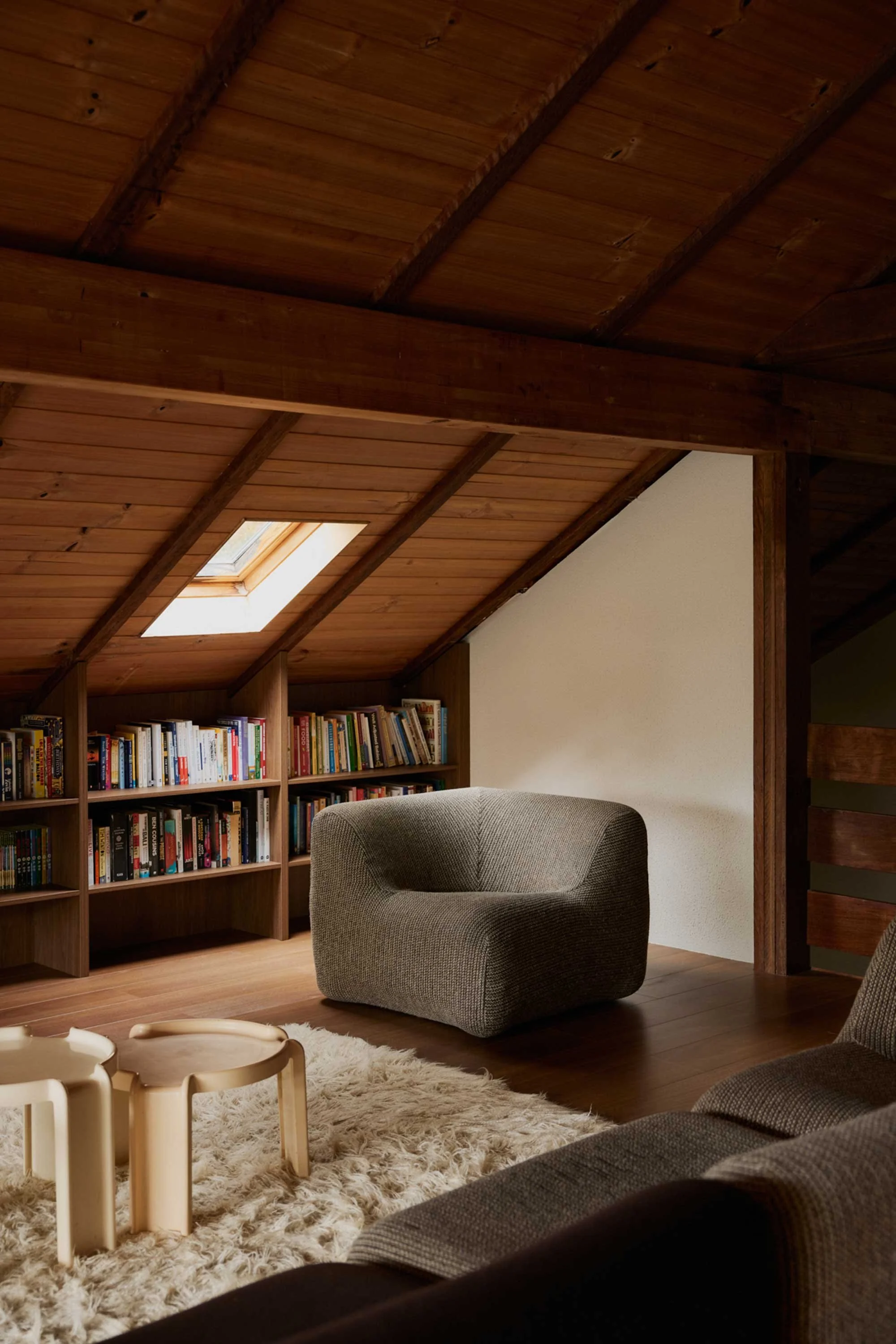
Throughout Tari, structural interventions were kept restrained and intentionally subtle, with elements such as highlight windows introduced to borrow light, bulkheads removed to amplify volume, and internal views extended to connect the south-north aspect. ‘Ours is not a home of showpieces or flamboyance,’ Rhiannon says. ‘Instead, the whole concept was built on restraint. It’s a home that feels calm, lived-in and deeply ours — not because of any one moment, but because it holds us, quietly, in every room.’
Text by Bronwyn Marshall
Images by Dylan James