Against Guilin’s Limestone Cliffs, Stream Restaurant Brings Fine Dining to a Former Sugar Mill
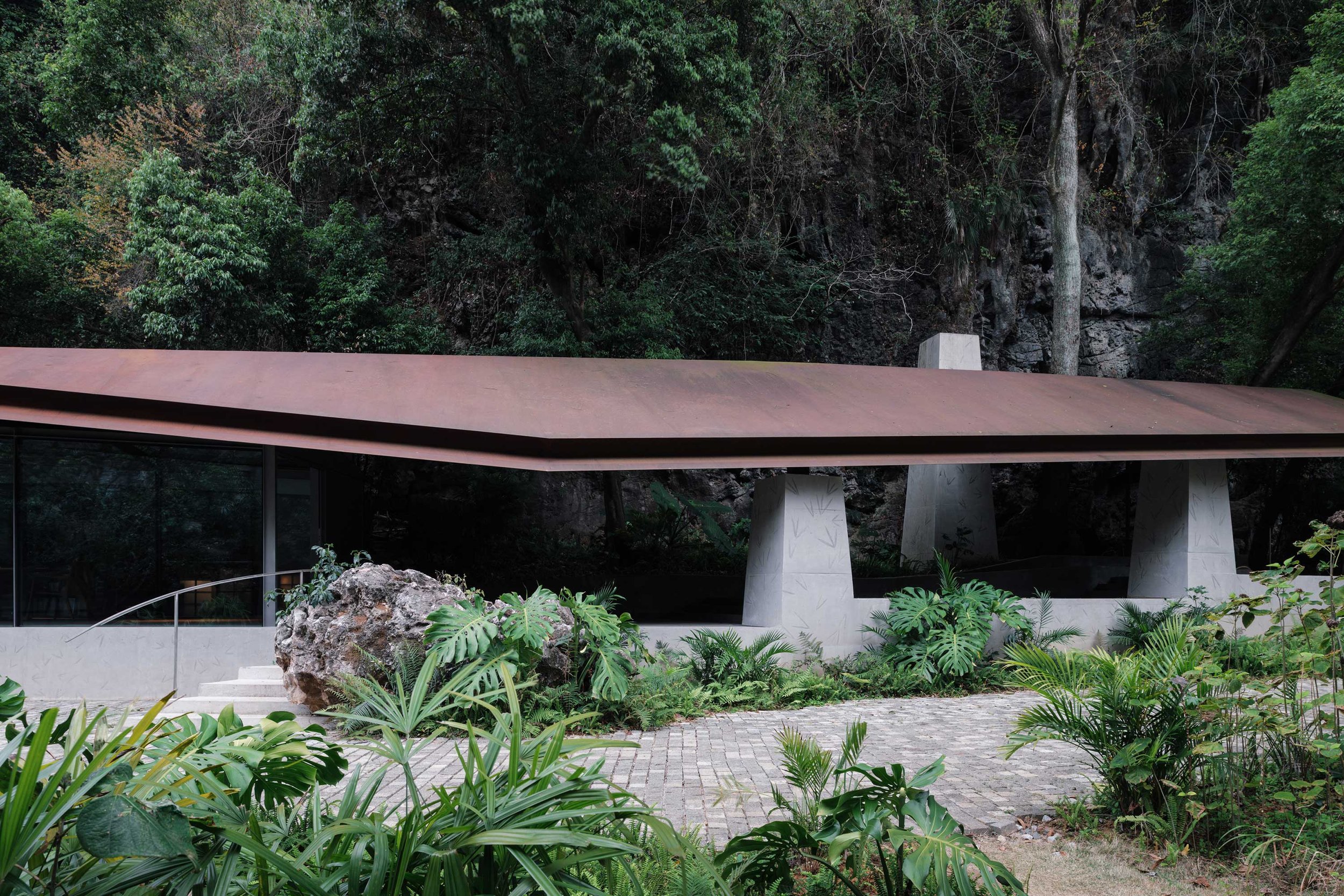
Conceived by Atelier Guo, the new dining pavilion at Yangshuo Sugar House Hotel draws on the site’s karst landscape and former life as a sugar mill to create an intimate chef’s-table setting
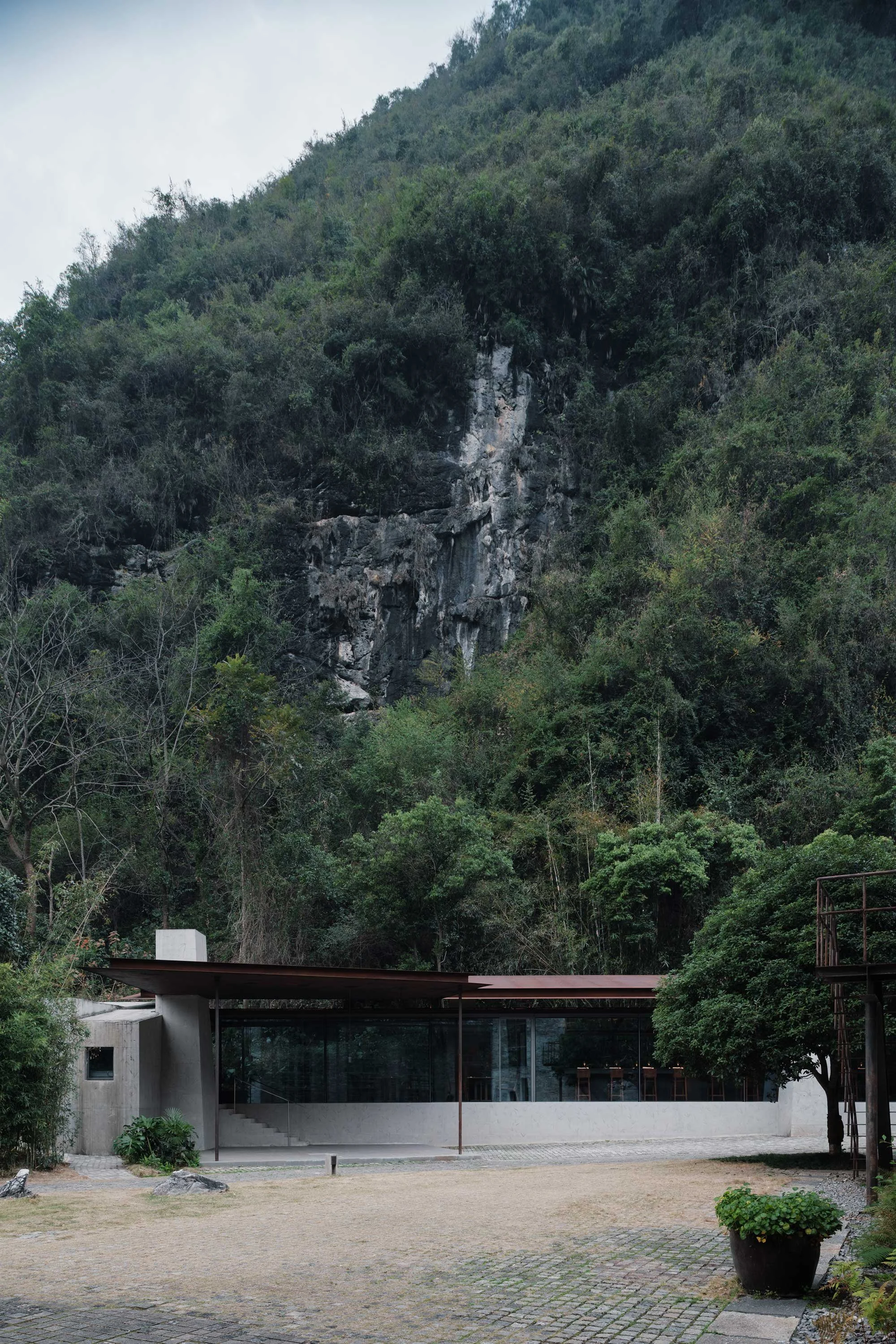
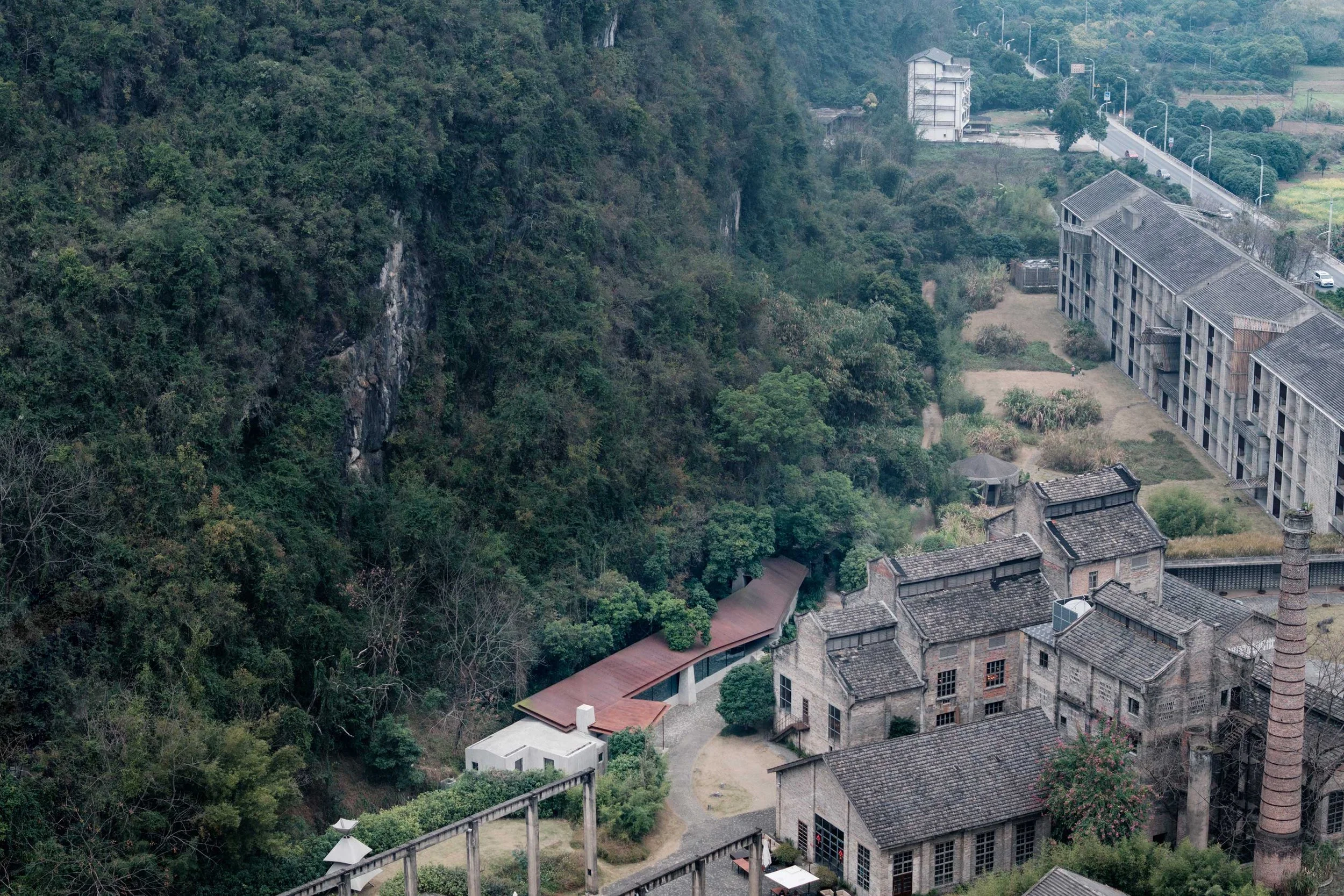
Outside Guilin, amid mist-covered limestone outcrops, the Vector Architects-designed Yangshuo Sugar House Hotel has opened Stream Restaurant, a new fine-dining pavilion focused on local cuisine. Designed by Shanghai-based Atelier Guo, it sits against one of the cliffs, responding directly to the site’s geology and the industrial legacy of the former sugar mill that dates back to the 1960s. It’s all in line with the ethos of founder Liaohui Guo, who established the practice in 2020 after working in Europe with Peter Zumthor, Caruso St John and Francesca Torzo.
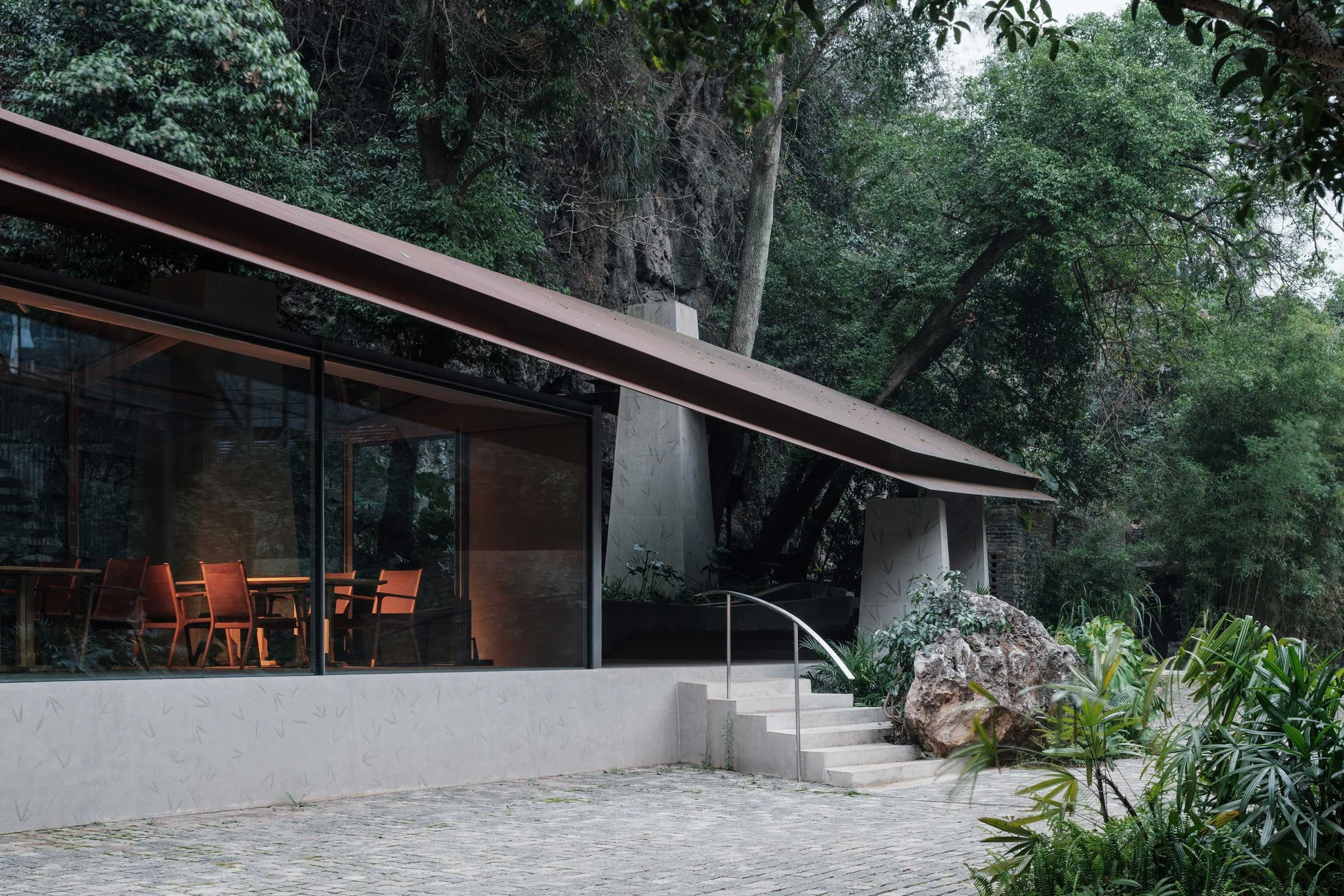
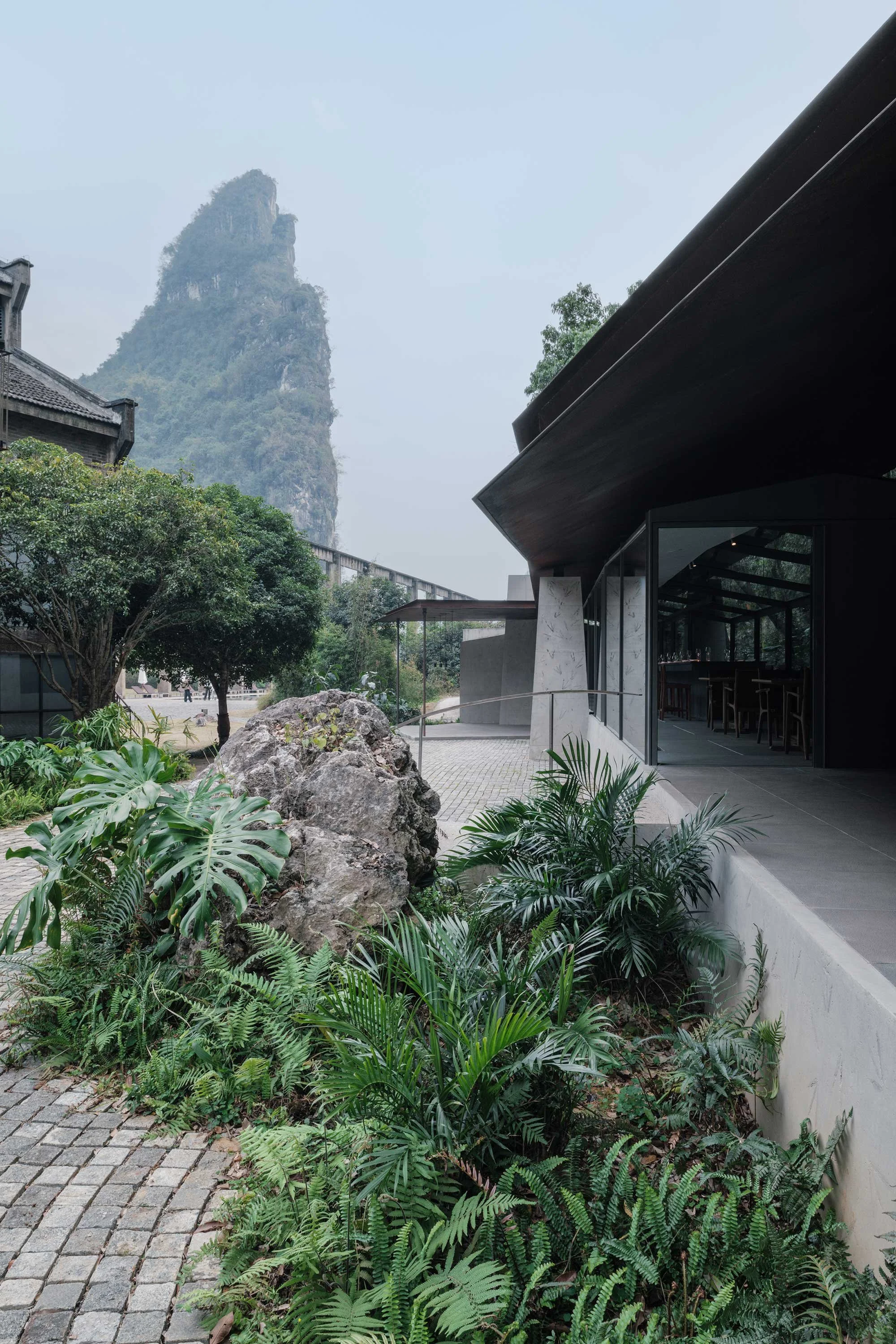
‘At first, you’re more of a listener. In some ways, the work is like that of an archaeologist,’ says Guo. ‘You have to understand the history of a site and the traces left behind. That's usually our starting point to create something unique.’ The intervention on the hotel grounds grew out of a concrete rill, likely built by villagers in the 1970s or 1980s, formerly used to carry water from the rock face down to the river. Restored and brought back to use, the rill forms a linear buffer separating the glazed dining volume from the rising cliff. Also unearthed during site clearing was a large boulder that proved impossible to remove. Guo instead turned it into a protagonist, positioning the entry steps alongside the stone and integrating a thin brushed-metal handrail that echoes its profile.
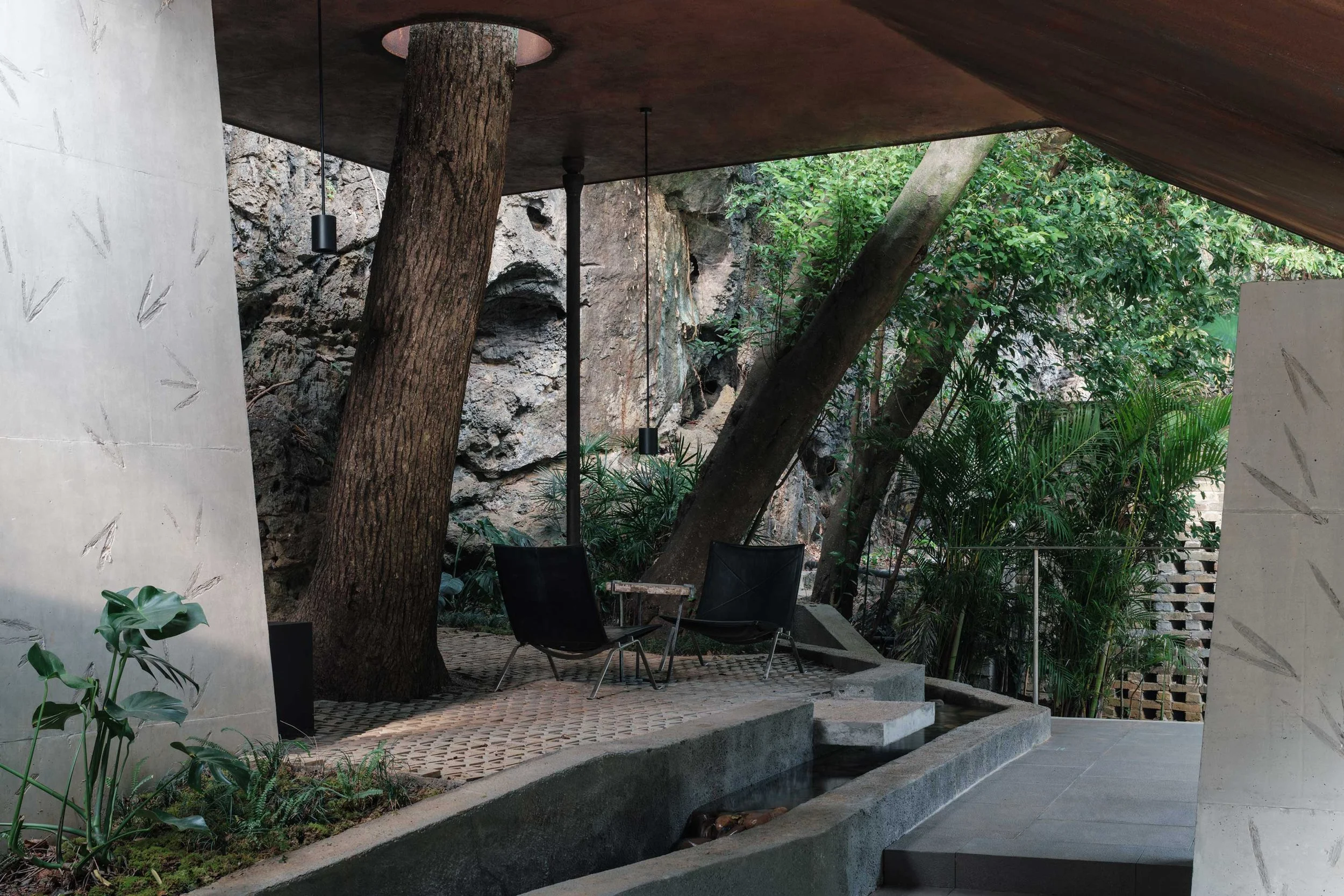
The building’s base acts as an extension of the cliff, working with its contours to lead on one side to the glass-enclosed dining room and on the other to a loggia that follows the terrain upward. To support the double-roof structure, Guo devised trapezoidal, cast-in-place concrete columns embossed with bamboo-leaf reliefs — a detail achieved by gluing real leaves to the formwork before casting. The treatment evokes ancient cave inscriptions found across the region. ‘What interests me is the idea that these inscriptions add another layer to the material, like poems etched into rocks,’ he says.
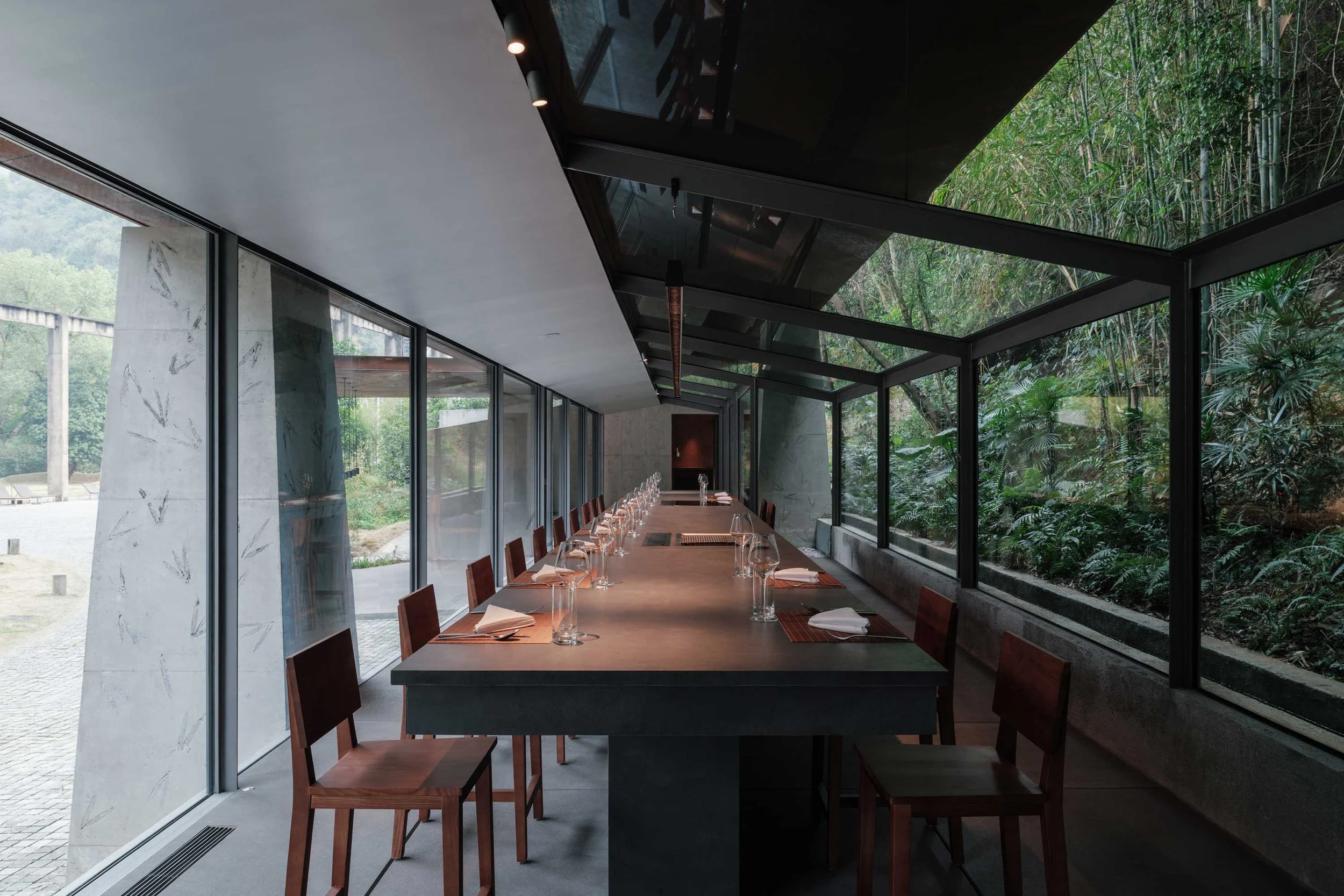
Clad in steel, the roof’s outer layer shields the space from falling debris while echoing the industrial character of the adjacent factory through a material that will take on a patina over time. Underneath, naturally filtered light gives the greenhouse-like dining room the atmosphere of a gorge. The minimal interior centres on a chef’s counter, facing the long glazed rear facade. ‘You’re looking towards the rock, with its rich formations and vegetation,’ says Guo. ‘That’s why we made the opening so long. It’s almost like a traditional Chinese landscape painting.’
Stream is a continuation of sorts for Guo, and it shows. The designer has worked across the hotel grounds since at least 2020, developing a series of smaller pavilions that take their cues from the landscape, much like the rill and the dining space. The body of work includes temporary fire pit towers that draw on vernacular references, one of which still stands.
Text by Tomás Pinheiro
Images by Chen Hao