Studio Nicholson’s New Kyoto Home in a Traditional Machiya
The British label has worked with local specialists to reimagine the traditional townhouse as a home for its unique edit of fashion and accessories
‘It’s light — I love clean, bright spaces,’ says Nick Wakeman, founder and creative director of Studio Nicholson. These words aren't often used to describe Kyoto’s machiya, traditional townhouses long known to be deep, dark and etched with time.
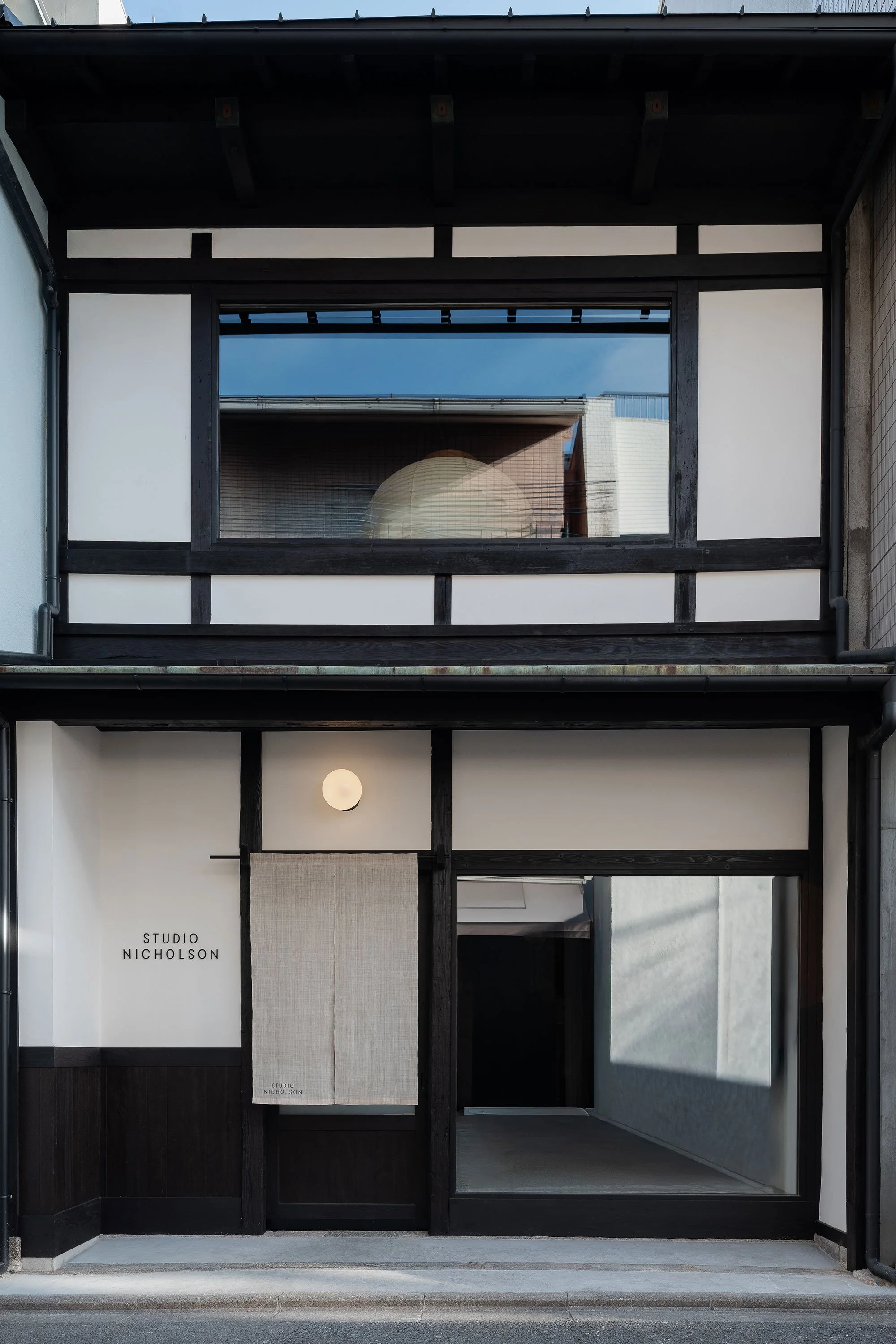
Wakeman’s surroundings smoothly dispel this notion. The designer is standing inside the new Studio Nicholson Kyoto flagship, a renovated machiya whose crafted materiality is softly tempered with the pure, pared-back minimalism that has long shaped her brand: picture expanses of white, a floating staircase, sharply narrow tiling, an oversized paper lantern, a minimalist garden — and, above all, light.
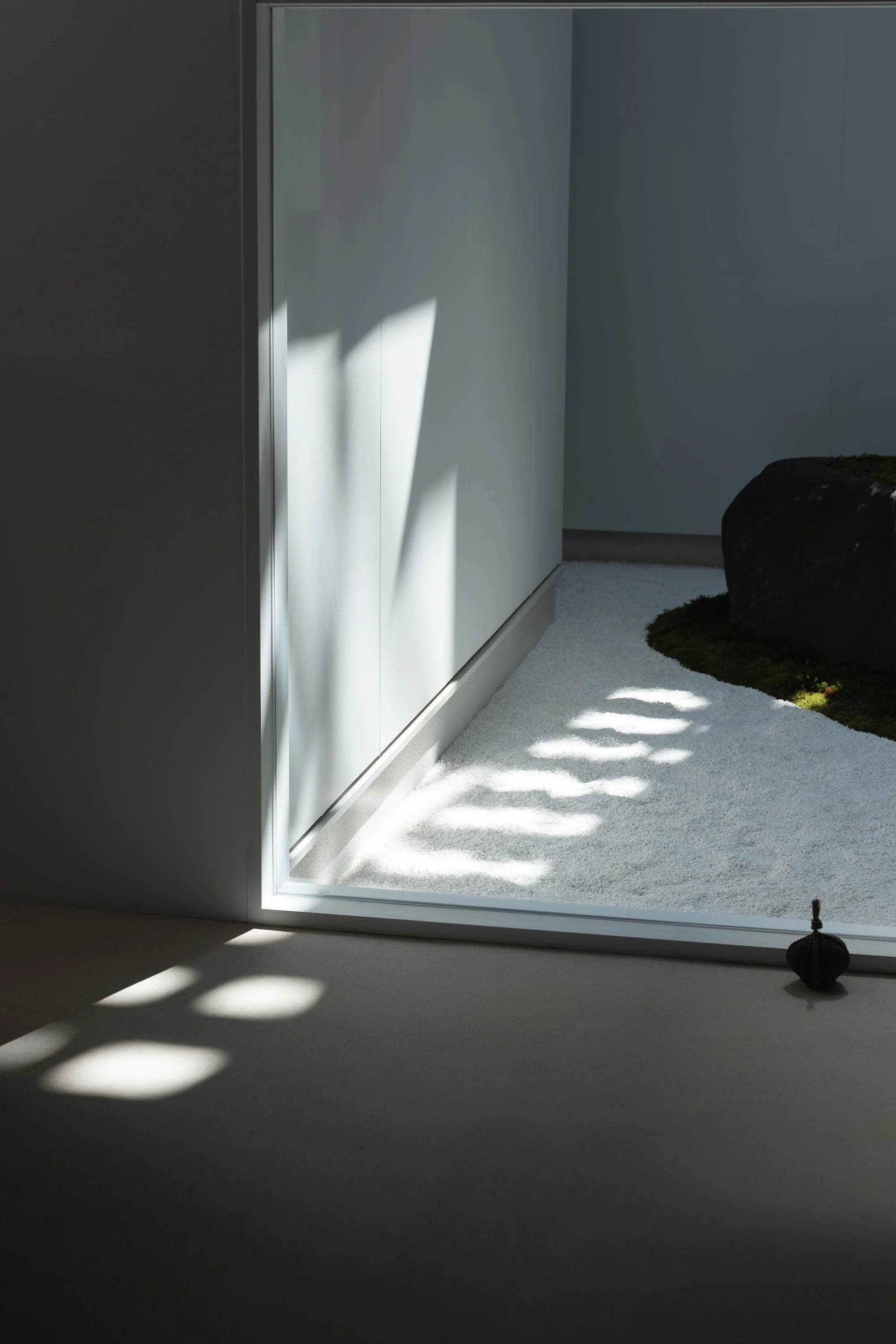
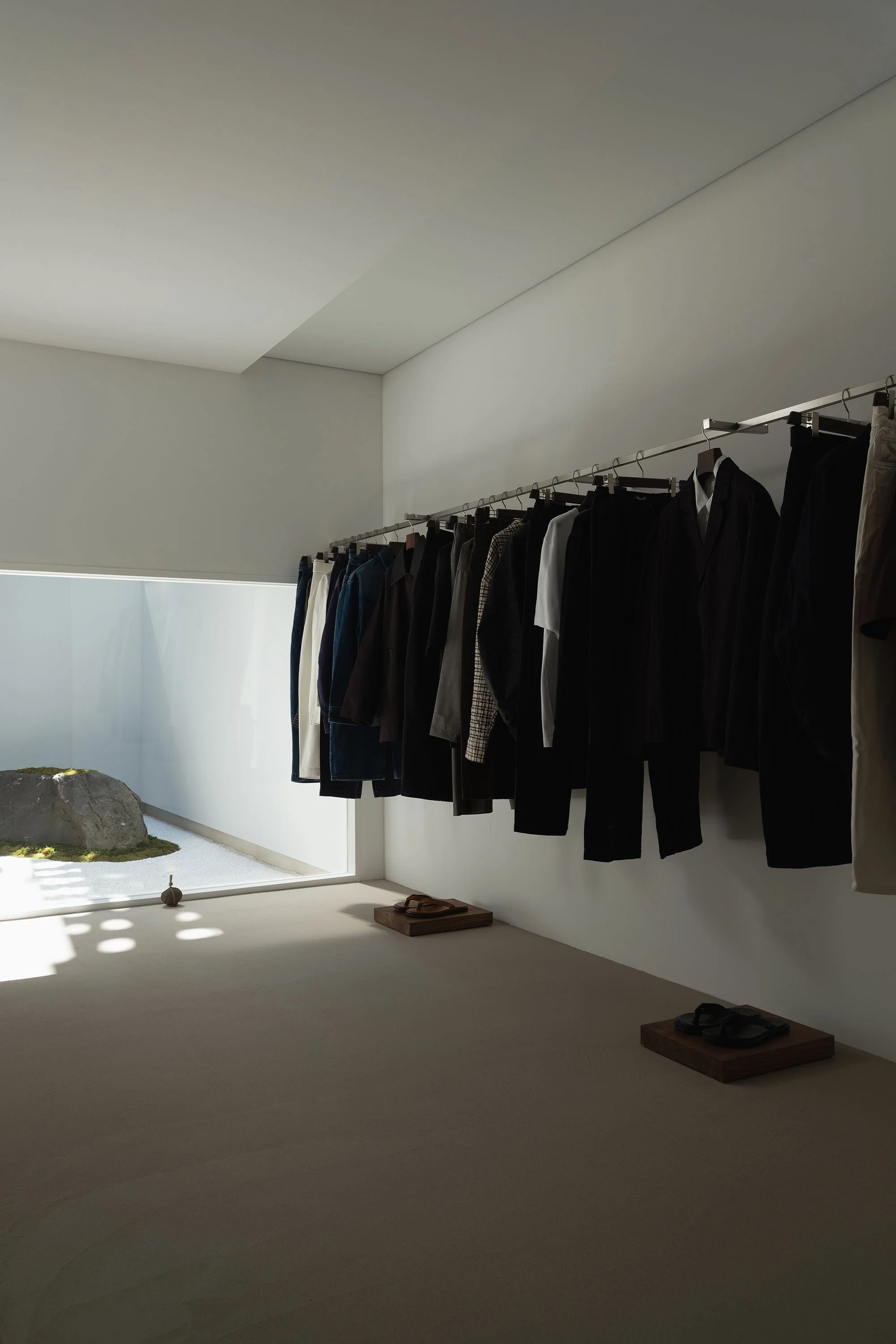
‘Japanese stores are often quite dark, but I wanted to make a very pure, minimal space,’ Wakeman tells Design Anthology. ‘It’s really important to have a light, clean space to see the clothes. I want people to see what they’re looking at.’
Studio Nicholson Kyoto is the British fashion brand’s third store in Japan, joining spaces in Aoyama and Parco in Shibuya, and its first in Kansai. The new store spans the intimate two-storey space on a narrow street in a downtown retail district. The building, formerly a precious metal workshop, was transformed by Kyoto architects Nakakura, specialists in machiya renovation for more than a century.
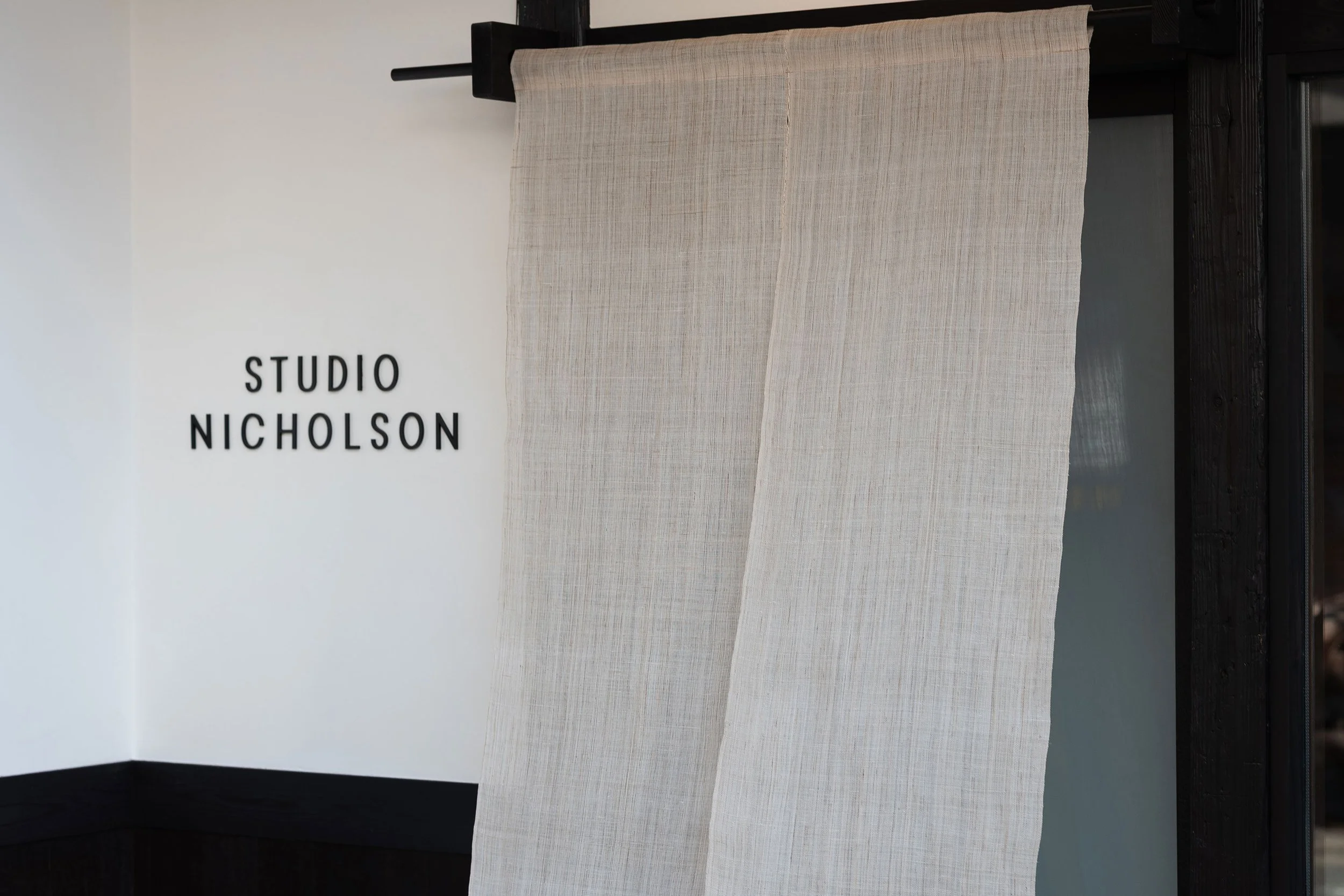
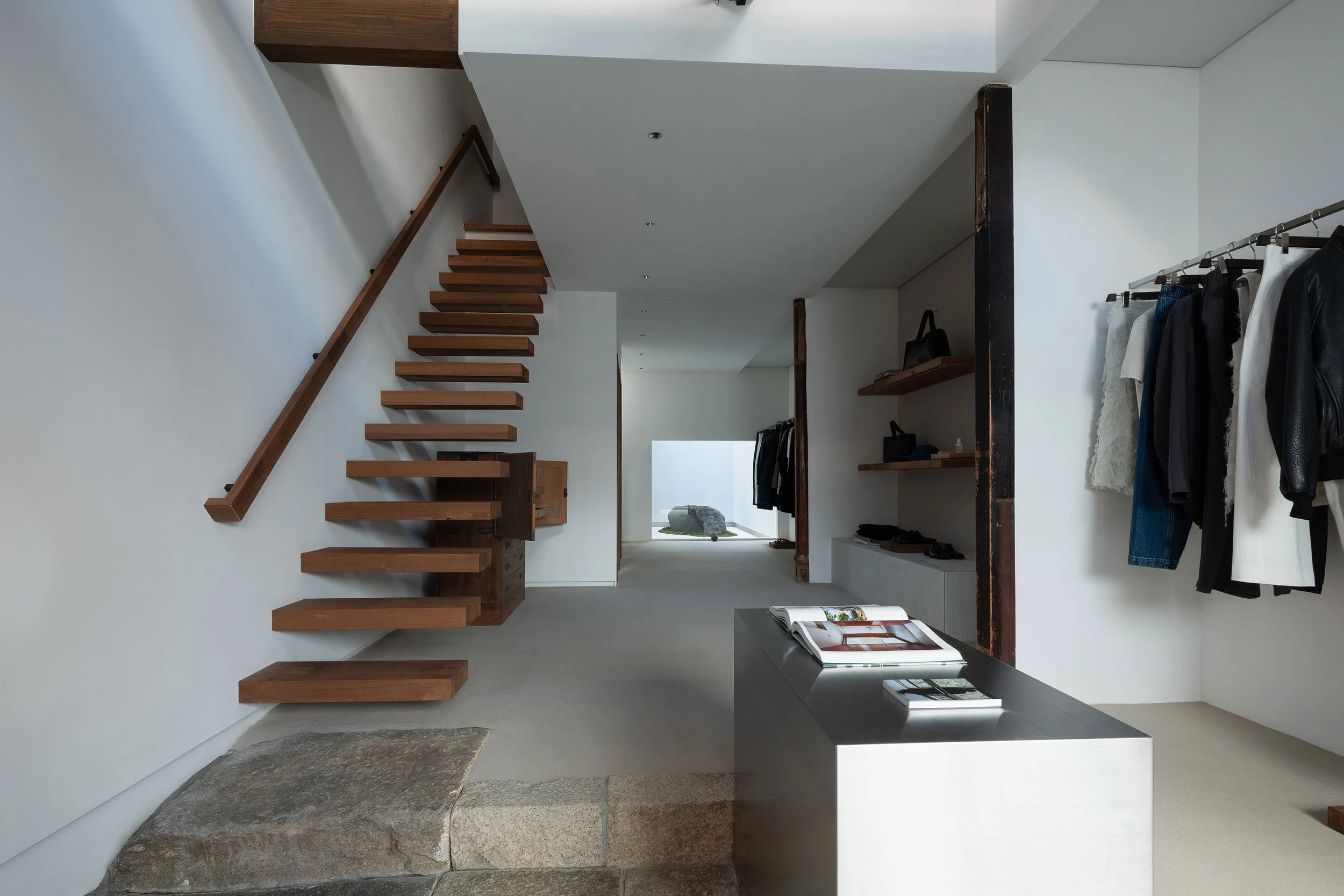
A sense of natural simplicity marks the moment of arrival: an organically textured noren curtain made from natural linen hangs at the door. On crossing the threshold, the the sense of light and space is immediate. A minimalist stainless steel counter is set against textured white walls, smooth sweeps of light grey concrete floor and narrow white cigarette tiles.
Timber touches soften the space with a crafted warmth — the minimalist steps of a floating staircase, an antique kimono drawer cabinet in paulownia wood and an original wooden door at the rear.
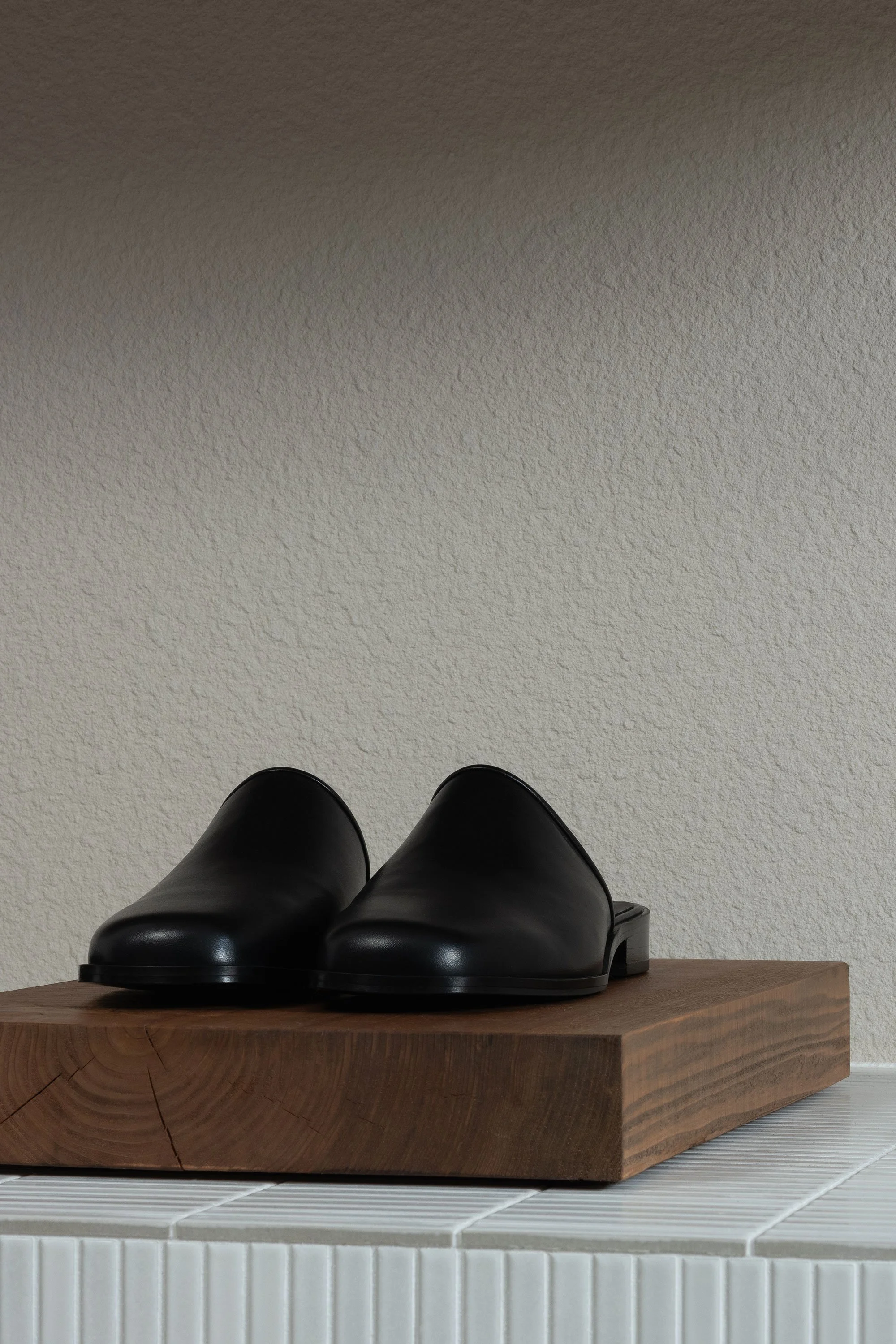
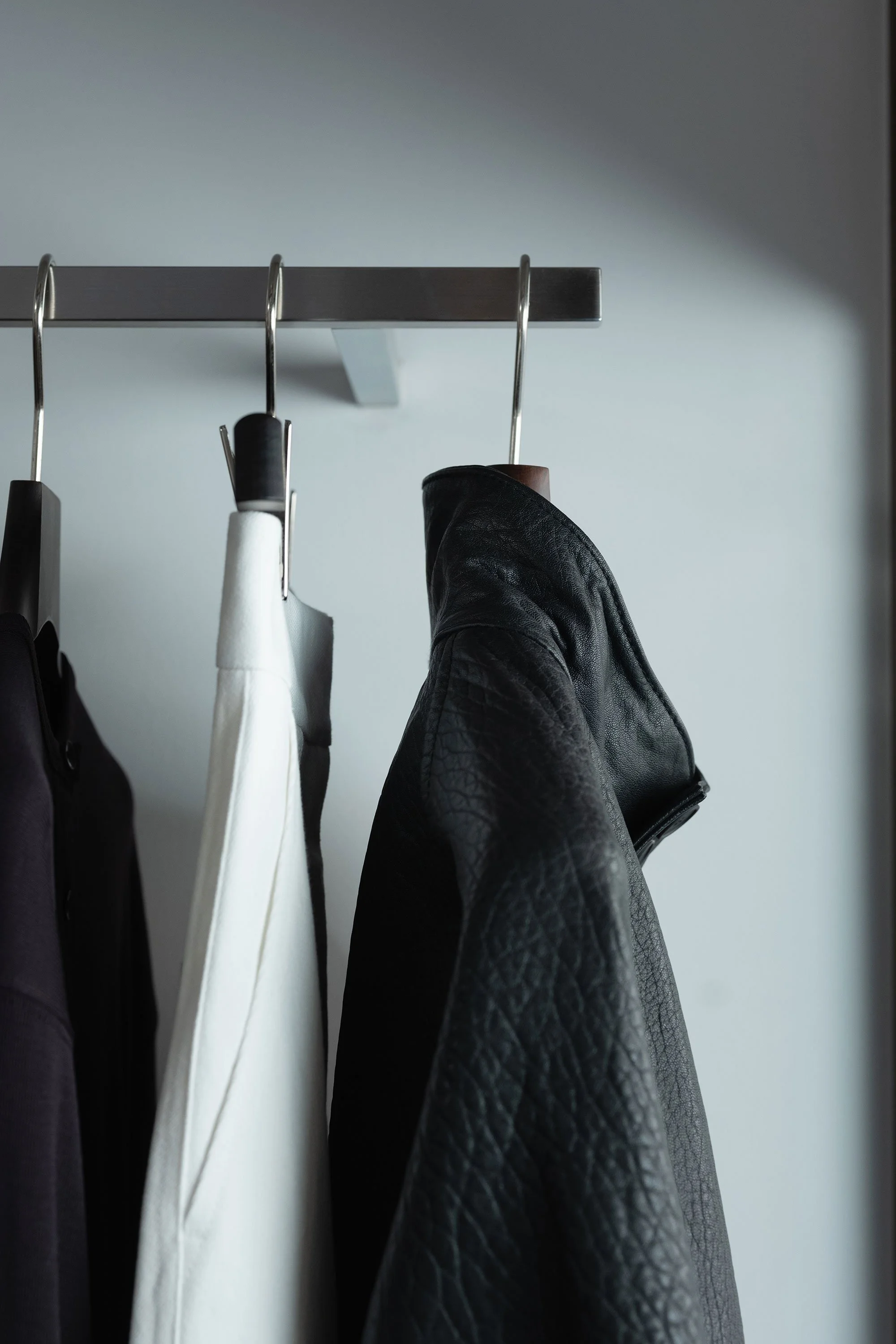
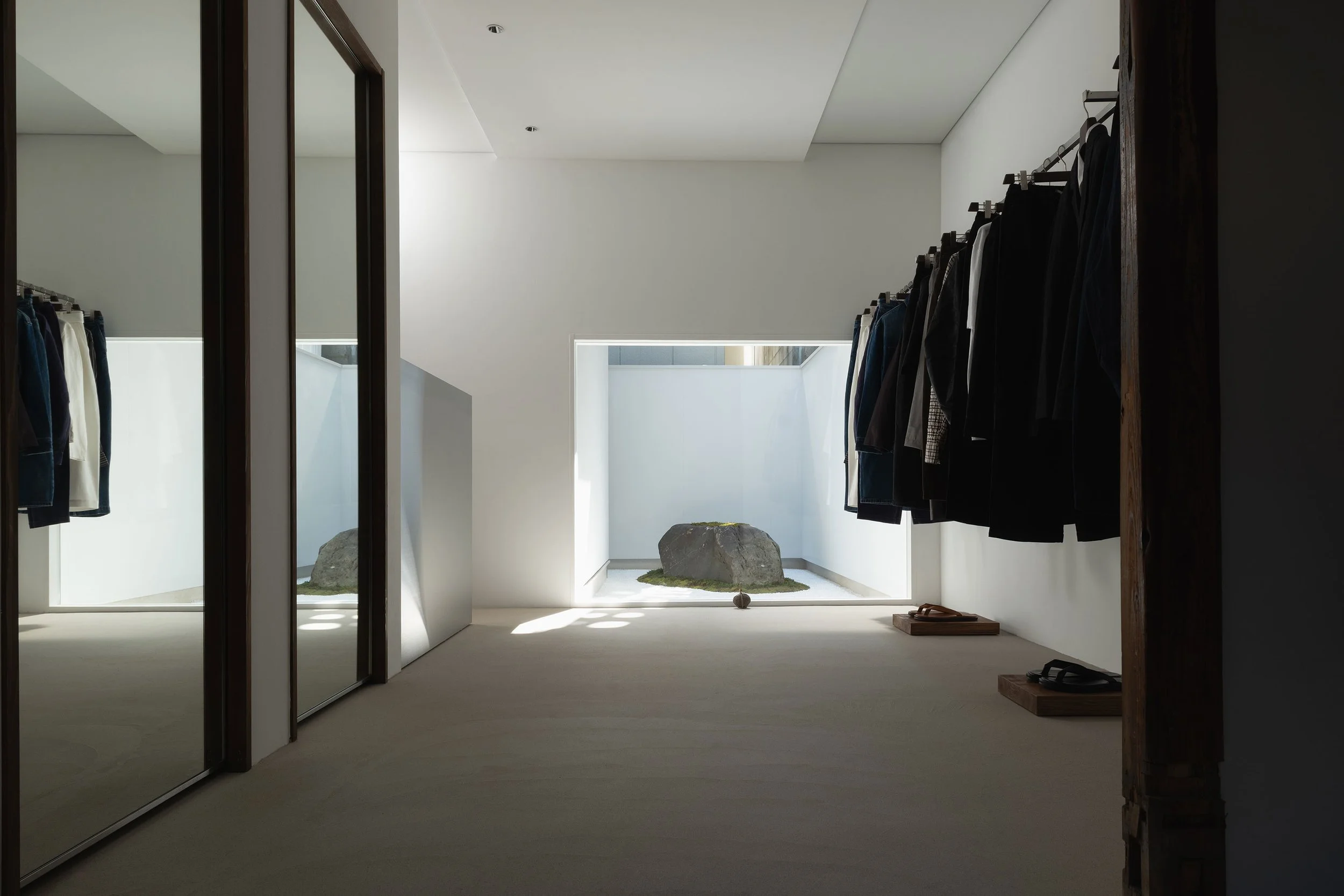
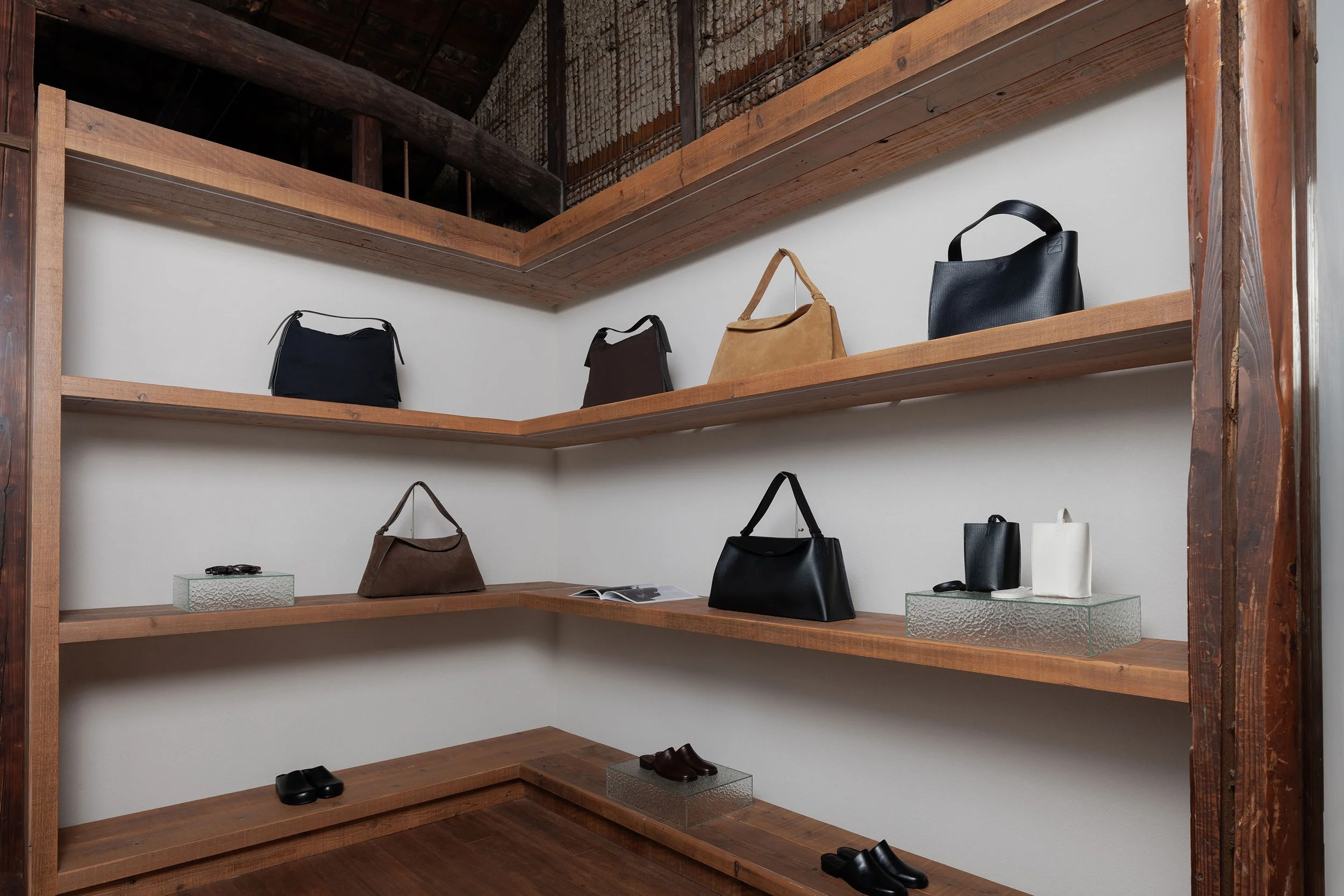
Hovering quietly inside the space is the clothing: hanging on clean metal rails evoking a light industrial edge are Studio Nicholson’s signature pared-back silhouettes in shades of black, white, deep blue, alongside clean-cut displays of wood and glass showcasing accessories.
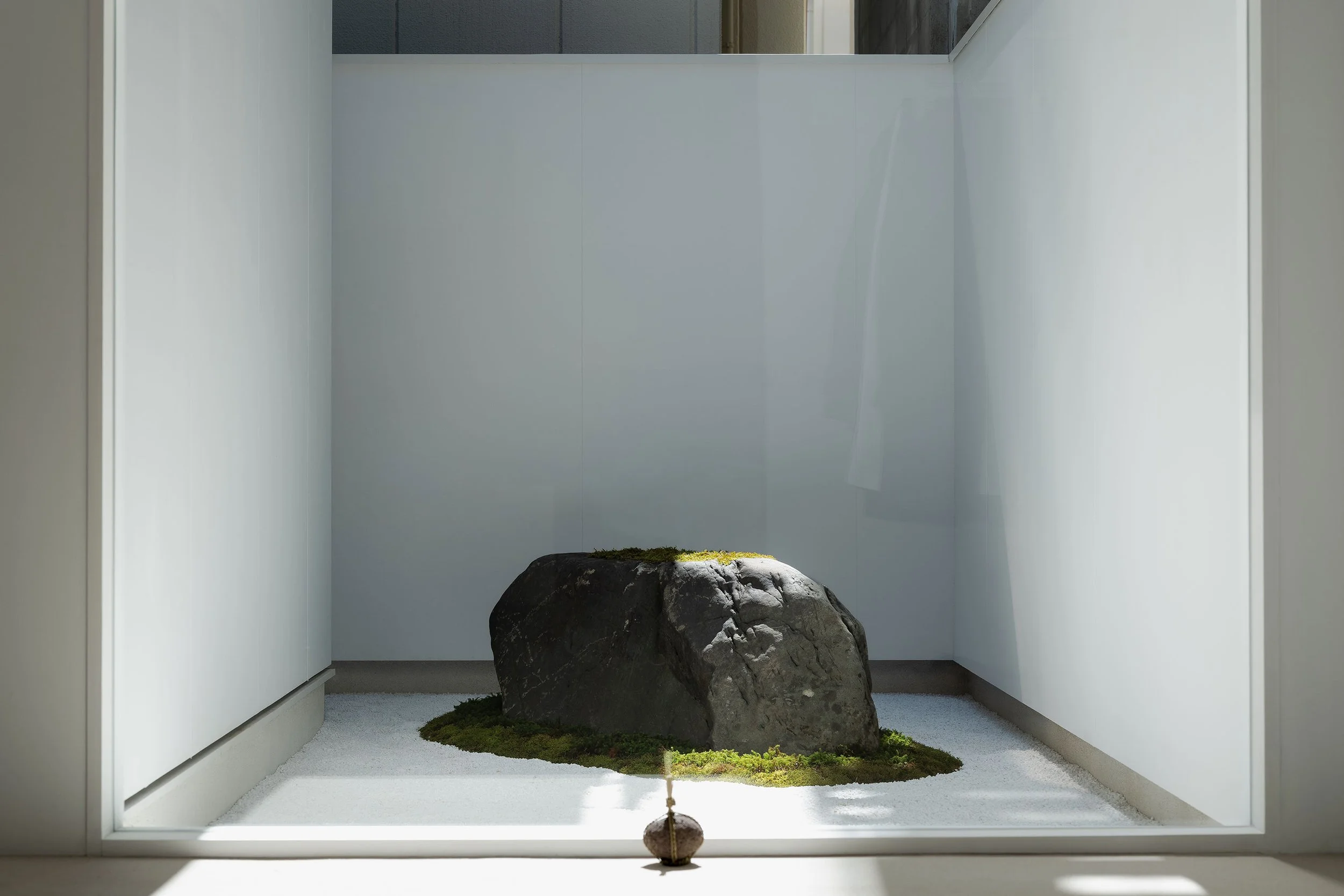
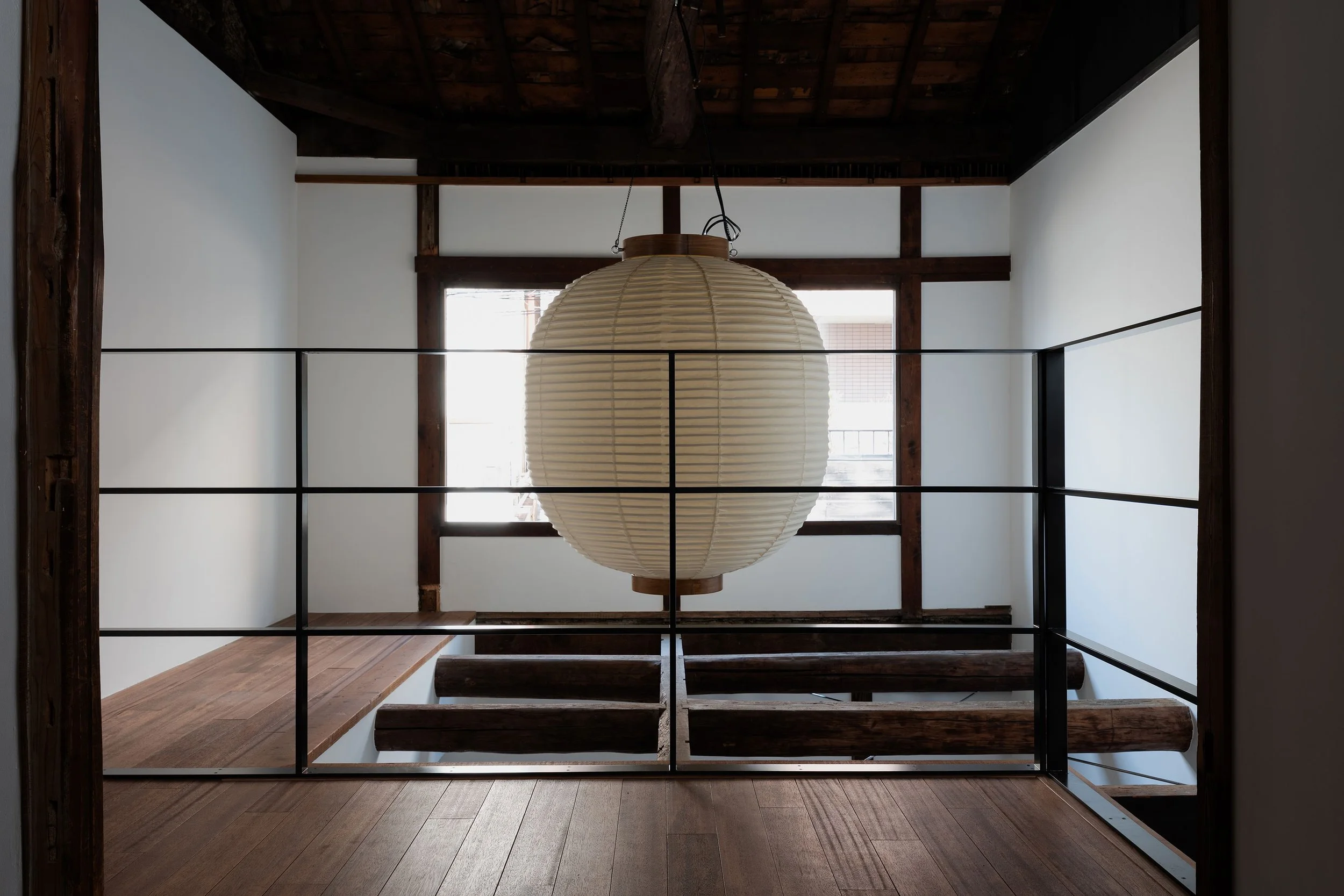
Modern lighting creates a bright atmosphere. Yet there are persistent clues into the building’s original DNA. On entering the space, the original high timber ceiling is immediately visible. At the rear, a cut-out window frames an inner courtyard garden known as a tsuboniwa: here, a large boulder from a nearby Kyoto quarry sits wrapped in jewel-green moss, minimalist walls of white rising around it.
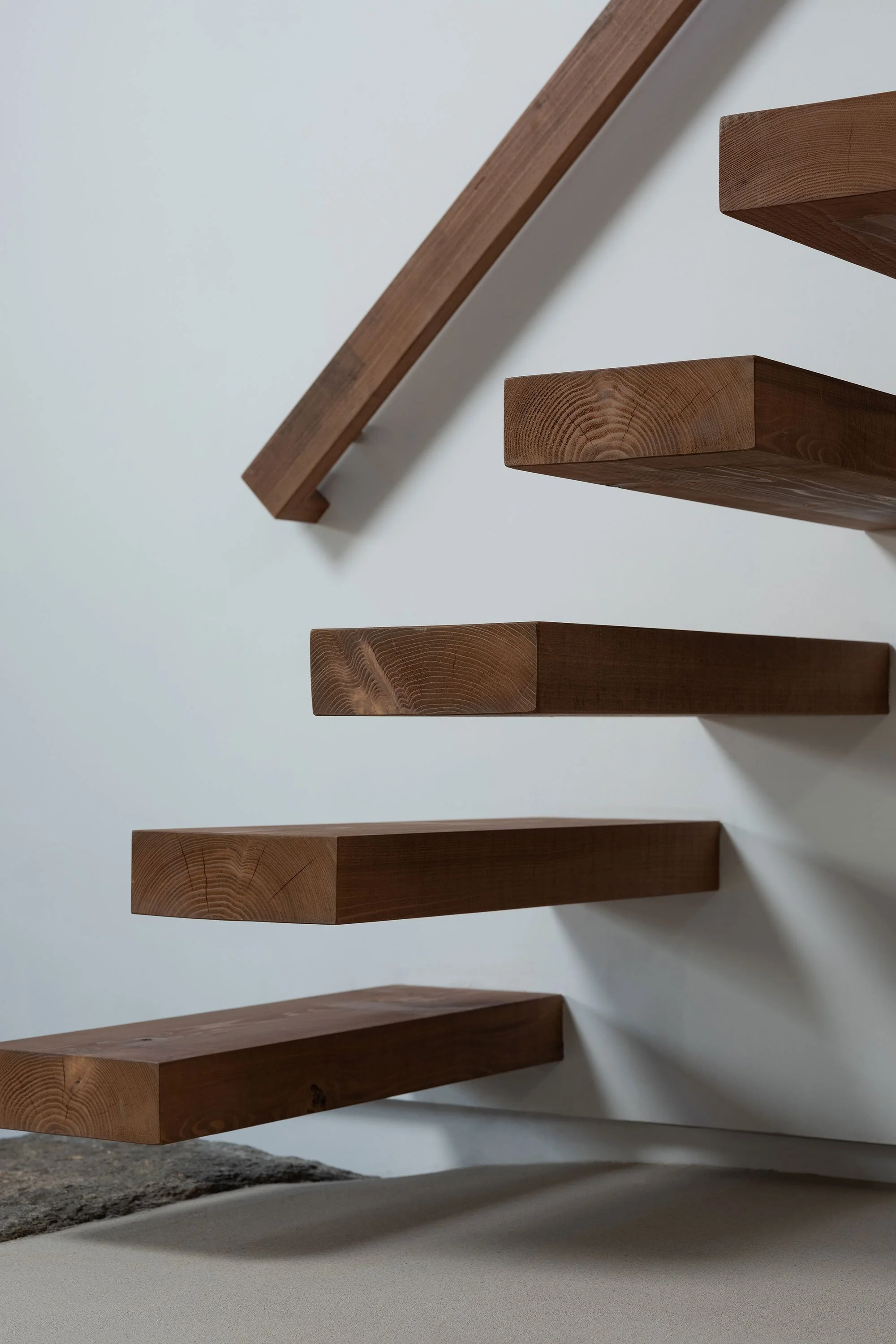
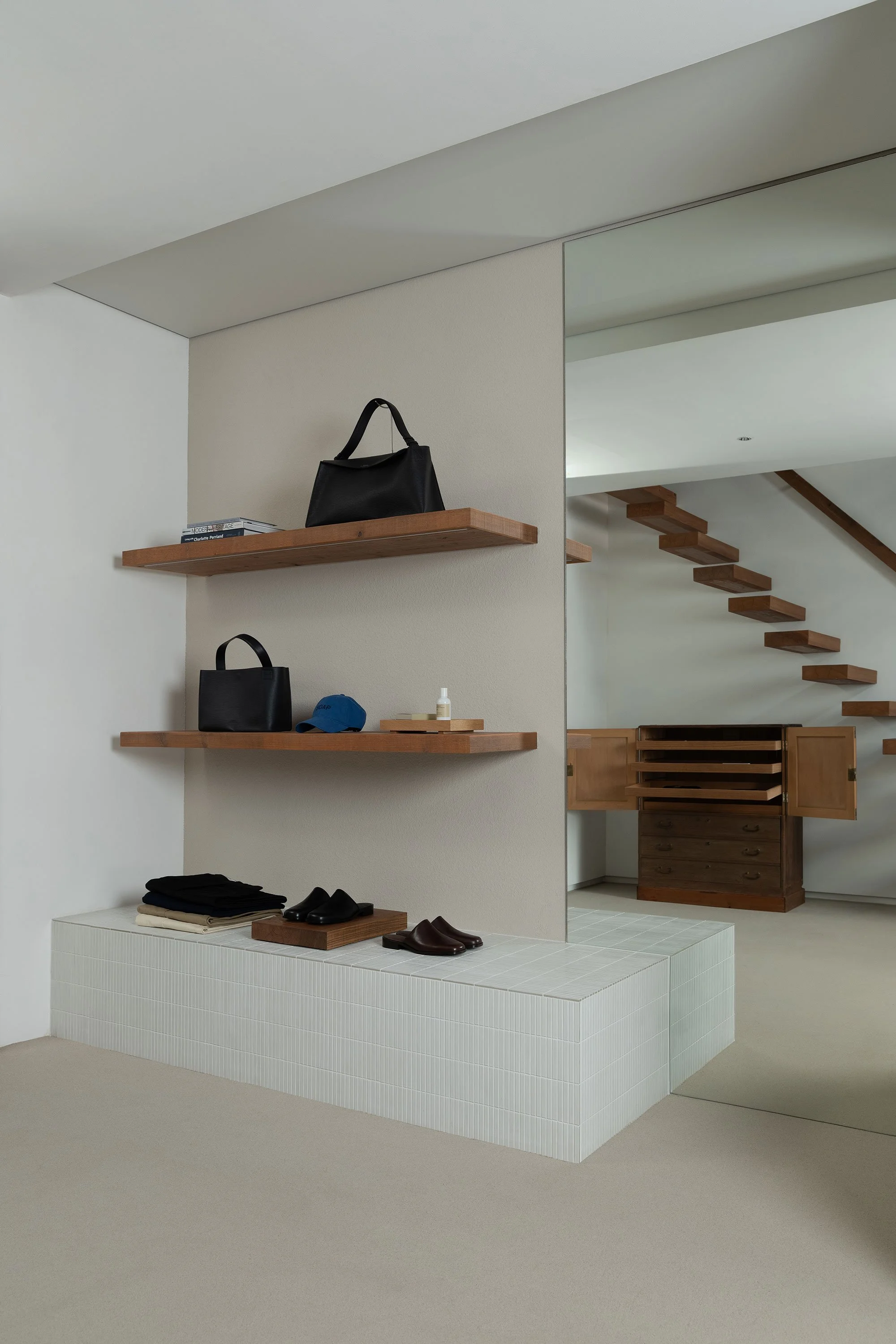
The staircase floats upstairs to a more intimate space, where a shoe lounge with a Carl Hansen & Søn daybed sits alongside the inky beauty of a botanically dyed capsule collection with Japanese brand Échapper, marking the Kyoto opening.
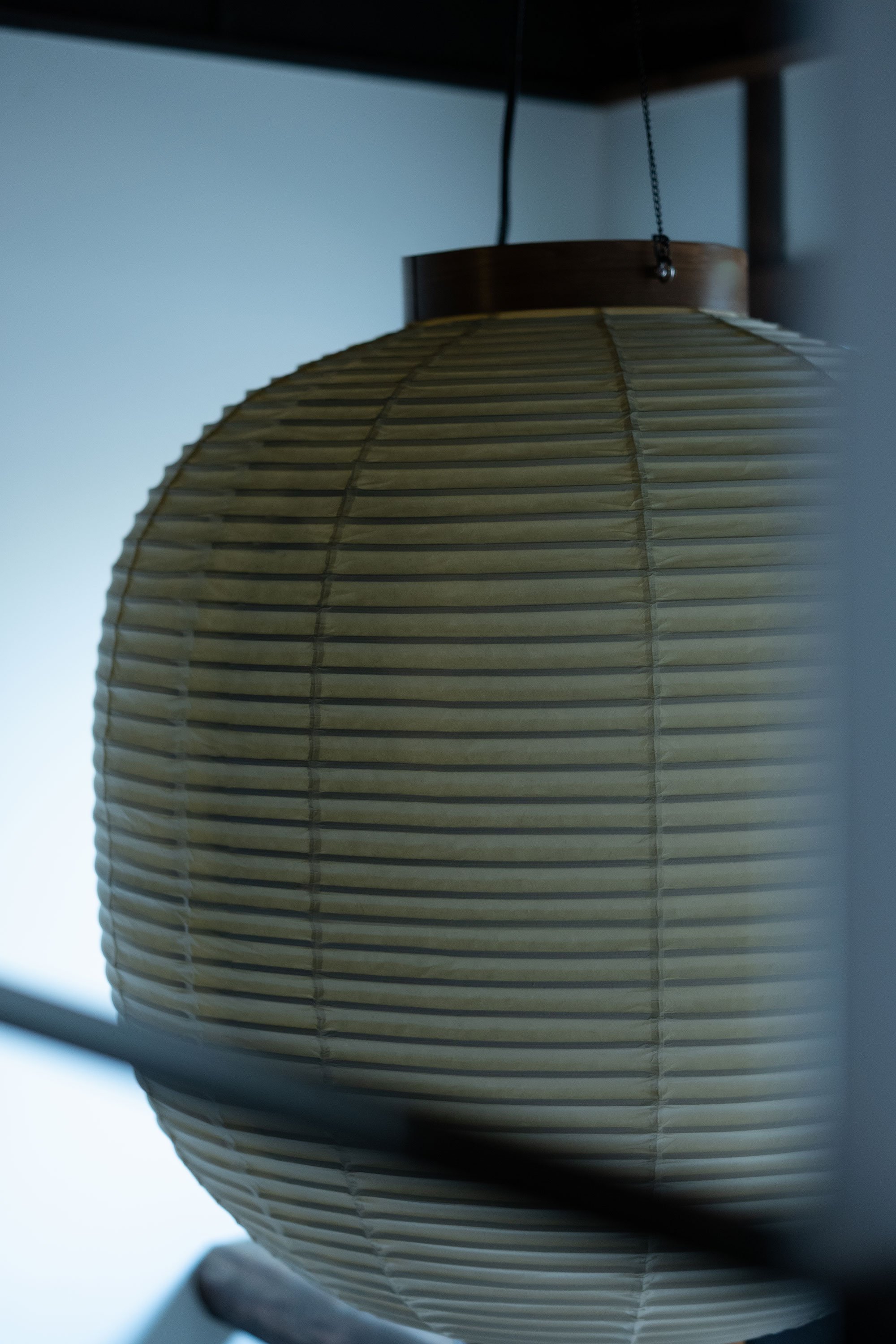
Mirrors expand the space, reflecting history written into textural expanses of walls with exposed insulation and a 1.2-metre high traditional Kyoto paper lantern known as a kyo-chochin, which hanging from the rafters and conceals the store’s sound system.
‘This is my style,’ says Wakeman, sitting on the daybed in a monochromatic outfit of crisp cottons with tinted glasses that fits in perfectly with the scenescape around her. ‘It’s about building the old with the new. I like putting old pieces of furniture, like the kimono drawers, with really modern pieces.’
Wakeman’s approach applies equally to the material palette. ‘There are some materials that we use in our other stores: the cigarette tiles and the micro-cement flooring. But we also used a lot of reclaimed wood from this building,’ she says. ‘For me, it’s about juxtaposing materials — I like warm woods and stainless steel. That’s how I approach fabrics as well: I look at what’s shiny, what’s chalky, what are the opposing properties of fabrics.’
The Kyoto space is the culmination of a long-standing relationship with Japan for Wakeman. She first visited the country in 1999 while working in the fashion industry, more than a decade before setting up Studio Nicholson in 2010. Today, the brand’s Japan ties run deep: ‘Without Japan, we wouldn’t have a business,’ she says. ‘Japanese stores were my first customers. And what followed from our success in Japan is success in South Korea, Taiwan, China.’
With a dozen stores globally, Studio Nicholson plans to steadily continue its Asian expansion — and underpinning the brand’s growing presence in Japan is Wakeman’s enduring passion for the region. ‘When I’m here, my eyes are on stalks all the time,’ she says. ‘I’m constantly looking at the textures and materials and tiling and paper. It’s very haptic. Even the food is sensory. I’ll never fall out of love with Japan.’
Studio Nicholson Kyoto: 268 Enpukuji-maecho, Teramachi-dori Takoyakushi Sagaru, Nakagyo-ku, Kyoto.
Text by Danielle Demetriou
Images by Teo Josserand