The Man Who Builds Nests in Other People’s Buildings
From the streets of Tokyo to the vineyards of Champagne, Japanese artist Tadashi Kawamata crafts whimsical, ephemeral architectural sculptures that cling to buildings and trees, offering a poetic commentary on freedom and impermanence
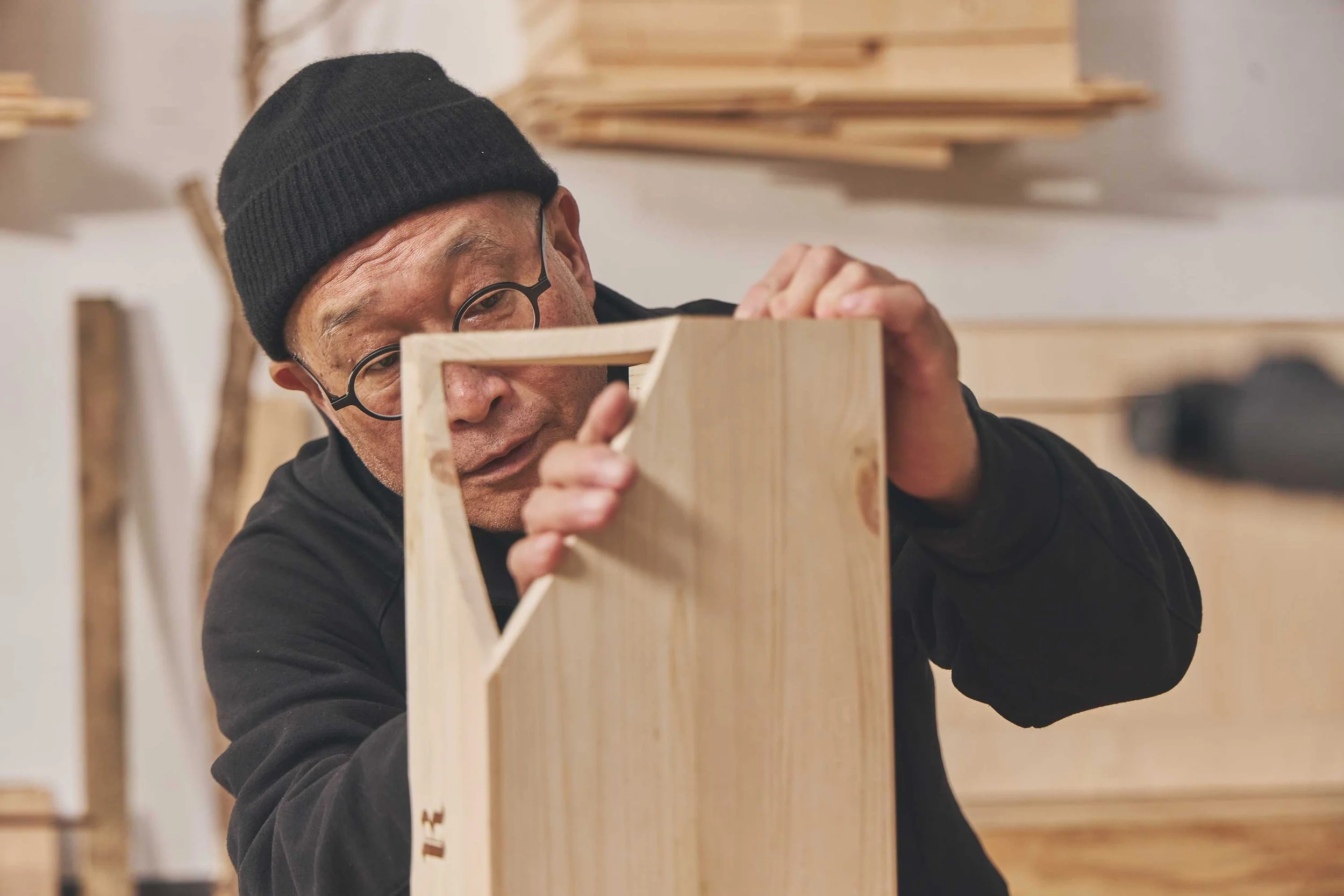
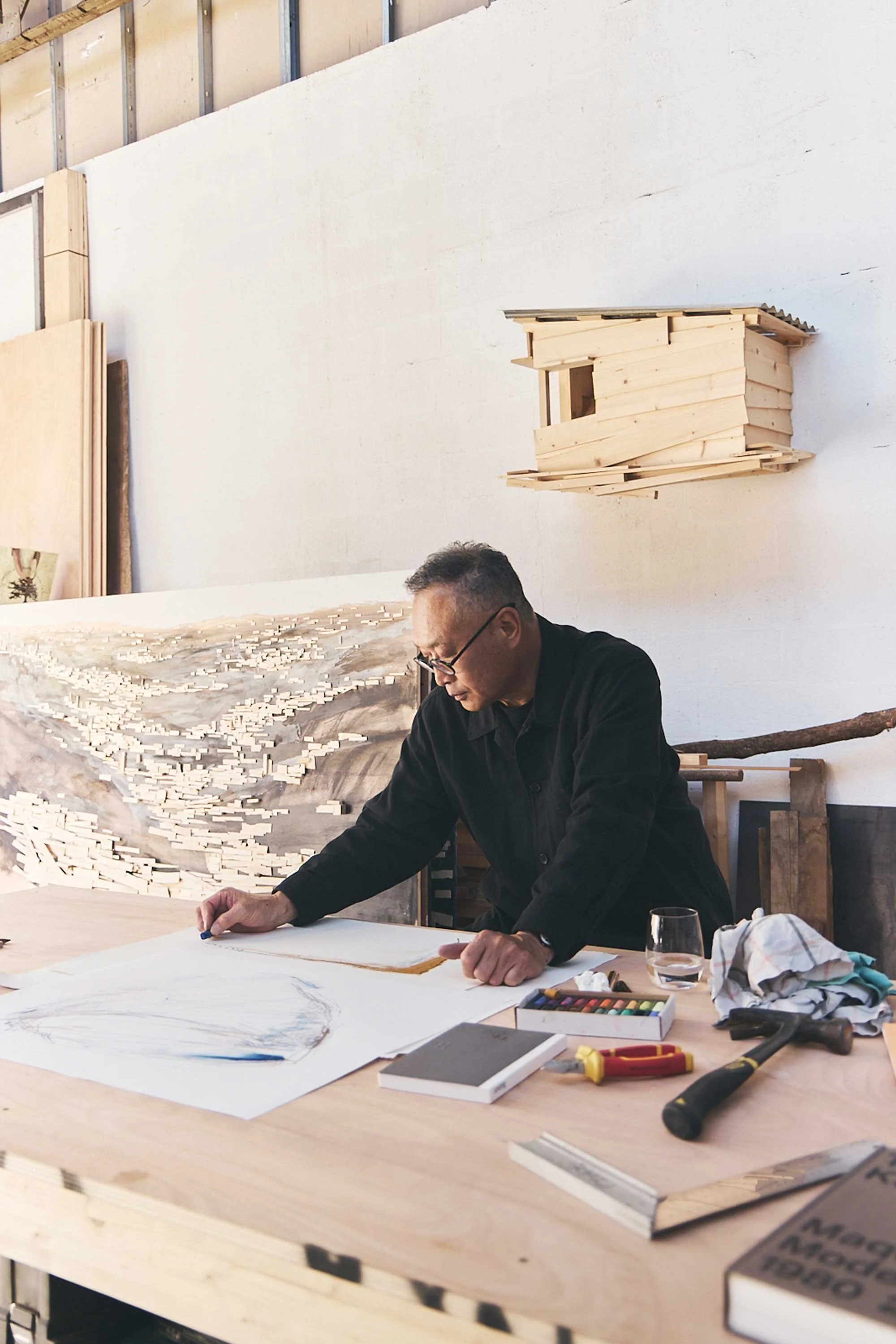
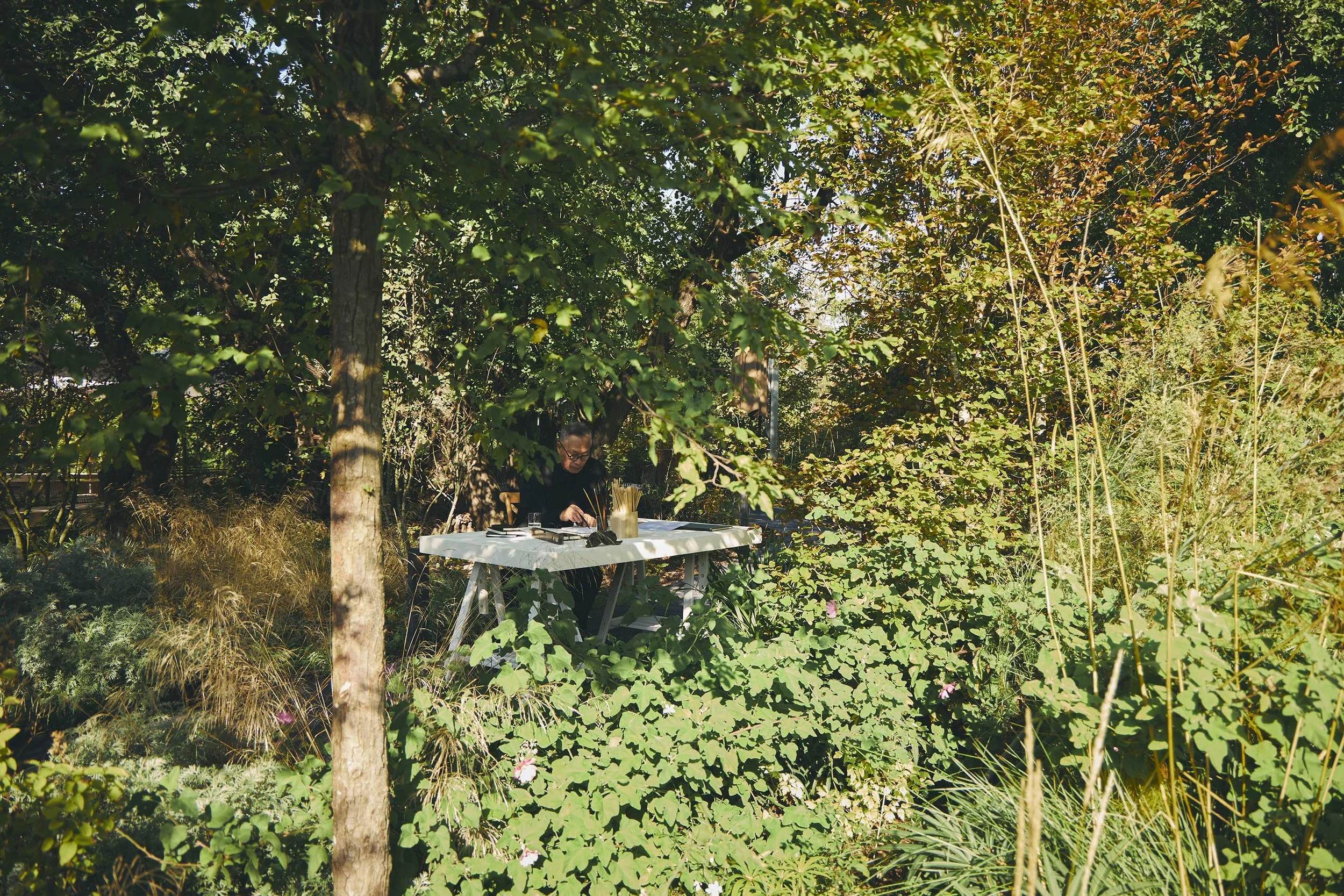
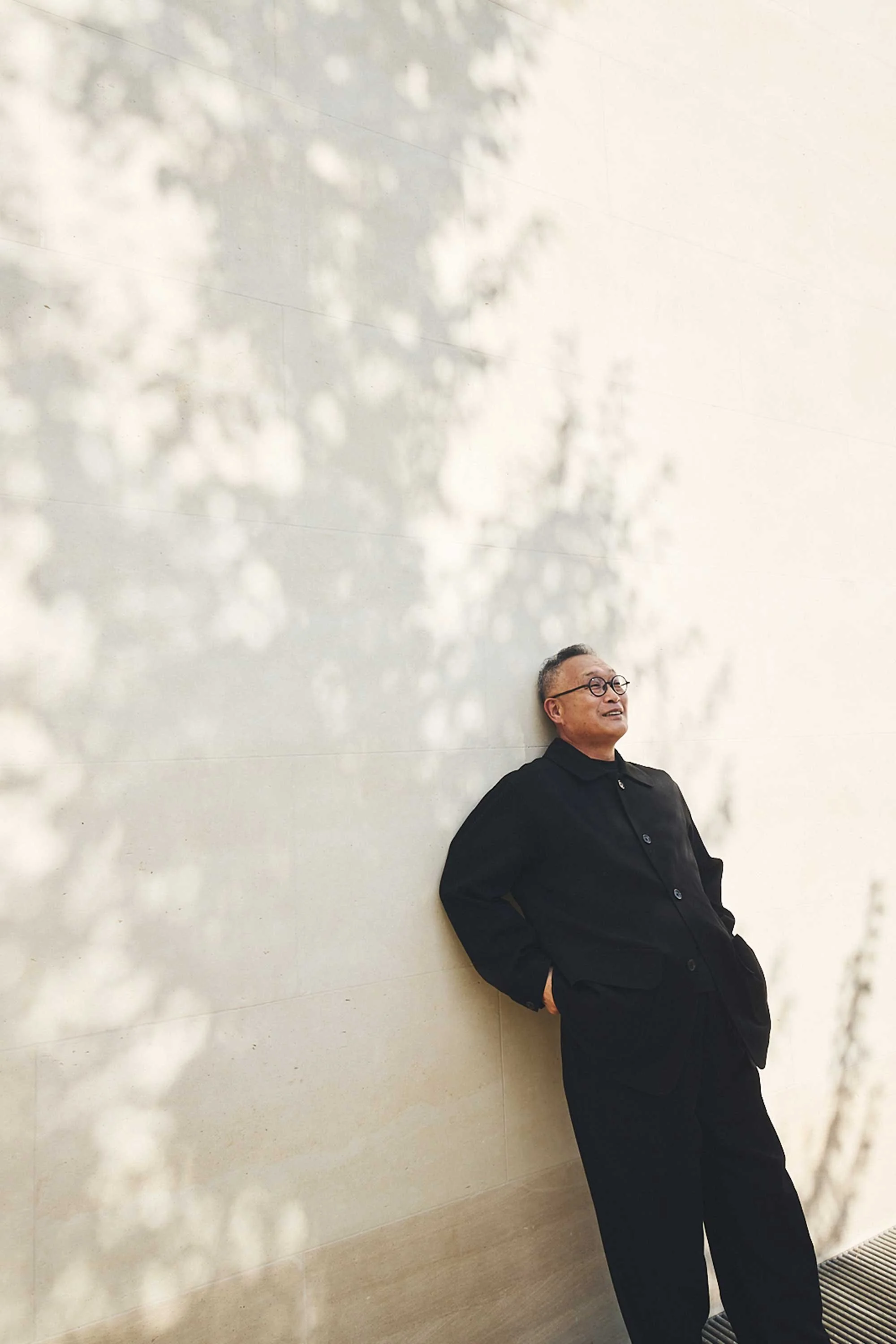
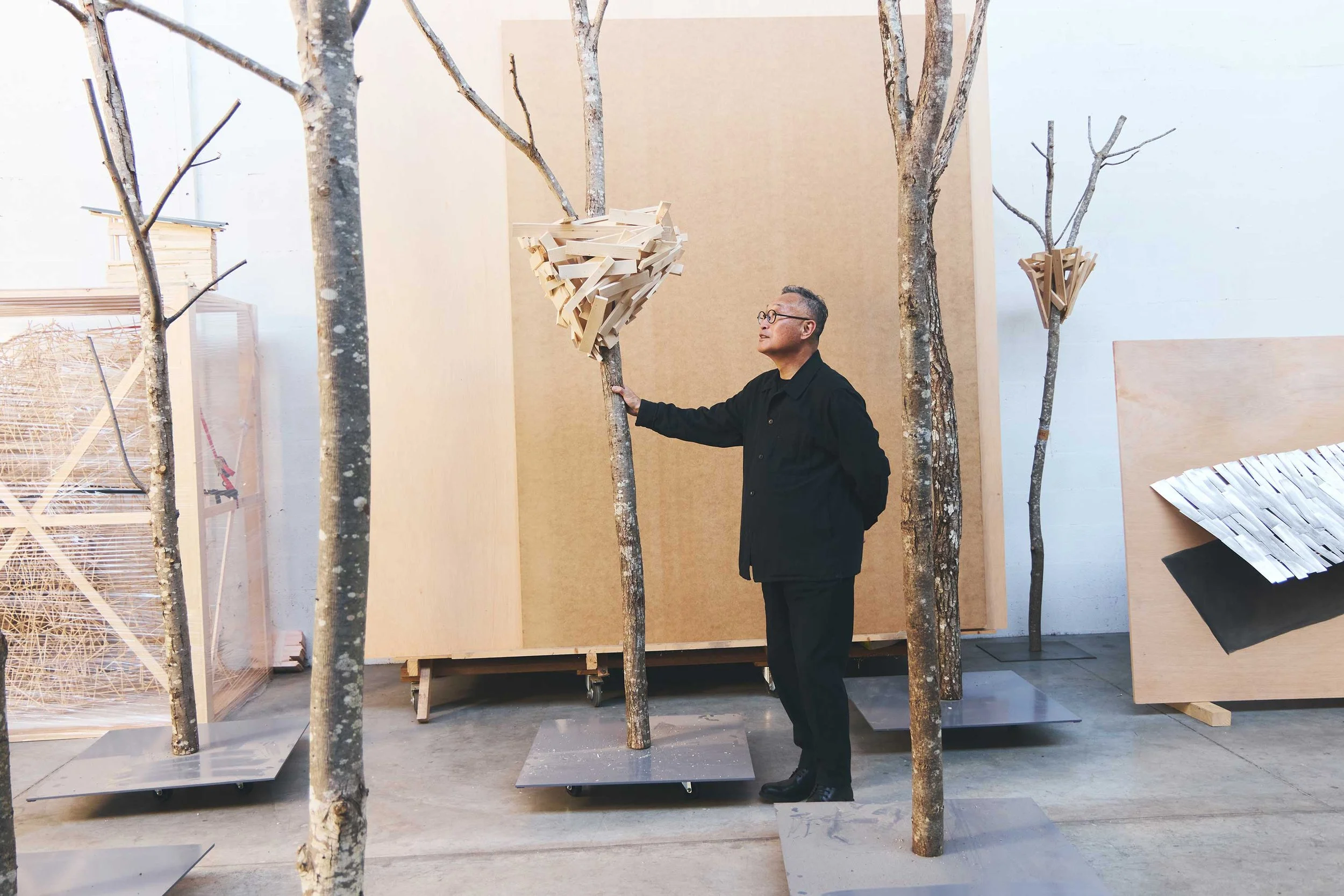
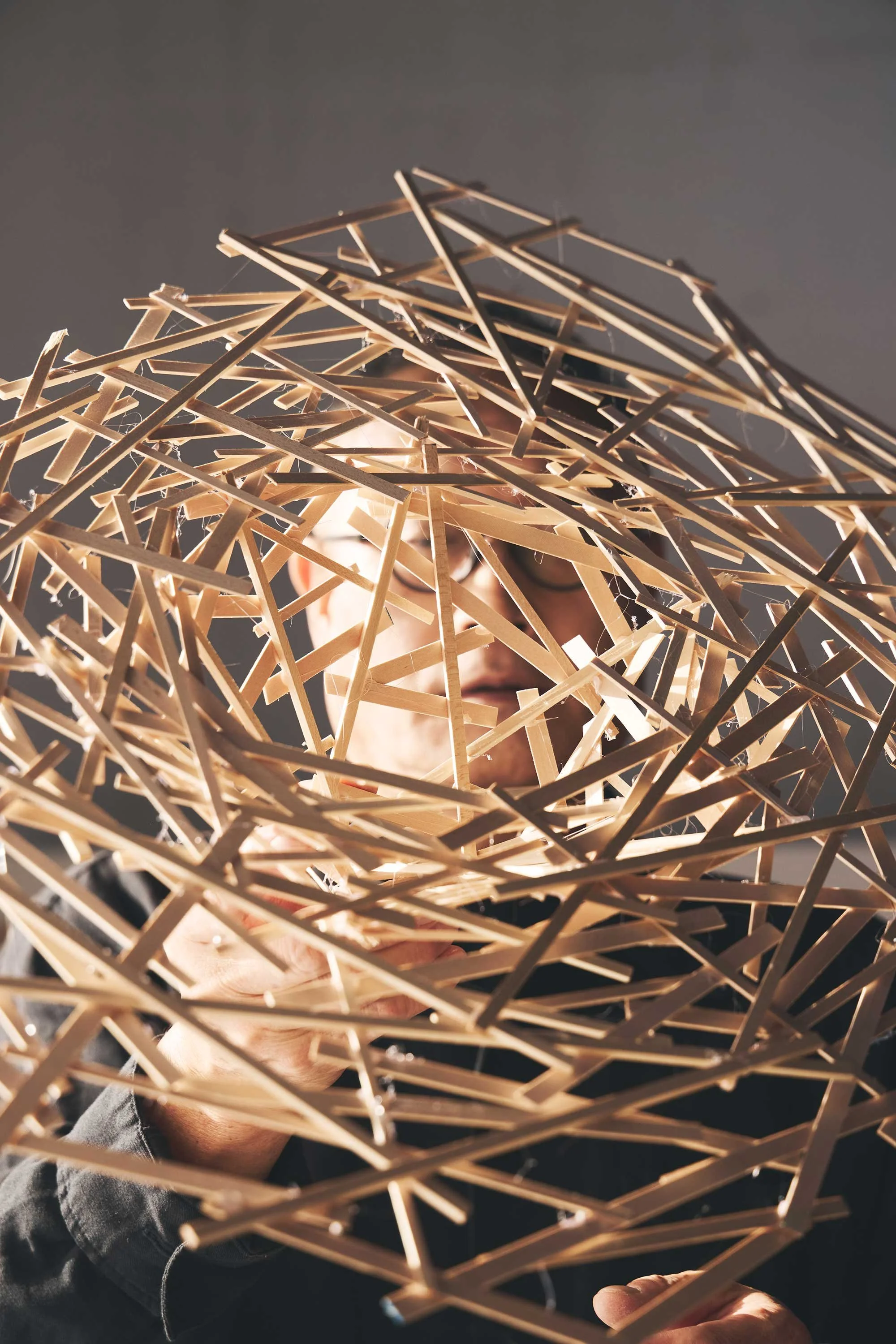
Like a human weaver bird, the Japanese artist Tadashi Kawamata conjures up whimsical bivouacs, grafting timber planks and old bistro chairs to buildings and trees. He does so with such dexterity and poetic licence that a wary viewer might be forgiven for fearing his sculptures may simply scatter in the wind, like dandelion heads.
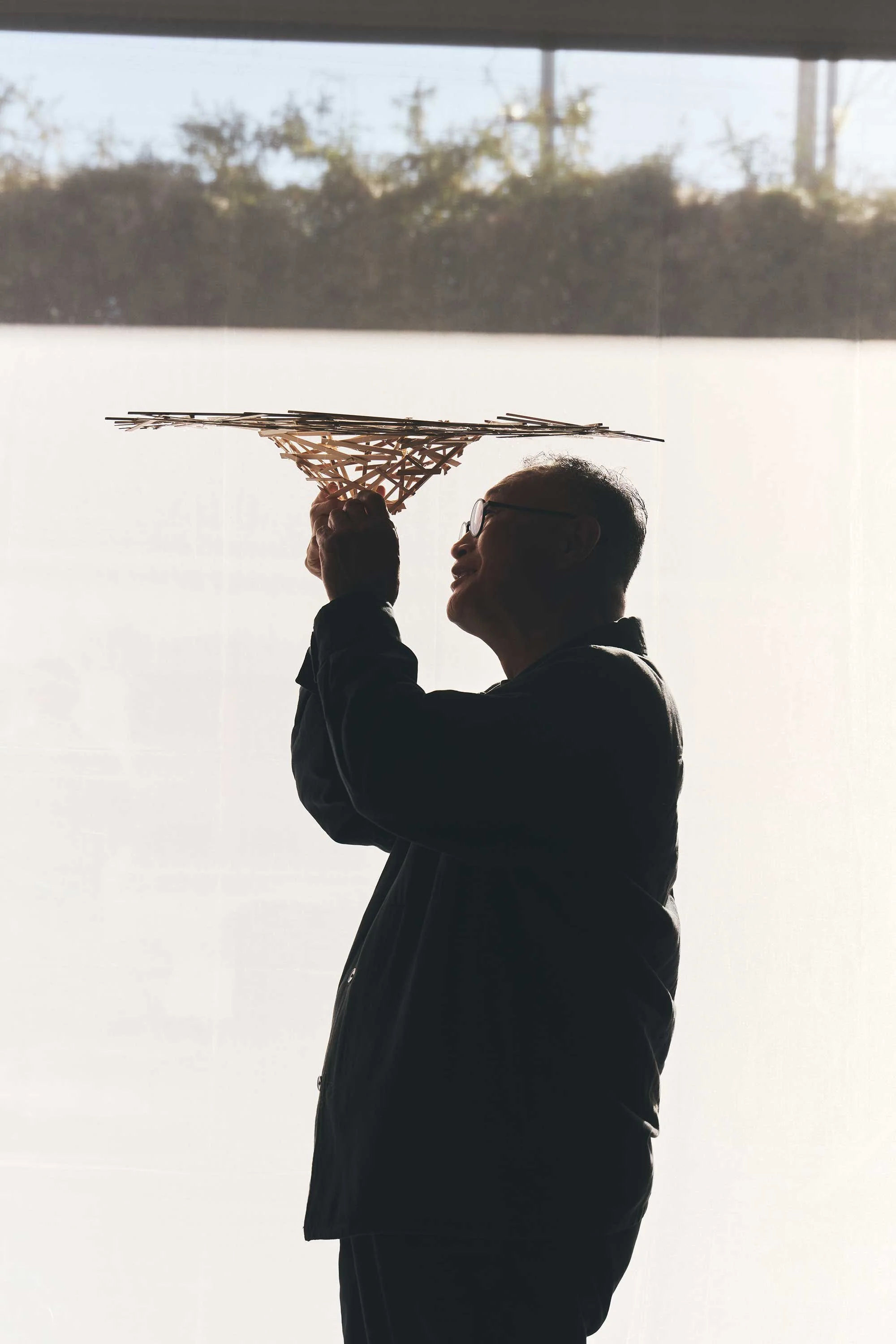
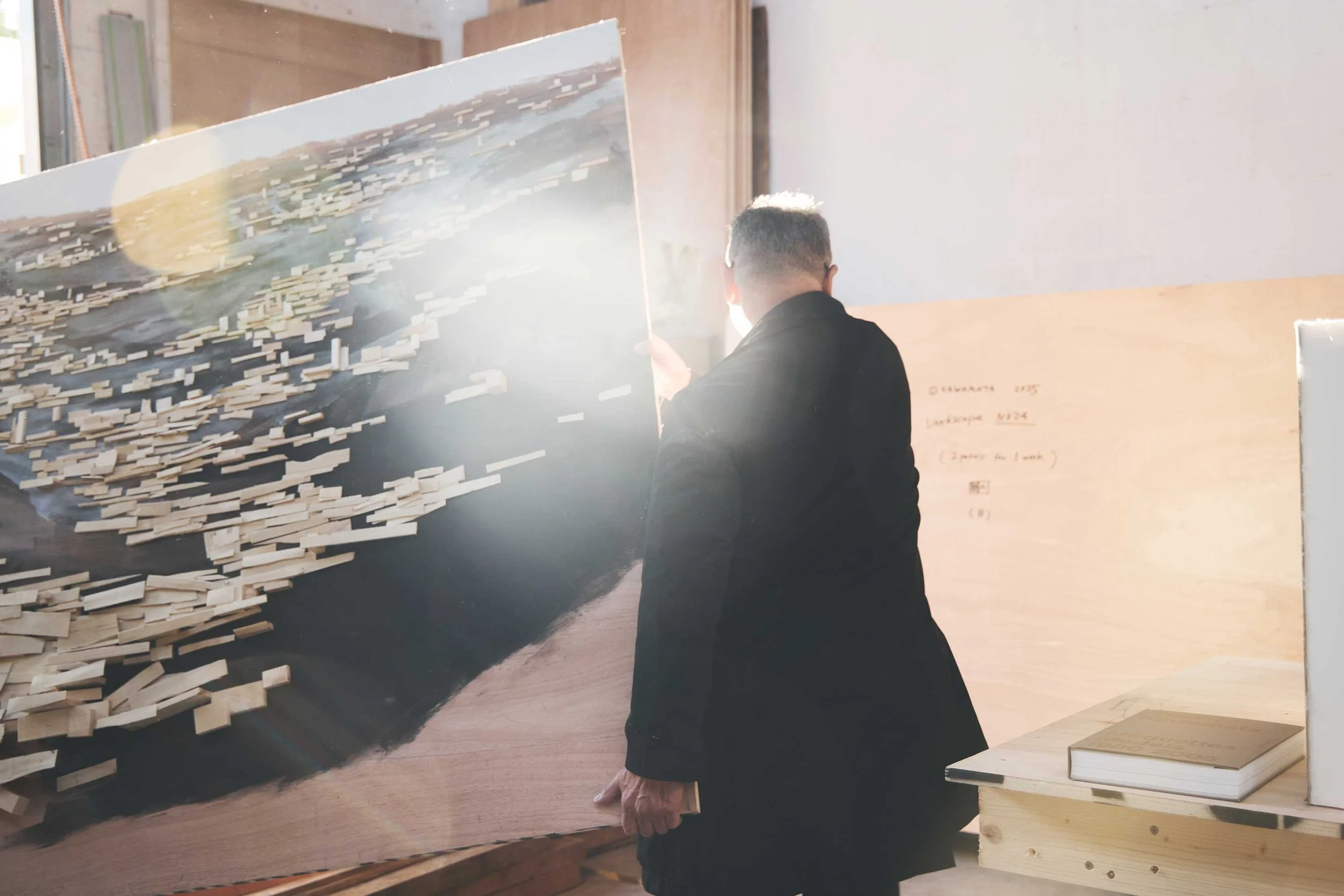
Born the son of a coal miner on the island of Hokkaido in post-Second World War Japan, the 72-year-old artist was a young darling of the Tokyo scene, studying painting and establishing his sculptural practice before a breakout participation at the Venice Biennale in 1982. Government grants and professorships saw him travel to New York and Paris to make art and teach, with the liberté of the Beaux-Arts de Paris nurturing his nomadic ways much more than the rigorous Japanese institutions of his youth. In New York, he made a pilgrimage to PS1 in the footsteps of Gordon Matta-Clark and encountered Jean-Michel Basquiat and Keith Haring, whose influence coupled with the wider graffiti movement saw Kawamata experiment with ephemeral works on the streets of NYC. ‘There, I made a kind of fake homeless shelter on the street,’ he reminisces. ‘This was a starting point for me with cardboard and wrapping something. It was quite fragile — the kind of thing that in just ten minutes would’ve blown away.’
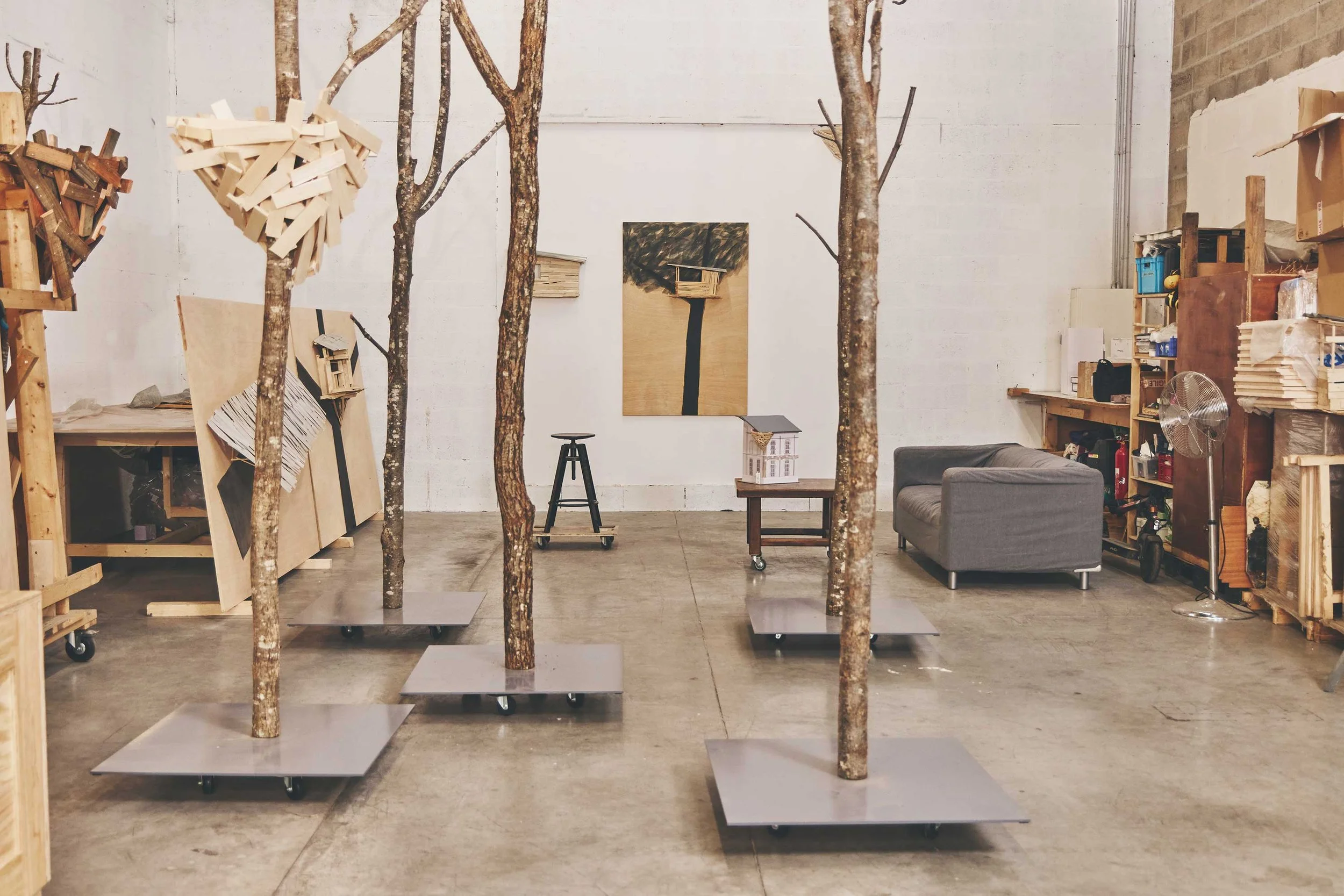
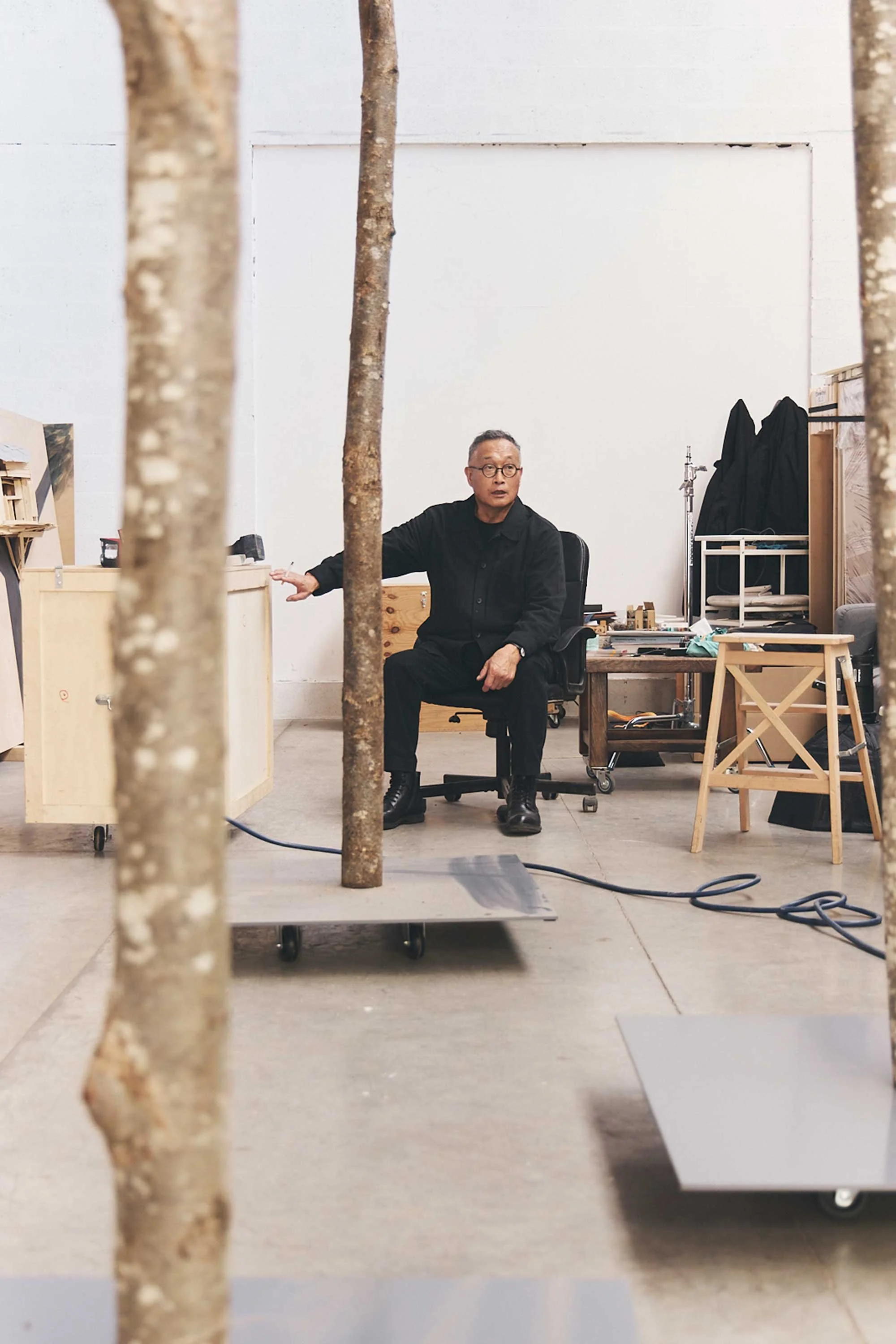
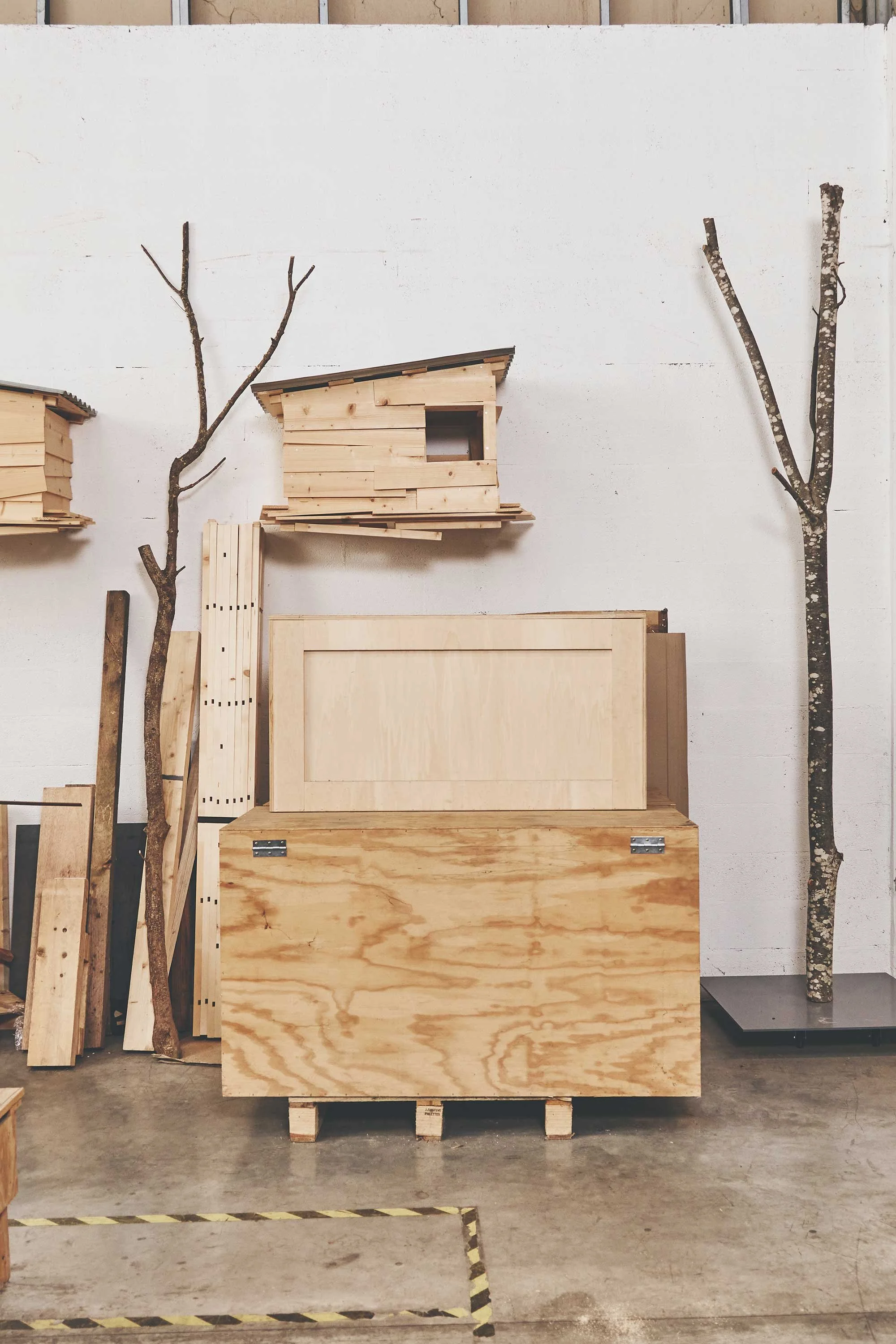
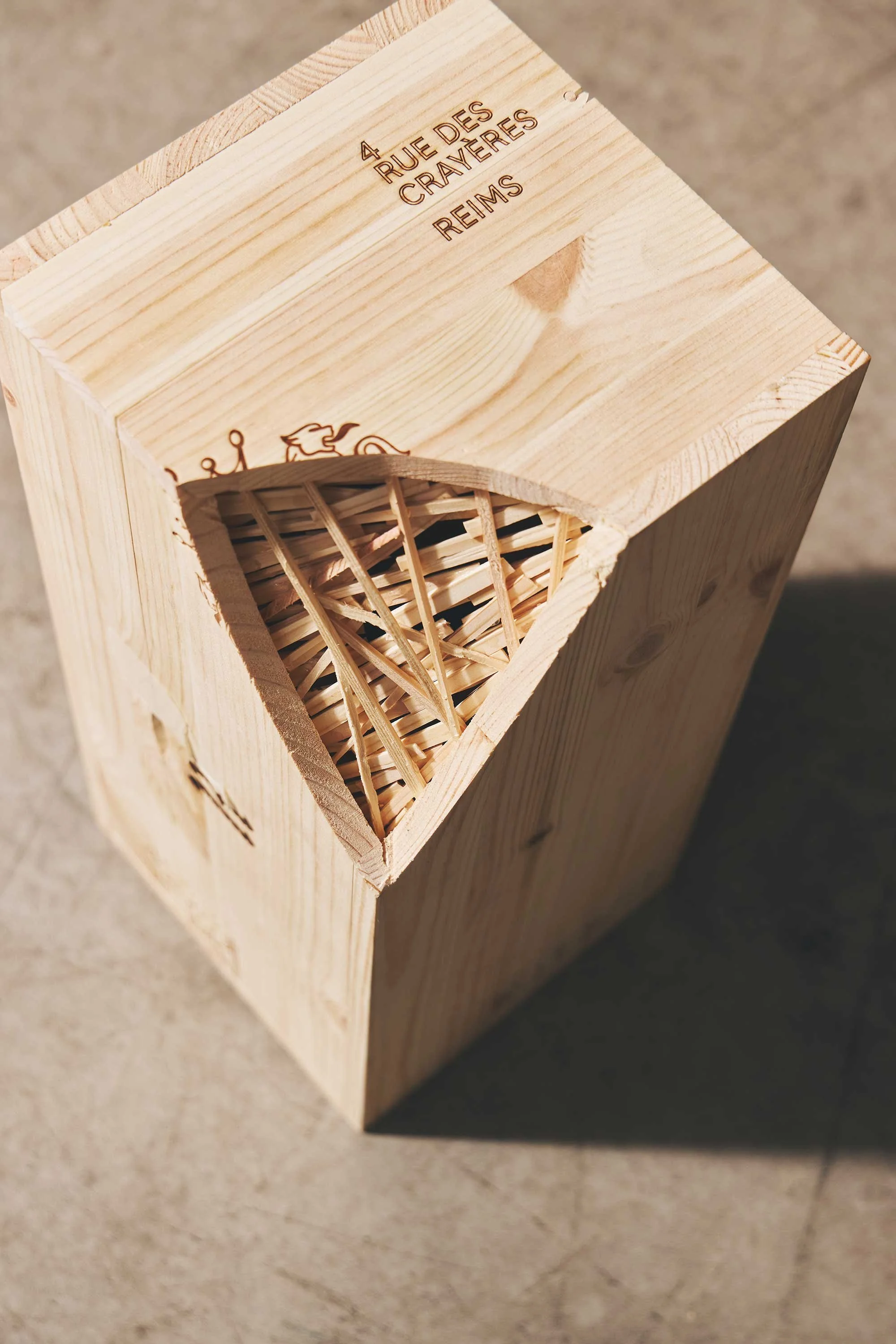
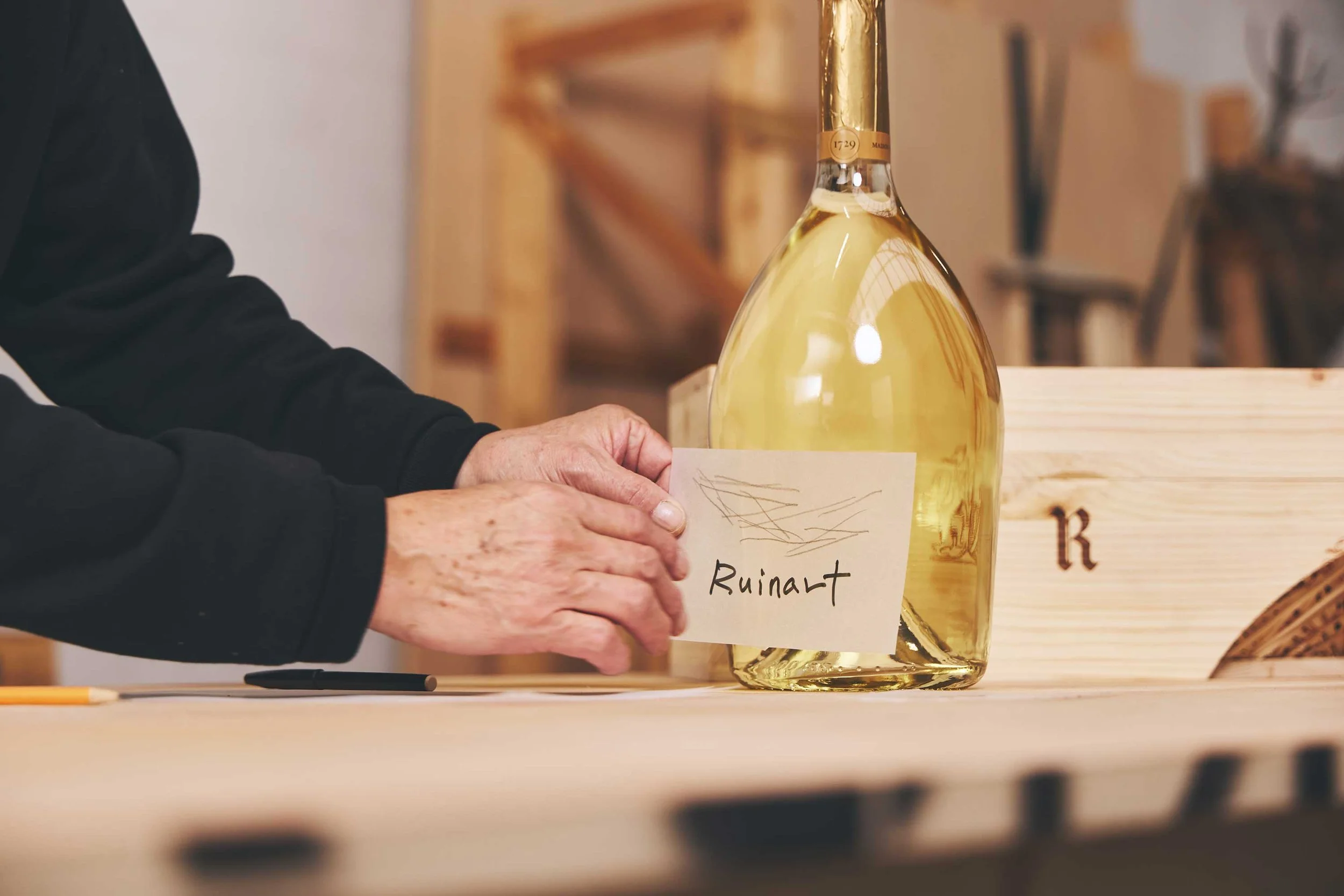
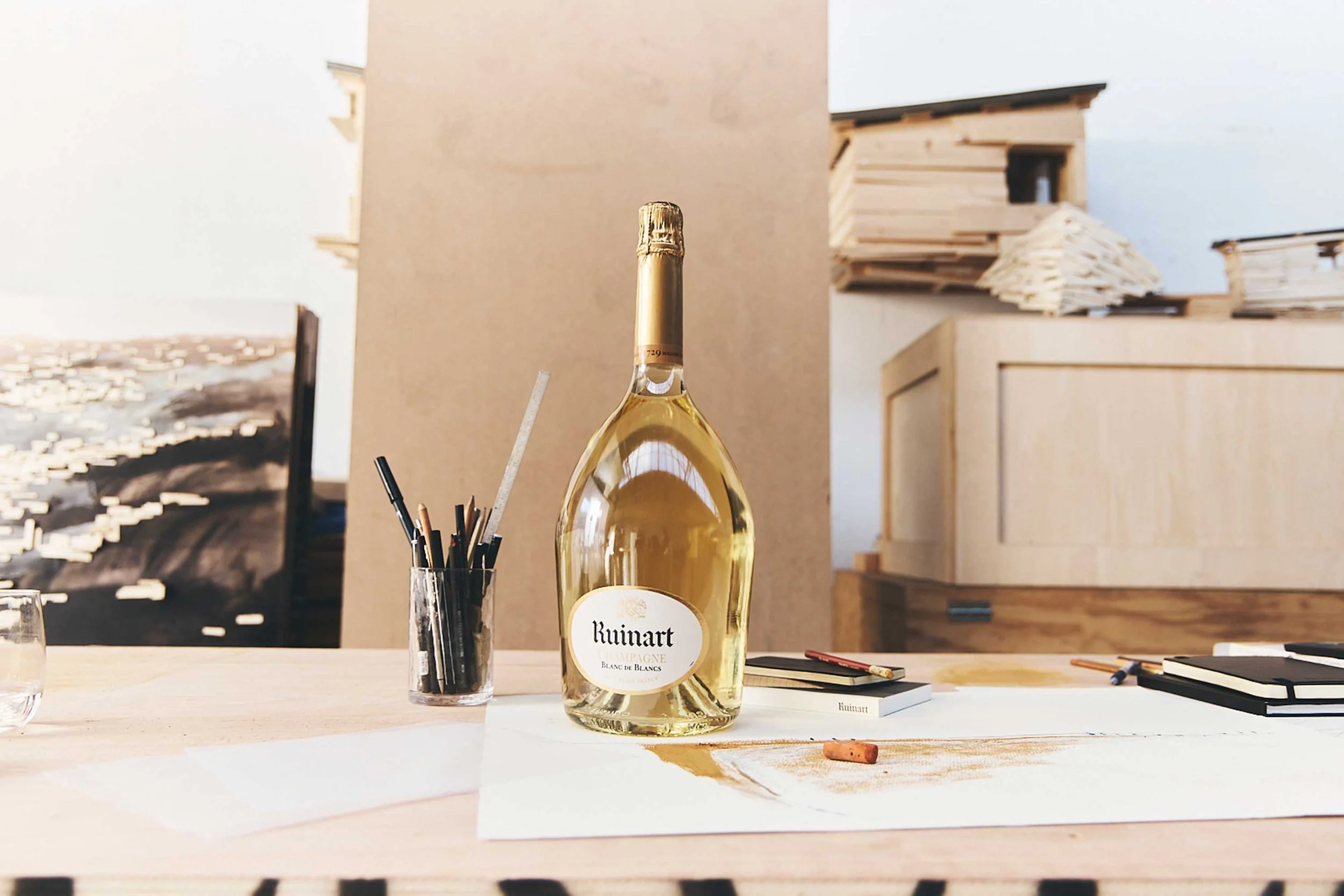
Signed by blue-chip gallerist Kamel Mennour in 2008, Kawamata’s long love affair with France and the French continues this year with a serial partnership with Ruinart, bringing the artist back to Reims, the commercial centre of Champagne. Consisting of a travelling rollout of temporary shows at the Palais de Tokyo in Paris and at art fairs around the world, the collaboration culminates in a trio of permanent sculptures in the grounds of Maison Ruinart. ‘It’s a statement on fragility. I try to create moments that disturb the landscape or cityscape,’ Kawamata says, surrounded by his new ‘bonsai’ works in a show on Paris’s Left Bank. ‘When I create a piece on a tree or in the forest, that connects with nature. But my work began from the idea of taking natural materials and organic shapes in conversation with contemporary architecture. People have likened them to parasites.’ Or avalanches, as many described his viral 2024 intervention at Dover Street Market Paris — when hundreds of classical French dining chairs seemed to pour from a first-floor window of the Comme des Garçons-run concept store. ‘Kawakubo-san refused my first idea,’ he reveals. ‘I think she’s never just said, “OK!” She said that my work was more about sculptures that stick to the building — not an independent structure. So, I said, “Yes, OK,” and I changed it.’
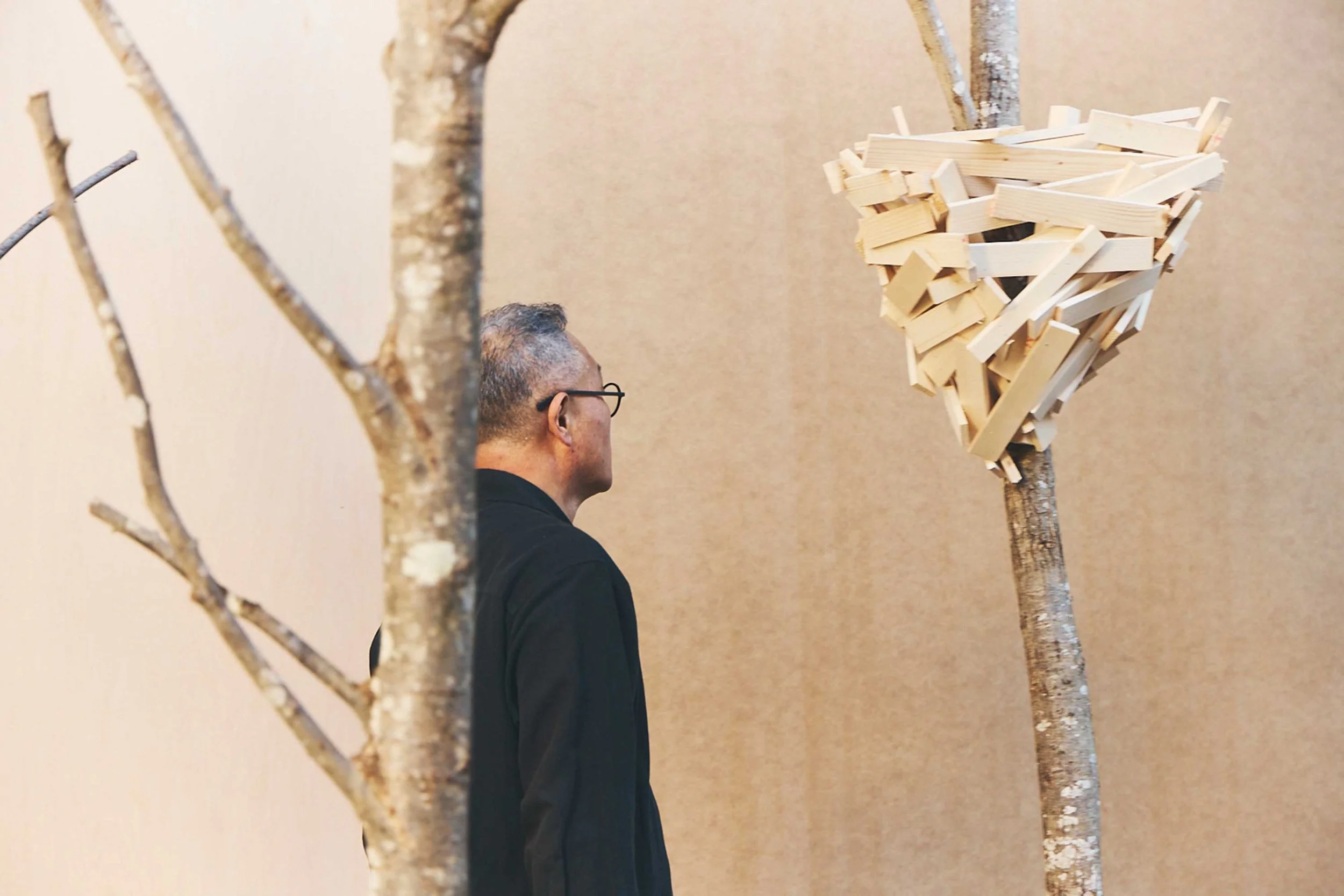
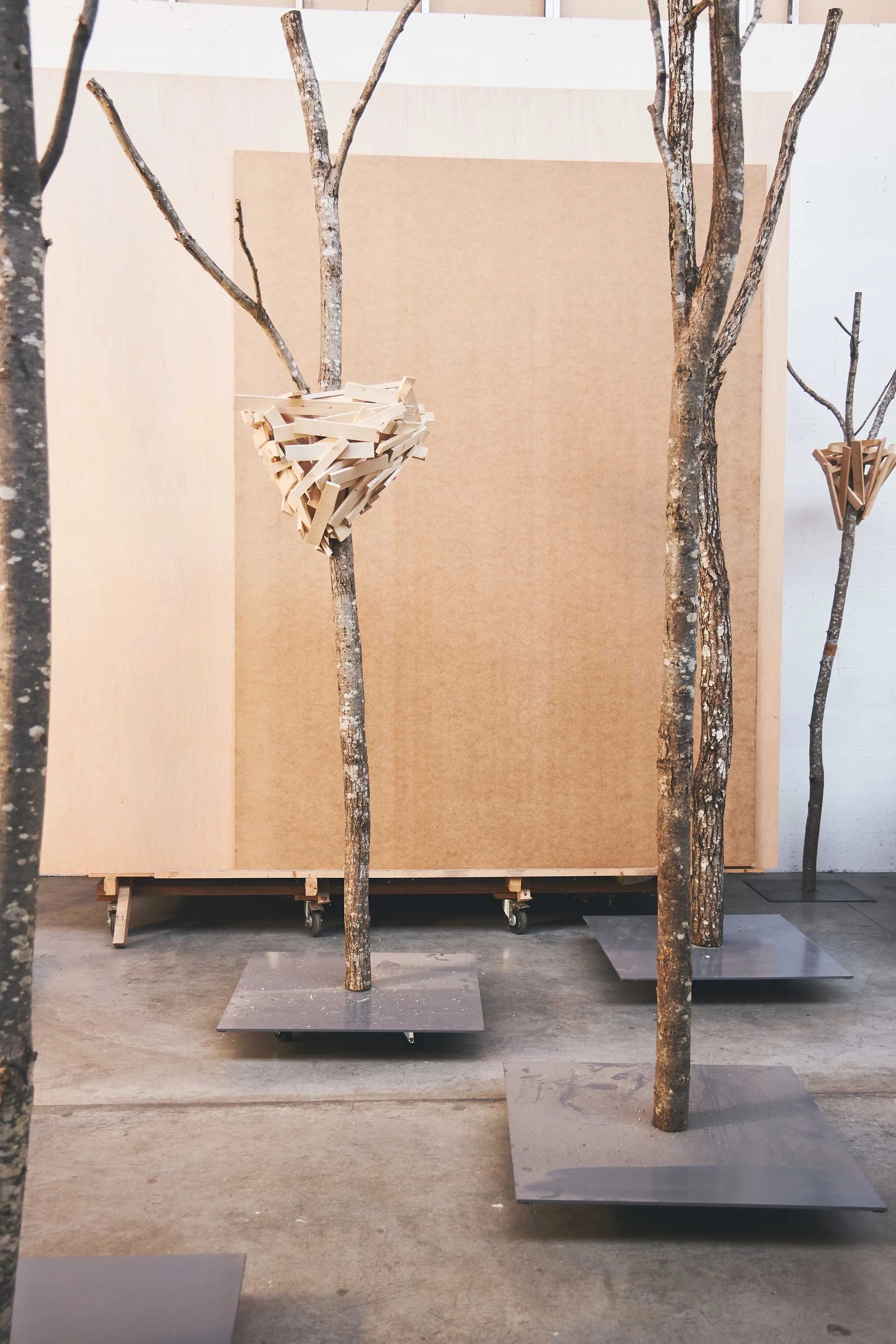
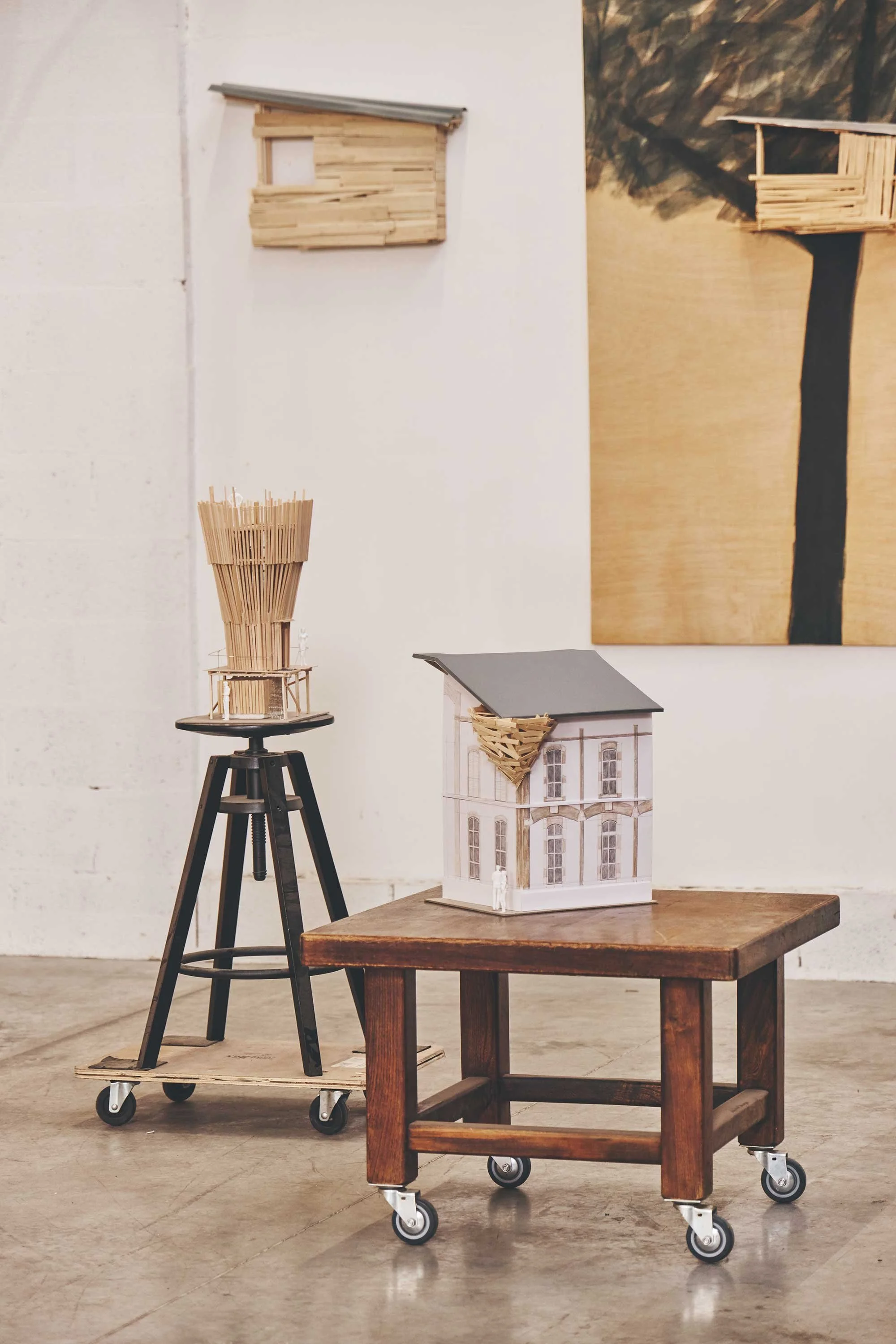
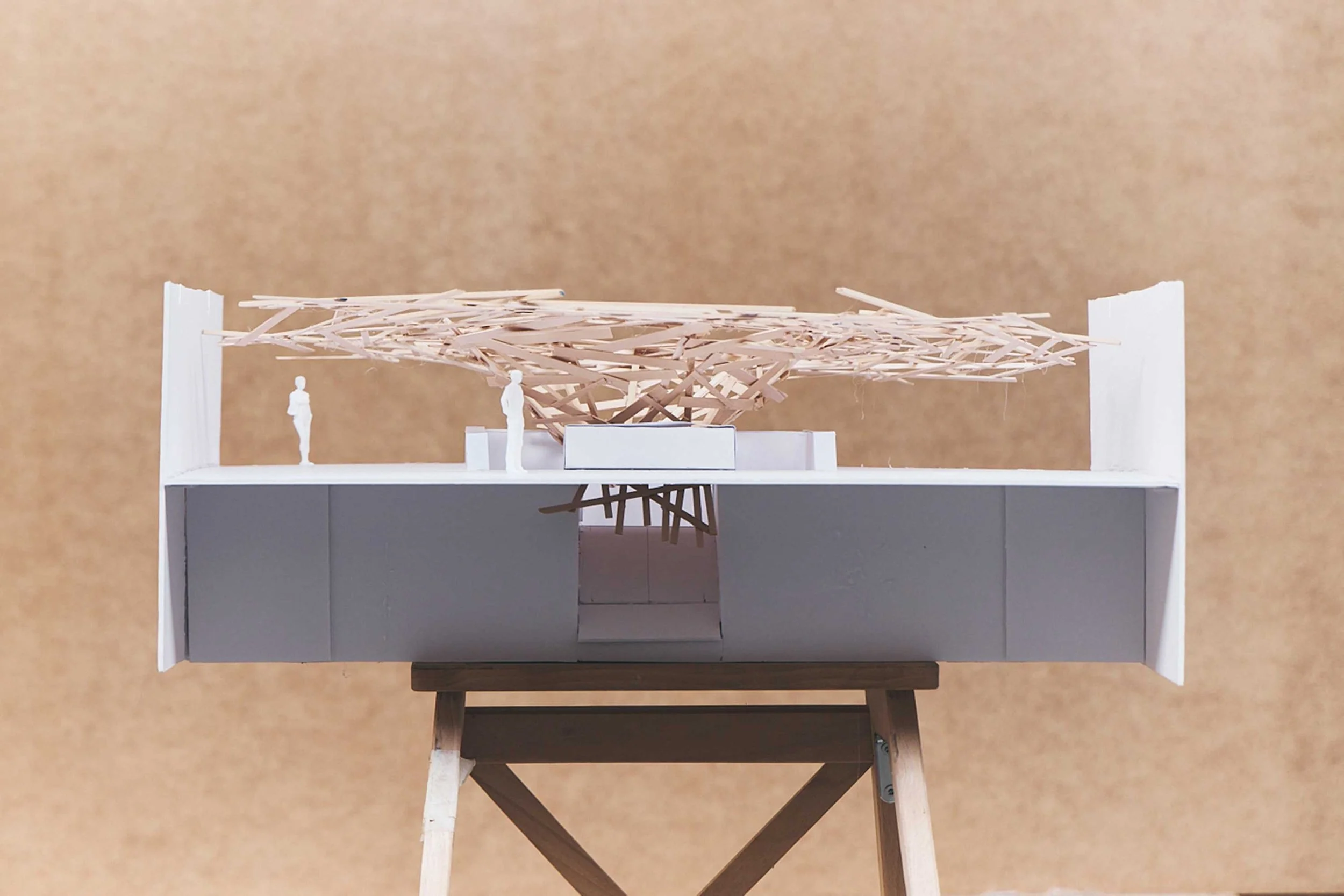
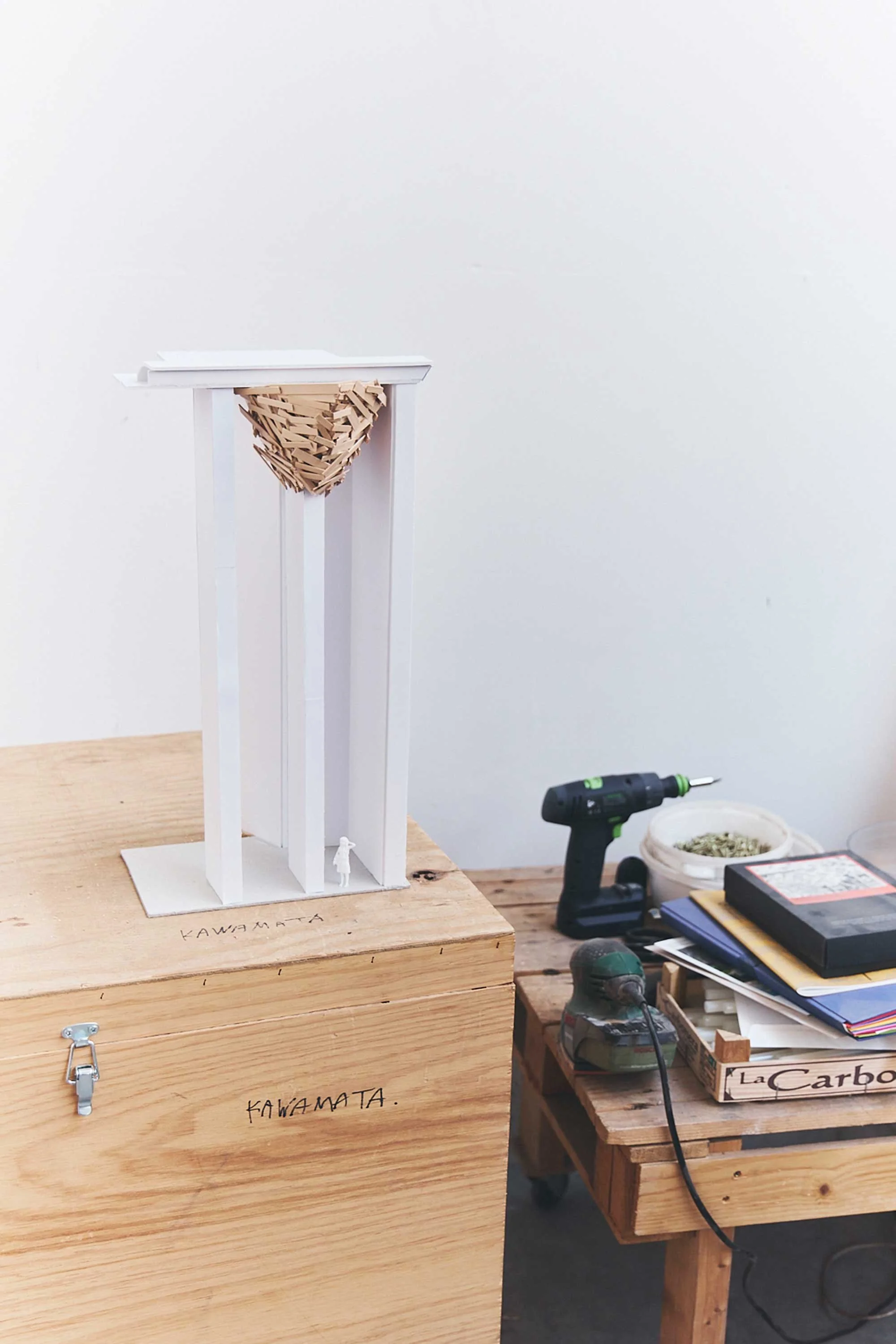
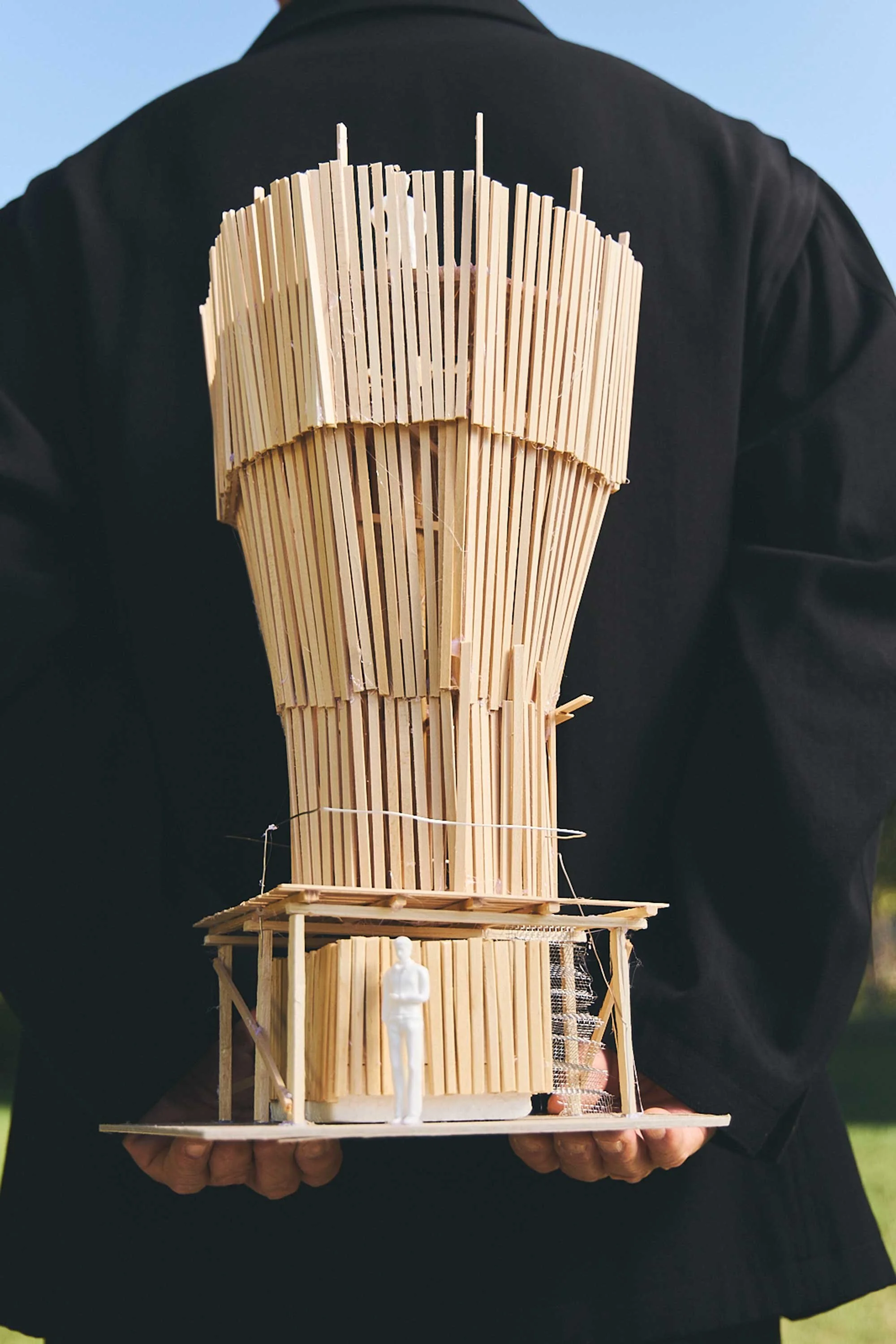
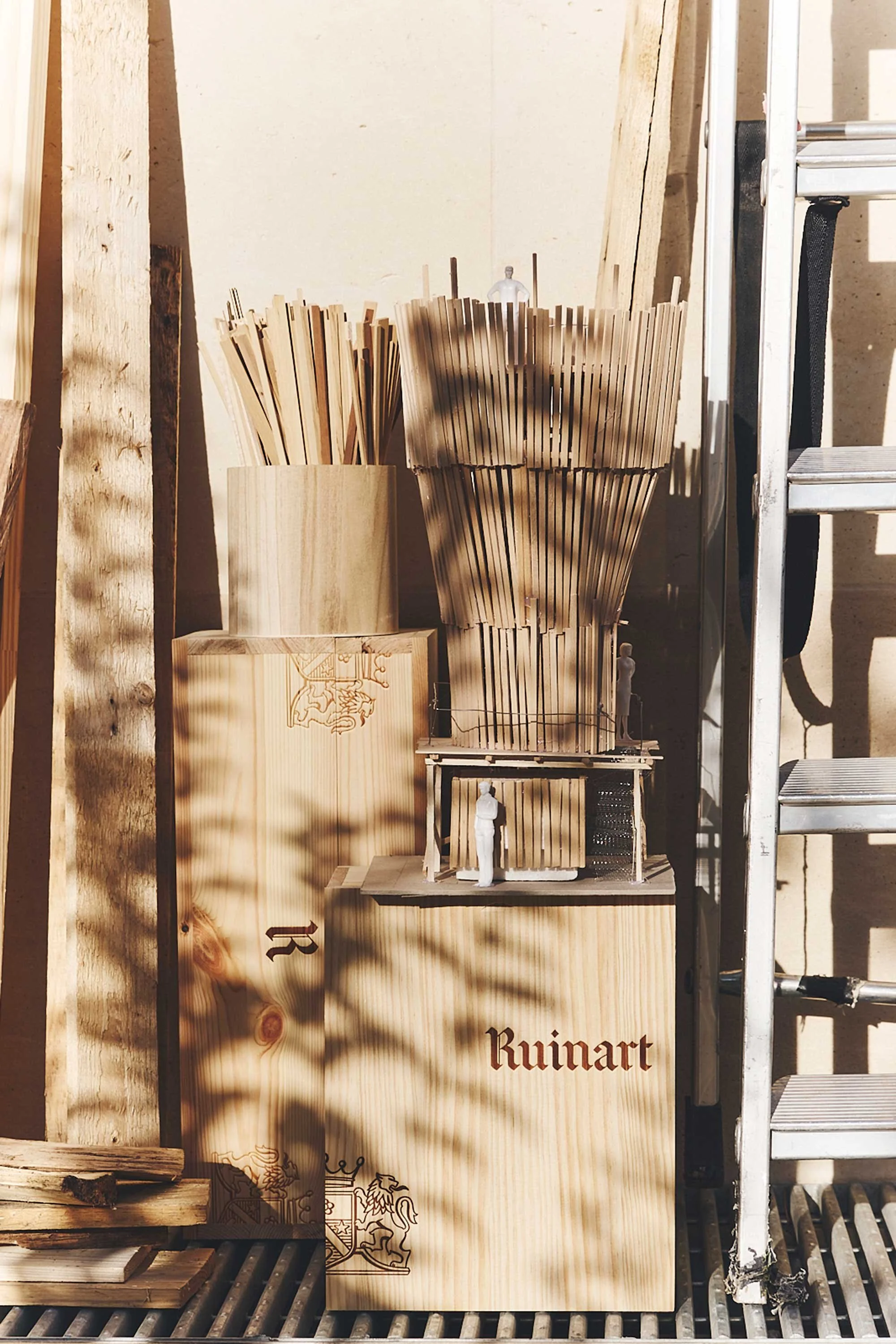
Drawing from Kawamata’s own archetypes, the structures Nest, Observatory and Tree Hut for Ruinart don’t attempt to comment on their oenological surroundings. Instead, they are paradoxical additions to the landscape — neither architecture nor nature — crafted with the materials of the former and the spontaneity of the latter, destined to grey with age in the sun and the rain. A philosophical observer might attempt a metaphor for vintage champagne, yet Kawamata would likely have nothing of it. His pragmatism and humility belie the otherworldly allure of his creations, and their commentary on impermanence at a time when public art remains so tied up in monumental gestures. ‘It’s kind of endless,’ he muses. ‘My work is never finished, so if I need to continue, I can continue. If I want to stop, I stop — even if the installation is still kind of imperfect anyway. So, I think this is freer. The work is about freedom or possibility to change in any way, which is always quite interesting.’
Text by Dan Thawley
Images by Florie Berger, courtesy of Ruinart