This Singapore Apartment Prizes Space and Materiality
Brewin Design Office’s concept for the home of a well-travelled professional creates an open, fluid space that maximises both functionality and natural light
A low-density development with generous spaces was the choice for a Hong Kong professional who recently relocated to Singapore. Despite its 20-plus years, says Brewin Design Office founder and principal Robert Cheng, the development is well-maintained and has ‘great bones’.
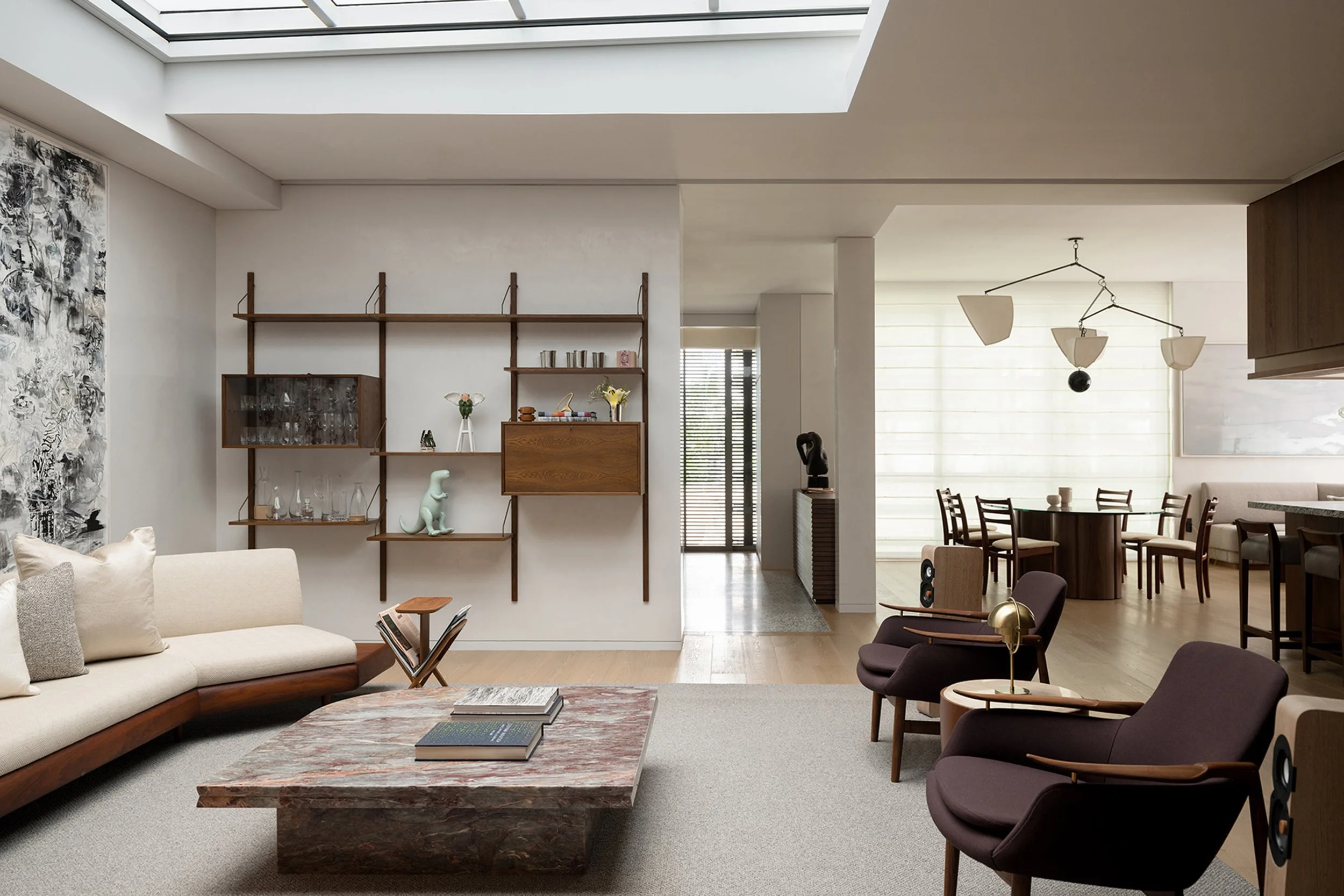
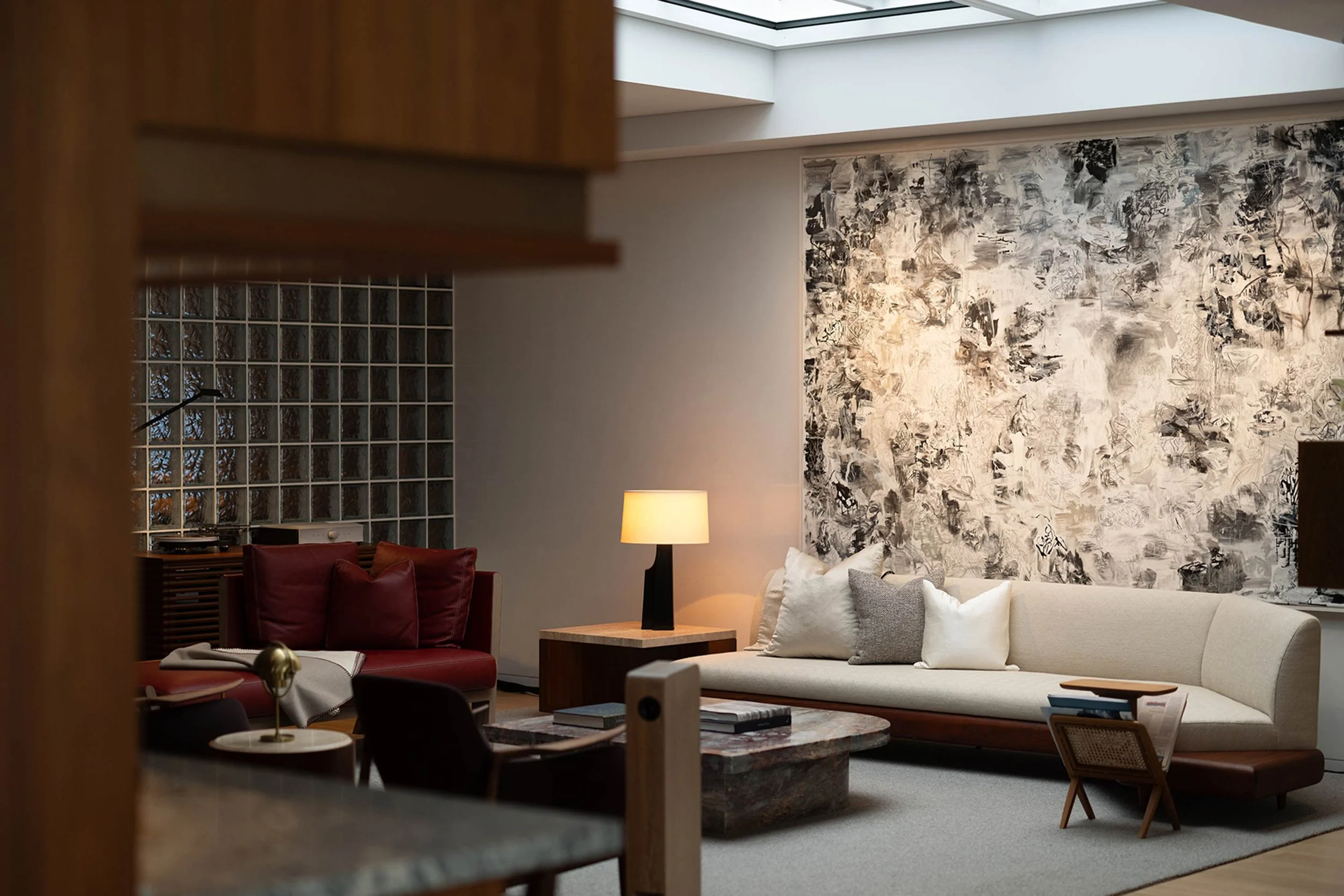
The existing 250-square-metre space included three and a half bedrooms and a courtyard, which, despite its appeal on paper, resulted in an inefficient use of space. The team approached the layout with fresh eyes, removing a bedroom to add space to the public areas, enclosing the courtyard and adding a skylight.
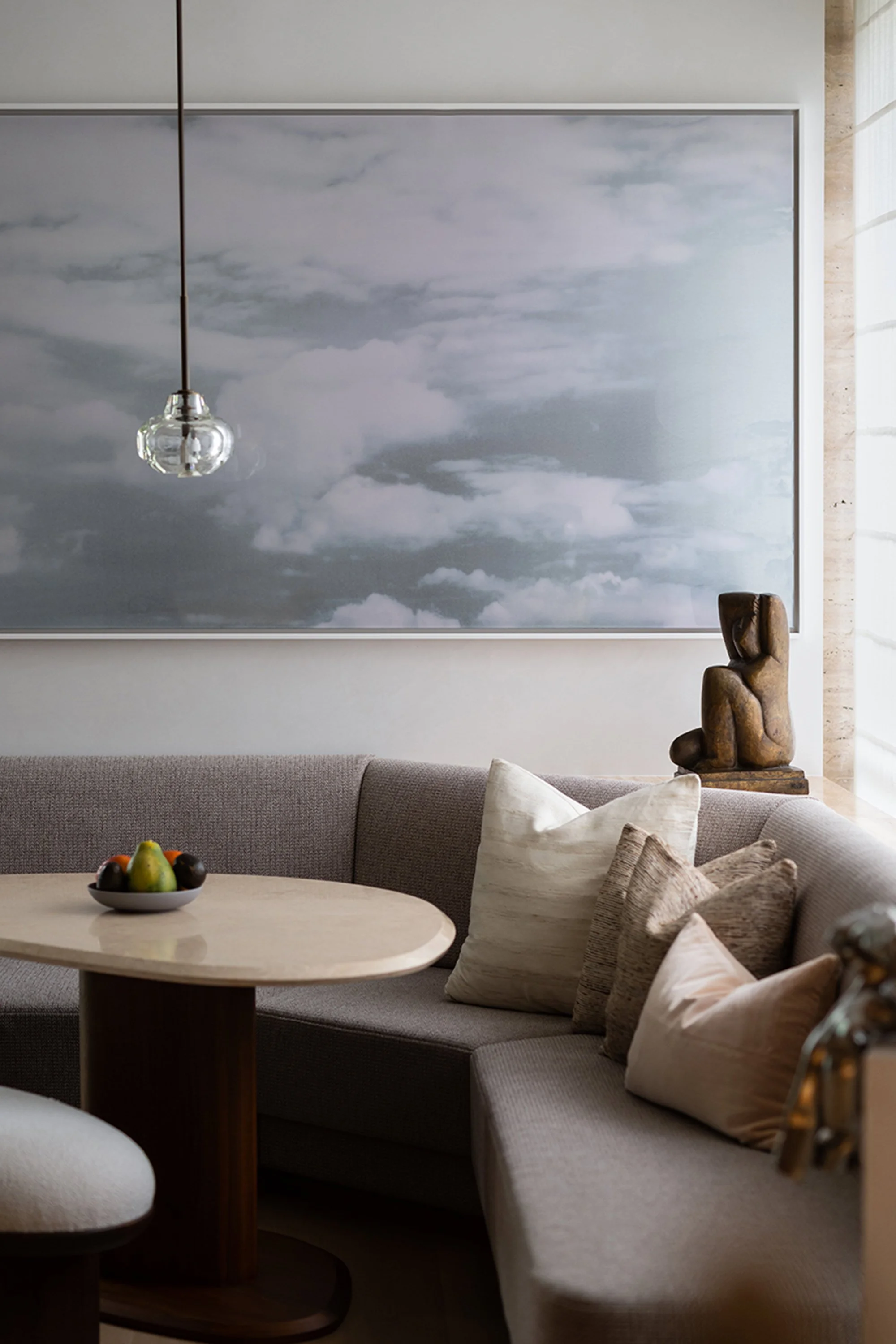
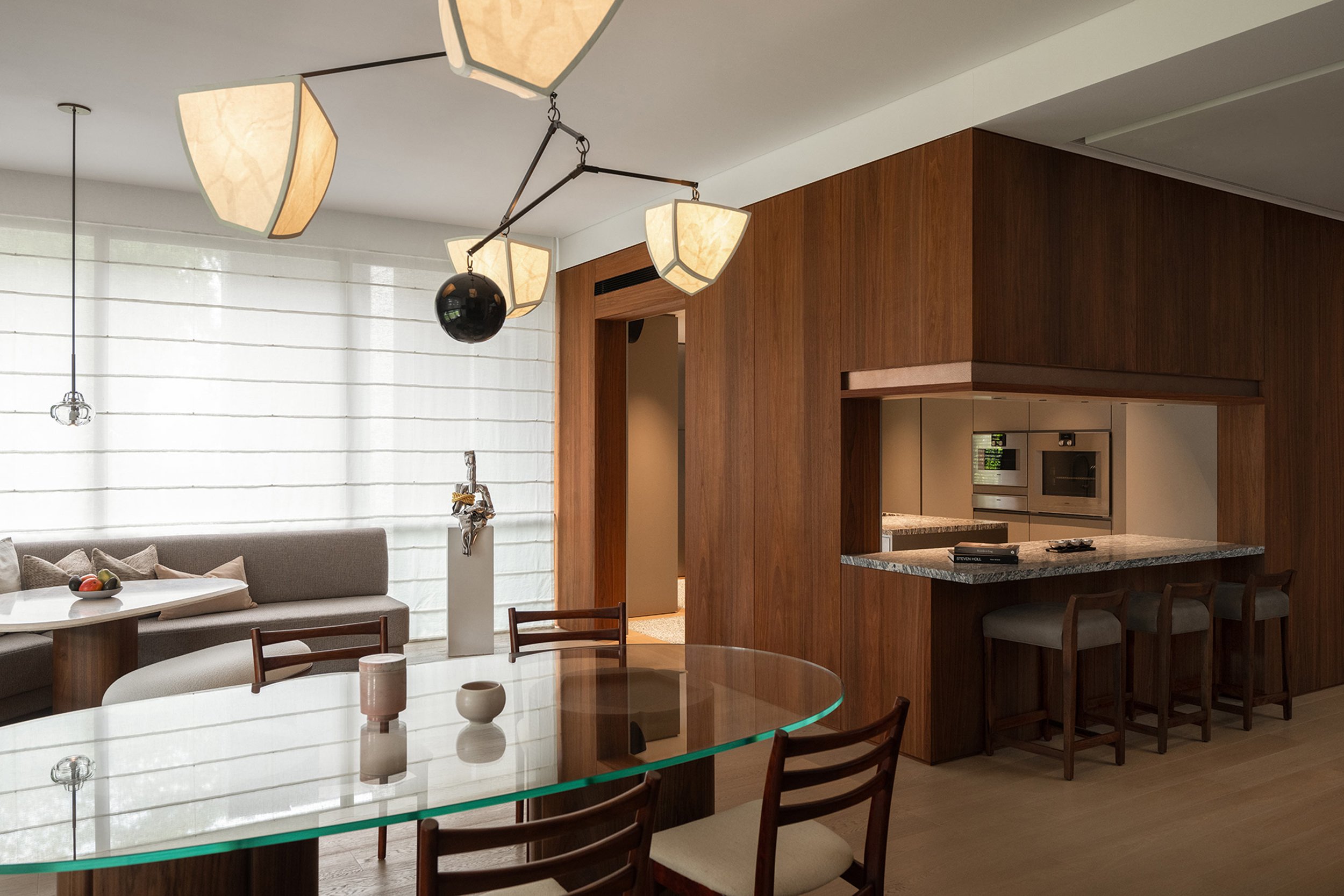
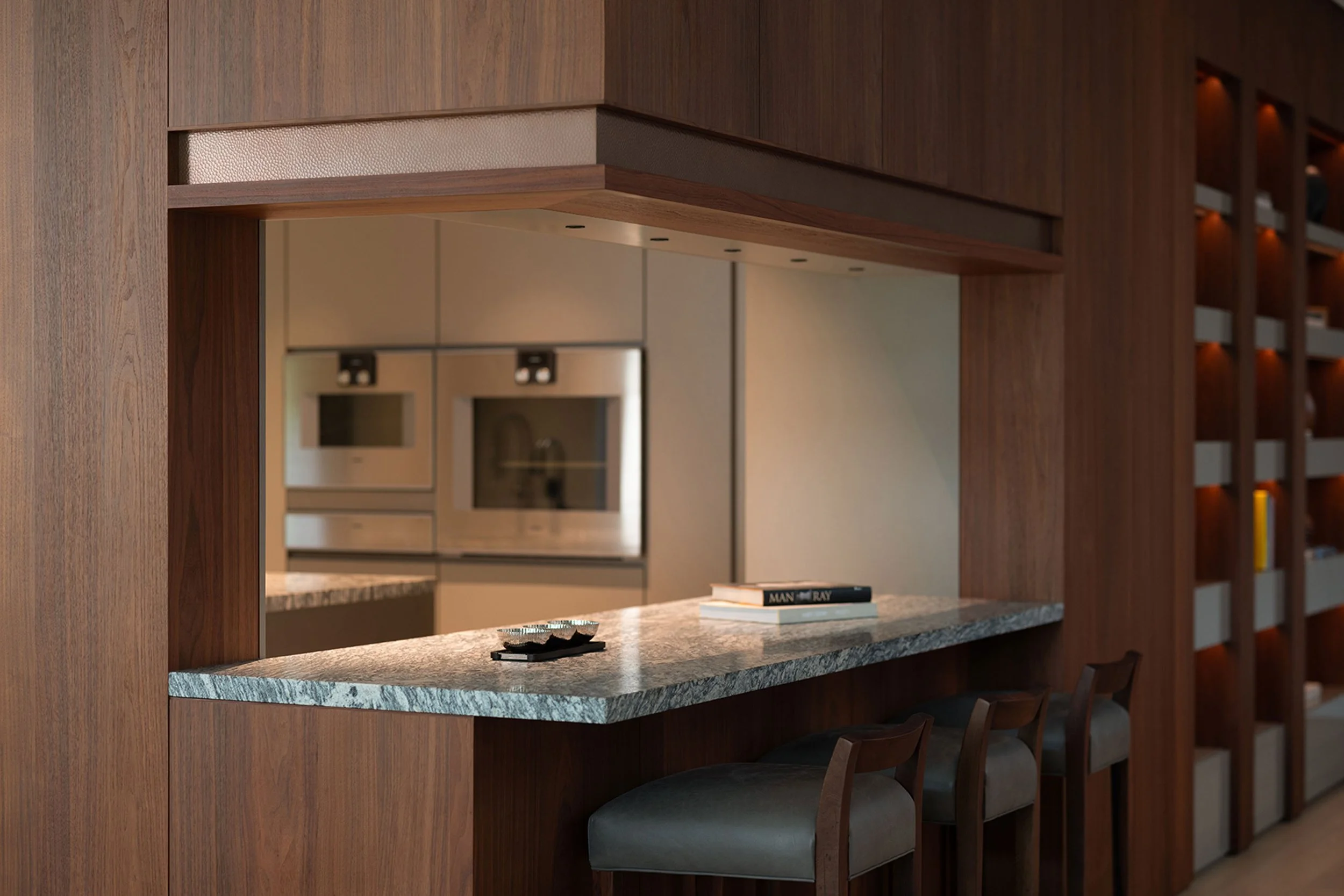
‘The brief was primarily functional, with a few key priorities,’ Cheng explains. ‘One was to consolidate and optimise the layout while retaining a dedicated guestroom for visiting family. Another was the kitchen, which needed to be highly functional yet visually and spatially connected to the rest of the home. The idea was to allow the kitchen to act as an anchor, enabling the client to cook while also engaging in informal activities like reading, working or enjoying music, all within an open, fluid environment.’ Here, Brewin created a built-in breakfast booth — ‘a quiet, comfortable corner for everyday meals, coffee, informal working or moments of pause throughout the day,’ as Cheng describes it. But the team also wanted to move beyond the brief. ‘We wanted to bring out the inherent value of the bones of the apartment, its generous natural light, the presence of a light court and the surrounding greenery. These offer a sense of calm and openness that we aimed to preserve and enhance,’ Cheng says.
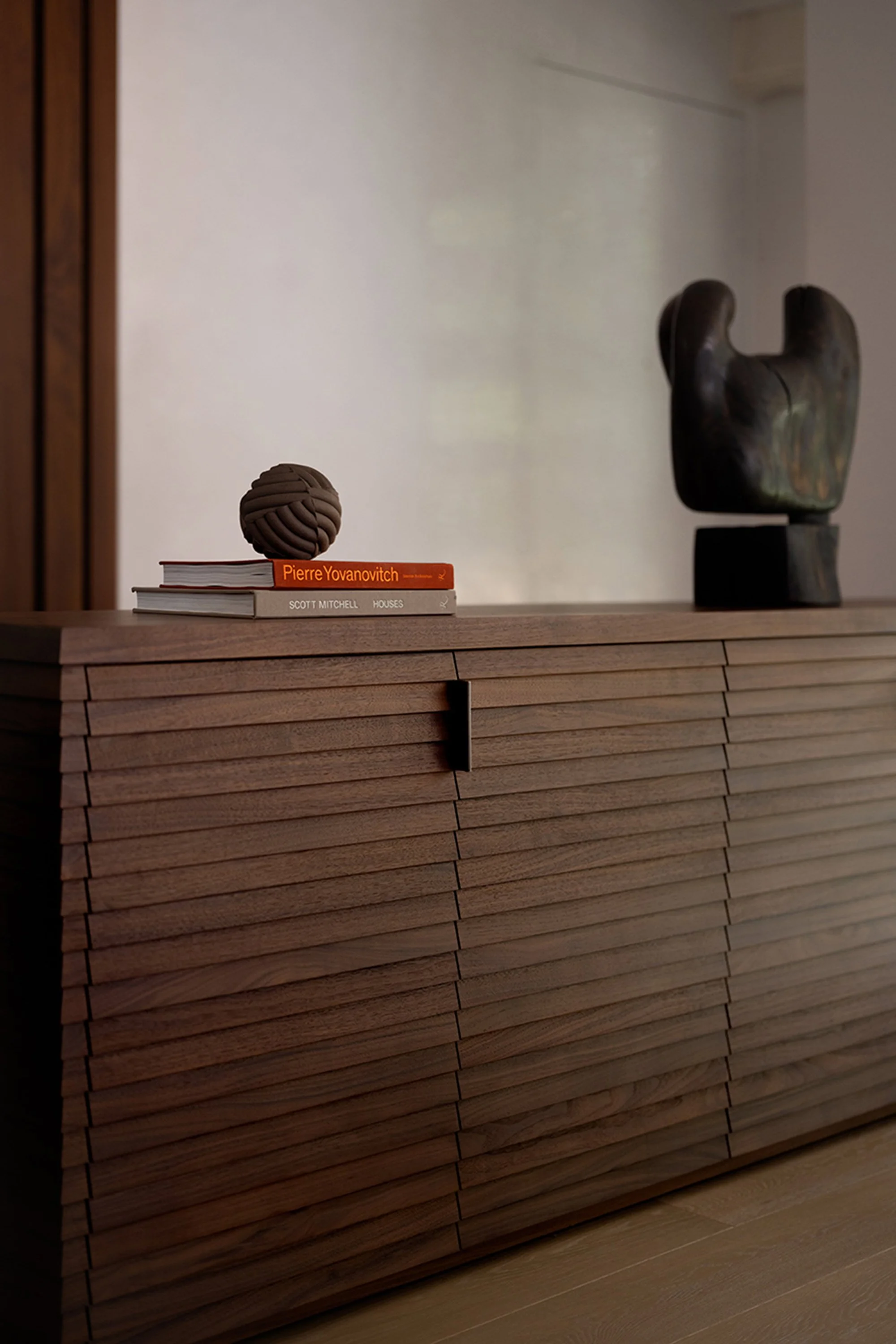
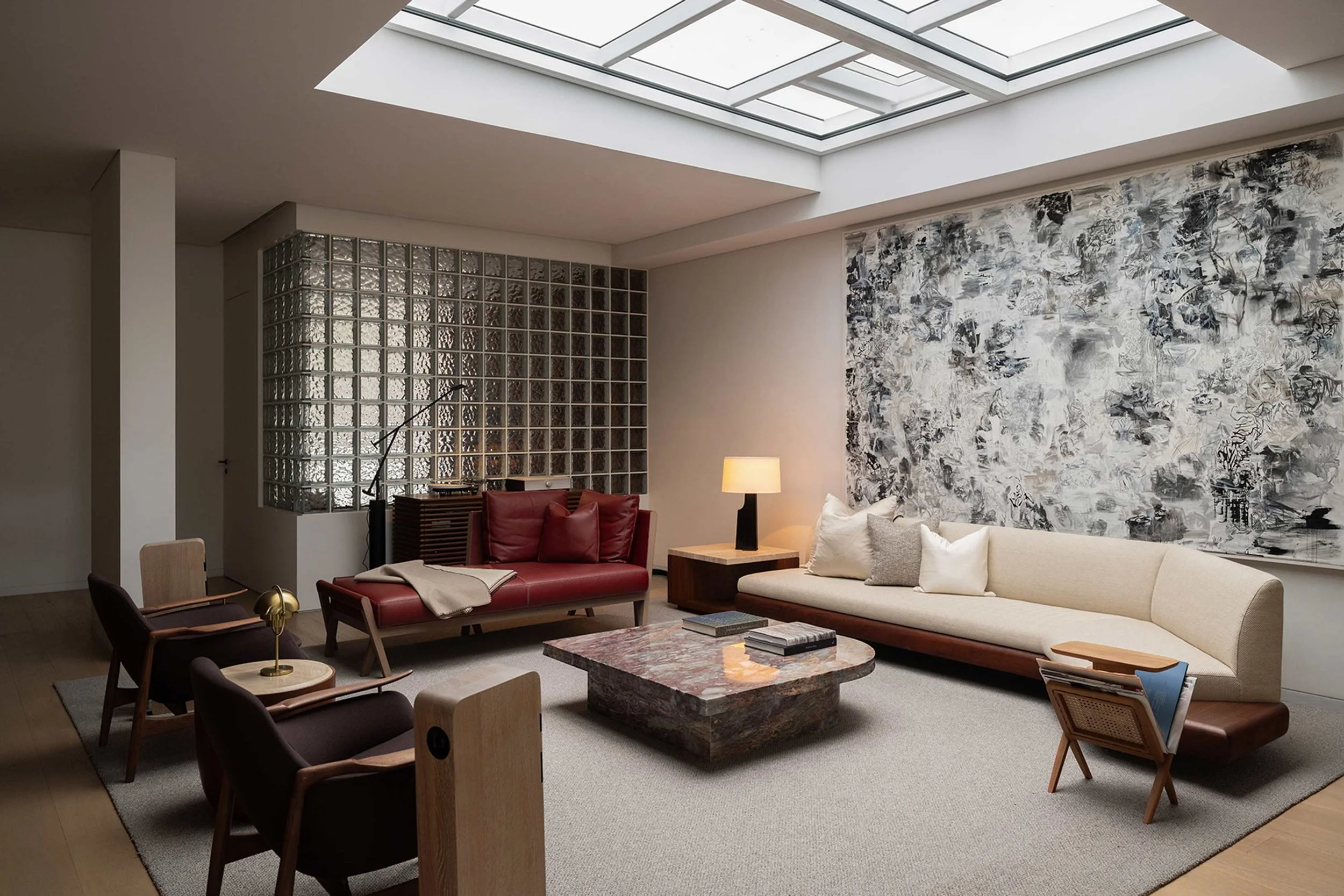
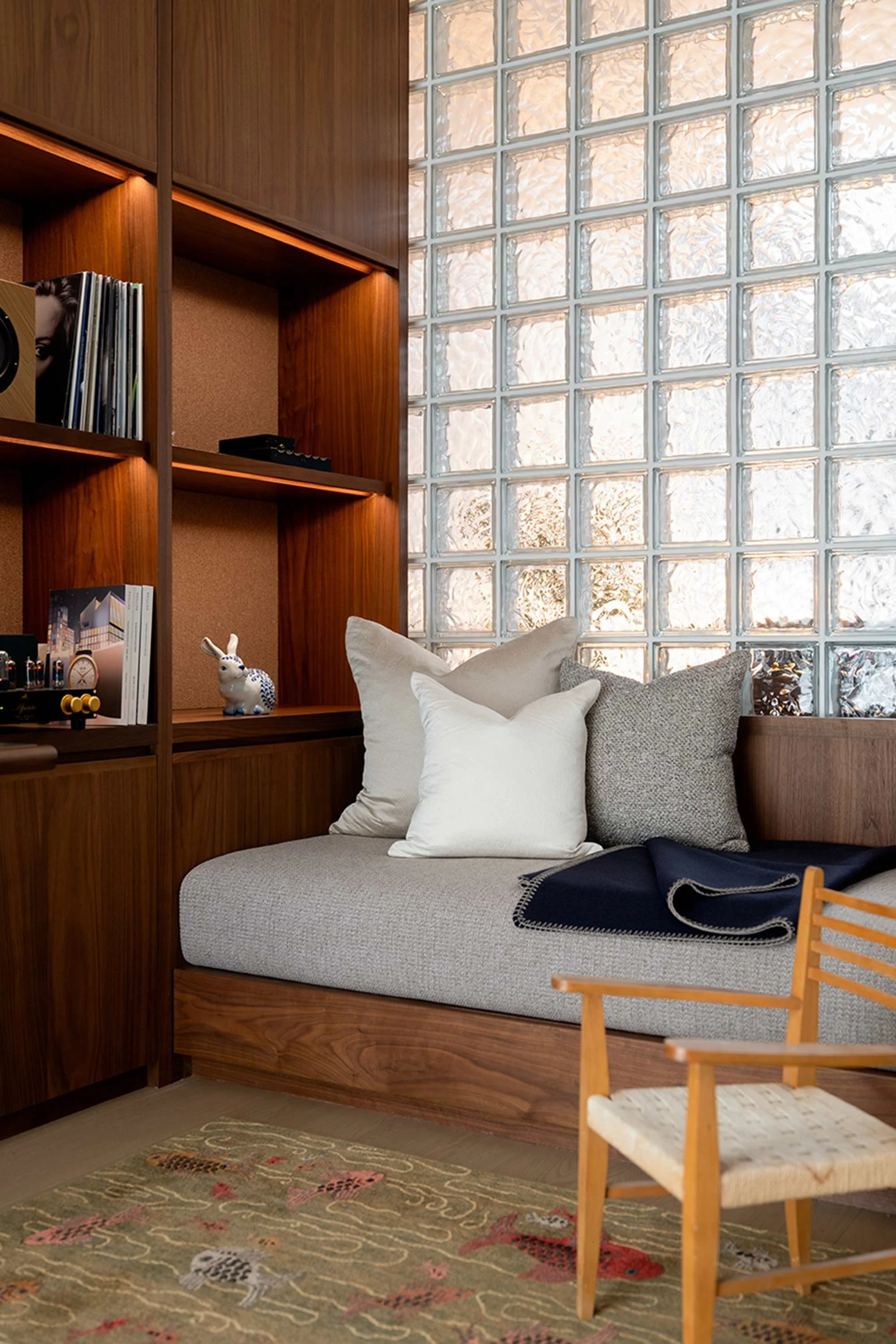
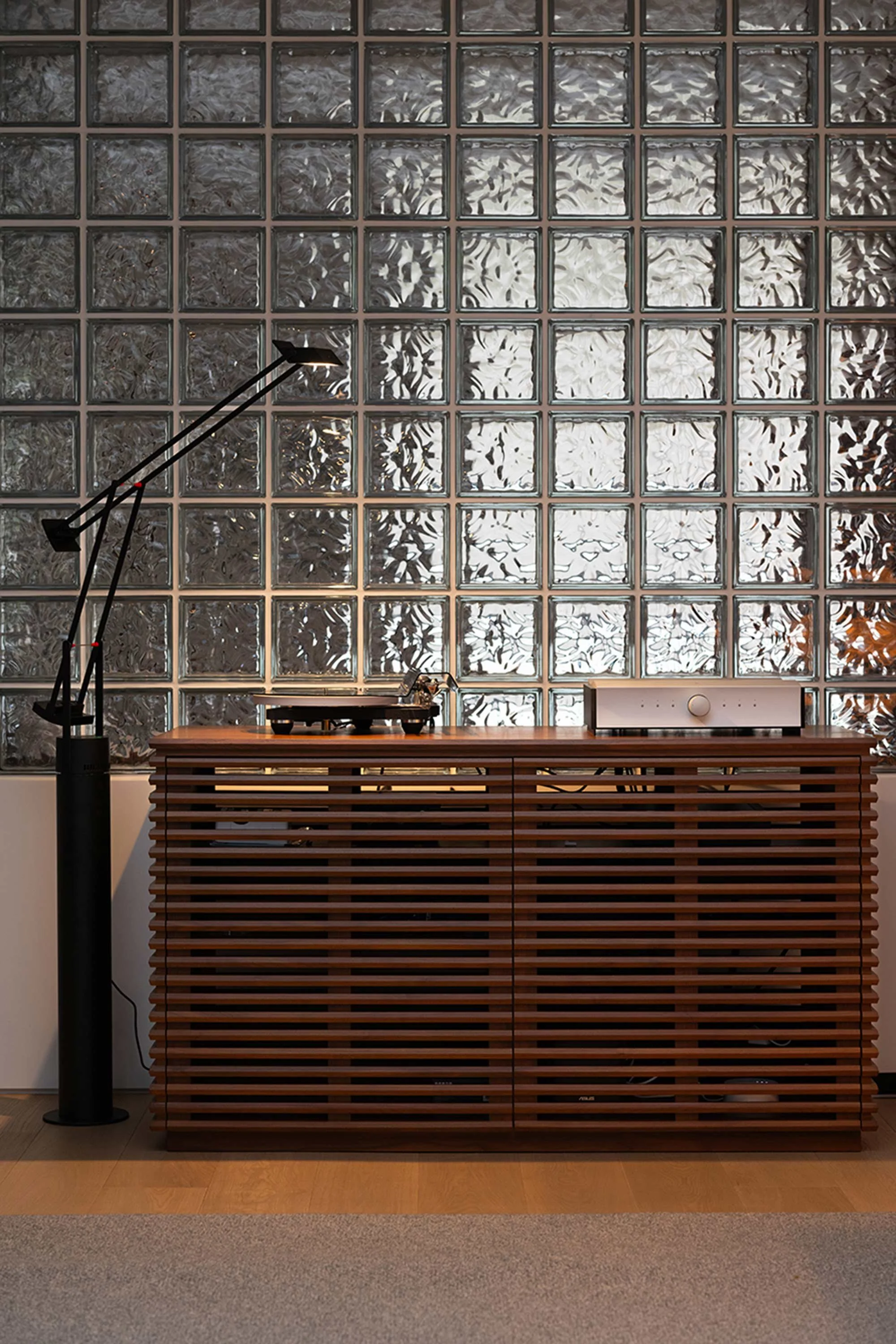
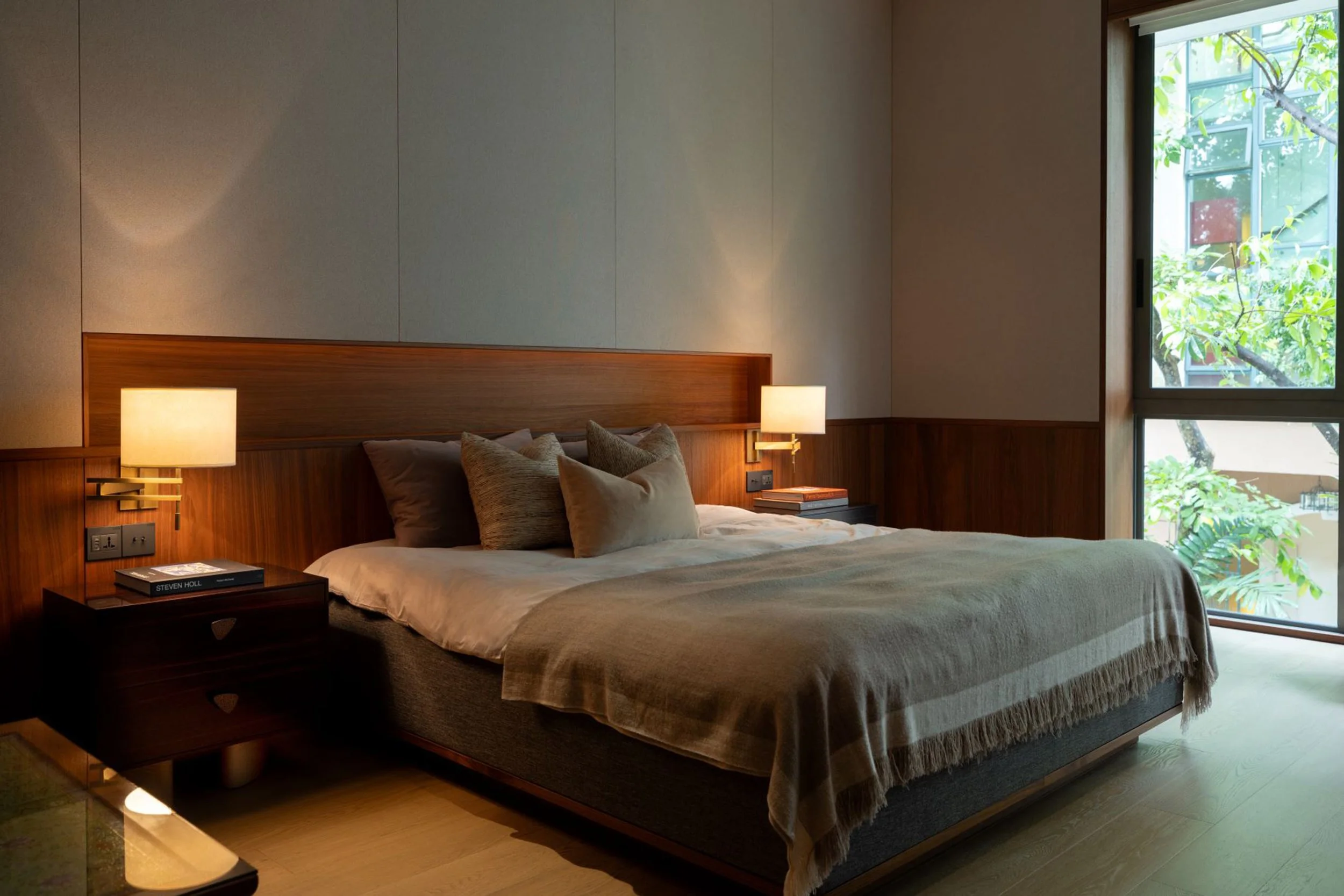
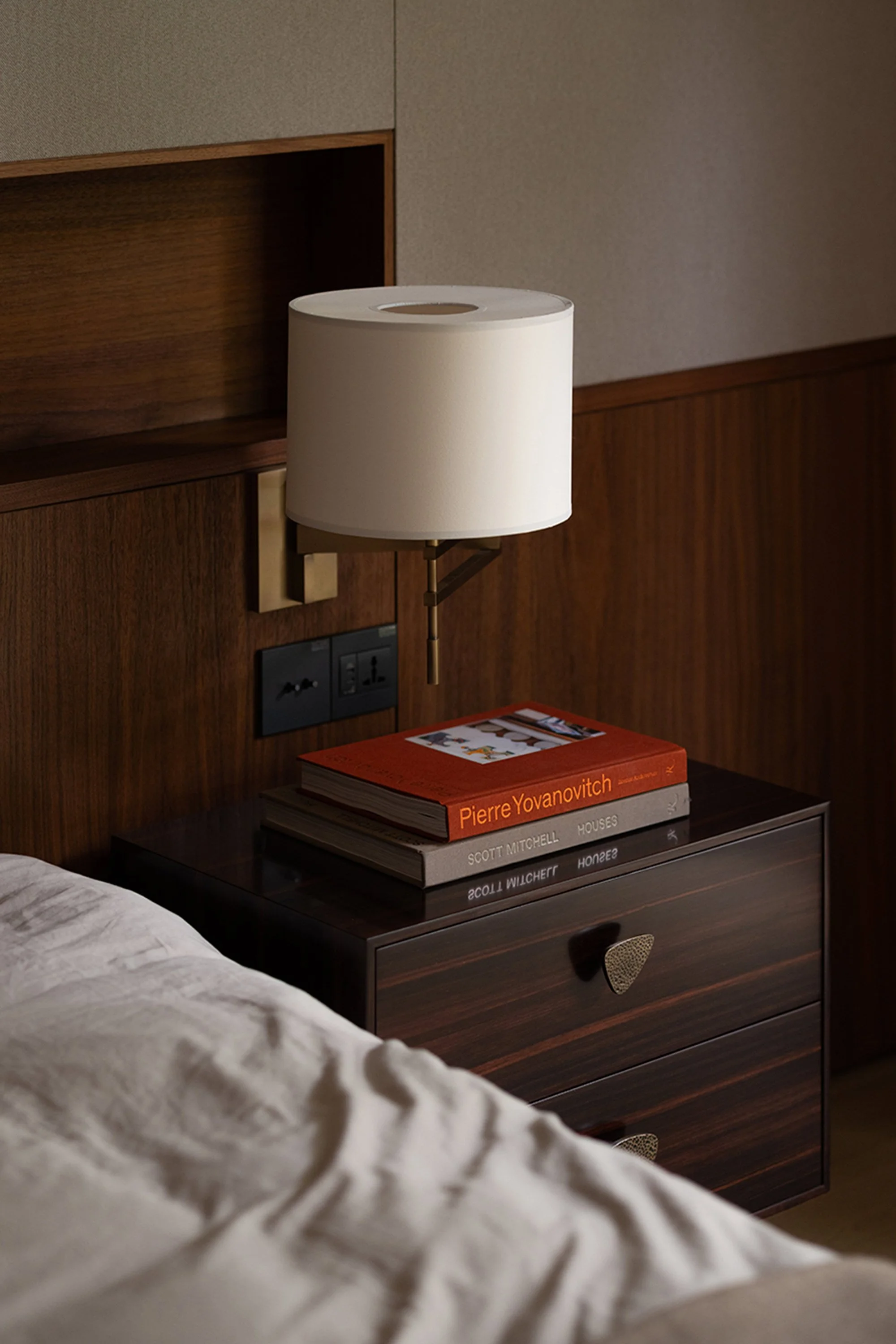
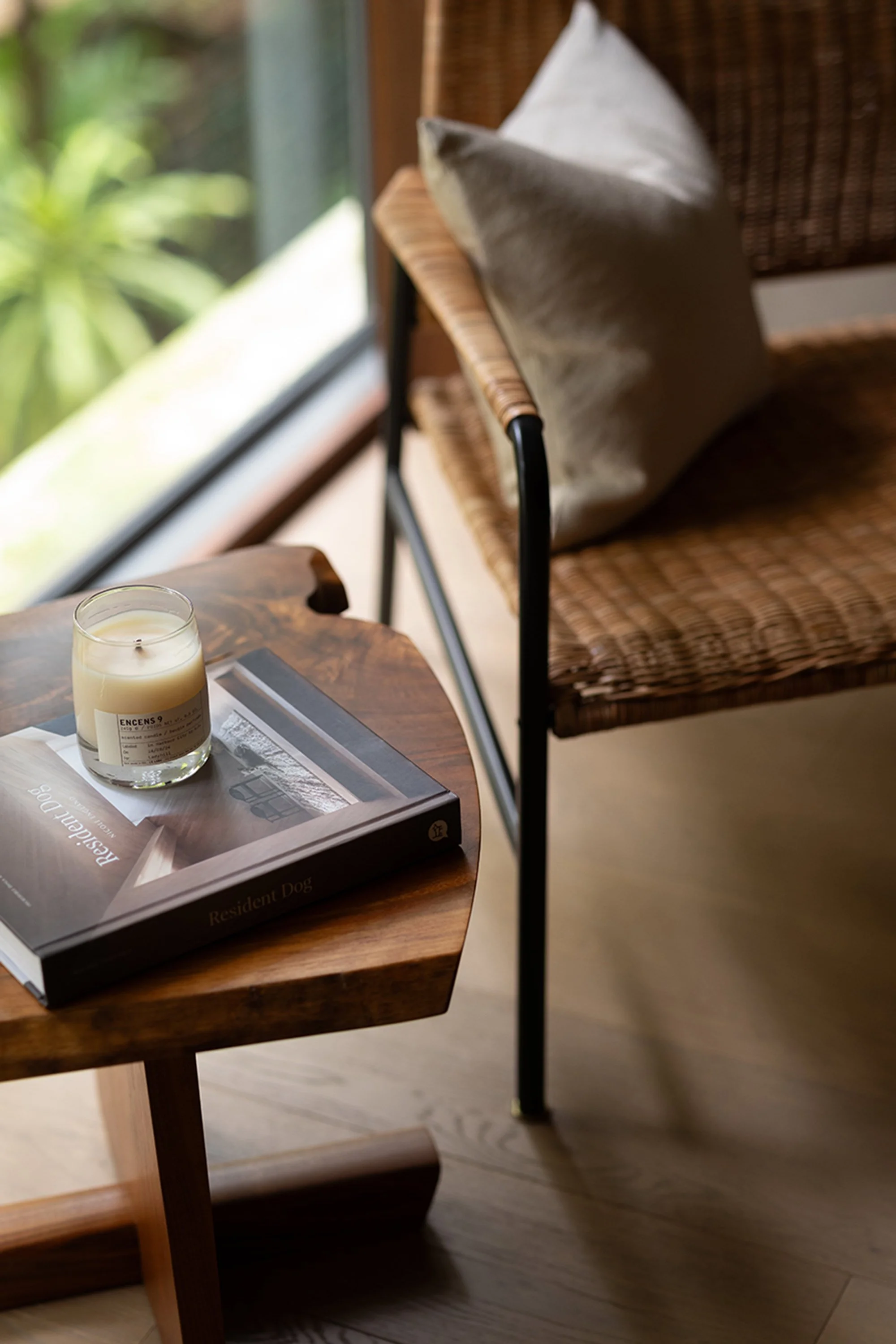
Materiality and detailing are abundant in the home. ‘We used American walnut timber throughout the apartment to bring warmth and richness. The darker tone adds depth and also references North American interior design, which the homeowner appreciates, so this is a nod to his home there,’ Cheng says. ‘Overall, the design blends traditional and old-world aesthetics with more contemporary materials and detailing,’ says Cheng, pointing to the reinterpreted glass blocks at the study, which allow natural light in and provide privacy, while adding to the nostalgic character.
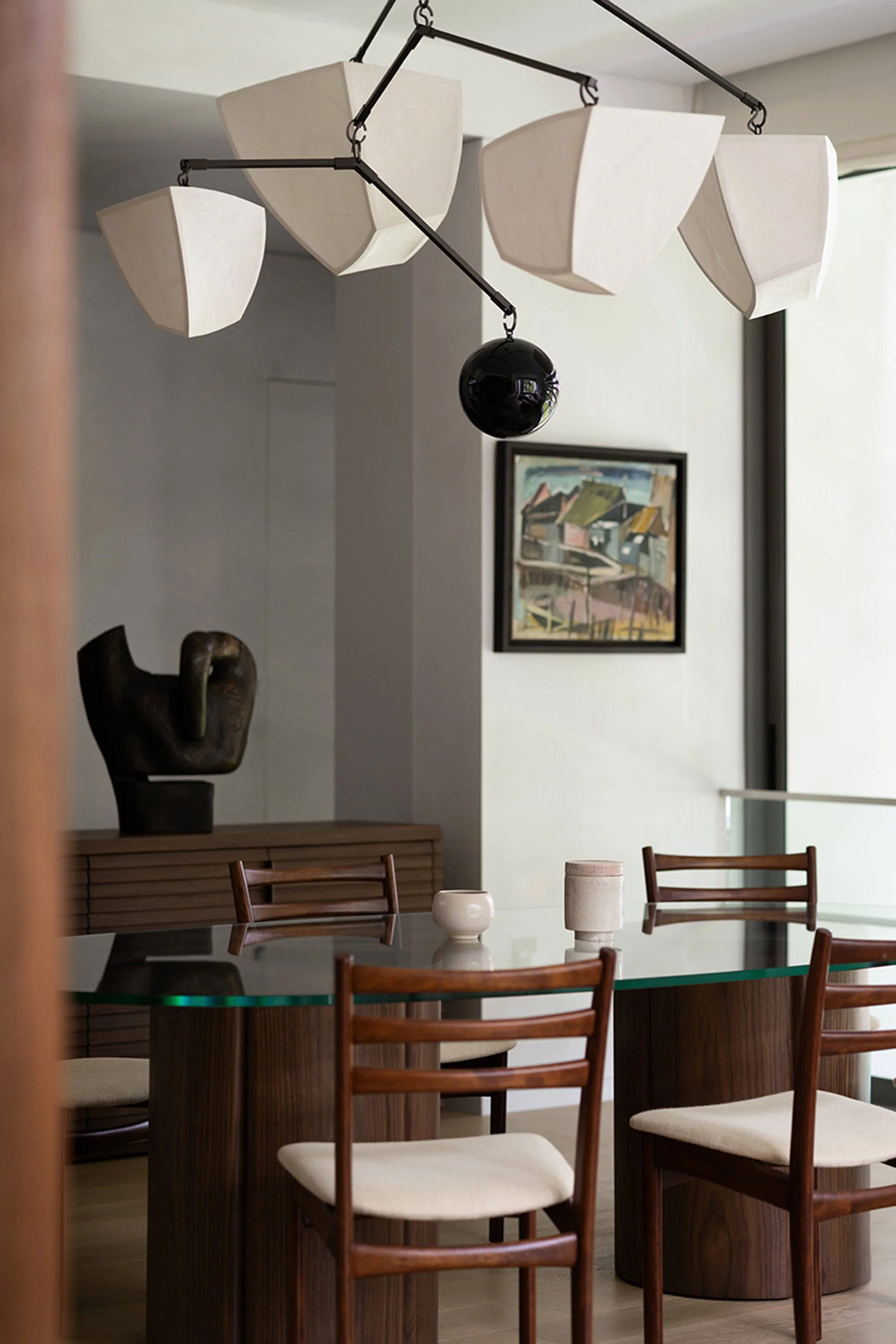
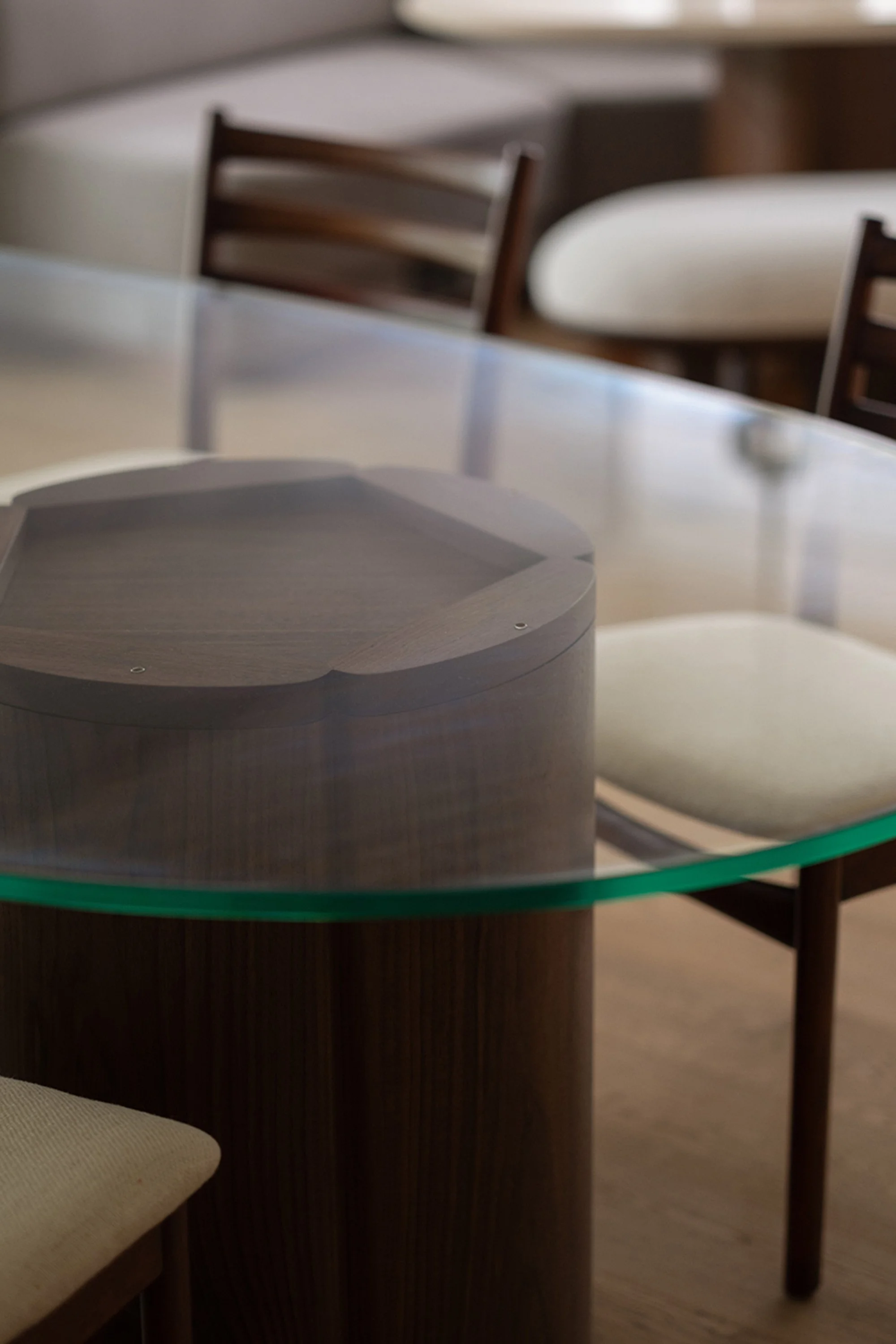
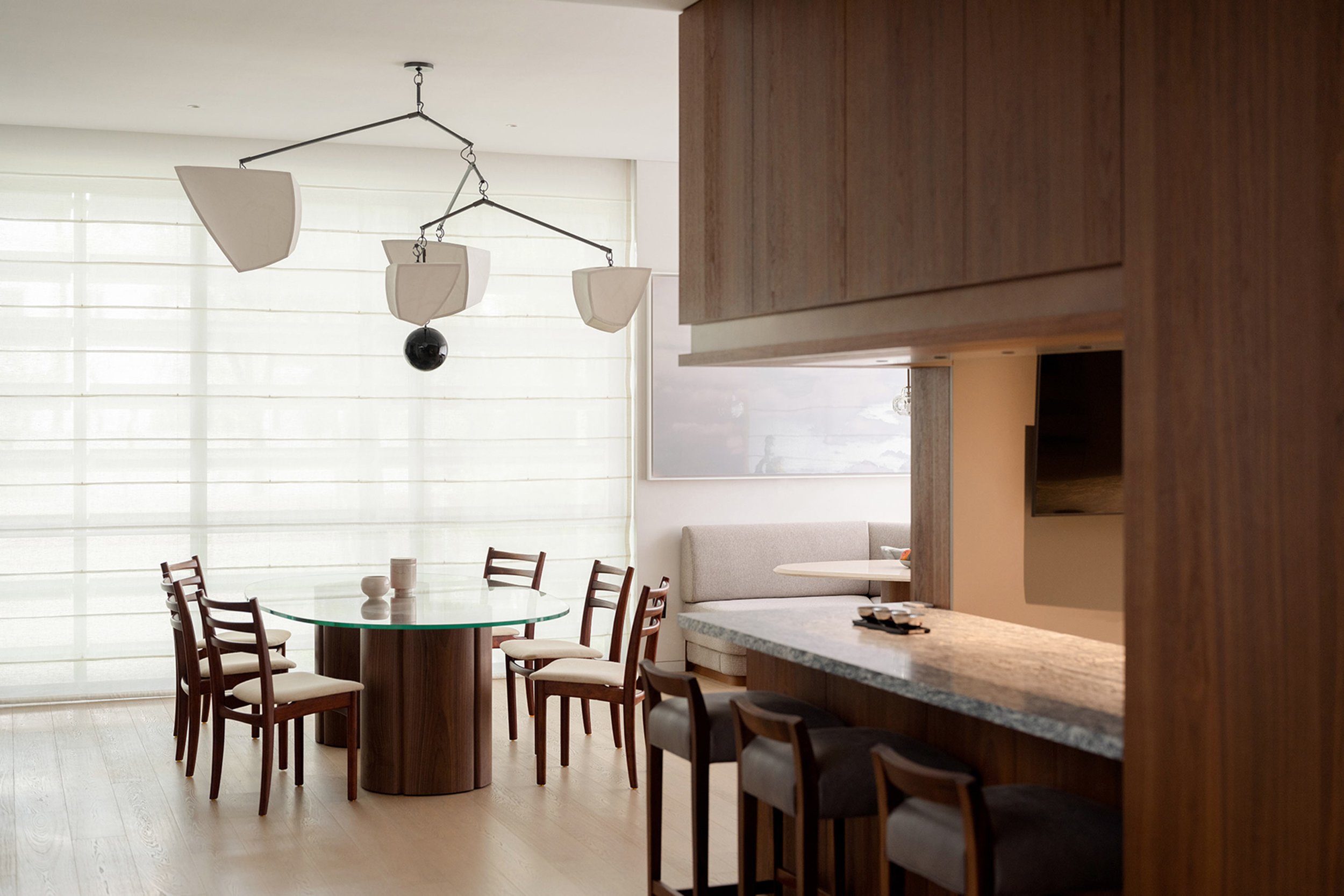
Similarly, the furniture combines old and new, with custom pieces created ‘to capture the owner’s personality’. These include a walnut louvre-detail console at the entry and a distinctive glass-top dining table with solid walnut legs. ‘The table is an elliptical one custom designed for the space, with a solid American walnut support in the shape of a clover, a form we’ve explored before, now reinterpreted to suit the warmth and richness of the apartment,’ says Cheng. ‘And the sculptural cabinet at the entryway is both a partition and a functional storage piece. It’s deliberately minimal in form yet monumental in presence, and it’s highly detailed, which adds a quiet elegance. Both pieces were conceived to anchor the space with a sense of refinement, restraint and permanence.’
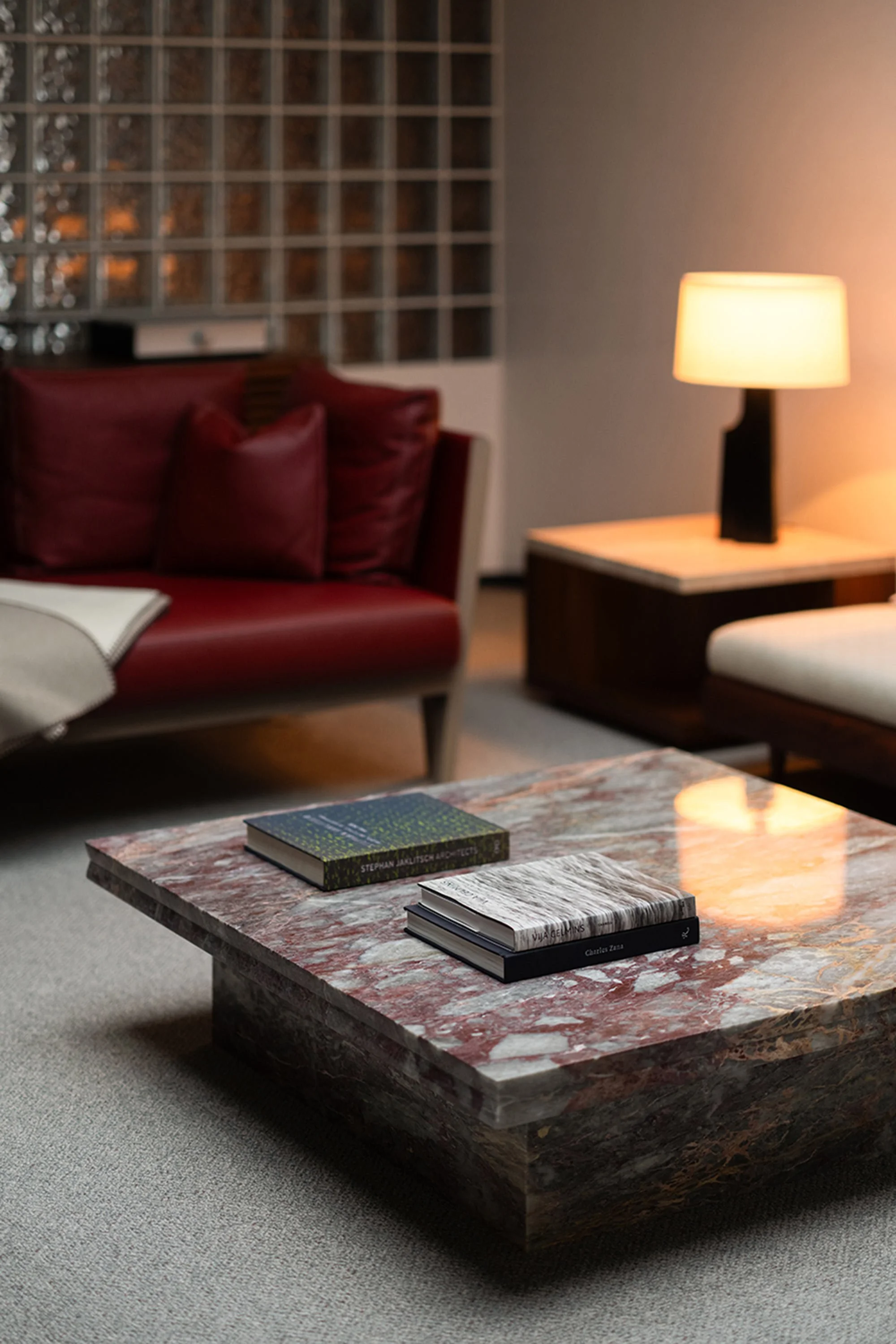
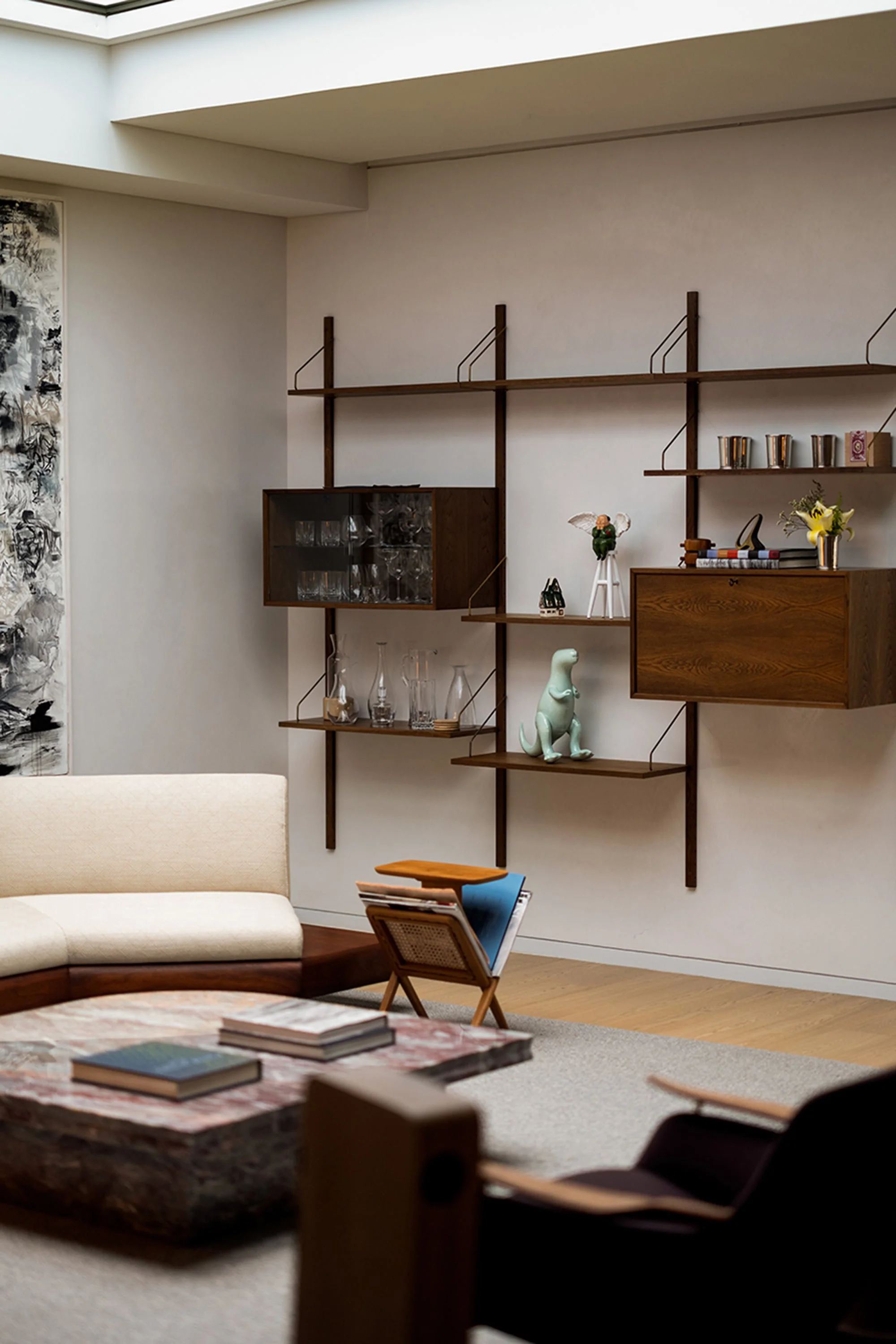
Key vintage pieces are also dotted throughout, including a pair of Finn Juhl armchairs that sit beside the owner’s own vintage Danish shelves. In the living room, a sculptural Adrian Pearsall Boomerang sofa makes a strong statement, says Cheng, ‘without feeling too formal’. A solid brass chandelier by Andrea Claire Studio floats above the dining table. ‘This beautiful, sculptural fixture with Japanese washi paper lampshades brings both scale and softness to the dining area,’ Cheng notes. In the breakfast nook, a sculpture by Ju Ming and a piece by Miya Ando create a calm, contemplative corner that the designer says, ‘feels personal and intentional’.
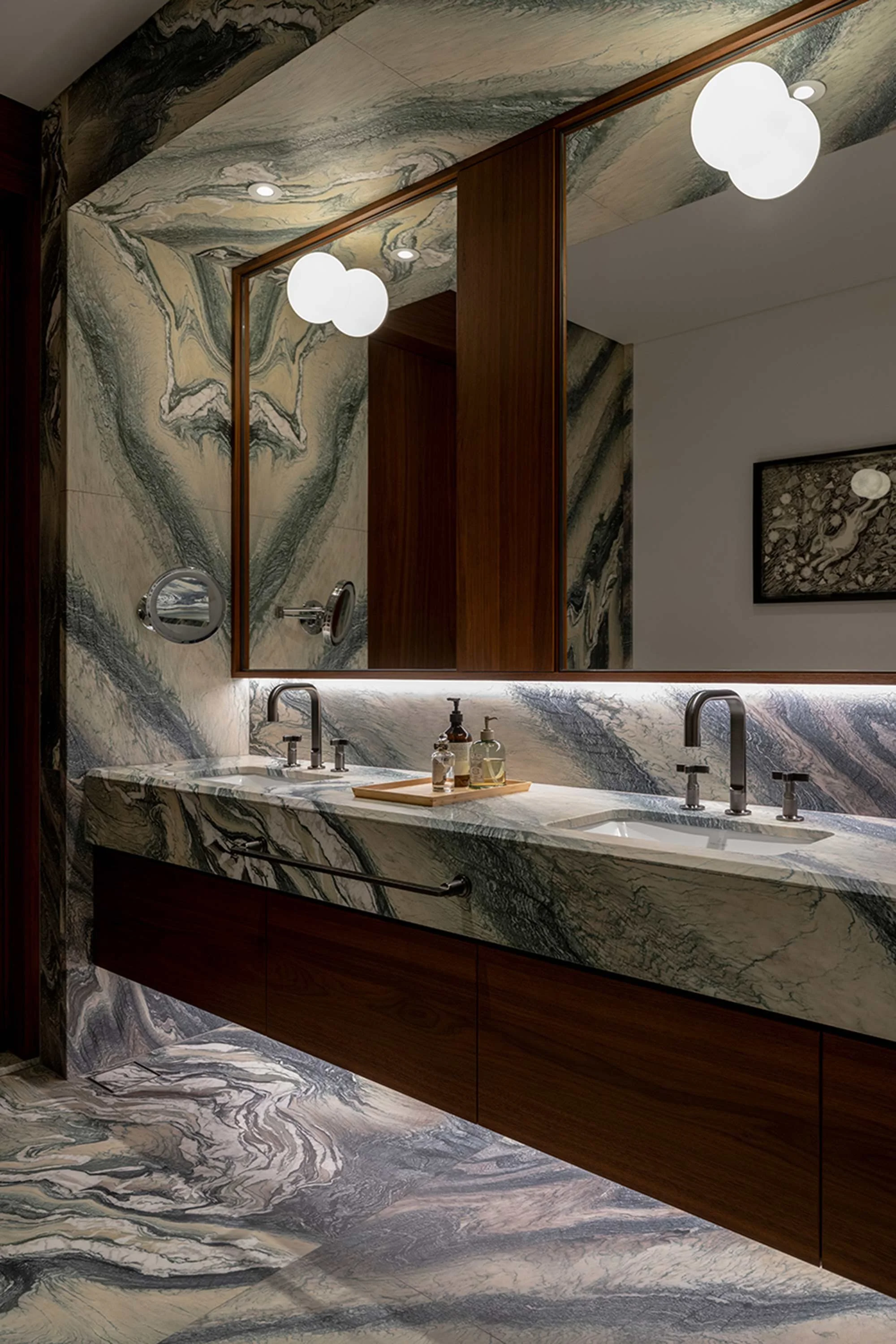
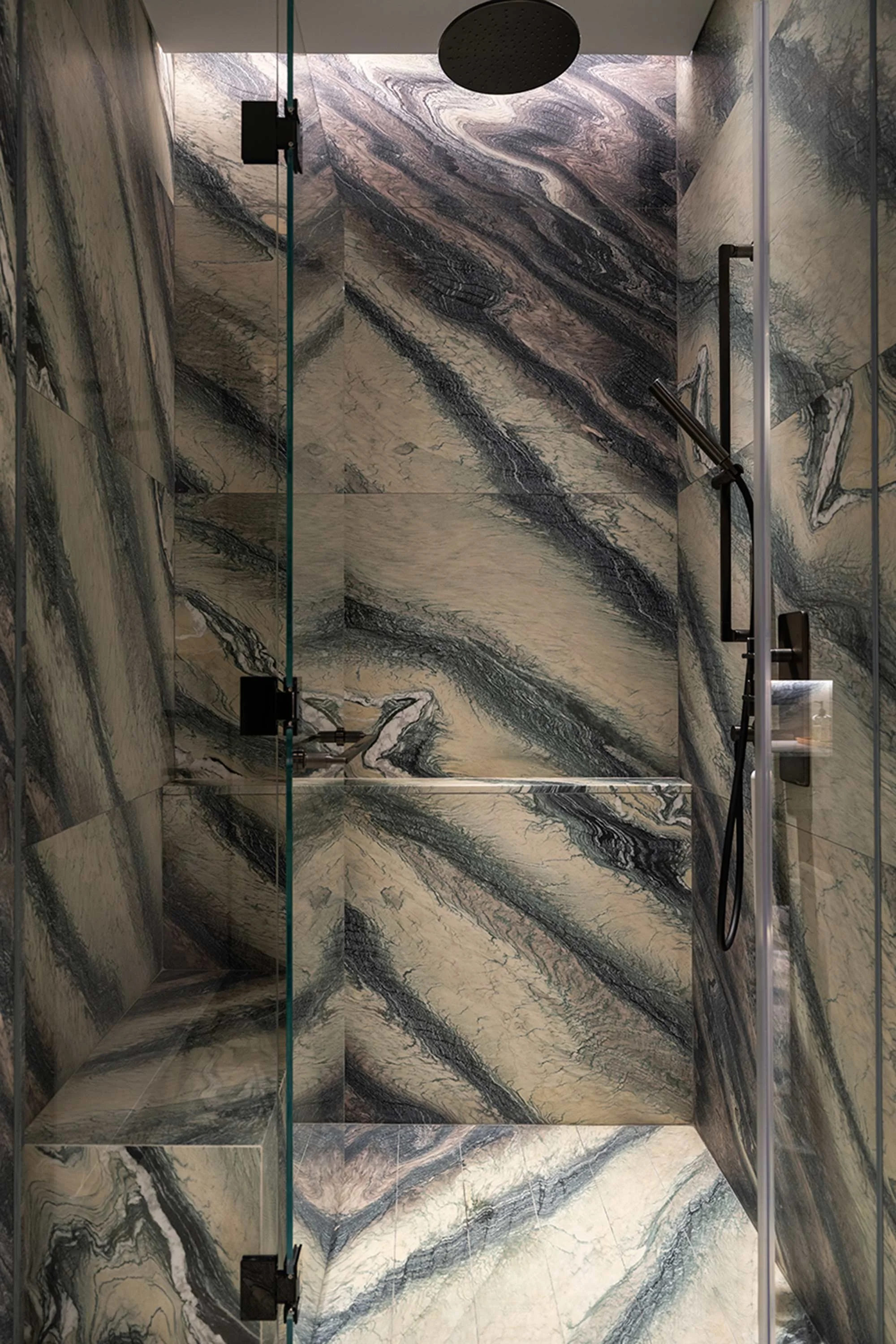
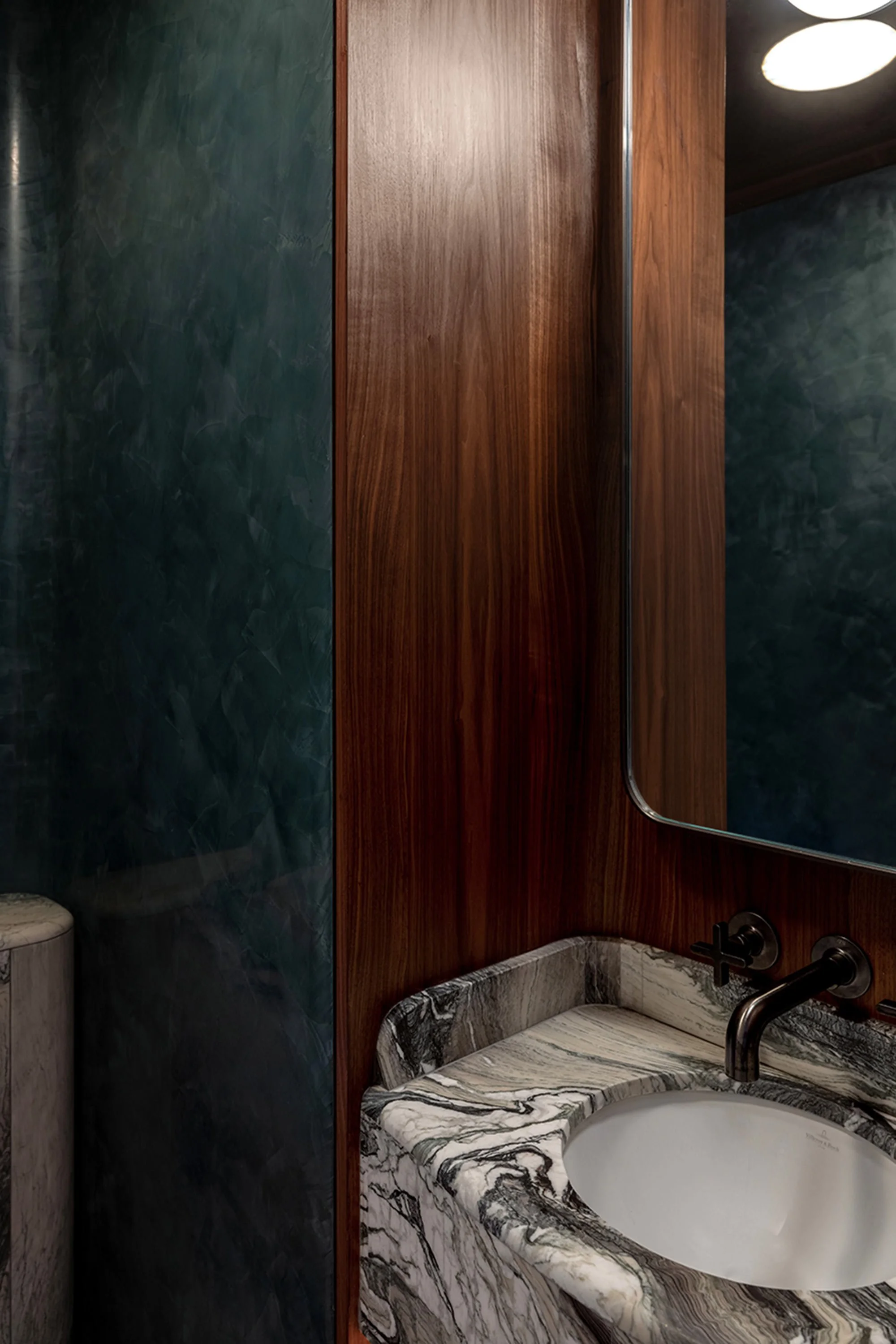
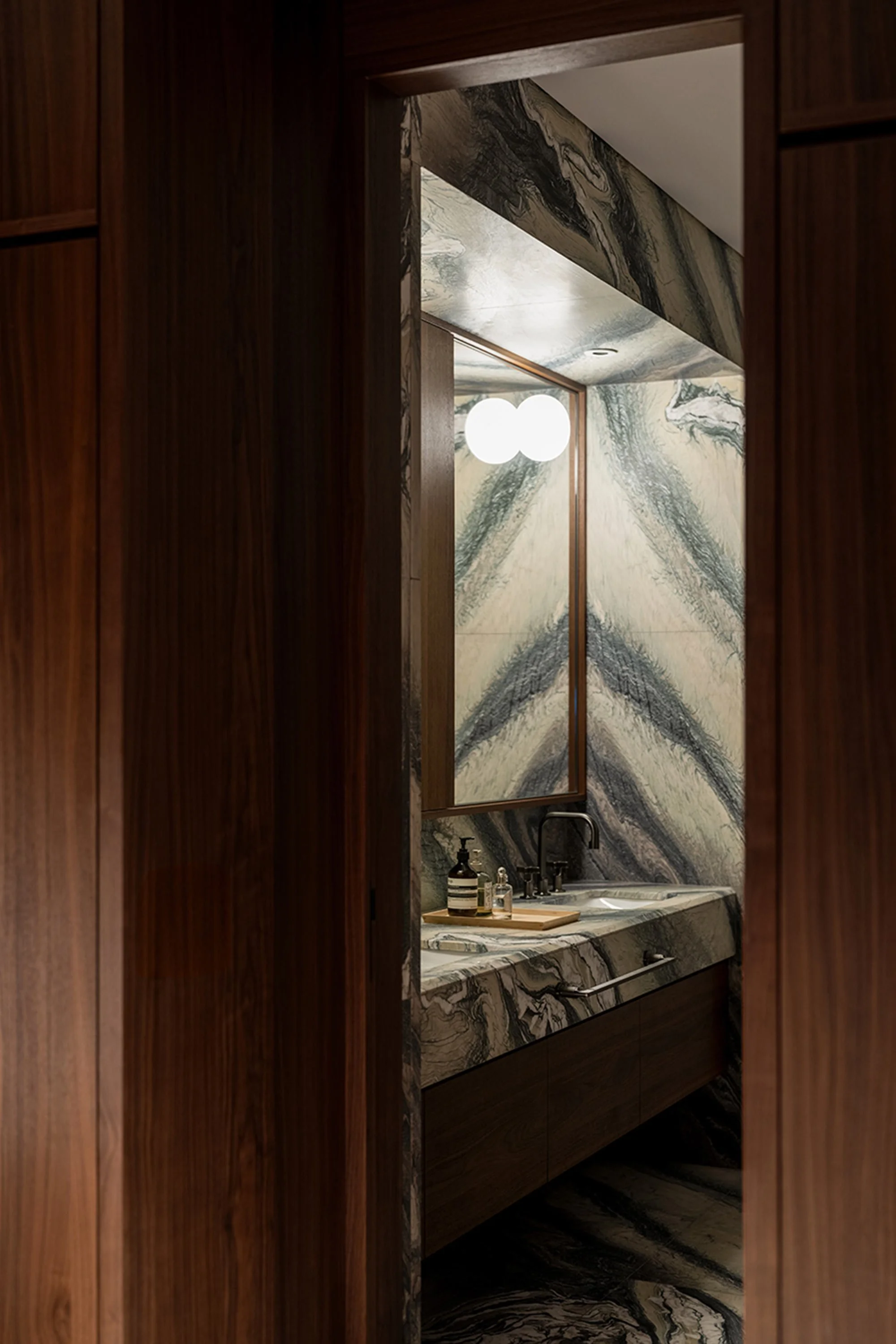
A standout for Cheng, though, is the private areas. ‘We especially enjoyed designing the powder room vanity and the master bathroom. It was our first time working with green-hued marble, and we were pleased with how naturally it pairs with the walnut,’ he says. ‘The contrast between the stone’s subtle veining and the wood’s rich grain brings a sense of depth and quiet luxury.’ Indeed, these two characteristics define the space, resulting in an atmospheric home in which no detail has been left to chance.
Text by Philip Annetta
Images by Common Studio