Indonesian Artist Bagus Pandega’s Machines Put Nature in Control
In his latest exhibition at Singapore Art Museum, Bagus Pandega’s kinetic, bio-responsive installations hand agency to plants, minerals and mud, exposing how ideas of endless productivity at any cost remain bound to finite environmental resources
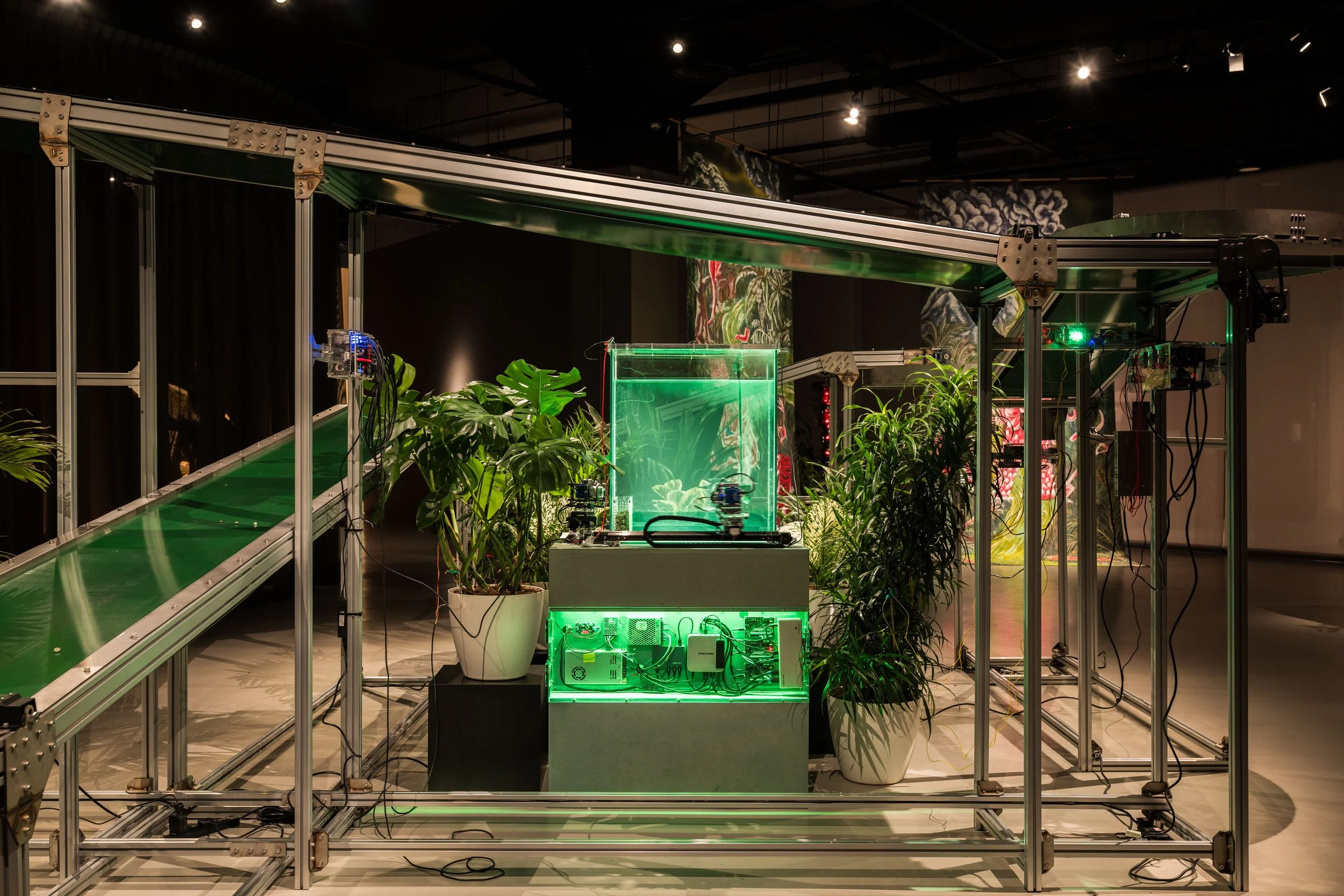
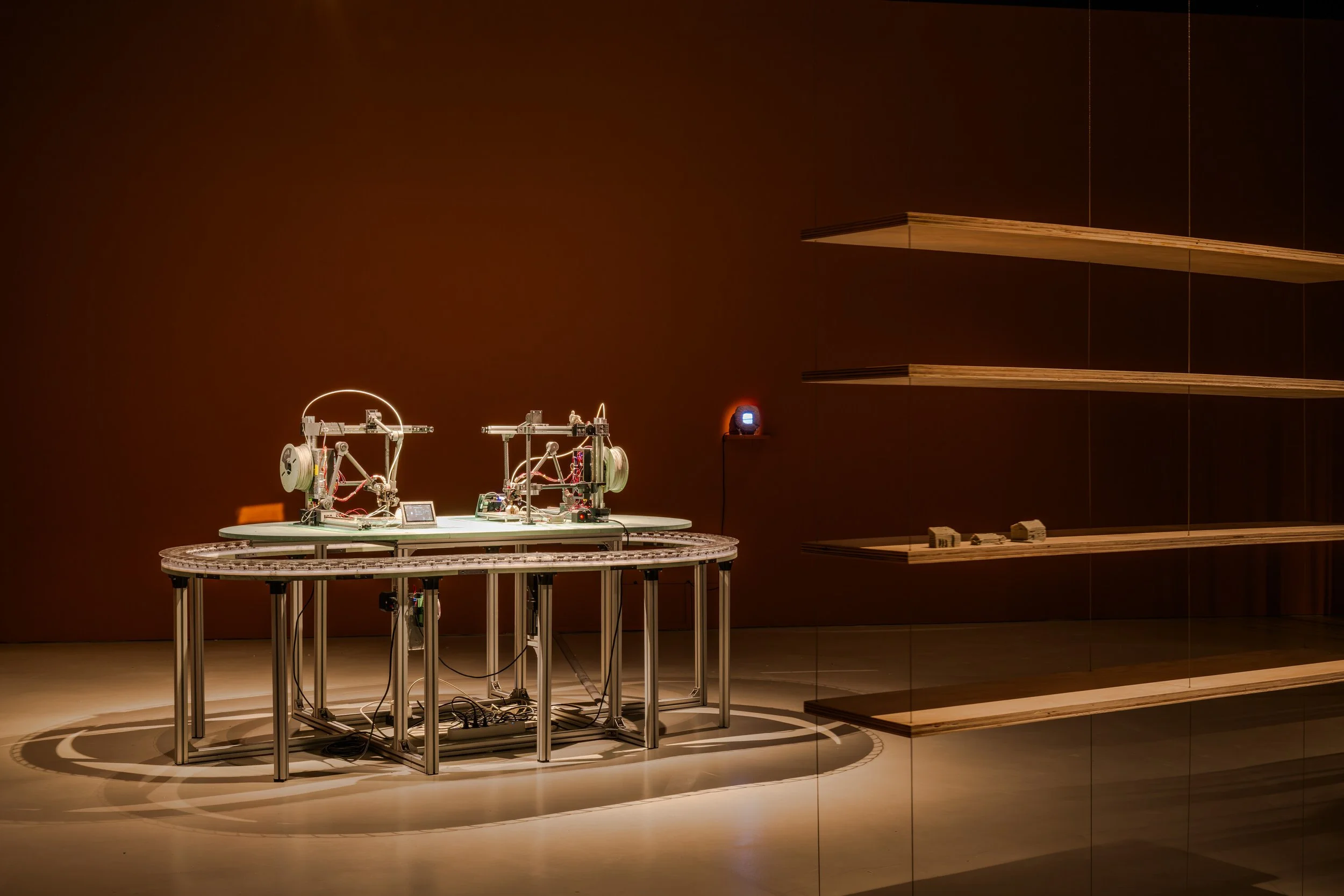
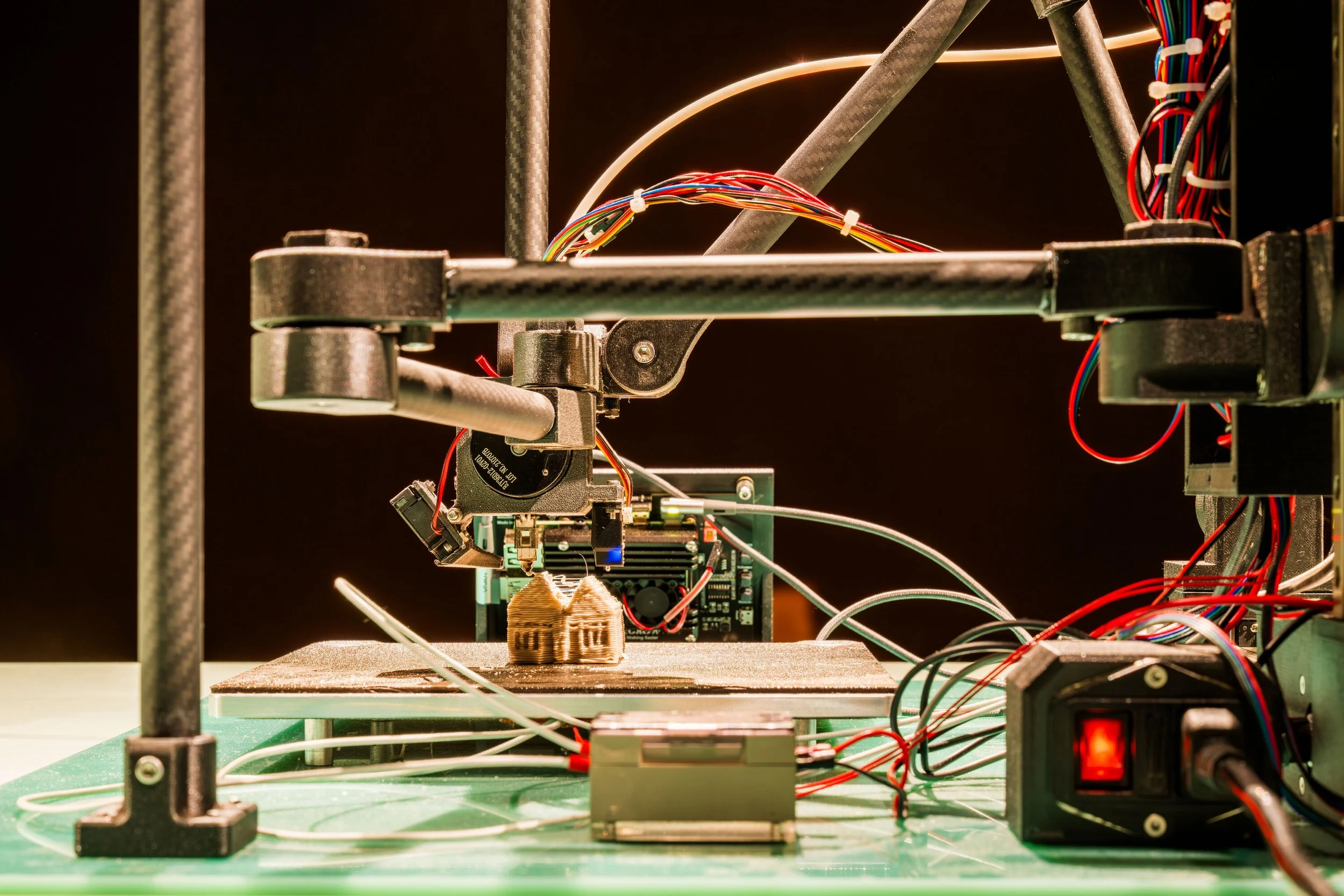
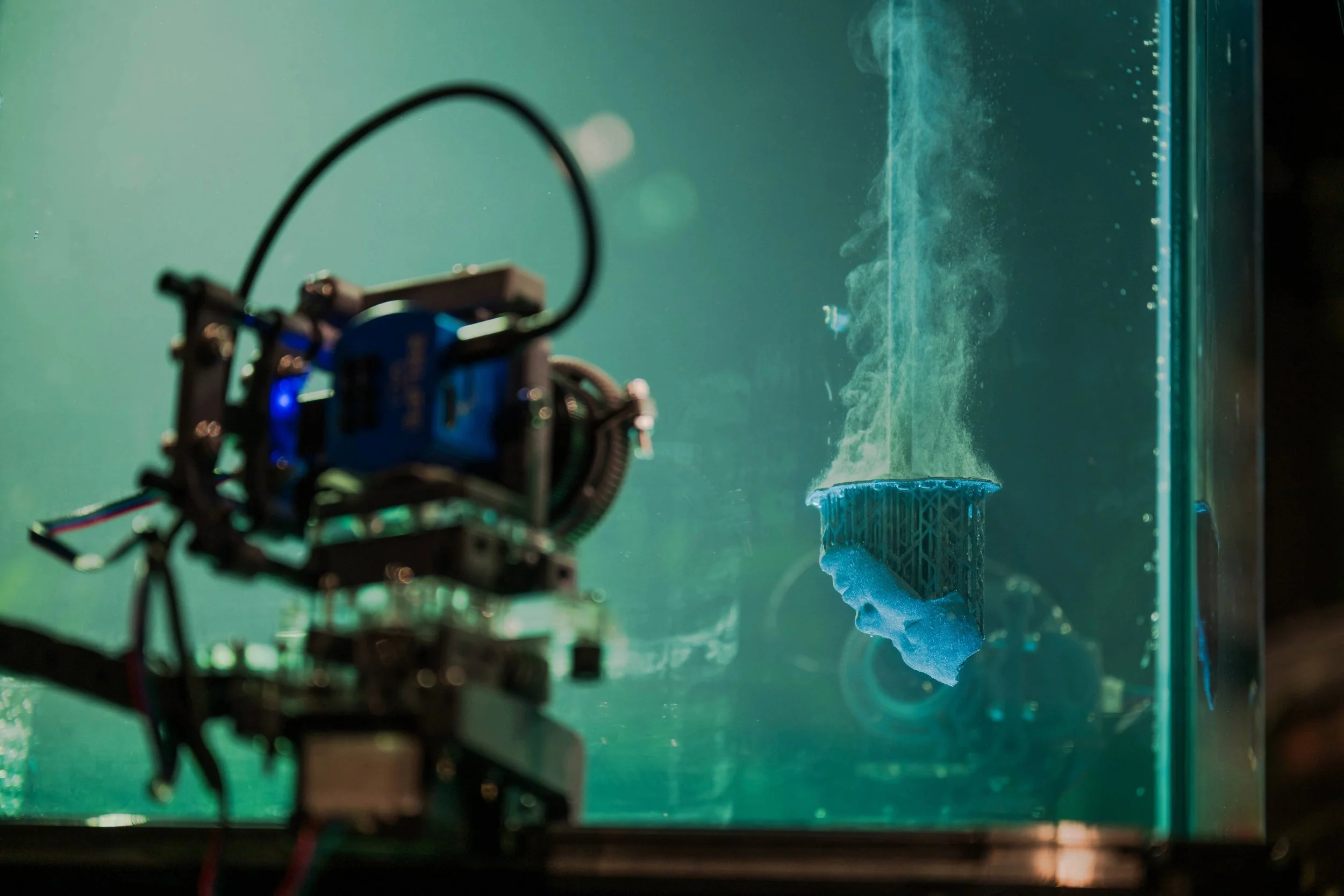
The conveyor hums before you register its logic. In LOOP (Less Organic Operation Procedure), nickel fragments circulate endlessly, their tempo governed not by human command but by the biofeedback of tropical plants. Positioned within, Gurat Lara (Scars) stages a slow, almost painful alchemy: a sculpture of a human face, submerged and steadily plated with nickel, its transformation streamed live and the image inverted so that rising bubbles appear to fall downwards in sweat or tears — referencing the hidden costs of Indonesia’s status as the world’s largest nickel producer. Meanwhile, Fabric of the Earth produces three-dimensional printed forms made of mud from the Sidoarjo mudflow, each object a quiet witness to a human-made disaster that never quite ends.
Together, these works in the exhibition Elia Nurvista and Bagus Pandega: Nafasan Bumi ~ An Endless Harvest, on view through 31 May 2026 at the Singapore Art Museum, encapsulate Pandega’s singular ability to turn industrial systems into instruments of reflection. ‘I’m interested in tracing how raw materials from Southeast Asia — minerals, agricultural products and energy resources — are transformed into objects and technologies: electric vehicles, artificial intelligence and digital currencies,’ he says. ‘Despite appearing immaterial or clean, they depend on intensive extraction, energy consumption and logistical infrastructures.’
Born in Jakarta in 1985 and now based in Bandung, Pandega’s first creative language was music. His geologist father who moonlighted as a Sunday musician filled the family home with musical instruments, and Pandega played in a high school band. Art arrived almost by accident: placed in Indonesia’s social sciences stream, he couldn’t enter the engineering faculty at the Bandung Institute of Technology. The only path available to him was art school, where he majored in sculpture.
Sculpture proved formative — but also constraining. The physical toll of materials like resin, silicone and paint thinner, combined with an encounter with a sound-based kinetic installation by Muneteru Ujino, shifted Pandega’s trajectory. ‘Seeing everyday objects transformed into something rhythmic, mechanical and expressive opened up a new way of thinking,’ he recalls. After graduating, he began moving away from traditional sculpture towards systems built from sound, movement and feedback.
If Pandega’s work feels technically sophisticated, its roots are stubbornly pragmatic. Much of his mechanical and electronic knowledge is self-taught, shaped by ngulik — a local ethos of resourceful tinkering. ‘It’s not about efficiency, polish or technical perfection, but about making things function with what’s available,’ he explains. Prototypes fail, systems misbehave and the work grows slowly through adjustment rather than optimisation.
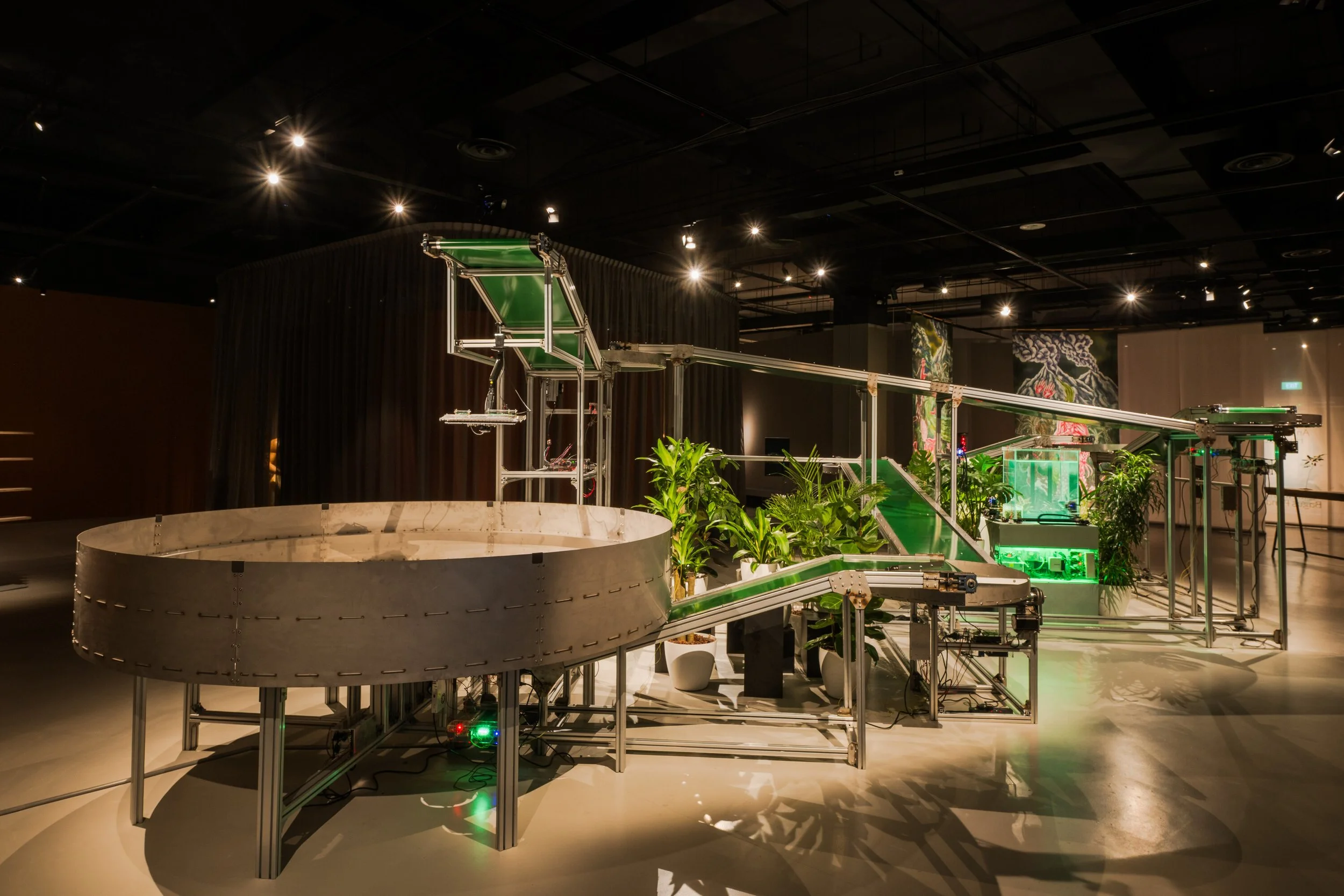
The questions anchoring these machines are historical and ecological. Pandega’s father’s laboratory of mineral samples left an early, half-understood imprint, but the artist’s focus on extraction emerged later, informed by Indonesia’s colonial education and the long arc from spice trade to palm oil and nickel. ‘I see technology and nature as forces that stand in tension with one another,’ he notes. ‘Technological development is closely tied to extraction and environmental destruction, relying on the continuous removal of resources from the earth.’ He responds to this imbalance by creating systems whereby control shifts from humans to signals from plants or natural processes ‘to expose the dependency of technology on living systems’.
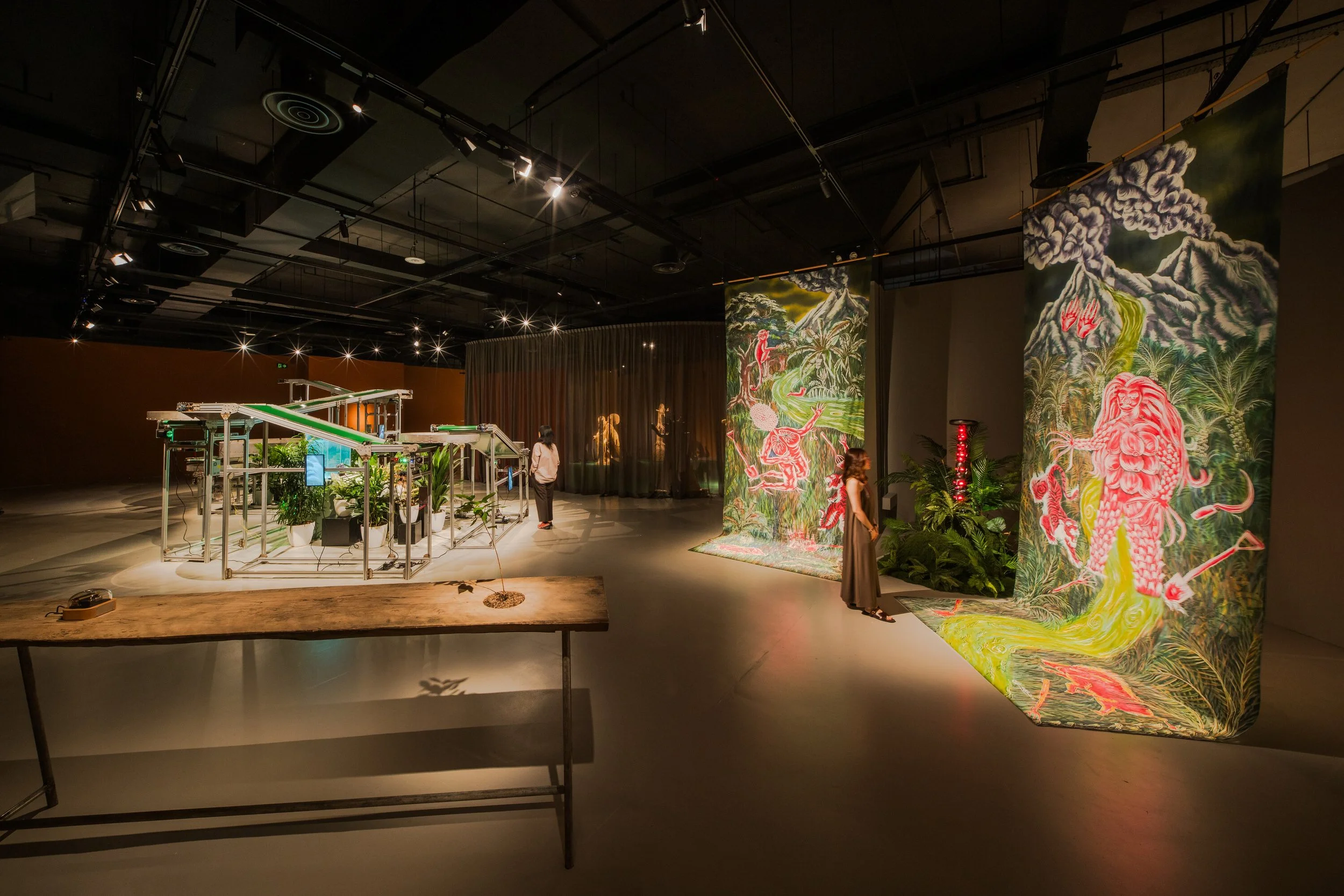
These concerns converge in his Singapore exhibition. Installed as a single ecosystem with Nurvista’s palm oil and batik works, Pandega’s conveyors, electroplating tanks and living systems breathe together. Agriculture, extraction, transformation, circulation and consumption are no longer abstractions but experiences — felt, heard and watched in real time. As Pandega puts it, his aim is modest yet urgent: ‘not consensus, but awareness. If my work can create moments where people pause, question or reconsider their relationship with technology, nature and the resources that sustain them, then it has fulfilled its role.’
Text by Y-Jean Mun
Images courtesy of the Singapore Art Museum