Known for His Disappearing Acts, Chinese Artist Bolin Liu Looks Beyond Invisibility
Celebrating 20 years of hiding in plain sight — most recently through a striking photo-performance in the Maldives with Ruinart — Bolin Liu reveals that behind the camouflage, his first and enduring artistic love remains sculpture
Over the past two decades, Beijing-based artist Bolin Liu has mastered the art of vanishing. Nicknamed ‘The Invisible Man’, he has slipped into newsstands, cityscapes, supermarket shelves and political landmarks, using his own body as a living canvas. Yet, behind the spectacle of his camouflage lies a quieter truth: Liu is, at heart, a sculptor — one who has always hoped the world would recognise him as much for his three-dimensional work as for his photographs.
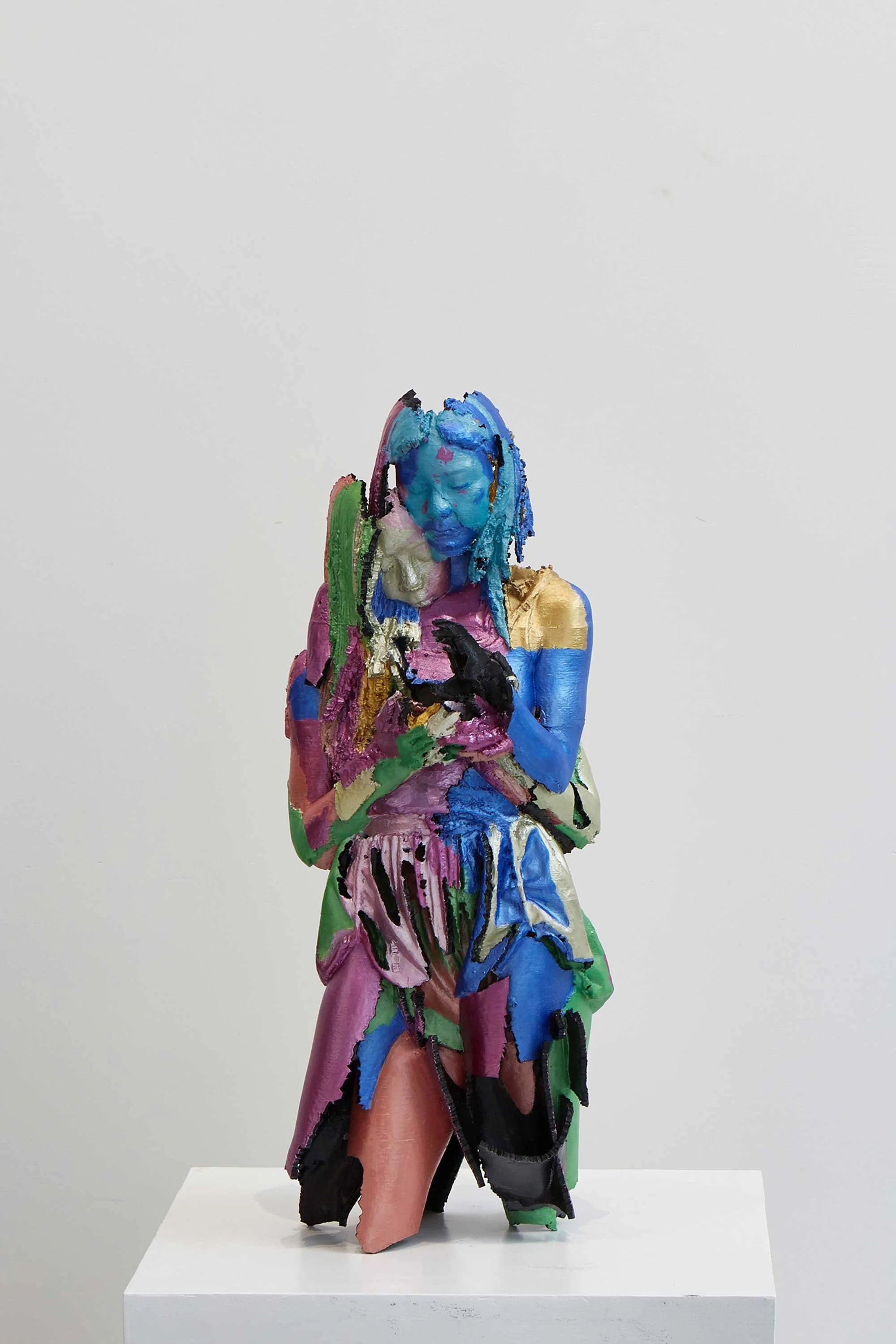
‘From a young age, I engaged in toy-making as a form of spatial thinking,’ he recalls. Clay aircraft and pistols were his childhood experiments in modelling. That instinct matured at the Shandong Academy of Fine Arts and later at the Central Academy of Fine Arts, where sculpture became his principal language. Today, his studio practice extends beyond classical mediums. After experimenting with circuit boards, USB cables, mobile phones and chargers, he now builds fragmented sculptures using resin, copper and cutting-edge digital tools, often beginning by scanning the body using 3D technology.
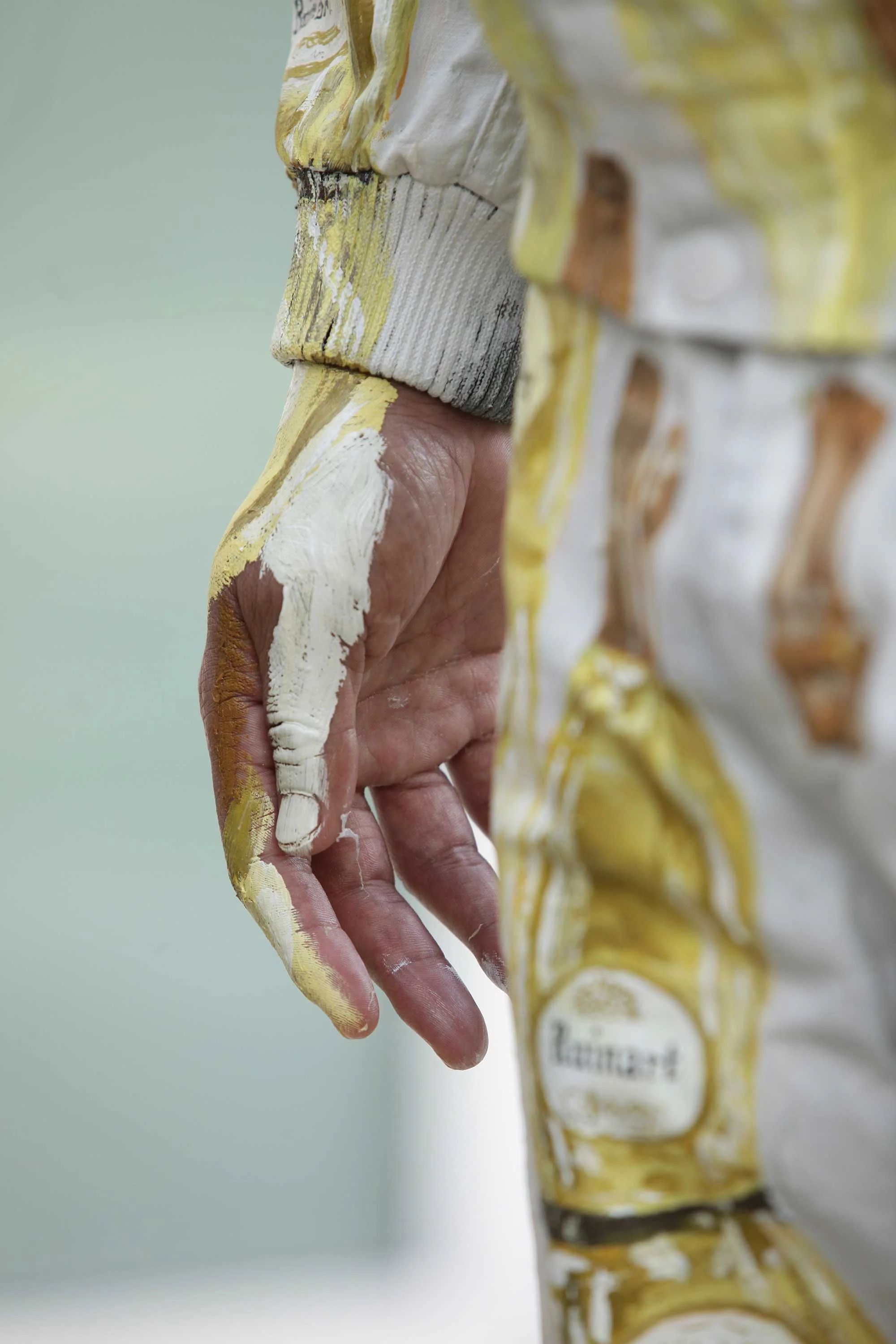
Liu explains his adoption of unconventional techniques: ‘Traditional sculptures and paintings fail to convey the profound dissonance between body and spirit that I wish to express. With the advent of 3D scanning and printing technologies, I found a way to express those feelings.’ Even in his photographs, the foundation is sculptural: the meticulous moulding of paint layers, props and spatial alignments allows him to dissolve into his surroundings.
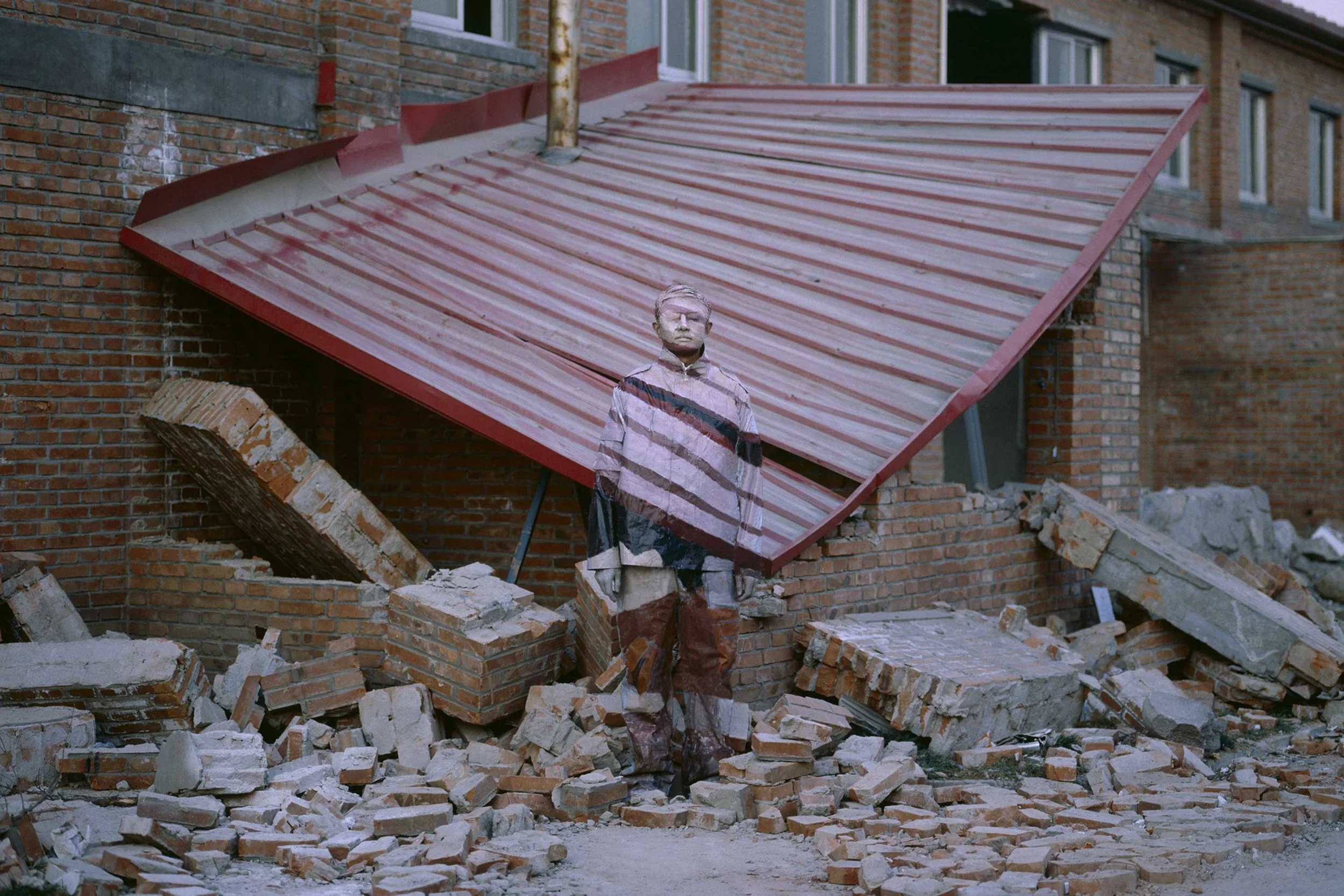
The impetus for Liu’s ‘invisible’ works emerged from crisis rather than experiment. In 2001, ‘the September eleven terrorist attacks shocked me to my core and made me reconsider the meaning of life and my relationship to civilisation as an artist,’ he says. ‘It made me realise the world was not what I thought it was. That’s when I began using my body as a medium.’ Four years later, when his Beijing studio was demolished by Chinese authorities, he staged his first ‘invisible protest’, painting himself to disappear into the rubble. It became the genesis of the series Hiding in the City, now marking its 20th anniversary.
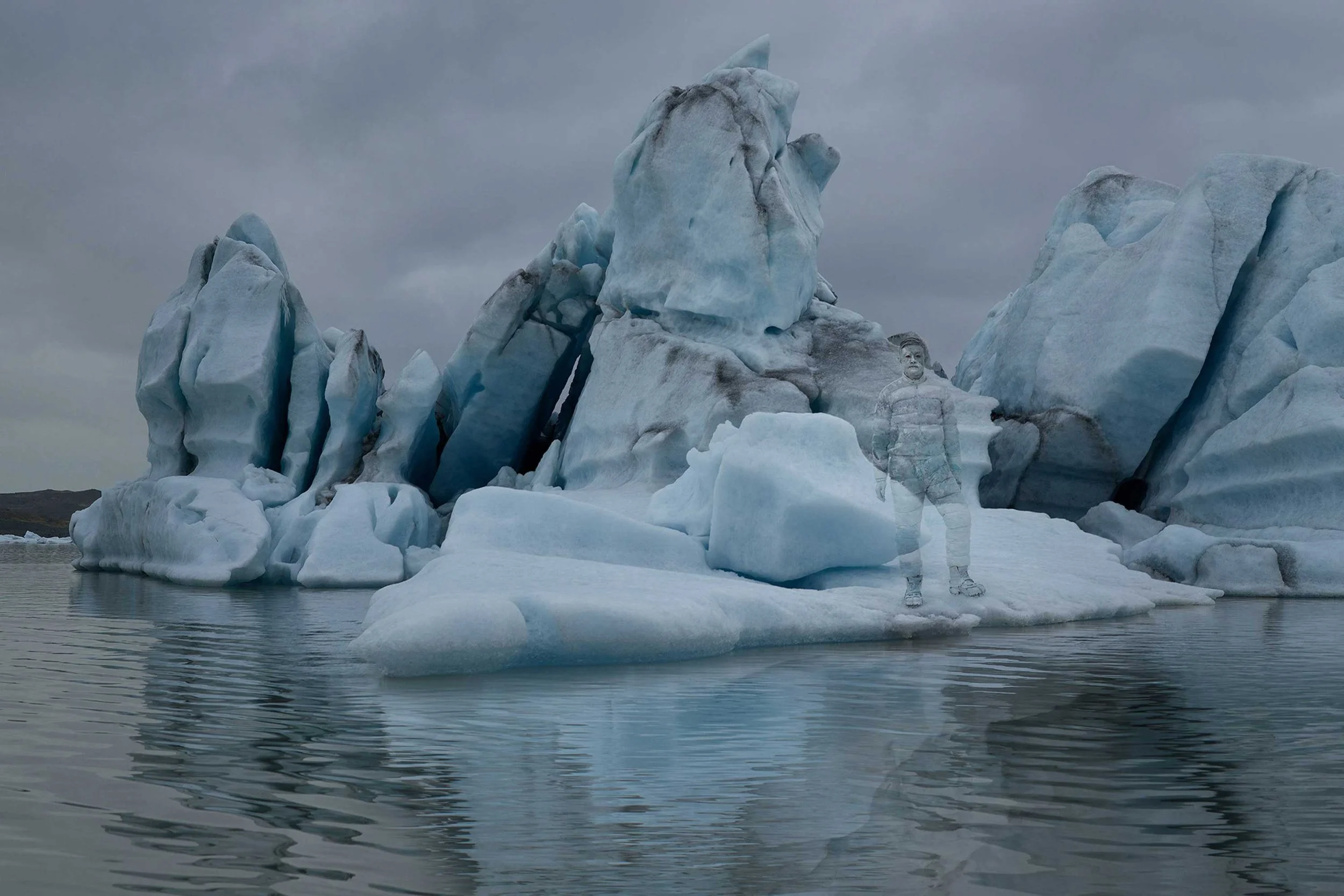
What began as a response to China’s rapid transformation evolved into a global vocabulary. Liu has vanished into cities like Venice, Paris, London, Singapore and New York, underscoring themes of identity, consumerism, power, cultural tension and climate change. ‘Choosing where to hide is to highlight the meaning hidden in that place,’ he explains. ‘My intention is to reflect upon the world’s imperfections, striving for transformation through art in order to contribute positively towards a better world.’
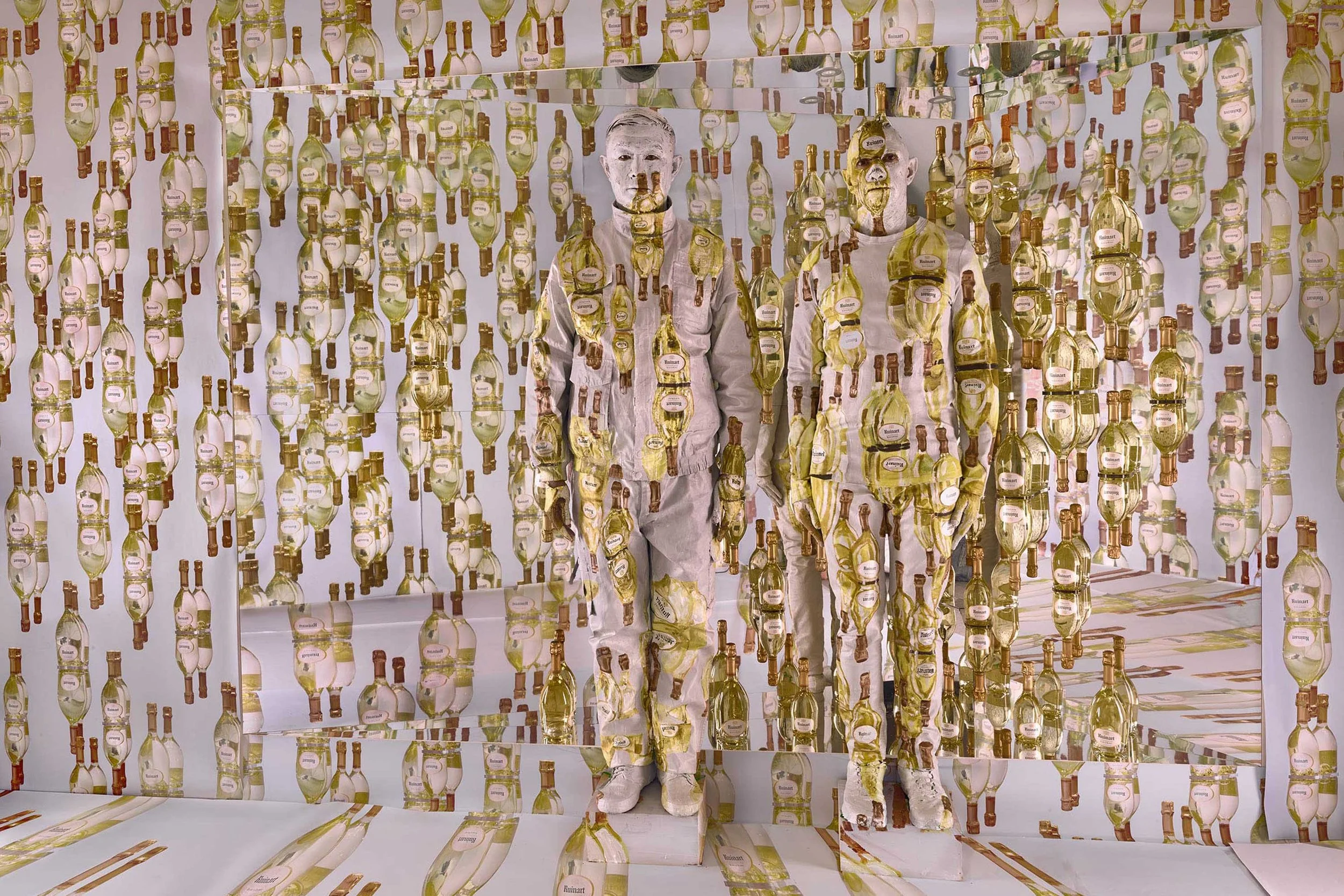
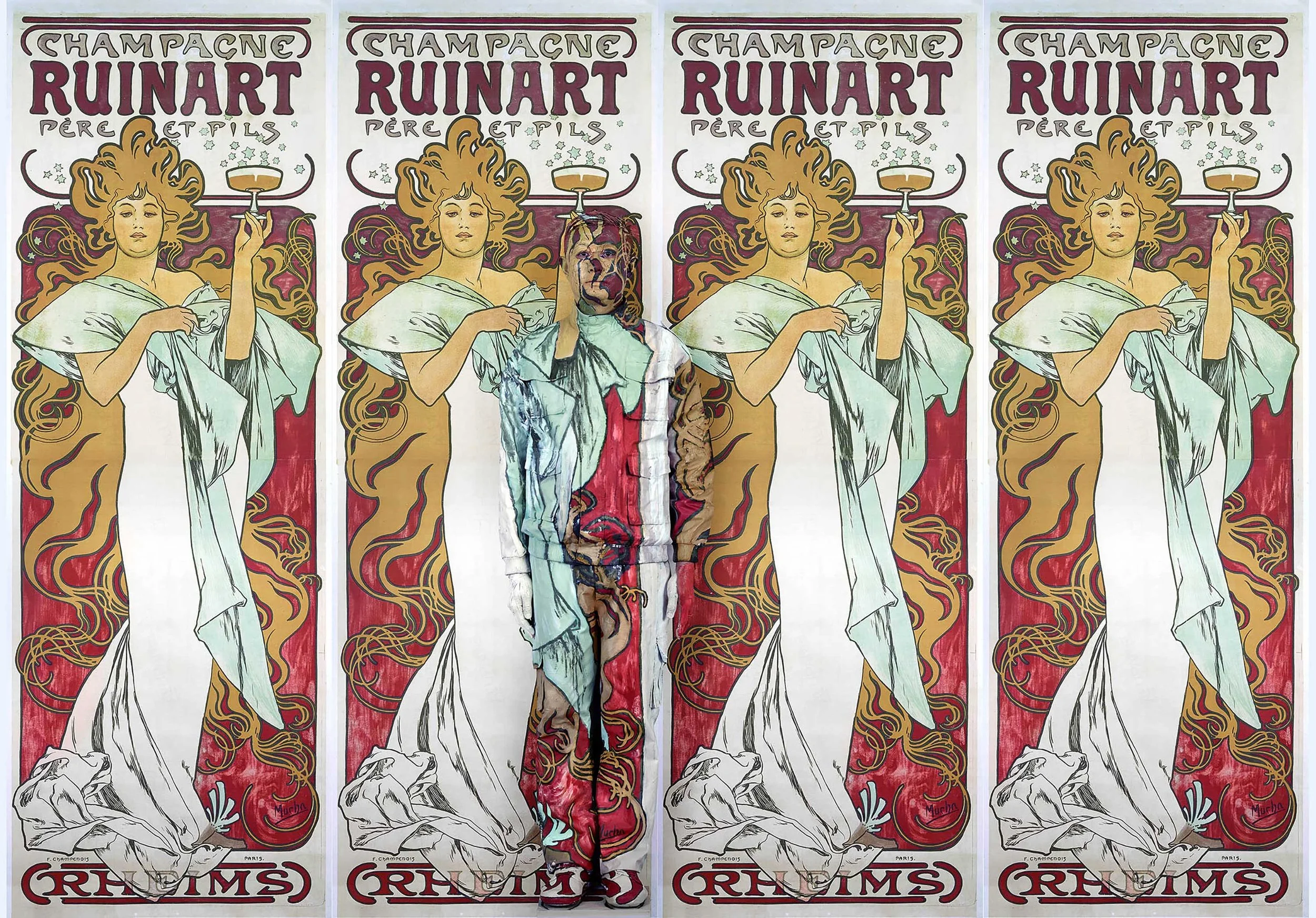
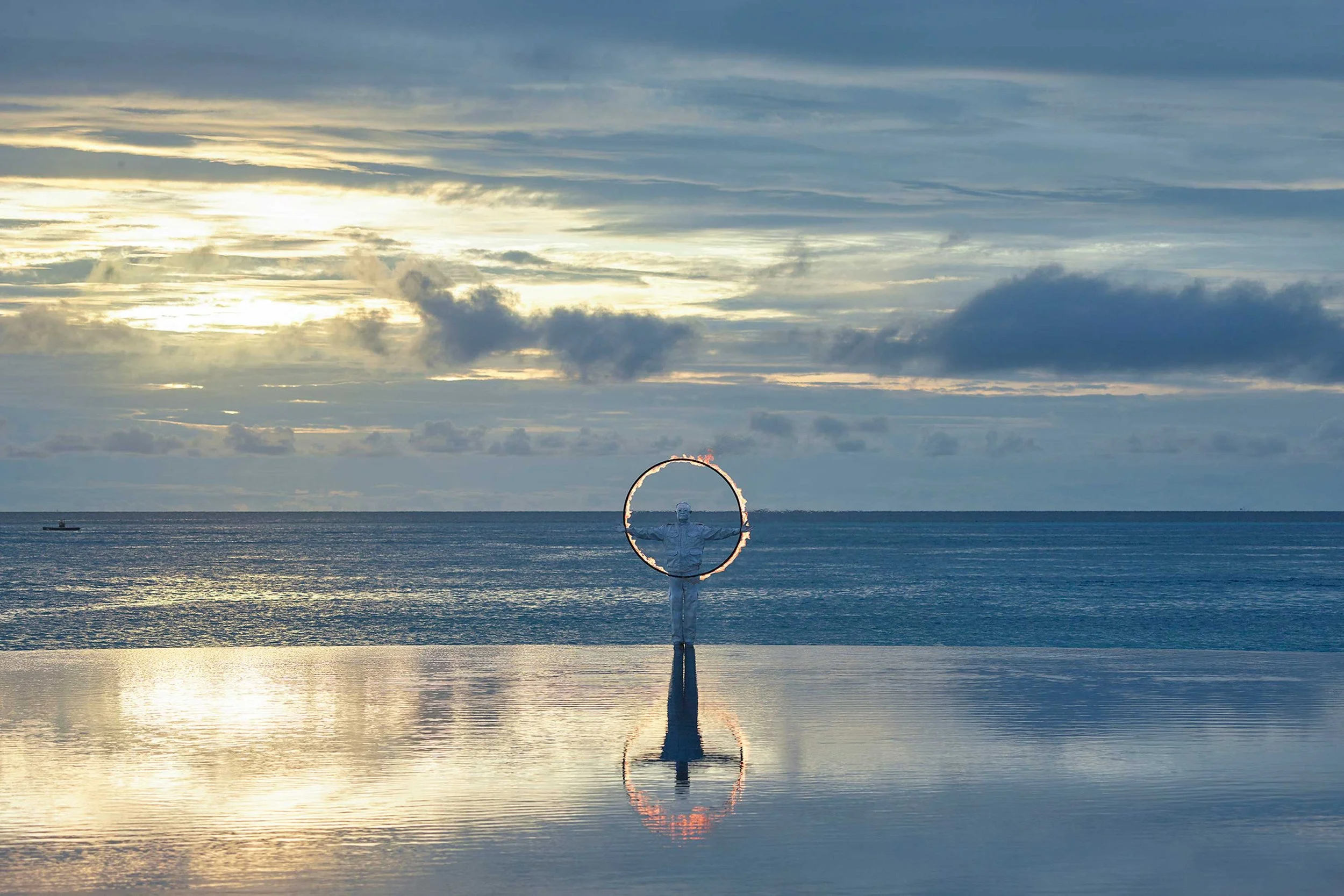
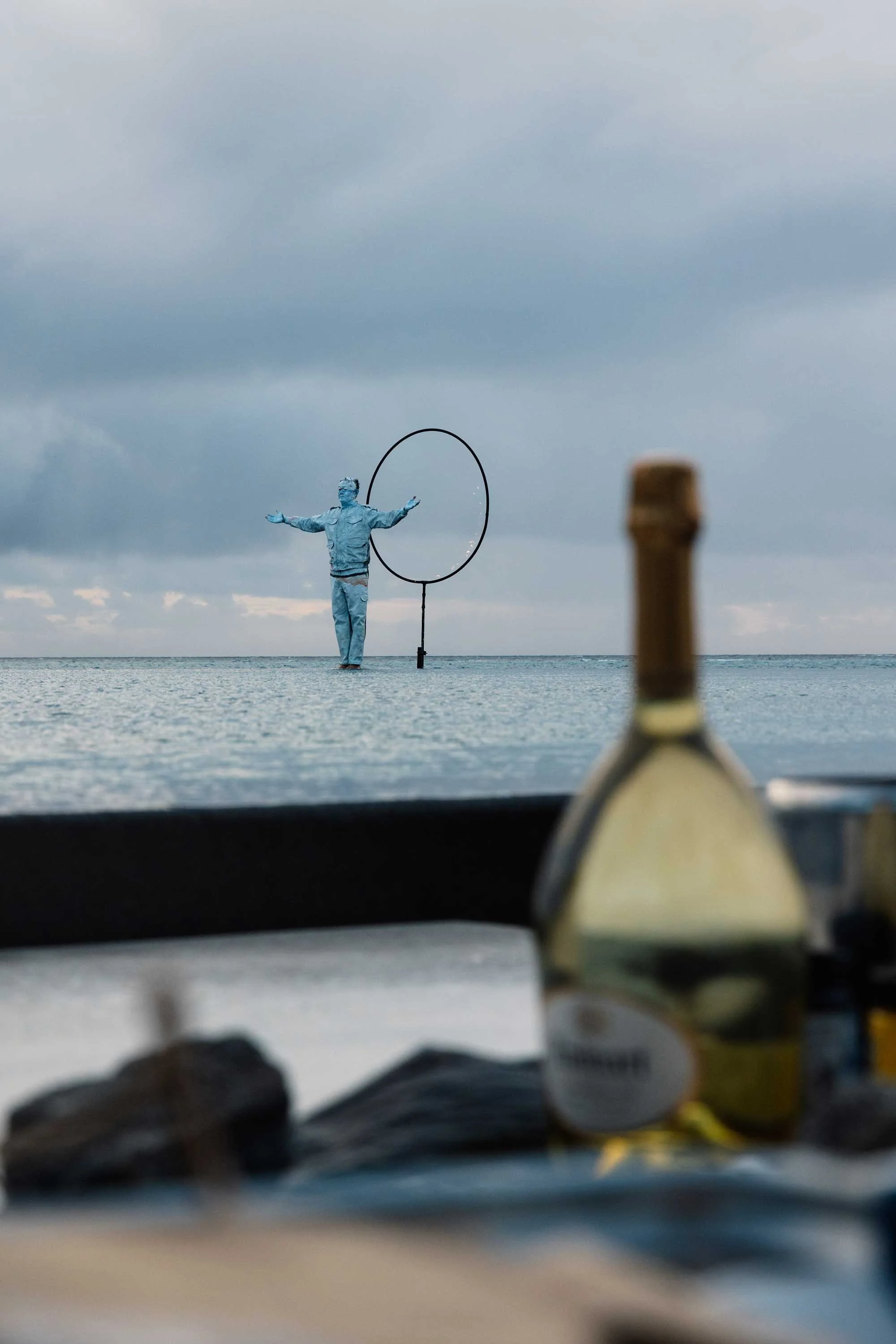
Last November, Liu deepened that commitment with Elements, a photo-performance created at The Ritz-Carlton Maldives, Fari Islands, in collaboration with champagne house Ruinart. Disappearing where ocean meets sky, framed by a blazing ring of fire, he embodied the four elemental forces of life: earth, water, fire and air. ‘In traditional Chinese philosophy, these refer to the four basic elements that constitute all things in the world,’ he notes. ‘Excessive human intervention has caused significant disruption to the marine ecosystems near the Maldives, which I wanted to draw attention to. We must protect our oceans, our environment and our earth.’ The work also continues Ruinart’s long-standing tradition, dating back to 1896, of commissioning contemporary artists to reinterpret its heritage.
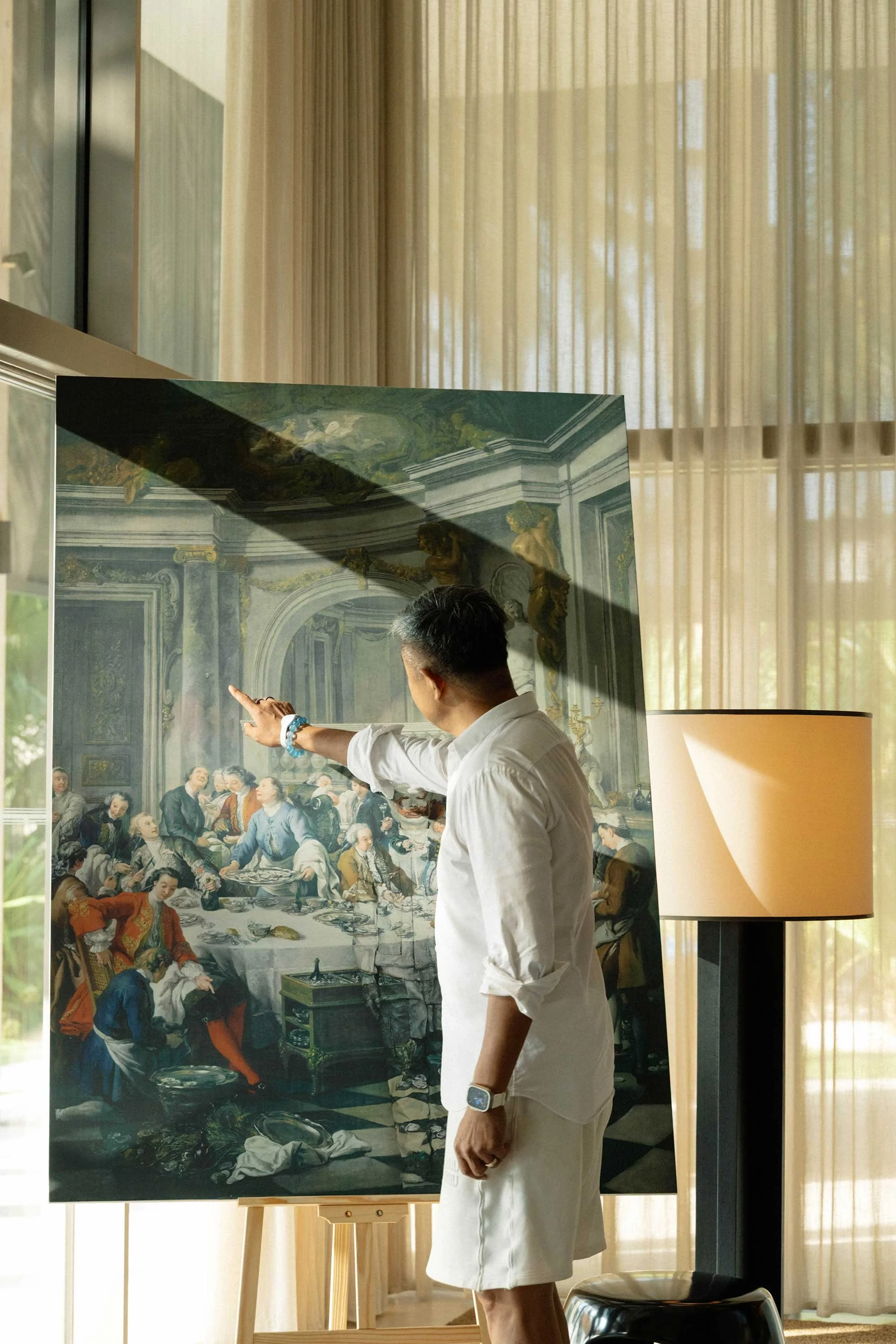
Earlier, in Milan, Liu blended into The Last Supper at Santa Maria delle Grazie, using Leonardo da Vinci’s sacred Renaissance fresco to question presence, absence and spiritual continuity. Such works reveal the philosophical core of his practice: the body as a vessel and the world as a stage for renewal. ‘The human body is a temple,’ he says. ‘When we return to a state of elemental purity, we reconnect with the world and with ourselves.’ Twenty years on, Liu is still disappearing, with each vanishing act — and each sculpture — illuminating the truths we too often fail to see.
Text by Y-Jean Mun
Images courtesy of Liu Bolin, Liu Bolin Studio and Ruinart