Paris’s Decadent Hotel Sinner is Reborn as Experimental Marais, Realised by its Original Designer
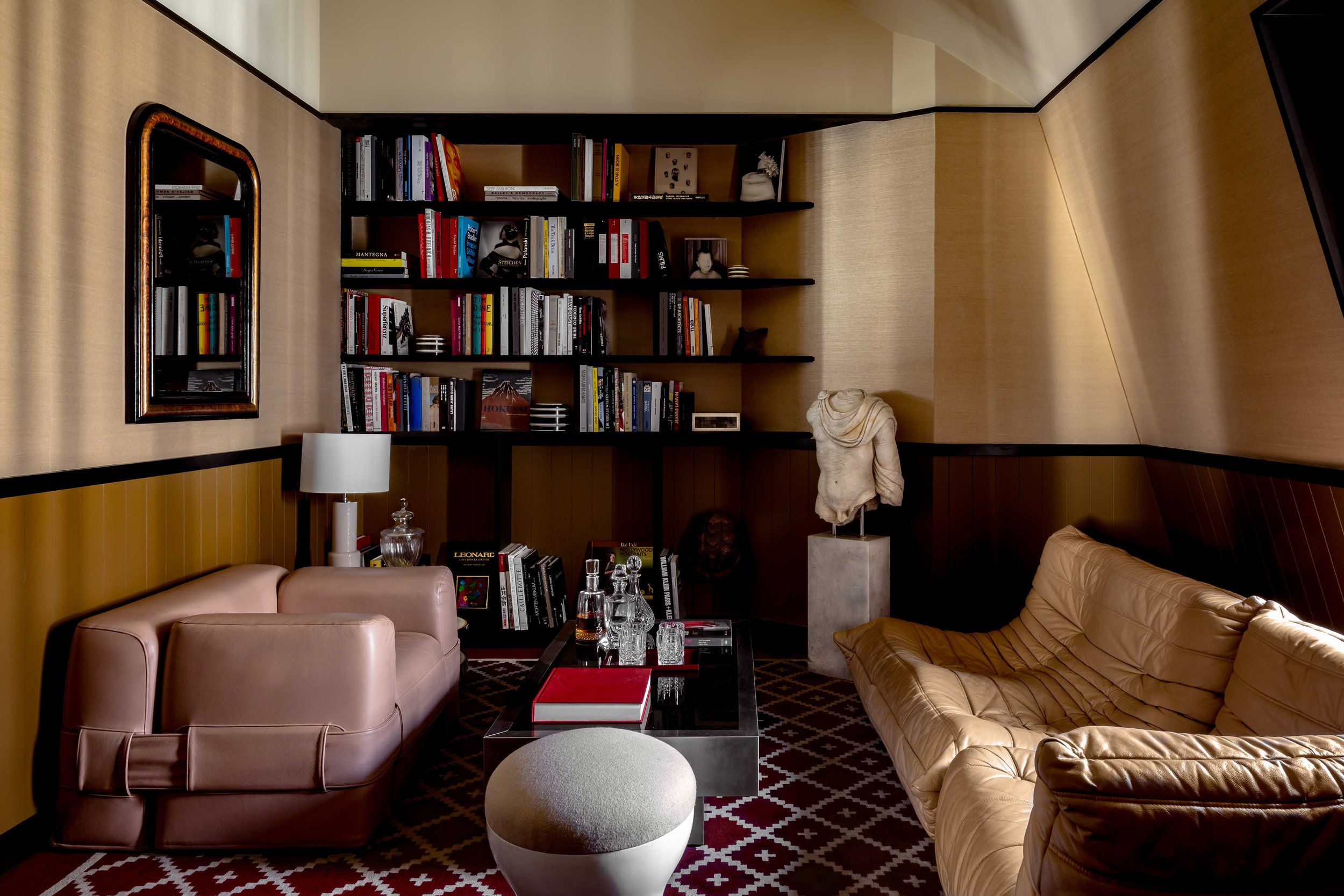
Tristan Auer was given the unusual opportunity to revisit his own work and to reimagine the narrative behind the space
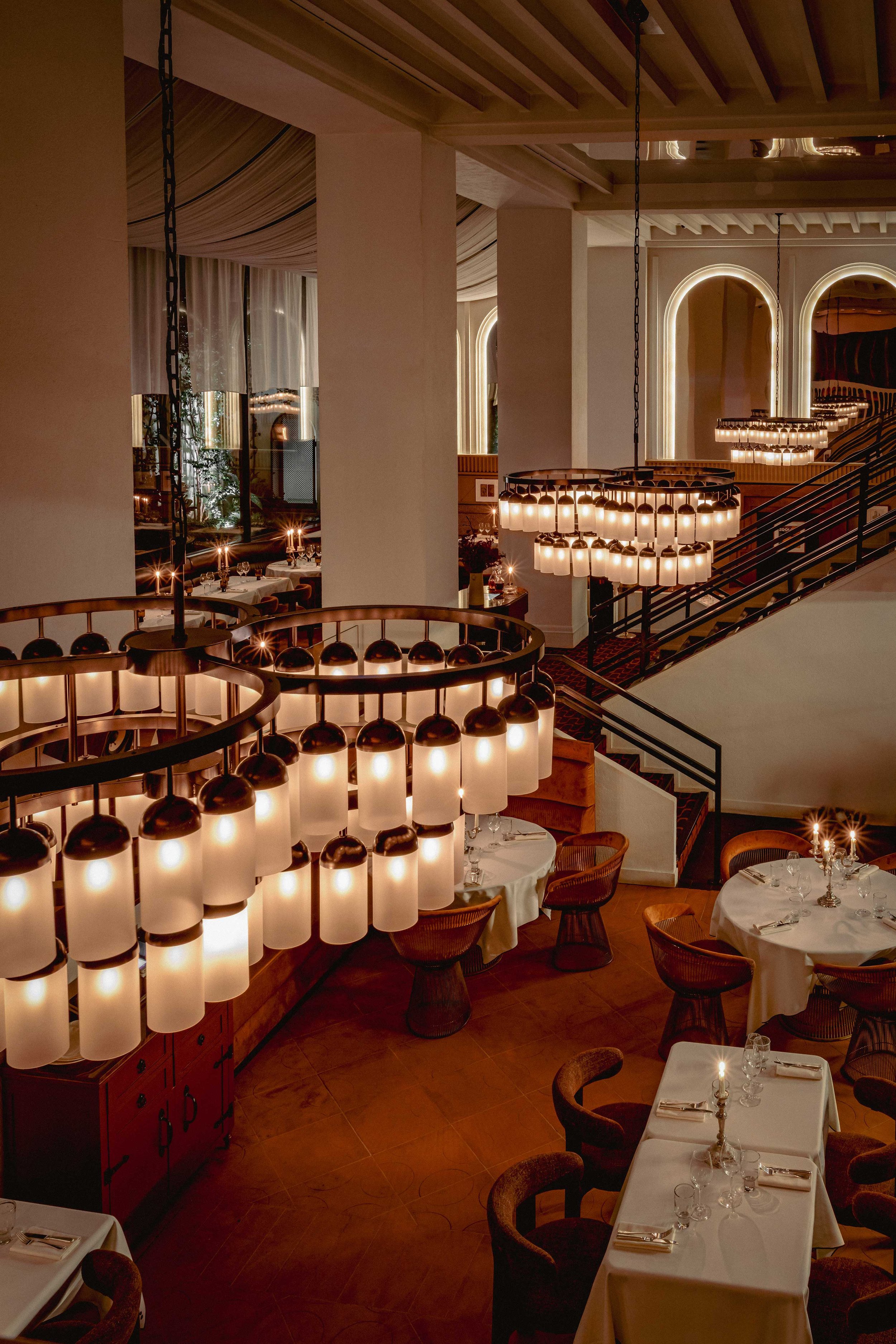
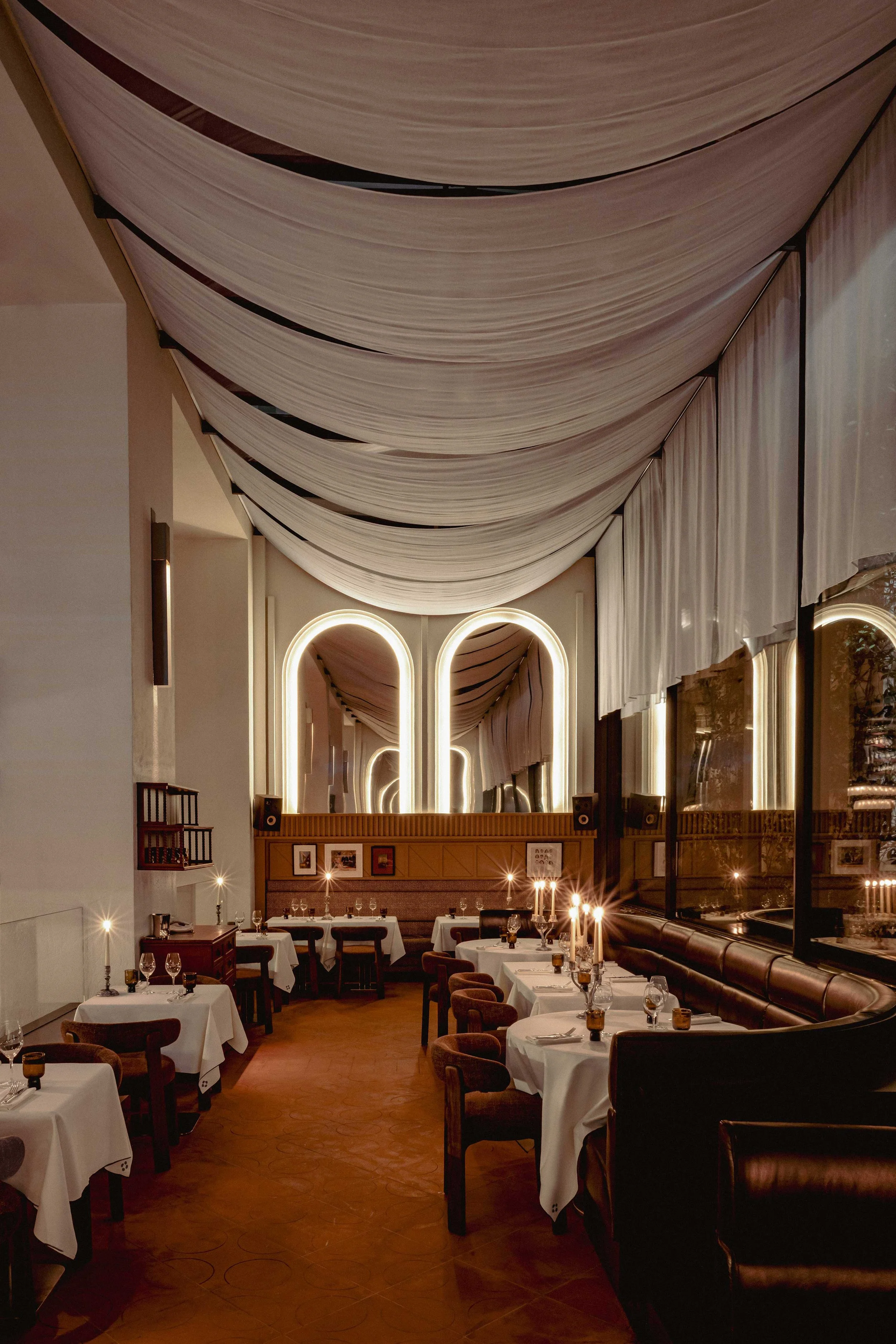
With its storied history and 20th-century resurgence as a destination, The Marais isn’t the easiest place for a designer to make their own. Yet it was there, in a building with no architectural merit to speak of — and therefore no heritage constraints — that Tristan Auer created a hotel that existed nowhere else: the Sinner. ‘It was a server room,’ he recalls. ‘There was nothing there, no history, and I created one that mattered to me.’ Today, the building carries a new name: Experimental Marais. And once again, Auer has overseen its transformation.
The designer likes to describe himself as a tailor — someone who cuts to measure to reveal a silhouette. But a hotel has no fixed clientele: guests change every night, every season. And with no architectural foundation to work from, he invented a character. For the Sinner, he drew on the excesses of the 1980s: ‘I imagined someone like Charles Denner, in that sort of spirit — the Truffaut actor who travelled the world, a rugged adventurer who worked with his hands. What does he collect? How does he dress? How does he walk? What does he smoke? A Truffaut character always smokes, of course.’
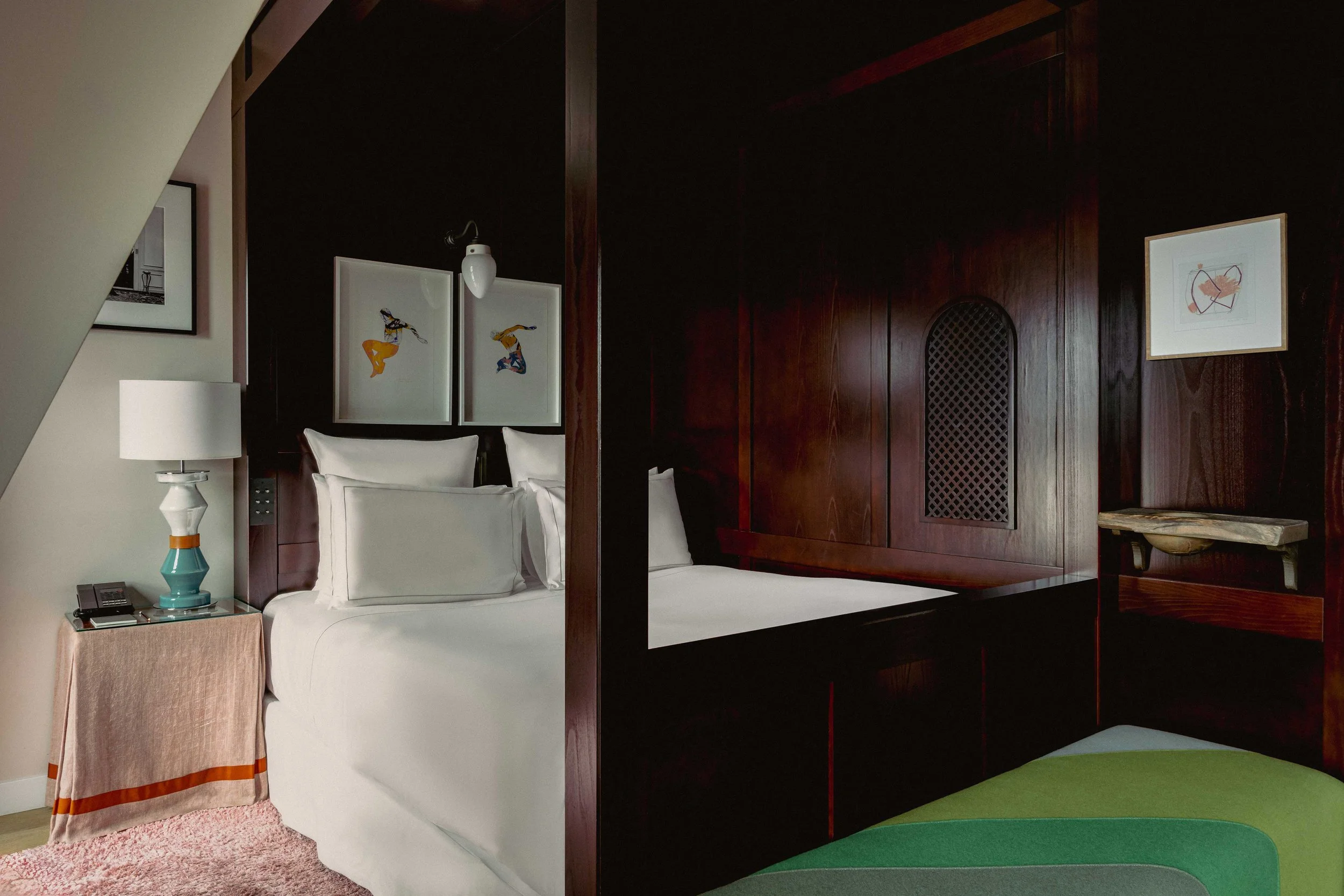
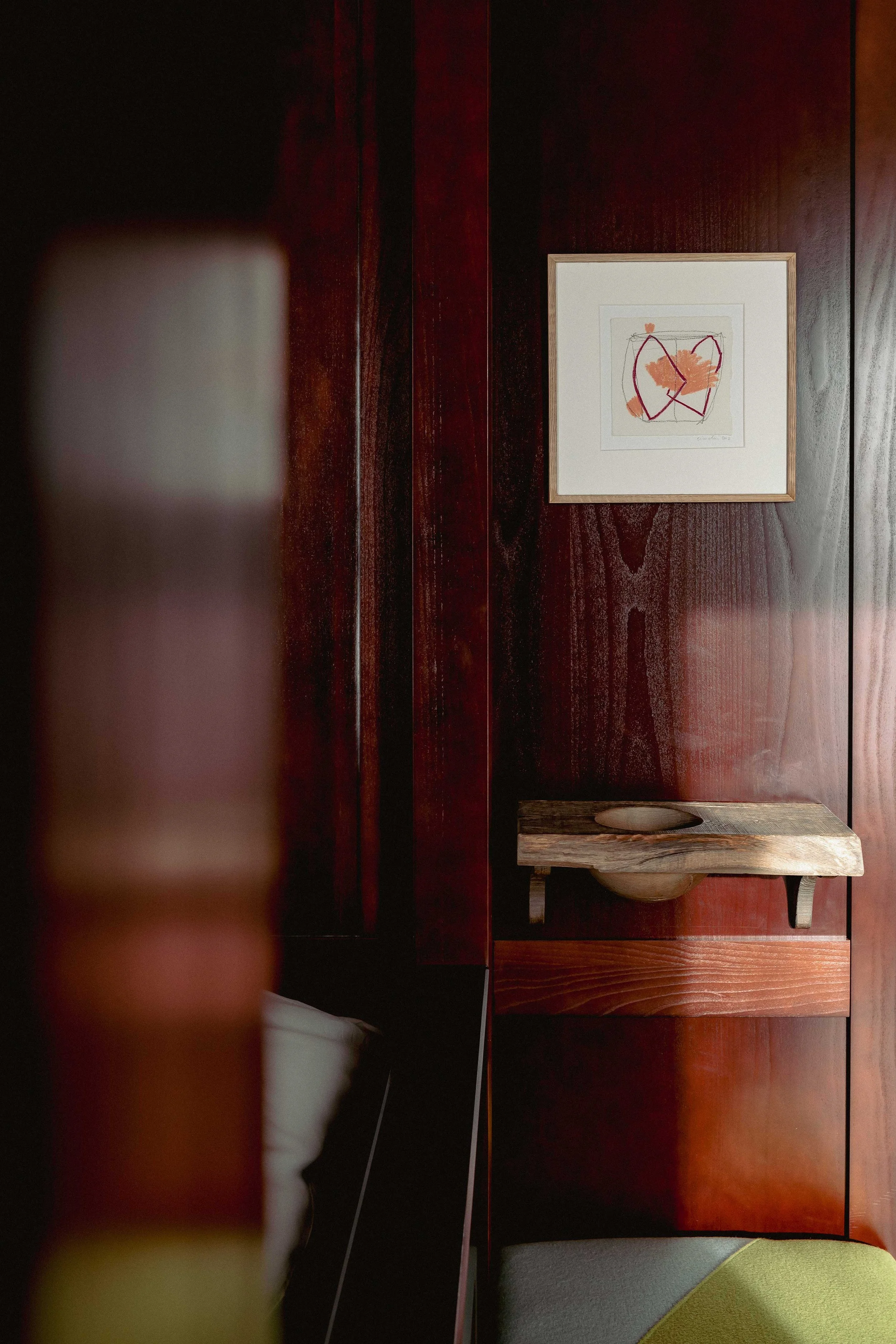
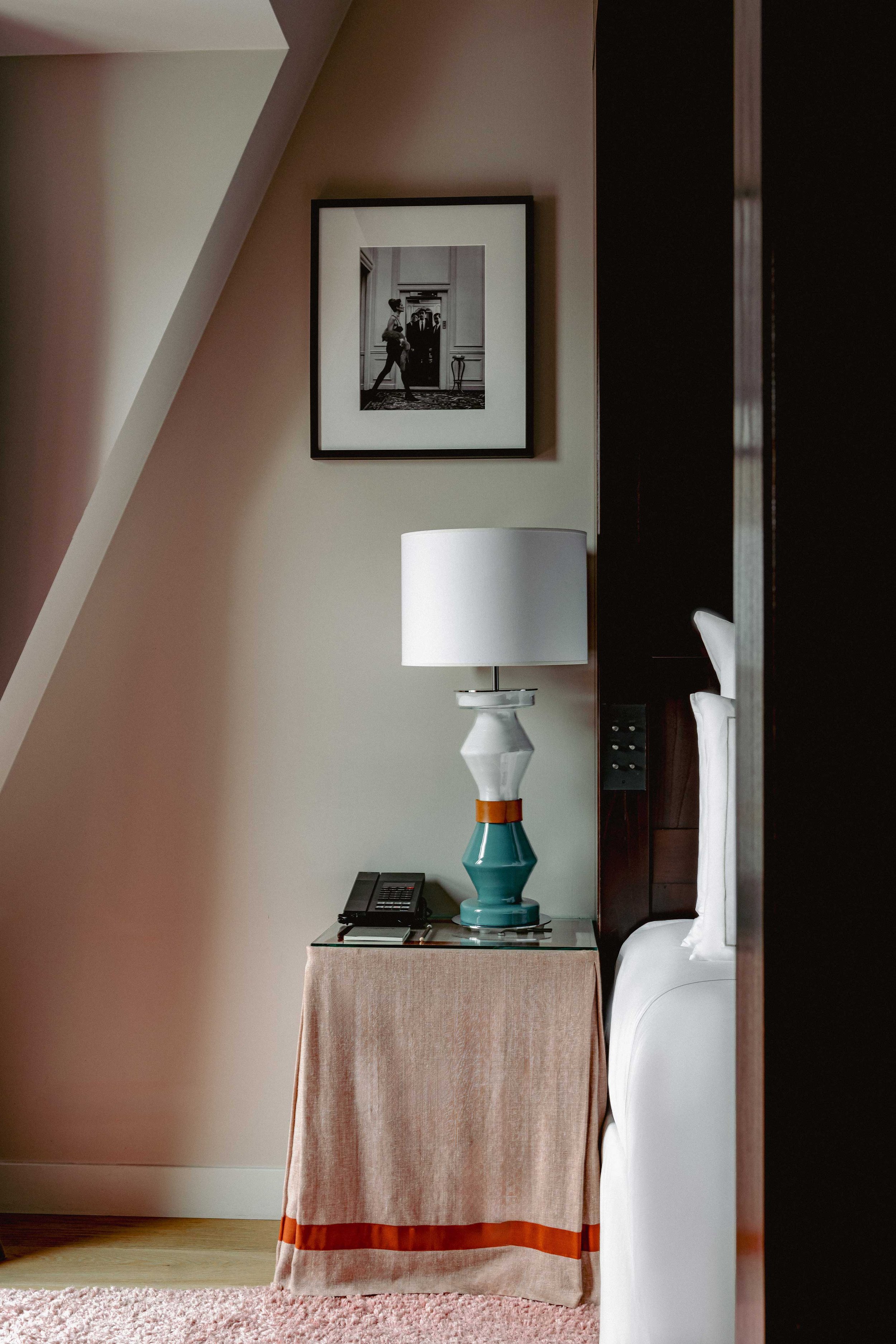
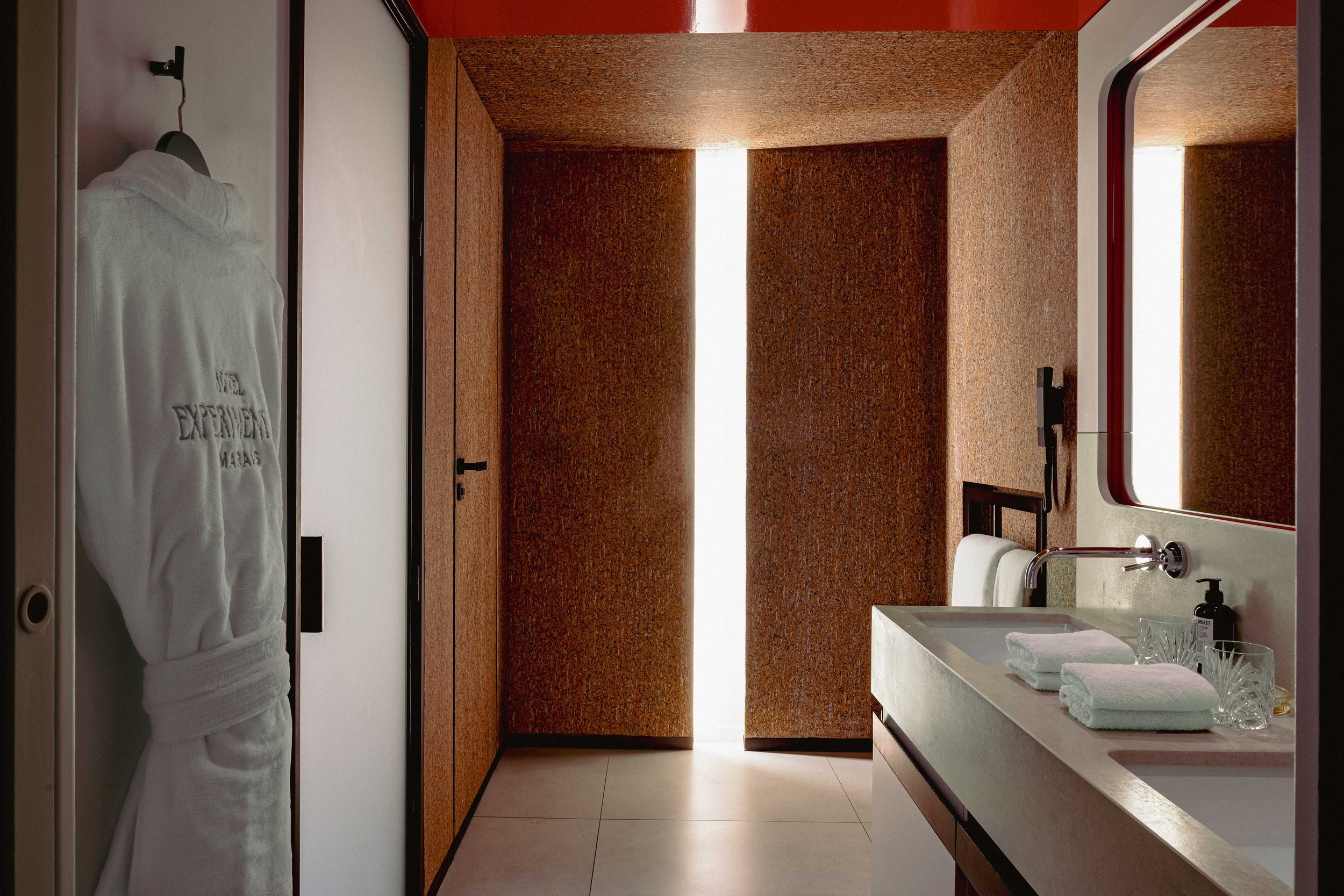
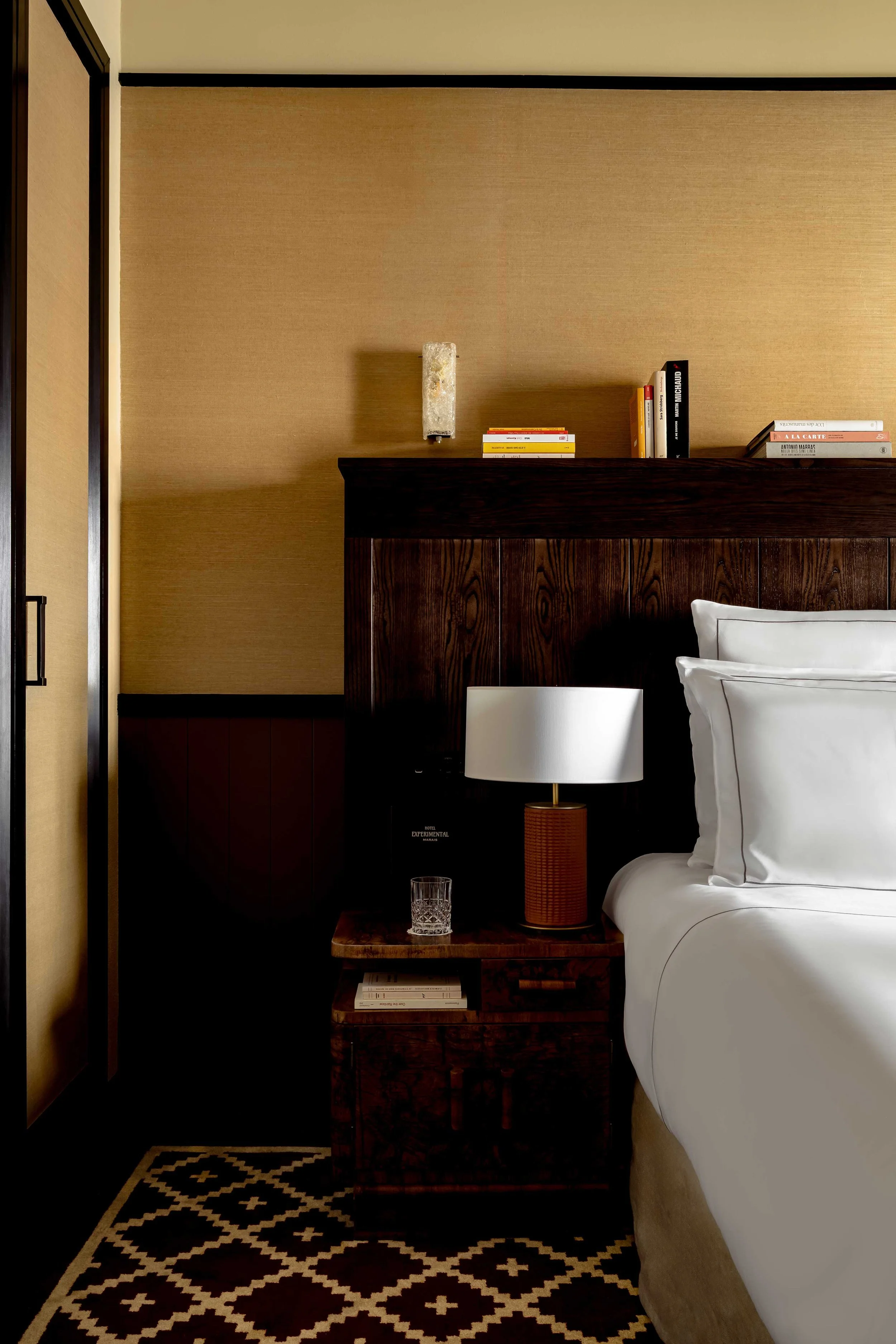
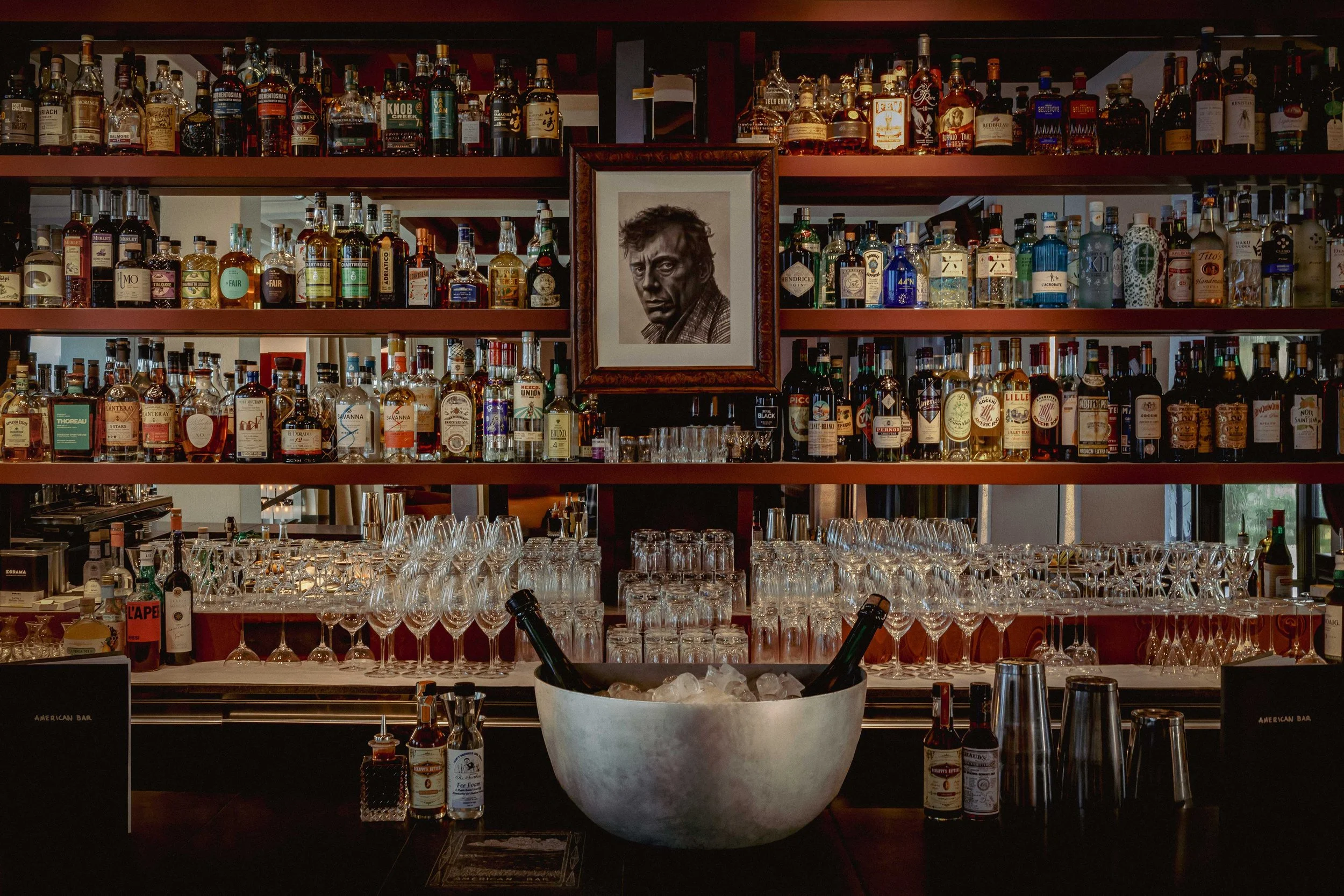
For the transformation into Experimental Marais, the same man returns, he says, a little more settled. ‘These are different eras. The Sinner was the eighties and all the excesses that could go with that. Here, we’re a bit more in the sixties and seventies.’ This imaginary guest even has a portrait, drawn by artist and designer Clovis Retif, watching over guests at the hotel’s American Bar.
Romée de Goriainoff, co-founder of the Experimental Group, has a blunt assessment of the Sinner’s record: a beautiful hotel designed by a famous designer in one of Paris’ most prestigious areas… yet it didn’t work. ‘Sinner was really more an exercise in what not to do,’ he says. As for the design, ‘It was quite complicated.’
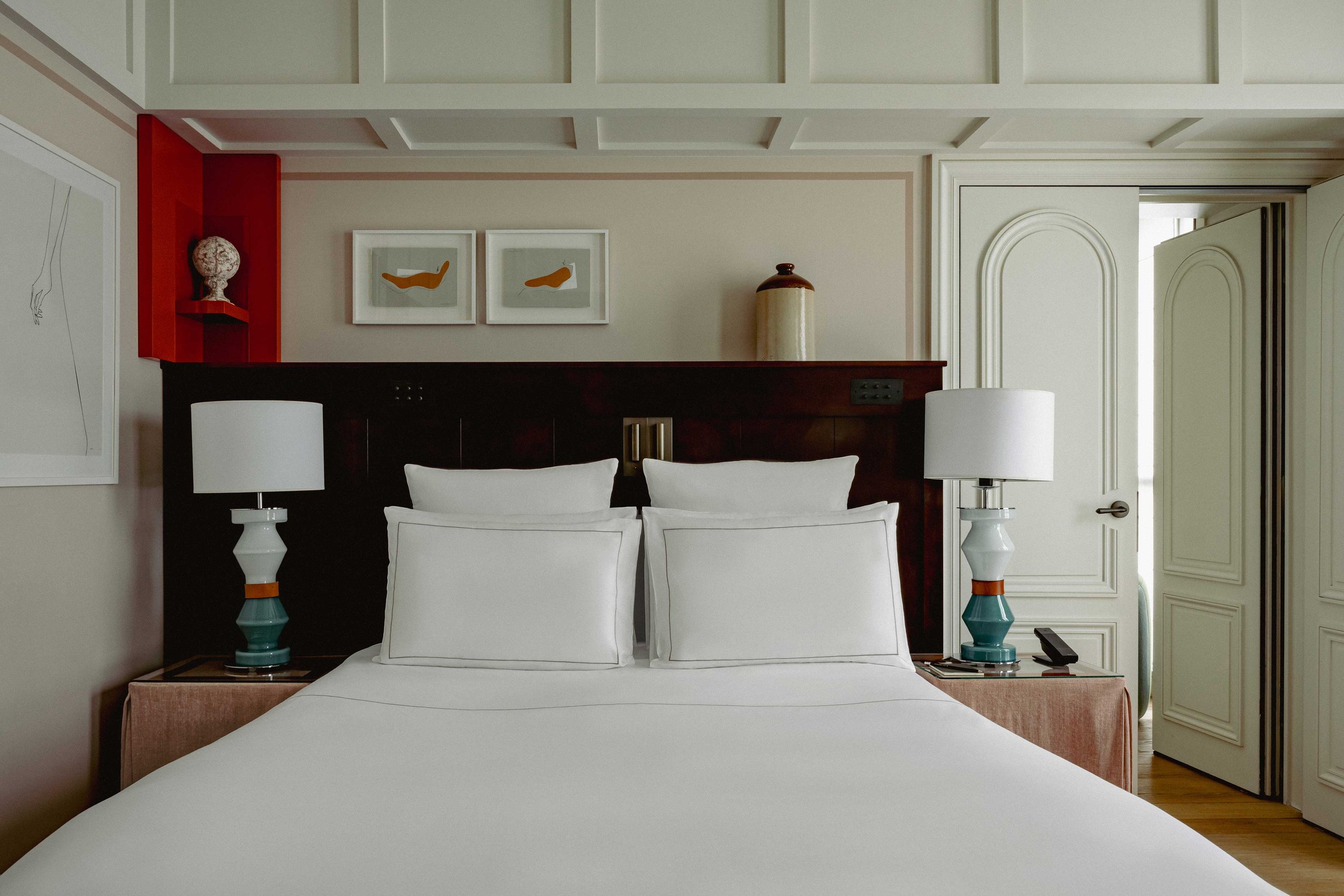
Given this assessment, the simplest course would’ve been to bring in a new designer for a genuine break with the past. However, Experimental opted for the opposite: ‘Tristan is someone we’ve wanted to work with for a long time,’ says de Goriainoff. ‘The hotel already had a very strong thread running through it that we didn't want to see disappear. A new designer would have struggled to fit into that, to so openly take over someone else’s work.
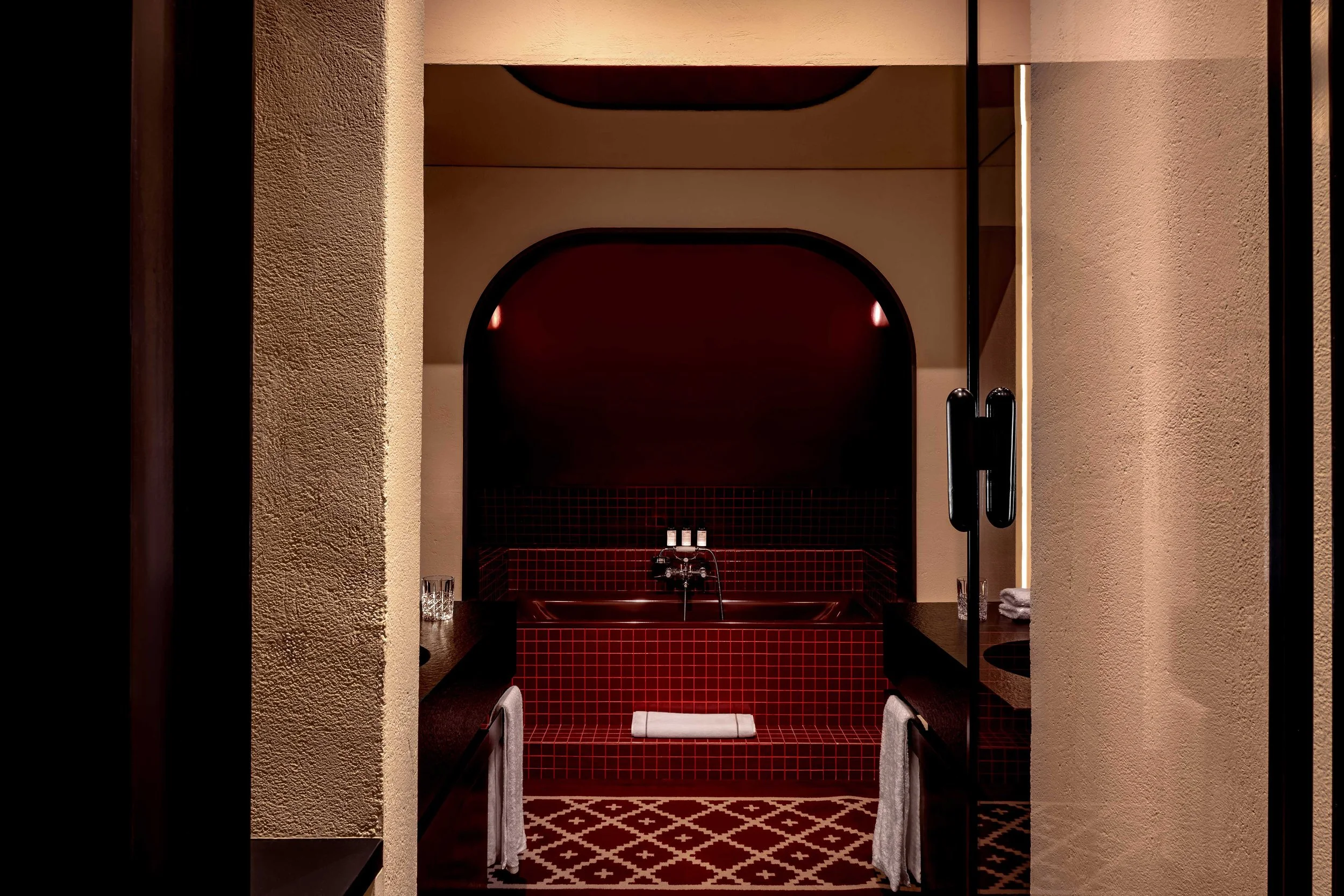
More practically, he points out, there was a common thread running through the hotel, the rooms were ‘already beautiful’, and Experimental planned only to update specific decorative elements.
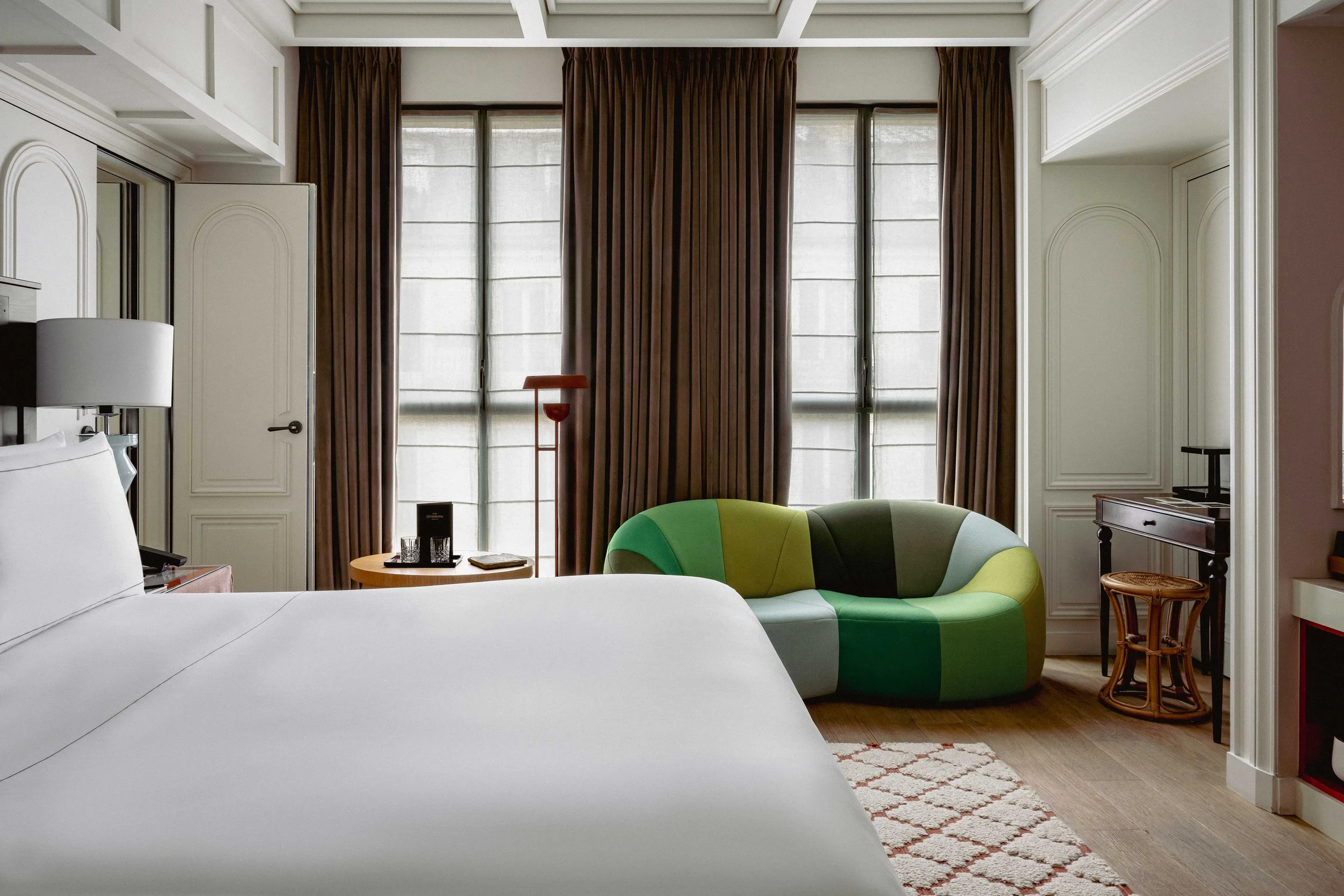
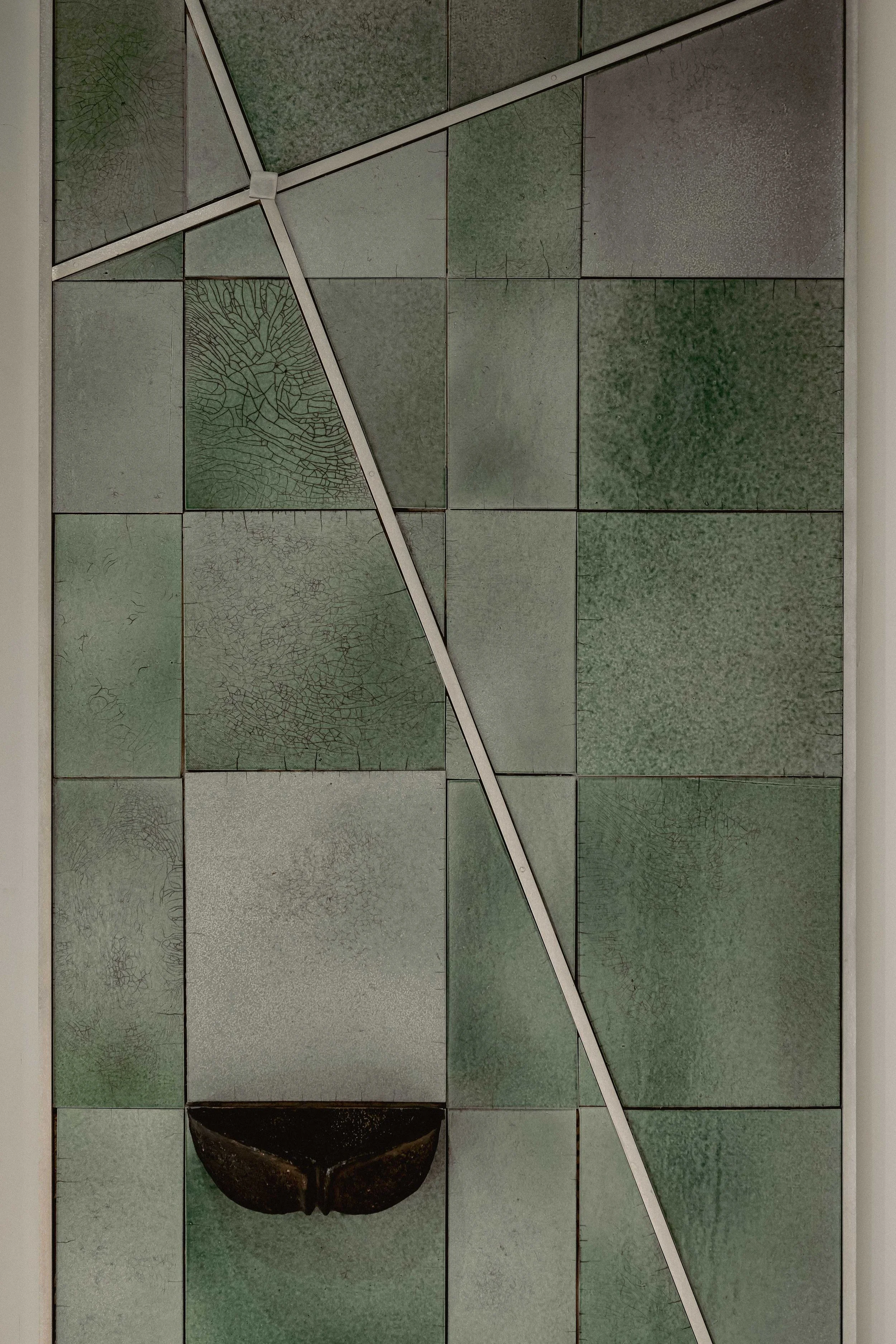
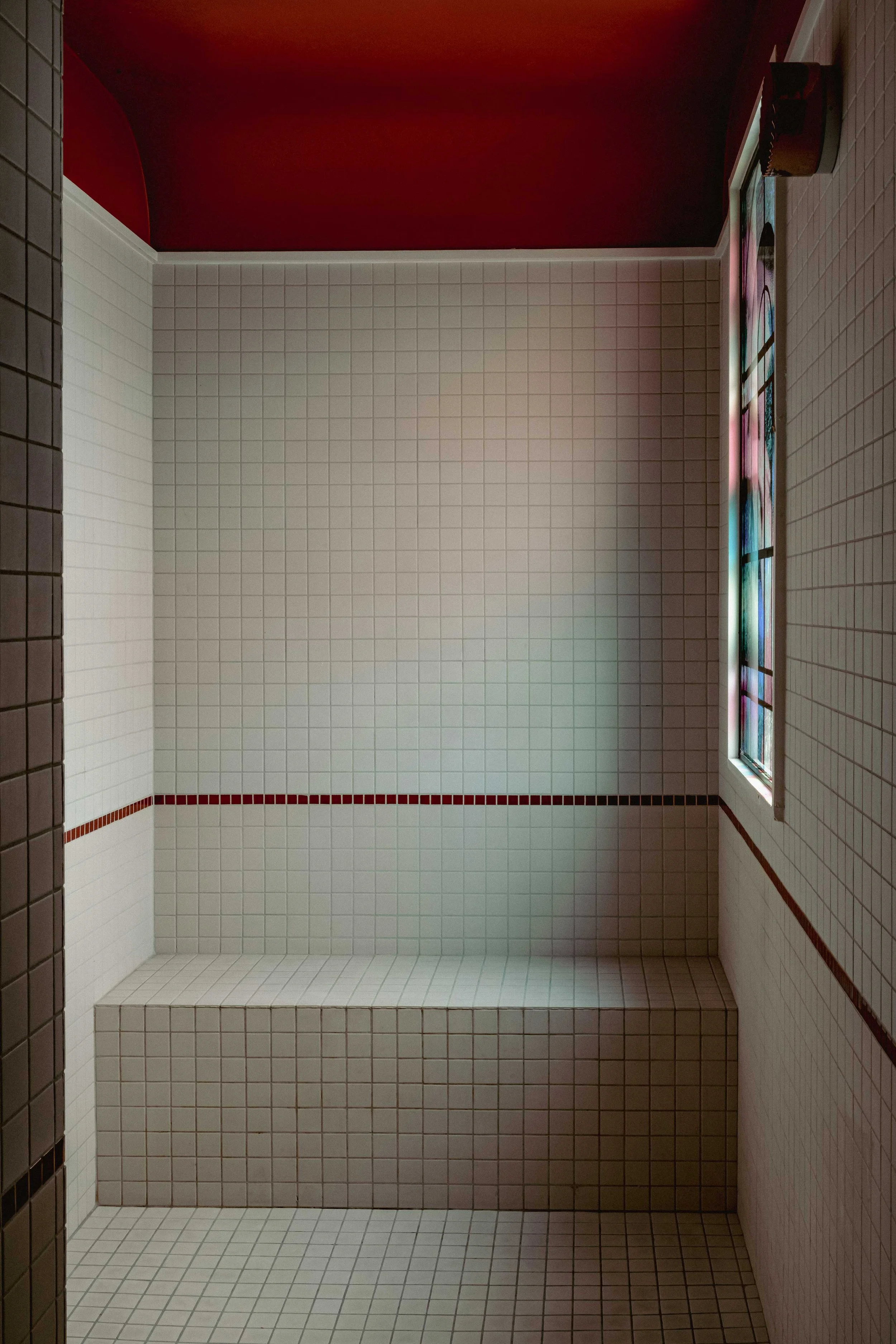
Auer compares this unusual return to his own work to a ‘return to the scene of the crime’: As he puts it, ‘Nothing was knocked down, the rooms weren't changed apart from one, and the ecological impact was really limited. It was really a wonderful exercise in non- architecture.’
Perhaps fortunately, for Auer, the designer is never the owner of their work: the true owner is whoever resides there and creates memories within the space. ‘I do work that finds its usefulness in being given up to others,’ he says.
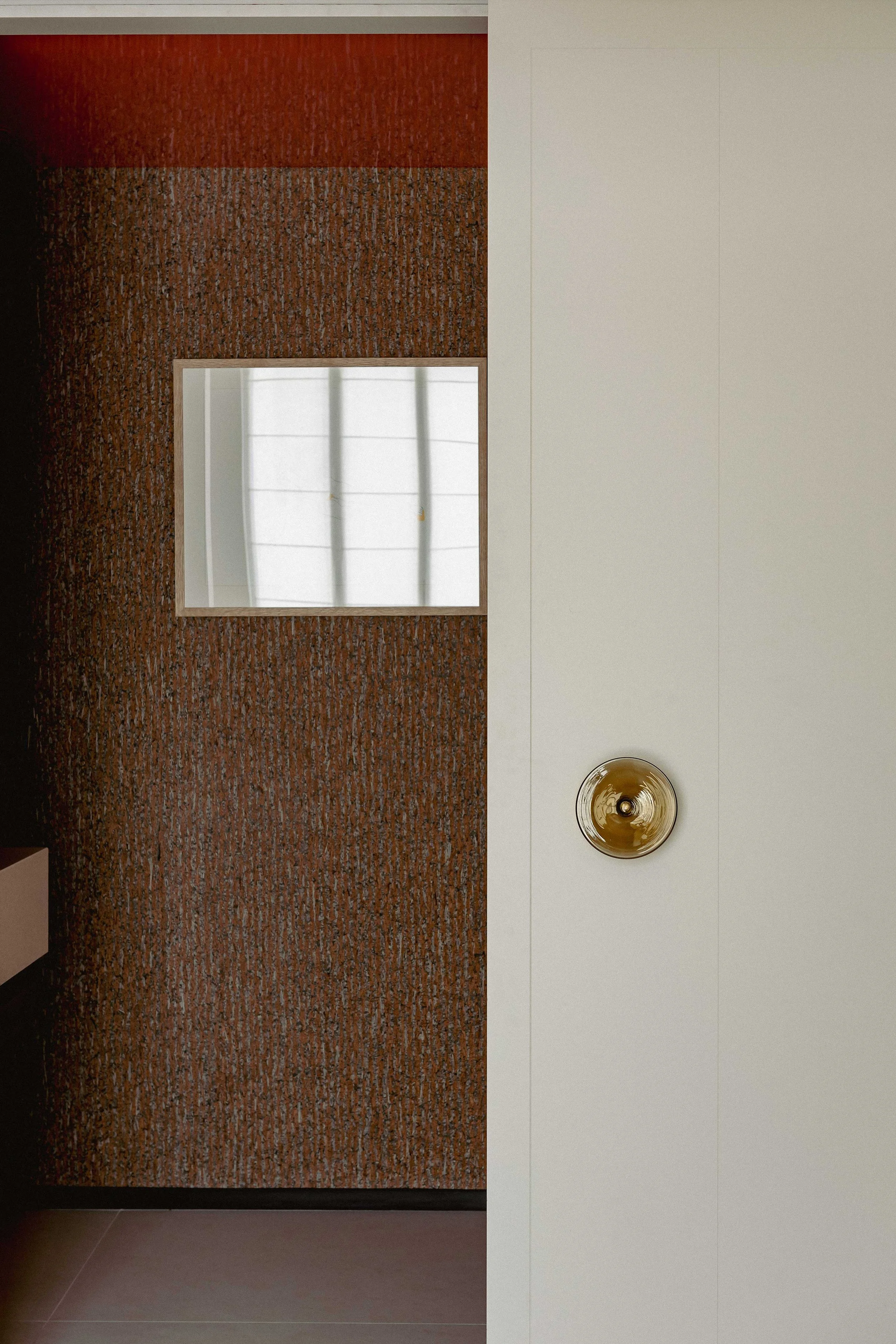
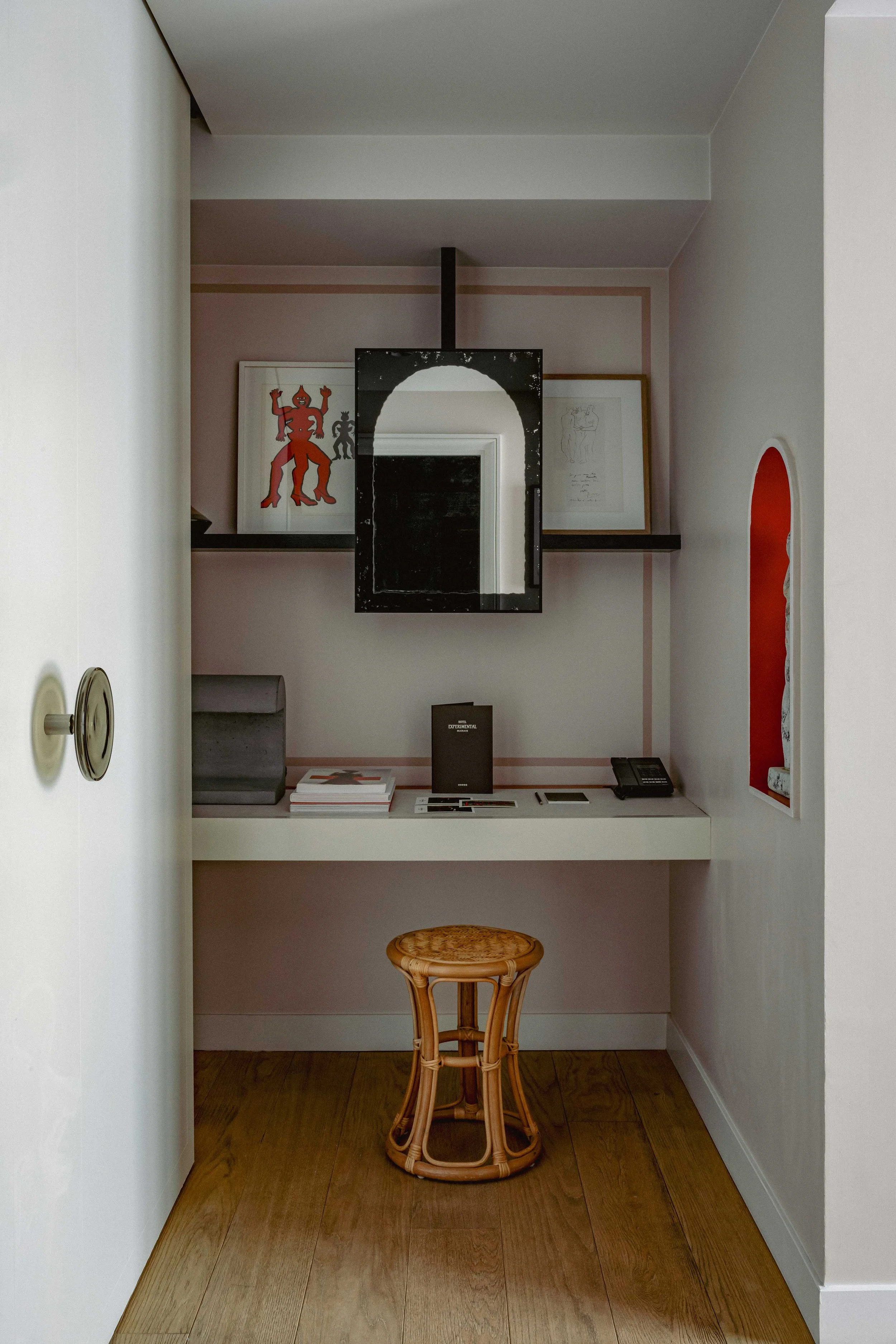
If the designer accepts that his work will slip from his grasp, does that work continue to exist through experience or through its image? Auer looks back to his beginnings working for Christian Liaigre. ‘He used to say he designed with photographs in mind: “Here, it doesn't matter — there’ll never be any photos. There, it needs care because that’s the magazine cover shot.”’
By contrast, Auer recognises the importance of the image in ‘creating a desire, a longing and a projection’, but prioritises the visitor’s experience. ‘A photo doesn't capture a place, but moving through the spaces and feeling somewhat manipulated as you go from bright, large areas to dark, linear ones — I love that. That's more how I sculpt. I'm more a 3D person than a 2D one.’
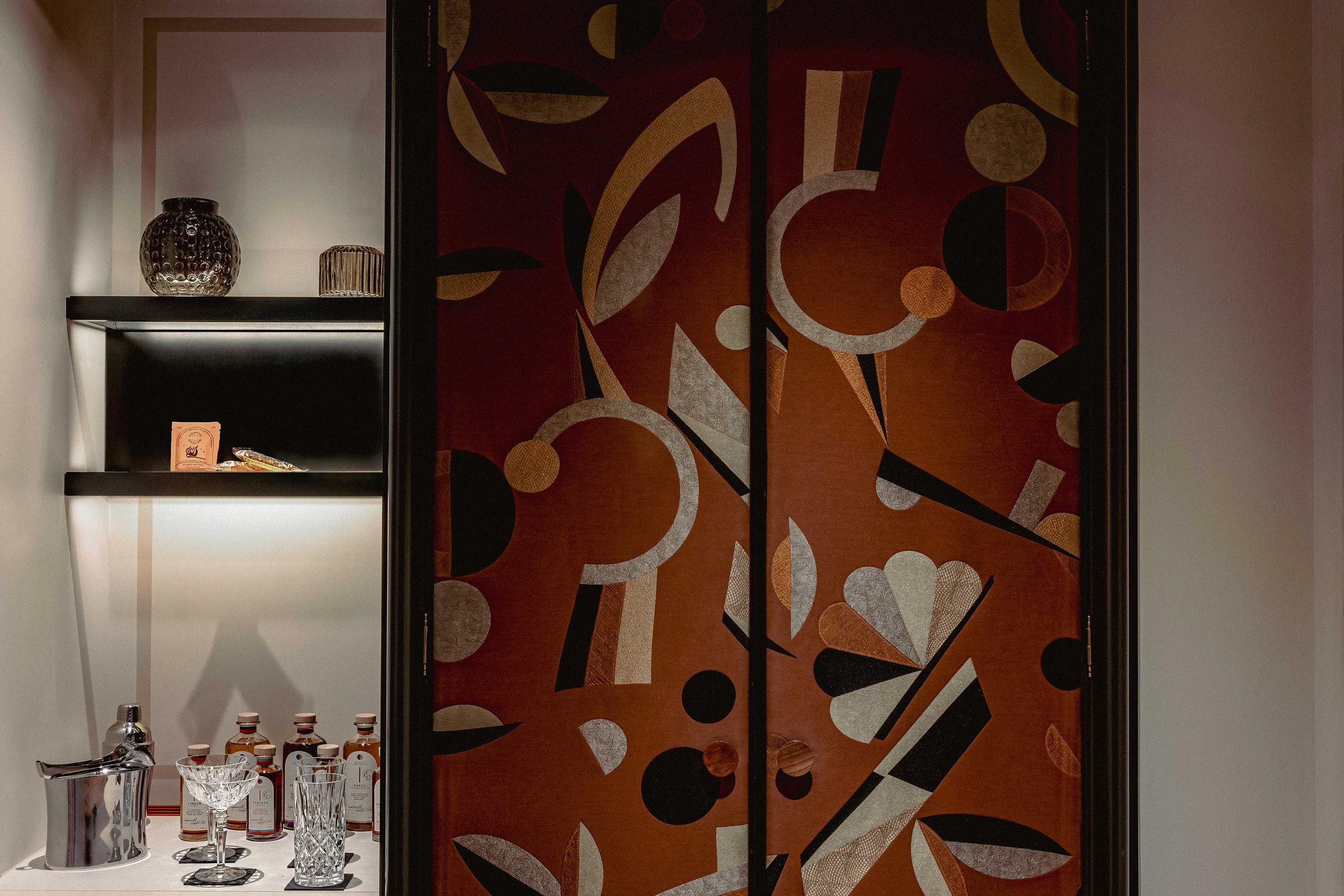
Meanwhile, at the end of the bar, the imaginary traveller keeps a silent watch. Experimental Marais keeps its founding fiction, but, more mature now, leaves more room for visitors and their own stories.
Text by Isabelle Steen
Images by Mr. Tripper