Do Not Disturb: The Luxury of Being Left Alone
As privacy becomes harder to find, editor-in-chief Jeremy Smart argues that designers, developers and operators need to put discretion back on the agenda
My neighbour is a billionaire. Well, for the night. Every time I head out, I’m greeted by a security detail who I, over the course of a few days, come to be rather friendly with. Encountering their slumped forms in chairs outside their boss’s suite, I ask if they slept well. ‘I’ve had worse nights,’ one chuckles, I assume, at the weird little friendship we’ve built as I pass from my own suite to the shared lifts several times a day. I never meet the boss, who is the owner of not just the hotel we’re in, but the entire Manhattan tower it occupies. This particular property is often booked for its ability to move heads of state and other notable guests from guestroom to basement car park incognito.
As you’ll have noticed, this note comes to you from the road, filed towards the end of a marathon intercontinental tour. Over the past few weeks, I’ve found my conversations returning to the subject of privacy and escape. A sense of security — physical, but perhaps most acutely, emotional — sits high on my hospitality checklist, and as a Design Anthology reader, likely yours too. It’s something we feel when it’s been taken care of, yet can be hard to articulate, let alone specify for.
In my travels, I encounter two distinct customers in the luxury hospitality sector. The first has bought into a vision sold to them, probably on social media. They might be found documenting — or, God forbid, live-streaming — their experience, seeking proximity to wealth and status, perhaps reflecting an insecurity about their own. The second desires escape from this; from scrutiny, attention or just the world around them, seeking to disappear.
We often talk about privacy without articulating its relationship to emotional security. Find a perch in an airline lounge anywhere in the world, and you’ll hear everything from domestic disagreements to corporate AGMs and deal negotiations being broadcast freely. Remaining anonymous to those around us — virtually or otherwise — remains, without a doubt, one of the greatest small-L luxuries.
At dinner in Bali last month, I was sitting at the restaurant’s counter, where name-cards had been placed at each seat. Intended to imitate a dinner party amongst strangers, it meant that I could see the full names of my neighbours, and they mine. Some guests, having sat down, removed them from their most visible position, only for staff to put them back in place for all to see. What we wanted was a private meal, not to be force-fed some kind of group dining experience. It happens far too frequently at hotel check-ins and breakfasts too; being asked for your name and room number for every passer-by to hear. Most of the time it’s inconsequential, but it’s a careless and unprofessional habit.
In the almost half-decade since I moved to Tokyo, I’ve picked up an acute appreciation for privacy. Japan is a country where a shopper picking up even a single item at the supermarket will probably ensure it’s hidden from view inside an opaque bag before heading home. What we buy, where we go and how we live are personal, and should remain so as much as we wish. It’s shocking to hear the amount of personal information broadcast willingly by those bumbling through our shared spaces. Privacy should not be reserved to those who can afford it, either. We should think about it in every environment and system we create. Especially in hospitality, but also transport, offices and retail.
Emotional security, of course, manifests physically. In a resort setting where other guests are hidden from sight and earshot, we can feel entirely unbothered by the world, with the sense that our secrets are safe. Aman built its brand on it. But we needn’t assume a bunker mentality: security can also come from being surrounded by like-minded people in a setting designed for it. We don’t need to speak, drink or eat together to benefit; often knowing we’re all there for the same reason — to let our guards down — in a world where that’s increasingly difficult, is enough.
Let’s go behind the wheel for a moment. I’m sure you’ll agree that most vehicles are operated by distracted buffoons. Along with robot vacuum cleaners, this may be one of the few parts of our built environment that improves significantly with fewer humans in control. While in Los Angeles last week, I rode my first Waymo, the autonomous car service from Google’s parent company, Alphabet. Locals now barely bat an eye at the Jaguar I-Pace’s empty driver’s seat as it cruises the city streets in search of passengers. My first five minutes were obviously very exciting as I gawked at the novelty of a steering wheel turning itself with great competence, but it progressed quickly into nonchalance. ‘Any sufficiently advanced technology is indistinguishable from magic,’ as Arthur C Clarke’s adage goes. Indeed.
An autonomous vehicle is most enjoyable not because of the novelty of it driving itself, but because of the absence of anyone at the helm — amateur or otherwise — leaving the cabin as a personal, private space. Our urban lives suffer immensely from overstimulation, made worse by our ubiquitous illuminated screens. The experience of being able to catch up on emails in a quiet, secluded environment between meetings is a delight.
Of course, my virtual Waymo driver has nothing on a professional who can handle the interpersonal parts of getting someone from A to B — plus the occasional bursts of road rage — with diplomatic flair. But for the world as it is, rather than as we might wish it to be, it’s a big quality-of-life improvement. Waymo’s arrival in my home city of Tokyo appears to be imminent. It may find a customer in Japan with a particular appreciation for its cocooned offerings.
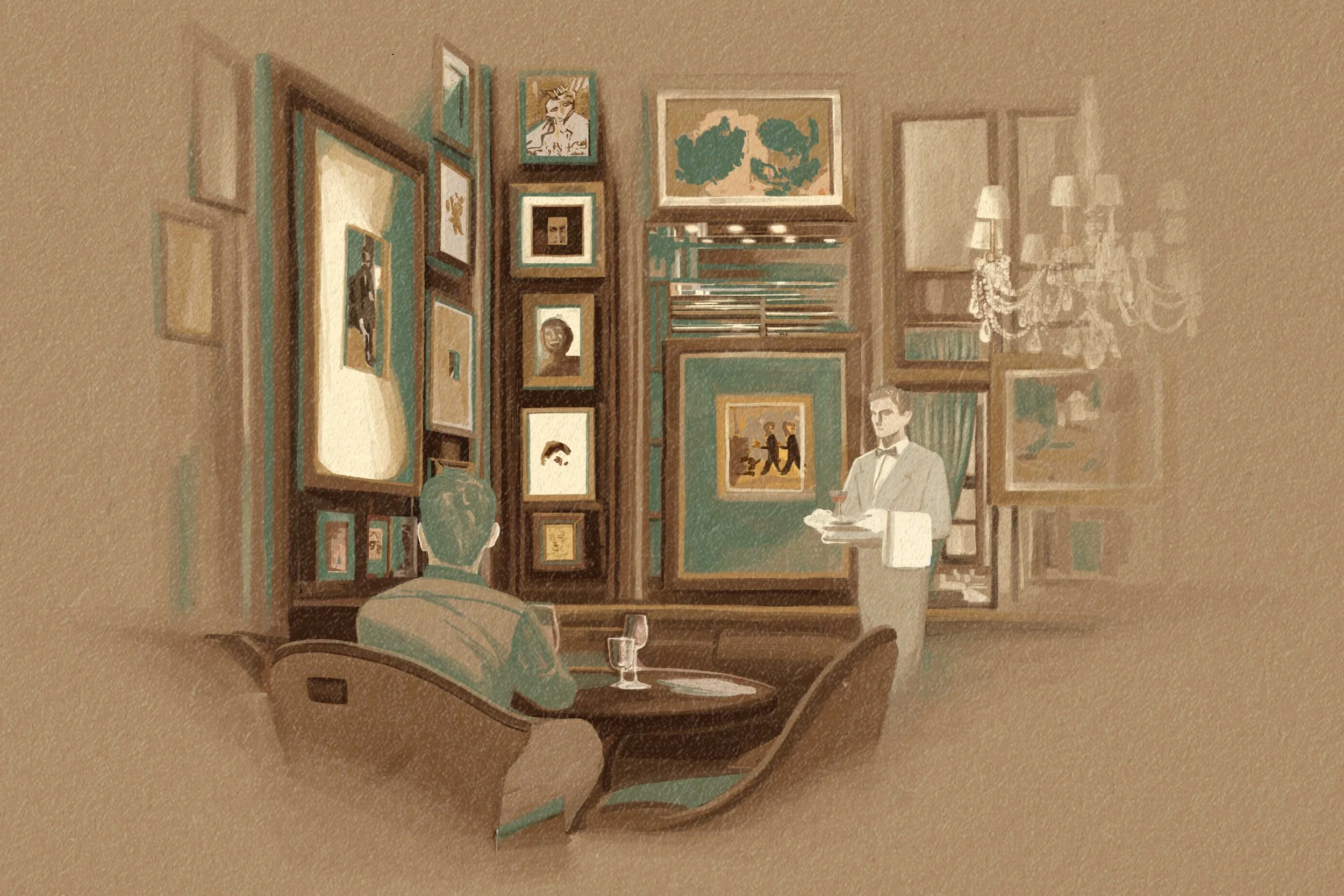
Everyone likes to opine on the future of luxury and what operators can add to an experience. At The Carlyle in New York last week, I was given an almost century-old masterclass in how to pull all of this off in a hotel setting. It’s remarkable how far the industry has strayed from principles that were figured out here in the 1930s. The table next to me, in the otherwise hushed booths of its restaurant Dowling’s, agreed, explaining to everyone in earshot how 30-somethings are now travelling to the Upper East Side — to places like The Carlyle — for a quiet night out, seeking somewhere that ‘isn’t a scene’.
On Monday, I flew from New York to Hong Kong in Cathay Pacific’s almost 20-year-old first-class seat. The airline has been waiting for Boeing’s much-delayed 777-9 aircraft, on which it will launch its next-generation first-class cabin. If it follows the industry’s direction of travel, it’ll likely have a door and become much more enclosed.
While a door would be appreciated, the open cabin in its current form works because it’s cosy, generously proportioned and feels residential in scale. It’s well-sized for the people who use it and most importantly, excels at its core competency: facilitating rest. It remains one of the best beds in the sky. However, it’s the airline’s understated service that turns these cabins into a place of retreat, offering a sense of security in a place we often feel cold, isolated and vulnerable.
For designers, developers and operators, there are simple things you can do. Build in a phone booth or two, just as they did in decades past, and enforce mercilessly silent policies in lobbies and lounges. Think carefully about lines of sight and sound, and how secure someone feels sitting in a room. And as a guest, consider how your behaviour impacts the people around you. Ultimately, the future may depend less on what we put in front of our guests than on what we can keep away from them.
Jeremy Smart
Editor-in-Chief