On Japan’s Izu Peninsula, a Fisherman’s Hut Transformed into a Hideaway with Ocean Views
On the Izu Peninsula, Studio Cochi Architects has reimagined a dilapidated cabin as a contemporary getaway that offers the best of the locale
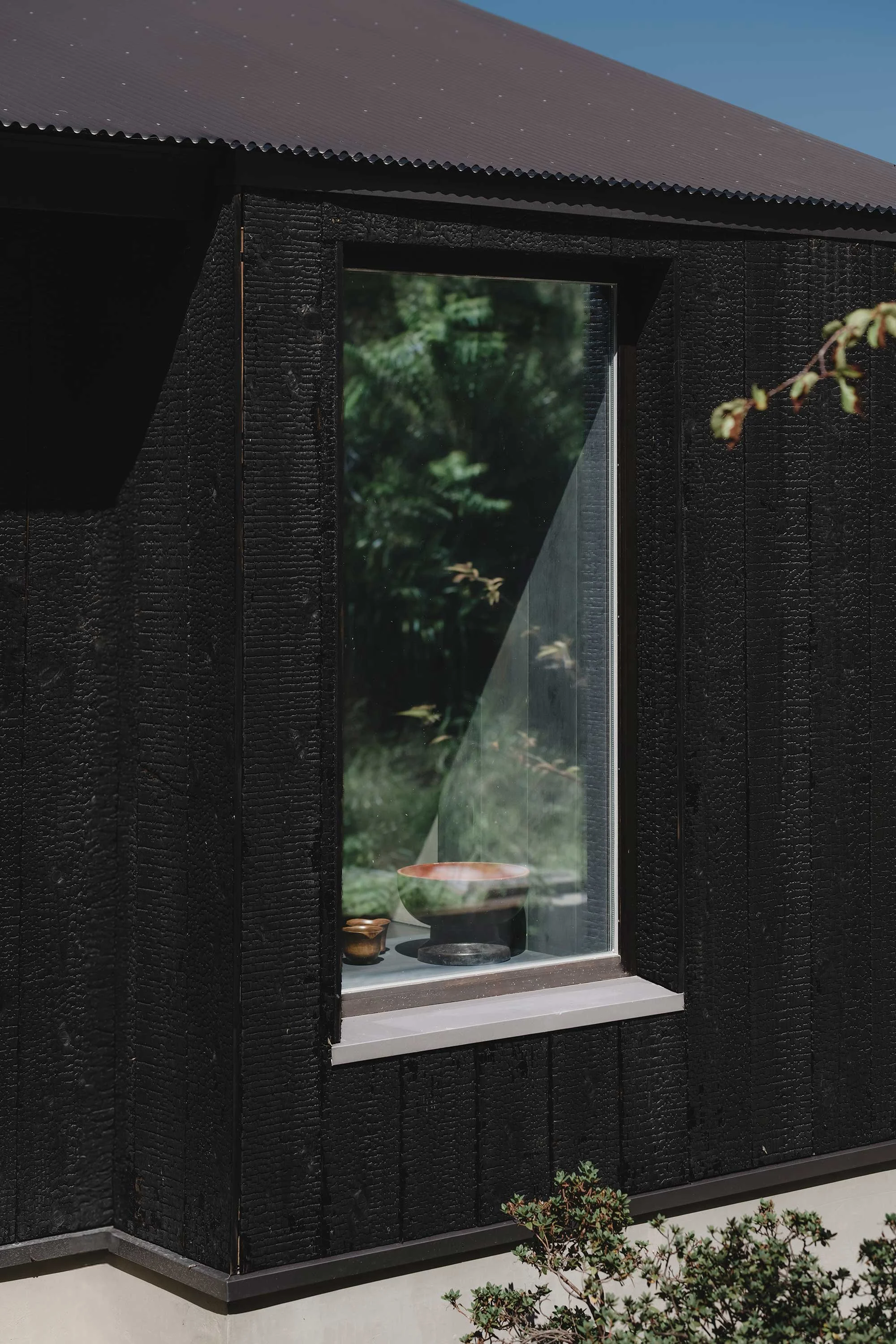
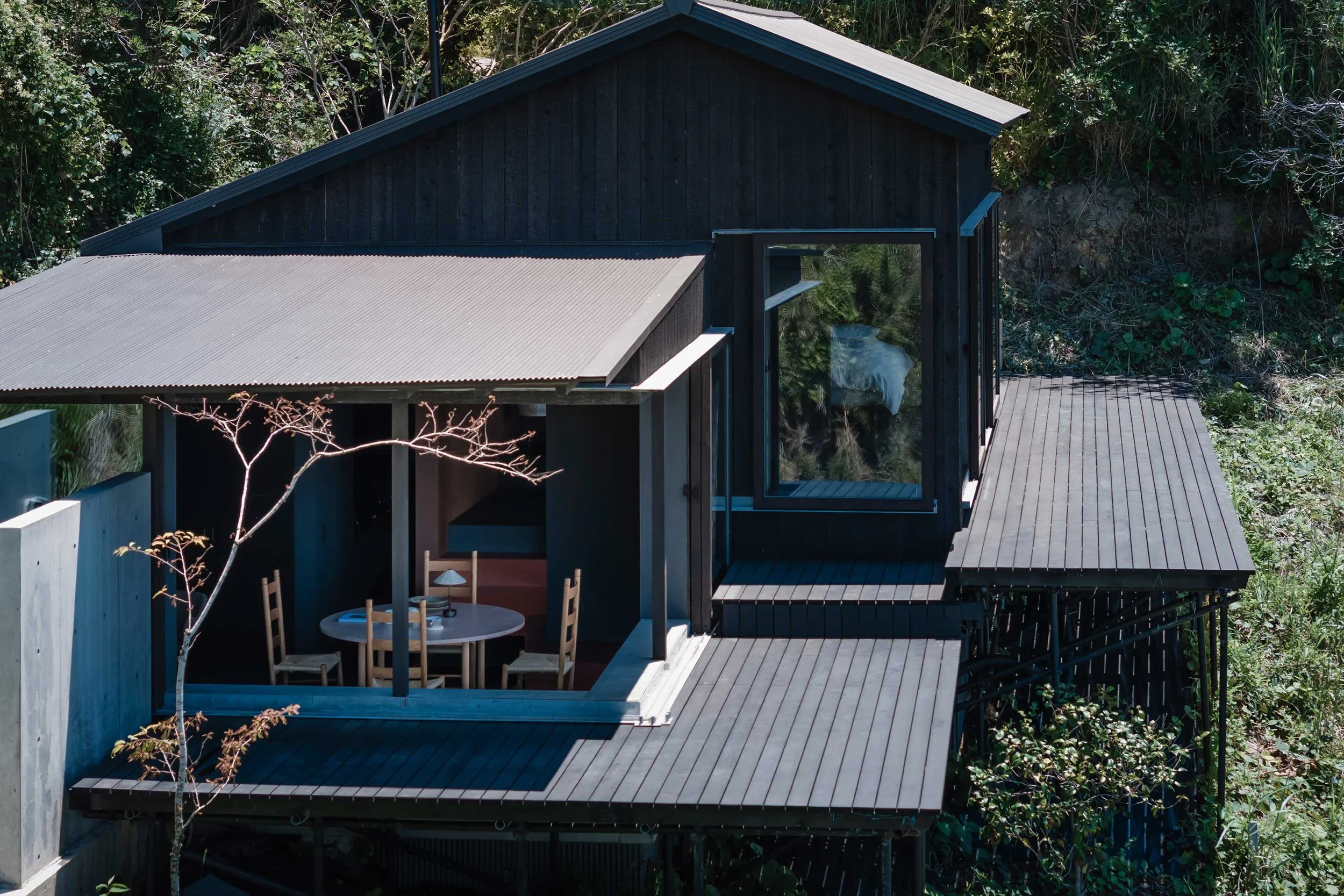
It’s hard to believe that this sleek concrete and Corten box was anything less than the dark grey surfaces, sliding windows and custom furniture that it is now. But the formerly dilapidated fisherman’s shack has been completely transformed, with almost everything inside and out reimagined by Okinawa-based Studio Cochi Architects.
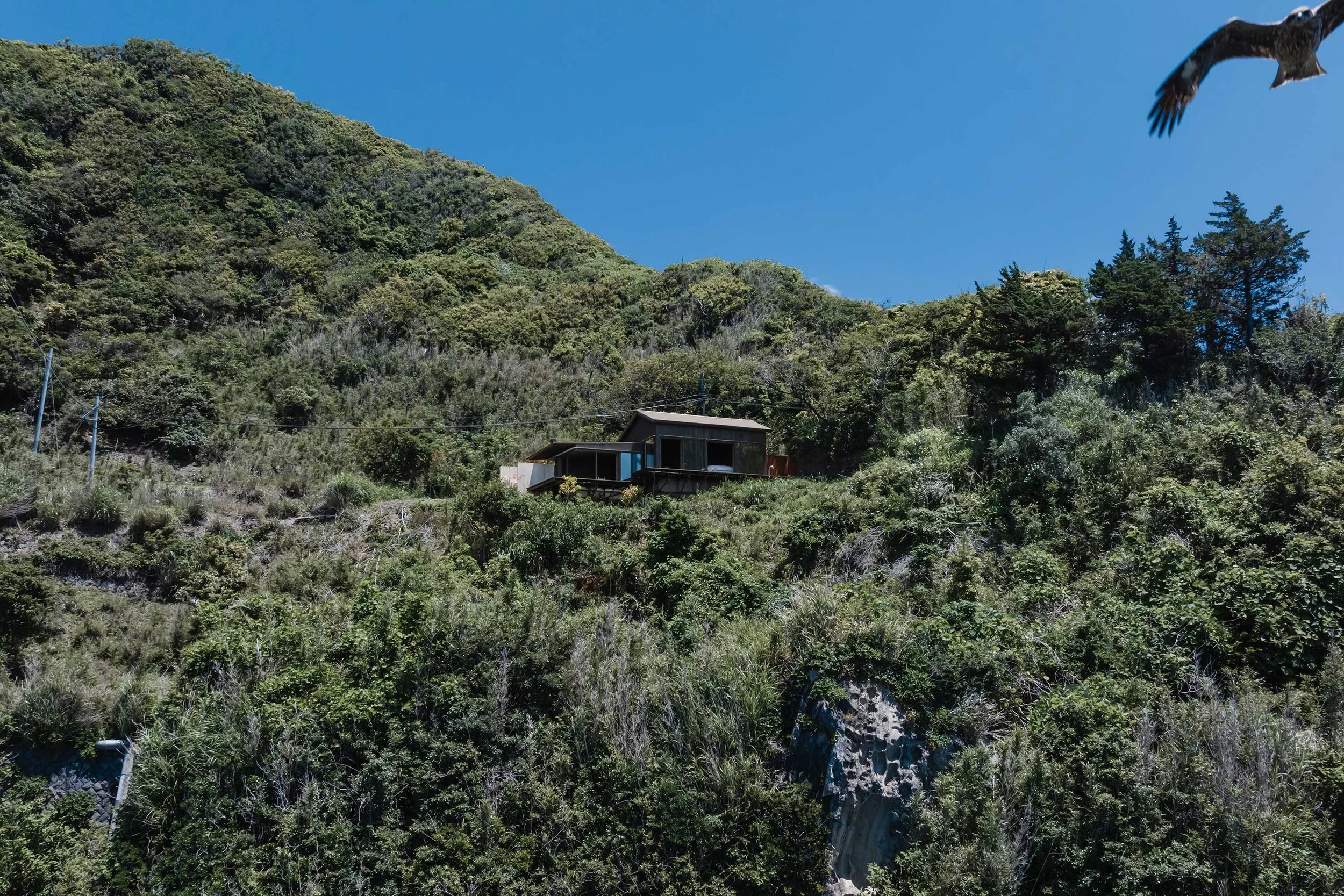
The cabin is owned by New Heritage, a boutique property and holiday rental company that rescues old buildings around Japan. Founder Hana Sakata remembers the moment she first caught sight of the building almost a decade ago, while snorkeling. ‘It looked amazing,’ she remembers. She was so enamoured that eventually tracked down the owner and purchased the property.

The cabin was officially registered as a building in 1968, although it was likely built before — possibly without a permit. The area was designated a national park in the 1950s, meaning that the building is subject to strict building regulations. Studio Cochi was tasked with the job thanks to its previous work with protected land.
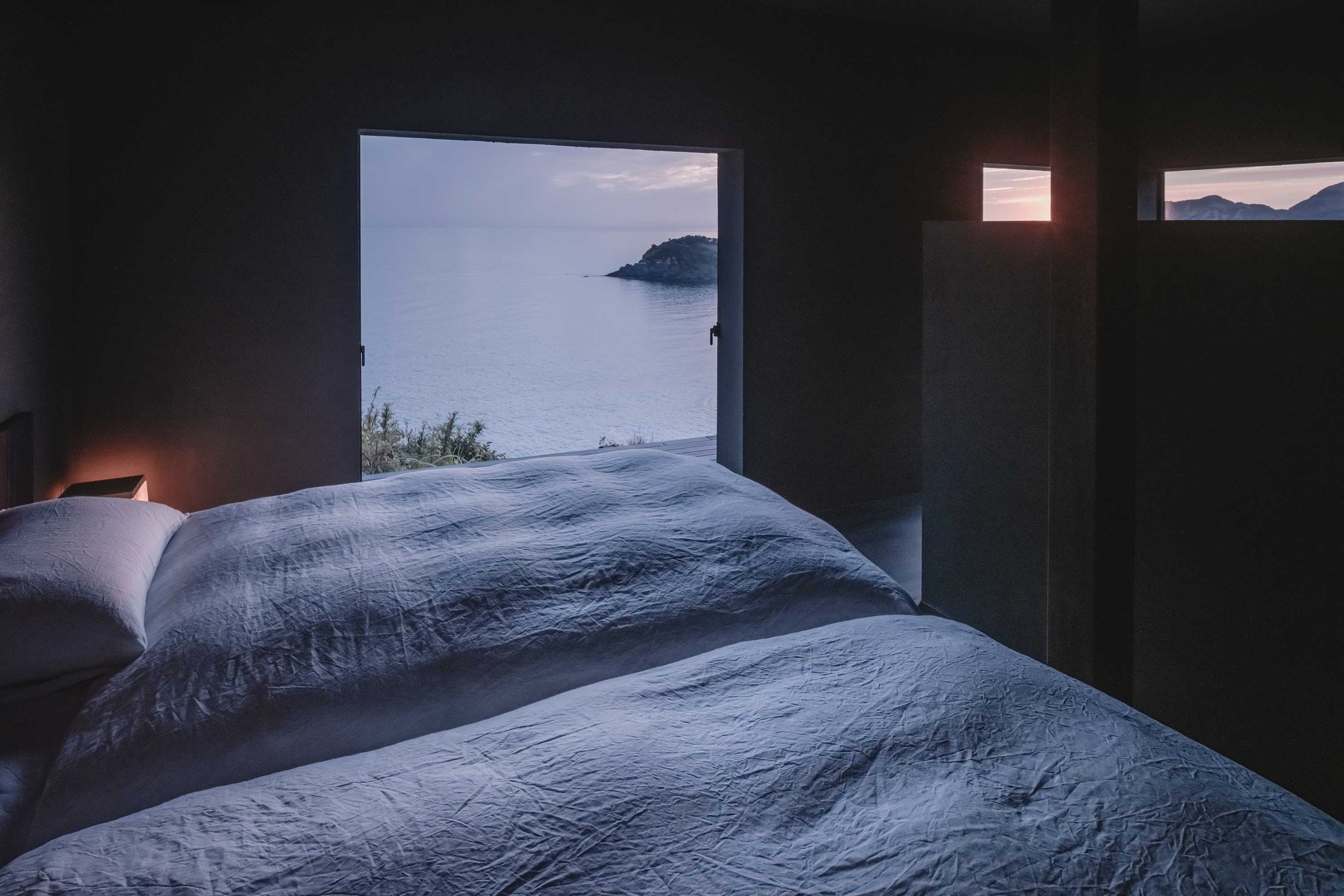
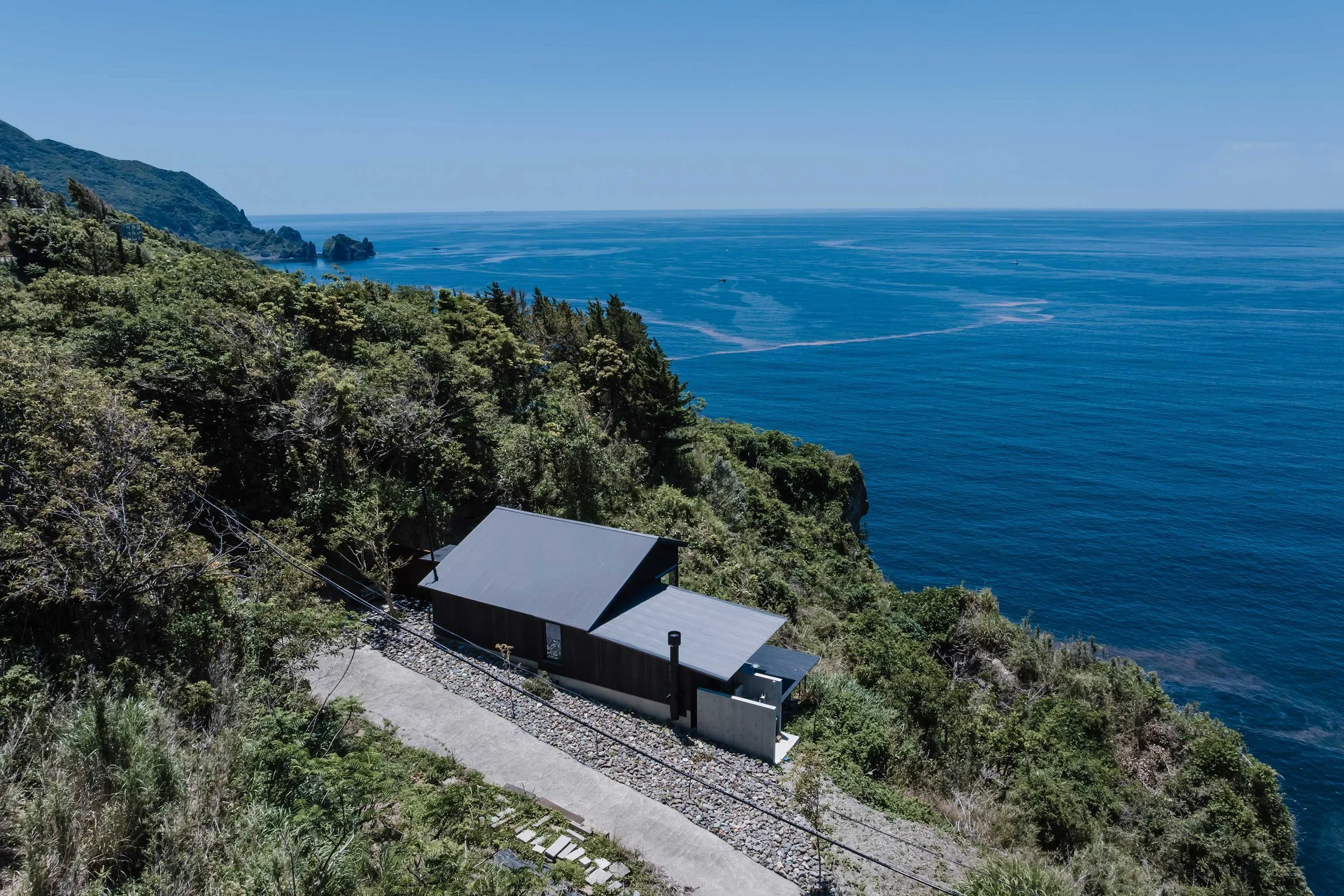
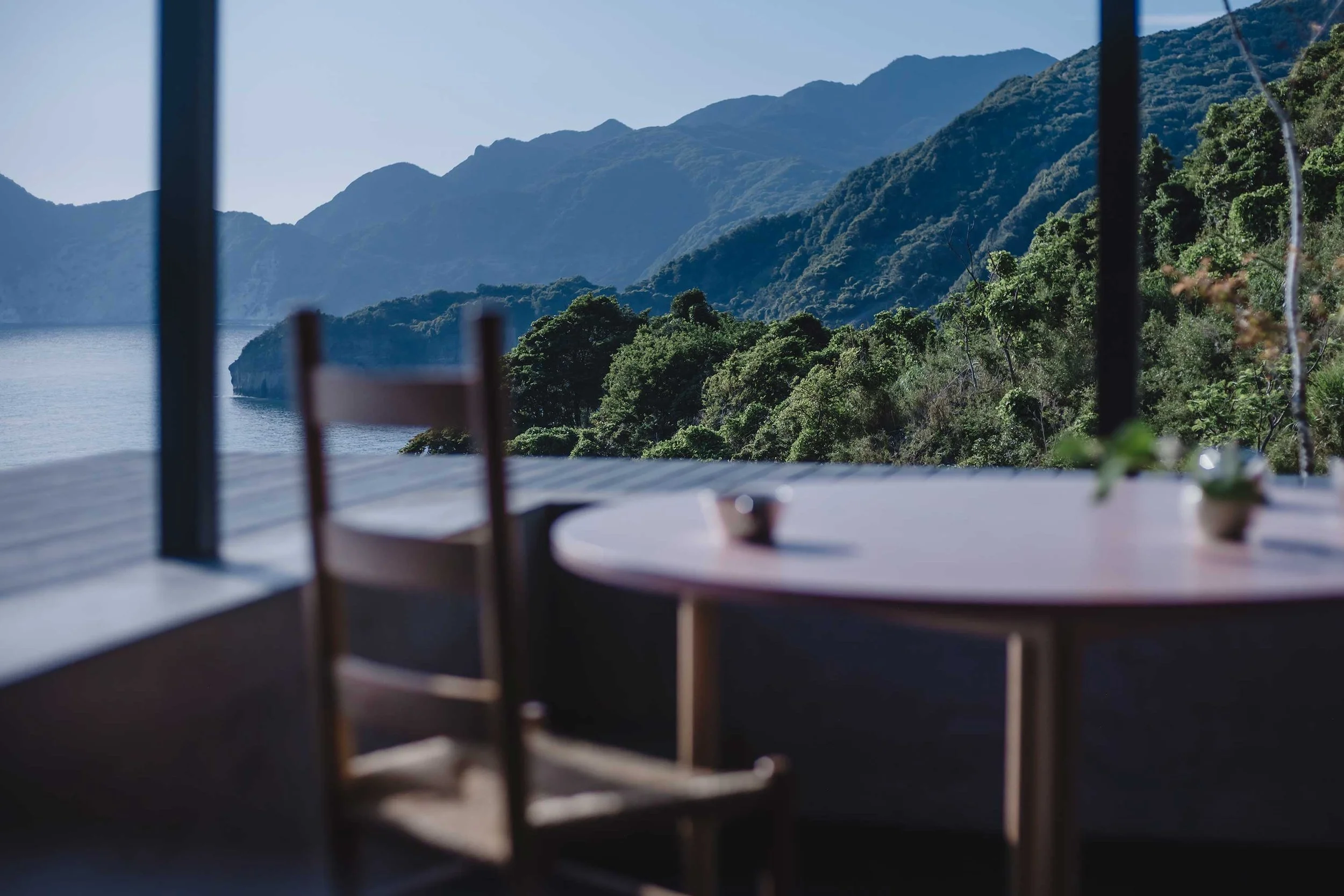
The cabin boasts unparalleled views of the Pacific Ocean, complete with two of Izu’s tiny islands, Urui and Kourui, and Studio Cochi founder Toshiyuki Igarashi was determined to make the most of them. 'As soon as we saw it, there was no question — we had to emphasise the view as much as possible,’ he says. 'Our intention with the design was to encourage the experience of different variations of the landscape, variable depending on where guests are and how they move through the small space.’
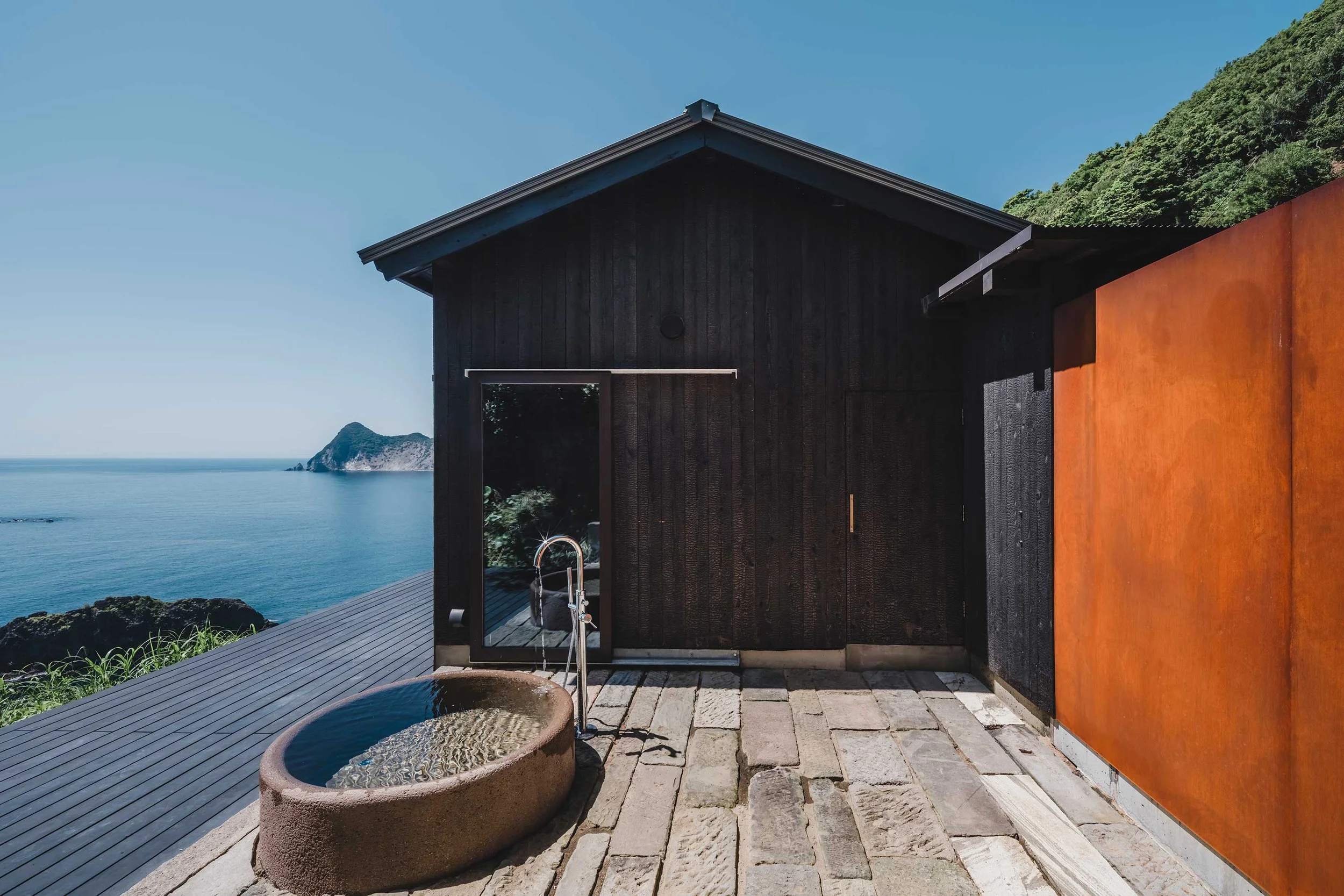
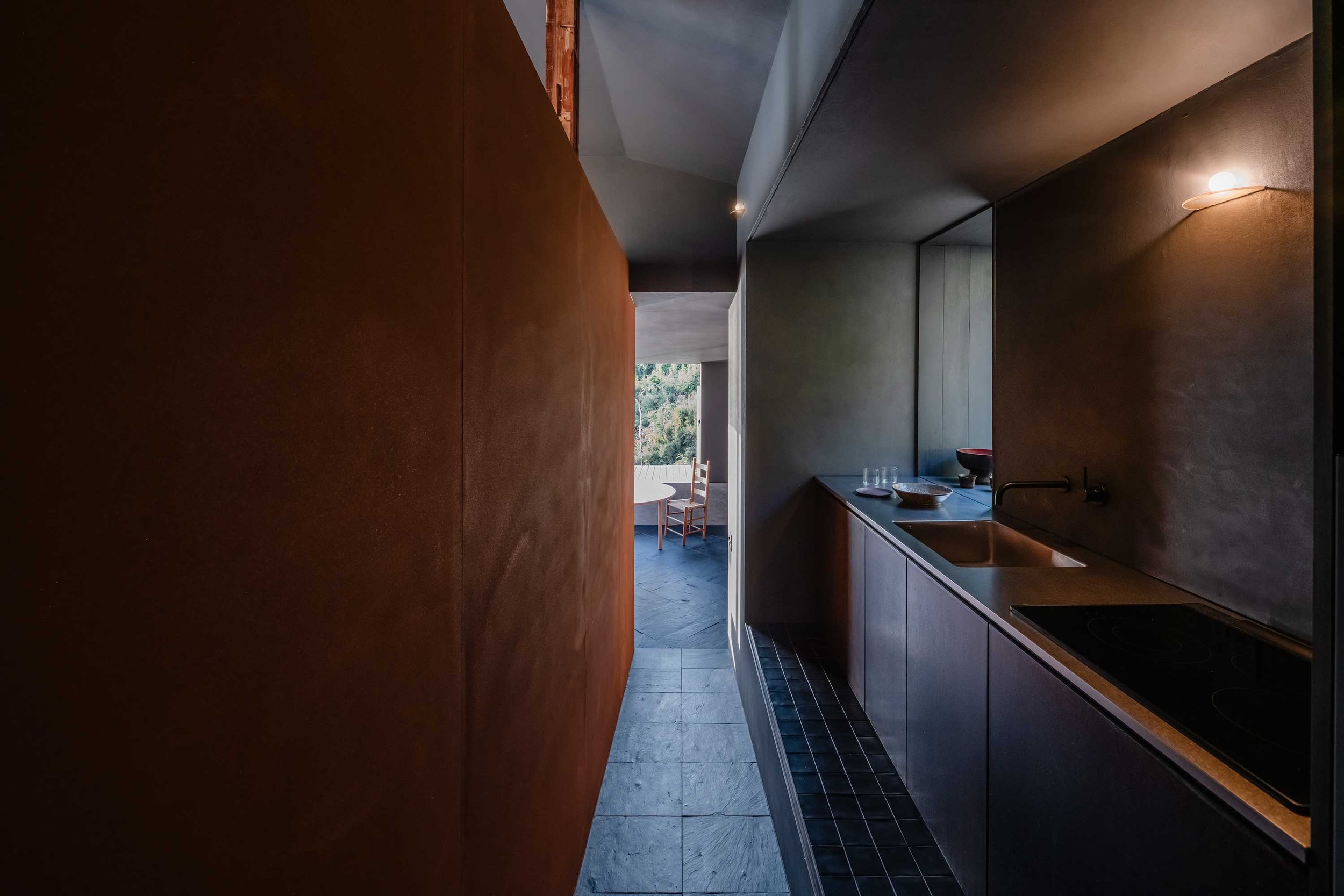
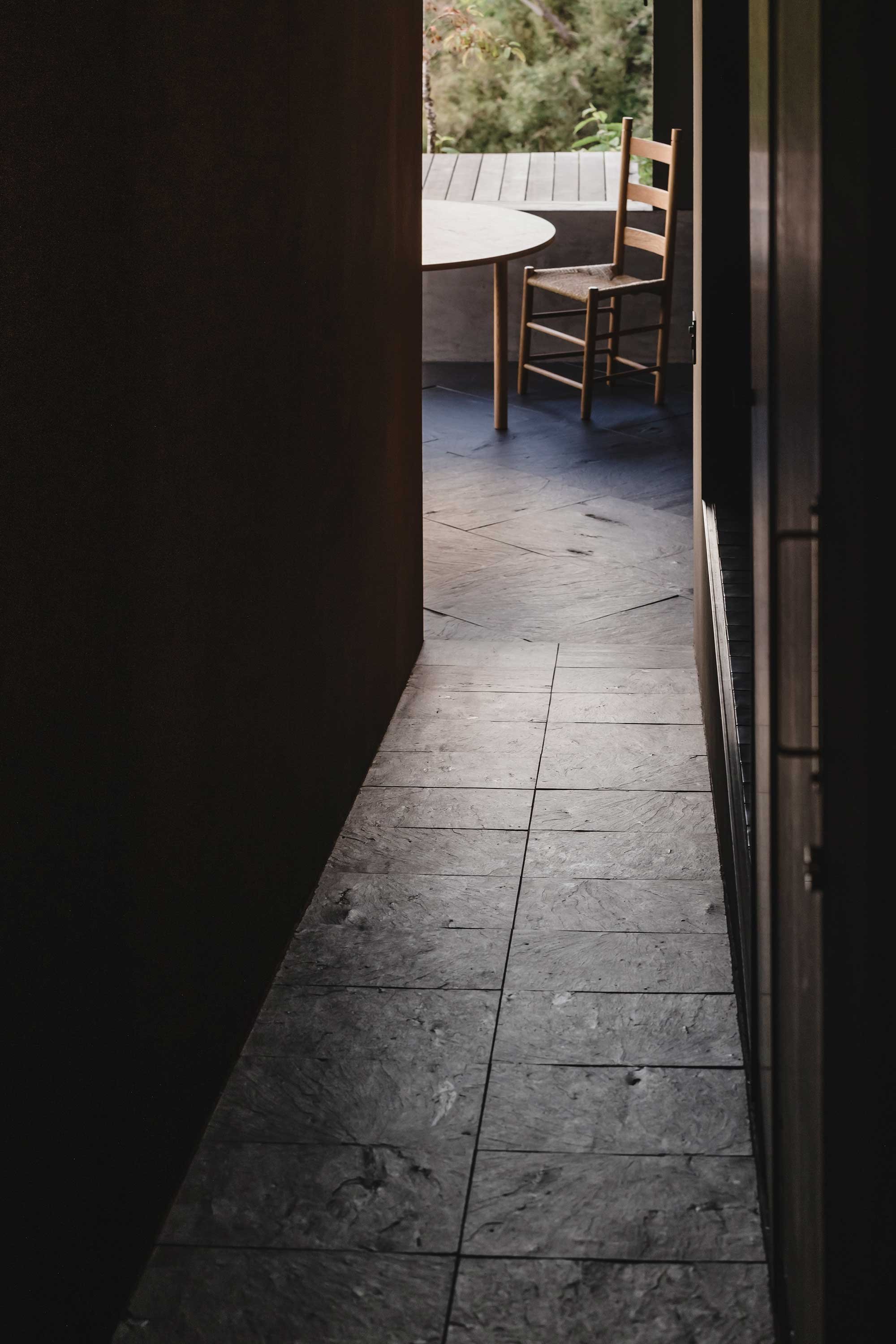
The resulting structure preserves the floor plan of the former cabin, as well as the different levels between its rooms. The entrance to the house is backed by a rust-coloured Corten wall that continues inside, past the door and down the 7.5-metre corridor, paved with black slate and sloped to a 30-centimetre incline, with a basic kitchen built into the wall.
The corridor is devoid of windows. Instead, guests are flanked by the Corten wall to the left and dark Matsuzaki plaster walls to the right. From the outside, the views are artfully hidden by the building itself, making the reveal even more impressive when the entrance corridor opens into a windowed dining room that looks out to a breathtaking panorama of sea and cliffs.
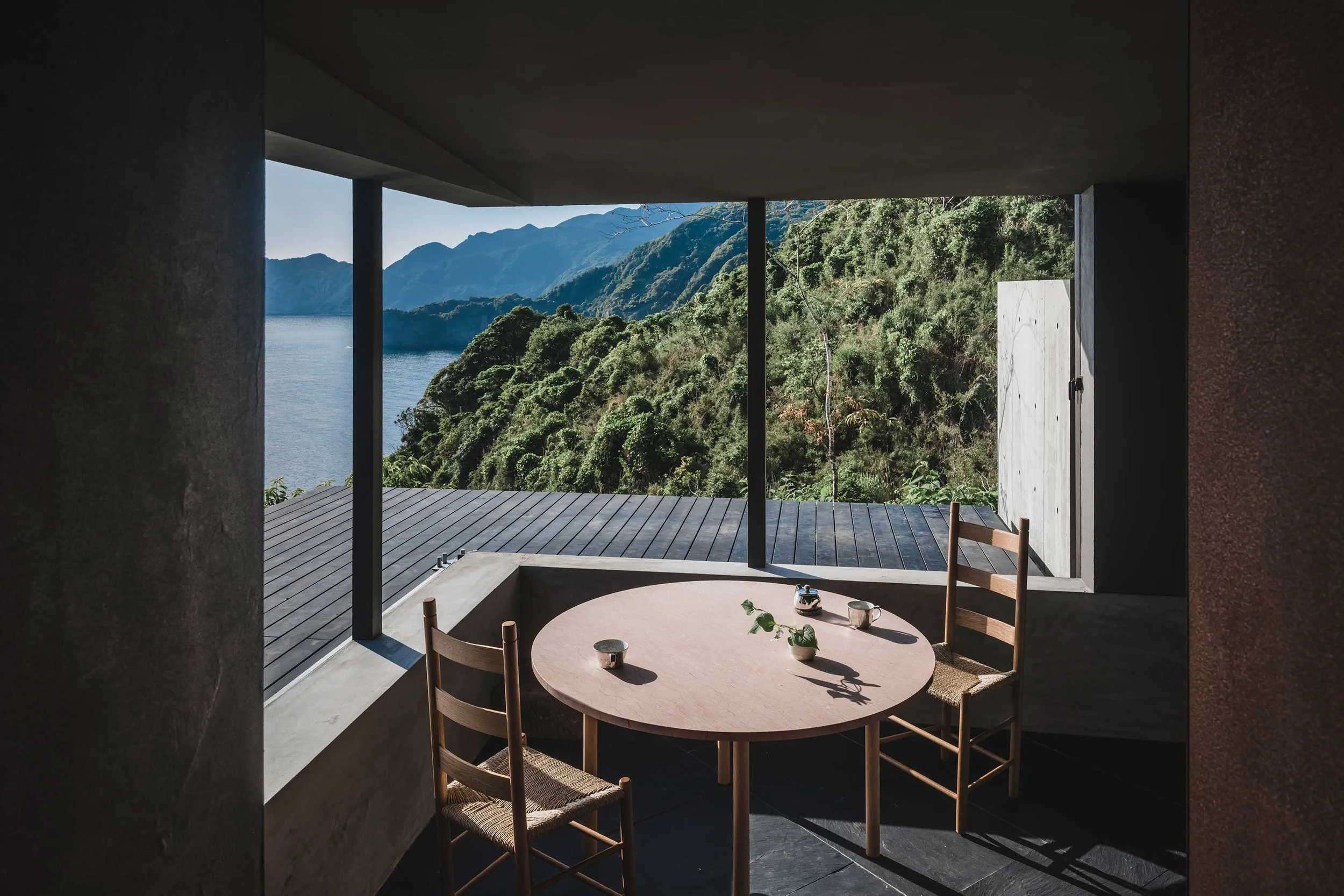
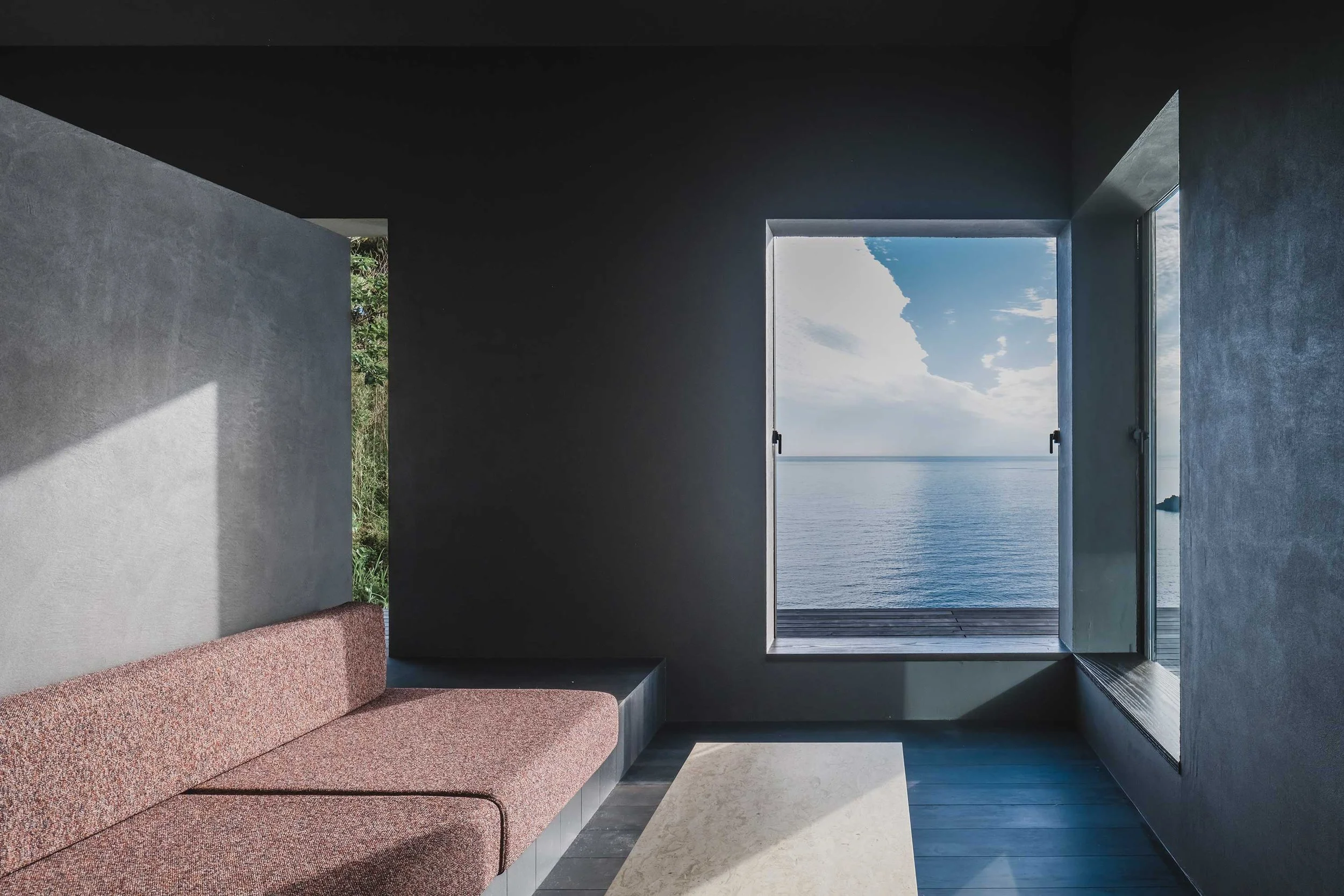
The dining room, Igarashi’s personal favourite spot, has a Corten fireplace, and two walls of sliding windows. The windows are close to two metres high, and are set atop a 65-centimetre wall that doubles as a place to sit and admire the ocean. ‘It’s actually set one step lower than the terrace outside. When you’re seated there, the terrace acts almost like a picture frame, hiding the vegetation immediately below so that all you see is the ocean,’ says Igarashi.
In order to present the landscape as impressively as possible, the interior walls of the cabin are finished in dark grey, an important design decision. ‘Looking out from a darker interior into a bright landscape makes the view feel much richer and more vibrant. I think that approach worked particularly well here,’ says Igarashi.
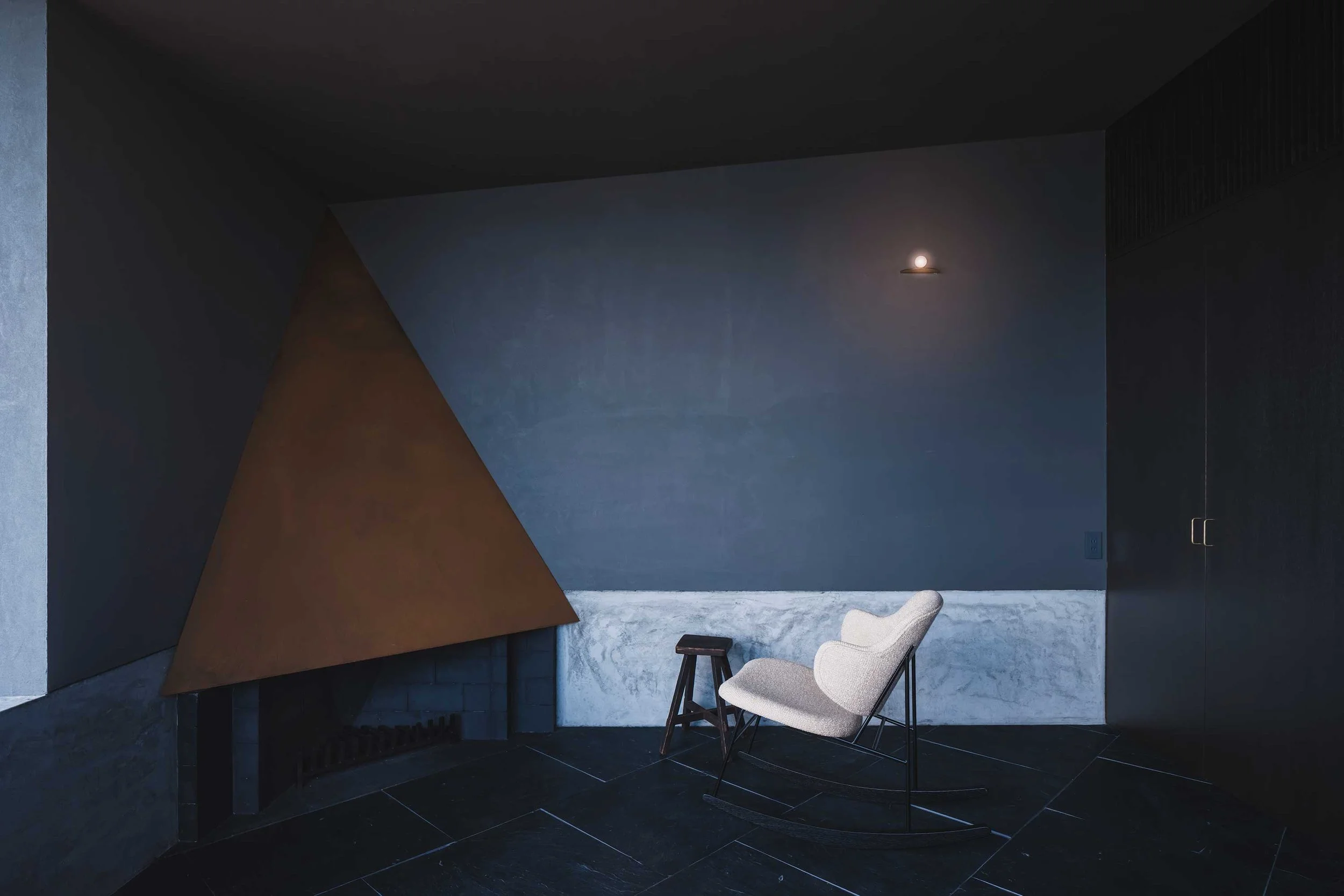
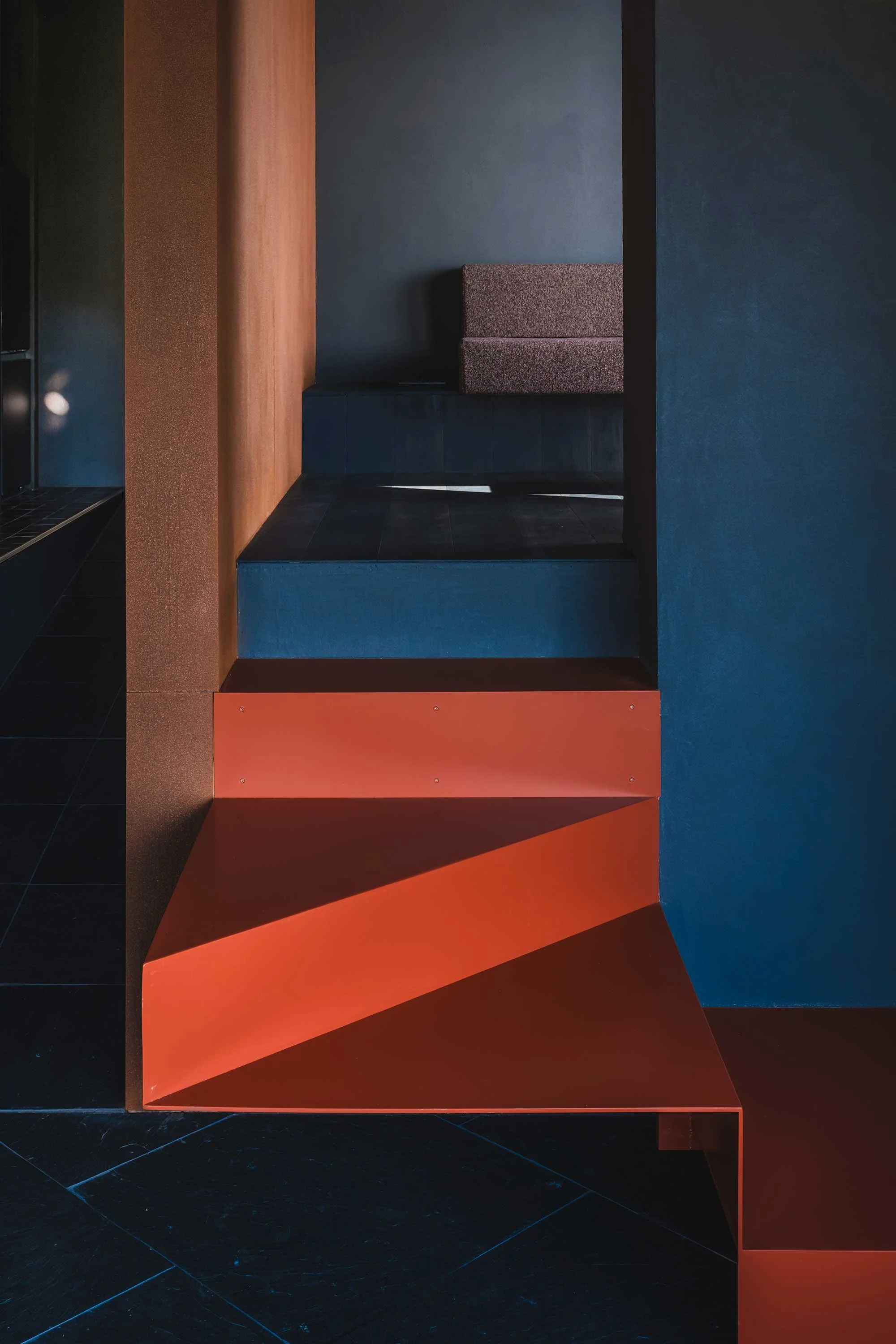
In the dining room sits a Studio Cochi-designed table and chairs. Custom red steel steps lead up to the living room with its Italian pink marble coffee table and a pale pink sofa neatly tucked against the wall. The bedroom is the highest room of the cabin, up another set of steps.
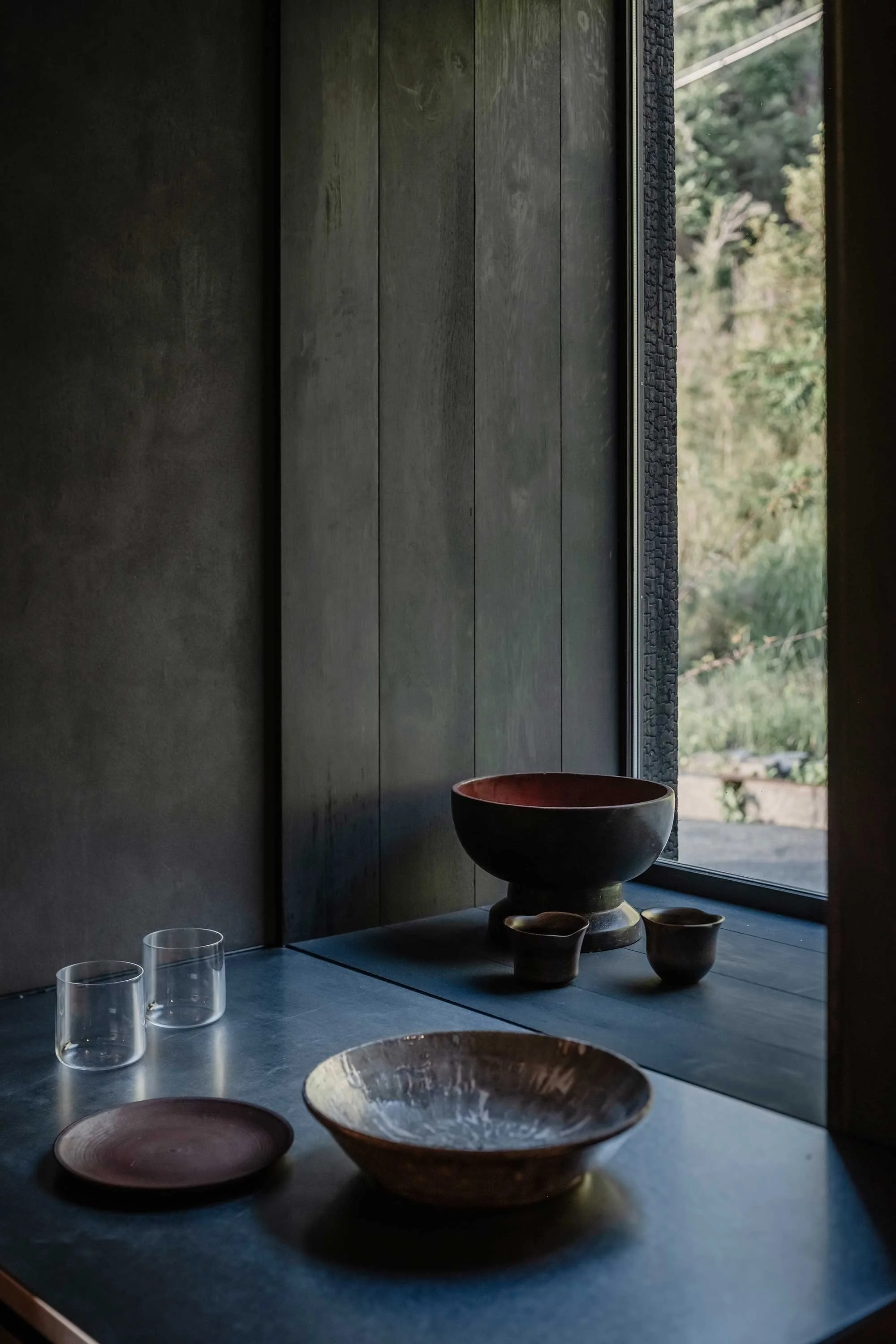
The villa is designed to showcase the best of Izu, not just the view, The bedroom houses more custom features, such as a cloisonné lamp by local lacquerware artist Hirose You with a shade by an Okinawan artist. In the kitchen is lacquerware by Numata Kaze, another local artist, who makes unique crockery from wood that he salvages from typhoons. Outside, the bathing area is paved with Izu stone, a rock that isn’t created any more.
Sakata, who moved to Minami Izu from Tokyo, wants guests to fall in love with the area as much as she has. ‘We want to make this a gallery of Izu artists like [they have] in Okinawa,’ she says. ‘There are a lot of beautiful things made by the people here.’ And that’s not including the scenery.
Text by Kim Kahan
Images by Ooki Jingu