Shanghai Fashion Brand Cotemp’s New Concept Store Exemplifies Tasteful Restraint
Designed by ONOAA Studio, Conceive by Cotemp pushes back against overbuilding and excessive consumption, preferring longevity and material honesty
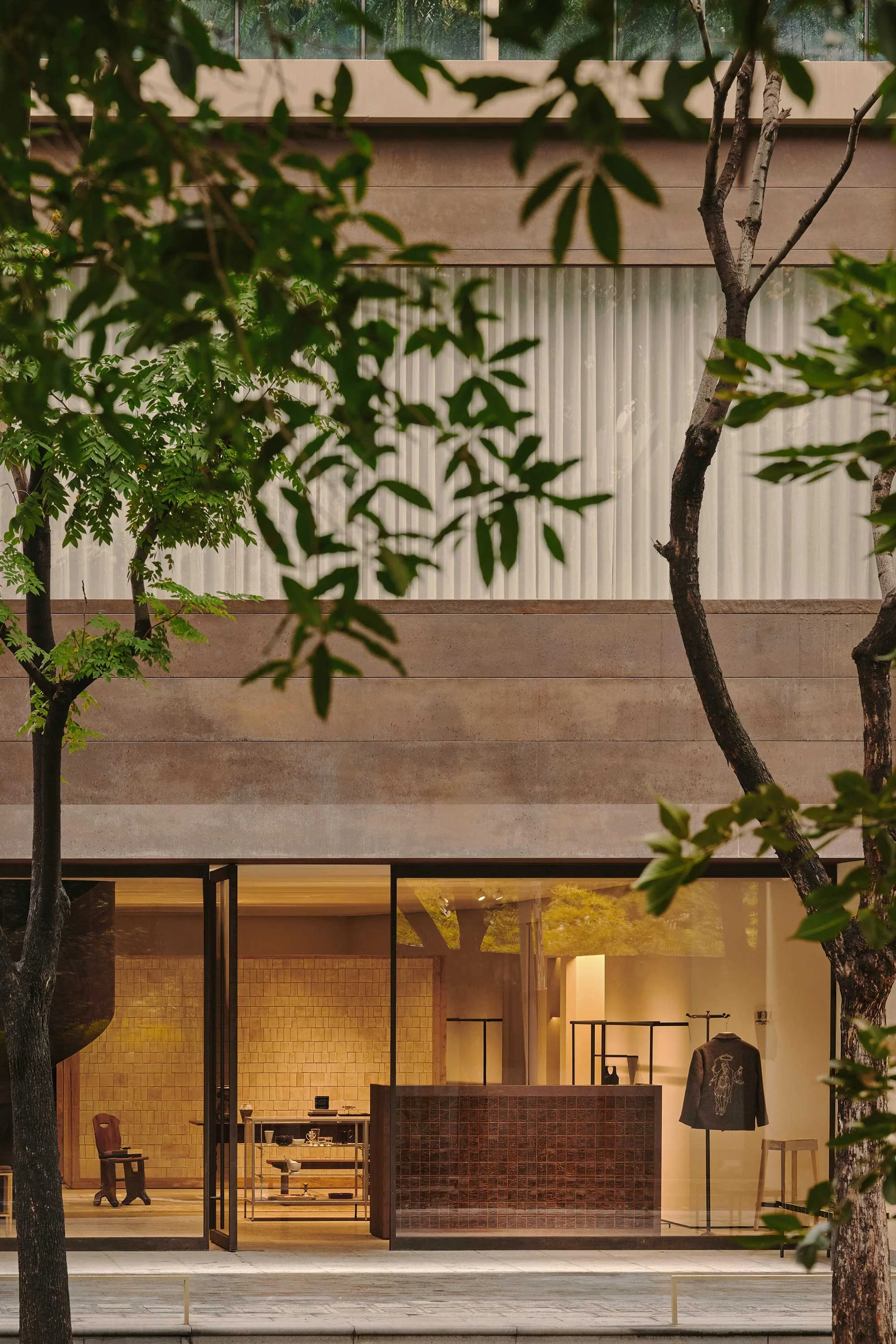
To design Conceive by Cotemp — the first permanent retail space for a brand founded by a close friend — Ya Gao and Peng Chen of Shanghai-based ONOAA Studio drew inspiration from the humble metal box, the kind that acquires a patina while protecting personal treasures. The metaphor suits Cotemp, a brand that values uniqueness, age and wear over newness, pairing its own label with a curated selection of like-minded designers. On Jing’an’s Yongyuan Road, the store has the appeal of ‘something hidden in plain sight, just waiting to be discovered’, as Gao puts it. ‘There's a sense of authenticity here, something precious, with its own sense of time,’ she adds.
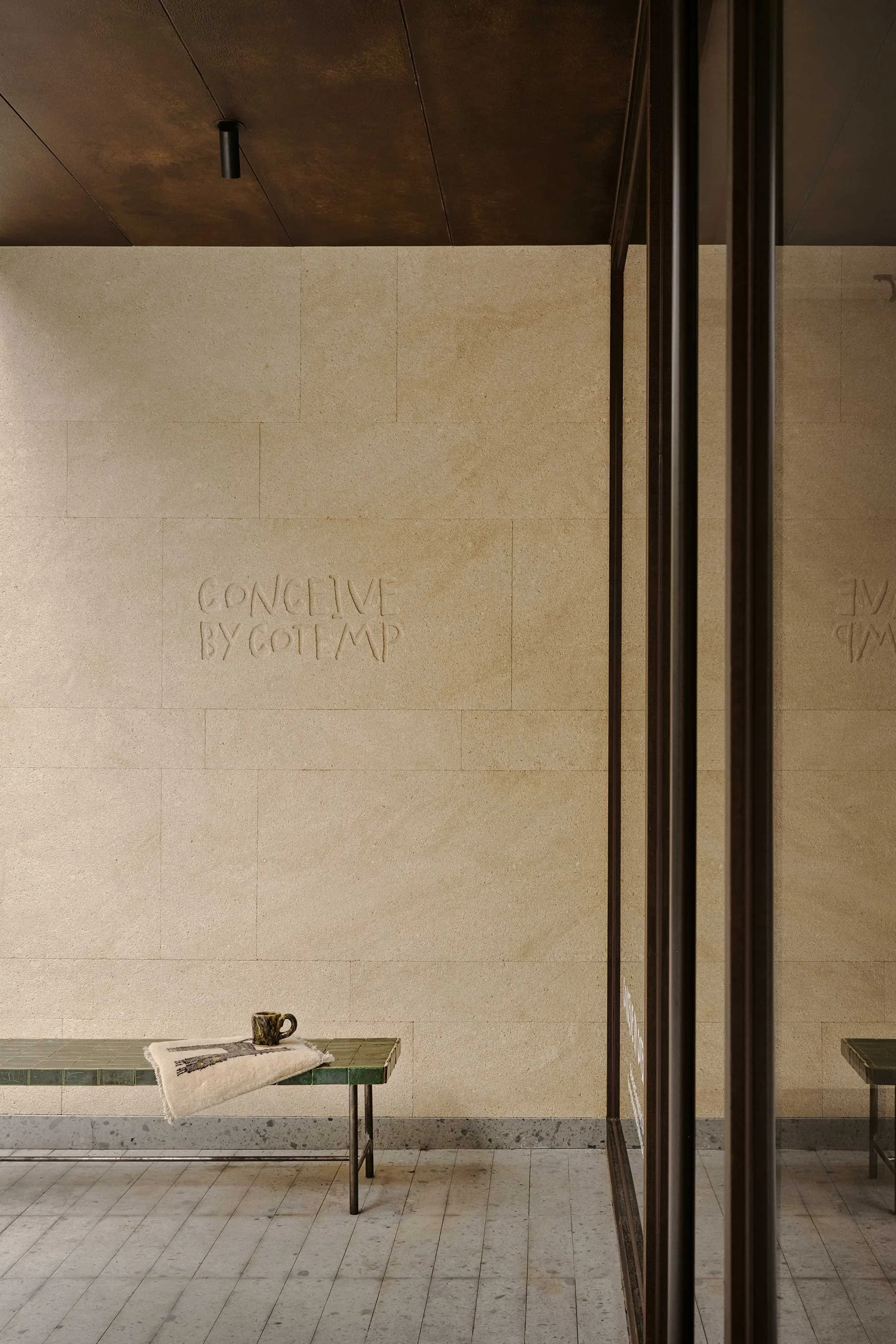
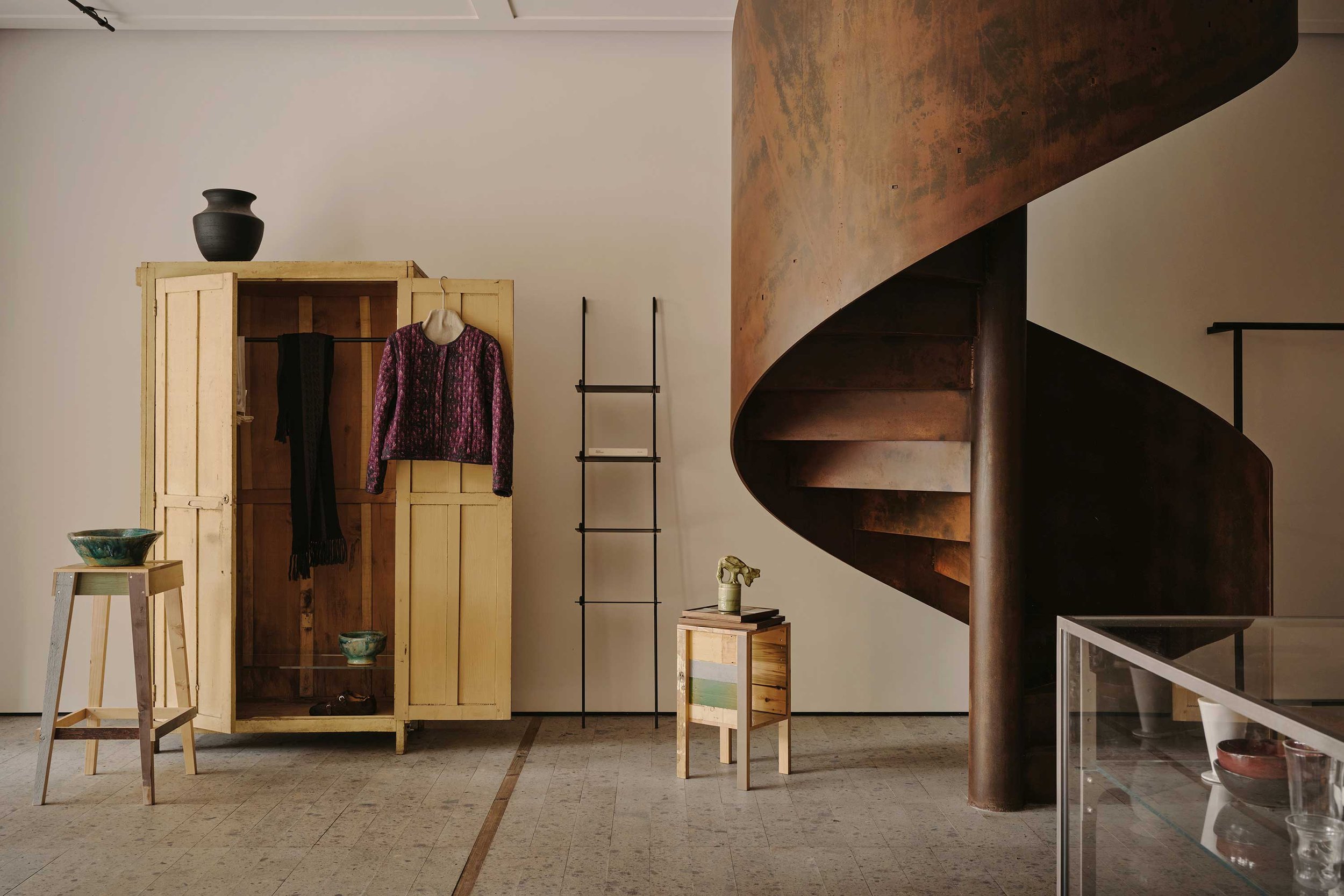
From the street, a canopy clad in rusted iron plates nods to the idea of the tin box. The material concept continues into the interior in a sculptural staircase leading to the office above. Reduced to its structural frame, it’s left unpainted and unpolished to weather naturally over time. ‘Less processing means less consumption,’ says Gao. ‘We think the material itself is the best decoration; its value is not always in the condition it arrives at, but in its continued transformation.’ Beyond low-intervention design, ONOAA’s approach is grounded in the use of readily available materials and the minimisation of waste. Locally sourced stone flooring was laid piece by piece by hand, avoiding long-distance transport and the use of heavy machinery. Similarly, the duo commissioned handmade tiles, fired specifically for the project, in shades of ivory, umber and bottle green. ‘Every single tile is unique because handcraft inevitably leaves its marks,’ says Gao.
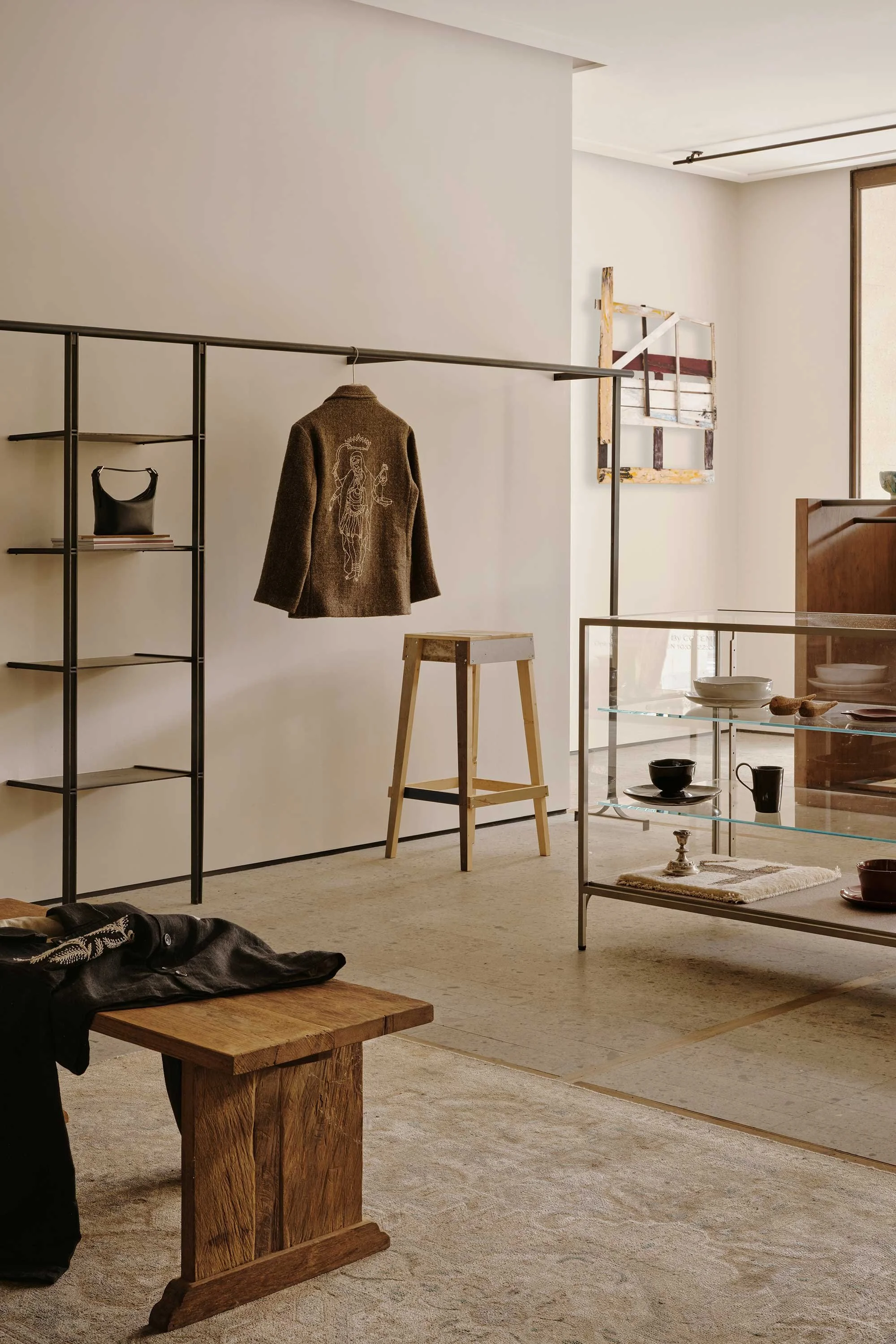
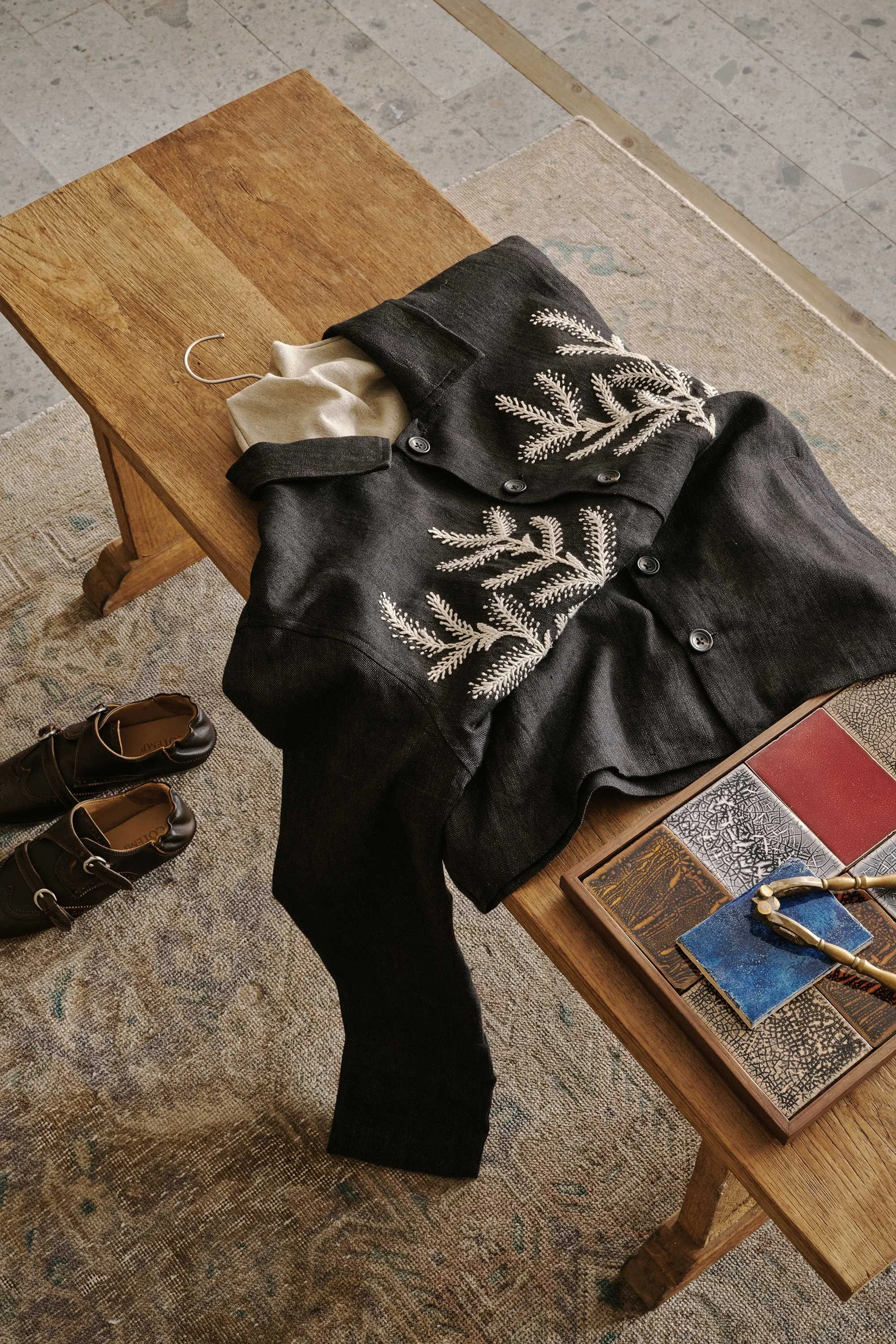
In line with Cotemp’s commitment to reuse, surplus fabric from its own production reappears as curtains for service doors and upholstery for several benches. So, too, does scrap wood found on site, assembled into a wall-mounted composition with the help of the construction workers. The impromptu artwork enters into dialogue with select pieces by Dutch designer Piet Hein Eek, whose practice likewise centres on reclaimed materials.
At the rear, a more secluded object room, tucked behind folding brass-framed glass doors, invites further curiosity. The aesthetic is echoed by the display shelving, while a timber armoire and ceramic vessels give the interior a domestic character. The counter area has the air of a parlour, with a bespoke work table paired with vintage side chairs. For Gao and Chen, the project feels like a gentle act of resistance, raising questions about the conventions of contemporary retail spaces. In Gao’s words, ‘Do we really need so much finish? Can a retail space be allowed to grow, change and age like a living thing?
Text by Tomás Pinheiro
Images by Jonathan Leijonhufvud