A Chongqing Family Home Whose Reinvention Launched a Young Designer’s Studio
Shuo Liu of Shiye Architects transformed his family’s neglected property into a multigenerational home, studio and testing ground for his emerging practice
In 2015, architect Shuo Liu, then based in Beijing, received a call from his father. He and Liu’s mother wanted to return to the family’s long-neglected property, bought in 1993 but only briefly lived in. ‘They knew living close to the river again would be good for their health,’ he says.
Perched above the Yangtze River, the site held great promise, but the existing house was dark, enclosed and outdated. The project demanded an almost complete overhaul, including the partial reconstruction and reorientation of the existing structure. Still, Liu didn’t hesitate. He quit his job and moved back to Chongqing. As first commissions go, it was a generous one: ‘They gave me total creative freedom to experiment.’
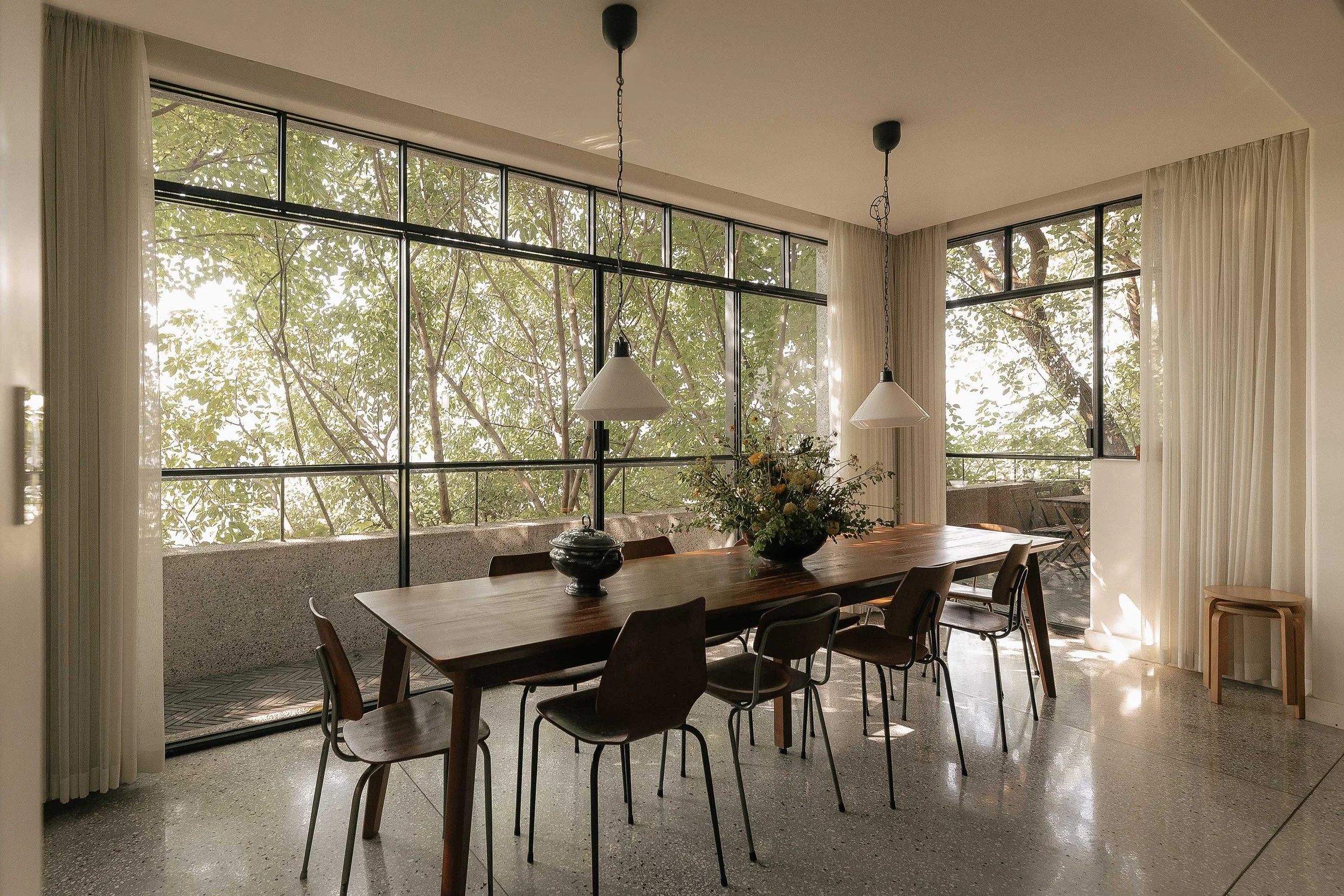
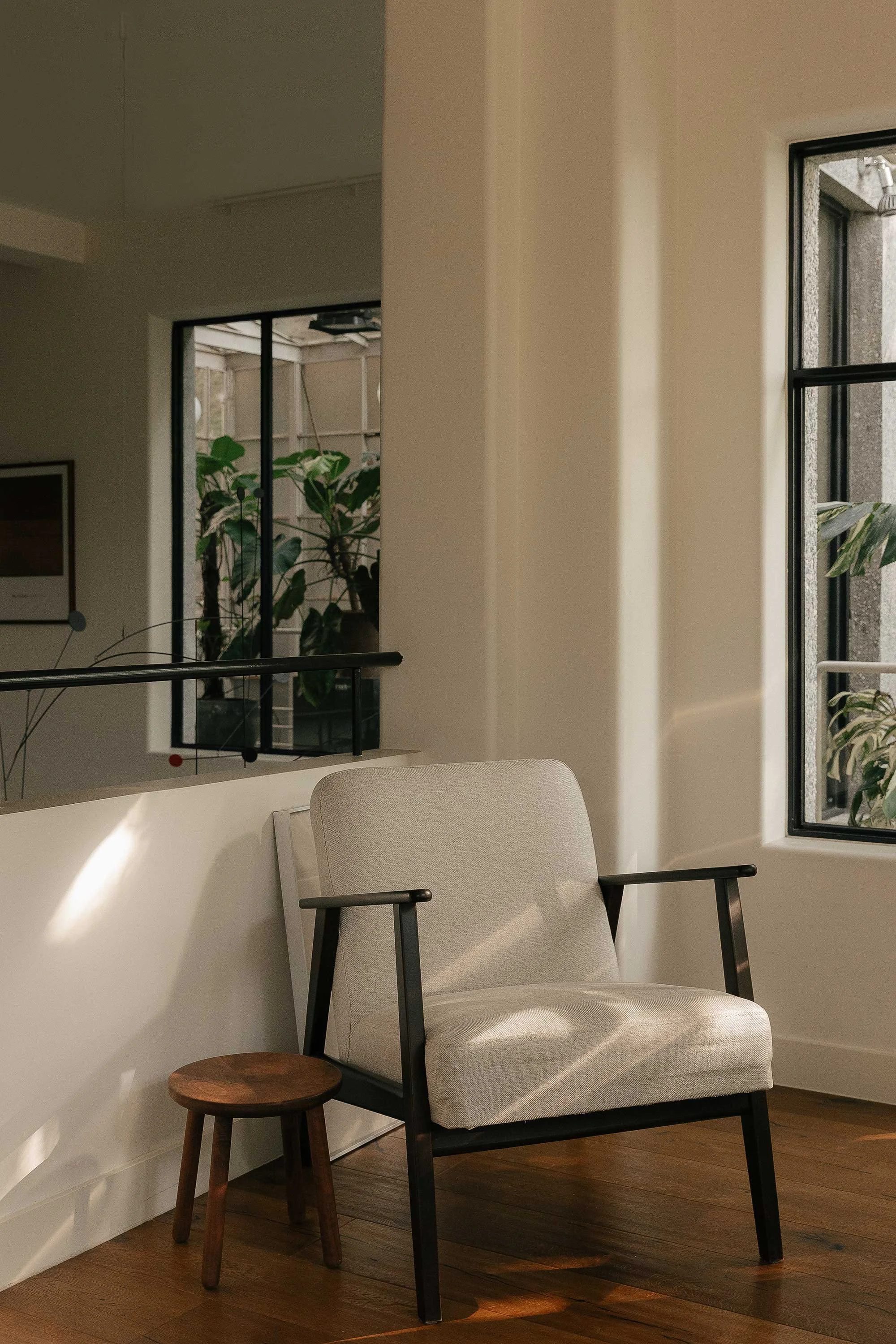
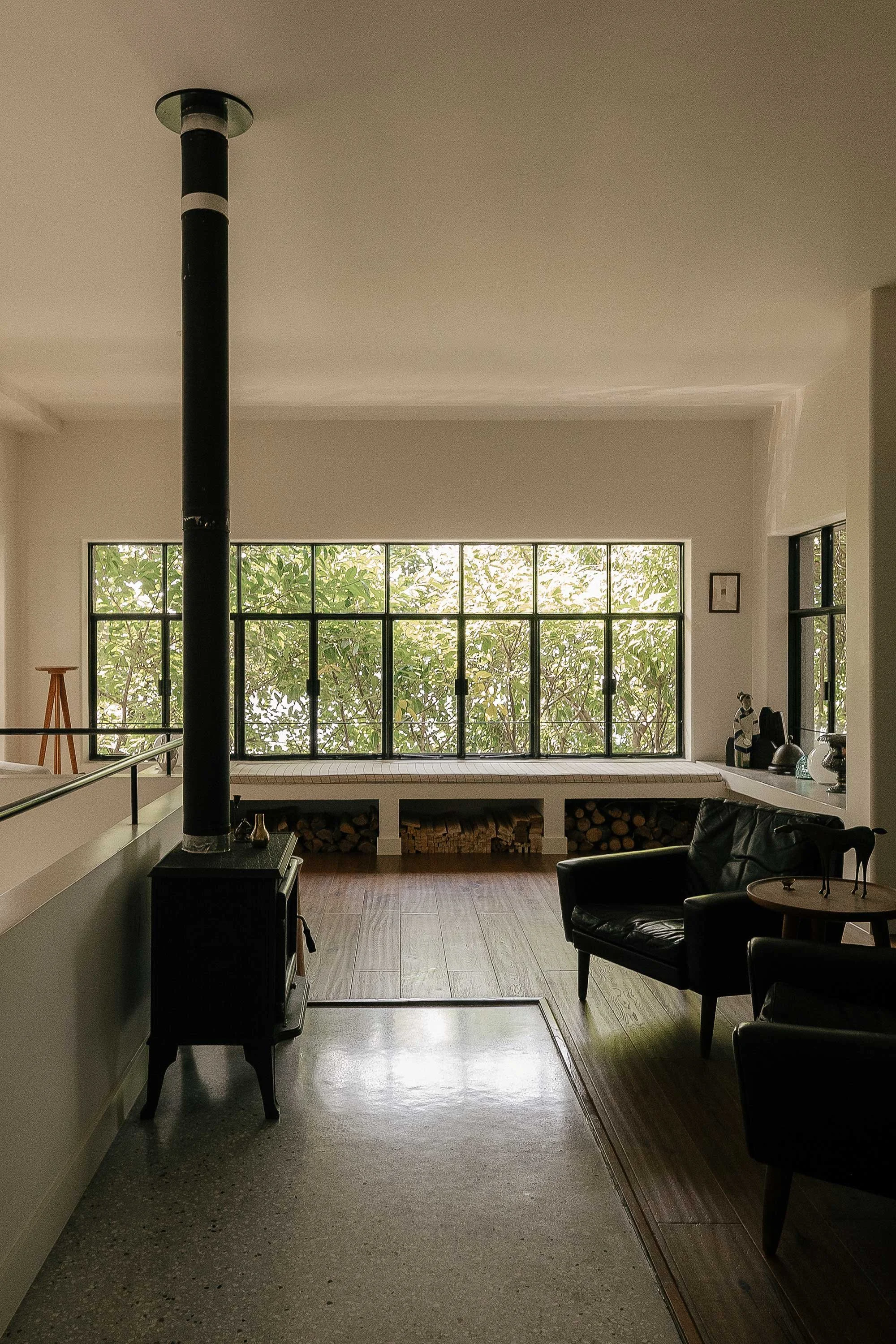
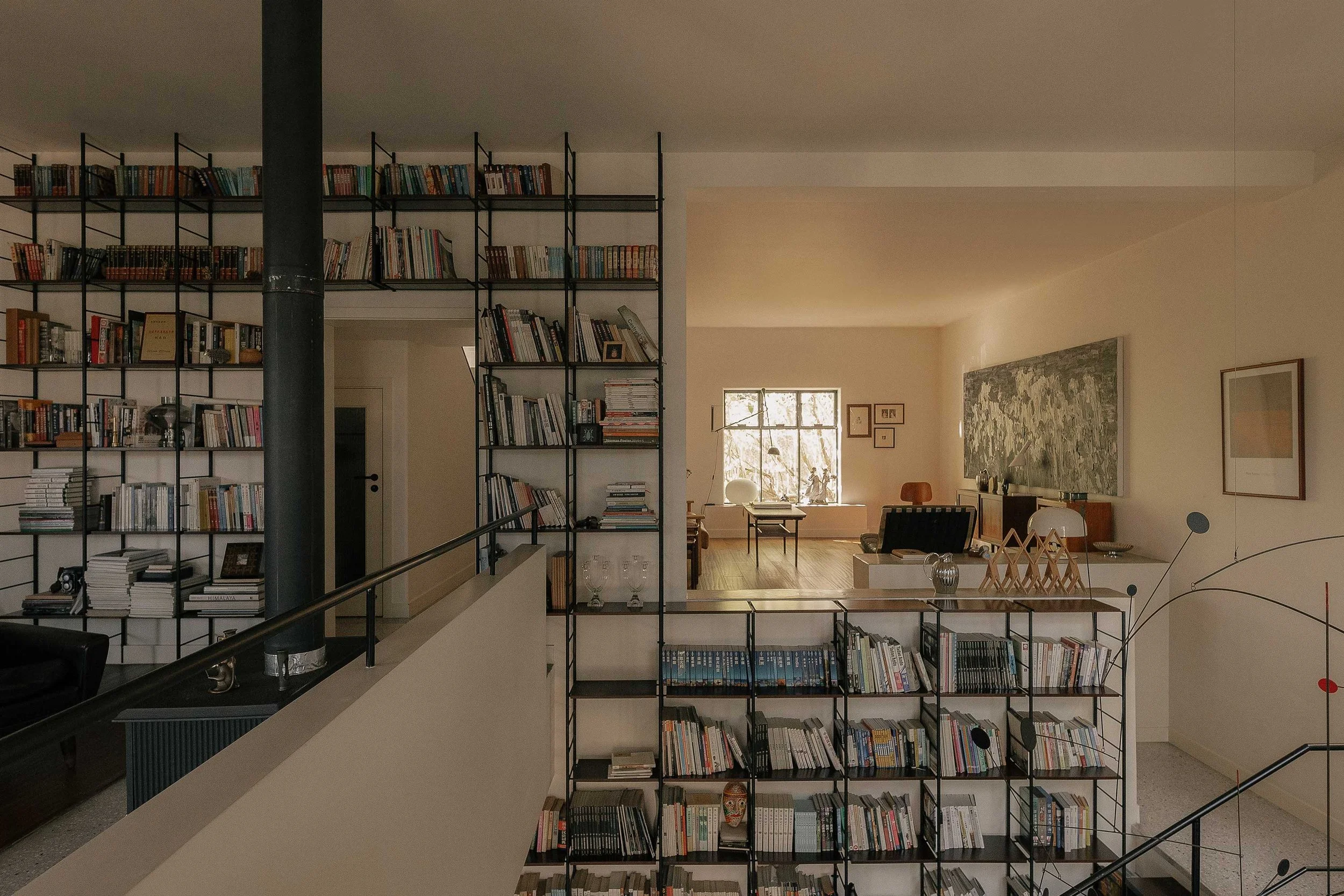
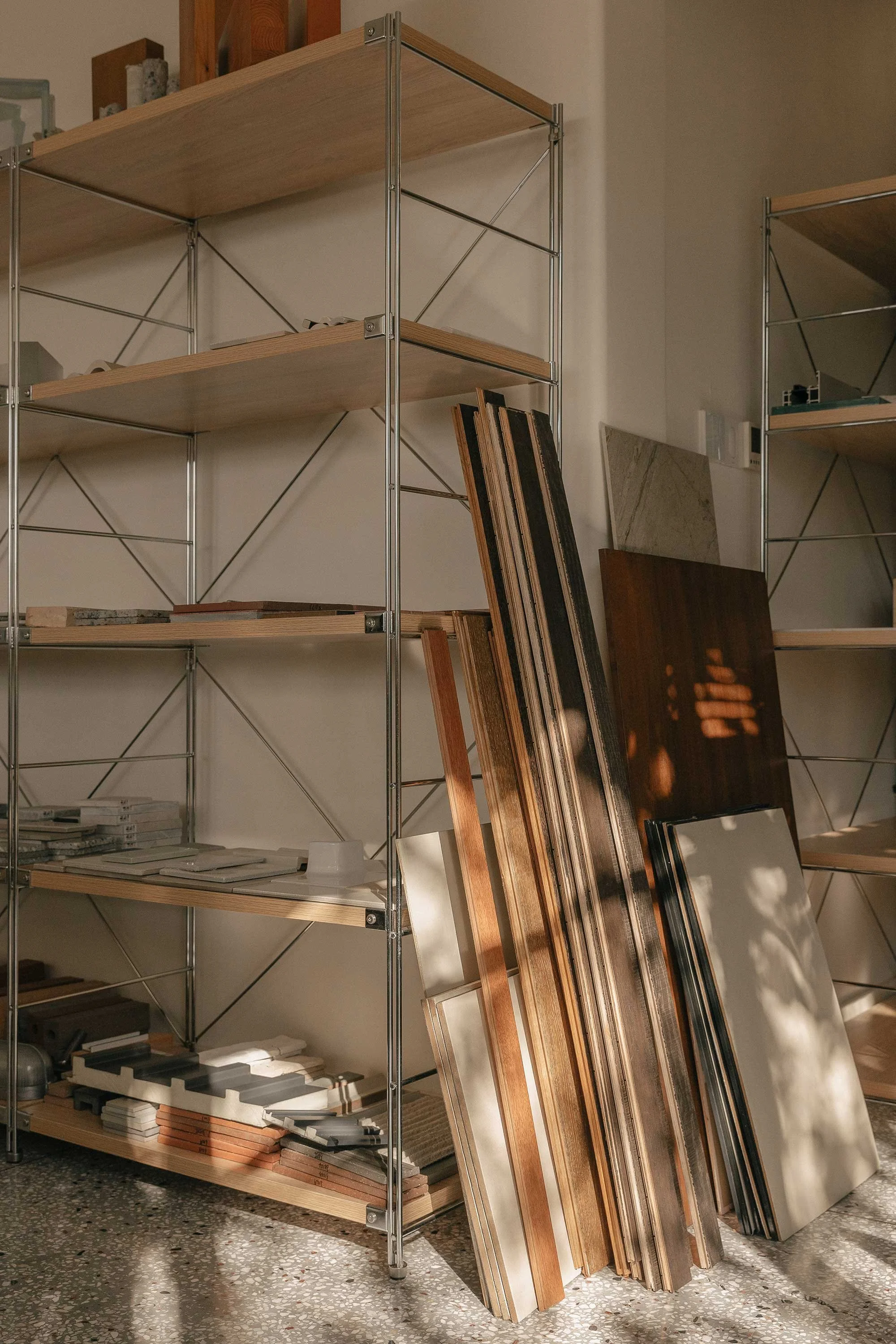
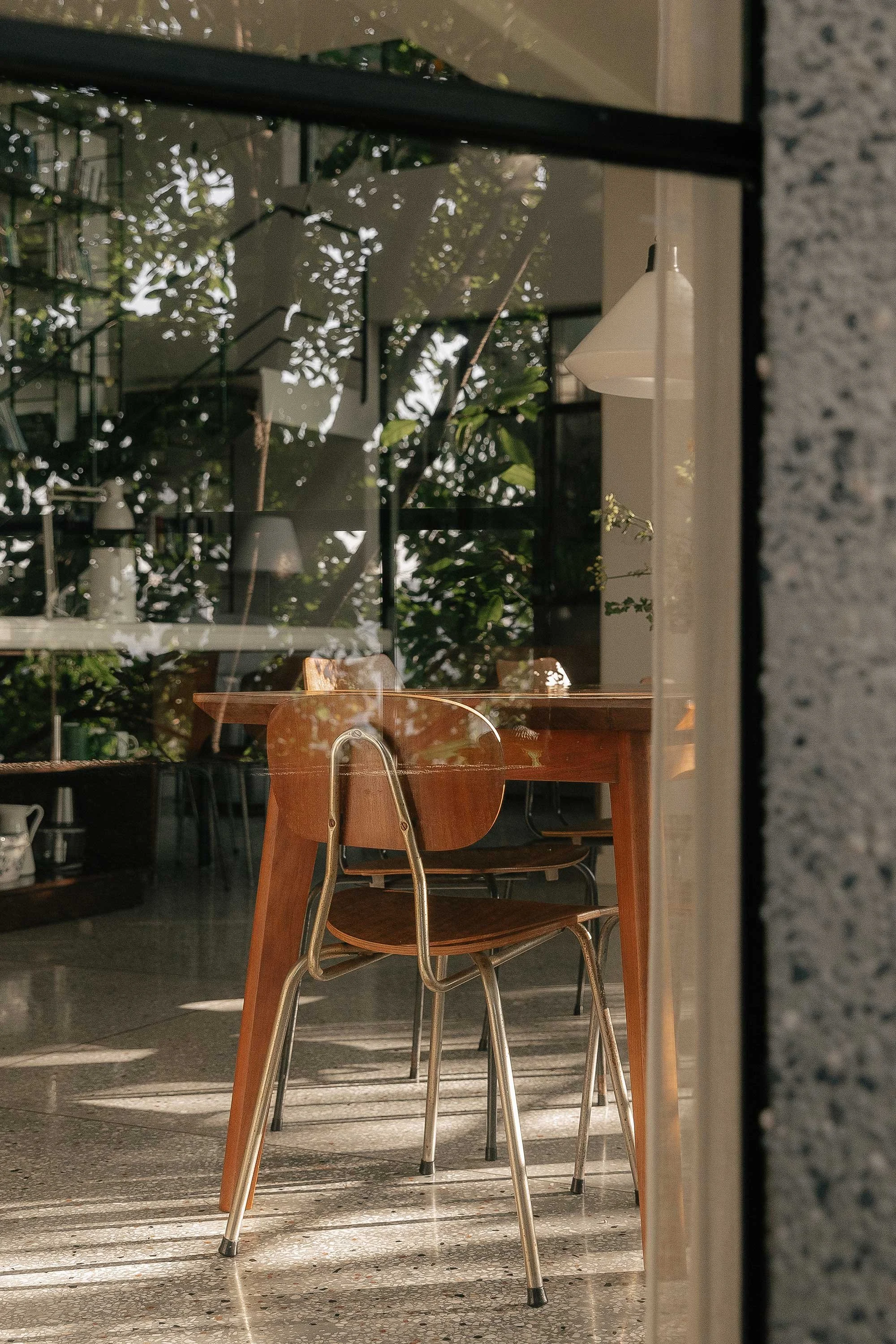
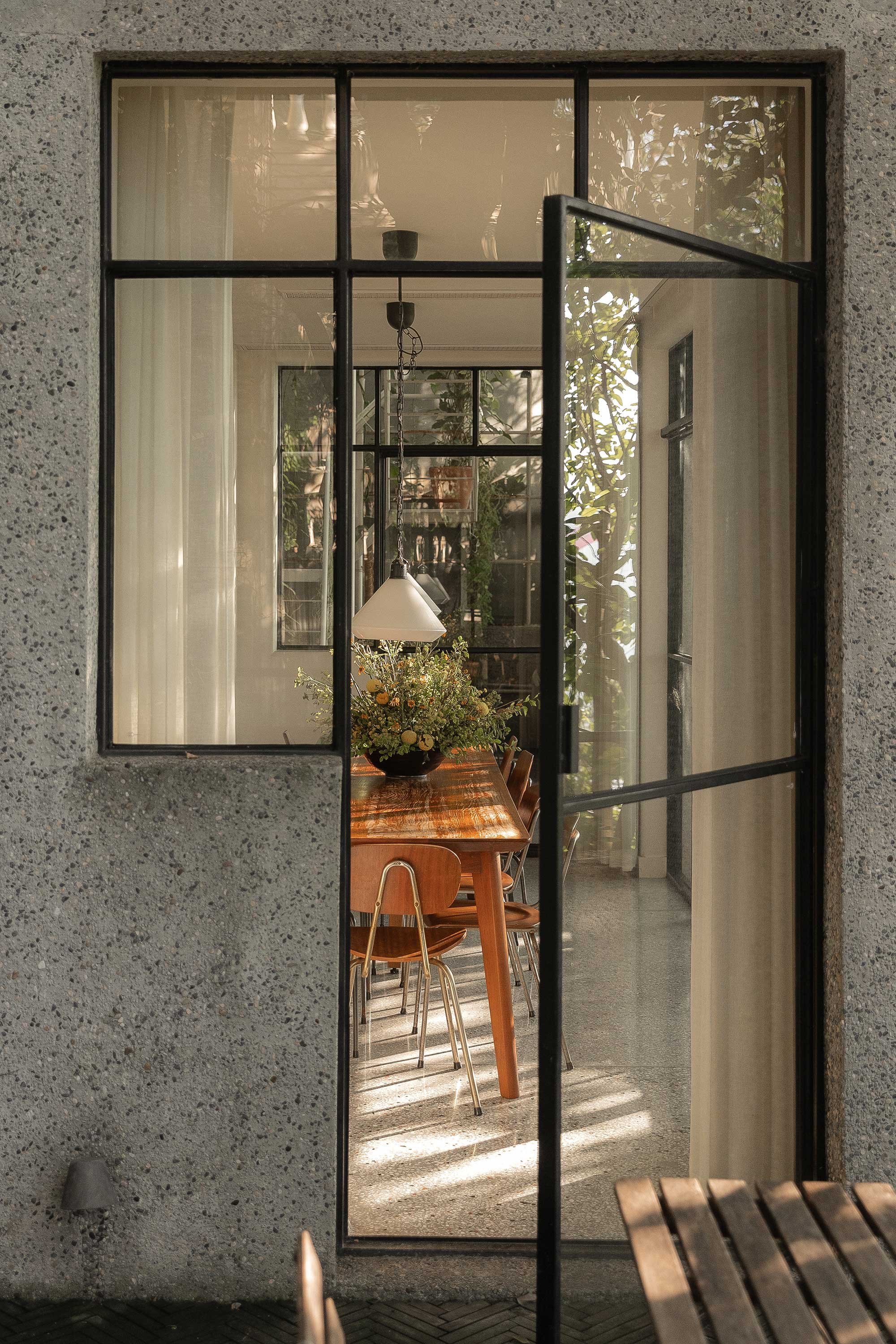
In contrast to the surrounding faux-neoclassical villas, Liu’s reworking adopts a minimal facade of exposed concrete and pebble cladding, much of it now covered in ivy. Inside, a large central void connects the open-plan interior to expansive glazing along the rear facade. ‘Before, most windows faced the street, but the curtains were always closed for privacy, losing their function. I closed them and opened the house towards the river,’ he says. Echoing Chongqing’s material heritage, terrazzo flooring runs throughout, while steel-framed windows admit greenery and generous daylight.
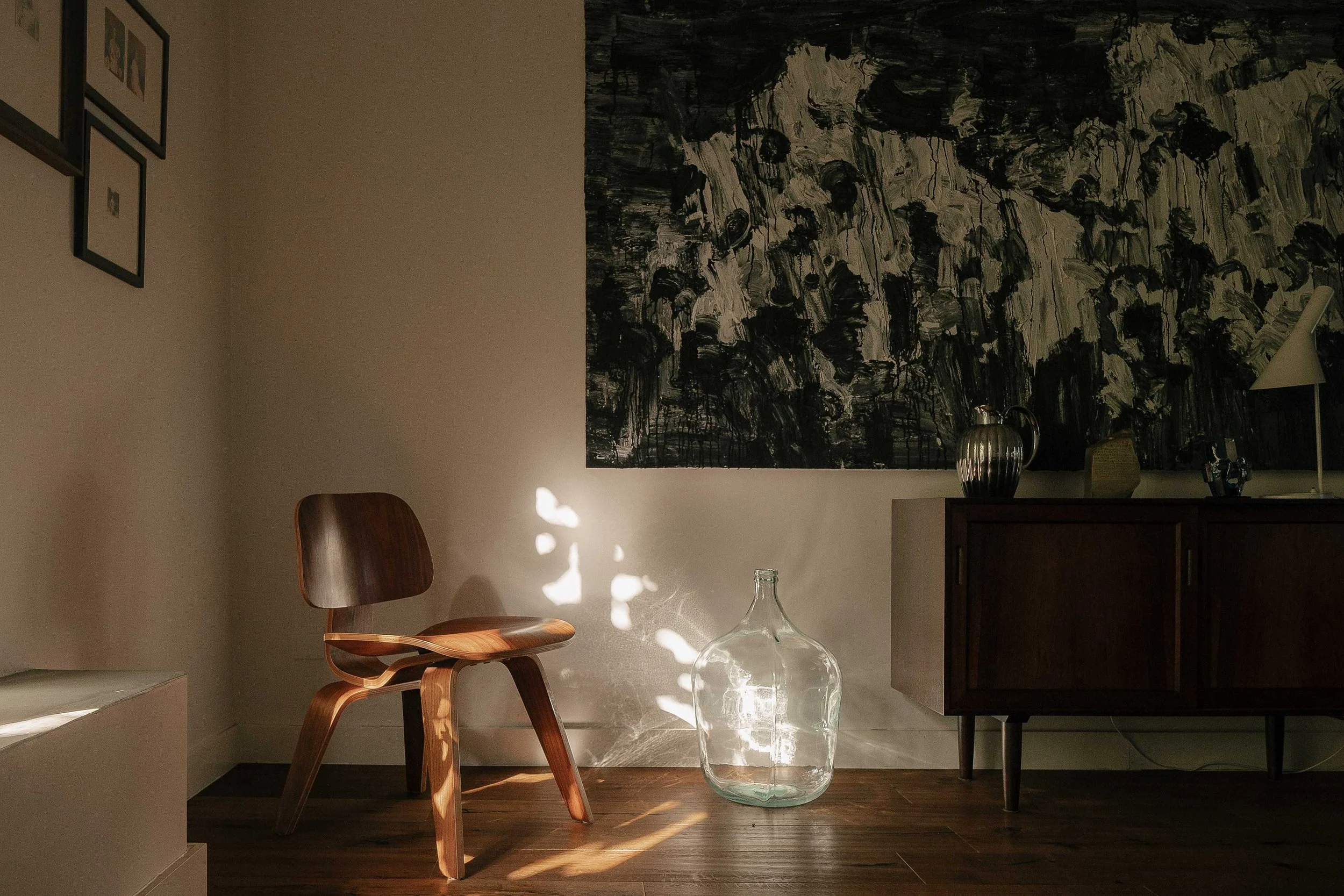
The decor pairs mid-century classics with more budget-friendly pieces, accented by antiques from Liu’s parents’ travels and vintage family photographs spanning generations. On the river-facing facade, Liu extended the covered footprint to absorb a pre-existing veranda. ‘You're sunbathing a lot here in the Fog City, right?’ he quips. ‘This made more sense than a balcony.’ In place of the latter’s potential seating, a broad built-in bench spans the full width of the window. Nearby, an alcove centres on a mah-jong table, where Liu’s parents regularly gather with friends. A tea cabinet and dedicated sink beside it spare unnecessary trips downstairs.
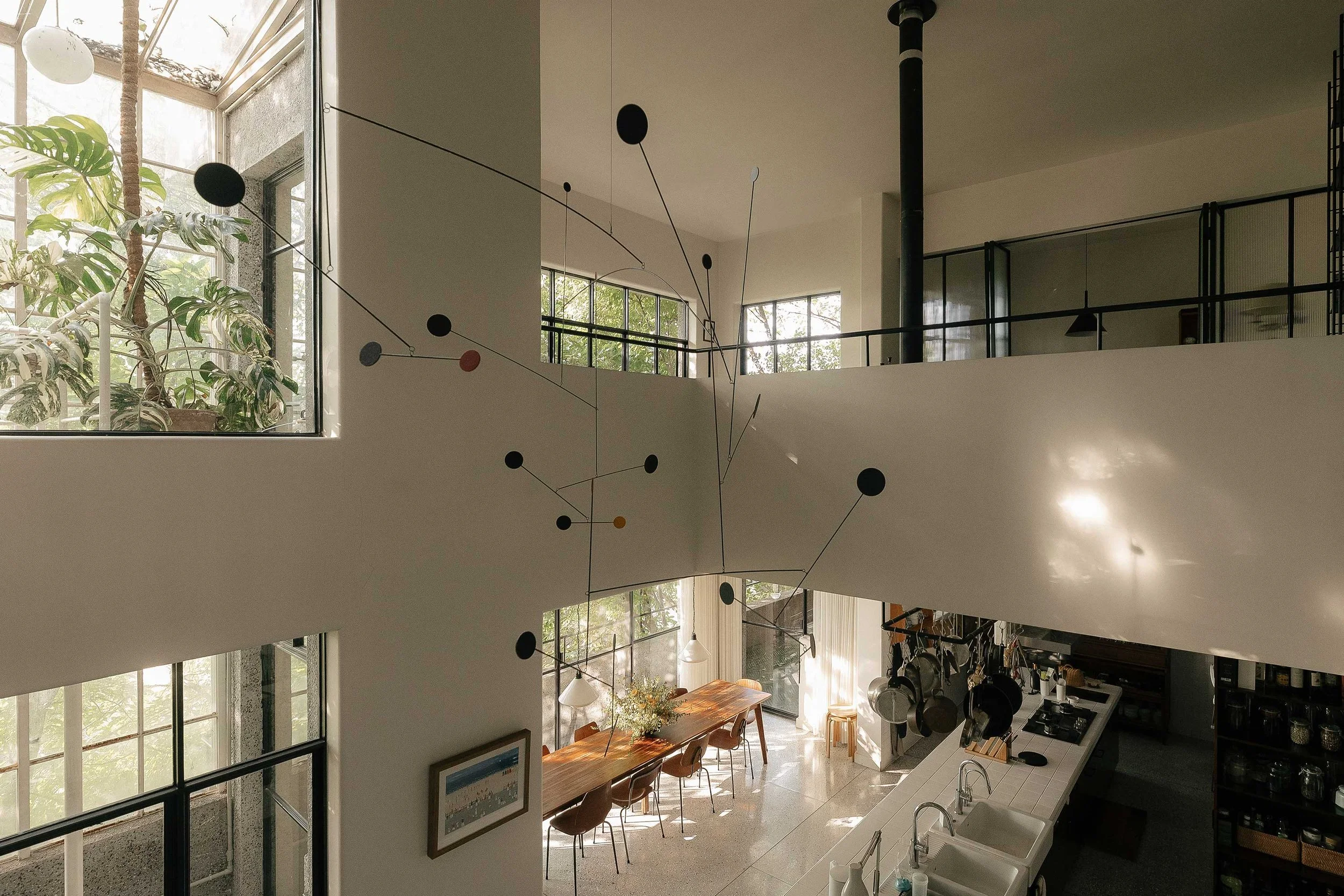
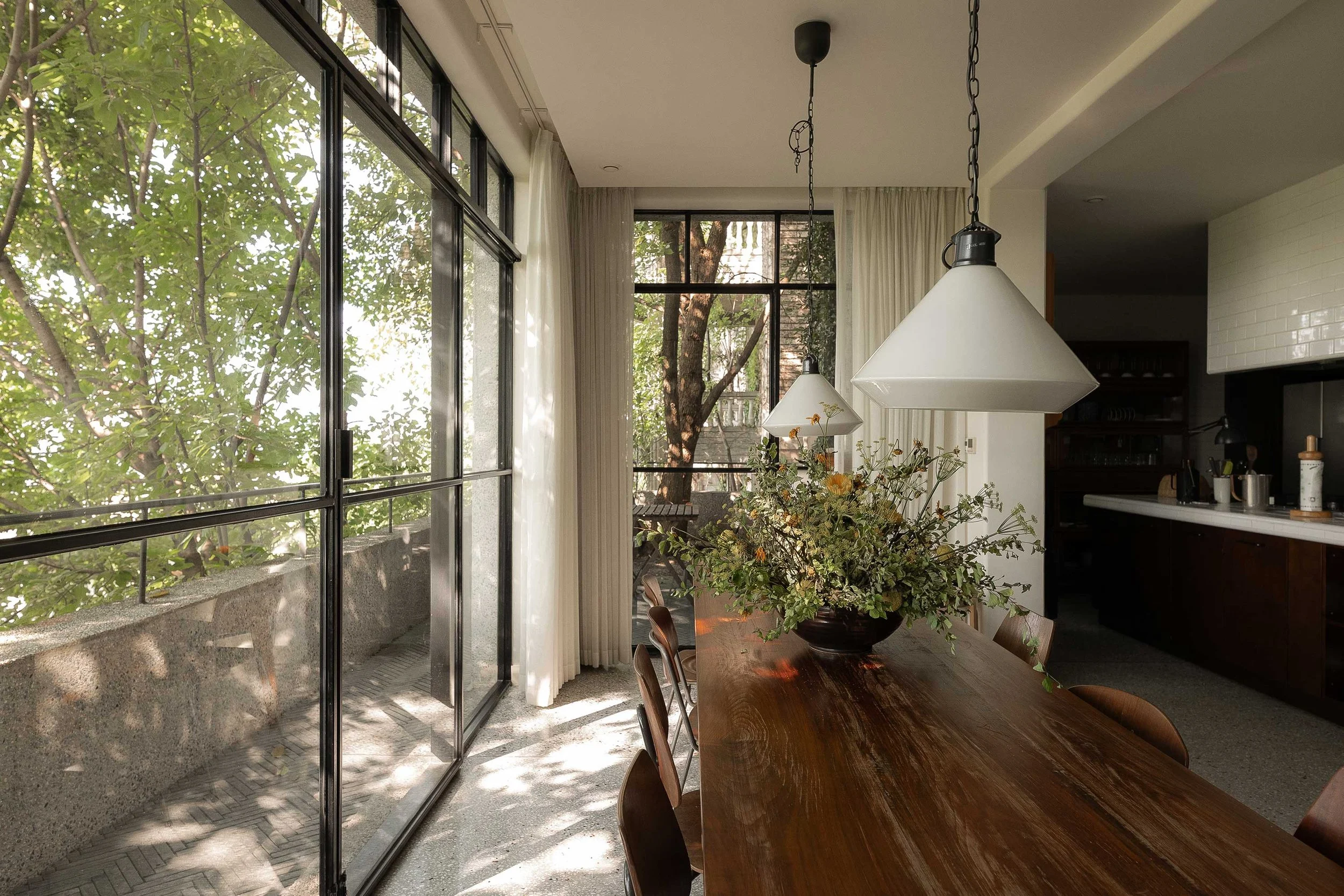
The semi-basement below, where the kitchen is located, is the heart of the house. A staircase, its balustrade reconfigured as a full-height steel bookshelf, descends to a monolithic island clad in the white tiles common to Chongqing's old noodle shops. Running alongside is an elongated Ikea dining table, adapted by Liu to suit the room’s proportions and his parents’ sociable habits. ‘If they invite too many friends, even this isn’t enough,’ he says, noting that the island doubles as overflow seating. Meals often take on the air of al fresco dining, with full-height sliding doors that open onto a narrow balcony that leads into a small garden, where a mature evergreen provides a permeable screen. At one end of the table, a deep glasshouse spans both social levels, reinforcing the impression of being nestled among greenery.
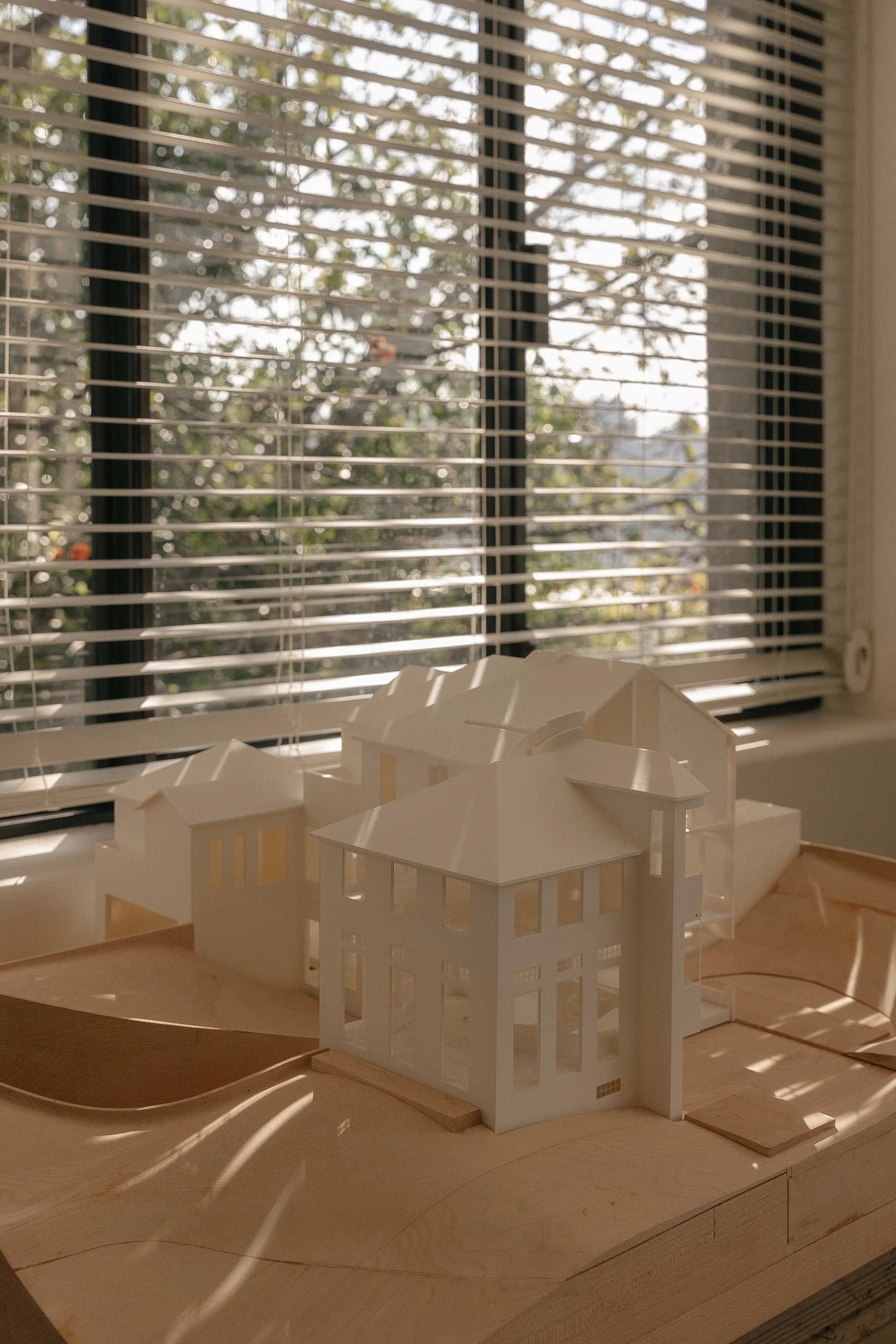
An upper stair by the front entrance leads to the family's bedrooms. Skylights here draw daylight deep into the plan, compensating for the limited openings. On one landing, a deep window frames the ivy through translucent glazing, turning it into a soft backdrop of seasonal colours. The top floor is given over to Liu’s Shiye Architects, where he and his three colleagues spend most of their days. Rising above the tree canopy, it trades leafy views for Chongqing;s skyline.
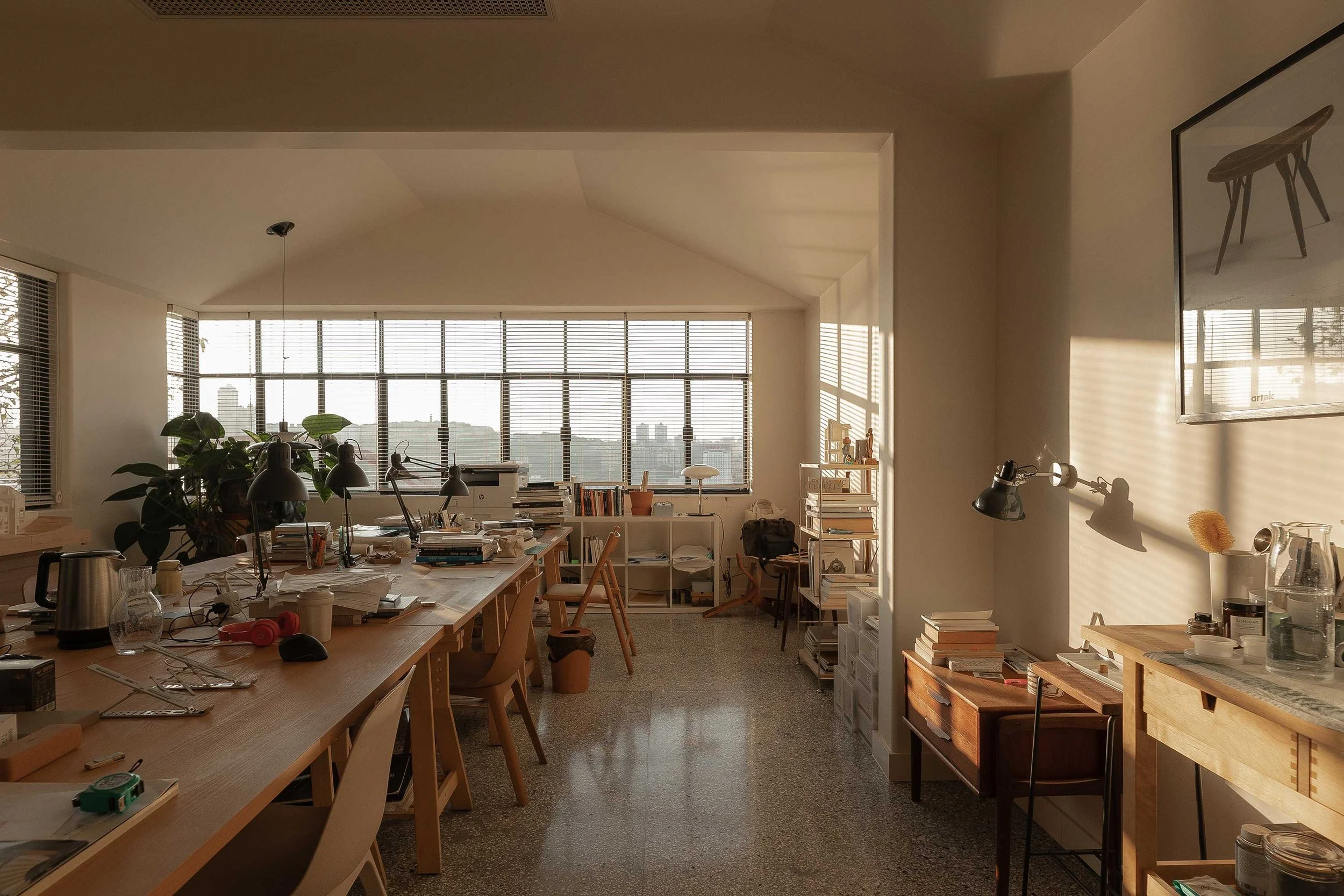
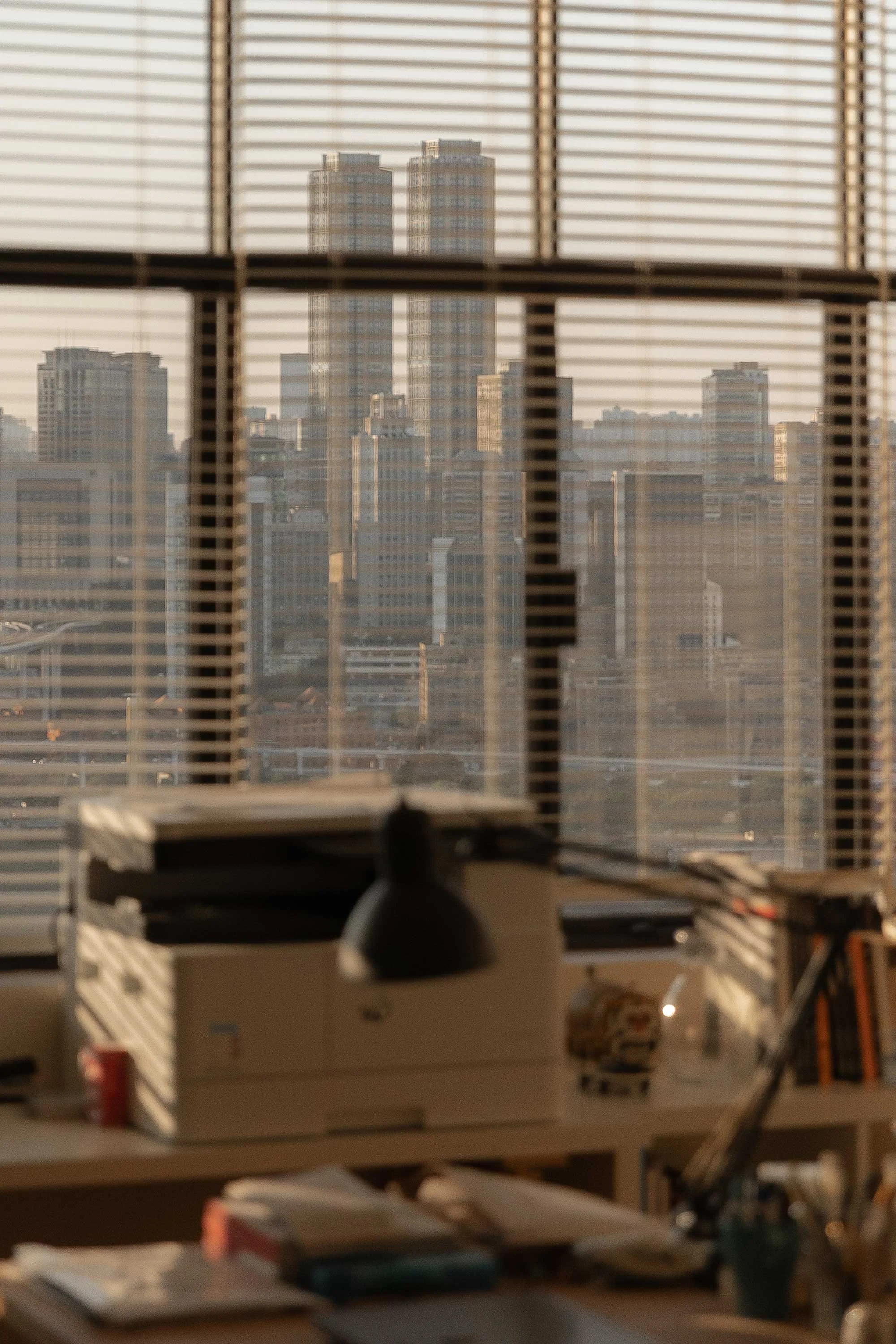
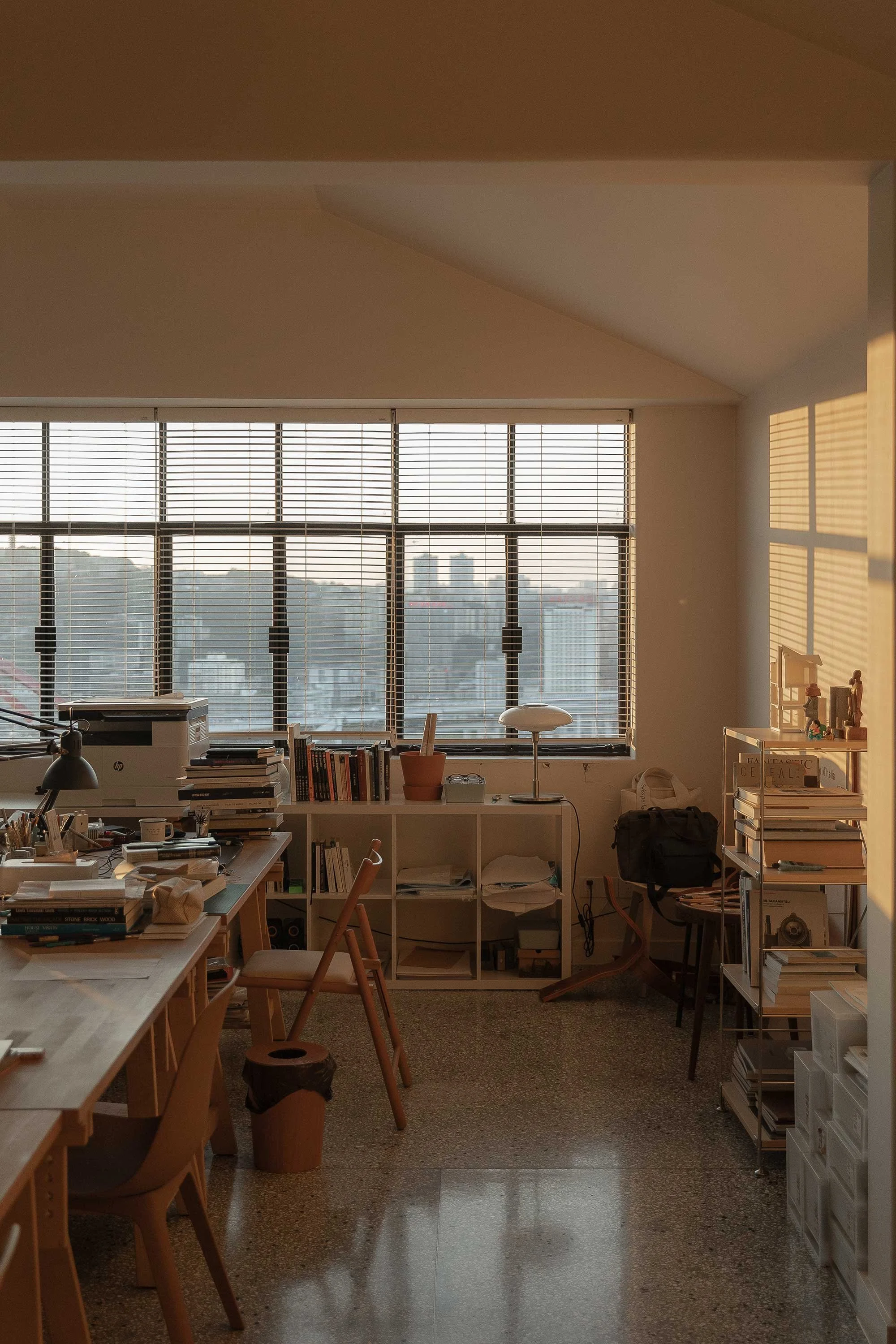
For Liu, the house proved a catalyst. Early commissions came through his parents’ friends, but nine years on, his portfolio spans Chongqing, Shanghai, Yunnan, Hainan and Hong Kong. Features first tested in the family home make occasional cameos, albeit in more refined forms. And though work unfolds in relative seclusion, the team is never far from the rhythms below. Lunch is often taken around the kitchen island — when the mah-jong crowd gives way, of course.
Text by Tomás Pinheiro
Image by Mojing