
In what is almost a return to first principles, a group of landscape and design firms across Asia are rethinking highly managed, human-centric urban spaces in favour of nature-led systems that often serve as civic infrastructure. As their projects take root, city logic shifts from control to coexistence
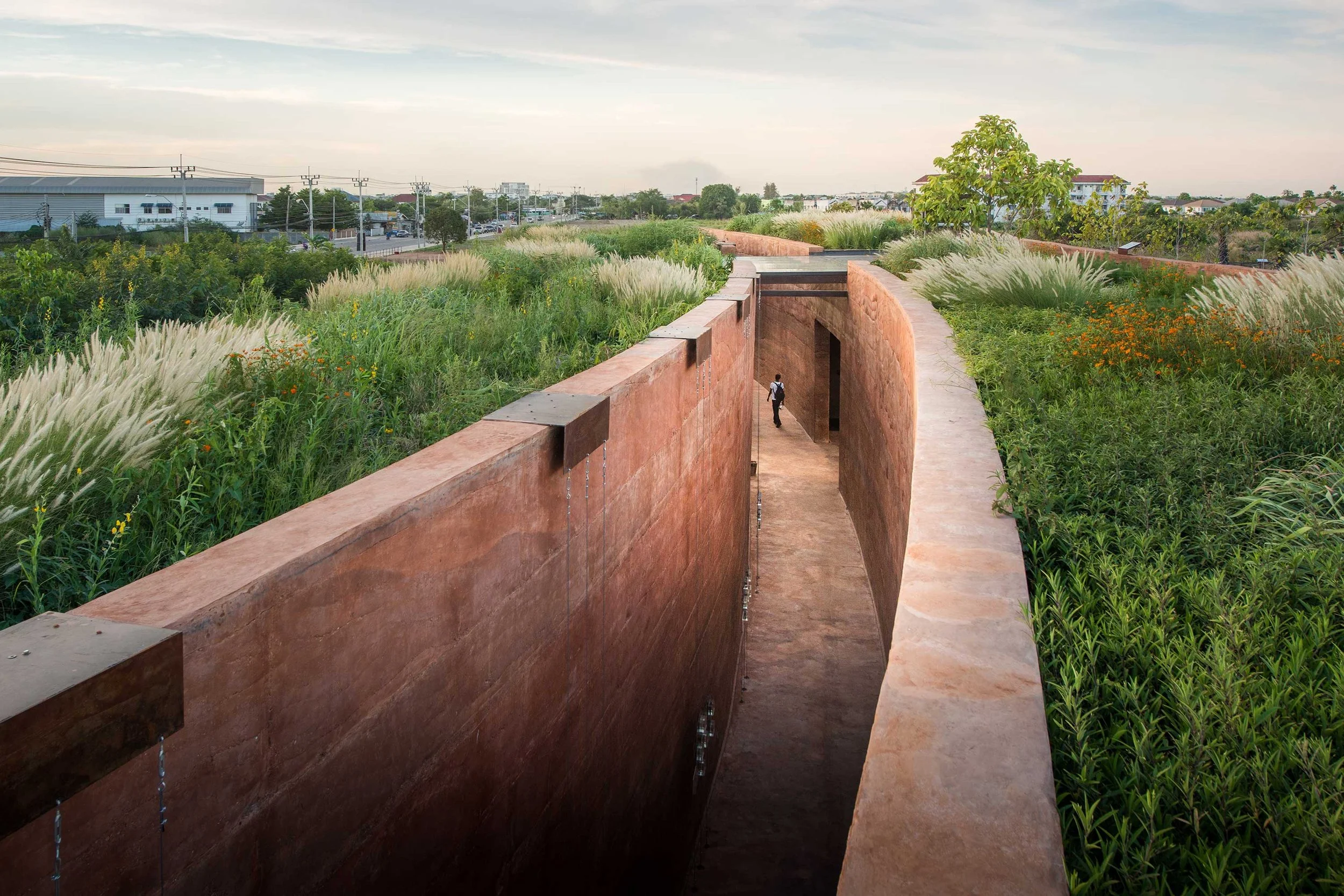
On the outskirts of Bangkok, the PTT Metro Forest reintroduces native habitats to a former dumping site roughly the size of a city block. ‘We identified the types of forests and variations in terrain that existed in this area so we could replicate those conditions, placing plant communities according to soil, moisture, slope and light,’ says Tawatchai Kobkaikit, who worked with Boontarika Wannapin as principals under their earlier practice, Landscape Architects of Bangkok.
The park draws on the Thai royal family’s reforestation legacy and the intensive planting methods of Japanese botanist Akira Miyawaki to accelerate ecological maturation. It functions primarily as an exhibition of organic growth; leisure areas are deliberately limited, and buildings are designed to recede into the landscape. Elevated skywalks minimise human interference at ground level and double as observation platforms, while a tower preserves long views even as the canopy gradually closes in. For Kobkaikit, the forest marked a turning point for landscape in the region: ‘It opened up perspectives on what a park can be — not necessarily made of neat lawns and well-maintained landscapes, but of raw nature, something we could once only see outside Bangkok.’ Kobkaikit later founded TK Studio, carrying this nature-led logic into a broader body of work, while Wannapin went on to co-found Landscape Collaboration.
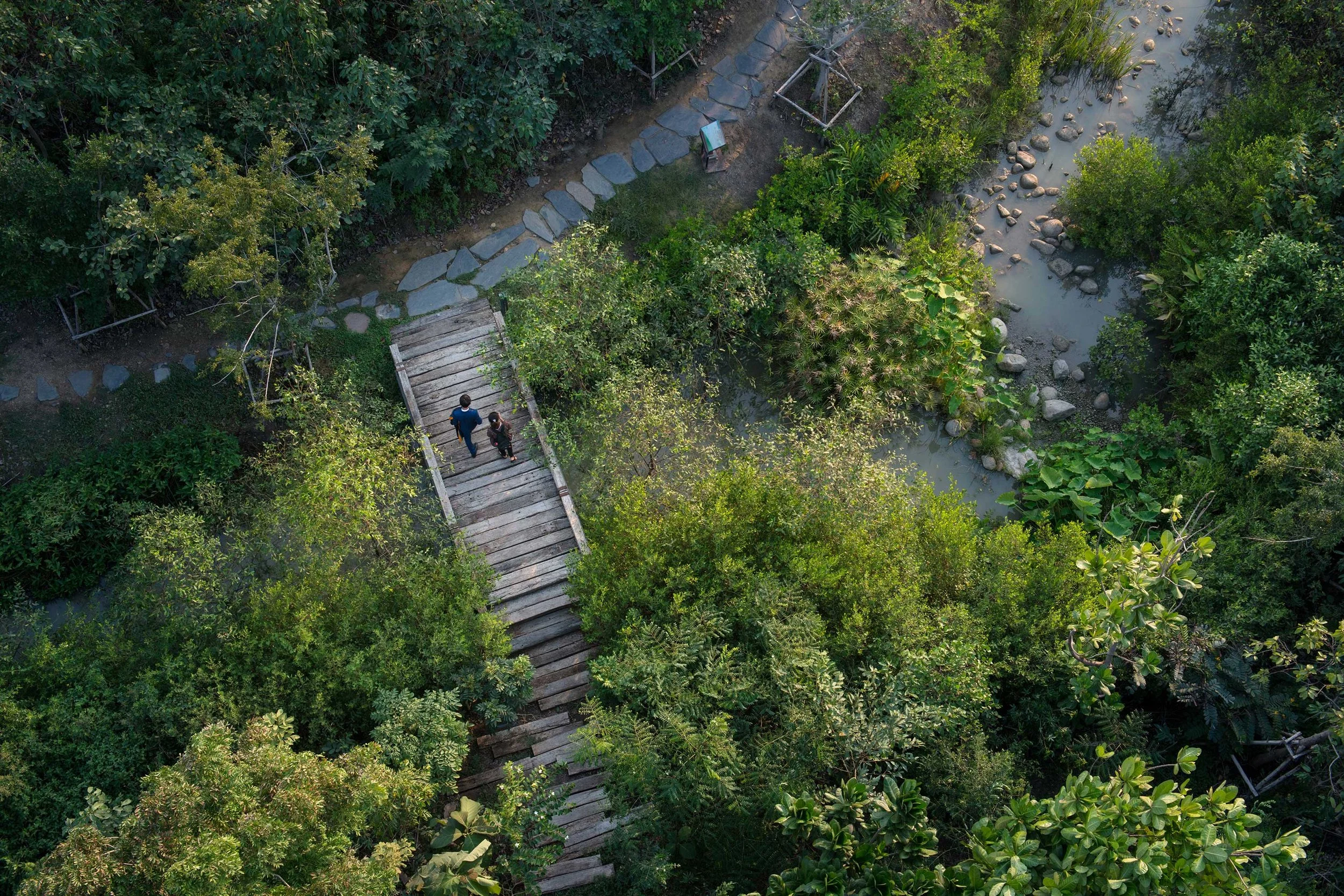
Another regenerative design landmark in the Thai capital is the more recently completed Benjakitti Park, conceived by local practice Arsomsilp in partnership with the late Dr Kongjian Yu of Turenscape. The project applies the ‘sponge city’ principles for which Yu was known, transforming the concrete grounds of a vast tobacco factory into a wetland composed of hundreds of small islands. ‘We worked with the soil through a cut-and-fill process. Over time, water moved through, and plants began to fertilise the ground on their own. Soil quality improved naturally, becoming better with time,’ says project lead Chatchanin Sung.
The park repurposes several industrial structures into cultural and sporting facilities now widely used by Bangkokians. It also plays a direct infrastructural role, absorbing stormwater to ease flooding in adjacent neighbourhoods and filtering run-off through bio-filtration planting. Sung notes that these nature-based solutions require neither chemicals nor grey infrastructure, and reduce maintenance costs by up to five times.
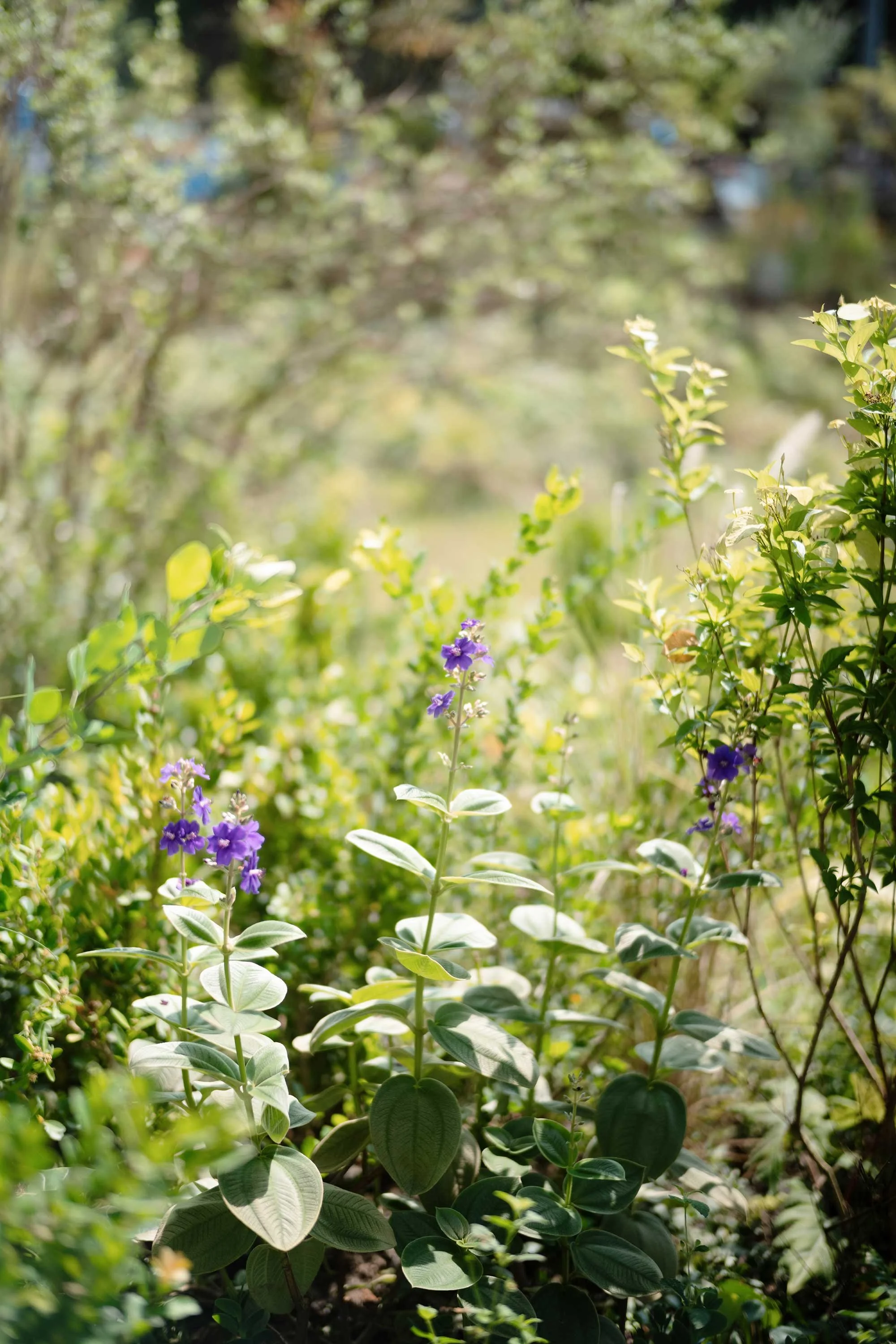
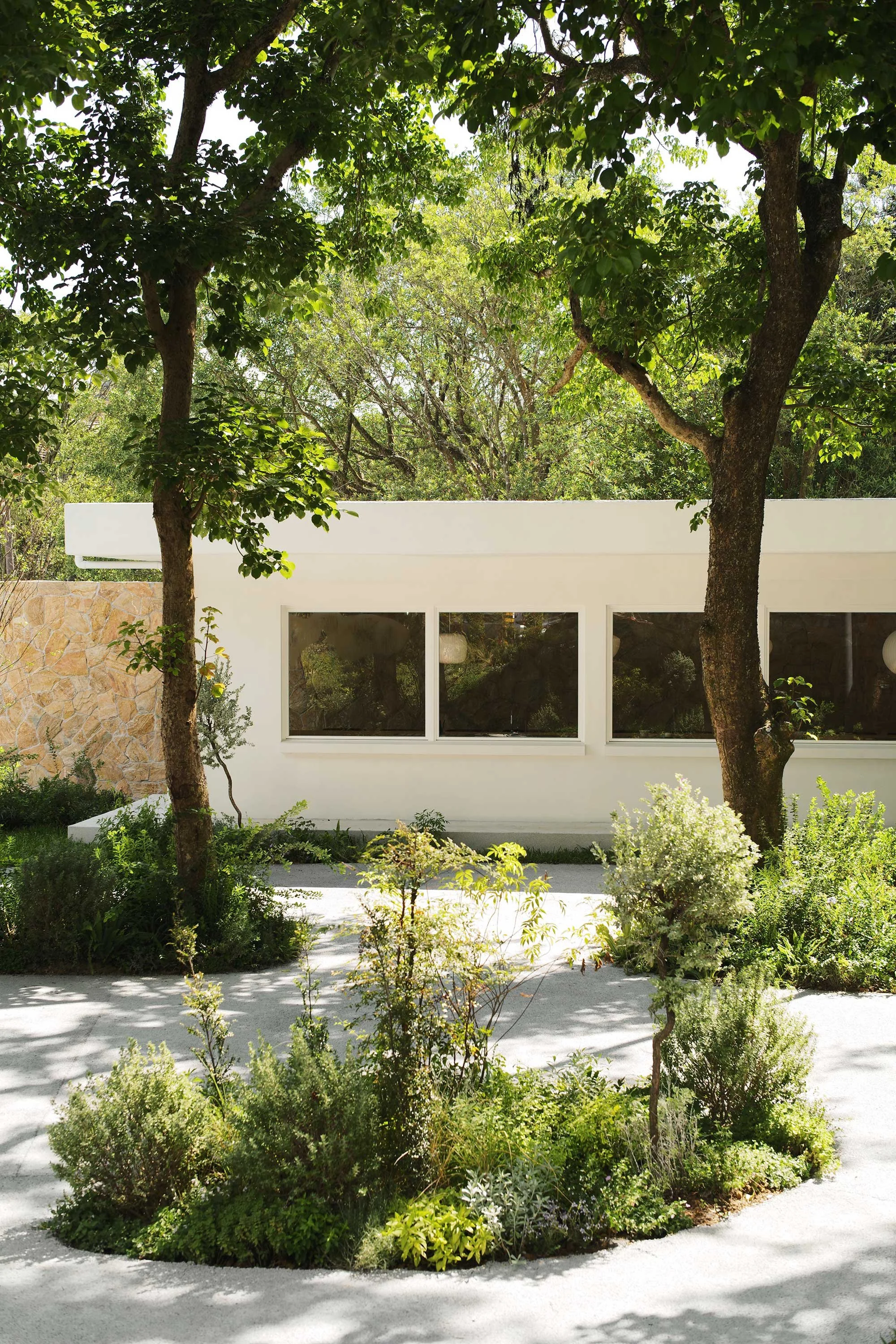
Singapore has emerged as a key testing ground for Danish firm Henning Larsen to expand its landscape work across Asia-Pacific. The practice’s portfolio includes the conversion of a rigid concrete canal into a sinuous stream — a project that functions as a natural waterway while carrying significantly greater volumes of stormwater. ‘We design shared spaces where both people and wildlife can coexist with mutual respect,’ says Jia Xin Chum, head of landscape design.
Across the practice’s projects, ecological corridors — whether culverts, canopy passages or land bridges — allow wildlife to move safely through urban areas while preventing human–animal conflict. In Singapore’s Bidadari Park, for instance, a mature woodland severed by a highway is reconnected by a bridge incorporating a 19-metre-wide, continuous ecological corridor. A clearly defined path runs alongside it, guiding human movement in parallel. To Chum, similar corridors can stitch together fragmented green spaces across cities — even through street-side planting — bolstering ecological resilience at a macro scale. ‘Context matters; a park cannot be sustainable by itself,’ she says. These inclusive landscapes are supported by a deep, interdisciplinary knowledge of hydrology, soil science, botany and wildlife biology, an expertise that Henning Larsen has increasingly developed in-house. ‘There’s a lot of invisible design at work. What appears wild is, in fact, carefully designed — for the city, for people and for wildlife,’ says Chum.
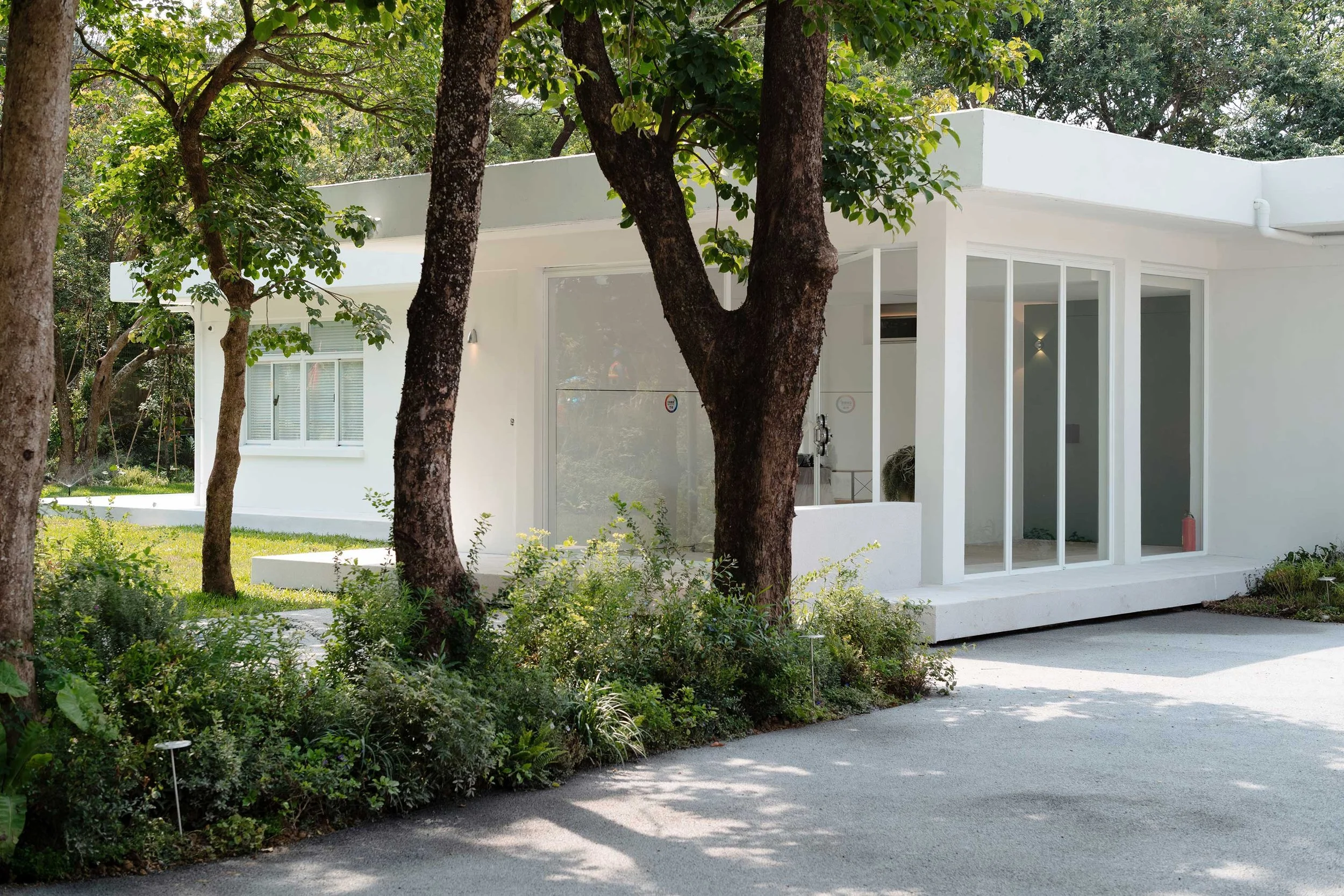
In Indonesia, RAD+ar, a group of architects and designers, sees landscape not as an overlay but as a central driver of its design approach. ‘Architecture inserts itself into nature, not the other way around,’ says founder Antonius Richard Rusli. ‘With generous sunlight and rainfall, the tropical belt is ideal for sustainability and achieving comfort with a minimal amount of energy.’
RAD+ar treats its work as ‘open source’, adopting an experimental ethos that’s deliberately shared with a wider audience. Its Chicken Hero Pavilion reflects this: a temporary, pared-back bamboo hen run set within the undulating terrain of a privately owned public park in Jakarta. Conceived as a DIY prototype, it showcases a closed-loop system in which food scraps from nearby restaurants feed the chickens, converting urban waste into eggs. Rusli sees the decentralisation of sustainable knowledge as essential, particularly across less-wealthy countries.
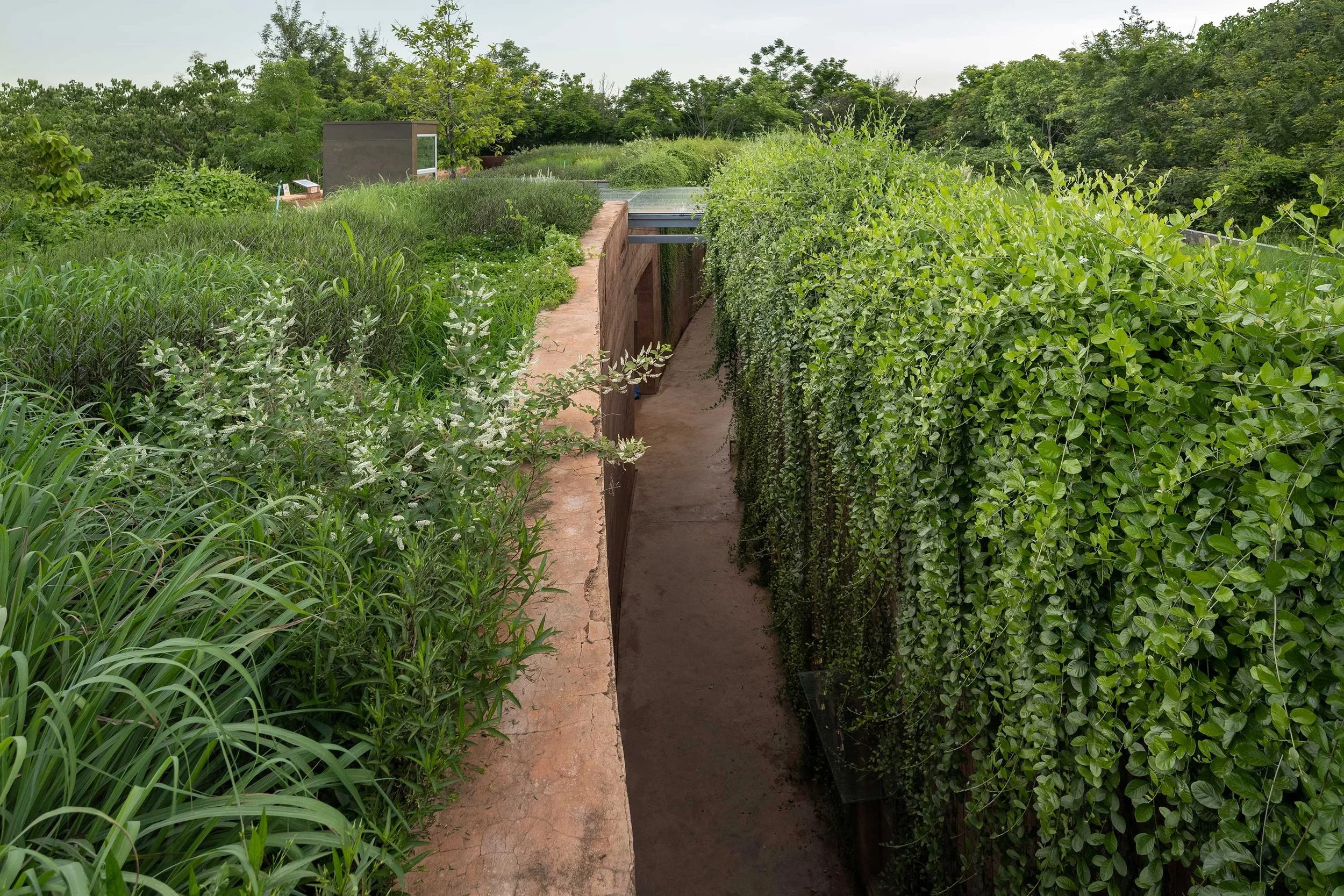
Rooted in local ecologies, Motif is committed to developing a landscape language unique to Taiwan. ‘In this small mountain island, we have more than ten thousand different plant species, which I use to create a new way of thinking about landscape,’ says founder Shu Yuan Wu. In Taipei, he has transformed the grounds of a former air force base into a public park, retaining existing structures and plantings, including banyan trees long entwined with the original walls.
Wu typically designs only about 70 per cent of each project, allowing natural processes such as bird-led seed dispersal and cross-pollination to guide the rest. For the green roof of the Taoyuan City Museum of Fine Arts, he challenged an initial brief for a resource-heavy, golf course-like surface, proposing instead a mixed planting of more than 20 grass species sown together to favour naturalistic growth. He notes, however, that a certain level of maintenance remains necessary across his projects, though it’s less about technical upkeep than cultivating awareness and reflection. ‘It’s about recognising the beauty of something a little more out of the ground, and how much wildness you can accept,’ he says.
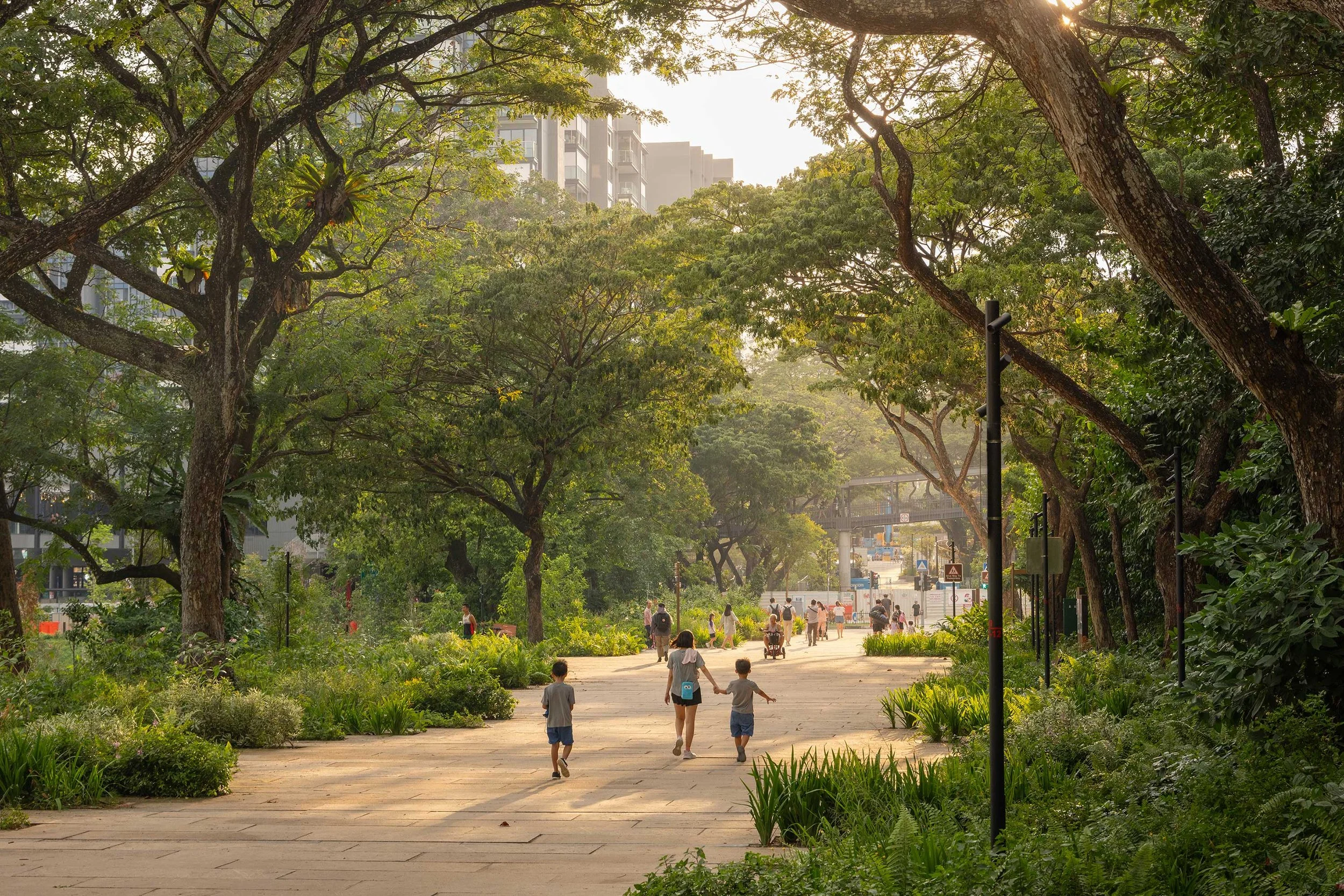
In China, Yiyu Design takes this sensibility to its most distilled expression. Its Edge Garden in Shanghai preserves the character and structural logic of a long-abandoned coal wharf. Set within a tidal zone, the site accumulated debris that had begun to form an island on site, and natural regeneration was already pushing through the concrete remnants of its industrial past. ‘We found these layers and spontaneous growth incredibly beautiful,’ says founder Yifeng Lin.
Lin adopted a deliberately restrained landscape strategy: removing poisonous species, introducing additional ground covers to support ecological restoration and punctuating the landscape with a subtle wash of orange irises. With each return visit, Lin notes how the site continues to grow in unexpected ways. ‘This unpredictability is part of the beauty,’ he says. An associate professor at the National University of Singapore, he hopes his students will carry this attunement into their own work. ‘If we look across cultures and histories, we see landscapes endure when they’re rooted in genuine respect and appreciation for nature. Cities that feel rich, humane and resilient tend to grow from this attitude.’
Text by Tomás Pinheiro