The Thai Designers Pulling an Ancient Fibre Into Radical New Forms

Preview
 

Through experimental processes, colour play and sculptural dimension, Thai silk is taking on new relevance for an emerging generation of designers
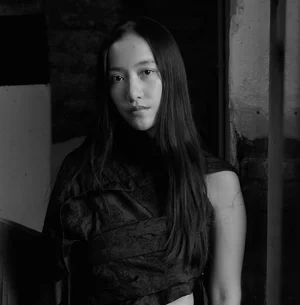
 

Silk has long occupied a singular place within Thailand’s material culture. Dyed, woven and meticulously crafted, it’s a textile through which generations of knowledge are passed down, carrying with it markers of place, labour and identity.

Yet, for a growing group of contemporary Thai designers, silk is no longer treated as a fixed emblem of heritage, but as a living language — one capable of evolution, reinterpretation and new modes of expression. Designers such as Shone Puipia, Rukpong Raimaturapong and Fah Chakshuvej engage with silk not through nostalgia, but through active experimentation, allowing the material to respond to current realities while remaining grounded in its origins.


Raised by artist parents, Puipia describes his upbringing as a ‘very creatively nurturing atmosphere’. ‘You absorb that quite naturally,’ he says. ‘That love for creating things, doing things with your hands.’ Under his eponymous label, early collaborations with renowned silk manufacturer Jim Thompson explored warp-printed silks, where yarns are printed before being set on the loom and then handwoven, producing painterly, textured effects. 

Puipia has also experimented with Mawata silk — the innermost, often discarded, layer of the cocoon. His interest was sparked by an installation by his mother, Pinaree Sanpitak, titled The Roof — a sweeping canopy composed of multiple panels in contrasting textures, including woven fibreglass and raw silk. Drawn to Mawata’s fragile, fibrous quality, Puipia encases the material within silk organza, preserving its delicacy while making it wearable. Layered translucent colours produce subtle tonal shifts, enhancing the silk’s natural luminosity and giving each piece a quiet, ethereal depth.


‘You can’t force Thai silk to be something else. You really have to work with the structure and character of it.’ Puipia says. This sensitivity is evident in his geometric constructions, where silk’s sheen and rigidity are accentuated through precise cuts. His signature LB Cutout tops, for instance, feature radial patchwork panels composed of triangular segments that fan outward across the bodice, forming a sunburst-like composition.

A similarly inquisitive spirit animates the work of Raimaturapong. Growing up in Khon Kaen, north-eastern Thailand, he would visit his grandmother’s home and watch silkworms rest on bamboo trays, laid out for weaving. ‘I’ve seen the spectrum of what this material can do and how it brings people together,’ he reflects. This early intimacy with silk continues to shape his practice. Now based in Paris, Raimaturapong collaborates with a wide network of Thai weavers, bridging ancestral techniques with a couture sensibility.


Originally trained as a graphic designer, Raimaturapong’s collections are celebrated for their exuberant hues, layered textures and inventive silhouettes. In his latest work, paracord is woven directly into the fabric, creating a flexible structure that can be tied, pulled and shaped into bubble-like forms. The collection explores temporary structures, transforming flat planes of silk into three-dimensional, rounded shapes through simple, hands-on techniques such as ruching and compression. 

Even the headwear continues this theme of playful construction, incorporating experimental techniques and structural details developed in collaboration with Maison Michel, the prestigious Parisian millinery house under Chanel’s Métiers d’Art. His collaboration with the atelier followed his win of the 2021 le19M Chanel Métiers d’Art Prize, making him the first Thai designer to receive this recognition — a testament to his imaginative approach to Thai silk and its possibilities beyond tradition. ‘Silk in Thai society can be tied to tradition, but to survive, it has to exist in other contexts,’ the designer explains. ‘I approach it daily, exploring structure, shape and new possibilities.’

Meanwhile, for Chakshuvej, silk is explored through the lens of structure, movement and spatial awareness.


Growing up in a family of interior designers and obtaining an undergraduate degree in fashion, the founder of Fah Chak Woman approaches the material with the precision and sensitivity to construction and proportion honed during her menswear training at London’s Royal College of Art.

Her garments often begin with elemental forms — whether a rectangle of fabric or a simple drape — before being twisted, folded and engineered into something new. ‘Things that inspire me are corners, sharp edges, construction; that’s how my brain works,’ she says. ‘The fun part is how you can take fabric, which is two-D and soft, and turn it into something three-D.’ Across her pieces, silk appears in bias-cut tops hand-sewn to cling to the body, while sculptural dresses and voluminous skirts emerge from minimal or entirely absent cutting, allowing the fabric’s own weight and flow to define the form.


In the work of Puipia, Raimaturapong and Chakshuvej, Thai silk is neither frozen in tradition nor stripped of its history. It bends into sculpture, erupts in colour or submits to rigorous construction. Through close collaboration with artisans, attention to process and an insistence on wearability, silk is reintroduced as a material of relevance. Their work affirms that longevity lies not in repetition, but in thoughtful evolution, where craft and innovation exist in quiet balance.

Text by Raina Alonge
Images by Jeremie Monnier, Puangsoi Aksornsawang, Phongthep Chakshuvej 

Raina Alonge

Based in Jakarta, Raina Alonge is the Commissioning Editor of Design Anthology. With a background in fashion communication, she is interested in the overlaps between art, design, fashion and culture, with a focus on creative practices across Asia.

Next
Next

At Vitra Campus, Even the Smallest Buildings Have Big Names