
Yangon, Its Grand History and Unwritten Future
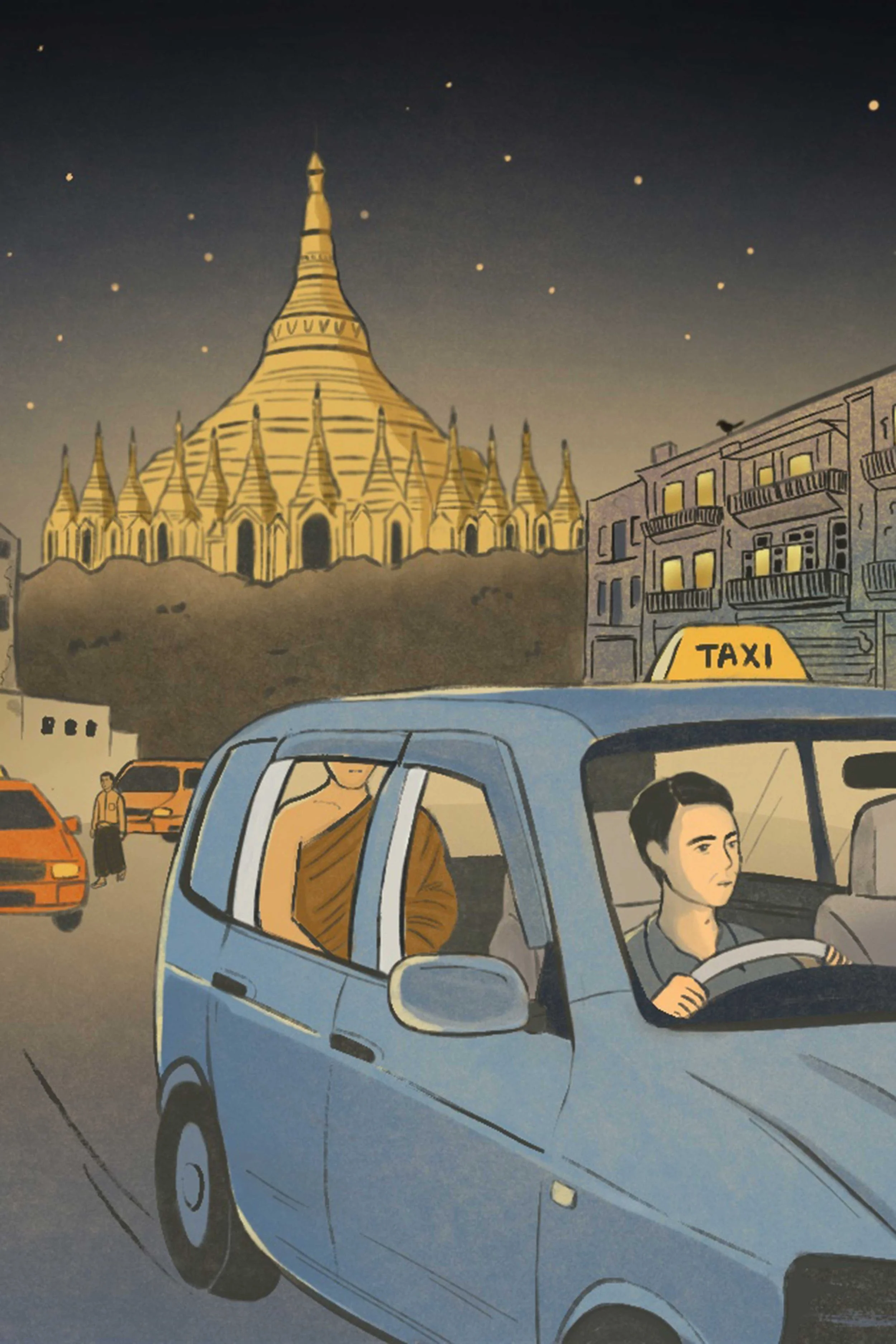
Yangon’s motorbike ban and right-hand-drive cars on the right side of the road reflect a city that defies easy logic. Acknowledging this chaotic charm is a roundabout way of staking my claim — Yangon, my home for the past decade, is one of the greatest cities I know.
To my knowledge, Yangon is the only city in the world where motorbikes are completely banned — not for environmental reasons, but allegedly to prevent political assassinations. On the street, it seems like every other car is a beaten-up Toyota Probox, imported second-hand from Japan. Like most things in the city, this makes little sense: the cars are right-hand drive, yet they drive on the right side of the road. Myanmar made the switch in 1970, supposedly on the advice of the leader’s wife’s astrologer.
Acknowledging this chaotic charm is a roundabout way of staking my claim — albeit by my own criteria as an immigrant — that Yangon, my home for the past decade, is one of the greatest cities I know.
In Yangon, the homogenisation that plagues so many developed cities simply hasn't happened. The downtown area, rebuilt by the British beginning in 1852 on a grid system, remains a hot mess of every single industry you could think of across some 65 streets. It features some of the finest colonial architecture in Southeast Asia, often in a state of serious disrepair, with Indiana Jones-style vines twisting in and out of windows. By the time it was completed in the early 20th century, Rangoon was far and away the most prosperous city in the region — known then as ‘the Garden City of the East’.
The prime example of this faded glory is the Secretariat Building. This colossal colonial-era government complex is incredibly significant both in architecture and history, and was described as ‘the birthplace of modern Burma’ by Barack Obama during his 2014 visit. Today, it sits as a sparsely occupied shopping centre.
Drift north from downtown and you find what I call ‘Game City’, the abandoned amusement park where people used to play football in an old dodgem arena. Until last year, it was possible to climb the disused rollercoaster to get a view of the city, dominated by the Shwedagon Pagoda. At night, the Shwedagon’s gilded surface — plated with more than 20,000 bars of solid gold — glows, and is visible from pretty much everywhere.
Further uptown still, you hit the Inya Lake Hotel, which looks like a giant submarine overlooking the lake. Presented by Khrushchev in 1962 when the country was still a regional powerhouse, it was a symbol of Soviet–Burmese friendship.
It’s easy to overly romanticise the city, but it would be incomplete to speak about Yangon in 2025 without mentioning the rough time it’s had in recent years. To have been here for the 2015 election, and to have seen the excitement and optimism, makes the 2021 coup — and all that’s come after it — so incomprehensibly soul-wrenching.
Being in the city today, it’s impossible to get certain images out of my head: millions of people lining the streets, first in fancy dress and later in gas masks with homemade shields. This was shortly followed by the sound of gunshots, and later by the stench of makeshift graves. Today, obviously, the city still exists. Life goes on. While the physical scars, like political graffiti, have been painted over and the makeshift roadblocks cleared, other scars remain. The atmosphere is completely different — darker.
Yangon remains a quirky, incomprehensible and yet great city. In 1965, Lee Kuan Yew looked to Burma as a model for Singapore . Sixty years later, it is hard to imagine a more divergent set of paths.
Charlie Artingstoll is a British writer and entrepreneur who lives in Yangon. Charlie founded Sin Sar Bar, a social change organisation focusing on mental health in Myanmar, and works with local artisans to create unique timepieces for The Burma Watch Company.
Text by Charlie Artingstoll
Illustration by Lea Woo