Is This the End of the Aman Escape? Its Latest Urban Experiment Lands in Bangkok
In Bangkok, long-time Aman architect Jean-Michel Gathy reveals how Vladislav Doronin’s vision is reshaping the cult hotel brand, as Aman’s ongoing urban experiment trades pure escapism for a more social, city-driven energy within seven acres of Nai Lert Park
‘The purpose of an Aman is not to sleep,’ says Jean-Michel Gathy. For almost four decades, Aman built a cult following by allowing its guests to — until check-out — trade the banalities of modern life for an elevated, cotton-wool alternative. Exceptionally high staff-to-guest ratios meant that needs were anticipated and the friction of getting even the smallest things done was reduced to next to nil. But, despite their escapist qualities, these properties largely resisted becoming pastiches of the places they inhabited. Gathy should know: he designed one of the group’s earliest properties, Amanwana, which opened in 1993, and has since shaped much of Aman’s architectural language alongside cardinal figures such as Ed Tuttle and Kerry Hill. ‘If you go to Amanjena in Marrakech, which Ed designed so beautifully, when you are there, it's purely Marrakech. Today, it’s not so direct,’ he says.
Modern Aman, as is well chronicled, has changed. ‘Aman is not a hotel,’ says Gathy. ‘It’s a lifestyle venue, a place where you go to socialise, to relax. It’s not a place where you just sleep.’ This new version, led by property mogul Vladislav Doronin, has expanded aggressively, particularly into cities. Rather than positioning itself as an outright antithesis to the glowing, nudging tedium of our connected lives, Aman now often accommodates it. ‘Before, there were no TVs. Now, you can't have an Aman without a TV,’ says Gathy.
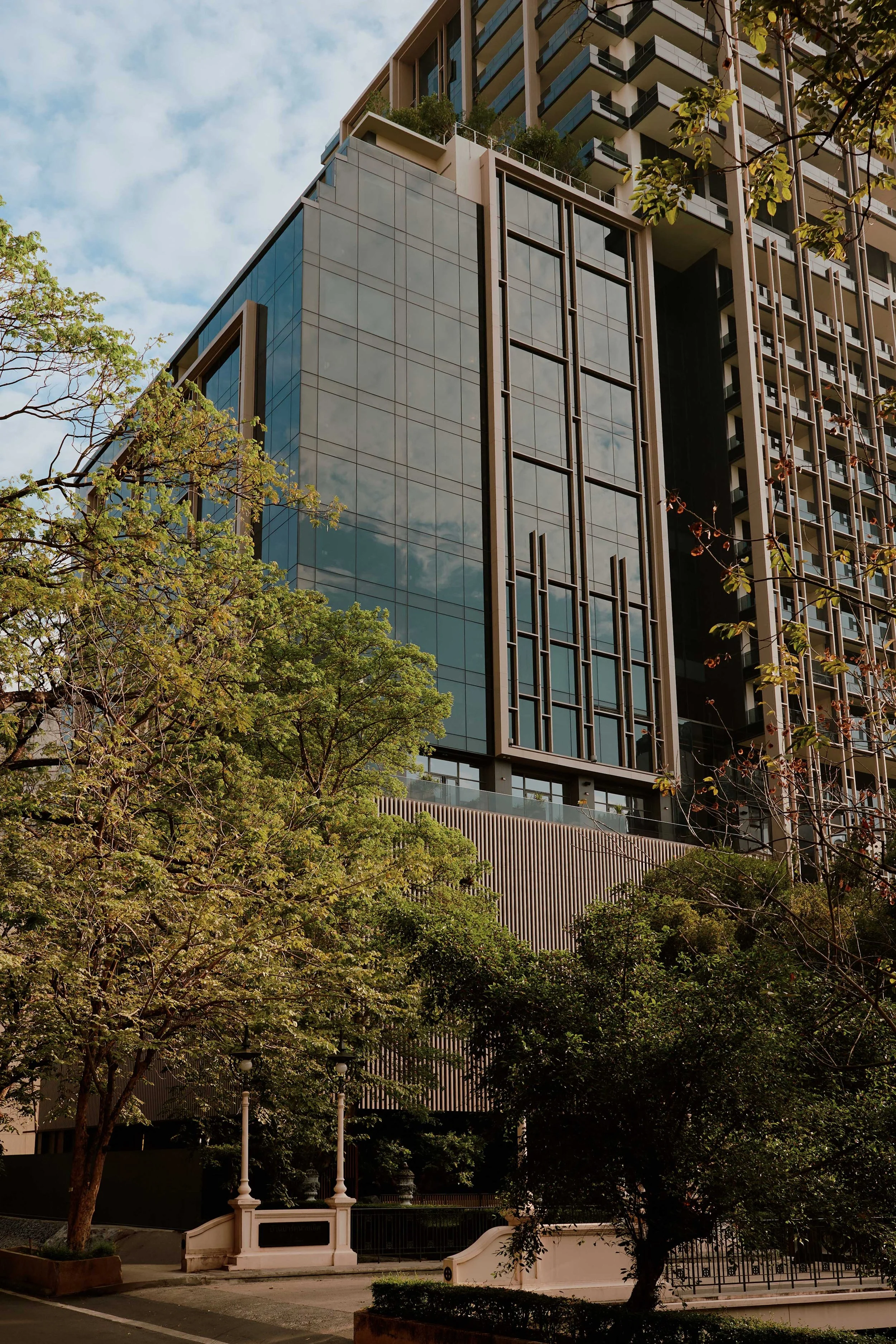
Aman Nai Lert Bangkok — like many newer, especially urban, properties in the group — acknowledges that total escape may be unrealistic. If we must remain tethered, it suggests, it may as well be within the most considered of confines. That shift from immersive purity speaks to a broader evolution that has edged the brand closer to its peers. Aman was made in the silhouette of its founder, Adrian Zecha, and its mythology is inseparable from him. The brand inspired rare devotion: how else would you persuade someone to journey to one of the most remote locations on earth for their holiday? Here in Bangkok, that’s simply not a concern.
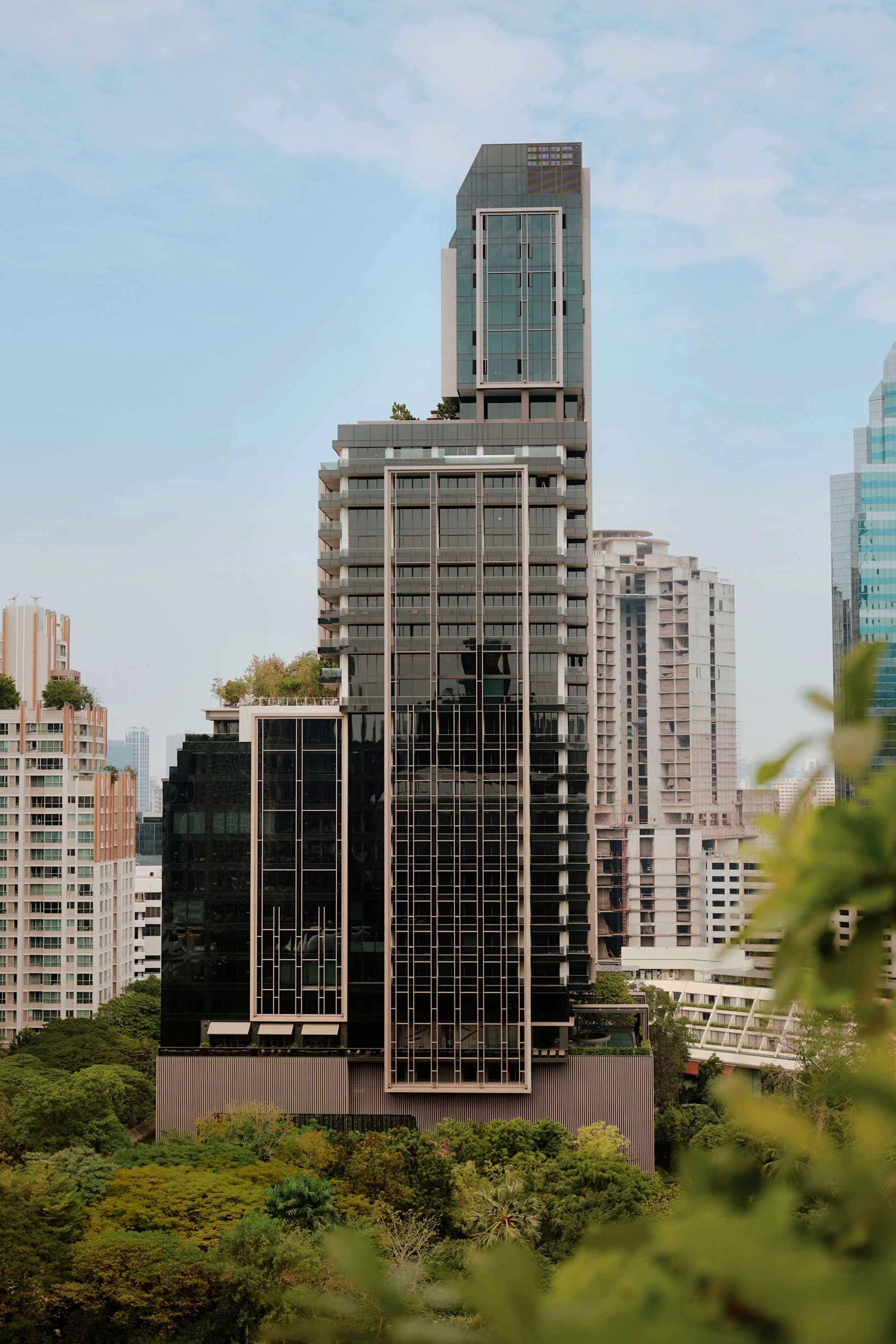
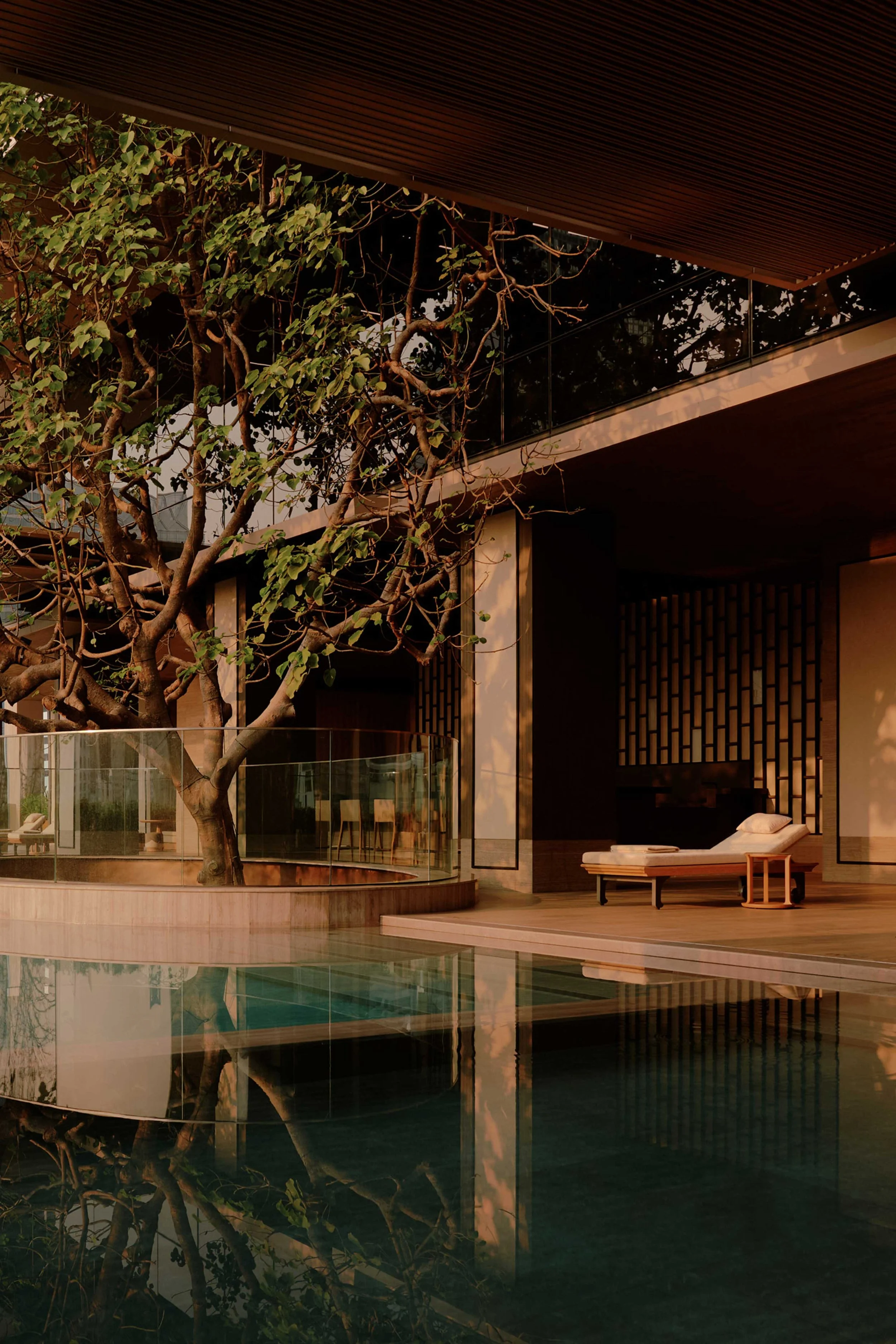
Set within a few hectares of the privately owned Nai Lert Park, the building that houses both the hotel and residences is buffered by trees and landscaping, tempering exposure to the metropolis beyond. The arrival sequence is pure Aman, choreographed with such discretion it borders on theatre. Physical access to the property is tightly controlled, and a curved bronze canopy shields the sparse driveway from the skies above, marking the threshold at ground level. A lift rises to the ninth floor, opening onto a light-filled atrium as Bangkok drops away. References to place exist — for example, in a bronze sculpture that anchors the lobby, designed by Gathy himself to mimic a real, century-old chamchuri or rain tree that rises dramatically into the ninth-floor pool deck.
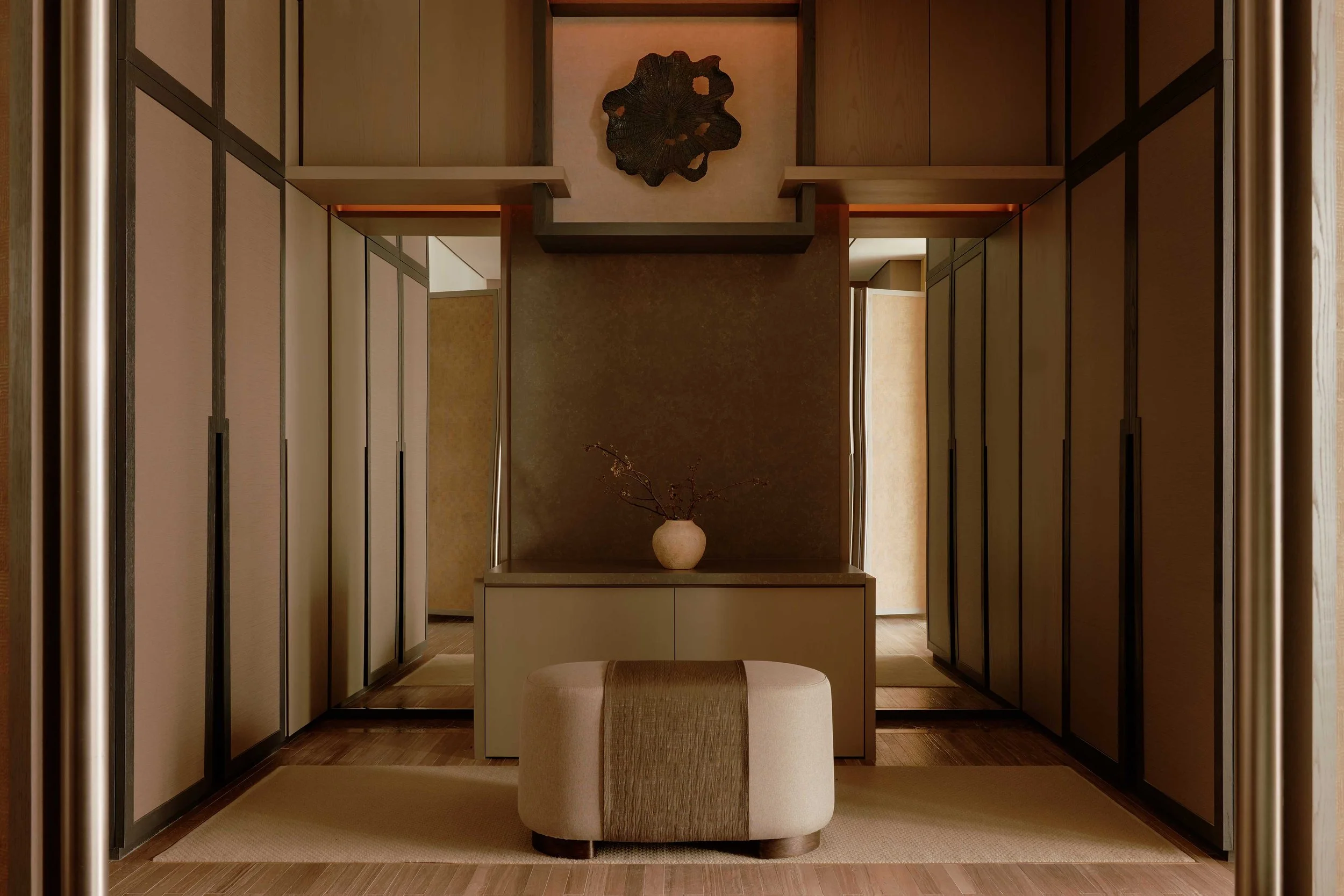
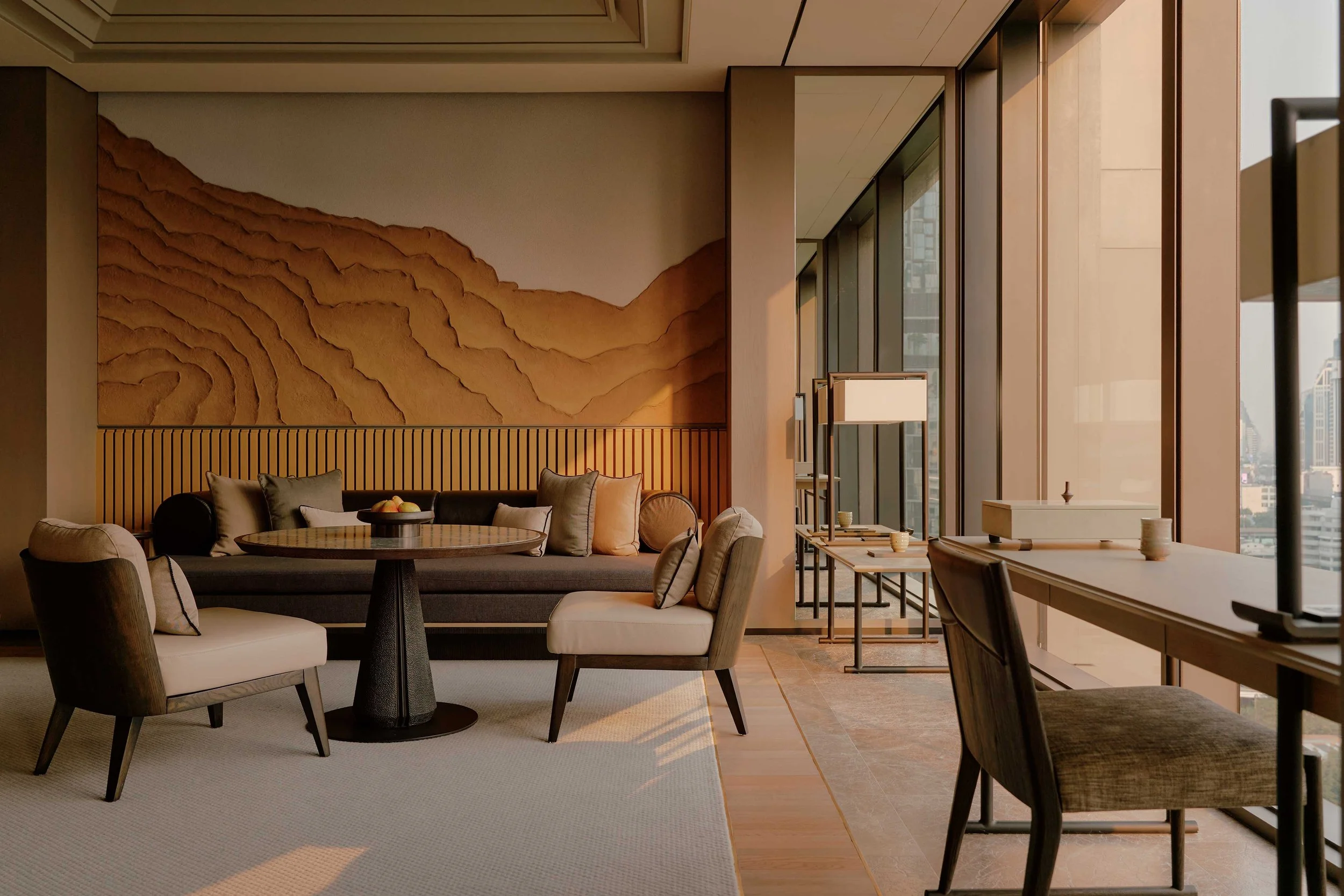
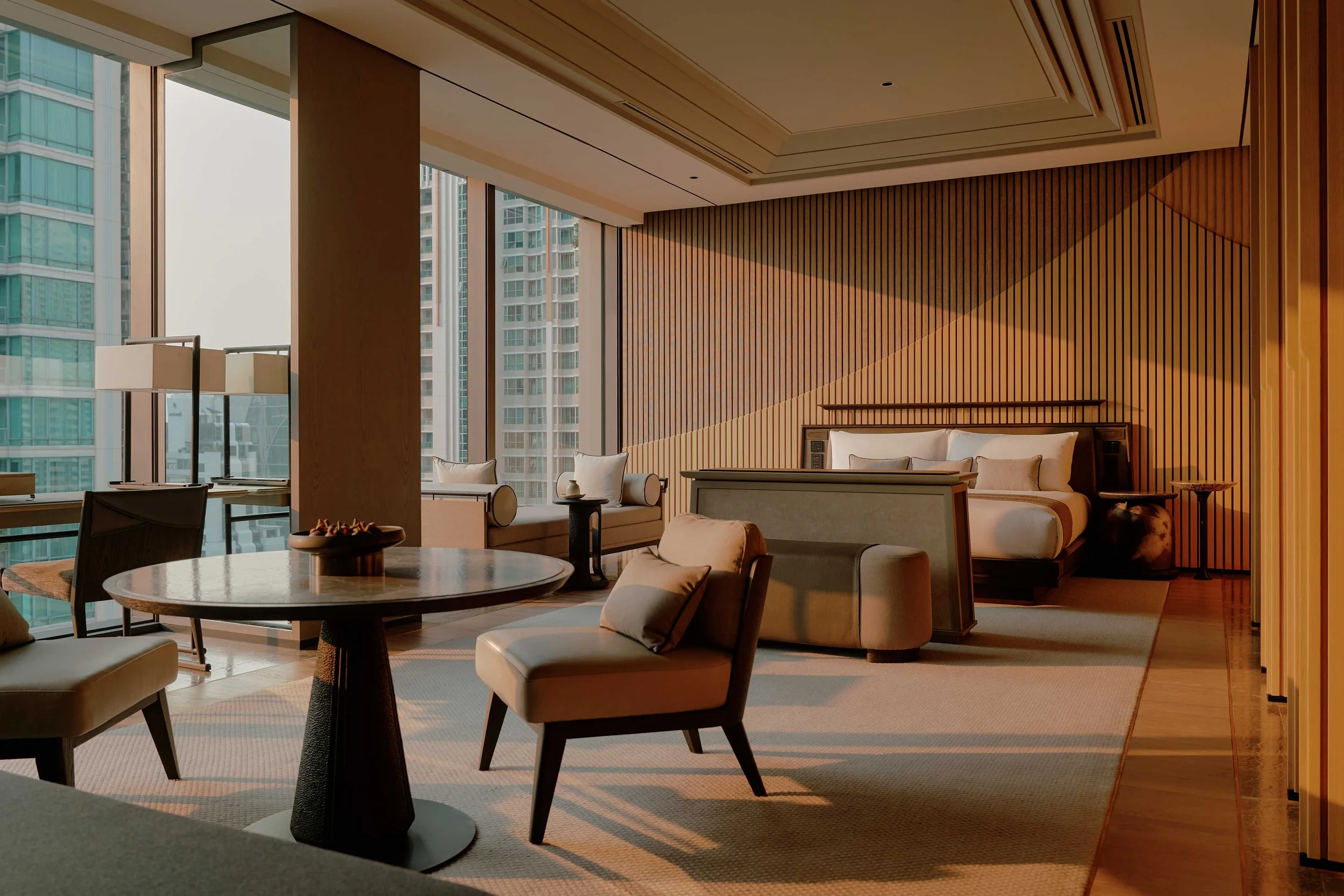
Certain Aman principles remain sacrosanct. ‘The bathroom must be more important than the bedroom,’ says Gathy. ‘And there should not be one room better than the others,’ he adds. ‘Let's say you want sixty rooms but only fifty-five will have a perfect view. Well, too bad, we'll do fifty-five rooms.’ These guestrooms — referred to as suites despite being single, expansive volumes, aside from the Aman Suite — feel palatial. They open to a space that functions as both foyer and wardrobe. Pivoting panels create a screen, offering flexibility but also exposure; the bathroom and entryway have the feeling of one continuous space. From the bath, if inclined, one could wave to housekeeping at the door. Though you’d have to actually spot the clandestine team at work — an unlikely occurrence and one of the famed Aman tricks. Floor-to-ceiling windows frame the park canopy and, for now, the empty plot that once housed the British Embassy. The baths are enormous, almost impractically so. The palette is cool, faintly austere against Bangkok’s chromatic intensity, but the lighting softens it: warm, diffuse and, in places, deceptively flattering. Darkened bathroom mirrors glow evenly and disguise the night before, while floral arrangements are abundant and imaginative.
References to the neighbouring Nai Lert Park Heritage Home appear most clearly in the bathroom flooring: tiles textured like wood are narrow and laid in a traditional parquet style that mirrors the historic residence. The cumulative effect is of careful, polished domesticity. ‘The characteristic Ed, Kerry and I share is our use of geometry,’ says Gathy. ‘It's not necessarily symmetry, but it is balanced. If you’re always on the axis in the middle, it becomes sterile and ultimately a little bit stiff or cold. We use geometry as a fundamental element of the architectural language.’
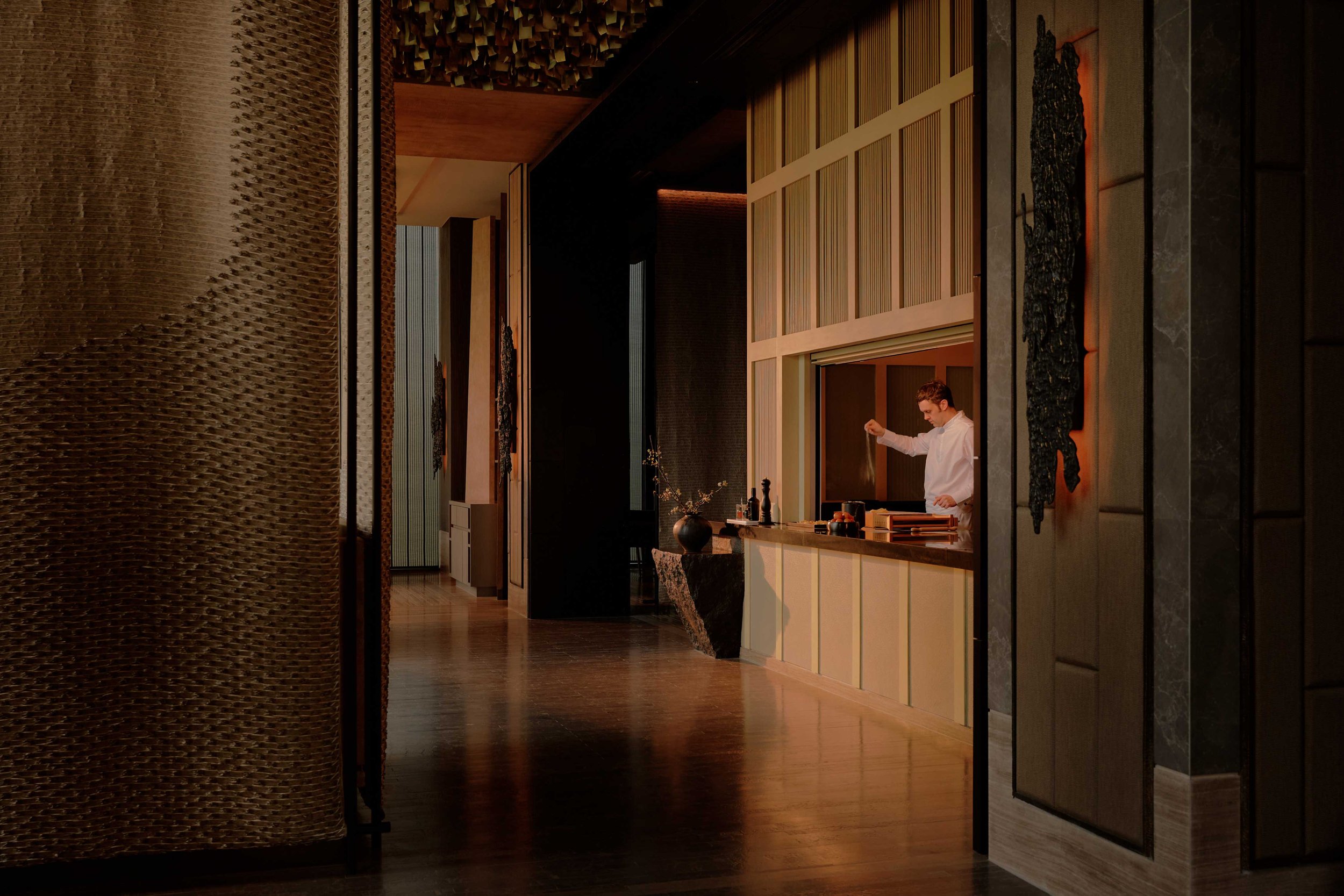
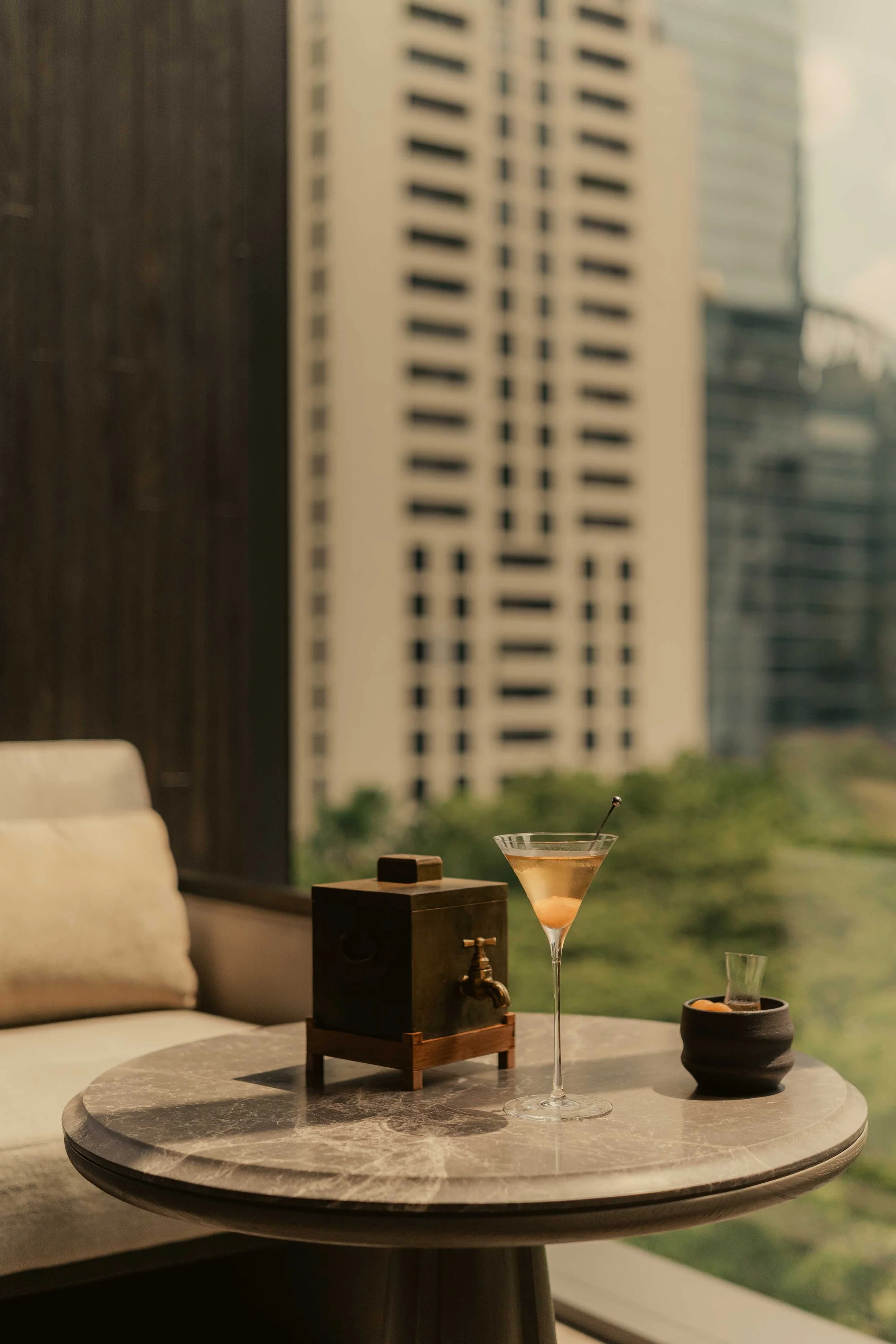
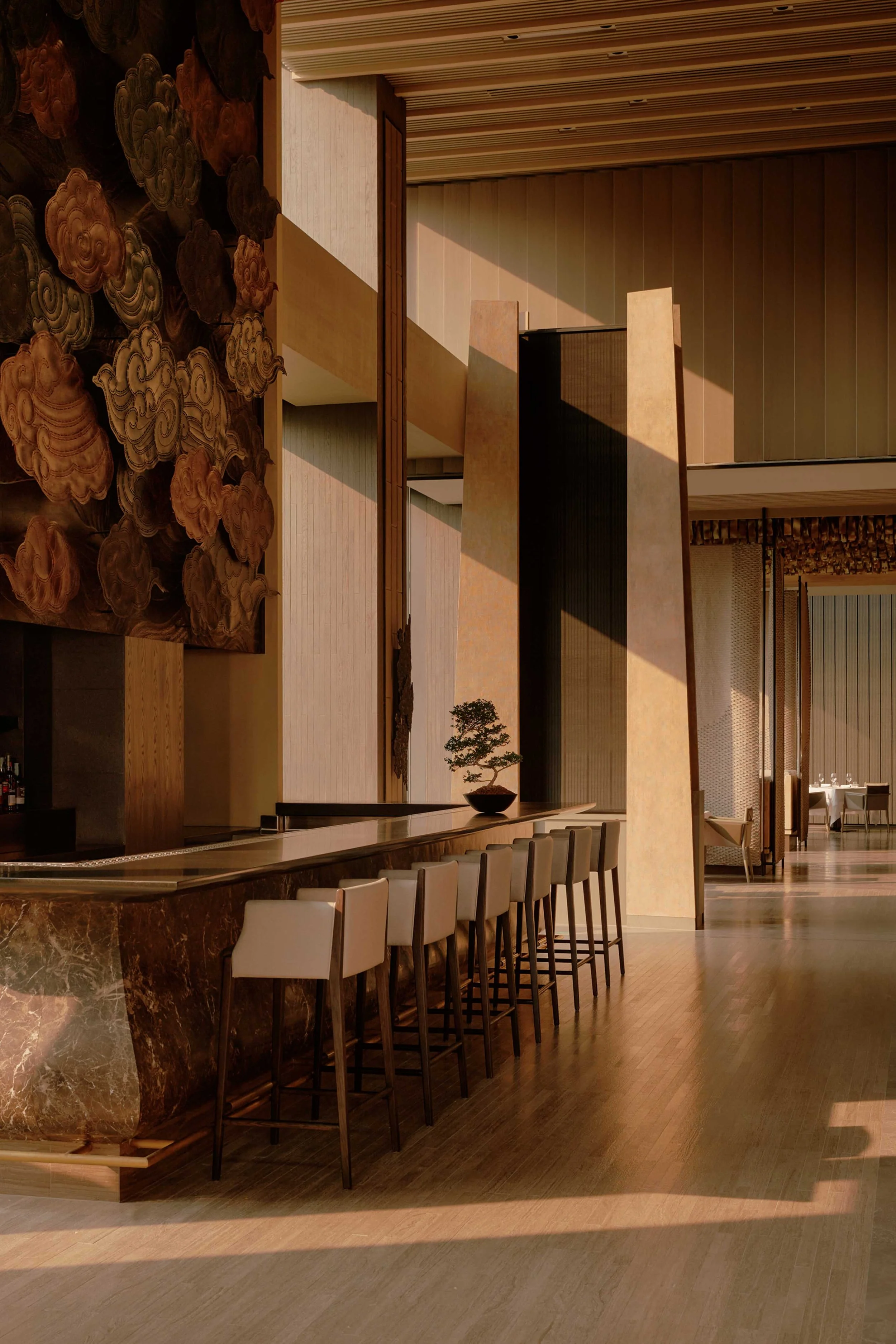
The dining programme is notably confident, and manages to straddle comfort and gentility. ‘Adrian was of the opinion that people don't go to an Aman to eat. They eat great food all year round and, therefore, what they want on holiday is noodle soup. I personally disagree with that,’ says Gathy. While there are two lobby-adjacent venues, the 19th floor functions as the social heart, replacing the obligatory library of Zecha-era Aman with two Japanese restaurants, a cigar bar and lounge with live music each evening. ‘Vlad is in favour of a more dynamic, livelier, more energy-based Aman, whereas Adrian was all about the Zen,’ says Gathy.
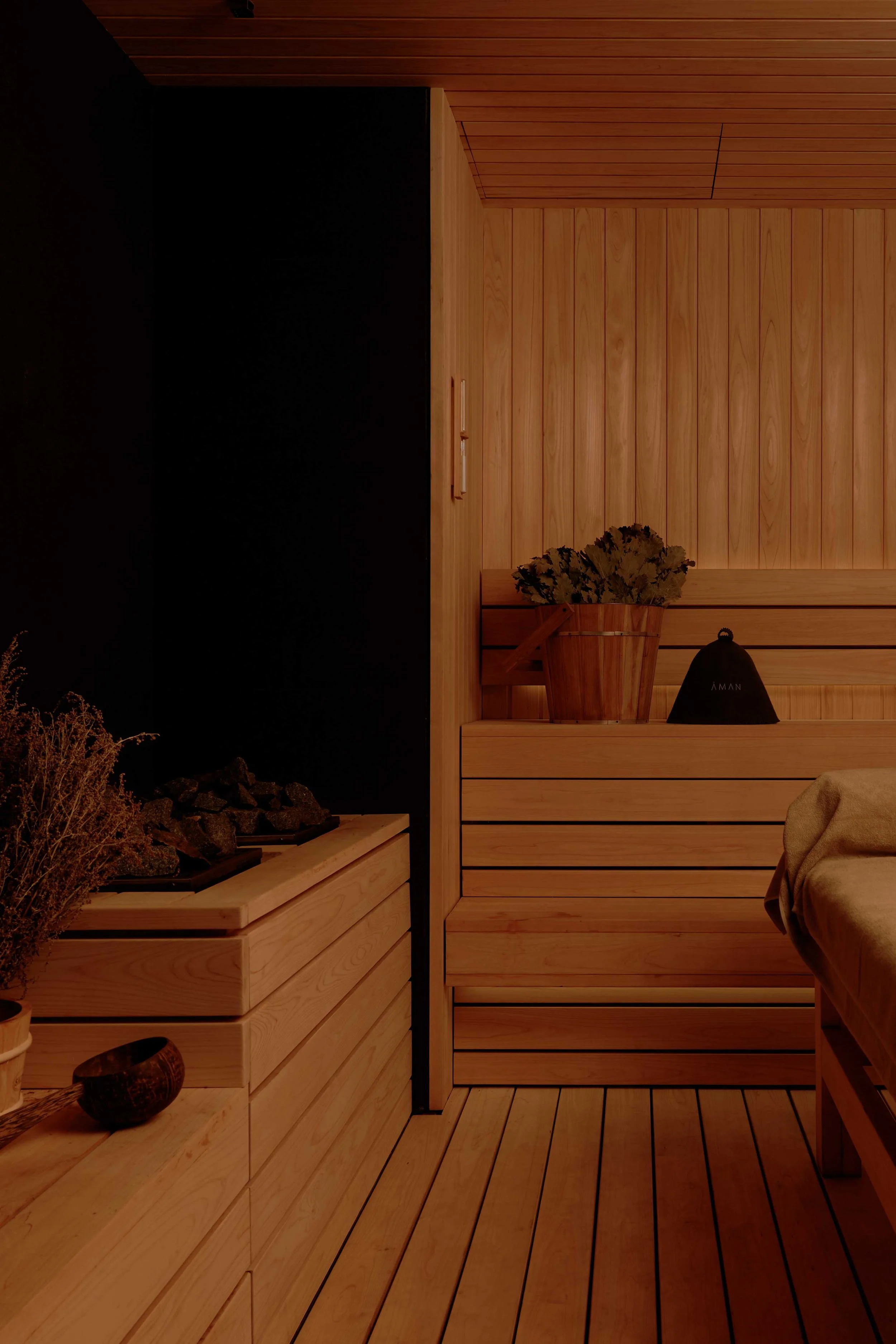
The Zen is omnipresent though: a 25-metre pool, lined with daybeds, sits beneath the aforementioned tree canopy that rises ten floors into the sky — culminating, the hotel claims, in the third tallest tree in Thailand. Birdsong echoes improbably above the traffic. And a 1,500-square-metre spa, wellness facility and medical clinic occupy two floors, combining treatment rooms with saunas and hydrotherapy alongside studios for Pilates and yoga. Even in a city famous for its wellness and culinary offerings, Aman offers formidable contributions.
Aman Nai Lert Bangkok feels unusually personal. The Nai Lert family, fourth-generation custodians of the land, have a deep connection to the site and keep an office within the park. Aman once only sold escapes to guests like these. In a city like Bangkok, an escape was never going to be possible nor, seemingly, desired.
Text by Jeremy Smart
Images courtesy of Aman Resorts