What Can Japan’s Bureaucracy Teach the Design Industry?
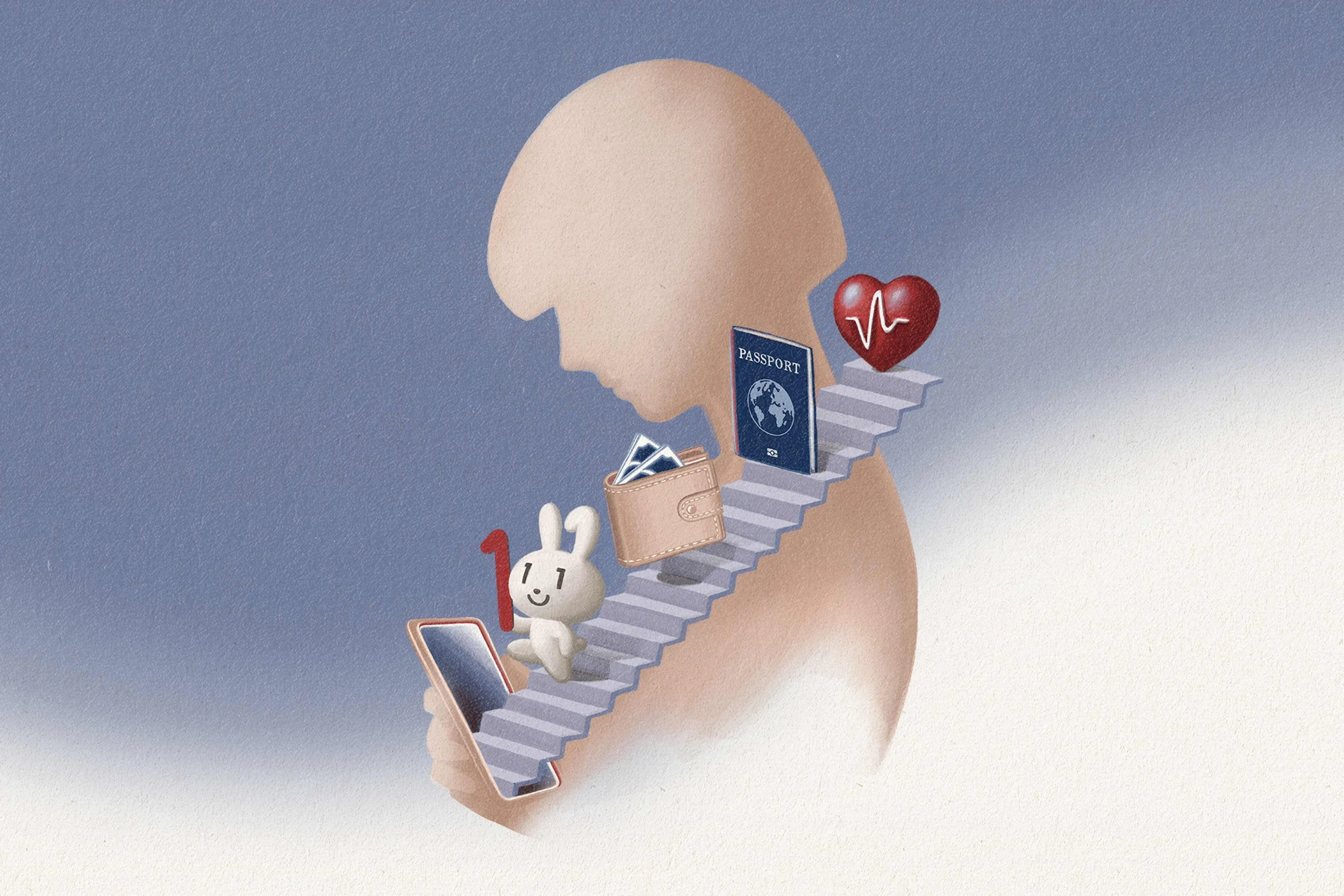
As Japan modernises its national identification card, Design Anthology’s editor-in-chief Jeremy Smart argues that public services and digital infrastructure are among the most important design challenges of our time
My destination was counter D4. I had, until this day, managed to avoid visiting the Tokyo Regional Immigration Bureau in Shinagawa. But this was a special day. I was there to trade in an old zairyū card and collect a new tokutei zairyū card, translated rather uninspiringly as a ‘specified residence card’.
Japanese residents with foreign citizenship have long had to carry an identity document, one of the surprisingly few rules that apply only to those of us whose passports lack an imperial seal. The tokutei zairyū card, barely a month old, is the newest incarnation.
Japan’s identification cards would be familiar to residents of South Korea, Singapore or the myriad other countries with national IDs, and is a true piece of Japanese bureaucracy: copious amounts of very personal information are printed in tiny type, most of which is exclusively used by banks to keep track of money launderers and terrorism financiers.
Despite their increasing ubiquity, national ID cards are surprisingly divisive. Just look at the UK, whose incoming prime minister campaigned to kibosh the revival of a national ID. Fears are, perhaps, rightly held. Modern states have a seemingly insatiable appetite for more of their citizens’ personal information, and national identity systems concentrate extraordinary power into a single piece of infrastructure.
The Japanese government’s Digital Agency has made great efforts to put its version, called a My Number Card or simply ‘Myna’, into the wallet of every resident, regardless of citizenship. It combines multiple functions from driving licences to health insurance cards — and, eventually, the zairyū — and is a remarkable achievement in a country renowned for disjointed administration. Most remarkable, perhaps, is the sheer stamina of the Digital Agency: the hostility it surely faced trying to convince the sprawling bureaucracy — and its archaic and proprietary systems — to talk to each other is unenviable.
By now, if you’re a regular reader, you’ll know I like a detour. When we talk about design, we too often seem to forget about things like ID cards, passports and the smartphone apps that keep the wheels of life turning. It’s wrong to treat these as mere appendages of government whose form and function is somehow inevitable.
Every day we ask designers to rethink the chairs, cars and even the cities that we use and inhabit, yet how often do we invite them into the rooms where healthcare or taxation systems are designed? We spend an inordinate amount of time discussing the merits of the former group, and yet the latter affect almost every member of society. The quality of those experiences — and the social outcomes of a well-designed system — can be life changing.
I confess to being something of an administrative junkie. I do things like voluntarily replace a perfectly functional ID card with a new version; things that are not entirely essential but illuminate the state of our democracy. Eighty per cent of Japan’s population now holds a Myna card, and with the merging of the zairyū card comes a small but significant psychological shift, helping residents without Japanese citizenship feel a little more welcome in their adopted home.
The Digital Agency has larger ambitions still. It has discussed moving more information onto the chip itself, leaving the physical card to represent one thing: that we all live here, and are all equal before both the law and one another. This is good for morale in a country where those not born here are increasingly made to feel less than welcome, despite making up an essential part of the workforce. There’s still much work to do, and the process to acquire the new card still takes place in-person and requires too much paperwork. But the system works and Myna does a few tech tricks that might surprise critics of Japan’s creaking infrastructure. It loads right onto your phone, running in Apple Wallet like any other transport or credit card. A cashless — and even cardless — life is now very possible in modern Japan.
It’s paramount that, as an industry, we take ownership of these often invisible structures, and not just their facades. We should treat our systems — especially those of our elected governments — with the same scrutiny and praise that we do our homes, workplaces, train stations, schools, furniture and cutlery. Designers must sit alongside policymakers and corporate leaders to remind every institution that, whether it realises it or not, it is in the business of design.
Text by Jeremy Smart
Illustration by O Terawat